Spending time with Jesus and in his word will help us to be contemplatives in action.

An elitist posture can be dangerous in that others are excluded that ought to have access. There are those areas in which there will be limited access. Select positions such as a principal, CEO, or manager. At higher levels of sports, the arts, and civic leadership, there are limited positions available as well. Yet access ought to be granted for the most qualified. Artificial impositions regarding racial, ethnic, gender, or religious litmus tests are to be avoided. Regarding having access to God, worshipping as a community, and spreading his love and word, an elitist approach has no place.

Jesus addresses this concern in today’s Gospel from Mark. The Apostle John approaches Jesus to complain that someone who does not belong to their inner circle of disciples was healing in the name of Jesus. John even shared that they attempted to prevent this person from healing. Interesting that John was concerned that this man was not one of their number, as opposed to saying he was not a follower of Jesus. Also, this account appears shortly after John returns with Jesus to the failure of the disciples being able to exorcise the demon from the boy. This man was doing what those in the inner circle were not able to do. Jesus replied, “Do not prevent him. There is no one who performs a mighty deed in my name who can at the same time speak ill of me. For whoever is not against us is for us” (Mk 9:39-40).

Jesus shared in words what he modeled in action throughout his life. The kingdom of God is open to all those who were willing to receive him and receive the invitation of his Father to enter into relationship. That relationship with him creates a spark that ignites a fire in those of his followers to reach out to teach, preach, cast out demons, heal, and be present to others in their need in his name. The kingdom of God is not for the select few, not for the frozen chosen, or not to be an elite club. The depth of active participation is only limited by one’s willingness to be engaged in participating in the life of Jesus.

May we have ears to hear Jesus’ universal message today, seek that which unifies us more than what divides us, and, embrace his message that “whoever is not against us is for us.” This can be translated outward beyond our tradition as Catholics. There is much we can do together with Christians of other denominations, people from other faith traditions, and people of good will with no faith tradition.

There are many who are in dire need of support in our communities, states, countries, and world. May we resist the us vs. them mentality that the enemy tempts us to entangle us in and resist the temptations of indifference or feeling like we have nothing to contribute. Jesus calls us to worship communally, as well as step away daily and sit at his feet and be alone with him. In that time of intimacy, corporately and individually, we are loved, healed, transformed little by little, and sent to share what we have received from Jesus to be his contemplatives in action.

Jesus, please meet us in our time of worship and prayer, help us to come to know you, our loving God and Father better, and his will for our lives. Help us to hear and meditate upon your living word, that we may know, experience, and be transformed by the love of the Holy Spirit. May we breathe, receive, rest, renew, and abide in your love so that we may think, speak, and act from this place of being known and loved by you. Then, in the name of Jesus, when we find ourselves in situations of division, polarization, and dehumanization, we may offer the invitation to experience the healing balm of understanding, dialogue, forgiveness, love and hopefully reconciliation.

———————————————————————

Photo: Different ocean than I am used to but the same light from the sun shining on the waters. View of the Pacific off the Santa Monica Pier.
Link for the Mass reading for Wednesday, February 26, 2025

We become whole by serving the One who came to serve us.

Power and honor are attractive temptations. Power is alluring because we want to be in control. Many of us believe that control provides security and safety. Many of us believe that power provides access and control over our environment and situations as they arise. Honor has an attraction also because we want to belong, we want to be a part of. With honor and fame, we believe we will be accepted, liked, have access, without the risk of rejection.

Power and honor become a problem when they are grounded in our self and when we feel we attain them on our own initiative. They become an asset if we recognize them as gifts from God that help us to promote his kingdom. In and of themselves, power and honor are finite expressions. If they are only fueled by our insatiable desire to put our self first, front and center, we will not only constantly fall short, but we will constantly be seeking more because nothing finite can fulfill the transcendental hunger that we have to belong to someone so much greater than ourselves.

The disciples of Jesus fell for the temptations of power and honor in today’s Gospel from Mark. Jesus had just shared with them for the second time that he was to be handed over and killed and that he will rise again. The disciples do not understand what Jesus was saying to them and instead grasped at their idea of what the Messiah meant to them based on their experience and culture. In their minds, the messiah would be a powerful ruler that would overthrow the occupying army of Rome, and so they began to jockey among themselves for seats of honor in his kingdom.

Jesus was aware that the disciples were squabbling about who among them would be the greatest, even though they were not willing to admit to that fact. Jesus had been using this time as they drew closer to Jerusalem to instruct them more deeply about his role in his Father’s plan, but also guiding them in knowing theirs. Jesus sat down among them and said: “If anyone wishes to be first, he shall be the last of all and the servant of all” (Mk 9:35). Power and honor do not come by being served. True power and honor come from the source of all existence, God the Creator. Nor is the infinite power of God some impersonal force that we tap into.

True power is trusting not in the material and finite things of the world because they are unstable. True power comes from God, the one who is omnipotent, all-powerful, and worthy of all glory, honor, and praise. We receive the power of God by experiencing, developing, and sustaining our relationship with him, through participation in the life of his Son and the Love of the Holy Spirit. The path of discipleship is traveled not by those who are worthy but by those willing to follow the lead of Jesus, submitting to his will, embracing the gifts that the Holy Spirit grants us, and sharing what we have received.

Lent begins in just about a week. One thing we might want to consider is to relinquish our perceived access of control in a fallen world that is ever unstable and changing and instead place our hope and trust in the one who is our destiny, who is our hope, our refuge, and our strength: Jesus the Christ, the Son of the living God. Let us let go of the desire to be liked and affirmed by others which can lead to unhealthy attachments and instead strive to be true to who Jesus calls us to be. May we not seek our security in control and self-sufficiency but in trusting in God and serving him and his will.

——————————————————————————————-

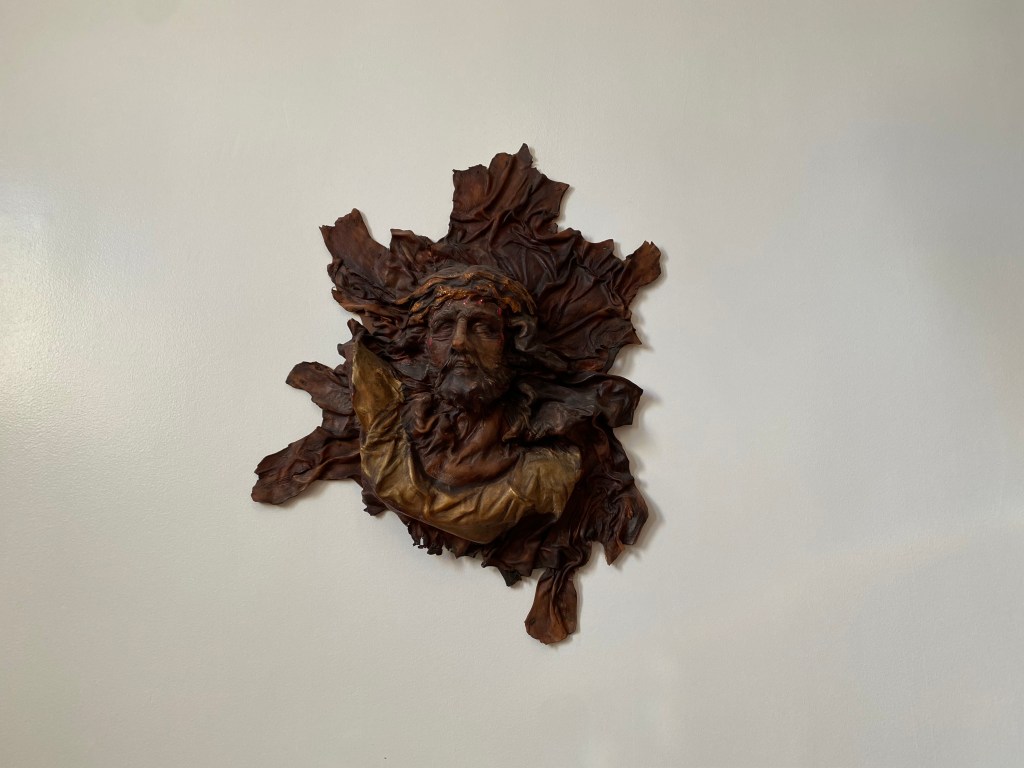
Photo: Sculpture of Jesus at the St. Clement Church, Santa Monica, CA.

Link for the Mass readings for Tuesday, February 25, 2025

Jesus calls us not just to exist but to live by a higher calling which is to love.

The Word of God proclaimed is alive. God has given his Word for all people and for all times with the purpose to shape and form us to be a people uniquely his own (cf. Deut 26:18). We are to be holy as the Lord our God is holy (cf. Lv 19:1-2). To be holy means that we are to be set apart. There ought to be something different about us. The word church comes from the Greek word ekklesia. Ek means out, kaleo, means called. As Church then, we are called out from the world to be holy, to be saints. We become saints when we repent and allow God to forgive us and restore the glory and likeness that was lost in the Fall.

Jesus also called us to be salt and light. The intent of our thoughts, words, and actions are not to be divisive but unitive, not to be a source of darkness but illumination, and not to be dehumanizing but empowering. I have heard often after someone speaks or acts in a negative way a comment along the lines of, he or she is just being human. Meaning we are fallible, that we are not perfect.

This is only partially true. We are finite, imperfect beings, yes, but when we act in ways that are self-servicing and hurtful, we are not acting humanely. These words and actions are a reflection of our fallen and distorted humanity. The reality is that we are wounded by sin, but the good news is that we are not destroyed by it. We are more than our fallen nature, more than our base instincts. We do not have to stay stuck there, and for God’s sake, may we resist the temptation to condone any abusive or hurtful behavior as acceptable and normal!

All of us are in need of healing, and this begins when we diagnose our sickness accurately. God has not created us to merely exist, to go through the motions, to accept a minimalist approach, to be anxious and stressed moment by moment, and to consistently assume a reactive and defensive posture. God calls us to be so much more. As St Irenaeus has written, “The joy of God is the human being fully alive.” God didn’t create us just to survive, he created us to thrive!

How do we work to be fully alive, to thrive, to be holy? We love.

To love is not merely an emotional, romantic, or sensory feeling, but an act of the will. As St Thomas Aquinas taught, “To love, is to will the good of the other as other.”

This is how Jesus can say in the our gospel reading from Luke today: “But to you who hear I say, love your enemies, do good to those who hate you, bless those who curse you, pray for those who mistreat you” (Luke 6:27-28). As with many of the teachings of Jesus, these can be shocking and appear to be impossible to accept let alone put into practice. Loving our enemies was certainly something beyond comprehending in his day and age let alone ours.

When Jesus gave the great commandment, he was not saying anything necessarily new. In calling us to love the LORD with all our hearts, strength, and souls he was referring to Deuteronomy 6:5, and to love our neighbors as we love ourselves he drew from Leviticus 19:17. When Jesus stated that we are to love our enemies, this was unprecedented and sounds impossible to comprehend, let alone put into practice. Jesus does not leave his disciples or us hanging though. He outlines specific practices regarding how we can actually love our enemies.

We are to: do good to those who hate us, bless those who curse us, pray for those who abuse us, offer the other cheek to those who strike us, give to those in need, and to do unto others as you would have them do. Doing each of these makes loving our enemies easier, right? Not a chance. Each of these are just as challenging, if we are operating from our baser selves and fallen nature living in the world. But as I started, Jesus is calling us to go beyond a minimalist approach. He is calling us to be holy. As disciples of Jesus we are to be marked as different and one of the most powerful ways is by reading, praying, meditating, contemplating upon, and putting into practice Jesus’ teachings.

When we do so, our hearts and minds will change. We will change. The people of the world, love those who love them, do good to those who do good to them, and lend money to those who will pay them back. As disciples we are to resist the temptation to judge, condemn, and instead to forgive and to give, to love those who don’t love us, do good to those who mistreat us, and lend money to those who won’t pay us back. When we put these teachings of Jesus into practice we will be blessed by God abundantly and to overflowing with his love given beyond measure.

The words of the Gospel, the teachings of Jesus, mean nothing if they have no relevance to us, if we do not put them into practice and if we do allow our hearts to be transformed from hearts of stone into hearts of flesh. Jesus loves us and invites us to receive his love so we can heal, so we can experience forgiveness, and we can be forgiving, merciful and loving. Discipleship with Jesus is not an easy path to walk. It is possible to love our enemies, bless those who curse us, and pray for those who abuse us, when we seek to think not as fallen humanity does but as God does, when we ask Jesus to love through us until we can do so.

————————

Picture: Jesus putting his teachings into practice on the cross, where he loved his enemies, blessed those who cursed him, and prayed for those who abused him. Through his love and power we can do the same. Crucifix from the sanctuary at St. Vincent de Paul Regional Seminary in Boynton Beach, FL.

Link for the Mass readings for Sunday, February 23, 2025

“You are Peter and upon this rock I will build my Church.”

“You are the Christ, the Son of the living God” (Matthew 16:16).

If you have been walking through each of the daily readings through Mark, this quote from Peter might sound very familiar and you would be correct. For the Mark parallel version of this account was presented this past Thursday: “You are the Messiah” (Mark 8:29). Peter is saying more than he is aware of because he is speaking through the inspiration of the Holy Spirit not from his own insight, not as man does but as God does. He is recognizing that Jesus is the long awaited Messiah, but still not with full comprehension, as again we saw in Mark’s account when he Peter sought to rebuke Jesus for saying what kind of Messiah he would be.

That Jesus is the Messiah, the Christ, the Anointed One for whom the people of Israel have been waiting for with great anticipation, is beyond what anyone could have even imagined. Peter, in Matthew’s account, also stated that Jesus is “the Son of the living God.” Messiah and Son of God, bringing to the fore that Jesus is the preeminent priest, prophet, and king. Jesus indeed was the One to “gather the tribes and cleanse the temple and defeat Israel’s enemies” and Peter knew “that there was something qualitatively different about his Master” (Barron, 100).

Jesus does not hide or sidestep Peter’s affirmation. He commends Peter by saying, “Blessed are you, Simon son of Jonah.” (Matthew 16:17). Imperfect Peter, shared the deposit of faith that is the ground of what we believe as Christians. Jesus not only affirms this statement but goes further and renames Simon as Peter. Throughout the Bible when there are those who follow the will of God through their acts of faith they are renamed, as was Abram who became Abraham. Simon becomes Peter, the rock, upon which Jesus will build his Church.

Our lives will be changed when we not only accept this truth but like Peter follow Jesus. Step by faithful step, we come to know, Jesus the Christ, the Son of the living God. At each Mass we can behold Jesus re-presented on the altar, receive him, and consume him so that we can be transformed by his love. In reading these accounts we are invited to meditate, pray, and listen to God speaking to us through them. Being nourished by the Gospels we can then like, Peter, think, speak, and act not as humans do, but as God does.

When we allow God in, he will touch our minds, hearts, and the depths of our souls to reveal to us our sins and those areas of our lives in need of healing. Not to condemn us, but to free and heal us. When we trust in Jesus, when we are willing to take up our cross and follow him, our lives will never be the same. There is a freedom and love that we will experience that is beyond anything that we can ever imagine and it continues to expand and grow the more we receive and share what we have received.

Let us meditate on this great testament of faith given to us by Peter our first Pope. Let us ponder what it means that Jesus is the Christ the Son of the living God, and that he came to forgive and heal, guide and lead us to be members of his Church, the Body of Christ, so that we may conquer evil and reign with him in this life and into the next.


Photo: St. Peter with the keys in front of St. Peter’s Basilica. Accessed from Vaticannews.va

Link for the Mass readings for Saturday, February 22, 2025

To be a disciple of Jesus we need to follow the way of the cross.

Jesus summoned the crowd with his disciples and said to them, “Whoever wishes to come after me must deny himself, take up his cross, and follow me” (Mk 8:34).

Our life is not about us, and about what we can accumulate. It is not about achieving and placing our security in power, fame, wealth, and pleasure. Nor are we here on this earth to merely exist, to just get by, and live in survival mode. We exist to be loved by God, to love others as we have been loved, and to live life to the fullest.

The challenge is, are we willing to truly deny ourselves, take up the cross of Jesus, and follow him? The followers of Jesus hearing him say that was quite visceral as many of them had witnessed a crucifixion personally. It is a humiliating, degrading, and horrifically painful death. And yet, Jesus is saying openly that this is a requirement to following him as a disciple.

We may be removed from the, in the face quality of a crucifixion, but we can still recoil at the invitation to renunciation. To accept this cost of discipleship, it is helpful to recall Jesus’ words to Peter in yesterday’s account when Jesus convicted Peter for rebuking Jesus saying that he was to suffer, be rejected by the elders, and killed. Jesus rebuked Peter because he was “not thinking as God does but as human beings do” (Mk 8:33).

We take up our cross and follow Jesus when we are ready and willing to renounce any thought, word, or deed, person, place, or thing that we have place before God; when we are willing to put Jesus first in our lives whether or not we will be ridiculed, persecuted, or killed. This willingness to be Jesus’ disciple comes slowly with each, “yes”, as we see with Peter himself. He and the other Apostles, especially in the Gospel of Mark stumble time and again. Just like the blind man who Jesus just healed, it took a second healing for him to see (cf. Mark 8:22-26). To truly see as God sees will take time with us as well.

Peter affirmed who Jesus was, the Messiah, the Son of God, in one breath with the insight of God, taking a step ahead, and yet, in the next breath, he could not accept that Jesus would be a suffering Messiah and die, taking a few steps back. Peter would also deny him publicly to a slave girl (cf. Mark 14:66-72). Many times Peter would refuse to take up his cross, but he continued to “repent and believe in the Gospel” (Mark 1:15).

Jesus calls us to follow him. We do so one decision at a time. Like Peter, we will sometimes, think as humans do, while at other times, we will think as God does. We will say, “yes” more times than not when we are willing to allow our minds and hearts to be transformed by God’s love. As disciples, we are to follow the way that leads to the cross, which means letting go of our attachments, disordered affections, and idols, and as Jesus and Mary did, say “yes” each time to the invitation to follow our Father’s will. We will sink less when we keep our eyes on Jesus (Matthew 14:22-33) and remain faithful more when we follow Mary’s direction to do whatever he tells us (John 2:5).


Picture: Crucifix in the sanctuary of St. Ignatius of Loyola, ordination day.

Link for the Mass readings for Friday, February 21, 2025

St. Peter gives us hope that even though imperfect we can be perfected in Christ.

“Get behind me, Satan. You are thinking not as God does, but as human beings do” (Mk 8:33).

Peter received this rebuke from Jesus only moments after he recognized Jesus as the Messiah, the Christ. Acknowledging Jesus as the Anointed One was a significant insight inspired by God, but Peter still saw Jesus from his limited perspective, his preconceived notion of who the Messiah was to be. Peter was not alone in this presumption. For some five hundred years the chosen people were awaiting the promise and coming of the Messiah. The greater majority sought a Messiah in the mold of a new King David. One who politically and militarily would liberate the people from their Roman oppression. As was also echoed by the disciples, they offered that Jesus was the return of Elijah or John the Baptist, maybe one of the prophets like Jeremiah, although they do not ascribe to Jesus as being the one whom Moses promised would be sent “who would speak God’s definitive word” (Deuteronomy 18:15-18) (Healy,  161).

The Messiah would set things right. The Messiah would restore proper order politically as well as spiritually. Many of the Jews were not happy with the alliance that the Sadducees, who held control over the Temple, had with Rome. The Messiah would do just that but not in the way anyone would ever conceive of, except maybe for Elijah.

Peter got the first part right when he answered the question that Jesus asked, “Who do people say that I am” (Mk 8:27), but he saw not the suffering servant of Isaiah 53 but most likely some other view of the Messianic hope of Israel. Jesus makes a shift building on Peter’s first insight. He for the first time is speaking more openly by sharing how he would suffer, be rejected, and killed. Peter probably did not even hear anything about Jesus rising on the third day. He pulled Jesus aside and began to rebuke him!

We can learn from Peter’s boldness and misstep. In both instances, Peter confidently shared what he believed. In the first insight, that Jesus is the Christ, he was on target. In the second, he was off the mark by not understanding the reality of Jesus’ impending suffering and death and was corrected. Peter stated what he believed, sometimes insightful, sometimes shortsighted, yet through each experience, he learned. He came to learn when he was led by the Holy Spirit and when he was led by the enemy.

Sometimes they were hard lessons, such as when Peter rejected Jesus three times. Yet Peter kept coming back to Jesus. Peter was not lukewarm nor indecisive. Jesus’ reminder to Peter is a good one for us as well. That we are followers of Jesus as his disciples. We are not to attempt to lead Jesus as we believe to be correct but to be willing to be lead along his way as he directs.

I could use more of Peter’s boldness. What doesn’t work is being afraid of making mistakes. Jesus shared a key lesson with Peter that we need to fully appreciate, and that is, we need to understand things from God’s perspective instead of our own. Our discernment in this area will improve, as did Peter’s, when we build our relationship with God and trust in his will for our lives.

Making mistakes, sinning, and being tripped up by our temptations is not so much the problem as much as trying to rationalize or justify them, and staying in a state of self-justification and hardness of heart when we become aware of them. We need to instead face them with contrition, seek forgiveness, and learn from them if we are to mature in our relationship with God and no longer be enslaved. The good news is that we are not alone. Jesus walks with us each step of the way. Will he convict us and rebuke us as he did with Peter? Absolutely, and thank God. Because he loves us and seeks the best for us. In his conviction and through our willingness to be corrected, Jesus will provide the support, strength, and courage we need to get the most effective balance of boldness and humility as we put his guidance into action.

——————————————————————-

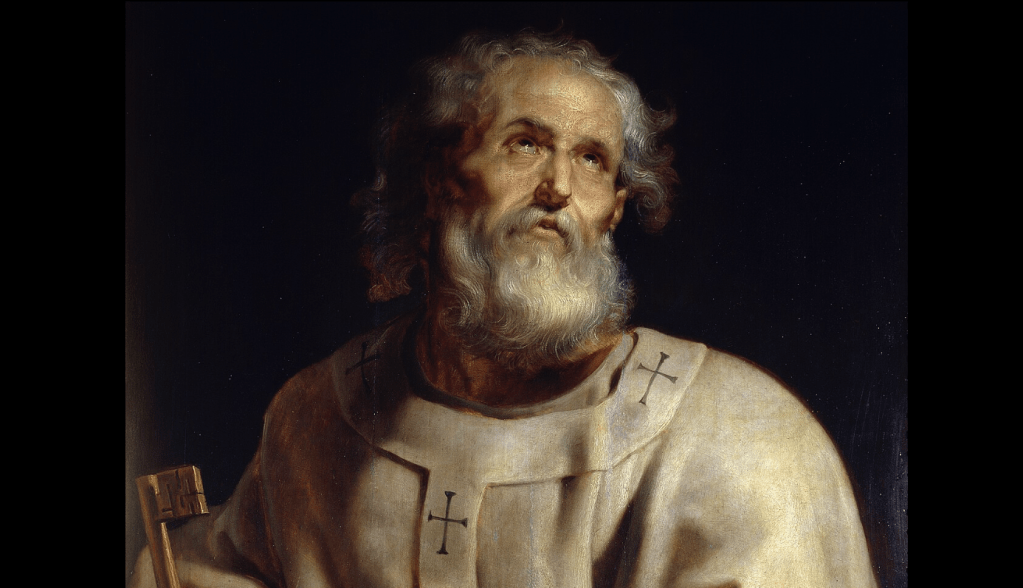
Painting: The Apostle Saint Peter by Peter Paul Reubens

Healy, Mary. The Gospel of Mark. Grand Rapids, MI: Baker Academic, 2008.

Link for the Mass readings for Thursday, February 20, 2025

“Lord, even the dogs under the table eat the children’s scraps.”

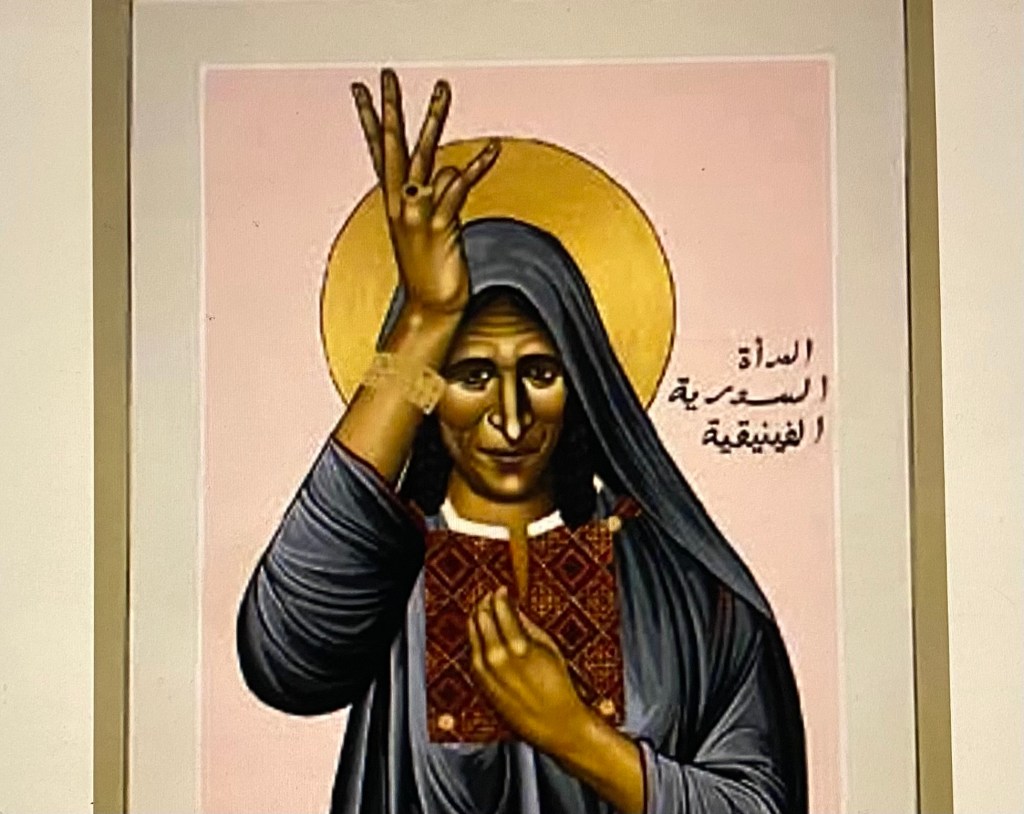
In today’s encounter between Jesus and the Syrophoenician woman, we can observe again the crossing of societal norms by both the woman and Jesus. The woman, very much like the woman who had been hemorrhaging for twelve years, was desperate, faithful, and bold as she approached Jesus. She was willing to risk breaking the social taboo of speaking with Jesus on one hand and entering into the place where he was staying uninvited on the other! She walked into the home where Jesus was staying for the sole purpose that her daughter would be healed.

Jesus meets her with the derogatory language of equating her with a dog, considered one of the most unclean of animals by Jews: “Let the children be fed first. For it is not right to take the food of the children and throw it to the dogs” (Mk 7:27). This woman would have none of Jesus’ rebuke, she wasn’t leaving without receiving a healing for her daughter, even if that meant she was putting her life in danger. Her retort, “Lord, even the dogs under the table eat the children’s scraps”, emphasized this point. It was also the key that opened the door for the disciples and us to witness a consistent pattern with Jesus.

Just as the woman who was experiencing the hemorrhage (cf. Mk 5:25-34), both women had the faith and courage to approach Jesus. The outcome of this encounter was also similar to the one that Jesus had with another Gentile, the Roman centurion, who said that he was not worthy for Jesus to enter under his roof. In both accounts, Jesus healed solely by his word from afar. What is important to Jesus is the person’s faith and belief that Jesus was who he said he was and still is today!

Jesus’ apparent rebuke to the woman was more a statement of fact. He did first come to proclaim the Good News to the “children” first, the chosen ones of God’s children, the people of Israel. And how sad was the day as we saw not too long ago when Jesus came to proclaim this message to those in his hometown and none had the faith of this woman before him, a Gentile. Her faith not only saved her daughter from the possession of a demon, but was the opening for the Gospel to also be proclaimed to the Gentiles as well as to the Jewish people.

Do we have the courage, faith, and belief in Jesus as shown by the Syrophoenician woman? Are we willing to take the risk of crossing our own societal norms to draw closer to Jesus? When we let nothing hinder our stride closer to Jesus, including relinquishing the reigns of being our own masters, acknowledging that God is God and we are not, believing that Jesus is truly the Son of God and that he is still present and active in our lives, miracles still do happen! Jesus said that if we have faith but the size of the mustard seed, we can move mountains (cf. Mt 17:20) and what we ask for in prayer, we will receive (as we shall see in Mark 11:24).

If you or someone close to you are dealing with some conflicts, challenges, trials, or tribulations, if something, someone, or your own fear or anxiety is keeping you from making a deeper commitment to surrendering your life to Jesus, if there are opposing forces that feel as big as mountains, be not afraid! Trust in Jesus! Bring any and all burdens and lay them at his feet, and then take his hand. With Jesus all things are possible. We just need the courage to believe that our Lord is present with us especially in the midst of our challenges. Jesus has not left us as orphans. We are not alone, but we do need, as did the Syrophoenician woman, have faith that Jesus is who he says he is. Jesus is the Christ, the Son of the living God, our Savior and Redeemer, and he is present, is the kingdom of God at hand, and will see us through step by faithful step.


Photo: Syrophoenician Woman by Robert Lenz

Link for the Mass readings for Wednesday, February 13, 2025

With a breath and a prayer, we can choose what we think, speak, and how we are to act.

“[W]hat comes out of the man, that is what defiles him” (Mk 7:20).

Jesus offers a list in today’s gospel of what can be unleashed from within and then directed out toward another. These are examples of what defiles us because, at some level, we make the decision to think about, speak, and put into action those thoughts, words, and actions.

To resist the temptation to defile ourselves and others, we can follow the lead of the writer from the letter to the Hebrews who offered a wonderful verse, which I pray each morning in my recitation of the Office: “Encourage each other daily while it is still today” (Hebrews 3:13). There are many that we will encounter or hear about each day that will do the exact opposite.

Our goal each moment is to resist spending any time or energy in supporting any thoughts, words, or actions that demean, belittle, or dehumanize. We can call those out who do so, stand up for those impoverished from these attacks who do not have a voice but we must not succumb, engage, or in any way be lowered to the negativity unleashed. Otherwise, we become an agent in perpetuating the same vileness and poison already unleashed.

Our thoughts, words, and actions matter because we are all interconnected, and even what we ruminate upon can be projected onto our faces and directed out toward another without saying one word. Thoughts entertained can lead to words and actions that wound. We are better when we approach each moment accessing more intentional choices. Instead reacting on automatic pilot, we can take a slow breath, think, and pray about our response.

Let us choose this day to align our thoughts, words, and actions with those of Jesus. We can follow St Mother Teresa of Calcutta’s five-finger gospel as a reminder: “You did it to me.” What we say and do to the least of our brothers and sisters, we say and do to Jesus (cf. Mt 25:35-45). This begins when we resist defiling ourselves by never letting evil talk pass our lips and instead think, speak, and act in ways that empower, convict, and build up others. Our effort is strengthened when we choose to forgive any negativity hurled at us, and meet it with a posture of compassion that seeks to understand the perspective of the hurler. In our efforts, we are not alone when we call upon the help and strength of Jesus as we strive to become ambassadors of his transforming love.

————————————————————————————————-

Photo: Making time to be still and quiet when all is well helps us to more easily choose to do so when stressful opportunities arise.

Link for the Mass readings for Wednesday, February 12, 2025

Let us honor God with open minds and hearts to his will.

Jesus reacted to the criticism of not observing ritual washing prior to eating that was leveled at him from the Pharisees and scribes by recalling the tradition of the Prophets through the words of Isaiah: “This people honors me with their lips, but their hearts are far from me” (Mk 7:6). For Jesus, following the law for the law’s sake is an empty act. What is more important is encountering God, experiencing his love and forgiveness, developing a relationship with him, being transformed by him, and restoring what has been lost. Human beings were created in God’s image and likeness, but through sin, lost that likeness. Jesus sought to help bring God’s children back into right relationship with his Father so as to be able to glorify him by serving others and inviting others into communion with him. Jesus challenged the hyper scrupulosity and exactitude of the rules that had nothing to do with being humble servants of and growing in relationship with God.

Just laws and practices are enacted to build up and empower through discipline and clear boundaries. They help keep us from being enslaved to our passions and sins and instead lead us to freedom for excellence, for fulfillment, and to experience a heart on fire with an ever-growing love that yearns for a relationship with God and each other, like a deer does for running streams.

As with any game we play, there are rules and regulations, there are referees and officials to keep order. When the rules enforced encroach on the flow of the game, such that they inhibit the freedom of play, the game is stunted. When there is no enforcement, the game quickly devolves into chaos. When the rules are consistent, they provide the structure and boundaries that limit abuse, allow for the game to flourish, and the players to experience the freedom to actualize their potential, and as such, there is the experience of the true, the good, and the beautiful.

The first time I saw people skate, at around seven years, I was enraptured. My father was working on a project at our local, ice rink. We had not gone there to skate, and yet, I refused to leave until he took me on the ice. It didn’t matter that the only skates to fit my feet were figure skates or that my first attempt was a dismal failure. What mattered was that I made it to the ice and the joy of that experience inspired me as I learned the rules of balance, how to stop, and what a toe kick was and was not for. Soon I had the freedom not only to skate but to join a hockey team. The freedom and joy I felt any time I skated or played hockey, I still carry with me.

The Church, when we are at our best, is the same. We don’t lead with the rules and moralizing, but instead, we share our time, presence, and the joy of our faith. We empower and support one another as we enter into the play between our finite freedom and God’s infinite freedom. We have been created for and seek a deep and intimate relationship with him that will lead us to a deeper transformation of our hearts and minds. With both open to God’s guidance, we can better identify and discern between the voice of the enemy and God. There is a unique balance between the rules and the freedom of play in ice skating as well as our relationship with God.

Loving someone does not mean we allow them to do whatever they want, but in willing their good, we offer invitations, options, establish boundaries, and offer corrections, that will provide opportunities for growth, maturity, and authentic freedom. We are going to make mistakes, I have made plenty. The key is recognizing that we are on a journey together. As we walk together, we support and learn from one another. In this way, the boundaries and rules we follow are meant to set a foundation for healthy relationships and actualizing who God invites us to be; joyful, human beings that are fully alive!

———————————————————————————

Photo: Getting back on the ice with Jack and Christy, Christmas Eve day, 2023, in the city of my birth, Hartford, CT.

Link for the Mass readings for Tuesday, February 11, 2025

To touch only the tassel of his cloak…

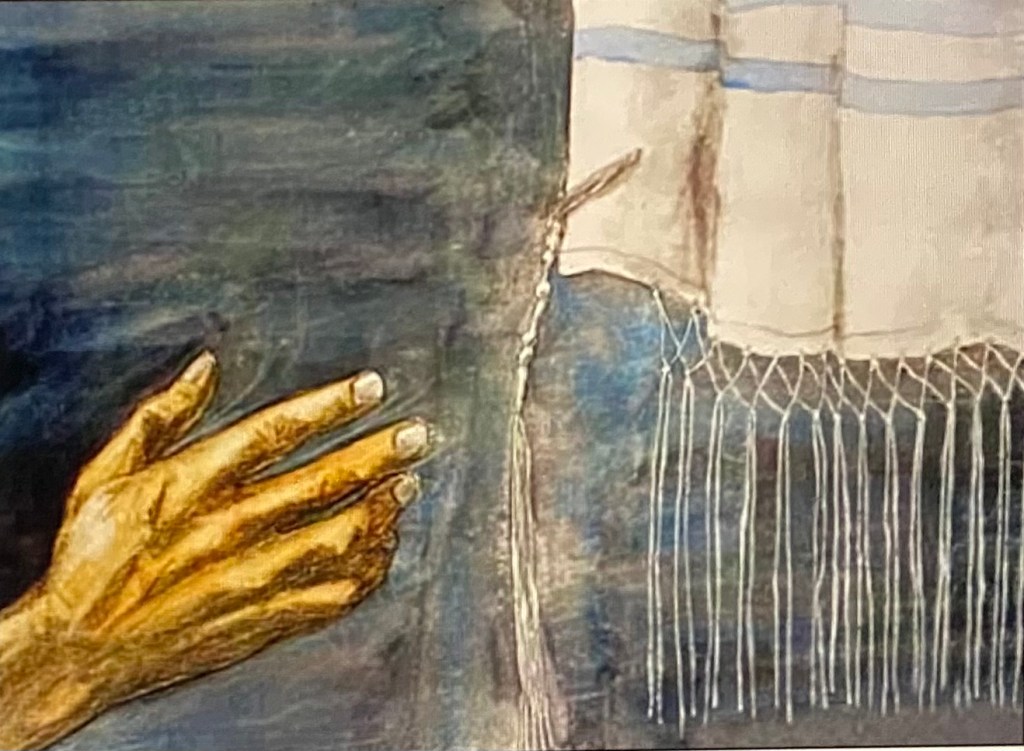
“Whatever villages or towns or countryside he entered, they laid the sick in the marketplaces and begged him that they might touch only the tassel on his cloak; and as many as touched it were healed” (Mk 6:56).

The people of Jesus’ time were in need of healing, hungry to draw closer to God, often searching, wandering, and wounded. That some begged only to touch the tassel on his cloak is interesting. Had the story of the faith of the woman with the hemorrhage for twelve years who courageously reached out and touched the tassel of his cloak and was healed spread? Had the woman herself shared her story and inspired others who had all but lost hope to seek out Jesus?

Even though there was a lull in the momentum when Jesus’ healed only a few in his hometown, and Mark paused in his account to share the flashback of John the Baptist’s death, Jesus has not slowed and people continue to seek his healing. The apostles also have been sent to bring healing and with success. Though Jesus is not as visible to us as he was to those in the land of Gennesaret, he is just as present if not closer, especially in the sacraments, to us today. “Jesus is still the great Physician of our souls and bodies. In the power of the Holy Spirit he continues his work of healing and salvation through the Church, especially in the two sacraments of healing: Penance and the Anointing of the Sick” (Healy, 134).

Let us also not forget the gift of Jesus present in the Mass. After experiencing the word proclaimed at Mass as his disciples heard Jesus teach with authority and receiving his Body and Blood, we are not to go home as if nothing of any significance just happened. Jesus invites us to his banquet weekly, and daily, to encounter him so that in receiving his love and his presence, we may be transformed and go forth to bring Jesus who we have received to others. We are also to see Jesus present in others who are in need.

Pope Francis was asked in an interview by Fr. Antonio Spadaro, S.J., in 2013, “What does the church need most at this historic moment?” And Pope Francis answered, “that the thing the church needs most today is the ability to heal wounds and to warm the hearts of the faithful; it needs nearness, proximity. I see the church as a field hospital after battle.” We need to be “near”, in the same “proximity”, to bear Christ to one another: “The church sometimes has locked itself up in small things, in small-minded rules. The most important thing is the first proclamation: Jesus Christ has saved you. And the ministers of the church must be ministers of mercy above all.”

As in the time Jesus walked among the people of Galilee and they came to him seeking healing, we and so many are in need today. May we seek to breathe, rest in, and receive God’s love and healing, sot that we may be then present, have compassion like Jesus and draw near to those who Jesus sends us. May we resist the temptation to keep others at a distance and refuse to be indifferent to the needs of those he brings to us in their time of need. May we too, in the words of Pope Francis, go out to “heal the wounds and to warm the hearts of the faithful” by being willing to accompany others in their sorrows, anxiety, trials, and tribulations.

People are hurting. We are not necessarily called to fix others or their problems but to be present, to listen, to hear, and to allow the Holy Spirit to speak and love through us at the appropriate time, so that, in the end, we do not prevent people from encountering Jesus, but provide a means for them to encounter the divine Physician. Maybe we can be the tassel on the cloak of Jesus to help others to experience his healing.

—————————————————————————————————————

Photo: Do we have the faith to seek healing from Jesus and also to be a link for Jesus to heal others?

Healy, Mary. The Gospel of Mark. Grand Rapids: Baker Academic, 2008.

Spadaro, S.J., Antonio. “A Big Heart Open to God: An interview with Pope Francis”. America Magazine. September 30, 2013 Issue: https://www.americamagazine.org/faith/2013/09/30/big-heart-open-god-interview-pope-francis

Link for the Mass for Monday, February 10, 2025