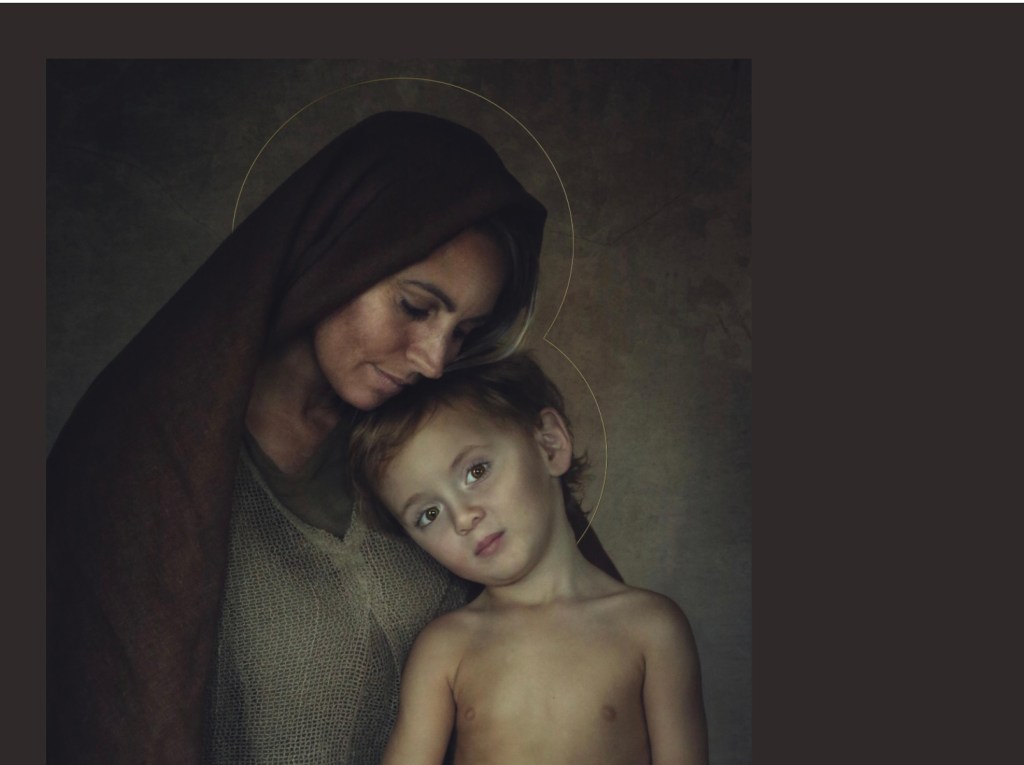
Life is a fragile and precious gift to be respected and celebrated.

Mary “traveled to the hill country in haste” (Lk 1:39) and as she drew close and called out to announce her arrival: Elizabeth heard Mary’s greeting, [and] the infant leaped in her womb, and Elizabeth, filled with the Holy Spirit, cried out in a loud voice and said, “Most blessed are you among women, and blessed is the fruit of your womb” (Lk 1:41-42). This is an encounter of joy. Elizabeth’s response is a confirmation to Mary’s, “Yes”, to the angel Gabriel, that she has indeed conceived in her womb the Son of God who was taking on flesh and becoming one of us, a human being, as she traveled to the hill country. Elizabeth’s son recognized him, and in leaping with joy, helped to get the celebration started!

The encounter and interaction between Mary and Elizabeth, Jesus and John, at the Visitation is a model for us of discipleship. Touched by the Holy Spirit we are to go out to share the Good News that God our Father loved us so much that he sent his Son to be one with us. He was willing to enter into our humanity. Some of the earliest heresies in the Church, which are still perpetuated today, were birthed because of an unwillingness to accept this gift, that God entered into and embraced our humanity, that God would become human was and is still for too many, inconceivable.

Yes, we have been wounded by sin, but we have not been destroyed and completely undone. The coming of the Son of God as one of us is an opportunity to be healed, to be born again from above, and this can happen through the same love of the Holy Spirit that inspired John to leap in Elizabeth’s womb and for her to rejoice.

May we resist the mind noise from within, and without from other people who tell us overtly and/or covertly that we are worthless or nothing. Not true! Through our very being, we are created in the image and likeness of God, we have been created by love, to receive and to share love. We are a living craving hunger and desire to be in communion with God and one another. This is true for the atheist and the believer alike. We are called to will the good of the other as other as they are, unconditionally. If we have fallen short, a little or a lot, in the way we have been treating ourselves and/or others lately, today is a new day to take Jesus’ hand and begin anew. Let us celebrate with Jesus, Mary, Elizabeth and John.

We are celebrating that Jesus was born for us, he lived that we might not only be shown a better way, but know that he is the Way. Jesus became vulnerable for us, a key ingredient in unconditional love: to be willing to risk being authentic to who God called him to be, even to being willing to be rejected, even if that meant that all might walk away from him. May we be willing to be vulnerable, to risk, to share with others who we are, free of masks and pretense. May we be present to, and also walk and accompany one another. Being there for our family and friends is important, and if we take our Christianity seriously, we must come to acknowledge, in concrete ways, person to person, that we are all brothers and sisters, that in Christ we are all related.

Just as the sun shines on the good and the bad alike, Jesus died for each and every human being, all of us. After his resurrection and ascension into heaven, he sent the Holy Spirit, the love shared between the Father and the Son, to empower us to live as he did, in communion with his Father, so to better actualize our communion with one another.

An invitation for the transformation of all humanity and creation happened at the Galilean hill side when two simple women said yes to God and embraced with joy. They came to embrace not only each other, but their vocation. May we join them in saying, “Yes”, to God, follow his will with joy as Mary and Elizabeth did and with them, celebrate the gift of life, because as each of these mothers would experience all too soon, life can be taken quicker than they could or we can ever imagine.

We do not know the time or the hour, so let us like Mary go in haste to tell those we care about that we love them. Let us make that call, send that card, email, or text, and/or invite that person for a walk, to sit down and visit. Especially amidst the expansion of divisive and polarizing darkness, may we be a light to all we encounter. Empowered by the love and joy of Jesus, may we encourage, empower, and lift one another up so as to treat each other with dignity, respect, kindness, and understanding. The easiest way to start is when you catch the eye of another, smile. In that simple gesture, we say to the other person that we care enough to make the time to acknowledge their dignity, their worth, and to let them know that they exist and have meaning.

On this feast day of the Visitation, may Mary and Elizabeth intercede on our behalf that we may honor all life from the moment of conception, through each stage until natural death. We start simply by appreciating and respecting the dignity of each other a bit more today than we did yesterday. “All we have to decide is what to do with the time that is given to us” (Gandalf said to Frodo in The Fellowship of the Ring, JRR Tolkien). Let our choice be to build a culture of life.

——————————————————————–

“The value of the person from the moment of conception is celebrated in the meeting between the Virgin Mary and Elizabeth, and between the two children whom they are carrying in the womb” (St. John Paul II, Evangelium Vitae, 45, in Gadenz, Pablo T. The Gospel of Luke. Grand Rapids, MI: Baker Academic, 2018). Photo credit: OSV News photo/Giancarlo Giuliani, CPP

Link for the Mass readings for Saturday, May 31, 2025

“John is his name.”

Zechariah had not spoken since the time he encountered the angel Gabriel. Gabriel shared with Zechariah that his wife Elizabeth, though barren and past childbearing age, would give birth to a son and his name would be called John. The time for the fulfillment of Gabriel’s prediction had now come to pass, Elizabeth gave birth, and with friends and relatives gathered around on the eighth day for his circumcision and naming. Elizabeth announced that her son will be named John. Those with her balked, “There is no one among your relatives who has this name” (Lk 1:61).

There may also be some hesitancy because John, or יוֹחָנָן, Yôḥanan in Hebrew, means one who is graced by God. Who did Elizabeth think she was naming her son by this sacred name? They then appealed to Zechariah. He would support his wife by writing on a tablet that “John is his name.” Zechariah confirmed Elizabeth’s words and: “Immediately his mouth was opened, his tongue freed, and he spoke blessing God” (Lk 1:63-64).

Filled with the Holy Spirit, Zechariah spoke what we call today the Benedictus or Canticle of Zechariah, the beginning lines of which read: “Blessed be the Lord, the God of Israel; for he has come to his people and set them free. He has raised up for us a mighty Savior, born of the house of his servant David” (Lk 1:68-69).

Zechariah did not proclaim that John was the Messiah. As Christians, we believe that Micah prophesied that John was to be the herald of the Messiah. He prepared the way for the coming of the Lord. The Benedictus, like the Magnificat, is a song of great promise. This is why the Church proclaims that they are to be prayed every day in the recitation of the Book of Christian Prayer or the Liturgy of the Hours. We are living in the time of its fulfillment.

The year 2024 A.D. does not stand for after the death of Jesus, it stands for anno domini, in the year of our Lord. We live in the in between times of Jesus’ first coming as we prepare for his next coming. We live in great joy because we can prepare to receive Jesus everyday. This is why St. Paul wrote to the Philippians, we are “to rejoice always.” No matter the external circumstances or internal angst, our Lord Jesus the Christ, the Son of the living God is at hand, to forgive and heal us, accompany and deliver us, give us guidance and strength!

In the midst of continuing violence, war, polarization, endless forms and acts of dehumanization, fear, and growing anxiety, we will celebrate again this Wednesday. We will celebrate Christmas, the reality that the Son of God agreed to be sent close to us, to become human, to die, and conquer death so that he can be with us and lead us into eternity. John helped to prepare the way to receive Jesus by calling people to repentance. May we seek his intercession as we remember his birth today to prepare well in these final days of Advent so to better remember and celebrate again the reason for the season. Our Savior has come. Sin, suffering, and death do not have the final answer. Jesus does.

May we heed the call of John and Jesus to repent so that we may receive God’s forgiveness and grace and be freed from our entanglements with sin. May we let go of anything that separates us from our relationship with God and resist the temptation to curve in upon ourselves which leads us to death. Let us turn away from our pride and the false promise of self sufficiency and instead depend upon and place our trust in Jesus who offers us life. Each and every day, with the courage of John, let us prepare the way of the Lord and “give people knowledge of salvation” that Jesus is at hand so that God may “guide our feet into the way of peace.”


Photo: St. Elizabeth and John the Baptist by Krysten Brown, The Saints Project

Link for the Mass readings for Monday, December 23, 2024 A.D.

“Blessed are you who believe.”

If you attend Mass daily or pray with the daily Mass readings, you may wonder, “Didn’t I just hear or read this account?” You would be correct, as this was the same Gospel reading as Saturday morning’s daily Mass. The difference comes in with the other readings.

The first reading from Micah may seem a bit obscure and we might be moved to question what does this have to do with getting ready for the coming of Jesus? Bethlehem would be our first clue. Bethlehem is the city of the birth of David. Micah shared that, “from you shall come forth for me one who is to be ruler in Israel; whose origin is from of old, from ancient times” (Micah 5:1). Micah is prophesying that the messiah will be no mere shadow of David, nor a mighty judge like Samson. This one has his origins “from of old”, beyond time. This messiah will be God with us. Both Matthew and Luke pick up on this in their nativity accounts (Matthew 2:1-2 and Luke 2:4-20) that we will read on Christmas.

So what about Ephrathah? Jews from the time of Jacob until those practicing today would pick up the reference to Ephrathah right away as being the burial place of Rachel the mother of Joseph and Benjamin, and beloved wife of Jacob. Though not the birth mother of the twelve sons of Jacob, Rachel was considered the matriarch, the mother of Israel. Jacob’s name, after wrestling with the Lord all night, was changed to Israel.

Echoes of Rachel being the mother of Israel also arose from the prophet Jeremiah when he wrote of her by name as weeping over her the fall of Jerusalem at the hands of the Babylonians. And yet, God sends comforting words through the prophet: “There is hope for your future – oracle of the LORD – your children shall return to your own territory” (Jeremiah 31:15-17).

We can see with the early Church Fathers that David was the premier king of Israel while at the same time he was foreshadowing Jesus the one “from of old” as Micah predicted. Rachel is a foreshadowing of Mary, the mother of Jesus, the mother of the Twelve Apostles, the fulfillment of the gathering in of the lost twelve tribes of Israel and the mother of the Church. She, like Rachel, would also suffer at the death of her children, but also be the intercessor for them through her suffering.

Mary is the new Rachel and also the new Eve because Mary’s obedience unties the knots of Eve’s disobedience. As we learned in the second reading to the Hebrews, God has no pleasure in sacrifice but takes pleasure in those doing his will. God delights not sacrifice but obedience. Mary, before becoming the mother of the Messiah, the mother of God, was obedient with her “yes” at the Annunciation. As Jesus said, the one who does the will of his Father was his mother (cf. Matthew 12:46-50). Who followed the will of the Father better than Mary?

Very soon after her “yes”, and the conception of Jesus in her womb, Mary went in haste to see Elizabeth. Each celebrating the gift of new life in each of their wombs. And how is Mary greeted by her elder cousin? With reverence, which was unheard of. The youth revered the elder family members during Jesus’ time. After hearing the words of Mary’s greeting, experiencing her son leaping in her womb, Elizabeth is moved by the Holy Spirit to proclaim blessing upon Mary: “Blessed are you among women and blessed is the fruit of your womb” (Luke 1:42). Elizabeth does so with great joy, “crying out in a loud voice.” 

May Elizabeth and Mary’s joy reach into the depths of our souls. May we be open to believe.

May we believe that Jesus is the Son of God who became man. That Jesus came into the world not just to be a great rabbi and teacher, not just to perform miracles and cast out demons, nor just to be the messiah, that Jesus came not just to live, but that he came to die, to give his life for us, and in so doing become our savior. This birth we are about to celebrate was just a foreshadowing of his impending death.

As Bishop Fulton Sheen wrote, “He was laid in a stranger’s stable at the beginning, and a stranger’s grave at the end… He was wrapped in swaddling bands in His birthplace, He was again laid in swaddling clothes in His tomb… It was not so much that His Birth cast a shadow on His life, and thus led to his death; it was rather that the Cross was there from the beginning, and cast its shadow backward to his birth…” (The Life of Christ).

Jesus, as the fulfillment of the law and the prophets, is inviting us in these final days of Advent to do as he, Mary, and Elizabeth did, to follow the will of his Father. What joy we too will experience when we open ourselves up to the reality of the gift that God has given us, his Son, and so rejoice with Elizabeth and Mary that we too have a part to play in salvation history!


Photo: May these words and picture help you to experience some quiet time to pray and ponder about the connection between the birth and death of Jesus and the life he has called us to live.

Source for Bishop Sheen quote and background information from Dr. Brant Pitre, Mass Readings Explained, The Fourth Sunday of Advent Year C, Christmas and the Cross

Link for the Mass readings for Sunday, December 22, 2024