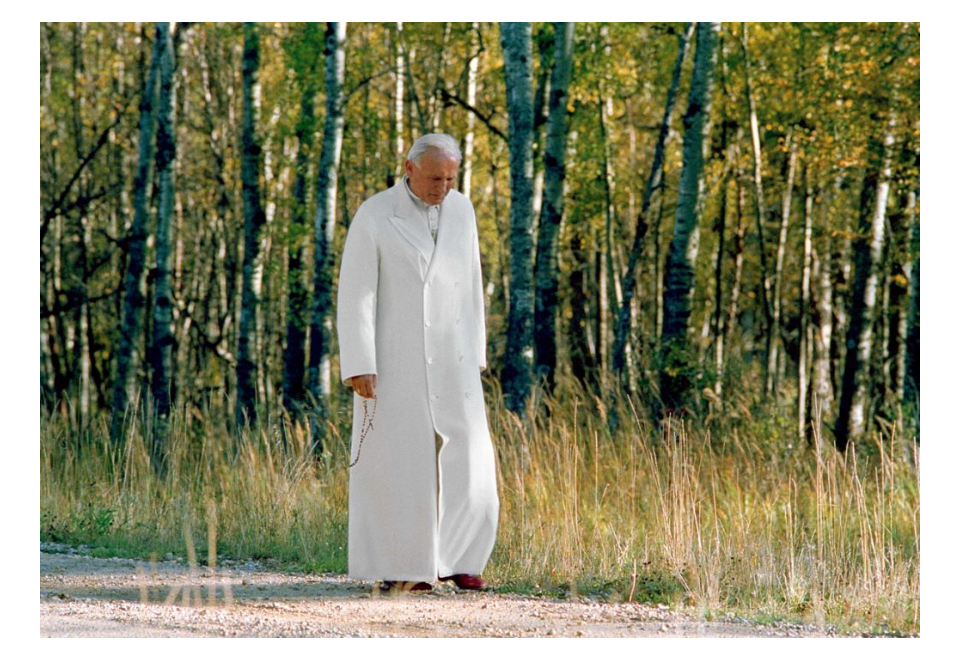
God offers his saving grace to all who are willing to accept his love.

“Who then can be saved?” Jesus looked at them and said, “For men this is impossible, but for God all things are possible” (Mt 19:25-26).

The disciples are “greatly astonished” about Jesus’ comments about how difficult it would be for the rich to enter heaven. Their astonishment came from the belief system that those who had wealth did so because they had been blessed by God for following his commandments. Just remember the rich young man’s attitude from yesterday. He had followed God’s commands and was blessed with riches and had many possessions, but Jesus turned his world upside down when he asked the man to give up all he had, give it to the poor, to follow him.

Jesus attempted to help the man and his disciples to understand that what we have, all that we have, is a gift from God, starting with our very existence. He is the ground, the source, and sustenance of our life as well as our ultimate fulfillment. A problem arises when we place our security in material things and that is our possessions can possess us. We instead to place our focus on God who provides for our needs.

When we place our security in and become dependent upon that which is finite, we are always going to be left unfulfilled, attached, and/or at worst addicted, and so like the rich man, unwilling to give of ourselves to those in need, because we are afraid that we won’t have enough. Also, when we look to our own effort and work ethic, we can build an unhealthy self-reliance on our self alone. We can place ourselves as the supplier of our security instead of God. Pride then becomes a dangerous and corruptive idol. We think and start to believe that we don’t need God because we can do well enough on our own, thank you very much.

There is another side of self-reliance. Because of past wounds, because we may have been hurt by those we trust, we may have trouble not only trusting people but also trusting God. We may even believe in God and seek to follow him, but unconsciously keep him at a safe distance because we don’t want to be hurt. The enemy preys on our wounds and attempts to sew untrusting thoughts in our minds and hearts because he seeks to keep us isolated. We can always trust God no matter what and he will not let us down. We may not understand at times and we can even let him know when we are angry at him, because that is honest prayer. Once we give him an earful, though, let us take a few deep breaths, and trust him.

“Who then can be saved?” The disciple’s question appeared to be agreed upon by all, since Matthew infers that all of them were asking the same question. This can be our question as well. If we can’t buy, earn, or achieve our way into heaven, how will we get in? Jesus is clear. For men, this is impossible because there is no means for us to get there on our own merit. But for God, all things are possible because our salvation is a gift freely given by him.

As with any gift though, we need to be willing to receive, accept, and open it. One way is to be grateful for what we have and recognize that the source of all we have comes to us from God. In this way, we can share freely from what we have, because God, who is our source, is unlimited. As we give from what God has given, God will continue to supply. What is primary then is allowing ourselves to receive, rest, and abide in the greatest gift we can receive, God’s love. We hunger and thirst for intimacy with God and only he can satisfy our deepest yearning.

What is essential in our life is not the material things, not even the gift of God’s blessings and consolations. What is essential is to experience the love and intimacy of the gift giver. Time goes fast. Even when life is a bumpy or downright challenging, when we rest in the truth that we are God’s beloved daughter or son, not in the things that he gives us, we will know God, his love, and experience his peace which is beyond price. Let us not take time, nor each other, for granted. Let us place our trust in Jesus who is our true foundation and with him we will experience that “all things are possible.

—————————————————————

Photo: Resting in and receiving a moment of quiet to be with and thank God.

Link for the Mass readings for Tuesday, August 18, 2026

We need not fear to invest our gift because Jesus is with us.

In today’s Gospel, we have available to us the parallel to The Parable of the Talents from Matthew 25:14-30, which is The Parable of the Ten Gold Coins from Luke 19:11-28. There are a few differences. A key opening point is that in Matthew’s account, we do not know why or where the master goes after he entrusted three of his servants with talents; five, two, and one respectively. In Luke’s account the man is a noble and he “went off to a distant country to obtain the kingship for himself and then to return” (Lk 19:12). He called ten servants to invest a gold coin he gave to each of them. The theme that is similar in both accounts is that when the man returns, two of the servants invested well and brought about a greater return on their investment, and one hid what he was given out of fear of his lord.

Another added feature in Luke’s account was the fellow citizens of the nobleman that did not want him to be king and openly opposed him. The nobleman after attaining his kingship and returning successfully, dealt harshly, to say the least, with those who opposed him, having them slain. Those listening to Jesus tell the parable would understand this predicted outcome, as it was not uncommon in the ancient Near East for a ruler to slay those who opposed his rise to power.

The most immediate parallel and contemporary example was the current tetrarch, Archelaus, who was placed into power in Judea and was reigning at the time of Jesus. He was a cruel tyrant. The Jewish historian, Josephus, who during the time of the Jewish Wars was captured and later became a Roman citizen wrote that there were “fifty ambassadors were sent from Judea to Rome to request that Archelaus not become king, because he had already killed three thousand Jews in quelling an uprising” (Gadenz, 320).

Just as the wicked tyrant is rejected, the innocent Messiah will also be rejected in Jerusalem, and will give his life. Jesus again appears to be presenting the contrast between the fallen nature of humanity with the coming of the new kingdom under his reign. His apostles are not to be like the corrupt leadership of the age, but they are to go out to all the nations to proclaim the good news of the kingdom.

The readings this week also continue to present eschatological talk, references to the second coming of Jesus, and final judgment because we are in the final two weeks of the liturgical year. Jesus’ reference to going away and coming back, could be a reference to his death, resurrection, ascension, and the waiting until his second coming in which there will be a judgment by God. Jesus makes clear that we are not the judge and jury, though many appropriate this role for themselves. We are only accountable for the talent or gold coin we have been entrusted with.

God has called us each uniquely by name and given us a gift that he wants us to put into action to help build up his kingdom. We need to resist burying this gift or hiding it away. The most important thing we can do each day is to pray, and deepen our relationship with God and each other. The enemy will tempt us with doubts, fears, and anxieties which we are to renounce and instead trust in Jesus, seek his strength, and guidance.

We are invited each day to begin with prayer. In the beginning, the length of time is not as important as consistently spending time with God intentionally. We show up, breathe, allow ourselves to be still, allow the restlessness of our mind to quiet, and we listen. This may take some time or days, but when we continue to return to these daily anchors and trust that God has a purpose for us, we will hear his guidance, and then we are to follow his lead.

The encouraging words of St. John Paul II are helpful: “Remember that you are never alone. Christ is with you on your journey every day of your lives!” – St. John Paul II

We are called by Jesus to be contemplatives in action. We are not to follow the lead of mediocrity and fear. With humility and patience, let us trust in the guidance of the Holy Spirit who will light our path to maturing and actualizing our unique call and as we serve God and one another we will bear good fruit.


Painting: “The Lord of the Parables” by Jorge Cocco, Altus Fine Art

Gadenz, Pablo T. The Gospel of Luke. Grand Rapids, MI: Baker Academic, 2018.

Link for the Mass readings for Wednesday, November 19, 2025

Life is a fragile and precious gift to be respected and celebrated.

Mary “traveled to the hill country in haste” (Lk 1:39) and as she drew close and called out to announce her arrival: Elizabeth heard Mary’s greeting, [and] the infant leaped in her womb, and Elizabeth, filled with the Holy Spirit, cried out in a loud voice and said, “Most blessed are you among women, and blessed is the fruit of your womb” (Lk 1:41-42). This is an encounter of joy. Elizabeth’s response is a confirmation to Mary’s, “Yes”, to the angel Gabriel, that she has indeed conceived in her womb the Son of God who was taking on flesh and becoming one of us, a human being, as she traveled to the hill country. Elizabeth’s son recognized him, and in leaping with joy, helped to get the celebration started!

The encounter and interaction between Mary and Elizabeth, Jesus and John, at the Visitation is a model for us of discipleship. Touched by the Holy Spirit we are to go out to share the Good News that God our Father loved us so much that he sent his Son to be one with us. He was willing to enter into our humanity. Some of the earliest heresies in the Church, which are still perpetuated today, were birthed because of an unwillingness to accept this gift, that God entered into and embraced our humanity, that God would become human was and is still for too many, inconceivable.

Yes, we have been wounded by sin, but we have not been destroyed and completely undone. The coming of the Son of God as one of us is an opportunity to be healed, to be born again from above, and this can happen through the same love of the Holy Spirit that inspired John to leap in Elizabeth’s womb and for her to rejoice.

May we resist the mind noise from within, and without from other people who tell us overtly and/or covertly that we are worthless or nothing. Not true! Through our very being, we are created in the image and likeness of God, we have been created by love, to receive and to share love. We are a living craving hunger and desire to be in communion with God and one another. This is true for the atheist and the believer alike. We are called to will the good of the other as other as they are, unconditionally. If we have fallen short, a little or a lot, in the way we have been treating ourselves and/or others lately, today is a new day to take Jesus’ hand and begin anew. Let us celebrate with Jesus, Mary, Elizabeth and John.

We are celebrating that Jesus was born for us, he lived that we might not only be shown a better way, but know that he is the Way. Jesus became vulnerable for us, a key ingredient in unconditional love: to be willing to risk being authentic to who God called him to be, even to being willing to be rejected, even if that meant that all might walk away from him. May we be willing to be vulnerable, to risk, to share with others who we are, free of masks and pretense. May we be present to, and also walk and accompany one another. Being there for our family and friends is important, and if we take our Christianity seriously, we must come to acknowledge, in concrete ways, person to person, that we are all brothers and sisters, that in Christ we are all related.

Just as the sun shines on the good and the bad alike, Jesus died for each and every human being, all of us. After his resurrection and ascension into heaven, he sent the Holy Spirit, the love shared between the Father and the Son, to empower us to live as he did, in communion with his Father, so to better actualize our communion with one another.

An invitation for the transformation of all humanity and creation happened at the Galilean hill side when two simple women said yes to God and embraced with joy. They came to embrace not only each other, but their vocation. May we join them in saying, “Yes”, to God, follow his will with joy as Mary and Elizabeth did and with them, celebrate the gift of life, because as each of these mothers would experience all too soon, life can be taken quicker than they could or we can ever imagine.

We do not know the time or the hour, so let us like Mary go in haste to tell those we care about that we love them. Let us make that call, send that card, email, or text, and/or invite that person for a walk, to sit down and visit. Especially amidst the expansion of divisive and polarizing darkness, may we be a light to all we encounter. Empowered by the love and joy of Jesus, may we encourage, empower, and lift one another up so as to treat each other with dignity, respect, kindness, and understanding. The easiest way to start is when you catch the eye of another, smile. In that simple gesture, we say to the other person that we care enough to make the time to acknowledge their dignity, their worth, and to let them know that they exist and have meaning.

On this feast day of the Visitation, may Mary and Elizabeth intercede on our behalf that we may honor all life from the moment of conception, through each stage until natural death. We start simply by appreciating and respecting the dignity of each other a bit more today than we did yesterday. “All we have to decide is what to do with the time that is given to us” (Gandalf said to Frodo in The Fellowship of the Ring, JRR Tolkien). Let our choice be to build a culture of life.

——————————————————————–

“The value of the person from the moment of conception is celebrated in the meeting between the Virgin Mary and Elizabeth, and between the two children whom they are carrying in the womb” (St. John Paul II, Evangelium Vitae, 45, in Gadenz, Pablo T. The Gospel of Luke. Grand Rapids, MI: Baker Academic, 2018). Photo credit: OSV News photo/Giancarlo Giuliani, CPP

Link for the Mass readings for Saturday, May 31, 2025

We will fear less when we pray more.

In today’s Gospel, we have available to us the parallel to The Parable of the Talents from Matthew 25:14-30, which is The Parable of the Ten Gold Coins from Luke 19:11-28. There are a few differences. A key opening point is that in Matthew’s account, we do not know why or where the master goes after he entrusted three of his servants with talents; five, two, and one respectively. In Luke’s account the man is a noble and he “went off to a distant country to obtain the kingship for himself and then to return” (Lk 19:12). He called ten servants to invest a gold coin he gave to each of them. The theme that is similar in both accounts is that when the man returns, two of the servants invested well and brought about a greater return on their investment, and one hid what he was given out of fear of his lord.

Another added feature in Luke’s account was the fellow citizens of the nobleman that did not want him to be king and openly opposed him. The nobleman after attaining his kingship and returning successfully, dealt harshly, to say the least, with those who opposed him, having them slain. Those listening to Jesus tell the parable would understand this predicted outcome, as it was not uncommon in the ancient Near East for a ruler to slay those who opposed his rise to power.

The readings over this week continue in this vein of eschatological talk, references to the second coming of Jesus, and final judgment because we are in the final two weeks of the liturgical year. The readings present us with the reality that there will be a judgment by God, and what Jesus makes clear is that we are not the judge and jury, though many appropriate this role for themselves. We are only accountable for the talent or gold coin we have been entrusted with.

God has called us each uniquely by name and given us a gift that he wants us to put into action to help build up his kingdom. We need to resist burying this gift or hiding it away. Doubts, fears, and anxieties will arise in our hearts and minds. We may say to ourselves, “I don’t even know where to begin.” We can begin with prayer, we can pray with the one who calls us to participate in his work.

We are invited each day to begin with prayer. In the beginning, the length of time is not as important as consistently spending time with God intentionally. We show up, breathe, allow ourselves to be still, allow the restlessness of our mind to quiet, and we listen. This may take some time or days, but when we continue to return and trust that God has a purpose for us, we will hear his guidance, and then we are to follow his lead.

“Remember that you are never alone. Christ is with you on your journey every day of your lives!” – St. John Paul II

We are called by Jesus to be contemplatives in action. Mediocrity and fear are no longer to be our guides. With humility and patience, let us trust in the guidance of the Holy Spirit who will light our path to maturing and actualizing our unique call to serve God and one another.


Photo: Pope St. John Paul II Rosary walk – L’Osservatore Romano

Link for the Mass readings for Wednesday, November 20, 2024