Come away and rest for a while.

After hearing the accounts of the missionary trip, Jesus invited his apostles to step away from the crowds “to a deserted place [to] rest awhile” (Mk 6:31). Jesus is showing the apostles the importance of balance. There are times to serve and times to recharge, to reconnect, and spend some quiet and reflective time with him. Jesus is our model, our guide and teacher, but he is at the same time more than that. Jesus is the source and sustenance of who we are as a living craving, hunger, and desire to be one with God and each another. As the deer longs to refresh itself from the waters of a running stream, we long to be nourished by the living water, Jesus, and this is true for the atheist as well as the mystic alike, for each and every one of us, whether we are aware of this reality or not.

Our thirst for communion can be stifled because it is so easy to be caught up in our day to day schedule, life’s demands, and falling into survival mode. Even when all is good and we are serving well, as we see with the apostles return, there is a need for rest.  There is so much that needs to be done, and at the same time, there are so many distractions and diversions that vie for our energy and attention.

In today’s Gospel, the intent of Jesus is to escape with his apostles for some rest and renewal, to decompress with them, and hear about their experiences of ministry. They get in a boat to do just that, yet the crowd that they thought they had left behind has arrived on the other side before they did! This is a sign that the preaching, exorcisms, and healing work the apostles participated in was already bearing fruit. Just as people were flocking to Jesus, so word was getting out about his disciples! “When Jesus disembarked and saw the vast crowd, his heart was moved with pity for them, for they were like sheep without a shepherd; and he began to teach them many things” (Mk 6:34).

So much for being able to “rest away for awhile”! Or maybe the boat ride across was that moment of rest. The moment to take a breath and reconnect with Jesus. As Jesus and the apostles were coming closer to shore, they could have diverted their course to avoid them. Instead, Jesus, was moved with pity or compassion and moved to teach them. A key for a more balanced life is to spend time daily with Jesus to know his will and follow his lead.

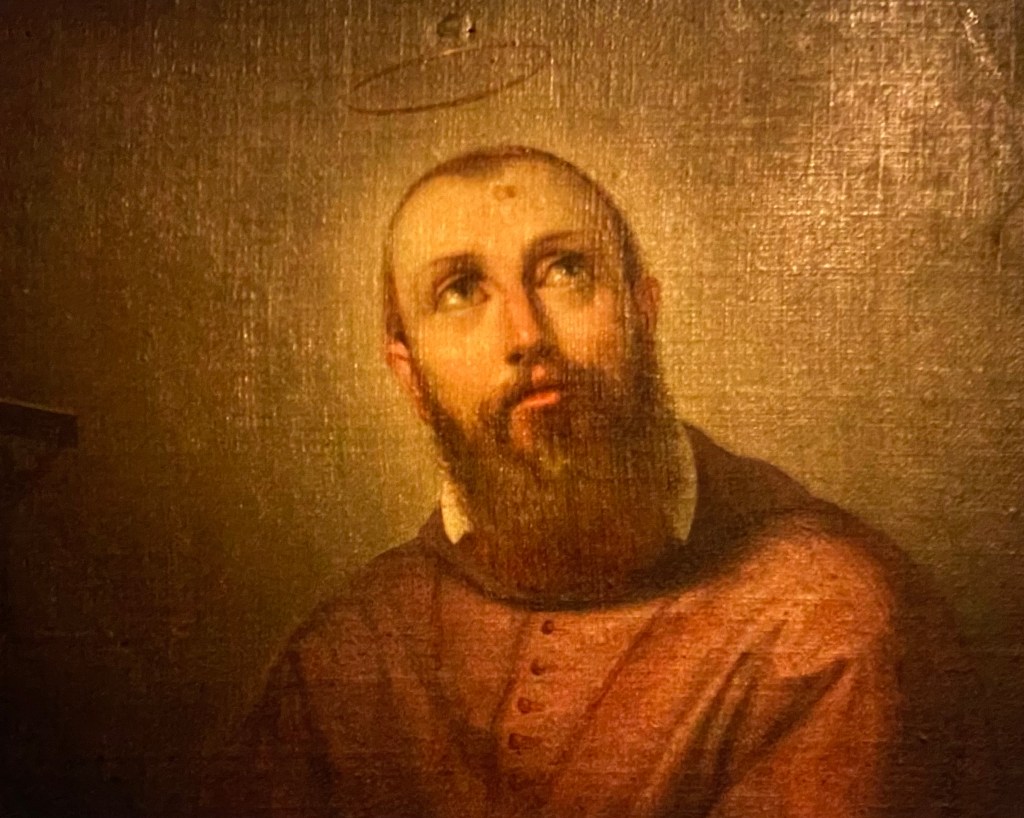
I have just experienced just such a moment as I needed to step back a bit for a few days. Many wonderful things are happening here at Holy Cross, but my body was feeling a bit taxed, so I took the time to reset, to rest awhile with Jesus and Mary. I also recommitted to setting key non-negotiable times to set aside for prayer. As St. Francis de Sales taught: “Every one of us needs half an hour of prayer a day, except when we are busy — then we need an hour.” I notice the difference when I do not give myself that hour each day.

When we intentionally put God first and make the time each day to spend with him, often there is a serendipitous alignment that we experience in our day, that we did not think possible at the outset. This often happens when we consciously make time for stillness, for meditation and prayer, even and especially, during the moment when we may feel we just don’t have the time.

As you ease into Saturday, my invitation is to give yourself a fifteen minute retreat. Read these words from Jesus slowly and reflectively: “Come away by yourselves to a deserted place and rest awhile” (Mark 6:31). Find a quiet place where you feel comfortable, take a few deep, slow breaths, close your eyes, then step into and sit in the boat with Jesus and his disciples.

Breathe some more, feel the breeze of the Sea of Galilee, feel the warmth of the sun on your face, and experience the rhythm of the boat on the water. Does Jesus remain silent and rest with you? Does he begin to teach, and if so, what does he share? Do any questions arise and if so what do you ask, and what is his answer? Allow yourself to be still, just you and Jesus for the time you have set aside. When the boat comes to shore, go forth into the day renewed and blessed by Jesus with a heart and mind able to be moved with compassion to follow God’s will in how best to serve him today and into the coming week.

—————————————————————-

Photo: Spending some time to breathe, pray, and be still with Jesus and Mary!

Link for the Mass readings for Saturday, February 8, 2025

Called, loved, and sent.

The rejection of Jesus by those in his hometown did not slow down his mission. We can imagine that Jesus knew what he was going to do already, but en route wanted to stop by to see if any from his “native land” would like to participate in his public outreach. Apparently, no one, or only a very few, those who were healed by him, did. Jesus, as he does throughout the Gospel of Mark moves on without missing a beat, much like Mary going in haste to bring the good news to Elizabeth. Jesus went ahead and, “summoned the Twelve and began to send them out two by two and gave them authority over unclean spirits” (Mk 6:7).

Could the rejection of the people of Nazareth then also have been a preparation for the sending of the Twelve? They had experienced his exorcisms, teaching with authority and healing with miracles, and also saw the reaction of the crowds. Before he gives them some final instructions, maybe the most important of all was to be faithful to the message of repentance that they were sent to preach. They were to bring the light of Christ to those for him they were sent to reveal those sins they needed to turn away from those sins, attachments, and idols and instead turn to God and invite them to give their whole hearts and minds to them.

Jesus summons us and sends us out as well. We too have been accompanying Jesus and his disciples through each chapter. The word of God is living and alive and Jesus still reaches out and calls us as he called the Twelve.

At the end of each Mass, we are sent, just as the Apostles, to proclaim the Good News! All of us as the Body of Christ, believers in Jesus the Christ, those of us baptized into his death, are to live as his disciples and bear witness to how Jesus has transformed our lives. This is best done by repenting ourselves and placing God at the center of our lives. Jesus gives us each a unique call of evangelization with a particular charism and gift that the Holy Spirit imparts within us at our Confirmation.

Jesus is the one who calls, sends, and empowers us for mission. We are sanctified, made holy, and set apart when we say yes to his invitation, participate in his sacramental life, and follow the will of his Father. Jesus not only teaches with authority, but he also calls and sends us with that same authority. We are to rely on the divine providence of our Father. He prepares us and provides that which we need to accomplish the task he has given, and he will also send the Holy Spirit and others to provide help, aid, guidance, and support. We see this over and over again in the lives of the Apostles and each generation of saints thereafter.

At first sight, we may not agree with God’s choosing. Me, really? Those he sends to walk with us, are you sure! Yet, we only need to recall what he accomplished with the Apostles, remembering the imperfections of each apostle and their simple beginnings. Just as mustard seeds, that grew to mighty bushes, what wonders they accomplished in Jesus’ name. God does not see as we do, for we are often misled by appearances “or lofty stature” but God sees into the depths of the heart (cf 1 Samuel 16:7).

Ultimately it is not about us after all. It is about our willingness to be open to and led by God and to work arm in arm with those he has invited to walk with us. That makes all the difference. We are not to go forward alone. We are called to be in community as the Body of Christ. Jesus sent his disciples out two by two in the beginning, so that they could provide mutual support, guidance, encouragement, prayer, and accountability. We each begin best each day by making time to be still, to breathe, receive, rest, abide in God’s love, and listen to his word and guidance. Then we begin, step by faithful step, walking with our brothers and sisters to follow the light that Jesus shines before us.

—————————————————————————

Photo: Blessed to have begun my seminary journey with these my brothers in Christ!

Link for the Mass for Thursday, February 6, 2025

Let us pray and follow the lead of Jesus.

Jesus went up the mountain and summoned those whom he wanted and they came to him (Mk 3:13).

Through the centuries mountains have been sites where people have gone to rise above their daily experiences, to rise above the clouds, where the air is crisper, cleaner. It is a means of gaining a new perspective, transcending the human to touch the spiritual, and with the hope hearing the voice of God. When one of the Gospel writers inserts the detail that Jesus is present on a mountain, we can be prepared that something significant is going to happen.

In today’s Gospel of Mark, the good news revealed to us is that Jesus calls to himself the Twelve, the Apostles, to preach and cast out demons. They are to continue the ministry of Jesus. These are not perfect men, but each will have a part to play in salvation history. Jesus will entrust them with the deposit of faith that they are to protect, yes, but more so to proclaim by word and deed. Apostle means one who is sent.

Jesus will continue to call the Twelve to himself, to teach, mentor, model, and empower them so that they will continue his mission to call people to repent and believe in the Gospel. Even though, especially through the Gospel of Mark, it often looks as if Jesus may have made a mistake in his choice. The Twelve do not ever grasp who Jesus really is, and when Jesus needs them most, Judas will turn him over to the Temple guards, the others flee at his arrest, and Peter will publicly deny him three times. It will not be until after the Resurrection and Ascension that the seeds that Jesus had sown in them would begin to germinate and bear fruit.

Just as Jesus called the Twelve, he calls us as well. Each generation must experience and embrace the deposit of faith that has been given to us and pass it on to the next. Are we perfect, no. Do we have doubts, fears, weaknesses, yes. Does God call us and love us anyway? Yes. Like each Apostle, we are to go out and proclaim the good news that Jesus is our Lord! We do this daily with our words, faces, and actions. We are to think, look, speak, and act in ways that are kind, empowering, uplifting, and convicting while at the same time resisting the temptation to fix others. We are to strive to bear witness, be present, accompany and guide one another.

We all have much on our plate, some of us to overflowing. We may be thinking I cannot possibly do one more thing. Start small by bringing God with us into whatever we are already doing. He will give us the tools and accompany us as we seek to fulfill his will. As did the Apostles, we will make mistakes, make false starts, trip, fall, sin, and deny opportunities to reach out to be a witness. When we commit any or all of the above, we must resist beating ourselves up and instead learn from the experience, lean into Jesus, and with him prepare better for the next apostolic opportunity.

Jesus went up the mountain to pray. We are to make time each day to do the same. Let us begin our day today with a few moments of intentional stillness, to breathe, and ask Jesus what does he want us to do today. Are we worthy of his call? Probably not, for all of us fall short of the glory of God. More important, are we willing? That is a question for each of us to answer today and each day hereafter.


Photo: When we pray, we will know Jesus and we can then better follow the guidance of St. Francis de Sales whose memorial we celebrate today: “If He is with me I care not where I go.”

Link for the Mass readings for Friday, January 24, 2025

In this in between time, we fast and feast.

“Can the wedding guests fast while the bridegroom is with them? As long as they have the bridegroom with them they cannot fast. But the days will come when the bridegroom is taken away from them, and then they will fast on that day” (Mk 2:19-20).

The conflict, the third one in this gospel, that Jesus is responding to was that he is witnessed eating and drinking, practicing table fellowship with his disciples, as well as tax collectors and sinners. There is no evidence that he and his disciples practice fasting. Jesus’ response utilizes the image of a wedding banquet, which for the people of his time would often last at least a week.

Devout Jews, following the pharisaic tradition, would often fast one to two days per week, many Jews, once a year during Yom Kippur, but during a wedding feast, there was an exemption from fasting. Now that Jesus has begun his public ministry, it is a time of celebration, because Jesus has been proclaiming the good news that the kingdom of God is at hand, the bridegroom is with his, bride, his people. As Donahue and Harrington write: “People are summoned to hear the good news of the victory of God over evil, illness, and sin. Even those thought to be habitually outside the pale of God’s forgiveness are welcomed to the banquet” (Donahue 2002, 108). This is indeed a time to rejoice for heaven and earth have been wedded in Jesus, fully human and fully divine. Even more his promise is that humanity can participate in this divine union!

People are being healed of chronic conditions, having demons exorcised from them, are able to see, to hear, and be restored to the community that they had been separated from. These are causes of celebration, why wouldn’t those receiving the gift of new life not celebrate? We have and will continue to see Jesus preaching, healing, and inviting those in his midst to participate in God’s kingdom played out in our daily readings. That is one of the gifts of reading the Gospels daily.

Jesus also references his death, when he will be taken away, and then on that day people will fast. We, like the community of Mark, live in between the time after Jesus walked the earth and proclaimed his message of the good news, after his Crucifixion, Resurrection, and Ascension, until the time when he will return. We are living in a time of both/and. If we look at the course of a week as a model, we may contemplate the opportunity to fast on Fridays in remembrance of the day he gave his life for us, and to feast on Sundays, the Lord’s Day, when we celebrate his Resurrection.

The course of our lives follow an ebb and flow of sorrow and joy, sickness and healing, conflict and resolution, sin and reconciliation. In the midst of our everyday experiences, Jesus, the one who is fully human and fully divine, invites us to yoke our lives to his. Let us resist the temptations of overindulgence and gluttony while at the same time resist the polar opposite of a hyper asceticism. We are a unity of soul and body, so we need to attend to and take care of both our spiritual and physical needs.

Make a list of three things you can do for yourself this week to take care of yourself spiritually and physically. Three things to take care of the spirit, such as go to Mass or gather in the community of your faith practice, spend five minutes a day in quiet prayer, read from the Gospel of Mark, or a spiritual book, meditate in silence, and/or listen to some music. Three things to take care of the physical, such as plan your meals so they are a little healthier, fast with smaller meals on Fridays as well as even an occasional Tuesday or Wednesday, and invite family and friends to gather this Sunday for a meal and fellowship together, spend some quiet time reading, add some exercises that include a combination of stretching, cardio, and weight-bearing, take a walk outside, breath in some fresh clean air.

Life goes too fast, let us not take the gift of our life for granted, and commit this week to take better care of ourselves and each other, to celebrate the victory we have received in Christ, the wedding of heaven and earth, the human and divine.


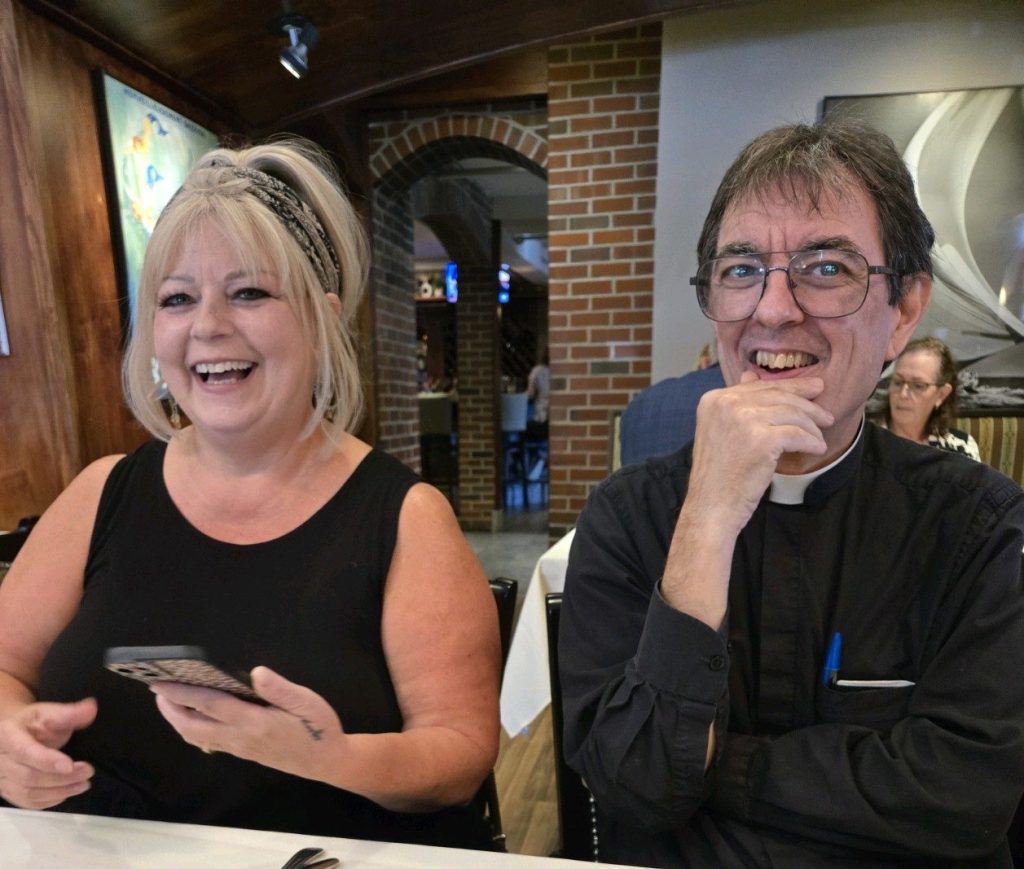
Photo: My sister and me celebrating my mother’s birthday this past September.

Link for the Mass readings for Monday, January 20, 2025

Will we follow Jesus as Levi did?

In both the first reading from Hebrews and verse from Psalm 19 we read about the power of God’s word. “The word of God is living and effective” (Hebrews 4:12) and the words of the “Lord, are spirit and life” (Psalm 19). Jesus gives face to the living word of God come down from heaven to transform his people as he continues to teach with authority and offer healing. In today’s account of Mark, Jesus calls his fifth disciple, Levi. The key difference with this call of Levi and the four fisherman is Levi’s occupational hazard.

Tax collectors were disliked, even despised by many in ancient Palestine because they were considered unclean, and categorized as with lepers and sinners. They were cast in this net because the tax collector had a responsibility to pay a fixed amount to the occupying power of Rome. This in itself was bad enough because their own countrymen were colluding with the enemy. What made matters worse was that too many kept as a commission anything he collected over and above that fixed amount. The majority of the population, already just getting by, paying a temple tax, and the Roman tax, then finding out their local tax collector was taking more than their fair share, did not make for feelings of endearment.

Jesus surprises all who had come to hear him teach when he not only invites Levi, also known as Matthew, to follow him but then they have dinner together. We are witnessing yet again another healing miracle. Jesus provides an opportunity of bridging divides by inviting someone to his inner circle, to turn away from one way of life to begin anew, to: “Repent and believe in the gospel” (cf. Mk 1:15). The Pharisees question his choice of table fellowship companions. It is not clear if the Pharisees are eating with them or are on the outside looking in. The other curious point is that the Pharisees are conversing with Jesus’ disciples. So both groups are together witnessing the communal exchange, from a distance. They choose not to engage in the fullness of the fellowship.

They could not have been at too great a distance though because Jesus could hear their concerns and responded to them: “Those who are well do not need a physician, but the sick do. I did not come to call the righteous but sinners” (Mk 2:17). The Pharisees, and possibly some of his disciples, were not a part of the intimacy of this communion because of their own unwillingness to accept those that Jesus invited to share a meal, to accept that they too were sinners also in need of healing.

All have sinned and fallen short of the glory of God. Jesus forgives and offers mercy to all who are willing to be aware of his invitation to fellowship. In surrendering our finite freedom over to his divine freedom, we receive healing and transformation, then are offered an opportunity to develop an intimate relationship and participate in communion with the one who is ushering in the kingdom of God. This is a foreshadowing of the last supper and the celebration of the Mass.

We too are invited as sinners to join the banquet, to be in fellowship with Jesus. As Levi received, we are given an opportunity to begin again, to leave behind anything that separates us from God and one another and follow Jesus, who came that we might be forgiven and healed.

As with many Gospel passages, today’s offers a wonderful opportunity to place ourselves in the scene. Mark presents Jesus teaching the people though he again does not tell us anything about what he shared. Knowing what follows, we might think about and ask ourselves, “What might Jesus have taught before going to Levi at the custom’s post?” Could he have been talking, as Matthew adds in his parallel account, about how Amos preached that God desires mercy and not sacrifice (Mt 9:12)?

Let us read this passage slowly a few times (Mark 2:13-17) and meditate upon these words of God that are “living and effective.” Then as Jesus moves to the custom post, follow him, and the others in your imagination. What is our honest reaction to Jesus calling the tax collector, Levi? Are there sins that others commit that we find easy to forgive, others that we find hard to forgive? As the scene shifts to the breaking of the bread, do we dive in with this motley crew, stay at a distance, or walk away?

The words of the “Lord, are spirit and life.” May we not only read them, but also meditate upon and pray with them so that we may be transformed by them. May we also encounter Jesus in this passage and be willing to listen to Jesus speak to us in the silence of our hearts. This is a wonderful spiritual practice that can bring us much joy, forgiveness, healing, and deeper communion with the Divine Physician and healer of our souls. No RSVP needed, just come, open up your Bible, and join the feast!

————————————————————————-

Painting: Caravaggio’s “The Call of St. Matthew”

Link for the Mass reading for Saturday, January 18, 2025

God invites us each day to come away and spend some quiet time with him.

And when he had taken leave of them, he went off to the mountain to pray (Mk 6:46). We often read in the Gospels that Jesus went off by himself to pray. I am sure this was not a practice that he began during his public ministry, but one that he learned and developed from Mary and Joseph. The Apostles themselves witnessed Jesus praying, and in the account of Luke 11:1, one of his disciples asked Jesus how to pray.

Pope Francis in a general audience he gave in 2013 shared that, “the Church is apostolic because she is founded on the preaching and prayer of the apostles” (Francis 2014, 37). Jesus prayed, he taught his Apostles to pray, and we are at our best when we are people of prayer. We hear of prayer and that we need to pray, but what is prayer and how do we pray?

That we desire to pray, that we even want to be closer to God is already a prayer because we are experiencing an invitation from God to draw close to him, to develop a relationship with him, to come to know the one who knows us better than we know our self.

Fr. William Barry in his book, God and You, describes how prayer is becoming consciously aware of our relationship with God. This helps to counter the idea that God is like a gumball machine in the sky, we just need to say the right types of prayers, be good, say them in the proper order, we will get what we want, and we will be happy. “God is in relationship with each and every created thing in the universe and in relationship to the whole of it… whether that being is aware of the relationship or not.” The amazing thing about God is that “he will not force himself on us. He continually tries to arouse our awareness and interest in him” (Barry 1987, 12-13).

God reaches out to us in so many ways such as a majestic sunrise or sunset, the ebb and flow of the waves on a beach, and the brilliant radiance of a starlit sky. He also does so through our trials of sickness, pain, others who are being hurt, or encountering injustice. He is also present through our every day relationships and experiences. The key is to be aware of what is being stirred up within us when we experience something and allow ourselves to “wonder about the experience and its meaning” (Barry, 13).

What is most important regarding becoming people of prayer is our awareness, our becoming conscious that we have a relationship with God. “This relationship is based on God’s actions to establish it and his desire that we become conscious of who he is and wants to be for us. Our consciousness depends on our willingness to pay attention to God’s actions, or at least to experiences that might be actions of God, and to let our desires for God be aroused” (Barry, 14).

Another question that Fr. Barry answers regarding prayer is that if God knows everything about us, why bother to pray at all? God is not just wanting information. Again, he is inviting us to enter into a relationship. He wants to know whether we believe he cares how we feel and whether we are willing to let him in, to let him know what we feel and desire. It is important to be honest in our dialogue and be willing to reveal ourselves to God, while at the same time, be open and willing to allow him to reveal himself to us. This is how we build authentic relationships with God and each other (cf. Barry, 15).

Jesus, thank you for inviting us in so many small ways each day to spend time with you. Though we can allow our harried pace, distractions, diversions and temptations to lead us away from the gift of your presence, please help us to slow down, to breathe, and rest in the wonder of how our God and Father is present to us, and how the love of the Holy Spirit is working in our lives daily. Help us to realize that we don’t need to be perfect to come to you, to say the right words to be heard by you, nor that we have to say any word at all, and help us to be free to just rest in your loving gaze.

——————————————————————–

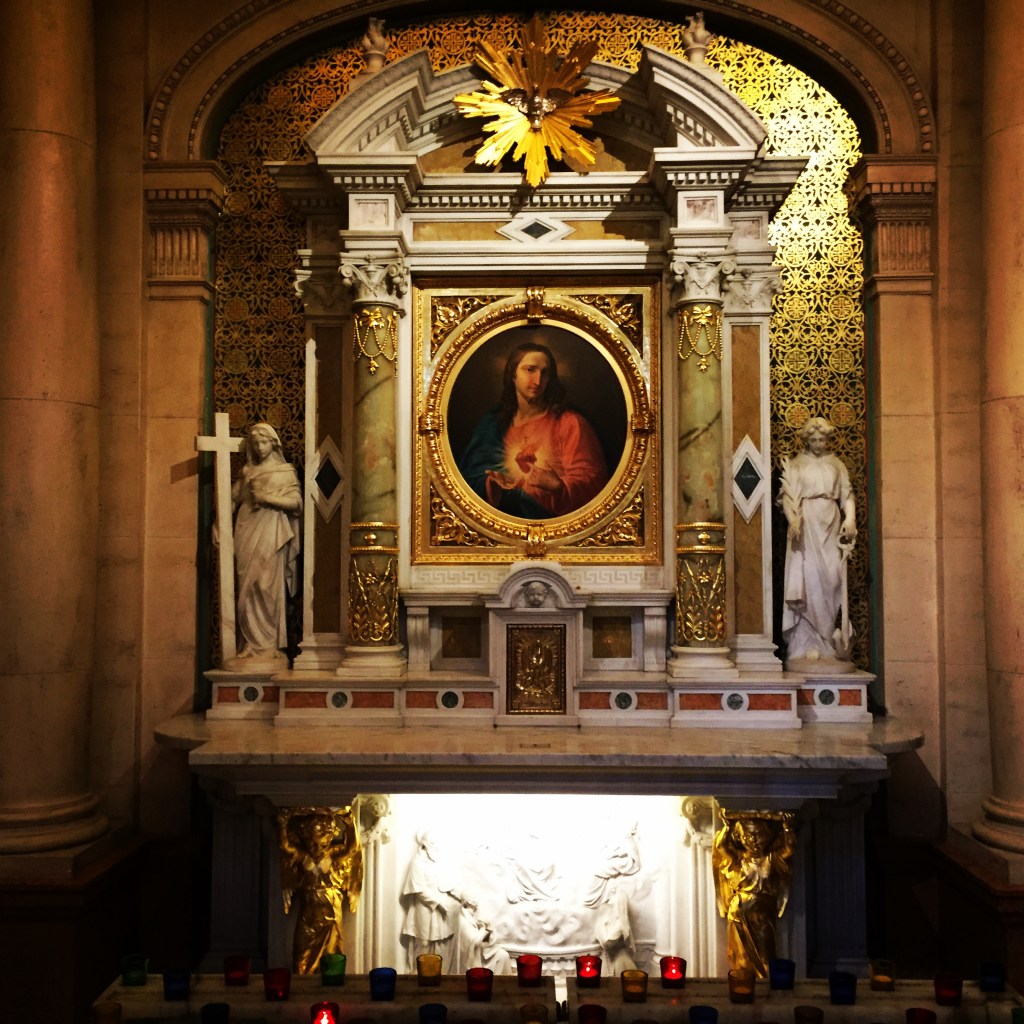
Photo: Some time praying at the side altar at St. Ignatius Parish, San Francisco back in October of 2019.

Barry, William A. S.J. God and You: Prayer as a Personal Relationship by William Barry SJ. New York: Paulist Press, 1987.

Link for the Mass for Wednesday, January 8, 2025

Mary’s, “yes” brought joy to the world.

Mary said, “Behold, I am the handmaid of the Lord. May it be done to me according to your word.” Then the angel departed from her (Lk 1:38).

Whether this is the first or thousandth time we have read or heard this verse, the more important question for us is how many times have we said to God, “May it be done to me according to your word”? How would it be for us to begin each day with this prayer and then at the end of the day reflect on how well we have heard and answered yes to God’s will?

Mary’s “yes” changed the course of human history. Her willingness to bear the Son of God allowed him to come close. He entered our wounded, human condition to offer us healing, forgiveness, and to lead us home to communion with his Father and each other. Jesus is the gift that keeps giving – and we receive his gift each time we, as did Mary, say “yes” to him. When we do so, we become less, as he becomes more, and the kingdom of God continues to expand.

Along with Mary, the “yes” that we make is not a one-time, “yes,” but we are to affirm a daily, moment by moment “yes”. As St Paul wrote to the Church of Thessalonica, we are to: “Rejoice always. Pray without ceasing” (1 Thessalonians 16-17). We are able to rejoice always and pray without ceasing when we say, “yes,” to God by developing and sustaining our relationship with him such that even when we experience pain, suffering, and struggles, we are not overcome or overwhelmed. When we allow Jesus to be close, we can even feel joy in the midst of them. He does not abandon us to random fate. He is our source, our refuge, and our strength, present to us in all that we experience.

Our prayers of petition for ourselves and intercession for others are another “yes” to God’s will because they are an “admission of one’s own helplessness” (Lohfink 2014, 240). Prayer is a, “no,” to pride. We cannot get through this life on our own, nor are we meant to for apart from God we can do nothing. We are all interconnected and interdependent and God is the foundation and source of our very being, and with God all things are possible.

Our willingness to ask for help and to help others are also practical ways of saying “yes” to God. There is no such thing as a “Lone Ranger Christian”. Even the Lone Ranger had Tonto. Two by two, just as Jesus sent his disciples. Prayer is a “yes” to our acknowledgment that we need Jesus to guide and help us, also to save us from ourselves! Service is a “yes” to the love we have received from him and a willingness to share this love with and receive it from others.

We are to rejoice as we are readying to begin this fourth week of Advent because we draw ever closer to celebrating the birth of Jesus who is Emmanuel, God with us. May we have the grace to experience his love in our time of meditation, prayer and serving one another. This reality was made possible by the handmaid of the Lord.


Photo: May we say with Mary, “May it be done to me according to your word” and rejoice! Accessed from Our Lady Help of Christians Catholic Church.

Lohfink, Gerhard. No Irrelevant Jesus: On Jesus and the Church Today. Collegeville, MN: Liturgical Press, 2014.

Link for the Mass readings for Friday, December 20, 2024

Jesus is coming, let us prepare.

In the fifteenth year of the reign of Tiberius Caesar, when Pontius Pilate was governor of Judea, and Herod was tetrarch of Galilee… (Lk 3:1).

This may be an odd verse to focus on in Advent, or anytime when sharing a reflection, but there is a point to this historical tidbit of information offered by Luke. Jesus, the Son of God, born of the virgin Mary, was born in time, and in a place. The gospels are not myths, they are not fairy tales, nor are they works of historical fiction. Luke’s account would fall better into the genre of Greco-Roman history, although, the gospels have their own unique expression as a genre. The gospel writers were interested in the historical Jesus, but they were more than mere biographies. Their primary focus was to present theological insights that help us to understand who Jesus is and his teachings that we can put into practice, but not that, but to also come to know him in our time and place, and be transformed by him and his love for us.

The Son of God was obedient to his Father and was willing to be sent to become a human being conceived in the womb of Mary.  This truth has relevance to us because it means that Jesus experienced what we experience as human beings. From the moment of his conception and moving forward, through his birth, life, death, resurrection, ascension, and continuing today, he experienced and experiences what we experience as humans, even temptation although he never sinned.

In Luke’s presentation and setting the stage for Jesus’ birth, he shared a shady cast of characters: Tiberius Caesar, Pontius Pilate, Annas, and Caiaphas to name a few. Although lost on most of us today, these political and religious leaders were not known for their virtuous living. Yet those in the time of Luke’s writing would have recognized that they were examples of human depravity. Jesus was born in a time and a place of darkness. He was and continues to be the Light of God who has come into the darkness of the fallen human condition.

To prepare the people for this coming, Luke presents the preaching of John the Baptist. Though the son of the priest, Zechariah, John rejected the political and religious status quo. He did not preach in Jerusalem nor the Temple, but in the wilderness. His message to “Prepare the way of the Lord” was a call in unison with Baruch from our first reading.

Baruch, the secretary of the prophet Jeremiah, shared God’s promise in which Jerusalem was invited to, “stand upon the heights; look to the east and see your children gathered from the east and the west at the word of the Holy One, rejoicing that they are remembered by God” (Baruch 5:5). The children who are to rejoice were those scattered children of Israel. The northern ten tribes of Israel who were first exiled by the army of Assyria in 722 BC, and the greater majority who never would return. Also, in 587 BC, the remaining tribes of Judah and Benjamin were defeated and their majority exiled to Babylon. Jerusalem and the Temple was destroyed. Baruch’s promise offered hope for that time when the twelve tribes that were exiled and scattered would be reunited and return from the east and the west.

John the Baptist came to announce that time. The messiah was at hand. The ancestors of those who returned to Jerusalem after the Babylonian exile, were waiting for the coming of the fulfillment of the promise of the prophets, and John the Baptist was telling them that this long awaited time was upon them. John was telling them to get ready, to “Prepare the way of the Lord.” Jesus is coming.

This is the first coming of Jesus we prepare to celebrate at Christmas. Each Advent is a time for us to prepare not only to celebrate Christmas, to remember Emmanuel, God with us, but to prepare for his second coming or our personal judgment when our time on this earth this side of heaven is coming to an end. Whichever comes first, either reality is time, not for sorrow, but instead for joy.

This is the joy that St. Paul encourages the Philippians to experience and we can as well. “I am confident of this, that the one who began a good work in you will continue to complete if until the day of Christ Jesus” (Philippians 4:6). May we rest in the same confidence, that as we repent, trust in God, and put into practice his teachings that we will be ready to experience Jesus coming into our lives each day and he will work through us to bring about our salvation and those he calls us to serve.

Luke invites us to look back on this time when a world in darkness waited with bated breath for the Light to come to set things right. To bring proper order back to the political and religious state of affairs. Luke offers us, through the words of John the opportunity to ponder the meaning of what it means for us to “Prepare the way of the Lord”. We make a way for the Lord, when we open our minds and hearts to him, so that we might believe more and more each day, not only that Jesus came to us as our savior, but that he is with us and we can receive his love with each breath we take, and we will be prepared for when he comes again, each day, at the end of time, and when it is our time to go home.


Photo: Rosary walk back in mid October.

Link for the Mass readings for Sunday, December 8, 2024

Quiet time with God in his creation helps us to be still, to grow closer to God and each other.

“All things have been handed over to me by my Father. No one knows who the Son is except the Father, and who the Father is except the Son and anyone to whom the Son wishes to reveal him” (Lk 10:22).

God the Father knows God the Son and God the Son knows God the Father. They do not just know about each other, they know each other with such a deep, infinite intimacy that is far beyond our human comprehension. Contemplating this reality can fill us with hope especially when we come to realize that Jesus is the Son of God who has come into our lives so that we can participate in the trinitarian communion of the Father and the Son and the love shared between them, the Holy Spirit!

Jesus has come as an agent of reconciliation, to restore our relationship with God, to undo the effects of the sin of separation that has so ruptured and wounded our relationship with him, each other, and his creation. Our hope this Advent is that we can come not just to a better understanding of God, but to more intimately know and restore our relationship with God through our participation in the life of his Son.

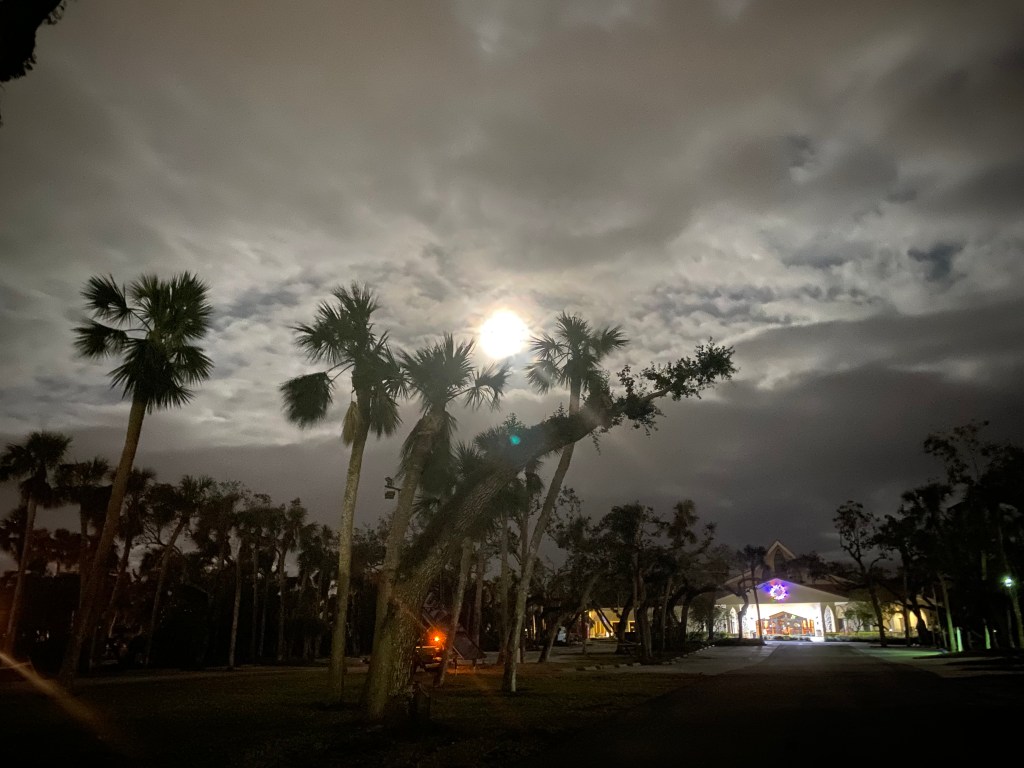
May the Advent season not get away from us before it even starts because of the material, commercial, and busyness that threatens. A good practice to help us to slow our pace is to spend some time in the gift of God’s creation, to enter into its natural rhythm, and bask in the wonder and vast expanse of it all.

One of the activities that I enjoyed most with JoAnn, was our evening walks. I have continued this practice most evenings since her death as well. During my time at seminary, my spiritual director invited me to pray the Rosary during these walks, which I did and have enjoyed very much. Each night walking around the lake at the seminary and looking up and around, praying, walking, and breathing was a wonderful and peaceful experience.

As I drew closer to ordination, one of my concerns regarding possible placement was whether or not I would be assigned to an area in which I could continue my evening Rosary walks and have access to the wonderful vistas that the seminary afforded. I have been blessed by our bishop that he assigned me to Holy Cross. Not only have I been blessed with even more wonderful natural views, I have been blessed with an incredible family and community here. With each step and interaction, I continue to be blessed and drawn deeper into intimacy with God and feel more of his peace and joy.

All of creation echoes the wonder and adoration of the gift that the season of Advent offers: Jesus invites us to participate in a deeper walk with his Father, the creator of heaven and earth, the one who knit us together in our mother’s womb, and who knows us better than we know ourselves! With each breath and step we take, each prayer that we pray, each willingness to engage lovingly with another, will lead us into deeper intimacy with the Father, the Son, and the Holy Spirit and each other.

———————————————————————————–

Photo: Although darker on these December Rosary walks, still many interesting views. “A light has shined in the darkness and has not overcome it” (John 1:5).

Link for the Mass readings for Tuesday, December 3, 2019

Called to be still awhile and then to go out on mission.

He said to them, “Come after me, and I will make you fishers of men” (Mt 4:19).

Today’s Gospel account recalls Jesus’ call of Simon Peter, Andrew, James, and John. An interesting contextual point is that Jesus was the one doing the calling. Spiritual teachers were common during the time of Jesus within and without of Judaism. The most common practice was that the disciples sought out and came to the master. It was the rarer case that the master would search out and call his followers.

Another interesting point is that Jesus met the brothers in the midst of their everyday activities of fishing, in the midst of their work. The encounter with Jesus was not on some isolated mountain top, it was not at a revival, nor at the temple or synagogue. Jesus met them in the midst of Simon and Andrew casting their nets and James and John mending their father’s nets.

The third point from this short account is that Jesus immediately followed his invitation to Simon and Andrew with the insistence that they will be fishers of people. They are not entering their new apprenticeship with Jesus having any false notion that they will wait for others to come to them. They will travel out of their comfort zones. They were called to leave their current way of life, financial security, and to trust in Jesus as they learned about and shared the Good News that the kingdom of God is at hand.

The three points above apply directly to us as well. Jesus seeks us out and invites us to join him. Are we willing to receive this invitation and say yes as Simon, Andrew, James, and John had done. Jesus meets us in our everyday moments. He meets us in our workplaces, our interactions with family and friends, in our class and dorm rooms, as well as in our activities and leisure. He meets us in our conflicts, struggles, suffering, as well as our joys, successes, and moments of wonder. Jesus also encounters us during our unpreparedness for interruptions, in our times of prayer, and worship.

The very desire to pray does not actually begin with us. Noticing that we want to pray is our awareness of Jesus’ calling us. When we take the time to pray we slow down and become more aware of Jesus’ presence in our lives. We experience him and his love for us. Doing so, we are then more able to see him in the midst of our daily activities. The goal of taking time to step back and pray, to give us anchor moments in each day to spend quietly with Jesus, will help our times of activity to be an extension of our times of meditation and contemplation. Experiencing stillness and peace regularly will eventually carry into our daily engagements and encounters.

 Jesus calls us to spend time with him and then sends us out to share what we have experienced and learned from our encounter with him. No matter how small. We will make mistakes, we will not be perfect, but as we put into practice his teachings, we will learn and grow as his disciples. Remember who he called? Peter, Andrew, James, and John. There are four Gospels full of accounts of their false starts, gaffes, and “Oops”. We grow and learn as they did, by doing. As we crawl, we will soon learn to walk, as we walk we will soon learn to run, and as we run, we will soon learn to fly!

Jesus calls us to participate in his life and to put his teachings into practice. This is the gift of transformation. We are not just a religion, a people of the book, we are a people of encounter. We encounter Jesus the Christ, the Son of the living God. Once we experience, breathe, receive, rest, and abide in his love, we are forever changed and want more. For to experience the love of God is our deepest longing, and what we have been created for. And just as we receive something wonderful in our lives, our first instinct is to share. That is what happened with the Apostles and what we are invited to experience as well.

St Andrew, pray for us!


Photo: Rosary walk: time with Jesus and Mary to be quiet, still, to wind down, and renew each evening so to be ready to serve again the next day.

Link for the Mass readings for Saturday, November 30, 2024