surrender
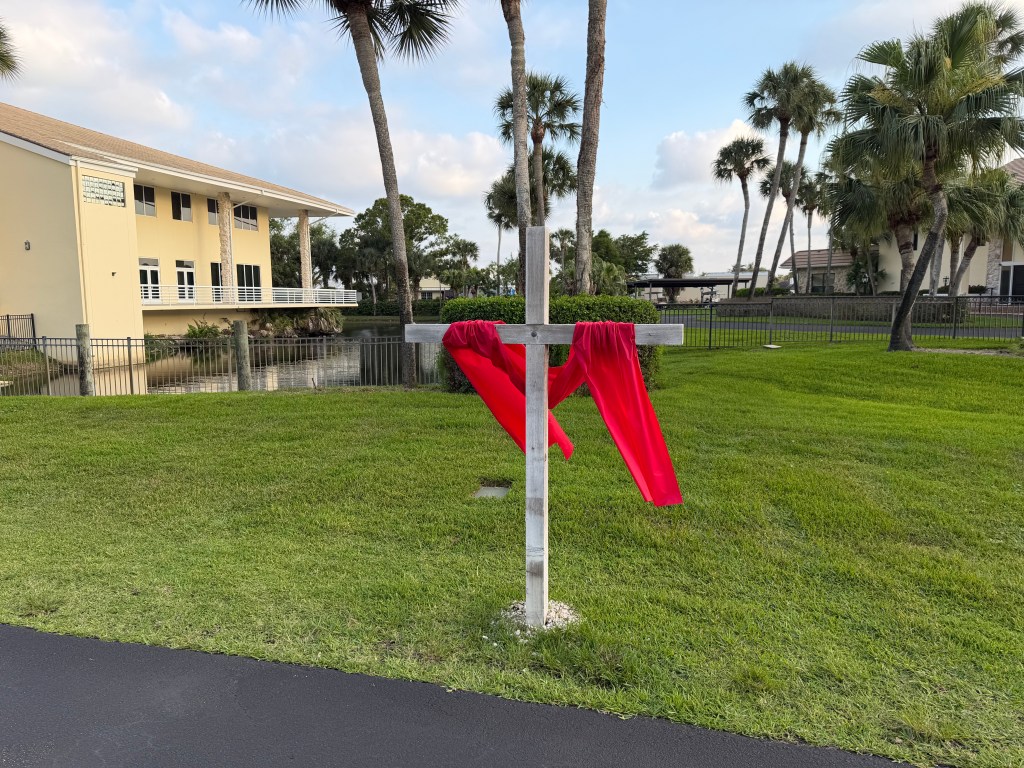

She gave all.
In the Gospel of Luke, we return to the widow we read about recently. She came to the Temple in Jerusalem as others came to share their offerings. These offerings were placed in the Shofar-chests in the Court of Women near the Temple. Scholars recognize that there were thirteen chests and each one was for a specific offering that ranged from annual dues, sacrificial offerings, and freewill offerings.
As Jesus pointed out, most of those who were giving, gave out of their excess, but this widow, who most likely had no support as her husband had died, gave all that she had in giving her last two coins. What her offering was for or why, we do not know, but in doing so, she showed a radical trust in God. She did not even hold back one of the coins. She instead gave all.
The widow sacrificed all she had, as did another, the widow of Zarephath, who gave her last oil and flour to Elijah (see 1 Kings 17:7-24). Each of them as well as all those who have trusted and been faithful to God throughout the ages followed the commandment of Jesus to love God with their whole heart, mind, soul, and strength and their neighbor as themselves. They resisted the temptations that could have lead them astray and instead placed all their trust and faith in God.
There are many distractions and diversions that can lead us astray, temptations from without and within. A false security in wealth is one Jesus talks about often. Jesus himself would give even more. He gave all of himself, holding nothing back as he gave himself on the cross. Jesus died for us so that we can be free to give.
There are those of his followers that were willing to do the same such as St. Andrew Dung-Lac and 116 others whose memorial we celebrate today because from 1820-1862 they were willing to give their lives in Vietnam. May they and those who have gone before us, the triumphant saints who now reign with Jesus Christ our King, who is seated at the right hand of the Father, intercede for, guide, and empower us. May we allow ourselves to be drawn by the tender chords of the Holy Spirit’s love to grow in trust and be as faithful to God as they were.
Painting: “The Widow’s Mite” by James C. Christensen
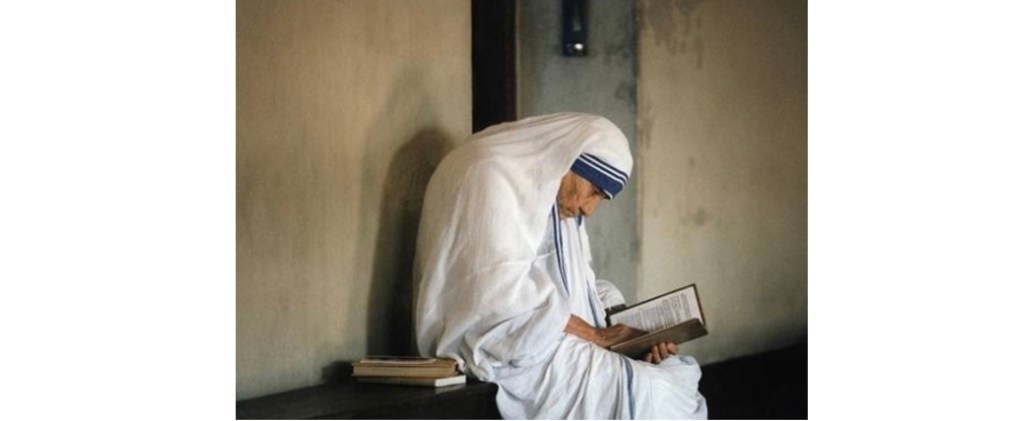
Are we willing to be a pencil in God’s hand?
So should it be with you. When you have done all you have been commanded, say, ‘We are unprofitable servants; we have done what we were obliged to do’” (Lk 17:10).
This ending verse from today’s Gospel account from Luke flies in the face of the ideals of fame and honor that many in our culture believe we ought to be striving for. After all, everyone wants their fifteen minutes of fame, don’t they?
The point Jesus is making with his disciples is one of perspective. We need to constantly remember that God is the Creator and we are his created beings, God is God and we are not. Our life is completely dependent on him and whether we like the analogy or the reality that we are servants, that is not only how we were created, but what will, in the end, bring us the most meaning and fulfillment in our lives is serving God without hesitation.
This is no dictatorial or tyrannical power play by God through his crown prince Jesus. Jesus himself consistently served his Father and would do so in the fullness of giving himself on the Cross. This is best summarized by Paul in his Letter to the Philippians, when he echoes one of the most ancient Christian hymns: “Though he was in the form of God, Jesus did not deem equality with God something to be grasped. Rather he emptied himself and took the form of a slave, being born in the likeness of men.”
Jesus, the divine Son of God, entered into our human condition because he was serving the will of his Father. We are to do the same. God is the director of his epic drama and each of us has a part to play. Our faith grows as we empty ourselves from our own grasping nature of seeking control, of being in charge, and seeking to be the director of our own life.
One of the reasons many of us have trouble with this type of imagery and language is because we consistently see so much abuse of power for selfish gain. This is not God’s goal. God does not need us, he is fully self-sufficient without our worship or service. It is we who need him and through the opening of our mind and heart to his direction, by acting on every word that comes from him, we do not become diminished, we actually expand and become more!
We truly become ourselves, we are fully alive, and we will experience more peace, when we resist living in the past or anticipating the worst case scenarios about the future. A wonderful image that St. Mother Teresa used often that I find helpful is being a pencil in God’s hand. When we have faith in and trust God, we can rest in his loving guidance and act as he directs. This is the beating heart of our faith, to place ourselves in a posture to hear the will of God, and act upon it in our willingness to serve him without hesitation. In doing so, we lose our life, and in so doing we find joy because we become fully alive.
—————————————————
Photo: St. Mother Teresa could be a pencil in God’s hand because she gave herself to him in prayer and service daily.
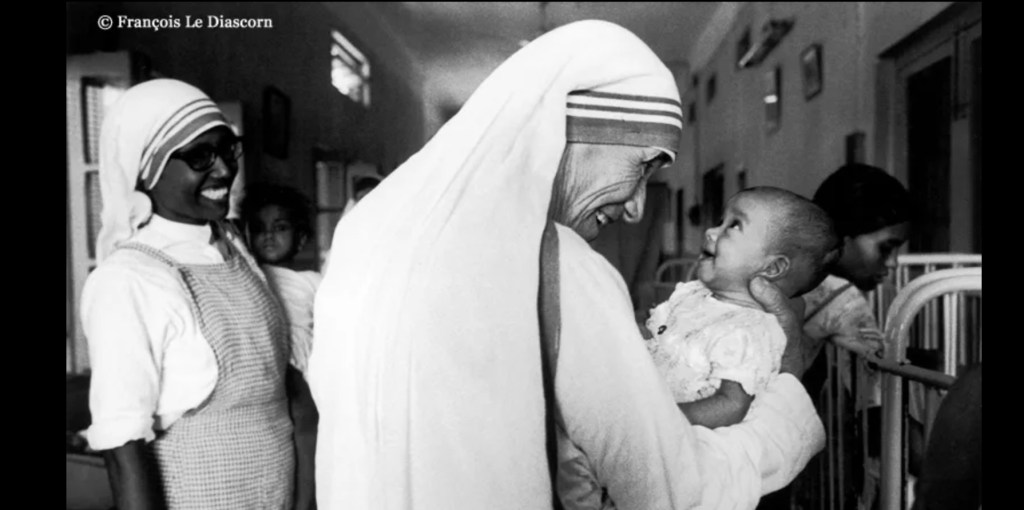
Want to be great? Reject self sufficiency and depend on God like a little child.
“Whoever humbles himself like this child is the greatest in the Kingdom of heaven. And whoever receives one child such as this in my name receives me” (Mt 18:4-5).
Children during the time of Jesus were seen, if there were acknowledged at all, to have little worth. They were vulnerable, had little if any status in society. They were often nothings, nobodies, and completely dependent on their parents for survival. Jesus invites a child to come to him, identifying himself with the child, as a response to the disciples’ question as to who would be considered the greatest in the Kingdom of heaven.
Jesus taught his disciples, and us today that we need to be completely dependent on God our Father, just as a small child is totally dependent on his or her parents. What leads us to greatness in the Kingdom of heaven is our turning away from the temptation to curve in upon ourselves, resisting the urge to feed our ego, place ourselves first, and as St Thomas Aquinas taught, resisting the cultural lures and substitutes for God: power, pleasure, honor, and wealth.
We are also to reject the image of the Übermensch, the super man, popularized by Friedrich Nietzsche, the 19th century German philosopher. Nietzsche wrote that God was dead and promoted the idea that humanity needed to create a world that would create new values based on the power of their will alone. Supermen and women striving for complete autonomy and self-sufficiency. Jesus teaches the exact opposite. We need to place our complete dependency and trust in and on God and rely on him for everything.
Participating in the reign of God is not one of lordship over another. Instead we are to assume the humility to accompany, walk along with, and serve each other along our journey in this life. Jesus embodied this reality. He, as the Son of God, entered into our human condition. He did not grasp at his divinity but instead surrendered it to his humanity. While remaining fully divine, he became fully human when through the power of the Holy Spirit was conceived in the womb of Mary. In such vulnerability and weakness, he developed through his period of gestation, and was born into our world. As an infant and child, he was completely dependent on Mary, Joseph, and God his Father.
As Jesus continued to grow as a young child, he experienced the fullness of the human condition. He laughed, he cried, he got sick, he was tempted, he felt pain, he experienced heartache and joy. Throughout his life, and especially during his public ministry, he experienced human suffering up close and personal. He understood the suffering of his neighbor and experienced his own human and finite limitations. He loved and wept as we saw in his encounters with Lazarus, Martha, and Mary.
Jesus invites us to relate to God as our Father often in the Gospels, in the best sense of that intimacy of dependence. St Thérèse of Lisieux, whose memorial we celebrated yesterday got this. “Jesus has chosen to show me the only way which leads to the Divine Furnace of love; it is the way of childlike self-surrender, the way of a child who sleeps, afraid of nothing, in its father’s arms.”
Accepting Thérèse’s image is an acknowledgment that we are just as dependent on God and others, that we are not self-sufficient, that we are not capable of living radically independent lives, nor are we supposed to. God created us to be loved and to love, to be in community, to care for, empower, and support one another.
Our guardian angels, whose memorial we celebrate today, are at the ready awaiting our call. When we have the humility to ask for their help, we will realize that we are not alone. When we experience some supernatural support, from God, his angels and the saints, we might just be willing to seek help from and support each other. We can offer a shoulder to lean on, a smile, a hug, a voice that speaks for the voiceless, a soul open to pray with and for others, an ear to hear, and we can embody the courage to serve and stand up for the dignity of each other.
St Mother Teresa was willing to come close and pick up that first dying man in the street. She did not ask his religion, was not concerned if he was of a different race or nationality, was not afraid to risk illness or injury by attending to him. She knelt down and was present in his time of dire need. We are at our best when we follow Jesus, St. Thérèse, St Mother Teresa, the saints, and our guardian angels, and surrender to, and place our dependency and complete trust in God and support each other by doing little things with great love.
To be loved and to love in return is why we are here at this time. Photo credit François Le Diascorn
Mass readings for Thursday, October 2, 2025
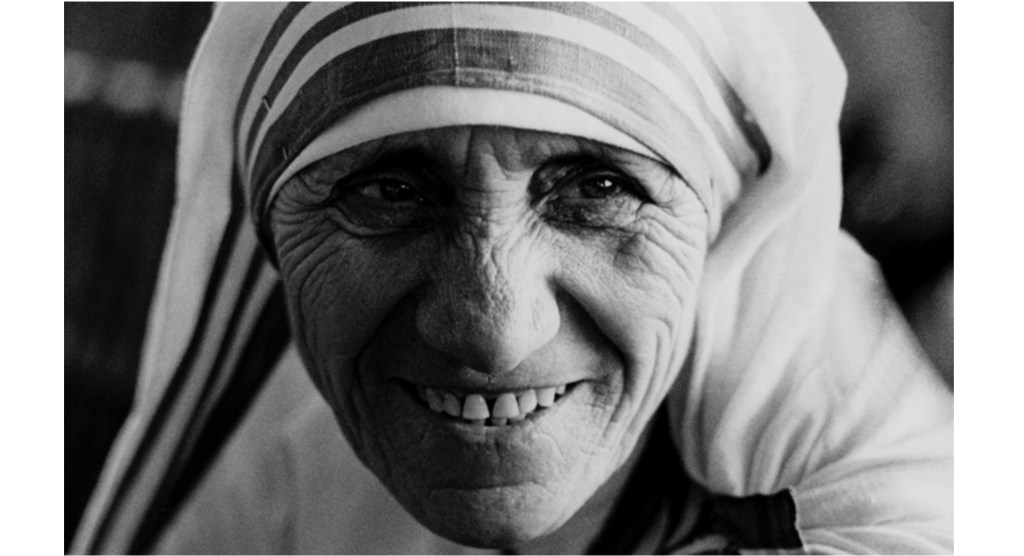
Do we know who we serve?
Herod the tetrarch heard of the reputation of Jesus and said to his servants, “This man is John the Baptist. He has been raised from the dead; that is why mighty powers are at work in him.” (Mt 14:1-2).
After the death of Herod the Great (4 BC), one of his sons, Herod Antipas, was given a portion, a fourth, of his father’s kingdom by the Roman Emperor Augustus. Thus, Herod Antipas was the tetrarch of Galilee and Perea from 4 BC to 39 AD. Herod, like, Pontius Pilate, held power as long as he was a faithful servant to Rome.
News of the ministry of Jesus got back to Herod and he believed Jesus to be John the Baptist raised from the dead. What followed in today’s Gospel were some reasons why Herod arrested and unjustly beheaded John the Baptist. John was killed for speaking truth to power, as happened often in the long line of prophets before him. Jesus continued John’s ministry of calling for repentance, to turn away from sin and turn back to the will of God. John suffered capital punishment at the hands of Herod Antipas and Jesus at the hands of Pontius Pilate. The Apostles and martyrs of the early Church followed John and Jesus, lived and proclaimed the truth publicly and courageously.
How are we living today? Are we faithful to the Gospel values that Jesus and the Apostles taught and were willing to die for? Do we serve Herod Antipas and Pontius Pilate or Jesus the Christ? Do we assume a defensive posture or open ourselves to love? Most of us are somewhere in between. The hope is that we are moving closer to serving God, being people of prayer and practice, getting in touch with the particular charism and gift that God has given us, and loving one another as he has loved us.
It is important to stop and reflect on questions such as these, to examine our thoughts, words, and actions and determine who it is that we are truly serving. It is not easy living the teachings of Jesus. We will fall short but we must remember that God loves us more than we can ever mess up and it is through his power that we will fulfill his will. We just need to remember that we are his children and as his children we need to ask for his help. When we let go of holding onto our self reliance, surrender to God our Father, we strengthen the relationship we have been created for.
When we are also humble enough to allow the Holy Spirit to reveal to us our mistakes, failures, and sins, we will experience his forgiveness and mercy, we will become more open to truly knowing his will and how best to serve him and each other. Embraced by and participating in the Trinitarian Communion of love, let us recommit ourselves today to living as Jesus’ disciples, to growing in courage, to follow his path, so to better live and speak his truth by promoting forgiveness, justice, love, mercy, and reconciliation in and out of season.
———————————————————————–
St. Mother Teresa knew who she served – “I belong entirely to the heart of Jesus.” Photo credit: 1979 CNS/KNA and accessed from NCRonline.

To be a disciple of Jesus we need to follow the way of the cross.
Jesus summoned the crowd with his disciples and said to them, “Whoever wishes to come after me must deny himself, take up his cross, and follow me” (Mk 8:34).
Our life is not about us, and about what we can accumulate. It is not about achieving and placing our security in power, fame, wealth, and pleasure. Nor are we here on this earth to merely exist, to just get by, and live in survival mode. We exist to be loved by God, to love others as we have been loved, and to live life to the fullest.
The challenge is, are we willing to truly deny ourselves, take up the cross of Jesus, and follow him? The followers of Jesus hearing him say that was quite visceral as many of them had witnessed a crucifixion personally. It is a humiliating, degrading, and horrifically painful death. And yet, Jesus is saying openly that this is a requirement to following him as a disciple.
We may be removed from the, in the face quality of a crucifixion, but we can still recoil at the invitation to renunciation. To accept this cost of discipleship, it is helpful to recall Jesus’ words to Peter in yesterday’s account when Jesus convicted Peter for rebuking Jesus saying that he was to suffer, be rejected by the elders, and killed. Jesus rebuked Peter because he was “not thinking as God does but as human beings do” (Mk 8:33).
We take up our cross and follow Jesus when we are ready and willing to renounce any thought, word, or deed, person, place, or thing that we have place before God; when we are willing to put Jesus first in our lives whether or not we will be ridiculed, persecuted, or killed. This willingness to be Jesus’ disciple comes slowly with each, “yes”, as we see with Peter himself. He and the other Apostles, especially in the Gospel of Mark stumble time and again. Just like the blind man who Jesus just healed, it took a second healing for him to see (cf. Mark 8:22-26). To truly see as God sees will take time with us as well.
Peter affirmed who Jesus was, the Messiah, the Son of God, in one breath with the insight of God, taking a step ahead, and yet, in the next breath, he could not accept that Jesus would be a suffering Messiah and die, taking a few steps back. Peter would also deny him publicly to a slave girl (cf. Mark 14:66-72). Many times Peter would refuse to take up his cross, but he continued to “repent and believe in the Gospel” (Mark 1:15).
Jesus calls us to follow him. We do so one decision at a time. Like Peter, we will sometimes, think as humans do, while at other times, we will think as God does. We will say, “yes” more times than not when we are willing to allow our minds and hearts to be transformed by God’s love. As disciples, we are to follow the way that leads to the cross, which means letting go of our attachments, disordered affections, and idols, and as Jesus and Mary did, say “yes” each time to the invitation to follow our Father’s will. We will sink less when we keep our eyes on Jesus (Matthew 14:22-33) and remain faithful more when we follow Mary’s direction to do whatever he tells us (John 2:5).
Picture: Crucifix in the sanctuary of St. Ignatius of Loyola, ordination day.

“Whoever humbles himself like this child is the greatest in the Kingdom of heaven.” – Jesus
“Whoever humbles himself like this child is the greatest in the Kingdom of heaven. And whoever receives one child such as this in my name receives me” (Mt 18:4-5).
Children during the time of Jesus were seen if at all, to have little worth. They were vulnerable, had little if any status in society. They were often nothings, nobodies, and completely dependent on their parents for survival. Jesus invites a child to come to him, identifying himself with the child, as a response to the disciples’ question as to who would be considered the greatest in the Kingdom of heaven.
Jesus taught his disciples, and us today that we need to be completely dependent on God our Father, just as a small child is totally dependent on his or her parents. What leads us to greatness in the Kingdom of heaven is our turning away from the temptation to curve in upon ourselves, resisting the urge to feed our ego, place ourselves first, and as St Thomas Aquinas taught, resisting the cultural lures and substitutes for God: power, pleasure, honor, and wealth.
We are also to reject the image of the Übermensch, the super man, popularized by Friedrich Nietzsche, the 19th century German philosopher. Nietzsche wrote that God was dead and promoted the idea that humanity needed to create a world that would create new values based on the power of their will alone. Supermen and women striving for complete autonomy and self-sufficiency. Jesus teaches the exact opposite. We need to place our complete dependency and trust in God and rely on him for everything.
Participating in the reign of God is not one of lordship over another. Instead we are to assume the humility to accompany, walk along with, and serve each other along our journey in this life. Jesus embodied this reality. He as the Son of God entered into our human condition. He did not grasp at his divinity but instead surrendered it to his humanity. While remaining fully divine, he became human when through the power of the Holy Spirit was conceived in the womb of Mary, developed through his period of gestation, and was born into our world. As an infant and child, he was completely dependent on Mary, Joseph, and God his Father.
As Jesus continued to grow as a young child, he experienced the fullness of the human condition. He laughed, he cried, he got sick, he was tempted, he felt pain, he experienced heartache and joy. Throughout his life, and especially during his public ministry, he experienced human suffering up close and personal. He understood the suffering of his neighbor and experienced his own human and finite limitations. He loved and wept as we saw in his encounters with Lazarus, Martha, and Mary.
Jesus invites us to relate to God as our Father often in the Gospels, in the best sense of that intimacy of dependence. St Thérèse of Lisieux got this. “Jesus has chosen to show me the only way which leads to the Divine Furnace of love; it is the way of childlike self-surrender, the way of a child who sleeps, afraid of nothing, in its father’s arms.” Accepting Thérèse’s image is an acknowledgment that we are dependent on God and others, that we are not self-sufficient, that we are not capable of living radically independent lives, nor are we supposed to. God created us to be loved and to love, to be in community, to care for, empower, and support one another.
Our guardian angels, whose memorial we celebrate today, are at the ready awaiting our call. When we have the humility to ask for their help, we will realize that we are not alone. When we experience some supernatural support, from God, his angels and saints, we might just be willing to seek help from and support each other. We can offer a shoulder to lean on, a smile, a hug, a voice that speaks for the voiceless, a soul open to pray with and for others, an ear to hear, and we can embody the courage to serve and stand up for the dignity of others.
St Mother Teresa was willing to come close and pick up that first dying man in the street. She did not ask his religion, was not concerned if he was of a different race or nationality, was not afraid to risk illness or injury by attending to him. She knelt down and was present to him in his time of dire need. We are at our best when we follow Jesus, St. Thérèse and St Mother Teresa, the saints, and our guardian angels, place our dependency and complete trust in God’s hands and accompany each other by doing little things with great love.
Photo: To be loved and love in return is why we are here at this time.
Mass readings for Wednesday, October 2, 2024

We are to give all like Mary, without counting the cost.
“Mary took a liter of costly perfumed oil made from genuine aromatic nard and anointed the feet of Jesus and dried them with her hair; the house was filled with the fragrance of the oil” (Jn 12:3). This is indeed some gift that Mary shares with Jesus, though Judas’ critical response showed that he missed the point of her offering, which went well beyond the material cost of the perfume. Mary even exceeded the gesture of hospitality by going beyond washing Jesus’ feet and anointing them as well. This act of caring could have been a bestowal of appreciation and gratefulness toward Jesus who brought Lazarus, her brother, back to life, but it was even more than that.
In Jesus’ correction of Judas, “Leave her alone. Let her keep this for the day of my burial” (Jn 12:7), he shows us that Mary comprehended better than the Apostles that Jesus’ death was imminent. Mary’s washing the feet of Jesus, anointing them, and drying them with her hair was a gift of love, of giving herself in service to the Son of God. This exchange mirrors the communion between God the Father, God the Son, and the love shared between them, God the Holy Spirit. Mary follows the will of the Father and plays her part in salvation history.
We do not know how Mary came to possess this precious oil, but what we do know is much more important. She did not grasp or cling to the oil, she did not count the cost and just pour out a little bit. When she felt moved to pour the costly nard and anoint the feet of Jesus, she freely poured all the perfume out in an act of love to serve the need of Jesus by anointing him for his death and burial.
What is something that we may hold as precious that God may be calling us to give up, not just for the sake of doing so, but in service to Jesus? The path to holiness is coming to a place in our lives in which we can surrender all to Jesus, so to clearly hear the will of God, know what is required of us, and give freely in love and service without counting the cost, without holding anything back, to be as St. Mother Teresa has said, just a pencil in God’s hand.
————————————————————————————–
Picture: The gift God continues to give, the beauty of his creation! SVDP Regional Seminary, Boynton Beach, FL.
Link for the Mass reading for Monday, March 25, 2024

Surrender all to Jesus.
We are now beginning the fifth week of Lent. We are coming closer to the cross, to remembering the suffering, crucifixion, and death of Jesus. In today’s Gospel, Jesus is sharing with those in his midst that he will lose his life in fulfillment of his Father’s will: “I am troubled now. Yet what should I say? ‘Father, save me from this hour’? But it was for this purpose that I came to this hour. Father, glorify your name” (Jn 12:27-28). Jesus has come among us, to be one with us and to experience the fullness of being human. In becoming human, he is opening the door for us to experience his divinity.
To be able to experience the divinity of Jesus, we have to die to our self. Death is not a partial thing, it is a total surrender. As Christians, our first experience of this death is Baptism. In Baptism we die with Christ, and we rise to new life with him. We are purified from the condition of Original Sin as we are born again in water and Spirit. We are conformed and indelibly marked to Jesus and incorporated into the living organism of the Church, the Body of Christ. We become a part of his new creation.
In Confirmation, we continue the path of giving more of our life to Jesus. We are sealed with the gift of the Holy Spirit, we are empowered through the imposition of the laying on of hands and the anointing with chrism. We join in the apostolic mission of those who were and continue to be sent by Jesus to proclaim the Gospel, the Good News, that Jesus has become one with us so that we can be one with him. Jesus has given his life and returned to the Father in the fullness of his humanity, so to unleash the power and fullness of the love that he shares with his Father.
This is possible because what one human being experiences, sin or grace, all people experience. Each one of us are distinct and unique, one of a kind, while at the same time in communion with God and one another and all of creation. The Son of God, in becoming human, and in his willingness to experience our suffering and death, has risen from that experience and returned to the Father in the fullness of his humanity. What Jesus experiences with the Father, we have access to, in the degree that we are willing to accept our humanity and his invitation to participate in his life and divinity.
When we reject our humanity, reject the fact that we are created beings, not self-sufficient within ourselves; when we assume, grasp at, and appropriate for ourselves, self-autonomy, and stand firm that we need no help from God, we assume that we are the center of the universe and all revolves us instead of God, we separate ourselves from the source of the very communion we live, crave, and hunger for.
Any disordered affections or attachments toward anyone or anything that we place before God must be renounced, let go of. To the extent that we can surrender our whole mind, heart, soul, and strength to Jesus, is the extent to which we will participate in his life and divinity. Jesus died for us so that he can also be with us always. We are abandoned and not left as orphans, for he continues to be with us in the Mass. We come to receive him, Body and Blood, Soul and Divinity, during each liturgical celebration. We consume him and so continue to be nourished, to be transformed into his Body. When we are dismissed from our time of worship and communion, we are sent to be bearers of Christ. We are sent to bring him to those we encounter in our realm of influence through the corporal and spiritual works of mercy. At the very least we are to respect the dignity of each person we interact with.
By participating in the Sacraments of Initiation; Baptism, Confirmation, and Eucharist, we become the grain of wheat that dies, germinates in the ground, then sends forth roots and shoots. As we continue in our daily surrender to God and participate in the disciplines of prayer, fasting, worship, study, service, and almsgiving those shoots will become stalks and eventually bear fruit. For whoever serves Jesus, must follow him, and wherever he is, there his servants will be. The Father will honor whoever serves his Son (cf. Jn 12:26). Surrendering our lives in this way to Jesus we can say with St. Mother Teresa of Calcutta: “Each time anyone comes into contact with us, they must become different and better people because of having met us. We must radiate God’s love” (Mother Teresa, pp. 18-19).
Let us, like the grain of wheat, die to our false self, allow the shell of our ego to be cracked open, so to rise with Christ in his glory of being fully alive in him, to actualize who he calls us to be, and to bear the fruit of his mercy and love with others!
———————–
Photo: Sun setting as I began my Rosary walk, St. Vincent de Paul Regional Seminary, Boynton Beach, FL.
Mother Teresa and Devananda, Brother Angelo, ed. Total Surrender. Ann Arbor, MI: Servant Publications, 1985.
Link for the Mass readings for Sunday, March 14, 2024
 Spiritual Stepping Stones