Prayer helps us to restore our likeness to God.

He took Peter, John, and James, and went up the mountain to pray (Luke 9:28).

Peter, John, and James experienced Jesus’ profound teachings, his powerful signs, his wonders, and they also witnessed his healings, casting out demons, and forgiving of sins, which, alluded to the reality that he was the Son of God. Peter, James, and John, although acknowledging Jesus as the Messiah, still pretty much looked at Jesus as a human being. In the encounter of Jesus transfigured, Jesus revealed to his inner circle of Apostles not only a foretaste of what was to come in heaven but a glimpse of his actual divinity.

Jesus is not 50% God and 50% human. He is fully God and fully man. This is the Mystery of the Incarnation; the reality that the second Person of the Trinity took on flesh and became human. This is an important reality, because in this very act of Infinite Grace, the Son of God assuming humanity, Jesus, Emmanuel, God with us, as St. Irenaeus wrote, “opened up heaven for us in the humanity he assumed.” The Son of God became one with us in our fallen and sinful state so that we can become one with him. Through participation in the life of Jesus Christ, we can be restored and deepen our relationship with his Father, and we too can be transformed.

“By revealing himself God wishes to make [us] capable of responding to him, and of knowing him, and of loving him far beyond [our] own natural capacity” (Catechism of the Catholic Church 1997, 52). This reality of the invitation of communion with the Loving God and Father of all creation is for all. Authentic joy and fulfillment are achieved through developing a relationship with the God of Jesus Christ.

Many may say they are happy and living a good life without having a relationship with Jesus Christ, the do not need God or his Church, and I would not disagree with them. I would only add that if we are honest with ourselves, there is more to life than the mere material and finite reality we see and what experience with our senses. When we slow down enough, when we are actually still enough, we can experience a deeper yearning for more, and begin to see what is keeping us from the deeper reality Jesus is offering.

Even with great achievement, mastery, honor, and accumulation, there is still a lingering question, “Is this all there is?” We experience consciously or unconsciously a restlessness, we continually search to fill this unease, feeling satisfied for the moment, but eventually in short order, we are left empty, time and time again. This unease is our soul’s yearning, our transcendent nature longing for more, and that longing is for the infinite that the finite cannot provide. St Augustine of Hippo articulated this desire and yearning so well in the opening chapter of his autobiography, Confessions: “You move us to delight in praising You; for You have made us for Yourself, and our hearts are restless until they find rest in You.”

The Feast of the Transfiguration is an invitation to embrace the fullness of what it means to be human, as the Son of God did through the Mystery of his becoming one with us, all of us, all of humanity, not just a select few. We are invited to embrace the fullness and rich diversity of our humanity; the reality that we are physical, emotional, intellectual, while at the same time, spiritual beings. Our fulfillment and joy come from a balance of nurturing the reality that each and every one of us have been created in the image and likeness of God.

Peter, John, and James, as well as each of the saints, embraced the invitation of Jesus and were healed. The likeness to God that was lost in the fall of Adam and Eve was restored through their lives of prayer, service, and growing in relationship with Jesus. We can see the restoration of the likeness through such biblical imagery as Moses’ face which radiated after his intimate encounters with God and in the transfiguration of Jesus with not just his face but his whole being.

Setting time away with God daily to speak with him, listen, as well as follow the guidance of God will help us to grow in holiness and restore our likeness as well. Our hearts and minds and souls will be expanded and transformed such that we will experience the fullness of our humanity, be purified and perfected by our Father’s divinity. We will also embrace the gift of our common dignity and love others as we are loved.
———————————————————————–

Photo: “The person who prays begins to see.” From Pope Benedict XVI accessed from The Gospel of Luke by Pablo T. Gadenz.

Link for the Mass readings for Wednesday, August 6, 2025

Jesus reveals to us his divinity and love through the Transfiguration and the Cross.

In our lives we experience periods of both desolation and consolation. There is an ebb and flow where we suffer from trials and also celebrate joys. The key to living a life of faith is to see God in both types of experiences. Jesus provided a period of great consolation for Peter, John, and James, the inner circle of the Twelve with the purpose carrying them through the deepest desolation to come on the cross. While he was praying his face changed in appearance and his clothing became dazzling white (Lk 9:29).

Jesus revealed his divine nature to his disciples in an awe provoking display that would prepare them for the next mountain that he would ascend, the cross on Golgotha. Not only was the Transfiguration a foreshadowing of his death, it may as well have also been a foretaste of Jesus rising from the dead in the Resurrection and his ascent to the Father at the Ascension.

Each year we are given opportunities to experience the wonders of Jesus’ significant moments of revelation in his Transfiguration, the Passion, Death,  Resurrection, and Ascension. In entering into the yearly rhythm of the liturgical season as well as providing ourselves with anchor moments daily to pray, meditate, and contemplate with Sacred Scripture, we can begin to experience the life and presence of Jesus in our everyday experiences. May we resist the temptation to miss a transfigured moment, because we are seeking our security in those things or persons other than God first.

Jesus came to this mountain, traditionally Mount Tabor, to pray. To lift his heart and mind to the Father in a place of the heights, away from the everyday hustle and bustle, a place where the peak met with the sky, a place where heaven and earth met. He did not go alone but invited the three of his inner circle, Peter, John, and James. Moses, whose burial place was unknown and was thought to possibly have been lifted up to heaven and Elijah, who rose up in a chariot of fire, were both present as well. Their presence most likely impressing the stamp of approval of the Law and the Prophets.

Jesus invites us to let go of our pride, fear, and any sin that may prevent us from journeying to the mountain top. We can experience moments of transfiguration in our daily lives when we acknowledge that God breaks into our lives at that moment when we need him the most, recognize the assistance he has given us, and/or has revealed to us the path and direction we were to take. Our natural response is to offer prayers of thanksgiving, recognizing that we don’t walk alone, that God and those he sends to help us are a tremendous support.

Jesus cares and is also present in our desolations. Many of us run from our suffering, we are afraid of the cross. And yet, it is through the cross that we come to experience the Resurrection. We may not be aware, but when we run away from our suffering, we are running away from Jesus who awaits us with his arms wide open to embrace us in our suffering; to comfort, heal, and transform us. To receive the healing embrace from Jesus, we need to be willing to enter into our suffering.

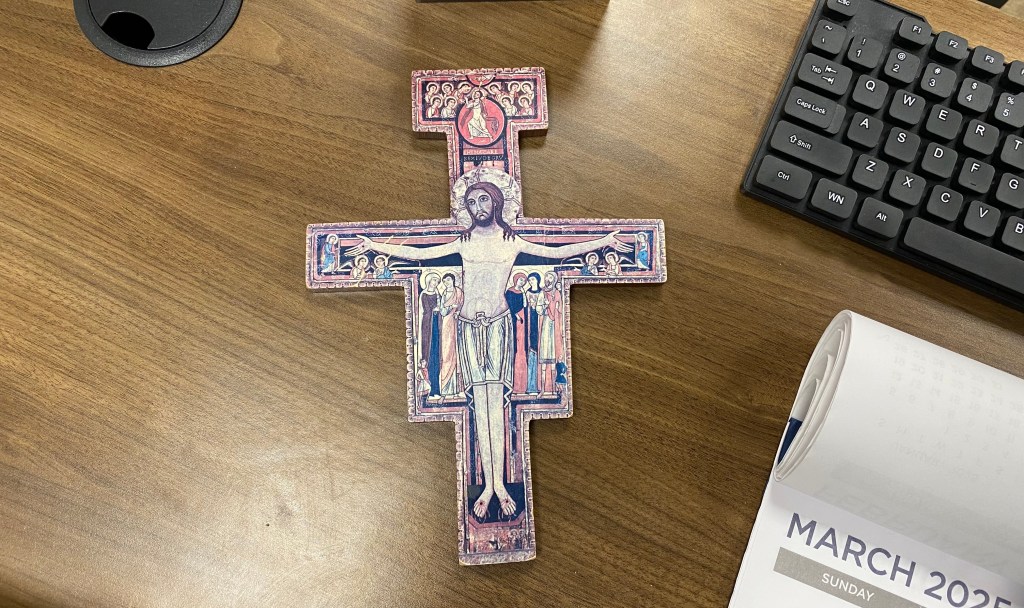
The older I get, the crucifix becomes more and more of a consolation. His body broken, emptied out for us on the cross, represents his unconditional love for us. He gave everything he had, holding nothing back. He took upon himself our sin, our anxieties, fears, and selfishness, and transformed the worst of our fallen nature through his love such that we are invited to be redeemed. The crucifix is not a sign of despair, but of hope and transfiguration, for it reminds us that no matter what we go through or are going through, what trial that we may be in the midst of at this very moment, Jesus has experienced it. He is now, and will be present with us.

Looking at, praying with, and meditating upon Jesus on the Cross has provided me moments of transfiguration, granting me the courage that I did not have to face various conflicts, challenges and trials so to grow and mature as Jesus calls. As he looks down from the cross he continues to love me despite my sin, my weakness, and failures, and is willing to lead and accompany me onward, so that I too may be continually renewed and transformed.

We were not there with Peter, John and James to experience Jesus’ transfiguration, but when we are blessed to participate in the gift of the Mass, we climb the holy mountain and sit at the feet of Jesus and are able to experience the transformation of the bread and wine that become the Body and Blood of Jesus the Christ the Son of God who became one with us in our humanity so that we can become one with him in his divinity. With each reception of the Eucharist, we are more and more transfigured by his holiness and become more and more like Jesus. As we receive him in that intimate encounter, may we also listen to the words of his Father and “listen to him” (Luke 9:35) and the words of his mother, “Do whatever he tells you” (John 2:5).
________________________________________
Photo: The crucifix that I have had with me since my early twenties and which is now on my office desk.

Link for the Mass readings for Sunday, March 15, 2025

Like Elijah and the prophets, let us trust in and follow the word of the Lord.

The disciples who asked the question, “Why do the scribes say that Elijah must come first?” (Mt 17:10) were Peter, James, and John, who had just witnessed the transfiguration of Jesus. They were walking down from the Mount of Transfiguration, tradition identifying this mountain as Mt. Tabor, and the context of the question had to do with, Moses and Elijah, who they saw with Jesus as he revealed to them his divinity.

As the disciples were attempting to digest this Mystery of the Transfiguration just witnessed, they were drawn back to what they knew. Most likely what they were referring to were the accounts in the Books of Sirach and Malachi. In Sirach 48:10 we too can read that, “You [Elijah] are destined, it is written, in times to come to put an end to the wrath before the day of the Lord, to turn back the hearts of the fathers toward their sons, and to re-establish the tribes of Jacob.” In the last chapter of the Book of Malachi, which is incidentally the last lines of the Christian Old Testament ordering of the canon, are the words: “Remember the law of Moses my servant, which I enjoined upon him on Horeb, the Statutes and ordinances for all Israel. Lo, I will send you Elijah, the prophet, before the day of the Lord comes, the great and terrible day” (3:22-23).

Moses in this encounter represents the Torah, the Law or Teachings, and Elijah represents the line of prophets. Elijah also, as we can read in 2 Kings 2:11, was taken up by God into heaven, amid “a flaming chariot and flaming horses… and Elijah went up to heaven in a whirlwind”, and, it was believed, that he was to return again at the appointed time of the Messiah’s coming. Jesus clarified for his disciples that John was indeed the new Elijah. In the revealing of his divinity to Peter, James, and John, Jesus showed that he was the fulfillment of the salvific paths forged by Moses, Elijah, the line of prophets, and John the Baptist.

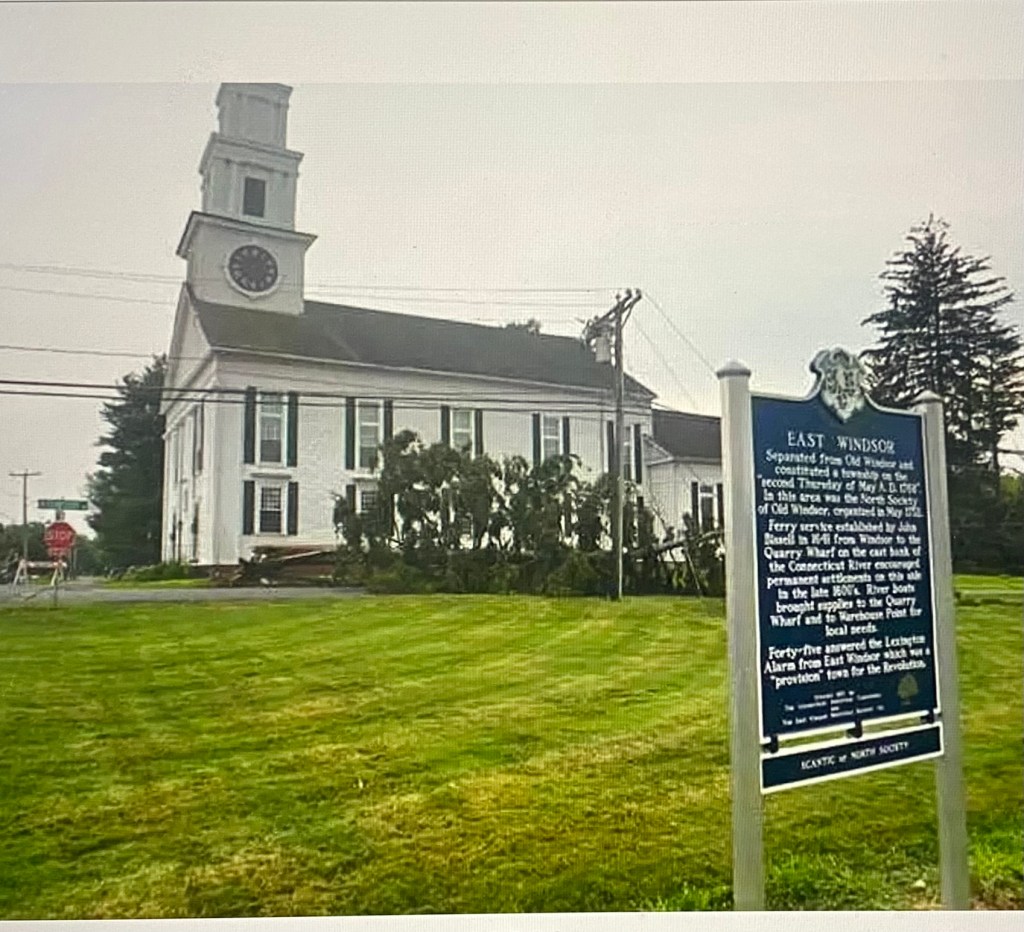
Jesus is the fulfillment of the Law and Prophets as well as our fulfillment. We are invited to prepare the Way of the Lord in our hearts and minds, to become less so that Jesus can become more, as well as to help prepare the way for others. When I began to attend church again in my late teens, I went to the Congregational Church that was about a half-mile walk from our home. At the end of that first service I attended, the interim pastor made an appeal for Sunday School teachers.

One of the things he said was that we do not know who Jesus’ Sunday School teacher was and he referenced that we could be teaching Jesus and not be aware. He was not speaking literally but his point rang true: we have the responsibility to continue to pass on the Greatest Story ever told. Also, his appeal was an avenue for the Holy Spirit to speak through him to me, and although I refused the invitation the first week, I accepted the following week. What might Jesus be inviting you to do this Advent? Trust in him and his invitation.

My, “yes”, to teaching Sunday School, not knowing the first thing about what I was doing, thinking I was too young and way too inexperienced, both true externally, would eventually lead me, through different twists and turns, back home to the Catholic Church, to becoming a school teacher, a permanent deacon, and now as I am typing, a priest. Let us all take heed of the invitation of John the Baptist, Jesus, and the Apostles: “This is the time of fulfillment. The kingdom of God is at hand. Repent, and believe in the Gospel” (Mk 1:15).
———————————————————
Photo credit (Jim Michaud / Hearst Connecticut Media Group) – First Congregational Church of East Windsor, CT, one of the early spiritual, stepping stones that led me to where I am today in Vero Beach, FL. They were also hit hard by a storm with tree damage this year.

Link for the Mass readings for Saturday, December 14, 2024