To be a disciple of Jesus we need to follow the way of the cross.

Jesus summoned the crowd with his disciples and said to them, “Whoever wishes to come after me must deny himself, take up his cross, and follow me” (Mk 8:34).

Our life is not about us, and about what we can accumulate. It is not about achieving and placing our security in power, fame, wealth, and pleasure. Nor are we here on this earth to merely exist, to just get by, and live in survival mode. We exist to be loved by God, to love others as we have been loved, and to live life to the fullest.

The challenge is, are we willing to truly deny ourselves, take up the cross of Jesus, and follow him? The followers of Jesus hearing him say that was quite visceral as many of them had witnessed a crucifixion personally. It is a humiliating, degrading, and horrifically painful death. And yet, Jesus is saying openly that this is a requirement to following him as a disciple.

We may be removed from the, in the face quality of a crucifixion, but we can still recoil at the invitation to renunciation. To accept this cost of discipleship, it is helpful to recall Jesus’ words to Peter in yesterday’s account when Jesus convicted Peter for rebuking Jesus saying that he was to suffer, be rejected by the elders, and killed. Jesus rebuked Peter because he was “not thinking as God does but as human beings do” (Mk 8:33).

We take up our cross and follow Jesus when we are ready and willing to renounce any thought, word, or deed, person, place, or thing that we have place before God; when we are willing to put Jesus first in our lives whether or not we will be ridiculed, persecuted, or killed. This willingness to be Jesus’ disciple comes slowly with each, “yes”, as we see with Peter himself. He and the other Apostles, especially in the Gospel of Mark stumble time and again. Just like the blind man who Jesus just healed, it took a second healing for him to see (cf. Mark 8:22-26). To truly see as God sees will take time with us as well.

Peter affirmed who Jesus was, the Messiah, the Son of God, in one breath with the insight of God, taking a step ahead, and yet, in the next breath, he could not accept that Jesus would be a suffering Messiah and die, taking a few steps back. Peter would also deny him publicly to a slave girl (cf. Mark 14:66-72). Many times Peter would refuse to take up his cross, but he continued to “repent and believe in the Gospel” (Mark 1:15).

Jesus calls us to follow him. We do so one decision at a time. Like Peter, we will sometimes, think as humans do, while at other times, we will think as God does. We will say, “yes” more times than not when we are willing to allow our minds and hearts to be transformed by God’s love. As disciples, we are to follow the way that leads to the cross, which means letting go of our attachments, disordered affections, and idols, and as Jesus and Mary did, say “yes” each time to the invitation to follow our Father’s will. We will sink less when we keep our eyes on Jesus (Matthew 14:22-33) and remain faithful more when we follow Mary’s direction to do whatever he tells us (John 2:5).


Picture: Crucifix in the sanctuary of St. Ignatius of Loyola, ordination day.
Link for the Mass readings for Friday, February 21, 2025

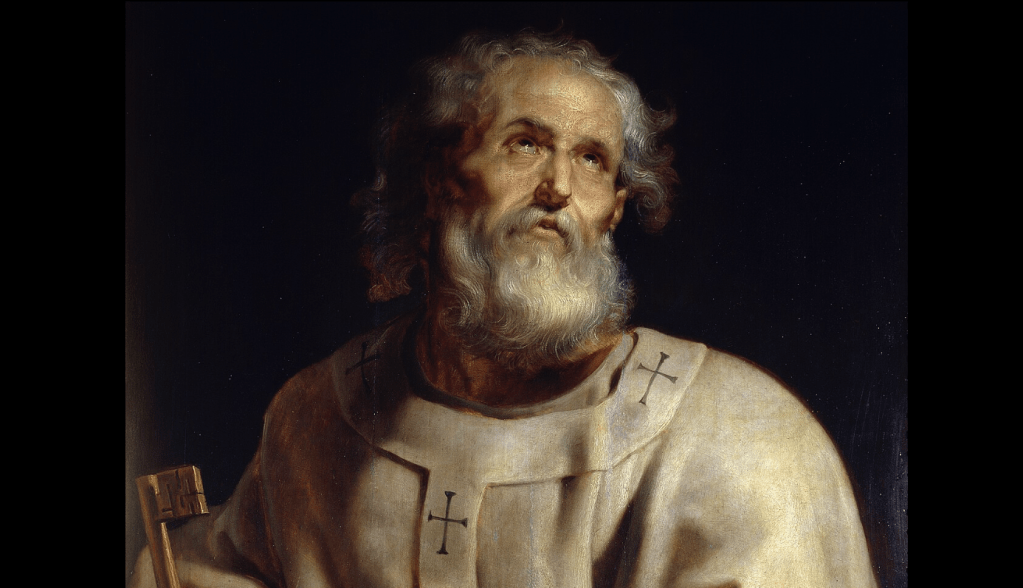
St. Peter gives us hope that even though imperfect we can be perfected in Christ.

“Get behind me, Satan. You are thinking not as God does, but as human beings do” (Mk 8:33).

Peter received this rebuke from Jesus only moments after he recognized Jesus as the Messiah, the Christ. Acknowledging Jesus as the Anointed One was a significant insight inspired by God, but Peter still saw Jesus from his limited perspective, his preconceived notion of who the Messiah was to be. Peter was not alone in this presumption. For some five hundred years the chosen people were awaiting the promise and coming of the Messiah. The greater majority sought a Messiah in the mold of a new King David. One who politically and militarily would liberate the people from their Roman oppression. As was also echoed by the disciples, they offered that Jesus was the return of Elijah or John the Baptist, maybe one of the prophets like Jeremiah, although they do not ascribe to Jesus as being the one whom Moses promised would be sent “who would speak God’s definitive word” (Deuteronomy 18:15-18) (Healy,  161).

The Messiah would set things right. The Messiah would restore proper order politically as well as spiritually. Many of the Jews were not happy with the alliance that the Sadducees, who held control over the Temple, had with Rome. The Messiah would do just that but not in the way anyone would ever conceive of, except maybe for Elijah.

Peter got the first part right when he answered the question that Jesus asked, “Who do people say that I am” (Mk 8:27), but he saw not the suffering servant of Isaiah 53 but most likely some other view of the Messianic hope of Israel. Jesus makes a shift building on Peter’s first insight. He for the first time is speaking more openly by sharing how he would suffer, be rejected, and killed. Peter probably did not even hear anything about Jesus rising on the third day. He pulled Jesus aside and began to rebuke him!

We can learn from Peter’s boldness and misstep. In both instances, Peter confidently shared what he believed. In the first insight, that Jesus is the Christ, he was on target. In the second, he was off the mark by not understanding the reality of Jesus’ impending suffering and death and was corrected. Peter stated what he believed, sometimes insightful, sometimes shortsighted, yet through each experience, he learned. He came to learn when he was led by the Holy Spirit and when he was led by the enemy.

Sometimes they were hard lessons, such as when Peter rejected Jesus three times. Yet Peter kept coming back to Jesus. Peter was not lukewarm nor indecisive. Jesus’ reminder to Peter is a good one for us as well. That we are followers of Jesus as his disciples. We are not to attempt to lead Jesus as we believe to be correct but to be willing to be lead along his way as he directs.

I could use more of Peter’s boldness. What doesn’t work is being afraid of making mistakes. Jesus shared a key lesson with Peter that we need to fully appreciate, and that is, we need to understand things from God’s perspective instead of our own. Our discernment in this area will improve, as did Peter’s, when we build our relationship with God and trust in his will for our lives.

Making mistakes, sinning, and being tripped up by our temptations is not so much the problem as much as trying to rationalize or justify them, and staying in a state of self-justification and hardness of heart when we become aware of them. We need to instead face them with contrition, seek forgiveness, and learn from them if we are to mature in our relationship with God and no longer be enslaved. The good news is that we are not alone. Jesus walks with us each step of the way. Will he convict us and rebuke us as he did with Peter? Absolutely, and thank God. Because he loves us and seeks the best for us. In his conviction and through our willingness to be corrected, Jesus will provide the support, strength, and courage we need to get the most effective balance of boldness and humility as we put his guidance into action.

——————————————————————-

Painting: The Apostle Saint Peter by Peter Paul Reubens

Healy, Mary. The Gospel of Mark. Grand Rapids, MI: Baker Academic, 2008.

Link for the Mass readings for Thursday, February 20, 2025

When we trust in the Lord, we will be healed and be able to see and hear.

In today’s Gospel from Mark, Jesus healed a blind man. Like the healing of the deaf man (cf. Mk 7:31-37), Jesus again used his own saliva in the healing process showing the intimacy and closeness of each encounter. The difference this time is that this man does not receive a full and complete healing the first time. Jesus laid hands on the man’s eyes a second time and he saw clearly; his sight was restored and he could see everything distinctly (Mk 8:25).

Often with Jesus, there are instant healings, as well as healing by his word alone. What might be happening with this need for a double healing? Maybe it is because Jesus meets each person where they are at. He invites us into the process of healing and each person has a different response, even to the point of saying no to the invitation to heal. Remember how Jesus was only able to heal a few people while in his own home town of Nazareth?

We need to read the two miraculous healings of the deaf and blind men deeper than the literal physical healings. Each of us suffers from both spiritual deafness and blindness to some degree. Jesus revealed this with his disciples on the boat ride over to Bethsaida when they did not understand his teaching on the leaven of the Pharisees and Herod. We come to hear and see God’s will for us gradually.

As I shared a few days ago if we knew God’s intention for us early on, we might be crushed with the weight of our own doubt! If someone had told me when I was in high school that I would be a teacher, later a deacon, and now a priest, teaching and preaching coherently, I would have quietly retreated to a stand of white birch across from the old oak tree in the field behind my parent’s house until that idea passed.

Yet, Jesus met me on my level. Sometime around my junior of high school, he invited me through an interim pastor to teach Sunday school to a class of three. About a year later I gave a children’s sermon to the youth and the small congregation. The summer after my freshman year of college, I began to work second shift as a certified nurse’s aide and during my sophomore year of college, after following the urge to take a search in education course, I switched my major from psychology to elementary education. After graduation, my first teaching position was not in the four walls of a classroom, but six hundred eighty acres at the Sharon Audubon Center as an environmental education specialist.

I began to interact with people, Jesus drew me out of my own self-centered posture, and I began to grow and mature. I would eventually enter the classroom when we moved to Florida in 1997 to teach, first in public school for five years and then through JoAnn’s guidance, I applied for a substitute position at Rosarian Academy in WPB, where I would spend the next eight years teaching middle school religion. While at Rosarian, I also entered the permanent deacon program and was ordained a deacon in 2013 and then would go on to teach at Cardinal Newman HS for nine more years.

Each of these experiences of saying yes to Jesus was my willingness to be healed and lead gently. Certainly, with the loss of JoAnn, my foundation had been shaken, but Jesus continued to lead me and helped me to discern my next step which was returning to seminary for two years and then fortunate to be ordained this past May as a priest and I’m blessed to be serving now and typing these words from my office at Holy Cross Catholic Church.

The journey continues for each of us, and we are invited to trust in Jesus and be led by his guidance into healing and service. As he has guided me, I trust that he will do the same for each of you. We just need to have our eyes and ears open for his healing touch. He is not done with any of us yet!


Photo: Full moon rising during Rosary walk back in November.

Link for the Mass readings for Wednesday, February 19, 2025

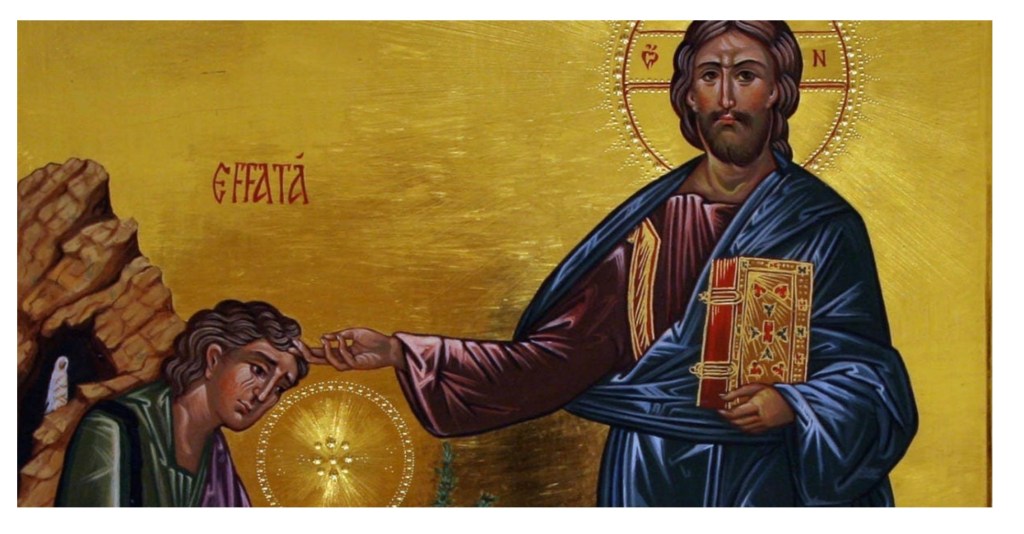
“Ephphatha!”

Those who witnessed Jesus healing the man who was deaf with a speech impediment grasped something more than just the healing when they stated: “He has done all things well. He makes the deaf hear and the mute speak” (Mk 7:37). With these words, they were acknowledging the deliverance of Israel by the Lord, promised by the prophet Isaiah, when he mentioned how, “the eyes of the blind will be opened, the ears of the deaf will be cleared” (Isaiah 35:5).

The beauty of this healing may be missed by us in the modern age because of the graphic nature of the details used by Mark. Jesus places his fingers in the man’s ears, spits into his own hands, and then touches the man’s tongue. Jesus is mixing his own saliva with this man in need of healing. We don’t even share drinks from the same bottle anymore as we used to do when we were kids! While in the shadow of Covid, this imagery can seem incomprehensible!

Yet, what Jesus is showing is the intimacy of communion that he offers us. He gave the very essence of his own being, his own saliva and mingled it with this man’s saliva. This physical teaching is an image or icon, of how the Son of God, in no way diminishing the fullness of his divinity, entered into the very real corporality of our humanity. He became one with us so that we can become one with him. This was true then and it is still true for us today!

This is also especially true because as with Jesus healing of the Syrophoenician woman’s daughter yesterday, this man too is not a Jew but a Gentile. In each of their healings, the good news is not only being proclaimed now beyond the Jewish people but also they represent that they and all people are given access to God through Jesus. The eyes and ears of all will be opened to the glory of God’s message and invitation to relationship.

We all suffer physical, emotional, psychological, and spiritual trials. But we also suffer from not being able to hear God’s word, and so are mute in speaking his word. Jesus, even if he does not provide a healing or an immediate solution, is present in our lives. We are invited to consciously resist the temptation of avoiding our own suffering, pain, or challenges and instead are invited to embrace and enter into them. We are not expected to do this alone, but to bring our need for healing to Jesus. In this way, we are aligning our suffering with his on the Cross. When we choose to offer up our pain and suffering on behalf of another, we participate in redemptive suffering. Others can experience relief and healing from our sacrifice in participation with Jesus.

This act of the will gives meaning to our suffering such that we do not endure what we are going through in vain. May we face, head-on, that which rises before us, actualizing the guidance of Jesus as well as the advances of modern medicine, science, and psychology, embracing a posture that engages both faith and reason. Our approach will be best if we are more mindful and balanced with our discernment. Just masking struggles without dealing with the root cause will only prolong and possibly worsen the condition.

Jesus seeks to heal us at the core root of our wounds as well by saying to us: “Ephphatha!” so that we too can hear his word, speak his word, and be more present to and love one another. Jesus wants to heal others through us. With ears more open to the voice of God, we become more aware of the needs of others. The best gift of healing we can offer to one another is to be present and really listen to and hear them, such that they have experienced being heard and loved. When we are open to hearing others and God, we will also then receive his guidance on best how to help one another.

——————————————————————————————-

Picture: Icon of Jesus healing the man deaf and mute – Artist unknown.

Link for the Mass readings for Friday, February 14, 2025

“Lord, even the dogs under the table eat the children’s scraps.”

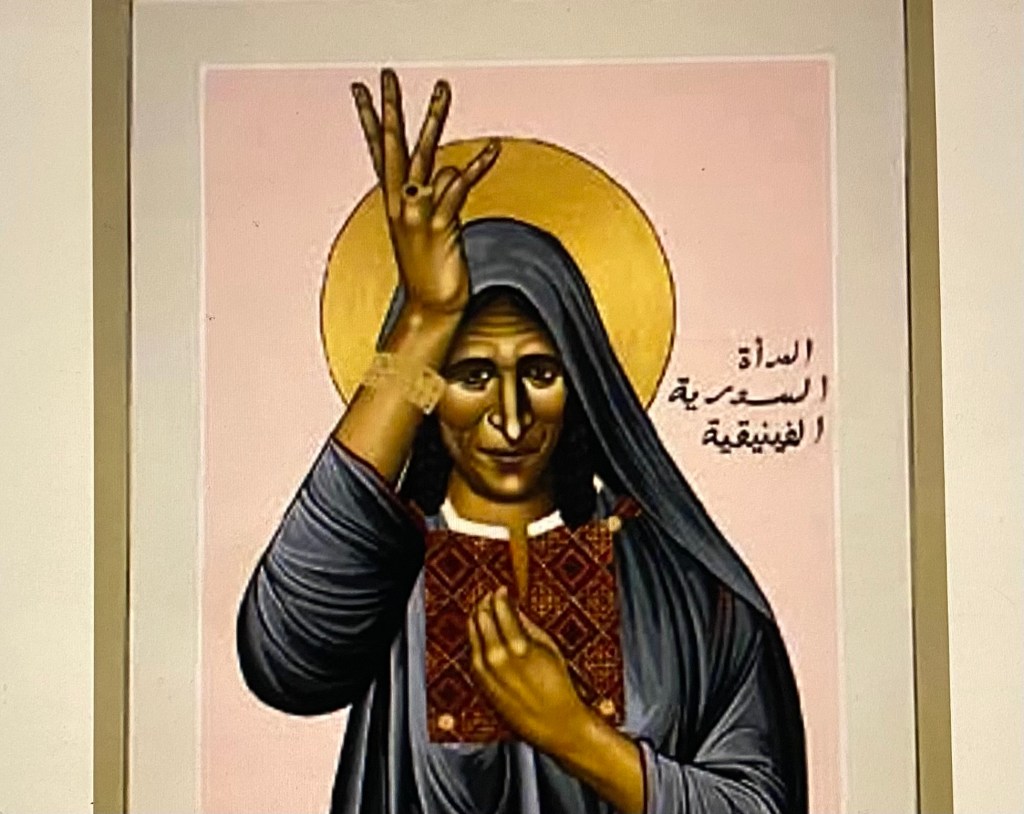
In today’s encounter between Jesus and the Syrophoenician woman, we can observe again the crossing of societal norms by both the woman and Jesus. The woman, very much like the woman who had been hemorrhaging for twelve years, was desperate, faithful, and bold as she approached Jesus. She was willing to risk breaking the social taboo of speaking with Jesus on one hand and entering into the place where he was staying uninvited on the other! She walked into the home where Jesus was staying for the sole purpose that her daughter would be healed.

Jesus meets her with the derogatory language of equating her with a dog, considered one of the most unclean of animals by Jews: “Let the children be fed first. For it is not right to take the food of the children and throw it to the dogs” (Mk 7:27). This woman would have none of Jesus’ rebuke, she wasn’t leaving without receiving a healing for her daughter, even if that meant she was putting her life in danger. Her retort, “Lord, even the dogs under the table eat the children’s scraps”, emphasized this point. It was also the key that opened the door for the disciples and us to witness a consistent pattern with Jesus.

Just as the woman who was experiencing the hemorrhage (cf. Mk 5:25-34), both women had the faith and courage to approach Jesus. The outcome of this encounter was also similar to the one that Jesus had with another Gentile, the Roman centurion, who said that he was not worthy for Jesus to enter under his roof. In both accounts, Jesus healed solely by his word from afar. What is important to Jesus is the person’s faith and belief that Jesus was who he said he was and still is today!

Jesus’ apparent rebuke to the woman was more a statement of fact. He did first come to proclaim the Good News to the “children” first, the chosen ones of God’s children, the people of Israel. And how sad was the day as we saw not too long ago when Jesus came to proclaim this message to those in his hometown and none had the faith of this woman before him, a Gentile. Her faith not only saved her daughter from the possession of a demon, but was the opening for the Gospel to also be proclaimed to the Gentiles as well as to the Jewish people.

Do we have the courage, faith, and belief in Jesus as shown by the Syrophoenician woman? Are we willing to take the risk of crossing our own societal norms to draw closer to Jesus? When we let nothing hinder our stride closer to Jesus, including relinquishing the reigns of being our own masters, acknowledging that God is God and we are not, believing that Jesus is truly the Son of God and that he is still present and active in our lives, miracles still do happen! Jesus said that if we have faith but the size of the mustard seed, we can move mountains (cf. Mt 17:20) and what we ask for in prayer, we will receive (as we shall see in Mark 11:24).

If you or someone close to you are dealing with some conflicts, challenges, trials, or tribulations, if something, someone, or your own fear or anxiety is keeping you from making a deeper commitment to surrendering your life to Jesus, if there are opposing forces that feel as big as mountains, be not afraid! Trust in Jesus! Bring any and all burdens and lay them at his feet, and then take his hand. With Jesus all things are possible. We just need the courage to believe that our Lord is present with us especially in the midst of our challenges. Jesus has not left us as orphans. We are not alone, but we do need, as did the Syrophoenician woman, have faith that Jesus is who he says he is. Jesus is the Christ, the Son of the living God, our Savior and Redeemer, and he is present, is the kingdom of God at hand, and will see us through step by faithful step.


Photo: Syrophoenician Woman by Robert Lenz

Link for the Mass readings for Wednesday, February 13, 2025

With a breath and a prayer, we can choose what we think, speak, and how we are to act.

“[W]hat comes out of the man, that is what defiles him” (Mk 7:20).

Jesus offers a list in today’s gospel of what can be unleashed from within and then directed out toward another. These are examples of what defiles us because, at some level, we make the decision to think about, speak, and put into action those thoughts, words, and actions.

To resist the temptation to defile ourselves and others, we can follow the lead of the writer from the letter to the Hebrews who offered a wonderful verse, which I pray each morning in my recitation of the Office: “Encourage each other daily while it is still today” (Hebrews 3:13). There are many that we will encounter or hear about each day that will do the exact opposite.

Our goal each moment is to resist spending any time or energy in supporting any thoughts, words, or actions that demean, belittle, or dehumanize. We can call those out who do so, stand up for those impoverished from these attacks who do not have a voice but we must not succumb, engage, or in any way be lowered to the negativity unleashed. Otherwise, we become an agent in perpetuating the same vileness and poison already unleashed.

Our thoughts, words, and actions matter because we are all interconnected, and even what we ruminate upon can be projected onto our faces and directed out toward another without saying one word. Thoughts entertained can lead to words and actions that wound. We are better when we approach each moment accessing more intentional choices. Instead reacting on automatic pilot, we can take a slow breath, think, and pray about our response.

Let us choose this day to align our thoughts, words, and actions with those of Jesus. We can follow St Mother Teresa of Calcutta’s five-finger gospel as a reminder: “You did it to me.” What we say and do to the least of our brothers and sisters, we say and do to Jesus (cf. Mt 25:35-45). This begins when we resist defiling ourselves by never letting evil talk pass our lips and instead think, speak, and act in ways that empower, convict, and build up others. Our effort is strengthened when we choose to forgive any negativity hurled at us, and meet it with a posture of compassion that seeks to understand the perspective of the hurler. In our efforts, we are not alone when we call upon the help and strength of Jesus as we strive to become ambassadors of his transforming love.

————————————————————————————————-

Photo: Making time to be still and quiet when all is well helps us to more easily choose to do so when stressful opportunities arise.

Link for the Mass readings for Wednesday, February 12, 2025

Let us honor God with open minds and hearts to his will.

Jesus reacted to the criticism of not observing ritual washing prior to eating that was leveled at him from the Pharisees and scribes by recalling the tradition of the Prophets through the words of Isaiah: “This people honors me with their lips, but their hearts are far from me” (Mk 7:6). For Jesus, following the law for the law’s sake is an empty act. What is more important is encountering God, experiencing his love and forgiveness, developing a relationship with him, being transformed by him, and restoring what has been lost. Human beings were created in God’s image and likeness, but through sin, lost that likeness. Jesus sought to help bring God’s children back into right relationship with his Father so as to be able to glorify him by serving others and inviting others into communion with him. Jesus challenged the hyper scrupulosity and exactitude of the rules that had nothing to do with being humble servants of and growing in relationship with God.

Just laws and practices are enacted to build up and empower through discipline and clear boundaries. They help keep us from being enslaved to our passions and sins and instead lead us to freedom for excellence, for fulfillment, and to experience a heart on fire with an ever-growing love that yearns for a relationship with God and each other, like a deer does for running streams.

As with any game we play, there are rules and regulations, there are referees and officials to keep order. When the rules enforced encroach on the flow of the game, such that they inhibit the freedom of play, the game is stunted. When there is no enforcement, the game quickly devolves into chaos. When the rules are consistent, they provide the structure and boundaries that limit abuse, allow for the game to flourish, and the players to experience the freedom to actualize their potential, and as such, there is the experience of the true, the good, and the beautiful.

The first time I saw people skate, at around seven years, I was enraptured. My father was working on a project at our local, ice rink. We had not gone there to skate, and yet, I refused to leave until he took me on the ice. It didn’t matter that the only skates to fit my feet were figure skates or that my first attempt was a dismal failure. What mattered was that I made it to the ice and the joy of that experience inspired me as I learned the rules of balance, how to stop, and what a toe kick was and was not for. Soon I had the freedom not only to skate but to join a hockey team. The freedom and joy I felt any time I skated or played hockey, I still carry with me.

The Church, when we are at our best, is the same. We don’t lead with the rules and moralizing, but instead, we share our time, presence, and the joy of our faith. We empower and support one another as we enter into the play between our finite freedom and God’s infinite freedom. We have been created for and seek a deep and intimate relationship with him that will lead us to a deeper transformation of our hearts and minds. With both open to God’s guidance, we can better identify and discern between the voice of the enemy and God. There is a unique balance between the rules and the freedom of play in ice skating as well as our relationship with God.

Loving someone does not mean we allow them to do whatever they want, but in willing their good, we offer invitations, options, establish boundaries, and offer corrections, that will provide opportunities for growth, maturity, and authentic freedom. We are going to make mistakes, I have made plenty. The key is recognizing that we are on a journey together. As we walk together, we support and learn from one another. In this way, the boundaries and rules we follow are meant to set a foundation for healthy relationships and actualizing who God invites us to be; joyful, human beings that are fully alive!

———————————————————————————

Photo: Getting back on the ice with Jack and Christy, Christmas Eve day, 2023, in the city of my birth, Hartford, CT.

Link for the Mass readings for Tuesday, February 11, 2025

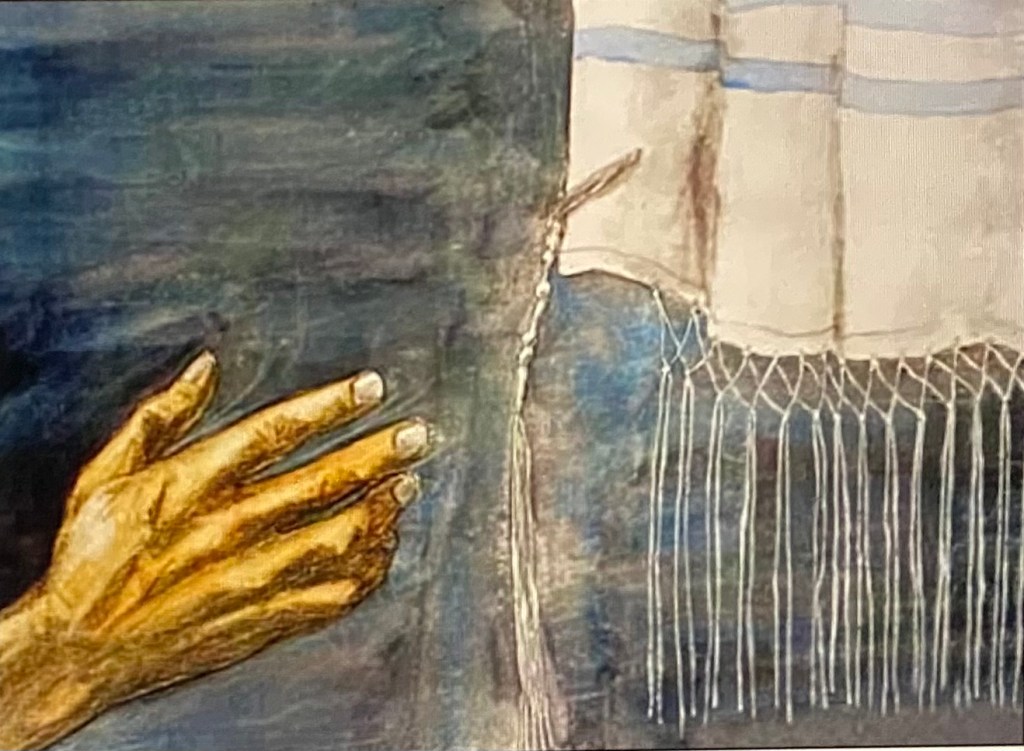
To touch only the tassel of his cloak…

“Whatever villages or towns or countryside he entered, they laid the sick in the marketplaces and begged him that they might touch only the tassel on his cloak; and as many as touched it were healed” (Mk 6:56).

The people of Jesus’ time were in need of healing, hungry to draw closer to God, often searching, wandering, and wounded. That some begged only to touch the tassel on his cloak is interesting. Had the story of the faith of the woman with the hemorrhage for twelve years who courageously reached out and touched the tassel of his cloak and was healed spread? Had the woman herself shared her story and inspired others who had all but lost hope to seek out Jesus?

Even though there was a lull in the momentum when Jesus’ healed only a few in his hometown, and Mark paused in his account to share the flashback of John the Baptist’s death, Jesus has not slowed and people continue to seek his healing. The apostles also have been sent to bring healing and with success. Though Jesus is not as visible to us as he was to those in the land of Gennesaret, he is just as present if not closer, especially in the sacraments, to us today. “Jesus is still the great Physician of our souls and bodies. In the power of the Holy Spirit he continues his work of healing and salvation through the Church, especially in the two sacraments of healing: Penance and the Anointing of the Sick” (Healy, 134).

Let us also not forget the gift of Jesus present in the Mass. After experiencing the word proclaimed at Mass as his disciples heard Jesus teach with authority and receiving his Body and Blood, we are not to go home as if nothing of any significance just happened. Jesus invites us to his banquet weekly, and daily, to encounter him so that in receiving his love and his presence, we may be transformed and go forth to bring Jesus who we have received to others. We are also to see Jesus present in others who are in need.

Pope Francis was asked in an interview by Fr. Antonio Spadaro, S.J., in 2013, “What does the church need most at this historic moment?” And Pope Francis answered, “that the thing the church needs most today is the ability to heal wounds and to warm the hearts of the faithful; it needs nearness, proximity. I see the church as a field hospital after battle.” We need to be “near”, in the same “proximity”, to bear Christ to one another: “The church sometimes has locked itself up in small things, in small-minded rules. The most important thing is the first proclamation: Jesus Christ has saved you. And the ministers of the church must be ministers of mercy above all.”

As in the time Jesus walked among the people of Galilee and they came to him seeking healing, we and so many are in need today. May we seek to breathe, rest in, and receive God’s love and healing, sot that we may be then present, have compassion like Jesus and draw near to those who Jesus sends us. May we resist the temptation to keep others at a distance and refuse to be indifferent to the needs of those he brings to us in their time of need. May we too, in the words of Pope Francis, go out to “heal the wounds and to warm the hearts of the faithful” by being willing to accompany others in their sorrows, anxiety, trials, and tribulations.

People are hurting. We are not necessarily called to fix others or their problems but to be present, to listen, to hear, and to allow the Holy Spirit to speak and love through us at the appropriate time, so that, in the end, we do not prevent people from encountering Jesus, but provide a means for them to encounter the divine Physician. Maybe we can be the tassel on the cloak of Jesus to help others to experience his healing.

—————————————————————————————————————

Photo: Do we have the faith to seek healing from Jesus and also to be a link for Jesus to heal others?

Healy, Mary. The Gospel of Mark. Grand Rapids: Baker Academic, 2008.

Spadaro, S.J., Antonio. “A Big Heart Open to God: An interview with Pope Francis”. America Magazine. September 30, 2013 Issue: https://www.americamagazine.org/faith/2013/09/30/big-heart-open-god-interview-pope-francis

Link for the Mass for Monday, February 10, 2025

“Put out into the deep!”

In the first reading, Isaiah speaks, “Woe is me, I am doomed! For I am a man of unclean lips, living among a people of unclean lips, yet my eyes have seen the King, the LORD of hosts” (Isaiah 6:5)! And then in the Gospel after the miraculous catch of fish, Simon says to Jesus, “Depart from me, Lord, for I am a sinful man” (Luke 5:8). Isaiah in his vision and Simon through the super abundant catch of fish both recognize that they are in the presence of God and in that presence they also wisely recognize and confess their sinfulness.

Both men clearly fall short of the glory of God and God meets them both, not with condemnation, but with an invitation. Isaiah is met by the seraphim who places an ember on his lips to purify his mouth and Jesus says to Simon, “Do not be afraid; from now on you will be catching men” (Luke 5:10). God did not ask either of them nor does he ask us if we are worthy. He asked Isaiah and Peter, are you willing to follow me? And both were willing to do so and be sent.

When we enter the sanctuary where Jesus is present in the consecrated hosts in the tabernacle, do we allow ourselves to experience the awe that we are entering a sacred space, a place set apart that is holy for God? We bless ourselves with holy water when we first enter the church, to remind ourselves that in Baptism we have died with Christ and have risen with him to become part of the new creation. We also remember our baptismal vows to reject the things of Satan and to say, “yes” to the will of God. We then genuflect, kneel on our right knee, again making the sign of the cross, invoking the Trinity of God as we acknowledge the presence of the Body of Christ in the tabernacle. For where the Son is present, so is the Father and the Holy Spirit.

As we come to our seats, allowing ourselves to be still and silent in the presence of God, we call to mind our sins as did Isaiah and Simon and seek God’s forgiveness that will be offered for our venial sins during the penitential rite during the beginning of the Mass. As Isaiah received the ember from the heavenly altar in his vision to purify his lips, so we receive the Eucharist, the Body and Blood of Christ, that has been represented on the altar during the Eucharistic rite. We are purified and transformed. Our hearts and minds are made new through the love of Christ and the power of the Holy Spirit that has transformed bread and wine into the Body and Blood of Christ.

Simon, like Isaiah, was willing to experience the light of God coming through Jesus’ miracle. He did not roll and jump overboard, instead he remained in Jesus’ presence, and confessed his sinfulness. Simon, after fishing all night, was asked to do probably the last thing he wanted to do. Have some itinerant preacher enter his boat and command him “to put out a short distance from shore” so he could teach for a while. If that wasn’t enough, then Jesus, this carpenter, said to Simon, a seasoned fisherman, to “put out into the deep water and lower your nets”. In both cases, Simon, though reluctant, and not seeing any sense in the command, was willing to obey.

Because Isaiah and Simon were willing to trust, God happened. Their lives were transformed, and they were sent on mission. Most of us will not experience such a vision as Isaiah experienced but Jesus will come to us in the same way that he came to Simon. He meets us in the midst of our everyday lives.

So often we think or feel that it is our initiative that draws us closer to God, when in fact, the initiative is God’s. Our very desire to pray, to seek out God is already an awareness, a recognition of his invitation to draw close. God speaks to us in the silence of our hearts, through quiet invitations, and experiences. Each time we are aware, and each time, as did Simon, even when we hesitate, we still say “yes” to his invitation, we grow in our relationship with God.

Jesus comes to us as we are and loves as we are, even in our sin, but he doesn’t want us to stay there. When we are willing to become aware of our sin and faults and allow more of the light of Jesus to shine into the darkness of our lives, as we put out into the deep, as we go where the Holy Spirit leads us, beyond the horizon of our comfort zones and understanding, we will be forgiven, and blessed by the grace and wonder of God’s glory present in our lives. Apart from Jesus we can do nothing, but with him and following his guidance all things are possible. This is what Simon experienced in the miracle of the abundance of the fish filling his nets. What he could not accomplish on his own experience, skill, and strength, he did by following the invitation of Jesus and he became more acutely aware of the divinity of Jesus in his midst.

The deeper and more intimate our relationship grows with Jesus, the more our own sin is revealed to us. This is a gift to welcome, because in our awareness and confession of our sins we are freed from that which keeps us at a distance and prevents the growth of our relationship with the God who loves us more than we can ever imagine. When we face and confess our sin and weakness, and resist settling for mediocrity, we will grow in holiness, humility, and receive more of the light, love, and grace of Jesus such that we can grow beyond our fears, grow deeper in our relationship with him, so to better allow ourselves to be agents of his grace and mercy in the lives of those he brings into our realm of influence.

——————————————————–

Painting: Some quiet time with Jesus, listening to his invitation to, “Go into the deep.”

Link for the Mass readings for Sunday, February 9, 2025

Come away and rest for a while.

After hearing the accounts of the missionary trip, Jesus invited his apostles to step away from the crowds “to a deserted place [to] rest awhile” (Mk 6:31). Jesus is showing the apostles the importance of balance. There are times to serve and times to recharge, to reconnect, and spend some quiet and reflective time with him. Jesus is our model, our guide and teacher, but he is at the same time more than that. Jesus is the source and sustenance of who we are as a living craving, hunger, and desire to be one with God and each another. As the deer longs to refresh itself from the waters of a running stream, we long to be nourished by the living water, Jesus, and this is true for the atheist as well as the mystic alike, for each and every one of us, whether we are aware of this reality or not.

Our thirst for communion can be stifled because it is so easy to be caught up in our day to day schedule, life’s demands, and falling into survival mode. Even when all is good and we are serving well, as we see with the apostles return, there is a need for rest.  There is so much that needs to be done, and at the same time, there are so many distractions and diversions that vie for our energy and attention.

In today’s Gospel, the intent of Jesus is to escape with his apostles for some rest and renewal, to decompress with them, and hear about their experiences of ministry. They get in a boat to do just that, yet the crowd that they thought they had left behind has arrived on the other side before they did! This is a sign that the preaching, exorcisms, and healing work the apostles participated in was already bearing fruit. Just as people were flocking to Jesus, so word was getting out about his disciples! “When Jesus disembarked and saw the vast crowd, his heart was moved with pity for them, for they were like sheep without a shepherd; and he began to teach them many things” (Mk 6:34).

So much for being able to “rest away for awhile”! Or maybe the boat ride across was that moment of rest. The moment to take a breath and reconnect with Jesus. As Jesus and the apostles were coming closer to shore, they could have diverted their course to avoid them. Instead, Jesus, was moved with pity or compassion and moved to teach them. A key for a more balanced life is to spend time daily with Jesus to know his will and follow his lead.

I have just experienced just such a moment as I needed to step back a bit for a few days. Many wonderful things are happening here at Holy Cross, but my body was feeling a bit taxed, so I took the time to reset, to rest awhile with Jesus and Mary. I also recommitted to setting key non-negotiable times to set aside for prayer. As St. Francis de Sales taught: “Every one of us needs half an hour of prayer a day, except when we are busy — then we need an hour.” I notice the difference when I do not give myself that hour each day.

When we intentionally put God first and make the time each day to spend with him, often there is a serendipitous alignment that we experience in our day, that we did not think possible at the outset. This often happens when we consciously make time for stillness, for meditation and prayer, even and especially, during the moment when we may feel we just don’t have the time.

As you ease into Saturday, my invitation is to give yourself a fifteen minute retreat. Read these words from Jesus slowly and reflectively: “Come away by yourselves to a deserted place and rest awhile” (Mark 6:31). Find a quiet place where you feel comfortable, take a few deep, slow breaths, close your eyes, then step into and sit in the boat with Jesus and his disciples.

Breathe some more, feel the breeze of the Sea of Galilee, feel the warmth of the sun on your face, and experience the rhythm of the boat on the water. Does Jesus remain silent and rest with you? Does he begin to teach, and if so, what does he share? Do any questions arise and if so what do you ask, and what is his answer? Allow yourself to be still, just you and Jesus for the time you have set aside. When the boat comes to shore, go forth into the day renewed and blessed by Jesus with a heart and mind able to be moved with compassion to follow God’s will in how best to serve him today and into the coming week.

—————————————————————-

Photo: Spending some time to breathe, pray, and be still with Jesus and Mary!

Link for the Mass readings for Saturday, February 8, 2025