Following the will of God helps us to grow closer to Jesus and each other.

What Jesus proposes is not an either/or statement, but is meant to be a both/and statement. The end goal of our life is to be in communion with God. To attain that goal, we need to not only acknowledge that God exists but also come to know and follow God’s will. As Jesus said, “For whoever does the will of my heavenly Father is my brother, and sister, and mother.” (Mt 12:50). The challenge is that there is so much that pulls at us for our attention, so much that reaches out to divert us. People, activities, material pursuits are all vying for first place for our minds, hearts, and souls.

Then there are the challenges, demands, joy and wonders of family life. We often read, hear, and experience ourselves, how much the family is being challenged in our modern age from without and within. Many of us strive to put family first in our lives. That ought to and needs to be a priority as healthy relationships require commitment, love, sacrifice, and persistence. What Jesus offers then seems to be counter-intuitive to that reality.

Jesus is interrupted while he is teaching, and told that his mother and brothers were there wanting to see him. We would think he would say, “Great! Bring them right in, I have a place reserved for them here, front and center!” Yet, I am sure that his comment, “Who is my mother? Who are my brothers” (Mt 12:49), raised a few eyebrows and hackles.

Jesus was not choosing his disciples over his family, he was clarifying that the primacy of place of God his Father is to be first and foremost. “For whoever does the will of my heavenly Father is my brother, and sister, and mother” (Mt 12:50). Families come in many different shapes and sizes, one size indeed does not fit all. Building our relationship with our heavenly Father is the foundation toward striving toward healthier relationships.

As our ego and self-centeredness become less of a focus, we slowly come to realized we are not the center of the universe. This is no overnight or easy process, but as we surrender a little more each day to the truth that God is our Father and Jesus is our Lord, we will begin to experience the love of the Holy Spirit a little more. As the relationship of God becomes foremost in our life, we will begin to change. We will become more patient, understanding, less reactive, and more present to one another.

As we continue to mature in our spiritual life, we will also begin to experience the fruit of the Holy Spirit: love, joy, peace, patience, kindness, goodness, gentleness, and self-control (cf. Galatians 5:22-23). In sharing what we have received, we will be more available to others and better able to foster deeper relationships with our own family members, while at the same time experience a larger extended family, with those beyond blood. Let us surrender ourselves and all of our relationships to and entrust them into Jesus’ care.

Who was the closest relationship Jesus had? Mary. Not because she gave birth to him, but because who better than Mary followed the will of his Father? If life with some family members is a little bumpy right now or you just want to deepen your familial bonds, begin your day with Mary and say often, “May it be done to me according to your word” (Lk 1:38) and let God happen.


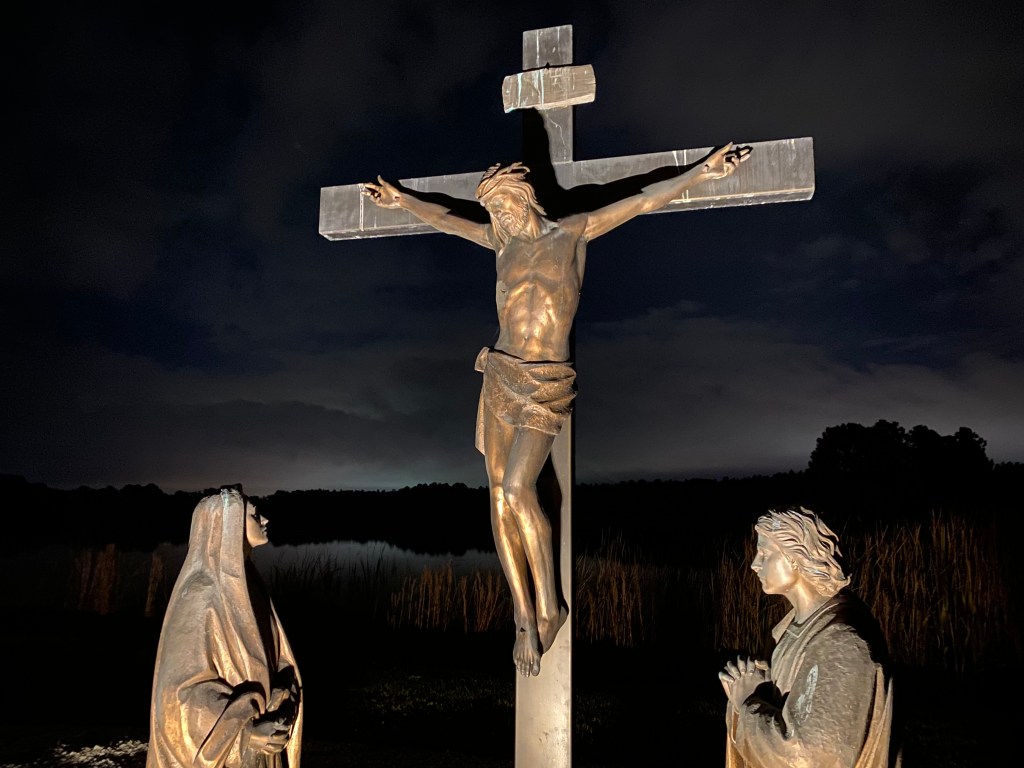
Photo: Mary and John followed Jesus all the way to the Cross. While on canonical retreat last December at Bethany Center, Lutz, FL.

Link for the Mass readings for Tuesday, July 23, 2024
Jesus will help us to discern when to walk away and when to stand firm.

In today’s Gospel from Matthew, Jesus realized that: “The Pharisees went out and took counsel against Jesus to put him to death” (Mt 12:14). Jesus did not then start to plan how he would defend himself against their plot, he did not arm his supporters, nor is there any indication that Jesus let the fact that he was a marked man bother him. What did Jesus do with this bit of news?

“He withdrew from that place” (Mt. 12:15) and cured those who followed him. Was Jesus being a coward by withdrawing? No. Jesus refused to engage or give any of his time or energy to their negativity or threat. He focused on what he was about and that was continuing the mission that God had sent him to achieve, which was to help bring about the salvation of humanity and the world and to call those who would work with him to continue his mission.

Many of us will hopefully not receive death threats, but many of us have and may witness and/or receive critical, negative, belittling, or dehumanizing looks, words, and outright actions to cause physical, mental, emotional or spiritual harm. For those of us who choose to practice publicly the teachings of Jesus, we may receive even more!

Our common response to the many forms of perceived or actual animosity directed toward us is to react. Our reactions generally are based on learned defense mechanisms we have adopted. Often when we react, we slip into survival mode, experience increased anxiety, defensiveness, anger as well as a myriad of other emotions. Hopefully, as we mature in our faith we will resist reacting, remember to breath, and call upon God’s guidance to direct us such that we can be less reactive and more attentive to how to act as advocates of God’s grace.

Life is short, let us not take a day or moment for granted, nor give away our precious time by engaging in unneeded drama or negativity. There are times that we do need to stand and speak up. Other times, as Jesus did today, we need to walk away and direct our energies elsewhere. With each challenge, may we call on Jesus for his discernment on how best to act in each situation.

The words of Teresa of Avila, Spanish saint and doctor of the Church, (1514-1582) are good ones to repeat and meditate upon: “Let nothing disturb you, Let nothing frighten you, All things are passing away: God never changes. Patience obtains all things. Whoever has God lacks nothing; God alone suffices.”


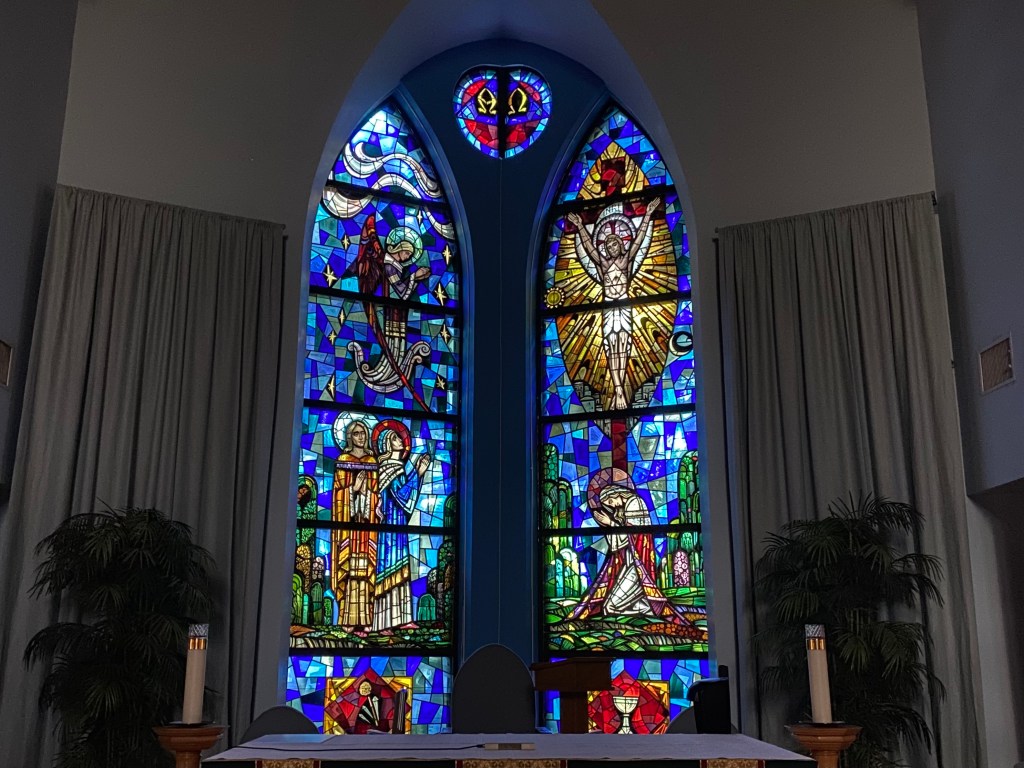
Photo: Jesus walked away from today’s threat but was willing to endure the greatest suffering of all when his appointed time had come to save and restore us to the Father. Praying in the sanctuary of Holy Cross, Vero Beach.

Link for the Mass readings for Saturday, July, 20, 2024

In Jesus, we are grounded and renewed.

“At that time Jesus exclaimed: ‘I give praise to you, Father, Lord of heaven and earth, for although you have hidden these things from the wise and the learned you have revealed them to the childlike’” (Mt 11:25).

Why did the wise and the learned, referring to some of the Sadducees, Pharisees and scribes, reject Jesus? One possibility is that Jesus challenged their idol of tradition. Even though Jesus did not come to abolish the law but to fulfill it (cf. Mt 5:17), the invitation to go deeper was and continues to be challenging. This is certainly highlighted in the six antitheses that Jesus shared during his Sermon on the Mount. Here is one such example: “You have heard that it was said, ‘An eye for an eye and a tooth for a tooth.’ But I say to you, offer no resistance to one who is evil” (Mt 5: 28). Offer no resistance to one who is evil? Not only hard to swallow for people of Jesus’ time, but for us today as well.

Jesus offered then and continues to offer us today a share in the intimacy of the Trinitarian Love of God shared between Father, Son, and Holy Spirit. To be fully alive, to share in his Love, we need to resist being governed by holding blindly on to tradition for its own sake. Instead, we need to be open to growth, change, and renewal. Gerhard Lohfink, in his book, No Irrelevant Jesus, quotes the Polish philosopher Leszak Kolakowski: “A society in which tradition becomes a cult is condemned to stagnation; a society that tries to live entirely through revolt against tradition condemns itself to destruction” (Lohfink 2014, 2).

Many have left the Church because they feel we are too steeped in tradition, rules, and laws, and yet in doing so, they have left behind the secure ground or foundation, with no anchor in their life. On the other extreme are those who remain hunkered down, entrenched in a bunker of tradition fearing the secular tide, grasping, white knuckled, to tradition, but this stifles their growth.

Both tendencies are insufficient because at root there is not a trust in Jesus. Jesus helps balance the tension between these two. He invites us to remain anchored in the Truth of the deposit of faith that he has given to us while encouraging us to go deeper in our understanding, practice of our faith and relationship with our God. If we are not moving forward in our spiritual lives, we are moving backward.

We are better when we resist the extremes of rejecting tradition altogether or idolizing tradition alone, and instead build on the foundation of Jesus Christ: “The Way, the Truth and the Life” (cf. Jn 14:6). Within the life of the Church, “we must not do away with its traditions, but at the same time, it must continually clarify, renew, and deepen them” (Lohfink 2014, 2).

—————————————

Photo: Rosary walk last night – Riomar Beach, Vero Beach FL. Just like the ebb and flow of the tides we must allow for a rhythm of expansion and contraction in our faith journeys. We are called to be grounded in Jesus and stretched beyond our comfort zones as well!

Lohfink, Gerhard. No Irrelevant Jesus: On Jesus and the Church Today. Minnesota: Liturgical Press, 2014

Link for the Mass readings for Wednesday, July 17, 2024

May we be willing to see and cut the ties that bind.

“Jesus began to reproach the towns where most of his mighty deeds had been done, since they had not repented.” (Mt 11:20).

Anyone who encounters Jesus is invited to change. Jesus shines the light of his love and mercy into the darkness of our own fallen nature, where we are wounded, sinful, and broken. He invites us to repentance, healing, and reconciliation. He invites us to actualize who we truly are. A wonderful invitation, but why would we turn away? The darkness may be too dark, or the light may be too bright.

Facing our own darkness and pain is not easy and can be frightening as well as intimidating. That is why we are so vulnerable to temptations, distractions, and diversions. We may not be able to sit still because we want to keep moving so as not to face our fears and the root causes of our suffering, nor let go of our false senses of security, control, and the glitter of apparent goods. We also may not be able to accept the fullness of our goodness, of who God calls us to be, and the realization of who we really are.

Jesus invites us to stop, to breathe, to enter into his stillness and silence where we can hear the word of his Father and experience the love of the Holy Spirit. In this experience of silence, we come to encounter the choice to change our hearts and minds. We are invited to repent: to turn away from and let go of that which keeps us from growing closer in our relationship with God and becoming more fully alive.

God loves us more than we can ever mess up, more than we can ever imagine, and he does not define us by our worst mistakes. Jesus’ arms are wide open to receive us in the midst of our deepest wounds, fears, pain, sin, and suffering but we must be willing to stop running and be still long enough to experience and feel his forgiving, loving, and healing embrace. At the same time, we need to be willing to accept who we truly are and called to be apart from our false self. We are often too self-critical and judgmental of ourselves which keeps us wrapped up in ourselves.

Our challenge is to accept who we are as God’s children and who he calls us to be. While at the same time, we are to surrender to Jesus and make him our Lord. All the saints have come to this same place in their encounters with Jesus. The light of Christ reveals their sin, and they see where God is calling them to go free of that which keeps them bound. And so, they begin to cut the chords and strings that bind. For a bird bound by even the smallest of strings will not be able to fly until the string is cut.

May we allow Jesus to reveal to us the chords and strings that bind us so that we can cut them and be set free from the fowler’s snare!


Photo: Moment of pause while on my Rosary walk on Veteran’s Memorial Island Sanctuary, Vero Beach, FL.

Link for the Mass readings for Tuesday, July 16, 2024

Jesus leads us from the darkness of our fears into the light of his love.

Jesus said to his Apostles: “No disciple is above his teacher, no slave above his master. It is enough for the disciple that he become like his teacher, for the slave that he become like his master (Mt 10:24-25).

Following the teachings and guidance of Jesus was hard for his apostles and disciples then and it is just as challenging today. To live as authentic disciples, we need to learn from and put his teachings into practice. That means more than reading some of his teachings: love God with your whole heart, mind, and soul and your neighbor as yourself, turn the other cheek, and what you do to the least of my brothers, you did it to me, and acknowledging, that, “That is some good stuff!” Then just moving on to the next thing on the to-do list.

Living as a disciple also happens in a public way, which means public scrutiny. One thing we all have in common as human beings is that we want to belong, to fit in, and to be a part of. We risk rejection and ridicule by following Jesus and living as his disciple because we run up against our own fallen nature and the fallen nature of others. Jesus said he would be sending us as sheep among wolves yesterday and in today’s reading, he announces that we are not to be afraid of those who kill the body. Not exactly the kind of encouragement many of us are looking for.

Yet, Jesus affirms consistently that we are not to be afraid. Jesus leads us to the most important relationship that we will ever develop and that is with his Father. God cares for us, just as Jesus said, as his Father cares for the sparrows, but even more. God knows us by name, and we are his, we belong to him. Our loving God and Father has known us not only before we were born, but before all creation began. Never have we been, are we now, nor will we ever be, alone. As we risk, grow in confidence, and begin to live our life in alignment, in relationship with Jesus and God through the love of the Holy Spirit, we will begin to become unified with him so to feel a joy and a fulfillment that is unmatched.

One of the keys to living the Christian life is understanding that it is more than a philosophy, a set of teachings, or a theology. Being a Christian means allowing ourselves to be known, loved, and to build our relationship with a person. Jesus is that person. Instead of hiding or running we are invited to trust and turn to him. By admitting and giving him our weaknesses and our fears, our anxieties and overthinking, our worries and our sins, we can begin to slowdown, to breathe, and begin to reset our brain’s wiring.

As Isaiah had his mouth purged by the ember placed in his mouth by a seraphim, as Peter recognized in the presence of Jesus that he was a sinful man, we too in the presence of God will see our weaknesses, our failures and our shortcomings. The light of Christ reveals to us our darkness not to condemn us, but to free us. To bring our sin into the light, so it can be purged, that we can be purified, and ultimately deified. Jesus became one with us in our humanity so that we can become one with him in his divinity. It is precisely in turning our weaknesses over to Jesus, and admitting our utter dependence on him, that we become strong.

Acknowledging Jesus is our teacher does not mean that we will gain all the answers to life, but it does mean we will be more aware of his presence during each step of our journey through this life. Take courage, be not afraid, and like Isaiah, the prophets, the Apostles, and Mary let us say, “Yes.” to the will of God and take our next step along the path to our freedom.
————————

Photo: Rosary walk last night in Riverside Park, Vero Beach, FL.

Link for the Mass readings for Saturday, July 13, 2024

We can help to make visible the kingdom of heaven, relationship by relationship.

“As you go, make this proclamation: ‘The Kingdom of heaven is at hand” (Mt 10:7).

Empowered by Jesus, the Apostles were sent to proclaim that the Kingdom of heaven is at hand, that the God of all creation is present in our midst, and seeks to restore a relationship with his fallen creatures. This invitation is not new with Jesus. The Father has sought reconciliation and unity with his children since the fall. This is present also in our first reading through the words of Hosea, God shared how he sought to take care of his children, Israel. How he “drew them with human chords and bands of love”(Hosea 11:4).

God has reached out, generation after generation, not in some abstract way, but as he has done since he walked with Adam and Eve. He came among them, he drew close to offer reconciliation, forgiveness, and intimacy of relationship.

Salvation history is a record of God’s coming close to encounter and interact with individuals in every age. At the appointed time, he sent his Son to open the doors to a deeper communion with his Father. Jesus devoted himself to people, “accepting them, receiving them into fellowship with him and granting them forgiveness of sins. The power of his affirmation is to be found in his attention to the concrete individual, in particular to the despised, the abused, the sinner, but also involving himself with people in a very personal way… in giving himself away to them” (Gnilka 1997, 111).

We, as the Apostles were, are called to do the same. Empowered by Jesus, we are not to bring about some abstract utopian ideal, but we are sent to enter into the chaos of the lives of real individuals in our midst and on the margins in our own unique and personal way. The Gospel is not just for a select few but for everyone. This is just as true today in our polarized climate of 2024. We need to resist the temptation to be led by our prejudices and pride, of embracing an, us versus them mentality. For God, there is no us and them.

Just as the sun rises on the good and the bad alike (cf. Mt 5:45), we are to examine ways in which we have contributed to division and separation instead of invitation. May we get in touch with our sorrow for the hurt we have caused others, for our actions and omissions, and for failing to reach out in love. Jesus was sent by his Father to love us, he invites us to receive his love, abide in his love and to love him and others in his name. We do so by building relationships within as well as beyond our comfort zones. We do so when we are more present, accepting, understanding, kind, and forgiving and when we share person to person the light, love, mercy, and invitation of fellowship that we have received from Jesus. In doing so, we will help people to experience Jesus and his kingdom which is at hand.

——————————————

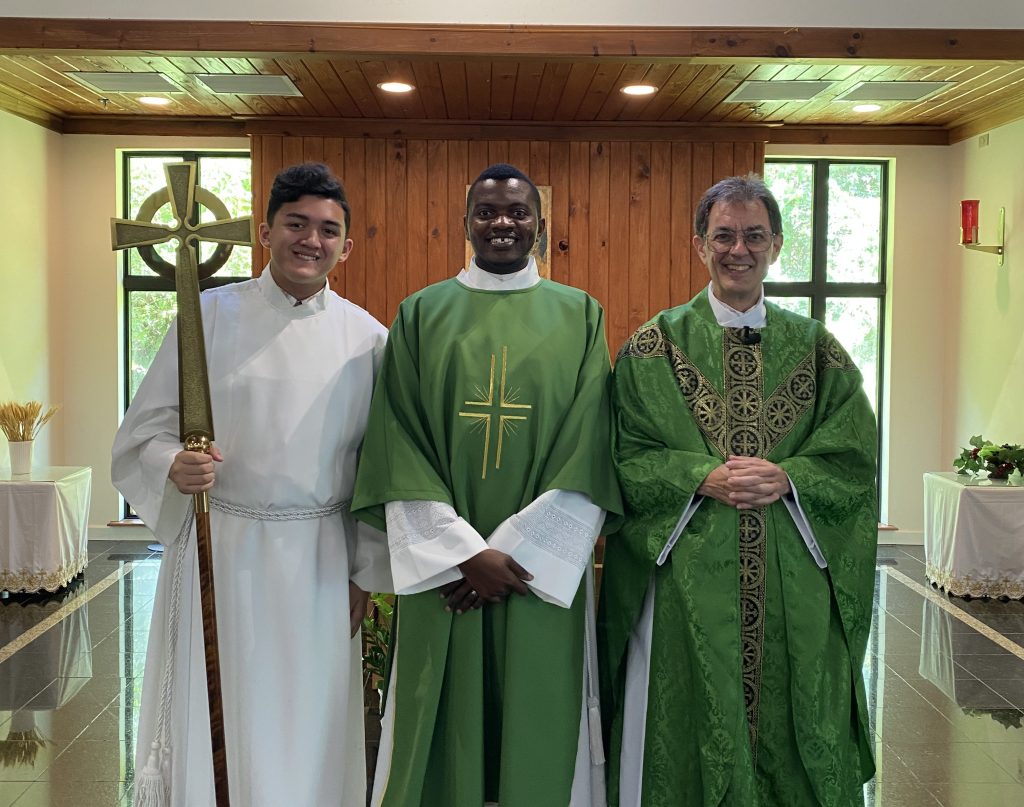
Photo: Blessed to be celebrating Mass with Dcn. Jude and a server from the Jesus Youth community in Delray Beach in June.

Gnilka, Joachim. Jesus of Nazareth: Message and History. Massachusetts: Hendrickson Publishers, 1997.

Link for the Mass readings for Thursday, July 11, 2024

Jesus will lead us to our fulfillment, if we are willing to listen and follow.

“At the sight of the crowds, his heart was moved with pity for them because they were troubled and abandoned, like sheep without a shepherd” (Mt 9:36).

There is much that pulls at us for our time and attention. Jesus witnessed the anxieties, struggles, pain, and feelings of being lost regarding those in his midst. Are we so different today? Jesus knows the Father, he knows the joy and fulfillment of what being in a full relationship with him entails. Jesus saw then and sees in us now how lost can become, how easily distracted and diverted can be, he knows how many things we put before our relationship with God, and he “is moved with pity.”

Jesus’ heart goes out to us, he yearns to be one with us, he loves us, but in that very act of love, he risks. He loves us so much, that he is willing to let us choose ourselves, others, or a myriad of other pursuits over him. Jesus invites us to the joyful experience of developing a relationship with him so we can come to know his Father, while at the same time he does not impose himself on us. We are given the whole world to choose from or we can choose him. Who do we put first? Is God a priority in our life? If we find that God is at best an after-thought, or at worst a no thought, instead of getting to know God better, what is it that we are choosing over him?

Jesus invites us, but too often we miss, ignore, or do not follow through on his invitation. Too often we choose other pleasures, distractions, diversions, temptations, and/or apparent goods. With time and experience, we may come to see the emptiness of the lure of these worldly promises, as well as begin to recognize that our attachments and disordered affections often lead to many of our troubles, trials, stresses, and anxieties. We are often led astray because we are seeking address our underlying experiences of unfulfillment, abandonment, and/or loneliness. There is only one source, one person, that will ultimately fulfill our innermost longing; God our Father.

I am not advocating for a rejection of the material world. All that God has created is good. We are human beings and a part of God’s glorious creation. Nor do I believe that we are souls trapped in this body waiting to be released upon our death. As human beings, we are a unique unity of body and soul. The key to our fulfillment, finding meaning and belonging is choosing to put God first. In establishing a firmer relationship with God, we can better discern that which we need to let go of, and/or how to reorder that which God wants to remain. Once we establish God as our firm foundation, even the challenges and trials that arise with not disturb our peace.

This might be the moment to be still and evaluate where we are in our lives and to ponder who we belong to. Jesus offers to lead us, just as he has led his disciples through the ages. Those of every age have experienced trials and tribulations and found the promises of this world fleeting. What made the difference for the saints was that they said yes to the call of the Shepherd and then followed him. Are we willing to slow down, to breathe, and listen to the Shepherd’s invitation today? Are we willing to follow his lead?


Photo: Rosary walk Sunday evening, Veteran’s Memorial Island Sanctuary, Vero Beach.

Link for the Mass readings for Tuesday, July 9, 2024

Let us harden not our hearts, instead let us trust in Jesus, and put on new wineskins.

“Rather, they pour new wine into fresh wineskins, and both are preserved” (Mt 9:17).

Mark, Matthew, and Luke all record Jesus’ reference of pouring new wine into fresh wineskins. What Matthew adds is, “and both are preserved.” Luke adds: “[And] no one who has been drinking old wine desires new, for he says, ‘The old is good.’”

The Gospel authors are reflecting on the tensions of those who would reject Jesus and those who would follow him and his new way. The new wine is to accept the Gospel, the Good News of the kingdom of God in their midst, and to do so means to change one’s mind and heart. “The tension, and often incompatibility, between the old and the new is part of every religious tradition and attends every change within that tradition. Matthew and Luke wrestled with it and adapted it to their community situation. Contemporary Christians have no less a challenge” (The Gospel of Mark, Donahue, SJ, p. 109). Matthew shared with his community that Jesus is the new Temple, for the old one had been destroyed in 70 AD. Following him in fact meant that both the old and new covenants would be preserved. Jesus did not come to abolish the law and prophets. Instead, he came to fulfill them and even raise the bar and challenge his followers even more.

We are invited to wrestle as well. The Church is called to change, to be transformed by the Living God. Many say the Church needs to change this and that, not realizing that we are the Church, the People of God, the Body of Christ. If the Church is to mature and grow each of us needs to embrace Jesus’ offer of the transforming love of God and be willing to be made anew through the guiding presence of the Holy Spirit. This invitation is a call to let go of those disordered affections, physical and emotional attachments, habits, lifestyles, behaviors, mindsets, and addictions that are weighing us down or worse holding us in bondage and slavery. To cling to that which is not of God keeps us separated from God. Much of the material and finite things we hold onto prevents us from receiving the new life God wants to pour into us.

Jesus has come to set us free from the old wine that will lead us astray. He is introducing some new wine. We are invited to sip and savor his teachings and actions as recorded in the Gospels. Even when they might be challenging, we do not have to be afraid of the change and transformation Jesus is calling us to experience. God wants the best for us, and he will give us the strength and discipline to move forward step by step, for as St. Irenaeus wrote: “The glory of God is man fully alive!” Jesus is inviting us to live our lives and live them to the full!

To become new wineskins, Jesus invites us to soften our hearts. Let us resist the temptation to harden them and dig in our heals because we are afraid that what God may be asking of us will be too hard or make us miserable. Jesus calls us to trust. As we take a breath or two, and trust him, we will begin to feel safe and be able to let go of those selfish and sinful inclinations that keep us constricted and rigid. We will also be able to step out beyond our comfort zones, ones that may have truly been good but were not intended to be the end goal. 

As we learn to trust, we will also learn to love as Jesus loves. We will then expand and open our minds and hearts more to receive the new wine Jesus wants to pour into us. We are called to go beyond the foundation of our identities that we have found safety and comfort in and become free to be people of integrity. Our identity gives us roots but our integrity gives us wings to fly.

It was hard for me to think of living my life without JoAnn after she died. It was hard to let go of teaching, first at Rosarian Academy and then at Cardinal Newman, and it was hard to leave, even after the intensity of the past two years of seminary, but Jesus was leading me to put on a new wineskin yet again. I am typing away, now as a priest, in my new office. I have been welcomed and blessed by the new wine poured out through the hospitality and kindness of Fr. Tom, the staff, clergy, and parishioners here at Holy Cross Catholic Church. 

Each time we have the courage to come to God in stillness, he will reveal to us that which distracts and diverts us from going deeper. As we trust Jesus and cut away the ties that bind us, as we are willing to be more and more conformed to Jesus, as we trust him and let go of our biases, prejudices, and fears, we expand and become more of our authentic and true selves and grow to be truly who Holy Spirit is leading us to be with his tender chords of love. 


Photo: Celebrating my first Mass of Thanksgiving at St. Peter Catholic Church.

Donahue, John R. S.J., and Daniel J. Harrington, S.J. The Gospel of Mark. Vol. 2 of Sacra Pagina, edited by Daniel J. Harrington, S.J. Collegeville, MN: Liturgical Press, 2002.

Parallel Scriptural accounts: See Mark 2:22, Matthew 9:16-17 and Luke 5:37-39

Link for the Mass readings for Saturday, July 6, 2024

“Love one another, as I love you.”

“This is my commandment: love one another as I love you” (Jn 15:12).

God created us to be loved, and to love. The love that Jesus is talking about is unconditional and not just relegated to those closest to us, although, hopefully, in our families and friendships is where we first experienced being loved and learned to love in return.

The love that Jesus commands of us as his followers, is a going out from, a giving of ourselves to one another. We are not to seek in return but are to empty and give ourselves away. The return we get is from experiencing the infinite wellspring and source of the Holy Spirit that rises up within us. The more we hold back, the less we receive, the more we give, the more we experience. We are to resist withdrawing our love and assuming a selfish posture that leads to us becoming more like a stagnant pool. Instead, we are to remain open so that we allow the living stream of God’s infinite love to flow through us.

The love Jesus commands is not selective. Love is accepting the interruption and choosing to be present. Love means stopping, setting aside our agendas, and accompanying another. Love is also not coercion and manipulation, it is accepting another as they are and where they are, inviting them to experience God’s love and healing. Love is sharing the journey of life together. St Thomas Aquinas has written it best: Love is to will the good of the other as other. This is more than mere emotion, feeling, or sentiment but seeking the best for someone else and to rejoice in their becoming fully alive. We are also not a doormat. We hold people accountable – for to love is also to be clear about respecting our and another’s dignity.

This practice of love is also not exclusive but universal. Yes, we are to love those in our family, community, place of worship, tribe, political party, and nation, while at the same time we must be willing to go out from our comfort zones and protected bubbles to risk opening ourselves up to those who we feel are different, those who do not see the world as we see it, and even those we consider our enemies. This does not mean we have to agree or even like someone else, but we are commanded to love, to respect the dignity of the person as our starting point.

A dialogue grounded in love means that we state clearly our beliefs, our thoughts, and dreams, but also allow others to do the same. In this way, though we may differ in our points of view, we can see how we are much more alike than we are different. When we talk at and over one another, demean, belittle, or are condescending, we dehumanize. In an open dialogue, we begin to encounter the person and the prejudicial caricature we carry begins to dissolve. Instead of keeping each other at arm’s length, we can instead learn to embrace and grow from one another. From a place of mutual, loving dialogue, we can recognize and remember again who we are, friends, brothers and sisters, children of God all on this journey we call life.

—————————————————————-

Photo: Jesus’ greatest act of love for each of us, his life that we might have life and have it to the full. Sanctuary of Our Lady of Florida Spiritual Center, North Palm Beach, FL.

Mass readings for Thursday, May 2, 2024

God’s commandments are invitations to grow in love.

Two points jump out of the Gospel of John today: commandments and love. How is each one of these related to living life as a disciple of Jesus? Often, many who hear the word commandments, often react, and are immediately put off. “There goes the Church again telling me what I can and cannot do.” Yet what Jesus is doing showing how the following of his commandments is a true expression of loving him.

Love is another word that evokes reactions. One reason is that, even though the English language has a plethora of words to utilize and choose from, there is only one word for love, and it is interpreted in many ways. In Ancient Greek, there are four words that are used to connote love. There is eros, which has to do with attraction. It is the beginning stage of love because we are drawn out of ourselves as we are attracted to another. The next word for love is philios, which has to do with friendship. This is the love between friends. If our love matures it moves from attraction or infatuation to friendship. The third word is storge or the deeper love shared with family members. The fourth word is agape, which is unconditional love.

When Jesus shares that we are to follow the commandments, he is not demanding that we do so as a tyrant. He is providing the boundaries and parameters for us to grow and mature as people who love, who, in the words of St Thomas Aquinas, will the good of the other as other. As humans, we are social beings. We want to belong, to be accepted, and to be a part of. We seek meaning, purpose, and fulfillment. This is best done through cooperation and collaboration with God and one another, striving for agape, to love unconditionally.

If we operate from a self-centered posture in which we are only turned in upon ourselves, and we only seek to manipulate and get from others, instead of working together and sharing a common vision with others, we will ultimately be empty with the exchange on any level, because we will be left wanting more. This is true because once the immediacy of the stimulation, whether material or sensual, ends, so does the experience of the feeling. Some happiness may linger from the effect, but we will never be filled or satisfied with anything finite. We will continue to seek more and more until the pursuit of instant and constant gratification ensnares us and we are entangled in a web of addiction.

The commandments, grounded in love, are meant to provide boundaries for us, training wheels, and to keep us free from enslavement to sin, while at the same time help us to be persons who move away from being self-centered to maturing as other-centered instead. Discipline in this way is meant to be a means of freedom for excellence such that we can become who God calls us to be and who we truly desire to be. Ultimately, we are to love God as he loves us and love our neighbor as ourselves in our own unique way. God is not in competition with us. He is our biggest fan. As St Irenaeus wrote, the glory of God is the human being fully alive!

Commandments and morality imposed, is a bludgeon. Love and mercy without accountability and justice can be enabling. Jesus provides the blueprint for a balanced both/and approach of invitation and shepherding. May we surrender to his loving guidance and correction, align ourselves with the Holy Spirit, who is the Love expressed and shared between the Father and the Son. May we seek ways to improve our lives, to be more honest with our weaknesses, so Jesus can be our strength, and to seek God when we are tempted to choose him so he can lead us away from the enticement to sin, and seek his forgiveness when we have fallen.

As we journey in this life, we do not do so alone. As we seek to follow Jesus’ lead, as we grow and mature, we do so while in the midst of encountering and forming relationships with others. Conformed by following the commandments, we are to reach out in love to each other as Jesus has done with us. As we form and deepen our relationships, new and old, may we encourage, support, and love one another while at the same time, challenge and hold each other accountable as we strive to be who Jesus invites us to be.
———————————————————–
Photo: The discipline of nightly Rosary walks over these past two years has been a blessing! St. Vincent de Paul Regional Seminary, Boynton Beach, FL.

Link for the Mass readings for Monday, April 29, 2024