discipleship
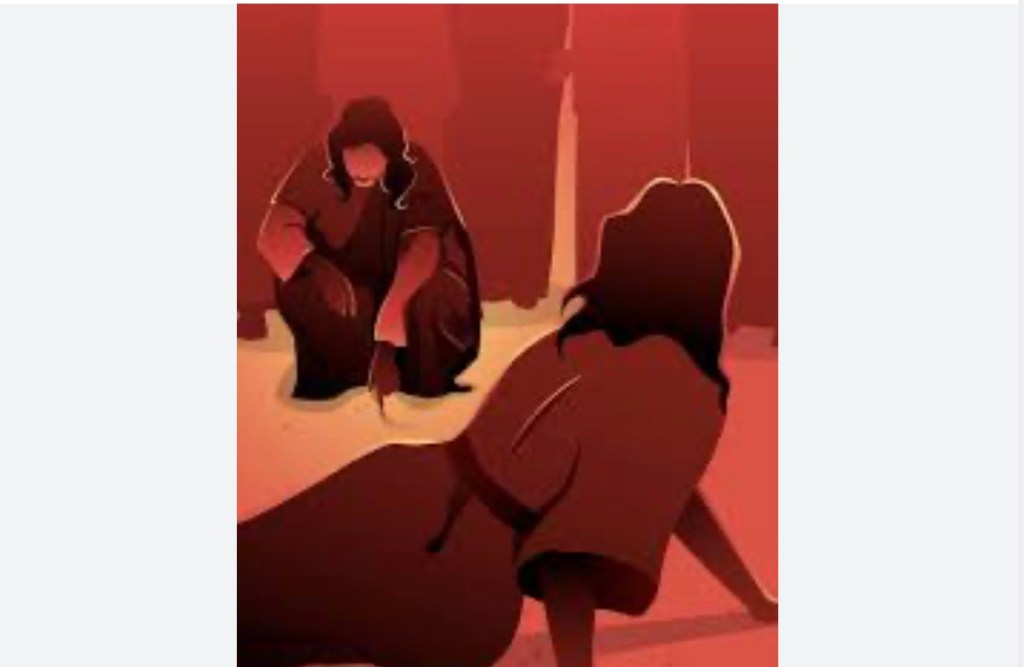
“For Jesus, it was more important to conquer death than to cure disease.”
Martha, Mary, Jesus’ disciples, and anyone else who experienced the sickness of Lazarus wondered why Jesus did not go to be with his friend as soon as he received word that he was dying. Jesus had healed and restored so many, why would he delay? Many of us who have experienced the death or in this moment may be accompanying a loved one in their final days and hours, may have asked or may be asking the same thing. Why is Jesus allowing this to happen? Why do so many have to suffer? Why the delay?
Jesus responded to the disciples’ inquiry by saying, “This illness is not to end in death, but is for the glory of God, that the Son of God may be glorified through it” (Jn 11:4). Not sure if Jesus’ response would have helped me if I was among the crowd. Many of us have experienced the death of our family and friends, as did Martha and Mary. What is Jesus up to?
Does Jesus care? Does this Gospel speak to us today? Yes. At the height of the Covid pandemic back in March of 2020, I remember being quarantined at home still on oxygen and watching Pope Francis come out on the steps of St. Peter at the Vatican in the dark and rain and said, Jesus, “more than anyone, cares about us.” Just as Jesus wept when he witnessed the anguish of Martha and Mary, the sisters of Lazarus, he also imagined the anguish of one of his closest friends sick and dying. So he wept and weeps with us in our present challenges, trials, and pain. Still he did not come until four days later. Why?
We may wonder in hearing or reading this account where Jesus is in the midst of our struggles at times, may wonder where he was in past challenges. There is good news here. Jesus had a plan for Lazarus and he has one for us. We need to have the same faith as Martha. Though she did not understand why Jesus had not come sooner, she trusted in him. Martha responded to Jesus when he asked he if she believed that he was the resurrection and the life and she responded: “I have come to believe that you are the Christ, the Son of God” (John 11:27). Just as Jesus was present to Martha, he is present and among us as well. But why the delay?
St. Peter Chrysologos offers a great response to that question, “for Christ, it was more important to conquer death than to cure disease. He showed his love for his friend not by healing him but by calling him back from the grave. Instead of a remedy for his illness, he offered him the glory of rising from the dead.” Jesus followed the lead of his Father to help those who were closest to him to understand that the reign of sin and death was over. Jesus came to usher in a new creation.
I believe Jesus conquered death and it has helped me with my deepest loss. Jesus did not cure my wife, JoAnn, from pancreatic cancer, and yet, it is my hope that he conquered her death, reached out to JoAnn, and led her home to the Father so that she may now be experiencing “the glory of rising from the dead.” But I am getting ahead of myself.
Jesus brought back Jairus’ daughter from the dead as well as the widow of Nain’s only son. The difference between each of them and Lazarus, was they were raised fairly soon after their death within even the same day or days. Lazarus had been dead for four days. Ancient Jews, unlike the ancient Egyptians, did not embalm the dead. By the fourth day, Lazarus’ body would have begun to decompose. In Jesus calling him back to life, and Lazarus rising, the effects of the decomposition were reversed and he walked out of the tomb on his own power, even while still wrapped in his burial cloths.
We need to resist just a complacent passing over of this incredible miracle that Jesus performed. This was beyond anything that anyone had ever experienced, and why, “many of the Jews who had come to Mary and seen what he had done began to believe in him” (John 11:45). Without diminishing the wonder of this event, it was only a forecast of the miracle of miracles to come and why the Church in her wisdom placed this account on the fifth Sunday of Lent. This is but a foreshadowing of the death and resurrection of Jesus.
Lazarus rose in a miraculous way but would die again. Jesus died, conquered death, and rose again never to die again. He was willing to do so for Martha, Mary, and Lazarus, so they could rise with him on the last day and have their souls be reunited with their bodies. The good news for us reading these words at this moment is that Jesus did the same for us today!
The key take away from the story of Lazarus is that no matter how wonderful the raising of Lazarus, a dead man four days in a tomb, was, it was just a foreshadowing of the truly incredible miracle of miracles we are about to celebrate in just a few weeks. The fact that Jesus rose from the dead himself was no mere resuscitation as with Lazarus. Jesus experienced the fullness of death and conquered it becoming the firstborn of the new creation. Jesus would later ascend into heaven and from the right hand of his Father, he would send us the Holy Spirit.
This is why we never need doubt that we are not alone ever, and especially in times of our deepest suffering. Jesus cares and accompanies us in each of our present situations as well as our unhealed traumas of the past. When we weep we can remember, “Jesus wept” also. Why? To teach us that it is ok to weep. Our tears remind us that we are human and that when we have lost a loved one, even if now we know death doesn’t have the final answer, there is a loss none the less.
We will live on, and just as if we experienced an amputation, our living without those that have died will never be the same. As we put our faith in the One who cares for us and loves us more than we can imagine, we will draw closer to him and to each other, we will see the glory of God at work in each of our lives, we will heal, and we will overcome and emerge stronger than before. Our healing happens when we too believe in Jesus the Christ the Son of God.
Our hope in this life is that we are invited to write our final chapter not here but in the new creation to come. “On the last day, Christ will call us forth from our graves as our friend, if we’ve lived in friendship with him. And he will command us as our Lord, the one who made the heavens and the earth, to come out of the tomb and to experience the resurrection of the dead, the new creation, and the life of the world to come” (Dr. Brant Pitre).
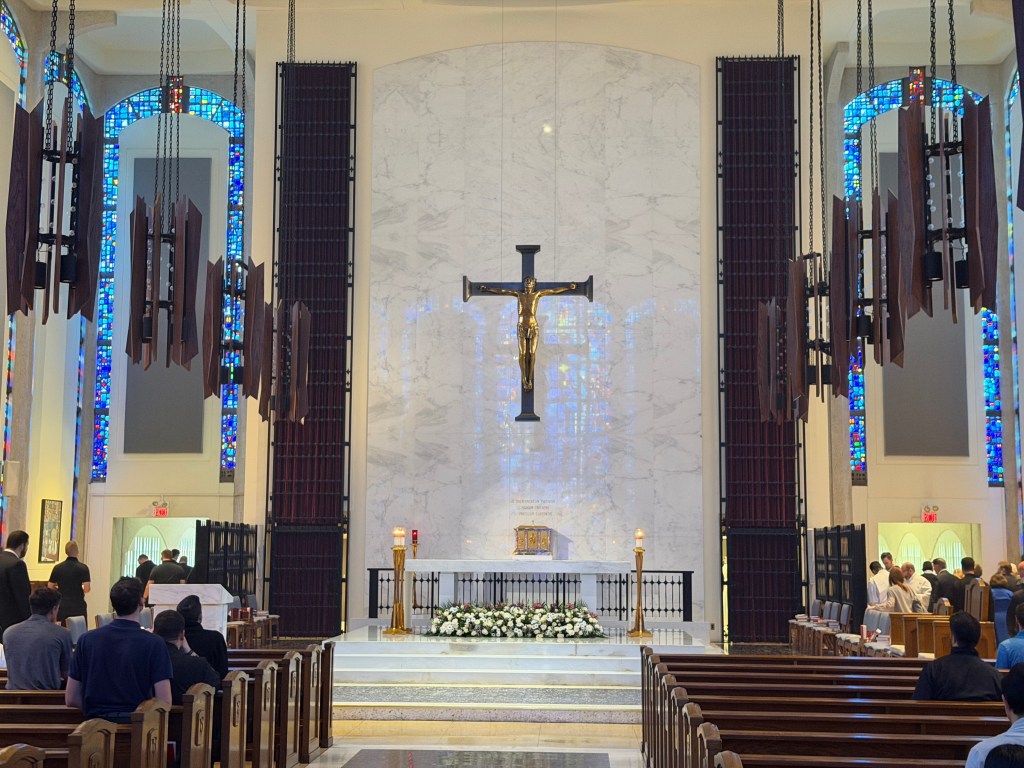
Photo: Each time we see the altar, we are reminded that Jesus died for us and conquered death so that death no longer has the final answer, Jesus the first born of the new creation does.
Pitre, Brant. Catholicproductions.com
Link for the Mass readings for Sunday, March 22, 2026
Do we reject or trust in and follow Jesus?
Jesus is recorded, a few verses before (cf. 7:37-39) today’s Gospel, speaking about quenching the thirst of those gathered around to listen to him. The thirst he is talking about fulfilling is spiritual thirst, that thirst which we all desire to be refreshed by, that which we have been created to receive; the thirst to belong, to be in communion, to be loved and to love in return. A thirst that is satiated in experience the truth that we are never alone as long as we remember that God is our Father. God cares for and is present to us in all our needs.
Jesus speaks of coming to those who thirst to be refreshed with: “Rivers of living water [that] will flow from within” (Jn 7:38). Jesus spoke of the day when he would send the Holy Spirit to well up from within the soul of each person who would follow him. All who participate in the life of Jesus would come to experience also the love shared between God the Father and God the Son, who is God the Holy Spirit.
Some who heard Jesus speaking in this way were deeply moved, they believed him to be the Prophet, others believed him to be the Messiah. Yet, there were those who could not see past their own preconceived notions. They heard his teaching, may have even been moved as well but said, “The Messiah will not come from Galilee, will he” (Jn 7:41)? Remember Nathaniel’s first reaction when Philip had told him that they had found the Messiah? Nathaniel asked if anything good could come out of Nazareth (cf. Jn 43-47). Jesus was also rejected by many in his hometown of Nazareth! He was just a simple tekton, a carpenter or a day laborer.
Why the region of Galilee, the town of Nazareth itself, would be disparaged is a matter of speculation. Those Pharisees that were not believing in Jesus, sought a scriptural basis that the Messiah would not come from Galilee but from Bethlehem, the house and line of David. They would state that, “No prophet arises from Galilee” (John 7:52). Although, Jonah is mentioned in 2 Kings 14:25 coming from Gath-he’pher, which is in the lower region of Galilee.
The fact was that there were those, unlike Nathaniel, that could not see past their initial prejudices. Even though Jesus spoke and taught with authority, even though the Temple guards who were sent to arrest him said, “Never before has anyone spoken like this man” (Jn 7:46), and even when Nicodemus spoke out rationally, requesting they hear Jesus out in accordance with the Law, (Deut 19:15-19), allow for an investigation, and give him the opportunity to make his case, they could or would not hear Jesus. They closed themselves off to the invitation to receive the gift of the love of God that Jesus offered. Their charge was that he was not from Bethlehem, he was not of the line of David, case closed.
Our ingrained, prejudicial attitudes and our limitations of thought can prevent us from seeing as God sees. If we are not willing to follow Jesus’ invitation to repent, we run the risk of cutting ourselves off from the living water Jesus provides and so become like a stagnant pool. Many of our daily routines, habits, livelihoods, health, and very lives can be shaken in an instant with unexpected news. A catastrophic medical diagnosis, layoff, weather event, the consequences of a sinful choice can come crashing down. We can react out of fear and feel debilitated on one hand or with the other we can brashly deny the reality of the situation. Aristotle wrote that virtue is the means between two extremes. Courage is the means between being paralyzed with fear and excessive reckless abandon.
We can face head on what arises, feel what emotions come, offer them to and place our trust in the Jesus. I have had a few experiences with unexpected news. I have done much better when I have leaned on Jesus and trusted in him. In doing so, I have not only survived the external storms and internal storms of anxiety, I have gone through them feeling his presence. In relying on Jesus and less on my own strength, I experienced his peace and grew from the challenges. In times of trial, we can also be tempted by the question: Does Jesus care, why would he do this to me, or does he even exist?
The words of Pope Francis in his Ubi et Orbi message at the height of Covid are still helpful. He said that Jesus, “more than anyone, cares about us.” Jesus cares. His hand is held out before us. We can reject it or receive it, the choice is ours. Jesus is the source of living water, he is the eye in the midst of any storm, he is the light leading us through the darkness. When we choose to breathe more and react less, we will be more likely to recognize and accept the offer of Jesus’ hand as Peter did when he was sinking in the storm at sea. By taking his hand and allowing him to lead us, we will act with more prudence, be more present and mindful, and better prepared to face any challenge.
———————————————————————————-
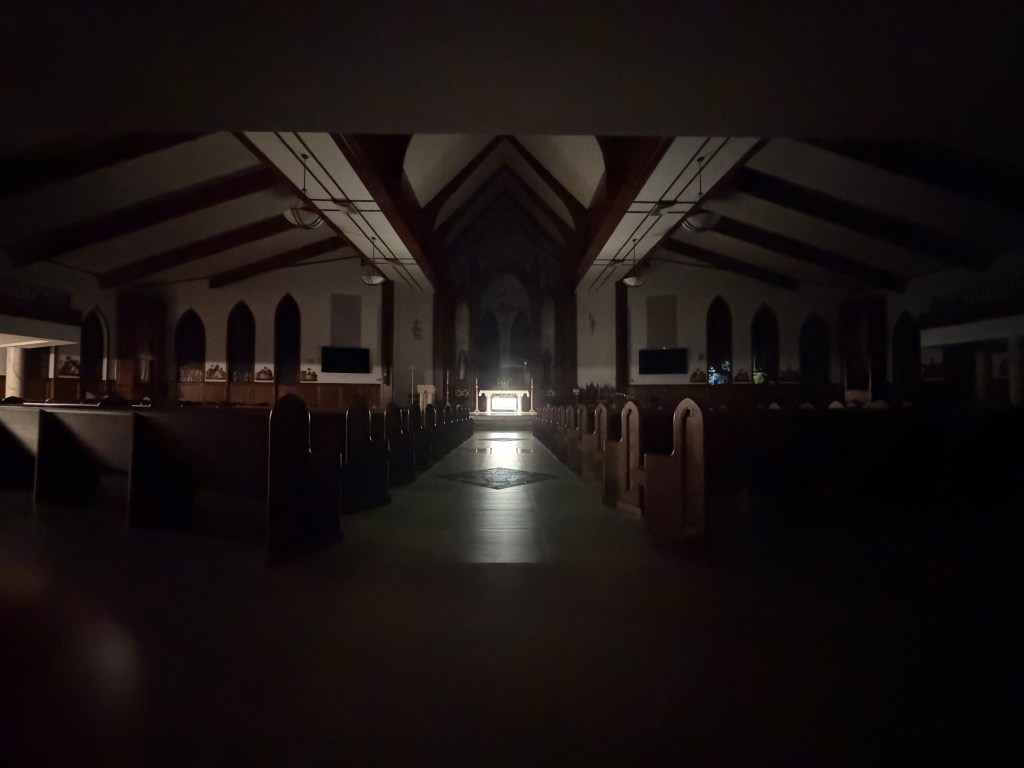
Photo: Blessed to be back at SVDP Regional Seminary Chapel where I was blessed to spend many holy hours and Masses getting to know Jesus and learning to be and serve as his priest.

Jesus knew he was when challenged, do we?
In today’s account from John, Jesus responded to the criticism that he received from healing the man at the pool of Bethesda. The issue for those who were incensed was that he healed on the Sabbath, and he did not help his case any when he justified himself by saying that he was directed to do so by his Father: “For just as the Father raises the dead and gives life, so also does the Son give life to whomever he wishes” (Jn 5:21). Jesus did not make concessions with those who opposed him.
He clearly stated the truth about who he is, the Son of God, the Lord of the Sabbath. For those not believing Jesus, that he said that he is equal with God… this is blasphemy of the highest order. This is one of the reasons they plot to kill him.
So too in our own age, there are many ways to express our understanding and belief about who Jesus was in his time and who he is still today. If you haven’t thought about Jesus beyond his name in a while, about who he really is and why he is relevant to our lives, then allow St. Athanasius, the bishop of Alexandria, who lived from 297 to 373 AD, to offer a point to ponder today.
St. Athanasius held firmly to and taught with conviction that, Jesus is, “the Son of God [who] became man so that we might become God” (Catechism of the Catholic Church, 480). We cannot be saved on our own merits, through our own will power, and discipline alone. Jesus can save us particularly because in what he assumes as fully human, he is able to redeem as fully divine.
The reality that the second Person of the Holy Trinity, was sent through the overshadowing of the Holy Spirit to enter the womb of Mary and take on flesh, became one with us in our humanity by becoming also human, so that we can become one with him in his divinity, is something worth meditating and praying about. There is much writing and discussion about how many people are leaving the Church, while at the same time their hunger still remains. I would say starving, for a deeper, more intimate relationship with God. This is true for those who leave as well as those who remain, whether either could or would articulate it in that way.
Could it be that we have forgotten the foundation of our faith, which is participating in and deepening our relationship with Jesus?
The words of St. Athanasius, “The Son of God became man so that we might become God.” Are words that will help us to remember who and whose we are, beloved daughters and sons of God. They are words that might help us to remember our meaning and purpose in life. They are words that might help us to stretch a little more from our comfort zones, to risk being who we are, and to trust God to walk with us in places where we are need of healing and reconciliation. Hopefully, they are words that help us to slow down and spend some time with Jesus and get to know him a little better.
————————————————————————–
Photo: Quiet walk on the way to celebrate Mass.
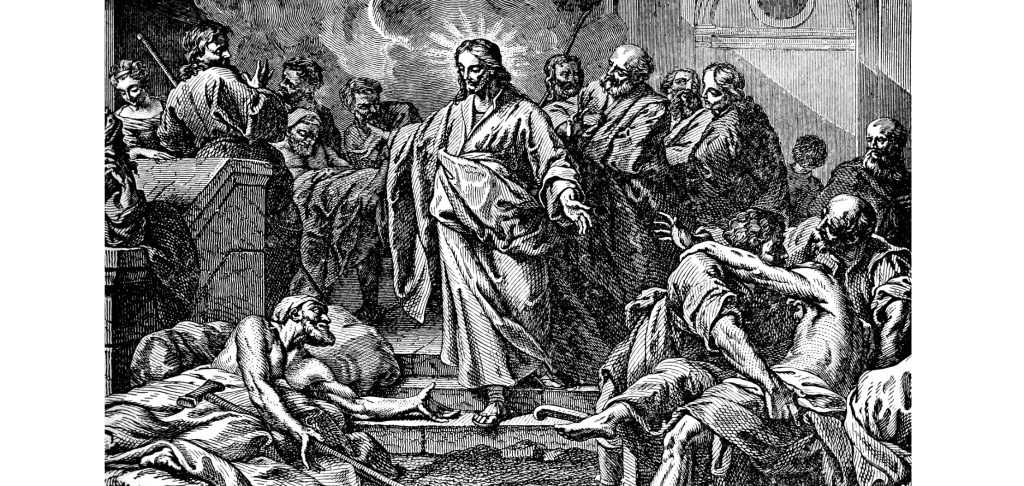
With Jesus no one is last.
Has there ever been a time when you were picked last for the team, whether on the playground, P.E., or gym class? I remember being on both sides, being picked last, and picking others to join and having to pick someone last. I preferred being chosen last rather than having to be in the situation to choose a classmate last. In our Gospel reading today, Jesus comes upon a man who has experienced an even worse situation.
This man had been in need of healing for thirty-eight years. Apparently, there was a limited time to get into the waters of the pool at Bethesda to experience the healing properties that it afforded, for each time the water stirred, while the man moved to get closer to and enter the water, “someone else [got] down there before” him. This is worse than getting picked last, as he doesn’t in a sense even make the team!
But with Jesus, the last shall become first. Key ingredients are belief, faith, as we heard in yesterday’s account and also along with belief and faith, is there a willingness to be healed. Jesus asks the sick man, “Do you want to be well?” When the man in need of healing explains the limitations he has experienced in the past regarding getting to the pool, Jesus does not hesitate. Jesus commands him to rise, pick up his mat and walk. The man is no longer the one picked over, the one ignored, the one unseen. The sick man encounters Jesus and is healed by his word.
Jesus approaches us in the same way that he encountered the sick man by the pool of Bethesda in today’s Gospel. He meets us in our need, where we are, no matter our station in life. He does not leave us on the outside looking in, he does not leave us wondering if we are loved or if we belong. He comes close and if we are willing, to forgive, heal, and empower us to be about the mission given to us by his Father. Jesus gives meaning and purpose to our lives. Each and every one of us is a gift from God, a beloved daughter or son, and we have been graced with something to contribute, something unique to help make the kingdom of God a reality.
May we enter a place of silence and stillness, without and within. Breathe intentional and slow, settle into a rhytm with no or little distractions, breathe in deep and exhale a few times more, one deep breath for each person of the Trinity, and then close our eyes. How do we see ourselves in our present moment, what is happening, what are we experiencing? As we take a few more breathes, notice Jesus walking toward us.
Jesus is present, right here and right now, for each of us if we are willing to be still long enough to engage with him. There are no boundaries, no limitations, only those we impose on ourselves. We are no longer misunderstood, left out, or picked last. Jesus has come close to be with us in this moment, to embrace us, and help us to really know that we are loved, heard, and we belong in the kingdom of God.
————————————————————————-
Painting:”Do you want to be well?” If yes, then continue to breathe, receive, rest, and abide in God’s love.
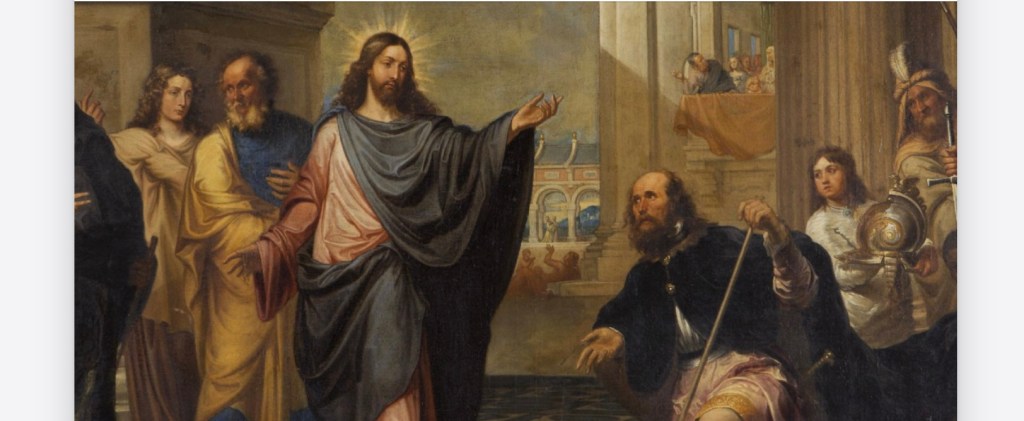
Jesus has come to heal and help to transform our minds and our hearts.
We hear often in the Gospels how those who believed in Jesus received healings, exorcisms, and were forgiven of their sins. We have also read accounts such as from the Gospel of Matthew that he “did not work many mighty deeds” in Nazareth “because of their lack of faith” (Mt 13:58).
In today’s Gospel account from John, Jesus speaks to a royal official whose son is close to death. Jesus said to him, “You may go; your son will live.” The man believed what Jesus said to him and left (Jn 4:50). On his way home to his son the man is met by the slaves from his household and they told him that his son would live and when they compared notes, they realized the healing occurred at the moment Jesus spoke and the man believed.
What do faith and belief have to do with Jesus being active in our lives? The way of the Gospel, the good news, is all about invitation and acceptance. Jesus enters our world, our reality, and he comes to each one of us intentionally, gently, and humbly. He came as a poor infant, completely dependent on Mary and Joseph for his very survival. He lived the majority of his life in the obscure village of Nazareth most likely working as a day laborer. When he began his public ministry he did so by inviting people to be a part of his life, to enter into a relationship with him and his Father. People are free to say, “no”, or to say, “yes”, to that invitation.
Faith is trusting that what Jesus says, is true, and that he is who he says he is. Belief is the act of our will that aligns with our faith, our trust in him. Jesus invited the man to believe that his son was healed and the man believed. He walked away with full confidence that his son would be healed. Belief is followed by an affirmative act of the will. I can believe my car will run, but unless I get in it and turn the key, I am not going anywhere.
This miracle was not just for the man and his son. As with each miracle, Jesus is teaching a lesson to those present. The preliminary statement to the people of Galilee is, “Unless you people see signs and wonders, you will not believe” (John 4:48). This was a challenge to the man and to those present. The father believed Jesus and went on his way. Did the people who were seeking signs believe as the father did? Because this father did, his son was healed.
Jesus is fully human and fully divine. He has come to show us the promise of the life his and our Father wants to give to us. Jesus, the first born of the new creation, is collaborating with his Father: “To set right a world that has gone wrong” (Barron, 92). Jesus comes into our lives each day to show us a new way, a better way. Are we willing to let go of our defense mechanisms, our comfort zones, stepping out of daily survival mode and instead walk the path of this new way with Jesus? Do we believe, as did this man seeking a healing for his son?
Just as the sun rises each day, Jesus comes to us to set our minds and our hearts on the right path, toward our forgiveness, healing, and freedom. Just as Jesus was present for this man and his son, he is present to each of us as our divine healer, teacher, and savior. We experience that truth the more we believe in and choose to seek his help and guidance with each thought, word, and deed and in every situation. May we trust in Jesus with everything, may we thank him for everything, and when we sin, let us seek his forgiveness and begin again.
——————————————————————————–
Painting: Jesus meets us where we are and as we are to provide healing for ourselves and those we intercede for.
Barron, Bishop Robert. Lenten Gospel Reflections. Word on Fire, 2020.

Resist justifying or denying and instead confess our sins and we will experience God’s forgiveness, heal, and grow in his love.
It is much easier to find fault in others, and in some cases, the act of doing so has become entertainment in the private as well as the public sector. Gossip has a seductive allure and can be consuming. Judging others is also a way to justify and or project our own inappropriate behavior onto others. We may even place ourselves in a false sense of exalted pride. Have we ever, not just stated, but, thought or prayed something along the same lines as the Pharisee in today’s Gospel? “O God, I thank you that I am not like the rest of humanity — greedy, dishonest, adulterous — or even like this tax collector. I fast twice a week, and I pay tithes on my whole income…” (Lk 18:11-12).
To pray any part of this prayer stunts the growth in our spiritual life because we are focused on ourselves instead of emptying ourselves before God. A hyper sense of self reliance leads us away from the truth they we are dependent on God our Father for anything and everything and apart from him we can do nothing. Anytime we rationalize, cover over, deny, or completely ignore our sinful behavior we create and support habits of selfishness and feed our selfishness. Left unchecked, we can become enslaved to them. Lent is a time to pause and ponder, to be grateful for God’s love and his care, and also to give ourselves time to be aware of where we fall short of the glory of God. When we are willing to identify and confess our sins, we are forgiven and can begin to heal from sinful attitudes and actions that have become habitual vices.
In reading more lives of the saints, I have come to understand that their recognition and their confession of their sinfulness was not just pious platitudes, but true presentations that they were growing closer in their relationship with Jesus. The closer we grow in our relationship with Jesus the more we experience his light and love, which unveils more of our sins.
When we drive our car while it is dark we don’t give much thought to the cleanliness of our windshield because we can see fine. Yet as the headlights from an oncoming car illuminate our windshield we can see how dirty in actuality it is. This can be evident in our spiritual life as well. The more we remain in our own darkness of denial, self righteousness, resist slowing down to examine our conscience, we feel we are fine, all is right with the world. If we experience any problems, it is because of something or someone else, never us. The closer we grow in our relationship with Jesus though, the more his light shines in our darkness, and reveals to us our sin.
Jesus invites us to resist the prayer of the Pharisee who prays comparing himself to someone else, who refuses to acknowledge his own sinful actions and instead emphasizes that we are to follow the honest humility of the tax collector, who did “not even raise his eyes to heaven but beat his breast and prayed, ‘O God, be merciful to me a sinner’” (Lk 18:13). Now, Jesus is not saying this is the only way we pray. We have the opportunity to worship and praise the Lord joyfully, we can seek his help in praying for others through intercessory prayer or for ourselves in petitionary prayer, we can also sit in quiet meditation during adoration or out among God’s wonder of creation and experience deep consolation.
Each prayer has its time and place and each type of experience of prayer helps us to grow and deepen our relationship with Jesus and each other. The key to each of our prayers is our willingness to be the humble children we are and lift up of our hearts and minds to God who is always inviting us to spend time with him.
True humility happens when we are willing to see who we are from God’s loving gaze. If we are to set a standard to live up to and if we are to compare ourselves to anyone, let it be Jesus. A daily examination of conscience of allowing ourselves to rest in our Father’s loving gaze is a healthy practice and discipline. When we invite Jesus to shine his light of love into the darkness of our fear and anxiety, our loneliness and idols, we will see our sins. Jesus does not do so to shame and condemn us, but so that we can experience our sorrow and separation from God that sin causes.
As we experience our loneliness, pain, and wounds, and resist putting anyone or anything else before God to compensate for what we are feeling, we can feel his love and begin to realize that we are not alone, that we never have been alone. And that the only one who can fill our deepest longings is God. With this attitude, temptations and sins became opportunities for God’s grace, because we can now see clearer our life without Jesus and our life with him. Each time we choose Jesus over our temptations, we will experience him more, know him better, grow in our relationship with his Father, and experience the love shared between them, the Holy Spirit.
—————————————————————————————
Photo: Spending time with Jesus, helps us to slow down, then we can follow him as he leads us from the darkness our sins so that we may experience the light of his love.

Jesus shows us the love of his Father so we can receive and love him and each other in return.
Jesus recognized that the scribe, who asked him about which commandment was the greatest, “answered with understanding,” and then he said to him, “You are not far from the Kingdom of God” (Mk 12:34). What is it that the scribe understood?
The scribe understood that God “is One and that there is no other”. God is the true source of our being, the foundation of our very existence. We have been created with an innate desire to be one with him. This is the longing we all feel in the depths of our soul, this is why nothing that is finite or material will ever fully satisfy us, and why we are always wanting more. This is as true for the mystic as well as for the atheist and everyone in between. We hunger and thirst for the living God. And even more wonderful of a truth is that God hungers and thirsts for communion with us!
God is “One and no other” also means that we are not God, we are his created beings. God is not just one being among many, not even the supreme being. This orientation is important and foundational. We can only see from our limited perspective. What we think or believe we might need, may in fact not be truly good or beneficial for us, the shimmer may be just an apparent good, a distraction, a temptation, that will lead us away from the authentic fulfillment and meaning of life that we seek. God will guide us away from any unhealthy want, he will lead us away from temptation when we are willing to seek his guidance over and above our own. God will give us what we truly need, he will lead us to that which is, in reality, true, good, and beautiful – relationship with himself, which when we come to put God first, will help us to properly order everyone and everything else in our lives.
Once we come to believe that God is God and we aren’t. We can experience that we are not just created beings. When we are baptized, we become his beloved daughters and sons. Accepting this filial relationship then we can take the next step: “to love him with all [our] heart, with all [our] soul, with all [our] mind, and with all [our] strength”. God hungers and thirsts for all of us. We are to give all of our lives to him. In our surrender to God and his will, we become capable of receiving his love and so are able to better love him in return. We all long to be loved and to love. Experiencing the love of God helps us to unconditionally love “our neighbor as our self” because through our surrender to his will we allow God to love others through us.
An interesting addition that Jesus adds to his presentation of the great commandment, is that in quoting Deuteronomy 6:4-5, he adds to the original. Along with love God with our whole heart, soul, and strength, he adds to love God with all our mind. This insert helps us to understand how we can live out this commandment. We are to pray, to lift up our hearts and our minds to God and depend upon him as Father. We do this best when we meditate on his living word daily. When we think about and return to his word often, we rest in his presence and in his presence, we experience healing, give of ourselves fully to him, and will be moved to love others.
As we surrender all of ourselves to God and love him in return, we will better love others (see Leviticus 19:18). To do so, we need to spend quality time with God in stillness, be present One on one, as well as come to an awareness of God’s nearness in our daily activities. We are to resist compartmentalizing God and instead seek his presence in every thought, word, action and through everyone we encounter.
Each of us, though prone to sin and wounded by our sin, are still not destroyed by sin. God loves us as we are, and when we are humble enough to be repentant: to be contrite, confess, and follow through on our penance, God forgives our sins, heals our wounds, and transforms us. No need to run away from him. Instead, let us run to him. Loving our neighbor as our self helps us to run to Jesus, for if we cannot love those we can see how can we love his Father, our Father, who we can’t? Going out of ourselves and giving to another helps us to build relationships because time spent with each other breaks down the walls of separation that keep us at a distance.
Jesus’ arms are wide open before us. May we surrender all our heart, soul, mind, and strength into his loving embrace, receive his love and love him in return, and be willing to love our neighbor and our selves in the same way. When we understand and put this commandment into practice, the other commandments will be something we will do naturally. As we enter into this practice, we too will hear Jesus say to us, “You are not far from the kingdom of God.”
—————————————————————————-
Photo: Some quiet time to meditate, pray, and contemplate God’s living word during Morning Prayer.
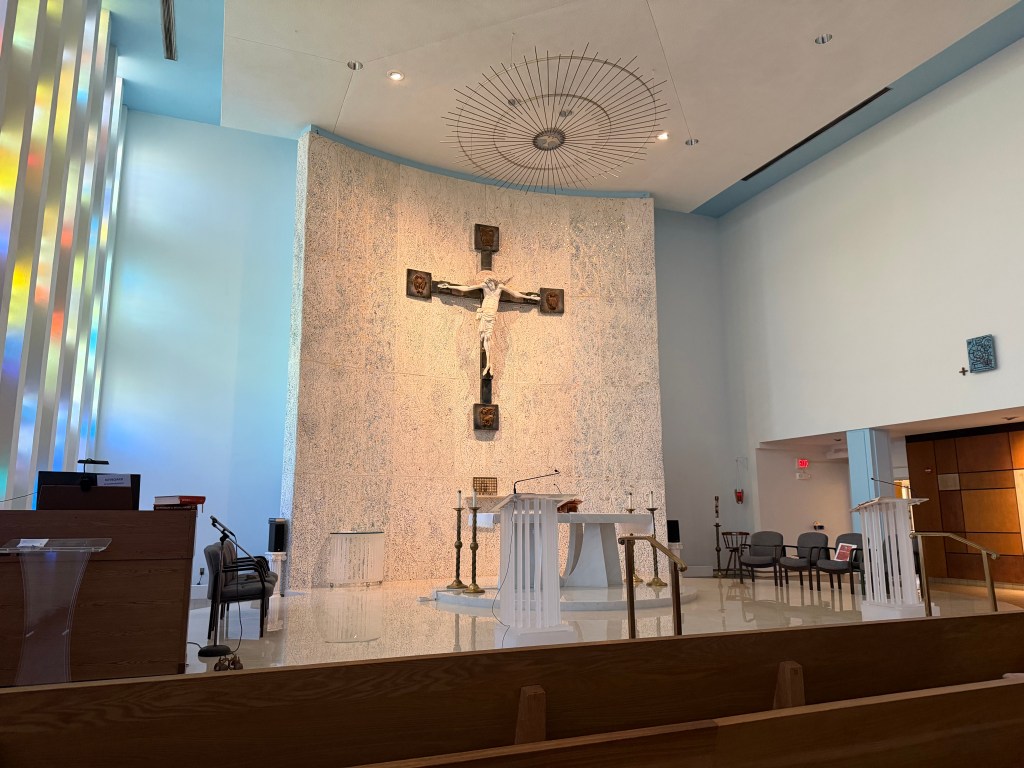
In coming to know Jesus as a person, we can better know ourselves and each other.
In the Gospel reading today, Jesus is accused of being an agent of Beelzebul, the prince of demons, because he was exorcising a demon from a man that was mute. Jesus addressed the critique and showed the polarizing nature of the onlookers who were unwilling to see the healing before them for what it was. Jesus then stated the obvious: “Every kingdom divided against itself will be laid waste and house will fall against house” (Lk 11:17).
If Jesus was an agent of the prince of demons, he was not a very good one. Satan seeks to sow discord and division. Jesus seeks to bring about unity. Now it is true, that five verses later in the Gospel of Luke, Jesus is recorded as saying: “Do you think that I have come to establish peace on the earth? No, I tell you, but rather division” (Lk 12:51). Anyone feeling a bit confused? Welcome to the wonderful world of the Bible and discipleship!
To understand Scripture, we need to understand the context of the whole of Scripture, not just isolated verses. To be a disciple, we need to know and trust Jesus, even when we hear something that does not upon first hearing make sense. Throughout the ministry of Jesus, he seeks the unity that all may be one as he and the Father are one (cf. John 17:21), yet he has consistently experienced those that rejected his message as well as not acknowledged the source of his healings and exorcisms as witnessed in today’s Gospel account. Because of their hardness of their hearts, some among the witnessing crowd were unwilling to acknowledge that Jesus is the Son of God and so there must be a reason for how he performs exorcisms and miracles.
The reason is that Jesus drives out demons, “by the finger of God” (Luke 11:20). His listeners would have picked up on this referential term, for the Pharaoh’s magicians and sorcerers made this same statement when they could no longer produce the effects of Moses and Aaron’s plagues after their infesting the land with gnats (Exodus 8:19). So just as Moses and Aaron were operating through the will, the finger of God, so too was Jesus.
In following the will of God, Jesus demands a choice. Then and now. We need to decide if we are either going to be for him or against him (cf. Lk 11:23). The division Jesus is talking about results from those who choose not to recognize that Jesus is who he says he is and reject him and those who accept him for who he is and follow him. This choice continues to cause division within households, families, and friends even today, even among those on both sides that say they are following Jesus!
The greater take away from this verse and Jesus’ teachings as a whole, is that when we are unified, embracing the gift of our diversity, we are stronger than when we are divided by limiting ourselves to mere labels, curving in upon ourselves. In our modern context, labels, such as liberal and conservative are not helpful, whether they are being used in a political or religious context. Life is not as black and white as many would like it to be. It is certainly easier to cast labels, but interactions with people and developing relationships are much more nuanced. We are not mere cardboard cut outs, or caricatures.
To better understand the essence of who we are as human beings demands greater time and experience of each other than an outward appearance or isolated statement may portray. Many more of us, if we shake off any label for a moment, could honestly admit to believing in and supporting issues that are important to us from both sides of the so called left or right. That stated, I am also not stating in a reductionist way that there is no objective truths. There is. The foundational truth of reality is that Jesus is the Son of God and we are his beloved daughters and sons. If we can begin from that truth, we will be off to a better start I our dialogue.
Many times, once we have cast a label, we believe that we have “defined” the person. They are classified in their box and tied up in a neat and pretty bow, and woe to the person who resists being boxed and bowed. I remember reading from one of the books from the tracker, Tom Brown, Jr., in which he described how many people when seeing a bird, such as a blue jay, robin, or crow, are often satisfied with the label, the naming of it, and move on from that sighting self-satisfied. They think that in that simple identification they now have come to understand all that there is to know about that particular species of bird. So much of the essence and majesty of one of God’s amazing creatures is missed by such a simplistic and limiting classification!
Unfortunately, we do the same with each other. We can prejudge, as did some of the crowd who said that Jesus cast out this demon because he was in league with Beelzebub instead of through the power of God. We can also falsely believe we know everything there is to know about a person or group we prejudge. This is a very limiting and divisive approach. Jesus invites us to encounter people, to spend time, get to know one another, and break bread with each other just as Jesus did. In spending time with one another and sharing experiences, the caricatures can be filled in with some substance and we can come to know a little better the person beyond the prejudgment.
If it walks like a duck and quacks like a duck, it may very well be a duck, but the duck is also so much more than its classification. This is much truer for us as human beings created in the image and likeness of God.
———————————————————————————
Photo: Spending quiet time with Jesus helps us to experience and know him and to better experience others as he knows them.

Jesus calls us to attain greater heights. Choosing him and asking for his help, we will attain them.
Jesus not only tells his disciples that he has not come to abolish but to fulfill the law, he constantly teaches how this is true, models how to put his teachings into practice, and empowers them to do so. This elaboration on the law and the prophets, the entirety of Jewish scripture, is highlighted well in Jesus’ Sermon on the Mount. This is evident in his Beatitudes with one example being, “Blessed are the poor in spirit for theirs is the kingdom of heaven”, and another example from his Six Antithesis show the building on the Torah more vividly: “You have heard that it was said ‘an eye for an eye,’ but I say to you offer no resistance to one who is evil”. Jesus clearly begins with quoting the law, “You have heard that is was said”, and then offers a deeper implementation by stating with authority, “But I say to you”.
If we seriously take the time to read through Jesus’ teachings, we will see quickly how challenging they are. Jesus is not lowering the bar of discipline for his followers. Instead, he is raising it. Jesus is not putting heavy burdens on us for burden’s sake, he seeks to make us holy, to guide us to be restored to our original glory that God has intended from the beginning. He himself lives what he preaches, but Jesus is no ordinary teacher or mentor. The principles that he teaches, forgiving seventy-seven times, loving our enemy, giving up all to follow him, seemed impossible to his disciples then and to us today as well.
At face value, we may think that many of Jesus’ teachings are not possible to put into practice or very practical in our day and age. This is why many people do not follow him and walk away. Attempting to do so with our willpower alone will lead to coming up short each time, feeling more frustrated, and/or not wanting to even put in the time and effort to do so. Jesus does not expect nor desire us to accomplish living as his followers on our own efforts. Much the opposite! We are to yolk ourselves with him and be open to the transforming power and love of the Holy Spirit acting through us. This happens when we daily invite Jesus into our lives and are humble enough to follow his lead and to ask for his help in putting into practice what he requires of us.
We grow in our discipleship of Jesus when we study his life, learn and put his teachings into practice, and surrender ourselves to his will through prayer, discipline, worship, service, and participation in the sacraments. Ultimately though, it is nothing we do, other than ask for his help, open our hearts and minds to and allow Jesus to live his life in and through us. As we see and experience that with Jesus all things are possible, we are transformed by his love and conformed to his life such that we can say with Paul, it is no longer I who live but Jesus who lives in me (cf. Galatians 2:20).
The path of faith is not a sprint or a one-time event, but a marathon, a life-long journey of healing. Each one of us can be assured that Jesus is with us for the long haul, every step of the way. No matter what trials or challenges, we can meet them with Jesus. Resist the temptations, refuse to make decisions from a fearful or reactive state, and let us instead lean into Jesus and on each other. In breathing, receiving, resting, and abiding in the love of God, we will not only make healthier decisions, we will grow in our intimacy with God and one another, no matter what arises.
————————————————————————–
Photo: Blessed to lead a retreat for the administrators and principals of the Diocese of Palm Beach today. Some quiet time breathing and praying with Jesus in the chapel at Our Lady of Florida Retreat Center before the first session. Very thankful for Jesus’ help in the preparation and presentation, not possible without him.

