
In today’s Gospel, we have available to us the parallel to The Parable of the Talents from Matthew 25:14-30, which is The Parable of the Ten Gold Coins from Luke 19:11-28. There are a few differences. A key opening point is that in Matthew’s account, we do not know why or where the master goes after he entrusted three of his servants with talents; five, two, and one respectively. In Luke’s account the man is a noble and he “went off to a distant country to obtain the kingship for himself and then to return” (Lk 19:12). He called ten servants to invest a gold coin he gave to each of them. The theme that is similar in both accounts is that when the man returns, two of the servants invested well and brought about a greater return on their investment, and one hid what he was given out of fear of his lord.
Another added feature in Luke’s account was the fellow citizens of the nobleman that did not want him to be king and openly opposed him. The nobleman after attaining his kingship and returning successfully, dealt harshly, to say the least, with those who opposed him, having them slain. Those listening to Jesus tell the parable would understand this predicted outcome, as it was not uncommon in the ancient Near East for a ruler to slay those who opposed his rise to power.
The most immediate parallel and contemporary example was the current tetrarch, Archelaus, who was placed into power in Judea and was reigning at the time of Jesus. He was a cruel tyrant. The Jewish historian, Josephus, who during the time of the Jewish Wars was captured and later became a Roman citizen wrote that there were “fifty ambassadors were sent from Judea to Rome to request that Archelaus not become king, because he had already killed three thousand Jews in quelling an uprising” (Gadenz, 320).
Just as the wicked tyrant is rejected, the innocent Messiah will also be rejected in Jerusalem, and will give his life. Jesus again appears to be presenting the contrast between the fallen nature of humanity with the coming of the new kingdom under his reign. His apostles are not to be like the corrupt leadership of the age, but they are to go out to all the nations to proclaim the good news of the kingdom.
The readings this week also continue to present eschatological talk, references to the second coming of Jesus, and final judgment because we are in the final two weeks of the liturgical year. Jesus’ reference to going away and coming back, could be a reference to his death, resurrection, ascension, and the waiting until his second coming in which there will be a judgment by God. Jesus makes clear that we are not the judge and jury, though many appropriate this role for themselves. We are only accountable for the talent or gold coin we have been entrusted with.
God has called us each uniquely by name and given us a gift that he wants us to put into action to help build up his kingdom. We need to resist burying this gift or hiding it away. The most important thing we can do each day is to pray, and deepen our relationship with God and each other. The enemy will tempt us with doubts, fears, and anxieties which we are to renounce and instead trust in Jesus, seek his strength, and guidance.
We are invited each day to begin with prayer. In the beginning, the length of time is not as important as consistently spending time with God intentionally. We show up, breathe, allow ourselves to be still, allow the restlessness of our mind to quiet, and we listen. This may take some time or days, but when we continue to return to these daily anchors and trust that God has a purpose for us, we will hear his guidance, and then we are to follow his lead.
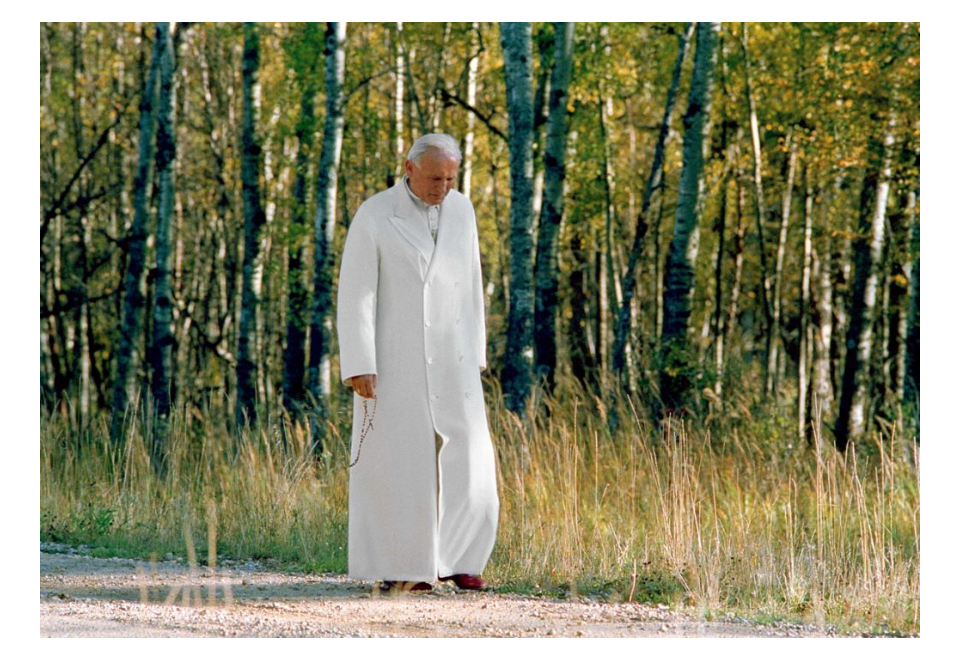
The encouraging words of St. John Paul II are helpful: “Remember that you are never alone. Christ is with you on your journey every day of your lives!” – St. John Paul II
We are called by Jesus to be contemplatives in action. We are not to follow the lead of mediocrity and fear. With humility and patience, let us trust in the guidance of the Holy Spirit who will light our path to maturing and actualizing our unique call and as we serve God and one another we will bear good fruit.
Painting: “The Lord of the Parables” by Jorge Cocco, Altus Fine Art
Gadenz, Pablo T. The Gospel of Luke. Grand Rapids, MI: Baker Academic, 2018.

 Spiritual Stepping Stones