We are one with the Holy Family when we “hear the word of God and act on it”!

He said to them in reply, “My mother and my brothers are those who hear the word of God and act on it” (Luke 8:21).

There are many popular genetic testing kits that are advertised on TV and through the internet. People have asked me is it possible to be a blood relation to Jesus. Jesus’ reply today can help you to save some money. Asking if we are a blood relation with Jesus is missing the point of Jesus’ life and ministry. What is important are “those who hear the word of God and act upon it.” God is to be first, even before family. We may experience a subtle shudder from this statement but to those of Jesus’ time, it would have been apoplectic. Family meant everything in the Ancient Near East.

Jesus is not making the point that we disregard family, he is instead teaching us that if we are to be authentically present to our family this will come about best by following the will of his Father. As we deepen our relationship with Jesus and put his teachings into action, we begin to bear the relational fruits of the Spirit. Would not our familial relationships be much better if we were more loving, joyful, peaceful, patient, kind, generous, faithful, gentle and practiced self-control? Jesus taught and showed from his own life that the path to fulfilling and intimate relationships flourish best when we put God first because as we grow closer in relationship with him, we also do so with those around us.

Another point we can glean from Jesus’ response in today’s Gospel is that our “family” is to transcend bloodline, tribe, and nation. Any one of “those who hear the word of God and act upon it” is spiritually akin to Jesus the Christ. The point is not that we have a genetic, lineal relation with Jesus, but that when we live and act according to his Father’s will, we are part of the universal family of God’s grace and mercy and our relationship with him and one another grows as we continue to bear the fruit of the Spirit.

As brothers and sisters in Christ, we will act with more caring and kindness, seek common ground through dialogue, be more willing to walk and accompany one another and seek to understand instead of judge. The bottom line is that we are to love one another as Jesus loves us! When we do so our lives are transformed.

To hear the word of God, we must have our hearts, minds, and souls open to hearing it proclaimed during Mass. We are also invited to read his word in our own daily time of prayer. In both situations, God’s word comes alive as he shares something of himself with us, to nourish, and give us his life. As we then receive, at times struggle with, seek to understand, and put into practice God’s word, we come to know the Father, and the Son, and the Holy Spirit, the saints, and our brothers and sisters in Christ. We are one family in the Body of Christ when we “hear the word of God and act on it.” Just imagine what our parishes and communities would look like if we all did this.

————————————

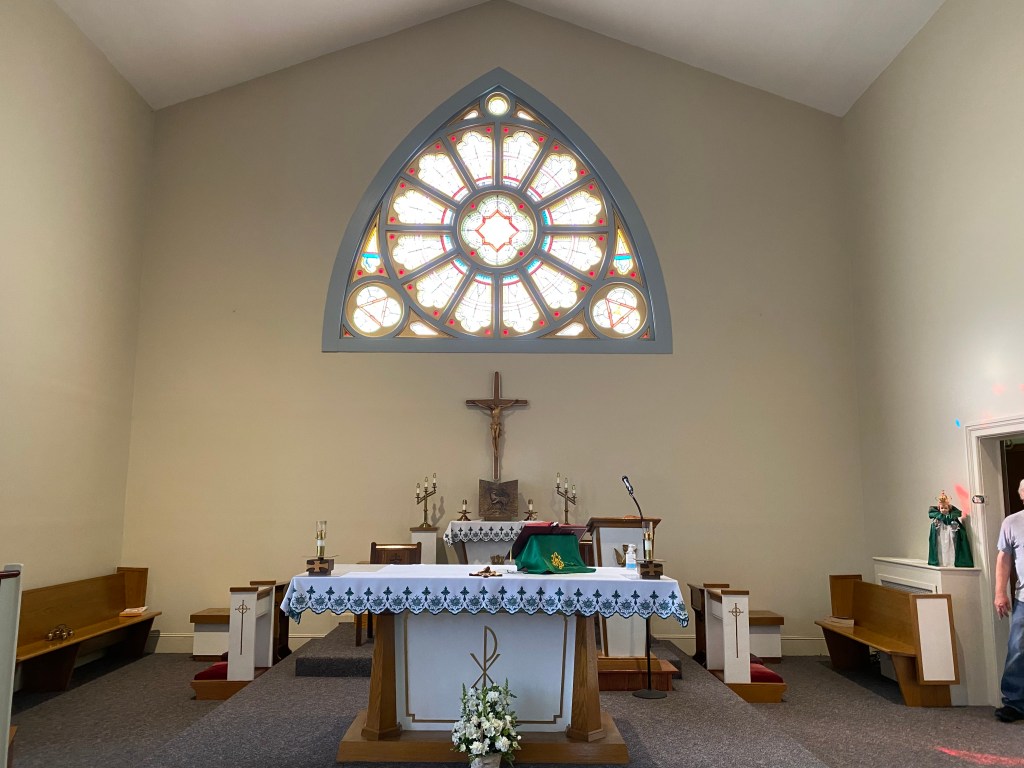
Photo: Praying with the Holy Family in the sacristy of St. Philips Catholic Church, East Windsor, CT. The church where I received my first communion and concelebrated Mass as a priest there for the first time this past Sunday.

The Mass readings for Tuesday, September 24, 2024

Let us not conceal but reveal the light of Christ!

Jesus said to the crowd: “No one who lights a lamp conceals it with a vessel or sets it under a bed; rather, he places it on a lampstand so that those who enter may see the light” (Luke 8:16).

God blesses us freely without cost and invites us, mere human beings, tiny specks on specks in the universe, to be in relationship with him. He has given us our lives, sustains us, and he is the source of our fulfillment, meaning, and joy! We do not earn nor is there anything that we can do to gain God’s grace. God loves us as we are. We are to but receive and share his love. We lose the gift of his grace and love either by refusing what has been offered, or once accepting and receiving, not doing anything with what we have received. If we are people of faith in name only, but do not follow in action, we are concealing the light we have been given.

January of 2021 was an interesting time for me. It had been just over a year since JoAnn had died and I was not only diagnosed with Covid, but it had done a number on my lungs, full blown pneumonia, as well as compromised many of my other vital organs. Fortunately, after five days on the Covid wing of the hospital and a few months then home on oxygen, I slowly recovered. As with JoAnn’s diagnosis, I accepted what was happening and trusted God and felt his peace through both of those challenges.

JoAnn was not healed in the way that I had sought but hopefully has now received the fullness of the healing that Jesus came to bring all of us, eternal life with him and his Father through the love of the Holy Spirit. My time to leave this life and head on to the next did not come in January of 2021. Through my time of recovery, I prayed and took comfort in the gift of his word each day and continued to share these reflections.

Some have certainly been better than others, but each one has been a reflection of the journey into the Mass readings of the day as well as seeing their relevance in my life, and upon returning, writing what I felt I received from God to share. These posts have hopefully been a way to reflect the light of Jesus, to light my lamp and place it on a lampstand.

My hope is that these words can also be an invitation to those of you who are reading them to take your own walk about through the God’s living word revealed in the Bible. God has been a tremendous support and companion in my daily walks with him and my prayer is that you may experience his closeness as well when you stroll through the pages of the Bible prayerfully each day. As you do so, God will soon hand you your lamp, ask you to light it, and place it on the lampstand to let it shine brightly so it may be an inspiration for others.


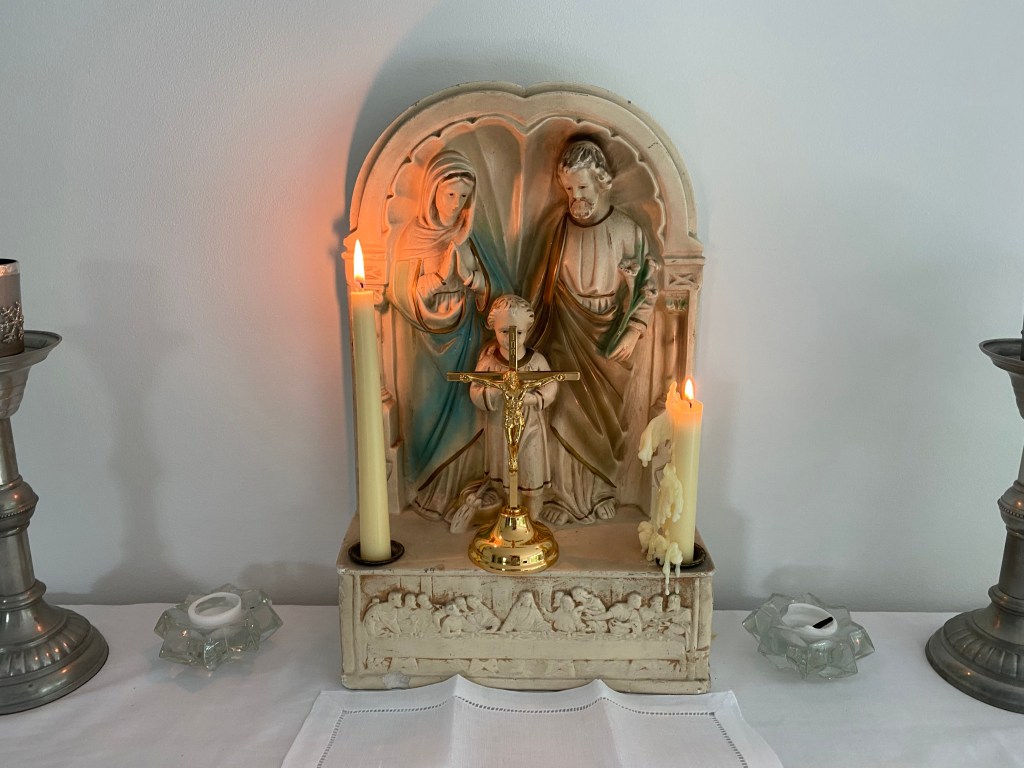
Photo: Home altar passed on from my great grandfather, to my grandmother, to my mother, to me. Just as we pass on sacramentals and family traditions, may we also pass on our faith.

Link for the Mass readings from Monday, September 23, 2024

We have been made for more.

James, from our second reading today, asks a question that unfortunately needs to be asked in every generation.

Where do the wars and where do the conflicts among you come from?

James gives us a place to start:

Beloved: Where jealousy and selfish ambition exist, there is disorder and every foul practice.

Conflict and division come from the disordering of our thoughts, desires, passions, words, and actions. There is something a bit off kilter with us. This disorder or dis-orientation is caused when we choose our self over God. Turning in upon ourselves, saying we are the center of the universe and all is to revolve around us comes from the condition of Original Sin which weakens and wounds our human nature. This condition is made worse by the belief that we can save ourselves.

We seek the truth, to be happy, and to be fulfilled but we follow false promises, substitutes, and apparent goods that appeal to our egotism, our pride, and our fear. St Thomas Aquinas, the thirteenth century Dominican doctor of the Church, categorizes four substitutes or temptations that lead us astray from our proper orientation to God:

Pleasure, Wealth, Power and Honor

In and of themselves there is nothing wrong with any of these, but when we make any or all of them into an idol, our primary focus, when we pursue them to provide our stability, satisfaction and fulfillment, we will be led astray.

Pleasure feels good and it brings us instant gratification. The problem is that once the external agent or stimulus of the pleasure ends, so does the experience, and it leaves us empty and wanting more.

Wealth promises us that if we just have enough money, we can get whatever we want, do whatever we want, we believe that we can also be safe and secure. But again, we will still experience that deep hunger within us that cannot be fed by that which is finite or material.

Power offers the promise of access, of controlling the unpredictability of life’s challenges, yet, as the Catholic historian and moralist, Lord Acton, wrote: “Power tends to corrupt and absolute power corrupts absolutely.”

Honor, closely linked with power, we see played out in our present day through the cult of celebrity that is sown into the very fabric of our society. So many seek their fifteen minutes of fame, too many not caring how they can get it.

We witness the Apostles in today’s Gospel, the closest to Jesus and his teaching, falling for the temptations of power and honor as they argue among themselves who is to be the greatest among them. The deeper sadness of their debate is that they are engaged in it just after Jesus has explained to them that he will be handed over and killed. The Apostles are so ensnared in the hierarchical structure of the society of their time that they fail to have the empathy and compassion to be present to Jesus as he shares with them his horrific fate.

We witness time and again, from the ancient times to today, the effects of Original Sin. The English convert to Catholicism, GK Chesterton, wrote that, “original sin… is the only part of Christian theology which can really be proved” (Orthodoxy). We can see it in the streets, we in the news, as well as looking back at us in the mirror, for we too fall into indifference, lack of empathy, and resist slowing down enough to be present and accompany others.

We perpetuate the condition of Original Sin when we choose to put ourselves in the center where God belongs. We must resist its lure and acknowledge that we cannot save ourselves, we cannot find happiness, security, joy and/or fulfillment in any finite or material pursuit. While at the same time, we can also acknowledge that even though Original Sin is real, even though we have been wounded and battered by its effects, we have not been overcome, we are not totally corrupt or destroyed by it.

We have been created good by God, and the embers of that goodness remain in each and every one of us. Even if the embers are only a smolder, they are just awaiting to be stoked and set ablaze. God has created us as a living, craving, hunger and desire to be one with God and each other and this is true for the atheist and the mystic alike.

The antidote to the poison of Original Sin is Jesus the Christ. He, the Son of God, the Second Person of the Holy Trinity, became one with us in our humanity so that we can become one with him in his divinity. In our Baptism, we are cleansed from this condition of Original Sin and are indelibly marked, we are conformed to the very being of Jesus. We become part of his Body.

Yet, while freed from the bondage of Original Sin by our Baptism, we are still tempted to return to the place of our slavery, like the Hebrew slaves yearning for Egypt, like Lot’s wife looking back to Sodom and Gomorrah. We need to keep our eyes focused on looking ahead, to that which is above. Jesus shares with his Apostles in today’s Gospel that we are to turn the pursuit of pleasure, wealth, power, and honor on its head when he states that: “If anyone wishes to be first, he shall be the last of all and the servant of all.” Only a relationship with God will bring us happiness and fulfillment.

We begin our path of walking as disciples by becoming like the small child that Jesus brought into their midst. The child in ancient Palestine was nothing. He had no status, no significance, no wealth, power, or honor. Each child was completely dependent on their parents. This is to be our starting point in being a disciple. We need to reject the notion outright that we can heal ourselves and admit that we need Jesus to restore us to our relationship with our Father and place our sole dependence in him for everything. God, not self, is to be our end goal.

As James wrote, “the wisdom from above is first of all pure, then peaceable, gentle, compliant, full of mercy and good fruits, without inconstancy or insincerity. And the fruit of righteousness is sown in peace for those who cultivate peace.”

May we receive and live by this wisdom from God and accompany one another as we seek to deepen our journey with Jesus. May we be willing to serve, to give of our time, talent and treasure to build up God’s Kingdom here on earth. May we be willing to seek out and invite others to share in our journey, so that we can feel support and encouragement and realize that we do not have to walk alone. May we be open to pray to the one who created us, read the Bible and ponder on the living word of God, and experience the lives of those who have walked before us in their encounters with God, and read the lives of the saints, those who are now where we seek to one day be! May we participate regularly in the sacraments, our deepest encounters with Jesus this side of heaven.

We are one Body in Christ. All of us seek happiness, fulfillment, and meaning in our lives, to belong and to be a part of something greater than ourselves. This is who God has created us to be. St Augustine realized this when he wrote: “You have made us for yourself, O God, and we are restless until we rest in you.” It is never too late to come to realize that God loves us more than we can ever mess up and more than we can ever imagine. God is our hope, our ultimate goal, and the answer to our deepest desire.

Let us renounce all jealousy, fear, pride, and selfish ambition, and instead surrender our hearts, minds and souls to Jesus in our time of meditation, prayer, service, in his very real presence in the Eucharist celebrated today at Mass, so to be forgiven, healed, renewed, reconnected, and in so doing, find the fulfillment we have been created for.

Once we receive and experience God’s unconditional love, may the embers of our soul ignite with the flame of his love such that we can recognize and distinguish between the voice and enticement of the enemy who seeks to destroy us and the voice of the Good Shepherd who seeks to give us life and life to the full. For in experiencing the life of Jesus, we experience the infinite we have been created for.


Photo: Sometimes taking the time to get outside and look up and beyond helps us to get in touch with the reality that we are physical as well as spiritual beings, not either/or but both/and.

Link for the Mass readings for Sunday, September 22, 2024

God has made us for communion and relationship.

Accompanying him were the Twelve and some women (Lk 8:1-2).

A simple statement but significant regarding how Jesus again is showing us how to live our lives as his followers, his disciples. Jesus is fully human and fully divine. What he has done and continues to do as the Son of God incarnate is to draw close to us in our humanity, as human beings, so that we can enter into a relationship with him and his Father through the love of the Holy Spirit, thus becoming one with him in his divinity.

From the beginning of his public ministry, throughout his time walking this earth, and continuing on after his resurrection and ascension into heaven, he  invites people to participate in his life and the kingdom of Heaven which is at hand in his very presence. Jesus does so by building relationships. This is how Luke can write the verses that Jesus was accompanied by the Twelve and Mary Magdelene, Joanna, and Susanna. These were real people with whom Jesus developed real and intimate bonds.

Christianity is not a Lone Ranger religion, it is not the survival of the fittest, and Jesus did not teach us to pull ourselves up by our own bootstraps. We are created by God to be in communion, to be in a relationship with him and each other, to experience his love and love one another. That means we need to ask for help from God and each other when in need and to come to the aid of, accompany, empower, and support one other.

We are invited to welcome, engage with, and make time for each other by exchanging in the stories of our tragedies and our triumphs. We need to resist the temptation of withdrawing into our own bubbles. Instead, let us take the risk to be vulnerable and trust. Relationships are not perfect, they will be messy, and conflicts will arise. By making a commitment to God and each other, being willing to be honest even when we are tempted by our fears to be otherwise, keeping an open heart and mind, and being willing to be understanding, kind, and forgiving, we can grow closer together.

Jesus chooses each one of us to accompany him and to forge relationships grounded in mutual respect, where no one is last and where no person is left behind. Our prejudices only survive when we keep people at a distance. When we are willing, like Jesus, to come close and spend time with one another, our biases can fade and friendships can grow. Even when it appears sometimes that our country and our world is about to tear apart at the seams, reconciliation and communion is what our faith is all about. This is why we are a joyful people and an alleluia people!

————————-

Photo: After concelebrating Mass at St. Catherine’s Catholic Church in Broad Brook, CT. Enjoyed spending time with and getting to know some of the parishioners afterwards.

Link for the Mass readings for Friday, September 20, 2024

When it is time to mourn, we weep, and when time to celebrate, we dance!

“To what shall I compare the people of this generation? What are they like? They are like children who sit in the marketplace and call to one another, ‘We played the flute for you, but you did not dance. We sang a dirge, but you did not weep'” (Lk 7:31-32).

Jesus convicted those who held a narrow view of who was a true follower of God by sharing the image of a flute being played and no one was dancing, thus in times of joy, there was no celebration, and when the funeral dirge was sung, they did not weep, they did not mourn. Jesus then tied the analogy to his present condition where there were those who did not accept the ascetical practices of fasting and the call to repentance from John the Baptist, nor did they accept the inclusive table fellowship of Jesus.

In our own time, we have encountered those that are not pleased beyond their own narrow focus and who suffer from tunnel vision. Anything that hints at even a slight variation of change sends tremors of discontent. If we are honest, we all have some resistance to change, but if we are to authentically live the Gospel, St. John Henry Cardinal Newman’s quote is an apt barometer: “To live is to change and to be perfect is to have changed often.”

JoAnn embraced change much more easily than I. She consistently helped me, even when I didn’t feel it was helpful, to resist getting too comfortable. She did so again in “changing her address” five years ago to a heavenly zip code. Working through the reality of her death and the new adventure of two years of seminary were two big changes that I embraced with a lot of help, which has prepared me well for my first few months of priesthood.

It would have been easier to seek an early retirement and live a quieter life, but that was not a part of God’s plan. When most my age are thinking of or beginning an early retirement, I decided to embrace the invitation to change again and embark on a new adventure. I am very happy that I did.

The Church, at her best, is a balance between the rock foundation of our core beliefs, such as is outlined in the Nicene Creed, which provides stability, assuredness, and identity, while at the same time we need to be open to the life-giving inspiration of change from the Holy Spirit. Each of us in each generation must make the Gospel relevant. We must enter into the tension of remaining true to what we believe while being flexible to allow the Holy Spirit to lead us. In this way, we can avoid molding the Church into our image, and instead be conformed into the image and likeness of Jesus, who is the embodiment of Love, the Trinitarian communion of which we profess in the Creed.

We can live a life of joy when we resist the temptation to hold on too tightly. Nothing and no one in this world lasts because all is finite. When it is time to mourn, let us weep, and if we do so well, when it is time to embrace life we can do so with joy and we can dance again. What lasts as St. Paul says is love. God is love and God created us out of an abundance of his love. When we are willing to surrender our will to the Father, our heart and mind to the Son, and allow our soul to be led by the Holy Spirit, we can better embrace change and better live our life to the full!


Photo: On my first day in the sanctuary of Holy Cross Catholic Church, Vero Beach, beginning my new journey with some quiet time with Jesus, Mary, and JoAnn.

Link for the Mass readings for Wednesday, September 18, 2024

Let us share the compassion we have received from Jesus.

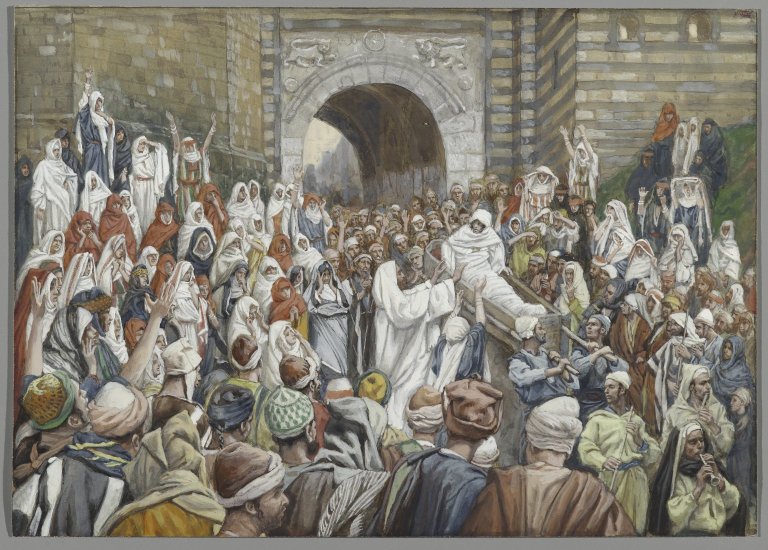
When the Lord saw her, he was moved with pity for her and said to her, “Do not weep.” He stepped forward and touched the coffin; at this the bearers halted, and he said, “Young man, I tell you, arise” (Lk 7:13-14).

Jesus’ immediate response to this woman was pity or compassion. The original Greek word used was splanchnizomai, meaning that Jesus was moved from the very depths of his bowels. The emotional depths to which Jesus was moved to reach out and help the widow of Nain, shows us his humanity. Jesus’ healing of the widow’s son, bringing him back from the dead, shows us his divinity. The entire event shows us the best of who we ought to aspire to be as his followers.

Instead of fear, judgment, prejudice, or indifference, may we instead follow the lead of Jesus and seek to understand, to place ourselves in the shoes of the vulnerable, misunderstood, and on the margins. May we start with those we interact with everyday in our families, our school and workplaces, our communities and places of worship. May our hearts, not be hearts of stone, but hearts of flesh so to be moved from the very depths with the same compassion of Jesus toward those, who, like the widow, are vulnerable, at-risk, and on the peripheries.

We as the Church, the Body of Christ, need to be more welcoming, hospitable, willing to walk with others and to share in their journeys. We can do this simply in our day-to-day interactions with one another. Whenever we encounter another, may we resist any judgment, prejudice, or indifference and instead be willing to be moved by compassion and concern and be present.

Listening and hearing each other’s stories, needs, and engaging in conversation are helpful in opening up relationships. Taking the time to smile, to listen, to respect one another even when disagree and being willing to work through conflicts helps us to build and strengthen relationships.

Jesus looked upon those he interacted with as family. This widow who was weeping as she looked upon the dead body of her son was not a stranger to Jesus, but a sister in pain. Jesus was moved with compassion and immediately came close to help. He met and engaged with each person and treated everyone he came in contact with in the same way, as human beings.

He loved and showed them compassion and invited them to be free of that which bound them to their slavery to sin. He came to remind all of us of who and whose we are as his Father’s beloved children. “For whoever does the will of my Father in heaven is my brother, and sister and mother” (Mt 12:50).

JoAnn often prayed for God to reveal to her one person that she could help each day. When we ask, God will guide us and grant us greater awareness of those we can help, and he will give us the means to be present and to assist. We are not called to raise the dead, while we can lift each other’s spirits, but we are called to have compassion for one another and see each other as brothers and sisters, not as somehow less or other, but with dignity.

May we allow the love of the Holy Spirit to stretch us beyond our comfort zones, beyond our limitations, so that we may experience a softening of our hearts and be willing to be moved by compassion. May we regularly and with more intention breathe and be more patient, understanding, and kind. May we be willing to love more, to will each other’s good with each person we engage with so that each of us are better for having met.

———————————————————-

Painting: “The Resurrection of the Widow’s Son at Nain” by James Tissot, 1890, online collection from the Brooklyn Museum

Link for the Mass readings for Tuesday, September 17, 2024

Let us listen carefully to, pray and meditate upon the word from the Word of God.

Since diving deeper into John Chapter 6 about a month ago, the refrain, “This saying is hard, who can accept it?” (John 6:60) continues to rise up with almost every reading from the weekday and Sunday Masses since then. To read, listen, meditate upon and pray with, the teachings of Jesus is not easy, especially if we want to also put them into practice into our lives. Which means deciding as to whether or not we want to be his disciple.

We may have been tempted to not listen closely while at Mass so not to recall anything that we have heard, we may let it go in one ear and out the other, or we may actually hear God’s word, and then when it is challenging, rationalize why we don’t have to follow it in today’s day and age.

My invitation is to go back and read each of the readings from today’s Mass carefully, slowly, prayerfully, and meditate upon them. This we are invited to do with each of God’s word proclaimed to us or in our own time of prayerful reading. The words we hear or read are not just a dead letter, they are not just an account of history, they are not just lessons to be shared, they are God’s living word in which we are invited to take in, chew upon, struggle with, and allow ourselves to be changed, to be transformed.

The appropriate response to hearing God’s word that we have received comes from the first line of Isaiah: “The Lord GOD opens my ear that I may hear; and I have not rebelled, I have not turned back” (Isaiah 50:5). As with the deaf man who Jesus healed last week, God seeks for all of us to hear his word and when we are willing to allow him to open our ears to hear, he will do so, and when we hear his word may we, like Isaiah, not rebel but receive his word.

Because Isaiah did so, he received the help of the Lord GOD.

Jesus not only healed the man of his deafness, but he also continually strove to heal the spiritual ears of his disciples. But we all have the freedom to choose. We can rebel and walk away as did so many after hearing Jesus’ Bread of Life discourse, and even when we don’t understand, we can answer with Peter, “Where else are we to go? You have the words of eternal life” (Jn 6:68).

Why ought we listen to this man who died almost two thousand years ago? In a sense, Jesus asked his disciples the same question when he asked them, “Who do people say that I am?” and then directly to his disciples: “Who do you say that I am?” Peter answer for them, “You are the Messiah” (cf. Mk 8:27-29).

In Matthew’s account he shares more of Peter’s response. “You are the Messiah, the Son of the living God” (Mt 16:16). Peter got it right, almost. Once Jesus saw that Peter received this insight from the Holy Spirit and was able to articulate it, Jesus shared with them all what kind of Messiah his Father sent him to be. He was not to be in line with any image the disciples thought of. He was more aligned to the suffering servant that Isaiah prophesied about.

As soon as Jesus began to speak about his suffering and being killed, Peter moved him away and rebuked him and Jesus without hesitation called Peter out: “Get behind me Satan.” Satan is the father of lies, the one who opposes. In one breath, Peter was listening to the guidance of the Holy Spirit and in the next he was listening to the words of the enemy. Jesus was making a clear distinction for Peter, the disciples and us. Whose voice we are to listen to?

Why are we to listen to Jesus’ words, even when they are hard, even when they are challenging? We listen to him because he is the Son of God, the second person of the Holy Trinity, the Son of God incarnate. He came not to condemn us but to save and free us from the sin of the world. Jesus came to open our spiritual ears so that we can hear the Holy Spirit, so that we may discern clearly between the voice of the enemy which leads us to death and the words of God that leads us to eternal life.

And if we want to be his disciples, we are invited to hear anew: “If any want to become my followers, let them deny themselves and take up their cross and follow me. For those who want to save their life will lose it, and those who lose their life for my sake, and for the sake of the gospel, will save it” (Mk 8:34-35).

“This saying is hard, who can accept it” (Jn 6:60)? Resist the temptation to water this invitation down. Instead, let us be like Isaiah and Peter, let us implore our loving God and Father to open our ears that we may hear his word, receive his word, breathe, pray and meditate upon his word and put what we have received, like James guided in our second reading, into action.

How we take up our cross, how we lose our life for Christ, how we surrender is unique to each of us. God meets us where we are and leads us. He shines his light just enough so that we can see two steps ahead. When we take those steps, he will shine a little more of his light ahead of us.

How do we take up our cross and lose our life for Christ? We begin with our willingness to listen and hear the living word of God daily and allow it to transform every aspect of our lives. Such that God’s word becomes our own in our lived experiences. We start with a posture of humility that recognizes that we need and depend upon God for everything, and he desires nothing less than all our mind, heart, and soul.

We begin to deny ourselves and take up our cross when we make the words of Mary our own: “Behold, I am the handmaid of the Lord, let it be done to me according to thy will”(cf. Lk 1:38). And the words of Jesus, “Not my will but yours be done” (cf. Lk 22:42). The words of St. Thomas, “My Lord and my God.” (Jn 20:28) and St. Peter, “You are the Messiah. The Son of the living God” (Mt 16:16).

As we say these words to ourselves, as we meditate and pray with them, as we bring them into our daily experiences, as we say them before entertaining any thought, speaking any word, and following through on any action, we invite God’s word into our being so that we may be healed of our blindness and our deafness; so that we will hear the Holy Spirit speak and guide us to understand how to receive and put Jesus’ teachings into practice and so reflect his light into the dark places of our hearts and into the dark corners of our world in the unique ways that God invites us.


Photo: Icon of Christ from the 6th century in St. Catherine’s Monastery in Sinai Peninsula in Egypt.

Link for the Mass readings for Sunday, September 15, 2024

Behold Jesus on the Cross and be healed.

“In punishment the LORD sent among the people saraph serpents, which bit the people so that many of them died” (Numbers 21:6).

What kind of God would bring poisonous snakes upon his children? When Jesus taught his disciples about prayer didn’t he say, “Is there anyone among you… if a child asks for a fish, will give it a snake? If you then, who are evil, know how to give good gifts to your children, how much more will your Father in heaven give good things to those who ask him” (Mt 7:10).

Is God a loving Father or a harsh taskmaster?

He is a loving Father who not only wants his children to live but to live life to the full. God freed his people from slavery and was not only leading them to the promised land but also providing for and protecting them on the way. And yet, the people consistently grumbled and then rose up against Moses.

God chose to share with them a stark image of their choice of opposition to him by sending the serpents. The imagery of the serpent would have come to mind quickly to the people. For it was the serpent who tempted Eve and Adam and led them to their Fall. As St. Ephrem the Syrian (306-373 AD) wrote: “The serpent struck Adam in paradise and killed him. [It also struck] Israel in the camp and annihilated them” (Word on Fire Bible, p. 643).

We as Christians interpret the serpent in Genesis as Satan, which in Hebrew means adversary or opposer. Those of the people who rose up against God opposed him as Satan did. God revealed to them who they were serving in their rebellion and also showed them that if they rejected God and his love, protection, and provision, what the consequences to that choice would look like. Apart from God they will die. Trusting in and following God, even when the desert held no promise, they will live. “This particular punishment is another way of insisting that negativity necessarily follows from rebellion against God’s will” (Barron, p. 641).

When the people saw their sin in opposing God, they correctly repented. Moses again interceded for them, and God provided the healing antidote. He guided Moses to place a bronze image of a poisonous serpent on a pole. All who then looked upon it, were cured. In seeing clearly what had led to their poisoning, they could renounce it and receive God’s mercy, forgiveness, and healing. “Somehow, seeing sin for what it is serves to disempower the hold it has upon us” (Barron, p 641).

Jesus, the divine Son of God becomes one with us in our humanity to reveal to us the path to participate in his divinity. He shows to us our own rebelliousness, pride, and sins that separate us from God. Jesus has not come to condemn us for our sin but to save us, to free us from our slavery to sin. Jesus took the sin of the world upon himself as he was lifted up on the Cross. As he shared with Nicodemus, “just as Moses lifted up the serpent in the wilderness, so must the Son of Man be lifted up, that whoever believes in him may have eternal life” (Jn 3:14-15).

This is why we celebrate the feast of the Exaltation of the Holy Cross this day each year. What was a wicked sign of oppression and horrific suffering has now become a sign for our salvation. As we look upon the crucifix, we are reminded of the suffering that Jesus bore. Jesus took upon himself “all the dysfunction of the fallen human race” (Barron, p. 642).

When we look upon Jesus hanging on the cross, we see death but also the path to eternal life when we are willing to renounce, repent, atone for, and seek forgiveness for our sins. For on that Cross is where Jesus died for each and every one of us, and in so doing conquered the sin and death brought into the world by Adam and opened up for us the door to eternal life through his resurrection.


Photo: St Mary Chapel, St, Vincent de Paul Regional Seminary, Boyton Beach, FL.

Link for the Mass readings for Saturday, September 14, 2024

Word On Fire Bible: The Pentateuch. Elk Grove Village, IL: Word on Fire, 2023.

As we pray consistently with Jesus, our lives will change.

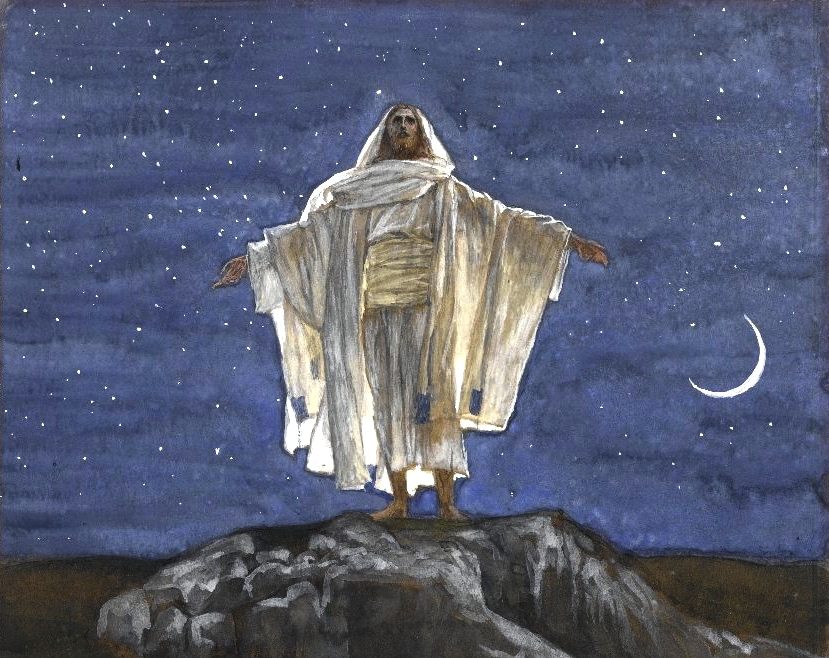
Jesus departed to the mountain to pray, and he spent the night in prayer to God (Lk 6:12).

In the midst of a busy ministry, Jesus spent time alone with God in prayer. In Luke’s Gospel, Jesus often did so before making important decisions, as in today’s reading that recorded the choosing of his Apostles. Prayer is an important, foundational principle to experiencing and knowing God as well as discerning his will for living a fully human life.

The Mystery of God is not a problem to be solved. In our language today, we often use mystery and problem interchangeably, as, “I lost my keys, it is such a mystery.” Strictly speaking, the loss of keys is a problem that can be solved. We can backtrack our steps, and through a process of elimination, the problem becomes smaller until we solve the whereabouts of the missing keys.

We cannot solve or prove God exists as if he is a problem to be solved. This is because God is not a being, not even the supreme being. God is a mystery that transcends any finite dimension of reality. We have nothing to measure him by, we cannot prove his existence, nor can we solve him as we would a problem.

Yet we can come to know God intimately just as Jesus did. Even though God is transcendent, beyond our reach and comprehension, he is at the same time closer to us than we are to ourselves. We come to know God through his invitation, and as we enter into the mystery of his reality through developing a relationship with him, as we come to know him. He does not become smaller, but vast, always beyond our comprehension and reach. His mystery is luminous as if we were in a completely dark room and someone turned on and shined a flashlight into our eyes. We wince from its brightness, yet in time, our eyes adjust and we eventually are able to see what was beyond our ability apart from the light. Jesus wants us to experience and embrace the mystery of the radiance and warmth of his Father’s light and love.

Jesus called each apostle by name. He calls us by name too. When we accept the call to be a follower of Jesus, when we are baptized, receive our first Holy Communion, and are confirmed, when we participate in the Mass at least weekly and Confession regularly, when we pray, read the Bible, and serve others, our lives will no longer be the same.

We will begin to experience the life of Jesus within us. We will begin to see also what is incompatible. What thoughts and behaviors we may have allowed for ourselves in the past, in the light of Christ, we now see for ourselves that which is no longer acceptable because it separates us from the love of God. We come to see our lives apart from God and with God. We are given the freedom to choose death or life.

Jesus meets us in the chaos of our lives and invites us to something better, a life that is real. Jesus loves us in this moment and does not lower the bar but empowers us to reach the height of his truth and divine law. Jesus is there for us and we remain close to him when we are consistent in prayer, in reading and meditating upon and putting into practice his word. Breathe upon breathe, day after day, we will be drawn ever deeper into the mystery of the Trinity and experience the intimacy of communion and relationship with God that we have been created for.

————————————

Painting: James Tissot – Jesus Goes Up Alone on a Mountain to Pray, 1886-1894

Link for the Mass readings for Tuesday, September 10, 2024

Body and Blood, Soul and Divinity

Last week we ended the gospel account with these words from Jesus: “I am the bread of life; whoever comes to me will never hunger, and whoever believes in me will never thirst” (Jn 6:35).

Jesus is offering these words from the context of how his Father has constantly provided for his people as seen in the examples of the Hebrews being freed from their slavery from Egypt, and then God providing bread from heaven in the form of manna. Jesus multiplied the five loaves and fish to provide for the thousands. In our first reading today, God sends an angel to feed Elijah a hearth cake and water to give him nourishment and strength for his forty-day journey.

As a good Father, God provides for his children. He also loves us so much that he is willing to risk that we will reject his offer, which unfortunately, many people have done for generations. Yet, God remains faithful, awaiting the time to help and provide need when there is an opening.

This week we heard the reaction of the people to Jesus’ statement that he himself is the bread of life, he will be the one to satisfy the people’s hunger and his thirst, their deepest hunger, their soul hunger. He is inviting the people to receive him so that they will never have to hunger again. Jesus is not met with open arms of wonder, but “grumbling.”

This word was not chosen at random. This is the same word that was used to describe the Hebrews who were freed from their slavery and provided for by God but instead of being grateful for their freedom and God’s care, they sought for what they left behind. They complained that with Moses and God they were in a worse state than when they were enslaved in Egypt.

The people witnessed Jesus multiplying of the five loaves and two fish and they were amazed with the physical manifestation of that miracle, but now as Jesus is going deeper into the spiritual reality, they, as did his own hometown crowd, balk. And even respond in a similar fashion. Who does this Jesus think he is saying that he came down from heaven? “Do we not know his mother and father” (Jn 6:42). Apparently not!

Mary is his mother, but Joseph is not his father. His Father is God. Jesus is the Son of God who became man in the womb of Mary. While remaining fully divine as Son, he takes on human flesh and becomes fully human. His appearance is that of any other man, on the surface he appears to be the son of Joseph and Mary. Jesus is the incarnation of the Son of God the Father. He is the bread of life that has come down from heaven to nourish us physically and spiritually.

Jesus does not soften his language as he continues. He affirms that he knows God the Father because he has come from the Father and he invites those who are listening to believe in this truth and for those who do, they will have “eternal life.” Jesus does not stop there but continues to share how as “living bread”he will give life forever and then he goes over the top: “the bread I shall give for the life of the world is my flesh.”

If Jesus was concerned about their grumbling when he said he was the bread come down from heaven, he didn’t show it here by stating that he will give his own flesh. This is not symbolic language to recall the quail God sent in the desert either. Jesus was offering his own flesh.

This he did in giving his life to the full on the Cross and will be represented again on the altar at each Mass. People were having trouble understanding how Jesus could have come down from heaven, how he could be the bread from heaven, and now what were they going to do with his statement that he was going to give his flesh to eat? They were having trouble understanding what Jesus was saying because they did not understand who he is.

Understanding who Jesus is helps us to understand the Bread of Life discourse we have been exploring these past two weeks. At the surface, the physical level, even with the miracles that Jesus performs, even those who are eyewitnesses, do not see Jesus being anyone other than a human being, extraordinary to some, ordinary to many others, just the son of Joseph and Mary. And yet, Jesus is so much more.

Jesus is the Son of God come down from heaven, he took on flesh in the womb of Mary, lived, died, and conquered death so that he could ascend, return to the Father, not as he came as fully divine but now fully divine and fully human. This is how he can give us his Body and Blood in the appearance of bread and wine, because he has transcended time and space. He truly is the Bread of Life. We like the crowd are given a choice.

God the Father, God the Son, and God the Holy Spirit do not impose, they invite, they draw us in with tender chords of love. They give us the free will to either reject their invitation or to ascent with our faith and accept their invitation to participate in their communion of love.

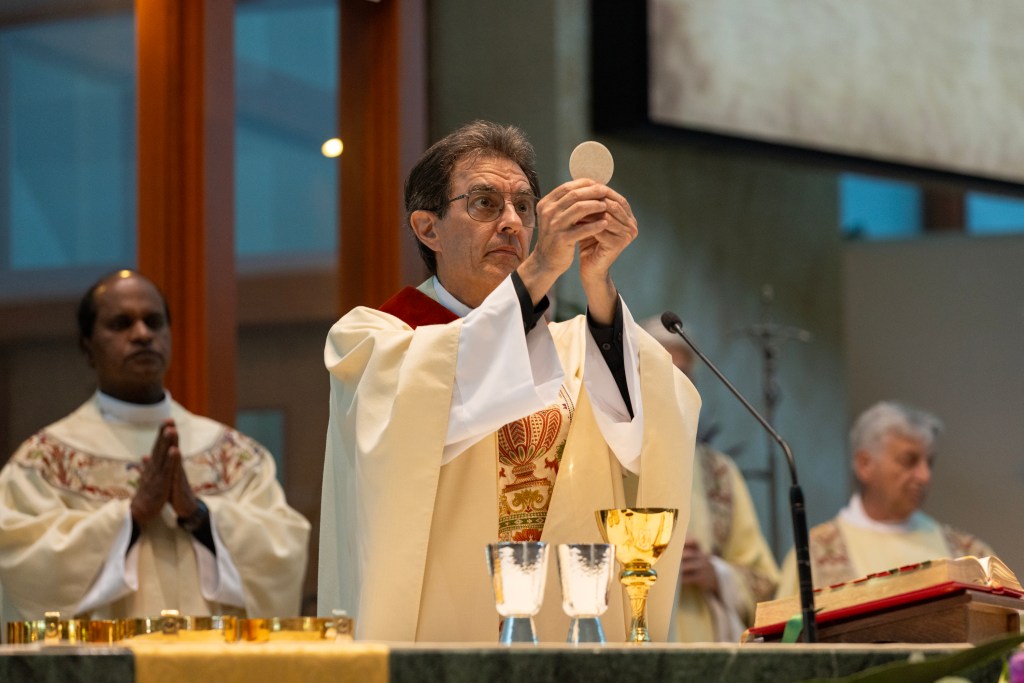
In the Mass, Jesus will come among us again through the power of the Holy Spirit and the words of institution: the words of Jesus said in the first person by the priest. Jesus is the bread of life who will again come down from heaven, not as the same human body that walked among the apostles and the crowd, but in his glorified body that has ascended into heaven. Although the appearance of the bread and wine will remain, the substance will be transfigured to be the Body and Blood, Soul and Divinity, the source and summit of our faith!!! Today we will receive our daily bread, the superabundant bread of life that will satisfy the deepest yearning of our souls and sustain us as we journey through this life to the next!


Photo: First Mass of Thanksgiving at St Peter Catholic Church; I am blessed at each Mass to hold in my hands, the Body and Blood of Christ.

Link for the Mass readings for Sunday, August 11, 2024