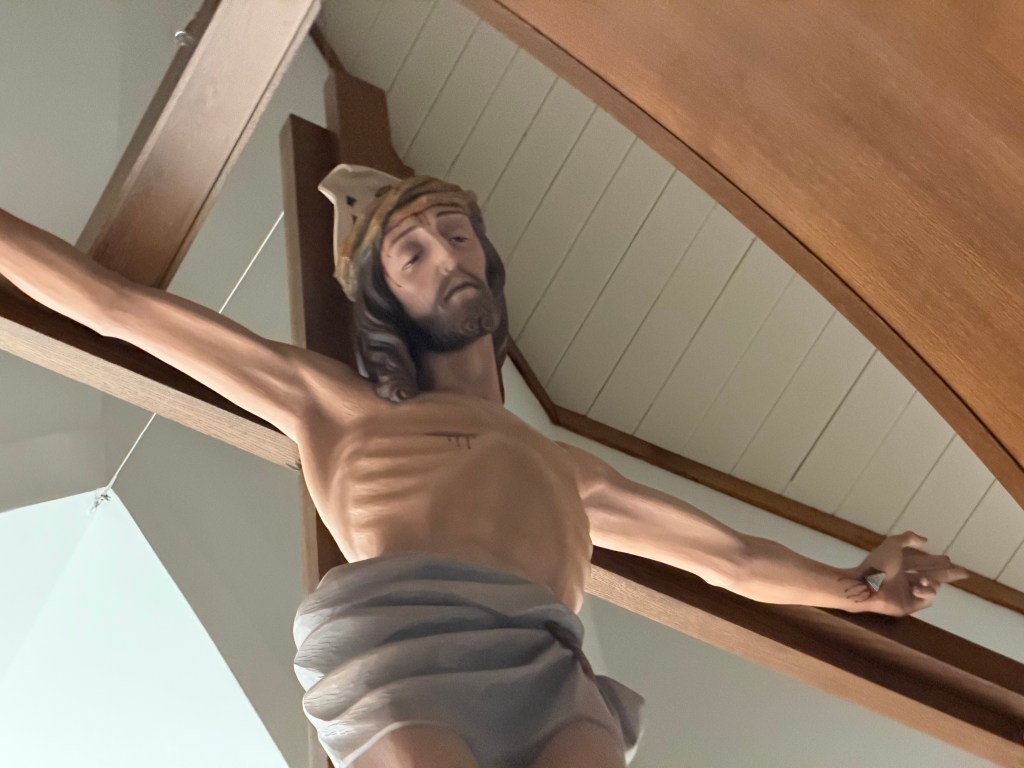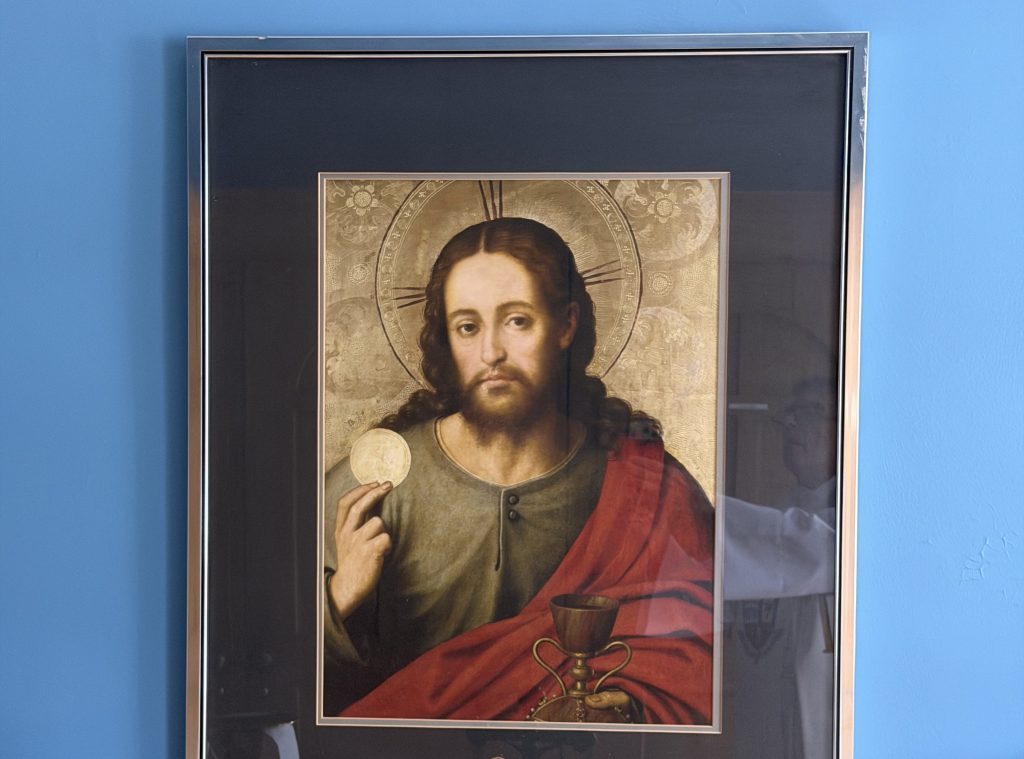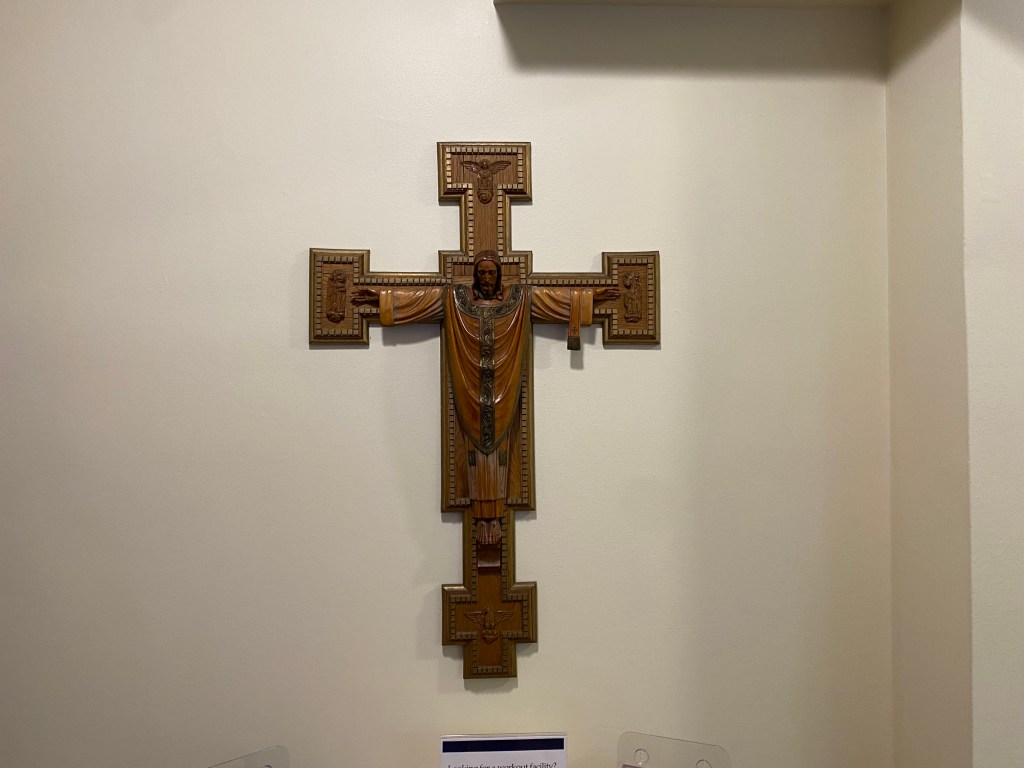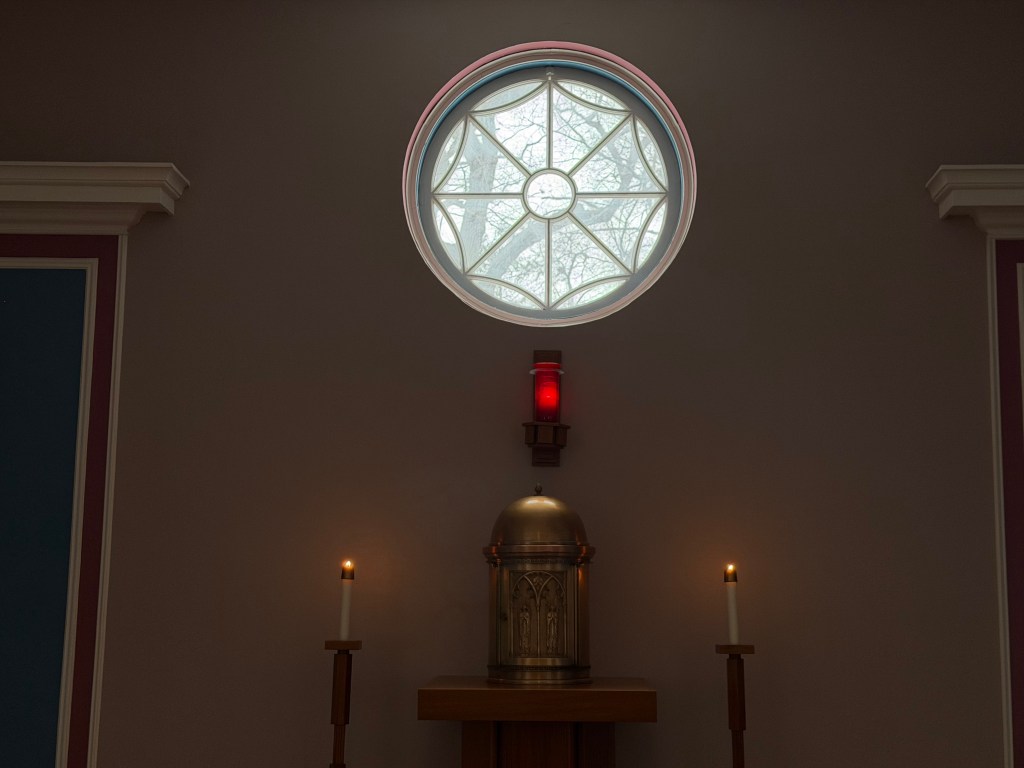
“Do not be afraid, just have faith.”

“Jesus, aware at once that power had gone out from him, turned around in the crowd and asked, ‘Who has touched my clothes'” (Mk 5:30)? The woman could have slipped away, she could have stood still and said nothing, no one knew. His disciples were bewildered that Jesus asked such a question with so many pressing about him. But the woman approached with “fear and trembling” and told him the truth. Jesus did not admonish her for breaking a social taboo but publicly acknowledged her faith and so empowered her with a deeper healing than the merely physical that she sought.

All the while as this scene transpired, Jairus must have been in agony. He knew how close his daughter was to death, and every second counted. Jesus took that limited, precious time and engaged with this woman. Just as they were about to resume their journey, and he began to breathe again, the terrible news came that his daughter had passed away.

What might have flashed through his mind at that moment? The time Jesus took to talk with the woman, could that have made the difference? He was a synagogue official and would have known the taboos she crossed to reach out and touch Jesus in public, he knew that in doing so she would make Jesus unclean, she was a woman considered the lowest of low. She was frail and pallid from her condition, at death’s door herself, yet she had mustered such courage and faith to touch him. She took such a risk. While these or any other thoughts were passing through his mind, Jesus assured him, “Do not be afraid, just have faith” (Mk 5:36).

Jairus had just witnessed such faith with the woman healed from the hemorrhage, probably someone until this very moment for whom he might have shown disdain for. Maybe just maybe, if he could muster the same faith as her. Jesus could bring his daughter back to life just as Jesus had brought this woman, who was death’s door back to life and wholeness. A light shone in the darkness of his despair and the darkness did not overcome it. He would not be let down. Jesus indeed healed his daughter. He took her hand as he had done with Peter’s mother-in-law, and commanding her to rise and walk, she came back to life.

How many of us have ourselves or have ever known someone who has experienced such great needs as did Jairus, whose twelve-year old daughter died, or the woman who had been suffering for twelve years with hemorrhages, with no healing from doctors all this time? In both of these cases Jesus brought about miraculous healings. How many of us have experienced the opposite? No healing that we prayed for. We wondered where Jesus was or why he didn’t bother to help? The truth is Jesus is present, though he may or may not have brought about the outcome we may have sought.

February 2 marked five years and five months since JoAnn died. She was not healed from the pancreatic cancer that ate away at her body, as was the woman with the hemorrhage. Nor did Jesus come to raise JoAnn from the dead, as he did for Jaurus’ daughter, while I laid by her side and held her hand awaiting the funeral home to pick up her body. Does that mean Jesus does not heal anymore or that there is no relevance in the readings of the Gospel of Mark for us today?

No. Quite the opposite. Entering into the daily rhythm of reading, praying with, and meditating upon these accounts helps us to know him not as a historical figure but to encounter him as our Lord and Savior, brother and friend, who is present with us in this and each moment. As we enter into each passage, slowly and prayerfully, we are invited to enter into his memory, receive his direction and guidance. Over these five and a half years, I have healed, become aware of further areas in need of healing, attachments to let go of, and Jesus has helped me each step of the way. No step has been easy, but Jesus has given me the guidance and strength to make each one possible.

Read again prayerfully today’s account. May we pray for the courage and faith to approach Jesus and place all our trust in him for each situation as this woman did. When we struggle, when the ground feels a bit shaky underneath, let us take to heart and believe in the words that Jesus spoke to Jairus, “Do not be afraid, just have faith (Mk 5:36). When we place our trust and faith in Jesus, who is truly with us through it all, the good, the bad, and the ugly, we will experience his love, direction, and strength with each step we take along the way.


Photo: JoAnn received an even greater healing and I believe now that Jesus did come that day. He took JoAnn by the hand, and she like Jairus’ daughter arose to be with him for all eternity. 
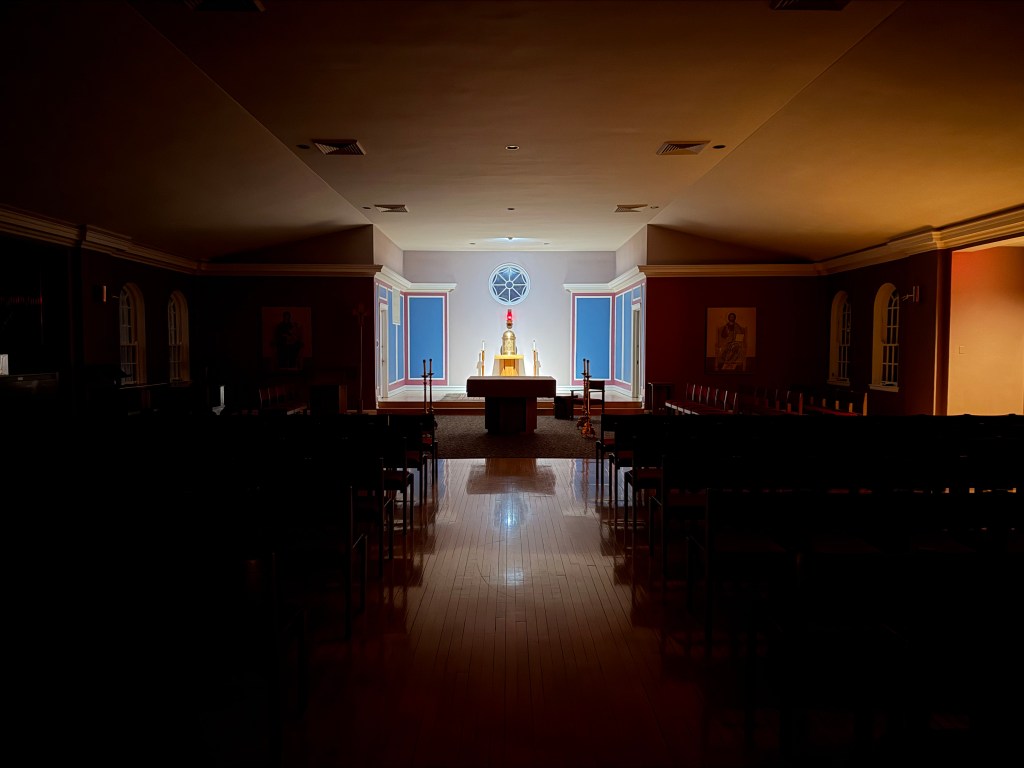
Link for the Mass readings for Tuesday, February 4, 2025

Jesus is stronger than any evil and will free us from anything that binds us.

Jesus and his disciples have entered the Gentile territory of the Gerasenes. As soon as they get out of the boat a man possessed by an unclean spirit rushes up to him. He himself was in a worse state than the storm that Jesus had stilled. He called himself Legion as he was possessed by many demons. He had been living in the tombs, away from society, family, and friends, some of whom had made multiple attempts to restrain him, cure him, bring him back to his right mind, but to no avail. The encounter with Jesus ultimately brought about the result of this man “sitting there clothed and in his right mind” (Mk 5:15). Jesus was able to liberate this man from his desperate state. If you have not done so, I recommend reading the full account (Mk 5:1-20).

Many scoff at the healing power and miracles of Jesus, and they certainly would also discount demonic possession. Though rare, there are still cases today. A strict approach of scientism that only accepts the empirical, only that which can be measured by the five senses, discounts not only the divinity of Jesus and the reality of God but any talk of a spiritual realm. This is unfortunate because this is a limited approach to understanding the fullness of creation. We ourselves are both physical and spiritual. A healthy embrace and experience of both will help us to better appreciate and understand the world around us.

Too many today are in the same need of experiencing the liberating power of Jesus as the Gerasene. Just as chaotic and tumultuous, especially among too many of our youth, are those who are consumed and imprisoned by the vice grip of addiction. Family members and friends reach out desperately to help, to provide aid, and find themselves in the same situation as those who sought to care for this man who had been living in the tombs. Somehow this man caught “sight of Jesus from a distance, he ran up and prostrated himself before him” (Mk 5:6). There must have been some ember at the core of who he was that could still move and bring himself to Jesus.

Far too many are suffering, bound, and shackled by a wide range of addictions, obsessions, disordered affections, and oppressions that plague far too many today, as well as the rare cases of possessions. Evil seeks to distort, disfigure, divide, dehumanize, and separate all of us from the goodness and wholeness that God intends. This growing epidemic damages individuals, families, and friends and could benefit from a unified approach of the best that science, psychology, counseling, prayer, the sacraments, spiritual direction, and when needed, exorcisms can offer.

Jesus can reach into even the deepest darkness of our internal entanglements and help to reveal any disordered affections. Yet we must choose, as did the Gerasene demoniac, to surrender to Jesus. May we resist the temptation to flee from him, and instead run into his open arms. Resting in the grip of his loving embrace, we will come to know that we are not alone in our suffering, that our deepest anguish, sin, and wounds can be healed.

Jesus is stronger than any evil that seeks to bind and separate any of us. He shared this in his parable of “tying up the strong man” (Mark 3:27) which is on vivid display as he casts out Legion from the Gerasene man. Let us continue to place our trust in the name of and the power of Jesus and intercede for all those who are suffering from any form of disordered affections, addictions, and/or afflictions emotionally, psychologically, or spiritually. May Jesus lead all of us to experience deliverance and freedom from any affliction no matter how small or large, so that we may experience the right ordering of our minds, hearts, and souls to God’s will, and like the Gerasene man, not only experience the fullness of his healing but also go to share the good news of our experiences to help to bring the invitation of healing to others.

—————————————————————————————–

Photo: Not even the strongest of chains can bind us when we seek the healing power of Jesus to free us.

Link for the Mass readings for Monday, February 3, 2025

Jesus is our light, love, and salvation.

The scribes who had come from Jerusalem said of Jesus, “He is possessed by Beelzebul,” and “By the prince of demons he drives out demons” (Mark 3:22).

The scribes, coming in from Jerusalem, most likely to investigate the happenings of this Jesus they have been hearing about, experience for themselves Jesus exorcising demons. They do not nor seem to want to understand how he is able to cast them out and thus healing those possessed. They judge that he does this feat, not by the power of God, but instead, by the power of Beelzebul, the prince of demons. Could their purpose be to delegitimize, or literally demonize, Jesus in such a way that those beginning to follow him will begin to doubt or outright turn away from him? If Jesus is who he says he is, then the scribes are actually the ones serving Satan in aligning with him to sow discord and disunity.

Jesus provides an invitation to build bridges of reconciliation and healing to restore the unity that has been lost by those choosing to sin, to put self first over God. He also meets those on the peripheries, those who have been kept at arm’s length, healing those conditions which have been used to justify their separation. Yet Jesus does not impose, he proposes. Even so, Jesus demands a choice.

Jesus shows over and over again by word and deed not only how he is creating a bridge of connection between the human and the divine, he is in actuality the bridge, the kingdom of God in our midst, and yet, he is not going to drag anyone over against their will. Jesus calls all who encounter him to make a choice, there is no middle ground, we are either for him or against him.

We have witnessed in the Gospel accounts how some of the scribes, Pharisees, and even some of his own relatives reject Jesus. He is able to perform only a few miracles in his own hometown. Those who say no to the invitation cut themselves off, separate themselves from the very source of their life, the very core and sustaining force of their being. Those who say, “yes’ and repent, like those that receive his healing, will be transformed, and are freed from their enslavement to sin.

When they continue to say, “yes”, day by day, decision by decision, they align themselves with the very source and communion they have been created for, God the Father. This is no one revelatory moment but a daily commitment of saying, “yes” to Jesus. Even when we mess up or fall for temptation, let us refuse to stay down but arise, repent, and begin again and again. We must always and everywhere reject the lie that echoes in our minds that we cannot be forgiven. Jesus loves us more than we can ever mess up, he loves us more than our worst choices or mistakes, more than our most grievous sins, and he will forgive us time and again, as long as we are contrite, seek his help to sin no more, and are willing to perform the penance to atone for our sins.

If this is true, then what does Jesus mean when he says, “whoever blasphemes against the Holy Spirit will never have forgiveness, but is guilty of an ever lasting sin” (Mk 3:29)? Jesus refers here to our free will to accept or reject the free gift of his grace. We can observe this played out in the choices of Peter and Judas. Peter repented, was forgiven, and transformed. Judas withdrew within himself, cut himself off from Jesus, did not believe that Jesus would forgive him, and took his own life. Jesus would have forgiven Judas as he had Peter, but Judas kept himself at a distance. He refused to accept the love of the Holy Spirit. He cut himself off from the very source of his life and salvation.

We have a choice to make each day. We can let ourselves be defined by our sins and our worst mistakes, believe the father of lies who promotes division and isolation, tempts and seeks to condemn us, separate us from Jesus and one another, with the intent to kill us. We can walk the path of darkness which consists of living defensively, keep others at a distance, demean, belittle, and degrade others, as well as live in the shadows of indifference and cynicism.

Or we can surrender our will to Jesus, accept his guidance and conviction so that we can see our sins and repent from our pride, prejudice, greed, lust, envy, gluttony, sloth, and wrath. We can believe that Jesus is who he said he is, seek his forgiveness, healing, and love, and join in the mission of sharing his gospel.

As we do so, we will take steps forward and steps back, and we stumble and we will fall, but through each experience, the hand of Jesus is still there to help us back up. When we are willing, we will be forgiven again and again, and begin again and again. We are not alone. Mary the Mother of God and all the saints said, “yes” to Jesus’ invitation. They understand what we are going through. They are also cheering us on, guiding us, empowering us, so that one day we too will be where they are, seeing God the Father face to face. Until that time, while we are still here this side of heaven, let us breathe, receive, rest, and abide in God’s love so to radiate his Son’s light and love, in our own unique way.

———————————————————-

Photo: A quiet moment to breathe and receive the love of Jesus.

Link for the Mass readings for Monday, January 27, 2025

In our encounter and deepening of our relationship with Jesus we experience love, peace, and joy!

After the most recent clash with those Pharisees bent now on killing Jesus, he “withdrew toward the sea”, the Sea of Galilee. After his entanglements with the Pharisees, he may have sought refuge or a quieter setting away from the crowds. Yet, the people followed. Mark details in his account that many from all over the region came to Jesus to be healed. Among the crowd, unclean spirits threw those they possessed down before Jesus. This did not slow the gathering of people who pressed in on Jesus, just to touch him. The mass of people grew to a point that it was getting out of control so Jesus “told his disciples to have a boat ready for him because of the crowd, so that they would not crush him” (Mk 3:9).

People wanted to be healed, to be cured, to be exorcised, and brought others to experience the same. Yet they were missing the deeper point of who Jesus is. He was not just a miracle worker, not just someone that brought about physical healing. Healing accounts were heard and known about in the ancient world.  The unclean spirits got it, they recognized Jesus before the people did, “for, whenever unclean spirits saw him they would fall down before him and shout, ‘You are the Son of God'” (Mk 3:11).

They were bound by the authority of Jesus to be renounced. They had to obey him and in calling out who he was they were attempting to control him with no effect. Throughout the Gospel of Mark, we will read about how the crowds, disciples, and even the apostles, all struggle to understand who Jesus is. The people closed in on Jesus seeking to be healed, but missed the deeper hunger within their souls that St Augustine, the fourth-century bishop of Hippo, so eloquently described on the first page of his autobiography: “[Y]ou have made us for yourself, and our hearts are restless until they can find peace in you” (Augustine 1963, 17). Jesus is the Son of God, not just a miracle worker, teacher, or healer, but God Incarnate.

The only way we will be fully satisfied, inspired, fully alive, and be at peace within our own skin, is by developing an ongoing, deepening relationship, and communion with our Father. God is infinite and cannot be exhausted. We as finite beings are left wanting even when we have the best of material things. We always hunger and want for more, because in the depths of our very being, whether we recognize it or not, we want God. The many who came to Jesus for healing, were not aware of the deeper hunger and healing they sought.

The deeper healing that Jesus seeks to offer all of us is to restore us to the fullness of who his Father created us to be. To do that, we must be willing to embrace the truth, the way, and the life that he offers us. Which means that we will need to let go of anything that does not align with his invitation. At the first, we may be taken aback because of our attachments. We need not be afraid. Jesus works slowly. His light shines gently that we might see what is keeping us from growing in our relationship with him and each other.

Jesus conquered death and freed us to abide in an authentic love expressed at a deeper, more intimate level than we can ever imagine. Jesus satisfies our deepest hunger as he invites us to be drawn into his grace-filled embrace so as to be healed, renewed, shaped, and conformed to his heart, mind, and will. When we come to this place of encounter, reconciliation, and intimate relationship, we come to know our mission and in serving through that mission we come to know who and whose we truly are. In that place is our greatest joy and it only gets better the more we receive and share his love!

————————————————————————

Drawing by: First weekend Mass about six months ago. Feel blessed and joy filled to overflowing each day as I continue to build relationships here at my new home of Holy Cross Catholic Church, grow as a disciple of Jesus, and serve as his priest!

St Augustine. The Confessions of St Augustine. Translated by Rex Warner. New York: New American Library, 1963.

Link for the Mass readings for Thursday, January 23, 2025.

May we resist the hardening our hearts and allow ourselves instead to be moved with compassion.

In today’s Gospel scene, Jesus enters the synagogue and sees a man with a withered hand. The eyes of the Pharisees are on him to see if, yet again, Jesus will heal on the Sabbath. Jesus is clear in his mind what he is going to do, though before doing so, he calls the man up and asks the Pharisees, “Is it lawful to do good on the sabbath rather than to do evil, to save life rather than to destroy it” (Mk 3:4)?

Jesus here is giving them a no-brainer of a question. Of course, one is to do good rather than evil on the Sabbath, to save life rather than destroy it! Yet, the Pharisees remain silent. Jesus expresses anger and grief. This may not only be an obvious question but more Jesus could be meeting the Pharisees on the ground of Scripture that they are using against Jesus. 1 Maccabees 2:41 records the account of the Maccabeans deciding to take up arms on the Sabbath to defend themselves against attack. With this in mind, Jesus may be appealing to those Pharisees that were challenging him to choose to see the healing of this man as a greater good. Unfortunately, their “their hardness of heart” shows they were not appreciative of the scriptural assistance.

At the peak of this fifth conflict in Marl, may we stop and imagine ourselves present in the synagogue and witnessing Jesus looking at the Pharisees and the Pharisees looking back at him. Ever been present when tensions were very high and there was dead silence? Imagine what was going through the mind of the guy standing in between them with the withered hand?!!!

The anger rising in Jesus may have had to do with the unwillingness of the Pharisees to show any compassion at all for this man. That they would hold so tightly to their self-righteous stance to refuse to even have a discussion about the matter. Not even to say in effect, “Yes, Jesus of course, it is lawful to do good, to save a life but what you are doing is unorthodox.” No. They refuse to dialogue. Their faces are set like flint, they dig in their heels. Even though Jesus is inviting them to take just a step to consider another alternative, they instead harden their hearts. In their silence, they are choosing evil over good, to destroy life rather than saving it. Pride has reared its grotesque head.

Jesus breaks the silence as he says to the man, “Stretch out your hand.”

The man is healed, but instead of rejoicing, and sharing the good news as Andrew did with his brother Simon, the Pharisees leave immediately to find the Herodians and begin to plot to not only undo Jesus but “to put him to death.” They who would refuse to see a mean healed on the Sabbath, did not hesitate to plan someone’s death on the Sabbath.

We have witnessed in today’s Gospel the evil of pride. We have witnessed the mercy of God presented and rejected. As is stated in the Catechism of the Catholic Church: “There are no limits to the mercy of God, but anyone who deliberately refuses to accept his mercy by repenting, rejects the forgiveness of his sins and the salvation offered by the Holy Spirit” (1864). That is what Jesus is angry about. Not only do the Pharisees resist any move in the slightest direction toward compassion, or their own repentance, they further separate themselves from the love of God. They start with a principle of defending the law, and walk out seething with a premeditated intent to kill Jesus, and on the Sabbath!

With each choice of putting self over another, pride grows. Its appetite is insatiable. Pride is known as the mother of all sins because of its disordered focus on self at the expense of all others and all else. The deadliest component of which is in direct opposition to God and separation from the very life force of our existence.

May we choose a different approach to Jesus, by surrendering our wills to him this day. May we ask him to reveal the darkness that dwells within us and grant us the humility to call it out and renounce anything that is not of God. May God grant us the courage to repent and the willingness to receive the healing touch of the Holy Spirit such that we might be transformed into Jesus’ image and likeness, so to know him and our Father more. May we reject evil and choose the good, reject pride and choose love, reject death and choose life. With each person we encounter today, may we reject the temptation to withdraw or scowl and instead offer a smile, a hand of welcome, and a listening ear.

———————————————————————-

Painting by James Tissot.

Catholic Church. “Article 8: Sin,” in the Catechism of the Catholic Church, 2nd ed. Vatican: Libreria Editrice Vaticana, 2012.

Link for the Mass readings for Wednesday, January 22, 2025

Will we follow Jesus as Levi did?

In both the first reading from Hebrews and verse from Psalm 19 we read about the power of God’s word. “The word of God is living and effective” (Hebrews 4:12) and the words of the “Lord, are spirit and life” (Psalm 19). Jesus gives face to the living word of God come down from heaven to transform his people as he continues to teach with authority and offer healing. In today’s account of Mark, Jesus calls his fifth disciple, Levi. The key difference with this call of Levi and the four fisherman is Levi’s occupational hazard.

Tax collectors were disliked, even despised by many in ancient Palestine because they were considered unclean, and categorized as with lepers and sinners. They were cast in this net because the tax collector had a responsibility to pay a fixed amount to the occupying power of Rome. This in itself was bad enough because their own countrymen were colluding with the enemy. What made matters worse was that too many kept as a commission anything he collected over and above that fixed amount. The majority of the population, already just getting by, paying a temple tax, and the Roman tax, then finding out their local tax collector was taking more than their fair share, did not make for feelings of endearment.

Jesus surprises all who had come to hear him teach when he not only invites Levi, also known as Matthew, to follow him but then they have dinner together. We are witnessing yet again another healing miracle. Jesus provides an opportunity of bridging divides by inviting someone to his inner circle, to turn away from one way of life to begin anew, to: “Repent and believe in the gospel” (cf. Mk 1:15). The Pharisees question his choice of table fellowship companions. It is not clear if the Pharisees are eating with them or are on the outside looking in. The other curious point is that the Pharisees are conversing with Jesus’ disciples. So both groups are together witnessing the communal exchange, from a distance. They choose not to engage in the fullness of the fellowship.

They could not have been at too great a distance though because Jesus could hear their concerns and responded to them: “Those who are well do not need a physician, but the sick do. I did not come to call the righteous but sinners” (Mk 2:17). The Pharisees, and possibly some of his disciples, were not a part of the intimacy of this communion because of their own unwillingness to accept those that Jesus invited to share a meal, to accept that they too were sinners also in need of healing.

All have sinned and fallen short of the glory of God. Jesus forgives and offers mercy to all who are willing to be aware of his invitation to fellowship. In surrendering our finite freedom over to his divine freedom, we receive healing and transformation, then are offered an opportunity to develop an intimate relationship and participate in communion with the one who is ushering in the kingdom of God. This is a foreshadowing of the last supper and the celebration of the Mass.

We too are invited as sinners to join the banquet, to be in fellowship with Jesus. As Levi received, we are given an opportunity to begin again, to leave behind anything that separates us from God and one another and follow Jesus, who came that we might be forgiven and healed.

As with many Gospel passages, today’s offers a wonderful opportunity to place ourselves in the scene. Mark presents Jesus teaching the people though he again does not tell us anything about what he shared. Knowing what follows, we might think about and ask ourselves, “What might Jesus have taught before going to Levi at the custom’s post?” Could he have been talking, as Matthew adds in his parallel account, about how Amos preached that God desires mercy and not sacrifice (Mt 9:12)?

Let us read this passage slowly a few times (Mark 2:13-17) and meditate upon these words of God that are “living and effective.” Then as Jesus moves to the custom post, follow him, and the others in your imagination. What is our honest reaction to Jesus calling the tax collector, Levi? Are there sins that others commit that we find easy to forgive, others that we find hard to forgive? As the scene shifts to the breaking of the bread, do we dive in with this motley crew, stay at a distance, or walk away?

The words of the “Lord, are spirit and life.” May we not only read them, but also meditate upon and pray with them so that we may be transformed by them. May we also encounter Jesus in this passage and be willing to listen to Jesus speak to us in the silence of our hearts. This is a wonderful spiritual practice that can bring us much joy, forgiveness, healing, and deeper communion with the Divine Physician and healer of our souls. No RSVP needed, just come, open up your Bible, and join the feast!

————————————————————————-

Painting: Caravaggio’s “The Call of St. Matthew”

Link for the Mass reading for Saturday, January 18, 2025

Jesus helps to bridge the gap between us and God.

A leper came to him and kneeling down begged him and said, “If you wish, you can make me clean” (Mk 1:40).

The term leprosy, used during the time of Jesus, was a more general way to describe various issues pertaining to the skin such as open wounds, sores, skin flaking, as well as much more severe and chronic conditions. Today we use it more specifically to refer to Hansen’s disease, a chronic infectious disease caused by a rod-like bacterium named Mycobacterium leprae (PubMed Health).

Those dealing with such skin conditions were deemed unclean. They were to live outside of their village, town, or city; wear ragged clothes, their hair needed to be unkempt. If anyone came close to them, they were to yell out that they were unclean, so there would be no chance of human contact. Lepers were exempt from any communal religious practice and the common opinion held was that those in this situation deserved it because of some sin that they committed. Those with chronic or recurring conditions could be in a state of exile for the entirety of their life. The experience was like a living death because they were isolated from all societal interaction.

When Jesus comes near to the leper, both were well aware of the cultural and societal requirements dictating that each one was to keep their distance. The leper does not follow the societal norms. Instead of warding off Jesus and urging him to stay away, he approaches Jesus and kneels before him. Jesus does not reprimand him, and he, like the leper, does not follow social protocol: “Moved with pity, he stretched out his hand, touched the leper, and said to him, ‘I do will it. Be made clean'” (Mk 1:41).

The leper is healed at the moment of contact, his living death sentence is commuted, his opportunity for worship and communal life is restored. This simple act of healing the leper in today’s Gospel is, in fact, a microcosm of Jesus’ ministry and mission. The Son of God, in embracing our human condition, provides the opportunity for restoring us also from our exile, our separation, from God and one another.

Jesus the carpenter in the humanity he assumed, became a bridge, a stairway to heaven, that provides us a way to cross the wide chasm separating us from his Father. In his willingness to touch the leper, Jesus became a living icon showing how he as the Son of God was willing to draw close to us. He was willing to walk among us, accompany us, experience our pain, suffering, and separation, becoming one with us in our humanity so that he could offer us forgiveness, reconciliation, and communion so we can become one with him in his divinity and become instruments of healing for one another.

May we resist shunning those on the peripheries or supporting social prejudices, injustices, and structures that isolate and exile others. We are called by Jesus to be aware of and in solidarity with our brothers and sisters. We need to be aware of the ones that are socially kept at arm’s length, those we force into positions of shouting, “Unclean!” when we come near. This is not an appeal for a utopian or philosophical ideal, but an invitation to do as Jesus did as he approached the leper. He came up close and personal. What bridges can we build in our families, schools, work, and communities? Jesus is inviting us to risk, to be aware, and in the words of Pope Francis to go with “a spirit of profound solidarity and compassion.”

—————————————————————

Photo: Crucifix in the sanctuary of St. Vincent de Paul Chapel, SVDP Regional Seminary, Boynton Beach, FL.

PubMed Health. “Hansen’s Disease (Leprosy).” https://www.ncbi.nlm.nih.gov/pubmedhealth/PMHT0027942/

Link for the Mass readings for Thursday, January 16, 2024

Healing happens when we receive and share the love of Jesus.

There is a danger when we read a comment from Scripture such as when Jesus, “cured many who were sick with various diseases, and he drove out many demons” (Mk 1:34). The danger is that we may not believe we are capable of healing as Jesus did, so we don’t do anything active with our faith. We also might think that Jesus is divine, so of course, there is no way we can measure up to what he has done. An even less helpful line of thought would be to disbelieve that the healings of Jesus ever happened at all that they were all made up.

Another challenge can be pride. We may want to heal like Jesus, for the purpose of our own aggrandizement, so people look at us, not God. That was the sin of Simon the magician, who saw the Apostles healing, just as Jesus had, and offered payment to them for the power to accomplish the same (cf. Acts 8:9-25). Along the same line is wanting to do something grandiose, something beyond our own unique gift and charism, again so the focus is placed on us.

What we need to keep in perspective is that Jesus had a specific mission to accomplish, and yes, he is divine, but he is also fully human. As the Son, he was sent by his Father, in turn Jesus sent his Apostles, and he has a specific mission for each and every one of us as well. Jesus himself proclaimed: “Amen, amen, I say to you, whoever believes in me will do the works that I do, and will do greater ones than these, because I am going to the Father” (Jn 14:12). Not only does Jesus say we can do works such as these but even greater ones! Jesus knows the plan his Father has for our lives, the part we are to play, and he will share it with us and empower us with that which we need to accomplish it.

We all have the capacity to provide God’s healing presence. God works through us when we are willing to be healed, to stay still long enough and consistently enough to experience his love. When we breathe, receive, rest, and abide in God’s love, we can then share his love as he guides us. There is some way for all of us to contribute.

Throughout the Bible there are accounts of how God invites others to service, each in very small and humble ways – Jesus himself began his days on this earth wrapped in swaddling clothes and placed in a feeding trough, as vulnerable and humble a beginning as there can be. He then lived the next thirty years in obscurity until his public ministry began.

We need to resist the temptation to limit and define Jesus, but instead to embrace the gift of a “sitting theology” in which we allow ourselves to look at Jesus, take him in, for he is “infinite Love incarnate” (Barron). When we are daily willing to place ourselves before Jesus in this way and invite him to be a part of our lives, our hearts and minds will expand.

Spending consistent time with Jesus, he will send us out to be contemplatives in action, open to the experiences that come before us, the opportunities and interruptions that arise in which we can be present to another with a smile, an active listening ear, and a helping hand. In each small act, we say yes to God’s invitation to be present to others and accompany them by our willingness to love as Jesus has loved us, by willing the good of each other. Through our openness to receive the love of Jesus and share in our own unique way, healing happens.

—————————————————————————–

Photo: Experiencing Jesus in the book of creation.

The thought of a sitting theology comes from Bishop Robert Barron Lesson 5 lecture that he gave on Hans Urs von Balthasar from his Word on Fire Institute. To learn more about the WOFI and what it offers, type the following link into your web browser: https://wordonfire.institute

Link for the Mass readings for Wednesday, January 15, 2024

Jesus has come close that we might be healed.

The man in today’s Gospel scene takes a tremendous risk by approaching Jesus. He is a leper and so considered unclean. The appropriate response when someone was coming into his general vicinity would have been to give as wide a berth as possible, if not remove themselves from view entirely, or to make themselves known to be unclean to any passerby.

This state of uncleanness was not a mere sense of hygiene. This was considered ritual impurity. So anyone touching or being touched by a leper would be considered ritually impure. For this reason, lepers were ostracized from family, friends, and the larger community socially as well as being forbidden access to public worship. This is a horrific state to find oneself in, for as human beings we are social beings who want to belong, to be a part of, and to be loved.

The leper cast aside all social norms and fell prostrate before Jesus and said, “Lord, if you wish, you can make me clean” (Lk 5:12). Jesus knew full well the social norms, and it is very telling that not only did Jesus heal the man, but he did so by placing his hand on him. He could have easily said, “I do will it. Be made clean” (Lk 5:13), without touching him and the man would have been healed. There are Gospel accounts of Jesus doing just that.

Jesus says more in his willingness to touch the leper than he does even with his words of healing. He does not keep the man at a distance but instead places himself on the same level as the man. In Jesus’ touch he is not made unclean, but the man becomes clean. The tremendous stigma of this man having to be separated from something as simple, yet as significant, as a human embrace is removed. With that simple touch, Jesus comes close and in doing so, the man will no longer be kept at arm’s length but restored to his community and the opportunity for fellowship.

This is what the Son of God has come to do. He has come close to all of us. He has become human so we can see the face of God. We can experience the tenderness of his touch, and being understood when no one else can or is willing to do so. Jesus has come close so that we know that we are not alone, that we are loved more than we can ever imagine, more than we can ever mess up, more than our worst mistakes, or gravest sins. Jesus has come close so we can experience how it feels to forgiven, healed, to belong, to be loved and cared for. Having received this wonderful gift, we are also invited to come close to love as we have been loved. 

One of the simplest ways to love is to be willing to sit with and experience one another, even while running the risk that we will be offended or offend, while at the same time, being committed to staying the course and developing relationships. When we are willing to see each other as human again, to come close, to hold each other accountable, and to respect each other even when we disagree, then we might be advocates of healing, hope, love, and unity.

——————————————————————————————————-

Photo: Mosaic of Jesus Heals the Leper, in the Cathedral of the Assumption, Monreale, Sicily.

Link for the Mass for Friday, January 10, 2024

When we trust in the will of God and persevere, we will be saved.

“You will be hated by all because of my name, but whoever endures to the end will be saved” (Mt 10:22).

Why are we talking about being hated the day after Christmas? One reason could be that Jesus, this baby whose birth we just celebrated is “the light that shines in the darkness” (Jn 1:5). The very reality of Jesus is that he is the light that exposes darkness, he is the very embodiment of Love that exposes evil and hatred.

St. Stephen, whose feast we celebrate today, and whose death we read about in the first reading from Acts, experiences his words personally. For he is killed for the sole purpose of speaking the Gospel. While during his persecution he sees and communicates how even the heavens open for him. The reaction to those who hear his words are infuriation and they then throw him out of the city and “stone him” (cf. Acts 7:54-59).

Stephen radiated the light, love, and wisdom of Jesus and like Jesus he was put to death. His persecutors felt threatened by the light instead of welcomed to let go of the darkness that held them bound. Jesus exposes the truth of those dark places within our own hearts, minds, and the very depth of our being as well. What is our response? Will we also reject the light, not aware that it is an invitation to healing and to wholeness?

We may wince at the luminous brightness of Jesus’ light and resist the intimacy of the love he seeks to share. We may unconsciously do so, because we have so often faced so much of the opposite; hurt, pain, betrayal, and lack of understanding or acceptance, that we assume a defensive crouch is best to protect our false sense of self, when in fact that is just what we are invited to let go of. As time passes and we keep to the shadows, we risk becoming ingrained in our fear and pride and our posture of protecting our ego.

Yet, to be fully alive, we need to embrace the light, not hide from it. When we are open to the healing touch of Jesus and receive the gift of his light in our lives, we begin to die to our false self and the lies that we have believed. Allowing ourselves to breathe and rest in God’s loving presence helps us to heal, indentify, and allow Jesus to transform our vice to virtue. Once we allow ourselves to be loved by Jesus, we begin to recognize that we are turned in upon ourselves, and then we can adjust our posture and begin to open ourselves to him. We also begin to recognize that we are not the center of the universe.

As we follow the model of John the Baptist, St. Stephen, the other saints, we become less so that Jesus becomes more in our lives. We too will face the same rejection that Jesus faced. We will be labeled crazy, out of step, simple-minded, irrational, and worse. Yet we are to resist returning to a defensive posture, to refuse to react in kind, but instead, to be present, call upon and trust in the Holy Spirit to give us the words to speak, and allow God to happen. We are to remain open, accepting of the person where they are and as they are, and share the same transformative mercy, love, and forgiveness of Jesus that we have received from our attacker.

Change, maturation, and growth are not easy. As disciples, we are to be disciplined and persevere, while at the same time remember that our redemption does not come from our own doing or willing it to be so on our efforts alone. Our healing, restoration, and transformation come first and foremost from a willingness to accept the invitation to experience a deepening of our relationship with Jesus. When we accept his invitation to walk with him, and trust him, we will receive the healing salve of his love, mercy, and forgiveness. We will then heal from and let go of our biases, prejudices, hatred, and selfishness.

Transformation is not a one-time event. Christmas is not just a day, it is not just a season. Christmas is a time when we can recommit to allowing Jesus to enter into and to transform our lives each and every day, each and every moment, with each and every decision. When we are tempted in any way, let us call on the name of Jesus, trust in him, take a few deep breaths, and we will better be able to resist that which seeks to divert us.

In becoming human, Jesus lived showing us that this life was not all there is. The fullness of our lives are to be lived in and for God his Father. When we, like, Jesus, Stephen, and the saints, trust and obey God’s will, no matter where that will lead, we will be transformed, whole, and more alive than we can ever imagine, in this life and the next.

————————————————————————–

Photo: St Stephen the Protomartyr – icon by Theophili Saint Stephen, pray for us!

Link for today’s Mass readings for Thursday, December 26, 2024