Spending consistent time alone with God will help us to get to know Him.

Jesus departed to the mountain to pray, and he spent the night in prayer to God (Lk 6:12).

In the midst of a busy ministry, Jesus spent time alone with God in prayer. In Luke’s Gospel, Jesus often did so before making important decisions, as in today’s reading that recorded the choosing of his Apostles. Prayer is an important, foundational principle to experiencing and knowing God as well as discerning his will for living a fully human life.

The Mystery of God is not a problem to be solved. In our language today, we often use mystery and problem interchangeably, as, “I lost my keys, it is such a mystery.” Strictly speaking, the loss of keys is a problem that can be solved. We can backtrack our steps, and through a process of elimination, the problem becomes smaller until we solve the whereabouts of the missing keys. We cannot solve or prove God exists as if he is a problem to be solved. This is because God is not a being, not even the supreme being. God is a mystery that transcends any finite dimension of reality. We have nothing to measure him by, no point of reference, we cannot prove his existence, nor can we solve him as we would a problem.

God is so beyond our finite minds, and yet, we can come to know God intimately. Even though he is transcendent, beyond our reach and comprehension, Augustine let us know that he is at the same time closer to us than we are to ourselves. We are only capable of knowing God because he created us with the capacity to do so. We come to know God through his invitation, and as we enter into the mystery of his reality through developing a relationship with him, we come to know him.

God does not become smaller because he is infinite, always beyond. His mystery is luminous as if we were in a completely dark room and someone turned on and shined a flashlight into our eyes. We wince from its brightness, yet in time, our eyes adjust and we eventually are able to see what was beyond our ability apart from the light. Jesus wants us to experience and embrace the mystery of the radiance and warmth of his Father’s light and love.

Jesus called each apostle by name. He calls us by name too and invites us to pray with him as he prayed when he walked this earth. Prayer is the most important thing that we can do every day and our prayer begins to mature when we move away from only saying words and directing those words toward a Person. We move away from knowing about God, having an idea, philosophical or theological approach with God, and come to sit with him.

Why not pray everyday and often? One reason is because the devil and his minions know how important and imperative praying is. Praying with God and coming to know him is the last thing the enemy wants us to do and he will distract, divert, tempt, and lead us to do anything but pray. If we resist and make the time for prayer, he will tempt us to keep our time of prayer superficial, speaking words, but not directing them to a Person or quieting our minds and allowing ourselves to be still and listen to God’s voice.

“To know God as the person He really is, it requires being alone with Him frequently. Without actual time spent with God, there is a danger that we will never come to know Him as his own person” (Sattler, 28). St. Mother Teresa also encouraged her sisters in the same way asking, “Do you really know the living Jesus, not through books, but by being with him in your heart” (Sattler, 20)?

Sometimes we resist being still and quiet with God because our minds are so full of everything but God, maybe because we are afraid of aspects of ourselves that we would rather not see or admit. God sees the fullness of who we are and loves us there. He wants to help, but will not do so uninvited. Our relationship with Jesus grows when we invite him into our pain, our sins, and our fears, as well as our aspirations and our dreams.

Be not afraid to make friends with silence. In the silence, we will face our mental maelstroms, yet as we breathe more intentionally and call on Jesus’ name, we will begin to feel safer, slow down, and our minds will begin to quiet. Then we can begin an honest conversation with God, speaking and listening, sharing the good, the bad, and the ugly, and allowing God to love us there. That is when our prayer begins.

————————————

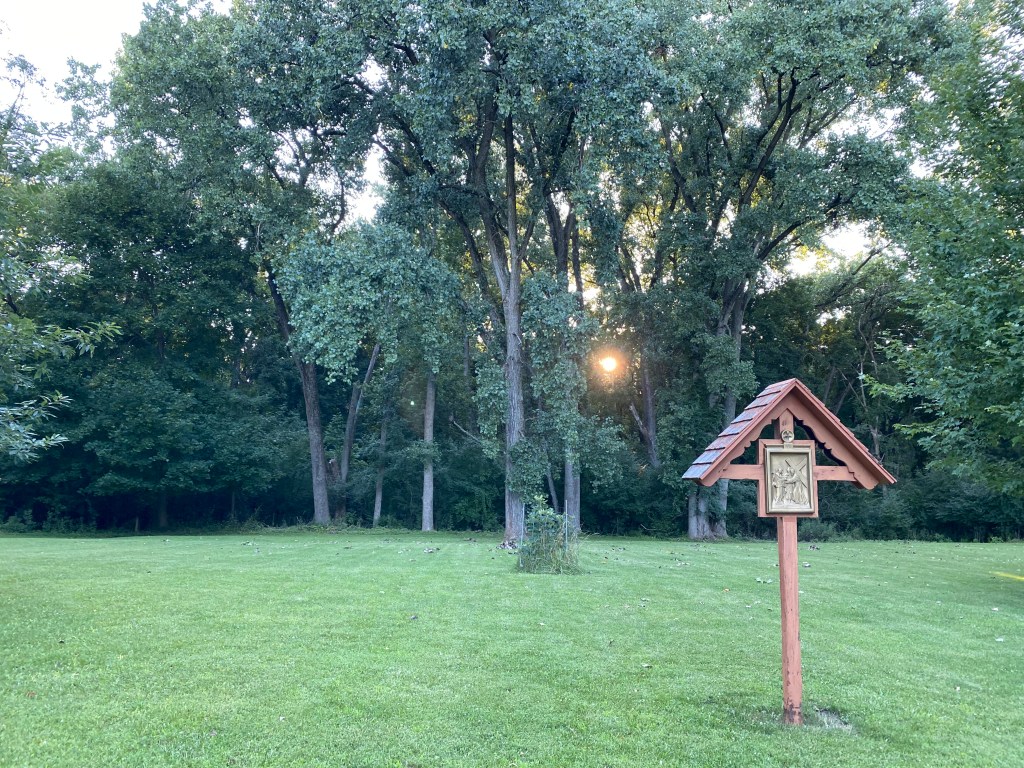
Photo: Evening walk with Jesus

Sattler, Fr. Wayne. Remain in Me and I in You: Relating to God as a Person not an Idea. Manchester, NH: Sophia Institute, 2025.
Link for the Mass readings for Tuesday, September 9, 2025

“Lord teach us to pray”.

Prayer is God’s initiative. God initiates prayer because he wants to be in relationship with us. When we feel the desire to pray, prayer has begun because this is our first awareness of God’s invitation to relationship. By our very nature, we are prayerful beings, we want to belong, to be a part of, and to be in communion. We seek to receive love and love in return. The challenge is that we can be led astray and seek disordered affections and substitutes for that which and who will fulfill our greatest desire for communion and love which is answering our deepest yearning as a living, craving, hunger and desire to be one with God and each another.

Yet, as Jesus’ Parable of the Sower shows, the desire to pray is not enough. The enemy can easily divert, distract, and steal our desire. We may not know how to pray or how to really pray. This was true for the disciples as well. Even though they prayed, most likely by reciting the Shema (Deuteronomy 6:4-9) each morning and evening as well as the Psalms, they saw something different about Jesus in his prayer. So we hear in the Gospel today from Luke: “Lord, teach us to pray” (Luke 11:1). Jesus then shared with his disciples the model and form of prayer which can help us today as well.

The first movement in our prayer is to acknowledge God’s invitation for dialogue, for relationship, and truth. Jesus teaches, “Father, hallowed be your name” (Luke 11:2). The very first instinct is to acknowledge that God, as Jesus teaches, is our Father. In our prayer with Jesus we acknowledge and so recognize that we are children of God. God is God and we are not. God is infinite and we are finite, created beings. May sound obvious but if we don’t get this starting point correct, we will be frustrated with prayer.

We can be frustrated if we approach God like a gum ball machine, seeking to get what we want, when we want, and how we want. We will be frustrated by seeking to bend God’s will to our own. God does not operate that way. God knows what we seek, need, and what will be best for us, better than we do. Our Father will give us that which we need and will fulfill us, especially the best gift of all which Jesus shares at the end of today’s reading: “If you then, who are wicked, know how to give good gifts to your children, how much more will the Father in heaven give the Holy Spirit to those who ask him” (Luke 11:13)?

The Holy Spirit, is the greatest gift we can receive. The Holy Spirit, the love shared between the Father and the Son, is who we seek in the depth of our souls. It is in following the promptings of the Holy Spirit that we not only come to know God, we come to know ourselves. The Holy Spirit gently leads us and each time we follow, we begin to recognize his voice and distinguish it from the father of lies. “Each act of fidelity to an inspiration is rewarded by abundant graces, especially by more frequent and stronger inspirations” (Philippe, 22).

As we follow the lead of the Holy Spirit in our prayer, come to breathe, receive, rest, and abide in God’s love, we will also be better able to do so in our daily lives and interactions with one another. We will better identify the lies, apparent goods, and even competition of actual goods so that we can clearly follow with each thought, word, and action the guidance of the Holy Spirit.

To get to this point of closer intimacy with God takes intention, daily time committed to meditating, praying, and contemplating his word. Also, when he leads to just be silent, for as St. Mother Teresa taught, “God speaks in the silence of our heart.” Oral prayer is the easiest way to begin. It is the first way to accept God’s invitation to pray. We can pray the Our Father, the Rosary, read Scripture, speak to him directly, and then from our time of vocal prayer, we can meditate and ponder what the Lord has given us to reflect upon. When the Holy Spirit inspires us to then be still and listen, let us do so. Our Father will speak to us in his word, in his silence, and/or sometimes with consolations.

Prayer is not so much about what we do. Prayer is more about lifting our hearts and minds to God and allowing ourselves to slow down enough to be aware of what God wants to do in us. Our Father seeks to helps us to identify our sins so that we can be free and confess them, he leads us to heal those places where we have preferred to keep locked up, and he wants to shine the light on how we are to serve him so that his kingdom will come and and his will, will be done on earth as it is in heaven.

To enter deeper into a life of prayer we need to trust Jesus. That is what made a big difference in the first days of my 30 day silent retreat in July of 2023. I followed the lead of my spiritual director and started to imagine myself sitting with Jesus as I read and meditated upon these words a few times, “to know the love of Christ that surpasses knowledge, so that you may be full of the fullness of God” (Ephesians 3:19), I leaned over and asked Jesus, “How can I know your love?”

He said, “Trust me.”

I did and that made all the difference in the following holy hours and successive days of the retreat, as well as the last two years.

We have been created to live a life of prayer. Jesus will teach us to pray, just as he taught his disciples. As we trust him and ask for the guidance of the Holy Spirit, God our Father will grant our request. My invitation to you who have read this far, is to set aside some time today, sit in a comfortable quiet place, take a few deep breaths, read through today’s Gospel account Luke 11:1-13 a few times, trust in Jesus, ask for the Holy Spirit, follow their lead, and let God happen!


Photo: Bench view from where I sat with my first encounter with Jesus as related above and during many more of my holy hours back in July of 2023.

Link for the Mass readings for Sunday, July 27, 2025

When we read and pray with the Bible, we encounter Jesus.

The question that arises and is foremost regarding Christianity above all else is, “Who is Jesus?” How this is answered has a lot to do with what we believe. Biblical scholars debate whether today’s passage, John 3:31-36 is a continuation John the Baptist talking with his disciples or these are an insertion by John the author. Either way, the points of concern is coming to understand and to believe that Jesus is the one who “comes from above” and the one who “comes from heaven is above all”; he “testifies to what he has seen and heard” and he is sent by God to speak “the words of God”; he is also generous in that he “does not ration the gift of the Spirit”; and the Son is loved by the Father and God “has given everything over to him”.

Each of these phrases are revealing the truth that Jesus is the Son of God who has come from above to reveal the truth about his Father and that he is able to do so because he has seen and has an infinite relationship with him. Jesus preaches the Gospel, the Good News, that God loves us, that he seeks and has always sought, to be in communion with us, his created beings. Jesus has come to reveal the Love of the Father and that his love is unlimited.

The proclamation that Jesus is the Messiah, is not just revealed in the Gospel of John, but each of the three other Gospels, Matthew, Mark, and Luke, as well as the epistles. Jesus, as the Son of God, is also the key to unlocking the Hebrew Scriptures, and we can see how the Torah, the Prophets, and the Writings all point to Jesus as well. Jesus shared this outline of salvation history with Cleopas and the other disciple on the road to Emmaus, such that their hearts were burning within them while Jesus opened the scriptures to them (cf. Lk 24:32).

John the Baptist gets it, the Apostle John and the other apostles will eventually get it that Jesus is the Son of the Living God and he offers a model for us to follow when the Baptist shared with his disciples, the truth that we all called to ascribe to if we are to grow in our faith: “He must increase; I must decrease” (Jn 3:30). May we spend some time in quiet reflection today by pondering the phrases offered to us regarding who Jesus is. Which one, two, or few call to you?

“The one who comes from above is above all.”
“The one who comes from heaven is above all.”
“He testifies to what he has seen and heard.”

“For the one whom God sent speaks the words of God.”
“He does not ration his gift of the Spirit.”
“The Father loves the Son and has given everything over to him.”

When we have finished, what is our response? Do we disobey or discount that Jesus is who he says he is or do we “accept his testimony” and “certify that God is trustworthy”? If we “accept his testimony”, are we willing to decrease, such that he will increase his influence in our life. Do we believe that Jesus is the Christ, the Son of the Living God?

Spending time reading, meditating, and listening for God’s guidance in his word, especially the Gospels, helps us to encounter, sit at the feet, and be in the presence of Jesus. Jesus can teach us in our time and space as he has done with each generation of believers from the time of the apostles to our present age. We just need to be willing to be still and listen. We need, in the words of Pope Benedict XVI, to meet the Risen Christ and to “know him intimately by the power of the Holy Spirit…” and have “actually touched him” so that we “can witness to him” (Martin and Wright, 79).

Too many today follow the lead of the rich man who walked away sad from his encounter with Jesus. May we follow the lead of the Apostles, Mary Magdalene, the woman at the well, Cleopas and his companion, and surrender our lives to him and so be loved, forgiven, healed, transformed, that we may be witnesses of joy.


Painting: “Supper at Emmaus,” by Matthias Stom —- Will we disobey the invitation of the Son and refuse to believe or obey, choose to believe, and receive eternal live?

Pope Benedict XVI, “Homily,” May 7, 2005 found in: Martin, Francis and Wright IV, William M. The Gospel of John. Grand Rapids, MI: Baker Academic, 2015.

Link for the Mass readings for Thursday, May 1, 2025

Meditating on God’s word helps our will to be more conformed to his will.

Jesus recognized that the scribe, who asked him about which commandment was the greatest, “answered with understanding,” and then he said to him, “You are not far from the Kingdom of God” (Mk 12:34). What is it that the scribe understood?

The scribe understood that God “is One and that there is no other”. God is the true source of our being, our very existence. We have been created with an innate desire to be one with him. This is the longing we all feel in the depths of our soul, this is why nothing that is finite or material will ever fully satisfy us, and why we are always wanting more. This is as true for the mystic as it is for the atheist and everyone in between.

God is “One and no other” also means that we are not God, we are his created beings. God is not just one being among many, not even the supreme being. This orientation is important and foundational. We can only see from our limited perspective. What we think or believe we might need, may in fact not be truly good or beneficial for us, the shimmer may be just an apparent good, a distraction, a temptation, that will lead us away from the authentic fulfillment and meaning of life that we seek. God will guide us away from any unhealthy want, he will lead us away from temptation when we are willing to seek his guidance over and above our own. God will give us what we truly need, he will lead us to that which is, in reality, true, good, and beautiful.

Once we come to believe that God is God and we are his created beings, then we can take the next step and surrender: “to love him with all [our] heart, with all [our] soul, with all [our] mind, and with all [our] strength”. God wants all of us. We are to give all aspects of our lives to him. In our surrender to God and his will, we become capable of receiving his love and so are able to better love him in return. We all long to be loved and to love. Experiencing the love of God helps us to unconditionally love “our neighbor as our self” because through our surrender to his will we allow God to love others through us.

An interesting addition that Jesus adds to his presentation of the great commandment, is that in quoting Deuteronomy 6:4-5, he adds to the original. Along with love God with our whole heart, soul, and strength, he adds to love God with all our mind. This insert helps us to understand how we can live out this commandment.  We are to pray, to lift up our hearts and our minds to God. We can do this best when we meditate on his word daily. When we think about and continue to return to his word often we bring ourselves back into his presence and in his presence, we see better how we can give of ourselves fully to him and will be moved to love others.

As we surrender all of ourselves to God and love him in return, we will better love others (see Leviticus 19:18) as Jesus also commanded. To love God is like any other relationship. We need to spend quality time with God in stillness, be present One on one, as well as come to an awareness of God’s nearness in our daily activities. We are to resist compartmentalizing God and instead seek his presence in everything we do and through everyone we encounter.

Each of us, though prone to sin and wounded by our sin, are still not destroyed. God loves us as we are, and when we are repentant: willing to be contrite, confess, and follow through on our penance, God forgives our sins, he heals our wounds, and he transforms us. We need to stop running away from him and start running to him. One way we can do this is to love our neighbor as our self, for if we cannot love those we can see how can we love God who we can’t? Going out of ourselves and giving to another helps us to build relationships because time spent with each other breaks down the walls of separation that keep us at a distance.

Jesus’ arms are wide open before us in our neighbor. May we surrender all our heart, soul, mind, and strength into his loving embrace, receive his love and love him in return, and be willing to love our neighbor and our selves in the same way. When we understand this commandment, loving God, our neighbor and ourselves right, the other commandments will be something we will do naturally. As we enter into this practice, we too will hear Jesus say to us, “You are not far from the kingdom of God.”

—————————————————————————-

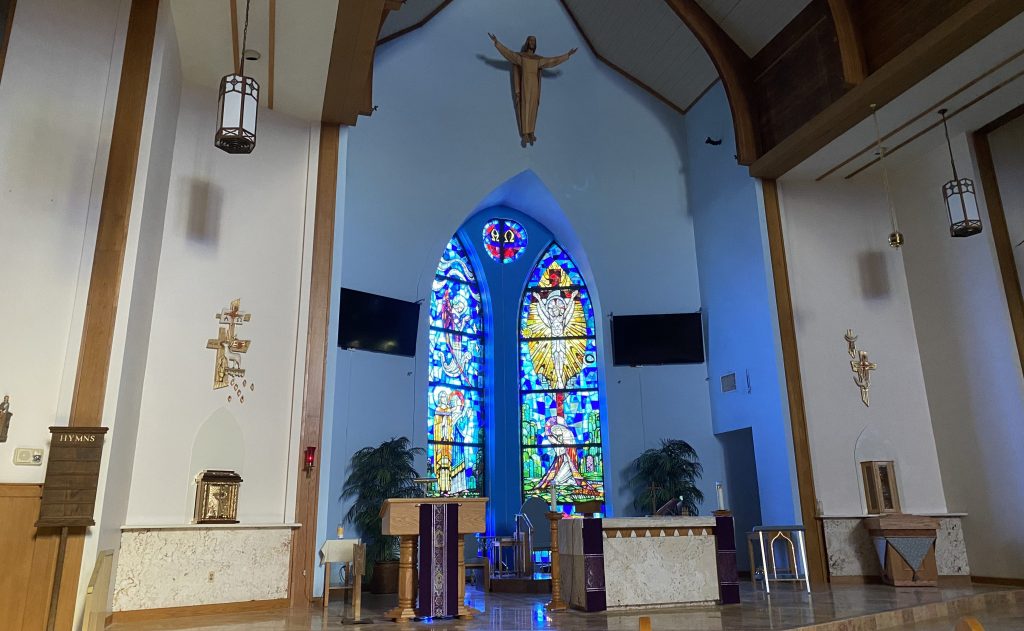
Photo: Some quiet time in our sanctuary meditating, praying, and contemplating on God’s word.

Link for the Mass readings for Friday, March 28, 2025

Come away and rest for a while.

After hearing the accounts of the missionary trip, Jesus invited his apostles to step away from the crowds “to a deserted place [to] rest awhile” (Mk 6:31). Jesus is showing the apostles the importance of balance. There are times to serve and times to recharge, to reconnect, and spend some quiet and reflective time with him. Jesus is our model, our guide and teacher, but he is at the same time more than that. Jesus is the source and sustenance of who we are as a living craving, hunger, and desire to be one with God and each another. As the deer longs to refresh itself from the waters of a running stream, we long to be nourished by the living water, Jesus, and this is true for the atheist as well as the mystic alike, for each and every one of us, whether we are aware of this reality or not.

Our thirst for communion can be stifled because it is so easy to be caught up in our day to day schedule, life’s demands, and falling into survival mode. Even when all is good and we are serving well, as we see with the apostles return, there is a need for rest.  There is so much that needs to be done, and at the same time, there are so many distractions and diversions that vie for our energy and attention.

In today’s Gospel, the intent of Jesus is to escape with his apostles for some rest and renewal, to decompress with them, and hear about their experiences of ministry. They get in a boat to do just that, yet the crowd that they thought they had left behind has arrived on the other side before they did! This is a sign that the preaching, exorcisms, and healing work the apostles participated in was already bearing fruit. Just as people were flocking to Jesus, so word was getting out about his disciples! “When Jesus disembarked and saw the vast crowd, his heart was moved with pity for them, for they were like sheep without a shepherd; and he began to teach them many things” (Mk 6:34).

So much for being able to “rest away for awhile”! Or maybe the boat ride across was that moment of rest. The moment to take a breath and reconnect with Jesus. As Jesus and the apostles were coming closer to shore, they could have diverted their course to avoid them. Instead, Jesus, was moved with pity or compassion and moved to teach them. A key for a more balanced life is to spend time daily with Jesus to know his will and follow his lead.

I have just experienced just such a moment as I needed to step back a bit for a few days. Many wonderful things are happening here at Holy Cross, but my body was feeling a bit taxed, so I took the time to reset, to rest awhile with Jesus and Mary. I also recommitted to setting key non-negotiable times to set aside for prayer. As St. Francis de Sales taught: “Every one of us needs half an hour of prayer a day, except when we are busy — then we need an hour.” I notice the difference when I do not give myself that hour each day.

When we intentionally put God first and make the time each day to spend with him, often there is a serendipitous alignment that we experience in our day, that we did not think possible at the outset. This often happens when we consciously make time for stillness, for meditation and prayer, even and especially, during the moment when we may feel we just don’t have the time.

As you ease into Saturday, my invitation is to give yourself a fifteen minute retreat. Read these words from Jesus slowly and reflectively: “Come away by yourselves to a deserted place and rest awhile” (Mark 6:31). Find a quiet place where you feel comfortable, take a few deep, slow breaths, close your eyes, then step into and sit in the boat with Jesus and his disciples.

Breathe some more, feel the breeze of the Sea of Galilee, feel the warmth of the sun on your face, and experience the rhythm of the boat on the water. Does Jesus remain silent and rest with you? Does he begin to teach, and if so, what does he share? Do any questions arise and if so what do you ask, and what is his answer? Allow yourself to be still, just you and Jesus for the time you have set aside. When the boat comes to shore, go forth into the day renewed and blessed by Jesus with a heart and mind able to be moved with compassion to follow God’s will in how best to serve him today and into the coming week.

—————————————————————-

Photo: Spending some time to breathe, pray, and be still with Jesus and Mary!

Link for the Mass readings for Saturday, February 8, 2025

Allow the words of the Our Father to enkindle the fire of his love into your heart.

There is a creative power to God’s word. “In the beginning was the Word, and the Word was with God, and the Word was God” (John 1:1). God’s word is alive and present to all of us. And as Isaiah conveys in today’s first reading, God’s word “shall not return to me void, but shall do my will, achieving the end for which I sent it” (Isaiah 55:11).

This happened most profoundly in time when “the Word became flesh and dwelt among us” (John 1:14). God the Father through the overshadowing of the Holy Spirit and the ascent of Mary’s will, sent his Son to be human while remaining fully divine. Jesus lived, suffered, died, conquered death, rose again, and ascended into heaven bringing our humanity through his humanity back to the Father. God’s Word achieved the end for which he was sent, that salvation of the world!

God’s word, the Holy Spirit, and Jesus are still alive and active today. The gift of the Bible is that the story of salvation is there for us to experience. The Bible is not just a compilation of dead letters on a series of pages to be gathering dust. These words are most alive when they are proclaimed at Mass and read, prayed and meditated upon within our own time of prayer, and put into action in our daily lives.

God still speaks to us today through his living word when we make the time to listen and hear him speak in the silence of our hearts. In today’s Gospel, Jesus teaches us how to pray by sharing the words of the Our Father or the Lord’s Prayer. This is the same prayer that he taught his Apostles and has been prayed ever since then each and every day over the past two thousand years.

If you have been wanting to learn to pray and meditate with the Bible and haven’t been sure where to begin, the Our Father is a great place to start. Settle into a quiet place, take some deep breathes, and let the words come off the page and land on your lips. This can be silently or aloud. Read or recite slowly God’s word given to us by the Word, the Son of God, Jesus.

If you know these words well, resist the temptation to fly through them without a second thought. Say each word slowly, allow the mystery of God’s love to enfold you, allow Our Father to embrace you. The same Father who is in heaven, whose name is hallowed, holy. The God and creator of all that exists who is so far beyond our comprehension, while at the same time closer to us than we are to ourselves.

Contemplate on the wonderful truth that he wants us to be a part of his kingdom now and forever. God wants his will and our will to align as one so that we can be collaborators with him in creation so that we can put into practice what God guides us to on earth as it is in heaven. For heaven is the intimate communion with our loving God and Father that he seeks, and we have been created for.

We can then ask him for our daily bread, that which we need each day, most of all his Word among us made present again on Catholic altars throughout the world. Jesus, the Bread of Life, who we can consume and become transformed.

One of the most powerful transformations comes when we are forgiven by God who never tires of forgiving us. May we not only never tire of asking for forgiveness but also be willing to forgive as we have been forgiven. Sin, which causes separation and death from God and each other, is healed and we are redeemed by God’s forgiveness. As we are forgiven, we then are to forgive others and so God’s love is made manifest on earth as it is in heaven.

And as we prepare for each day, may we seek God’s guidance so that we may know his will and resist the temptations, distractions, and diversions of the enemy. God does not tempt us and he can help us to resist temptation when we follow his light. We will then not only avoid evil, but in the name of Jesus cast it out.

I invite you to pray with the Our Father in a similar way allowing Jesus to speak to you through your mind and heart as you meditate on each word. You may find that you want to stay with one particular word or phrase that calls to you and not even finish the prayer. Allow the Holy Spirit to guide you where he wills. May you feel his peace, love, and joy arise from within you as you do so, and enjoy!


Photo: The tree tops reflecting the rays of the setting sun. May we do the same as we receive and reflect the light of the Son from our experience of Jesus in prayer!

Link for the Mass readings for Tuesday, February 19, 2024

Come away and rest for a bit.

After hearing the accounts of the missionary trip, Jesus invited his apostles to step away from the crowds “to a deserted place [to] rest awhile” (Mk 6:31). Jesus is showing the apostles the importance of balance. There are times to serve and times to recharge, to reconnect, and spend some quiet and reflective time with him. Jesus is our model, our guide and teacher, but he is at the same time more than that. Jesus is the source and sustenance of who we are as a living craving, hunger, and desire to be one with God and each another. As the deer longs to refresh itself from the waters of a running stream, we long to be nourished by the living water, the love and communion with Jesus, and this is true for the atheist as well as the mystic alike, for each and every one of us, whether we are aware of this reality or not.

Our thirst for communion can be stifled because it is so easy to be caught up in our day-to-day schedule, life’s demands, and even survival. There is so much that needs to be done, and at the same time, there are so many distractions and diversions that vie for our energy and attention.

In today’s Gospel, the intent of Jesus is to escape with his apostles for some rest and renewal. They get in a boat to do just that, yet the crowd that they thought they had left behind has arrived on the other side before they did! “When Jesus disembarked and saw the vast crowd, his heart was moved with pity for them, for they were like sheep without a shepherd; and he began to teach them many things” (Mk 6:34). So much for being able to “rest away for awhile”! Or maybe the boat ride across was that moment of rest.

Choosing five to ten minutes to be still, to rest in the Lord, may not seem like much but can make a huge difference. Our challenge is to be able to discern and develop a healthy balance that becomes fruitful through aligning our will with Jesus. When we intentionally put God first and make the time each day to spend with him, often there is a serendipitous alignment that we experience in our day, that we did not think possible at the outset. This often happens when we consciously make time for stillness, for meditation, contemplation, and prayer, even and especially, during those moments when we may feel we just don’t have the time. As St. Francis de Sales taught, no matter what station we are in life it is good to pray at least thirty minutes a day, and for those who are busy, sixty.

If you haven’t practiced time sitting still and silent, that may be too much to ask in the beginning. It is better to start with small increments of time and be consistent.

I invite you to begin with today’s Gospel. Read it slowly and reflectively for a few minutes. Then step into and sit in the boat with Jesus and his disciples. Breathe in deep, let your head fall back to feel the breeze of the Sea of Galilee, feel the warmth of the sun on your face, and experience the rhythm of the boat on the water. Does Jesus remain silent and rest with you? Does he begin to teach, what does he share? In your time of quiet, do you have questions for him, what do you ask, and what is his answer?

Allow yourself to leave the desire for doing at the shore and rest in just being. Enter into the experience, and when the boat comes to shore, go forth into the day renewed and blessed by Jesus so to go forward with a heart and mind able to be moved with compassion to serve others. From such periods of renewal, breathing, resting, receiving, and abiding in God’s love, even for short periods, we can better embrace interruptions in our days with the heart and compassion of Jesus, and see them instead as opportunities of encounter and service.

—————————————————————-

Photo: Enjoying some quiet time with a Rosary walk in Egret Landing, Jupiter, FL as I prayed in the new year.

Link for the Mass readings for Saturday, February 3, 2024