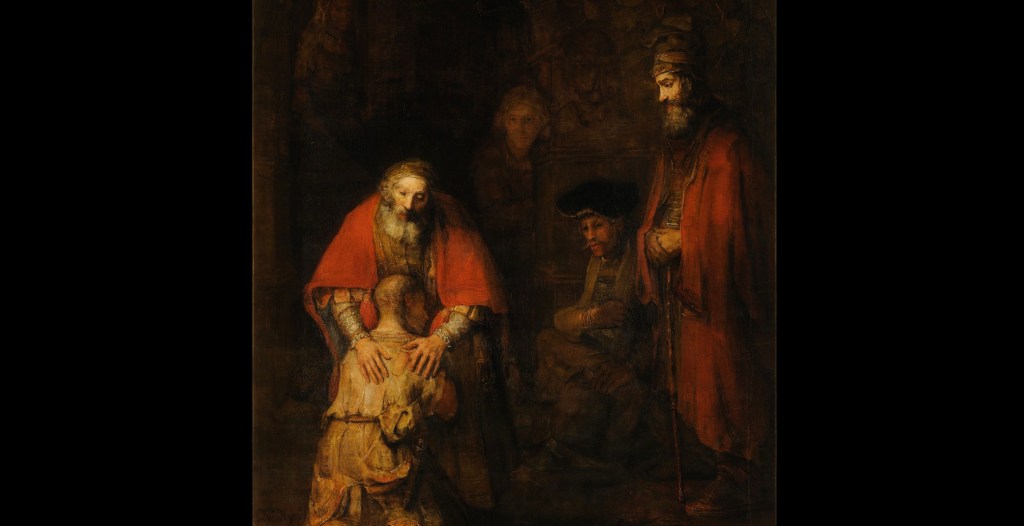
Faith in Jesus “lights up our journey.”

In the Parable of the Dishonest Steward, the steward who is on the block to lose his job for squandering his lord’s property comes up with a plan to settle his lord’s accounts. He lessened the amount owed with the intent to gain some support from those indebted to his master. He could have been giving up his own profits in settling these debts, much like a real estate agent or car salesman today would forego their commission to make a sale. There is no evidence though within the account to support this premise. 

Pushed up against the wall, this dishonest steward is not even repentant. He does a quick assessment, realizes he is not strong enough to work for a wage nor is he willing to beg, he makes the judgment that his best course of action to save himself is to cheat “his master to gain favor with his debtors” (Gadenz, 282). He hopes that this gesture will at least grant his some good well when is seeking a place to stay.

Although continuing his dishonest ways, his master recognizes his prudence or cleverness He is commended by the lord because he had utilized foresight, which was a better quality to develop than the original squandering that landed him in this predicament in the first place.

Jesus commenting on this parable also acknowledged those who were clever in worldly ways. Being shrewd and having the foresight to navigate potential conflicts to acquire the desired goal is admirable. Jesus is not holding up the dishonesty of the steward as a model, but his prudence. We see again a common feature in Jesus’ parables, as well as rabbis of the time, is to build from the lesser to the greater.

Jesus is pointing out that in the ways of the world, many like the dishonest steward can act with prudence and so the “children of the light” ought to act with prudence as well. “The parable thus instructs disciples to take initiative and plan wisely  so as to enter God’s kingdom” (Gadenz, 282). Our creative energy and cleverness ought to also expended to help in evangelization. As we spread the Gospel, we do so, not in a one size fits all approach. We are to be present and adjust to each person’s uniqueness.

Many in the Church have gone before us aware of the needs of those people in their midst and coming up with creative ways to minister to them. Often they too, utilized the model of the steward’s prudence in today’s Gospel, giving up their opportunity for immediate gain to provide for the needs of others.

St. Francis of Assisi, lived his youth, not as a faithful steward, but as a pampered troubadour, part of the social elite. Then as his transformation began to take hold, he began to sell off his father’s cloth and gave it to the poor. He would ultimately renounce his family name as well as all material possessions, and give all to follow Jesus.

St. Mother Teresa, left her home at eighteen, never to see her family again to become a missionary in India with the Loretto Sisters. She became a school teacher in Calcutta, by no means squandering what the Lord gave her, but she too was called to go deeper. She left the convent to serve the poorest of the poor in the streets, those in the most deplorable of conditions.

Jesus has a unique call for each of us. We too are called to be faithful, prudent stewards, to be holy, and to be saints. What needs do we see in our midst? In what ways can we meet those needs? Each of us is invited into a deeper embrace of the Gospel. “We experience faith and encounter God in our own particular time in history, and faith lights up our journey through time. Faith must be passed on in every age” (Pope Francis, 20). May we allow ourselves to ponder the unique way that Jesus is calling us to serve.


Photo: We like Jesus, Mary, and the Saints are to be a light shining in the darkness.

Gadenz, Pablo T. The Gospel of Luke. Grand Rapids, MI: Baker Academic, 2018.

Walking With Pope Francis: Thirty Days with the Encyclical The Light of Faith. New London, CT., Twenty Third Publications, 2013

Link for the Mass readings for Friday, November 7, 2025

May we receive the word of God and nurture it so that it may grow within us.

A person can go on a walk and hear the beautiful sound of a bird and think to themselves, that is a very nice sound, enjoy it, and keep walking on. Another person may hear the bird song, actually stop, and listen for a time and then move on. Still, another person may not only hear the sound, stop, and listen, but also look in the tree to see what type of bird is making that sound, identify it as a cardinal and then walk on.

Each person experienced the bird on different levels. Even the one who stopped to appreciate its song and take the time to identify it as a cardinal, still limited himself from experiencing the deeper wonder and uniqueness of this particular cardinal. God knows though. He knows this bird intimately, as he does with the entirety of his creation, including knowing each of us better than we know ourselves.

We may hear or read Jesus begin with these words of his parable: “A sower went out to sow his seed” (Luke 8:5). Our minds may go immediately to say to ourselves, “Oh, I know this parable well,” identify it like the person identifying the cardinal, and may even appreciate the parable, but then tune out because we have heard it before or many times before. We too would then miss the greater depth and wonder of what God wants to share with us.

Jesus helps his disciples to understand the parable when he tells them, “The seed is the word of God,” and then identifies how different people hear, and then act or don’t act on the word they have received. Those on the path of hard, traveled ground, the word is stolen by the devil; those representing rocky ground which has some soil “receive the word with joy” but since there is no depth in which to root, “they believe for only a time and fall away”; and the seed that fell among thorns was choked by the anxieties, riches, and pleasures of life. The final resting place was the best, the “rich soil” symbolizing “those who embrace the word with a generous and good heart, and bear fruit through perseverance” (See Luke 8:4-15).

God knows each of us, knows our deepest and authentic desires, our deepest wounds, our sins, and our greatest promise. He loves us, wants the best for us, and so shares his seed, his word, with us in many ways.

Are we willing to open our hearts and minds to receiving the wonder of Jesus’ guiding and leading, are we willing to be patient to not only receive and savor his word, but also put it into practice? Are we willing to place his word in a place of prominence within our minds and hearts so that the many diversions, anxieties, stresses, and strains don’t choke its life? Are we willing to be persistent and daily call to mind this gift God has given to us each day and allow it to flourish and grow in our lives?

More than anything else, the most important practice that we can engage in each day is prayer. Not just saying prayerful words and moving on, but receiving God’s word as he wants to give it and allow it to germinate in our hearts and minds so we may be transformed. The enemy will seek to distract, divert, and dissuade us from this gift of spending time with God to meditate, pray, and rest with him.

We need to resist these temptations, renounce them, pull them out as we would weeds and repeat the word or phrase we have received from the Bible or meditate upon a simple phrase like,  “Jesus, I Trust in You”. Give this phrase all the room it needs to breathe and grow so that we may experience the greater depth and wonder from it that God wants to share. Each day we can gain something new.

Jesus invites us in the parable of the sower to hear his word, then we can receive, rest, and abide in it. God’s word is to be our foundation such that all that we think, speak, and do is directed from God’s guidance and standard. Even when tempted, while undergoing trials and tribulations, we will not be led astray, we will not doubt or be choked, when we anchor our trust in Jesus and his love for us. We will persevere through challenging times, as well as be grateful in tranquil times.

More than just words, our prayers are to be directed to a person, Jesus, his Father and/or the Holy Spirit. Doing so will help us to remain connected to the source of our lives. We will not only trust Jesus more, but we will also know him more intimately, and continue to be transformed by his love so that we too will bear abundant fruit from the seed God has planted in us.


Photo: Leaves beginning to change here in CT. Enjoying and pondering on an afternoon walk.

Link for the Mass readings for Saturday, September 20, 2025

Trusting in Jesus will help us to heal and prepare fertile soil to receive God’s Word.

The root of the message offered in today’s Gospel is what is foundational to the beginning and continuing as a disciple of Jesus. This being the disposition of our hearts. Are we closed to receiving the message of the Gospel, or are we open to embrace the invitation Jesus shares with us to become more active in living out our faith in our everyday lives?

The exchange of Jesus with his disciples in today’s reading from Matthew comes after his sharing of the Parable of the Sower (Mt 13:1-9). In this parable, Jesus offers scenarios regarding the conditions of seeds sown. Some fell on a hardened path, some on rocky ground, some fell among thorns, and some fell on the rich soil. The seeds on the hardened path could not even germinate. Those in rocky ground and among thorns germinated and began to even sprout but would not come to full maturity. The seed that was sown in rich soil germinated, sprouted, matured, and bore fruit.

As disciples, we are meant to bear fruit and that means we need to prepare ourselves so that we will have rich soil. The beginning step is to have open hearts and minds. If we have a desire to pray, the hardened soil has given way somewhat. The seed has penetrated, died and has begun to grow. God is the originator of our prayer. The desire to spend time in prayer is good news. The devil has not stolen that from us. Now if we do not follow through on the inspiration of nor follow the nudging of the Holy Spirit, means we have some tilling to do. We need to remove the rocks of resistance, distraction, and diversion so that we can get deeper.

Daily coming to a place that we have created and set aside for ourselves to breathe and be still will help us to begin the work of facing those internal resistances and diversions. We can begin to see where are hearts and minds may have been hardened. By breathing and slowing down, we get in touch with our body and may be surprised by how tense we are. With just a few breathes we may notice that our shoulders come to a more peaceful place of rest. Our neck and our hips can begin to let go. Once we have prepared the soil, the next preparation is the weeding. Among good soil grows what has been planted, the seeds of the enemy as well as the seeds of God.

As we continue to return each day and allow God to happen, to acknowledge his presence and closeness, we can begin to then allow his light to reveal to us those thorns and other weeds that seek to choke the growth that has begun. Anxieties, worries, frustration, and reactions all choke out the peace, faith, confidence, and love that God seeks to sow and grow within us. Being diligent and disciplined in showing up, allows us to begin to feel safe in the place we have set aside. In encountering God each day, we begin to know him. In this place of stability, we come to know that God is our refuge and strength, and we begin to feel safe. From this place of safety, we can begin to face and breathe into where we notice our bodies hold anxiety, fear, and stress.

God helps us to tend the gardens of our souls patiently and gently. Thoughts of condemnation and shame are the weeds of the enemy that seek to choke out our healing, growth, and spiritual maturity. The gentle light of Jesus is that light that brings warmth and safety. The conviction he brings is the light that helps us to identify that which needs to be weeded and pruned so that our soil becomes richer and our growth can continue unimpeded. In time and with disciplined attention, daily coming to our places of quiet with the Lord, spending time in his word, we will be forgiven, healed, and freed from that which seeks to stunt our growth and we will continue to mature and begin to bear good fruit, the gifts and charisms that the Holy Spirit has sown within our good soil.

Whatever the state of the soil of our soul that we bring to this reading whether it be a hardened and worn path, rocky ground, weeds and thorns, know that there is some soil to work with. Like any garden that is to grow, mature plants that bear good fruit will take time, energy, and work. The most difficult state and the one Jesus addressed in today’s Gospel is the heart of indifference that is closed, the seed falling on the well-trod path, that is hard and packed so nothing gets through. For these people, “they look but do not see and hear but do not listen or understand” (Mt 13:13). Yet, even this soil can be turned and tilled. Even the hardest heart can be softened if one is willing to turn to Jesus.

Jesus, in his explanation of why he spoke in parables, returned to the inaugural message of his ministry: “This is the time of fulfillment. The kingdom of heaven is at hand. Repent and believe in the Gospel” (Mk 1:15). Before we may be willing to repent, we may need to first acknowledge the places in our hearts and minds that are closed, those areas that are hardened from real or perceived past pain or trauma, those situations in which we chose to shut down and separate ourselves from God and others.

When we allow Jesus in, we can experience his healing touch. When we take the risk to accept his help, we will receive his forgiveness and healing. When we trust in Jesus, are willing to take his hand, follow his lead, and learn from our mistakes, turn away from our sins, and return to him for healing and confession, our hearts will soften and our minds will open.

Jesus wants to help us to turn over the rocks we have been hiding our pain under so that we can experience those deeper wounds that we have kept buried. This will only happen when we trust Jesus and feel safe. Spending quiet time each day, surrendering and being docile to the Holy Spirit, helps us to do just that. In time, we will feel safer and more confident to turn over those stones, pull up the weeds, and begin to till the fertile soil underneath. Through experiencing our pain, our emotions, and facing our fears, we help to prepare the fertile soil, in which the seed of God can thrive and in which we will mature to bear good fruit the will last.


Photo: Enjoying the fruit of this tree in bloom on my walk after morning prayer at University of St. Mary of the Lake.

Link for the Mass readings for Thursday, July 23, 2025

A little awareness and an act of kindness can make a huge difference.

In today’s Gospel from Luke, Jesus compares the Kingdom of God to a mustard seed and yeast. Each of these elements is not only small but they are tiny. Though with the proper environment, resources of sustenance, water, and sunlight, this seed will germinate, sprout, and grow into a large bush. Yeast, a single-celled organism, is the catalyst for assisting dough to rise, strengthen, and ferment, thus providing a more appealing and tasty bread.

Jesus offered these simple examples from everyday agrarian life that his listeners understood from experience. If we have planted seeds or made our own homemade bread, we too are in a better position to relate to these two small parables as well.

Throughout the Gospels, Jesus lives out the parables by engaging person to person. Jesus’ interactions happened concretely, through walking along the road and breaking of bread together, sharing stories, teaching, healing, and exorcising demons with his touch, and he still does so today. The smallest, genuine act of kindness or love can seem insignificant and may even go unnoticed by many, but it is significant to the individual who is on the receiving end and can reveal dramatic results over time.

There is a story that expresses this point called, “A Simple Gesture” from the story collection, Chicken Soup for the Soul. The short tale describes how one day a boy named Mark was walking home from school and came upon another boy who had tripped and dropped all of his books and many other items. Mark offered to help carry some of the load of the other boy, who, as they walked home, found out was named Bill. They talked about common interests and when they approached Bill’s home, Bill invited Mark in for a Coke and to watch some T.V. They spent the afternoon together, then interacted on occasion for the rest of their time in middle school and into their high school years.

Three weeks before their graduation, Bill asked Mark if they could talk. Bill shared that the reason that he had been carrying all of that stuff home on the day they had first met was because he didn’t want to leave a mess for anyone else to clean up. Bill had planned to commit suicide that evening. Bill continued to share that, after their original encounter and afternoon together, he realized that if he had killed himself that day he would have missed more opportunities to talk and laugh. Bill finished the conversation by saying, “So you see, Mark, when you picked up my books that day, you did a lot more. You saved my life” (Canfield and Hansen, 35-36).

Personal encounters were how Jesus helped others to realize that the Kingdom of God was at hand. Just as in the example of how Mark, in making the simple effort to help Bill pick up his personal items, helped to shift the momentum away from a potential suicide attempt. This action shows how Jesus can continue to work through us today.

Like a modern-day Good Samaritan parable, “A Simple Gesture”, helps us to see that when we are aware of and engage in opportunities to help and act with genuine care, no matter how small, we can have a dramatic effect on another’s life. Unfortunately, the opposite is also true.

Many people have a lot on their plate, we may not be aware of even half of what they are going through. That is why we need to be attentive and open to the move of the Holy Spirit in our lives. He will lead us out beyond ourselves so that we notice others. In doing so, we can become like the mustard seed, or the yeast, in another’s life. Through a smile, a hello, a bent ear to listen, we can make a connection and then offer a simple act of kindness. What may appear to be minuscule or mundane at the moment, may, in fact, be life-changing and transforming for a lifetime.


Photo: My seminarian brothers helped me to get my nose out of the books to enjoy a Marlins game back in April of ’23.

Canfield, Jack, and Mark Victor Hansen. Chicken Soup for the Soul: 101 Stories to Open the Heart and Rekindle the Spirit. Deerfield Beach, FL: Health Communications, 1993.

Link for the Mass readings for Tuesday, October 29, 2024

Stillness counters the threat of thorns.

“Some seed fell among thorns, and the thorns grew up and choked it” (Mt 13:7).

God wants all of us to be in relationship with him. His love for us in unconditional. He is willing to risk that we will say, “No” to his invitation of relationship rather than force us to love him, which is not love at all. God also wants the best for us, he knows the deepest desires of our heart beyond our even knowing for he sees the fullness of time, while we only see and experience a small part.

Jesus came to share the seed of his Father’s word through the teachings, healings, and exorcisms that he offered. We are recipients of each through the deposit of faith passed on generation after generation. One area that prevents us from allowing his seeds to germinate and bear fruit in our lives is when we allow the diversions, distractions, anxieties and worries to fill our mind such that they choke out the good that Jesus seeks to have develop within us.

On a physiological level, what we pay attention to fires neurons in our brains that form neural pathways. Each time we are attentive a new pathway is formed. After time, this is how our habits form and why after we do something consistently and are disciplined, the act is easier to do. It is also why a habit is hard to change in the beginning because we need to rewire those pathways.

To prevent the growth of our spiritual life from being choked out we need to practice each day stillness and focusing on God’s word. As we consistently sit in the same place each day, spend some time breathing and then focusing on reading a passage of scripture, praying, and/or pondering what God may be sharing with us, for that time we do so, we are to focus on Jesus alone. As thoughts and diversions to the contrary arise, we just bring ourselves back to Jesus and God’s word.

In time, with consistent, daily practice, we will begin to feel safe, we will experience God’s love and presence, his insights and guidance, we will heal, we will rewire our neural pathways such that it becomes easier to pray than not to pray. The thorns lose their sting, the distractions, temptations, and diversions lose their power as we begin to recognize God’s voice and follow his guidance.

Turning around unhealthy or sinful habits is not easy. When we decide to make time to spend time with God each day, while together we are attentive to only to him for that time we set aside and return to him as soon as we notice we are distracted, his seed with grow within us. Even when we feel like nothing is happening, God is happening, and we are growing and maturing.


Photo: Rooted and abiding in God’s love, we can grow free of that which seeks to choke us. Rosary walk Vero Beach, FL.

Link for the Mass readings for Wednesday, July 24, 2024