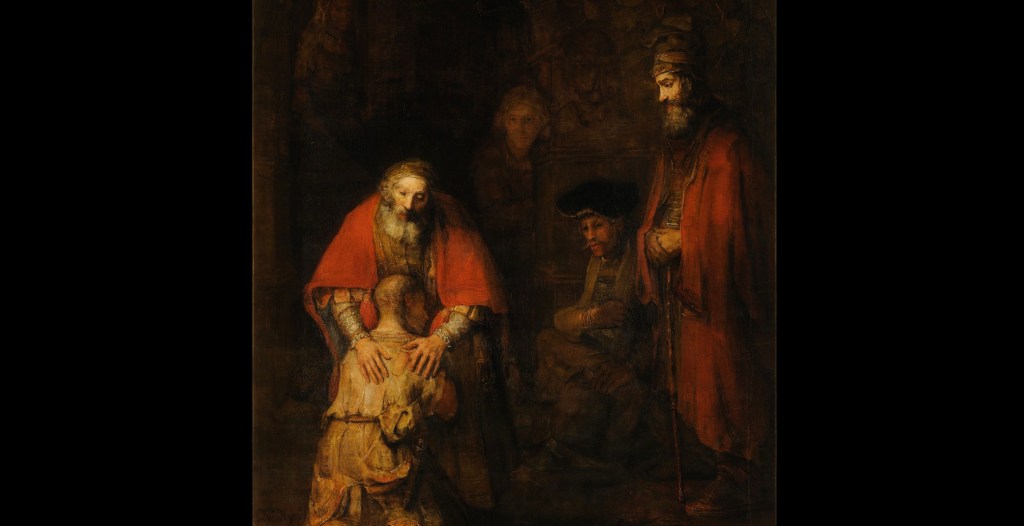
May we not reject but welcome the light of Jesus.

“Whoever listens to you listens to me. Whoever rejects you rejects me. And whoever rejects me rejects the one who sent me” (Lk 10:16).

On the surface, today’s Gospel as well as the first reading and the psalm may sound like a Debbie Downer of a message, but it is actually the road map, the passage that will lead us from the darkness of slavery steeped in our own sin to the light of truth and freedom found in dedicating our life to Christ. Jesus is continuing to prepare the 72 that are about to go out to proclaim his message of repentance. This echoes Mark’s recording of Jesus’ mission statement: “This is the time of fulfillment. The kingdom of God is at hand. Repent, and believe in the gospel” (Mk 1:15).

A sin is any actively contemplated thought, word, or action that we knowingly know goes against the will of God and we freely choose to act upon it anyway. This is why many of us prefer the darkness to the light because we do not have to see and name our sins. We hold on to apparent goods or substitutes that we believe will make us happy and fulfill us, otherwise we would not hold on to them. Yet, they are empty promises. After experiencing the lack of satisfaction, once the emotion or passion of the moment or experience wanes, we either seek more to fill the void or hopefully, recognize the false lure and begin to seek something else to fill the void.

If we choose to seek more or seek within the material and world of finite creation apart from God, we continue along a slippery slope that may lead to our ensnarement or addiction. When we instead heed Jesus’ call and repent, allow the light and truth of Jesus into our darkness, trust that he truly wills our good, we can begin to see our sin, name it, repent from it, let it go, be forgiven, be healed, and fulfilled by receiving the true good, the love that God seeks to give and deepen our relationship with him for whom we have been created.

As servants of the Lord, we are invited to repent, to realign ourselves and our lives in such a way that we are saying yes to building a relationship with God. This is a daily, moment by moment, lifetime task of examining our conscience, asking God to reveal to us our sins, and willingness to embrace the humility to see and confess. This process is not just for ourselves.

Having experienced God’s love and forgiveness, we are called to bring the light of truth we have received to those we meet. This does not mean we are perfect. Through the awareness and confession of our sins, we are incrementally more open to receiving more of the love and light of Jesus within us than before, such that he can shine his light through us into another’s darkness and gently guide them to come out of the shadows.

We need to resist though the temptation to go forth and wag our finger of judgment. For then we are only a darker storm cloud approaching those needing a healing balm. This approach can either cause people to slip deeper into their own shell or come out fighting, seeking to dispel us from their midst. Jesus sends us out like the 72 to encounter one another with understanding, mercy, patience, and love. In the beginning, our light needs to be soft, like the morning dawn, so as not to blind those we seek to offer an invitation.

Jesus, this day and each day going forward, please dwell within us. Help us to be open to those you place near us that we may be present to them with your warmth, welcome, and joy. May we respect each person we encounter and be present, so that they may know that they are not alone, that they, in fact, do exist, that they matter, that they are loved as you love us. May we be like the light of the dawn to help awaken those in the darkness of their pain, suffering, and sin. May we be a lamp unto their feet and a light unto their path, that leads to an encounter and embrace with you; our Truth, our Way, and our Life. Amen.

———————————————————

Image: When we allow the light of Jesus to shine in our hearts and minds, he will lead us to freedom from that which and those who hold us captive.

Link of the Mass readings for Friday, October 3, 2025

As we commit to a deeper relationship with God our relationships with each other will improve.

Accompanying him were the Twelve and some women (Lk 8:1-2).

A simple statement but significant regarding how Jesus again is showing us how to live our lives as his followers, his disciples. Jesus is fully human and fully divine. What he has done and continues to do as the Son of God incarnate is to draw close to us in our humanity, as human beings, so that we can enter into a relationship with him and his Father through the love of the Holy Spirit, thus becoming one with him in his divinity.

From the beginning of his public ministry, throughout his time walking this earth, and continuing on after his resurrection and ascension into heaven, he  invites people to participate in his life and the kingdom of Heaven which is at hand in his very presence. Jesus does so by building relationships. This is how Luke can write the verses that Jesus was accompanied by the Twelve and Mary Magdelene, Joanna, and Susanna. These were real people with whom Jesus developed real and intimate bonds.

Christianity is not a Lone Ranger religion, it is not the survival of the fittest, and Jesus did not teach us to pull ourselves up by our own bootstraps. We are created by God to be in communion, to be in a relationship with him and each other, to experience his love and to love one another. That means we need to ask for help from God and each other when in need and to come to the aid of, accompany, empower, and support one other.

We are invited to welcome, engage with, and make time for each other by exchanging in the stories of our tragedies and our triumphs. Let us resist the temptation of withdrawing into our own bubbles and instead, risk encountering one another. Relationships are not perfect. By putting God first, making a commitment to him and his commandments, and putting them into practice, we can better commit to being there for each other.

When we are growing in our relationship with God, he feeds the deepest core of our being as no other can. Thus fulfilled by his love for us, our insecurities that seek to derail our human relationships will diminish. We can risk being ourselves even when tempted by our fears to be otherwise. As we begin to feel safe in God’s love we can better breathe, trust, keep an open heart and mind, give the benefit of the doubt, and be more understanding, kind, and forgiving, all of which are ingredients for healthier relationships.

Jesus chooses each one of us to accompany him and to forge relationships grounded in mutual respect, where no one is last and where no person is left behind. Our addictions, insecurities, and prejudices only survive when we keep people at a distance. When we allow Jesus to come close, spend time with him and one another, we will see our weaknesses, sins and shortcomings, but also our gifts, possibilities, and promise. Conflicts will arise as we heal and purify, leading to greater intimacy. We will realize that we are not alone, we can acknowledge and reject the lies we have believed, and our relationships will heal and deepen.

————————-

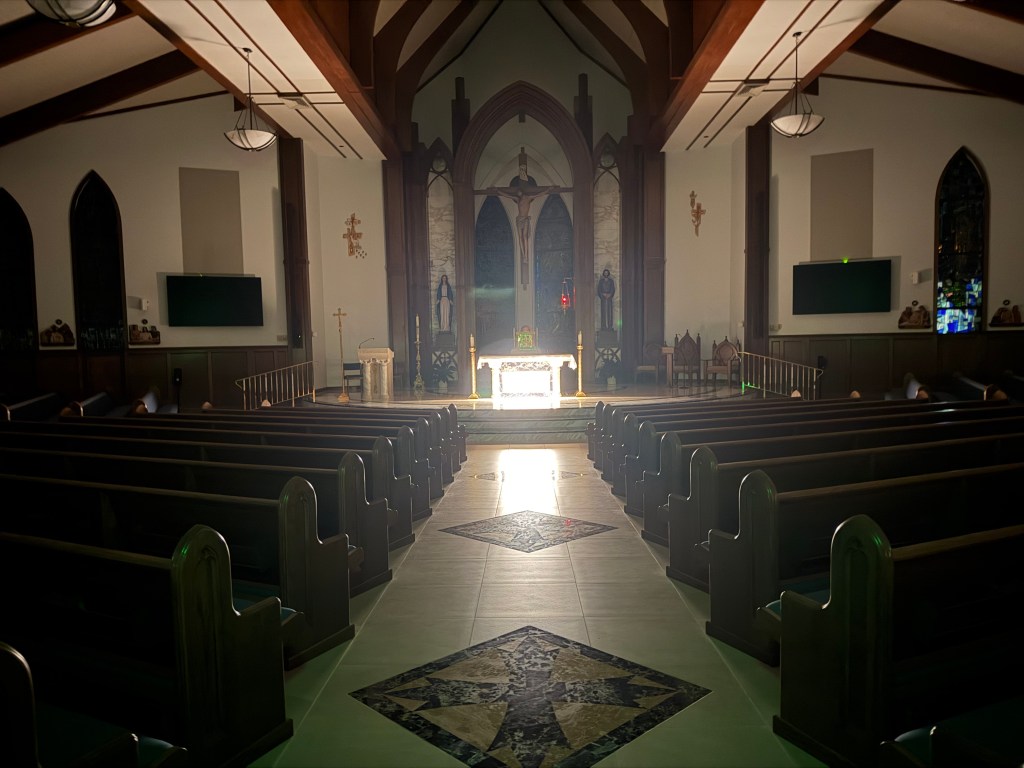
Photo: Quiet time with the Jesus and Mary in the sanctuary of St. Mary Catholic Church, Windsor Locks, CT.

Link for the Mass readings for Friday, September 19, 2025

Instead of pointing out the sins of another, let us confess our own.

Logistically, to our modern minds, the setting of this verse may appear confusing. How could this “sinful” woman be standing behind Jesus such that her tears would fall on his feet? When we think of someone sitting and eating, we imagine them doing so by sitting in a chair. Thus, the feet would be under the chair or toward the front of the person.

During the time period and cultural setting in which Jesus lived, the customary practice when eating was not to sit at all but to recline for the tables were lower. From this position of reclining then it would make sense that she, “stood behind him at his feet weeping and began to bathe his feet with her tears” (Luke 7:38). She then knelt down, dried his feet with her hair, and then anointed Jesus’ feet with the ointment she brought for him.

She did not rationalize, deny, ignore, or come grudgingly nor wait for Jesus to call her out, she came not asking for healing but with true contrition for her sins. Hopefully, we can be like this woman, and come to Jesus with the same open heart to his love so that we too will experience his compassion and have our hearts pierced with our own sorrow for the hurt we have caused others through our sinful actions.

Those quick to point the finger at other’s sins, like Simon, who judged this woman, are less apt to be aware of the depth of their own sin and thus “the one to whom little is forgiven, loves little” (Lk 7:47). We are not forgiven less because God is not willing to forgive but because God will not go against our free will. Hiding, being in denial of, rationalizing, or justifying our sins, curving in upon ourselves or listening to the father of lies keeps us at a distance. If we are unaware or unwilling to bring our sins forward in a contrite manner, we are cutting ourselves off from the healing forgiveness God wants so much to share.

When we are instead like the woman in today’s Gospel account by expressing the same trust and faith, are willing to bear our soul with humility and sorrow, with our deepest and darkest sins, we will not only be forgiven but experience a deeper outpouring of God’s love. The one who confesses truthfully, fully, and contritely is forgiven more, be loved more, and thus will love more.

We may not want to face our sins and as we open our hearts and minds to the purifying fire of the Holy Spirit we will experience the pain of seeing our sins. We will not physically heal without experiencing the pain of broken bones mending or skin growing back together to make a scar. Jesus experienced the excruciating pain of dying on the Cross. There could be no Resurrection until he experienced his death. When we are contrite, confess, and atone for our sins, the truth will set us free, and we will experience God’s freedom more fully and his love and peace more deeply.


Photo: Just as running water keeps a pool clean and fresh, so a daily examination of conscience helps us to remain open to the purifying flow of the Holy Spirit.

Link for the Mass readings for Thursday, September 18, 2025


Let us say only the good things people need to hear.

Gossip is a seductive and enticing poison. Many of us fall for its lure and its intoxication. There are many different reasons we engage in gossip. We may think we feel better about ourselves by putting someone else down, we may be jealous of what another has, envious because we wish someone ill, maybe someone just rubs us the wrong way, or there is a sense of intimacy with another in the commonality of talking about someone else. We may even feel justified to do so when someone has hurt, offended, or wronged us or someone close to us in some way. Even in that instance, we observe Jesus offering a different approach in today’s Gospel.

Jesus said to his disciples: “If your brother sins against you, go and tell him his fault between you and him alone” (Mt 18:15). Jesus is drawing on his Jewish heritage. Leviticus 19:17 warns against holding hate in your heart and instead encourages seeking to reason with your brother. Jesus is redirecting us from disparaging, gossipping, adding fuel to the fire by seeking revenge or stewing in our own hurt, which will build resentment and hate. Instead, he is inviting us to seek reconciliation.

Pope Francis, in his September 9, 2016, General Audience was very clear: “[G]ossip is a ‘terrorist’ who throws a grenade – chatter – in order to destroy,” he added. “Please, fight against division, because it is one of the weapons that the devil uses to destroy the local Church and the universal Church.” Let us refuse to be a weapon of the devil in his plot to divide us with our thoughts or our words, but instead, seek to be a disciple of Jesus by advocating for forgiveness and reconciliation.

St. Paul guides us to let no evil talk pass our lips and say only the good things people need to hear (see Ephesians 4:29). May we meditate upon and pray with this verse as well as put it into practice. With our words, we can cut, wound, and destroy, or we can convict, reconcile, and heal. We can commit to being more discerning with our thoughts and tongue, and choose to lift up and empower one another.

Pope Leo XIV encouraged the youth at Rate Field in Chicago on June 14: “To share that message of hope with one another – in outreach, in service, in looking for ways to make our world a better place – gives true life to all of us, and is a sign of hope for the whole world.” We can share messages of hope and make our world a better place when we discern well in our minds what we are going to say before letting the words fly.

Yes, it is easier to grumble about someone than to approach them in love and work for reconciliation. But this only perpetuates division. It is worth the time and energy to be more intentional with our words. When needing to hold another accountable, it is important to do so directly and with respect. It is also helpful to step out of reactive mode, by taking some breaths, seeking the help of the Holy Spirit, and thinking before we speak. If we just aren’t there yet, maybe we can start with a slow breath and a simple smile. We will all be better for the effort.


Photo: With my seminarian brother, now Dcn. Carlos, on our 30-day silent retreat back in July of 2023. A good fast from words and making friends with silence can help us better discern what to think and speak.

Link for the Mass readings for Wednesday, August 13, 2025

May we realize where we are lost and return to our Father.

In today’s Gospel from Luke we encounter the well known parable of the Prodigal Son. With the parables it is important not to skip over who Jesus is talking to, just so we can dive into the parable itself. Jesus is speaking to tax collectors and sinners. They are drawn to him. The Pharisees and scribes are also present. They are drawn to him also, but are not celebrating but complaining.

With these two groups now focused on Jesus, he shares his parable. Three main characters are present in the telling, the younger son, the father, and the older son. The younger son represents the tax collectors and sinners. They have embraced the sin of Adam and Eve in taking for themselves that which God would have freely given to them. They have squandered their inheritance and separated themselves from the relationship and love of God. Yet, as the son realized, and the tax collectors and sinners are coming to see in Jesus, all that the material life offers is limited, and it does not fully satisfy. They, like the younger son who returned from the “distant country”, are prepared to come home.

The wonderful light and joy of the parable is that: “While he was still a long way off, his father caught sight of him, and was filled with compassion.” The father then did the unthinkable as: “He ran to his son, embraced him and kissed him” (Lk 15:20). The father never held a grudge, but also never gave up or stopped looking for a sign that his son would return. His racing to meet his son showed the outpouring of love and mercy that this father had for his son. This uncharacteristic action would also certainly draw attention to himself, and take the focus away from the wagging of tongues that would have certainly begun regarding his son’s return.

In covering the son with a robe and placing a ring on his finger, the father showed his forgiveness, and restored the bond and covenant that was broken. He still considered him his son. The party that began was a celebration of this fact. As the festivities continue, the parable turns to the older son, and again, the father goes out to meet him. The elder son meets his father with anger. Filled with not only self righteousness, but also revealing that even though he remained with the father he did so with no love or joy. He too was looking for more from the father than the greatest gift he offered him, which was his relationship, his love.

The parable of the Prodigal Son ends with an invitation to all those who had gathered around to listen to Jesus. The tax collectors and sinners were invited to come home to their father, to turn away from their pursuit of the empty and false substitutes of wealth, power, pleasure, and honor. They were invited to be born again from their life of death, to be embraced as the children of God that they were, embrace their relationship, and restore their covenant with him.

The Pharisees and scribes also were invited as was the elder son. They were invited to turn away from judgment and instead celebrate the return of those who were willing to repent, to turn away from sin and to turn back to God and come home. Those who had been lost had now been found. In doing so, they would realize that they too were lost, and separated from the loving relationship of God.

We are loved by our God and Father, more than we can ever mess up. God loves us as his daughters and sons, even when we are lost in our sin. Who do we identify with in this parable? Are we willing to recognize that the God of Jesus Christ has always been watching for us, always reaching out for us, always running out to meet us, welcome us as we are, and urging us to come home to be with him? God is running to meet us and embrace us. Will we run away from him or run to him? God could also be inviting us to come in and celebrate with those who have been lost and now have been found. Will we choose our pride and judgment or will we like Jesus be willing to draw close and be part of the family?


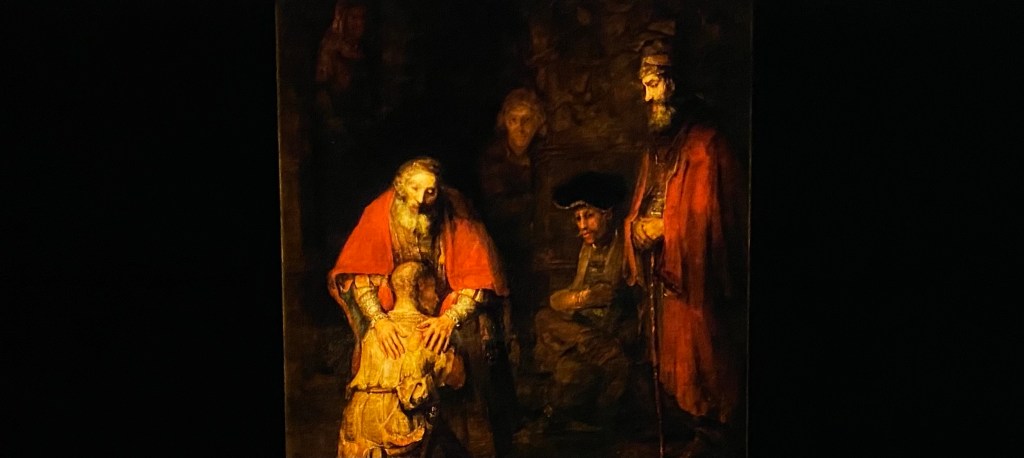
Painting: Rembrandt’s “Return of the Prodigal Son”

The Mass readings for Sunday, March 30, 2025

Lent is a time for reconciliation and to come home to the Father.

Those who edited the lectionary readings for the day chose to present the parable of the lost son and skip the parable of the lost sheep and the lost coin. This trilogy of parables is found in Luke chapter 15. Reading the three together allows us to get a better sense of what Jesus is showing. There is great joy in finding what has been lost, there is great joy in being found! Maybe we can recall something or someone that had been lost and then found, or have we ever experienced a time where we had been lost or separated, or a time when we have experienced a time of reconciliation from someone that we have been estranged from?

I was somewhere in the age range from about six to eight when I came to the realization that I was separated from my parents in the Enfield Mall in Connecticut. I believe it was close to Christmas and we were in the toy store. I must have become distracted by something interesting, and stayed to investigate, while my parents and sister continued on. At some point, I became aware of that fact. It did not take long for the anxiety and fear to rise within me and the tears to well up. I walked through a few isles with no success in finding my family and then I headed toward the entrance that led out into the main mall.

Before continuing on I remembered my mother telling me that if I ever got lost, that I was to stay where I was and she would find me. As I stood indecisively and wondering what to do, a woman noticed my predicament and led me to a stone bench outside the store. We sat and she stayed with me until my parents returned. I am sure the time of separation seemed a lot longer to me than the actual time, and much of the memory is fuzzy, but the anxiety of separation had an impact on me as did the relief and joy of reconciliation!

In my story as well as each of these parables, there is a great joy for that which has been lost and found. How many of us are not even aware of our separation from God or each other? While I was in my own world of material wonder, I was left behind. The son who had squandered every bit of the inheritance he asked of his father before his death, realized not so much that he had really messed up, but that he was in a dire situation, and he made the right decision to come back home. His father never stopped looking for him, he actually saw his son returning “while he was still a long way off” and “filled with compassion. He ran to his son, embraced him and kissed him” (Lk 15:20).

This father is not seeking his son to bow before him and prove his repentance, his loyalty, and allegiance. The father runs to his son without hesitation. This act is no small thing, for an elder to run to a younger family member was unheard of and simply not done. He was breaking this social taboo, most likely to redirect the focus away from his returning son; the one who had betrayed his father, the son who would receive glares and snide remarks. Instead, the father rushed out with a reckless abandonment of love to embrace his son. The jaw-dropping, followed by echoes of gossip surely rose in chorus about the father’s present actions, not his son’s past actions.

God is watching and waiting, seeking opportunities to run to us with compassion and love to welcome us home as the father did in the parable of the prodigal son. God is also like the shepherd who does the absurd in his outpouring act of love, leaving the ninety-nine sheep to go and find the one stray. God seeks each and every one of us just like that shepherd. God is represented by the woman who rejoices over finding one seemingly insignificant coin, for God rejoices in our turning back to him because not one of us is insignificant to him. We are all precious to God, each in our own unique way, and he loves us more than we can ever imagine.

No matter the reason that we have strayed, no matter the temptations and distractions we have fallen for, and/or how far we have wandered away, God loves us more than we can ever mess up. Lent is a season to open our eyes and recognize where we are in our relationship with God and with each other, to recognize the separation our choices have caused, and begin to turn back to God and those we are estranged from within our lives. There is indeed great joy in the healing of relationships and reconciliation! Lent is a time to be found, Lent is a time to come home.

——————————————————————–

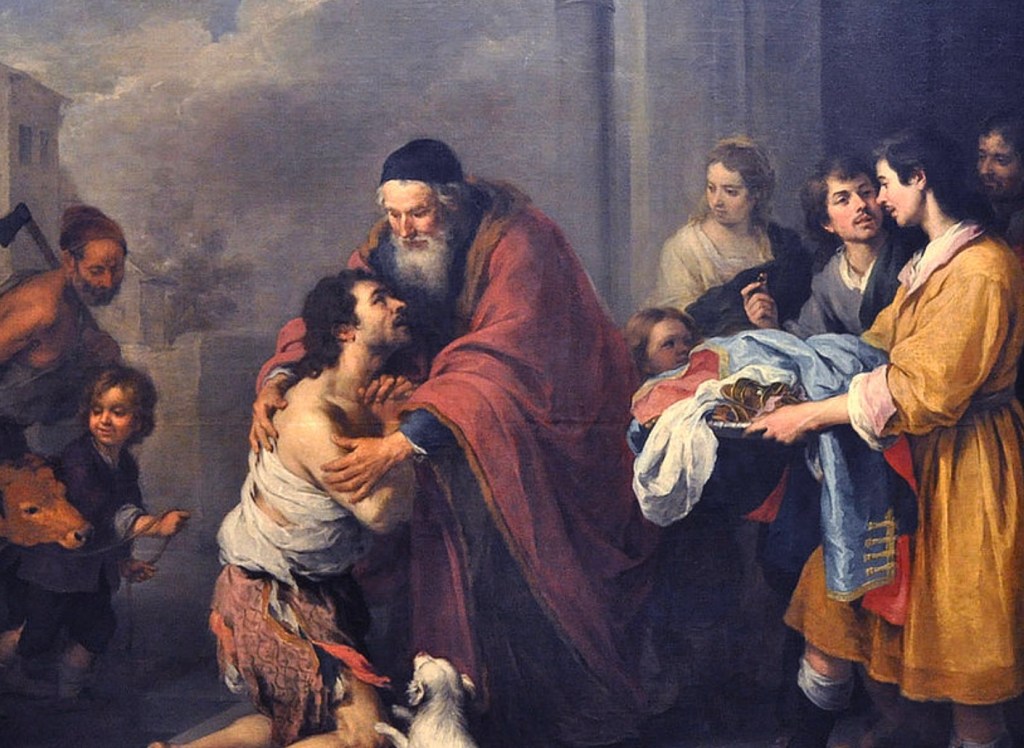
Painting: “The Return of the Prodigal Son” by Esteban Murillo

Link for the Mass readings for Saturday, March 22, 2025

Mary’s Son will forgive us and fill us with joy!

“Mary set out and traveled to the hill country in haste” (Lk 1:39). Why? Because she was filled with joy. She had just experienced an incredible encounter with the angel Gabriel telling her that she was to bear the “holy, Son of God” (Lk 1:35). She also learned that her relative Elizabeth, who had been barren, was six months pregnant. Who better to understand and appreciate what she had gone through than Elizabeth? When we hear good news we want to share it with someone, especially when we believe another will fully appreciate our experience.

Is there a time when you felt overjoyed about something that you felt like you were going to burst and you couldn’t wait to share your experience? A memory may have already started forming in your mind, a smile and glow may already be radiating from your eyes as you re-experience that moment.

One such graced encounter I had was when I was in my early twenties and dealing with a heavy personal issue. I was living in Sharon, Connecticut at the time and had an opportunity to go to the Shrine of Divine Mercy in Stockbridge, Massachusetts to participate in a penance service. I walked up hesitantly to a kind-looking, elderly, polish Marian priest. His name alludes me now, but not his face. He radiated invitation and mercy. After a few stammering words, I let loose and shared what I had been dealing with. When he offered absolution, I felt the burden physically lift, I felt almost like levitating. Then a surge of joy welled up in me that lasted for days.

There is a great gift in sharing a burden with a trusted friend or family member, being heard and supported, and/or receiving absolution from a priest. We need to resist the temptation of turning within ourselves, trusting in the lie that we can handle our conflicts, challenges, and trials all on our own. There is a pearl of great price, God’s healing grace, that is available to us when we share our experiences. In this way, we come to realize concretely that we do not have to go through our pain and suffering alone!

Many of us are struggling with a lot, and sometimes we are not at our best, nor do we make our best decisions. We react instead of act, we get caught in the momentum of behavior that we know is not acceptable, and we continue to slide. The key is not to beat ourselves up and walk around feeling guilty. There are enough people who would be happy to sign up to do that. Instead, we will be better off to choose to practice a healthy sense of guilt, examine our conscience, be mindful, and admit when we have done something inappropriate, sinful, or wrong.

The key to reconciliation is to embrace in humility and  admit our sin, be contrite – sorry for what we have done, not upset, defensive or rationalize away our behavior, and to follow the counsel of James and “confess your sins to one another, and pray for one another so that you may be healed” (James 5:16). Having experienced the joy of forgiveness, while still experiencing the grace of our reconciliation, may we be like Mary who is full of grace, and go in haste to share with others the wonderful gift we have received!


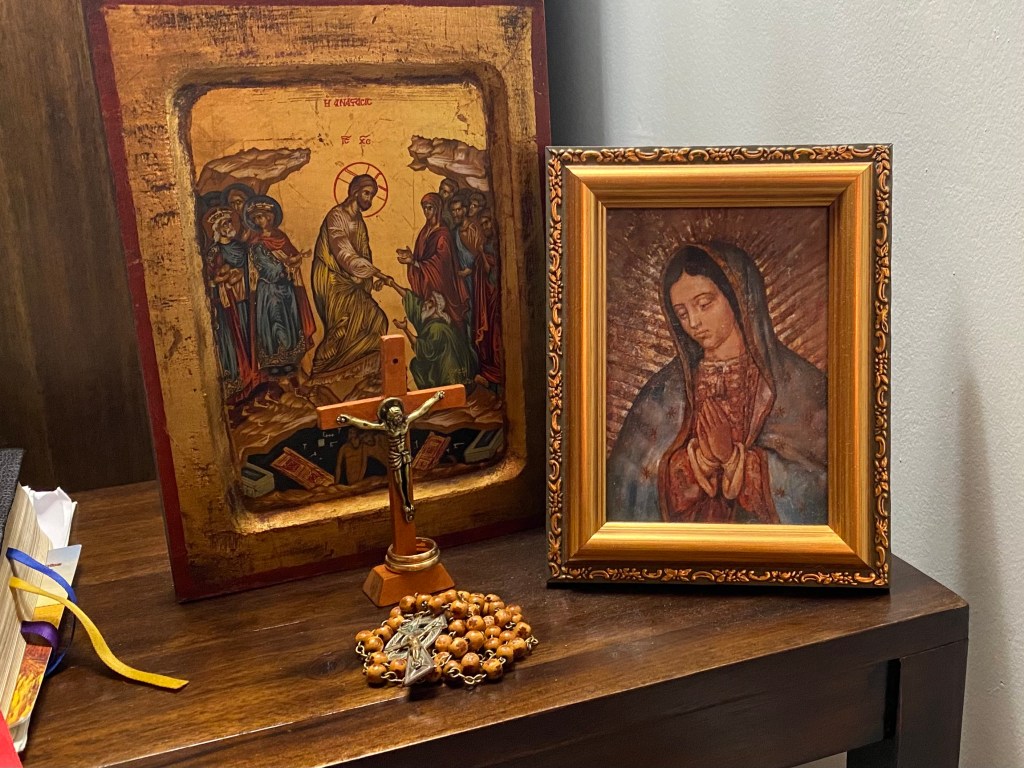
Photo: Our Lady of Guadalupe, pray for us!

Link for the Mass readings for Thursday, December 12, 2024

Are we willing to see Jesus and see others as Jesus sees them?

Yet again, as in the Gospel from yesterday, the crowd gets in the way of someone seeking access to Jesus. The wall of people that has gathered around Jesus does not appear to be overtly keeping Zacchaeus from seeing Jesus. They may be so focused on seeing him themselves that they are not aware. Yet, there is also the strong possibility that the people were aware that this man was trying to get through. They knew Zacchaeus, and many judged him to be the sinner of sinners.

He was the chief tax collector of the area and he was most likely reviled by most in his community. He would have also likely considered to be unclean because he was breaking the commandment of not stealing, which he and the majority of the tax collectors did at the time. Each was the chief tax collector who was then also dealing with the Gentile occupiers. It is likely that each time Zacchaeus attempted to nudge by to get through a gap to get a better look, the individuals may have closed any gap each time such that he could not get through.

Zacchaeus was not thwarted. He ran ahead and climbed a sycamore tree. From his perch he was not only able to see Jesus, but Jesus saw him and said, “Zacchaeus, come down quickly, for today I must stay at your house” (Lk 19:5). Jesus did not see a tax collector or a sinner, he saw a seeker. One who was also willing to humble himself by climbing a tree, much like a child.

Jesus did not see the 99% nor the 1%. Jesus saw and sees people in need of compassion and mercy. He sees those lost that need to be found, those sick in need of healing, those alone who sought to belong. Jesus did not meet Zacchaeus with judgment but with love and compassion, and that made all the difference for this man’s conversion.

Jesus was willing to draw close to the one so many despised. By inviting himself to dine with Zacchaeus in his own home, Zacchaeus must have felt overwhelmed with emotion. Maybe for the first time in his life, he felt welcome instead of disdain. He repented without hesitation to the unconditional invitation and love he had received: “Behold, half of my possessions, Lord, I shall give to the poor, and if I have extorted anything from anyone I shall repay it four times over” (LK 19:8).

This expressive act of generosity arose from his encounter with Jesus. This exchange offers the invitation for us also to receive Jesus in the same way and the invitation to greet others more openly as well. One way to do so is to resist the temptation to “grumble”, to gossip, to pre-judge, and/or to dehumanize one another. Salvation came to Zacchaeus’ house in the person of his savior and in the act of his repentance.

Life is hard enough without adding more negativity. Jesus wants to dwell with us too. While at the same time, he challenges us to see beyond the exterior caricatures we project on to others, and instead invites us to seek to know the heart and character of the person. We can do so when we stop grumbling, are willing to approach others with an understanding heart and mind, and be willing to spend time to get to know one another.


Painting: Zacchaeus in the Sycamore Awaiting the Passage of Jesus by James Tissot.

Link for the Mass readings for Tuesday, November 19, 2024

Let’s vote and then be about the work of healing, reconciling, and loving one another.

When all the votes are in and counted, may each of us be ready, willing, and able to read and ponder today’s words from St. Paul. At least in the Church, may we commit again to seek God first. May we be “of the same mind” believing in Our Father who art in heaven and that his named is hallowed. May we recognize each other as his beloved children, brothers and sisters in the Body of Christ.

May we let go of the temptation to demonize and dehumanize one another and instead be willing to greet each other “with the same love” and be “united in heart, thinking one thing.”To love, is to will the good of the other. If we can start there with a willingness to, instead of seeking the worst, respect one other as human beings, seek the best for, speak and listen to, and spend time with one another, we might grow again to like one another.

Instead of placing ourselves first and foremost before God and everyone else, let’s place God first, seek to follow his will, and see each other from his eyes. Instead of tearing each other down, may we make a commitment to respect and be more understanding. We can accomplish this when we are willing to: “Do nothing out of selfishness or out of vainglory;” and “rather, humbly regard others as more important than ourselves, each looking out not for his own interests, but also everyone for those of others” (Philippians 2:2-4).

No matter who is elected, may we: be willing to work together to promote the common good, seek healing and reconciliation, respect the dignity of each person from he moment of conception until natural death, love each other by willing each other’s good, so we can help God’s kingdom to come, and his will to be done, on earth as it is in heaven.


Photo: E pluribus unum, out of many one.

Link for the Mass readings for Monday, November 4, 2024

May we confess and not allow the sun to set on our sins.

In each of our readings for this Sunday, even the psalm, there is conflict. The reconciliation for this conflict is to accept and understand that God is God, and we are not. We are to place all our trust in him, follow his precepts and teachings and we will be in a much better place. Better because we will come to realize that the interpretive key to experience healing for ourselves and guidance through our conflicts, is to accept the invitation of our loving God and Father to be in relationship with him.

We have been created by an outpouring of God’s love, to receive his love, and to love God, our neighbors, and ourselves as he loves us. When we anchor ourselves in this truth, in putting God first, trusting in him and seeking to deepen our relationship with him, our lives will be more properly ordered and we will realize that not only are we not alone when we experience conflicts but we will have a firm foundation in God for guidance. When we have recognized that we have turned away from God through our sin, may we have the humility to seek forgiveness.

In our first reading then when Joshua complains to Moses because he hears about how Eldad and Medad are prophesying apart from the seventy who had come to receive the spirit God sought to bestow on them, Moses pointed out to Joshua that God can bestow the spirit on whomever he wills and, “Would that the LORD might bestow his spirit on them all” (Numbers 11:29)!

This same theme arises in the Gospel when John also complained to Jesus that someone, not one of the apostles, was driving out demons in Jesus’ name. Jesus tells him not to prevent him from doing so, “For whoever is not against us is for us” (Mark 9:40).

Both Moses and Jesus recognize and acknowledge that the power of God is at work among his people, and that this not to be prevented or inhibited in any way. That people are receiving the spirit of God and acting upon God’s guidance is what we are all to do! To give the spirit and love and for all to receive is what God wants for all of us!!! The love we have received is not for us alone, but for us to share.

James points this out clearly in his letter and reveals the danger of wealth when we cling to it and refuse to share. Wealth given by God is a gift and a gift given not for us alone. We are to be good stewards of what we have received and provide freely for those in need. We are not to grasp for wealth on our own terms apart from God’s guidance nor exploit or use others for our own gain.

One of most egregious of sins is withholding wages from workers that are due their pay; the cries of which “have reached the ears of the Lord of hosts” (James 1:4). Withholding wages of day laborers during the time of James could have devastating effects. It could mean the laborer or his family would not eat, he could not make a payment of debt and could be imprisoned, as well as other complications that posed a risk for those living day to day with no social net or means of support.

In the Gospel, Jesus shows vividly and graphically the seriousness of sin. Without mincing words, Jesus showed clearly that sin was not to be taken lightly and doing so has catastrophic effects not only in this life but for all eternity. This was especially true for those who lead others into sin. “Whoever causes one of these little ones who believe in me to sin, it would be better for him if a great millstone were put around his neck and he were thrown into the sea” (Mark 9:42).

This great millstone or donkey stone was massive. Some biblical scholars state that this stone could have weighed up to a thousand pounds. The donkey was hooked up to the stone, which was in the form of a massive wheel and then led by the donkey in a circle to pulverize wheat and other grains that was placed in a stone trough so to make flour. It is not hard to then imagine what would happen to someone who had this stone attached to his neck and thrown into the sea!

Jesus continued with more imagery by saying that it would be better to cut off a hand or a foot, and to pluck out an eye if any of these members would lead to sin. Jesus used such graphic language to show how destructive sin is in our lives, for each of us as individuals, as well as for families and communities. Sin has horrific consequences because it damages or ruptures our relationship with God and each other. The ultimate devastation would be an eternal life of separation from God.

Better to die a horrific death, than to die in a state of unrepentant mortal sin. Better to die maimed than clinging to a sin that would separate us from God for all eternity. Jesus is not wishing horrific deaths, physical dismemberments, or eternal damnation on anyone. He came not to condemn but to save humanity. His first public statement as he began his public ministry recorded back in Mark 1:15 is: “This is the time of fulfillment. The kingdom of heaven is at hand. Repent and believe in the Gospel.”

Jesus came to wake us up, to lead us away from our selfishness, our self-centeredness, and sin, to heal us from our fears and deepest wounds, and to guide us home to the very source of our being, the infinite spring of our sustenance and nourishment, the core of our deepest desire, which is to remember who and whose we are. To call us to repent, to turn back to God, and believe in the gospel, the good news, that we are God’s beloved daughters and sons. And yet, through a free act of our will, we can reject the love of our Father and choose to separate ourselves from the love that God wants to bestow upon us in this life and for all eternity.

We can also choose to make the psalmist’s words our own: “Cleanse me of my hidden faults” (Psalm 19:12). When we hide in the darkness and cling to our sin, we are listening to the father of lies who seeks division and our death. God will forgive us from anything. God never tires of forgiving us. We tire of asking. Let us come confidently into the light, into the confessional, and ask Jesus to reveal to us our sins. When we have the humility to be contrite, confess, and atone for our sins, we will know and experience Jesus’ mercy, forgiveness and love, and be reconciled to our God and one another now, in this life, and for all eternity.


Photo: Rosary walk, Riomar Beach, Vero Beach, FL.

Link for the Mass readings for Sunday, September 29, 2024