In choosing God’s will, we will experience more peace and love.

Although the chief priests and elders evaded the question about whether or not John’s baptism was “of heavenly or human origin” (see Mt 21:26) by saying, “We do not know” (Mt. 21:27), Jesus did not let them off the hook. His intent was not to call them out or prove himself right, but to call them to conversion. Jesus, as he does with all he meets, seeks to shine a light on where our hearts and minds are in need of opening and expanding.

And so, in today’s account from Matthew, Jesus offers the Parable of the Wicked Son. The first son says he will not do the will of his father and then changes his mind and does it. The second son said that he would do the work his father asked him to do but did not. “”Which of the two did his father’s will?’ They answered, ‘The first'” (Mt 21:31). Jesus went on to reveal to the priests and elders how those who sinned had indeed gone against his Father’s will, but heard John, came to him for baptism and were willing to repent. They recognized they were off course and made a correction. The priests and elders, saw no need for John’s baptism for themselves, and in also rejecting Jesus, were not only going against God’s will, but his Son.

These men who stood before Jesus and challenged him were likely received the call received by the Pharisees and Sadducees: “You brood of vipers! Who warned you to flee from the coming wrath” (Mt 3:7)? For they, like the chief priests and elders, were not interested in repenting, they thought themselves well and good, thank you very much.

Jesus not only compared them to the second son who did not follow the will of God, but he also said that the “tax collectors and prostitutes are entering the kingdom” (Mt. 21:31) before they would. If their hearts were hardened before, the grip only tightened. They did not take kindly to Jesus’ invitation to repent.

The call for repentance that John, Jesus, and the Apostles all proclaimed was, and still continues to be, an invitation to experience God’s grace and love. We are good but something has gone terribly wrong and we need to set things right. Jesus is the one to help us to do just that. We just need to be willing to admit there is a problem. We need to come to the awareness that Paul came to, when he wrote: “What I do, I do not understand. For I do not do what I want, but I do what I hate” (Romans 7:15).

If we think we are fine and not in need of any help, let alone that are we in need of a savior, then we are going to  keep coming back to Paul’s anguish as he pulled out what little hair he had left. We can’t white knuckle our way to healing, there is no three point plan that will free us from our sin, breathing deep alone will not help us to experience freedom from anxiety.

We have to place ourselves first, less, and Jesus first, more. The more we make that transition, then we can also say with Paul, and keep a little more hair while doing so, “I have been crucified with Christ; it is no longer I who live, but Christ who lives in me” (Galatians, 2:20). When we are willing to repent, to change our mind, and are willing to be transformed, then like the first son, we will follow the will of the Father. Instead of isolation and unrest, we will come to experience more of his communion and love.


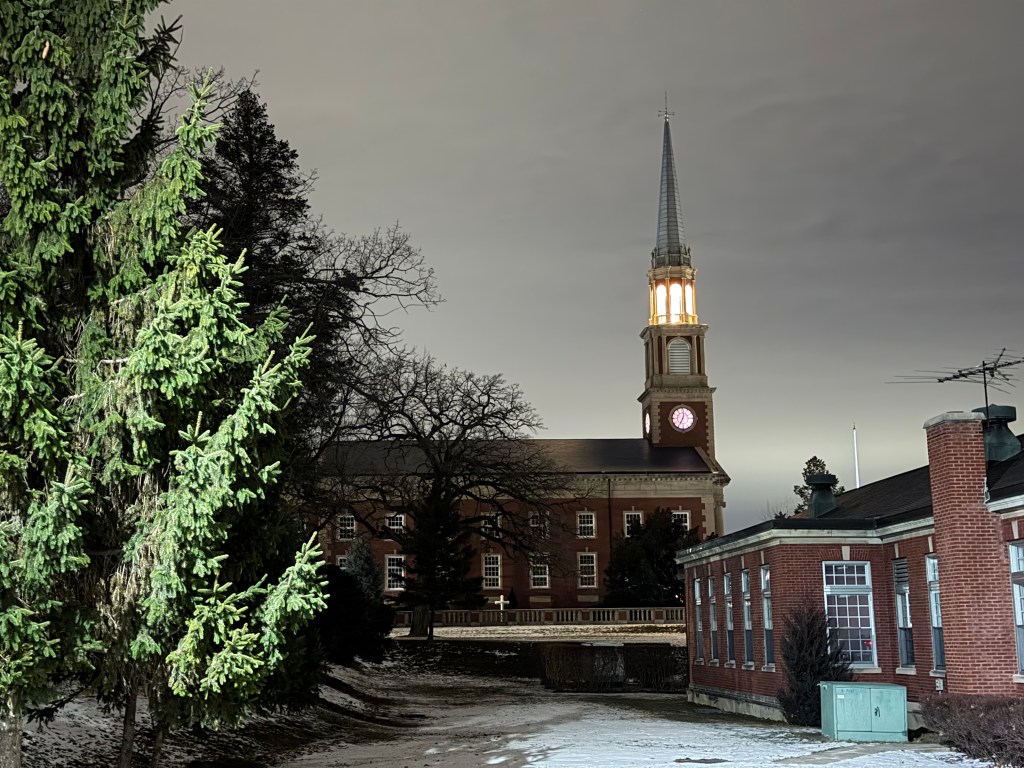
Photo: We still have time this Advent to repent and experience our Father who loves and thirsts for us.

Link for the Mass readings for Tuesday, December 16, 2025

Elijah, the prophets, and John prepared the way for Jesus the Way.

The disciples who asked the question, “Why do the scribes say that Elijah must come first?” (Mt 17:10) were Peter, James, and John, who had just witnessed the transfiguration of Jesus. They were walking down from the Mount of Transfiguration, tradition identifying this mountain as Mt. Tabor, and the context of the question had to do with, Moses and Elijah, who they saw with Jesus as he revealed to them his divinity.

As the disciples were attempting to digest this Mystery of the Transfiguration just witnessed, they were drawn back to what they knew. Most likely what they were referring to were the accounts in the Books of Sirach and Malachi. In Sirach 48:10, we too can read that, “You [Elijah] are destined, it is written, in times to come to put an end to the wrath before the day of the Lord, to turn back the hearts of the fathers toward their sons, and to re-establish the tribes of Jacob.” In the last chapter of the Book of Malachi, which is incidentally the last lines of the Christian Old Testament ordering of the canon, are the words: “Remember the law of Moses my servant, which I enjoined upon him on Horeb, the Statutes and ordinances for all Israel. Lo, I will send you Elijah, the prophet, before the day of the Lord comes, the great and terrible day” (3:22-23).

Moses in this encounter represents the Torah, the Law or Teachings, and Elijah represents the line of prophets. Elijah also, as we can read in 2 Kings 2:11, was taken up by God into heaven, amid “a flaming chariot and flaming horses… and Elijah went up to heaven in a whirlwind”, and, it was believed, that he was to return again at the appointed time of the Messiah’s coming. Jesus clarified for his disciples that John was indeed the new Elijah. In the revealing of his divinity to Peter, James, and John, Jesus showed that he was the fulfillment of the salvific paths forged by Moses, Elijah, the line of prophets, and John the Baptist.

Jesus is the fulfillment of the Law and Prophets as well as our fulfillment. We are invited to prepare the Way of the Lord in our hearts and minds, to become less so that Jesus can become more, as well as to help prepare the way for others. When I began to attend church again in my late teens, I went to the Congregational Church that was about a half-mile walk from our home. At the end of that first service I attended, the interim pastor made an appeal for Sunday School teachers.

One of the things he said was that we do not know who Jesus’ Sunday School teacher was and he referenced that we could be teaching Jesus and not be aware. He was not speaking literally but his point rang true: we have the responsibility to continue to pass on the Greatest Story ever told. Also, his appeal was an avenue for the Holy Spirit to speak through him to me, and although I refused the invitation the first week, I accepted the following week. What might Jesus be inviting you to do this Advent? Trust in him and his invitation.

My trusting in the nudge of the Holy Spirit and “yes”, to teaching Sunday School, not knowing the first thing about what I was doing, thinking I was too young and way too inexperienced, both true, would eventually lead me back home to the Catholic Church, to the Franciscans, then leaving and to marriage, becoming a step-father, school teacher, permanent deacon, and now as I am typing, blessed to  be serving as a priest.

Let us all take heed of the invitation from the prophets and John the Baptist, summed up by Jesus, and carried on by the Apostles: “This is the time of fulfillment. The kingdom of God is at hand. Repent, and believe in the Gospel” (Mk 1:15). My journey has not come to an end and neither has your’s.
———————————————————
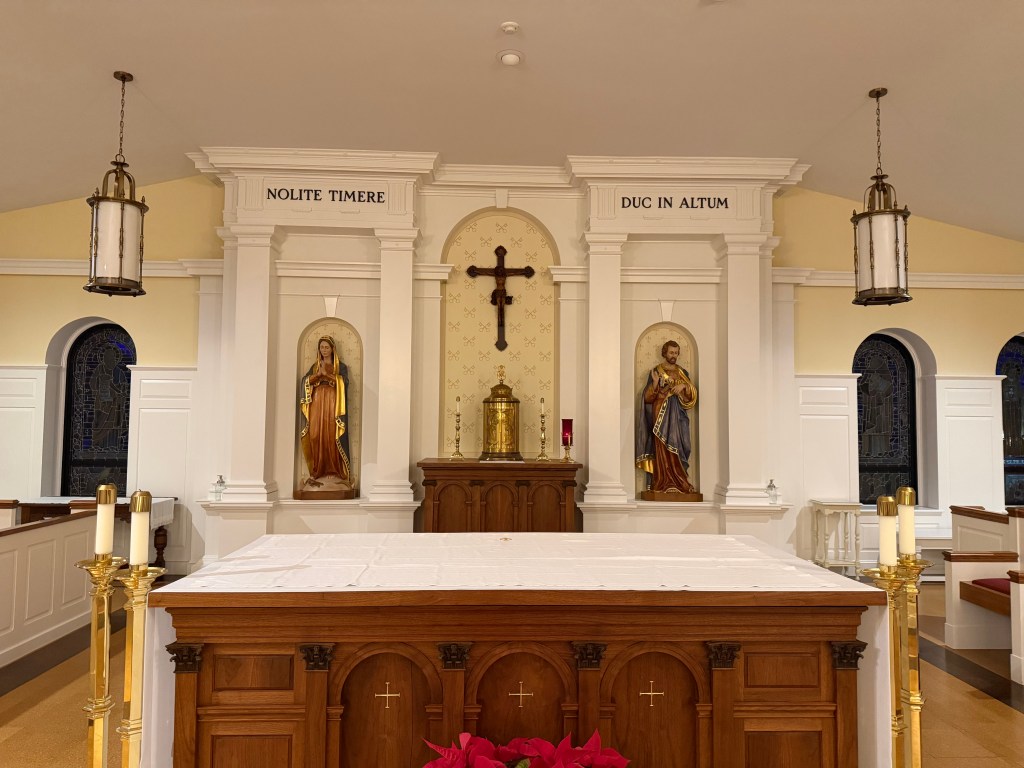
Photo: Blessed to experience an Advent day of reflection and prayer with my brother priests at Our Lady of Florida Spiritual Center. We can notice the kingdom of heaven at hand, when we are still and repent.

Link for the Mass readings for Saturday, December 13, 2025

“He will baptize you with the Holy Spirit and fire.”

I am baptizing you with water, for repentance, but the one who is coming after me is mightier than I. I am not worthy to carry his sandals. He will baptize you with the Holy Spirit and fire (Mt 3:11).

John is offering a baptism of repentance. The people are coming to him, some traveling up to twenty miles through the desert. They were not coming to the Temple, the formal place of worship, but to the wilderness. John, the son of a priest, and so a priest, represents an answer to the hunger of the people that is no longer being fulfilled by much of the religious leadership of his time. He is the embodiment of the prophet who has returned – Elijah, who himself also dressed in “a hairy garment tied with a leather belt” (2 Kings 1:8). He speaks for God and the people are willing to listen and follow him because of his authenticity. And in his time he was most likely more popular than Jesus was in his. Jesus himself said that there was no one born on the earth greater than John (Matthew 11:11).

Yet, John the Baptist is clear that he is not the long-awaited Messiah. He is just the precursor as was promised. “John’s appearing in the desert dressed like Elijah would have signaled to the Jews that he was playing the part of the long-awaited Elijah, preparing for the Lord’s coming” (Mitch and Sri, 63). John as with the prophets like Elijah who had gone before him was preaching the need for repentance. He is preparing the hearts and minds of the people, inviting them to repent, to turn away from their sins and self-centered ways so that they will be prepared to recognize the Lord when he comes.

The baptism of Jesus was and is different than John’s. It is a baptism not just of repentance, but also of “the Holy Spirit and fire.” The baptism of Jesus will be wholly transformative. Fire consumes and transforms that which it touches and the Holy Spirit is often symbolized by fire. Within the Jewish tradition and found in the Old Testament, fire is associated with purification. The purifying and transformative fire of the Holy Spirit is love.

Love is an expanding, unitive force. It is a direct counter to the self-focused, curving in upon oneself and divisiveness of the fallen nature of our humanity. Love is an act of the will and draws us out to be engaged with the betterment of others. When we experience the love of God we are changed and transformed. This is not a one time be all encounter, but one that is to be experienced and shared consistently. The more we share the love of God the more we receive, and the more love we receive, the more we are transformed.

John the Baptist reminds those coming to him and us who read the Gospel of Matthew today that none of us are worthy of God’s love. That does not mean that we are bad. We just fall, short on our own, of the glory of God. We do not deserve nor can we grasp God for ourselves. No matter our will power and diligence, we must be willing to receive the Holy Spirit on his terms, not ours. We simply accept the invitation to receive the love of God, allow him to heal and expand us beyond our limitations, and share what we have received with others.


Photo: A quiet moment with the setting sun between the 4:00 and 5:30 Vigil Mass.

Link for the Mass readings for Sunday, December 7, 2025.

We begin another Advent to watch and pray for Jesus’ coming.

As the earth turned again one more time on its axis last night, and the shadows began to fall, night slowly crept over each part of our planet. Our sacred text, our sacred word, is not only written in the Bible, but the finger of God has traced his word across all of the earth, the galaxy, the universe, the whole of the created order. God continues to write and sing us his love song. The ground, foundation, and source of creation and our very being is the outpouring of the Trinitarian Love expressed between God the Father, God the Son, and God the Holy Spirit.

As the sun appeared to us to set, and night gently made its way across our minuscule earth in this part of the Milky Way last night, the vigil began and so also began the new liturgical year and we now find ourselves in the season of Advent. We heard or will hear again today the words of Jesus urging us to: “Stay awake” (Mt 24:42).

Paul in the second reading also sounds the alarm, for, “it is the hour now for you to awake from sleep” (Romans 13:11). Traditionally, the readings of the first two weeks of Advent focus on our watching for the second coming of Jesus. We are to watch and pray, to step away from the triggers of reacting. This Advent we are invited to slow down, observe how the daily cycle of day to night and night to day repeats itself. In doing so, we can enter into that daily rhythm of breathing, watching, and praying so that we can be more aware and more alert for the signs of his coming, like a watchman standing guard over the city. Then instead of reacting, we can choose to act according to God’s will.

During Advent, we also prepare in the final two weeks to remember again the first humble coming of Jesus, the Incarnation, in which the infinite Son of God took on flesh at his miraculous conception in the womb of Mary and became man. Fully God and fully man, Jesus experienced our human condition in the most vulnerable of settings. We are a people of memory, though we often forget, that is why we hear the story again of the simple birth of our savior, who many rejected even then, saying there was no room for him in the inn. Do we make room for Jesus to come to be present in our daily lives?

The third way we prepare for the coming of Jesus during Advent, is in our everyday experiences. We who have much in the way of material comfort need to remember, how God heard the cry of the poor and saved his people by sending Moses to free them from their bondage in Egypt. He sent judges and prophets to guide his people, and he sent his Son to be born in poverty, to free us from our bondage to anyone and anything that is not from him, anything that will lead us astray.

“God, in Christ, has come to set right a world gone wrong” (Grunow, 174). We have been made for God and nothing with fill our deepest desire to be in relationship with him. There is so much that attempts to lead us away from God. We can and do try to fill our deepest longings by grasping for anything but God and find ourselves dissatisfied time and again. We can’t save ourselves. The greatest willpower, discipline, and persistence is not enough. We need God, we need a savior. Let us remember this Advent who we are, whose we are, and who we are called to be. As we prepare for Jesus’ second coming and prepare to remember and celebrate his birth, may we also remember to set aside some time to enter into the rhythm of creation, to allow our hearts to beat in time with Jesus’ Sacred Heart.

We have been created by Love to love. As gently as the night gave way to the morning rays of the sun this morning, may we live and move more gently upon this earth. May our thoughts, words, and actions be filtered through the holy hepa filter of the Holy Spirit. So that we filter out that which is not, and accept that which is, of God. As we prepare well, we will not need to know the time or the hour, because we will know our Savior and so will be ready. Let us then awake, watch, and pray.

————————————————————–

Photo: Ready or not, Sunday Vigil here at Holy Cross, Advent has begun!

The Word on Fire Bible: The Gospels. Park Ridge, Illinois: Word on Fire, 2020.

Link for the Mass readings for Sunday, November 30, 2025

May we too seek Jesus and come when he calls!

Yet again, as in the Gospel from yesterday, the crowd gets in the way of someone seeking access to Jesus. The wall of people that has gathered around Jesus does not appear to be overtly keeping Zacchaeus from seeing Jesus. They may be so focused on seeing him themselves that they are not aware. Yet, there is also the strong possibility that the people were aware that this man was trying to get through. They knew Zacchaeus, and many judged him to be the sinner of sinners.

He was the chief tax collector of the area and he was most likely reviled by most in his community. He would have also likely have been considered unclean because he was breaking the commandment of not stealing, which he and the majority of the tax collectors did at the time. As the chief tax collector he was also dealing with the Gentile occupiers. It is likely that each time Zacchaeus attempted to nudge by to get through a gap to get a better look, the individuals may have closed the way such that he could not get through.

Zacchaeus would not be thwarted. He ran ahead of the crowd and climbed a sycamore tree. From his perch he was not only able to see Jesus, but Jesus saw him and said, “Zacchaeus, come down quickly, for today I must stay at your house” (Lk 19:5). Jesus did not see a tax collector or a sinner, he saw a seeker. Someone who was willing to humble himself by climbing a tree, much like a child.

Jesus did not see the 99% nor the 1%. Jesus saw and sees people in need of compassion and mercy. He sees those lost that need to be found, those sick in need of healing, those alone who sought to belong. Jesus did not meet Zacchaeus with judgment but with love and compassion, and that made all the difference for this man’s conversion.

Jesus was willing to draw close to the one so many despised. By inviting himself to dine with Zacchaeus in his own home, Zacchaeus must have felt overwhelmed with emotion. Maybe for the first time in his life, he felt welcome instead of disdain. He repented without hesitation to the unconditional invitation and love he had received: “Behold, half of my possessions, Lord, I shall give to the poor, and if I have extorted anything from anyone I shall repay it four times over” (Lk 19:8). Unlike the other rich man who left sad (Lk 18:18-23) because he was not willing to relinquish his riches, Zacchaeus was filled with joy because he could.

This expressive act of generosity arose from his encounter with Jesus. This exchange offers the invitation for us also to receive Jesus in the same way and the invitation to greet others more openly as well. One way to do so is to resist the temptation to “grumble”, to gossip, to pre-judge, and/or to dehumanize one another. Salvation came to Zacchaeus’ house in the person of his savior and in the act of his repentance.

Life is hard enough without adding more barriers or negativity. Jesus wants to dwell with us too. While at the same time, he challenges us to see beyond the exterior caricatures we project on to others, and instead invites us to seek to know the heart and character of the person. We can do so when we stop grumbling, are willing to approach others with an understanding heart and mind, and be willing to spend time to get to know one another.


Painting: Zacchaeus in the Sycamore Awaiting the Passage of Jesus by James Tissot.

Link for the Mass readings for Tuesday, November 18, 2025

The saints reflected the light of Jesus in the darkness, we are to do the same!

“That servant who knew his master’s will but did not make preparations nor act in accord with his will shall be beaten severely” (Lk 12:47).

Jesus, as did the prophets, spoke in ways that can be jarring. The purpose was to shake his listeners out of a dull stupor and to make clear his point. In today’s Gospel passage, Jesus addressed Peter’s question: “Lord, is this parable meant for us or for everyone” (Lk 12:41)? Jesus was most likely speaking to Peter and the Twelve. They are the ones he entrusted with continuing his mission. And just as he had been clear to point out those Pharisees who had abused their positions, he was being just as clear with Peter and the apostles.

Jesus wanted to make sure that his successors were not to continue on with business as usual and going through the motions as those entrusted with the deposit of faith he had given them. What Jesus required of them was not just for themselves, but those whose care they had been entrusted with and beyond them to all the nations. His parable was for both the Twelve first and foremost, and then to their successors and all who would choose to be his followers.

Unfortunately, we have witnessed those in Church leadership who have in effect, “beat the menservants and the maidservants, to eat and drink and get drunk” (Lk 12:45) on their own power. Those who have: abused children, covered abuse, skimmed off the top of the donations from the blood, sweat, and tears of their parishioners’ donations, limited access to positions within the leadership of the Church to only male or clergy, been unmerciful confessors, held up the sin of one group or groups while turning a blind eye to others. These and other forms of hypocrisy do irreparable damage.

The world has been darkened by sin and it has crept into the Church. Even though all of us have been wounded we have not been destroyed by sin. The Son of God entered into the condition of our fallen nature, became one of us, one with us, in all things except sin. Yet he received our sin and the sin of the world upon himself, and was crushed by it on the Cross, and he died. Jesus experienced the consequences of our sin which led to his death. Because he did not sin, and was willing to give his life for us, giving us all of himself and holding nothing back, not even his life, throught the power of the Holy Spirit, he conquered sin and death.

Even when those in his name have participated in and perpetuated in that which Jesus warned his Apostles against, we are not to lose heart nor hope. I agree with Bishop Robert Barron that we are called out of “the realm of hatred, racism, sexism, violence, oppression, imperialism, what Augustine termed the libido dominandi (the lust to dominate).”

We are called out of darkness to be children of the light. We do so by following Mary’s directive to do whatever Jesus tells us to do and reject anything that is not of his love. This is just what the saints have done. They were purified in the crucible of the love of the Holy Spirit and became a radiating light in the darkness. They reflected the light of Jesus in their time and place. We will be like them when we are willing to, in the words of St. John Paul II, “be taken over by the light of Christ, and spread that light wherever” we “are.”


Photo: Reflecting the light of Jesus in the darkness as the moon reflects the sun is our call.

Barron, Robert. Catholicism: A Journey to the Heart of the Faith. NY: Image, 2014

Link for the Mass readings for Wednesday, October 22, 2025

Are we willing to receive the “key of knowledge.”

Woe to you, scholars of the law! You have taken away the key of knowledge. You yourselves did not enter and you stopped those trying to enter” (Lk 11:52).

We all yearn to be loved, to belong, to be accepted, and fulfilled. God knows the depth of our yearning because as St. Augustine taught, God knows us better than we know ourselves. For God sees past the apparent goods that we cling to and cloud our vision, and he invites us to take steps into his light that we might see the truth of his love and our fulfillment that can only be fulfilled in him. From that core communion all else in our lives can be properly ordered.

To willingly prevent access to those who seek, as did those “scholars of the law” for whom Jesus convicts in today’s Gospel, is an egregious offense. Especially in the way that Jesus describes. They themselves have the key to enter, do not avail themselves of the gift they have received, and worse, prevent others from going in! I remember a time in eighth grade where I had wanted to ask a girl out to the school dance. I confided this hope with someone but of course, the word got out. A few days later at the beginning of math class, our teacher announced to the whole class that I was the first one he had ever heard of being rejected before I could even ask someone out. I wanted to melt into the floor.

The scholars of the law, as well as the scribes and the Pharisees were charged to teach and lead people to God. Instead they were making it harder by laying heavy burdens upon them and not raising a finger to help them. Jesus fulfilled the Law. His teachings further built on the Torah and challenged the people even further. The difference was that he invited his listeners to align themselves to him, for his yoke is easy and his burden is light. Jesus strengthens and transforms us when we trust in him and seek his strength.

Jesus is the “key of knowledge”. He offered himself to the scholars but they refused to receive him or his message. Jesus came to open up heaven for all in the humanity he assumed. In his conviction of the Pharisees, scribes, and scholars of the Law he hoped that they would repent and also enter into the kingdom of Heaven. Unfortunately, many hardened their hearts further, and “began to act with hostility toward him”.

Jesus offers us the same invitation today to repent and believe in the Gospel. We are to love and support one another, even when some express their hunger in unpleasant of ways. Here it is even more important that we resist reacting in kind. Instead, let us be patient, give another the benefit of the doubt, and be willing to listen with our spirit instead of our ego for what their need truly may be. May we receive the “key of knowledge” not to lock but to open the door to the healing love and teachings of Jesus.

As Pope Francis said: “Each one of us is called to be an artisan of peace, by uniting and not dividing, by extinguishing hatred and not holding on to it, by opening paths to dialogue and not by constructing new walls! Let us dialogue and meet one another in order to establish a culture of dialogue in the world, a culture of encounter.”


Photo: As the vines can’t keep the light from shining, the scholars of the law could not stop Jesus.

Link for the Mass readings for Thursday, October 16, 2025

When we align our will with God’s, we experience freedom.

Jesus continues to call out those Pharisees who follow their own will and put themselves in places of honor instead of God, and then one of the scholars of the law interjects: “Teacher, by saying this you are insulting us too.”

Jesus did not soften his words or hold back. He went right at the scholar and convicted him as well, “Woe also to you scholars of the law! You impose on people burdens hard to carry, but you yourselves do not lift one finger to touch them” (Lk 11;45-46).

Jesus is clear about his mission, about what the kingdom of God is not and what it is. Jesus is shining a light on the practices of those Pharisees and the scholars of the law that are not fulfilling the Law and the Prophets. I believe that there were those who were. Yet, for those he challenged, he did so in the hope that they would see the darkness that was blinding them. Unfortunately, unlike Bartimaeus (see Mk 10:46-52) who knew that he was blind and wanted to see, this was not true for many whom Jesus confronted.

How about us? Are we aware of our blind spots? Are we willing to allow Jesus to shine his light and love in our direction? Will we cover our eyes because the light is too bright and withdraw further into the shadows, or will we remain still and allow our eyes time to adjust so that the brightness of the Mystery of God will reveal to us that which has kept us bound? Will we justify or rationalize our behavior or will we be transparent, repent, believe in the Gospel, and walk further into the light and the embrace of Jesus? Will we stand in the brilliance of God’s love and truth and let the fire of his love burn away all that is not of him?

Let us resist the path of those Pharisees and scholars of the Law who imposed heavy burdens without being willing to help others along the way. It is important for us to know the Catechism, the Bible, Canon Law, participate in the sacraments, and be people of prayer and service. The purpose of each of these pursuits are not for themselves along though. We do so that we will come to know Jesus and the love he shares with the Father who is the Holy Spirit. We have been created for nothing less than to participate in the very love of God, to become divine through our participation in the life of Jesus. This love and relationship with God increases when we confess our sins, are forgiven, and then having received God’s mercy, share what we have received with others.

Jesus did not come to abolish the Law and the Prophets but to fulfill them. In fact, his interpretation and expansion of the law was much more demanding than the Pharisees or the scribes. The difference was and continues to be, that, Jesus meets us where we are and loves us where we are. He does not lower the bar but raises it. He wants us to realize that we can only follow God’s law with him. Without Jesus we won’t be able to even come close. Apart from Jesus we can do nothing, but with him, all things are possible.

In admitting our weakness and revealing to Jesus our poverty, he then gives us the strength mature, for he is our “rock and salvation” (Psalm 62:2-23). He is the solid foundation upon which we can stand and build. “The whole aim of any person who is beginning prayer – and don’t forget this because it’s very important – should be that he work and prepare himself with determination and every possible effort to bring his will in conformity to God’s will” (St. Teresa of Avila).

In aligning our will with Jesus, we are empowered to fulfill the prescriptions and practices that God has commanded, not for God’s sake but for ours! God’s prescriptions that we receive in the Old and the New Testaments are not to restrict but to free us from our slavery to sin.

In identifying and renouncing our sins, we will experience freedom from the false truths, diversions, distractions, and attachments that the enemy has been poisoning us with. Through daily reading, meditating, and praying upon God’s law and putting them into practice we become like a tree planted near a fresh running stream that will never wither and fade. Our roots will run deep and continue to receive nourishment and sustenance we were created for: the eternal spring of the Holy Spirit which purifies and heals us.

Jesus beckons us to come out from the shadows and into the radiance of his light. As we experience his love and mercy, he encourages us to continue to move out of our comfort zones, attachments, and slavery which is paralyzing us. Jesus calls us to experience freedom. When we trust him and walk with him, our souls will experience the rest that it is starving for, the peace that we yearn for, and the love we have been created for.


Photo: As each sun sets, may we repent from our sins and die to our false selves, so that we may rise the next day with the light of Jesus in our hearts!

Link for the Mass readings for Wednesday, October 15, 2025

Turn away from seeking signs or wisdom. Seek Jesus instead.

While still more people gathered in the crowd, Jesus said to them, “This generation is an evil generation; it seeks a sign, but no sign will be given it, except the sign of Jonah” (Lk 11:29).

To understand what Jesus means, we need to understand the sign of Jonah. Jonah was sent by God to go to Nineveh, the capital city of Assyria, to call them to repent from their wicked ways. The Jews not only considered Nineveh to be a place of decadence, wickedness, and godlessness, but the heart, the capital city of Assyria. Its military which had invaded Israel and conquered the northern kingdom around 721 BC.

We can understand Jonah’s initial refusal to follow God’s lead. Not only did he not want to go to Nineveh, but Jonah also did not want them to receive mercy. He wanted God to punish and destroy the nation who he considered an enemy. Those who have read the Book of Jonah, know that Jonah finally acquiesced, and within hours of his proclamation to the citizens, including the king, they repented and God showed them mercy.

Jesus draws a parallel between the people of Nineveh and his listeners. The people of Nineveh heard and repented to a reluctant messenger. The Ninevites, Gentiles, the sworn enemies of Israel, received God’s mercy when they repented. Now, in their midst was one greater than Jonah, the Son of God, and they were demanding of him a sign. The sign of Jonah was repentance. Jesus, from the beginning of his public ministry, preached the same: “This is the time of fulfillment. The kingdom of God is at hand. Repent, and believe in the Gospel” (Mk 1:15).

Many did not listen to Jesus. We would do well to listen to Jesus’ message. Repentance is a foundational spiritual discipline. We are called to consistently and daily examine our conscience and to come to accept that we live in a fallen world. This is not a pessimistic view. This is an awareness of the reality of our present condition.

By accepting that we live in a fallen world, that there is only so much that we can do by ourselves, we will begin to recognize that we need a savior. The next step that we can make is to acknowledge that we need to repent, to identify and turn away from our sins, and turn back to him who can save us. For apart from him, we can do nothing, yet with God, all things are possible.

St Mother Teresa recognized the need for Jesus and stressed this when she taught her novices that she was not interested in numbers and she was not interested in having a branch of social workers. She and those who followed Jesus were to be missionaries of God’s charity. They were to serve Jesus in the distressing disguise of the poor. To do so they participated in daily Mass for an hour so they could bring Jesus and see Jesus to those they encountered each day. After returning from their time of service they participated in adoration for an hour. Empowered and renewed by Jesus, blessed by his mercy and love, they could serve Jesus in those they met in the harshest of conditions.

Jesus calls us, as he did his listeners, to resist seeking signs as did the Jews and wisdom as did the Greeks, but repent and give our lives to him. By emptying ourselves of our preconceived notions and opening our hearts and minds to follow his lead and be conformed to his life, we can be about doing God’s work. As long as we stay connected to him, he will guide and give us the means to accomplish that which he sends us to do.

We stay connected to Jesus by allowing his light to shine in our hearts and minds so that we can better identify our sins. Not to be condemned, but convicted of them so that we, like the Ninevites, will repent and turn our focus back to God. Our goal is to enter a daily rhythm of resisting temptations and when we fall repenting from them as soon as possible.

Slowly our selfish and disordered pursuits will cease to be our priority, we will no longer put our own interests at the center. Instead, we will accept Jesus as the core of our lives, that he may be the guiding light of our thoughts, words, and actions. For we are “called for freedom,” to be freed from our sins so that we can “use this freedom” to “serve one another through love” (Galatians 5:13 ).


Photo: Jesus calls us to repent from anything that separates us from him and his Father so that we can experience the love of the Holy Spirit. Are we willing to repent?

Link for the Mass readings for Monday, October 13, 2025

For Jesus or against, to not decided is to decide.

In today’s gospel account, Jesus is accused of collaborating with Satan because he has cast out a demon. Jesus quickly counters the absurdity of the claim by stating that, “Every kingdom divided against itself will be laid waste and house will fall against house” (Luke 11:17).

If there is one thing that Satan, the one who accuses, the father of lies, and his demons are unified on, it is to promote disunity, isolation, and chaos. They will seek any way to break through our defenses, our weaknesses, tempt, and mislead, to get us to even doubt the truth. They also seek to isolate us from one another. Here Jesus is healing a person from being possessed and it is made to look like he is in league with the devil.

Jesus reveals the error and builds on it with the truth, “But if it is by the finger of God that I drive out demons, then the Kingdom of God has come upon you” (Luke 11:20). The kingdom of God reveals and casts out demons, uncovers lies, and reconciles division. Jesus in his perfection comes to purify, cleanse, and to restore the true Father’s original purpose of harmony, oneness, and unity.

The closer that Jesus gets to Jerusalem, the opposition to him appears to be growing. Jesus offers those listening a choice: Recognize him as the Son of God who acts in the name of the Father and join with him, or reject him and side with the enemy. Jesus’ does not leave a middle ground. If one does not decide, “the last condition will be worst than the first” (Luke 11:26). Even those healed by Jesus, if  they do not commit their lives to him and fill themselves with the love of God, there is room for evil to creep back in.

We are given the same choice with each choice we make. Do we take a moment before deciding to ask is this the will of God? Are our thoughts, words, and actions, divisive, hurtful, unkind, or are they unifying, empowering, and loving? If we can admit any ways in which we have turned away from God or chosen any from the list in the first category, the good news is that we can repent for the kingdom of heaven is at hand. It is important to recognize our need for healing, which helps us to be more prudent, and ask Jesus for forgiveness and help to begin again.

For those choices that land in the second category, let us thank Jesus for working through us. In both ways, we recognize the truth, and we continue to build on the love that Jesus offers. When we trust him, we grow in relationship with him, and can better share the love he offers us with others.

We are free to choose and receive the consequences of our choices. Let us choose to turn away from anything not of God and follow Jesus today. Let us choose to be loved and to love in return.


Photo: Stained glass window in St. Joseph Catholic Church, Poquonock, CT.

Link for the Mass readings for Friday, October 12, 2025