Acknowledging our sins is the antidote to our pride.

“…whoever exalts himself will be humbled, and the one who humbles himself will be exalted” (Lk 18:14).

From the Christian perspective, humility is not false modesty. Where someone thanks us for doing something and we say something like, “Oh, it was nothing.” This response is often a conditioned response that, consciously or unconsciously, is given to elicit more praise and to keep the focus on ourselves and what we have done. “Sure it was something, you did all that work…” The more appropriate response would be, “You are welcome.” Then the topic of conversation can move on to other matters.

Humility has to do with our primary focus. Are we focused first and foremost on ourselves and placing the focus and energy in boosting our ego, jockeying for a position that is front and center? Or are we focused first and foremost on establishing that God is the core and foundation of our every thought, word, and deed and we are thankful to him for each breath we take?

We are nothing without God. Without him, we would cease to exist. We may bristle at such statements because our cultural influences often promote that what we have and achieved has come because of our own hard work and merit. There is some truth to the effort and energy we may have expended to achieve what we have, but if we think back, many others also had a part to play in where we are today, including God.

From a heightened sense of self-exaltation, we also tend to have less empathy or mercy for those who may have less or are struggling financially, emotionally, psychologically, morally, or spiritually. We might look down our nose at others thinking or saying outright, “What is wrong with them and why don’t they get their act together?”

Where in point of fact, “There, but for the grace of God, go I.” Situations in life, whether we are up or down, can change quickly. The point Jesus is making clear in today’s Gospel is that we are far from how perfect we think we are. We are all sinners and fall short of the glory of God. Recognizing this reality is a good place to be, as Jesus points out. Being willing to recognize our sinfulness is the first step to freedom.

The contrite tax collector “went home justified” because he came to terms with his sinfulness and confessed it so he could be forgiven, healed, and restored by God. The Pharisee who felt he needed no help because he “was not like the rest of humanity” closed himself off from the healing balm and reconciliation that he truly needed. His prayer was actually to himself and not to God. He did not see himself as a sinner, because of his own pride and arrogance, and so cut himself off from the love and mercy of God.

Our spiritual life does not begin to mature until we utter the prayer of the tax collector. “O God, be merciful to me a sinner”. If we don’t believe we need God, we keep ourselves at a distance. Until we acknowledge our dependence upon God and allow his light to shine in us to reveal our sins, we are in danger. Our own self sufficiency and reliance skews the view that we are sinners and are in need of forgiveness. “The antidote to pride is the total abandonment to the mercy of God and total trust in his grace to empower us to turn from sin and live charity” (Bergsma, 263).


Photo credit: The light of Jesus shines in our darkness when we are willing to receive him.

Link for the Mass readings for Sunday, October 26, 2025

Bergsma, John. The Word of the Lord: Reflections on the Sunday Mass Readings for Year C. Steubenville, OH: Emmaus Road Publishing, 2024.

The victory of the Cross reveals to us our sin and God’s love.

“In punishment the LORD sent among the people saraph serpents, which bit the people so that many of them died” (Numbers 21:6).

What kind of God would bring poisonous snakes upon his children? When Jesus taught his disciples about prayer didn’t he say, “Is there anyone among you… if a child asks for a fish, will give it a snake? If you then, who are evil, know how to give good gifts to your children, how much more will your Father in heaven give good things to those who ask him” (Mt 7:10).

Is God a loving Father or a harsh taskmaster?

He is a loving Father who not only wants his children to live but to experience life to the full. God freed his people from slavery and was not only leading them to the promised land but also providing for and protecting them on the way. And yet, the people consistently grumbled and then rose up against Moses. In this instance, they not only grumble, but they are rejecting the manna God was giving them by saying, “We are disgusted with this wretched food” (Numbers 21:5). The people were rejecting food from heaven, the bread of life, that God their Father was providing them.

In rejecting life, they were choosing death. God allowed them a stark image of their choice of opposition to him, there choosing to separate themselves from him, by sending the serpents. The imagery of the serpent would have come to mind quickly to the people. For it was the serpent who tempted Eve and Adam and led them to their Fall. It is the ancient serpent that seeks to distract, divert, and destroy. As St. Ephrem the Syrian (306-373 AD) wrote: “The serpent struck Adam in paradise and killed him. [It also struck] Israel in the camp and annihilated them” (Word on Fire Bible, p. 643).

We as Christians interpret the serpent in Genesis as Satan, which in Hebrew means adversary or opposer. Those of the people who rose up against God opposed him as Satan did. God revealed to them who they were serving in their rebellion and also showed them that if they rejected God and his love, protection, and provision, what the consequences to that choice would look like. Apart from God they will die. In repenting from their disobedience, trusting in and following God, even when the desert held no promise, they would live because God not only provides, he is the source of life. “This particular punishment is another way of insisting that negativity necessarily follows from rebellion against God’s will” (Barron, p. 641).

When the people saw and experienced the result of their sin so graphically, they correctly repented: “We have sinned, for we have spoken against the Lord and against you; pray to the Lord, the he take away the serpents from us” (Numbers 21:7). Moses interceded and God provided the healing antidote. He guided Moses to place a bronze image of a serpent on a pole. All who then looked upon it, were cured. In seeing clearly what had led to their poisoning, they could renounce it and receive God’s mercy, forgiveness, and healing. “Somehow, seeing sin for what it is serves to disempower the hold it has upon us” (Barron, p 641).

Jesus, the divine Son of God becomes one with us in our humanity to reveal to us the path to participate in his divinity. When we are willing to see, Jesus shows us our own rebelliousness, pride, our sins that arise when we listen to the father of lies and separate us from God and each other. Jesus has not come to condemn us but to convict and save us. To lead us away and free us from our slavery to sin. Jesus took the sin of the world upon himself as he was lifted up on the Cross. As he shared with Nicodemus, “just as Moses lifted up the serpent in the wilderness, so must the Son of Man be lifted up, that whoever believes in him may have eternal life” (Jn 3:14-15).

This is why we celebrate the feast of the Exaltation of the Holy Cross. What was a wicked sign of oppression and horrific suffering has now become a sign of our salvation. As we look upon the crucifix, upon Jesus who has been lifted up for us, we are reminded of the suffering that Jesus bore. Jesus took upon himself “all the dysfunction of the fallen human race” (Barron, p. 642).

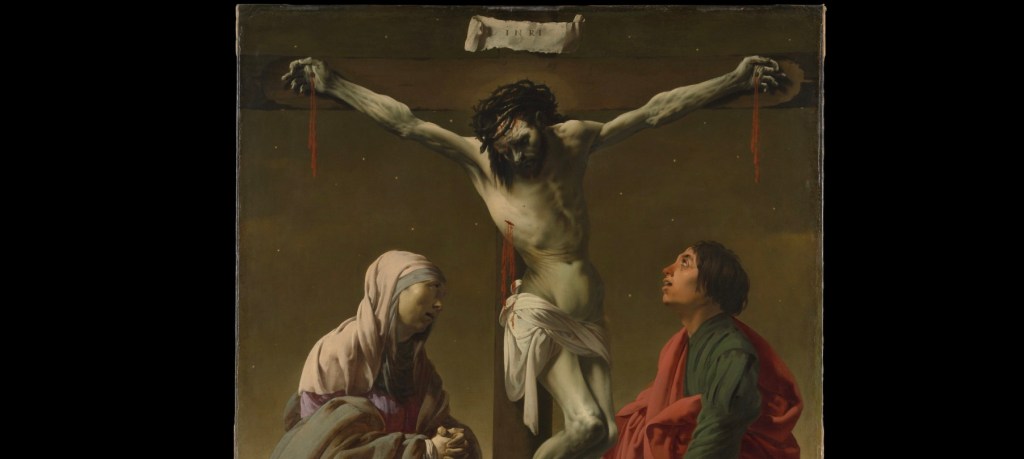
We see graphically on the Cross death, the result of our sins, our choice to separate ourselves from God. We also see love, God’s only Son who took upon himself the sin of the world. On that Cross is where Jesus died for each and every one of us, and in so doing conquered the sin and death brought into the world by Adam and opened up for us the door to eternal life through his resurrection. The Crucifix presents to us a clear choice, what our life looks like apart from God and what it looks like in communion with God. With every thought, word, and action, may we choose Jesus, the Bread of Life, and experience his love.


Painting: “The Crucifixion with the Virgin and Saint John” by Hendrick ter Brugghen. Do we see defeat or victory? May we see the horror of our sin and “what it serves” and so repent and turn back to God’s love.

Link for the Mass for Sunday, September 14, 2025

Word On Fire Bible: The Pentateuch. Elk Grove Village, IL: Word on Fire, 2023.

Whoever follows Jesus will not walk in darkness, but will have the light of life.

What we think, say, do or do not do, has consequences for ourselves and others. The smallest act of kindness, like suggesting, as Jesus did in today’s Gospel, of giving someone a drink of water goes a long way. The reality that 2.2 billion people do not have adequate access to the most basic of needs, safe drinking water (water.org), is an amazing and disheartening statistic. The most serious of sins in this regard is not bothering to care. Jesus shared clearly, in the Gospel of Matthew (cf. chapter 25), that what we do to the least of our brothers and sisters, we do to him.

We have a choice to act in ways: that limit or provide access for people seeking such basic necessities as food, water, and shelter; that harm or hurt; that divide or unify. Jesus uses graphic, hyberbolic words in today’s Gospel, such as “If your hand causes you to sin, cut it off. It is better for you to enter into life maimed than with two hands to go into Gehenna, into the unquenchable fire” (Mk 9:41-50). Jesus does not literally mean that we are to cut off our hand or foot, or pluck out our eye, but he is showing us the seriousness of sin. Sin cuts us off from the source of our life who is God. Identifying and repenting from our sins is important for our physical as well as our spiritual well being now and in the life promised to come after our death.

Sin invites us to walk a path that leads to death. God invites us to walk a path that leads us to life. “Although many people nowadays think of sin primarily as breaking a rule or violating a law, in Jewish Scripture, the word ‘sin’ (Hebrew chatá) literally means to ‘miss the mark’ or to ‘miss the path‘ (Pitre, 54).” God is inviting us to share in his life now and for all of eternity. We can walk away and chart our own course apart from God’s guidance or we can walk the path that he lights for us to follow. Jesus spoke bluntly and graphically to show his followers and us that to miss the mark, to sin, to chart our course on our own will have deadly consequences.

This is why Jesus began his public ministry echoing the prophetic tradition and John the Baptist when he stated, “This is the time of fulfillment. The kingdom of God is at hand. Repent and believe in the gospel” (Mark 1:15). Jesus came as a light to reveal to us our sins so that we can turn away from any illusions, false promises, and apparent goods that we are attached to, repent from them, and turn back to choosing to follow God first. Our lives will be much better when we seek first the kingdom God and see the world not as man does but as God does.

Venial sins hurt our relationship with God but mortal sins rupture our relationship with God. The antidote is the same for each, to be sorry for our sins, confess them, be willing to perform the penance to atone for our sins, so that we can be absolved, forgiven, and return to the path that leads to life. A daily examination of the Ten Commandments is a good place to start. The first three have to do with our relationship with God and the seven following have to do with assessing how we love our neighbors.

Examining the seven deadly or capital sins: wrath, sloth, gluttony, lust, greed, envy, and pride are also very important to examine. Asking the Holy Spirit to help us to see any of these sins which are the root of all of our sins is not an exercise in shame or condemnation. We do so in an effort to strengthen our will, to identify and renounce them so that we can be freed and healed from the unhealthy attachments and disordered affections that lead us astray. What can help us to overcome the temptation to any of these sins is to engage in practices to develop the virtues: meekness, diligence, temperance, chastity, generosity, and humility, that will counter each of the seven deadly sins listed above.

When we turn away from God and engage in thoughts, words, and actions that are divisive, dehumanizing, and self serving; when we rationalize and justify behavior that goes against our Gospel values and our consciences, we play a part in contributing through our personal sins to the condition of original sin that plagues our world. When we act in these ways, we are off the mark and going against God’s plan that we pray for each day: “May your kingdom come, may your will be done on earth as it is in heaven.”

Jesus is not calling us to jump out of bed today and amass heroic acts of virtue, nor is he asking us to change all alone, and all at once. The disciples took time to get on board with his message. It will take time for us to learn and grow as well. Jesus loves us more than we can ever imagine and when we open our hearts and minds to receive his love daily, we will grow in the humility necessary to identify and repent from our sins and grow in virtue.

——————————————————————

Photo: Hike through Runyon Canyon Park, Los Angeles.

Pitre, Brant. Introduction to the Spiritual Life. Image: New York, 2021.

Link for the Mass readings for Thursday, February 27, 2025

“Put out into the deep!”

In the first reading, Isaiah speaks, “Woe is me, I am doomed! For I am a man of unclean lips, living among a people of unclean lips, yet my eyes have seen the King, the LORD of hosts” (Isaiah 6:5)! And then in the Gospel after the miraculous catch of fish, Simon says to Jesus, “Depart from me, Lord, for I am a sinful man” (Luke 5:8). Isaiah in his vision and Simon through the super abundant catch of fish both recognize that they are in the presence of God and in that presence they also wisely recognize and confess their sinfulness.

Both men clearly fall short of the glory of God and God meets them both, not with condemnation, but with an invitation. Isaiah is met by the seraphim who places an ember on his lips to purify his mouth and Jesus says to Simon, “Do not be afraid; from now on you will be catching men” (Luke 5:10). God did not ask either of them nor does he ask us if we are worthy. He asked Isaiah and Peter, are you willing to follow me? And both were willing to do so and be sent.

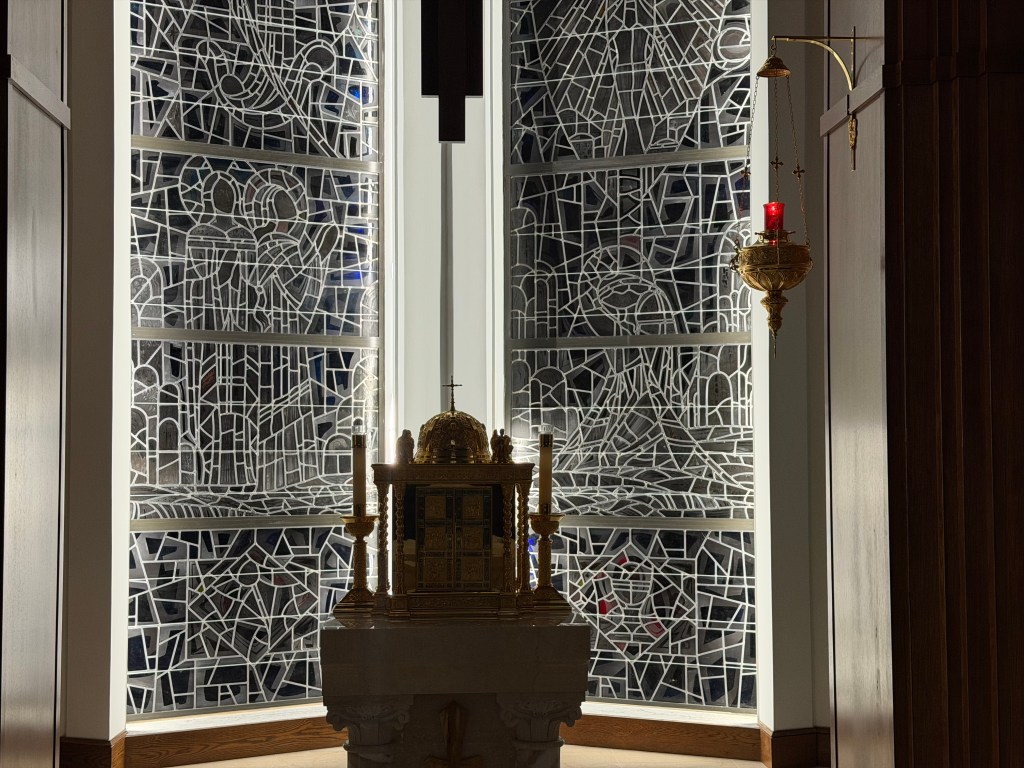
When we enter the sanctuary where Jesus is present in the consecrated hosts in the tabernacle, do we allow ourselves to experience the awe that we are entering a sacred space, a place set apart that is holy for God? We bless ourselves with holy water when we first enter the church, to remind ourselves that in Baptism we have died with Christ and have risen with him to become part of the new creation. We also remember our baptismal vows to reject the things of Satan and to say, “yes” to the will of God. We then genuflect, kneel on our right knee, again making the sign of the cross, invoking the Trinity of God as we acknowledge the presence of the Body of Christ in the tabernacle. For where the Son is present, so is the Father and the Holy Spirit.

As we come to our seats, allowing ourselves to be still and silent in the presence of God, we call to mind our sins as did Isaiah and Simon and seek God’s forgiveness that will be offered for our venial sins during the penitential rite during the beginning of the Mass. As Isaiah received the ember from the heavenly altar in his vision to purify his lips, so we receive the Eucharist, the Body and Blood of Christ, that has been represented on the altar during the Eucharistic rite. We are purified and transformed. Our hearts and minds are made new through the love of Christ and the power of the Holy Spirit that has transformed bread and wine into the Body and Blood of Christ.

Simon, like Isaiah, was willing to experience the light of God coming through Jesus’ miracle. He did not roll and jump overboard, instead he remained in Jesus’ presence, and confessed his sinfulness. Simon, after fishing all night, was asked to do probably the last thing he wanted to do. Have some itinerant preacher enter his boat and command him “to put out a short distance from shore” so he could teach for a while. If that wasn’t enough, then Jesus, this carpenter, said to Simon, a seasoned fisherman, to “put out into the deep water and lower your nets”. In both cases, Simon, though reluctant, and not seeing any sense in the command, was willing to obey.

Because Isaiah and Simon were willing to trust, God happened. Their lives were transformed, and they were sent on mission. Most of us will not experience such a vision as Isaiah experienced but Jesus will come to us in the same way that he came to Simon. He meets us in the midst of our everyday lives.

So often we think or feel that it is our initiative that draws us closer to God, when in fact, the initiative is God’s. Our very desire to pray, to seek out God is already an awareness, a recognition of his invitation to draw close. God speaks to us in the silence of our hearts, through quiet invitations, and experiences. Each time we are aware, and each time, as did Simon, even when we hesitate, we still say “yes” to his invitation, we grow in our relationship with God.

Jesus comes to us as we are and loves as we are, even in our sin, but he doesn’t want us to stay there. When we are willing to become aware of our sin and faults and allow more of the light of Jesus to shine into the darkness of our lives, as we put out into the deep, as we go where the Holy Spirit leads us, beyond the horizon of our comfort zones and understanding, we will be forgiven, and blessed by the grace and wonder of God’s glory present in our lives. Apart from Jesus we can do nothing, but with him and following his guidance all things are possible. This is what Simon experienced in the miracle of the abundance of the fish filling his nets. What he could not accomplish on his own experience, skill, and strength, he did by following the invitation of Jesus and he became more acutely aware of the divinity of Jesus in his midst.

The deeper and more intimate our relationship grows with Jesus, the more our own sin is revealed to us. This is a gift to welcome, because in our awareness and confession of our sins we are freed from that which keeps us at a distance and prevents the growth of our relationship with the God who loves us more than we can ever imagine. When we face and confess our sin and weakness, and resist settling for mediocrity, we will grow in holiness, humility, and receive more of the light, love, and grace of Jesus such that we can grow beyond our fears, grow deeper in our relationship with him, so to better allow ourselves to be agents of his grace and mercy in the lives of those he brings into our realm of influence.

——————————————————–

Painting: Some quiet time with Jesus, listening to his invitation to, “Go into the deep.”

Link for the Mass readings for Sunday, February 9, 2025

Jesus took our sin upon himself to forgive and free us.

It is interesting to note that in today’s Gospel reading from John, Jesus spoke to those who “believed in him” (Jn 8:31). But the more he talked, the less they seemed to understand who he was: “If you remain in my word, you will truly be my disciples, and you will know the truth, and the truth will set you free.” His listeners balked at the word, “free”, asserting that because they were ancestors of Abraham they have never been enslaved by anybody.

In the United States of America, freedom is also highly valued. Many of us would probably react very much in the same way. We may have different ways of expressing why we feel that we are free, but we would certainly assert that we are not enslaved to anybody or anything.

Jesus’ words ring just as true then as they do today: “Amen, amen, I say to you, everyone who commits sin is a slave of sin.” Jesus shined his light on the truth that many of us do not see, which is our enslavement to sin. If we truly seek to be free, then we need to acknowledge this point. What many of us claim to be freedom, doing whatever we want to do, when we want to and how we want to do it, is not true freedom. We cannot even hear the clanking of the chains or feel the weight of the shackles chaffing at our skin as we raise and shake our fists to assert our freedom of indifference!

Our response to Jesus’ statement: “who commits sin is a slave of sin” ought not to be one of hiding, denying, rationalizing, attacking, or fleeing. It is better to embrace the truth that Jesus is placing before us. In this way, we allow his light to expose the darkness in our hearts where sin speaks, and we realize that we have said yes. Becoming aware of our fault for those things we have done and have failed to do is the first step in becoming truly free. Recognizing with St. Paul that we do what we don’t want to do and do what we don’t want to do, is another step.

When Pope Francis was asked in an interview, “Who is Jorge Mario Bergoglio?” he answered, “I am a sinner, but I trust in the infinite mercy and patience of our Lord Jesus Christ, and I accept in a spirit of penance.” We are all sinners because we all in some form or fashion place idols before God. When we think our life is about us first and foremost and ignore or rationalize our sin then we are enslaved, such that it chokes and threatens to undo us. Then we experience its debilitating effects and succumb or attempt to free ourselves, yet the process becomes likened to a Chinese finger trap. The more we pull to escape, the tighter the grasp.

This is not a negative or defeatist attitude, quite the contrary. We are children of God, created in his image and likeness. We have just forgotten who and whose we are. When we call out our sin in truth, we can be freed from it. Jesus became human, and took our sin upon himself to free us from death and sin.

We become free from our sins by acknowledging that we are sinners. This does mean we are awful people. We are good. It just means that we have fallen for an apparent good instead of the true Good that God wants for us. We also cannot ultimately be freed by our efforts alone. We need to work in collaboration with the mercy of Jesus. We need a savior. Jesus accepts us as sinners, as we are. He loves us as we are and wants the best for us.

We do not have to be perfect or have our house for him to come to be present with us, for he is already waiting for us. We do not need to be worthy, we just need to be willing to open the door when he knocks and invite him into the chaos of our lives so he can forgive and heal us with his grace, love, and mercy. “So if the Son frees you, then you will truly be free.” 

——————————————————————

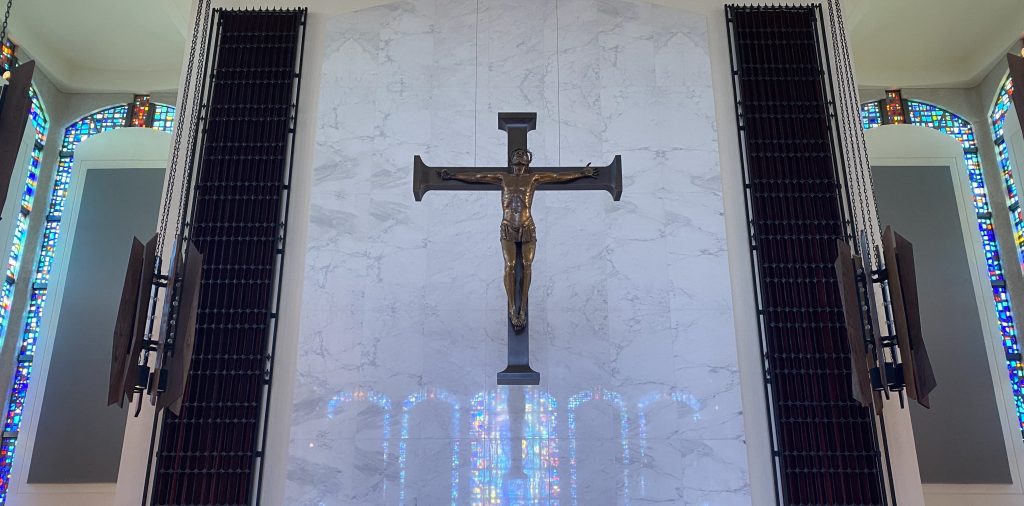
Photo: Crucifix in the sanctuary of SVDP chapel, SVDP Regional Seminary, Boynton Beach, FL.

Link for the interview with Pope Francis from America Magazine, September 30, 2013

Link for the Mass readings for Wednesday, March 20, 2024