Jesus does demand a choice.

“Do not think that I have come to bring peace upon the earth. I have come to bring not peace but the sword” (Mt 10:34).

Words to live by from the King of Peace. The reality of this statement is the reality of his mission. Jesus entered the lives of individuals. Some said yes to following him and some said no; some saying yes and no within the same family. The image of the sword represents how sharp and stark this choice could cut. If you do not think that is true, just look at the political polarization in our country right now. The cut between democrat and republican, right and left, bleeds. And we unfortunately all witnessed the worst expression of that with Saturday’s shooting at former President Trump’s rally.

During the time of Jesus and for most within the first generation of believers, there was not a luke-warm choice. You were either for Jesus or against Jesus. Jesus was either very dangerous because he was leading people to believe he was God, he was distorting the teaching of the Jewish faithful and leading people astray, he was just crazy, or he was who he said he was. These choices would have divided families and friends. In today’s teaching, Jesus was not softening the choice. He said, “Whoever receives you receives me, and whoever receives me receives the one who sent me.”

If you believe in God, you will believe in Jesus. And the choice followed then that if one assented to that truth they followed Jesus first before anyone else. Before father, mother, brother, sister, husband or wife. Anything less is not worthy of a disciple. This stance will cause division because each person is free to reject or accept the truth of who Jesus is.

When Jesus said, “I have come to bring not peace but the sword” (Mt 10:34), he meant that we are not to settle for a false peace, a lethargic appeasement to just get along or to water down the Gospel message in the hope that others will receive it. Jesus demanded a choice from those who were to follow him then and in our time today. We are to decide whether or not we believe that Jesus is who he says he is or not. If he is, then we must follow him and put his teachings into practice which is even more of a challenge.

The good news is that Jesus, following the lead of his Father, meets us where we are and gently leads us with his tender chords of love. He is also there to pick us up when we fall, if we are willing to accept his help. We need to realize too that evangelizing does not mean we carry a mallet and bludgeon others with the true, the good, and the beautiful of our faith. We share our faith in the same way we have received it, through love, patience, and compassion. We meet people where they are and walk with them, build authentic relationships, and help them to know Jesus, develop a relationship with him, and then to slowly seek to understand and to put his teachings into practice together.

In following Jesus and putting into practice the words of the Prophet Isaiah by ceasing to do evil, learning to do good, and making justice our aim (cf. Isaiah 1:15-17), we will cause disruption and face conflict but when we trust in Jesus, respect each other as human beings, really listen to, seek to understand, and are present to one another, we will begin to see that we are beloved children of a loving God, brothers and sisters, fellow human beings, and we might just learn something from one another and maybe begin to move toward the reconciliation and healing our country so desperately needs.


Photo: E Pluribus Unum – Out of many, one – View from my Rosary walk last night at Riverside Park, Vero Beach, FL.

Link for the Mass readings for Monday, July 15, 2024

Jesus is calling and sending us as he did his Apostles.

“I was no prophet, nor have I belonged to a company of prophets; I was a shepherd and dresser of sycamores. The Lord took me from following the flock, and said to me, Go, prophesy to my people Israel” (Amos 7:14-15).

Amos is pushing back against Amaziah, the priest of Bethel, who told him to no longer preach in Israel. He was saying basically, if you want to preach, go back to where you came from, to Judah and preach to your people there. Amos wasn’t going anywhere. He was not there for profit nor did come through the company or guild of prophets or was he the son of a prophet. This was no profession for him, he came to Israel to share God’s message of repentance because God sent him to do so.

The Gospel message from Mark shows Jesus doing the same. He, the Son of God, who was sent by his Father, was now sending the Twelve who he had called and taught. They too, like Amos, were to rely solely on the providence of God, to trust him to give them what they needed for their ministry of going out, to evangelize; to share the good and what may be for some, the bad news.

They were to share the goodness of God the Father’s mercy, grace, forgiveness and love, while at the same time challenge the people to reform and change their lives, to repent from that which they were doing that was going against God’s will. The beauty of this both/and is outlined in Psalm 85: “Kindness and truth shall meet; justice and peace shall kiss. Truth shall spring out of the earth, and justice shall look down from heaven” (Psalm 85:11-12).

Too many times we can fall into an overemphasis on one or the other creating an either/or. A heavy-handed emphasis on justice and forgetting the tender compassion of mercy, or an overemphasis on mercy at the expense of justice. Jesus is the incarnate expression of the balance of both justice and mercy as presented in Psalm 85.

St. Paul outlines the richness of this balance in Jesus to the Church at Ephesus. For he writes, it is in Christ that we receive our blessing, in him: we receive our redemption and are forgiven, we hear the truth of his will, and we are chosen by God in Christ – before time began! We have been chosen to be holy, set apart by God for a unique purpose. We can reject or accept this offer for God loves us so much that he is willing to risk our, “No.”

Amos seemed to be saying to Amaziah that he was quite satisfied being “a shepherd and dresser of sycamores.” Yet, he assented to God’s call and went north. I understand. I was content in my teaching position and contemplating an earlier retirement, but when I asked God what he wanted me to do, he had another idea. I, like Amos, said, “Yes.”

The Apostles said, “Yes” as well and Jesus sent them out two by two. He was sending them out of their comfort zones and without the security of the material support. He was not sending them out unprepared, even though they were not to taking anything on their journey but the tunic they wore, their sandals, and a walking stick. Jesus sent them out with his authority and the commission, to preach repentance, cast out demons, anoint and cure the sick.

They were to trust and completely depend on God’s mercy and providence as they went out to evangelize. To evangelize, Jesus did not mean to advertise and convince. They were sent to share the Gospel and not worry about whether it was to be accepted or rejected. If accepted, they would stay with those who were hospitable and not leave if a better offer of lodging came along. If they were rejected, they were to “shake the dust off their feet.” They would move on. As St. Mother Teresa likewise taught her sisters, they were not sent by Jesus to be successful, they were sent to be faithful to what Jesus was sending them to say and do.

Jesus is calling us as well to repentance, so we can receive more of God’s love, be drawn closer into relationship with him, so that we can know and fulfill our own unique role in his plan of salvation history. This is a call that will stretch us beyond our comfort zones, it is a call to let go of the security in anything material and to rely and depend instead upon God first and foremost. We will face rejection and ridicule or worse, and yet, we will experience fulfillment, meaning, joy, and a love beyond anything we can ever imagine. Each day is a new opportunity to say yes to the invitation Jesus shares with us and he will provide what we need to follow him as we walk upon the path of our journey of discipleship one step at a time.


Photo: Spending some time with Jesus and the Apostles during my holy hour in our adoration chapel yesterday afternoon before celebrating the 4:30 Mass at Holy Cross Catholic Church, Vero Beach.

Link for the Mass readings for Sunday, July 14, 2024

Jesus leads us from the darkness of our fears into the light of his love.

Jesus said to his Apostles: “No disciple is above his teacher, no slave above his master. It is enough for the disciple that he become like his teacher, for the slave that he become like his master (Mt 10:24-25).

Following the teachings and guidance of Jesus was hard for his apostles and disciples then and it is just as challenging today. To live as authentic disciples, we need to learn from and put his teachings into practice. That means more than reading some of his teachings: love God with your whole heart, mind, and soul and your neighbor as yourself, turn the other cheek, and what you do to the least of my brothers, you did it to me, and acknowledging, that, “That is some good stuff!” Then just moving on to the next thing on the to-do list.

Living as a disciple also happens in a public way, which means public scrutiny. One thing we all have in common as human beings is that we want to belong, to fit in, and to be a part of. We risk rejection and ridicule by following Jesus and living as his disciple because we run up against our own fallen nature and the fallen nature of others. Jesus said he would be sending us as sheep among wolves yesterday and in today’s reading, he announces that we are not to be afraid of those who kill the body. Not exactly the kind of encouragement many of us are looking for.

Yet, Jesus affirms consistently that we are not to be afraid. Jesus leads us to the most important relationship that we will ever develop and that is with his Father. God cares for us, just as Jesus said, as his Father cares for the sparrows, but even more. God knows us by name, and we are his, we belong to him. Our loving God and Father has known us not only before we were born, but before all creation began. Never have we been, are we now, nor will we ever be, alone. As we risk, grow in confidence, and begin to live our life in alignment, in relationship with Jesus and God through the love of the Holy Spirit, we will begin to become unified with him so to feel a joy and a fulfillment that is unmatched.

One of the keys to living the Christian life is understanding that it is more than a philosophy, a set of teachings, or a theology. Being a Christian means allowing ourselves to be known, loved, and to build our relationship with a person. Jesus is that person. Instead of hiding or running we are invited to trust and turn to him. By admitting and giving him our weaknesses and our fears, our anxieties and overthinking, our worries and our sins, we can begin to slowdown, to breathe, and begin to reset our brain’s wiring.

As Isaiah had his mouth purged by the ember placed in his mouth by a seraphim, as Peter recognized in the presence of Jesus that he was a sinful man, we too in the presence of God will see our weaknesses, our failures and our shortcomings. The light of Christ reveals to us our darkness not to condemn us, but to free us. To bring our sin into the light, so it can be purged, that we can be purified, and ultimately deified. Jesus became one with us in our humanity so that we can become one with him in his divinity. It is precisely in turning our weaknesses over to Jesus, and admitting our utter dependence on him, that we become strong.

Acknowledging Jesus is our teacher does not mean that we will gain all the answers to life, but it does mean we will be more aware of his presence during each step of our journey through this life. Take courage, be not afraid, and like Isaiah, the prophets, the Apostles, and Mary let us say, “Yes.” to the will of God and take our next step along the path to our freedom.
————————

Photo: Rosary walk last night in Riverside Park, Vero Beach, FL.

Link for the Mass readings for Saturday, July 13, 2024

Repent, receive Jesus, and bear him to others.

Return to the LORD is the plea of Hosea. In beautiful and loving language the prophet encourages Israel to come home, to leave the idols and their unfaithfulness behind. God, through Hosea, promises to heal, to love, to be “like dew for Israel.” God does not approve of Israel’s unfaithfulness, while at the same time, does not stop loving his children. With gentleness, he seeks to let his grace fall on them like the dewfall, he seeks to wash his children clean, to nourish them and satiate their thirst, to give them strength, and be the source of their life.

Jesus has come to give a visible face to the presence and promise of our God’s loving presence. He healed, cast out demons, consoled, and preached with authority. He too, in the prophetic tradition, called for repentance. Even though God never stops loving us, we cut ourselves off from his love when we choose anything and anyone over him. God must be first and we must spend time with him to grow in our relationship with him. The wonderful gift of our repentance and letting go of our control is that which is not of God is burned away like dross, and what we give to God is purified and made whole.

By trusting in and surrendering our lives to Jesus, we will heal and grow in our relationship with him, and we too like the Apostles will be sent. Jesus calls us to share the Good News of how he has been working in our lives. Not when we become perfect, but right now, even in small ways. As we receive the love of Jesus, we are to share his love with one another. We too, like Hosea, Jesus, and the Apostles will face opposition in sharing his good news. Jesus has assured us that he will send the Holy Spirit to guide us and give us the words to speak.

When we speak the words of God faithfully, that is sufficient. We are not to convince or command, but instruct and invite. As St. Bernadette of Soubirous said when pressured about the validity of her experience with our Mother Mary, “My job is to inform, not convince.” We do well to follow her lead. The Holy Spirit will work through the seeds we have planted. Let us avoid the temptation to impress and instead express the love we have received.

Jesus continually gives himself to us in the Eucharist. When we leave our sins and shortcomings in the confessional and before altar and receive Jesus, his Body and Blood, Soul and Divinity, we receive and become Christ bearers to a weary and worn world in need of repentance and hungering to experience the gentle love and forgiveness of God our Father.


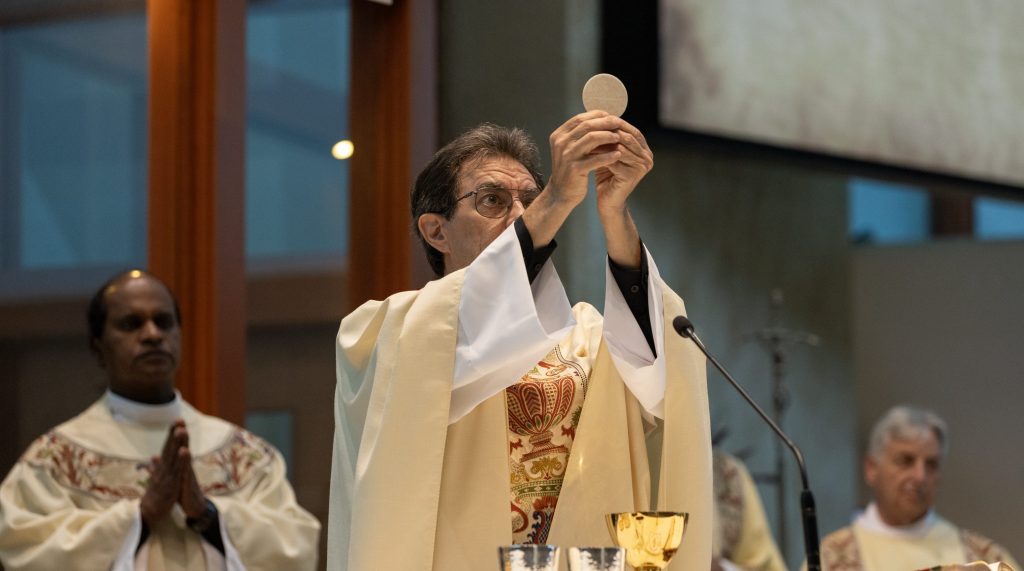
Photo: First Mass of Thanksgiving at St. Peter Catholic Church. So blessed and feeling thankful to be able to share Jesus in the holy sacrifice of the Mass!!!

Link to the Mass readings for Friday, July 12, 2024

As we have received, may we also give.

“Without cost you have received; without cost you are to give” (Mt 10:8).

We cannot buy the grace of God, we do not earn our way into the kingdom of heaven. God’s grace and presence are freely given, without cost and without our effort. As with any gift, the joy and fulfillment come from the willingness to receive and open the gift.

God has given us the gift of his Son. We have the choice to say yes or no to receiving him in our life, each and every moment, each and every day. When we say yes to his offer of relationship, our life will be different. Just as when the wise men from the East went back a different way they came, just as the Apostles lives were transformed, we too will never be the same after our encounter with Jesus. And that, though it may draw up some anxiety, is a good thing. We will hopefully begin to see differently, think differently, and act differently. We like the disciples will be transformed.

Our relationship with Jesus also brings reconciliation, and healing. Yet, this gift that we receive and open is not for our sake alone. We are invited to freely share the love of Jesus we have received with others. The Second Vatican Council renewed this call for evangelization. We are to, as did the Apostles, his disciples, and each following generation, live how he lived, say what he said, and do what he did, yet through our own unique and individual expression. As a bright light that shines through a prism, depending on the unique angle of the cut, a different color will emanate forth. Just so are we to be, reflecting the light of God in our daily experiences with our own unique color.

We say what Jesus said when we use our words not in condemnation but when necessary to convict, and also to empower, affirm, and heal. We do what Jesus did: when we build relationships and engage in respectful encounters and dialogue with one another. This also happens when through our acts of hospitality, mercy, forgiveness, healing, and being present, we attend to the needs of others, especially the most vulnerable.

We are to live as Jesus did. We are to be holy ourselves in every aspect of our conduct, as St. Peter wrote, “for it is written, ‘Be holy because I [am] holy’” (cf. 1 Peter 1:15-16). We begin to grow in holiness when we recognize, repent, choose no longer to be governed by, and seek healing from our own pride, selfish and ego-centered ways of living. We grow in holiness when we say yes to receiving the gift of the purifying fire of the Holy Spirit who will then heal and transform us so that we become aflame with his love. In this way, we will shift our posture from the stiff arm of keeping others at a distance and instead open our arms wide to embrace each other, to love one another as Jesus loves us by giving of ourselves without counting the cost.

Jesus has a unique call for each of us. He is inviting all of us to be open to receive the touch of his embrace, to be loved by him. In our willingness to receive the gift of his love, to be still and experience his unconditional embrace, we will begin to let go of the weight, the stress and the strain. We will begin to heal and see each other with his eyes, to see each other as human beings, created in the image and likeness of his Father. Jesus is calling us to love, to draw close as he has come close with us and accompany one another. Led by and loved by Jesus, each of us are to construct our own unique bridges of encounter and accompaniment helping to restore dignity when and where it has been taken. “Without cost you have received; without cost you are to give” (Mt 10:8).


Photo: As did Mary, may we receive and give God’s love with our arms wide open. Grotto on the grounds of Holy Cross Catholic Church, Vero Beach.

Link for the Mass readings for Thursday, July 11, 2024

We can help to make visible the kingdom of heaven, relationship by relationship.

“As you go, make this proclamation: ‘The Kingdom of heaven is at hand” (Mt 10:7).

Empowered by Jesus, the Apostles were sent to proclaim that the Kingdom of heaven is at hand, that the God of all creation is present in our midst, and seeks to restore a relationship with his fallen creatures. This invitation is not new with Jesus. The Father has sought reconciliation and unity with his children since the fall. This is present also in our first reading through the words of Hosea, God shared how he sought to take care of his children, Israel. How he “drew them with human chords and bands of love”(Hosea 11:4).

God has reached out, generation after generation, not in some abstract way, but as he has done since he walked with Adam and Eve. He came among them, he drew close to offer reconciliation, forgiveness, and intimacy of relationship.

Salvation history is a record of God’s coming close to encounter and interact with individuals in every age. At the appointed time, he sent his Son to open the doors to a deeper communion with his Father. Jesus devoted himself to people, “accepting them, receiving them into fellowship with him and granting them forgiveness of sins. The power of his affirmation is to be found in his attention to the concrete individual, in particular to the despised, the abused, the sinner, but also involving himself with people in a very personal way… in giving himself away to them” (Gnilka 1997, 111).

We, as the Apostles were, are called to do the same. Empowered by Jesus, we are not to bring about some abstract utopian ideal, but we are sent to enter into the chaos of the lives of real individuals in our midst and on the margins in our own unique and personal way. The Gospel is not just for a select few but for everyone. This is just as true today in our polarized climate of 2024. We need to resist the temptation to be led by our prejudices and pride, of embracing an, us versus them mentality. For God, there is no us and them.

Just as the sun rises on the good and the bad alike (cf. Mt 5:45), we are to examine ways in which we have contributed to division and separation instead of invitation. May we get in touch with our sorrow for the hurt we have caused others, for our actions and omissions, and for failing to reach out in love. Jesus was sent by his Father to love us, he invites us to receive his love, abide in his love and to love him and others in his name. We do so by building relationships within as well as beyond our comfort zones. We do so when we are more present, accepting, understanding, kind, and forgiving and when we share person to person the light, love, mercy, and invitation of fellowship that we have received from Jesus. In doing so, we will help people to experience Jesus and his kingdom which is at hand.

——————————————

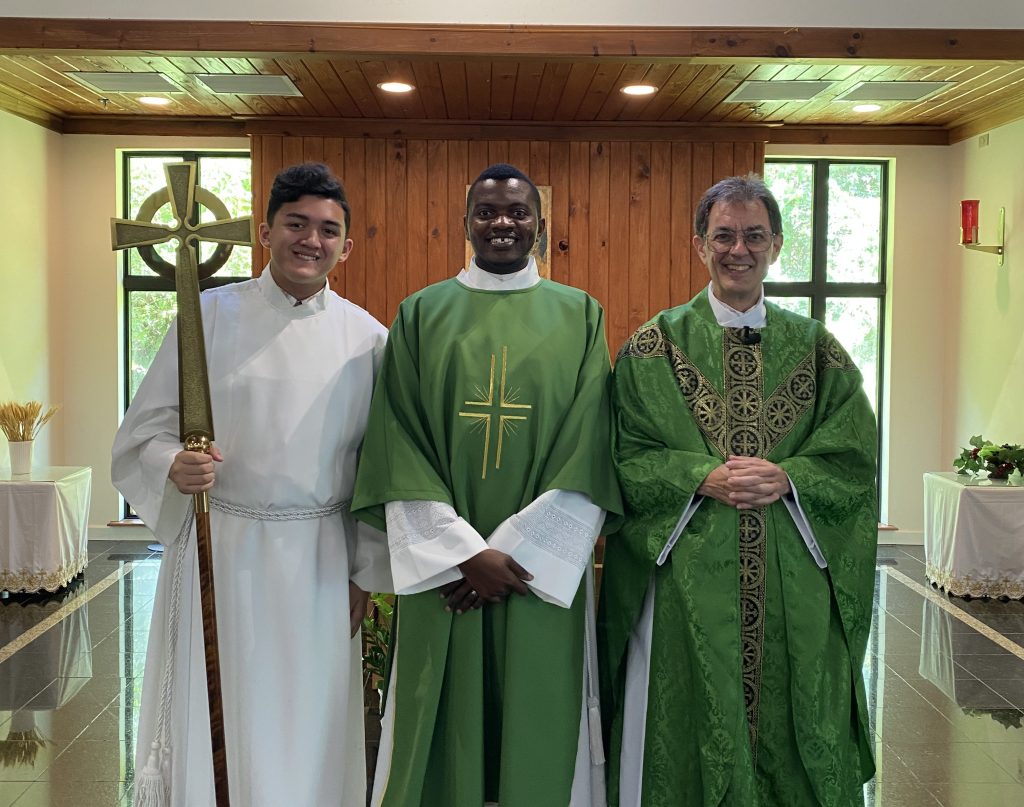
Photo: Blessed to be celebrating Mass with Dcn. Jude and a server from the Jesus Youth community in Delray Beach in June.

Gnilka, Joachim. Jesus of Nazareth: Message and History. Massachusetts: Hendrickson Publishers, 1997.

Link for the Mass readings for Thursday, July 11, 2024

Jesus will lead us to our fulfillment, if we are willing to listen and follow.

“At the sight of the crowds, his heart was moved with pity for them because they were troubled and abandoned, like sheep without a shepherd” (Mt 9:36).

There is much that pulls at us for our time and attention. Jesus witnessed the anxieties, struggles, pain, and feelings of being lost regarding those in his midst. Are we so different today? Jesus knows the Father, he knows the joy and fulfillment of what being in a full relationship with him entails. Jesus saw then and sees in us now how lost can become, how easily distracted and diverted can be, he knows how many things we put before our relationship with God, and he “is moved with pity.”

Jesus’ heart goes out to us, he yearns to be one with us, he loves us, but in that very act of love, he risks. He loves us so much, that he is willing to let us choose ourselves, others, or a myriad of other pursuits over him. Jesus invites us to the joyful experience of developing a relationship with him so we can come to know his Father, while at the same time he does not impose himself on us. We are given the whole world to choose from or we can choose him. Who do we put first? Is God a priority in our life? If we find that God is at best an after-thought, or at worst a no thought, instead of getting to know God better, what is it that we are choosing over him?

Jesus invites us, but too often we miss, ignore, or do not follow through on his invitation. Too often we choose other pleasures, distractions, diversions, temptations, and/or apparent goods. With time and experience, we may come to see the emptiness of the lure of these worldly promises, as well as begin to recognize that our attachments and disordered affections often lead to many of our troubles, trials, stresses, and anxieties. We are often led astray because we are seeking address our underlying experiences of unfulfillment, abandonment, and/or loneliness. There is only one source, one person, that will ultimately fulfill our innermost longing; God our Father.

I am not advocating for a rejection of the material world. All that God has created is good. We are human beings and a part of God’s glorious creation. Nor do I believe that we are souls trapped in this body waiting to be released upon our death. As human beings, we are a unique unity of body and soul. The key to our fulfillment, finding meaning and belonging is choosing to put God first. In establishing a firmer relationship with God, we can better discern that which we need to let go of, and/or how to reorder that which God wants to remain. Once we establish God as our firm foundation, even the challenges and trials that arise with not disturb our peace.

This might be the moment to be still and evaluate where we are in our lives and to ponder who we belong to. Jesus offers to lead us, just as he has led his disciples through the ages. Those of every age have experienced trials and tribulations and found the promises of this world fleeting. What made the difference for the saints was that they said yes to the call of the Shepherd and then followed him. Are we willing to slow down, to breathe, and listen to the Shepherd’s invitation today? Are we willing to follow his lead?


Photo: Rosary walk Sunday evening, Veteran’s Memorial Island Sanctuary, Vero Beach.

Link for the Mass readings for Tuesday, July 9, 2024

May we also trust and have courage to reach out to Jesus in our need.

“If only I can touch his cloak, I shall be cured.” Jesus turned around and saw her, and said, “Courage, daughter! Your faith has saved you.” And from that hour the woman was cured (Mt 9:21-22).

Just to touch his cloak may seem a small and insignificant act, but by doing so, this woman showed tremendous courage. Suffering from hemorrhaging for twelve years, broke from spending all her resources to be healed, she risked. She could have been severely punished, beaten, or stoned for this small act. Under the Levitical code, her condition deemed her unclean, in the same category as a leper, a pariah. Touching someone else in that condition would then make them unclean. Yet, in that small touch, that great act of courage, “power had gone forth from him” (Mk 5:30), and she was completely healed. Not only did the woman exhibit the courage to touch Jesus, but to admit she had done so when Jesus questioned who had touched him.

In calling the woman who touched him out, Jesus was not condemning her, Jesus was acknowledging her faith and restoring her to the community from which she had been ostracized. Jesus restored her dignity. How many women today still feel and experience the pain of exclusion, not having access to the full and equal benefits of society and the Church? How many people are still considered outcasts and pariahs in our communities?

Pope Francis in his general audience from August 31, 2016, stated: “Once again Jesus, with his merciful behavior, shows the church the path it must take to reach out to every person so that each one can be healed in body and spirit and recover his or her dignity as a child of God”. We too then are to treat each person we encounter, in-person and online, with dignity, love, mercy, and respect.

The courage and persistence of the woman with a hemorrhage from today’s Gospel led her to reach out to touch Jesus even though she was crossing social norms. Jesus affirmed her move. May we also place our trust in Jesus, have the same courage to reach out to Jesus for our needs, when in our weakness, and to seek his guidance. While at the same time, may we be available and willing to allow Jesus to work through us to provide healing and support for those in our realm of influence who are in need.


Painting: James J. Tissot, The Woman with the Issue of Blood (1886-94)

Link for the Mass readings for Monday, July 7, 2024

When we are willing, God will transform our hard hearts to living hearts.

“Hard of face and obstinate of heart are they to whom I am sending you” (Ezekiel 2:4).

Each of our readings present the closed and stubborn attitude, the obstinate and hard of heart turned in upon itself that closes itself off from God. The interesting point also is that for Ezekiel, those whose hearts are hardened are the people God has chosen for himself. In the Gospel, the people to reject Jesus are those who are from his own hometown of Nazareth. These are not enemies but family and kin.

It is easy to point fingers at those in these accounts who are closed to God, who harden their hearts, who are obstinate in the face of God’s truth. We need to be careful though that we don’t miss where we are obstinate, where we are closed and dig in our heals to the invitation of the Holy Spirit who is speaking in the silence of our hearts. Are we willing to listen, are we willing to slow down long enough to listen?

Saul, who is the author of today’s second reading to the Corinthians is a good example to follow. One for whom was the best and brightest of his time. He studied under the premiere rabbi, Gamaliel. He was fluent in Hebrew and Greek, he knew the Law and the teachings of the prophets inside and out, and yet when the new way of Jesus, who did not come to abolish but to fulfill the Law came, his heart was so hardened, so obstinate, that he rose up to persecute the followers of Jesus.

Then, on the road to Damascus, he encountered the risen Jesus. Jesus did not condemn him who ordered St. Stephen’s stoning, he asked him a simple question. “Saul, Saul, why are you persecuting me?” Saul was blinded, his whole life came to an abrupt halt and in that encounter with Jesus, his heart of stone was softened and he became one of the most prominent promoters of this new way that he fought so hard to crush.

We are invited by Jesus, as he did with Paul, to turn away from the temptations that led him and some of the other Israelites to rebel against God, and instead to open our hearts and minds as did Ezekiel to hear the Spirit speaking in us. That means we need to make time to be still and to listen, for as St. Mother Teresa spoke, “We need to find God, and he cannot be found in noise and restlessness. God is a friend of silence.”

We are also invited to let go of closing ourselves off from our preconceptions and limitations as those residents of Nazareth who could not see beyond the simple carpenter they knew from his youth. A good answer for what Jesus was doing in those “hidden years” before his public ministry is – nothing spectacular. He was a simple day laborer, a peasant. Those who had lived with him most, knew him the least, and even though they were astonished at his teaching, that astonishment quickly shifted to a hardening of heart such that they took offense at the one who was offering them their salvation and he was “not able to perform any mighty deed there.”

Jesus invites us in this moment to become a friend of silence. We can do so with some simple steps that will help us to soften our hearts, unclench our fists, and help our shoulders to come out of our ears. We begin first by taking some slow, deep breaths and then to rest there in those breaths. Next we begin to feel our body again and notice where the tension is, so we can feel the stress and strain, and let it work its way out. Then rest in God’s word. Choose a word or phrase from today’s reading that touched you, a word or phrase from the Our Father or Hail Mary, or from one of the psalms, like Psalm 42, “Hope in God I will praise him still, my savior and my God.” And repeat it and let it become alive in your heart.

Breathing deeply and slowly shifts the momentum of our frantic, daily pace, and God’s word helps us to shift our focus from ourselves, our challenges, and any stress or anxiety, and instead to begin to feel safe and see what is real and true. As we breathe and rest with his word, our hearts and minds can be more open to receiving God’s guidance and by remaining there, not only will our hearts begin to soften, but we will also be more willing to follow his direction. When we breathe and rest in God’s word, we begin to experience his love, and receive his guidance. This is the place that we want to abide, so that we may release any stress or strain, experience his peace, and grow closer to God and each other, and make our decisions not by reacting but acting from God’s direction. When we find ourselves slipping and tightening, we just simply return to each of the above steps.

As with any discipline, these simple steps will become more fruitful with consistent practice. When we are feeling more anxious or emotional, sitting or standing still and breathing, and feeling those parts of our body touching the chair, our feet on the floor, any points of contact, will help our body to feel grounded, safe, and begin to reset itself from the fight or flight mode we often slip into. Resting in God’s word can also help us to feel him close and again to begin to feel safe. For God is our rock and our firm foundation. Let us trust in our God and Father, his Son who he sent to guide us, and the love of the Holy Spirit, so that we can too will experience his love and presence. We will do so when we become a friend of silence.


Photo: While on my Rosary walk last night, I came upon this gift along the path. When we are willing to become friends of silence, we will experience God’s love!

Link for the Mass readings for Sunday, July 7, 2024

Let us harden not our hearts, instead let us trust in Jesus, and put on new wineskins.

“Rather, they pour new wine into fresh wineskins, and both are preserved” (Mt 9:17).

Mark, Matthew, and Luke all record Jesus’ reference of pouring new wine into fresh wineskins. What Matthew adds is, “and both are preserved.” Luke adds: “[And] no one who has been drinking old wine desires new, for he says, ‘The old is good.’”

The Gospel authors are reflecting on the tensions of those who would reject Jesus and those who would follow him and his new way. The new wine is to accept the Gospel, the Good News of the kingdom of God in their midst, and to do so means to change one’s mind and heart. “The tension, and often incompatibility, between the old and the new is part of every religious tradition and attends every change within that tradition. Matthew and Luke wrestled with it and adapted it to their community situation. Contemporary Christians have no less a challenge” (The Gospel of Mark, Donahue, SJ, p. 109). Matthew shared with his community that Jesus is the new Temple, for the old one had been destroyed in 70 AD. Following him in fact meant that both the old and new covenants would be preserved. Jesus did not come to abolish the law and prophets. Instead, he came to fulfill them and even raise the bar and challenge his followers even more.

We are invited to wrestle as well. The Church is called to change, to be transformed by the Living God. Many say the Church needs to change this and that, not realizing that we are the Church, the People of God, the Body of Christ. If the Church is to mature and grow each of us needs to embrace Jesus’ offer of the transforming love of God and be willing to be made anew through the guiding presence of the Holy Spirit. This invitation is a call to let go of those disordered affections, physical and emotional attachments, habits, lifestyles, behaviors, mindsets, and addictions that are weighing us down or worse holding us in bondage and slavery. To cling to that which is not of God keeps us separated from God. Much of the material and finite things we hold onto prevents us from receiving the new life God wants to pour into us.

Jesus has come to set us free from the old wine that will lead us astray. He is introducing some new wine. We are invited to sip and savor his teachings and actions as recorded in the Gospels. Even when they might be challenging, we do not have to be afraid of the change and transformation Jesus is calling us to experience. God wants the best for us, and he will give us the strength and discipline to move forward step by step, for as St. Irenaeus wrote: “The glory of God is man fully alive!” Jesus is inviting us to live our lives and live them to the full!

To become new wineskins, Jesus invites us to soften our hearts. Let us resist the temptation to harden them and dig in our heals because we are afraid that what God may be asking of us will be too hard or make us miserable. Jesus calls us to trust. As we take a breath or two, and trust him, we will begin to feel safe and be able to let go of those selfish and sinful inclinations that keep us constricted and rigid. We will also be able to step out beyond our comfort zones, ones that may have truly been good but were not intended to be the end goal. 

As we learn to trust, we will also learn to love as Jesus loves. We will then expand and open our minds and hearts more to receive the new wine Jesus wants to pour into us. We are called to go beyond the foundation of our identities that we have found safety and comfort in and become free to be people of integrity. Our identity gives us roots but our integrity gives us wings to fly.

It was hard for me to think of living my life without JoAnn after she died. It was hard to let go of teaching, first at Rosarian Academy and then at Cardinal Newman, and it was hard to leave, even after the intensity of the past two years of seminary, but Jesus was leading me to put on a new wineskin yet again. I am typing away, now as a priest, in my new office. I have been welcomed and blessed by the new wine poured out through the hospitality and kindness of Fr. Tom, the staff, clergy, and parishioners here at Holy Cross Catholic Church. 

Each time we have the courage to come to God in stillness, he will reveal to us that which distracts and diverts us from going deeper. As we trust Jesus and cut away the ties that bind us, as we are willing to be more and more conformed to Jesus, as we trust him and let go of our biases, prejudices, and fears, we expand and become more of our authentic and true selves and grow to be truly who Holy Spirit is leading us to be with his tender chords of love. 


Photo: Celebrating my first Mass of Thanksgiving at St. Peter Catholic Church.

Donahue, John R. S.J., and Daniel J. Harrington, S.J. The Gospel of Mark. Vol. 2 of Sacra Pagina, edited by Daniel J. Harrington, S.J. Collegeville, MN: Liturgical Press, 2002.

Parallel Scriptural accounts: See Mark 2:22, Matthew 9:16-17 and Luke 5:37-39

Link for the Mass readings for Saturday, July 6, 2024