Reflections on the Gospel Reading for the Day
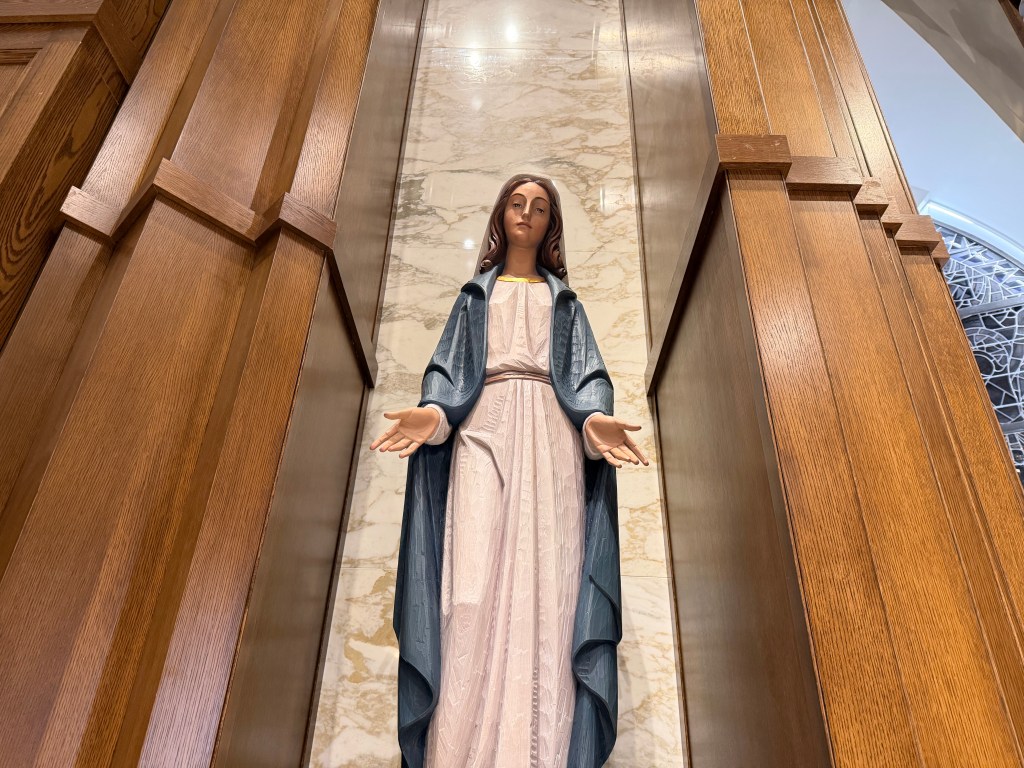

“He will baptize you with the Holy Spirit and fire.”
I am baptizing you with water, for repentance, but the one who is coming after me is mightier than I. I am not worthy to carry his sandals. He will baptize you with the Holy Spirit and fire (Mt 3:11).
John is offering a baptism of repentance. The people are coming to him, some traveling up to twenty miles through the desert. They were not coming to the Temple, the formal place of worship, but to the wilderness. John, the son of a priest, and so a priest, represents an answer to the hunger of the people that is no longer being fulfilled by much of the religious leadership of his time. He is the embodiment of the prophet who has returned – Elijah, who himself also dressed in “a hairy garment tied with a leather belt” (2 Kings 1:8). He speaks for God and the people are willing to listen and follow him because of his authenticity. And in his time he was most likely more popular than Jesus was in his. Jesus himself said that there was no one born on the earth greater than John (Matthew 11:11).
Yet, John the Baptist is clear that he is not the long-awaited Messiah. He is just the precursor as was promised. “John’s appearing in the desert dressed like Elijah would have signaled to the Jews that he was playing the part of the long-awaited Elijah, preparing for the Lord’s coming” (Mitch and Sri, 63). John as with the prophets like Elijah who had gone before him was preaching the need for repentance. He is preparing the hearts and minds of the people, inviting them to repent, to turn away from their sins and self-centered ways so that they will be prepared to recognize the Lord when he comes.
The baptism of Jesus was and is different than John’s. It is a baptism not just of repentance, but also of “the Holy Spirit and fire.” The baptism of Jesus will be wholly transformative. Fire consumes and transforms that which it touches and the Holy Spirit is often symbolized by fire. Within the Jewish tradition and found in the Old Testament, fire is associated with purification. The purifying and transformative fire of the Holy Spirit is love.
Love is an expanding, unitive force. It is a direct counter to the self-focused, curving in upon oneself and divisiveness of the fallen nature of our humanity. Love is an act of the will and draws us out to be engaged with the betterment of others. When we experience the love of God we are changed and transformed. This is not a one time be all encounter, but one that is to be experienced and shared consistently. The more we share the love of God the more we receive, and the more love we receive, the more we are transformed.
John the Baptist reminds those coming to him and us who read the Gospel of Matthew today that none of us are worthy of God’s love. That does not mean that we are bad. We just fall, short on our own, of the glory of God. We do not deserve nor can we grasp God for ourselves. No matter our will power and diligence, we must be willing to receive the Holy Spirit on his terms, not ours. We simply accept the invitation to receive the love of God, allow him to heal and expand us beyond our limitations, and share what we have received with others.
Photo: A quiet moment with the setting sun between the 4:00 and 5:30 Vigil Mass.
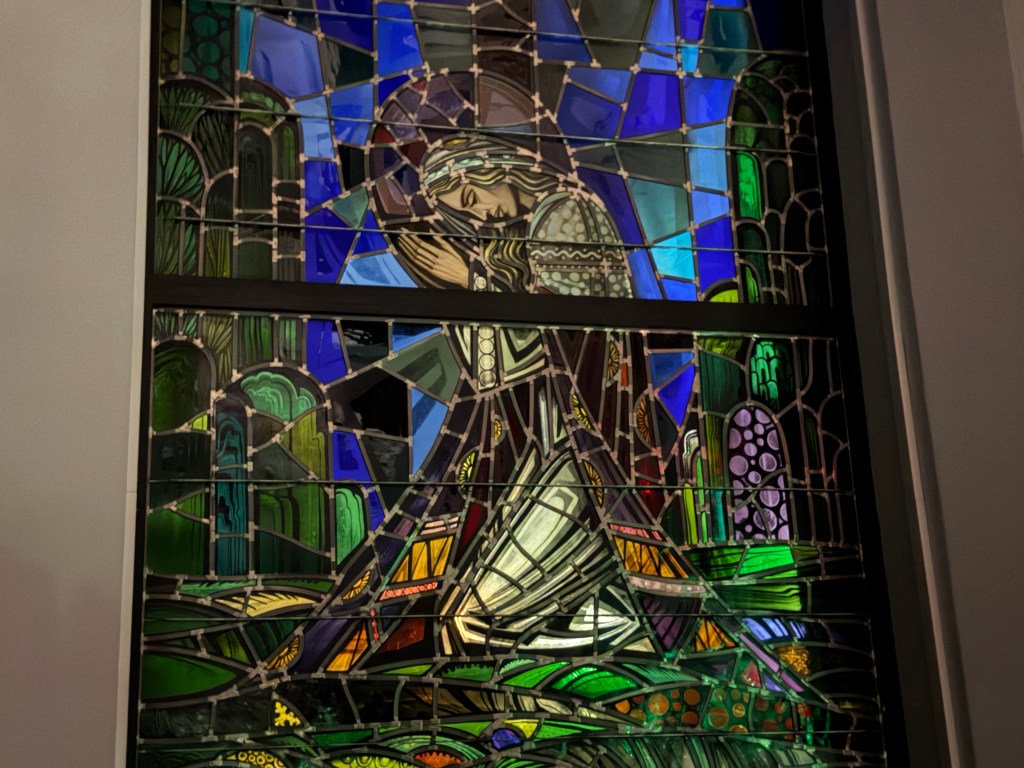
“When everything is said and done, we are infinitely loved.”
Jesus sent out these twelve (Mt 10:5).
Jesus sent out his Apostles to minister in his name and share the Gospel as he did, declaring that the “Kingdom of heaven is at hand.” Our faith tradition is one of evangelizing, sharing the Good News. That means that first and foremost we need to be people of joy. We may share the most wonderful words about our faith, but if they are not backed up by a life of radiating joy, then our words will have little if any impact.
This does not mean that we are happy and buoyant every second of the day, it does not mean that we will not experience hardship, sorrow, and loss. What it does mean is that we are not defined by our suffering, the trials we face, nor our wide range of our emotions. God also calls us to face tough realities when it might be easier to remain in our comfort zone. In the midst of each of these and other challenges, we can experience hope because God is with us. He seeks to comfort us in our weeping, provide for our needs, guide us in the right way we are to walk, and give us the strength to do so with each step we take.
What defines us is God’s love. We will experience great joy when we slow down long enough to allow God to love us. We will then know that we are not alone in our trials. Jesus experienced the fullness of our human condition, from his conception, birth in a cave, having lived a life of hardship and poverty that led all the way into the depths of betrayal, injustice, and God forsakenness on the cross. He did not just suffer on the cross but he also experienced death. Yet, through the indelible, binding force of the Holy Spirit, the love shared between Son and Father, Jesus was drawn back to life and conquered death not only for himself but for us all.
This is the good news we are to share. Jesus conquered death for each of us. How we live our lives each day and interact with others may be the only Bible that someone else will ever read. May we share the joy of our relationship with Jesus, may we share the joy of the lives we have been given, for: “Joy adapts and changes, but it always endures, even as a flicker of light born of our personal certainty that, when everything is said and done, we are infinitely loved.” – Pope Francis from his apostolic exhortation, Joy of the Gospel, line 6.
Photo: Mary Magdalene, apostle to the apostles at the foot of the cross. She experienced the joy of being infinitely loved. May she intercede for us that we may as well!
Link for the Mass readings for Saturday, December 6, 2025

Out of the gloom of our fallen nature, Jesus’ light will help us to see.
St. Augustine taught that the New Testament is hidden in the Old Testament and the Old is revealed in the New. We see this presented in the first reading as well as in the Gospel. We read how “the deaf shall hear” and “out of the gloom and darkness, the eyes of the blind will see” (Isaiah 29:18). Then we read how Jesus healed the blind men who call out to him believing that he is indeed the Son of David, the messiah, the anointed one (Matthew 9:27-31).
Jesus acknowledged that their faith was a catalyst in healing them but he also pointed out covertly that they were still in need of spiritual healing. Yes, they could now physically see, but they, like the apostles and others who hoped for the messiah, were looking for their idea of a messiah that is like David, a political and military leader that will lead a revolution to overthrow the occupying power of Rome.
Jesus told them clearly not to tell anyone what had happened, because he was not about to promote a cult of personality, nor have them portray him in a false way. Yet, share they did. They shared their encounter with Jesus with great joy.
Though we may have eyes to see and ears to hear, we too can be spiritually blind to who Jesus truly is. Jesus came into the world just over two thousand years ago as, God’s Son and visible reality of God who is love. Jesus calls us to be conformed to this same love. If we see ourselves and each other with the eyes of our fallen nature, from the perspective of our past wounds, and our present day reactions, we are going to miss the mark.
The saints are those who followed Jesus in each generation from the apostles to our own. They were willing to be transformed by the fire of his love. They encountered Jesus, had faith in him, believed, and put into practice what they learned. Just as something like scales fell from the eyes of St. Paul so that he could see anew, we too can see with the eyes of faith.
Let us pray together:
Jesus, this Advent, help me to choose to walk out from the gloom and darkness of anxiety, fear, and insecurity, and place my trust in your revealing light that I may walk with confidence on your path of love. Free me from any sins, distractions, and diversions such that I may experience the closeness you know with your Father. Please help me to place my trust in you, and please heal my blindness so that I can see more clearly, reject the lies that lead me astray, and see the path that leads to the way, the truth, and the life.
——————————–
Photo: Walking back after holy hour Wednesday night, sight of the super moon.
Link for the Mass readings for Friday, December 5, 2025

“Religious confession is no substitute for personal relationship with Jesus”.
Jesus said to his disciples: “Not everyone who says to me, ‘Lord, Lord,’ will enter the Kingdom of heaven, but only the one who does the will of my Father in heaven” (Mt 7:21).
I have written quite often, quoting and paraphrasing one of my favorite quotes from St. Irenaeus, that Jesus came to be one with us in our humanity so that we can become one with him in his divinity. In his becoming one with us in our humanity he invites everyone, no one is excluded, to participate in his divinity. Yet if everyone is invited, how can Jesus say that not everyone will enter the Kingdom of heaven?
The answer to that question is in the line that follows. The one who will enter heaven is, “the one who does the will of my Father in heaven.” If this verse does not help, then it might be helpful to understand a little about heaven, as best as we can, as the mere mortal, finite beings that we are.
Heaven is not so much a place but a state of being in relation to God, in which we are privileged to share communion and a deeper intimacy with God for all eternity. We will still not know everything about God because God is infinite and we will still be finite even in heaven. God is without limit, we are limited. We will never exhaust our relationship, never get bored with God.
Maybe a more three dimensional, an earthly example may be of help. If we were invited to play a sport, an instrument, or to act in a play, with the end goal being that we would play in the upcoming game, concert, or performance, we might feel pretty excited about the offer. We tell the coach, conductor, or director “That’s great news!” Yet, in the days that follow, we do not attend any of the practices, we do not practice the skills required to play the position, instrument, or role and we do not return any of the follow-up invitations by phone, email, or text. The day of the big game, concert, or performance comes, we gather our self together and head on over to the arena or hall. We arrive to see the coach, conductor, or director but are denied entrance. We might say, “I don’t understand, you invited us to play!” The reply is, “Not everyone who says to me coach, coach (conductor, conductor, or director, director) is ready and prepared.”
Jesus invites us to play a part in God’s theodrama, everyone. Some say yes and some say no. Some say yes, and then don’t put into practice what is then asked, some say yes and do some things, some say yes and dive in. Most of us take a few steps forward and a step or two back. Just like preparing to play in a big game or perform in a big concert, or play, we need to be committed, disciplined, and persistent. Unlike a missed opportunity to participate in a game or performance, that we can correct and make another attempt down the road, we don’t want to miss the opportunity to spend eternity with God in heaven.
The above analogy does not imply in any way that we earn our way into heaven, or we can do so on our own effort and will power. The bottom line is that Jesus gave his life for all of us and through his grace, we have been saved. Our salvation is a gift freely given. Yet, we have to be willing to receive and open the gift. Our time here on earth is the time we are given to: open the gift we have received, work out our salvation, not just hear but to also put into practice Jesus’ teachings, and be about building our relationship with him. As we do so, we will be transformed by and conformed to Jesus, so that we can come to know his Father as he does, and then we can reflect the light and love we have received to others.
It is not enough to say that we believe in Jesus. “Religious confession is no substitute for personal relationship with Jesus and the obligation to obey his Father’s will. If our creed and our conduct are out of alignment, then our profession of Jesus as Lord is not a true submission to his lordship. The mere fact that believers can perform miracles in Jesus’ name, which is an exercise in charismatic grace, is no proof that sanctifying grace has penetrated their lives or brought them closer to Christ” (Mitch and Sri, 121).
If we want to know and put into practice God’s will, we need to know God. Advent is a time of preparation, a time of getting to know Jesus who is already with us and inviting us to let him have reign of every part of our lives. Jesus helps us to recognize and see what our lives are like without God and how they are with God. If we are willing to see, that clarity helps us to better choose our thoughts, words, and actions.
When we are humble enough to acknowledge ways that weaken our relationship with God, we can then repent and seek forgiveness. God never tires of forgiving us. Let us never tire of asking for forgiveness and committing more to knowing and putting into practice his will. Each time we seek and receive forgiveness, our minds and hearts are not only expanded but properly aligned to Jesus so that we may experience more of the love of the Holy Spirit, which helps our relationship to grow and to put into practice our Father’s will.
——————————————————————————
Photo: “Prayer can truly change your life, for it turns your attention away from yourself and directs your mind and your heart towards the Lord.” – St. John Paul II
Mitch, Curtis and Edward Sri. The Gospel of Matthew. Grand Rapids, MI: Baker Academic, 2010.
Link for the Mass readings for Thursday, December 4, 2025

When we come to sit at the feet of Jesus we experience healing and are nourished.
“Jesus walked by the Sea of Galilee, went up on the mountain, and sat down there. Great crowds came to him, having with them the lame, the blind, the deformed, the mute, and many others. They placed them at his feet, and he cured them” (Mt 15:29-30).
There is a key yet subtle point before Jesus began to heal that might be missed. Before great crowds came to him, Jesus “went up on the mountain, and sat down there.” This is no insignificant sentence. The posture of sitting on the mountain would have been recognized right away by the people of Jesus’ time. This was the posture of the teacher and sitting on the mountain a reference to Moses. Prior to the healing in this setting, as he did throughout the Gospels, Jesus most likely taught about the reign of God. In fact time and again, Jesus’ “works of healing took place in this context of his preaching of the kingdom of God” (Lohfink 2014, 58).
A great multitude of people came to Jesus to hear his message and also they came with a full range of needs. Jesus made himself available, exorcised, restored, and healed those who were brought to him. He encountered them as they were in their present condition of need. There is no record in this Gospel account that Jesus asked for any identification, that he discussed their belief system before healing them, nor did he ask if they were Jewish or Gentile, and nowhere in this account did Jesus deny anyone who came to him. The response of those to being healed and restored was that “they glorified the God of Israel“. This is because, “where God is master, there is salvation and healing” (Lohfink 2014, 62).
These recorded accounts of mass healings, are but a foretaste of the heavenly realm of eternal communion with the Father. Jesus is the kingdom of heaven at hand, for as St Irenaeus wrote, “Jesus opened up heaven for us in the humanity he assumed.” Jesus though was not done. The whole process took some time, which is probably an understatement, and as people were getting ready to leave, Jesus showed compassion yet again. He sought the assistance of the disciples because he did not want to send the people away hungry.
The disciples of course are taken aback because of the reality of the undertaking Jesus proposed. Jesus asked what they had and they shared just some bread and fish. Jesus took “the seven loaves and the fish, gave thanks, broke the loaves, and gave them to the disciples, who in turn gave them to the crowds. They all ate and were satisfied. They picked up the fragments left over–seven baskets full” (Mt 15:36-37).
This Advent let us surrender our will to God. May we pray with and meditate upon the Gospels such that they become relevant in our lives, so that we can serve God as Jesus did. Not stopping to ask for identification, religion, race, gender, creed, or political affiliation, but to see each person as God sees them as his children, human beings with dignity and value. In reading, meditating, and praying with the Gospels, we too come to sit at the feet of Jesus. We too can express our need, be nourished, and satisfied. We can then share what we have received.
Let us also not be dismayed by how little we have, but let us give what we do to Jesus in solidarity for his purpose, as did the disciples, so to experience with those we serve, the multiplication and abundance of the love, and grace we have received from our loving God and Father. For when God is our master, “there is salvation and healing.”
—————————————————————————
Photo: Where I come to sit at Jesus’ feet during my holy hour each evening since returning to our renovated church a few weeks ago.
Lohfink, Gerhard. No Irrelevant Jesus: On Jesus and the Church Today. Collegeville, MN: Liturgical Press, 2014.

Walking with Jesus will help us to experience the joy of the Father and the Holy Spirit.
“All things have been handed over to me by my Father. No one knows who the Son is except the Father, and who the Father is except the Son and anyone to whom the Son wishes to reveal him” (Lk 10:22).
God the Father knows God the Son and God the Son knows God the Father. They do not just know about each other, they know each other with a deep intimacy that is far beyond our human comprehension. Contemplating this reality can fill us with hope especially when we come to realize that Jesus is the Son of God who has come into our lives so that we can participate in the trinitarian communion of the Father and the Son and the love shared between them, who Jesus “rejoiced in” (Lk 10:21), the Holy Spirit!
Jesus has come as an agent of reconciliation, to restore our relationship with God, to undo the effects of the sin of separation that has so ruptured and wounded our relationship with him, each other, and his creation. Our hope this Advent is that we can come not just to a better understanding of God, but to restore our relationship with God and grow in intimacy with him through our participation in the life of his Son. Doing so, will also help us to do the same in our present relationships. Healing can happen when each of us are open to the Holy Spirit.
May the Advent season not get away from us before it even starts because of the external distractions from the material, commercial, and everyday busyness, nor from the everyday internal mental and psychological challenges that threaten. Choosing to be still, to breathe deep, and spend some time in God’s gift of creation, to enter into his natural rhythm, and bask in the wonder and vast expanse of it all can help us to step away from the distractions for even a little bit. In those moments we can find rest, reset, and react less. Reacting less helps relationships to heal.
I have done a lot of traveling in my life, but wherever I have gone, spending a year in the Bronx, six months in Los Angeles, a summer on the Pine Ridge and Rosebud Reservations, growing up and living in Connecticut for my first thirty years, or the last thirty years here in Florida, I have sought to spend time looking up at the sky. When I allow days to pass and I do not do so, I feel different and not for the better.
All of creation echoes the wonder and adoration of the gift that the season of Advent offers: Jesus, who became one with us in our humanity so we can become one with him in his divinity, invites us to participate in a deeper walk with his Father, the creator of heaven and earth, the one who knit us together in our mother’s womb, and who knows us better than we know ourselves! Please spend some time with God today in quiet reflection and allow him to love you where you are and as you are and rejoice in the Holy Spirit! Then share that joy with those in your lives.
———————————————————————————–
Photo: Walking on the way to our church hall for a meeting, turned back, and looked up. Wow. God is so good!

“In no one in Israel have I found such faith?” How about with us?
Amen, I say to you, in no one in Israel have I found such faith. I say to you, many will come from the east and the west, and will recline with Abraham, Isaac, and Jacob at the banquet in the Kingdom of heaven” (Mt 8:10-11).
Nowhere else in the Gospel of Matthew is Jesus recorded as being amazed. Jesus was amazed with this man’s faith. Could he also have been amazed with his humility and his willingness to seek help for his slave? This Roman centurion, an occupying presence in Israel, clearly embodied the teachings of Jesus! We echo this centurion’s own words at each Mass just before we receive the glorified Body of Christ in the Eucharist: “Lord, I am not worthy that you should enter under my roof, but only say the word and my soul shall be healed.”
I would imagine that those around Jesus and the centurion were amazed as well. Here comes this commander of an occupying army of their land and he asks Jesus for this favor. Then if this is not unthinkable enough, he asks Jesus to heal a slave, and with his word from afar. Jesus recognizes the faith of this man and said, “You may go; as you have believed, let it be done for you” (Mt 8:13). The slave was healed. Jesus, in this generous gift of healing, showed that he came, yes, to the Jews, but also to the Gentiles and the slaves as well.
God chose the people of Israel not for themselves alone, but that they would be a light to all peoples. As Isaiah said, all nations shall stream toward mount Zion and “from Zion shall go forth instruction, and the word of the LORD from Jerusalem” (see Isaiah 2:1-5). Jesus echoes Isaiah’s prophetic words as is recorded in today’s Gospel: “Amen, I say to you, in no one in Israel have I found such faith. I say to you, many will come from the east and the west, and will recline with Abraham, Isaac, and Jacob at the banquet in the Kingdom of heaven” (Mt 8:11). The centurion’s act of faith is the beginning movement, like a drop of water that is the beginning of a majestic waterfall.
The first point we can learn from the centurion is that he was aware that his slave was in need. A slave held no dignity, value, or worth, and yet, he was not invisible to the centurion. Nor was the centurion indifferent to his suffering and pain. Are we aware of those in our midst who are in need? Let us resist the temptation to walk around, over, or by others and be willing to come close as Jesus did time and again.
Second, like the centurion, let us embrace humility and acknowledge our own sinfulness, and when we do that, we are better able to see the needs of others. None of us are perfect. No one person is above any other and all of us fall short of the glory of God. We all have gifts as well as shortcomings. We need each other because we complement one another and we are stronger together than apart.
Third, we cannot stand on our own. The centurion recognized his limitations. He acknowledged that he needed help. He needed Jesus. As do we. We cannot accomplish our salvation on our own merit or will power. We need a savior. Apart from Jesus, who we prepare to encounter this Advent season, we can do nothing, but with Jesus all things are possible.
Jesus is the Truth and the Fulfillment that we seek. He has sent out a universal invitation of communion, to Israel first and then to those from east and west, north and south, Jew and Gentile, slave and free, male and female. The Roman centurion modeled our response to Jesus’ presence when he recognized and acknowledged his own unworthiness before Jesus. He was also aware of and sought healing for his slave. The centurion had faith and hope that Jesus could and would provide healing with just his word.
May we follow his example this Advent as we take time to examine our conscience, have the humility to confess our sins, to acknowledge that we need help from Jesus and others. May we be willing to seek forgiveness and be willing to forgive. May we be willing to resist the temptation of fearing that we are unable and unworthy, close ourselves off, and be indifferent to the plight our own needs and needs of others, but instead, seek Jesus for help for ourselves and others.
Jesus was amazed with the faith of the centurion, is he amazed with our’s? We have so much to offer one another when we are willing to work together instead of apart from or against one another. May we who have received the forgiveness, healing, and grace of Jesus and felt the embrace of his love, reach out to provide hope to those of our family and friends, as well as those Jesus is calling us to draw closer to, those we may have kept at arm’s length.
——————————————————————-
Painting: A quiet moment in between Masses Sunday, God coming close. “Lord, I am not worthy that you should enter under my roof, but only say the word and my soul shall be healed.”

We begin another Advent to watch and pray for Jesus’ coming.
As the earth turned again one more time on its axis last night, and the shadows began to fall, night slowly crept over each part of our planet. Our sacred text, our sacred word, is not only written in the Bible, but the finger of God has traced his word across all of the earth, the galaxy, the universe, the whole of the created order. God continues to write and sing us his love song. The ground, foundation, and source of creation and our very being is the outpouring of the Trinitarian Love expressed between God the Father, God the Son, and God the Holy Spirit.
As the sun appeared to us to set, and night gently made its way across our minuscule earth in this part of the Milky Way last night, the vigil began and so also began the new liturgical year and we now find ourselves in the season of Advent. We heard or will hear again today the words of Jesus urging us to: “Stay awake” (Mt 24:42).
Paul in the second reading also sounds the alarm, for, “it is the hour now for you to awake from sleep” (Romans 13:11). Traditionally, the readings of the first two weeks of Advent focus on our watching for the second coming of Jesus. We are to watch and pray, to step away from the triggers of reacting. This Advent we are invited to slow down, observe how the daily cycle of day to night and night to day repeats itself. In doing so, we can enter into that daily rhythm of breathing, watching, and praying so that we can be more aware and more alert for the signs of his coming, like a watchman standing guard over the city. Then instead of reacting, we can choose to act according to God’s will.
During Advent, we also prepare in the final two weeks to remember again the first humble coming of Jesus, the Incarnation, in which the infinite Son of God took on flesh at his miraculous conception in the womb of Mary and became man. Fully God and fully man, Jesus experienced our human condition in the most vulnerable of settings. We are a people of memory, though we often forget, that is why we hear the story again of the simple birth of our savior, who many rejected even then, saying there was no room for him in the inn. Do we make room for Jesus to come to be present in our daily lives?
The third way we prepare for the coming of Jesus during Advent, is in our everyday experiences. We who have much in the way of material comfort need to remember, how God heard the cry of the poor and saved his people by sending Moses to free them from their bondage in Egypt. He sent judges and prophets to guide his people, and he sent his Son to be born in poverty, to free us from our bondage to anyone and anything that is not from him, anything that will lead us astray.
“God, in Christ, has come to set right a world gone wrong” (Grunow, 174). We have been made for God and nothing with fill our deepest desire to be in relationship with him. There is so much that attempts to lead us away from God. We can and do try to fill our deepest longings by grasping for anything but God and find ourselves dissatisfied time and again. We can’t save ourselves. The greatest willpower, discipline, and persistence is not enough. We need God, we need a savior. Let us remember this Advent who we are, whose we are, and who we are called to be. As we prepare for Jesus’ second coming and prepare to remember and celebrate his birth, may we also remember to set aside some time to enter into the rhythm of creation, to allow our hearts to beat in time with Jesus’ Sacred Heart.We have been created by Love to love. As gently as the night gave way to the morning rays of the sun this morning, may we live and move more gently upon this earth. May our thoughts, words, and actions be filtered through the holy hepa filter of the Holy Spirit. So that we filter out that which is not, and accept that which is, of God. As we prepare well, we will not need to know the time or the hour, because we will know our Savior and so will be ready. Let us then awake, watch, and pray.
————————————————————–
Photo: Ready or not, Sunday Vigil here at Holy Cross, Advent has begun!
The Word on Fire Bible: The Gospels. Park Ridge, Illinois: Word on Fire, 2020.

“Be vigilant at all times and pray.”
“Be vigilant at all times and pray that you have the strength to escape the tribulations that are imminent and to stand before the Son of Man” (21:36).
These are the last words we will hear or read from this liturgical year from the Mass. The season of Advent and the new liturgical year begins tonight at the vigil Mass. They are not only good words to end the year with but that they would also be good words to read at the beginning of each day.
“Be vigilant at all times” are certainly words to abide by. This is not a call to be paranoid or to live in fear. This is a call to be aware, to watch, and pray. What we see, hear, and think is then important to bring to God in prayer. Being vigilant is also a reminder that we need to resist the temptation of speeding through life with blinders on and not taking time to listen to that quiet voice of God that is available to guide us day in and day out. The more we hear the subtle, quiet leading of the Holy Spirit and ignore it, the less we grow in our awareness of his presence in our lives or the presence of those who need his mercy, grace, and love.
Worse yet, the less we take the time to hear and know God’s word, the more we will be distracted, tempted, and persuaded by the myriad of other voices that are not from God, which can lead us astray. That is why prayer is so important, so we can develop an ear for our loving God and Father’s guiding voice heard when we are still. Once we begin to recognize his voice spoken in the silence of our hearts, we will begin to hear him speak in our daily activities.
Being vigilant also requires us to surrender our self-serving ego, for if we want what we want when and how we want, if we just keep up at a fever pitch pace, if we are feeding ourselves with apparent goods, we can open ourselves up to some unsatisfying and pretty horrible scenarios.
There are those who seek to do us harm from self interest and lack of awareness to forms that are unconscionable. Pretending that they aren’t there doesn’t work and being paralyzed with fear makes us more vulnerable. We need to be aware of, and establish clear boundaries for ourselves and communicate them with others. Each time we listen and follow through on the leading of the Holy Spirit, our conscience is better formed, we increase our confidence in who we are and who God is guiding us to be. We can also sidestep scenarios that can lead us down some dark paths.
Being vigilant and turning to God daily and often does not mean that we will be free of challenges. We live in a fallen world. There is imperfect actors within the Church as well. But in each and every case, we are to maintain hope in the one who we will be preparing for this Advent, the return of Jesus. He is the Light that shines in the darkness and will not be overcome by it (cf. John 1:5).
Though others may let us down or seek us ill, Jesus is the one we can trust. Jesus is the one who will accompany and strengthen us as we face any temptations, trials, and tribulations. As St Augustine said in one of his homilies, “while we are still in the midst of this evil, let us sing alleluia to the good God who delivers us from evil.” For, in the end, Jesus the Christ will be the one to lead us home to the Father’s embrace for all eternity. Watch and pray today and all days! It is the most important thing we can do each day.
Painting: Head view of Rembrandt’s Christ with Arms Folded.
 Spiritual Stepping Stones