Jesus came to lead us “out of darkness into his wonderful light.”

Simeon, a righteous and devout man of Israel, had received a revelation from the Holy Spirit that before his death he would behold the Messiah, “the Christ of the Lord” (Lk 2:26). We do not know how long Simeon was waiting, we do not know how old he was when Mary and Joseph brought Jesus to the temple. How many people had crossed his path, how many times must he have turned his head wondering when a family brought a male child to be presented to the Lord, “Is this the one?”

Today we recall the time when the One indeed did come, the presentation of Jesus in the temple, the day in which Simeon’s waiting, his growing anticipation, comes to fulfillment. “Lord, now you let your servant go in peace; your word has been fulfilled: my own eyes have seen the salvation which you have prepared in the sight of every people: a light to reveal you to the nations and the glory of your people Israel” (cf. Lk 2:29-32). He can now go to his eternal rest in peace.

In Mary and Joseph presenting Jesus in the Temple, this is more than a pious act. In the presence of this infant, the glory of God had returned to the Temple, just as Malachi foretold in our first reading: “And suddenly there will come to the temple the LORD whom you seek” (Malachi 3:1). What Simeon said and experienced as he held up this baby, is still true for us today. Jesus the Christ has come to us, to lead us “out of darkness into his wonderful light” (1 Peter 2:9), for, Jesus is the Temple, the embodiment of the Living God, where heaven and earth meet, where the divine and human have been wedded.

May we spend some time in prayer today imagining ourselves holding the infant Jesus in our arms, as did Simeon, looking into his eyes, and allowing his smile and his giggle to fill us with his unconditional love and joy. As we adjust and cradle him in the crook of our arm and reach a hand to him, may we allow him to grasp our finger. In that simple touch, may we experience a warmth that radiates through our entire being melting all anxiety, doubt, and/or fear away.

May this warmth, light, and love of Jesus gently reveal to us anything that separates us from God. As we identify what Jesus invites us to let go of, may we do so, and experience his forgiveness, reconciliation, and freedom. From this moment of experiencing Jesus in our time and place, may we give our life to him all the more so that he may be first in our lives before anyone and anything else. Then we will better be able to radiate his light, love, mercy, and forgiveness to lead others “out of darkness into his wonderful light.”


Painting: Simeon holding Jesus by Andrey Shishkin, 2012

Link for the Mass readings for Sunday, February 2, 2025

“Quiet! Be still.”

On display in Mark’s recounting of the calming of the storm at sea is the humanity of Jesus. He had finally succumbed to the exhaustion from being pulled and touched, challenged and accused, the constant interaction through his service of teaching, healing, forgiving, and exorcising, such that he not only fell asleep on the boat but was in such a deep state that he was as if dead, even during the height of the storm.

What is also on display is his deep and abiding faith in his Father. For those aboard with Jesus were seasoned fishermen and had experienced sudden storms arise before. This must have been some storm to raise such panic. And yet, Jesus is sound asleep. He only arises because of his disciples insistence: “Teacher, do you not care that we are perishing” (Mark 4:38)? They unconsciously echo their ancestors in the desert with Moses when they moaned that it would have been better if the Lord had killed them in Egypt instead of their perceived starvation in the wilderness (see Exodus 16:1-3). Even though God had freed them from their slavery, they did not trust he would provide for them in the desert.

Despite the grumbling of the disciples and the fatigue of Jesus, he also reveals a glimpse of his divinity. Jesus arises. He does not invoke God’s aid but commands: “Quiet! Be Still” (Mk 4:39)! Just as Mark recorded that Jesus exorcised demons earlier in his Gospel, Jesus hear rebukes the wind and the waves and all is calm and peaceful.  This does not escape the disciples who are filled with awe.

The disciples have grasped his uniqueness, have accepted him as their rabbi, their teacher, but they are still grappling with the reality that Jesus is at the same time the Son of God. They will continue to experience his miracles, exorcisms, and teachings, but their faith is still small like a mustard seed. Though germinating, the stalks will not break through to maturity until after his resurrection and ascension. It is then that their faith will begin to bear fruit as they participate in the fullness of the ministry that Jesus is about to begin to train them for.

Similar to the disciples, storms arise in our lives, sometimes just as unannounced and as quickly as the squall from today’s Gospel. A health issue, an injury, an economic shift, a conflict, the effects of a mistake in judgment, or a sinful choice, all can arise at a moment’s notice. The most recent and devastating plane crash in DC shows how fragile our lives are and how quick life can change.

We, like the disciples, can sometimes only hold on so as not to be tossed into the sea, or bail out water so we don’t sink. Sooner or later, we need to turn to Jesus to seek his aid. A helpful point to keep in mind that I have learned from one of our past retreat directors, Fr. RB, was: “Sometimes the Lord calms the storm, and sometimes the Lord lets the storm rage on and calms his child.”

No matter the severity of the storm, let us place our trust in Jesus. Let us hold firm to the truth that Jesus remains present, accompanies, and cares for us and what we are going through. In every challenge he remains our anchor. We are never alone. Whether we brought the storms upon ourselves or they arose from another source, Jesus does not leave us to fend for ourselves.

When we remember to call on his name, he will either calm the storm or bring us a sense of peace as he guides us through, and empowers us to ride it out to the other side. With each storm that has arisen over the years, I have felt less fear and insecurity and more peace as I trust in Jesus. My faith has grown because time and again when I have turned to Jesus he has been there. The outcome has not always been the one I sought, but that he has been with me through each storm, I have no doubt.

As we experience Jesus and his love, we come to understand Jesus’ teachings as well as our lives better. The maturity of our faith begins to bear fruit when we are willing to allow Jesus to work through us so to be there for others in their storms. We can be a conduit of calm assurance for those who need Jesus even and especially when they do not know him or are focusing on the anxiety and fear of the storm instead of him. May God grant us the presence of heart and mind to be his peace and stillness for those who invite us into their boats as we ride out their storms with them.


Photo: Thankful all is calm and peaceful this night.

Fr RB Williams home page and link to his homily – http://www.rbwords.com/wttw/date/2018-01-27

Link for the Mass readings for Saturday, February 1, 2025

Just as seeds sown grow into wonderful trees, so does God’s kingdom grow through us.

Two parables are presented by Jesus today in the Gospel of Mark. Both are presenting what the kingdom of God is like. The first presents a man who sows seeds, and the second is a mustard seed that is planted. In both cases, the seeds germinate, sprout, and go through the process of growth, and becoming mature plants. The kingdom of God is like these plants in that God works through the smallest of and many times, unnoticed beginnings. Also, God’s timing is not our timing. In our rapid-paced world of instant access, we would do well to slow down.

God not only begins small, and on his own timetable, but he is often working beyond the realm of our awareness. This is evident in the first parable offered by Jesus: “This is how it is with the Kingdom of God; it is as if a man were to scatter seed on the land and would sleep and rise night and day and the seed would sprout and grow, he knows not how” (Mk 4:26-27). This is not to say that God has set everything in motion and is indifferent or despondent to his creation. Quite the opposite. God has a plan and has been and continues to be intimately engaged in guiding his creation and in each of our lives as well. He revealed this truth to Jeremiah: “Before I formed you in the womb I knew you, before you were born I dedicated you” (Jeremiah 1:5). God is present to us, invites us to be in relationship, and seeks our relationship to grow, whether we know it or not. As we get to know him, he quietly invites us to participate in his plan.

The beauty is that even though God has no need for us, he invites us to know him and to participate in the spreading of his kingdom. Just think of someone who you have, for the longest time, wanted to meet. If the opportunity arose to spend time with that person, how excited would you be? How much more then if they also did not want to just meet you but to grow in a relationship with you! We have the opportunity to do so with the Creator of all that exists, and not just today, or tomorrow, but for all of eternity.

God has created us to know, love, and to serve him. He invites us to be in communion with him, and to participate in his work of salvation history in simple and subtle ways. Are we aware of his invitation, are we willing to watch and pray? Are we willing to place ourselves in a posture so better to receive his word as well as his silence? Just as an acorn that is sown matures and grows over time into the mightiest of oak trees, so may our relationship with our Loving God and Father also grow and mature that we become one with him in this life and into the next for eternity.


Photo: Some of the oaks here on our campus of Holy Cross Catholic Church before the storm.

Link for the Mass readings for Friday, January 31, 2025

As we grow in our relationship with Jesus, his light will shine more brightly through us.

Jesus said to the crowd: “No one who lights a lamp conceals it with a vessel or sets it under a bed; rather, he places it on a lampstand so that those who enter may see the light” (Luke 8:16).

God blesses us by giving his Son to us. He has done great things for us and he is the source of our joy! We do not earn nor is there anything that we can do to gain God’s grace. Our God and Father loves us unconditionally and always without hesitation and calls us to deeper and more intimate communion. But we can lose the gift this invitation to relationship that we have been given. This happens either by refusing what has been offered, or once accepting and receiving, not doing anything with our gift. If we are people of faith in name only, but not followed by action, we are concealing the light we have been given.

Prayer is our lifting our hearts and minds to God, to spend time with him and in truly doing so, our lives as with any relationship is changed. If we are not moving forward in the spiritual life, we are moving backwards. If we do not exercise our faith and allow that to happen over longer periods, we will receive signs of spiritual atrophy. To not even acknowledge the presence of God in our life, the free gift of his invitation to be in a relationship with him, we will experience limitations in our lives.

For whether we believe in God or not, we hunger to be in communion with him and one another, so we will be looking for other apparent avenues of happiness that will fall short of fulfilling us. If we do accept that there is a God, yet don’t participate in worship, fellowship, service, meditation and prayer, we are little but not much better off. I can believe that my car will get me to where I want to go, but if I do not put the key in the ignition, turn on the engine, and put the car in drive, press the gas peddle, I will remain stationary.

We are called daily to spend time meditating and praying, reading the Bible, learning about our faith, putting into practice what we believe, and serve God through each other as he leads. These spiritual non-negotiables happen more consistently when we schedule them first before any other activities, while being true to our station in life. A parent with an infant will have different demands than a monk or nun. What we do does not earn God’s love. God loves us no matter what we don’t do or what we do. The difference is that when we are consistently engaged in spending time with God, following his will, and putting into practice what he is guiding us to do, we experience his love more because we experience him more.

We will then be more like Mary and the saints who reflected the light of Jesus. Privatizing our faith as well as getting into another’s face stifles the light of Jesus. Instead, we are to be open to the lead of the Holy Spirit, to be present, caring, understanding, supportive, convicting, and empowering, as we accompany one another in our realm of influence. The relationships we build are those that God brings into our lives.

Jesus has given his life for us, he continues to be present to and through us to others. May we be open to being conformed today and each day by his love. We are better able to do so by resisting and renouncing the temptations, diversions, and distractions that seek to lead us away from God. God sent Jesus to enter the chaos of our lives. May we allow him in to shine his light in our lives so we can identify and purge anything not of him, so that then we may begin to radiate the presence of Christ’s light in simple and concrete ways that allow God to happen through us in each encounter.


Photo: Sanctuary lamp in our temporary sanctuary at Holy Cross reveals the presence of Jesus in the tabernacle. May our actions radiate the light of Jesus to others.

Link for the Mass readings for Thursday, January 30, 2025

May we grow where we are planted as we hear, accept, and put into practice God’s word.

Each of the elements of the Parable of the Sower is worthy of meditation and reflection. A very good practice would be to take some time to reflect on each aspect and ask what limits the germination and growth of the seeds God has sown in our lives, and also what helps us to bring about successful growth and a successful yield. When did we experience God’s word but have it almost immediately snatched away; when did we gain an insight, experience joy from his word and guidance, but did not in any way put the learning into practice; how many times have trials, hardship, lack of courage, or outright persecution, tempted us from stretching out of our comfort zone, and we instead withdrew, not wanting to risk growth?

Many of us can relate to: “Those sown among thorns are another sort. They are the people who hear the word, but worldly anxiety, the lure of riches, and the craving for other things intrude and choke the word, and it bears no fruit” (Mk 4:18-19). Distractions and diversions pull at us from within and without, from one second to the next. So much seeks to undo us, tear us down, and drive us into states of anxiety, despondency, cynicism, and depression. So many apparent goods and false truths entice us and feed our desires for power, wealth, fame, and pleasure. Material temptations offer promises of fulfillment but shortly after the purchase leave us feeling empty. All the while, there is so much good that needs to be done and so much work to do. Even if we are willing to look beyond ourselves to be of help, we may not even be sure how to serve or where to begin.

Jesus offers us, with the Parable of the Sower, his promise, that when we prepare our hearts and minds to receive his word it is like tilling rich soil. The seeds that he sows within will then sprout, mature into a plant, and continue grow to bear much fruit. To have this rich soil means we need to break into those areas of hard ground:  the hardness of our hearts, prejudgments, and pride. We also need to be willing to cut away the vines as we face our fears and insecurities.

We often react from a defensive posture or give in to our immediate impulses. These weeds can choke our new growth. When we take a moment to inhale deeply, discern each thought, situation, purchase, and action, pray and seek God’s guidance, rely on trusted family, friends, colleagues, and classmates for guidance, these counter actions are like weeding out our immediate reactions and impulsive thoughts. Pruning happens when we learn from past experiences and resist giving into past habitual choices.

With consistency and discipline over time, as we surrender more to our Father’s will, continue to be nourished by his word, accept and put his guidance into practice, trust in him and not the temptations that entice, distract, divert, and disrupt our growth, we will see sprouts begin to grow, soon mature plants will flourish, and we will “bear fruit thirty and sixty and a hundredfold” (Mk 4:20).

——————————————————————

Photo: Saw this first bloom of the season this past Sunday morning on the way to Mass.

Link for the Mass readings for Wednesday, January 29, 2025

“Whoever does the will of God is my brother and sister and mother.”

Even a surface reading of the Gospels will offer a glimmer of Jesus making things new. We can read and imagine the scene today. Many are gathered around him. The crowd is large but focused intently on Jesus as he taught. His family, presumably the relatives that only a few verses earlier came to seize him because he was out of his mind (cf. Mk 3:21), had arrived, were standing outside, and sent word. The message passed among the people was: “Your mother and your brothers [and your sisters] are outside asking for you” (Mk 3:32).

Jesus seized on the opportunity for a teachable moment. Most would have expected him to immediately get up and welcome his family. Instead he looked not beyond and past the crowd that encircled him to his family who had sent word, but to those who were nearest to him and said: “Here are my mother and my brothers. [For] whoever does the will of God is my brother and sister and mother” (Mk 3:35).

The true measure of the family in the kingdom of God is not a bloodline but faith in and following the will of God. Those who have experienced or still experience the gift of a close, tight-knit, extended family can come close to the dramatic moment of silence that must have followed after this statement. For anyone living in the ancient Near East, familial, clan, and tribal relations were paramount to survival. To say that family bonds were strong is an understatement. Yet, Jesus challenged this societal norm by raising the bar even higher and expanded the bond of family beyond blood or marriage ties.

The relatives of Jesus were not present in this inner circle, they were on the outside. Imagine who might have been sitting in that circle; sinners, the unclean, tax collectors, and possibly even Gentiles – non-Jews, and Jesus said that they were his brother and sister and mother! If his relatives thought he had lost his mind before, I cannot imagine what kind of mental conniption they entered into after these words.

Jesus was not devaluing or delegitimizing family, he was restoring the family to its proper place and extending it out beyond what anyone of his time could have conceived of. As Bishop Robert Barron writes, “when we give the family a disproportionate importance, in short, it becomes dysfunctional” (Barron 2011, 17). We as the baptized are united in a deeper way into the Mystical Body of Christ, which is an even more powerful call to unity here than the blood-line of family, clan, or tribe.

The end goal is that as each person draws closer in their encounter and relationship with God, they also draw closer together. As we are conformed more and more to the life of Christ we begin to bear his fruits of love, joy, peace, patience, kindness, goodness, gentleness, and self-control (cf. Galatians 5:22).

In sharing the fruit of the spirit, in giving this gift away to one another, our relationships will grow and our bonds will become stronger. Our love grows as we give it away, person to person, out beyond our comfort zones, to the peripheries, where there are those who feel set apart, and/or are on the outside looking in. We are even to share with our enemies. Not possible? True, if we enclose ourselves within our own bubble and focus on protecting our ego. Possible, when we deepen our relationship with Jesus and allow him to love through us.

Too many today are choosing to encase themselves in their own protective bubble wrap. Instead of embracing diversity, we are going backward, we are regressing. By choosing to close ourselves off from other viewpoints, talking over each other and at each other, if we are talking at all, and embracing fear instead of love, we are distancing ourselves from God and each other. Our strength as a people, as a nation, and as a world increases when we embrace the human dignity of each person, and the rich diversity bestowed upon us through the unconditional love of God. May we embrace the teaching of Jesus who in his emphasis on following God’s will “was insisting that the in-gathering of the tribes into God’s family is of paramount importance” (Barron 2011, 17).

In today’s Gospel account from Mark 3:31-35, Jesus did not define those gathered around him by race, ethnicity, gender, or any other label. He defined them then, as he still defines his family today, as those who are willing to follow the will of God his Father. Mary his mother being the primary model.

Jesus, please help us to open our hearts and minds to receive the Love of the Holy Spirit so as to will the good of our family and friends, our colleagues, classmates, and neighbors, as well as those we may consider as other, and even our enemies. Help us to resist asking who does or does not belong in your inner circle, but instead be willing to surrender to God, follow his will, and sit at your feet, not only to learn from you but also to be empowered and transformed by you, so to care for one another as brothers and sisters and mothers, sharing the love of our one God and Father.

———————————————————————

Photo: Who better than Mary follows the will of Jesus and our Father?

Barron, Robert. Catholicism: A Journey to the Heart of Faith. NY: Image, 2011.

Link for the Mass readings for Tuesday, January 28, 2025

Jesus is our light, love, and salvation.

The scribes who had come from Jerusalem said of Jesus, “He is possessed by Beelzebul,” and “By the prince of demons he drives out demons” (Mark 3:22).

The scribes, coming in from Jerusalem, most likely to investigate the happenings of this Jesus they have been hearing about, experience for themselves Jesus exorcising demons. They do not nor seem to want to understand how he is able to cast them out and thus healing those possessed. They judge that he does this feat, not by the power of God, but instead, by the power of Beelzebul, the prince of demons. Could their purpose be to delegitimize, or literally demonize, Jesus in such a way that those beginning to follow him will begin to doubt or outright turn away from him? If Jesus is who he says he is, then the scribes are actually the ones serving Satan in aligning with him to sow discord and disunity.

Jesus provides an invitation to build bridges of reconciliation and healing to restore the unity that has been lost by those choosing to sin, to put self first over God. He also meets those on the peripheries, those who have been kept at arm’s length, healing those conditions which have been used to justify their separation. Yet Jesus does not impose, he proposes. Even so, Jesus demands a choice.

Jesus shows over and over again by word and deed not only how he is creating a bridge of connection between the human and the divine, he is in actuality the bridge, the kingdom of God in our midst, and yet, he is not going to drag anyone over against their will. Jesus calls all who encounter him to make a choice, there is no middle ground, we are either for him or against him.

We have witnessed in the Gospel accounts how some of the scribes, Pharisees, and even some of his own relatives reject Jesus. He is able to perform only a few miracles in his own hometown. Those who say no to the invitation cut themselves off, separate themselves from the very source of their life, the very core and sustaining force of their being. Those who say, “yes’ and repent, like those that receive his healing, will be transformed, and are freed from their enslavement to sin.

When they continue to say, “yes”, day by day, decision by decision, they align themselves with the very source and communion they have been created for, God the Father. This is no one revelatory moment but a daily commitment of saying, “yes” to Jesus. Even when we mess up or fall for temptation, let us refuse to stay down but arise, repent, and begin again and again. We must always and everywhere reject the lie that echoes in our minds that we cannot be forgiven. Jesus loves us more than we can ever mess up, he loves us more than our worst choices or mistakes, more than our most grievous sins, and he will forgive us time and again, as long as we are contrite, seek his help to sin no more, and are willing to perform the penance to atone for our sins.

If this is true, then what does Jesus mean when he says, “whoever blasphemes against the Holy Spirit will never have forgiveness, but is guilty of an ever lasting sin” (Mk 3:29)? Jesus refers here to our free will to accept or reject the free gift of his grace. We can observe this played out in the choices of Peter and Judas. Peter repented, was forgiven, and transformed. Judas withdrew within himself, cut himself off from Jesus, did not believe that Jesus would forgive him, and took his own life. Jesus would have forgiven Judas as he had Peter, but Judas kept himself at a distance. He refused to accept the love of the Holy Spirit. He cut himself off from the very source of his life and salvation.

We have a choice to make each day. We can let ourselves be defined by our sins and our worst mistakes, believe the father of lies who promotes division and isolation, tempts and seeks to condemn us, separate us from Jesus and one another, with the intent to kill us. We can walk the path of darkness which consists of living defensively, keep others at a distance, demean, belittle, and degrade others, as well as live in the shadows of indifference and cynicism.

Or we can surrender our will to Jesus, accept his guidance and conviction so that we can see our sins and repent from our pride, prejudice, greed, lust, envy, gluttony, sloth, and wrath. We can believe that Jesus is who he said he is, seek his forgiveness, healing, and love, and join in the mission of sharing his gospel.

As we do so, we will take steps forward and steps back, and we stumble and we will fall, but through each experience, the hand of Jesus is still there to help us back up. When we are willing, we will be forgiven again and again, and begin again and again. We are not alone. Mary the Mother of God and all the saints said, “yes” to Jesus’ invitation. They understand what we are going through. They are also cheering us on, guiding us, empowering us, so that one day we too will be where they are, seeing God the Father face to face. Until that time, while we are still here this side of heaven, let us breathe, receive, rest, and abide in God’s love so to radiate his Son’s light and love, in our own unique way.

———————————————————-

Photo: A quiet moment to breathe and receive the love of Jesus.

Link for the Mass readings for Monday, January 27, 2025

“Love listens.”

Having been led by the Spirit into the desert, Jesus fasted for forty days and was tempted by the devil. Jesus resisted these temptations and then, in Luke’s account, began his public ministry by preaching in the synagogues of Galilee. After some time, Jesus returned to his hometown of Nazareth and on the Sabbath, Jesus “went according to his custom into the synagogue” (Lk 4:16).

This time his presence was different. Jesus read from the scroll of Isaiah and as Jesus sat, all were silent. Jesus broke the silence with the words, “Today this Scripture passage is fulfilled in your hearing” (Lk 4:18). This was no ordinary reading, this was Luke’s inaugural address for Jesus. Jesus was sent on mission by his Father through the love of the Holy Spirit to bring glad tidings to the poor, to proclaim liberty to the captives and return sight to the blind, to free those from oppression and proclaim a year acceptable to the Lord.

Jesus came to restore us to wholeness, to be present with us so that we can experience his closeness, and to lead us to reconciliation with his Father. Jesus calls us, just as he called his disciples to share in this same mission of drawing close. We are also to be present to one another, to love one another, and lead each other out from our imprisonment to sin. Turning in upon ourselves, and away from others keeps the focus on ourselves. Instead, we would do better to open ourselves up to embrace God and one another.

USC professor, Dr. Leo Buscaglia, was devastated when he heard the news that one of his students had committed suicide. He was crushed by the loss of such a young life full of potential and promise, but more so by the fact that none of her classmates were even aware that she was missing or struggling with such pain. Dr. Buscaglia then began his non credit course called Love 1A in 1969. He wanted not so much to teach but to facilitate ways in which his students could be free from the barriers that keep people at arm’s length and at a distance.

Dr. Buscaglia allowed God to work through him to bring about a greater good from the devastating loss of one of his students. His class grew beyond the campus of USC through his books and public speaking where he continued to facilitate for his listeners the vital importance of allowing ourselves to be loved and to love in return.

To continue the mission of Jesus we too need to have ears to hear and eyes to see the ways in which we can say yes to our unique invitation to spread the Gospel. Because of watching a video presentation by Dr. Buscalglia in my Sophomore year of college in a search in education course, I chose to switch my major and seek to become a teacher. He inspired me to want to help others and to help make a difference in their lives. No matter our station in life, we can be more intentional, more aware, and more present to each other through our willingness to care, understand, support, love, and empower those in our realm of influence.


Photo: Dr. Leo Buscaglia, 1924-1988. “Perhaps if we listened to another person, truly listened, we could hear his joy or his cry. Love listens. Love hears.” – from his book Love, p. 180.

Link for the Mass readings for Sunday, January 26, 2025

ICTHYS!

In today’s gospel account, chosen because of the feast of St Paul’s conversion, we read:

Jesus appeared to the Eleven and said to them: “Go into the whole world and proclaim the Gospel to every creature” (Mk 16:15).

The Eleven, and Paul who would encounter Jesus after his Resurrection (cf. Acts 9:1-9), are commissioned with carrying the Gospel to the whole world. What did they preach? How are we do follow in their footsteps?

The earliest kerygmas, Greek for “to preach”, and in this case to preach the Gospel, were very simple but effective mnemonic devices. Each disciple was taught what was needed to be covered in sharing the Good News. One such “blueprint” was the symbol of the fish. In Greek, fish is written as ichthus. Each of the characters of ichthys represented the keywords that needed to be covered as follows:

Iésous – Jesus
Christos – Messiah or Anointed One
Theos – God
Hyíos – Son
Soter – Savior.

Jesus Christ is the Son of God our Savior.

The dynamic truth of these five words is profoundly transformative if we truly believe them. What we need to ask ourselves is, do we believe this statement to be true? If we do, how can we stop ourselves from smiling, from dancing, from sharing that Jesus is truly who he said he is!

Jesus is fully God and fully man and he became one of us so that we can become one with him. Through the Son of God’s Incarnation, Passion, Resurrection, and Ascension, we are called, as were the first disciples, to share in the divinity of Jesus. We become deified, meaning we participate in the life of God through our participation in the life of Jesus. The foundation of our faith has to do with our encounter with Jesus the Christ.

Jesus invites us and encounters us in our own unique way. No one can save another. We can only propose, invite, and present the Good News that Jesus Christ is the Son of God our Savior, and share our own experiences of this reality. Our encounter with Jesus does not need to be as brilliant as happened with Paul. More often, Jesus invites us in more quiet and subtle ways. We are to share the Gospel with joy and accompany each other on our journey by providing support, encouragement, and guidance, and let God be who he is and work through us as he will.

The Apostles and Paul, Mary the Mother of God, Mary Magdalene and the many who have continued to answer yes to his invitation through the ages up until and including our day were willing to be shaped and conformed by the love of Jesus and sent on mission. Each of us, have a part to play in salvation history, and so are invited to have our own unique experience of Jesus. As Bishop Robert Barron says often, “Our faith will grow as we give it away.” We too are called. When we say, “yes” to Jesus, we too will be shaped, conformed, and sent on mission to proclaim the Gospel, to give our faith away!
——————————————-
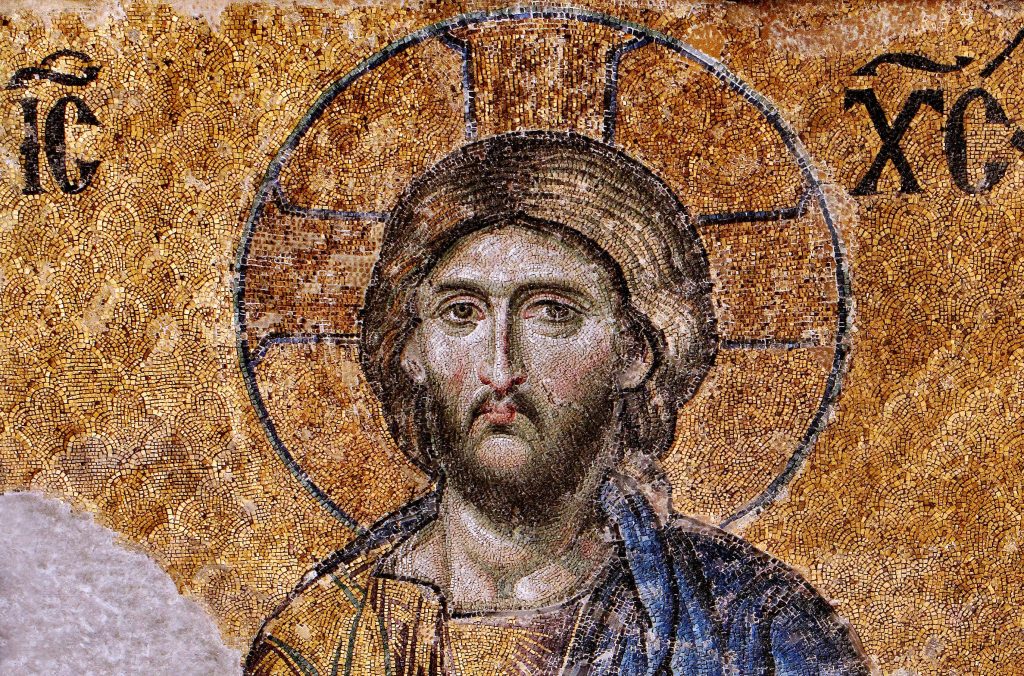
Picture: The mosaic of Jesus Christ the Pantocrator, Ruler of the Universe, at Hagia Sophia, in Istanbul, Turkey. What does he ask of you today?

Link for the Mass readings for Saturday, January 25, 2025

Let us pray and follow the lead of Jesus.

Jesus went up the mountain and summoned those whom he wanted and they came to him (Mk 3:13).

Through the centuries mountains have been sites where people have gone to rise above their daily experiences, to rise above the clouds, where the air is crisper, cleaner. It is a means of gaining a new perspective, transcending the human to touch the spiritual, and with the hope hearing the voice of God. When one of the Gospel writers inserts the detail that Jesus is present on a mountain, we can be prepared that something significant is going to happen.

In today’s Gospel of Mark, the good news revealed to us is that Jesus calls to himself the Twelve, the Apostles, to preach and cast out demons. They are to continue the ministry of Jesus. These are not perfect men, but each will have a part to play in salvation history. Jesus will entrust them with the deposit of faith that they are to protect, yes, but more so to proclaim by word and deed. Apostle means one who is sent.

Jesus will continue to call the Twelve to himself, to teach, mentor, model, and empower them so that they will continue his mission to call people to repent and believe in the Gospel. Even though, especially through the Gospel of Mark, it often looks as if Jesus may have made a mistake in his choice. The Twelve do not ever grasp who Jesus really is, and when Jesus needs them most, Judas will turn him over to the Temple guards, the others flee at his arrest, and Peter will publicly deny him three times. It will not be until after the Resurrection and Ascension that the seeds that Jesus had sown in them would begin to germinate and bear fruit.

Just as Jesus called the Twelve, he calls us as well. Each generation must experience and embrace the deposit of faith that has been given to us and pass it on to the next. Are we perfect, no. Do we have doubts, fears, weaknesses, yes. Does God call us and love us anyway? Yes. Like each Apostle, we are to go out and proclaim the good news that Jesus is our Lord! We do this daily with our words, faces, and actions. We are to think, look, speak, and act in ways that are kind, empowering, uplifting, and convicting while at the same time resisting the temptation to fix others. We are to strive to bear witness, be present, accompany and guide one another.

We all have much on our plate, some of us to overflowing. We may be thinking I cannot possibly do one more thing. Start small by bringing God with us into whatever we are already doing. He will give us the tools and accompany us as we seek to fulfill his will. As did the Apostles, we will make mistakes, make false starts, trip, fall, sin, and deny opportunities to reach out to be a witness. When we commit any or all of the above, we must resist beating ourselves up and instead learn from the experience, lean into Jesus, and with him prepare better for the next apostolic opportunity.

Jesus went up the mountain to pray. We are to make time each day to do the same. Let us begin our day today with a few moments of intentional stillness, to breathe, and ask Jesus what does he want us to do today. Are we worthy of his call? Probably not, for all of us fall short of the glory of God. More important, are we willing? That is a question for each of us to answer today and each day hereafter.


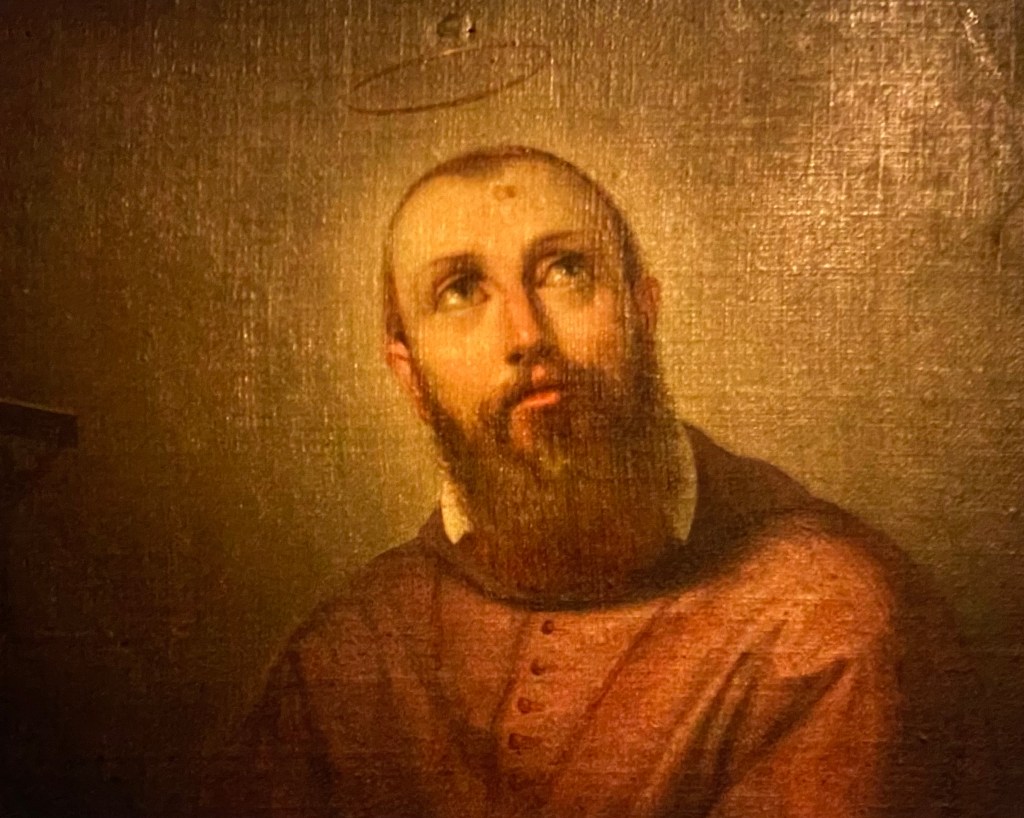
Photo: When we pray, we will know Jesus and we can then better follow the guidance of St. Francis de Sales whose memorial we celebrate today: “If He is with me I care not where I go.”

Link for the Mass readings for Friday, January 24, 2025