Have courage, have faith, trust in Jesus.

“Jesus, aware at once that power had gone out from him, turned around in the crowd and asked, ‘Who has touched my clothes'” (Mk 5:30)? The woman could have slipped away, she could have stood still and said nothing. Had anyone seen her touch his clothes. Jesus’ disciples were bewildered that Jesus even asked such a question with so many pressing about him. No matter, the woman approached with “fear and trembling” and told him the truth.

In coming forward and telling the truth, this woman was showing tremendous courage. She had just broken a serious, social taboo. She touched Jesus in public as a woman and having been hemorrhaging for twelve years, would have been considered ritually unclean. Her touch would have rendered Jesus unclean. The opposite happened. Both Jesus and the woman knew she was healed the moment she touched his garment. Jesus did not admonish her but publicly recognized her faith.

All the while as this scene transpired, Jairus must have been in agony, knowing how close his daughter was to death, and Jesus actually, stopped and took precious time to even engage with this woman. Finally, they were about to resume their journey when the terrible news came that his daughter had passed away. What might have flashed through his mind in that moment? The time Jesus took to talk with her, could that have made the difference?

Other details surely crossed his mind. As a synagogue official he would have known the taboos she crossed as a woman who was the lowest of low. She would have also been frail and pallid from her condition, at death’s door herself, yet she had mustered such courage and faith. As these and other thoughts raced through his mind, Jesus said to the man, “Do not be afraid, just have faith” (Mk 5:36).

Jairus had just experienced a powerful expression of just such faith with this woman, probably someone until this very moment who he would have shown disdain for. Maybe just maybe, if he could muster the same faith as her, Jesus could bring his daughter back to life. Could his and the woman’s eyes met at that moment? Could a light have then shone in the darkness of his despair? Jesus would heal his daughter, by taking her hand and commanding her to rise and walk.

How many of us have been or have known someone who has experienced the anguish Jairus, whose daughter was near death, was going through, or the woman who had been suffering for twelve years with hemorrhages and receiving no help and all but lost hope? How many of us know of such healings that still happen today? How many of us have though experienced the opposite? Where we experienced no healing, we wondered where Jesus was, and why did he allow this to happen, or did not step in to help?

The best we can do in times of trial and dire need is to summon the courage of the woman suffering from hemorrhages and trust in Jesus. He may or may not bring the outcome we seek. But I assure you that he is present with us through our pain and suffering, whether we feel his presence or not. Sometimes he allows the unthinkable to happen, of which we cannot even comprehend at the time, to bring about a greater good. Often, we are not able to see that until a later date when we are able to look back.

Remember also, that even death does not have the final say. Jesus does because he has conquered death. Jesus and we who participate in his life are victorious. Healings do still happen. Ultimately, faith is placing our trust in our God and Father who loves us, who is present with us no matter what, and carries us in our darkest hour. He sent his Son to walk with us and encourage us as he did with Jairus: “Do not be afraid, just have faith” (Mk 5:36). Let us place our hand in his, face what is before us, and be on our way together.


Photo: The light of Jesus shines even when the sun doesn’t. Rosary walk as storm clouds gathered a few weeks ago, St. Vincent De Paul Regional Seminary, Boynton Beach, FL.


Link for the Mass readings for Tuesday, January 30, 2024

The light of Jesus will free us from our darkness and suffering.

There is darkness and suffering in the world and at times it can be overwhelming. We can experience this darkness far away while other times we experience it up close and personal. I could give some examples, but I will not. We do have to acknowledge the reality of the darkness, but we do not have to feed or sensationalize it. Our readings shed a little bit of light on how we can approach the darkness.

In the first reading, David, already suffering from the news that his son, Absalom, was wanting to overthrow him, chose to “take flight” rather than attack him with arms. As they are fleeing, they are not met by Absalom and his men, but a man named Shimei who begins to hurl curses, dirt, and stones at David.

David was by no means perfect, but he knew how to repent and turn back to God. Instead of crushing his son with the might of his own army or reacting violently toward Shimei, David not only endures Shimei’s tantrum, he accepts it as God’s will. When one of his military leaders, Abishai, offers to lop off his head, David responds, “What business is it of mine or of yours, sons of Zeruiah, that he curses? Suppose the LORD has told him to curse David; who then will dare to say, ‘Why are you doing this? (2 Samuel 16:10)’”

In the Gospel of Mark, Jesus meets the Gerasene demoniac. This man was lost to his family and friends. No one could do anything to help him, and yet when Jesus came there was hope, he was a light in the darkness. Jesus called the unclean spirit out of the man from a distance. Could Jesus’ words been just the spark to ignite in this man who had all but lost hope? Was he able to then run to Jesus and prostrate himself before him as the unclean spirits sought to keep him bound and remain at a distance?

The unclean spirit made an attempt to mock Jesus, but Jesus showed his power and authority to free this man from the actual legion of spirits that possessed him. The heir of David exorcised the unclean spirits from this man. Sitting before Jesus freed and whole again, he asked to follow Jesus. Jesus instead sent him to go home to his family, to preach the good news of his freedom. What a witness he must have been!

Both David and Jesus reveal to us that meeting darkness with darkness is not the answer, reacting in kind only feeds the darkness. When we lose all hope, let us trust in Jesus, there is always a way. Let us allow Jesus to shine his light and fill us with the warmth of his love so that we may have the humility to see our weaknesses and surrender them to Jesus so that we can be forgiven, healed, and strengthened. If we don’t, we will remain vulnerable to the attack of the enemy.

The gift of the sacrament of Reconciliation helps us to do just that. When we find we are suffering with habits of sin and or recurring, unhealthy behaviors, we can bring them to the light by confessing them. Having the humility to bring them out into the open allows us to be released from the tendrils of their grip on us and we too can be forgiven, healed, and free.


Photo: Canonical retreat back in November, Bethany Retreat Center, Lutz, FL.

Link for the Mass readings for Monday, January 29, 2024

God first before anyone and anything else will help us to experience more peace.

“Brothers and sisters: I should like you to be free of anxieties (I Corinthians 7:32).

Those in the Church at Corinth who heard this verse read to them as we just read or heard, would most likely have perked up. Who then, and now, would want to be in a steady state of stress? Who would rather experience a steady flow of peace, stillness, and tranquility?

Paul’s guidance to experience peace may be lost in his example of being married or not married. It is important to recognize that Paul is writing from the perspective that Jesus will be returning soon and not saying that one state is better than the other. His writings often reflect that if one is married it is good to stay married, if one is single or a virgin to stay in that state and not seek marriage.

Obedience to Jesus and his Father is the guidance that Paul gives. The husband and wife are going to feel the tension of their obedience to God and each other. They will be more divided, and this tension will grow when they put each other first over and above God. When we allow anyone or anything to have a place of priority before God there will be a greater potential for anxiety because we are placing our ultimate trust in someone or something that is finite and imperfect. When we are obedient to God and when he is first and primary in our lives, our wills will be more ordered to his will. To be obedient, we need to listen to his voice, and put his words into practice in our everyday lives.

Moses said before his death to those about to enter the promised land: “A prophet like me will the LORD, your God, raise up for you from among your own kin; to him shall you listen” (Deuteronomy 18:15).

“To him shall you listen.” As Christians, we believe Jesus is the One to whom Moses is speaking of, the one for whom we are to listen.

I remember Jesus being perturbed, angry, moved by compassion, experiencing sorrow, and extending love, healing, and mercy, but I don’t remember reading that he ever experienced anxiety. This is so because he was consistently obedient to and abided in the love of his Father. His Father also gave him authority to teach, heal, and cast out unclean spirits. Unlike the long tradition of rabbis who were given authority from those who they studied at the feet of, each rabbi would have traced their teaching pedigree through a succession of teachers back to Moses.

Jesus did not do so, and this may be one of the reasons the people were so amazed at hearing his teachings, witnessing his healing miracles, and the exorcising of unclean spirits. They wondered about where he had the authority to do, say, heal, and exorcise as he did. The demons and unclean spirits knew where Jesus got his authority from. They knew he was the Son of God and were obedient. When Jesus, as in today’s gospel, commands the unclean spirit to come out of the man, the spirit obeys. May we obey as well to love the Lord our God with all our heart, soul, and strength, and our neighbor as ourselves, in that order.

It may seem counter intuitive to place God before those closest in our lives; our spouse, family, and our friends, and even before ourselves, as Paul guides us to. Even if we do understand the principle, we may find it hard to put it into practice. David Kaiser-Cross, who was the associate pastor at Jupiter First Congregational Church, explained to me that if we put God first and strive to improve our relationship with him, as we grow closer to God, we grow closer to each other.

This is possible because as we receive and abide in God’s love, we are changed. We become more patient, more attentive, present, understanding, and loving. We experience forgiveness and healing. We are more grateful for what we have received. All of these graces lead us away from a selfish or grasping posture, and as we heal, we become less reactive, less insecure, less anxious, and more available to help others to heal and grow.

The more we are obedient and surrender to the commands of Jesus and put his guidance into practice in our lives, the more we will experience, not oppression but freedom, and the same peace that he experienced, “that peace that surpasses all understanding” (Philippian 4:5).

When we incorporate a daily practice of making time to be still, step away from our daily activities, even good and healthy ones and relationships, and rest and abide in the Father’s love, our anxiety will become less, and our peace and tranquility will become more. As challenges and conflicts arise, we will no longer be clinging to the person with white knuckles because of our fear of losing them, we will instead be more apt to remember to turn to Jesus, invite him into our situation because he is our anchor instead of them. We will be better able to let go of the unhealthy attachments that we have and allow for more breathing space between each other.

We will see our way through each crossroad with less stress, feel more of a sense of freedom and joy as we overcome our challenges. We will feel more stable and secure in our relationships with Jesus and each other as we work through each conflict. We will not feel we have to run away from or deny conflict as long as we remember that as we begin where we are right now, we are loved by Jesus as we are. May that reality be our foundation so that as we learn and mature, step by faithful step, we will consciously choose to be more patient and gentler with ourselves and each other.


Photo: One of the ways I have been experiencing more of God’s peace has been during my evening Rosary walks.

Link for the Mass readings for Sunday, January 28, 2024

Faith in Jesus instead of our anxieties and fears brings peace and stillness.

“Why are you terrified? Do you not yet have faith” (Mark 4:40)?

Jesus asked this question of his apostles after he quieted the wind and the waves. These were seasoned fisherman, so for them this must have been quite the storm. They even thought that they were not going to survive it as the waves not only tossed their boat but it also began to take on more and more water.

The question of faith was directed at their trust in him. Did they believe that Jesus was who he said he was and showed himself to be. If so, all would be well. Jesus called his apostles and brought them into his inner circle so they could not only experience his teaching, healings, and exorcisms but also to get to know him as the Son of God. As with any relationships, this takes time, and their faith, their trust in him in all circumstances was still growing. But as we read yesterday, faith as small as a mustard seed, will bring large results. This would come to pass with the apostles as well in time.

Our anxieties, fears, and insecurities are a good barometer of our faith in Jesus. These emotions are human and good in themselves as they are alerting us to a real or perceived threat. The challenge is to discern the real from the perceived and to determine when the threat has passed.

Where these emotions become a problem is when we believe in, place our faith in, and identify ourselves by them. Instead of saying to ourselves, I feel anxious, we define ourselves as anxious. Doing the opposite by denying and stuffing our emotions and feelings do not help either.

Jesus can help us to calm the real storms as well as the perceived storms in our lives. He can help and empower us to sit with our emotions, and ultimately get to the source of them and identify the root, identify if it is perceived or real, and then work through it. As with the apostles, when we continue to turn to Jesus, our faith and trust in him will grow, and we will also heal, mature, and grow through the storms in our lives.

Easier said than done? Yes for both our real and imagined storms. But for either, as we place our trust in Jesus, persevere, claim our authority in his name to renounce any attacks of the enemy, all things are possible!


Photo: Storm clouds on the way during retreat in January, all was calm and still.

Link for the Mass readings for Saturday, January 27, 2024

Knowing we are cared about and loved makes a big difference.

“I yearn to see you again, recalling your tears, so that I may be filled with joy, as I recall your sincere faith that first lived in your grandmother Lois and in your mother Eunice and I am confident lives also in you” (I Timothy 1:3-5).

St. Paul writes these words to Timothy and what struck me was not only the affection he had for Timothy and that he knew his mother and grandmother’s names, but also that he knew the depth of the faith of each.

We are at our best when we make relationship with God and one another a priority. Christianity is not so much a philosophy or even a theology, as much as it is a relationship with a person, the God made man, Jesus the Christ. This faith in and willingness to enter into a relationship with God was lived by Lois and then passed on to Eunice, who then both passed it on to Timothy.

They knew and loved God and one another, they cared for and supported each other, and they welcomed Paul into their family such that he knew them well enough to refer to them by name in this letter. Do we know each other by name in our places of worship, in our communities, our neighborhoods?

Dr. Leo Buscaglia, a professor at USC shared a story about how he noticed that one of his students had missed class for a few days. When she did not return the following week, he asked her classmates about her whereabouts, and no one knew where she was. He then reached out to the dean of students, and she broke the sad news to Dr. Buscaglia that she had taken her life.

He was horrified not only by her death but even more by the fact that no one in the class knew anything about her. He then began to teach a course simply titled, “Love Class 101” in which his students came together to learn about building relationships with one another. He was doing what Lois, Eunice, Timothy, and Paul were doing, what the faith communities and families are called to do, what we as human beings are called to do.

We can help to shift the tide of growing anxiety, confusion, isolation, and loneliness, when we make a commitment to care, to be more present, communicate and listen, be more understanding and patient, support, empower and lift one another up. In other words, when we are willing to love God with our whole heart, mind, soul, and strength, and love our neighbor as ourselves.


Photo: I wasn’t the sharpest tool in the education shed, nor the best teacher, but I cared. Let us love and care for those in our realm of influence so that they know that they matter and they are loved.

Link for the Mass readings for Friday, January 26, 2024

The way of Jesus leads to forgiveness.

Today we celebrate the Conversion of St. Paul. Saul, before he was Paul, was a stellar Pharisee and defender of his faith. He learned at the feet of one of the top rabbi’s of his time, Gamaliel, and as he himself said, was “zealous for God”. So much so that he “persecuted this Way to death” (Acts 22:3-4). The Way was the term used early on for those Jewish people who followed Jesus.

The turning point for Saul was his miraculous encounter with Jesus as he was on his way to Damascus to persecute more people of the Way. The phrase that Jesus used when he spoke, “Saul, Saul, why are you persecuting me” (Acts 22:7) was an interesting one. He could have said, “Why are you persecuting my Church, the children of God, your brothers and sisters” or any other choice, but instead he chose, “Why are you persecuting me?”

Jesus is showing the intimate connection that he has achieved through his being born as one of us, suffering and dying and conquering death for each of us, rising and ascending back to the right hand of the Father, still fully human and divine, such that he can come at this point and time to have an encounter with his most zealous of persecutors of the Way.

The encounter with Jesus is enough. Saul is stunned beyond anything he could have imagined. He was not struck by a sword, a smashing blow, or a trip wire across his path. He was stopped by a great light that surrounded him. Jesus, the “light that shines in the darkness” (John 1:5) did not condemn him, nor punish him. He asked a question and then told him what he was going to do next.

It would take another three years for Saul to work out this encounter, but once he did so, he made an incredible 180 degree turn in his life. The Way who he had been persecuting would now become the major focus of his life. He surrendered totally to Jesus and gave everything he had, even his life.

The encounter that Saul had with Jesus offers us a very strong message that we need to allow to sink into the depths of our being. There is nothing that we have done that God will not forgive us for. As Saul said, he was “persecuting this Way to death.” St. Stephen was at least one of those who died at Saul’s command. If anything just came to mind, if just the mere hint of a whisper, “Oh but God will not forgive…” Fill in the blank or blanks. Sorry, that is the voice of the liar, the deceiver, the enemy. That is not God’s voice. Don’t believe it for a minute, for a second. Renounce that thought in the name of Jesus.

God will forgive us. Period. Full stop. As we heard a few days ago. Jesus who was beginning his public ministry said, “This is the time of fulfillment. The kingdom of God is at hand. Repent and believe in the gospel” (Mark 1:15). That is exactly what Saul did and became Paul and a saint. That is what we are invited to do this morning.


Photo: Rosary walk during canonical retreat at Bethany Center, Lutz, FL.

Link for the Mass readings for Thursday, January 25, 2024

We will mature when we keep God first.

God loves us and he shows us this love by caring, providing, guiding, convicting, forgiving, healing, and saving us from our fallen tendencies. We are more open to receive his love and the gifts of his presence in our lives when we are willing to acknowledge that God is God, and we are not, and that we need and depend on him. God is our Father, and we are his beloved children.

This may seem like a small matter, but it is not. The moment we begin to place ourselves, anyone, and/or anything before God, we open ourselves up for trouble. We saw this with the kingship of Saul and are now beginning to see the cracks in David’s foundation as king.

Building a temple for God sounds like a reasonable and pious thing to do, but God, through the prophet Nathan convicted David: “Thus says the LORD: Should you build me a house to dwell in” (2 Samuel 7:5)? God then continues to outline how he never had asked before through any of the patriarchs or judges for a dwelling, and shared how he brought David out from the shepherd fields, made him King, defeated his enemies, and provided for him, and it would be God who would build a house and a kingdom that would endure forever.

Jesus helps us to understand how, like David, we can miss the mark when he told and interpreted the Parable of the Sower. God sews his seed as creator and the key is whether we receive it and care for it or not. There are forces that can counter God’s gift, like Satan, the accuser and liar, who through his lies, temptations, and manipulations steals the seeds from us.

Those who do receive them also can have challenges. Some receive them with great joy, but do not savor and care for the gift given. They only receive God’s word in the moment at the surface level of their emotions, but do not do anything to foster its growth. There is no root to anchor them in times of trouble. Anxieties, worries, distractions, and diversions, choke out any growth that may begin after the seeds have taken root and begun to grow.

When we keep God first in our lives before all else, he will help us to prepare our soil so that the seeds he sows finds rich and healthy soil. This takes time and energy on our part to follow his guidance and those in our lives that he speaks through. The effort and discipline expended are well worth the effort and will bear great fruit in our lives and those we serve.


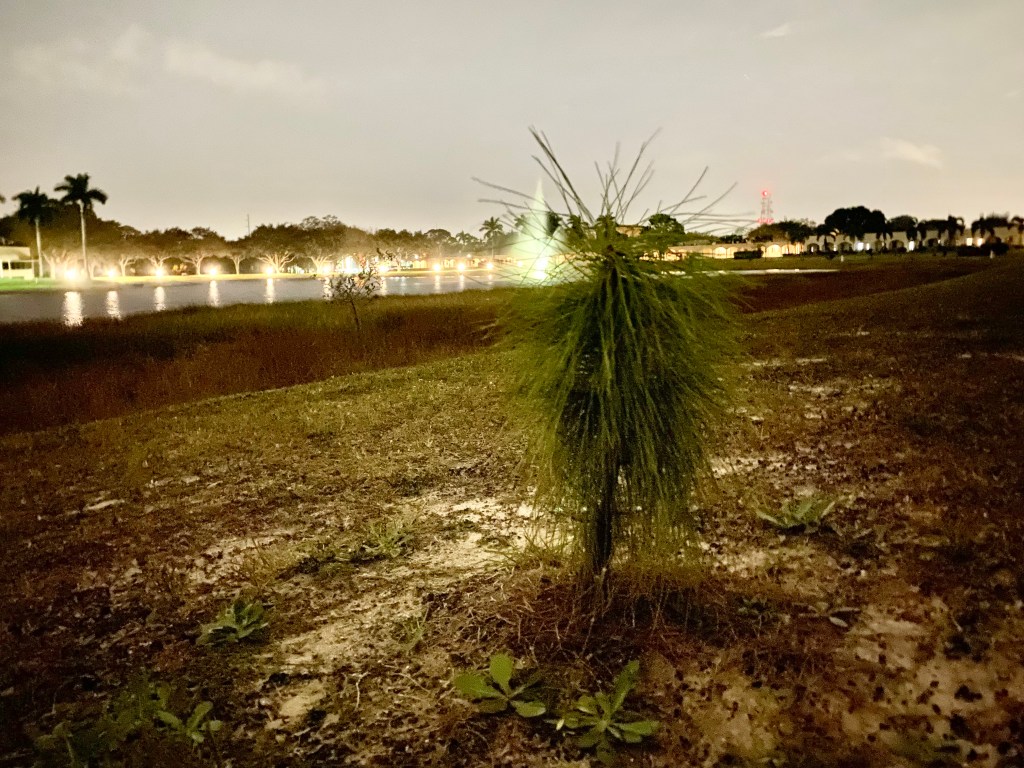
Photo: A pine sapling here at the seminary off to a good start!

Link for the Mass readings for Wednesday, January 24, 2024

We are family.

Jesus consistently stretches the norms and social constructs of his time. He does so not just for the sake of stirring things up, but to help the people of his time and us today to see the reality that God has created. He is leading us from our fallen nature to the truth of who God has created us to be and is calling us to be.

Today’s gospel is no different. What seemed to be a very simple and straight forward statement, “Your mother and your brothers and your sisters are outside asking for you”(Mark 3:32). Jesus turns this on its head when he responds: “Who are my mother and my brothers” (Mark 3:33)? And he is taking a risk here as well because of the deep familial bonds of his culture. What most people then and now would agree on would have been for Jesus to ask those listening to make some room for his family to come in and join them or at the least, let everyone take a ten-minute break while he said hello.

Instead, Jesus is extending the parameters of family. Family is not just bloodline. He is saying that his family members are those who do the will of his Father. Those who do so then are his “mother, brothers, and sisters.” We have been created in his image and likeness and are God’s beloved children. This is the reality Jesus is leading us to return to.

We are invited to be a part of his family. An exciting proposition and no genetic testing needed! We just need to do the will of God. The foundation of God’s will is to allow ourselves to be loved by him and to love him and each other in return. If this is our goal today and each day and we intentionally put this into practice in our own unique ways, our lives would be transformed and so would our world! When we really believe and live this truth, we will treat each other much better as well.

I invite you to read today’s Gospel account for yourself, Mark 3:31-35. It is only five verses. Make the Sign of the Cross, breathe slowly and deeply, read the account a few times slowly, and then ask Jesus to bring you into his memory. Jesus was there and he remembers. Ask him to guide you as you enter into the scene by allowing your senses to come alive.

What do you see, smell, hear, feel, and even taste? What stands out for you? Was there a word or phrase that you were drawn to that you can think more about or visualize? As Jesus teaches, is there anything he shares with you? When he asks, “For whoever does the will of God”, what might that mean to you? Allow Jesus to lead you and let God happen. Enjoy!


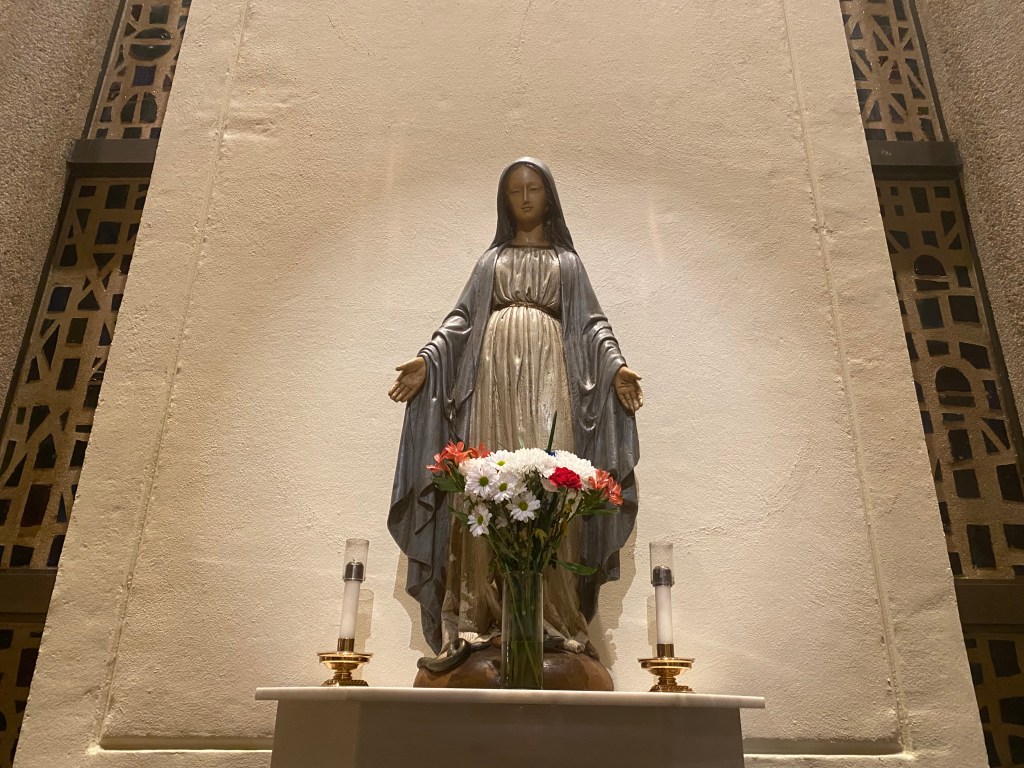
Photo: Our Mother Mary. Who followed God’s will better than she? St. Vincent de Paul chapel, St. Vincent de Paul Regional Seminary, Boynton Beach, FL.

Link for the Mass readings for Tuesday, January 23, 2024

Mary said, “Yes” to life. May we as well.

In casting out more unclean spirits, Jesus is not supported by the scribes but he is instead being accused of doing so by the power of “Beelzebul,” the prince of demons, which may be reference to an ancient Canaanite god. Jesus countered by asking, “How can Satan drive out Satan” (Mark 3:23)?

There are evil forces, principalities, and powers in this world, and they seek to wreak havoc, destruction, and division. Jesus shows from the beginning of his ministry that he has power over Satan and his fallen angels in league with him. The weakest Christian is mightier than Satan himself for he or she can call on the sacred name of Jesus and Satan and his minions will flee.

The power of the enemy is in their subtle attacks of our minds. From the get-go in Eden, Satan sought and continues to seek to distort the good that God has created. He and his demons seek to turn us away from God by whispering to us lies and half-truths, presenting apparent goods, and even using the words of the Bible against us as he did with Jesus in the desert.

Our defense against the enemy is to build our foundation on our relationship with Jesus. We need to daily spend time in prayer and scripture, spiritual reading, discerning God’s will and his voice, being open to be loved by him and loving one another. We are to participate in the Mass and the sacraments, especially Reconciliation often. Many other diversions, distractions, and enticements will lead us away from these pursuits, so we need to be more intentional with our choices.

The simple question we need to ask ourselves is does what we pay attention to bring us closer to God or lead us away. This is true regarding not just in our spiritual pursuits, but also all aspects of our lives. Our diet, exercise, rest, recreation, study, and work, all our daily activities can either lead us away from or closer to our relationship with God and one another.

The greatest gift of choosing God in each of our activities is that we will also be able to discern his voice over that of the enemy. One of the most dangerous lies that the enemy has sewn into the fabric of our world and has unfortunately taken firm root is that the unborn is not a human being.

There are many reasons why someone may choose to have an abortion and each of them are serious and need to be addressed with care, compassion, support, and help, but that does not change the truth that from the moment of conception there is a new being distinct from her or his mother or father with everything physiologically needed as well as a soul imparted by God to continue to develop, not into, but as a human being. The only difference between me writing and you reading is that they are smaller and more vulnerable. All that is needed is protection, care, and the proper support, which we all need as well.

Today is The Day of Prayer for the Legal Protection of Unborn Children. May we match our prayers with our determination to provide the assistance and needed care for all human beings no matter who they are or what stage of life they are in. The truth that can help us on our way is that Jesus died for each and everyone of us, born and unborn, slave or free, with or without a country, no matter our, race, gender, ethnicity, nationality, or creed, because he respects our dignity as a child of God. We make better decisions for the betterment of our world when we see each other as human beings created in the image and likeness of God.


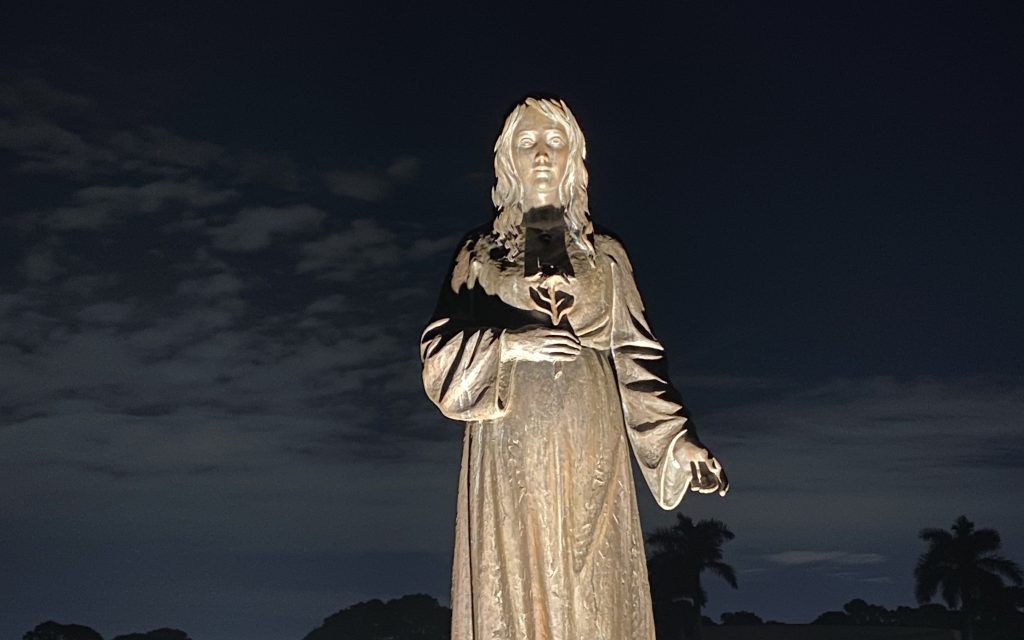
Photo: Beginning of Rosary walk each night with Mary, St. Vincent de Paul Regional Seminary, Boynton Beach, FL.

Link for the Mass readings for Monday, January 22, 2024

Repentance frees us from death and brings us life.

“This is the time of fulfillment. The kingdom of God is at hand. Repent and believe in the Gospel” (Mark 1:15).

God, who is beyond time and space, who is infinite, has a plan and a proper time and place to implement his plan. God invites. He does not impose. God invites us to participate in his plan, but he also gives us the freedom to refuse and walk away.

God called Jonah to preach repentance to the people of Nineveh and Jonah refused because he believed that they would repent, and that God would forgive them. Jonah walked in the opposite direction. That did not go so well. The ship embarked upon was caught in a terrible storm and the people threw him overboard to save themselves. Jonah spent three days in the belly of a great fish. While there, he repented to God, agreed to fulfill his vow to do God’s will. The great fish spit him back out on land and in the direction that God wanted him to go in the first place.

Jonah got the point, did as he was called to do, and the whole city was saved from the impending wrath of God. The people were saved because they repented. They turned back to God and away from their sinful ways. Jonah was not happy about it and God gave him another lesson.

Uncomfortable with the heat of the sun, God “provided a gourd plant” which gave Jonah relief. The next morning a worm ate the plant and Jonah was subjected to the hot east wind and the beating of the sun, so complained to God to take his life. God then asked Jonah, “Do you have a right to be angry over the gourd plant” (Jonah 4:9). Jonah said he did and then God pointed out how Jonah was upset over the loss of one gourd plant that came to be in one day and was lost in the next. How much would God mourn the loss of “more than a hundred and twenty thousand persons” (Jonah 4:11)?

God feels the same way about each one of us. He does not want any of us to be lost. He loves us more than we can imagine, more than we can ever mess up or sin, and he does not define us by our worst moments. God also wants us to know that this life that we have is a beautiful gift, but this is not it. All that exists besides God is finite and material and will not last. We are not to hold on too tightly to the things of this world because as St. Paul shared, “For the world in its present form is passing away” (I Corinthians 7:31).

This is not something to be down about because God sent his Son to become the first born of the new creation. He sent him at a particular time a place and Jesus came to let us know that there is something even better awaiting us – eternal life with his Father.

How do we get to share this wonderful gift? We do what Jonah and Saul who became Paul did. We follow the invitation of Jesus that I started this homily with. “This is the time of fulfillment. The kingdom of God is at hand. Repent and believe in the Gospel” (Mark 1:15).

This is the time. God dwells in the eternal present. This moment is the time for us to recognize that Jesus is with us. He is the kingdom of God present in our midst, in my typing and your reading these words. We just need to make a choice, are we going to refuse his invitation and walk away or accept his invitation to repent and surrender our lives to him?

To repent means to turn back, to reorient, to realign our lives to the will of God our loving Father. When we do so we are no longer alone. God who has always been present with us is accessible because Jesus gave his life that we might have life and have access to his Father. When we decide to turn back to him, we will experience and receive his help and enter into and continue to develop a relationship with him. Turning back to God does not mean our lives will become perfect or that our struggles, trials, and traumas will just evaporate. Turning back to God does mean that we will have his help, strength, guidance, and support.

Repentance is a lifelong journey of allowing Jesus to reveal to us that which we need to let go of, that we have placed before God, or put first instead of God, and have the humility to begin to let go. As we begin to let go, Jesus will reveal more to let go. Step by step, choice by choice, we will become less, and Jesus will become more in our lives. As we become more consistent in choosing each day and each present moment to say, “Yes,” to the will of God, we will grow closer to him and experience more joy, peace, and love in our lives.


Photo: Step by step, Jesus will guide us through this life and into heaven. My view coming back from my Rosary walk each night, St. Vincent de Paul Regional Seminary, Boynton Beach, FL.

Link for the Mass readings for Sunday, January, 21, 2024