Jesus offers us the sign of Jonah.

“An evil and unfaithful generation seeks a sign, but no sign will be given it except the sign of Jonah the prophet” (Mt 12:39).

Jonah is the prophet best known as the one who spent three days and nights in the belly of a whale, great fish, or sea monster, depending on your scriptural translation. Jonah ended up in that predicament because he refused to follow God’s direction to speak his message of forgiveness to the sworn enemies of Israel, the Ninevites. It would be like God asking one of us to fly out to the Middle East to meet with members of ISIS or Al-Qaeda and invite them to repent. Not only would we not believe they would want to repent, would we want them to even if they would? Also, whether they did or didn’t, would we be able to return from such a meeting with our heads intact?

These were probably some of the issues running through Jonah’s mind when he refused to follow God’s will. After swimming to shore, Jonah overcame his resistance and followed the command of the Lord, kept his head on his shoulders, and the people of Nineveh repented. Happy, happy, joy, joy! Not exactly. At the repentance of his enemies and God’s expression of mercy and forgiveness, Jonah said to God, “This is why I fled at first to Tarshish. I knew that you were a gracious and merciful God, slow to anger, rich in clemency, loathe to punish” (Jonah 4:2)”. Jonah shows his hardness of heart in that he did not want to go to Nineveh because he did not want his enemies to receive God’s forgiveness!

The scribes and the Pharisees asked Jesus for a sign and the sign of Jonah is what he gives them: The Ninevites, Gentiles, non-Jews, were willing to repent at the word of Jonah, and those scribes and Pharisees questioning Jesus, God’s chosen, were not willing to repent at the urging of one greater than Jonah, the Son of God, who was in their midst.

Jesus announced his ministry, as recorded in Mark 1:15, with the words: “The kingdom of heaven is at hand. Repent and believe in the Gospel.” That is again our invitation today, to examine our conscience by asking God to help us to recognize his presence among us, then reflect on what good God has done in our lives and give him thanks. Review the last day or two to see where God has called us to act. Where did we answer his call, where did we, like Jonah, resist or refuse?

Someone greater than Jonah, is Jesus the Christ. May we allow his love, mercy, and forgiveness to fill us and to soften our hardness of hearts. Jonah spent three days in the belly of the whale and was saved, Jesus spent three days experiencing death and rose again. Once we repent and die to our self-sufficiency and surrender our pride, we will experience the love and mercy of Jesus flow through us to all those we meet in person and online. Even, and especially, those for whom we would rather not: those who get under our skin, grate on our nerves, and/or those who mirror to us our own biases and prejudices.

Suffering is a very concrete and harsh reality. That is something we all agree on whether we believe in God or not. The question is, how do we respond to suffering, especially the hurt caused by another? We can harden our hearts, slip into denial, despair, or wish our problems away, but none of these work very well for the long term. Jonah found that out when he hardened his heart against forgiveness and refused to follow God’s will. Jesus followed the will of God to the cross, forgave those who crucified him, and experienced new life.

Let us not run away from God, his will, or his offer of forgiveness. Forgiveness stops the bleeding from the original wound received. When we forgive, we will not be alone. Jesus waits for us with his arms wide open to embrace us and journey with us each step of the way. Jonah hardened his heart, but still was willing to repent and follow God’s will to preach repentance to his enemies who did just that. When willing to forgive, we open our hearts and minds to God’s love which opens the door for healing, mercy, and reconciliation.

—————————————

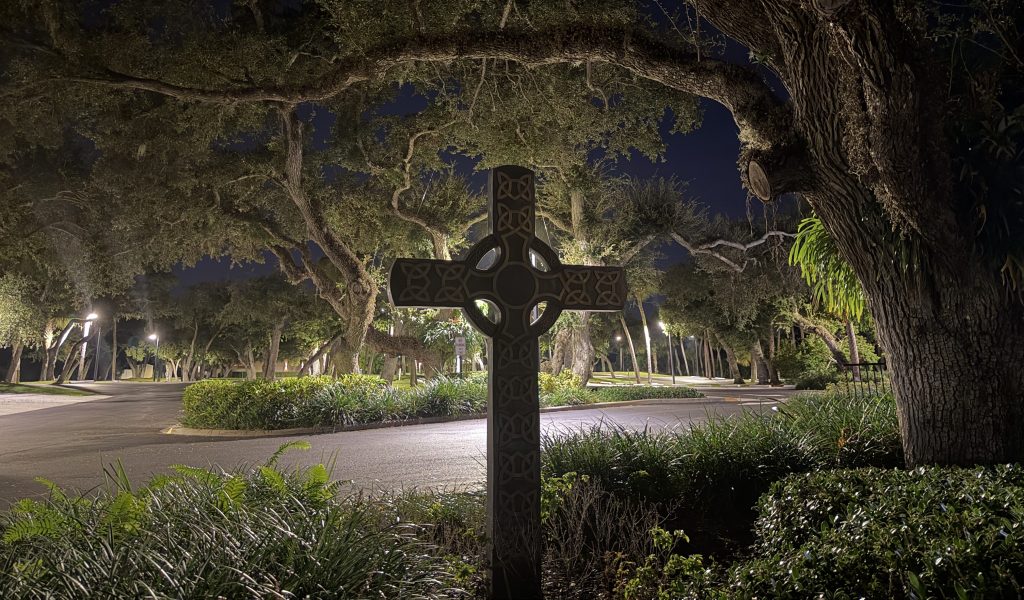
Photo: There is no resurrection without the cross. There is no healing without forgiveness. There is no suffering without God’s consolation.

Link for the Mass readings for Monday, July 20, 2026

Turn away from seeking signs or wisdom. Seek Jesus instead.

While still more people gathered in the crowd, Jesus said to them, “This generation is an evil generation; it seeks a sign, but no sign will be given it, except the sign of Jonah” (Lk 11:29).

To understand what Jesus means, we need to understand the sign of Jonah. Jonah was sent by God to go to Nineveh, the capital city of Assyria, to call them to repent from their wicked ways. The Jews not only considered Nineveh to be a place of decadence, wickedness, and godlessness, but the heart, the capital city of Assyria. Its military which had invaded Israel and conquered the northern kingdom around 721 BC.

We can understand Jonah’s initial refusal to follow God’s lead. Not only did he not want to go to Nineveh, but Jonah also did not want them to receive mercy. He wanted God to punish and destroy the nation who he considered an enemy. Those who have read the Book of Jonah, know that Jonah finally acquiesced, and within hours of his proclamation to the citizens, including the king, they repented and God showed them mercy.

Jesus draws a parallel between the people of Nineveh and his listeners. The people of Nineveh heard and repented to a reluctant messenger. The Ninevites, Gentiles, the sworn enemies of Israel, received God’s mercy when they repented. Now, in their midst was one greater than Jonah, the Son of God, and they were demanding of him a sign. The sign of Jonah was repentance. Jesus, from the beginning of his public ministry, preached the same: “This is the time of fulfillment. The kingdom of God is at hand. Repent, and believe in the Gospel” (Mk 1:15).

Many did not listen to Jesus. We would do well to listen to Jesus’ message. Repentance is a foundational spiritual discipline. We are called to consistently and daily examine our conscience and to come to accept that we live in a fallen world. This is not a pessimistic view. This is an awareness of the reality of our present condition.

By accepting that we live in a fallen world, that there is only so much that we can do by ourselves, we will begin to recognize that we need a savior. The next step that we can make is to acknowledge that we need to repent, to identify and turn away from our sins, and turn back to him who can save us. For apart from him, we can do nothing, yet with God, all things are possible.

St Mother Teresa recognized the need for Jesus and stressed this when she taught her novices that she was not interested in numbers and she was not interested in having a branch of social workers. She and those who followed Jesus were to be missionaries of God’s charity. They were to serve Jesus in the distressing disguise of the poor. To do so they participated in daily Mass for an hour so they could bring Jesus and see Jesus to those they encountered each day. After returning from their time of service they participated in adoration for an hour. Empowered and renewed by Jesus, blessed by his mercy and love, they could serve Jesus in those they met in the harshest of conditions.

Jesus calls us, as he did his listeners, to resist seeking signs as did the Jews and wisdom as did the Greeks, but repent and give our lives to him. By emptying ourselves of our preconceived notions and opening our hearts and minds to follow his lead and be conformed to his life, we can be about doing God’s work. As long as we stay connected to him, he will guide and give us the means to accomplish that which he sends us to do.

We stay connected to Jesus by allowing his light to shine in our hearts and minds so that we can better identify our sins. Not to be condemned, but convicted of them so that we, like the Ninevites, will repent and turn our focus back to God. Our goal is to enter a daily rhythm of resisting temptations and when we fall repenting from them as soon as possible.

Slowly our selfish and disordered pursuits will cease to be our priority, we will no longer put our own interests at the center. Instead, we will accept Jesus as the core of our lives, that he may be the guiding light of our thoughts, words, and actions. For we are “called for freedom,” to be freed from our sins so that we can “use this freedom” to “serve one another through love” (Galatians 5:13 ).


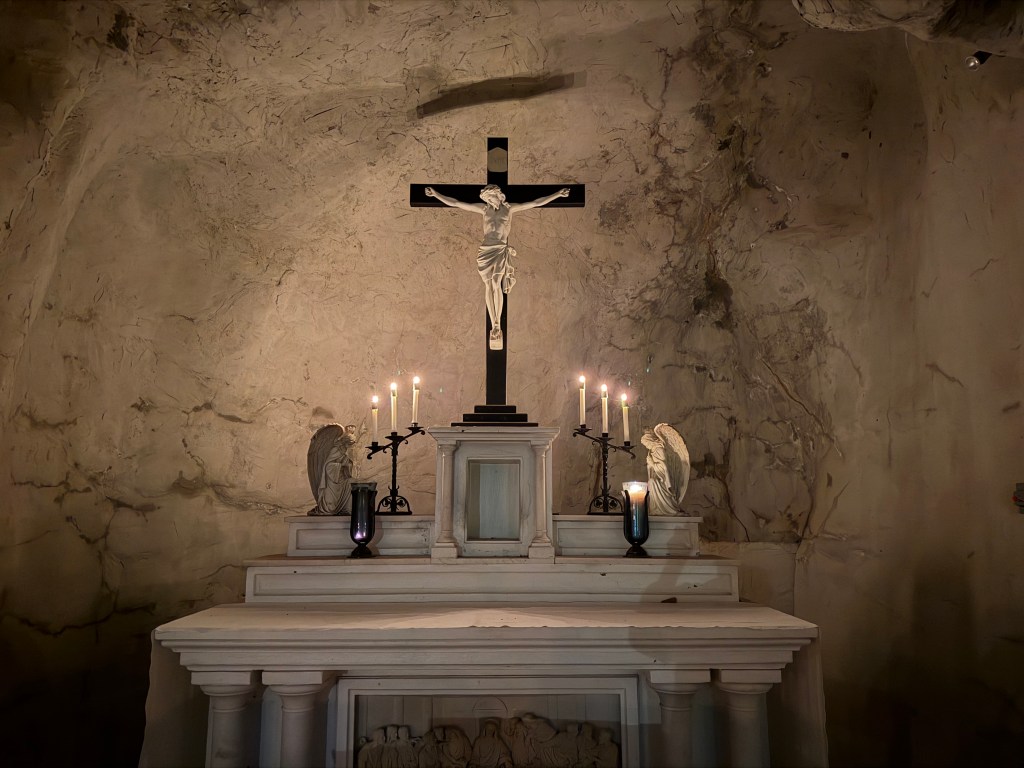
Photo: Jesus calls us to repent from anything that separates us from him and his Father so that we can experience the love of the Holy Spirit. Are we willing to repent?
Link for the Mass readings for Monday, October 13, 2025

Repentance frees us from death and brings us life.

“This is the time of fulfillment. The kingdom of God is at hand. Repent and believe in the Gospel” (Mark 1:15).

God, who is beyond time and space, who is infinite, has a plan and a proper time and place to implement his plan. God invites. He does not impose. God invites us to participate in his plan, but he also gives us the freedom to refuse and walk away.

God called Jonah to preach repentance to the people of Nineveh and Jonah refused because he believed that they would repent, and that God would forgive them. Jonah walked in the opposite direction. That did not go so well. The ship embarked upon was caught in a terrible storm and the people threw him overboard to save themselves. Jonah spent three days in the belly of a great fish. While there, he repented to God, agreed to fulfill his vow to do God’s will. The great fish spit him back out on land and in the direction that God wanted him to go in the first place.

Jonah got the point, did as he was called to do, and the whole city was saved from the impending wrath of God. The people were saved because they repented. They turned back to God and away from their sinful ways. Jonah was not happy about it and God gave him another lesson.

Uncomfortable with the heat of the sun, God “provided a gourd plant” which gave Jonah relief. The next morning a worm ate the plant and Jonah was subjected to the hot east wind and the beating of the sun, so complained to God to take his life. God then asked Jonah, “Do you have a right to be angry over the gourd plant” (Jonah 4:9). Jonah said he did and then God pointed out how Jonah was upset over the loss of one gourd plant that came to be in one day and was lost in the next. How much would God mourn the loss of “more than a hundred and twenty thousand persons” (Jonah 4:11)?

God feels the same way about each one of us. He does not want any of us to be lost. He loves us more than we can imagine, more than we can ever mess up or sin, and he does not define us by our worst moments. God also wants us to know that this life that we have is a beautiful gift, but this is not it. All that exists besides God is finite and material and will not last. We are not to hold on too tightly to the things of this world because as St. Paul shared, “For the world in its present form is passing away” (I Corinthians 7:31).

This is not something to be down about because God sent his Son to become the first born of the new creation. He sent him at a particular time a place and Jesus came to let us know that there is something even better awaiting us – eternal life with his Father.

How do we get to share this wonderful gift? We do what Jonah and Saul who became Paul did. We follow the invitation of Jesus that I started this homily with. “This is the time of fulfillment. The kingdom of God is at hand. Repent and believe in the Gospel” (Mark 1:15).

This is the time. God dwells in the eternal present. This moment is the time for us to recognize that Jesus is with us. He is the kingdom of God present in our midst, in my typing and your reading these words. We just need to make a choice, are we going to refuse his invitation and walk away or accept his invitation to repent and surrender our lives to him?

To repent means to turn back, to reorient, to realign our lives to the will of God our loving Father. When we do so we are no longer alone. God who has always been present with us is accessible because Jesus gave his life that we might have life and have access to his Father. When we decide to turn back to him, we will experience and receive his help and enter into and continue to develop a relationship with him. Turning back to God does not mean our lives will become perfect or that our struggles, trials, and traumas will just evaporate. Turning back to God does mean that we will have his help, strength, guidance, and support.

Repentance is a lifelong journey of allowing Jesus to reveal to us that which we need to let go of, that we have placed before God, or put first instead of God, and have the humility to begin to let go. As we begin to let go, Jesus will reveal more to let go. Step by step, choice by choice, we will become less, and Jesus will become more in our lives. As we become more consistent in choosing each day and each present moment to say, “Yes,” to the will of God, we will grow closer to him and experience more joy, peace, and love in our lives.


Photo: Step by step, Jesus will guide us through this life and into heaven. My view coming back from my Rosary walk each night, St. Vincent de Paul Regional Seminary, Boynton Beach, FL.

Link for the Mass readings for Sunday, January, 21, 2024