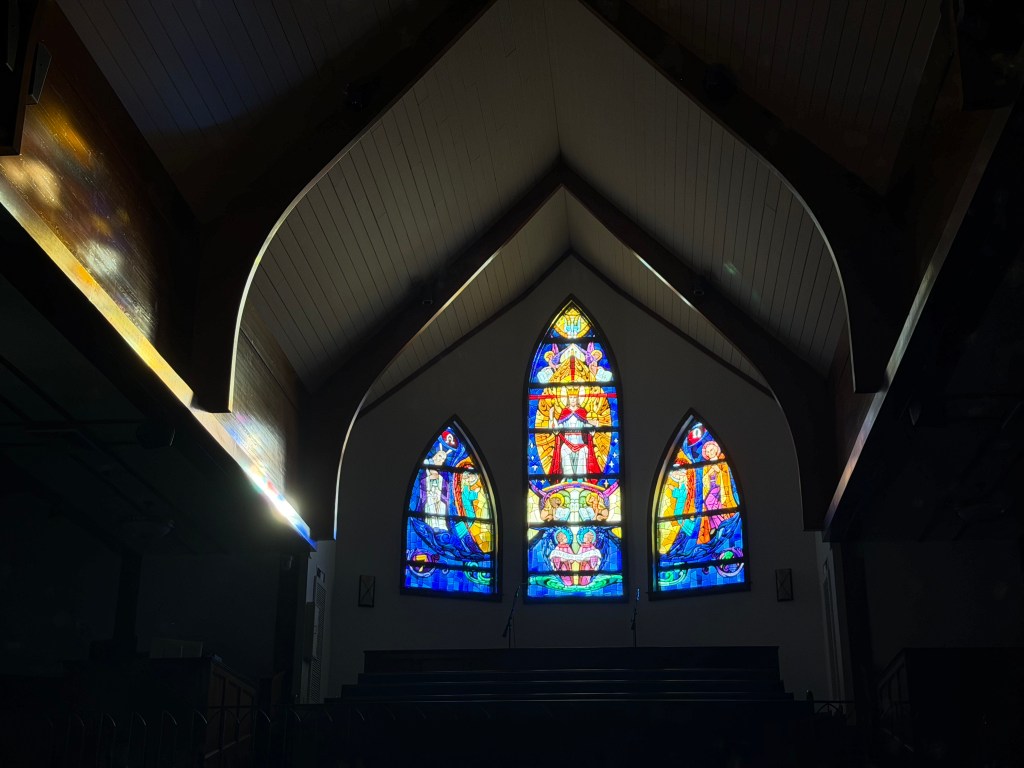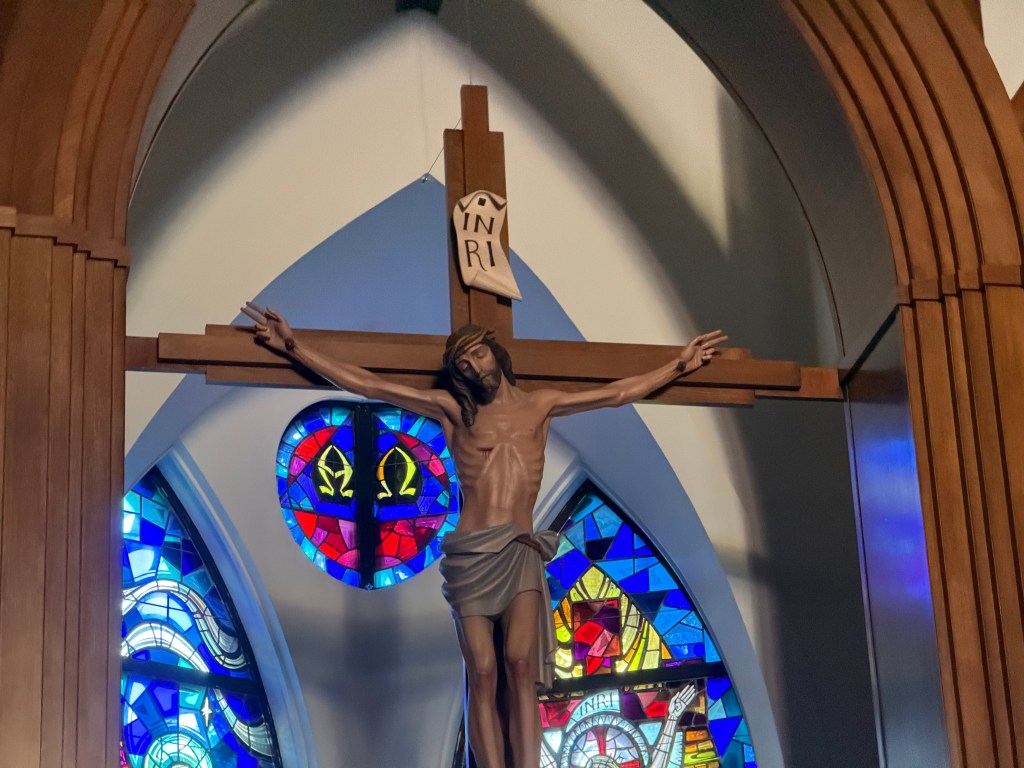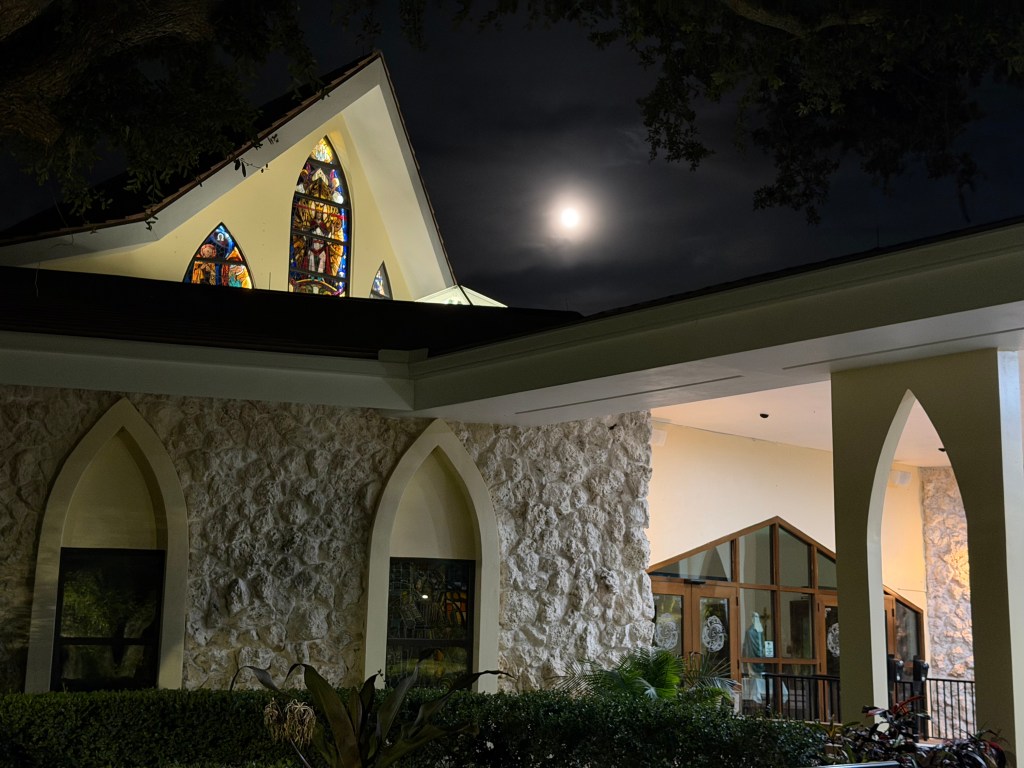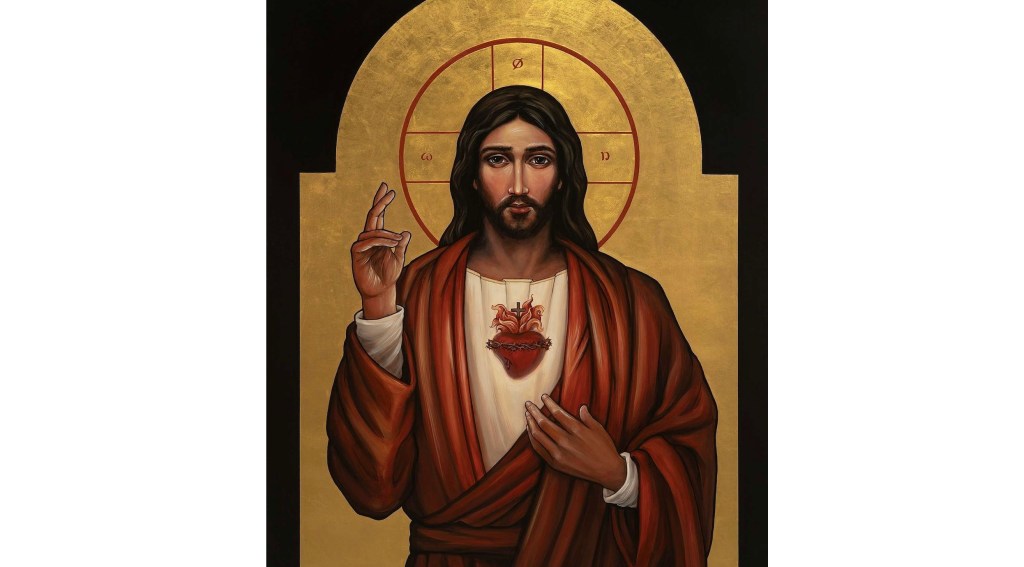
Trusting in and reflecting the light of Jesus, we will grow even in the darkness.

The king was deeply distressed, but because of his oaths and the guests he did not wish to break his word to her (Mk 6:26).

The king referenced in today’s Gospel is the tetrarch, Herod Antipas, one of the sons of Herod the Great. He reveals the weakness of his character when he calls for the beheading of John the Baptist, much as a foreshadowing of Pilate before the crowd asking for Jesus’ death. Both condemned innocent men to die and they knew it, hesitated in fulfilling the deed, but followed through anyway. They each decided to take John and Jesus’ lives. Herod chose to protect his foolish oath to Salome, instead of standing up and defending the dignity of the life of John the Baptist. Pilate caved into the pressure of the crowds who claimed he was no spokesman for Caesar. In both cases, innocent men were brutally murdered without any regard for their lives.

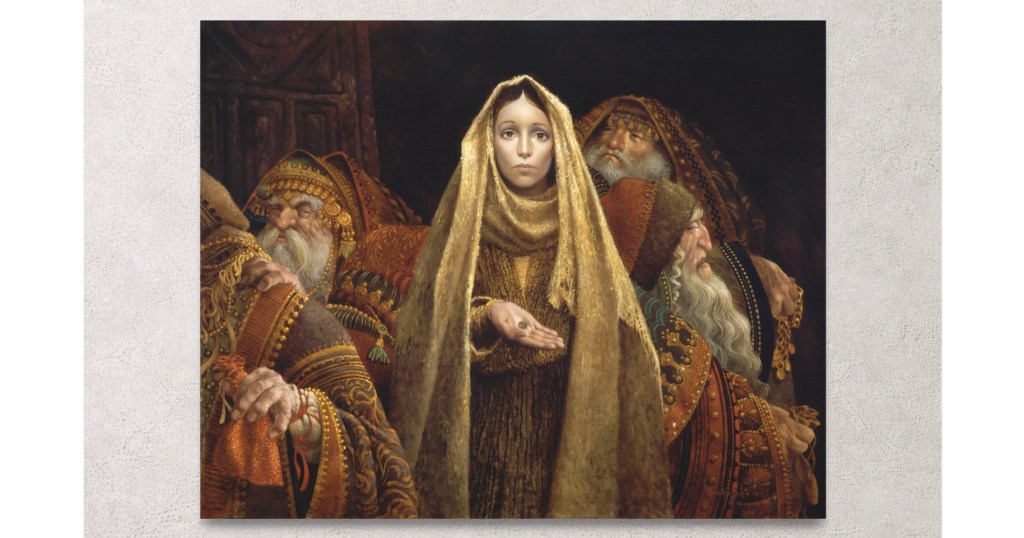
For the first part of his gospel, Mark has shown the opposite. He has shown what true leadership in the person and actions of Jesus who instead of disregarding and degrading human beings empowered them through his teaching. A better way of wholeness and union with the God and with each other is presented by his words and his actions. Jesus freed the possessed, healed those who had been on the outside bound by illness and/or sin. Instead of the weak will and cowardice of Herodias, we recently saw the strength of purpose and courage of the woman with the hemorrhage.

While Mark provides us with this interlude and flashback of the death of John the Baptist, the apostles are on the march proclaiming the gospel, healing, and exorcising demons in Jesus’ name. They are putting into practice what they had learned. They are allowing their hearts and minds to be changed by the Word of God. Herod did not allow the same seeds of God’s word to find any root in his heart. Instead of listening to the words of John, repenting from his sin, and allowing himself to be transformed, he chose his own passions over the truth, imprisoned John and then chose his moment of execution. There was a moment of hesitation, before that fateful decision. That pause could have grown to inspiration, but instead withered and died under the heat of his ego.

Unlike Herod, Jesus showed the moral courage to stand up for and empower those who were considered other, lesser, unclean, possessed, and social outcasts. Jesus, like John, showed courage by speaking the truth that God gave him to reveal. John was willing to lose his head as God’s spokesman and preparing the way for his Son, Jesus was willing to be crucified. John cleared the way for Jesus and Jesus walked the way that led to the cross, died, and conquered death. He did so, so that each one of us might have life, and have it to the full.

We have a choice to make each day and each moment. We can choose to refuse the gift of Jesus’ life given and follow the enemy or receive the gift of Jesus’ life and follow Jesus. Herod and Pilate made their choices and the woman with the hemorrhage and the apostles made theirs. May we choose to follow Jesus and allow his words to find rich soil, that we may allow our hearts and mind to be transformed. In choosing Jesus and allowing his light to shine, our vices whither and die, while our virtues will be nourished and grow.


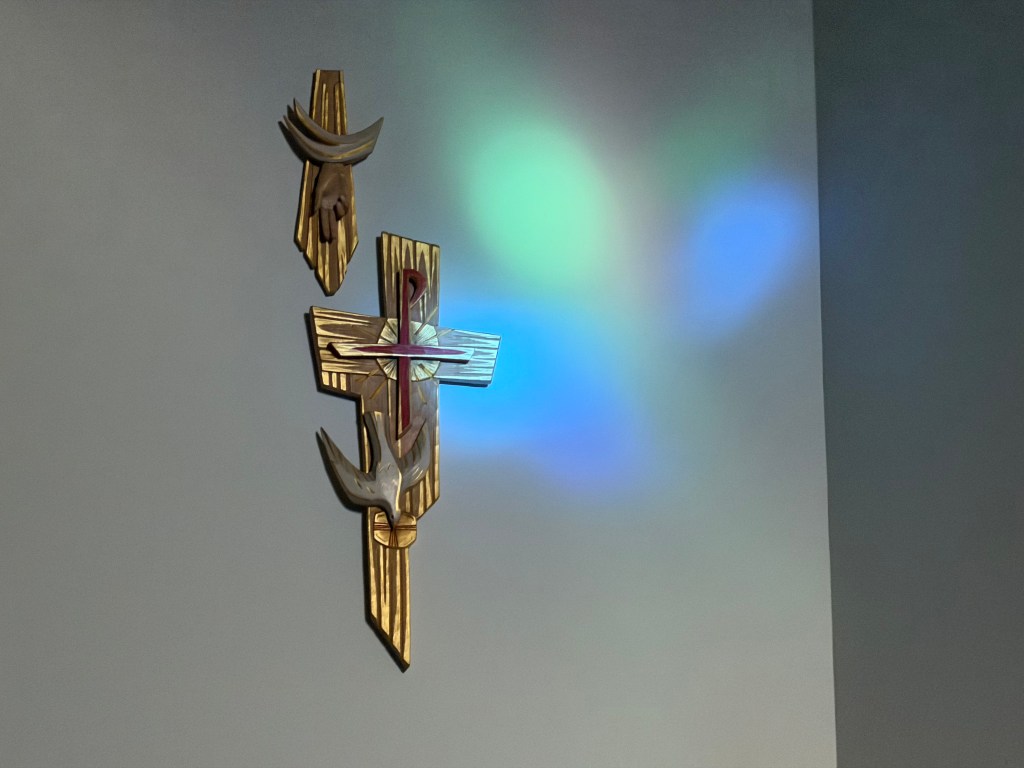
Photo: We choose with each thought, word, and action whether to curve in upon ourselves, into the darkness, or open our hearts and minds to Jesus and reflect his light.

Link for the Mass readings for Friday, February 6, 2025

We are summoned, taught, and sent each day.

The rejection of Jesus by those in his hometown did not slow down his mission. We can imagine that Jesus knew what he was going to do already, but en route wanted to stop by to see if any from his “native land” would like to participate in his public outreach. Apparently, no one, or only a very few, those who were healed by him, did. Jesus, as he does throughout the Gospel of Mark moves on without missing a beat, much like Mary going in haste to bring the good news to Elizabeth. Jesus’ next move was when he, “summoned the Twelve and began to send them out two by two and gave them authority over unclean spirits” (Mk 6:7).

Could the rejection of the people of Nazareth then also have been a preparation for the sending of the Twelve? They had experienced his exorcisms, teaching with authority, forgiveness, healings, the reaction of the crowds, as well as the push back from the religious authorities, as well as many from his hometown. He then sent “them out  two by two.” The implication is that he gave special instruction to each pair as he sent them.

John and Jesus began their public ministries with the preaching of repentance. The Twelve did the same. They brought the light of Christ so their recipients could see the sins, attachments, and idols they needed to turn away from, to turn  back to God, and they invited the people to give their whole hearts and minds to God.

We have been accompanying Jesus and his disciples through each chapter. The word of God is living and alive and Jesus still reaches out and calls us as he called the Twelve. He is teaching us to repent, helping us to see where we are in need of healing, forgiveness, how to meditate and pray, and forgive. Jesus is showing us not only areas where we need growth but also the charisms that God has shared with us.

At the end of each Mass, we are sent, just as the Apostles, to proclaim the Good News! All of us, as the Body of Christ, believers in Jesus the Christ, those of us baptized into his death, are to live as his disciples and bear witness to how he has transformed our lives. This is best done when we have the humility to repent and place God at the center of our lives. Jesus gives us each a unique call of evangelization with a particular charism and gift that the Holy Spirit imparts within us at our Confirmation.

Jesus calls, educates, and empowers us for mission. We are sanctified, made holy – set apart, when we say yes to his invitation, participate in his sacramental life, and follow the will of his Father. Jesus not only teaches with authority, but he also calls and sends us with that same authority. We are to rely on the divine providence of our Father. He prepares us and provides that which we need to accomplish the task he has given, and he will also send the Holy Spirit and others to provide help, aid, guidance, and support. We see this over and over again in the lives of the Apostles and each generation of saints thereafter.

At first sight, we may not agree with God’s choosing. Me, really? Yet, we only need to recall what he accomplished with the Apostles, remembering the imperfections of each apostle and their simple beginnings. Just as mustard seeds, that grew to mighty bushes, the Apostles grew. What wonders they accomplished in Jesus’ name. God does not see as we do, for we are often misled by appearances “or lofty stature” but God sees into the depths of the heart (cf 1 Samuel 16:7).

Ultimately it is not about us after all. It is about our willingness to be open to and led by God and to work arm in arm with those he has invited us to walk with. That makes all the difference. We do not to go forward alone. We are called to be in community as the Body of Christ. Jesus sent his disciples out two by two in the beginning, so that they could provide mutual support, guidance, encouragement, prayer, and accountability. We each begin best each day by making time to be still, to breathe, receive, rest, and abide in God’s love, listen to or read his word and receive his guidance. Then we begin, step by faithful step, walking with our brothers and sisters following the light that Jesus shines before us.

—————————————————————————

Photo: Seminarian chapel at Mundelein Seminary. Latin on the left – Nolite Timere: Be not afraid and on the right – Duc In Altum: Into the Deep. As disciples we are not to be afraid and we are to go into the deep just as Peter and the Apostles did.

Link for the Mass readings for Thursday, February 5, 2026

Let us resist limiting ourselves and remain open to the wonders God has in store for us.

Today’s Gospel reading is a sad account. For the first time since beginning his public ministry, Jesus has returned to his hometown of Nazareth. He entered the synagogue on the Sabbath and preached and taught in his “native place”. Unfortunately, this was not a roaring success of the hometown boy returning home to make good. Initially, it seemed that the immediate reaction was the same as he received where had been preaching before. People were “astonished”.  This astonishment though was not received in the same way as his other audiences. The outsiders he preached to were amazed at the authority and power of his teaching. The hometown crowd looked at Jesus more contempt and disdain.

This is a window into this small town of not more than 500 at the highest estimates. It is also a window into what really happened when Jesus returned home after being lost when he was twelve. What happened in those missing years from twelve until the beginning of his public ministry around thirty was most likely insignificant at best. As Mark mentioned, Jesus was merely a carpenter and the son of Mary. This identification is only used by Mark. Was this because of the roots of Jesus’ conception happening while still during Mary’s betrothal period to Joseph? Or, speaking of Jospeh, could this reference be to the fact that Joseph had already died, because Jews more often than not during this time, referred to sons by addressing the name of their fathers, such as Jesus the son of Joseph, not by their mothers. Could this be also Mark expressing, the virginal birth of Jesus, without referring to Joseph. we don’t know, but the reaction is clear.

Most of the people here did not accept that Jesus spoke with authority, healed, exorcised demons, or tamed violent winds and waves of the sea as the lead stories coming into town had said. Jesus’ words were not received, and so he was not able to bring those who knew him for the greater majority of his life into deeper communion with his Father. The whole reason that he came was to bring light to a world suffering in darkness, and those closest to him refused the invitation such that: “he was not able to perform any mighty deed there, apart from curing a few sick people by laying his hands on them. He was amazed at their lack of faith” (Mk 6:6).

As we have been walking through the first five chapters with Mark as our guide, many were amazed at the power of Jesus’ preaching, presence, and miraculous works. Jesus was amazed that those who probably he was closest to more than anyone else, refused to believe. They had heard about and now witnessed themselves, the power of his preaching, but they could not see past the simple carpenter.

Is our world today becoming more and more like Jesus’ “native place”? Do we take Jesus for granted, if we pay him any attention to him at all? Where miracles are dismissed as hoaxes or coincidences at best? At one point, CS Lewis, I believe, wrote that Jesus is either a liar, a lunatic, or the Lord. He cannot be anything else upon a close reading of the Scriptures. Today, in some academic circles would added, Jesus is only a legend, that he is just made up.

We seek to know, in the depths of our hearts, all of us, atheists and believers alike, as well as everyone in between. We seek to know the truth. Authentic faith seeks understanding. A questioning and searching mind are the ingredients for a living, relevant, and vibrant faith and life.

Yet, we can limit ourselves for many reasons and from different experiences. We can, like the Nazoreans, limit the truth of Jesus by accepting a caricature of him. As St. Thomas Aquinas taught: “To one who has faith, no explanation is necessary; to one without faith, no explanation is possible.” There are reasonable ascents to the truth that we can make regarding the reality and truth that Jesus is the Son of God, but our reason can only go so far. God’s grace builds on nature. God has given us an intellect and will to seek and to know, but there is a reality that surpasses our reason. God also reaches the deepest core of our being when we are willing to trust him a little and open our hearts and minds to his revelation.

May we resist: setting limits, settling for a minimalist or cynical approach, hardening of our hearts, and instead open ourselves up to the limitless possibilities God invites us to explore! There is so much to experience when we slow down and are still, the wonder of everyday, miraculous moments, and God-incidences abound. The Holy Spirit touches our hearts when we are open to encounter one another, when we are willing to come close, when we resist keeping each other in a box neatly defined, and/or lead with our fears instead of love. God wants to share with us the gift of his Son and the Holy Spirit. Are we willing to open our hearts and minds, even a little, and allow the love of God to happen today?

———————————————————————–

Photo: The wonder in store when looking up! No day is the same!

Link for the Mass readings for Wednesday, February 4, 2026

“Daughter, your faith has saved you.”

“Jesus, aware at once that power had gone out from him, turned around in the crowd and asked, ‘Who has touched my clothes'” (Mk 5:30)? The woman could have slipped away, she could have stood still and said nothing, no one knew. His disciples were bewildered that Jesus asked such a question with so many pressing about him. But the woman approached with “fear and trembling” and told him the truth. Jesus did not admonish her for breaking a social taboo but publicly acknowledged her faith and so empowered her with a deeper healing than the merely physical one that she sought. She was not only healed from there physical state that had plagued her for twelve years, she was saved body and soul and made whole.

All the while as this scene transpired, Jairus must have been in agony. He knew how close his daughter was to death, and every second counted. Jesus took that limited, precious time and engaged with this woman. Just as they were about to resume their journey, and he began to breathe again, the terrible news came that his daughter had passed away.

What might have flashed through his mind in that moment? The time Jesus took to talk with the woman, could that have made the difference? He was a synagogue official and would have known the taboos she crossed to reach out and touch Jesus in public, he knew that in doing so she would make Jesus unclean, she was a woman considered the lowest of low. She was frail and pallid from her condition, at death’s door herself, yet she had mustered such courage and faith to touch him. She took such a risk. While these or any other thoughts were passing through his mind, Jesus assured him, “Do not be afraid, just have faith” (Mk 5:36).

Jairus had just witnessed such faith with the woman healed from the hemorrhage, probably someone until this very moment for whom he might have shown disdain for. Maybe just maybe, if he could muster the same faith as she… Jesus could bring his daughter back to life just as Jesus had brought this woman, who was death’s door back to life and wholeness. A light shone in the darkness of his despair and the darkness did not overcome it. Jairus would not be let down. Jesus indeed healed his daughter. He took her hand as he had done with Peter’s mother-in-law, and commanding her to rise and walk, she came back to life.

How many of us have ourselves or have ever known someone who has experienced such great needs as did Jairus, whose twelve-year old daughter died, or the woman who had been suffering for twelve years with hemorrhages, with no healing from doctors all this time? In both of these cases Jesus brought about miraculous healings. How many of us have experienced the opposite? No healing that we prayed for. We wondered where Jesus was or why he didn’t bother to help? The truth is that Jesus is present, though he may or may not have brought about the outcome we may have sought.

This is not an abstract point for me. My wife, JoAnn, died. She was not healed from the pancreatic cancer that ate away at her body, similar to the woman experiencing the hemorrhage. While I laid by her side and held her hand awaiting the funeral home to pick up her body, Jesus did not come to raise JoAnn from the dead, as he did for Jairus’ daughter. Does that mean Jesus does not heal anymore or that there is no relevance in the readings of the Gospels?

No. Quite the contrary. Entering into the daily rhythm of reading, praying with, and meditating upon these accounts helps us to know Jesus as a person, as did this woman, who reached out and touched him. When we also do so, we will encounter Jesus as our Lord and Savior, brother and friend. As we enter into each passage, slowly and prayerfully, we are invited to enter into his memory. We sit, eat, walk, and witness his life. In so doing, we grow in our relationship. As we trust him, he enters into our lives as he did with those we read about.

Read again prayerfully today’s account, experience and ponder the courage and faith of the woman with the hemorrhage. May we trust in Jesus even in our imperfections and need for healing. When we struggle, when the ground feels a bit shaky underneath, let us take to heart and believe in the words that Jesus spoke to Jairus, “Do not be afraid, just have faith (Mk 5:36). When we place our hope, faith, and trust in Jesus, we are not alone no matter what is coming. When we breathe, receive, rest, and abide in his love, we will be filled with the fullness of God.


Photo: JoAnn received an even greater healing. Jesus did come that day. He took JoAnn by the hand, and she, unlike Jairus’ daughter, arose not to die again, but to be with him for all eternity.

Link for the Mass readings for Tuesday, February 3, 2026

Do we have the faith to be still?

“Why are you terrified? Do you not yet have faith” (Mark 4:40)?

Jesus asked this question of his apostles after he quieted the wind and the waves. These were seasoned fisherman, so for them this must have been quite the storm. They even thought that they were not going to survive it as the waves not only tossed their boat but it also began to take on more and more water. Then looking at Jesus, they turned to thinking that he was indifferent to their need, he didn’t care that they were perishing. Jesus cared. He slept because he trusted in his Father to take care of them.

The faith of Jesus in his Father was rock solid. The visceral threat of death did not shake his faith as it did his closest followers. This is the first time that they appeal to him as teacher. They are growing in their understanding of him, but they are not yet at the point of comprehending that he is the Son of God, who could even command the seas and to obeyed.

Jesus called his apostles and brought them into his inner circle so they could not only experience his teaching, healings, and exorcisms but also to get to know him as the Son of God. As with any relationships, this takes time, and their faith, their trust in him in all circumstances was still growing. But as we read yesterday, faith as small as a mustard seed, will bring large results. This would come to pass with the apostles as well in time.

We too may find ourselves in times of trouble. Our anxieties, fears, and insecurities are a good barometer of our faith in Jesus. Our emotions are human and good as they alert us to a real or perceived threats. The challenge is to discern the real from the perceived and to determine when the threat has passed and resist the temptation to play an unending loop in our minds that keep us stressed.

Where our emotions can present a problem is when we believe in, place our faith in, identify ourselves by them, react from and stay in the endless loop. We need to resist suppressing or feeding our emotions but instead, stop, breath, stretch and identify them. From a place of feeling safer, we can then address the immediate trigger. Trusting in Jesus in the face of our trials is also good step.

The apostles judged that he didn’t care instead of wonder how he could be sleeping through all this? Would he have brought them out into the deep to let them perish? Jesus quieted the their storm and he will help us to calm the real as well as the perceived storms in our lives. He can guide and empower us to sit with our emotions, get to the source of them, identify the deeper root causes, as well as if they are perceived or real, and then work through the them and the situation.

The apostles, did the right thing. They tried everything they could do to correct their dire circumstances, they judged incorrectly that Jesus didn’t care, but they still turned to him for help. We will be better off when we too continue to turn to Jesus in every situation. Our faith and trust in him will grow. We will heal, mature, and grow through the storms in our lives.

Easier said than done? Yes, for both our real and imagined storms. As we place our trust in Jesus, persevere, claim our authority in his name to renounce any attacks of the enemy, all things are possible!


Photo: As the clouds gather, the light still shines through. Taken on the way to celebrate a funeral Mass this morning. We need not fear death, for even it does not have the final say, Jesus does.

Link for the Mass readings for Saturday, January 31, 2026

Jesus offers us his light to shine in and through us to be shared.

“Is a lamp brought in to be placed under a bushel basket or under a bed, and not to be placed on a lampstand? (Mark 4:21).

God blesses us by giving his Son to us. He has done great things for us and he is the source of our joy! We do not earn nor is there anything that we can do to gain God’s grace. Our God and Father loves us unconditionally and always without hesitation and calls us to deeper and more intimate communion. But we can lose this gift of invitation to relationship, either by refusing what has been offered, or once accepting and receiving, not doing anything with the gift. If we are people of faith in name only, but not followed by action, we are concealing the light we have been given.

Prayer is the lifting of our hearts and minds to God, to spend time with him and in truly doing so, our lives as with any relationship, is changed. If we are not moving forward in the spiritual life, we are moving backwards. If we do not exercise our faith and allow that to happen over longer periods, we will receive signs of spiritual atrophy. To not even acknowledge the presence of God in our lives, the free gift of his invitation to be in a relationship with him, we will experience limitations and frustrations.

For whether we believe in God or not, we hunger to be in communion with him and one another, so we will be looking for other apparent avenues of happiness that will fall short of fulfilling us. If we do accept that there is a God, yet don’t participate in worship, fellowship, service, meditation and prayer, we are little but not much better off. I can believe that my truck will get me to where I want to go, but if I do not put the key in the ignition, turn on the engine, and shift it into drive, and press the gas peddle, I will remain stationary.

We are called daily to spend time reading, meditating and praying with the words of the Bible, putting into practice what we receive, and serving God as he leads. These spiritual non-negotiables happen more consistently when we schedule them first before any other activities, while being true to our station in life. A parent with an infant will have different demands than a monk or nun. What we do or do not do, does not earn God’s love. God loves us no matter what. The difference is that when we are consistently engaged in spending time with God, following his will, and putting into practice what he is guiding us to do, we experience his love and peace more because we experience him more.

We will then be more like Mary and the saints who reflected the light of Jesus. Privatizing our faith as well as getting into another’s face stifles the light of Jesus. We are called to follow the lead of the Holy Spirit, to be present, caring, understanding, supportive, convicting, and empowering, as we accompany one another in our realm of influence. The relationships we build are those that God brings into our lives.

Jesus has given his life for us, he continues to be present to and through us to others. May we be open to being conformed today and each day by his love. We are better able to do so by resisting and renouncing the temptations, diversions, and distractions that seek to lead us away from God. God sent Jesus to enter the chaos of our lives. May we allow him in to shine his light in our lives so we can identify and purge anything not of him, so that then we may begin to radiate the presence of Christ’s light in simple and concrete ways that allow God to happen through us in each encounter.


Photo: More of Jesus’ light will shine through us the more we are still enough to receive it.

Link for the Mass readings for Thursday, January 29, 2026

Let us receive and tend well the seeds Jesus sows by hearing and allowing them to transform us.

Each of the elements of Jesus’ Parable of the Sower is worthy of meditation and reflection. A very good practice would be to take some time to reflect on each aspect and ask what limits the germination and growth of the seeds God has sown in our lives, and also what helps us to bring about successful growth and a successful yield. When did we experience God’s word but have it almost immediately snatched away; when did we gain an insight, experience joy from his word and guidance, but did not in any way put the learning into practice; how many times have trials, hardship, lack of courage,  anxiety, or outright persecution, tempted us from stretching out of our comfort zone, and we instead withdrew, not wanting to risk growth?

Many of us can relate to: “Those sown among thorns are another sort. They are the people who hear the word, but worldly anxiety, the lure of riches, and the craving for other things intrude and choke the word, and it bears no fruit” (Mk 4:18-19). Distractions and diversions pull at us from within and without, from one second to the next. So much seeks to undo us, tear us down, and drive us into states of anxiety, despondency, cynicism, and depression that can lead to times of spiritual desolation.

So many apparent goods and false truths entice us and feed our desires for power, wealth, fame, and pleasure. Material temptations offer promises of fulfillment but shortly after the purchase leave us feeling empty. All the while, there is so much good that needs to be done and so much work to do. Even if we are willing to look beyond ourselves to be of help, we may not even be sure how to serve or where to begin.

Jesus offers us, with the Parable of the Sower, his promise, that when we prepare our hearts and minds to receive his word it is like tilling rich soil. His opening words, “Hear this!” (Mark 4:3) is a call not to just hear his words but to also activate our imaginations, meditate and ponder on what Jesus is saying. The seeds of Jesus’ words will have a better chance to take root, sprout, mature, and to bear fruit when we break into those areas of hard ground and dig out rocks and roots: the hardness of our hearts, prejudgments, and pride. We also need to be willing to cut away the vines and dig up the weeds: anxieties, fears, insecurities, false securities and impulsive behaviors.

When we give ourselves intentional moments to inhale deeply, discern each thought, situation, purchase, and action, meditate, pray and seek God’s guidance, discern with trusted family, friends, colleagues, and classmates, we will weed out our immediate reactions and defensive choices. Pruning happens when we learn from past experiences, are patient with God, ourselves, and each other, and resist giving into past habitual choices, disordered affections, allow ourselves to heal from past experiences, and risk expanding from our comfort zone.

Jesus knows where we need to repent, where are wounds are hidden, and where we need to expand. When Jesus teaches, he is inviting us to listen but: “To hear means far more than to take in with the ears: it means to absorb, to apply deeply into one’s heart, to allow the message to sink in and change one’s whole life” (Healy, 83). May we resist the temptation to just read over these words and be on to the next activity. Instead let us allow ourselves some time to savor this parable, so to better prepare the ground of our soul to receive and be transformed by the words of Jesus sown and: “bear fruit thirty and sixty and a hundredfold” (Mk 4:20).

——————————————————————

Photo: Trees that last send their roots deep into the earth, may we allow ourselves to be rooted deeply in Jesus, his words, and his love for us.

Healy, Mary. The Gospel of Mark. Grand Rapids, MI: Baker Academic, 2008.

Link for the Mass readings for Wednesday, January 28, 2026

“Whoever does the will of God is my brother and sister and mother.”

Even a surface reading of the Gospels will offer a glimmer of Jesus making things new. We can read and imagine the scene today. Many are gathered around him. The crowd is large, we might recall a similar scene when the four friends came to get to Jesus and were also denied passage because of the enormity of the crowd packed tightly together. Those gathered were focused intently on Jesus as he taught. His family, presumably the relatives that only a few verses earlier came to seize him because some of them thought he was out of his mind (cf. Mk 3:21), had arrived, were standing outside. They send word to Jesus, thinking they would get the VIP treatment. The message passed among the people was: “Your mother and your brothers [and your sisters] are outside asking for you” (Mk 3:32).

Most would have expected him to immediately get up and welcome his family. Jesus seized on the opportunity for a teachable moment. He looked, not beyond and past the crowd that encircled him to his family, did not wave to them to come closer, but rested his gaze upon those who were nearest to him and said: “Here are my mother and my brothers. [For] whoever does the will of God is my brother and sister and mother” (Mk 3:35).

The true measure of the family in the kingdom of God is not bloodline but faith in and following the will of God. Those who have experienced or still experience the gift of a close, tight-knit, extended family can come close to the dramatic moment of silence that must have followed after this statement. For anyone living in the ancient Near East, familial, clan, and tribal relations were paramount to survival. To say that family bonds were strong is an understatement. Yet, Jesus challenged this societal norm by raising the bar even higher and expanded the bond of family beyond blood or marriage ties.

The relatives of Jesus were not present in this inner circle, they were on the outside. Imagine who might have been sitting in that circle; sinners, the unclean, tax collectors, and possibly even Gentiles – non-Jews, and Jesus said that they were his brother and sister and mother! If his relatives thought he had lost his mind before, I cannot imagine what kind of mental conniption they entered into after these words.

Jesus was not devaluing or delegitimizing family, he was restoring the family to its proper place and extending it out beyond what anyone of his time could have conceived of. As Bishop Robert Barron writes, “when we give the family a disproportionate importance, in short, it becomes dysfunctional” (Barron 2011, 17). We as the baptized are united in a deeper way into the Mystical Body of Christ, which is an even more powerful call to unity here than the blood-line of family, clan, or tribe.

The end goal is that as we draw closer in our encounter and relationship with Jesus, we also draw closer together. As we are conformed more and more to the life of Christ we begin to bear his fruit of love, joy, peace, patience, kindness, goodness, gentleness, and self-control (cf. Galatians 5:22).

In sharing the fruit of the spirit, in giving this gift away to one another, our relationships will grow and our bonds will become stronger. Our love grows as we give it away, person to person, out beyond our comfort zones, to the peripheries, where there are those who feel set apart, and/or are on the outside looking in. We are even to share with our enemies. Not possible? True, if we enclose ourselves within our own bubble and focus on protecting our egos. Possible, when we deepen our relationship with Jesus and allow him to love through us.

Too many today are choosing to encase themselves in their own protective bubble wrap. Instead of embracing diversity, we are going backward, we are regressing. By choosing to close ourselves off from other viewpoints, talking over each other and at each other, if we are talking at all, and embracing fear instead of love, we are distancing ourselves from God and each other.

Our strength as a people, as a nation, and as a world increases when we embrace the human dignity of each person, and the rich diversity bestowed upon us through the unconditional love of God. May we embrace the teaching of Jesus who in his emphasis on following God’s will “was insisting that the in-gathering of the tribes into God’s family is of paramount importance” (Barron 2011, 17).

In today’s Gospel account from Mark 3:31-35, Jesus did not define those gathered around him by race, ethnicity, gender, or any other label. He defined them then, as he still defines his family today, as those who are willing to follow the will of God his Father. Mary his mother being the primary model. Imagine what she must have wondered, when she heard Jesus’ words? Mary, “is called to undergo a certain detachment in her earthly relationship to Jesus so that her faith can be stretched to encompass her far greater role in the new family that Jesus is establishing” (Healy, 80).

Jesus, please help us to open our hearts and minds and be stretched, as did Mary, to follow his will even when we may not understand what he is asking of us. Help us to receive the Love of the Holy Spirit, savor, and share that love with others. Help us to sit at your feet, not only to learn from you but also to be empowered and transformed by you, so you may be first in every thought, word, and deed.

———————————————————————

Photo: Who better than Mary follows the will of Jesus and the will of our Father? She who followed Jesus all the way to the cross and beyond.

Barron, Robert. Catholicism: A Journey to the Heart of Faith. NY: Image, 2011.

Healy, Mary. The Gospel of Mark. Grand Rapids, MI: Baker Academic, 2008.

Link for the Mass readings for Tuesday, January 28, 2025

“I yearn to see you again… that I may be filled with joy.”

“I yearn to see you again, recalling your tears, so that I may be filled with joy, as I recall your sincere faith that first lived in your grandmother Lois and in your mother Eunice and I am confident lives also in you” (2 Timothy 1:3-5).

What is wonderful about the words that St. Paul wrote to Timothy was not only the affection he had for Timothy, his recalling of Timothy’s tears, which was most likely from their last parting, but also that he knew Timothy’s mother and grandmother. He also remembered their names and the depth of the faith of each. What will bring him great joy is seeing them again. Who would we write a letter like this to?

We are at our best when we resist slipping into a deist understanding or misunderstanding that God is just something or someone out there, the big guy in the sky. God is a person, three persons, a divine community of love. God thirsts and hungers to be in relationship with each one of us. He is so far beyond our imagination and conception while at the same time he is closer to us than we are to ourselves. The Father sent his Son to us so that we can share in the divine love of the community of the Trinity. We are invited to build a relationship with God and that is to be our top priority.

As God is not just an idea, Christianity is not just a philosophy or even a theology. Christianity is an invitation to be in a relationship with a person, the God made man, Jesus the Christ. This faith in and willingness to enter into a relationship with God was lived by Lois, passed on to Eunice, and they both modeled and shared their relationship with God to Timothy.

They knew and loved God and one another, they cared for and supported each other, and they welcomed Paul into their family such that he knew them well enough to refer to them by name. Do we know Jesus or as St. Mother Teresa would ask her sisters: “Do you really know the living Jesus, not through books, but by being with him in your hearts?” (Sattler, 20). As we get to know Jesus and experience his love, allow his heart to touch our hearts, we begin to trust him. As we trust him, we spend more time with him and grow in intimacy. As we know Jesus, we come to know his Father and the Holy Spirit, and will begin to know each other better as well.

Dr. Leo Buscaglia, a professor at USC shared a story about how he noticed that one of his students had missed class for a few days. When she did not return the following week, he asked her classmates about her whereabouts, and no one knew where she was. He then reached out to the dean of students, and she broke the tragic news to Dr. Buscaglia that she had taken her life.

He was horrified not only by her death but even more by the fact that no one in the class knew anything about her. He then began to teach a course simply titled, “Love Class 101” in which his students came together to learn about building relationships with one another. He was doing what Lois, Eunice, Timothy, and Paul were doing, what faith communities and families are called to do, what we as human beings are called to do: to be loved by God and to love one another.

We can help to shift the tide of growing anxiety, confusion, isolation, loneliness, and division when we make a commitment to spending quiet time with Jesus. As we receive his love, we have something to share. We will care, be more present, communicate and listen, be more understanding and patient, support, and empower one another. In other words, when we are willing to be still long enough to experience God’s love, we will love God in return with our whole heart, mind, soul, and strength, and then we will be better at loving our neighbor as ourselves.


Photo: Blast from past, my teaching days at Cardinal Newman HS. Many fond memories of my teaching years come to mind that still bring me joy.

Sattler, Fr. Wayne. Remain in Me and I in You: Relating to God as a Person, not an Idea. Manchester, NH: Sophia Institute, 2025.

Link for the Mass days for Monday, January 26, 2025

Let us repent, rise from the darkness and walk into the light of Jesus.

“The people who sit in darkness have see a great light” (Matthew 4:16).

Matthew is quoting the prophet Isaiah and the darkness he is referring to was the fall of Zebulun and Naphtali, the first two of the ten tribes of Israel that were conquered by the Assyrians in around 722 BC. The other eight tribes of Israel would also fall. The two tribes of Judah remained for a time, but then in 587 BC, Jerusalem, the capital city, along with the Temple, were also destroyed. The last two of the original twelve tribes of Israel were also conquered. The promise of an everlasting kingdom from David’s line appeared to be lost.

Not so. A great light would come, the Messiah, one greater than Moses would be sent by God to unite again the twelve tribes of Israel. The Kingdom of David would be re-established, this time – forever. A glimmer of hope arose in 538 BC when Cyrus the Great conquered Babylon and freed Judah and sent them back to rebuild Jerusalem and the Temple. Cyrus was a liberator, but not the promised Messiah.

What Matthew did not share in this part of his Gospel was the next promise that Isaiah made: “For a child is born to us, a son is given to us; upon his shoulder dominion rests. They name him Wonder-Counselor, God-Hero, Father-Forever, Prince of Peace” (Isaiah 9:5).

As Christians we believe this child promised to become the Prince of Peace, is Jesus the Christ, the Son of the living God. In the gospel today, Matthew records the beginning of his public ministry which began with the arrest of John the Baptist. Jesus has come from the northern region, Galilee to be baptized by John. Now with his arrest, the political climate in Jerusalem seems a bit too hot. Jesus “withdrew to Galilee… in the region of Zebulun and Naphtali” (Mt. 4:12-15).

Wait a minute – Zebulun and Naphtali? Yep. Jesus is going back to the beginning where the fall of the ten tribes of Israel first began. Makes sense since he came to restore and re-establish and re-unify the twelve tribes of Israel. He did not only come to restore but to establish the new Israel. That is what we see in the next verses in which Jesus calls Simon, Andrew, James and John, the first of the, wait for it – twelve apostles.

Just as the twelve tribes of Israel began with the twelve sons of Jacob/Israel, the new Jerusalem will begin with the twelve apostles. By our baptism, we are heirs and members of the new Israel, the Body of Christ. Yet, we don’t have to look far to see the seeds of disunity and division still festers like a plague. Just as David unified the twelve tribes, for them only to be divided after one generation, we too suffer division and polarization in our nation, church, families, and friends.

Paul experience this in one the church’s he founded in Corinth. In our second reading, he appeals to them: “I urge you, brothers and sisters, in the name of our Lord Jesus Christ, that all of you agree in what you say, and that there be no divisions among you, but that you be united in the same mind and in the same purpose” (I Corinthians 1:10). We are to be united in the love of Christ. Jesus is the light that shines in our darkness of division.

We can easily fall into despair with the disunity and polarization, we can feel like people sitting in darkness and overshadowed by death on every side. Yet, we are not overcome. Jesus is the fulfillment of Isaiah’s prophecy. And his antidote to the darkness? “Repent, for the kingdom of heaven is at hand” (Mt 4:17).

Jesus’ message is as simple as it is clear. Jesus is the kingdom of heaven that is at hand and he is continuing to establish the new Israel that will be fulfilled in the heavenly kingdom. He is present among us revealing with his gentle light another way, one of harmony and peace. When we allow ourselves to breathe, receive, rest, and abide in the love of Jesus, when we become less so Jesus can become more, we experience his love, consolation, and joy. If we are not, there may be something we need to repent from, reject, something to heal from, and/or something to let go of.

The light of Jesus will guide us through our darkness and when we follow, will lead to our healing, forgiveness, and freedom. We can retreat further into the shadows and feed anxiety, doubt, or fear. We can also choose to repent, leave the darkness, and come into the light. Each thought, word, and action contributes to fostering the present darkness or to the light that will overcome it. Hopefully, with each choice, we trust more in Jesus.

——————————————-

Photo: When we are willing to see, Jesus shines in our darkness.

Link for the Mass readings for Sunday, January 25, 2026