“Whoever does the will of God is my brother and sister and mother.”

Even a surface reading of the Gospels will offer a glimmer of Jesus making things new. We can read and imagine the scene today. Many are gathered around him. The crowd is large but focused intently on Jesus as he taught. His family, presumably the relatives that only a few verses earlier came to seize him because he was out of his mind (cf. Mk 3:21), had arrived, were standing outside, and sent word. The message passed among the people was: “Your mother and your brothers [and your sisters] are outside asking for you” (Mk 3:32).

Jesus seized on the opportunity for a teachable moment. Most would have expected him to immediately get up and welcome his family. Instead he looked not beyond and past the crowd that encircled him to his family who had sent word, but to those who were nearest to him and said: “Here are my mother and my brothers. [For] whoever does the will of God is my brother and sister and mother” (Mk 3:35).

The true measure of the family in the kingdom of God is not a bloodline but faith in and following the will of God. Those who have experienced or still experience the gift of a close, tight-knit, extended family can come close to the dramatic moment of silence that must have followed after this statement. For anyone living in the ancient Near East, familial, clan, and tribal relations were paramount to survival. To say that family bonds were strong is an understatement. Yet, Jesus challenged this societal norm by raising the bar even higher and expanded the bond of family beyond blood or marriage ties.

The relatives of Jesus were not present in this inner circle, they were on the outside. Imagine who might have been sitting in that circle; sinners, the unclean, tax collectors, and possibly even Gentiles – non-Jews, and Jesus said that they were his brother and sister and mother! If his relatives thought he had lost his mind before, I cannot imagine what kind of mental conniption they entered into after these words.

Jesus was not devaluing or delegitimizing family, he was restoring the family to its proper place and extending it out beyond what anyone of his time could have conceived of. As Bishop Robert Barron writes, “when we give the family a disproportionate importance, in short, it becomes dysfunctional” (Barron 2011, 17). We as the baptized are united in a deeper way into the Mystical Body of Christ, which is an even more powerful call to unity here than the blood-line of family, clan, or tribe.

The end goal is that as each person draws closer in their encounter and relationship with God, they also draw closer together. As we are conformed more and more to the life of Christ we begin to bear his fruits of love, joy, peace, patience, kindness, goodness, gentleness, and self-control (cf. Galatians 5:22).

In sharing the fruit of the spirit, in giving this gift away to one another, our relationships will grow and our bonds will become stronger. Our love grows as we give it away, person to person, out beyond our comfort zones, to the peripheries, where there are those who feel set apart, and/or are on the outside looking in. We are even to share with our enemies. Not possible? True, if we enclose ourselves within our own bubble and focus on protecting our ego. Possible, when we deepen our relationship with Jesus and allow him to love through us.

Too many today are choosing to encase themselves in their own protective bubble wrap. Instead of embracing diversity, we are going backward, we are regressing. By choosing to close ourselves off from other viewpoints, talking over each other and at each other, if we are talking at all, and embracing fear instead of love, we are distancing ourselves from God and each other. Our strength as a people, as a nation, and as a world increases when we embrace the human dignity of each person, and the rich diversity bestowed upon us through the unconditional love of God. May we embrace the teaching of Jesus who in his emphasis on following God’s will “was insisting that the in-gathering of the tribes into God’s family is of paramount importance” (Barron 2011, 17).

In today’s Gospel account from Mark 3:31-35, Jesus did not define those gathered around him by race, ethnicity, gender, or any other label. He defined them then, as he still defines his family today, as those who are willing to follow the will of God his Father. Mary his mother being the primary model.

Jesus, please help us to open our hearts and minds to receive the Love of the Holy Spirit so as to will the good of our family and friends, our colleagues, classmates, and neighbors, as well as those we may consider as other, and even our enemies. Help us to resist asking who does or does not belong in your inner circle, but instead be willing to surrender to God, follow his will, and sit at your feet, not only to learn from you but also to be empowered and transformed by you, so to care for one another as brothers and sisters and mothers, sharing the love of our one God and Father.

———————————————————————

Photo: Who better than Mary follows the will of Jesus and our Father?

Barron, Robert. Catholicism: A Journey to the Heart of Faith. NY: Image, 2011.

Link for the Mass readings for Tuesday, January 28, 2025

Jesus is our light, love, and salvation.

The scribes who had come from Jerusalem said of Jesus, “He is possessed by Beelzebul,” and “By the prince of demons he drives out demons” (Mark 3:22).

The scribes, coming in from Jerusalem, most likely to investigate the happenings of this Jesus they have been hearing about, experience for themselves Jesus exorcising demons. They do not nor seem to want to understand how he is able to cast them out and thus healing those possessed. They judge that he does this feat, not by the power of God, but instead, by the power of Beelzebul, the prince of demons. Could their purpose be to delegitimize, or literally demonize, Jesus in such a way that those beginning to follow him will begin to doubt or outright turn away from him? If Jesus is who he says he is, then the scribes are actually the ones serving Satan in aligning with him to sow discord and disunity.

Jesus provides an invitation to build bridges of reconciliation and healing to restore the unity that has been lost by those choosing to sin, to put self first over God. He also meets those on the peripheries, those who have been kept at arm’s length, healing those conditions which have been used to justify their separation. Yet Jesus does not impose, he proposes. Even so, Jesus demands a choice.

Jesus shows over and over again by word and deed not only how he is creating a bridge of connection between the human and the divine, he is in actuality the bridge, the kingdom of God in our midst, and yet, he is not going to drag anyone over against their will. Jesus calls all who encounter him to make a choice, there is no middle ground, we are either for him or against him.

We have witnessed in the Gospel accounts how some of the scribes, Pharisees, and even some of his own relatives reject Jesus. He is able to perform only a few miracles in his own hometown. Those who say no to the invitation cut themselves off, separate themselves from the very source of their life, the very core and sustaining force of their being. Those who say, “yes’ and repent, like those that receive his healing, will be transformed, and are freed from their enslavement to sin.

When they continue to say, “yes”, day by day, decision by decision, they align themselves with the very source and communion they have been created for, God the Father. This is no one revelatory moment but a daily commitment of saying, “yes” to Jesus. Even when we mess up or fall for temptation, let us refuse to stay down but arise, repent, and begin again and again. We must always and everywhere reject the lie that echoes in our minds that we cannot be forgiven. Jesus loves us more than we can ever mess up, he loves us more than our worst choices or mistakes, more than our most grievous sins, and he will forgive us time and again, as long as we are contrite, seek his help to sin no more, and are willing to perform the penance to atone for our sins.

If this is true, then what does Jesus mean when he says, “whoever blasphemes against the Holy Spirit will never have forgiveness, but is guilty of an ever lasting sin” (Mk 3:29)? Jesus refers here to our free will to accept or reject the free gift of his grace. We can observe this played out in the choices of Peter and Judas. Peter repented, was forgiven, and transformed. Judas withdrew within himself, cut himself off from Jesus, did not believe that Jesus would forgive him, and took his own life. Jesus would have forgiven Judas as he had Peter, but Judas kept himself at a distance. He refused to accept the love of the Holy Spirit. He cut himself off from the very source of his life and salvation.

We have a choice to make each day. We can let ourselves be defined by our sins and our worst mistakes, believe the father of lies who promotes division and isolation, tempts and seeks to condemn us, separate us from Jesus and one another, with the intent to kill us. We can walk the path of darkness which consists of living defensively, keep others at a distance, demean, belittle, and degrade others, as well as live in the shadows of indifference and cynicism.

Or we can surrender our will to Jesus, accept his guidance and conviction so that we can see our sins and repent from our pride, prejudice, greed, lust, envy, gluttony, sloth, and wrath. We can believe that Jesus is who he said he is, seek his forgiveness, healing, and love, and join in the mission of sharing his gospel.

As we do so, we will take steps forward and steps back, and we stumble and we will fall, but through each experience, the hand of Jesus is still there to help us back up. When we are willing, we will be forgiven again and again, and begin again and again. We are not alone. Mary the Mother of God and all the saints said, “yes” to Jesus’ invitation. They understand what we are going through. They are also cheering us on, guiding us, empowering us, so that one day we too will be where they are, seeing God the Father face to face. Until that time, while we are still here this side of heaven, let us breathe, receive, rest, and abide in God’s love so to radiate his Son’s light and love, in our own unique way.

———————————————————-

Photo: A quiet moment to breathe and receive the love of Jesus.

Link for the Mass readings for Monday, January 27, 2025

“Love listens.”

Having been led by the Spirit into the desert, Jesus fasted for forty days and was tempted by the devil. Jesus resisted these temptations and then, in Luke’s account, began his public ministry by preaching in the synagogues of Galilee. After some time, Jesus returned to his hometown of Nazareth and on the Sabbath, Jesus “went according to his custom into the synagogue” (Lk 4:16).

This time his presence was different. Jesus read from the scroll of Isaiah and as Jesus sat, all were silent. Jesus broke the silence with the words, “Today this Scripture passage is fulfilled in your hearing” (Lk 4:18). This was no ordinary reading, this was Luke’s inaugural address for Jesus. Jesus was sent on mission by his Father through the love of the Holy Spirit to bring glad tidings to the poor, to proclaim liberty to the captives and return sight to the blind, to free those from oppression and proclaim a year acceptable to the Lord.

Jesus came to restore us to wholeness, to be present with us so that we can experience his closeness, and to lead us to reconciliation with his Father. Jesus calls us, just as he called his disciples to share in this same mission of drawing close. We are also to be present to one another, to love one another, and lead each other out from our imprisonment to sin. Turning in upon ourselves, and away from others keeps the focus on ourselves. Instead, we would do better to open ourselves up to embrace God and one another.

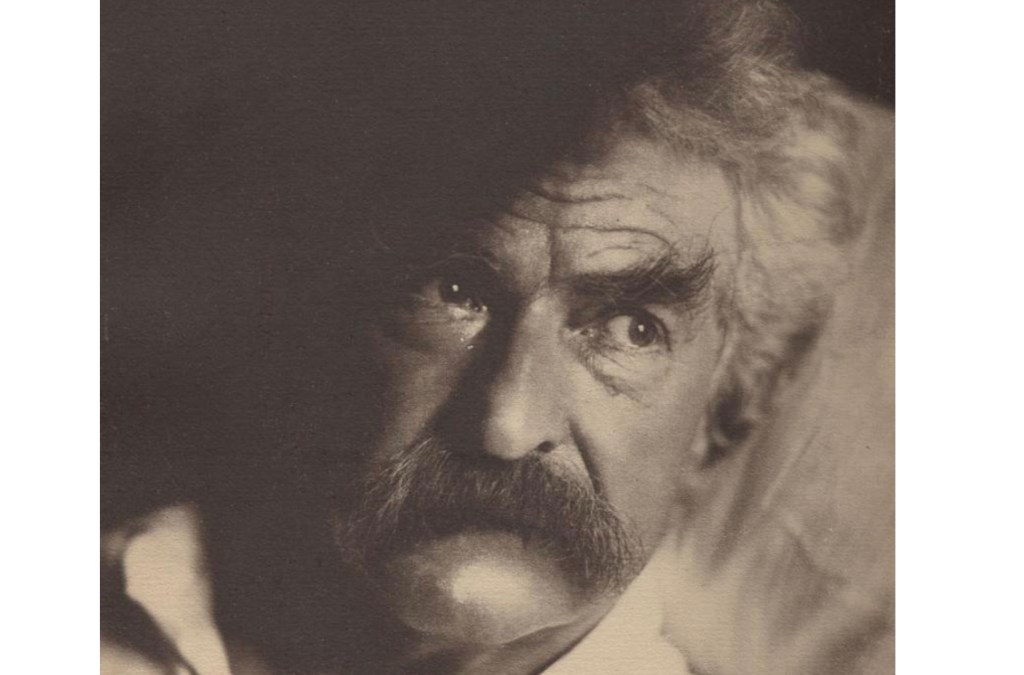
USC professor, Dr. Leo Buscaglia, was devastated when he heard the news that one of his students had committed suicide. He was crushed by the loss of such a young life full of potential and promise, but more so by the fact that none of her classmates were even aware that she was missing or struggling with such pain. Dr. Buscaglia then began his non credit course called Love 1A in 1969. He wanted not so much to teach but to facilitate ways in which his students could be free from the barriers that keep people at arm’s length and at a distance.

Dr. Buscaglia allowed God to work through him to bring about a greater good from the devastating loss of one of his students. His class grew beyond the campus of USC through his books and public speaking where he continued to facilitate for his listeners the vital importance of allowing ourselves to be loved and to love in return.

To continue the mission of Jesus we too need to have ears to hear and eyes to see the ways in which we can say yes to our unique invitation to spread the Gospel. Because of watching a video presentation by Dr. Buscalglia in my Sophomore year of college in a search in education course, I chose to switch my major and seek to become a teacher. He inspired me to want to help others and to help make a difference in their lives. No matter our station in life, we can be more intentional, more aware, and more present to each other through our willingness to care, understand, support, love, and empower those in our realm of influence.


Photo: Dr. Leo Buscaglia, 1924-1988. “Perhaps if we listened to another person, truly listened, we could hear his joy or his cry. Love listens. Love hears.” – from his book Love, p. 180.

Link for the Mass readings for Sunday, January 26, 2025

ICTHYS!

In today’s gospel account, chosen because of the feast of St Paul’s conversion, we read:

Jesus appeared to the Eleven and said to them: “Go into the whole world and proclaim the Gospel to every creature” (Mk 16:15).

The Eleven, and Paul who would encounter Jesus after his Resurrection (cf. Acts 9:1-9), are commissioned with carrying the Gospel to the whole world. What did they preach? How are we do follow in their footsteps?

The earliest kerygmas, Greek for “to preach”, and in this case to preach the Gospel, were very simple but effective mnemonic devices. Each disciple was taught what was needed to be covered in sharing the Good News. One such “blueprint” was the symbol of the fish. In Greek, fish is written as ichthus. Each of the characters of ichthys represented the keywords that needed to be covered as follows:

Iésous – Jesus
Christos – Messiah or Anointed One
Theos – God
Hyíos – Son
Soter – Savior.

Jesus Christ is the Son of God our Savior.

The dynamic truth of these five words is profoundly transformative if we truly believe them. What we need to ask ourselves is, do we believe this statement to be true? If we do, how can we stop ourselves from smiling, from dancing, from sharing that Jesus is truly who he said he is!

Jesus is fully God and fully man and he became one of us so that we can become one with him. Through the Son of God’s Incarnation, Passion, Resurrection, and Ascension, we are called, as were the first disciples, to share in the divinity of Jesus. We become deified, meaning we participate in the life of God through our participation in the life of Jesus. The foundation of our faith has to do with our encounter with Jesus the Christ.

Jesus invites us and encounters us in our own unique way. No one can save another. We can only propose, invite, and present the Good News that Jesus Christ is the Son of God our Savior, and share our own experiences of this reality. Our encounter with Jesus does not need to be as brilliant as happened with Paul. More often, Jesus invites us in more quiet and subtle ways. We are to share the Gospel with joy and accompany each other on our journey by providing support, encouragement, and guidance, and let God be who he is and work through us as he will.

The Apostles and Paul, Mary the Mother of God, Mary Magdalene and the many who have continued to answer yes to his invitation through the ages up until and including our day were willing to be shaped and conformed by the love of Jesus and sent on mission. Each of us, have a part to play in salvation history, and so are invited to have our own unique experience of Jesus. As Bishop Robert Barron says often, “Our faith will grow as we give it away.” We too are called. When we say, “yes” to Jesus, we too will be shaped, conformed, and sent on mission to proclaim the Gospel, to give our faith away!
——————————————-
Picture: The mosaic of Jesus Christ the Pantocrator, Ruler of the Universe, at Hagia Sophia, in Istanbul, Turkey. What does he ask of you today?

Link for the Mass readings for Saturday, January 25, 2025

Let us pray and follow the lead of Jesus.

Jesus went up the mountain and summoned those whom he wanted and they came to him (Mk 3:13).

Through the centuries mountains have been sites where people have gone to rise above their daily experiences, to rise above the clouds, where the air is crisper, cleaner. It is a means of gaining a new perspective, transcending the human to touch the spiritual, and with the hope hearing the voice of God. When one of the Gospel writers inserts the detail that Jesus is present on a mountain, we can be prepared that something significant is going to happen.

In today’s Gospel of Mark, the good news revealed to us is that Jesus calls to himself the Twelve, the Apostles, to preach and cast out demons. They are to continue the ministry of Jesus. These are not perfect men, but each will have a part to play in salvation history. Jesus will entrust them with the deposit of faith that they are to protect, yes, but more so to proclaim by word and deed. Apostle means one who is sent.

Jesus will continue to call the Twelve to himself, to teach, mentor, model, and empower them so that they will continue his mission to call people to repent and believe in the Gospel. Even though, especially through the Gospel of Mark, it often looks as if Jesus may have made a mistake in his choice. The Twelve do not ever grasp who Jesus really is, and when Jesus needs them most, Judas will turn him over to the Temple guards, the others flee at his arrest, and Peter will publicly deny him three times. It will not be until after the Resurrection and Ascension that the seeds that Jesus had sown in them would begin to germinate and bear fruit.

Just as Jesus called the Twelve, he calls us as well. Each generation must experience and embrace the deposit of faith that has been given to us and pass it on to the next. Are we perfect, no. Do we have doubts, fears, weaknesses, yes. Does God call us and love us anyway? Yes. Like each Apostle, we are to go out and proclaim the good news that Jesus is our Lord! We do this daily with our words, faces, and actions. We are to think, look, speak, and act in ways that are kind, empowering, uplifting, and convicting while at the same time resisting the temptation to fix others. We are to strive to bear witness, be present, accompany and guide one another.

We all have much on our plate, some of us to overflowing. We may be thinking I cannot possibly do one more thing. Start small by bringing God with us into whatever we are already doing. He will give us the tools and accompany us as we seek to fulfill his will. As did the Apostles, we will make mistakes, make false starts, trip, fall, sin, and deny opportunities to reach out to be a witness. When we commit any or all of the above, we must resist beating ourselves up and instead learn from the experience, lean into Jesus, and with him prepare better for the next apostolic opportunity.

Jesus went up the mountain to pray. We are to make time each day to do the same. Let us begin our day today with a few moments of intentional stillness, to breathe, and ask Jesus what does he want us to do today. Are we worthy of his call? Probably not, for all of us fall short of the glory of God. More important, are we willing? That is a question for each of us to answer today and each day hereafter.


Photo: When we pray, we will know Jesus and we can then better follow the guidance of St. Francis de Sales whose memorial we celebrate today: “If He is with me I care not where I go.”

Link for the Mass readings for Friday, January 24, 2025

In our encounter and deepening of our relationship with Jesus we experience love, peace, and joy!

After the most recent clash with those Pharisees bent now on killing Jesus, he “withdrew toward the sea”, the Sea of Galilee. After his entanglements with the Pharisees, he may have sought refuge or a quieter setting away from the crowds. Yet, the people followed. Mark details in his account that many from all over the region came to Jesus to be healed. Among the crowd, unclean spirits threw those they possessed down before Jesus. This did not slow the gathering of people who pressed in on Jesus, just to touch him. The mass of people grew to a point that it was getting out of control so Jesus “told his disciples to have a boat ready for him because of the crowd, so that they would not crush him” (Mk 3:9).

People wanted to be healed, to be cured, to be exorcised, and brought others to experience the same. Yet they were missing the deeper point of who Jesus is. He was not just a miracle worker, not just someone that brought about physical healing. Healing accounts were heard and known about in the ancient world.  The unclean spirits got it, they recognized Jesus before the people did, “for, whenever unclean spirits saw him they would fall down before him and shout, ‘You are the Son of God'” (Mk 3:11).

They were bound by the authority of Jesus to be renounced. They had to obey him and in calling out who he was they were attempting to control him with no effect. Throughout the Gospel of Mark, we will read about how the crowds, disciples, and even the apostles, all struggle to understand who Jesus is. The people closed in on Jesus seeking to be healed, but missed the deeper hunger within their souls that St Augustine, the fourth-century bishop of Hippo, so eloquently described on the first page of his autobiography: “[Y]ou have made us for yourself, and our hearts are restless until they can find peace in you” (Augustine 1963, 17). Jesus is the Son of God, not just a miracle worker, teacher, or healer, but God Incarnate.

The only way we will be fully satisfied, inspired, fully alive, and be at peace within our own skin, is by developing an ongoing, deepening relationship, and communion with our Father. God is infinite and cannot be exhausted. We as finite beings are left wanting even when we have the best of material things. We always hunger and want for more, because in the depths of our very being, whether we recognize it or not, we want God. The many who came to Jesus for healing, were not aware of the deeper hunger and healing they sought.

The deeper healing that Jesus seeks to offer all of us is to restore us to the fullness of who his Father created us to be. To do that, we must be willing to embrace the truth, the way, and the life that he offers us. Which means that we will need to let go of anything that does not align with his invitation. At the first, we may be taken aback because of our attachments. We need not be afraid. Jesus works slowly. His light shines gently that we might see what is keeping us from growing in our relationship with him and each other.

Jesus conquered death and freed us to abide in an authentic love expressed at a deeper, more intimate level than we can ever imagine. Jesus satisfies our deepest hunger as he invites us to be drawn into his grace-filled embrace so as to be healed, renewed, shaped, and conformed to his heart, mind, and will. When we come to this place of encounter, reconciliation, and intimate relationship, we come to know our mission and in serving through that mission we come to know who and whose we truly are. In that place is our greatest joy and it only gets better the more we receive and share his love!

————————————————————————

Drawing by: First weekend Mass about six months ago. Feel blessed and joy filled to overflowing each day as I continue to build relationships here at my new home of Holy Cross Catholic Church, grow as a disciple of Jesus, and serve as his priest!

St Augustine. The Confessions of St Augustine. Translated by Rex Warner. New York: New American Library, 1963.

Link for the Mass readings for Thursday, January 23, 2025.

When we trust in Jesus, just as he transformed water to wine, he will transform us with his love.

God takes the initiative to reach out to us and then we have the choice to respond. Our very desire to encounter God in prayer is already a prayer in itself, because we are acknowledging our relationship with God that already exists. Awareness that God exists is not the end goal but only the beginning. A deist believes God exists. Our God, though transcendent and beyond our realm of understanding, is at the same time a God who draws close, who initiates an encounter and invites us, each and every one of us, to have a relationship with him.

Our relationship with God begins with our awareness of his presence in our lives and a recognition that he invites us to experience him more and more. Our relationship develops in intimacy and authentically when we are willing to reveal ourselves to God and be still and open as he reveals himself to us.

Many times our relationship with God and others flattens out or plateaus for many reasons. The core of which is that we close in on ourselves. We focus too much on work or projects, seek false truths, deny our own emotional and spiritual hurts and wounds and instead of seeking help or reaching out, and we keep God and others at arm’s length. We begin to live a half life or merely exist day to day. Instead of living, we find ourselves going through the motions or reacting from survival mode.

God seeks for us to be fully engaged in life. We can see this in the account of John’s Gospel for today. The wine has run out at the wedding feast of Cana. This may seem odd until we realize that Jewish weddings during this time were a week long. Mary though is aware of the need and the possible embarrassment to the bridegroom and his family if anyone finds this out. She turns to her Son, who seems to be indifferent to the situation. Is pushing back is not because he is indifferent to the need, but to affirm to Mary that this is not the hour to reveal his true presence.

This sign of changing of about 180 gallons of water to wine is only a beginning of the fulfillment of the “messianic banquet” which was to boast a superabundance of wine (see Isaiah 25:6-8). This sign will not be in the open for all to see, but only for his disciples so that they can see and come “to believe in him” (John 2:11). This will be a foretaste not only of the Last Supper, but the celebration of the Mass where heaven and earth are wedded. For Jesus is our bridegroom and we the Church are his bride. The Mass is the celebratory feast!

Our discernment for our vocation and path in life becomes clearer when we trust in Jesus. God sent his Son to invite us and help us to deepen our relationship with his Father. Jesus meets us all in our present situations and invites us to be still and listen. If doing that is not easy, or you have been attempting to do so, but continue to be diverted and distracted, past hurts and wounds arise that are in need of healing, indecision, anxiety, anger, impatience, or any other distractions or diversions assail you as you attempt to slow down and be still. Then come to a place of quiet, make the sign of the cross, and take one slow, deep breath for the Father, one for the Son, and one for the Holy Spirit. Then take another and call to mind the words of Mary: “Do whatever he tells you” (Jn 2:5).

No matter what distractions arise, return to these words, again and again, and if it helps make them your own. “I will stay still and do whatever Jesus tells me.” Or remain with Mary’s words. Begin small with five minutes a day. Be open in the time you stay with him and return to the phrase throughout the day. Over time, you will begin to slow down, experience some stillness, and you will hear his guidance.

When we are willing to turn to and sit at Jesus’ feet, listen to and follow his guidance, he will lead us to the source of our being, God his Father and our Father, and to the truth of who we are and are called to be. Just as Jesus transformed the water to wine, as our relationship with him grows, we will be transformed by God’s love. We will experience joy and strength, healing and renewal, access and means, as well as fulfillment and joy in our lives as we continue to do whatever Jesus tells us.

———————————————————-

Photo: Stained glass window of Jesus changing water to wine, St. Anthony’s Croatian Church, Los Angeles, taken June of 2019.

Link for the Mass readings for Sunday, January 19, 2025

Will we follow Jesus as Levi did?

In both the first reading from Hebrews and verse from Psalm 19 we read about the power of God’s word. “The word of God is living and effective” (Hebrews 4:12) and the words of the “Lord, are spirit and life” (Psalm 19). Jesus gives face to the living word of God come down from heaven to transform his people as he continues to teach with authority and offer healing. In today’s account of Mark, Jesus calls his fifth disciple, Levi. The key difference with this call of Levi and the four fisherman is Levi’s occupational hazard.

Tax collectors were disliked, even despised by many in ancient Palestine because they were considered unclean, and categorized as with lepers and sinners. They were cast in this net because the tax collector had a responsibility to pay a fixed amount to the occupying power of Rome. This in itself was bad enough because their own countrymen were colluding with the enemy. What made matters worse was that too many kept as a commission anything he collected over and above that fixed amount. The majority of the population, already just getting by, paying a temple tax, and the Roman tax, then finding out their local tax collector was taking more than their fair share, did not make for feelings of endearment.

Jesus surprises all who had come to hear him teach when he not only invites Levi, also known as Matthew, to follow him but then they have dinner together. We are witnessing yet again another healing miracle. Jesus provides an opportunity of bridging divides by inviting someone to his inner circle, to turn away from one way of life to begin anew, to: “Repent and believe in the gospel” (cf. Mk 1:15). The Pharisees question his choice of table fellowship companions. It is not clear if the Pharisees are eating with them or are on the outside looking in. The other curious point is that the Pharisees are conversing with Jesus’ disciples. So both groups are together witnessing the communal exchange, from a distance. They choose not to engage in the fullness of the fellowship.

They could not have been at too great a distance though because Jesus could hear their concerns and responded to them: “Those who are well do not need a physician, but the sick do. I did not come to call the righteous but sinners” (Mk 2:17). The Pharisees, and possibly some of his disciples, were not a part of the intimacy of this communion because of their own unwillingness to accept those that Jesus invited to share a meal, to accept that they too were sinners also in need of healing.

All have sinned and fallen short of the glory of God. Jesus forgives and offers mercy to all who are willing to be aware of his invitation to fellowship. In surrendering our finite freedom over to his divine freedom, we receive healing and transformation, then are offered an opportunity to develop an intimate relationship and participate in communion with the one who is ushering in the kingdom of God. This is a foreshadowing of the last supper and the celebration of the Mass.

We too are invited as sinners to join the banquet, to be in fellowship with Jesus. As Levi received, we are given an opportunity to begin again, to leave behind anything that separates us from God and one another and follow Jesus, who came that we might be forgiven and healed.

As with many Gospel passages, today’s offers a wonderful opportunity to place ourselves in the scene. Mark presents Jesus teaching the people though he again does not tell us anything about what he shared. Knowing what follows, we might think about and ask ourselves, “What might Jesus have taught before going to Levi at the custom’s post?” Could he have been talking, as Matthew adds in his parallel account, about how Amos preached that God desires mercy and not sacrifice (Mt 9:12)?

Let us read this passage slowly a few times (Mark 2:13-17) and meditate upon these words of God that are “living and effective.” Then as Jesus moves to the custom post, follow him, and the others in your imagination. What is our honest reaction to Jesus calling the tax collector, Levi? Are there sins that others commit that we find easy to forgive, others that we find hard to forgive? As the scene shifts to the breaking of the bread, do we dive in with this motley crew, stay at a distance, or walk away?

The words of the “Lord, are spirit and life.” May we not only read them, but also meditate upon and pray with them so that we may be transformed by them. May we also encounter Jesus in this passage and be willing to listen to Jesus speak to us in the silence of our hearts. This is a wonderful spiritual practice that can bring us much joy, forgiveness, healing, and deeper communion with the Divine Physician and healer of our souls. No RSVP needed, just come, open up your Bible, and join the feast!

————————————————————————-

Painting: Caravaggio’s “The Call of St. Matthew”

Link for the Mass reading for Saturday, January 18, 2025

Would we choose to remain paralyzed or be healed?

In a time when word of mouth is the way to get news out, the momentum still moved quickly. Jesus has preached with authority and moved people with his words, he has healed people and exorcised unclean spirits. So when it was known that Jesus was in the vicinity, in his present home of Caparnaum, people came. Jesus came not to abolish the law but to fulfill it. That meant that he did not water down the message of God, but raised the standards even higher than they had been before under the leadership and legacy of Moses. Unlike some of the Pharisees though, Jesus did not just add heavy burdens to leave the people to carry on their own, Jesus accompanied those he challenged, he carried the weight of their sin, all the way to Calvary.

If Jesus had a business card to hand out as people gathered around him, it may have had written on it his first words recorded by Mark in his Gospel: “This is the time of fulfillment. The kingdom of God is at hand. Repent, and believe in the gospel” (Mk 1:15). The time of fulfillment is indeed at hand in the presence of the Son of God made flesh. The entrance to that kingdom is measured by a willingness to turn away from sin and turn back to God. Those who are open to the love of God, willing to be shaped and transformed by his love, who are in touch with their hunger and yearning to be one with the Father, recognizing that there is more to life than the false promises, apparent goods, and even the finite goods of this world, are drawn to Jesus.

When Jesus returned to Capernaum after some days, it became known that he was at home. Many gathered together so that there was no longer room for them, not even around the door, and he preached the word to them (Mk 2:1-2).

It is clear that there is a movement afoot in just these first two chapters of Mark. Another key verse from Mark is the very first line of his Gospel: “The beginning of the gospel of Jesus Christ [the Son of God]” (Mk 1:1). This is an amazing line, unless we read the words only, missing its proper contextual background. Those reading or hearing these words in the first and early second century would have grasped Mark’s intent immediately. There are two words in that verse that would have leapt off the pages or the lips of the reader; gospel and Christ.

The geopolitical powerhouse lording over Israel at the time of the life of Jesus was Rome. The house of Caesar was its head. Augustus Caesar was emperor at the time of the birth of Jesus. Tiberius Caesar reigned during most of the adolescence and adult life of Jesus. The term gospel, euangelion in Greek, meant good news. This gospel was spread throughout the Roman empire by messengers especially on two occasions, at the behest of the emperor; on his birthday and after great military victories. Christ, or Christos in Greek, meant the anointed one. The only ones who were anointed were emperors, kings, and priests.

Mark was making a very clear point with this opening verse, the proclamation of the good news: Jesus is the Christ, the anointed one, not Caesar. It is not Kaiser Kyrios, Casaer is Lord, but Iēsous Kyrios, Jesus is Lord! This verse is treasonous in the face of Caesar and a subversive rallying cry for the followers of Jesus then and today. Yet Mark was not calling for a military coup, or a power play, but transformation from within.

In his gospel account, Mark revealed that the first opposition to rise up against Jesus was not by the Roman occupiers. It came from the scribes of his own people. Instead of being amazed that Jesus had forgiven the man’s sins and was about to heal him of his paralysis, they seek to label him as a blasphemer. Imagine what the man felt who was just about to be healed before the interruption? Thanks to his friends, he was able to overcome the obstacles of getting to Peter’s house in the first place and then through the roof when no one would let them pass, and yet, would he get so close only to be denied by the scribes? Before these doubts could take hold, Jesus spoke: “I say to you rise, pick up your mat and go home” (Mark 2:11).

Jesus freed this man from his paralysis. Unfortunately, the scribes remained paralyzed. How about us? Do we believe that Jesus is a blasphemer or Iēsous Kyrios! May we come to see and to believe that Jesus is the Christ, the Son of the living God, our healer, and Lord. He will free us and heal us when we are willing to surrender our ego and allow ourselves to be transformed from the darkness of revenge, hatred, pride, and division, and instead be conformed to his Body, and like the man’s friends, uphold the dignity of our brothers and sisters through our acts of mercy, love, caring, and unity.

________________________________________
Photo: “Truly this man is the Son of God” (Mark 15:39)! Processional cross, sanctuary of St. Vincent de Paul Chapel, SVDP Regional Seminary, Boynton Beach, FL.

Link for the Mass readings for January, 17, 2025

Jesus helps to bridge the gap between us and God.

A leper came to him and kneeling down begged him and said, “If you wish, you can make me clean” (Mk 1:40).

The term leprosy, used during the time of Jesus, was a more general way to describe various issues pertaining to the skin such as open wounds, sores, skin flaking, as well as much more severe and chronic conditions. Today we use it more specifically to refer to Hansen’s disease, a chronic infectious disease caused by a rod-like bacterium named Mycobacterium leprae (PubMed Health).

Those dealing with such skin conditions were deemed unclean. They were to live outside of their village, town, or city; wear ragged clothes, their hair needed to be unkempt. If anyone came close to them, they were to yell out that they were unclean, so there would be no chance of human contact. Lepers were exempt from any communal religious practice and the common opinion held was that those in this situation deserved it because of some sin that they committed. Those with chronic or recurring conditions could be in a state of exile for the entirety of their life. The experience was like a living death because they were isolated from all societal interaction.

When Jesus comes near to the leper, both were well aware of the cultural and societal requirements dictating that each one was to keep their distance. The leper does not follow the societal norms. Instead of warding off Jesus and urging him to stay away, he approaches Jesus and kneels before him. Jesus does not reprimand him, and he, like the leper, does not follow social protocol: “Moved with pity, he stretched out his hand, touched the leper, and said to him, ‘I do will it. Be made clean'” (Mk 1:41).

The leper is healed at the moment of contact, his living death sentence is commuted, his opportunity for worship and communal life is restored. This simple act of healing the leper in today’s Gospel is, in fact, a microcosm of Jesus’ ministry and mission. The Son of God, in embracing our human condition, provides the opportunity for restoring us also from our exile, our separation, from God and one another.

Jesus the carpenter in the humanity he assumed, became a bridge, a stairway to heaven, that provides us a way to cross the wide chasm separating us from his Father. In his willingness to touch the leper, Jesus became a living icon showing how he as the Son of God was willing to draw close to us. He was willing to walk among us, accompany us, experience our pain, suffering, and separation, becoming one with us in our humanity so that he could offer us forgiveness, reconciliation, and communion so we can become one with him in his divinity and become instruments of healing for one another.

May we resist shunning those on the peripheries or supporting social prejudices, injustices, and structures that isolate and exile others. We are called by Jesus to be aware of and in solidarity with our brothers and sisters. We need to be aware of the ones that are socially kept at arm’s length, those we force into positions of shouting, “Unclean!” when we come near. This is not an appeal for a utopian or philosophical ideal, but an invitation to do as Jesus did as he approached the leper. He came up close and personal. What bridges can we build in our families, schools, work, and communities? Jesus is inviting us to risk, to be aware, and in the words of Pope Francis to go with “a spirit of profound solidarity and compassion.”

—————————————————————

Photo: Crucifix in the sanctuary of St. Vincent de Paul Chapel, SVDP Regional Seminary, Boynton Beach, FL.

PubMed Health. “Hansen’s Disease (Leprosy).” https://www.ncbi.nlm.nih.gov/pubmedhealth/PMHT0027942/

Link for the Mass readings for Thursday, January 16, 2024