Tired of division and polarization, how about we practice forgiveness and mercy?

Polarization, division, and finger-pointing continue to seem to be the order of the day on the national level. Unfortunately, it is taking a firmer hold at the community and familial level and within the Church as well. Instead of looking for someone to blame for the cause of this situation, we need to look in the mirror and honestly assess how we are contributing to division instead of seeking to uphold the motto of the United States of America – E Pluribus Unum – Out of Many One; or instead of upholding a motto of our faith – “That they may all be one” (John 17:21).

It is important to take a step back, take a breath or two or three, and examine our conscience and honestly acknowledge how we are contributing to the divisiveness and polarization through our own thoughts, words, and actions. Then we will be in a better position to act instead of react. We can disagree and offer different points of view and seek different approaches to solve problems respectfully when we are willing to engage in dialogue and collaboration instead of forcing or seeking to prove our own point.

A beginning place for us this Lent can be to understand and put into practice what Jesus said in the opening of today’s Gospel:

“Be merciful, just as your Father is merciful” (Lk 6:36)

Mercy, from the Hebrew word chesed, meaning to show tender compassion, can help us to turn the momentum away from disunity and polarization toward respecting the gift of our diversity while at the same time embracing our unity.  Fr. James Keenan, S.J. defines mercy as the willingness to enter into the chaos of another. Instead of imposing our point of view, mercy is the willingness to draw close instead of keep someone at a distance, to come to know instead of prove wrong, and to make a concerted effort to understand instead of prejdudge.

When we aspire to be merciful we seek to hear first and assess thoughtfully what has been said, even when the message conveyed is heated, derogatory, and inflammatory. There may be some truth in the maelstrom of what has been spewed. Jesus also encourages us to stop judging and condemning. We are limited by our own finite natures as it is. We are not God and are not capable of fully reading another person.

In most cases, we do not know another’s struggles, anxieties, fears, traumas, and experiences. When encountering one another we need to resist the knee-jerk reaction to judge, and instead, listen first, allow someone to vent without taking offense, and without seeking a way to “fix” them or a problem.

Jesus also reminds us to forgive. As God forgives us we are also invited to forgive others, to let go of grudges. Not to do so means allowing the poison injected into us to spread instead of seeking the healing antidote of forgiveness. The one who has wounded us has walked away and if we are not willing to forgive we continue to do harm to ourselves as we allow that wound to fester.

It is much easier to stay in our shell or bubble. We feel protected and safe so no one can hurt us, but that is not the posture Jesus would have us assume, for in doing so we remain focused on our self. Staying in our bubble suffocates us, stunts our growth, and limits our potential as human beings created in the image and likeness of God. Jesus calls us, not to cave in upon ourselves, but to go out from ourselves, to be agents of love and mercy.

Each day we have a choice. We can withdraw and remain indifferent seeking to protect ourselves, we can choose to dig in our heals to prove we are right and contribute to disunity and polarization, or we can seek to be merciful and build relationships. We can hear and put into practice Jesus’ teachings to resist the temptation to judge and condemn, and instead seek to understand, listen, and forgive. In our willingness to forgive, we can promote healing and invite others to forgive. Let us choose today to allow the Holy Spirit to expand our hearts and minds that we may become more understanding, forgiving, and merciful just as our heavenly Father is merciful.

——————————————————————————

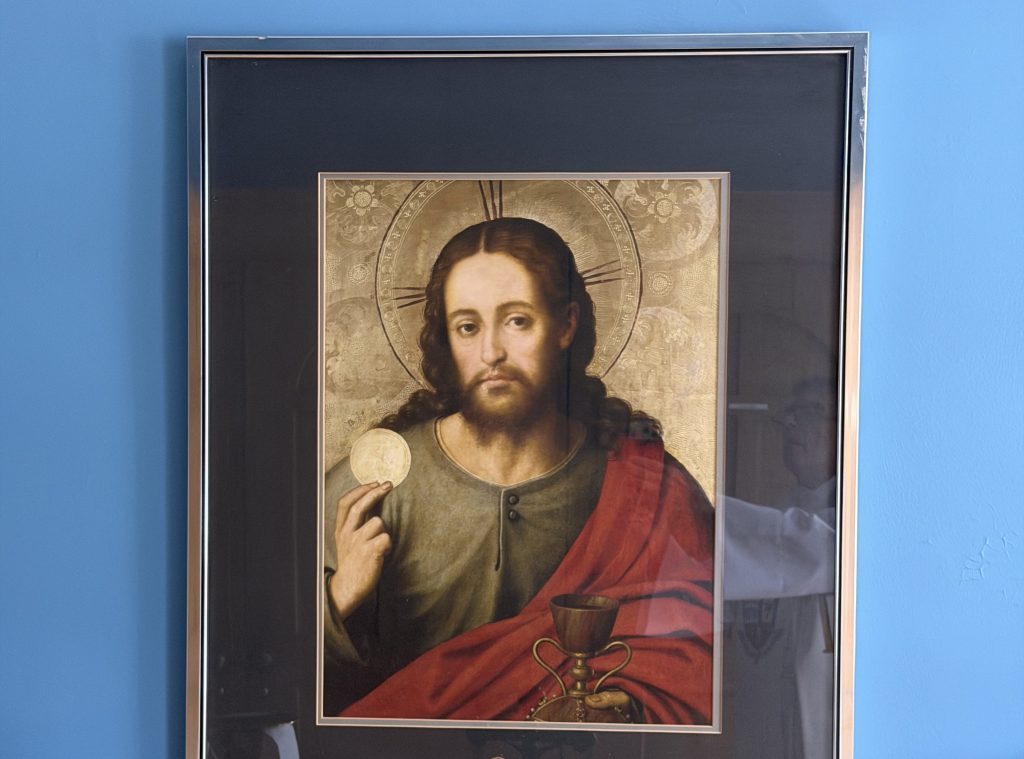
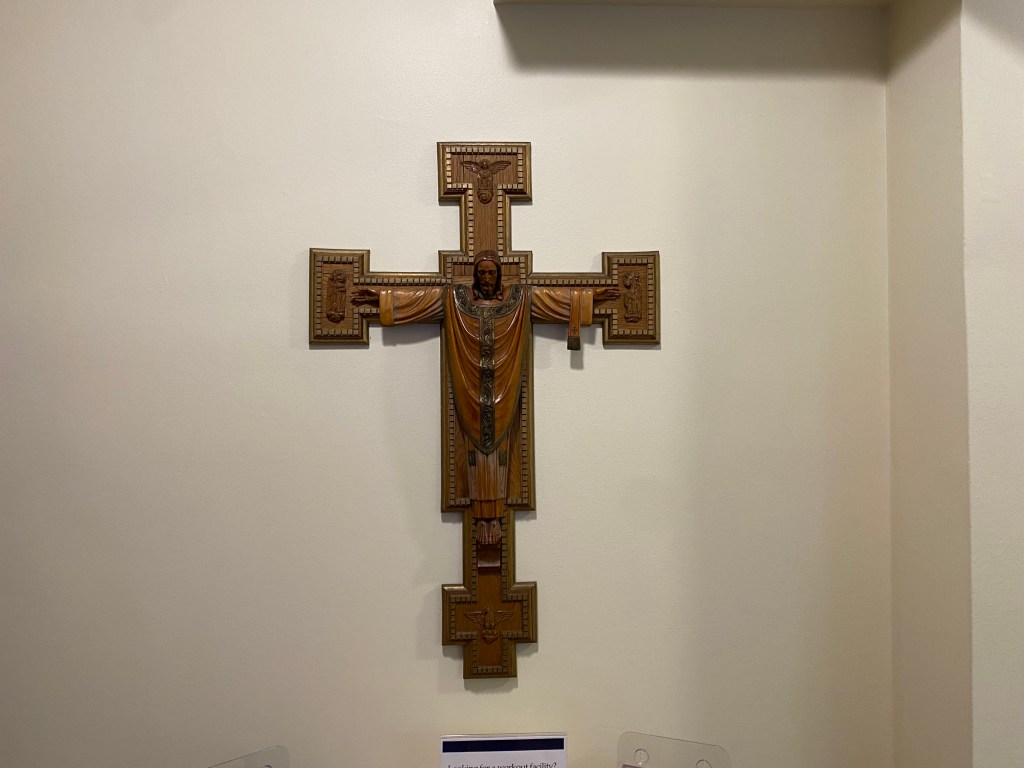
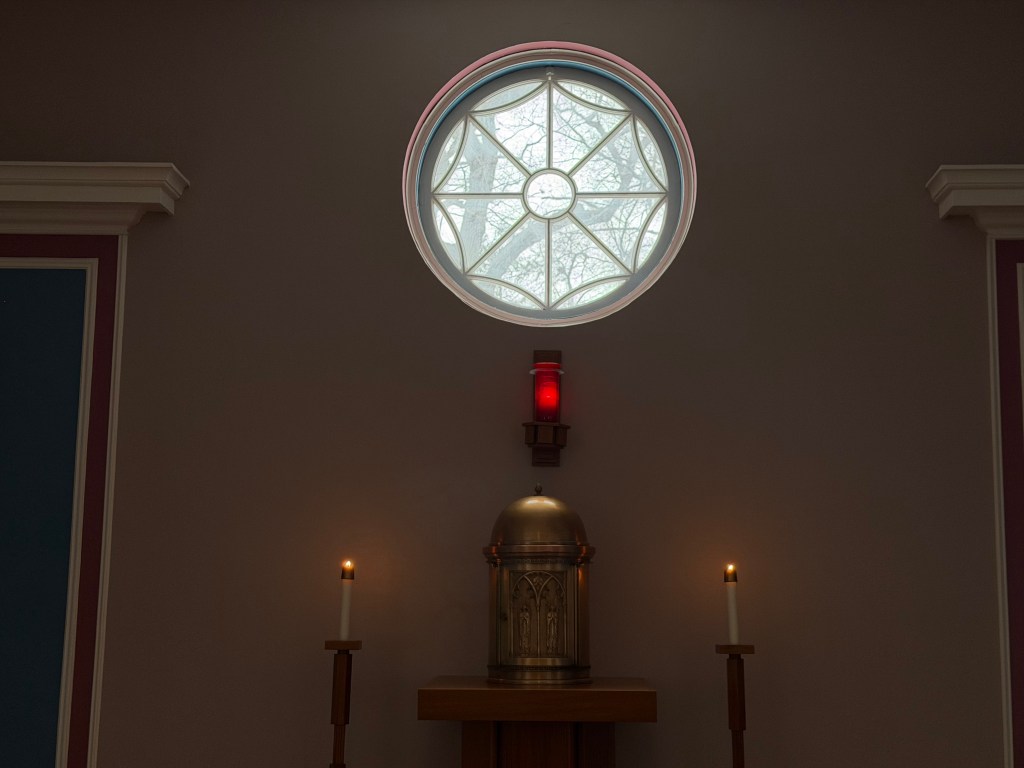
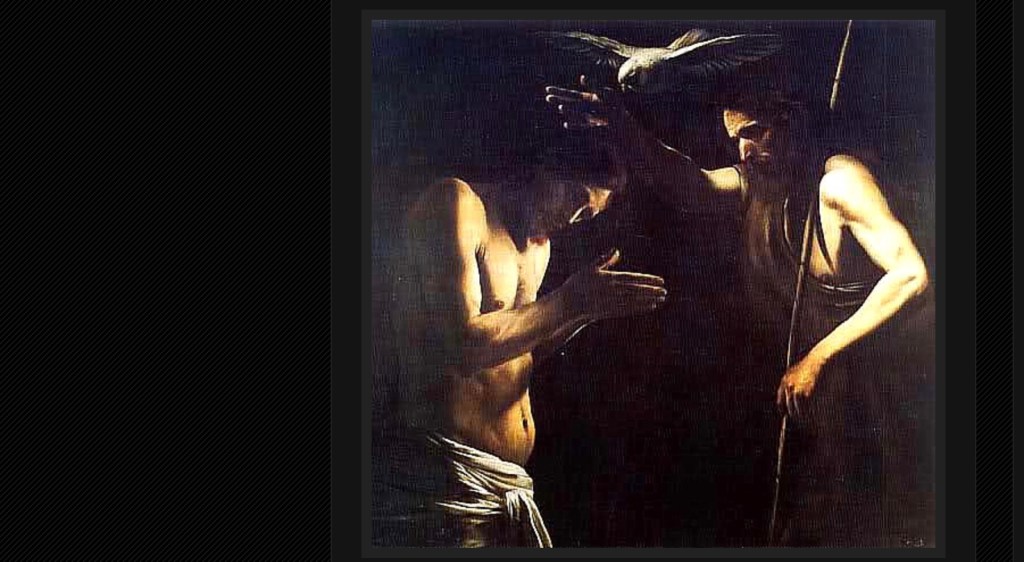
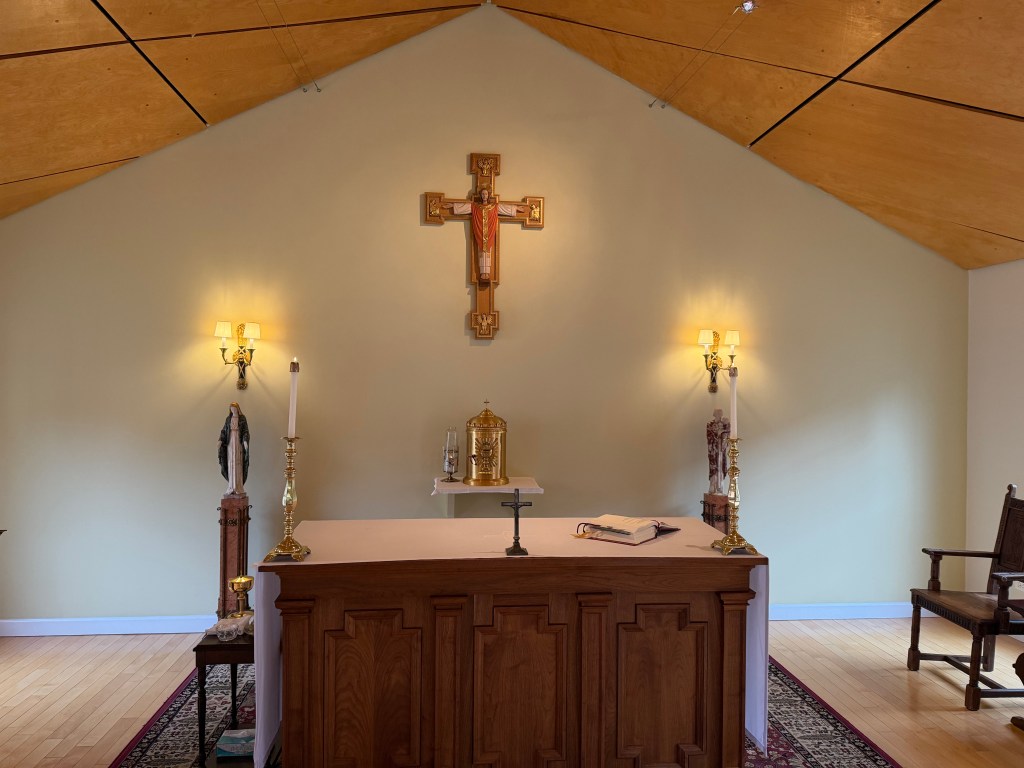
Image: Blessed to receive a touch of God’s forgiveness and mercy many times while at prayer in St. Vincent de Paul Regional Seminary Chapel.

Link for the Mass readings for Monday, March 17, 2025

We too are called and we too can be forgiven as Levi was.

Think about how good we feel after coming to be on the other side of healing from a bad cold or the flu, recovering from a twisted ankle, a broken collar bone, or other health conditions. If you have ever experienced an asthma attack or had the breath knocked out of you, it is such a relief to able to breathe fully again. We experience a feeling of wholeness that was missing during the midst of our suffering where we may have pondered a time or two whether or not we would ever get better.

The same can be said for estranged relationships. There is a distance of separation that can be agonizing, an inner gut-wrenching experience that gnaws away at us. We wonder if there can ever be a coming back together. When there is reconciliation, forgiveness, and amending of the brokenness of relationships, we can experience such a relief, lightness and joy that we never imagined possible while in the midst of the conflict, the silence, and the separation.

Sin our relationship with God and one another, and unchecked and unbridled sin can rupture those relationships. The Pharisees and the scribes questioned why Jesus was eating with tax collectors and sinners, and Jesus replied: “Those who are healthy do not need a physician, but the sick do. I have not come to call the righteous to repentance but sinners” (Lk 5:32).

Jesus is a light in the darkness. For Levi and his friends, who were following a path into darkness. Jesus shone his light in their darkness and they realized they could walk another path and they did. A great celebration of fellowship ensued in Levi’s home because these men and women, who had been outcasts, who were separated from the greater community were forgiven, welcomed, and embraced. They were loved by Jesus as they were. They did not have to change first for Jesus to call Levi and gather with them.

They were welcomed into the kingdom and reign of God. Their ticket to reconciliation and healing was accepting the invitation of Jesus, to receive and experience his love and welcome. Levi and the other sinners did not run from the light of Jesus, but were willing to recognize their need for healing, were willing to repent, to turn away from their prior ways of life and so were reborn!

They were divinized because of their willingness to participate in the life of Jesus. Levi chose not to just be a repentant sinner, but continued to follow Jesus. He gave his whole life to him and allowed himself to be transformed. He chose not to walk along the path of darkness anymore, but once seeing the light of Jesus continued to follow the Way. He continued to follow Jesus such that it was no longer he who lived, as Paul had experienced, but Christ who lived in him (cf. Galatians 2:20)!

Jesus invites us each day, as he invited Levi in today’s Gospel, to follow him. We are given the same invitation and opportunity for healing, discipleship, and transformation. Will we resist rationalizing and justifying our sinful thoughts, actions, and habits, welcome the light of Jesus that reveals our venial and mortal sins, and admit that we are in need of healing, and repent so to be forgiven and released from all the energy we have expended in protecting and hiding from ourselves and our God who loves us more than we can ever mess up?

Quietly spending time daily, especially in the evening and recalling our day, by asking Jesus to reveal to us those ways in which we have not lived according to his will is a wonderful practice. Jesus does not reveal our sins to us to condemn or shame us, he does so in the hope that we will identify, renounce, and confess them. Then he will forgive us. Even when uncovering deeply rooted and mortal sins, through the intimate encounter with Jesus in the Sacrament of Reconciliation we will be forgiven and freed from these as well.

Jesus loves us as we are. Yet holding on to our sin, keeps us at a distance from experiencing the greater breadth and depth of his love. We only need to be willing to be contrite, to embrace sorrow for the harm we have inflicted with our personal sins, and go to the Divine Physician in our time of prayer and/or Reconciliation. Once absolved, the heavy weight is lifted and we are healed, we are better able to engage in penance to atone for our sins committed, better able to forgive others as we have been forgiven, and to love as we have been loved!

——————————————————————–

Photo: Jesus is the light that will light a path to lead us out of our own darkness.

Link to the Mass readings for Saturday, March 8, 2025

May the light of Jesus help to heal us from our blindness.

As Christians we are often called, along with Jews and Muslims, the people of the Book. This is in reference to our sacred texts, the Torah, the Qu’ran, and the Bible. In actuality, Christians are not a people of the Book, nor is Christianity merely an idea, philosophy, even a theology, or series of practices. Christianity and being a Christian is about an encounter with a person. That person is Jesus the Christ.

If we do not know Jesus, then the words of our Bible just become dead letters, our philosophy and theology are just intellectual exercises, and our religious observances provide little meaning or relevance for our lives. Our presence in Mass or Church can just be something we do or motions we go through.

This could be why for every one person who joins the Catholic Church today six to eight people are leaving. People leave for their own reasons, but the underlying cause could be that in their experience of Church they are not encountering Jesus, they are not feeling welcomed or a part of a community that cares about them, and/or maybe in their daily lives they are not building, nor are they aware of how to build and sustain a relationship with Jesus.

Each of us hunger and thirst to experience and know the living God. Each and every one of us seek meaning, purpose, and fulfillment in our lives. We have been created to be loved and to love, we have been created to belong, to be a part of, and to be in relationship. We live, crave, and desire to be in relationship with God and one another, and this is true for the atheist and the mystic alike.

In our Gospel reading from Luke today, Jesus is speaking to his disciples, those who have encountered him and said yes to following him. They have witnessed his exorcisms, healings, and teachings beyond the realm of comprehension. Jesus continues to guide them and believe in them even when they come up short time and again. Jesus is finishing up his Sermon on the Plain and doing so with parables that are more like proverbs.

What we heard or read today is that a blind person cannot lead a blind person, otherwise both will fall into the pit (cf. Luke 6:39-40). Jesus is speaking about more than physical sight, but spiritual sight. We all have some level of spiritual blindness. We are blind to have blind spots when we are unwilling or not able to see those thoughts, behaviors, and desires within ourselves that keep us from deepening our relationship with Jesus. Jesus invites us to experience his love, to receive his healing touch, to bask in the light of his grace so that we might see the sins he seeks to reveal to us.

Jesus meets us where we are and loves us as we are. When we receive his love, we experience that he loves us, as we are, with all of our faults, mistakes, sins, wounds, and insecurities. We can feel safe and trust in Jesus, and as we do we will experience an unconditional love beyond anything we ever thought possible. We can then welcome his healing touch, let our guard down, and lower our defenses. As we heal, we can see our sinful actions more clearly and realize the habitual vices we have allowed to develop that were fed by apparent goods, wounds, empty promises, and unhealthy attachments. We can let go of the shame.

As we experience the love of Jesus, we can then confess and allow the knots of our sins to be loosed, and feel more comfortable to let God into all the areas of our life. When this begins to happen our lives begin to change, we are transformed from the place of only focusing on our selves, our fears, and our own needs, and begin to be aware of the needs of others. We can then realize that we do have a choice, we don’t have to continue being led by the false promises, insecurities, and fears that we have reacted to. We can choose to be disciples, led back into the land of the living led by our Teacher and Lord, Jesus the Christ, the Son of the living God.

How then do we come to know, build, and sustain a relationship with this Teacher, this Jesus?

We do so by spending time each day reading, meditating, praying with, and contemplating God’s word. I remember reading from the Gospel of Luke 12:22 when I was about seventeen. The passage talked about not worrying about your life. I then felt God speak to me. He said that I would never win the lotto, but he would always provide work for me. My wife, JoAnn, and I used to read the daily readings of the Mass each evening together and then I would read a reflection such as this one. In this way, this living word of God became alive for us. Through this daily practice, JoAnn and I drew closer to God and each other.

As we step closer to Lent, we have the opportunity to allow the light of Jesus to shine even more brightly in our lives. We can do so by spending five to ten minutes a day in quiet prayer, meditating on a Gospel reading, asking Jesus to guide us, to help to see the relevance in his teachings, healings, and exorcisms for our lives. We can speak with him as the disciples did, thank him for our blessings, and just be still and breathe, opening up our hearts and minds so to be led by him. We can ask Jesus to reveal to us our sins, we can ask him to help us to remove the log in our own eye, so that we can see more clearly to help another to remove the splinter in their eye.

We encounter Jesus by learning about our faith through reading and praying with the Bible, studying the Catechism, and reading the lives of the saints, as well as other spiritual reading, videos, podcasts and the like. Examining our consciences daily with the Ten Commandments as well as well as a list of the seven capital sins can help us to better identify, renounce, and confess our sins. Praying reflectively and slowly, the Our Father or pondering with Mary the mysteries or one mystery of the Rosary can also be practices that slow us down so we can spend more time with Jesus.

When temptations arise along with the dance of negative thoughts, we can bring them to Jesus also. When a judgmental thought, urge to gossip, to say something that is negative arises, we can stop and take a few slow, deep breaths, seek Jesus in that first moment as the poison arises. By slowing down and asking for Jesus’ help we can side step our automatic reaction response and better choose instead to think and say the good things that people need to hear, things that will be instructive, empowering, and hopeful. Convicting if need be, but resisting condemnation. Our temptations will also have less power because we can more clearly see their false allure by choosing to stand out from the shadows and in the light of Jesus.

We can encounter Jesus by allowing our hearts and minds to be open to respond when he moves us to reach out to be present to someone with our thoughts, words, and actions, even in simple ways such as sharing a smile, making the time to listen, or offering support or assistance in the moment of another’s need, even when it is not convenient, or the best time for an interruption.

We can encounter Jesus in the sacraments, especially the Mass, through the word proclaimed, the music, in our fellowship together, and especially, in the Eucharist, Jesus’ Body and Blood that we will receive. This is a sacred moment of encounter with Jesus and his Mystical Body coming together as one.

Each of these examples are small, practical ways that we all can encounter Jesus in our daily lives. Jesus is already reaching out to us, inviting us to be in relationship with him and his Father. This encounter and building our relationship with him is not only for ourselves but as we come to experience, develop and deepen our relationship with Jesus, as we experience his love and mercy and how his grace builds on our nature, we heal, we are less lured by temptations, we realize that sin and death no longer have the hold they had on us.

If we have some trouble coming to Jesus, let us reach out to his mother who reflects the light and love of her Son. She will lead us gently so we can experience him and his love for us. Jesus will then become more present in our lives, heal us from our blindness and we can begin to see and share, that which is truly good, true, and beautiful. As we are willing to see our sins, renounce and confess them, and through our participation in the life of Jesus, we will be forgiven, healed, and can breathe more freely. We will be able to then remove the log from our own eyes and better be able to get closer to help others to remove the splinter from their eyes.

Mary, help us to pray for each other, support and be present to one another in our everyday experiences, wrap your mantle around us with your loving embrace so that we can feel safe and open our hearts and minds to receive the loving embrace of God our Father. Help us to trust in, listen, and follow the guidance of your Son. May we then be willing to allow the flame of the Holy Spirit to catch fire and rise within each of us such that we may go forth and set the world aflame with God’s love.


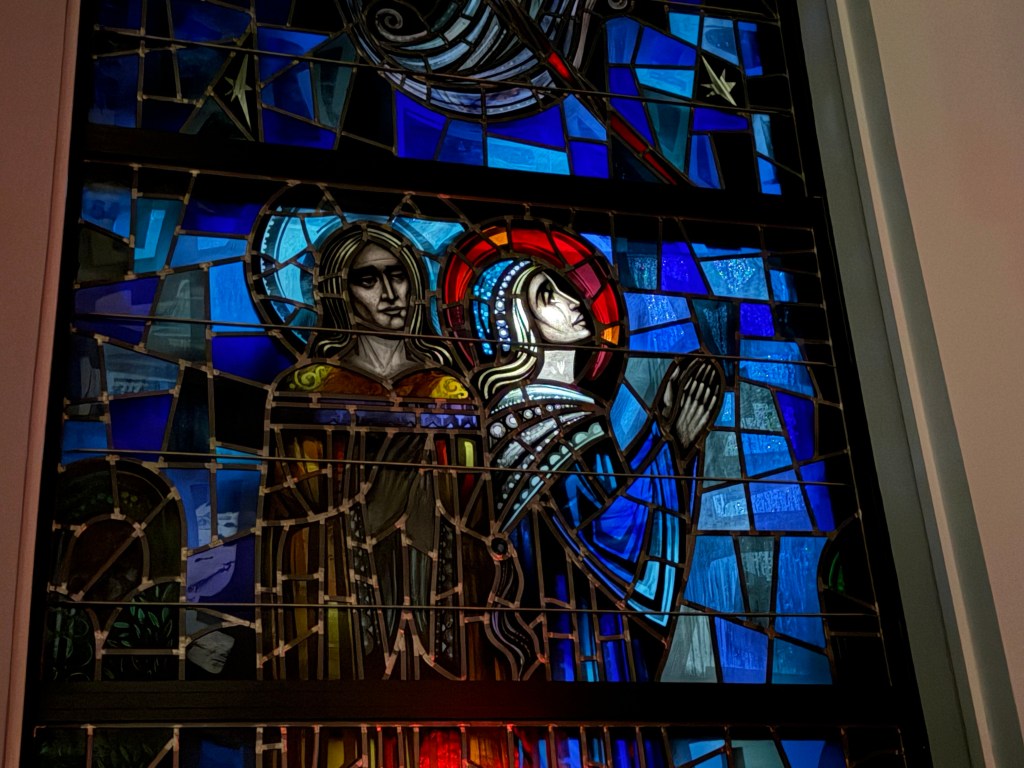
Photo: Mary reflects the light of Jesus and we are invited to be healed and do the same. Great to be back in our church to worship this weekend!

Link for the Mass readings for Sunday, March 2, 2025

Whoever follows Jesus will not walk in darkness, but will have the light of life.

What we think, say, do or do not do, has consequences for ourselves and others. The smallest act of kindness, like suggesting, as Jesus did in today’s Gospel, of giving someone a drink of water goes a long way. The reality that 2.2 billion people do not have adequate access to the most basic of needs, safe drinking water (water.org), is an amazing and disheartening statistic. The most serious of sins in this regard is not bothering to care. Jesus shared clearly, in the Gospel of Matthew (cf. chapter 25), that what we do to the least of our brothers and sisters, we do to him.

We have a choice to act in ways: that limit or provide access for people seeking such basic necessities as food, water, and shelter; that harm or hurt; that divide or unify. Jesus uses graphic, hyberbolic words in today’s Gospel, such as “If your hand causes you to sin, cut it off. It is better for you to enter into life maimed than with two hands to go into Gehenna, into the unquenchable fire” (Mk 9:41-50). Jesus does not literally mean that we are to cut off our hand or foot, or pluck out our eye, but he is showing us the seriousness of sin. Sin cuts us off from the source of our life who is God. Identifying and repenting from our sins is important for our physical as well as our spiritual well being now and in the life promised to come after our death.

Sin invites us to walk a path that leads to death. God invites us to walk a path that leads us to life. “Although many people nowadays think of sin primarily as breaking a rule or violating a law, in Jewish Scripture, the word ‘sin’ (Hebrew chatá) literally means to ‘miss the mark’ or to ‘miss the path‘ (Pitre, 54).” God is inviting us to share in his life now and for all of eternity. We can walk away and chart our own course apart from God’s guidance or we can walk the path that he lights for us to follow. Jesus spoke bluntly and graphically to show his followers and us that to miss the mark, to sin, to chart our course on our own will have deadly consequences.

This is why Jesus began his public ministry echoing the prophetic tradition and John the Baptist when he stated, “This is the time of fulfillment. The kingdom of God is at hand. Repent and believe in the gospel” (Mark 1:15). Jesus came as a light to reveal to us our sins so that we can turn away from any illusions, false promises, and apparent goods that we are attached to, repent from them, and turn back to choosing to follow God first. Our lives will be much better when we seek first the kingdom God and see the world not as man does but as God does.

Venial sins hurt our relationship with God but mortal sins rupture our relationship with God. The antidote is the same for each, to be sorry for our sins, confess them, be willing to perform the penance to atone for our sins, so that we can be absolved, forgiven, and return to the path that leads to life. A daily examination of the Ten Commandments is a good place to start. The first three have to do with our relationship with God and the seven following have to do with assessing how we love our neighbors.

Examining the seven deadly or capital sins: wrath, sloth, gluttony, lust, greed, envy, and pride are also very important to examine. Asking the Holy Spirit to help us to see any of these sins which are the root of all of our sins is not an exercise in shame or condemnation. We do so in an effort to strengthen our will, to identify and renounce them so that we can be freed and healed from the unhealthy attachments and disordered affections that lead us astray. What can help us to overcome the temptation to any of these sins is to engage in practices to develop the virtues: meekness, diligence, temperance, chastity, generosity, and humility, that will counter each of the seven deadly sins listed above.

When we turn away from God and engage in thoughts, words, and actions that are divisive, dehumanizing, and self serving; when we rationalize and justify behavior that goes against our Gospel values and our consciences, we play a part in contributing through our personal sins to the condition of original sin that plagues our world. When we act in these ways, we are off the mark and going against God’s plan that we pray for each day: “May your kingdom come, may your will be done on earth as it is in heaven.”

Jesus is not calling us to jump out of bed today and amass heroic acts of virtue, nor is he asking us to change all alone, and all at once. The disciples took time to get on board with his message. It will take time for us to learn and grow as well. Jesus loves us more than we can ever imagine and when we open our hearts and minds to receive his love daily, we will grow in the humility necessary to identify and repent from our sins and grow in virtue.

——————————————————————

Photo: Hike through Runyon Canyon Park, Los Angeles.

Pitre, Brant. Introduction to the Spiritual Life. Image: New York, 2021.

Link for the Mass readings for Thursday, February 27, 2025

“Put out into the deep!”

In the first reading, Isaiah speaks, “Woe is me, I am doomed! For I am a man of unclean lips, living among a people of unclean lips, yet my eyes have seen the King, the LORD of hosts” (Isaiah 6:5)! And then in the Gospel after the miraculous catch of fish, Simon says to Jesus, “Depart from me, Lord, for I am a sinful man” (Luke 5:8). Isaiah in his vision and Simon through the super abundant catch of fish both recognize that they are in the presence of God and in that presence they also wisely recognize and confess their sinfulness.

Both men clearly fall short of the glory of God and God meets them both, not with condemnation, but with an invitation. Isaiah is met by the seraphim who places an ember on his lips to purify his mouth and Jesus says to Simon, “Do not be afraid; from now on you will be catching men” (Luke 5:10). God did not ask either of them nor does he ask us if we are worthy. He asked Isaiah and Peter, are you willing to follow me? And both were willing to do so and be sent.

When we enter the sanctuary where Jesus is present in the consecrated hosts in the tabernacle, do we allow ourselves to experience the awe that we are entering a sacred space, a place set apart that is holy for God? We bless ourselves with holy water when we first enter the church, to remind ourselves that in Baptism we have died with Christ and have risen with him to become part of the new creation. We also remember our baptismal vows to reject the things of Satan and to say, “yes” to the will of God. We then genuflect, kneel on our right knee, again making the sign of the cross, invoking the Trinity of God as we acknowledge the presence of the Body of Christ in the tabernacle. For where the Son is present, so is the Father and the Holy Spirit.

As we come to our seats, allowing ourselves to be still and silent in the presence of God, we call to mind our sins as did Isaiah and Simon and seek God’s forgiveness that will be offered for our venial sins during the penitential rite during the beginning of the Mass. As Isaiah received the ember from the heavenly altar in his vision to purify his lips, so we receive the Eucharist, the Body and Blood of Christ, that has been represented on the altar during the Eucharistic rite. We are purified and transformed. Our hearts and minds are made new through the love of Christ and the power of the Holy Spirit that has transformed bread and wine into the Body and Blood of Christ.

Simon, like Isaiah, was willing to experience the light of God coming through Jesus’ miracle. He did not roll and jump overboard, instead he remained in Jesus’ presence, and confessed his sinfulness. Simon, after fishing all night, was asked to do probably the last thing he wanted to do. Have some itinerant preacher enter his boat and command him “to put out a short distance from shore” so he could teach for a while. If that wasn’t enough, then Jesus, this carpenter, said to Simon, a seasoned fisherman, to “put out into the deep water and lower your nets”. In both cases, Simon, though reluctant, and not seeing any sense in the command, was willing to obey.

Because Isaiah and Simon were willing to trust, God happened. Their lives were transformed, and they were sent on mission. Most of us will not experience such a vision as Isaiah experienced but Jesus will come to us in the same way that he came to Simon. He meets us in the midst of our everyday lives.

So often we think or feel that it is our initiative that draws us closer to God, when in fact, the initiative is God’s. Our very desire to pray, to seek out God is already an awareness, a recognition of his invitation to draw close. God speaks to us in the silence of our hearts, through quiet invitations, and experiences. Each time we are aware, and each time, as did Simon, even when we hesitate, we still say “yes” to his invitation, we grow in our relationship with God.

Jesus comes to us as we are and loves as we are, even in our sin, but he doesn’t want us to stay there. When we are willing to become aware of our sin and faults and allow more of the light of Jesus to shine into the darkness of our lives, as we put out into the deep, as we go where the Holy Spirit leads us, beyond the horizon of our comfort zones and understanding, we will be forgiven, and blessed by the grace and wonder of God’s glory present in our lives. Apart from Jesus we can do nothing, but with him and following his guidance all things are possible. This is what Simon experienced in the miracle of the abundance of the fish filling his nets. What he could not accomplish on his own experience, skill, and strength, he did by following the invitation of Jesus and he became more acutely aware of the divinity of Jesus in his midst.

The deeper and more intimate our relationship grows with Jesus, the more our own sin is revealed to us. This is a gift to welcome, because in our awareness and confession of our sins we are freed from that which keeps us at a distance and prevents the growth of our relationship with the God who loves us more than we can ever imagine. When we face and confess our sin and weakness, and resist settling for mediocrity, we will grow in holiness, humility, and receive more of the light, love, and grace of Jesus such that we can grow beyond our fears, grow deeper in our relationship with him, so to better allow ourselves to be agents of his grace and mercy in the lives of those he brings into our realm of influence.

——————————————————–

Painting: Some quiet time with Jesus, listening to his invitation to, “Go into the deep.”

Link for the Mass readings for Sunday, February 9, 2025

Jesus is our light, love, and salvation.

The scribes who had come from Jerusalem said of Jesus, “He is possessed by Beelzebul,” and “By the prince of demons he drives out demons” (Mark 3:22).

The scribes, coming in from Jerusalem, most likely to investigate the happenings of this Jesus they have been hearing about, experience for themselves Jesus exorcising demons. They do not nor seem to want to understand how he is able to cast them out and thus healing those possessed. They judge that he does this feat, not by the power of God, but instead, by the power of Beelzebul, the prince of demons. Could their purpose be to delegitimize, or literally demonize, Jesus in such a way that those beginning to follow him will begin to doubt or outright turn away from him? If Jesus is who he says he is, then the scribes are actually the ones serving Satan in aligning with him to sow discord and disunity.

Jesus provides an invitation to build bridges of reconciliation and healing to restore the unity that has been lost by those choosing to sin, to put self first over God. He also meets those on the peripheries, those who have been kept at arm’s length, healing those conditions which have been used to justify their separation. Yet Jesus does not impose, he proposes. Even so, Jesus demands a choice.

Jesus shows over and over again by word and deed not only how he is creating a bridge of connection between the human and the divine, he is in actuality the bridge, the kingdom of God in our midst, and yet, he is not going to drag anyone over against their will. Jesus calls all who encounter him to make a choice, there is no middle ground, we are either for him or against him.

We have witnessed in the Gospel accounts how some of the scribes, Pharisees, and even some of his own relatives reject Jesus. He is able to perform only a few miracles in his own hometown. Those who say no to the invitation cut themselves off, separate themselves from the very source of their life, the very core and sustaining force of their being. Those who say, “yes’ and repent, like those that receive his healing, will be transformed, and are freed from their enslavement to sin.

When they continue to say, “yes”, day by day, decision by decision, they align themselves with the very source and communion they have been created for, God the Father. This is no one revelatory moment but a daily commitment of saying, “yes” to Jesus. Even when we mess up or fall for temptation, let us refuse to stay down but arise, repent, and begin again and again. We must always and everywhere reject the lie that echoes in our minds that we cannot be forgiven. Jesus loves us more than we can ever mess up, he loves us more than our worst choices or mistakes, more than our most grievous sins, and he will forgive us time and again, as long as we are contrite, seek his help to sin no more, and are willing to perform the penance to atone for our sins.

If this is true, then what does Jesus mean when he says, “whoever blasphemes against the Holy Spirit will never have forgiveness, but is guilty of an ever lasting sin” (Mk 3:29)? Jesus refers here to our free will to accept or reject the free gift of his grace. We can observe this played out in the choices of Peter and Judas. Peter repented, was forgiven, and transformed. Judas withdrew within himself, cut himself off from Jesus, did not believe that Jesus would forgive him, and took his own life. Jesus would have forgiven Judas as he had Peter, but Judas kept himself at a distance. He refused to accept the love of the Holy Spirit. He cut himself off from the very source of his life and salvation.

We have a choice to make each day. We can let ourselves be defined by our sins and our worst mistakes, believe the father of lies who promotes division and isolation, tempts and seeks to condemn us, separate us from Jesus and one another, with the intent to kill us. We can walk the path of darkness which consists of living defensively, keep others at a distance, demean, belittle, and degrade others, as well as live in the shadows of indifference and cynicism.

Or we can surrender our will to Jesus, accept his guidance and conviction so that we can see our sins and repent from our pride, prejudice, greed, lust, envy, gluttony, sloth, and wrath. We can believe that Jesus is who he said he is, seek his forgiveness, healing, and love, and join in the mission of sharing his gospel.

As we do so, we will take steps forward and steps back, and we stumble and we will fall, but through each experience, the hand of Jesus is still there to help us back up. When we are willing, we will be forgiven again and again, and begin again and again. We are not alone. Mary the Mother of God and all the saints said, “yes” to Jesus’ invitation. They understand what we are going through. They are also cheering us on, guiding us, empowering us, so that one day we too will be where they are, seeing God the Father face to face. Until that time, while we are still here this side of heaven, let us breathe, receive, rest, and abide in God’s love so to radiate his Son’s light and love, in our own unique way.

———————————————————-

Photo: A quiet moment to breathe and receive the love of Jesus.

Link for the Mass readings for Monday, January 27, 2025

Will we follow Jesus as Levi did?

In both the first reading from Hebrews and verse from Psalm 19 we read about the power of God’s word. “The word of God is living and effective” (Hebrews 4:12) and the words of the “Lord, are spirit and life” (Psalm 19). Jesus gives face to the living word of God come down from heaven to transform his people as he continues to teach with authority and offer healing. In today’s account of Mark, Jesus calls his fifth disciple, Levi. The key difference with this call of Levi and the four fisherman is Levi’s occupational hazard.

Tax collectors were disliked, even despised by many in ancient Palestine because they were considered unclean, and categorized as with lepers and sinners. They were cast in this net because the tax collector had a responsibility to pay a fixed amount to the occupying power of Rome. This in itself was bad enough because their own countrymen were colluding with the enemy. What made matters worse was that too many kept as a commission anything he collected over and above that fixed amount. The majority of the population, already just getting by, paying a temple tax, and the Roman tax, then finding out their local tax collector was taking more than their fair share, did not make for feelings of endearment.

Jesus surprises all who had come to hear him teach when he not only invites Levi, also known as Matthew, to follow him but then they have dinner together. We are witnessing yet again another healing miracle. Jesus provides an opportunity of bridging divides by inviting someone to his inner circle, to turn away from one way of life to begin anew, to: “Repent and believe in the gospel” (cf. Mk 1:15). The Pharisees question his choice of table fellowship companions. It is not clear if the Pharisees are eating with them or are on the outside looking in. The other curious point is that the Pharisees are conversing with Jesus’ disciples. So both groups are together witnessing the communal exchange, from a distance. They choose not to engage in the fullness of the fellowship.

They could not have been at too great a distance though because Jesus could hear their concerns and responded to them: “Those who are well do not need a physician, but the sick do. I did not come to call the righteous but sinners” (Mk 2:17). The Pharisees, and possibly some of his disciples, were not a part of the intimacy of this communion because of their own unwillingness to accept those that Jesus invited to share a meal, to accept that they too were sinners also in need of healing.

All have sinned and fallen short of the glory of God. Jesus forgives and offers mercy to all who are willing to be aware of his invitation to fellowship. In surrendering our finite freedom over to his divine freedom, we receive healing and transformation, then are offered an opportunity to develop an intimate relationship and participate in communion with the one who is ushering in the kingdom of God. This is a foreshadowing of the last supper and the celebration of the Mass.

We too are invited as sinners to join the banquet, to be in fellowship with Jesus. As Levi received, we are given an opportunity to begin again, to leave behind anything that separates us from God and one another and follow Jesus, who came that we might be forgiven and healed.

As with many Gospel passages, today’s offers a wonderful opportunity to place ourselves in the scene. Mark presents Jesus teaching the people though he again does not tell us anything about what he shared. Knowing what follows, we might think about and ask ourselves, “What might Jesus have taught before going to Levi at the custom’s post?” Could he have been talking, as Matthew adds in his parallel account, about how Amos preached that God desires mercy and not sacrifice (Mt 9:12)?

Let us read this passage slowly a few times (Mark 2:13-17) and meditate upon these words of God that are “living and effective.” Then as Jesus moves to the custom post, follow him, and the others in your imagination. What is our honest reaction to Jesus calling the tax collector, Levi? Are there sins that others commit that we find easy to forgive, others that we find hard to forgive? As the scene shifts to the breaking of the bread, do we dive in with this motley crew, stay at a distance, or walk away?

The words of the “Lord, are spirit and life.” May we not only read them, but also meditate upon and pray with them so that we may be transformed by them. May we also encounter Jesus in this passage and be willing to listen to Jesus speak to us in the silence of our hearts. This is a wonderful spiritual practice that can bring us much joy, forgiveness, healing, and deeper communion with the Divine Physician and healer of our souls. No RSVP needed, just come, open up your Bible, and join the feast!

————————————————————————-

Painting: Caravaggio’s “The Call of St. Matthew”

Link for the Mass reading for Saturday, January 18, 2025

Some guidance from Jesus, St. John, and St. André Bessette, for the new year.

The beloved disciple John shares with us today a wonderful compass to guide us into the new year. From his first letter he writes that God’s “commandment is this: we should believe in the name of his Son, Jesus Christ, and love one another just as he commanded us” (I John 3:23).

Before we can believe in God’s Son, we need to trust him. For many if not all of us at some point in our lives who have experienced being hurt, betrayed, or wounded in any way, trust can be hard. 

That is why the Son of God was willing to be sent by his Father. He wanted to become one with us so that he could not only experience all the pain and suffering of our humanity but that he could take that upon himself, even death, so he could conquer them and heal, restore, and show us the way back to the Father, through our suffering and pain and into healing.

We can trust Jesus. Jesus not only has our best interest in mind, but he knows the plan of his Father for our lives and he can lead us to experience his love and our vocation as we trust him by taking one step at a time. He gives us enough light to see two steps ahead and when we take those steps, he will give us enough light to see the next two.

We can trust Jesus, but each thought or invitation we hear in our mind is not necessarily from Jesus. Some may appear good and true, but are only apparently so. For as John continues: “Beloved, do not trust every spirit but test the spirits to see whether they belong to God” (I John 4:1).

The devil and his demons tempt, entice, divert, and distract us, with the ultimate goal to lead us away from the love of God, the source of our true fulfillment. They seek to plant seeds of so doubt, so we believe that God does not have our best interest in mind. And once those seeds of doubt begin to sprout he seeks to isolate us from our Father by fertilizing those doubts with distrust in our minds and hearts. And when we sin, the devil condemns and shames us, and leads us to believe that we cannot be forgiven and that no one will accept us for what we have done or for who we are.

God never tempts us, he invites us and challenges us to move beyond our sins and our fears. He gently coaxes us to come out of the darkness of our self-centered, protective cocoon, and into the gentle light of his love. He does so patiently, sometimes with a firmness of a good parent, but gently. We hear his voice mostly in the quiet and stillness of our heart. When we do make a mistake, he does not condemn us, he convicts us to learn, to renounce our mistake. When we sin and turn back to him, he forgives and embraces us. We then begin again strengthened by his grace and greater clarity. 

God loves us more than we can ever imagine no matter what we have or have not done, he loves us more than we can ever mess up, and he loves us even in the act of our sin. He has shown this love most profoundly in sending his Son so we can see his face and experience his love, forgiveness, and mercy. We can experience that he loves us as we are right now, right where we are in our weakness and imperfection. 

The key to walk free from the “fowler’s snare” (see Psalm 91:3-4) is to heed the words that Jesus began his public ministry with: “Repent, for the Kingdom of heaven is at hand” (Matthew 4:17). God does not seek to punish us. Neither does he want us to stay in our sin and separation from him. God’s love calls us to more. Feeling guilty and shame is a false humility that keeps us separated from God because our focus remains on ourselves.

God imparts within us a sense of guilt, so that we experience our separation from him. Being in touch with this experience, helps us to choose true humility which leads us to trust in the love of God and believe in his mercy. When we sincerely and contritely confess our sins, do penance, and with his help seek to sin no more, Jesus will forgive, free, save, and restore us to our right relationship with God. 

When we are willing to allow the gentle light of Jesus to shine in our darkness, Jesus helps us to see what our life is like without God and with God. He helps us to be able to see the difference between the apparent goods and the true good so that we can make a clearer decision. Will we choose darkness, separation, and death or light, reconciliation, and life?

St. André Bessette, whose feast day it is today, could have fallen for the devil’s tactics. He who was sickly since he was an infant, lived in poverty as a child, and who then lost his parents when he was only twelve, and struggled with illness for all of his ninety-one years, could have been bitter towards God. André chose instead to trust in God and how he could make this statement: “Do not seek to have your trials removed. Ask rather for the grace to bear them well.”

Living a devout life of faith as a youth, his pastor encouraged him to apply to religious life and he sought at twenty-five to enter the Congregation of the Holy Cross. His poor health continued to plague him and at the end of his novitiate year, he was not asked to continue. André continued to trust in his Lord and his long standing ally St. Joseph. His novice master and bishop saw the light of Christ in this young man and petitioned that he be given an extension and he was eventually admitted into the order and served as a brother. His birth name was Alfred. Upon his profession he took the name of André who was the pastor who had mentored and recommended the pursuit of his vocation.

André was assigned the position of porter, the door keeper, because of his lack of education and frail health. A role that many would not look on with any esteem, André welcomed with open arms. Seeing in this position the opportunity to greet Jesus at the door with each knock and person he met. Looking back at his life he would say, “When I entered the Congregation, they showed me the door. And I stayed there for forty years.”

During his time of service, through the intercession of St. Joseph and his unwavering trust in Jesus despite much opposition and his continued frail health, thousands experienced being heard, loved, and healed. Through St. André, they experienced a foretaste of heaven.

St. André is a model for us on how we can in this new year “believe in the name of his Son, Jesus Christ, and love one another just as he commanded us…”, trust only in the Spirit of God without hesitation, and when we do fall, “Repent, for the Kingdom of heaven is at hand.”

God loves us so much and wants to share his life with us so that we can share in his relationship. Are we willing to resist the lies of the enemy, trust in the love of God, seek his guidance in all circumstances, discern and let go of anything that is not of God? When we do so, we will heal, be forgiven, and be set free to love and love in return. This journey begins and continues by trusting in God the Father’s Son whom he sent.  


Photo: St. André Bessette, pray for us!

Link for the Mass readings for Monday, January 6, 2024

Mary’s Son will forgive us and fill us with joy!

“Mary set out and traveled to the hill country in haste” (Lk 1:39). Why? Because she was filled with joy. She had just experienced an incredible encounter with the angel Gabriel telling her that she was to bear the “holy, Son of God” (Lk 1:35). She also learned that her relative Elizabeth, who had been barren, was six months pregnant. Who better to understand and appreciate what she had gone through than Elizabeth? When we hear good news we want to share it with someone, especially when we believe another will fully appreciate our experience.

Is there a time when you felt overjoyed about something that you felt like you were going to burst and you couldn’t wait to share your experience? A memory may have already started forming in your mind, a smile and glow may already be radiating from your eyes as you re-experience that moment.

One such graced encounter I had was when I was in my early twenties and dealing with a heavy personal issue. I was living in Sharon, Connecticut at the time and had an opportunity to go to the Shrine of Divine Mercy in Stockbridge, Massachusetts to participate in a penance service. I walked up hesitantly to a kind-looking, elderly, polish Marian priest. His name alludes me now, but not his face. He radiated invitation and mercy. After a few stammering words, I let loose and shared what I had been dealing with. When he offered absolution, I felt the burden physically lift, I felt almost like levitating. Then a surge of joy welled up in me that lasted for days.

There is a great gift in sharing a burden with a trusted friend or family member, being heard and supported, and/or receiving absolution from a priest. We need to resist the temptation of turning within ourselves, trusting in the lie that we can handle our conflicts, challenges, and trials all on our own. There is a pearl of great price, God’s healing grace, that is available to us when we share our experiences. In this way, we come to realize concretely that we do not have to go through our pain and suffering alone!

Many of us are struggling with a lot, and sometimes we are not at our best, nor do we make our best decisions. We react instead of act, we get caught in the momentum of behavior that we know is not acceptable, and we continue to slide. The key is not to beat ourselves up and walk around feeling guilty. There are enough people who would be happy to sign up to do that. Instead, we will be better off to choose to practice a healthy sense of guilt, examine our conscience, be mindful, and admit when we have done something inappropriate, sinful, or wrong.

The key to reconciliation is to embrace in humility and  admit our sin, be contrite – sorry for what we have done, not upset, defensive or rationalize away our behavior, and to follow the counsel of James and “confess your sins to one another, and pray for one another so that you may be healed” (James 5:16). Having experienced the joy of forgiveness, while still experiencing the grace of our reconciliation, may we be like Mary who is full of grace, and go in haste to share with others the wonderful gift we have received!


Photo: Our Lady of Guadalupe, pray for us!

Link for the Mass readings for Thursday, December 12, 2024

When we receive and put into practice Jesus’ teachings we reflect his light and love to others.

Jesus said to his disciples: “Not everyone who says to me, ‘Lord, Lord,’ will enter the Kingdom of heaven, but only the one who does the will of my Father in heaven” (Mt 7:21).

I have written quite often, quoting and paraphrasing one of my favorite quotes from St. Irenaeus, that Jesus came to be one with us in our humanity so that we can become one with him in his divinity. In his becoming one with us in our humanity he invites everyone, no one is excluded, to participate in his divinity. Yet if everyone is invited, how can Jesus say that not everyone will enter the Kingdom of heaven?

The answer to that question is in the line that follows. The one who will enter heaven is, “the one who does the will of my Father in heaven.” If this verse does not help, then it might be helpful to understand a little about heaven, as best as we can, as the mere mortal, finite beings that we are.

Heaven is not so much a place but a state of being in relation to God, in which we are privileged to share communion and a deeper intimacy with God for all eternity. We will still not know everything about God because God is infinite and we will still be finite even in heaven. God is without limit, we are limited. We will never exhaust our relationship, never get bored with God.

Maybe a more three dimensional, an earthly example may be of help. If we were invited to play a sport, an instrument, or to act in a play, with the end goal being that we would play in the upcoming game, concert, or performance, we might feel pretty excited about the offer. We tell the coach, conductor, or director “That’s great news!” Yet, in the days that follow, we do not attend any of the practices, we do not practice the skills required to play the position, instrument, or role and we don’t return any of the follow-up invitations by phone, email, or text. The day of the big game, concert, or performance comes, we gather our self together and head on over to the arena or hall. We arrive to see the coach, conductor, or director but are denied entrance. We might say, “I don’t understand, you invited us to play!” The reply is, “Not everyone who says to me coach, coach (conductor, conductor, or director, director) is ready and prepared.”

Jesus invites us to play a part in God’s theodrama, everyone. Some say yes and some say no. Some say yes, and then don’t do anything, some say yes and do some things, some say yes and dive in. Most of us take a few steps forward and a step or two back. Just like preparing to play in a big game or perform in a big concert, or play, we need to be committed, disciplined, and persistent. Unlike a missed opportunity to participate in a game or performance, that we can correct and make another attempt down the road, we don’t want to miss the opportunity to spend eternity with Jesus in heaven.

The above analogy does not imply in any way that we earn our way into heaven, or we can do so on our own effort and will power. The bottom line is that Jesus gave his life for all of us and through his grace, we have been saved. Our salvation is a gift freely given. Yet, we have to be willing to receive and open the gift. Our time here on earth is the time we are given to: open the gift we have received, work out our salvation, not just hear but to also put into practice Jesus’ teachings, and be about building our relationship with him. As we do so, we will be transformed by and conformed to Jesus, so that we can come to know his Father as he does, and then we can reflect the light and love we have received to others.

If we want to know God’s will, we need to come to know God. Advent is a time of preparation, a time of getting to know God who is already with us and inviting us to let him into our lives. Jesus helps us to recognize and see what our lives are with and without God. He helps us to see and recognize when we are off track. Then we can better decide who we choose to follow.

When we are aware and humble enough to acknowledge that we are walking away instead of toward God, we just need to reorient ourselves, and turn back to him. God never tires of forgiving us. Let us not ever tire of asking for forgiveness. Each time we seek and receive forgiveness, our minds and hearts are expanded and we will experience more of his love. The forgiveness and love that we receive, we are then to also share.

——————————————————————————

Photo: We each reflect the light of Jesus in our own unique way.

Link for the Mass reading for Thursday, December 5, 2024