forgiveness
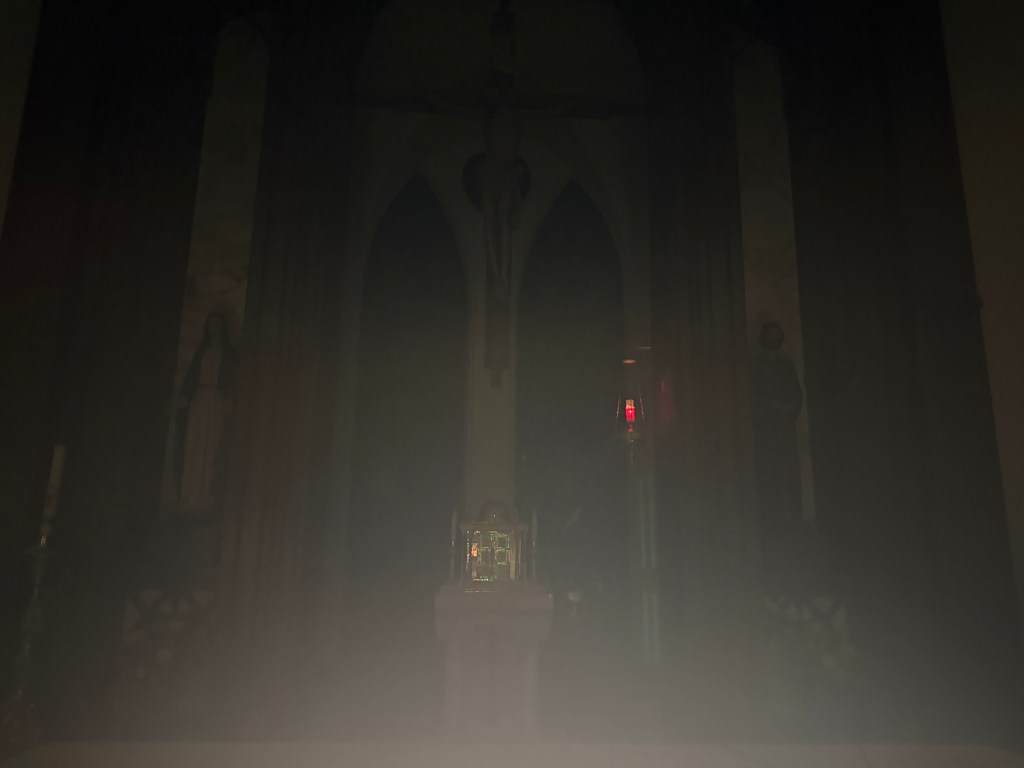
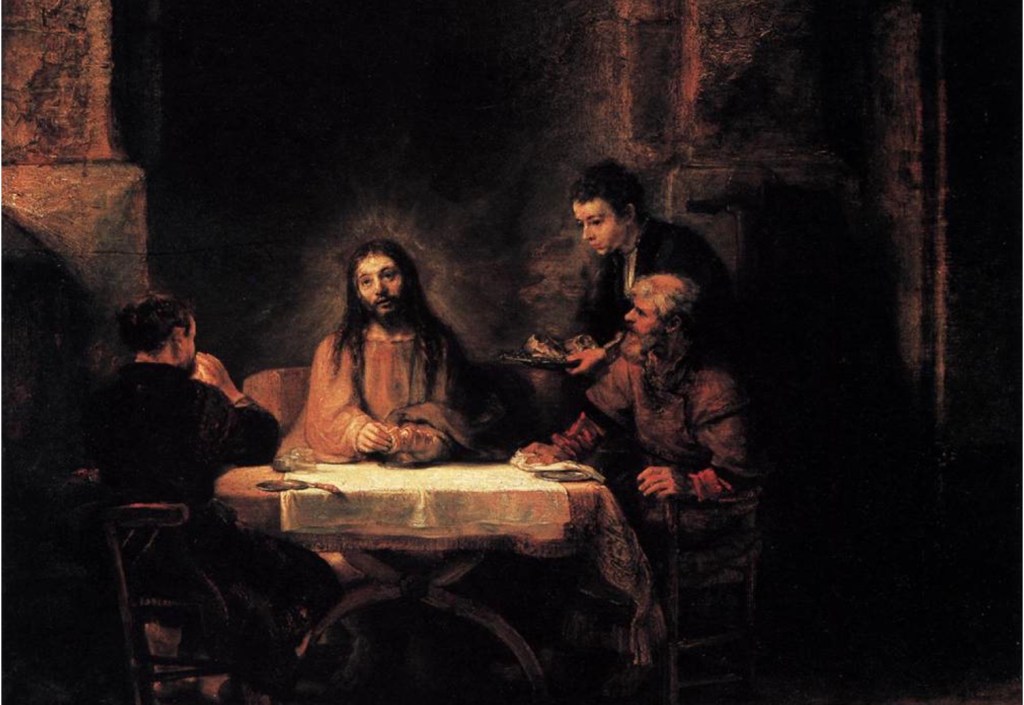
Jesus did not give up on Thomas or Cleopas. He will not give up on us.
We return again to the reading of the Road to Emmaus pericope that we heard less than two weeks ago. This rich record is certainly worth many readings because there is within its telling so much contained in its depths that one, two, or three readings is nowhere near sufficient.
Jesus comes upon Cleopas and another disciple heading away from Jerusalem feeling devastated because not only had their teacher been brutally crucified but their hopes of him truly being the Messiah were also dashed. The interesting points that come up when they begin to talk to Jesus are that “some women…had indeed seen a vision of angels who announced that he was alive.” They also announced to Jesus: “Then some of those with us went to the tomb and found things just as the women had described, but him they did not see.”
Cleopas and the other disciple were certainly close enough to the inner circle of the Apostles to know Mary Magdalene and the Eleven to be in hiding with them after the crucifixion. This also meant that they knew Jesus pretty well. They had to have heard on more than one occasion either from Jesus himself or the other Apostles that Jesus would rise again on the third day.
Why then did they leave after hearing the tomb was empty? Wouldn’t they want to find out if what Jesus said about his Resurrection was actually true? Jesus had told them to wait for him in Jerusalem, not Emmaus. Cleopas and the other are heading the wrong way! Last week we read about how Thomas was away when Jesus reappears to the Apostles. Could he have gone his own way and leave like Cleopas and the other disciple did?
There were those like Mary, Peter, and John who stayed in Jerusalem, while at the same time we know about Thomas, Cleopas, and another disciple who had left, even after hearing about the empty tomb. Jesus was clear in what he taught about his coming back on the third day, just as he was when he told his followers that they would eat his flesh and drink his blood. People left then as well.
How many times have we given up or given in just when what we had been waiting for or working for would have been fulfilled? We may never know. Fortunately, for Cleopas and the other disciple that we read about this week and Thomas last week, Jesus was willing to reach out to them a second time. They heard his words about the Resurrection but they did not grasp or comprehend the full meaning of what Jesus meant.
The same is often true of us. Jesus invites us to follow him as he did the others, as he does with all of humanity, yet we often do not understand or fully appreciate the fullness of what Jesus is offering. Until we are able to relate to and value the deeper meaning and worth of what it means to truly develop a relationship with Jesus, to know, be loved by and love him, and be a follower of his, we will not be willing to invest our time and commitment. The Good News is that Jesus did not give up on Thomas or Cleopas nor will he give up on us. One day we too will also be able to exclaim with joy, “The Lord has truly been raised,” and our life we never be the same.
Painting: The Supper at Emmaus by Rembrandt 1648
Link for the Mass readings for Sunday, April 19, 2026

Will we choose to remain in the darkness or come into the light?
The Gospel reading for today from John is painful on two fronts. First, Jesus said to Judas, “What you are going to do, do quickly” (Jn 13:27). Did their eyes meet at that moment, was there an unspoken appeal from Jesus to Judas, or had that already been settled? Judas aligned himself with Satan and set his course. Worse, he removed himself from Jesus and his companions and it was night.
Reference to night in the Bible is typically not a good sign. This is not only the time of day, it is also the spiritual absence of the light in which Judas has now entered. This night has also begun its descent upon Peter as well, although he is not yet fully conscious of the darkness creeping upon him as well.
The second front appears at the end of today’s reading. Despite Peter’s apparent full endorsement of Jesus and promise to even lay his life down for him, Jesus predicted that “the cock will not crow until” Peter will deny him “three times” (Jn 13:38). The momentum of utter betrayal builds. Judas will agree to turn Jesus over for thirty pieces of silver. He will betray the Son of God, yet in so doing, Judas will play his part in salvation history.
Judas will set in motion Jesus’ arrest that will culminate in his crucifixion. Peter will come to deny Jesus three times as Jesus predicted. I cannot think of any experience worse than the pain of betrayal. Yet, how is it that we betray Jesus each day? Remember what he taught us, “What you did not do for one of these least ones, you did not do for me” (Mt 25:45). Who and how have we betrayed Jesus in our lives? This is an important question to ask, and what is even more important is that we not only answer it honestly but seek forgiveness and resist the temptation of isolating ourselves in our sin and pride.
Judas separated himself, cut himself off from Jesus and his companions. As we read or heard this past Sunday, Judas realized his sin, though he did not seek forgiveness. He chose to isolate himself further and in his despair took his life. Peter, also regretted his sin, his cowardice, he wept when he heard the cock crow, but he also trusted, and later affirmed his love for Jesus three times, atoning for his three denials and was forgiven.
This Holy Week we can choose to walk the path of Judas or Peter. With each humble step may we come to see how our spirits are often willing but our bodies are weak, that we have been wounded by others and acted in kind, so falling short of who God has called us to be in what we have done and what we have failed to do.
Through our awareness of our unworthiness though, we must resist isolating and beating ourselves up, but instead recognize that Jesus has come not to call the righteous but sinners. That is Good News! Jesus has come to save us, free us from our sin. We can begin this Holy Week by repenting and seeking forgiveness, and walk out of the darkness, resist the temptation of isolation, and walk into the light. Confessing our sins, we will be forgiven, we will receive the love of Jesus, so that we can rest and abide there, and continue our journey of healing so that we will become wounded healers like Peter and the apostles!
——————————————————————-
Photo: Looking up and to the things of heaven. A good practice for Holy Week and a good way to breathe deep and allow ourselves to be loved by God and experience some healing.
Let not the sins and wounds of our past define us. Let Jesus do something new in us.
In today’s Gospel account from John, many people gathered around Jesus in the temple area and were sitting and listening to him, when a horrific display of human wickedness breaks in as, “the scribes and the Pharisees brought a woman who had been caught in adultery and made her stand in the middle” (Jn 8:3).
This act of depravity is worse if we spend any time thinking about this verse. This was a calculated plan hatched by the scribes and Pharisees. They had been watching this woman for the opportune time to break in and catch her, using their own words of accusation, in “the very act of committing adultery” (Jn 8:4). If they were this calculated and malicious, they would not have probably even given her the opportunity to put her clothes on.
The shame that this woman must have had to endure as she was dragged openly and publicly through the streets was made worse because they brought her to the temple area. The temple was where people came to give sacrifice to atone for their sins and to worship God. What was worse was that the dehumanization of this woman most likely had nothing to do with bringing her to repentance, but had all to do with demeaning her for their own twisted ends to trap Jesus.
The Pharisees and scribes hatched this plot just to trap Jesus in what they believed was a fool proof way to bring charges against him. If Jesus did not follow the law of Moses and condemn her to be stoned, he could be charged for speaking out against the Mosaic law. If he did condemn her, he then could be charged by Roman law. Only the Roman authorities could institute the death penalty.
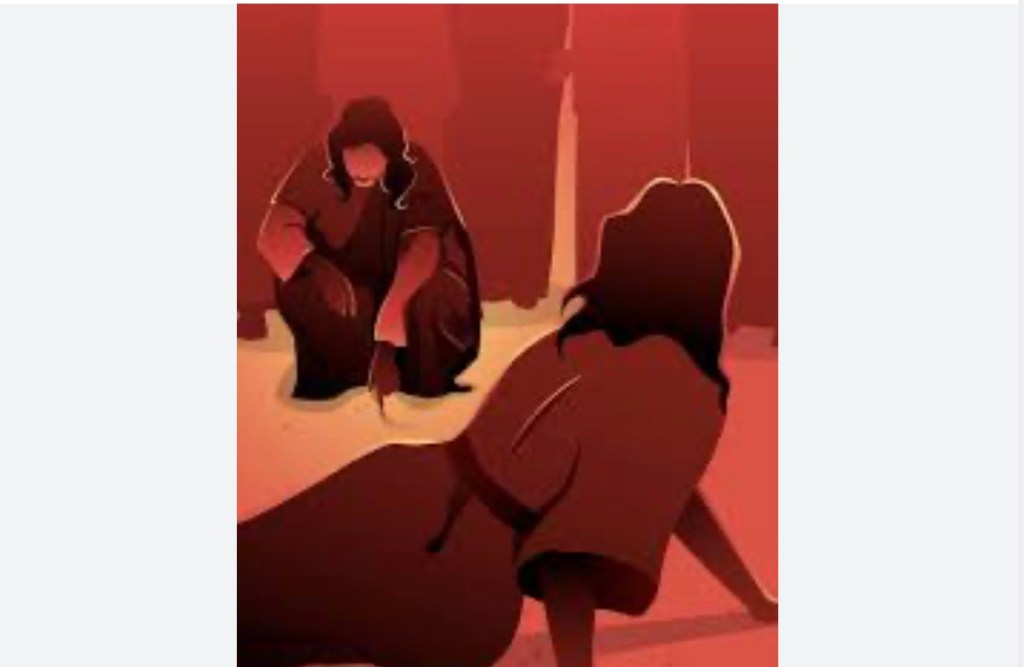
Jesus bent down and began to write on the ground with his finger (Jn 8:6). With this action, Jesus could have been buying some time to think over his response. He could have just been showing an attitude of indifference toward the charges presented. The truth is, we don’t know what Jesus wrote in the dirt that day. St. Jerome proposed that he was writing the sins of those gathered around him as they were waiting for his judgment. Another interesting speculation is that Jesus was again showing his foundation in the prophetic tradition.
Jesus could have been quoting the prophet Jeremiah: “O LORD… all who forsake you shall be put to shame; those who turn away from you shall be written in the earth, for they have forsaken the LORD, the fountain of living water” (Jeremiah 17:13, RSV). Jesus had just shared a few verses earlier that anyone who believed in him : “Out of his heart shall flow rivers of living water” (John 7:37, RSV). Those who came to trap Jesus could have found themselves getting caught in the trap instead and receiving God’s judgement for their forsaking God present before them in His Son (Pitre).
Whatever Jesus wrote had an effect and allowed for the pregnant pause before Jesus spoke: “Let the one among you who is without sin be the first to throw a stone at her” (Jn 8:7). Jesus returned to writing in the dirt, allowing for another pregnant pause. One by one, starting with the elders, the accusers, and even those who had gathered to listen to Jesus that morning, all walked away.
Jesus stood a second time only to find the woman standing before him. This is the first time he addressed her: “Has no one condemned you?” She replied with three simple words, “No one, sir.” And Jesus replied, “Neither do I condemn you.” Jesus did not seek to inflict any more shame on this woman and forgave her. Nor did he dismiss the sin. In Jewish law, there needed to be two witnesses to condemn someone of a capital crime. There was no witness left to do so. Jesus chose not to condemn her but also stated clearly, “Go, and from now on do not sin any more” (Jn 8:8-11)
Jesus and the woman looked eye to eye in the temple area, a stone’s throw away from the Mercy Seat of God. Jesus met this woman surrounded in her sin, shame, and anguish and met her with mercy and forgiveness. He cleansed the temple precincts of the hypocrisy of the Pharisees and scribes who had darkened the area that day and his forgiveness purified this woman from the stain of her sin. This was no cheap grace. Jesus did convict the woman of her sin, but did so in a way that respected her dignity, unlike those who hauled her out publicly to humiliate her for their own malicious purposes. Jesus convicted her in private, once everyone had gone.
In forgiving her with love and mercy, I can imagine, that she, who had been dragged through the streets, not only experiencing the humiliation, but fearing that her death was imminent, then walked away from her encounter with Jesus crying. Crying not just with tears of relief, but with tears of joy. Could the words of Isaiah have come to her mind then, “Remember not the events of the past, the things of long ago consider not; see I am doing something new” (Isaiah 43: 18-19). This woman having drunk from the “stream of living water” walked away born again, a new creature, transformed by the purifying love of God.
This account embodies the gift of the Sacrament of Reconciliation. We all sin and fall short of the glory of God. We bring our sins, contrition, fears, and are to be met with the loving mercy and forgiveness of Jesus in the priest. Not so that we can then just go out to do whatever we want to again, but with his help, to go and sin no more. To not only be forgiven, but to also receive the grace to help us to resist temptation, to heal, and through participating in the life in Jesus, walk with him along the way to restore the glory we have lost.
————————————————————–
Painting: May we experience and share the same mercy and forgiveness.
Dr. Brant Pitre, Catholic Productions
Link for the Mass readings for Monday, March 23, 2026

Resist justifying or denying and instead confess our sins and we will experience God’s forgiveness, heal, and grow in his love.
It is much easier to find fault in others, and in some cases, the act of doing so has become entertainment in the private as well as the public sector. Gossip has a seductive allure and can be consuming. Judging others is also a way to justify and or project our own inappropriate behavior onto others. We may even place ourselves in a false sense of exalted pride. Have we ever, not just stated, but, thought or prayed something along the same lines as the Pharisee in today’s Gospel? “O God, I thank you that I am not like the rest of humanity — greedy, dishonest, adulterous — or even like this tax collector. I fast twice a week, and I pay tithes on my whole income…” (Lk 18:11-12).
To pray any part of this prayer stunts the growth in our spiritual life because we are focused on ourselves instead of emptying ourselves before God. A hyper sense of self reliance leads us away from the truth they we are dependent on God our Father for anything and everything and apart from him we can do nothing. Anytime we rationalize, cover over, deny, or completely ignore our sinful behavior we create and support habits of selfishness and feed our selfishness. Left unchecked, we can become enslaved to them. Lent is a time to pause and ponder, to be grateful for God’s love and his care, and also to give ourselves time to be aware of where we fall short of the glory of God. When we are willing to identify and confess our sins, we are forgiven and can begin to heal from sinful attitudes and actions that have become habitual vices.
In reading more lives of the saints, I have come to understand that their recognition and their confession of their sinfulness was not just pious platitudes, but true presentations that they were growing closer in their relationship with Jesus. The closer we grow in our relationship with Jesus the more we experience his light and love, which unveils more of our sins.
When we drive our car while it is dark we don’t give much thought to the cleanliness of our windshield because we can see fine. Yet as the headlights from an oncoming car illuminate our windshield we can see how dirty in actuality it is. This can be evident in our spiritual life as well. The more we remain in our own darkness of denial, self righteousness, resist slowing down to examine our conscience, we feel we are fine, all is right with the world. If we experience any problems, it is because of something or someone else, never us. The closer we grow in our relationship with Jesus though, the more his light shines in our darkness, and reveals to us our sin.
Jesus invites us to resist the prayer of the Pharisee who prays comparing himself to someone else, who refuses to acknowledge his own sinful actions and instead emphasizes that we are to follow the honest humility of the tax collector, who did “not even raise his eyes to heaven but beat his breast and prayed, ‘O God, be merciful to me a sinner’” (Lk 18:13). Now, Jesus is not saying this is the only way we pray. We have the opportunity to worship and praise the Lord joyfully, we can seek his help in praying for others through intercessory prayer or for ourselves in petitionary prayer, we can also sit in quiet meditation during adoration or out among God’s wonder of creation and experience deep consolation.
Each prayer has its time and place and each type of experience of prayer helps us to grow and deepen our relationship with Jesus and each other. The key to each of our prayers is our willingness to be the humble children we are and lift up of our hearts and minds to God who is always inviting us to spend time with him.
True humility happens when we are willing to see who we are from God’s loving gaze. If we are to set a standard to live up to and if we are to compare ourselves to anyone, let it be Jesus. A daily examination of conscience of allowing ourselves to rest in our Father’s loving gaze is a healthy practice and discipline. When we invite Jesus to shine his light of love into the darkness of our fear and anxiety, our loneliness and idols, we will see our sins. Jesus does not do so to shame and condemn us, but so that we can experience our sorrow and separation from God that sin causes.
As we experience our loneliness, pain, and wounds, and resist putting anyone or anything else before God to compensate for what we are feeling, we can feel his love and begin to realize that we are not alone, that we never have been alone. And that the only one who can fill our deepest longings is God. With this attitude, temptations and sins became opportunities for God’s grace, because we can now see clearer our life without Jesus and our life with him. Each time we choose Jesus over our temptations, we will experience him more, know him better, grow in our relationship with his Father, and experience the love shared between them, the Holy Spirit.
—————————————————————————————
Photo: Spending time with Jesus, helps us to slow down, then we can follow him as he leads us from the darkness our sins so that we may experience the light of his love.
“Love is stronger than everything.”
Forgiveness is a wonderful gift of grace and mercy that our loving God and Father wants to bestow upon us. The reasons is that he seeks a deep and intimate relationship with us. If we asked many people if they would like to receive forgiveness most would say yes. The number would most likely be less if we were to ask them how many would be willing to forgive others. If we were asked to forgive someone seven times, that number would shrink significantly, and if we were invited to forgive someone seventy-seven times, is there any among us who would say yes, any among us willing to consider doing so?
Why is forgiveness so hard for most of us? I do say most because there are those who have healed, forgiven, and see the wonderful gift in forgiving. One reason could be that we have few role models. I would imagine those that are more forgiving have not only experienced positive role models but have received forgiveness themselves.
How often do we seek forgiveness from others when we have done something wrong, inappropriate, or made a mistake? Do we seek to explain first, make excuses, justify, or worse ignore our behavior altogether. When we resist being humble, confronting our offenses, and do not seek reconciliation, we do not experience the healing balm of forgiveness. We are then less likely to be willing to offer forgiveness and more likely to hold a grudge or to seek revenge.
Yet, even if we receive the gifts of mercy and forgiveness, as the servant did in today’s parable (Mt 18:21-35), we may still choose to be unforgiving toward others. We may resist forgiveness because we have already created patterns of distancing ourselves, making someone else as other, somehow justifying the hurt and pain we feel. We think that by holding a grudge, offering another the cold shoulder, and/or keeping them at a distance, that we are giving them just what they deserve.
Unfortunately, patterns of not seeking forgiveness and not being willing to forgive others, allow ourselves to bear grudges, to distance ourselves, or project negative feelings to cover up our own inadequacies, not only perpetuate a climate of isolation and divisiveness, but continues to multiply mistrust and further distance. When allowed to be left unchecked this leads to violence in too many forms that we witness all too often.
Even in a case when someone has truly wronged us in some way, Jesus is guiding us to forgive, to make an attempt to understand why someone might act in such a way, and to shift the momentum away from the perpetual cycle of hurt and to seek to bring about healing and reconciliation.
Jesus is clear that if we are not willing to forgive, we will not be forgiven. This is true because when we are unwilling to forgive, we cut ourselves off from the love of God. We choose to remain steeped in the hurt and pain inflicted upon us over the healing balm that God offers. The Sacrament of Reconciliation is a tremendous sacrament of healing, and a pattern of regular confession helps us to receive not only the healing and forgiveness of our loving God but also his guidance and strength to resist the temptations of the sins we have confessed. As we develop a regular practice of examining our conscience, experiencing contrition – true sorrow for our sins, confess, and are willing to complete our acts of penance, we are absolved and forgiven from our sins, and we will experience healing and freedom.
Forgiveness does not mean we condone another’s inappropriate actions. It means we choose to no longer participate in the cycle of hurt. Even when we feel forgiveness is impossible, are we willing? That is all Jesus requires. We forgive in the beginning when we are willing to ask Jesus to forgive through us until we can learn to forgive ourselves, like Doha Sabah Abdallah.
Doha lost her son during the bombing of her city in 2014. Doha shared her story with Pope Francis while he visited Iraq back in 2021. She said: “By imitating him [Jesus] in our sufferings, we testify that love is stronger than everything,”
Pope Francis shared how touched he was by Doha’s story of forgiveness. On his plane trip back home, Pope Francis said, “I forgive. This is a word we have lost. We know how to insult big time. We know how to condemn in a big way… But to forgive, to forgive one’s enemies. This is the pure Gospel. This hit me in Qaraqosh.”
Let us take up the mantle that Jesus holds out to us today and this Lent, to seek forgiveness, healing and reconciliation, and so receiving the forgiveness and love of God, may we then be more willing to forgive or to ask God to forgive through us until we can.
————————————————————————-
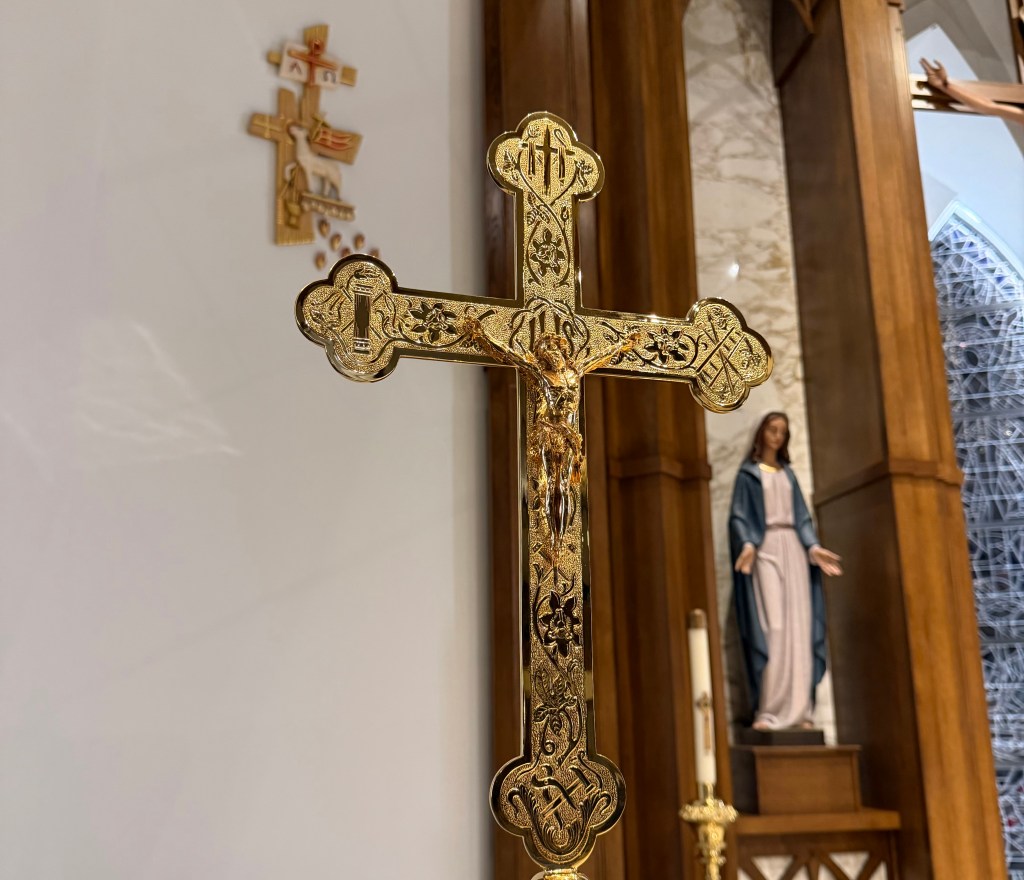
Photo: Need a model to learn how to forgive? Look to and ask Jesus and Mary to help.
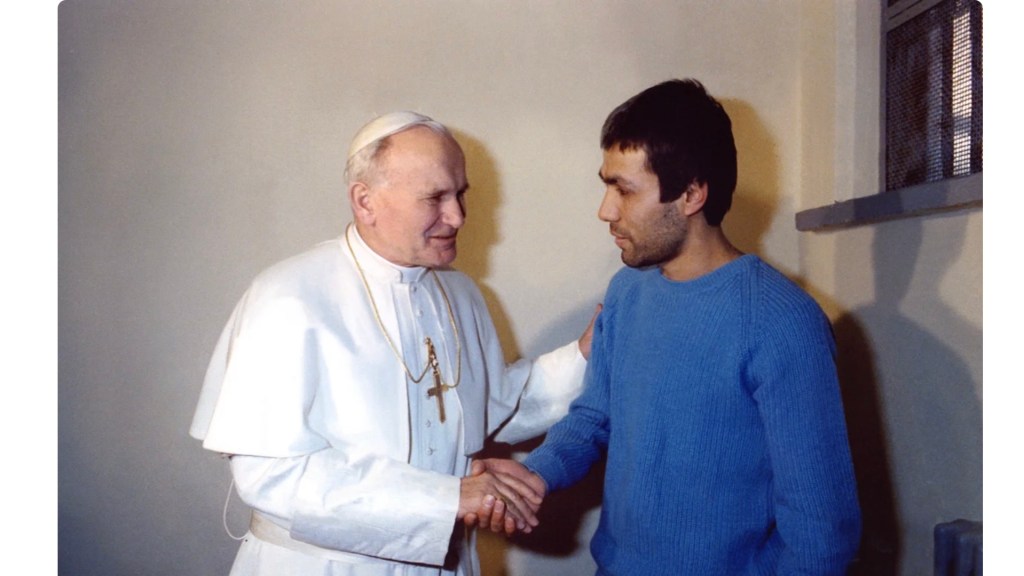
The antidote to division and polarization? Jesus commands us to be merciful, forgiving, and giving.
Polarization, division, and finger-pointing appear to continue to be the order of the day on the national level. Unfortunately, it is taking a firmer hold at the community and familial level and has crept into the Church as well. Instead of entering into and embracing the blame game, may we instead look in the mirror and honestly assess how we may contribute to division and isolation. The good news is that we have founding motto that we can aspire to; In the United States of America – E Pluribus Unum – Out of Many One and put into practice the words of Jesus’ prayer request to his Father – “That they may all be one” (John 17:21).
It is important to take a step back, take a breath or two or three, and examine our conscience and honestly acknowledge how we are contributing to the divisiveness and polarization through our own thoughts, words, and actions. Then we will be in a better position to act instead of react. We can disagree and offer different points of view and seek different approaches to solve problems respectfully when we are willing to engage in dialogue and collaboration instead of forcing or seeking to prove our own point.
Let leads us back to the basics of Jesus’ teachings and we are given another good one today:
“Be merciful, just as your Father is merciful” (Lk 6:36)
Mercy, from the Hebrew word chesed, meaning to show tender compassion, can help us to turn the momentum away from disunity and polarization and toward respecting the gift of our diversity while at the same time embracing our unity. Fr. James Keenan, S.J. defines mercy as the willingness to enter into the chaos of another. Instead of imposing our point of view, mercy is the willingness to draw close with a posture of seeking to understand someone. Instead of keeping someone at a distance, reducing them to a caricature, seeking to prove someone wrong, and/or prejudging or labeling, we can instead make a concerted effort to understand, to listen, to seek common ground, and to seek the best in each other.
When we aspire to be merciful we lead with listening, asking questions to seek clarification and better understanding. A merciful perspective even seeks to assess thoughtfully the underlying point of what has been said, even when the message conveyed is emotionally charged, derogatory, and/or inflammatory. There may be some truth in the maelstrom of what has been spewed.
This is why Jesus also encourages us to stop judging and condemning. We are limited by our own finite natures as it is. We are limited also by our own wounds, defensive mechanisms, and knee-jerk responses. We are not God and are not capable of fully reading the heart of another person.
In most cases, we do not know another’s struggles, anxieties, fears, traumas, and experiences. When encountering each another and we notice the anxiety, stress, or fear beginning to rise, it is important to resist slipping into a fight or flight response. We do so when we intentionally breathe, invite Jesus to filter our thoughts, breathe more, and listen more. When allowing someone to vent without taking offense, the person has a chance of feeling heard. Instead of escalating the situation, by not reacting, we can help to bring calm and peace. It is also helpful to let go the need to want to fix the problem at hand.
Jesus commands us to forgive. As God forgives us we are also to forgive others, to let go of grudges. Not to do so means allowing the poison injected to spread. The one who has wounded us has walked away and when we are not willing to forgive, we choose to continue to allow the harm that was inflicted to continue to fester. The antidote is forgiveness. When we forgive, we don’t condone the harm done, nor keep ourselves in harm’s way. When we forgive, we heal.
It is much easier to stay in our shell or bubble. We feel protected and safe so no one can hurt us, but that is not the posture Jesus would have us assume. In doing so, we remain focused on our self. Staying in our bubble suffocates us, stunts our growth, and limits our potential as human beings created in the image and likeness of God. Jesus calls us, not to constrict, to cave in upon ourselves, but to expand, to go out from ourselves, to be agents of love and mercy.
Each moment we have a choice. We can withdraw, remain indifferent, judge, and condemn. Each of these choices contributes to isolation, division, and polarization. We can also follow Jesus’ invitation to seek to be merciful, forgiving, and giving. These choices contribute to building relationships, communion, and unity. In our willingness to forgive, we will promote healing and invite others to forgive and heal. Let us choose in this moment to invite the Holy Spirit to expand our hearts and minds that we may become more understanding, forgiving, and merciful just as our heavenly continues to be with us.
——————————————————————————
Image: Pope St. John Paul II living Jesus’ teaching of forgiveness in his meeting with the man who shot him, Mehmet Ali Agca – ARTURO MARI/AFP/Getty Images
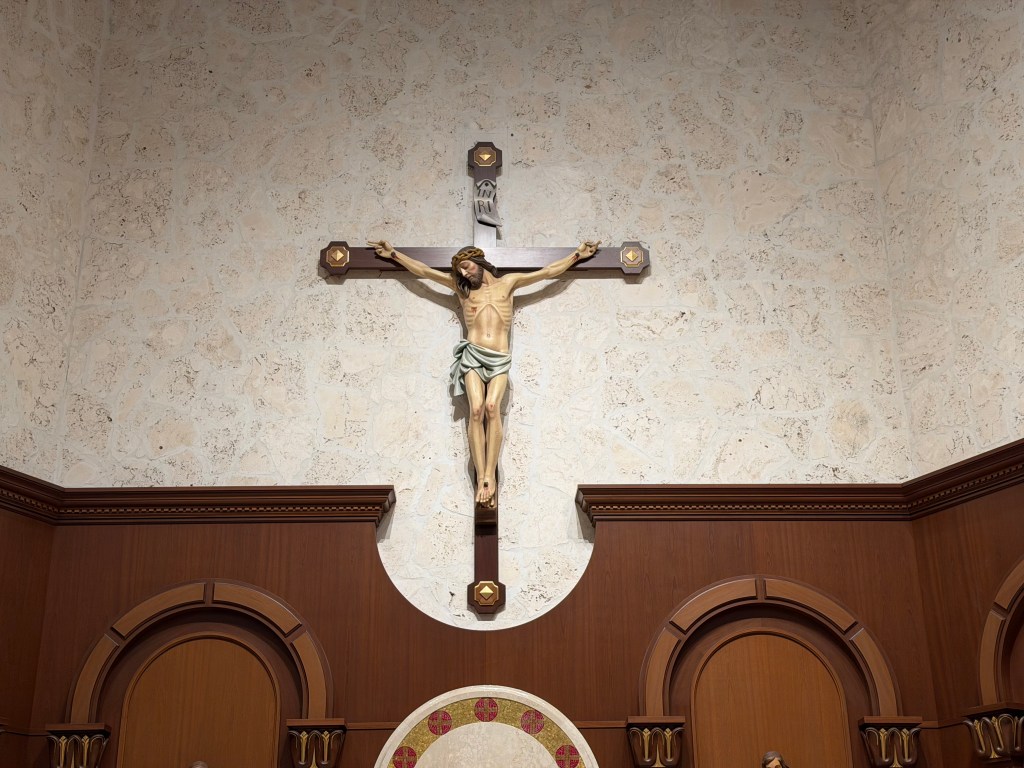
Greater than Solomon and Jonah.
There is something greater here! Something greater than the wisdom of Solomon and something greater than the preaching of Jonah. Someone greater than the kings and the prophets who went before. Jesus.
We are called to live our faith out in Jesus daily. This is not a part-time vocation. We all have a unique gift in the dignity we have been conceived and born with. We have a unique way to express and live out our dignity as well. We have been created in the image of God, but through sin, we have lost our likeness to him. We are tempted, misdirected, distracted, and diverted from experiencing God’s love for us and plan for our lives and this can lead us away from God. The further away from God we are the more our likeness to him diminishes. Jesus calls us back to spend time with his and our Father so that we can be forgiven, healed. As we do so and grow in our relationship with him, our likeness is restored more and more.
As Jesus taught, often in his parables, the kingdom of Heaven on earth starts small, like a mustard seed, like yeast, and develops slowly when nurtured. Lent is a good time to slow down, step back, take a retreat even while in the midst of our everyday activities. We just need to insert some intentional and dedicated time to spend with God alone each day. In doing so, we will better come to know him, his word, and guidance.
One of the reasons we may feel a bit restless is that we are engaged in activities in our lives that miss the mark of who we were created for. We are missing the relationship with God that he is inviting us to participate in because we are allowing ourselves to be distracted and too busy to see where we have been led astray. The sign of Jonah that Jesus offers us is repentance. The whole of Nineveh repented even though Jonah was hoping that they would not. He hoped they would be punished by God! Jesus seeks our repentance, our willingness to turn back to see the open arms of our God and Father wide open ready to receive us, to lead us back to the truth of who we are as his beloved daughter or son.
If you are feeling a bit restless, on edge, or out of sync, I invite you to make some time to be still and breathe, this can be while in the shower, when you have some breakfast, a morning walk, or taking a sip of coffee or tea. During this time ask God for some guidance. We can ask him to help us see those areas that we need to repent from and let go of, those thoughts, words, and actions that keep us distracted, redirected, and off-kilter as to who God is calling us to be. We can then confess to him and receive his forgiveness and reconciliation.
God invites us to create times of silence to sit with our wounds and traumas. Many times we do not want to be still or quiet because there may be unresolved issues, hurts, and/or pain that we would rather not face. We may believe the lie that if we allow ourselves to feel what is deep down there, that we will be completely undone. God is present and waiting, inviting us to come to experience acceptance and love as we are, to feel safe, and honest. From this place of vulnerability, we begin with simple steps of trusting in Jesus and his healing.
Jesus said in today’s Gospel that, “There is something greater here.” Christianity is not a secret sect. We are called to share the joy, the forgiveness, healing, and reconciliation we experience from God with others, even with, as Jonah found out, our enemies. We are to look for opportunities to offer a smile, an encouraging word, to reach out to someone we have been meaning to connect with for a while, in person or far away, and/or someone that we may sense just needs a listening ear. We can also can ask for God’s patience so that we may react less and become more understanding and present. There may be places we are hurting and this is true for so many others.
Lent can be a joyful time when we enter into the season with the intent to deepen our walk with the One who is wiser than Solomon and preached repentance and reconciliation. With our hearts and minds turned back and open to God, Lent will not so much be a drudgery to endure, but a joyful embrace of the opportunity for experiencing a change of mind more open to dialogue, forgiveness, healing, sharing joy, reconciliation, and contributing to building up the kingdom of God one healing at a time! Hurt people can hurt people, and hurt people can also experience the healing of Jesus and become people who are healing and willing to help heal people.
———————————————————-
Photo: Who is greater than the One who is willing to give his life for us and seeks our healing and redemption? Quiet time of prayer in the Cathedral of St. Ignatius of Loyola after Bishop Manuel DeJesus Rodriguez’s ordination.
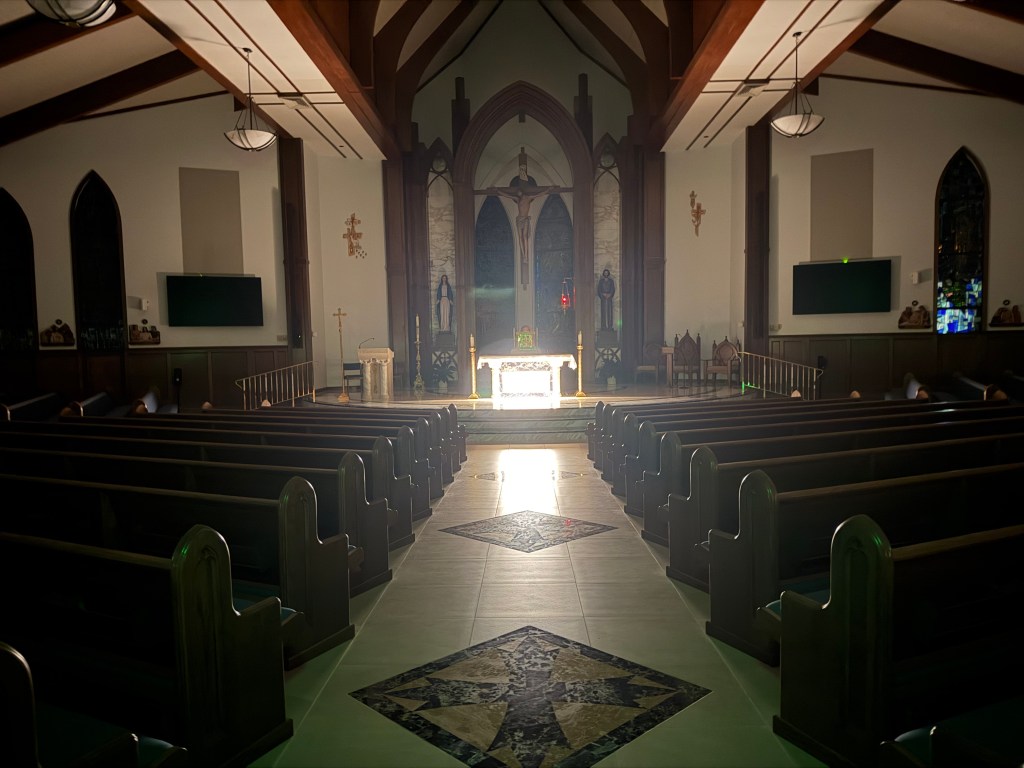
“I have not come to call the righteous to repentance but sinners.”
Think about how good we feel after coming to be on the other side of healing from a bad cold or the flu, recovering from a twisted ankle, a broken collar bone, or other health conditions. If you have ever experienced an asthma attack or had the breath knocked out of you, it is such a relief to able to breathe fully again. We experience a feeling of wholeness that was missing during the midst of our suffering where we may have pondered a time or two whether or not we would ever get better.
The same can be said for estranged relationships. There is a distance of separation that can be agonizing, an inner gut-wrenching experience that gnaws away at us. We wonder if there can ever be a coming back together. When there is reconciliation, forgiveness, and mending of the brokenness, we can experience relief, lightness, and joy that we never imagined possible while in the midst of the conflict, the silence, and the separation.
Sin damages our relationship with God and one another. Unchecked and unbridled sin can rupture those relationships. The Pharisees and the scribes questioned why Jesus was eating with tax collectors and sinners, and Jesus replied: “Those who are healthy do not need a physician, but the sick do. I have not come to call the righteous to repentance but sinners” (Lk 5:32).
Jesus is a light in the darkness. For Levi and his friends, who were ambling in the darkness, Jesus shone gently and warmly. They realized there was a sage path to walk and they did. A great celebration of fellowship ensued in Levi’s home because these men and women, who had been outcasts, who were separated from the greater community were forgiven, welcomed, and embraced. They were loved by Jesus as they were. They did not have to change first for Jesus to call Levi and gather with them.
They were welcomed into the kingdom and reign of God. Their ticket to reconciliation and healing was accepting the invitation of Jesus, to receive and experience his love and welcome. Levi and the other sinners did not run from the light of Jesus, but were willing to recognize their need for healing, were willing to repent, to turn away from their prior ways of life, and so were reborn!
They were divinized because of their willingness to participate in the life of Jesus. Levi chose not to just be a repentant sinner, but continued to follow Jesus. He gave his whole life to him and allowed himself to be transformed. He chose to leave the path of darkness and to follow the Way. He continued to follow Jesus such that it was no longer he who lived, as Paul had experienced, but Christ who lived in him (cf. Galatians 2:20)!
Jesus invites us, as he invited Levi, to come and follow him. We are given the same invitation and opportunity for healing, discipleship, and transformation. Will we resist rationalizing and justifying our sinful thoughts, actions, and habits, welcome the light of Jesus that reveals our venial and mortal sins, and admit that we are in need of healing, repent, be forgiven, and be released from all the energy we have expended in protecting and hiding from ourselves and our God who loves us more than we can ever mess up?
We say yes, by quietly spending time, especially each evening, and recalling our day. When we are willing, Jesus reveals to us those ways in which we have not lived according to his will. Jesus does not reveal our sins to condemn or shame us, he does so to convict us in the hope that we will identify, renounce, and confess them. Then he will forgive us. Even when uncovering deeply rooted and mortal sins, through the intimate encounter with Jesus in the Sacrament of Reconciliation, we will be forgiven and freed.
Jesus loves us as we are. Yet holding on to our sin, keeps us at a distance from experiencing the greater breadth and depth of his love. We only need to be willing to be contrite, to embrace sorrow for the harm we have inflicted with our personal sins, and go to the Divine Physician in our time of prayer and/or Reconciliation. Once absolved, the heavy weight is lifted and we are healed and go forward into the light to engage in penance, atone for our sins, and are better able to forgive others as we have been forgiven, and to love as we have been loved!
——————————————————————–
Photo: Jesus is the light that reveals the path to lead us out of darkness.
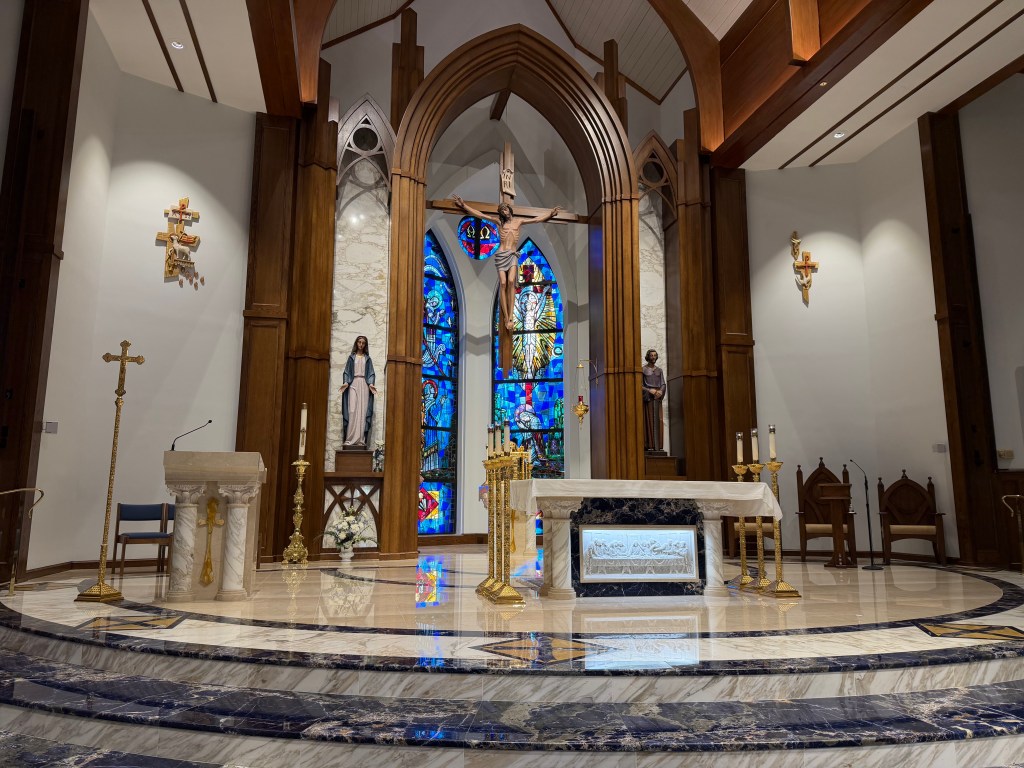
May we guard ourselves against the leaven of the Pharisees and Herod.
Jesus convicted the Pharisees for demanding a sign and for their continued hardness of heart, their unwillingness to see and hear the work and presence of God right before them. He also saw the unsettling yeast of the Pharisees present in his own disciples. In today’s reading, Jesus seized on the opportunity of being together in the boat, Jesus seized on this teachable moment. He wanted to help the disciples of his inner circle to resist the same path of corruption when he enjoined them: “Watch out, guard against the leaven of the Pharisees and the leaven of Herod” (Mk 8:15).
As has been their pattern, the disciples missed the point as they focused on the literal reality that they only had one loaf of bread among them. Jesus was not, as they thought, taking them to task for not thinking ahead to bring enough bread. He had twice now multiplied minimal amounts of bread to feed thousands. One loaf with them would not have been an issue. He was more concerned about them falling into the danger of pride, seeking honor, power, and fame which had lead many of the Pharisees and Herod astray. To be his followers, striving to place themselves first would be not only the undoing of each of them but also undermine the authenticity of the Gospel message they were to proclaim and affect those they would be charged to care for.
Unfortunately, too many have not heeded the lesson that Jesus offered in today’s Gospel to his disciples regarding being aware of the corrupting leaven of many of the Pharisees and Herod. Just as the effects of original sin has wounded humanity, so it has also affected those in the Church. Throughout the ages, clergy and laity alike have succumbed to the temptations of placing our needs before and focusing on ourselves instead of God and who he calls us to serve. The curving in upon ourselves and the hardening of our hearts, close us off to the love of God and the reality of the truth that we can be in relationship with him, this truth that Jesus came to bring.
Yet throughout the worst corruptions and abuses, the Church remains. God continues to work through many who are faithful, like Mary his mother, and say “yes” to his invitation and follow his will in simple ways, living lives of quiet prayer, worship, and giving of themselves in acts of service daily. It is unfortunate that there are those who leave because they see hypocrisy, injustice, abuse, and corruption. For it is those with eyes to see and ears to hear that need to stay and be faithful witnesses to the call of the one true Bread from Heaven.
We must remain persistent and lean on Jesus to give us the strength and clarity on how best to seek healing for ourselves and proceed to help to heal his wounded Body. We also need to be aware of the sinful leaven that would seek to undo each of us. It is easy to point fingers. We will be on stable footing when we seek forgiveness, healing, transformation, and guidance from Jesus and choose to place God primary before any self-serving pursuits. Doing so will help us to live simple and holy lives of loving God, our neighbors, and ourselves.
——————————————————
Photo: Daily prayer and meditation, pondering the word of God, participating in the sacraments, and opening our hearts and minds to God’s guidance will help us to resist the spiritual leaven of hypocrisy, sin, and the hardening of our hearts.

