The antidote for our hypocrisy is to accept our poverty.

The Lord said to him, “Although you cleanse the outside of the cup and the dish, inside you are filled with plunder and evil. You fools” (Lk 11:39).

Jesus’ harshest critiques were for acts of hypocrisy. He did so to show, in no uncertain terms, how dangerous this was, especially for religious leaders. These men were entrusted with the care of God’s people. They may have observed the proper rituals, spoke, and dressed to match the part but this all meant nothing if their hearts were hardened such that they were closed to the love and will of God. This situation was more perilous when they themselves became obstacles and stumbling blocks to those who sought God. Jesus indicting them as fools meant that they were bereft of the wisdom of God they projected to have.

In the depths of our very being, we seek and yearn for the transcendent, the infinite. We are spiritual seekers. We seek God while at the same time we experience suffering, injustice, and hypocrisy at the hands of the very ones who are our leaders in both the religious and political sphere. This is why Jesus convicted those who abused their positions because he knew the significant damage that they could inflict.

No one is perfect, our leaders nor ourselves. We all fall short of the glory of God, even those of us who seek and aspire to live by the Gospel. If we put anyone up on a pedestal, they, sooner or later, are going to fall, and the higher up they go, the greater the fall. God is to hold priority of place. We are to seek God first. God is to be our foundation, the light shining on the hill, our guide, and source.

One way we can sidestep the trap of hubris is by resisting the urge to project all is well and good, that we are fine when we are not. None of us are super men or women. If we think we can go it alone, on our own power and persistence, we will fall sooner or later. A hyper sense of self-reliance means we seek God and each other less for help and support.

When we turn to Jesus to reveal our weakness and our sin, we can experience his transformative and healing power in our lives. To be vulnerable, to allow Jesus to shine his light into our inner darkness takes courage, but when we open all of our lives to him, we will identify and be able to release our own “plunder and evil”. The Holy Spirit can also help us to trust one another with our weaknesses, faults, and shortcomings.

We are healthier and stronger when we accept our own spiritual poverty, where we need help, and reach out to ask for assistance. We are better when we entrust ourselves to Jesus and a core group of people we trust, firmly ground ourselves in the love of God and one another. We grow stronger when we support the unique gifts of each other while at the same time hold each other accountable. Isolated and in the darkness, our sin festers and grows. When brought into the light, sin starves and withers away.

Jesus challenges us to resist projecting an image of perfection when all is not well on the inside. When willing to reveal our weaknesses, sins, suffering, and pain, we can receive help, heal, and let go of carrying the weight of seeking an internal perfectionism. Healed and transformed from being the center of the universe, which we never were or never can be, we can let go of having to project an image of perfection. We can instead be free to be ourselves as God calls us to be and radiate his love as we receive his love. Instead of driving people to the nearest exit, we can begin to welcome people back home to be forgiven, healed, loved, and transformed.


Photo: Not a cloud in the sky. Would that we can say, no sin on our soul! We can get closer by seeking the cleansing healing from sin when we are willing to confess regularly and often.

Link for the Mass readings for Tuesday, October 14, 2025

Turn away from seeking signs or wisdom. Seek Jesus instead.

While still more people gathered in the crowd, Jesus said to them, “This generation is an evil generation; it seeks a sign, but no sign will be given it, except the sign of Jonah” (Lk 11:29).

To understand what Jesus means, we need to understand the sign of Jonah. Jonah was sent by God to go to Nineveh, the capital city of Assyria, to call them to repent from their wicked ways. The Jews not only considered Nineveh to be a place of decadence, wickedness, and godlessness, but the heart, the capital city of Assyria. Its military which had invaded Israel and conquered the northern kingdom around 721 BC.

We can understand Jonah’s initial refusal to follow God’s lead. Not only did he not want to go to Nineveh, but Jonah also did not want them to receive mercy. He wanted God to punish and destroy the nation who he considered an enemy. Those who have read the Book of Jonah, know that Jonah finally acquiesced, and within hours of his proclamation to the citizens, including the king, they repented and God showed them mercy.

Jesus draws a parallel between the people of Nineveh and his listeners. The people of Nineveh heard and repented to a reluctant messenger. The Ninevites, Gentiles, the sworn enemies of Israel, received God’s mercy when they repented. Now, in their midst was one greater than Jonah, the Son of God, and they were demanding of him a sign. The sign of Jonah was repentance. Jesus, from the beginning of his public ministry, preached the same: “This is the time of fulfillment. The kingdom of God is at hand. Repent, and believe in the Gospel” (Mk 1:15).

Many did not listen to Jesus. We would do well to listen to Jesus’ message. Repentance is a foundational spiritual discipline. We are called to consistently and daily examine our conscience and to come to accept that we live in a fallen world. This is not a pessimistic view. This is an awareness of the reality of our present condition.

By accepting that we live in a fallen world, that there is only so much that we can do by ourselves, we will begin to recognize that we need a savior. The next step that we can make is to acknowledge that we need to repent, to identify and turn away from our sins, and turn back to him who can save us. For apart from him, we can do nothing, yet with God, all things are possible.

St Mother Teresa recognized the need for Jesus and stressed this when she taught her novices that she was not interested in numbers and she was not interested in having a branch of social workers. She and those who followed Jesus were to be missionaries of God’s charity. They were to serve Jesus in the distressing disguise of the poor. To do so they participated in daily Mass for an hour so they could bring Jesus and see Jesus to those they encountered each day. After returning from their time of service they participated in adoration for an hour. Empowered and renewed by Jesus, blessed by his mercy and love, they could serve Jesus in those they met in the harshest of conditions.

Jesus calls us, as he did his listeners, to resist seeking signs as did the Jews and wisdom as did the Greeks, but repent and give our lives to him. By emptying ourselves of our preconceived notions and opening our hearts and minds to follow his lead and be conformed to his life, we can be about doing God’s work. As long as we stay connected to him, he will guide and give us the means to accomplish that which he sends us to do.

We stay connected to Jesus by allowing his light to shine in our hearts and minds so that we can better identify our sins. Not to be condemned, but convicted of them so that we, like the Ninevites, will repent and turn our focus back to God. Our goal is to enter a daily rhythm of resisting temptations and when we fall repenting from them as soon as possible.

Slowly our selfish and disordered pursuits will cease to be our priority, we will no longer put our own interests at the center. Instead, we will accept Jesus as the core of our lives, that he may be the guiding light of our thoughts, words, and actions. For we are “called for freedom,” to be freed from our sins so that we can “use this freedom” to “serve one another through love” (Galatians 5:13 ).


Photo: Jesus calls us to repent from anything that separates us from him and his Father so that we can experience the love of the Holy Spirit. Are we willing to repent?

Link for the Mass readings for Monday, October 13, 2025

“Your faith has saved you.”

“Ten were cleansed, were they not? Where are the other nine” (Lk 17:17)?

Jesus makes this statement to the Samaritan who fell at his feet praising God and thanking him for his healing. The other nine received the same physical healing. Some of them may have seen this man turn back and go to Jesus, yet each one of them continued on their way to see the priests as Jesus had directed them. The purpose of this was so that they could be pronounced clean, and so re-enter the life of communal worship and living among their people. I am sure they were ecstatic to do so.

Jesus healed all ten of their leprosy without even saying a word of healing. The catalyst to receive this miraculous healing was their obedience to Jesus’ command to show themselves to the priest. They did so without hesitation and as they walked they all experienced healing. Yet, one of them sensed something deeper still.

Could the others have experienced something similar? If so, many were probably so excited about the healing that they did sense anything beyond the healing. Others may have sensed something but dismissed it, and a few, may have noticed the Samaritan turn back to Jesus, but could not or would not change course to return to say thank you.

The Samaritan that comes to Jesus in gratitude experienced something deeper than his physical healing. He recognized God’s activity in his life and so praised God at Jesus’ feet. He then also praises Jesus, placing Jesus on the same level as God and opening himself to a relationship and communion with him. Jesus acknowledged this step of faith. This man heard an invitation from within, in the quiet of his heart, and resisted any distraction that may have tried to dissuade him. Jesus then said, “Stand up and go; your faith has saved you” (Luke 17:19).

In following the gratitude that welled up from within, this man received more than just physical healing that day, he received salvation, “your faith has saved you.” This means not just that his body was restored and made whole again, but that the separation from his relationship with God had been reconciled.

God invites us in so many gentle and small ways in the silence of our hearts to be more engaged: in a relationship with him, in our own lives, and the lives of others. We too can crowd out the invitation by keeping ourselves busy, distracted, and/or diverted. We can hear the whisper but discount it outright for many selfish reasons, we can also be led astray by the cacophony of mind noises that is fed by our fears, prejudgments, or apprehensions. Yet, we can also be like this Samaritan. We can hear and experience the invitation of God, act on his lead, surrender to Jesus, and be saved.

———————————————————————

Painting: “Jesus With the One Leper Who Returned to Give Thanks” by William Brassey Hole

Link for the Mass readings for Sunday, October 12, 2025

“Blessed are those who hear the word of God and observe it.”

While Jesus was speaking, a woman from the crowd called out and said to him, “Blessed is the womb that carried you and the breasts at which you nursed.” He replied, “Rather, blessed are those who hear the word of God and observe it.” (Luke 11:27-28).

Jesus is not discounting his mother nor putting her down in any way by his response. Especially because Mary is the exemplar of not just someone who, but one who other than he, consistently heard the word of God and observed it. Probably even before but the earliest record of this we have is Mary saying, “I am the handmaid of the Lord, may it be done to me according to your will” (cf. Luke 1:38). She was instrumental in collaborating with God’s will to bring about the salvation of the world in her willingness to bear his only Son.

The wonderful gift of what Jesus said is also an invitation to all of us. If we ever felt at some point that we never fit in somewhere, if we did not quite belong, or we didn’t measure up to someone’s or our own expectations, we need no longer feel that way. Jesus is inviting us to have a seat at the table. And the good news is that there is unlimited seating! If we feel anxious or out of sorts, are discerning a heavy decision and feel paralyzed, dealing with a relational conflict and not sure how to respond, the Holy Spirit provides a way.

All we have to do is hear the word of God and observe it. Simple as that. And yet there is so much keeping us busy, distracted, and diverted from spending time reading, meditating, and praying with God’s word. We might look at the Bible as just another book because there is so much that is more enticing, inviting, and engaging. What God has made us for though is not merely finite but infinite pursuits, to seek the things of heaven. 

The Bible, initially in his youth, did not offer much to St. Augustine. After many years though seeking and indulging in the things of the world, even the pursuit of truth, and still feeling empty, he found great solace in reading the Bible which only increased when he “transcended the literal sense.” The literal sense being that which he read and understood with his mind and reason. In allowing himself time to ponder, the Holy Spirit touched him in the depth of his soul and “enabled him to find at last the answer to his deep inner restlessness and his thirst for truth” (Pope Benedict, General Audience, January 9, 2008).

We too are restless and tired existing in a world that entices us with so many other voices and attractions. Yet, the daily discipline of reading and praying with the Bible provides peace and rest for our souls like nothing else can. Slowly and gently our intimacy with God grows when open up our Bible each day. When we not only read the words, but also meditate and pray with them, we transcend the literal and experience God’s living stream flowing in our veins. We are refreshed and renewed. 


Photo:  One of my joys each day is to spend time in God’s word, and share from my own pondering. Picture of today’s Gospel reading from The Word on Fire: The Gospels.

Link for the Mass readings for Saturday, October 11, 2025


For Jesus or against, to not decided is to decide.

In today’s gospel account, Jesus is accused of collaborating with Satan because he has cast out a demon. Jesus quickly counters the absurdity of the claim by stating that, “Every kingdom divided against itself will be laid waste and house will fall against house” (Luke 11:17).

If there is one thing that Satan, the one who accuses, the father of lies, and his demons are unified on, it is to promote disunity, isolation, and chaos. They will seek any way to break through our defenses, our weaknesses, tempt, and mislead, to get us to even doubt the truth. They also seek to isolate us from one another. Here Jesus is healing a person from being possessed and it is made to look like he is in league with the devil.

Jesus reveals the error and builds on it with the truth, “But if it is by the finger of God that I drive out demons, then the Kingdom of God has come upon you” (Luke 11:20). The kingdom of God reveals and casts out demons, uncovers lies, and reconciles division. Jesus in his perfection comes to purify, cleanse, and to restore the true Father’s original purpose of harmony, oneness, and unity.

The closer that Jesus gets to Jerusalem, the opposition to him appears to be growing. Jesus offers those listening a choice: Recognize him as the Son of God who acts in the name of the Father and join with him, or reject him and side with the enemy. Jesus’ does not leave a middle ground. If one does not decide, “the last condition will be worst than the first” (Luke 11:26). Even those healed by Jesus, if  they do not commit their lives to him and fill themselves with the love of God, there is room for evil to creep back in.

We are given the same choice with each choice we make. Do we take a moment before deciding to ask is this the will of God? Are our thoughts, words, and actions, divisive, hurtful, unkind, or are they unifying, empowering, and loving? If we can admit any ways in which we have turned away from God or chosen any from the list in the first category, the good news is that we can repent for the kingdom of heaven is at hand. It is important to recognize our need for healing, which helps us to be more prudent, and ask Jesus for forgiveness and help to begin again.

For those choices that land in the second category, let us thank Jesus for working through us. In both ways, we recognize the truth, and we continue to build on the love that Jesus offers. When we trust him, we grow in relationship with him, and can better share the love he offers us with others.

We are free to choose and receive the consequences of our choices. Let us choose to turn away from anything not of God and follow Jesus today. Let us choose to be loved and to love in return.


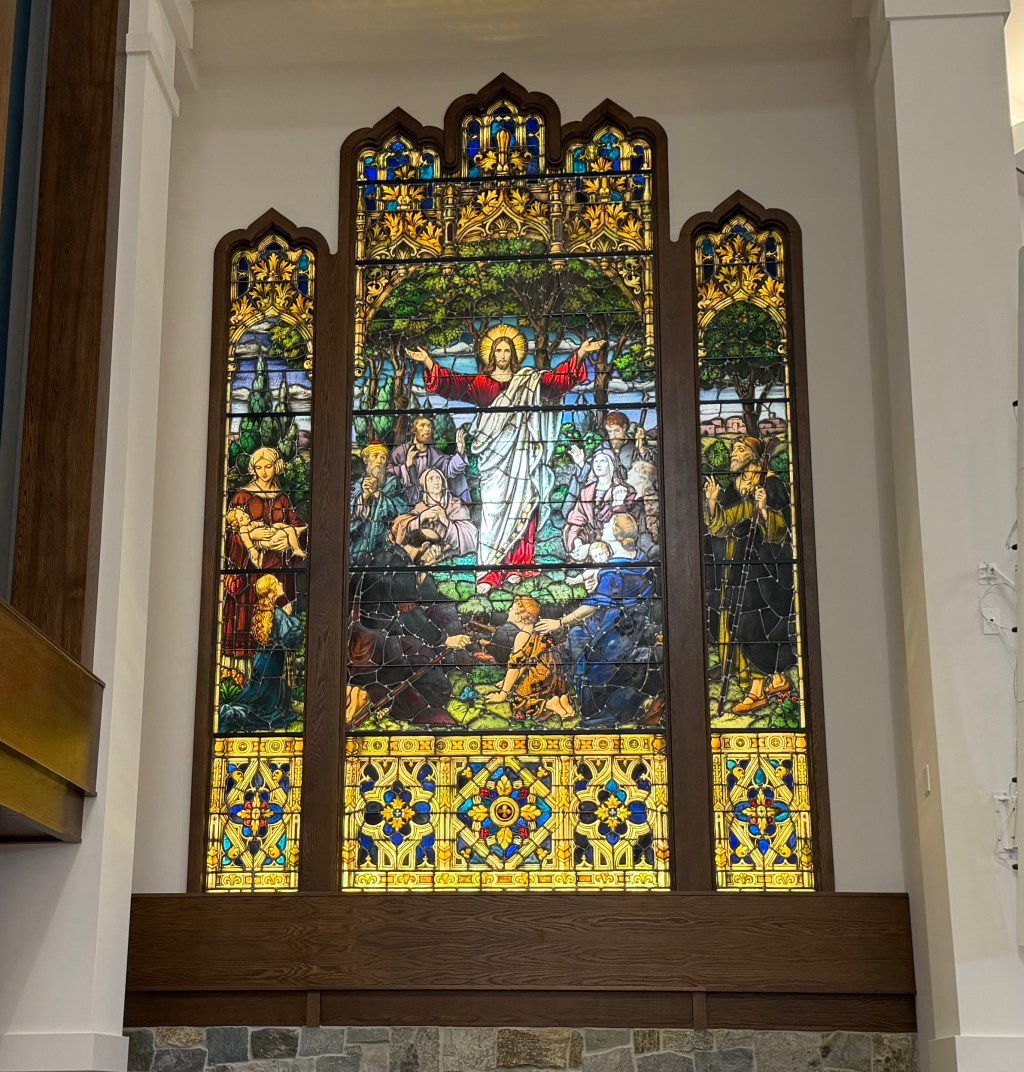
Photo: Stained glass window in St. Joseph Catholic Church, Poquonock, CT.

Link for the Mass readings for Friday, October 12, 2025

Perseverance and trust are two key attitudes that will help us in prayer.

“And I tell you, ask and you will receive; seek and you will find; knock and the door will be opened to you. For everyone who asks, receives; and the one who seeks, finds; and to the one who knocks, the door will be opened” (Lk 11:9).

In today’s Gospel, Jesus continues to teach his disciples and us about prayer. The key point he is emphasizing is to be persistent in our prayer and to trust in God. He is our Father who cares for us more than any human can. He cares and will provide for us more than our own earthly parents or friends.

Yet, we can be at times frustrated in prayer because when we do make the time to pray, we may feel or think that nothing is happening or has happened. We may pray for a specific petition for our self, or for a particular intention for another and felt, or thought, that there was not an answer from God. One may pray a sincere, seemingly selfless prayer for a loved one, a child, a spouse, a friend, to be healed and the person still dies. They may be deeply hurt because they did what Jesus said; they asked, they pleaded and begged, but felt they did not receive the healing; that which they sought for, was not given and, instead what they found was nothing but pain and heartache from loss; they knocked until their knuckles were raw and experienced no one on the other side.

Our attitude and orientation to prayer matters. When we sincerely turn our hearts and minds to God in prayer, something happens between us and God, though it may be beyond our cognitive grasp to understand or our sensory awareness to experience. There may indeed be emotional highs and consolations experienced in prayer, but if seeking those is the primary motivation for prayer we will find ourselves more frustrated than not. There may also be lows in prayer, dryness, even desolations, and even feeling God’s absence are also a reality. Emotions are fleeting and not a good barometer when measuring the effectiveness of prayer.

Another big misconception is that we pray to God as if he were a gumball machine. It may seem a silly analogy but how many of us really do pray and worse, only pray that way, and when we do not receive the specific thing we asked for, at the time specified, when we wanted and as we wanted, we brood and think God doesn’t care or does not, in fact, even exist. We may even slip into the barter posture. God if you grant me this, I will do that. If we are only open to receive what we want on our terms, again we are setting ourselves up for frustration.

The very desire to pray is the beginning of our awareness of God’s invitation, for God is the one who reaches out to us first. The answer to what or who we ask, seek, and knock is found at the end of the Gospel reading for today: “If you then, who are wicked, know how to give good gifts to your children, how much more will the Father in heaven give the Holy Spirit to those who ask him” (Lk 11:13)?

God knows what is best for us, he sees our potential, he wants us to experience joy and be fulfilled. How can we best live our lives in this world to attain that reality? We do so by receiving the Holy Spirit. Who is the Holy Spirit? The infinite, communal love expressed between God the Father and God the Son. Our goal in prayer is to enter into God’s reality, the infinite communion of Love.

We pray first and foremost to help us to grow in relationship with God. This happens through our participation and conformation to the life of Jesus. When we take time to learn, meditate, pray with, and put into practice Jesus’ teachings as his disciples did we will start to see as he sees, we will come to see the truth of empty promises, apparent goods, substitutes to fill our emptiness and faulty defense and coping mechanisms that we have been utilizing as guideposts to merely survive and get through life.

When we stay consistent in an authentic life of prayer, God won’t bend to our will, but we will change. Instead of God becoming smaller to our demands, he expands our hearts and minds to be capable to receive his love. As we mature, we will begin to bear the fruits of the Holy Spirit which are love, joy, peace, patience, kindness, goodness, gentleness, and self-control (cf. Galatians 5:22-23)?

Why may God not appear to answer a prayer for our healing or for a loved one with a chronic condition or one who is dying? I do not know. But we need to resist running from the pain of loss and be willing to trust that God has not abandoned us but is with us. The tears that arise from our suffering can then become a healing salve, a doorway into the open arms and embrace of Jesus who awaits us in the depth of our grief and pain. Even our loved ones who have died have not come to an end but have experienced a new beginning. JoAnn often would say in her last few weeks that she was just changing her address.

Ultimately, what we ask, what we seek, and what we knock for when we pray is to be loved, to belong, to be a part of someone greater than ourselves. We have been created as a living, craving hunger, and desire to be one with God and each other. This is true for the atheist and the mystic alike. We have been created to be loved and to love.

The Holy Spirit is the gift of prayer that is open to us all. He is the love shared between the Father and the Son, that we too can experience. This is why he is the answer to our prayer, though sometimes to be aware of his presence takes perseverance. It may not be that God is not answering, but that we are not patient enough to receive the answer. We need to be patient enough to be still and know God. Prayer is about building a relationship and like any other relationship, that takes time and work.

To mature in our relationship with God not only takes perseverance, we also need to trust him. One of the enemy’s chief tactics is to sow the seeds of doubt and mistrust. Trust in God’s love for you. Trust that he hears every prayer. Continue to show up each day and pray. Even if you feel nothing is happening, God is working within you, fighting for you, helping you to feel safe, heal and grow in trust. It is also important to spend regular time in quiet, for God’s primary language is silence.

“Leave it all to God and leave your interests in His hands. He knows what is fitting for us… No matter: tell Him honestly, candidly, and ask Him to help you trust Him.” – St. Teresa of Avila


Photo: St. Teresa of Avila from St. John of the Cross Catholic Church

Link for the Mass readings for Thursday, October 9, 2025

When we pray, the “Our Father”, may we lift our hearts and minds to our Father.

The disciples asked Jesus to teach them to pray and he shared with them the prayer we know as the “Our Father” or “The Lord’s Prayer”. This version from Luke is a bit different than the version from Matthew that we are used to. Praying with different words can help us to be more attentive and mindful. We also need to be careful when we pray to resist the temptation to only say words and forget that the words we are praying are directed to a Person, in this case, Our Father.

This very prayer was given to the Apostles, who passed it on, and it has continued to be prayed and passed on generation after generation such that we have received the “Our Father” again in this moment!

God’s word is alive. It touches our hearts and minds, and reaches each of us in our own unique moments of sorrow, challenges, and desolations, as well as our successes, joys, and consolations. Another good point to remember when approaching prayer is to resist the temptation to change God. Instead, let us allow him to transform us by his loving embrace.

I invite you to give yourself some time now to slowly and prayerfully pray this prayer again. Pay attention to each word, meditate upon them, direct them to, and spend some quiet time with our Father.

“Father, hallowed be your name,
your Kingdom come.
Give us each day our daily bread
and forgive us our sins
for we ourselves forgive everyone in debt to us,
and do not subject us to the final test” (Luke 11:2-4).


Photo: Some quiet time in prayer before being blessed to celebrate the Sacrament of Matrimony with a special couple at St. John of the Cross Catholic Church this past Saturday.

Link for the Mass readings for Wednesday, October 8, 2025

Are we willing to be a pencil in God’s hand?

So should it be with you. When you have done all you have been commanded, say, ‘We are unprofitable servants; we have done what we were obliged to do’” (Lk  17:10).

This ending verse from today’s Gospel account from Luke flies in the face of the ideals of fame and honor that many in our culture believe we ought to be striving for. After all, everyone wants their fifteen minutes of fame, don’t they?

The point Jesus is making with his disciples is one of perspective. We need to constantly remember that God is the Creator and we are his created beings, God is God and we are not. Our life is completely dependent on him and whether we like the analogy or the reality that we are servants, that is not only how we were created, but what will, in the end, bring us the most meaning and fulfillment in our lives is serving God without hesitation.

This is no dictatorial or tyrannical power play by God through his crown prince Jesus. Jesus himself consistently served his Father and would do so in the fullness of giving himself on the Cross. This is best summarized by Paul in his Letter to the Philippians, when he echoes one of the most ancient Christian hymns: “Though he was in the form of God, Jesus did not deem equality with God something to be grasped. Rather he emptied himself and took the form of a slave, being born in the likeness of men.”

Jesus, the divine Son of God, entered into our human condition because he was serving the will of his Father. We are to do the same. God is the director of his epic drama and each of us has a part to play. Our faith grows as we empty ourselves from our own grasping nature of seeking control, of being in charge, and seeking to be the director of our own life.

One of the reasons many of us have trouble with this type of imagery and language is because we consistently see so much abuse of power for selfish gain. This is not God’s goal. God does not need us, he is fully self-sufficient without our worship or service. It is we who need him and through the opening of our mind and heart to his direction, by acting on every word that comes from him, we do not become diminished, we actually expand and become more!

We truly become ourselves, we are fully alive, and we will experience more peace, when we resist living in the past or anticipating the worst case scenarios about the future. A wonderful image that St. Mother Teresa used often that I find helpful is being a pencil in God’s hand. When we have faith in and trust God, we can rest in his loving guidance and act as he directs. This is the beating heart of our faith, to place ourselves in a posture to hear the will of God, and act upon it in our willingness to serve him without hesitation. In doing so, we lose our life, and in so doing we find joy because we become fully alive.

—————————————————

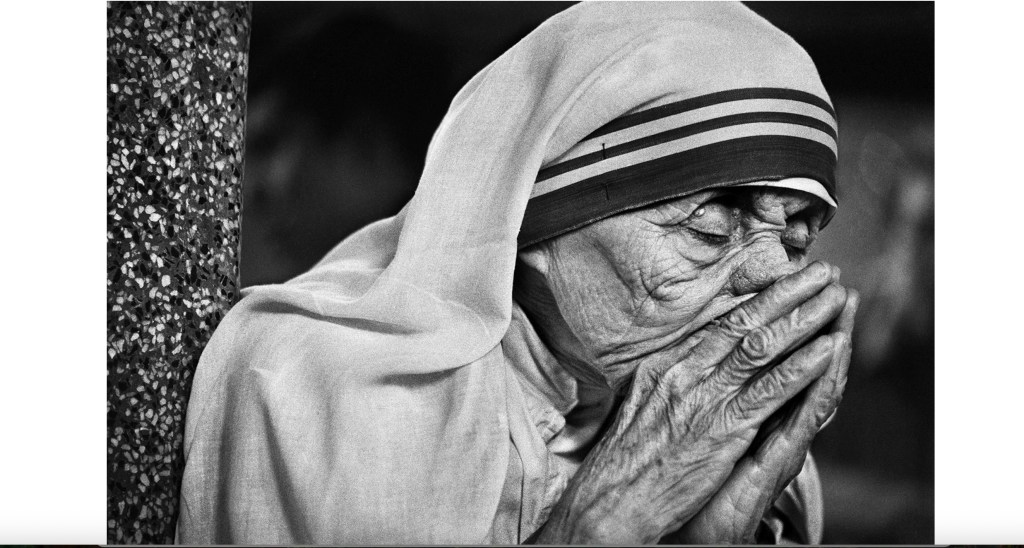
Photo: St. Mother Teresa could be a pencil in God’s hand because she gave herself to him in prayer and service daily.

Link for the Mass readings for Sunday, October 5, 2025

God cares more than we think.

In the Gospel, Jesus receives the seventy-two he had commissioned to heal and exorcize demons in his name. They returned rejoicing at the wonders that they experienced in their service and Jesus invited them to see that what was more amazing was not so much that “the spirits are subject to you, but rejoice because your names are written in heaven” (Luke 10:20).

What is amazing about what Jesus is sharing is that much more than what we do, even in doing God’s will, is who we are in relationship with God. That are names are written in heaven means, we know God. God cares about us personally and intimately. God knows each of us by name and knows us better than we know ourselves. Even though God does not need us, God yearns for relationship with us and has planted that very desire to be in relationship with him in the very depths of our minds, hearts, and souls. God also wants us to participate in his plan of salvation history and has a particular part for us to play.

When we give ourselves some time to take this in, to rest and stop, to breathe, really take some deep and slow breaths, and ponder not only how much God loves us, but actually give ourselves time to rest in and receive his love. Wow! You’ll never breathe or see the world in the same way again. When we receive something negative or harmful we are able to process and receive that in three seconds. To receive something good or to hear someone say we are loved, can take from 30 – 90 seconds to process.

We might hesitate or question whether God cares because we might believe that he allowed something to happen or not to happen, or because we are unwittingly welcoming the negative influence and lies of the enemy, such as: we may not care about having our name written in heaven; for what’s the point of having an eternal relationship with someone who doesn’t care enough to listen. Lies such as these keep God at a distance. But God hears all our prayers even while they are still thoughts in our mind.

He knows our deepest needs, hurts, and desires more than we do. To experience God’s love though, to know that he hears our prayers, we need to slow down and be still. God speaks in the silence of our hearts and we can hear his voice of love when we remain still long enough to hear, receive, and rest in his word.

Just taking a moment to be still, and to bring our questions to God is a good first step. For God is the best one to answer them. We just need to be prepared that he may answer our question with more questions. As long as we enter into the conversation, God will happen. It is not so much that we need to get up and do something, as much as instead, we need to sit and allow God to do something in us, and to remain still long enough to hear, receive, and rest in the gift of God’s love that he wants to share with us. Then, once have received what he has given and guided us to share, we do so.


Photo: “Be still, and know that I am God.” – Psalm 46:10

Link for the Mass readings for Saturday, October 4, 2025

May we not reject but welcome the light of Jesus.

“Whoever listens to you listens to me. Whoever rejects you rejects me. And whoever rejects me rejects the one who sent me” (Lk 10:16).

On the surface, today’s Gospel as well as the first reading and the psalm may sound like a Debbie Downer of a message, but it is actually the road map, the passage that will lead us from the darkness of slavery steeped in our own sin to the light of truth and freedom found in dedicating our life to Christ. Jesus is continuing to prepare the 72 that are about to go out to proclaim his message of repentance. This echoes Mark’s recording of Jesus’ mission statement: “This is the time of fulfillment. The kingdom of God is at hand. Repent, and believe in the gospel” (Mk 1:15).

A sin is any actively contemplated thought, word, or action that we knowingly know goes against the will of God and we freely choose to act upon it anyway. This is why many of us prefer the darkness to the light because we do not have to see and name our sins. We hold on to apparent goods or substitutes that we believe will make us happy and fulfill us, otherwise we would not hold on to them. Yet, they are empty promises. After experiencing the lack of satisfaction, once the emotion or passion of the moment or experience wanes, we either seek more to fill the void or hopefully, recognize the false lure and begin to seek something else to fill the void.

If we choose to seek more or seek within the material and world of finite creation apart from God, we continue along a slippery slope that may lead to our ensnarement or addiction. When we instead heed Jesus’ call and repent, allow the light and truth of Jesus into our darkness, trust that he truly wills our good, we can begin to see our sin, name it, repent from it, let it go, be forgiven, be healed, and fulfilled by receiving the true good, the love that God seeks to give and deepen our relationship with him for whom we have been created.

As servants of the Lord, we are invited to repent, to realign ourselves and our lives in such a way that we are saying yes to building a relationship with God. This is a daily, moment by moment, lifetime task of examining our conscience, asking God to reveal to us our sins, and willingness to embrace the humility to see and confess. This process is not just for ourselves.

Having experienced God’s love and forgiveness, we are called to bring the light of truth we have received to those we meet. This does not mean we are perfect. Through the awareness and confession of our sins, we are incrementally more open to receiving more of the love and light of Jesus within us than before, such that he can shine his light through us into another’s darkness and gently guide them to come out of the shadows.

We need to resist though the temptation to go forth and wag our finger of judgment. For then we are only a darker storm cloud approaching those needing a healing balm. This approach can either cause people to slip deeper into their own shell or come out fighting, seeking to dispel us from their midst. Jesus sends us out like the 72 to encounter one another with understanding, mercy, patience, and love. In the beginning, our light needs to be soft, like the morning dawn, so as not to blind those we seek to offer an invitation.

Jesus, this day and each day going forward, please dwell within us. Help us to be open to those you place near us that we may be present to them with your warmth, welcome, and joy. May we respect each person we encounter and be present, so that they may know that they are not alone, that they, in fact, do exist, that they matter, that they are loved as you love us. May we be like the light of the dawn to help awaken those in the darkness of their pain, suffering, and sin. May we be a lamp unto their feet and a light unto their path, that leads to an encounter and embrace with you; our Truth, our Way, and our Life. Amen.

———————————————————

Image: When we allow the light of Jesus to shine in our hearts and minds, he will lead us to freedom from that which and those who hold us captive.

Link of the Mass readings for Friday, October 3, 2025