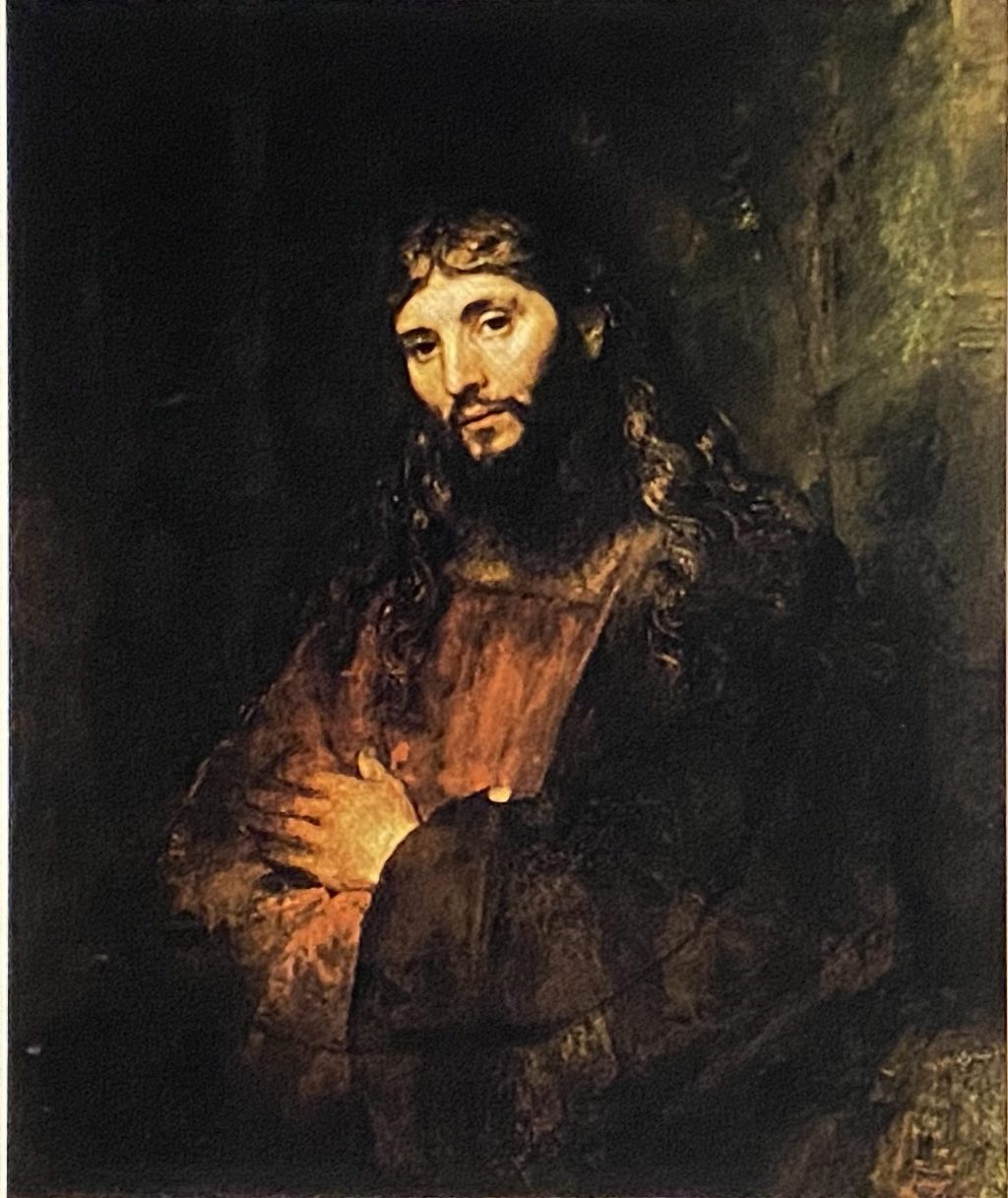
Jesus is the Son of God? Yeap.

Jesus’ listeners “picked up stones to throw at him” (Jn 8:59). Though less violent, this interaction has some similarities found in Jesus’ Bread of Life discourse (cf. John chapter 6), where Jesus made the statement, that, “I am the bread of life” (Jn 6:48). In both cases, the people do not understand what Jesus is sharing and yet Jesus resists softening his approach and instead doubles down.

In John 6, Jesus holds firm to the truth that his followers will consume him and in today’s Gospel Jesus does not equate himself as being just a representative of God, a prophet or a rabbi, but that he is, in fact, God when he states: “Amen, amen, I say to you, before Abraham came to be, I AM” (Jn 8:58). With these words, Jesus has just done the unthinkable, the unimaginable for the people of his time. He not only has spoken God’s sacred name, which is not to be uttered because it is considered to holy to do so, he equates this sacred name, “I AM”, with himself. Jesus is making his point very clear. Jesus is God. During the Bread of Life discourse, people walked away from him because they were repulsed and most likely considered him mad, here they may also think he is mad, but the issue is that to them he is speaking blasphemy. The reactions would be appropriate in both cases, unless of course, Jesus is who he said he is.

As his listeners then, we too have a choice to disbelieve or believe in the words of Jesus. One option that is off the table, if we give the Gospel accounts any rational reading, is that Jesus presented himself as just another teacher, philosopher, or prophet. Jesus, during his public ministry, is consistently embroiled in conflict, which is evident in all four Gospels because Jesus presents himself as God incarnate. Jesus heals on the Sabbath because he is the Lord of the Sabbath, Jesus is the Bread of Life, Jesus is: “I AM.”

The Apostles struggled time and again to make sense of the words and actions of Jesus and we may also struggle as well. We may have doubts, concerns, and unanswered prayers and/or questions. To walk the path of discipleship is not to walk with constant assurance, for we walk by faith and not by sight (cf. 2 Corinthians 5:7). Walking by faith though does not mean that we just throw up our hands, toss out all reason, and believe blindly. Dr. Holly Ordway defined faith as, “trust based on a reasoned knowledge of the evidence.” We trust that Jesus is who he claimed himself to be based on the scriptural evidence, our own experiences with the truth based on these claims, and our encounters with him in our everyday interactions and times of prayer.

We are to follow the apostles in that, even though we don’t fully understand, when Jesus calls, we also trust him and follow where he leads. He does not give us the full picture all at once, but as we step out with each faithful step, he will reveal a little more light and truth. He will be present with and work through us as we continue to turn our life over to him and one another more and more each day.

When doubts arise, we can lean on Peter’s claim, “Master, to whom shall we go? You have the words of eternal life.” (Jn 6:68). Peter made this claim based on his experience and trust in his relationship with Jesus. Our relationship and belief in Jesus will also grow more deeply and intimately, moment by moment, with each yes to the invitation of Jesus, the Holy One of God.

———————————————————————————-

Photo: Rembrandt’s Christ With Arm’s Folded

Holly Ordway’s quote comes from Lesson 2: Bridging the Meaning Gap in her course: Imaginative Apologetics which can be accessed by registering for the Word on Fire Institute, the home page of which can be accessed: https://wordonfire.institute/

Link for the Mass readings for Thursday, March 21, 2024
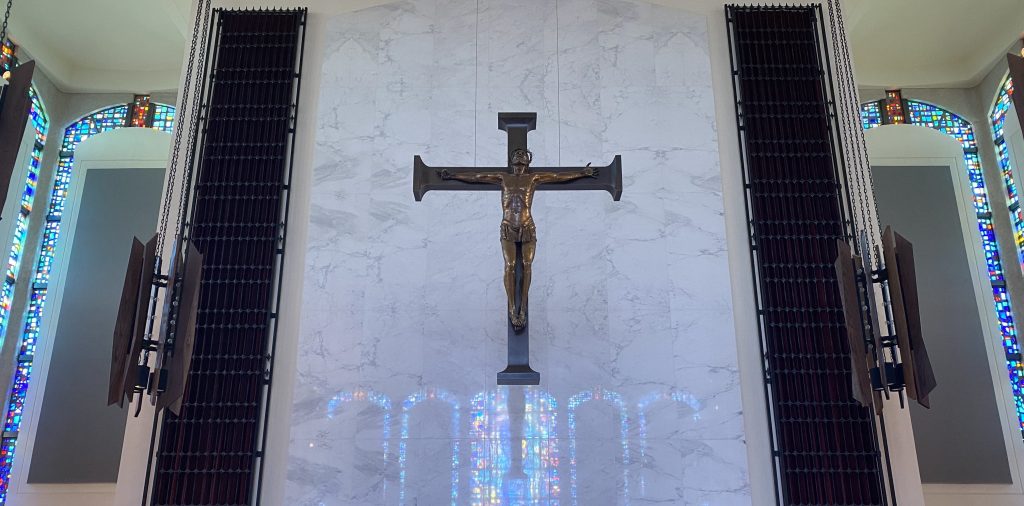
Jesus took our sin upon himself to forgive and free us.

It is interesting to note that in today’s Gospel reading from John, Jesus spoke to those who “believed in him” (Jn 8:31). But the more he talked, the less they seemed to understand who he was: “If you remain in my word, you will truly be my disciples, and you will know the truth, and the truth will set you free.” His listeners balked at the word, “free”, asserting that because they were ancestors of Abraham they have never been enslaved by anybody.

In the United States of America, freedom is also highly valued. Many of us would probably react very much in the same way. We may have different ways of expressing why we feel that we are free, but we would certainly assert that we are not enslaved to anybody or anything.

Jesus’ words ring just as true then as they do today: “Amen, amen, I say to you, everyone who commits sin is a slave of sin.” Jesus shined his light on the truth that many of us do not see, which is our enslavement to sin. If we truly seek to be free, then we need to acknowledge this point. What many of us claim to be freedom, doing whatever we want to do, when we want to and how we want to do it, is not true freedom. We cannot even hear the clanking of the chains or feel the weight of the shackles chaffing at our skin as we raise and shake our fists to assert our freedom of indifference!

Our response to Jesus’ statement: “who commits sin is a slave of sin” ought not to be one of hiding, denying, rationalizing, attacking, or fleeing. It is better to embrace the truth that Jesus is placing before us. In this way, we allow his light to expose the darkness in our hearts where sin speaks, and we realize that we have said yes. Becoming aware of our fault for those things we have done and have failed to do is the first step in becoming truly free. Recognizing with St. Paul that we do what we don’t want to do and do what we don’t want to do, is another step.

When Pope Francis was asked in an interview, “Who is Jorge Mario Bergoglio?” he answered, “I am a sinner, but I trust in the infinite mercy and patience of our Lord Jesus Christ, and I accept in a spirit of penance.” We are all sinners because we all in some form or fashion place idols before God. When we think our life is about us first and foremost and ignore or rationalize our sin then we are enslaved, such that it chokes and threatens to undo us. Then we experience its debilitating effects and succumb or attempt to free ourselves, yet the process becomes likened to a Chinese finger trap. The more we pull to escape, the tighter the grasp.

This is not a negative or defeatist attitude, quite the contrary. We are children of God, created in his image and likeness. We have just forgotten who and whose we are. When we call out our sin in truth, we can be freed from it. Jesus became human, and took our sin upon himself to free us from death and sin.

We become free from our sins by acknowledging that we are sinners. This does mean we are awful people. We are good. It just means that we have fallen for an apparent good instead of the true Good that God wants for us. We also cannot ultimately be freed by our efforts alone. We need to work in collaboration with the mercy of Jesus. We need a savior. Jesus accepts us as sinners, as we are. He loves us as we are and wants the best for us.

We do not have to be perfect or have our house for him to come to be present with us, for he is already waiting for us. We do not need to be worthy, we just need to be willing to open the door when he knocks and invite him into the chaos of our lives so he can forgive and heal us with his grace, love, and mercy. “So if the Son frees you, then you will truly be free.” 

——————————————————————

Photo: Crucifix in the sanctuary of SVDP chapel, SVDP Regional Seminary, Boynton Beach, FL.

Link for the interview with Pope Francis from America Magazine, September 30, 2013

Link for the Mass readings for Wednesday, March 20, 2024

Cast the first stone or confess?

“Let the one among you who is without sin be the first to throw a stone at her” (Jn 8:7).

As these words came forth from the mouth of Jesus, there must have been a deafening stillness. A mob had gathered around a woman seeking to stone her for being caught in the act of adultery. Had this woman actually been caught in the “very act”? Were there those that were scheming so scrupulously that they would spy on her at that moment, or like our first reading from the Book of Daniel was this a false accusation because the woman refused the advancement of someone who wanted to commit adultery with her, and she refused? Either way, Jesus helped to restore the dignity of this woman by showing the common shortcoming of our fallen humanity.

Today’s Gospel account from John helps us to come to terms with the reality that we are all unified in the reality that we all fall short of the glory of God that we were originally created for. Fortunately, there was no one present who thought himself so self-righteous that he had not committed any sin. All left and only Jesus and the woman remained. It was only then that he spoke to her.

Jesus’ goal for each person he encounters is that we come to terms with our own sin, repent, and believe in the Gospel. Yet, he does so not by condemning us but by showing us how we are off the mark and bestowing his mercy and love upon us. In this way, he guides us to the path that will lead to what is truly good, not the false allures of apparent goods that may glitter in the moment, but then fade.

Jesus does not define us by our worst mistakes, but he does not want us to remain in our sin either. By doing so, we are separating ourselves from a more real and intimate relationship with God and one another. Jesus reveals to us those choices, behaviors, habits, prejudices, and vices that separate us from him and each other.

Lent is an intense season when we make the time to become more aware of that which divides and in humility admit to and confess these behaviors so that through the love and mercy of God and in collaboration with him, we can be transformed.

Jesus does not forgive us so that we will then call out another’s sins publicly to condemn them. If we truly care about saving another, we are to do so as Jesus did and has guided. We are to meet them one on one, convict and correct with tender chords of love that they may be more able to see their sin and willing to confess. We are better able to do so when we have the humility to see our own sins, be contrite, and go to Jesus through the priest, confess them, and receive absolution, healing, and forgiveness.

May we examine our conscience, call to mind those areas in which we have fallen short of the glory of God in our lives, where we have sinned, and with humility share them with Jesus. In this way, we with the woman caught in adultery may also hear his words, “Neither do I condemn you. Go, and from now on do not sin anymore” (Jn 8:11).

—————————————

Photo: From the stone moat around St. Vincent de Paul Chapel, St. Vincent de Paul Regional Seminary, Boynton Beach, FL.

Link for the Mass readings for Monday, March 18, 2024

Surrender all to Jesus.

We are now beginning the fifth week of Lent. We are coming closer to the cross, to remembering the suffering, crucifixion, and death of Jesus. In today’s Gospel, Jesus is sharing with those in his midst that he will lose his life in fulfillment of his Father’s will: “I am troubled now. Yet what should I say? ‘Father, save me from this hour’? But it was for this purpose that I came to this hour. Father, glorify your name” (Jn 12:27-28). Jesus has come among us, to be one with us and to experience the fullness of being human. In becoming human, he is opening the door for us to experience his divinity.

To be able to experience the divinity of Jesus, we have to die to our self. Death is not a partial thing, it is a total surrender. As Christians, our first experience of this death is Baptism. In Baptism we die with Christ, and we rise to new life with him. We are purified from the condition of Original Sin as we are born again in water and Spirit. We are conformed and indelibly marked to Jesus and incorporated into the living organism of the Church, the Body of Christ. We become a part of his new creation.

In Confirmation, we continue the path of giving more of our life to Jesus. We are sealed with the gift of the Holy Spirit, we are empowered through the imposition of the laying on of hands and the anointing with chrism. We join in the apostolic mission of those who were and continue to be sent by Jesus to proclaim the Gospel, the Good News, that Jesus has become one with us so that we can be one with him. Jesus has given his life and returned to the Father in the fullness of his humanity, so to unleash the power and fullness of the love that he shares with his Father.

This is possible because what one human being experiences, sin or grace, all people experience. Each one of us are distinct and unique, one of a kind, while at the same time in communion with God and one another and all of creation. The Son of God, in becoming human, and in his willingness to experience our suffering and death, has risen from that experience and returned to the Father in the fullness of his humanity. What Jesus experiences with the Father, we have access to, in the degree that we are willing to accept our humanity and his invitation to participate in his life and divinity.

When we reject our humanity, reject the fact that we are created beings, not self-sufficient within ourselves; when we assume, grasp at, and appropriate for ourselves, self-autonomy, and stand firm that we need no help from God, we assume that we are the center of the universe and all revolves us instead of God, we separate ourselves from the source of the very communion we live, crave, and hunger for.

Any disordered affections or attachments toward anyone or anything that we place before God must be renounced, let go of. To the extent that we can surrender our whole mind, heart, soul, and strength to Jesus, is the extent to which we will participate in his life and divinity. Jesus died for us so that he can also be with us always. We are abandoned and not left as orphans, for he continues to be with us in the Mass. We come to receive him, Body and Blood, Soul and Divinity, during each liturgical celebration. We consume him and so continue to be nourished, to be transformed into his Body. When we are dismissed from our time of worship and communion, we are sent to be bearers of Christ. We are sent to bring him to those we encounter in our realm of influence through the corporal and spiritual works of mercy. At the very least we are to respect the dignity of each person we interact with.

By participating in the Sacraments of Initiation; Baptism, Confirmation, and Eucharist, we become the grain of wheat that dies, germinates in the ground, then sends forth roots and shoots. As we continue in our daily surrender to God and participate in the disciplines of prayer, fasting, worship, study, service, and almsgiving those shoots will become stalks and eventually bear fruit. For whoever serves Jesus, must follow him, and wherever he is, there his servants will be. The Father will honor whoever serves his Son (cf. Jn 12:26). Surrendering our lives in this way to Jesus we can say with St. Mother Teresa of Calcutta: “Each time anyone comes into contact with us, they must become different and better people because of having met us. We must radiate God’s love” (Mother Teresa, pp. 18-19).

Let us, like the grain of wheat, die to our false self, allow the shell of our ego to be cracked open, so to rise with Christ in his glory of being fully alive in him, to actualize who he calls us to be, and to bear the fruit of his mercy and love with others!

———————–

Photo: Sun setting as I began my Rosary walk, St. Vincent de Paul Regional Seminary, Boynton Beach, FL.

Mother Teresa and Devananda, Brother Angelo, ed. Total Surrender. Ann Arbor, MI: Servant Publications, 1985.

Link for the Mass readings for Sunday, March 14, 2024

Can we disagree and still listen to and respect one another? Yeap!

Jesus affirms who he is and whose he is in today’s Gospel of John. Despite those who do not believe that he is the Messiah, Jesus again makes his point very clear: “I did not come on my own, but the one who sent me, whom you do not know, is true. I know him, because I am from him, and he sent me” (Jn 7:28-29). Jesus is the Son of God made man and he belongs to the One who sent him, God the Father.

As Jesus was challenged in his time, he continues to be challenged today. That level of challenge has increased even to the degree that his human existence is even dismissed in some circles as a mere legend. Even as a historical figure, some speculate that Jesus did not walk the roads of Galilee and Judea. This need not be a reason for alarm. Though it is a reason to know our Tradition, the deposit of faith that has been preserved and passed on from Jesus to his Apostles and disciples, and to those early Church Fathers and Mothers named and unnamed and passed on up to this day in an unbroken apostolic succession. It is important to read the Bible, immerse ourselves in the sacred texts, pray with and meditate upon these words, and allow Jesus to speak to us again and again.

It is important to know what we believe, who we believe in, and whose we belong to. In this way when we are challenged by others, we do not need to stoop into a defensive crouch, but instead listen to the person’s points, their critiques, and ask questions of what they believe and why they believe what they believe. We can share our position while at the same time being open to understanding where our questioners are coming from. We can then respond with an open mind and heart of surrender to allow the Holy Spirit to be present through us.

When we are anxious, defensive, seeking to be right, or fearing to be wrong, we limit what Jesus can do through us. God is not about numbers and quotas, he is about building relationships, one person at a time. It is more important to build relationships than to win arguments! We can learn much from St. Bernadette of Soubirous who after her visions with the Blessed Virgin Mary was challenged time and again regarding the validity of her experiences. She simply responded, “My job is to inform, not convince.”

Social media platforms can be good platforms to exchange ideas as well as horrific experiences of the worst of our humanity. It is important that we remain respectful face to face and remember that screen to screen there is another human being on the other end. All of us are on a journey in this life. We can learn much from each other when we are willing to share our experiences while remaining committed to engaging in a spirit of charity and dialogue.

All of us seek the True, the Good, and the Beautiful. Especially during times of uncertainty and instability, it is important to respect and love those who have differing perspectives outside of and within the Church and be open to the reality that we can learn from one other. We do better when we are willing to listen to and allow God to guide each of us through our common challenges.

————————————————————————–

Photo: Making time for quiet and quieting our minds, we can better listen to others. Rosary walk, St. Vincent de Paul Regional Seminary, Boynton Beach, FL.

Link for the Mass readings for Friday, March 14, 2024

God reveals himself to us when we have the eyes to see and ears to hear.

God heard the cry of his people who were suffering from enslavement in Egypt. God called and sent Moses to free them. Pharoah did not accept the request of Moses to let his people go and instead put more pressure on his slaves to fulfill their daily quota of bricks as before, though now without providing the straw that they needed to accomplish the task (cf. Exodus 5). The Hebrew slaves did not take out their frustrations on their oppressors but on Moses. This pattern of complaint continued time and again, even after their freedom was assured and they wandered in the desert. Even thought they were free, they complained regularly when things got tough, and stated that they would be better off going back to Egypt. Going back to being a slave under Pharaoh instead of placing their trust and dependency upon God.

God the Father sent his Son to free us from our slavery to sin, just as he sent Moses to free the Hebrews enslaved under Pharaoh. How many times do we, like our ancestors, also complain, preferring our life of sin, a life of mere existence, over embracing the gift of a life lived to the full because it is what we know. Even worse there are too often those in positions of spiritual leadership who abuse their power, look out for their own interests, instead of guiding and serving the people entrusted to their care.

Jesus addressed those who were missing the point of his preaching and ministry, “how God has made his will known to the people, the Father who sent me has testified on my behalf. But you have never heard his voice nor seen his form, and you do not have his word remaining in you, because you do not believe in the one whom he has sent” (Jn 5:37-38). God the Father has sent his Son to reveal his will but too many did not and today still do not have eyes to see or ears to hear.

Those who are learned “search the Scriptures, because [they] think [they] have eternal life through them; even they testify on my behalf. But [they] do not want to come to me to have life” (Jn 5:39-40). What is hidden in the Hebrew Scriptures is revealed in the New Testament: the New Covenant made with Jesus and all of creation. The prophecies of old testify that the Messiah will come as a suffering servant, he will unify the nations, cleanse the Temple, and the enemies of God will be placed at his feet. These affirmations are presented and known by those who study the sacred texts, yet they still did not recognize the signs that the Messiah was in the very midst of them.

Even Moses testified of Jesus when he said: “I will raise up for them a prophet like you from among their kindred, and will put my words into the mouth of the prophet; the prophet shall tell them all that I command” (Deuteronomy 18:18). Yet the successors of Moses would not even believe in his writings, so Jesus said how would they believe in his words?

Many of the people of Jesus’ time heard him speak, saw him heal and exorcise demons, and still did not believe. He is not as visibly present as he was, and yet, if we are sincerely seeking God who has and continues to make his presence and will known, we will find him in philosophy, theology, mathematics, the sciences, literature, the arts, sports, relationships, his creation, in our service to each other, as well as in truths of other faith traditions. The fullness of the Father though is revealed in our encounter of him through his Son, “whom he has sent”. Do we have eyes to see, or will we miss God’s invitation because we do not believe in “the one whom he has sent”?

Jesus is also revealed in Scripture, the Old and New Testaments. To understand the New we must understand the Old, for Moses and the prophets testified to his coming and Jesus came not to abolish but to fulfill the Law and the Prophets. Do we leave the Bible on the shelf like any other book? If we do read it, do we do so as if it were a dead letter, or do we read and hear it as it is truly meant to be read and heard, as the living Word of God proclaimed? We are and also more than a people of the book. We are a people of encounter.

The Father makes himself known to us through the presence of his Son and the love of the Holy Spirit. To experience the truth of this reality we need to accept his invitation to enter into and develop a relationship with him. As we reach out to God, we come to realize that he is already present and reaching out to us, especially through his Son. We do not need to run to God, because he is already running to meet us, waiting to hold us in his loving embrace, now and forevermore!

—————————————————

Photo: On the eve of taking our Cura Animarum, our pastoral care board exams, while praying the Rosary, God sent a hug – a slight but distinct rainbow around the sun! St. Vincent de Paul Regional Seminary, Boynton Beach, FL.

Link for the Mass readings for Thursday, March 14, 2024

Jesus wants to heal and save us. Do we want to be?

Has there ever been a time when you were picked last for the team, whether on the playground, P.E., or gym class? I remember being on both sides, being picked last, and picking others to join and having to pick someone last. I preferred being chosen last much more than having to be in the situation to choose a classmate last, and it was often an agonizing situation. In our Gospel reading today, Jesus comes upon a man who has experienced even worse.

He has been in need of healing for thirty-eight years. Apparently, there was a limited time to get into the waters of the pool of Bethesda to experience the healing properties that it afforded, for each time the water stirred, while the man moved to get closer to and enter the water, “someone else gets down there before” him. This is worse than getting picked last, as he doesn’t in a sense even make the team!

But with Jesus, the last shall become first. Key ingredients are belief, faith, and a willingness to be healed. Jesus does not impose, even in the case of healing, Jesus invites. He asks the sick man, “Do you want to be well?” The man is stuck in the limitations of someone getting him to the pool. That is all the affirmation Jesus needs. The man is willing if there is someone to help. Jesus commands him to rise, pick up his mat and walk. The man is no longer the one picked over, the one ignored, the one unseen. In his encounter with Jesus, he is healed by Jesus’ word.

Jesus meets us in our need as well as the man at the Pool of Bethesda. He meets us where we are, no matter our station in life. He does not leave us on the outside looking in, he does not leave us wondering if we are loved or if we belong. He does not only come to encounter us but if we are willing, to empower us to be about the mission given to us by his Father. Jesus gives meaning and purpose to our lives. Jesus has come to save us. Each and every one of us is a gift from God and has been graced with something to contribute to others, something unique to help make the kingdom of God a reality.

Give yourself a moment of silence and stillness, without and within. Settle into a place with no or little distractions, breathe in deep and exhale a few times, then close your eyes. See yourself as you are in your present seated position, breathing, experiencing your shoulders relaxing, and just being still. Then notice Jesus. He is walking toward you as he did with the man at the Pool of Bethesda. Does Jesus remain standing, does he sit beside you, or kneel before you? As he assumes whatever posture, allow your thoughts to reflect on what you need. As you are pondering, does Jesus ask you a question? What does he ask or what does he say?

Jesus is present, right here and right now, for you. There are no boundaries, no limitations, only those you impose on yourself. Share with Jesus your need. You are no longer misunderstood, left out, or picked last. Jesus is present. Embrace this moment of time together, of knowing that you are loved, heard, and that you belong in the kingdom of God.

————————————————————————-

Painting: Some quiet time of prayer in between studying, St. Vincent de Paul Regional Seminary, Boynton Beach, FL.

Link for the Mass readings for Tuesday, March 12, 2024

Turn from darkness and prefer instead the light that has come into the world.

“That the light came into the world, but people preferred darkness to light” (Jn 3:19). What is the preference of darkness over light? We have all said with St. Paul, “For I do not do what I want, but I do what I hate.” (Romans 7:25)? Now we are not always in this state of choosing darkness over light and choosing to do what we don’t want to do instead of what we want to, but we are probably guilty of entertaining both more than we are willing to admit. Why? I don’t have a definitive answer, but I can share a few ideas.

We are certainly influenced by the condition of Original Sin, that time in our ancient ancestral past where the choice to choose self over God happened and has been perpetuated generation after generation up to an including today. We can choose our self over God because that is an influence of our fallen world and have learned to live our lives that way. We create habitual patterns of behavior and then we go on automatic pilot, continuing to make the same decisions repeatedly. We also make decisions that appear to be but are not for our highest hope and good, because many of us have been wounded and we are doing the best we can to cope and survive.

Our Baptism takes care of Original Sin, but we still have concupiscence, which is our tendency to be drawn into sinful actions. We are still susceptible to temptation. What helps is recognizing that there is a God who loves us, so much so, that he sent his only Son to be one with us so we can be one with him. What helps is making more of a conscious choice to recognize and come out of the shadows, out of the darkness of our defense mechanisms, our denial, our past hurts, anxieties and fears. We need to say yes to Jesus who never sinned because for each and every temptation he received, even in Gethsemane, Jesus had one and the same answer: “Not my will but yours be done” (cf. Lk 22:42).

When we choose to surrender our life to God, by aligning our will with God’s, and by participating in the life of Jesus, we can receive and experience the love of the Holy Spirit working in our own lives. In so doing, we will find healing and forgiveness. This is not a one-time event. This is a progressive, spiritual journey that continues throughout the whole of our lives, and into eternity with God. When we notice we are beginning to slip, this awareness is good. We need to resist beating ourselves up, admit where we are, apologize as necessary, seek forgiveness, and return to loving God, ourselves, and one another.

Holy Spirit, please guide us today so that we can better resist the temptations that go before us, unlearn our negative behaviors, and create new habits to replace those that have kept us bound and shackled to our self-centered, indifferent, and unhealthy postures. Help us to identify and renounce the shadow sides of ourselves, seek to confess and allow your love to heal us, and to place our trust in the Light of Jesus, the warmth of his love, and receive the gift of his forgiveness and mercy.

Photo: St. Francis preferred and chose to follow the light of Christ. Outside our chapel, St. Vincent de Paul Regional Seminary, Boynton Beach, FL.

Link for the Mass readings for Sunday, March 10, 2024

Having the humility to confess our sins frees and heals us.

It is much easier to find fault in others, and in some cases, the act of doing so has become entertainment in private as well as publicly, and especially with social media. Gossip has a seductive allure and can be consuming. Judging others is also a way to justify and or project our own inappropriate behavior onto others. We may even place ourselves in a false sense of exalted pride. Have we ever, not just stated, but thought or prayed something along the same lines as the Pharisee in today’s Gospel? “O God, I thank you that I am not like the rest of humanity — greedy, dishonest, adulterous — or even like this tax collector. I fast twice a week, and I pay tithes on my whole income” (Lk 18:11-12).

To pray any part of this prayer stunts the growth in our spiritual life because we are focused on ourselves instead of emptying ourselves before God. Anytime we rationalize, cover over, or deny our sinful behavior we create and support habits of selfishness. Left unchecked, we can become enslaved to them. Lent is a time for healing, purification, and transformation. To be able to heal from sinful attitudes and actions that have become habits, we first must be able to acknowledge and identify them.

Over time, reading more and more lives of the saints, I have come to understand that their recognition and confession of their sinfulness was not just pious platitudes, but true expressions that they were growing closer in their relationship with Jesus. A simple example can help express where they are coming from.

When we drive our car while it is dark we don’t give much thought to the cleanliness of our windshield because we can see fine. Yet as the headlights from an oncoming car illuminate our windshield, the smudges, dirt streaks, and bug residue come into focus. This can be evident in our spiritual life as well. The more we remain in our own darkness of denial, we feel we are fine, all is right with the world. The closer we grow in our relationship with Jesus, the more his light shines in our darkness, and he reveals to us our sin.

Jesus invites us to resist the prayer of the Pharisee who justifies himself as he prays comparing himself to someone else, instead of acknowledging his own sinful actions and he instead emphasizes that we are to follow the honest humility of the tax collector, who did “not even raise his eyes to heaven but beat his breast and prayed, ‘O God, be merciful to me a sinner’”(Lk 18:13).

Now, Jesus is not saying this is the only way we pray. We have the opportunity to worship and praise the Lord joyfully, we can seek his help in praying for others through intercessory prayer or for ourselves in petitionary prayer, we can also sit in quiet meditation during adoration or out among God’s wonder of creation. Each prayer has its time and place and each type of experience of prayer helps us to grow and deepen our relationship with Jesus and each other.

True humility is brought about by our willingness to see who we are from God’s eyes and to focus on him instead of ourselves. If we want to set a standard to live up to and if we are to compare ourselves to anyone, let it be Jesus. A daily examination of conscience is a healthy practice and discipline. We just need to be willing to invite Jesus to shine his light of love into our present places of darkness. What we see then we can confess. Admitting to and experiencing the sorrow for the hurt we have caused from our sins is healing. In our willingness to confess, promise to sin no more, and do penance, we will receive his love, mercy, and forgiveness.

One prayer I have found helpful over the last few years is the Jesus Prayer. It is very simple. Sit in a comfortable space, take a few deep breaths and exhalations, then as you take the next breath in recite, “Lord Jesus Christ, Son of the living God,” and then as you breathe out say, “Have mercy on me a sinner.” You are breathing in the light of Christ and you are breathing out the darkness of your sin.

Traditional prayer ropes exist from the Eastern Orthodox tradition for this practice. They are made of wool, usually black, and have ten decades of ten beads. The bottom can also have a fringe representing the mercy of God wiping away our tears of sorrow. You can also use your Rosary. If you have neither a prayer rope or a Rosary, you have your fingers. Start with a set of ten Jesus Prayer recitations each day and pray by prayer come closer into communion with God.

—————————————————————————————

Photo: Rosary walk and looking up, just past sunset. God is good! St. Vincent de Paul Regional Seminary, Boynton Beach, FL.

Link for the Mass readings for Saturday, March 9, 2024

Jesus seeks to heal and free us from our labels.

In the Gospel reading today, Jesus is accused of being an agent of Beelzebul, the prince of demons, because he was exorcising a demon from a man that was mute. Jesus addressed the critique and showed the polarizing nature of the onlookers who were unwilling to see the healing before them for what it was. Jesus then stated the obvious: “Every kingdom divided against itself will be laid waste and house will fall against house” (Lk 11:17).

Satan seeks to sow discord and division. Jesus seeks to bring about unity. Now it is true, that five verses later in the Gospel of Luke, Jesus is recorded as saying: “Do you think that I have come to establish peace on the earth? No, I tell you, but rather division” (Lk 12:51). Anyone feeling a bit confused? Welcome to the wonderful world of the Bible!

To understand Scripture, we need to understand the context of the whole of Scripture, not just isolated verses. Throughout the ministry of Jesus, he seeks the unity that all may be one as he and the Father are one (cf. John 17:21), yet he has consistently experienced those that rejected his message and healings as witnessed in today’s Gospel account.

Jesus demands a choice. We need to decide if we are either going to be for him or against him (cf. Lk 11:23). The division Jesus is talking about results from those who choose not to recognize that Jesus is who he says he is and reject him and those who accept him for who he is. This choice continues to cause division within households, families, and friends even today.

The greater take away from today’s Gospel and Jesus’ teachings as a whole, is that Jesus is the way and the truth and the life (see John 14:6). Jesus is the Son of God made man. Some will reject this truth. Some will accept only parts of the truth that Jesus teaches, while others will say there is not objective truth. We who identify with this truth and give our lives to him as his disciples, then like Jesus, we are to embrace the gift of our diversity.

We are more united rather than divided when we resist limiting ourselves by mere labels. In our modern context, labels, such as liberal and conservative are not helpful. It is certainly easier to cast labels, but interactions with people and developing relationships are much more nuanced. We are not mere cardboard cut outs, or caricatures.

To better understand the essence of who we are as human beings demands greater time and experience with each other than an outward appearance or isolated statement may portray. Many times, once we have cast a label, we believe that we have “defined” the person. They are classified in their box and tied up in a neat and pretty bow, and woe to the person who resists being boxed and bowed.

I remember reading from one of the books from the tracker, Tom Brown, Jr., in which he described how many people when seeing a bird, such as a blue jay, robin, or crow, are often satisfied with the label, the naming of it, and move on from that sighting self-satisfied. They think that in that simple identification they now have come to understand all that there is to know about that species. So much of the essence of one of God’s amazing creatures is missed by such a simplistic and limiting classification!

Unfortunately, we do the same with each other. We make a prejudgment on a person or group of people because of a word, statement, stance on a particular issue, or particular belief. We then falsely believe we know everything there is to know about that person or group. This is a limiting and divisive approach. Jesus invites us to encounter, accompany, spend time, and break bread with people. In spending time with one another, dialoguing, and respecting each other, the caricatures can be filled in with some substance and we can come to know a little better the person beyond the prejudgment. Maybe, just maybe, someone who we have been keeping at arm’s length, we can actually grow closer to, despite our differences.

———————————————————————————

Photo: During 30-Day silent retreat, St. Joseph and Mary Retreat House, Mundelein, IL.

Link for the Mass reading for Thursday, March 7, 2024