hope


We can experience joy even when faced with challenges, because “we are infinitely loved.”
Photo:
Jesus sent out these twelve (Mt 10:5).
Jesus sent out his Apostles to minister in his name and share the Gospel as he did, declaring that the “Kingdom of heaven is at hand.” Our faith tradition is one of evangelizing, sharing the Good News. That means that first and foremost we need to be people of joy. We may share the most wonderful words about our faith, but if they are not backed up by a life of radiating joy, then our words will have little if any impact.
This does not mean that we are happy and buoyant every second of the day, it does not mean that we will not experience hardship, sorrow, and loss. What it does mean is that we are not defined by our suffering, the trials we face, nor the wide range of our emotions. God also calls us to face tough realities when it might be easier to remain in our comfort zone. In the midst of each of these and other challenges, we can experience hope because God is with us. He seeks to comfort us in our weeping, provide for our needs, guide us in the right way we are to walk, and give us the strength to do so with each step we take.
What defines us is God’s love for us and the joy of knowing that we are not alone in our trials. Jesus experienced the fullness of our human condition, from his conception, birth in a cave, having lived a life of hardship and poverty which led all the way into the depths of betrayal, injustice, and God forsakenness on the cross. He did not just suffer on the cross but also experienced death. Yet, through the binding force of the Holy Spirit, the love shared between Jesus and his Father, he was drawn back to life and conquered death not only for himself but for us all.
This is good news to share. How we live our lives each day and interact with others may be the only Bible that someone else will ever read. May we share the joy of our relationship with Jesus for: “Joy adapts and changes, but it always endures, even as a flicker of light born of our personal certainty that, when everything is said and done, we are infinitely loved.” – Pope Francis from his apostolic exhortation, Joy of the Gospel, line 6.
Photo: When we experience the love of God we will feel joy to overflowing!
Link for the Mass readings for Saturday, December 7, 2024

Be vigilant, still, and pray this Advent, and we will be ready for Jesus’ coming.
As the earth turned again one more time on its axis last night, and the shadows began to fall, night slowly crept over each part of our planet. Our sacred text, our sacred word, is not only written in the Bible, but the finger of God has traced his word across all of the earth, the galaxy, the universe, the whole of the created order. For God continues to write his love song. The ground, foundation, and source of creation and our very being is the outpouring of the Trinitarian Love eternally and ongoingly expressed between God the Father, God the Son, and God the Holy Spirit.
As the sun appeared to set, and night gently made its way across our minuscule earth in this part of the Milky Way, the vigil began and so also the beginning of the new liturgical year and the season of Advent. We heard or will hear again today the words of Jesus to his disciples in today’s Gospel for the first Sunday of Advent: “Be vigilant at all times and pray that you have the strength to escape the tribulations that are imminent and to stand before the Son of Man” (Lk 21:36).
Advent comes from the latin, Adventus, which comes from the Greek, Parousia, and which we translate in English to mean coming. In our first reading, Jeremiah picks up on the prophecy of Isaiah in which “a shoot shall sprout from the stump of Jesse” (Isaiah 11:1) by stating that God “will raise up for David a just shoot” (Jeremiah 33:15). Both Isaiah and Jeremiah are pointing to the coming of the messiah. Faithful Jews would continue to watch and pray for the coming of the messiah to set the world aright.
Zedekiah was the king of Judah during the time of Jeremiah. He, as well as much of the leadership and chosen people of God would not listen to the guidance of the prophet and Jerusalem and the Temple fell at the hands of the Babylonians. From that time forward, from 587 BC, those exiled and even when they returned and rebuilt the Temple again, began the long, expected wait for the messiah. As Christians, we believe that Jesus, the Son of God and Son of Mary, is the promised messiah.
Our season of Advent not only is the opening of the new year, the new liturgical calendar. Advent is the season we wait, the season we prepare to remember the first coming of Jesus into the world as a baby.
The Gospel reading from Luke picks up on the momentum that we listened to during last week’s celebration of Christ the King. We also in Advent, prepare for the second coming of Jesus at the end of time. Jesus himself quotes from Daniel 7:13-14 by calling himself by a title he uses often, the “Son of Man” (Luke 21:27). This second coming will be different than his first coming. He will not come under the cover of darkness in the humble means of sleeping vulnerably in an animal’s trough in a cave wrapped in swaddling clothes. Jesus when he comes again to judge, will come “in a cloud with power and great glory” and when that time comes our “redemption” will be “at hand” (Luke 21:28).
During Advent then we are to prepare for celebrating again of the first coming of Jesus, while at the same time, we prepare for his second coming, the time or the hour only the Father knows. In the midst of these two, there is also a preparation for a third coming, which will help us to prepare better for Christmas and for our Lord’s second coming.
This Advent, this coming, is Jesus’ coming to us in the present moment. This is why the psalmist guides us to sing, “To you, O Lord, I lift my soul” (Psalm 25:1). Turning our hearts and minds, our very souls to God is one way we can watch and pray for Jesus who is already with us in each present moment, waiting for us to slow down, to breathe, to be still, so that we might hear his word and be aware of his presence at hand. In doing so, we recognize how close Jesus is to us. He reminds us who and whose we are, God’s beloved daughters and sons.
Advent is a season in which we are invited to slow down to receive, rest, and experience in the love that God wants to share with us. We are invited to resist the temptations of the stress and strain, the anxiety and angst that seek to divert and distract us. We will resist better when we allow ourselves to meditate upon the words and invitation of St. Paul: “May the Lord make you increase and abound in love” (1 Thessalonians 3:12).
As we make time to be still, to breathe and receive God’s love, his love in us will increase. Our experience of peace will replace the stress and anxiety that can arise because of our busyness and expectations. May we be vigilant and watch for the first signs of a snow ball of anxiety beginning to roll, stop, breathe, and turn to God. From a posture of watching and praying, may this season be one freer of the hustle and bustle going on all around us. Instead, may we rest with Jesus so to be the eye, the calm, in the midst of the storm.
This Advent, let us put into practice such spiritual exercises as breathing, praying, and being vigilant to root out any influences not of God and renounce them. Choosing to spend more time in God’s word, and focusing on the real meaning of why we are doing what we are doing – to grow in our relationship with Jesus, his Father, will help us to better experience the love of the Holy Spirit.
As we are vigilant at all times and pray, and increase our spiritual disciplines, we will grow in our spiritual strength, in our relationship with Jesus, and we will be better prepared to celebrate Christmas. We will more easily be able to surrender to his reign and help to support the coming of his kingdom, so to be ready when he comes again at the end of the age, or when our time on this earth comes to an end and we face our personal judgment.
We have been created by Love to love, to experience the closeness of Jesus. As gently as the night gave way to the morning rays of the sun this morning, may we live and move more gently upon this earth. May our thoughts, actions, and words be filled with kindness, compassion, understanding, thanksgiving, forgiveness, and love to overflowing in our relations with one another during this Advent.
————————————————————–
Photo: Advent sky back at St. Vincent de Paul Regional Seminary, Boynton Beach, a year ago September. If ever you feel a bit down this Advent, head outside and look up. God has something to share!
Link for the Mass readings for Sunday, December 1, 2024

“Peace…” is “a gift of God: It requires our prayer.”
As Jesus drew near Jerusalem, he saw the city and wept over it, saying, “If this day you only knew what makes for peace– but now it is hidden from your eyes” (Lk 19:42).
What Jesus foretold in these words would arrive some thirty plus years after his death. Jewish and Roman conflicts increased until it spilled over in 66 AD. A Jewish rebellion amassed such force that the Roman occupying military was pushed out of Jerusalem. This triggered a predictable and overpowering retaliation from Rome which resulted in the horrific deaths of over a million Jewish people. Jerusalem fell in August of 70 AD, the Temple was destroyed, and not a stone upon another was left. The only remnant was some of the retaining walls. The western retaining wall, still present today, is known as the Wailing Wall, where people come each year to insert their petitions into the cracks between the stones.
Jesus knew that peace would not come from violence. We can glean from his teachings that real peace is not the absence of war or conflict, but a change of mind and heart. A metanoia or conversion of the mind and heart must take place. There must be peace within before there will be peace without or as Thomas Merton wrote, “If you are yourself at peace, then there is at least some peace in the world.”
In our first reading from the book of Revelation the author himself weeps because no one in heaven or earth is found worthy to open and study the scroll which has seven seals. The one who does arise, appears to be a lamb who was slain. As St. John the Baptist called, “Behold the Lamb of God.” Jesus is the Lamb of God who takes away the sins of the world. He is our hope in times of darkness, he is the one for whom we can place our trust and find our rest.
May we be able to weep as Jesus did over Jerusalem. May we, as Pope Francis has encouraged us, never lose our capacity to weep over the injustice committed to our brothers and sisters throughout our woretorn and weary world.
Many have wept over the deluge of division, dehumanization, and horrific violence, worked to bring about change, and have been a light in the darkness. Mohandas K. Gandhi marshaled a non-violent movement that defeated the colonizing grip of the English Empire. Dr. Martin Luther King, Jr. applied both the teachings of Jesus and Gandhi by shining a light that exposed the dark night of segregation, poverty, and our military presence in Vietnam. Vietnamese Buddhist monk, Thich Nhat Hahn, dedicated his life to advocating for world peace and stated that: “If in our daily life we can smile, if we can be peaceful and happy, not only we, but everyone will profit from it. This is the most basic kind of peace work.”
Through the bold witness and preaching of the Gospel through his words, writings, and presence, Pope St. John Paul II played a significant part in inspiring the fall of the oppressive regime of the USSR. He wrote early in his pontificate that: “Peace is our work: It calls for our courageous and united action. But it is inseparably and above all a gift of God: It requires our prayer.”
As we near the end of the liturgical calendar let us be people of prayer and allow the love of Jesus to transform our hearts and minds such that each of our thoughts, words, and actions may, in collaboration with people of all faith traditions and good will, reflect that peace that Jesus gives, that peace that surpasses all understanding (cf Philippians 4:6-7).
Photo: Of Pope St.John Paul II celebrating outdoor Mass in Slovenia. National Catholic Register – Gabriel Bouys
Link for the Mass readings for Thursday, November 21, 2024

“Everyone who seeks the Son and believes in him may have eternal life.”
“For this is the will of my Father, that everyone who seeks the Son and believes in him may have eternal life, and I shall raise him on the last day” (Jn 6:40).
This is our hope and what we believe, that we who encounter Jesus and believe in him shall have eternal life. God’s will, what he created all of us for, is to be in communion with him and one another in this life and the next. A word of assurance that I often lean on is from the book of Wisdom from our first reading today, “The souls of the just are in the hand of God, and no torment shall touch them. They seemed, in the view of the foolish, to be dead; and their passing away was thought an affliction and their going forth from us utter destruction. But they are in peace” (Wisdom 3:1-3).
The miracle of Jesus raising the daughter of the Roman official, Jairus, embodies these verses from Wisdom. As Jesus entered the home of the official many were “making a commotion” and Jesus dismissed them stating: “Go away! the girl is not dead but sleeping.” He was ridiculed by the crowd but paid them no heed. He went to the girl, took her hand, “and the little girl arose” (cf. Mt 9:18-26).
Jesus assured his followers as he assures us today that the will of his Father is that all will be saved. Experiences like the raising of Jairus’ daughter, the son of the widow from Nain, and Lazarus, were not only seeds of hope planting the promise of his resurrection to come but a foretaste of the raising of humanity on the last day. His disciples witnessed Jesus’ actions and words, and not only kept these experiences in their hearts but shared them.
Through the Gospels we are able to enter into and experience the encounters Jesus experienced with others again and again. We also experience Jesus each time we pray, participate in the sacraments, communal worship, and in our willingness to love one another. In each of these moments, we are conformed and shaped into who we have been created and called by God to be in this life and the next.
This All Souls Day we celebrate the gift that Jesus was victorious over sin and death, not only for himself but for all of us. Unlike those he raised from the dead and died again: “We know that Christ, raised from the dead, dies no more; death no longer has power over him” (Romans 6:9). The difference between All Saints yesterday, and the commemoration of all souls today, is that we pray for those who have died still in need of the purifying fire of God’s love. Just as “gold in the furnace” (Wisdom 3:6) is purified, so God purifies those in purgatory. Let us pray for them today that they may be freed from any stain of sin so to also join the communion of Saints!
“Merciful Father, hear our prayers and console us. As we renew our faith in your Son, whom you raised from the dead, strengthen our hope that all our departed brothers and sisters will share in his resurrection, who lives and reigns with you and the Holy Spirit, God, forever and ever” (Prayer for All Souls, from the Liturgy of the Hours).
Photo: Rosary walk a few weeks back, Riverside Park, Vero Beach, FL.
Link for the Mass readings for Saturday, November 2, 2024

No darkness will overcome the love of the Holy Spirit.
“Explain to us the parable of the weeds in the field.” He said in reply, “He who sows good seed is the Son of Man, the field is the world, the good seed the children of the Kingdom. The weeds are the children of the Evil One, and the enemy who sows them is the Devil.” (Mt 13:36-39).
In this parable of the wheat and the weeds, Jesus is addressing the ancient question of why God allows evil and how are we to deal with it. Why do bad things happen to good people? As a starting point, we need to recognize that God is God, and we are not; meaning that we are not capable of reading the mind of God. Any answer to explain how and why God allows suffering will be insufficient. A second reality is that the Devil exists, though he is a created being. An angelic being, yes, but not equal in any way to God.
God is not a being. At best we can say he is Infinite Act of Existence, he is, or as God told Moses, “I am who am” (Exodus 3:14). God did not create evil, he only created good. “God looked at everything he had made, and found it very good” (Genesis 1:31). The Devil, Satan, the one who opposes, was created good also, as a high archangel, Lucifer, yet he chose to turn away from the will of God, and those angels who followed him are demons. God is greater than the Devil and his demons, and his good is greater than the evil they sow.
Evil is not so much a created thing, but a deprivation, or distortion of the good. God does not create evil, but he does allow it, and even though we cannot understand the reasons why God allows or permits evil or suffering, it is not a sufficient reason to say that God does not exist. This is especially true if we are seeking to grasp spiritual realities and truths from purely physical and rational means alone. We are indeed rational beings, who seek to know and to understand that which is good, but we are so much more. As human beings, we are physical AND spiritual, so need not limit ourselves to the merely sensate and empirical realm alone.
To better be guided by God, to hear his voice in the silence of our soul, to be fulfilled, our hearts and minds need to be open to the will of the Holy Spirit working in our lives. We are called to be people of prayer. As we mature spiritually and deepen our relationship with God, we will come to experience God as did Job: “I know that you can do all things, and that no purpose of yours can be hindered. I have dealt with great things that I do not understand; things too wonderful to me, which I cannot know” (Job 42: 2-3). In essence, Job acknowledged and accepted that God was in control, and he was not, and though he could not grasp everything, he trusted in the will of God for his ultimate good.
How do we deal with evil then? We need to surrender our pride and control over to God and acknowledge that he is in charge and knows what is best for us. We need to choose to put God first above ourselves and everything and everyone else. Our fundamental option, our telos, our end goal, is to embrace the reality that we are striving to be in a relationship with God. From the moment of our conception, we are a living, craving, hunger, and desire to be one with God and one another. This is true of the atheist and the mystic alike, whether we believe it or not. As we embrace this reality, put God first and focus on him, no matter what arises, we will begin to experience his presence in not only our everyday lives but begin to feel his presence with us in the midst of our suffering. We will come to know that he is stronger than any pain or evil, his grace is greater than any of our sins, and he will guide us through and give us what we need to endure.
Our loving God and Father has given us the means to understand suffering and evil especially in sending his Son to enter into our humanity, to suffer with us, even suffering his own unjust death on the cross. Our deepest prayer is when we willingly offer up our suffering and enter into the Mystery of the Passion of Jesus. Jesus, the pure and innocent one, beaten and crucified, understands our pain and agony, our cry for the horrors of injustice, and he understands the presence of evil. Jesus himself, asked not to be crucified, though he relinquished in saying, “Not my will but yours be done” (Lk 22:42).
In that acknowledgment, Jesus faced the utter evil, horror, betrayal, and injustice of humanity, his crucifixion. In taking upon himself the sin of the world on the Cross, he even felt his separation from his and our Father. Through his complete surrender into God forsakenness, into his death, and descent into hell, Jesus made the Resurrection possible. He conquered suffering, evil, and death forever, he brought about a greater good, through the evil of the crucifixion. No matter what trials we face, our Father has the last word over sin, suffering, and even our death.
We may not receive a sufficient answer or justification to suffering but we can experience the challenges we face with our hope intact by trusting that God hears our prayers and is present in our trials and tribulations. We receive help best when honest in our prayer, even when we are angry, afraid, doubtful, or frustrated. We will not find Jesus when we deny or run from our challenges. We will find him with his arms wide open and waiting for us when we are willing to ask and accept his help, and then enter into, face our suffering and pain.
We are not alone in our suffering. When we resist running from our pain, denying, or trying to distract or divert ourselves, and bring what we are going through to Jesus, he will provide a way and accompany us through every twist and turn. He understands what we are going through because he experienced the worst of human sin; he was betrayed, beaten, crucified, and died. We experience hope because Jesus has already won the battle and he sends us the Holy Spirit to give us the strength to endure.
No darkness can or will overcome the love of the Holy Spirit. Aligned with God we will be victorious even in the face of the greatest evil that confronts us. Let us trust in Jesus and each other, face whatever storm that arises with confidence and courage as did Jesus when he set his face toward Jerusalem. Empowered by the Holy Spirit we shall overcome.
———————————————————————–
Photo: Prayer connects us to the Light that shines in the darkness and is not overcome by it. Rosary walk North Hutchinson Island looking back at the mainland, Vero Beach, FL.
Link for the Mass readings for Tuesday, July 30, 2024

Our burdens will be easier when we allow Jesus to help us carry our load.
Jesus said: “Come to me, all you who labor and are burdened, and I will give you rest” (Mt 11:28).
Scripture scholar, Fr. Daniel J. Harrington, SJ, stated that in this passage Jesus’ invitation was given to those who are not yet his disciples, those Jews who do not yet believe in him and the way that he is proposing. Jesus is calling them from the heavy burdens laid upon them by the scribes and Pharisees and inviting them to accept his burden that is lighter (cf. Harrington, 167). We can read this in Matthew 4:3: “They tie up heavy burdens [hard to carry] and lay them on people’s shoulders, but they will not lift a finger to move them.”
Jesus’ charge leveled against the Pharisees comes from those who have experienced the laws without the assistance and support to follow them. The demands of Jesus are even more challenging than those of the Pharisees, Sadducees, or the scribes! I shared yesterday one of the six antitheses, here is another: “You have heard that it was said… whoever kills will be liable to judgment. But I say to you, whoever is angry with his brother will be liable to the judgment, and whoever says to his brother, ‘Raqa,’ will be answerable to the Sanhedrin, and whoever says, ‘You fool,’ will be liable to fiery Gehenna” (Mt5:21-22). Jesus is equating calling someone Raqa – an airhead or calling someone a fool akin to murder. Our words can destroy or empower! We need to choose our words wisely.
The difference between Jesus and many of the religious leaders of his time is that Jesus, the Son of God in the fullness of his divinity, was willing to enter into the chaos of our humanity. He experiences and suffers along with us. He invites us to yoke ourselves to himself. This will lighten the load that we carry. Many impose burdens on us, and we can impose burdens on others. We also impose them on ourselves and turn away from the invitation of Jesus’ help.
A handful of injuries I have suffered through the years were because I attempted to lift or carry something beyond my strength, instead of seeking assistance from another. I would think, “I can do it, I don’t want to bother anyone.” That is just the physical; there are also the mental and emotional burdens of anxiety, doubt, pride, fear, and worry that we burden ourselves with. This is not Jesus’ way.
Jesus offers us a path to follow that leads us to experience joy, peace, and tranquility in this life and fulfillment and union with God in the next. No matter what pain, suffering, trial, and/or challenge we are facing right now, we do not have to go through it alone. We just need to remember to reach out our hand to Jesus and when we do, what we will find is his hand already extended ready to grasp ours. Many times, the offering comes from those who are close to us, who are more than willing to help.
In aligning ourselves with God’s will, life isn’t necessarily going to be easier, but he will give us the strength and peace of mind not only to endure but to experience a peace that surpasses all understanding while doing so. Let us take our first step together today, hand in hand with Jesus, and so find rest in knowing that we are not alone!
Also, may we be kind to those in our midst with our words, actions, and faces. Among those who may be abrupt or rude, resist the temptation of reacting and instead be present and understanding; for we are not aware of the burdens others are carrying. Offer instead a simple smile as a start, instead of an instant reaction returned in kind, a posture of patience and understanding, which can make a heavy load just a little lighter.
—————————————
Photo: Restful end of the day with Rosary walk.
Harrington, S.J. Daniel J. The Gospel of Matthew. Vol. 1 of Sacra Pagina, edited by Daniel J. Harrington, S.J. Collegeville, MN: Liturgical Press, 2007.
Link for the Mass readings for Thursday, July 18, 2024
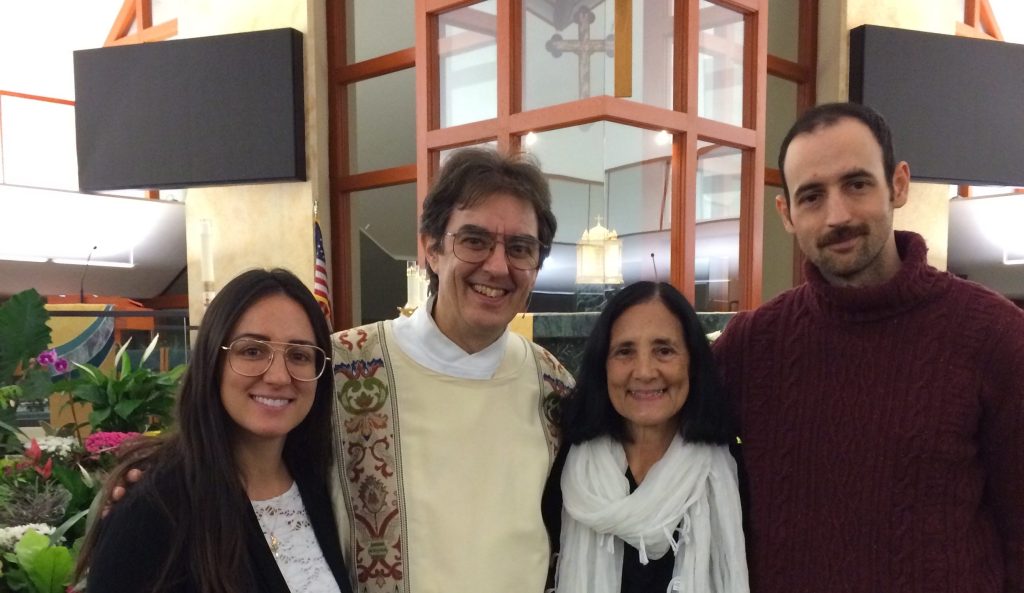
We are an Alleluia people because death does not have the final answer, Jesus does!
Mary of Magdala comes to the tomb during the wee hours of the morning while it is still dark and finds the stone rolled away. She runs to Peter and John to share with them the news, that: “They have taken the Lord from the tomb, and we don’t know where they put him” (Jn 20:2). Peter and John retrace the steps of Mary, running to find the tomb empty as well. All three are stunned because “they did not yet understand the Scripture that he had to rise from the dead” (Jn 20:9).
How can we blame them? Do we fully understand the reality and fact that Jesus has risen from the dead? Some make the conjecture today that Jesus did not really die, but woke up three days later, aching all over from the excruciating effects of the crucifixion. Others say that the accounts of the resurrection were mass hallucinations, or that the Gospel accounts of Jesus rising from the dead are mere myth. These propositions do not stand up to the fact that Jesus, fully God and fully man died, entered death, and conquered it. In so doing, he then entered a new life, a new reality. Jesus, in becoming the firstborn of the dead, was transfigured from our three-dimensional reality that we all know and experience, such that he now resonates at a higher pitch, in a higher dimensional reality. Jesus is the firstborn of the new creation!
All human history changed in that tomb because of this new fact of the resurrection of Jesus. How this happened is a mystery and seeking to understand, which is good, will fall short and be frustrated if we only approach the mystery of God in the same way that we tackle a problem to be solved. The Apostles and disciples of Jesus struggled to find meaning and understanding regarding how Jesus crucified was now gone from the tomb. They came to understand the mystery of the Resurrection, the same way that they came to understand the mystery that Jesus is fully human and fully divine. Understanding happened in their encounters with Jesus. The mystery of the Resurrection is not a problem to be solved, but a person to encounter, a relationship to embrace, as it was for the Apostles and is so for each of us.
Faith seeking understanding is grounded in having an encounter with a person, Jesus the Christ, the Son of the Living God. Pope Francis writes about this on page nine of his Joy of the Gospel: “The joy of the Gospel fills the hearts and lives of all who encounter Jesus. Those who accept his offer of salvation are set free from sin, sorrow, inner emptiness and loneliness.”
Easter Sunday is the day where this joy first truly became possible, and this joy is needed now more than ever. And yet, as we read in our gospel, Easter Sunday did not begin with a full brass band and banners waving. For: “On the first day of the week, Mary of Magdala came to the tomb early in the morning, while it was still dark and saw the stone removed from the tomb” (John 20:1).
Mary reacted as most of us would. She sought some point of reference. The stone was opened, someone must have stolen the body. When we encounter a mystery, we seek to understand. Jesus, time and again, transcends our comfort zones and the parameters of our finite attempts to seek meaning. When we are willing to seek with our reason, open our minds and hearts to encounter the reality beyond our reason; when we allow ourselves to wonder and allow ourselves to encounter Jesus; our Fridays of pain, suffering, and grief become good, our Saturdays of silence and the between times become holy, and the Resurrection is the fulfillment of the promise that we do not suffer and believe in vain.
Jesus who is the Christ, has truly risen – Alleluia, Alleluia!!!
We are an alleluia people. God has not only loved us into existence, but through his Son, we have also been loved into the promise of eternity, where suffering and death will be no more! A promise I believe even more strongly on this Easter, as I celebrate my fifth one without JoAnn. I hope that she is now celebrating along with Mary and the saints and that she is now where we will one day be rejoicing, because Jesus has opened up heaven for us in the humanity he assumed, death that he conquered, and his Resurrection that we celebrate today! Alleluia!
May God bless each of you and fill you with the peace, joy, and love of Jesus his Son! Happy Easter!!!
————————————————–
Photo: Our last Easter vigil together, April 20, 2019.
Francis. Evangelii Gaudium, Joy of the Gospel, Libreria Editrice Vaticana. Frederick, MD: The Word Among Us Press, 2013.
Link for Mass readings for Easter Sunday, March 31, 2024

Jesus invites us to share in his divinity.
“Here I am” (Genesis 22:1)!
Abraham said this twice in today’s account from the book of Genesis. The first time was when God called Abraham to offer his son, Isaac, up as a sacrifice and the second time was when God’s angel called out to Abraham asking him to not offer his son as a sacrifice.
Hopefully, we have not become dulled by hearing this story before. This is a horrific act that God is requesting of Abraham. This would not be a natural response from our place of time and experience. Yet, for Abraham, he would have known of those who would have killed their children by offering them to the gods of the people of the land of Canaan. God meets Abraham in his own history of time and place.
God reached out to Abraham in a way that he would understand, but that still did not lessen the sacrifice that Abraham was willing to make. He and his wife Sarah were childless for decades, and God promised to give them a son way beyond child bearing years. God followed through on his promise and now God was asking Abraham to give Isaac back as a “holocaust”, a full burnt offering. Despite the anxiety and trepidation that Abraham must have experienced, he heard God’s call clearly and followed without hesitation. He left the next morning.
Isaac also had a part to play. We do not know his age, most likely a young teenager, but we know he is old and strong enough to carry the wood for the burnt offering on his back. Isaac was carrying the wood upon which he would be offered up. Isaac allowed himself to be bound with no account of his resistance to his binding and placed on the wood where he would give his life. He was clearly strong enough to stop his elder father and get away but accepted that he would be the sacrifice. God, through his angel, stopped Abraham from doing what God himself would do with his own Son.
God sent, his only begotten Son to become human and live the fullness of a human life. Jesus, like Isaac, would carry the wood of his sacrifice, most likely the cross beam of his cross. He also passively submitted to those nailing him to the cross. As St. Paul wrote, “He who did not spare his own Son but handed him over for us all” (Romans 8:32) was no generic or abstract sacrifice. God our Father sent his Son to die as a sacrifice by taking upon himself the full weight of each of our individual sins. Jesus was willing to follow the will of God all the way to his death.
How often have we taken the time to ponder this reality, that God was willing to give his only begotten Son for us and that Jesus was willing to give his life for us? Not in some abstract way, but personally. Jesus died for you and for me. Jesus seeks an intimate relationship with us, just as he did with Peter, James, and John.
In today’s gospel account, Jesus took these three up the mountain and revealed his divine personhood to them. This, as his miracles, was to reveal a foretaste of the fullness of the coming kingdom. The transfiguration was also an opportunity to empower and strengthen Peter, James, and John for the trial to come in which Jesus would willingly, like Isaac, go to be sacrificed. The only difference is that Jesus would not be spared, he would give his life on the Cross for us all. Jesus has given us everything of himself, holding nothing back.
The willingness of Jesus to give his life, expresses the fullness of our theological virtues: faith, hope, and love. He had faith in his Father, he trusted his Father. Even though he did not fully understand in his humanity the fullness of what his death meant, he had faith and so said, not my will but yours. From that faith in his Father, he had hope and could continue with allowing himself to be arrested, beaten, tortured, and crucified. Even on the Cross when he felt the separation between himself and his Father, he still had hope that God would bring about a greater good.
That greater good would become our salvation and the salvation of the world. Jesus gained for us access to the trinitarian communion of Love. God was willing to sacrifice his only Son, his Son was willing to be sacrificed, so that we human beings made in our Father’s image and likeness could be restored to our original glory by the love shared between them, God the Holy Spirit. The glory of the Lord, that Jesus revealed to Peter, James, and John is now available to us because Jesus became one with us in our humanity, to suffer and die for us so that we can experience his divinity.
We participate in the transfiguration of Jesus and enter into the trinitarian communion of love that each of the three persons of the Trinity share when we are willing die to our fallen and selfish nature and choose to love one another as God loves us.
The three pillars of Lent, prayer, fasting, and alms giving, all help us with this process. As we choose to make time to pray, we are putting God first by answering his invitation to do so and spend time with him. When we fast from food and activities, we come to see that there is more to us than just the physical. The physical is good, but without temperance and restraint we can slip into attachment and addiction. Fasting can free us from both. As we give alms, we choose to see other’s needs above our own, and are willing to provide for them. We are also better able to discern between our needs and wants. In doing so, our sacrifice becomes tangible, and we are putting our love into action.
We participate in these three acts of penance so we can better see the temptations and diversions of this world that are leading us away from God and who he calls us to be. As we are able to repent from and remove those obstacles, we can, like Abraham, Moses, Elijah, and Jesus, better hear the word of our Father and act upon it. Hopefully then, each Lent we grow more in the gifts that God has given us at our Baptism: faith, hope, and love for God, ourselves, and each other. In this way, throughout the year, we will better be able to hear God call us, and we can say without hesitation, “Hear I am!” And then do his will.
Photo: Taste of the transfiguration during evening prayer Saturday evening, St. Vincent de Paul Chapel, St. Vincent de Paul Regional Seminary, Boynton Beach, FL.
Link for the Mass readings for Sunday, February, 25, 2024
 Spiritual Stepping Stones