When it is time to mourn, we weep, and when time to celebrate, we dance!

“To what shall I compare the people of this generation? What are they like? They are like children who sit in the marketplace and call to one another, ‘We played the flute for you, but you did not dance. We sang a dirge, but you did not weep'” (Lk 7:31-32).

Jesus convicted those who held a narrow view of who was a true follower of God by sharing the image of a flute being played and no one was dancing, thus in times of joy, there was no celebration, and when the funeral dirge was sung, they did not weep, they did not mourn. Jesus then tied the analogy to his present condition where there were those who did not accept the ascetical practices of fasting and the call to repentance from John the Baptist, nor did they accept the inclusive table fellowship of Jesus.

In our own time, we have encountered those that are not pleased beyond their own narrow focus and who suffer from tunnel vision. Anything that hints at even a slight variation of change sends tremors of discontent. If we are honest, we all have some resistance to change, but if we are to authentically live the Gospel, St. John Henry Cardinal Newman’s quote is an apt barometer: “To live is to change and to be perfect is to have changed often.”

JoAnn embraced change much more easily than I. She consistently helped me, even when I didn’t feel it was helpful, to resist getting too comfortable. She did so again in “changing her address” five years ago to a heavenly zip code. Working through the reality of her death and the new adventure of two years of seminary were two big changes that I embraced with a lot of help, which has prepared me well for my first few months of priesthood.

It would have been easier to seek an early retirement and live a quieter life, but that was not a part of God’s plan. When most my age are thinking of or beginning an early retirement, I decided to embrace the invitation to change again and embark on a new adventure. I am very happy that I did.

The Church, at her best, is a balance between the rock foundation of our core beliefs, such as is outlined in the Nicene Creed, which provides stability, assuredness, and identity, while at the same time we need to be open to the life-giving inspiration of change from the Holy Spirit. Each of us in each generation must make the Gospel relevant. We must enter into the tension of remaining true to what we believe while being flexible to allow the Holy Spirit to lead us. In this way, we can avoid molding the Church into our image, and instead be conformed into the image and likeness of Jesus, who is the embodiment of Love, the Trinitarian communion of which we profess in the Creed.

We can live a life of joy when we resist the temptation to hold on too tightly. Nothing and no one in this world lasts because all is finite. When it is time to mourn, let us weep, and if we do so well, when it is time to embrace life we can do so with joy and we can dance again. What lasts as St. Paul says is love. God is love and God created us out of an abundance of his love. When we are willing to surrender our will to the Father, our heart and mind to the Son, and allow our soul to be led by the Holy Spirit, we can better embrace change and better live our life to the full!


Photo: On my first day in the sanctuary of Holy Cross Catholic Church, Vero Beach, beginning my new journey with some quiet time with Jesus, Mary, and JoAnn.

Link for the Mass readings for Wednesday, September 18, 2024
Let us share the compassion we have received from Jesus.

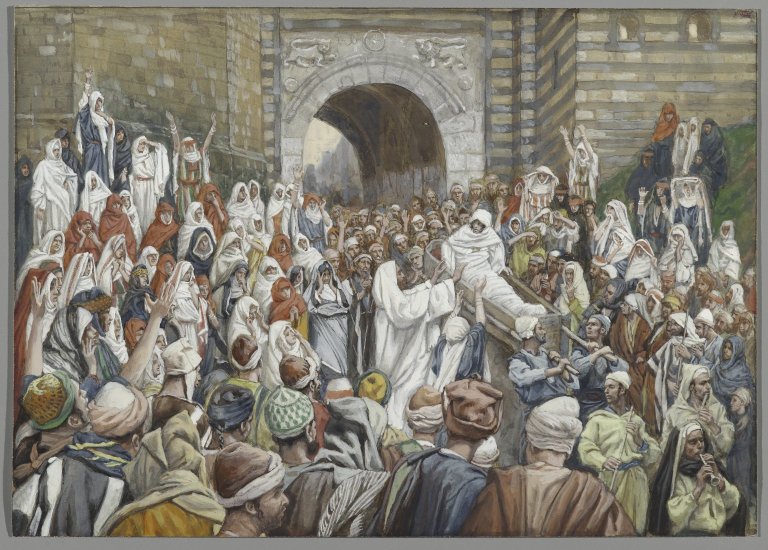
When the Lord saw her, he was moved with pity for her and said to her, “Do not weep.” He stepped forward and touched the coffin; at this the bearers halted, and he said, “Young man, I tell you, arise” (Lk 7:13-14).

Jesus’ immediate response to this woman was pity or compassion. The original Greek word used was splanchnizomai, meaning that Jesus was moved from the very depths of his bowels. The emotional depths to which Jesus was moved to reach out and help the widow of Nain, shows us his humanity. Jesus’ healing of the widow’s son, bringing him back from the dead, shows us his divinity. The entire event shows us the best of who we ought to aspire to be as his followers.

Instead of fear, judgment, prejudice, or indifference, may we instead follow the lead of Jesus and seek to understand, to place ourselves in the shoes of the vulnerable, misunderstood, and on the margins. May we start with those we interact with everyday in our families, our school and workplaces, our communities and places of worship. May our hearts, not be hearts of stone, but hearts of flesh so to be moved from the very depths with the same compassion of Jesus toward those, who, like the widow, are vulnerable, at-risk, and on the peripheries.

We as the Church, the Body of Christ, need to be more welcoming, hospitable, willing to walk with others and to share in their journeys. We can do this simply in our day-to-day interactions with one another. Whenever we encounter another, may we resist any judgment, prejudice, or indifference and instead be willing to be moved by compassion and concern and be present.

Listening and hearing each other’s stories, needs, and engaging in conversation are helpful in opening up relationships. Taking the time to smile, to listen, to respect one another even when disagree and being willing to work through conflicts helps us to build and strengthen relationships.

Jesus looked upon those he interacted with as family. This widow who was weeping as she looked upon the dead body of her son was not a stranger to Jesus, but a sister in pain. Jesus was moved with compassion and immediately came close to help. He met and engaged with each person and treated everyone he came in contact with in the same way, as human beings.

He loved and showed them compassion and invited them to be free of that which bound them to their slavery to sin. He came to remind all of us of who and whose we are as his Father’s beloved children. “For whoever does the will of my Father in heaven is my brother, and sister and mother” (Mt 12:50).

JoAnn often prayed for God to reveal to her one person that she could help each day. When we ask, God will guide us and grant us greater awareness of those we can help, and he will give us the means to be present and to assist. We are not called to raise the dead, while we can lift each other’s spirits, but we are called to have compassion for one another and see each other as brothers and sisters, not as somehow less or other, but with dignity.

May we allow the love of the Holy Spirit to stretch us beyond our comfort zones, beyond our limitations, so that we may experience a softening of our hearts and be willing to be moved by compassion. May we regularly and with more intention breathe and be more patient, understanding, and kind. May we be willing to love more, to will each other’s good with each person we engage with so that each of us are better for having met.

———————————————————-

Painting: “The Resurrection of the Widow’s Son at Nain” by James Tissot, 1890, online collection from the Brooklyn Museum

Link for the Mass readings for Tuesday, September 17, 2024

Healing happens when we are willing to see each other as human beings.

Our account from Luke today represents a wonderful picture of collaboration and harmony. The centurion, a Gentile – non-Jew, heard that Jesus was near and appealed to Jewish elders to seek out Jesus to invite him to his home to heal his slave. As Jesus was on the way, the centurion apparently had a change of heart, concerned about his sinfulness and did not want to trouble Jesus. He sent his friends to Jesus with the request to heal his slave with his word. Jesus was amazed: “I tell you, not even in Israel have I found such faith” (Lk 7:9). The slave was then healed.

Aside from the fact that no one seemed to have a problem with slavery, certainly not uncommon in the Ancient Near East, everyone involved, the centurion, his friends, Jewish elders, and Jesus, were all working together to make this healing possible. The centurion actually showed concern, not indifference for his slave. Gentiles and Jews, occupier and occupied, collaborated with one another, and Jesus did not hesitate to answer the request of the centurion, a representative of the Roman occupying army.

This Gospel scene is certainly worth meditating upon.

The centurion was aware, and he sought help for his servant who was ill and in need of healing. The interesting point is that he sought help from those he was in a position to oppress. He went to those of a different race and religious belief. This Gentile centurion asked help from the elders of the Jews. The elders recognized the need of one of their oppressors and reached out to Jesus for help. Everyone in this account did not hesitate to play their part to help a servant.

Are we willing to see, hear, speak up, and seek help for those in need around us, no matter who they may be? Can we resist apathy, indifference, and prejudice, and instead, keep our ears, eyes, and hearts open to the vulnerable among us? Are we willing to see each other as people created in the image and likeness of God? Will we treat those we encounter with dignity and respect and be willing to collaborate and work together for the good of those like us, as well as those who are different, in little ways with great love today as Jesus did, one person at a time.

When we do so, we are at our best. We are the hands and feet of the Body of Christ.

—————————————————————————————–

Photo: May we reflect the light of Jesus in our corner of the world as we resist the temptation to feed division and dehumanization and seek instead to promote healing and reconciliation, grounded in God’s love for the dignity of each human person.

Link for the Mass readings for Monday, September 16, 2024

Let us listen carefully to, pray and meditate upon the word from the Word of God.

Since diving deeper into John Chapter 6 about a month ago, the refrain, “This saying is hard, who can accept it?” (John 6:60) continues to rise up with almost every reading from the weekday and Sunday Masses since then. To read, listen, meditate upon and pray with, the teachings of Jesus is not easy, especially if we want to also put them into practice into our lives. Which means deciding as to whether or not we want to be his disciple.

We may have been tempted to not listen closely while at Mass so not to recall anything that we have heard, we may let it go in one ear and out the other, or we may actually hear God’s word, and then when it is challenging, rationalize why we don’t have to follow it in today’s day and age.

My invitation is to go back and read each of the readings from today’s Mass carefully, slowly, prayerfully, and meditate upon them. This we are invited to do with each of God’s word proclaimed to us or in our own time of prayerful reading. The words we hear or read are not just a dead letter, they are not just an account of history, they are not just lessons to be shared, they are God’s living word in which we are invited to take in, chew upon, struggle with, and allow ourselves to be changed, to be transformed.

The appropriate response to hearing God’s word that we have received comes from the first line of Isaiah: “The Lord GOD opens my ear that I may hear; and I have not rebelled, I have not turned back” (Isaiah 50:5). As with the deaf man who Jesus healed last week, God seeks for all of us to hear his word and when we are willing to allow him to open our ears to hear, he will do so, and when we hear his word may we, like Isaiah, not rebel but receive his word.

Because Isaiah did so, he received the help of the Lord GOD.

Jesus not only healed the man of his deafness, but he also continually strove to heal the spiritual ears of his disciples. But we all have the freedom to choose. We can rebel and walk away as did so many after hearing Jesus’ Bread of Life discourse, and even when we don’t understand, we can answer with Peter, “Where else are we to go? You have the words of eternal life” (Jn 6:68).

Why ought we listen to this man who died almost two thousand years ago? In a sense, Jesus asked his disciples the same question when he asked them, “Who do people say that I am?” and then directly to his disciples: “Who do you say that I am?” Peter answer for them, “You are the Messiah” (cf. Mk 8:27-29).

In Matthew’s account he shares more of Peter’s response. “You are the Messiah, the Son of the living God” (Mt 16:16). Peter got it right, almost. Once Jesus saw that Peter received this insight from the Holy Spirit and was able to articulate it, Jesus shared with them all what kind of Messiah his Father sent him to be. He was not to be in line with any image the disciples thought of. He was more aligned to the suffering servant that Isaiah prophesied about.

As soon as Jesus began to speak about his suffering and being killed, Peter moved him away and rebuked him and Jesus without hesitation called Peter out: “Get behind me Satan.” Satan is the father of lies, the one who opposes. In one breath, Peter was listening to the guidance of the Holy Spirit and in the next he was listening to the words of the enemy. Jesus was making a clear distinction for Peter, the disciples and us. Whose voice we are to listen to?

Why are we to listen to Jesus’ words, even when they are hard, even when they are challenging? We listen to him because he is the Son of God, the second person of the Holy Trinity, the Son of God incarnate. He came not to condemn us but to save and free us from the sin of the world. Jesus came to open our spiritual ears so that we can hear the Holy Spirit, so that we may discern clearly between the voice of the enemy which leads us to death and the words of God that leads us to eternal life.

And if we want to be his disciples, we are invited to hear anew: “If any want to become my followers, let them deny themselves and take up their cross and follow me. For those who want to save their life will lose it, and those who lose their life for my sake, and for the sake of the gospel, will save it” (Mk 8:34-35).

“This saying is hard, who can accept it” (Jn 6:60)? Resist the temptation to water this invitation down. Instead, let us be like Isaiah and Peter, let us implore our loving God and Father to open our ears that we may hear his word, receive his word, breathe, pray and meditate upon his word and put what we have received, like James guided in our second reading, into action.

How we take up our cross, how we lose our life for Christ, how we surrender is unique to each of us. God meets us where we are and leads us. He shines his light just enough so that we can see two steps ahead. When we take those steps, he will shine a little more of his light ahead of us.

How do we take up our cross and lose our life for Christ? We begin with our willingness to listen and hear the living word of God daily and allow it to transform every aspect of our lives. Such that God’s word becomes our own in our lived experiences. We start with a posture of humility that recognizes that we need and depend upon God for everything, and he desires nothing less than all our mind, heart, and soul.

We begin to deny ourselves and take up our cross when we make the words of Mary our own: “Behold, I am the handmaid of the Lord, let it be done to me according to thy will”(cf. Lk 1:38). And the words of Jesus, “Not my will but yours be done” (cf. Lk 22:42). The words of St. Thomas, “My Lord and my God.” (Jn 20:28) and St. Peter, “You are the Messiah. The Son of the living God” (Mt 16:16).

As we say these words to ourselves, as we meditate and pray with them, as we bring them into our daily experiences, as we say them before entertaining any thought, speaking any word, and following through on any action, we invite God’s word into our being so that we may be healed of our blindness and our deafness; so that we will hear the Holy Spirit speak and guide us to understand how to receive and put Jesus’ teachings into practice and so reflect his light into the dark places of our hearts and into the dark corners of our world in the unique ways that God invites us.


Photo: Icon of Christ from the 6th century in St. Catherine’s Monastery in Sinai Peninsula in Egypt.

Link for the Mass readings for Sunday, September 15, 2024

Behold Jesus on the Cross and be healed.

“In punishment the LORD sent among the people saraph serpents, which bit the people so that many of them died” (Numbers 21:6).

What kind of God would bring poisonous snakes upon his children? When Jesus taught his disciples about prayer didn’t he say, “Is there anyone among you… if a child asks for a fish, will give it a snake? If you then, who are evil, know how to give good gifts to your children, how much more will your Father in heaven give good things to those who ask him” (Mt 7:10).

Is God a loving Father or a harsh taskmaster?

He is a loving Father who not only wants his children to live but to live life to the full. God freed his people from slavery and was not only leading them to the promised land but also providing for and protecting them on the way. And yet, the people consistently grumbled and then rose up against Moses.

God chose to share with them a stark image of their choice of opposition to him by sending the serpents. The imagery of the serpent would have come to mind quickly to the people. For it was the serpent who tempted Eve and Adam and led them to their Fall. As St. Ephrem the Syrian (306-373 AD) wrote: “The serpent struck Adam in paradise and killed him. [It also struck] Israel in the camp and annihilated them” (Word on Fire Bible, p. 643).

We as Christians interpret the serpent in Genesis as Satan, which in Hebrew means adversary or opposer. Those of the people who rose up against God opposed him as Satan did. God revealed to them who they were serving in their rebellion and also showed them that if they rejected God and his love, protection, and provision, what the consequences to that choice would look like. Apart from God they will die. Trusting in and following God, even when the desert held no promise, they will live. “This particular punishment is another way of insisting that negativity necessarily follows from rebellion against God’s will” (Barron, p. 641).

When the people saw their sin in opposing God, they correctly repented. Moses again interceded for them, and God provided the healing antidote. He guided Moses to place a bronze image of a poisonous serpent on a pole. All who then looked upon it, were cured. In seeing clearly what had led to their poisoning, they could renounce it and receive God’s mercy, forgiveness, and healing. “Somehow, seeing sin for what it is serves to disempower the hold it has upon us” (Barron, p 641).

Jesus, the divine Son of God becomes one with us in our humanity to reveal to us the path to participate in his divinity. He shows to us our own rebelliousness, pride, and sins that separate us from God. Jesus has not come to condemn us for our sin but to save us, to free us from our slavery to sin. Jesus took the sin of the world upon himself as he was lifted up on the Cross. As he shared with Nicodemus, “just as Moses lifted up the serpent in the wilderness, so must the Son of Man be lifted up, that whoever believes in him may have eternal life” (Jn 3:14-15).

This is why we celebrate the feast of the Exaltation of the Holy Cross this day each year. What was a wicked sign of oppression and horrific suffering has now become a sign for our salvation. As we look upon the crucifix, we are reminded of the suffering that Jesus bore. Jesus took upon himself “all the dysfunction of the fallen human race” (Barron, p. 642).

When we look upon Jesus hanging on the cross, we see death but also the path to eternal life when we are willing to renounce, repent, atone for, and seek forgiveness for our sins. For on that Cross is where Jesus died for each and every one of us, and in so doing conquered the sin and death brought into the world by Adam and opened up for us the door to eternal life through his resurrection.


Photo: St Mary Chapel, St, Vincent de Paul Regional Seminary, Boyton Beach, FL.

Link for the Mass readings for Saturday, September 14, 2024

Word On Fire Bible: The Pentateuch. Elk Grove Village, IL: Word on Fire, 2023.

We can become like Jesus.

Ordinary time in the Church calendar year is anything but ordinary. It is during this season, that the primary focus of the readings chosen from the Gospels are on Jesus’ life and teachings. By making time to read, pray, and meditate upon his word, and then putting what we have learned into practice we become his disciples.

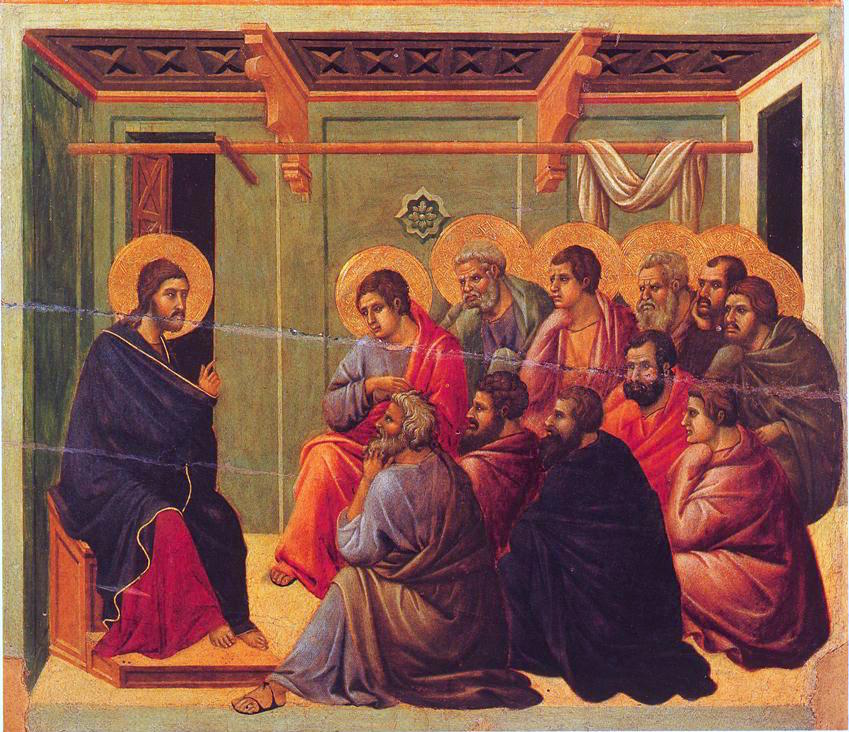
We get the word disciple from the Greek, mathētḗs, and Latin, discipulus, which both mean pupil. A pupil is one who learns from the teacher. And as we heard in today’s Gospel, Jesus is teaching his disciples that:“No disciple is superior to the teacher; but when fully trained, every disciple will be like his teacher” (Luke 6:40).

Who wouldn’t want to be more like Jesus? There are many ways to answer that question. Some possibilities come down what people’s experience of Christians have been, what their concept of Jesus is, and what they think about and decide to do with his teachings.

When we spend any time reading his teachings, we will come across some that are challenging. Just as when those who heard that Jesus is the true bread from heaven and that those who followed him would eat his flesh and drink his blood walked away. They had enough. Multiplying five loaves and two fish were one thing, but eating his flesh and blood was quite another. But the twelve stayed, for when Jesus asked them if they would leave also, Peter said, “Where else are we to go, you have the words of eternal life.”

That is the answer of a disciple of Jesus. Even when we may not understand, disagree, or don’t feel we are capable of putting into practice some of Jesus’ teachings, we can trust that what he is saying is the truth. They are not unreasonable and not impossible. We may not understand or be able to do them because we are incapable of understanding without insight from the Holy Spirit and cannot put them into practice on our own power apart from Jesus. Jesus is the Word, he is our life and the source of our strength and with him all things are possible.

Jesus has challenged us in our most recent daily readings to love our enemies and those who hate us, outlined how we will be happy by living out the beatitudes even though they may seem counterintuitive, and as he has shared today, that we are not to judge others. If we do not agree, do not feel we can, then we bring our struggle to Jesus. We ask him to help us understand how we can love our enemy, how we can forgive, and not judge. And bring to him those specific persons we call to mind.

When we trust in Jesus, are honest with him, and share where we are struggling with his teachings, while trusting in him as Peter and the other Apostles did, we will come to understand, be transformed, and grow in our relationship with him. Seeking out guidance from those who are living those teachings is also helpful. Even when we feel like we can’t love or forgive someone, as long as we are willing to invite Jesus to help us to resist judging, to love and forgive, he will do so through us, and we will make progress. We will learn from our teacher, be empowered by him, and become like him.


Painting: Christ Taking Leave of the Apostles by Duccio Buoninsegna

Link for the Mass readings for Friday, September 13, 2024

Loving our enemy is possible if we are willing to love each other as God loves us.

Jesus said to his disciples: “To you who hear I say, love your enemies, do good to those who hate you, bless those who curse you, pray for those who mistreat you” (Luke 6:27-28).

Certainly, this is as hard of a teaching as any of us have ever heard, yet this is the path to peace. Peace that is not just an absence of violence but a peace that is grounded in mutual respect, unity, and dignity of the human person. There are not enough examples or models in our present day and age for us to see this Gospel being put into practice. There is a consistent engagement in rhetoric, language, and outright hostility that promotes dehumanization, division, contempt, hatred, and vileness. These voices are not only on the rise in our secular and political discourse but also have become a growing din within the Church as well.

Nor do I believe in the temptation of the pendulum swing that would threaten to counter and go the other way, where what we think and say has the substance of milk toast, meaning, that we are so careful not to offend that we don’t share our ideas or what we truly believe to avoid conflict. Staying away from hot button issues and the taboos of talking religion and politics is not a way to bring about peaceful coexistence nor solve important issues either.

Neither an overly aggressive nor a bland tolerance of engagement is what Jesus is presenting in today’s Gospel. Jesus is inviting us to proclaim what we think and believe but in our interactions with one another, the primary starting point is respecting the dignity of the other person. We can dialogue and disagree without it devolving into disparaging, demeaning, belittling attacks, and shouting at and over people. We can agree to disagree, while still stating clearly what we believe, even boldly and passionately, while at the same time being willing to listen and allow others do the same. In this way, we each can be heard, we can exchange ideas, and quite possibly learn and grow from our encounter with one another, and work together for the common good.

We need to learn again that it is truly possible to engage in a constructive argument. We begin to do so when we are willing to recognize our interconnectedness and our common dignity. We can love our “enemy” by choosing no longer to make another person into a monster.

Jesus offers a different way in today’s Gospel, a hard teaching and difficult one to follow. In inviting us to love our enemy, Jesus is calling us to love one another as he loves each and every one of us, without condition. Love is no mere emotion or sentiment but an intent to will the good of each other, even and especially when there is some attribute(s) that we do not like about a person.

If we want to see a change in our divisive and polarized time, we need to be willing to resist dismissing the other person as our starting point, we need to resist labeling them as other. We are asked to encounter one another, one person at a time, to sit down, talk, and listen, and love one another. We can each share what we believe openly and honestly, without watering down what we believe while allowing another to do the same.

Easy, no; possible, yes; more so when we are willing to allow God to open our hearts and minds to see each other as he sees us: as his beloved children.

——————

Photo: Peace can bloom if we are willing to be transformed by God’s love. Saw this flower with leaves shaped as hearts a last week on my Rosary walk.

Link for the Mass readings for Thursday, September 12, 2024

Praying today

Praying today for those who lost their lives on September 11, 2001. Praying for those first responders who gave their lives seeking to save others as well as those who lived and are suffering from the physical, emotional, and psychological effects of that day. Praying today for those still grieving and mourning the loss of those they love.

Praying for the people of our country and our leaders at the local, state, and federal levels. Praying that we see each other as human, as fellow citizens that can embrace our differences and diversity, praying that we can work together to welcome the stranger, provide for the various needs of each other in every area of our nation, urban and rural, and seek for ways to empower and lift each other up. Praying that each person is willing to play their part no matter how small so that we can be one nation under God united in a common purpose that respects the dignity of everyone from the moment of conception throughout every step of life until natural death. Praying that each of us may learn to be better, learn to forgive, learn to heal, and learn to breathe, rest, receive, and abide in God’s love and from that space think, speak, and act.

Praying.


Photo: Veteran’s Memorial Island Sanctuary where I will often walk and pray.

Material happiness is fleeting but the joy fueled by Jesus is eternal.

Blessed are you when people hate you, and when they exclude and insult you, and denounce your name as evil on account of the Son of Man” (Lk 6:22).

The Beatitudes are contrary to much of what too many of us are tempted by when seek our satisfaction, security, and fulfillment in what St. Thomas Aquinas calls the substitutes that we put in place of God: power, fame, wealth, and pleasure. What is more, we may resist Jesus’ teachings because we do not agree, there are behaviors we may not be willing to let go of, we don’t understand them, or we find them too hard.

In today’s Gospel account from Luke, Jesus taught his disciples how to attain the kingdom through five blessings and four woes. Jesus’ message is a universal message, an invitation to and for all who have ears to hear and a heart open to receive. These teachings though challenge us to place our trust, not in the things of this world but in Jesus. That which is finite and material are fleeting and passing and cannot fulfill us. We will always be wanting more and we are never satisfied. In placing our trust in Jesus, he will lead us to his Father, and it is in building that relationship that we will experience true happiness and fulfillment for the deepest core of our being is made to be in communion with God and only he can fulfill our deepest need.

This is an inviting offer, yet when putting Jesus’ teachings into practice in our everyday lives we will receive opposition from those in our lives and from ourselves from within. Another word for blessed is happy. Can we really be happy if we are as Jesus said, poor, hungry, weeping, and when people insult and hate us? Yes. When we seek to live out these beatitudes with the help of Jesus, we will find that we are indeed happier when we are not attached to material goods, when we are more moderate in our consumption, and when we are not attached to outcomes as we want them fulfilled and when we are not seeking immediate gratification. We will experience much more joy and freedom if we are not gauging our every thought, word, and action based on what others think and instead be free to live our lives by following God’s will.

To be blessed, happy, and fulfilled in this life can be fleeting, like trying to catch the wind, if we seek to do so by acquiring more material things and having things our way as we want it, when we want it, on our terms alone. We will experience true happiness and deeper joy when we are willing to let go of our attachments to the things of this world and instead, place building a relationship with Jesus as our primary practice.

If we are serious about being his disciples, then a good place to start is learning and living the beatitudes. This is no easy task but as we come to better understand what they require, we are willing to let go and allow the Holy Spirit to heal and work through us, “we will rejoice and leap for joy” (Lk 6:23)! Joy because we can experience the good things that God wants to give us.

When we can see the difference between God’s gift of grace, the very gift of his life he wants to impart in us, and the apparent glittering of goods and false truths we have been seeking to provide for our security and foundation, we will be less apt to be ensnared by them. Slowly and surely, step by step, making time each day for prayer, reading and meditating upon what we learn in scripture, struggling with them, yet trusting in Jesus and putting them into practice, we will experience the love of Jesus, the eternal source of our joy, and we will drink from the well that never runs dry!

————————————————-

Photo: Fireworks this past July 4. They have passed, but the joy in serving at Holy Cross continues to grow!

Link for the Mass readings for Wednesday, September 11, 2024

As we pray consistently with Jesus, our lives will change.

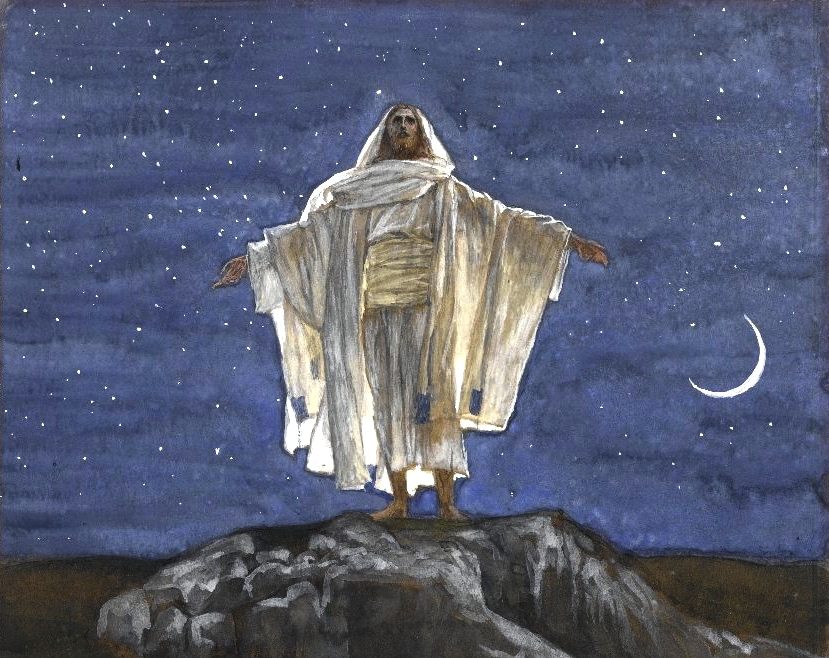
Jesus departed to the mountain to pray, and he spent the night in prayer to God (Lk 6:12).

In the midst of a busy ministry, Jesus spent time alone with God in prayer. In Luke’s Gospel, Jesus often did so before making important decisions, as in today’s reading that recorded the choosing of his Apostles. Prayer is an important, foundational principle to experiencing and knowing God as well as discerning his will for living a fully human life.

The Mystery of God is not a problem to be solved. In our language today, we often use mystery and problem interchangeably, as, “I lost my keys, it is such a mystery.” Strictly speaking, the loss of keys is a problem that can be solved. We can backtrack our steps, and through a process of elimination, the problem becomes smaller until we solve the whereabouts of the missing keys.

We cannot solve or prove God exists as if he is a problem to be solved. This is because God is not a being, not even the supreme being. God is a mystery that transcends any finite dimension of reality. We have nothing to measure him by, we cannot prove his existence, nor can we solve him as we would a problem.

Yet we can come to know God intimately just as Jesus did. Even though God is transcendent, beyond our reach and comprehension, he is at the same time closer to us than we are to ourselves. We come to know God through his invitation, and as we enter into the mystery of his reality through developing a relationship with him, as we come to know him. He does not become smaller, but vast, always beyond our comprehension and reach. His mystery is luminous as if we were in a completely dark room and someone turned on and shined a flashlight into our eyes. We wince from its brightness, yet in time, our eyes adjust and we eventually are able to see what was beyond our ability apart from the light. Jesus wants us to experience and embrace the mystery of the radiance and warmth of his Father’s light and love.

Jesus called each apostle by name. He calls us by name too. When we accept the call to be a follower of Jesus, when we are baptized, receive our first Holy Communion, and are confirmed, when we participate in the Mass at least weekly and Confession regularly, when we pray, read the Bible, and serve others, our lives will no longer be the same.

We will begin to experience the life of Jesus within us. We will begin to see also what is incompatible. What thoughts and behaviors we may have allowed for ourselves in the past, in the light of Christ, we now see for ourselves that which is no longer acceptable because it separates us from the love of God. We come to see our lives apart from God and with God. We are given the freedom to choose death or life.

Jesus meets us in the chaos of our lives and invites us to something better, a life that is real. Jesus loves us in this moment and does not lower the bar but empowers us to reach the height of his truth and divine law. Jesus is there for us and we remain close to him when we are consistent in prayer, in reading and meditating upon and putting into practice his word. Breathe upon breathe, day after day, we will be drawn ever deeper into the mystery of the Trinity and experience the intimacy of communion and relationship with God that we have been created for.

————————————

Painting: James Tissot – Jesus Goes Up Alone on a Mountain to Pray, 1886-1894

Link for the Mass readings for Tuesday, September 10, 2024