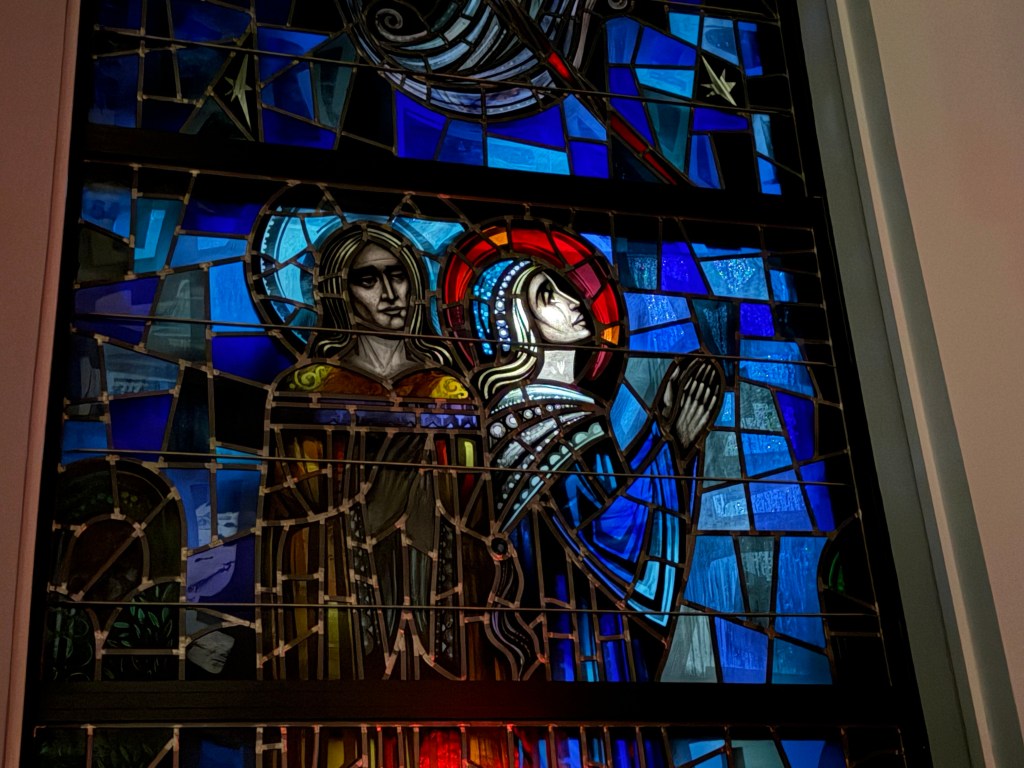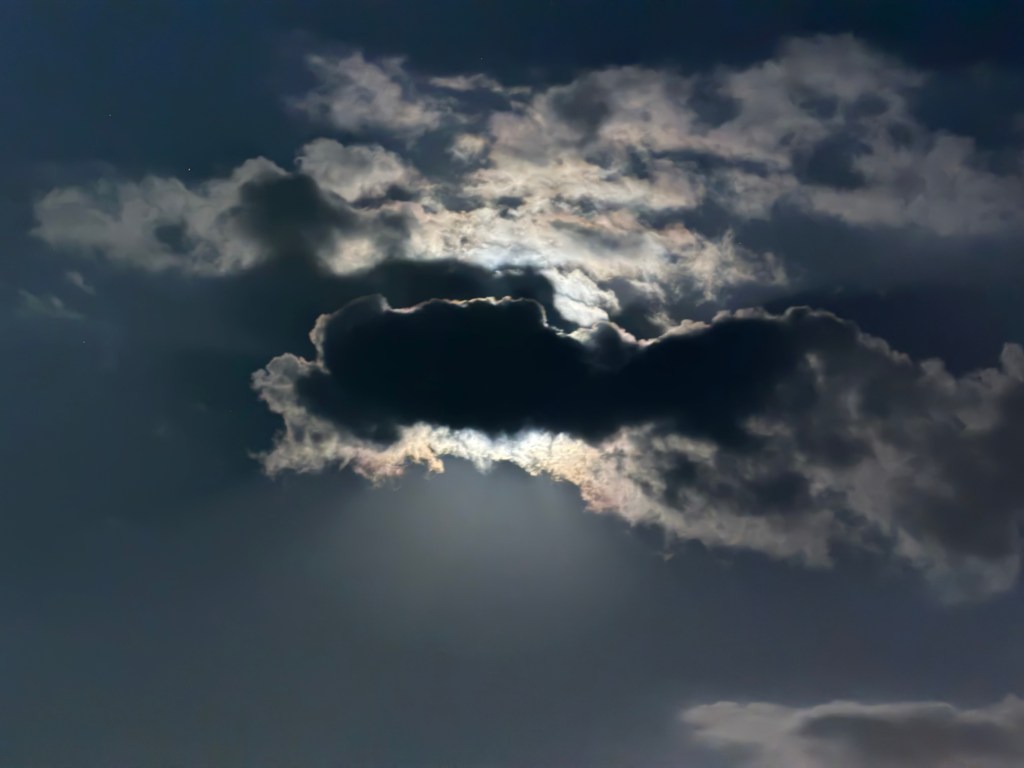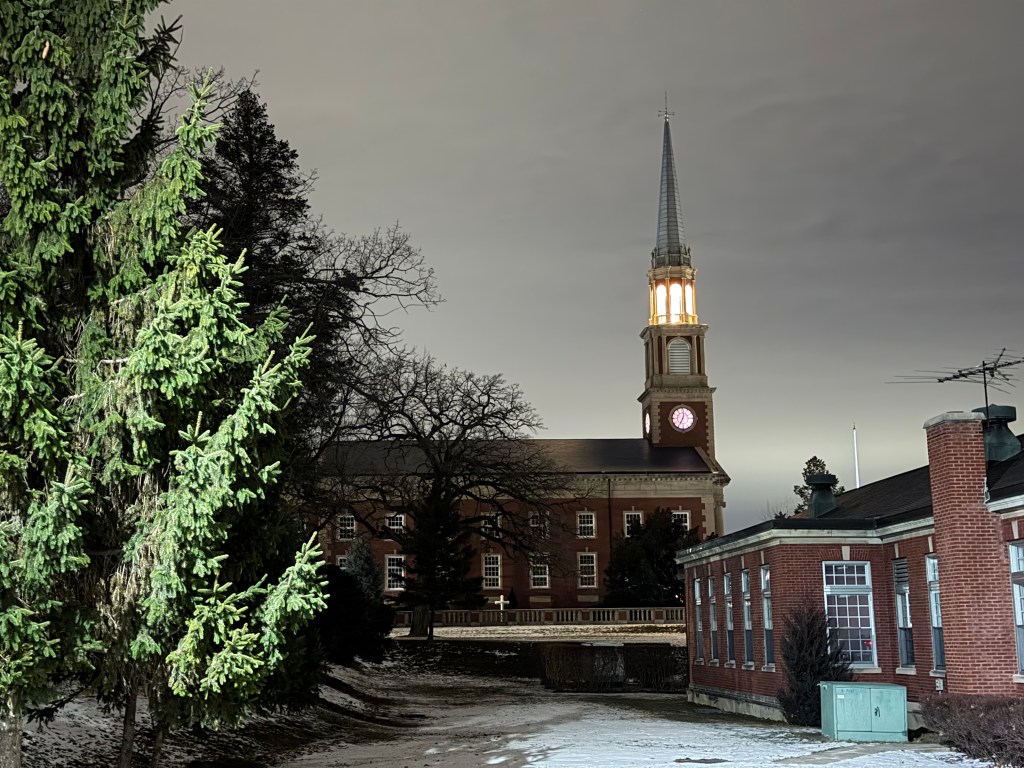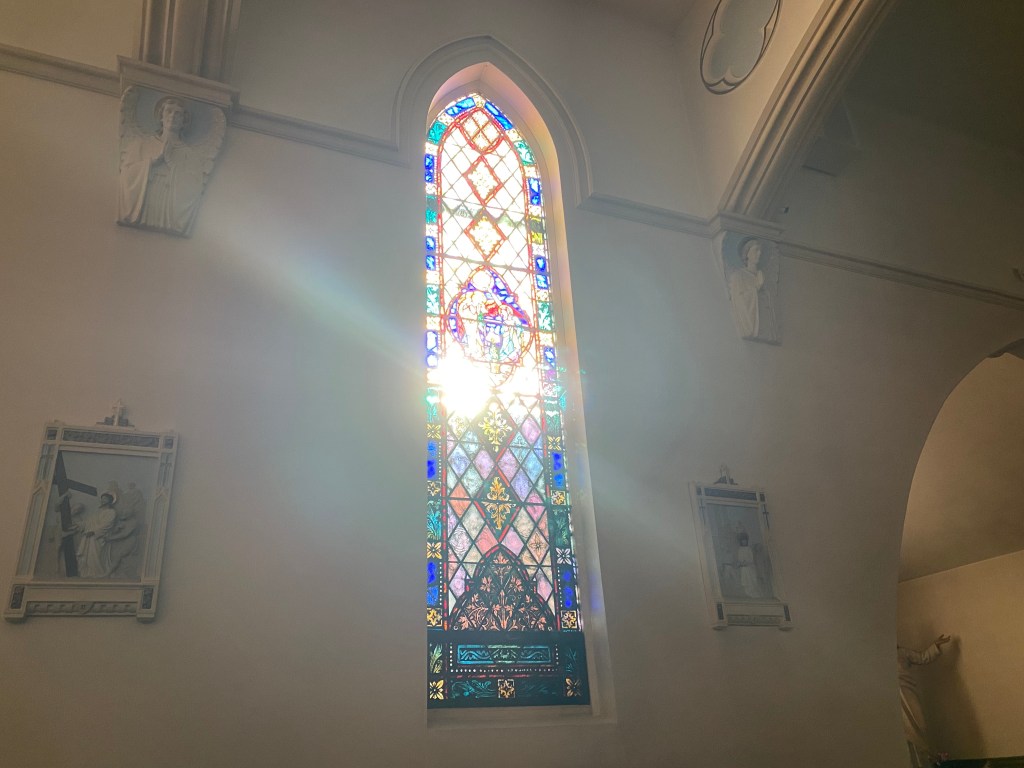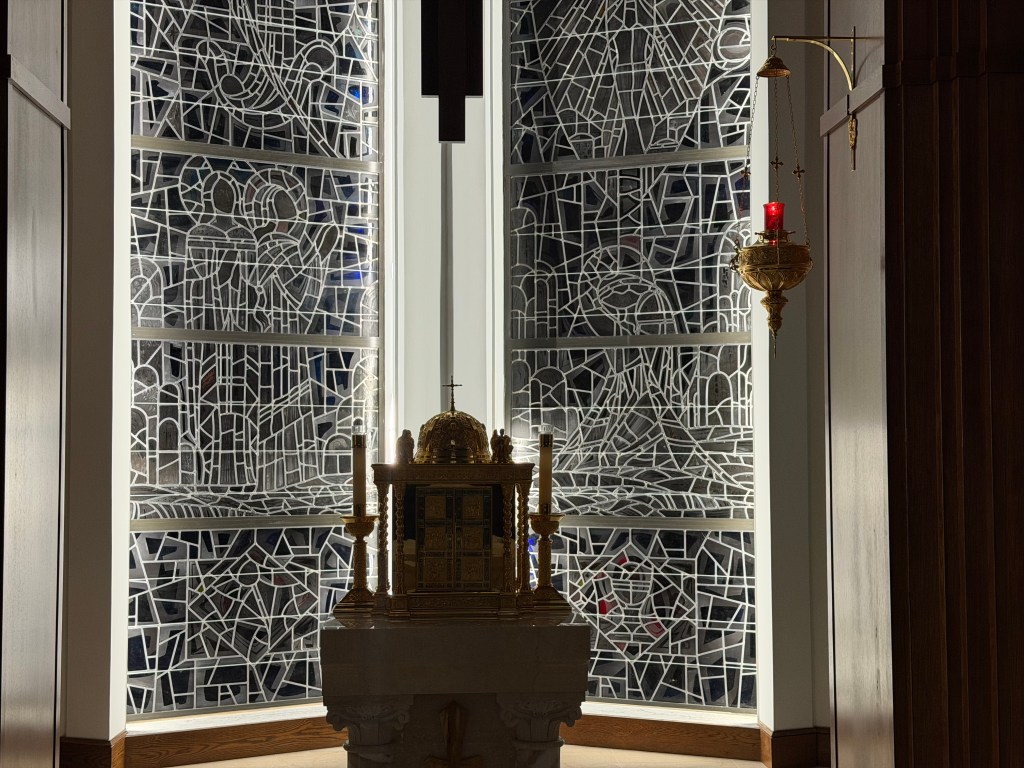
Surrendering to Jesus, we will experience more of his presence, light, and love.

John the Baptist sent his disciples to Jesus to ask him whether or not he was the Messiah. Jesus answered their inquiry with the concrete expressions of what was happening. “Go and tell John what you hear and see: the blind regain their sight, the lame walk, lepers are cleansed, the deaf hear, the dead are raised, and the poor have the good news proclaimed to them. And blessed is the one who takes no offense at me” (Mt 11:4-5).

The ministry of Jesus was and continues to be today one of personal contact. Christianity is not merely a philosophical idea or even a particular theology. It is a faith tradition of an encounter with the Messiah, the Christ, the Son of the living God. We are walking through Advent to remember again that a light has shone in the darkness, and the darkness did not overcome it (cf. Jn 1:5).

Sometimes we can be weighed down by the darkness, the negativity, horror, and destruction we see all around us. The world certainly appears to be in a real mess at times. One of the most common critiques, and a valid one at that, is if there is a loving God, why does he allow such horrible things to happen, especially to the innocent?

The Scriptures are clear, all that God has created is good. Evil is a deprivation of the good. It is an absence or distortion of the good that God has made, like a cavity in a tooth. The healings and miracles of Jesus we read about, as he himself describes in today’s Gospel, are the beginning overture of the restoration of that which was lost. God comes to us in our everyday lives and circumstances with the intent to save us, to make things right again for everyone. “God, in Christ, has come to set right a world gone wrong” (Grunow, 175).

No matter what darkness we may be experiencing or witnessing this Advent, let us look for the light of Jesus shining in the midst of it. I can’t offer you a sufficient answer as to why God allows some bad things to happen or why he heals some and not others.

Some six years later, the words of the head of hospice still ring in my ears. “Except for the cancer, JoAnn was in perfect health.” I have no answer as to why she contracted cancer. I don’t ask why any more nor do I cling to the past. I remember and continue to hold JoAnn close to my heart but it has been in letting her go that I have experienced a closeness to where she is now. Especially, in some precious moments in the Mass and at prayer.

This Advent as we look for a light in the darkness, may we also be that light in the darkness for others. As we receive, rest, and abide in the love of Jesus, may we allow him to shine through us, to allow his love to be present in each encounter. We are just passing through this world and need to remember this is not all there is, but there is a life of fulfillment to come. What we see now is just but a hazy image of what is to come in the fullness of the height, depth, and breadth of God’s plan. John knew he was not the messiah, he was the forerunner, the messenger, and he became less so that Jesus could become more.

Jesus began his public ministry after John’s arrest and his healing of the blind, lame, and deaf, the lepers and the three he brought back from the dead, are but a foreshadowing of heaven he opened for us in the humanity he assumed. We live in the in-between time of the first coming of Jesus at his birth and his second coming. May we remain open to receive Jesus daily by rejecting doubt, despair, and fear, and choosing hope, faith, and love. As we encounter Jesus close at hand, may we offer our hand to one another.

—————————-

Photo: Blessed with this view walking back to the rectory after morning Mass.

Grunow, Stephen. Introduction to the Gospel of Mark in The Word on Fire Bible: The Gospels. Park Ridge, Illinois: Word on Fire, 2020.

Link for the Mass readings for Sunday, December 14, 2025

May we shine the light that Jesus gives us.

Jesus said to the crowd: “No one who lights a lamp conceals it with a vessel or sets it under a bed; rather, he places it on a lampstand so that those who enter may see the light” (Luke 8:16).

God blesses us and invites us, mere human beings, tiny specks on specks in the universe, to be in relationship with him. He has given us our lives, sustains us, and he is the source of our fulfillment, meaning, and joy! We do not earn nor is there anything that we can do to gain God’s grace. God loves us as we are. All we need to do is accept his invitation to spend time with him and see him in everything, receive, and share his love. We lose the gift of God’s grace and love either by refusing what has been offered, or once accepting and receiving, not doing anything with what we have received. If we are people of faith in name only, but do not follow in action, we are concealing the light we have been given.

January of 2021 was an interesting time for me. It had been just over a year since JoAnn had died and I was not only diagnosed with Covid, but it had done a number on my lungs, full blown pneumonia, as well as compromised many of my other vital organs. Fortunately, after five days on the Covid wing of the hospital and a few months then home on oxygen, I slowly recovered. As with JoAnn’s diagnosis, I accepted what was happening and trusted God and felt his peace through both of those challenges.

JoAnn was not healed in the way that I had prayed but hopefully has now received the fullness of the healing that Jesus has come to bring all of us, eternal life with him and his Father through the love of the Holy Spirit. My time to leave this life and head on to the next did not come in January of 2021. As I recovered during those months, I continued to receive comfort in the gift of reading the daily Mass readings and shared these reflections.

Some have certainly been better than others, but I have been blessed by each step taken with the daily Mass readings, experiencing Jesus’ teachings, and their relevance in my life. I typed what I felt I God wanted me to share. These posts have been one way to reflect the light that Jesus has given me to shine. My hope is that these words can also be an invitation to those of you who are reading them to take your own walk about through God’s living word revealed in the Bible.

God has been a tremendous support and companion in my daily sitting, reading, meditating, praying, and walking with him. I pray that you may experience his closeness as well when you stroll: through the pages of the Bible, along the beads of your rosary, along a path for a pleasant walk prayerfully each day, and in the gift of the relationships God invites you to experience. As you do so, God will light your lamp with his love. Place it in the open and let the gift of God’s love and light shine brightly so it may be an inspiration for others.


Photo: The rising sun radiating through during my holy hour after Mass.

Link for the Mass readings for Monday, September 22, 2025

Let us believe in and entrust ourselves to Jesus.

In yesterday’s reading, Jesus’ message in his hometown of Nazareth did not end so well, with his fellow Nazoreans running him out of town (Lk 4:29). In today’s account, Jesus continues on and teaches in the synagogue at Capernaum. The initial reaction to Jesus’ teaching was similar in both accounts; the people were “amazed” and “astonished” with his teaching. But no one in either group makes the bold statement that arises today: “I know who you are – the Holy One of God” (Lk 4:34)! This phrase was professed by a demon who taunted Jesus.

From the very beginning of Jesus’ ministry opposition was present. In Nazareth, the fallen nature of our humanity reared its head. The people he grew up with were unwilling to see beyond the ordinary Jesus they always knew. Wasn’t he just the son of Joseph, just the carpenter? Jesus was safe when he merely worked a quiet life, participated in the life of the synagogue, even when he returned from surrounding territories amidst words of praise, and even stepping up to read in the synagogue from the words of Elijah: he was the hometown boy making good. But once Jesus began to equate himself in the line of the prophets and share how God was working beyond the people of Israel, with his accounts of Elijah going to the Gentile widow, and Naaman, another Gentile, going to Elisha, highlighting that God worked beyond the people of Israel, even his own had enough. Jesus had to go (Lk 4:29).

In today’s account, another source of opposition is the taunting demon. Jesus rebuked the demon immediately and called him out of the man. Jesus faced time and again the fallen nature of humanity, disbelief, lack of faith, as well as the opposition of demons, and the temptations of Satan himself in the desert. He was also opposed by most of the religious establishment of the Sadducees, Pharisees, and scribes.

Where do we find our self in the scenes of Jesus’ ministry and teaching, in our own time today? Following Jesus is a day to day commitment and we must be willing to face the same challenges that his disciples did. We are faced with the challenges of living up to his teachings as well as facing our weaknesses, wounds, and  shortcomings as we seek to resist the lies of the enemy and conform our lives to the will of Jesus. By doing so, we will be confronted with the darkness and sin within ourselves. With true humility, we will be better able to resist defending and rationalizing where we fall short of the glory of God and instead repent, turn away from our sin, turn back to God, and receive forgiveness and be healed.

We also need to resist dismissing Jesus’ encounter with the demon in today’s Gospel too quickly. Demons do exist and play a role in the principalities and powers that influence us and our world. We ignore this reality to our own peril, for they will tempt and subtly attack us at our weakest and most vulnerable points. This is not a cause for anxiety and fear. The weakest Christian is stronger than the devil himself but we must be aware and vigilant. When faced with temptation by Satan or his demons, we just call on the name of Jesus and those of the dark will flee from the radiant light of Christ. This is why it is so important to regularly examine our conscience, to be aware of, and to confess our sin. In doing so, we will be free, otherwise, they can and will be used against us.

The closer we draw to Jesus, the more we experience his light and the more of our sin will be revealed. This is not a cause to run and hide but to humbly embrace the truth so that forgiveness and healing will happen. This also means that we will see more clearly the dark influences that plague our own thoughts and our world which we are blinded to when we turn in upon ourselves and feed our own selfishness, embrace our own pride, and allow ourselves to get caught up in the stream of the world.

Choosing to believe in and entrust our lives to Jesus with our first waking breaths and thoughts is an important way to begin each day. Doing so helps us to get ahead of the thoughts that will arise to distract, divert, and dissuade us from hearing the word and guidance of God. Beginning our day in quiet with Jesus is so important to do before we get up and running and return to the daily busy. When we resist moving on automatic pilot, we can realize that we can live our lives more intentionally. Moving more thoughtfully and seeking God’s guidance we can react less so to choose his will more. 

When we fall short, are distracted, fail, as did the apostles, we need to follow, not Judas, but Peter: repent, confess our love for Jesus, and begin again to hold one another accountable, support, and lift one another up in love, for Jesus is at our right hand. Even when we find ourselves in our darkest moments, we can turn to Jesus and stand firm for he is our refuge and our strength.


Photo: Following the light.

Link for the Mass readings for Tuesday, September 2, 2025


Will we choose to remain in the darkness or follow Jesus into the light?

“He brought in the head on a platter and gave it to the girl. The girl in turn gave it to her mother” (Mark 6:28).

The momentum that led to the death of John the Baptist could have slow and the direction could have taken a different course. It did not even slow but only escalated. Once Herod Antipas offered to the girl “even half of his kingdom”, she went in haste to her mother. Without hesitation her mother asked for John the Baptist. There was a slight hesitation on Herod’s part when he received the request, but no one spoke about the atrocity or horror of this request. Herod, as would Pontius Pilate, gave in to the pressure of not saving a life, for even there no one spoke out against what was coming, but in taking the life of an innocent man, which the executioner executed efficiently.

John’s crime, what he was arrested for, was calling Herod and Herodias to repent, to turn away from the sin of adultery they were committing and to turn back to God. John sought to help this couple to see that their actions not only were leading to their own demise, but that they were leading many of their subjects with them. Each person chose to play their part in John’s death, they chose their own ego-drama over and above the principal actor before them playing out God’s theo-drama.

This horrific account, if it was not bad enough on its own, was a foreshadowing of another – John’s cousin. Jesus would also be tried, condemned, and crucified for choosing to speak God’s word of repentance, to invite others within ear shot to turn away from that which was keeping them from God. Many were not only closed to the idea of repentance, they not only ignored his message, but also called out for his death, “Crucify him” (Mark 15:13)!

John and Jesus were faithful to hearing and following the will of God. They exhibited true courage in their willingness to give their lives, and because they have done so, they have opened up for us the path to eternal life. Where do we find ourselves in the account of the beheading of John the Baptist and the crucifixion of Jesus? Are we on the side of the indifferent that will watch them die without a word, are we on the side of rejecting the light of God and choosing the darkness of our own sin? If our conscience is pricked, do we resist following the temptation of the Holy Spirit and listen to the lies of the enemy and follow him instead?

Is there another option than those witnessed in the Gospel accounts? Yes, those of Mary and the Apostles. They, despite the cultural, political, familial, internal, and even religious pressures of the time, chose to trust in Jesus and follow him, even when they didn’t understand. This is revealed powerfully when Jesus asked the Apostles at the end of the Bread of Life discourse, “Do you also want to leave?” Simon Peter answered him, “Master, to whom shall we go? You have the words of everlasting life” (John 6:67-68).

With each thought, word, and decision we make, we need to take the time to pause and discern what voices we are listening to. If they don’t align with the will of God, we need to follow the lead of John and Jesus and renounce them. Otherwise, we can get caught up in a momentum of thoughts that can lead to actions that can lead to some dark places we don’t want to go. The Holy Spirit can help us to change course, even when we have walked away… If we are willing to stop, take a breath, and listen. It is never too late to repent. It is never too late to turn away from sin, return to God, and get back on the path that leads to eternal life.


Photo: There is much distraction, diversion, and temptation that the enemy will place in our way. If we remain in and follow the light of Jesus he will “rescue our feet from the snare” (cf. Psalm 25:15).

Link for the Mass readings for Friday, August 29, 2025

Will we choose death or life?

“[Y]ou will die in your sin” (John 8:21).

Jesus continued his discussion with the Pharisees but they still remained on different planes of understanding. Jesus coming from above and the Pharisees remaining below. Jesus came to meet us in our humanity to free us from what binds us to the physical realm alone. For God created man in his image and likeness and although we retain our image, we lost our likeness when Adam and Eve disobeyed God’s command: “And the LORD God commanded the man, saying, ‘You may freely eat of every tree of the garden; but of the tree of good and evil, you shall not eat, for in the day you eat of it you shall die'” (Genesis 2:16-17).

In establishing this first covenant with Adam, God sought to invite him to not only participate in a relationship with his very own creation, he sought to have man perfected through obedience and participation in God’s life. When Adam and Eve disobeyed God, through their sin, suffering and death entered the world and was made worse in their lack of willingness to repent. The separation from the source of any living, mortal being leads to death. Separation from God means death.

God did not give up. He continued to seek to re-establish a relationship and covenants with his children, seeking to do so through Noah, Abraham, Moses, and David, until the appointed time when he sent his Son to help to shine the light on our fallen world. He brought the light to reveal the truth of the way back to the Father, the way to restore the glory and likeness to the Father that all of humanity was created to participate in.

Some of the Pharisees still did not understand that Jesus was telling them about being the Son of God that the Father has sent. He continued to reveal his intimate knowledge of the Father so that they could see, believe, and come to know the Father as he does. Jesus also gave them a clear choice that those who continued to reject him were choosing darkness and sin over the light and life of Christ and so will die in their sin. Those who believe in Jesus will become one with him in his divinity. They will not only continue to share in the image of the Father, but they will also be restored to experience their likeness of him.

This is the holiness we are all called to participate in. We are called to repent and renounce the attachments to the things of this world. Jesus shows us our deepest hunger, which is to grow in our relationship with him and his Father. Jesus’ consistent obedience, doing nothing on his own, saying only what the Father taught him, and always doing what was pleasing to his Father was a constant untying of the knots of Adam’s disobedience and a constant growing in intimacy that we are invited to participate in.

Jesus’ sharing of this intimacy with his Father started to shine through the darkness. The beautiful ending line of today’s gospel account is that while at the beginning some of the Pharisees were still struggling to understand him, they now began “to believe in him” (John 8:30). The question for us to ponder is, do we see and believe?


Photo: Making time to be still, to breathe, to think, helps us to better hear God speaking in the silence of our hearts.

Link for the Mass readings for Tuesday, April 8, 2025

May we look to and trust in the light of Jesus.

Jesus seeks again to help the Pharisees understand who he is. In the preceding section of today’s Gospel of John, the Pharisees do not believe in his claim of being “the light of the world” because he testifies on his “own behalf, so [his] testimony cannot be verified” (Jn 8:13). The point being made here is that for verification there must be support given by two or three valid witnesses (cf. Deuteronomy 19:15). Jesus states that he testifies on his own behalf as does his Father who sent him (cf. Jn 8:19). His witness in this matter is God.

Jesus continues in today’s Gospel account to attempt to help the Pharisees and those gathered around them to understand who he is and what is about to transpire regarding his crucifixion. Jesus shared that God his Father sent him and continues to be with him. He has not left Jesus alone because Jesus maintains the intimacy of their relationship as he follows the will of his Father and will continue to do so all the way to being lifted up on the Cross.

Those listening to Jesus do not understand. They asked if he was talking about killing himself. Often throughout the ministry of Jesus many, even his Apostles, do not understand what Jesus taught, and that was because they were trying to make sense of what he said from this purely material and finite reality. Jesus invited them to seek a deeper understanding by sharing that he is from above and they were from below. They were needing to be born from above, to open their minds and hearts to him, as Simon Peter did when he came to realize that Jesus was the Christ, the Son of the living God. Jesus gave those he taught a choice. They could die in their own sin and stay in their present darkness, or receive his light, repent and choose to live in participation with him.

Discipleship is a journey. We will not come to understand Jesus from one instance or encounter. Even Saul, who had an amazing experience and encounter with Jesus and changed his name to Paul, would take about three years to digest the significance of what happened to him that day on the road to Damascus and would continually grow in his relationship and understanding. It will be so with us as well. We need to resist the world’s craving for instant gratification, especially regarding growth in our discipleship and spiritual maturity.

Our faith journey will be smoother as we acknowledge and repent from our sin, believe in Jesus, remain committed to him, receive and put Jesus’ teachings into practice. When we walk with him day by day, we will learn to follow the will of his Father as he did. The gift of the liturgical seasons is that as we walk each year with Jesus and assess our growth, we will, like a finger making an upward spiral motion, come again and again to the same point each year, and hopefully, we are higher up that spiral each time.

Sometimes it is hard to see our changes in our day to day reality, but over time with the gift of hindsight, we can discover that we indeed have made our closer walk with Jesus a reality. When we can honestly assess that this is not so, it is not too late to begin again, to repent from that which keeps us bound to this world and turn our gaze to that which is above. Jesus made his choice to follow the will of his Father, to be lifted up, and to die on the cross for us. We too have been given a choice. We can hold tight to our selfish nature, remain in the darkness of our sins, and curve in upon ourselves, or we can open our heart to the cross, allow the light of Jesus to shine in our darkness, identify, and repent from our sins, and be free.

——————————————–

Picture: Holy Hour and quiet time with Jesus.

Link for the Mass readings for Monday, April 7, 2025

Jesus came to lead us “out of darkness into his wonderful light.”

Simeon, a righteous and devout man of Israel, had received a revelation from the Holy Spirit that before his death he would behold the Messiah, “the Christ of the Lord” (Lk 2:26). We do not know how long Simeon was waiting, we do not know how old he was when Mary and Joseph brought Jesus to the temple. How many people had crossed his path, how many times must he have turned his head wondering when a family brought a male child to be presented to the Lord, “Is this the one?”

Today we recall the time when the One indeed did come, the presentation of Jesus in the temple, the day in which Simeon’s waiting, his growing anticipation, comes to fulfillment. “Lord, now you let your servant go in peace; your word has been fulfilled: my own eyes have seen the salvation which you have prepared in the sight of every people: a light to reveal you to the nations and the glory of your people Israel” (cf. Lk 2:29-32). He can now go to his eternal rest in peace.

In Mary and Joseph presenting Jesus in the Temple, this is more than a pious act. In the presence of this infant, the glory of God had returned to the Temple, just as Malachi foretold in our first reading: “And suddenly there will come to the temple the LORD whom you seek” (Malachi 3:1). What Simeon said and experienced as he held up this baby, is still true for us today. Jesus the Christ has come to us, to lead us “out of darkness into his wonderful light” (1 Peter 2:9), for, Jesus is the Temple, the embodiment of the Living God, where heaven and earth meet, where the divine and human have been wedded.

May we spend some time in prayer today imagining ourselves holding the infant Jesus in our arms, as did Simeon, looking into his eyes, and allowing his smile and his giggle to fill us with his unconditional love and joy. As we adjust and cradle him in the crook of our arm and reach a hand to him, may we allow him to grasp our finger. In that simple touch, may we experience a warmth that radiates through our entire being melting all anxiety, doubt, and/or fear away.

May this warmth, light, and love of Jesus gently reveal to us anything that separates us from God. As we identify what Jesus invites us to let go of, may we do so, and experience his forgiveness, reconciliation, and freedom. From this moment of experiencing Jesus in our time and place, may we give our life to him all the more so that he may be first in our lives before anyone and anything else. Then we will better be able to radiate his light, love, mercy, and forgiveness to lead others “out of darkness into his wonderful light.”


Painting: Simeon holding Jesus by Andrey Shishkin, 2012

Link for the Mass readings for Sunday, February 2, 2025

As we grow in our relationship with Jesus, his light will shine more brightly through us.

Jesus said to the crowd: “No one who lights a lamp conceals it with a vessel or sets it under a bed; rather, he places it on a lampstand so that those who enter may see the light” (Luke 8:16).

God blesses us by giving his Son to us. He has done great things for us and he is the source of our joy! We do not earn nor is there anything that we can do to gain God’s grace. Our God and Father loves us unconditionally and always without hesitation and calls us to deeper and more intimate communion. But we can lose the gift this invitation to relationship that we have been given. This happens either by refusing what has been offered, or once accepting and receiving, not doing anything with our gift. If we are people of faith in name only, but not followed by action, we are concealing the light we have been given.

Prayer is our lifting our hearts and minds to God, to spend time with him and in truly doing so, our lives as with any relationship is changed. If we are not moving forward in the spiritual life, we are moving backwards. If we do not exercise our faith and allow that to happen over longer periods, we will receive signs of spiritual atrophy. To not even acknowledge the presence of God in our life, the free gift of his invitation to be in a relationship with him, we will experience limitations in our lives.

For whether we believe in God or not, we hunger to be in communion with him and one another, so we will be looking for other apparent avenues of happiness that will fall short of fulfilling us. If we do accept that there is a God, yet don’t participate in worship, fellowship, service, meditation and prayer, we are little but not much better off. I can believe that my car will get me to where I want to go, but if I do not put the key in the ignition, turn on the engine, and put the car in drive, press the gas peddle, I will remain stationary.

We are called daily to spend time meditating and praying, reading the Bible, learning about our faith, putting into practice what we believe, and serve God through each other as he leads. These spiritual non-negotiables happen more consistently when we schedule them first before any other activities, while being true to our station in life. A parent with an infant will have different demands than a monk or nun. What we do does not earn God’s love. God loves us no matter what we don’t do or what we do. The difference is that when we are consistently engaged in spending time with God, following his will, and putting into practice what he is guiding us to do, we experience his love more because we experience him more.

We will then be more like Mary and the saints who reflected the light of Jesus. Privatizing our faith as well as getting into another’s face stifles the light of Jesus. Instead, we are to be open to the lead of the Holy Spirit, to be present, caring, understanding, supportive, convicting, and empowering, as we accompany one another in our realm of influence. The relationships we build are those that God brings into our lives.

Jesus has given his life for us, he continues to be present to and through us to others. May we be open to being conformed today and each day by his love. We are better able to do so by resisting and renouncing the temptations, diversions, and distractions that seek to lead us away from God. God sent Jesus to enter the chaos of our lives. May we allow him in to shine his light in our lives so we can identify and purge anything not of him, so that then we may begin to radiate the presence of Christ’s light in simple and concrete ways that allow God to happen through us in each encounter.


Photo: Sanctuary lamp in our temporary sanctuary at Holy Cross reveals the presence of Jesus in the tabernacle. May our actions radiate the light of Jesus to others.

Link for the Mass readings for Thursday, January 30, 2025

“And the Word became flesh and made his dwelling among us” (Jn 1:14).

If there are ever words to meditate and ponder upon these are them! The danger is becoming complacent or indifferent to the reality that they present, or to the idea that this is just any other day that we just endure, get through, and go on to the next day. Instead, may we embrace the promise and invitation they convey to us as individuals, as a people, and for all of creation.

The Word, Logos, in the Greek, who was, who is, and who always will be, the Second Person of the Holy Trinity, has become one with us. We are the minutest of minutest speck of specks present in the whole of the cosmos. And yet, we have been graced by the presence of God who became man for each and every one of us, each individual person, so we can be one with him. He became human that we might become divine through our participation in his life.

The Mystery we celebrate today is that God took on flesh, becoming fully human, while at the same time, remaining fully divine. He did not just appear to be a man for a time and cast off his humanity like a worn cloak. The Son of God was conceived in the womb of Mary, developed as you and I did, and when born let out a gasp and a cry indicating that the Savior was born to us. Joseph and Mary gazed in wonder at the gift of their Son, the gift of the Incarnation for the whole world.

Christmas Day is the celebration of new life. Not just the birth of any baby, but through his coming into the world, a new beginning for humanity and creation. We do not just celebrate the baby who would become a great teacher and moral template, but the coming of our Savior. Jesus – his name meaning, one who saves – is the reality and the hope that we may be, just as the ancestors of Jesus we can read about in the genealogy of Matthew (see Mt 1:1-25)wounded and even a bit broken, but not undone, not unmade, not destroyed but saved from our faults, fears, sins, traumas and our slavery to sin. God’s grace is greater than our suffering, wounds, our worst mistakes, misjudgments, and most grievous faults.

Though darkness may appear to reign with ongoing wars, violence, political and racial division, injustice, and the unfortunate long and unseemly endless list of disharmony; no matter what we may be struggling with: the anxiety and stresses of daily life, this season, mounting bills, the concern of a medical condition for ourself or a loved one, doubts and fears, or that this will be the first, fifth, or tenth Christmas that we no longer have our loved one(s) by our side, darkness has not won.

No matter what personal challenges we may be facing, today we celebrate that “A light shines in the darkness and the darkness did not overcome it” (Jn 1:5). This is a day to breathe, to experience hope, a peace that surpasses all understanding, and to rejoice, to reconcile. A day to recommit to the light, to the baby who would later call himself, “the way, and the truth, and the life” (cf. Jn 14:6).

Let us renounce and repent from anything that is not of God so that we can embrace this baby wrapped in swaddling clothes, that also died and was wrapped in a shroud; the baby who was born in a cave because there was no room for him and no willingness from anyone to let him in, that would also be laid in a tomb after dying for us; and the baby who was placed in a manger, a feeding trough for animals, because he would also become the Bread of Life that we may feed on him and have life eternal.

This baby came to help us to actualize the truth and realization that: “We cannot save ourselves. We can only open ourselves to the hope that comes to us from without, from others, ultimately from one Other” (Lohfink 2014, 255). The One other whose birth we celebrate today: “The Light of the human race” (Jn 1:4).

Merry Christmas and may God bless you and all you hold close to your heart!


Painting: Adoration of the Shepherds by Gerard van Honthorst

Lohfink, Gerhard. No Irrelevant Jesus: On Jesus and the Church Today. Collegeville, MN: Liturgical Press, 2014.

Link for Christmas, Mass of the Day, Wednesday, December 25, 2024

May we receive God’s light and love, so to dispel any darkness, and walk in his peace.

“In the tender compassion of our God, the dawn from on high shall break upon us, to shine on those who dwell in darkness and the shadow of death, and to guide our feet into the way of peace” (cf Luke 1:78-79).

This promise of the Holy Spirit is spoken by the father of John the Baptist, Zechariah, as his ability to speak has returned to him after he confirmed that his son, as Elizabeth stated was to be called John. This evening at the Christmas Vigil we will begin to celebrate whaat we have been preparing all Advent to celebrate – the fulfillment of those beautiful words. The fulfillment of the promise made to Abraham, Isaac, Jacob, the Judges, David, and the Prophets. We will celebrate that the Son of God is Emmanuel, God with us. He is the fulfillment of the promises preserved in the Old Testament and he is to be a light to the nations.

The words of Luke were as relevant to those he wrote to in his day as they are to us as well in our day. God’s tender compassion has surrounded us and has been a part of us since before our conception. He knows the number of hairs on our head and he knows each one of us by name. Totally transcendent, infinite beyond our beyond our wildest imagination, comprehension, beyond all space and time, while at the same time, God knows each one of us more intimately than we know ourselves. He cares for us, guides us, and invites us to experience his joy and the fulfillment of who he has created us to be.

The ultimate love that God expresses is that he invites us to be in relationship with him and we are given the choice to say “no” or “yes”. He gives us the freedom to choose anything but him. Some would say, he should just make us follow him. That would not be love, but oppression and tyranny. The invitation to receive the light of God is a gentle one, and when we say “yes”, he enters our life and begins to heal and transform us from within to the level and pace we are willing to accept. The choice remains, we can recede back into the darkness or continue to walk into his brilliant light.

When we accept the invitation of relationship and follow God’s guidance we will better be able to identify the darkness and the lies of the enemy that cloud our discernment and keep us from experiencing the fullness of his grace. Choosing to allow the light to dawn in every aspect of our being, our wounds, our prejudices, our defense mechanisms, our false comforts, all those areas where we deny the truth or where we are supporting false realities or apparent goods, will help us to let go of unhealthy attachments so that we will be free to receive his light and love.

May we continue to repent and prepare our hearts and minds as we celebrate the gift of the incarnation one more time. Let us, “who dwell in darkness and the shadow of death,” not hide or withdraw from God’s invitation, and instead walk into the “dawn from on high,” so that God may “guide our feet into the way of peace.” The closer we are to God, the more we experience his love and his peace, that peace that surpasses all understanding, and having received, then we are better able to share his love, light, and peace with others each day of the Christmas season and into the new year.


Photo: Morning Rosary walk experiencing the dawn from on high at the end of a winter retreat back in January, 2023.

Link for the Mass readings for Tuesday, December 24, 2024