In the fifteenth year of the reign of Tiberius Caesar, when Pontius Pilate was governor of Judea, and Herod was tetrarch of Galilee… (Lk 3:1).
This may be an odd verse to focus on in Advent, or anytime when sharing a reflection, but there is a point to this historical tidbit of information offered by Luke. Jesus, the Son of God, born of the virgin Mary, was born in time, and in a place. The gospels are not myths, they are not fairy tales, nor are they works of historical fiction. Luke’s account would fall better into the genre of Greco-Roman history, although, the gospels have their own unique expression as a genre. The gospel writers were interested in the historical Jesus, but they were more than mere biographies. Their primary focus was to present theological insights that help us to understand who Jesus is and his teachings that we can put into practice, but not that, but to also come to know him in our time and place, and be transformed by him and his love for us.
The Son of God was obedient to his Father and was willing to be sent to become a human being conceived in the womb of Mary. This truth has relevance to us because it means that Jesus experienced what we experience as human beings. From the moment of his conception and moving forward, through his birth, life, death, resurrection, ascension, and continuing today, he experienced and experiences what we experience as humans, even temptation although he never sinned.
In Luke’s presentation and setting the stage for Jesus’ birth, he shared a shady cast of characters: Tiberius Caesar, Pontius Pilate, Annas, and Caiaphas to name a few. Although lost on most of us today, these political and religious leaders were not known for their virtuous living. Yet those in the time of Luke’s writing would have recognized that they were examples of human depravity. Jesus was born in a time and a place of darkness. He was and continues to be the Light of God who has come into the darkness of the fallen human condition.
To prepare the people for this coming, Luke presents the preaching of John the Baptist. Though the son of the priest, Zechariah, John rejected the political and religious status quo. He did not preach in Jerusalem nor the Temple, but in the wilderness. His message to “Prepare the way of the Lord” was a call in unison with Baruch from our first reading.
Baruch, the secretary of the prophet Jeremiah, shared God’s promise in which Jerusalem was invited to, “stand upon the heights; look to the east and see your children gathered from the east and the west at the word of the Holy One, rejoicing that they are remembered by God” (Baruch 5:5). The children who are to rejoice were those scattered children of Israel. The northern ten tribes of Israel who were first exiled by the army of Assyria in 722 BC, and the greater majority who never would return. Also, in 587 BC, the remaining tribes of Judah and Benjamin were defeated and their majority exiled to Babylon. Jerusalem and the Temple was destroyed. Baruch’s promise offered hope for that time when the twelve tribes that were exiled and scattered would be reunited and return from the east and the west.
John the Baptist came to announce that time. The messiah was at hand. The ancestors of those who returned to Jerusalem after the Babylonian exile, were waiting for the coming of the fulfillment of the promise of the prophets, and John the Baptist was telling them that this long awaited time was upon them. John was telling them to get ready, to “Prepare the way of the Lord.” Jesus is coming.
This is the first coming of Jesus we prepare to celebrate at Christmas. Each Advent is a time for us to prepare not only to celebrate Christmas, to remember Emmanuel, God with us, but to prepare for his second coming or our personal judgment when our time on this earth this side of heaven is coming to an end. Whichever comes first, either reality is time, not for sorrow, but instead for joy.
This is the joy that St. Paul encourages the Philippians to experience and we can as well. “I am confident of this, that the one who began a good work in you will continue to complete if until the day of Christ Jesus” (Philippians 4:6). May we rest in the same confidence, that as we repent, trust in God, and put into practice his teachings that we will be ready to experience Jesus coming into our lives each day and he will work through us to bring about our salvation and those he calls us to serve.
Luke invites us to look back on this time when a world in darkness waited with bated breath for the Light to come to set things right. To bring proper order back to the political and religious state of affairs. Luke offers us, through the words of John the opportunity to ponder the meaning of what it means for us to “Prepare the way of the Lord”. We make a way for the Lord, when we open our minds and hearts to him, so that we might believe more and more each day, not only that Jesus came to us as our savior, but that he is with us and we can receive his love with each breath we take, and we will be prepared for when he comes again, each day, at the end of time, and when it is our time to go home.
Jesus sent out his Apostles to minister in his name and share the Gospel as he did, declaring that the “Kingdom of heaven is at hand.” Our faith tradition is one of evangelizing, sharing the Good News. That means that first and foremost we need to be people of joy. We may share the most wonderful words about our faith, but if they are not backed up by a life of radiating joy, then our words will have little if any impact.
This does not mean that we are happy and buoyant every second of the day, it does not mean that we will not experience hardship, sorrow, and loss. What it does mean is that we are not defined by our suffering, the trials we face, nor the wide range of our emotions. God also calls us to face tough realities when it might be easier to remain in our comfort zone. In the midst of each of these and other challenges, we can experience hope because God is with us. He seeks to comfort us in our weeping, provide for our needs, guide us in the right way we are to walk, and give us the strength to do so with each step we take.
What defines us is God’s love for us and the joy of knowing that we are not alone in our trials. Jesus experienced the fullness of our human condition, from his conception, birth in a cave, having lived a life of hardship and poverty which led all the way into the depths of betrayal, injustice, and God forsakenness on the cross. He did not just suffer on the cross but also experienced death. Yet, through the binding force of the Holy Spirit, the love shared between Jesus and his Father, he was drawn back to life and conquered death not only for himself but for us all.
This is good news to share. How we live our lives each day and interact with others may be the only Bible that someone else will ever read. May we share the joy of our relationship with Jesus for: “Joy adapts and changes, but it always endures, even as a flicker of light born of our personal certainty that, when everything is said and done, we are infinitely loved.” – Pope Francis from his apostolic exhortation, Joy of the Gospel, line 6.
Photo: When we experience the love of God we will feel joy to overflowing!
Jesus said to his disciples: “Not everyone who says to me, ‘Lord, Lord,’ will enter the Kingdom of heaven, but only the one who does the will of my Father in heaven” (Mt 7:21).
I have written quite often, quoting and paraphrasing one of my favorite quotes from St. Irenaeus, that Jesus came to be one with us in our humanity so that we can become one with him in his divinity. In his becoming one with us in our humanity he invites everyone, no one is excluded, to participate in his divinity. Yet if everyone is invited, how can Jesus say that not everyone will enter the Kingdom of heaven?
The answer to that question is in the line that follows. The one who will enter heaven is, “the one who does the will of my Father in heaven.” If this verse does not help, then it might be helpful to understand a little about heaven, as best as we can, as the mere mortal, finite beings that we are.
Heaven is not so much a place but a state of being in relation to God, in which we are privileged to share communion and a deeper intimacy with God for all eternity. We will still not know everything about God because God is infinite and we will still be finite even in heaven. God is without limit, we are limited. We will never exhaust our relationship, never get bored with God.
Maybe a more three dimensional, an earthly example may be of help. If we were invited to play a sport, an instrument, or to act in a play, with the end goal being that we would play in the upcoming game, concert, or performance, we might feel pretty excited about the offer. We tell the coach, conductor, or director “That’s great news!” Yet, in the days that follow, we do not attend any of the practices, we do not practice the skills required to play the position, instrument, or role and we don’t return any of the follow-up invitations by phone, email, or text. The day of the big game, concert, or performance comes, we gather our self together and head on over to the arena or hall. We arrive to see the coach, conductor, or director but are denied entrance. We might say, “I don’t understand, you invited us to play!” The reply is, “Not everyone who says to me coach, coach (conductor, conductor, or director, director) is ready and prepared.”
Jesus invites us to play a part in God’s theodrama, everyone. Some say yes and some say no. Some say yes, and then don’t do anything, some say yes and do some things, some say yes and dive in. Most of us take a few steps forward and a step or two back. Just like preparing to play in a big game or perform in a big concert, or play, we need to be committed, disciplined, and persistent. Unlike a missed opportunity to participate in a game or performance, that we can correct and make another attempt down the road, we don’t want to miss the opportunity to spend eternity with Jesus in heaven.
The above analogy does not imply in any way that we earn our way into heaven, or we can do so on our own effort and will power. The bottom line is that Jesus gave his life for all of us and through his grace, we have been saved. Our salvation is a gift freely given. Yet, we have to be willing to receive and open the gift. Our time here on earth is the time we are given to: open the gift we have received, work out our salvation, not just hear but to also put into practice Jesus’ teachings, and be about building our relationship with him. As we do so, we will be transformed by and conformed to Jesus, so that we can come to know his Father as he does, and then we can reflect the light and love we have received to others.
If we want to know God’s will, we need to come to know God. Advent is a time of preparation, a time of getting to know God who is already with us and inviting us to let him into our lives. Jesus helps us to recognize and see what our lives are with and without God. He helps us to see and recognize when we are off track. Then we can better decide who we choose to follow.
When we are aware and humble enough to acknowledge that we are walking away instead of toward God, we just need to reorient ourselves, and turn back to him. God never tires of forgiving us. Let us not ever tire of asking for forgiveness. Each time we seek and receive forgiveness, our minds and hearts are expanded and we will experience more of his love. The forgiveness and love that we receive, we are then to also share.
——————————————————————————
Photo: We each reflect the light of Jesus in our own unique way.
“All things have been handed over to me by my Father. No one knows who the Son is except the Father, and who the Father is except the Son and anyone to whom the Son wishes to reveal him” (Lk 10:22).
God the Father knows God the Son and God the Son knows God the Father. They do not just know about each other, they know each other with such a deep, infinite intimacy that is far beyond our human comprehension. Contemplating this reality can fill us with hope especially when we come to realize that Jesus is the Son of God who has come into our lives so that we can participate in the trinitarian communion of the Father and the Son and the love shared between them, the Holy Spirit!
Jesus has come as an agent of reconciliation, to restore our relationship with God, to undo the effects of the sin of separation that has so ruptured and wounded our relationship with him, each other, and his creation. Our hope this Advent is that we can come not just to a better understanding of God, but to more intimately know and restore our relationship with God through our participation in the life of his Son.
May the Advent season not get away from us before it even starts because of the material, commercial, and busyness that threatens. A good practice to help us to slow our pace is to spend some time in the gift of God’s creation, to enter into its natural rhythm, and bask in the wonder and vast expanse of it all.
One of the activities that I enjoyed most with JoAnn, was our evening walks. I have continued this practice most evenings since her death as well. During my time at seminary, my spiritual director invited me to pray the Rosary during these walks, which I did and have enjoyed very much. Each night walking around the lake at the seminary and looking up and around, praying, walking, and breathing was a wonderful and peaceful experience.
As I drew closer to ordination, one of my concerns regarding possible placement was whether or not I would be assigned to an area in which I could continue my evening Rosary walks and have access to the wonderful vistas that the seminary afforded. I have been blessed by our bishop that he assigned me to Holy Cross. Not only have I been blessed with even more wonderful natural views, I have been blessed with an incredible family and community here. With each step and interaction, I continue to be blessed and drawn deeper into intimacy with God and feel more of his peace and joy.
All of creation echoes the wonder and adoration of the gift that the season of Advent offers: Jesus invites us to participate in a deeper walk with his Father, the creator of heaven and earth, the one who knit us together in our mother’s womb, and who knows us better than we know ourselves! With each breath and step we take, each prayer that we pray, each willingness to engage lovingly with another, will lead us into deeper intimacy with the Father, the Son, and the Holy Spirit and each other.
———————————————————————————–
Photo: Although darker on these December Rosary walks, still many interesting views. “A light has shined in the darkness and has not overcome it” (John 1:5).
As the earth turned again one more time on its axis last night, and the shadows began to fall, night slowly crept over each part of our planet. Our sacred text, our sacred word, is not only written in the Bible, but the finger of God has traced his word across all of the earth, the galaxy, the universe, the whole of the created order. For God continues to write his love song. The ground, foundation, and source of creation and our very being is the outpouring of the Trinitarian Love eternally and ongoingly expressed between God the Father, God the Son, and God the Holy Spirit.
As the sun appeared to set, and night gently made its way across our minuscule earth in this part of the Milky Way, the vigil began and so also the beginning of the new liturgical year and the season of Advent. We heard or will hear again today the words of Jesus to his disciples in today’s Gospel for the first Sunday of Advent: “Be vigilant at all times and pray that you have the strength to escape the tribulations that are imminent and to stand before the Son of Man” (Lk 21:36).
Advent comes from the latin, Adventus, which comes from the Greek, Parousia, and which we translate in English to mean coming. In our first reading, Jeremiah picks up on the prophecy of Isaiah in which “a shoot shall sprout from the stump of Jesse” (Isaiah 11:1) by stating that God “will raise up for David a just shoot” (Jeremiah 33:15). Both Isaiah and Jeremiah are pointing to the coming of the messiah. Faithful Jews would continue to watch and pray for the coming of the messiah to set the world aright.
Zedekiah was the king of Judah during the time of Jeremiah. He, as well as much of the leadership and chosen people of God would not listen to the guidance of the prophet and Jerusalem and the Temple fell at the hands of the Babylonians. From that time forward, from 587 BC, those exiled and even when they returned and rebuilt the Temple again, began the long, expected wait for the messiah. As Christians, we believe that Jesus, the Son of God and Son of Mary, is the promised messiah.
Our season of Advent not only is the opening of the new year, the new liturgical calendar. Advent is the season we wait, the season we prepare to remember the first coming of Jesus into the world as a baby.
The Gospel reading from Luke picks up on the momentum that we listened to during last week’s celebration of Christ the King. We also in Advent, prepare for the second coming of Jesus at the end of time. Jesus himself quotes from Daniel 7:13-14 by calling himself by a title he uses often, the “Son of Man” (Luke 21:27). This second coming will be different than his first coming. He will not come under the cover of darkness in the humble means of sleeping vulnerably in an animal’s trough in a cave wrapped in swaddling clothes. Jesus when he comes again to judge, will come “in a cloud with power and great glory” and when that time comes our “redemption” will be “at hand” (Luke 21:28).
During Advent then we are to prepare for celebrating again of the first coming of Jesus, while at the same time, we prepare for his second coming, the time or the hour only the Father knows. In the midst of these two, there is also a preparation for a third coming, which will help us to prepare better for Christmas and for our Lord’s second coming.
This Advent, this coming, is Jesus’ coming to us in the present moment. This is why the psalmist guides us to sing, “To you, O Lord, I lift my soul” (Psalm 25:1). Turning our hearts and minds, our very souls to God is one way we can watch and pray for Jesus who is already with us in each present moment, waiting for us to slow down, to breathe, to be still, so that we might hear his word and be aware of his presence at hand. In doing so, we recognize how close Jesus is to us. He reminds us who and whose we are, God’s beloved daughters and sons.
Advent is a season in which we are invited to slow down to receive, rest, and experience in the love that God wants to share with us. We are invited to resist the temptations of the stress and strain, the anxiety and angst that seek to divert and distract us. We will resist better when we allow ourselves to meditate upon the words and invitation of St. Paul: “May the Lord make you increase and abound in love” (1 Thessalonians 3:12).
As we make time to be still, to breathe and receive God’s love, his love in us will increase. Our experience of peace will replace the stress and anxiety that can arise because of our busyness and expectations. May we be vigilant and watch for the first signs of a snow ball of anxiety beginning to roll, stop, breathe, and turn to God. From a posture of watching and praying, may this season be one freer of the hustle and bustle going on all around us. Instead, may we rest with Jesus so to be the eye, the calm, in the midst of the storm.
This Advent, let us put into practice such spiritual exercises as breathing, praying, and being vigilant to root out any influences not of God and renounce them. Choosing to spend more time in God’s word, and focusing on the real meaning of why we are doing what we are doing – to grow in our relationship with Jesus, his Father, will help us to better experience the love of the Holy Spirit.
As we are vigilant at all times and pray, and increase our spiritual disciplines, we will grow in our spiritual strength, in our relationship with Jesus, and we will be better prepared to celebrate Christmas. We will more easily be able to surrender to his reign and help to support the coming of his kingdom, so to be ready when he comes again at the end of the age, or when our time on this earth comes to an end and we face our personal judgment.
We have been created by Love to love, to experience the closeness of Jesus. As gently as the night gave way to the morning rays of the sun this morning, may we live and move more gently upon this earth. May our thoughts, actions, and words be filled with kindness, compassion, understanding, thanksgiving, forgiveness, and love to overflowing in our relations with one another during this Advent.
————————————————————–
Photo: Advent sky back at St. Vincent de Paul Regional Seminary, Boynton Beach, a year ago September. If ever you feel a bit down this Advent, head outside and look up. God has something to share!
He shouted, “Jesus, Son of David, have pity on me!” The people walking in front rebuked him, telling him to be silent, but he kept calling out all the more, “Son of David, have pity on me” (Lk 18:38-39)!
The difference between the blind man who shouted to Jesus and the people walking in front of Jesus was that the man knew he was blind. Those preventing access to Jesus were not aware of their spiritual blindness. Luke does not say why the people were preventing access to Jesus, just as Jesus in his parable of the Good Samaritan did not say why the priest or the Levite did not help the man dying on the road to Jericho.
Why would the people prevent the man from having access to Jesus? Especially since he was asking for pity or mercy. One practical reason could be time. They were on the way to Jericho, their mind was set to get there, and stay on the schedule they would. Another could be that the man was a beggar. He was not seen to have dignity and worth, so they attempted to quiet him so he could go back to being invisible. The Jericho road was a dangerous road, maybe this was just a setup, a way to lure Jesus into an ambush.
Ultimately, we do not know why they attempted to prevent the man access. The more important question is how often do we prevent others from accessing Jesus for similar reasons? We do not have the time, they are other, we may not see their dignity and worth as human beings, and/or we are afraid, so we keep others at arm’s length. Could it be we are just indifferent to the suffering of others?
Jesus responded differently to the call of the beggar in today’s Gospel account. He stopped and had the blind man brought to him. He made the time, saw him as a fellow brother with dignity and worth, and he took the risk to reach out to someone in need, and healed him. As Pope Francis has said, “[Jesus] understands human sufferings, he has shown the face of God’s mercy, and he has bent down to heal body and soul. This is Jesus. This is his heart” (Francis 2014, opening page).
This is to be our response as well. Even if we do not understand the suffering of another, Jesus does. We are invited to stop, to be aware, to enter the chaos of another, and trust that Jesus will be present through us to provide mercy. Are we willing to resist indifference and fear and instead see each person we encounter, not as other, but as a fellow human being? We do this best by making the time and being present. Are we willing to ask Jesus to heal our blindness that we may be willing to see the dignity and worth of each person that we meet so that those we encounter see in us the face of God’s mercy? We will be more apt to do so the more we spend time being still, breathing, resting, receiving, and abiding in God’s love.
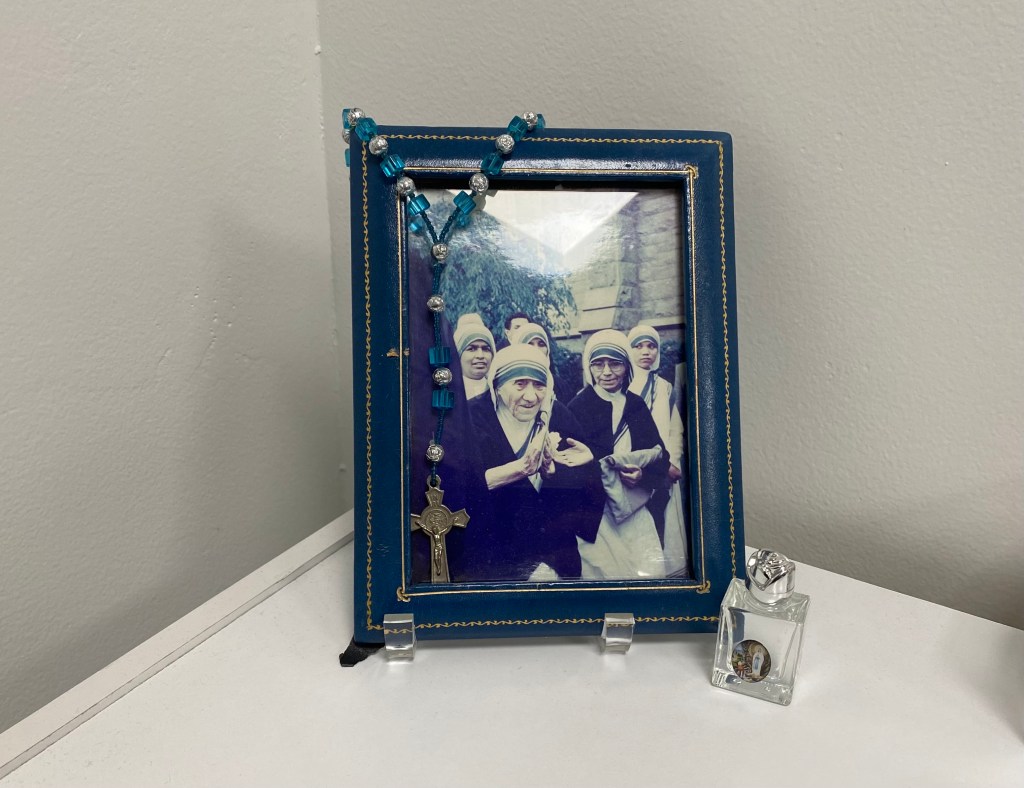
Photo: “The fruit of silence is prayer, the fruit of prayer is faith, the fruit of faith is love, the fruit of love is service, the fruit of service is peace” – St. Mother Teresa. When we put into practice the words of Mother who put into practice the way of Jesus, we will also have the eyes to see and serve Jesus in those around us.
“When you have done all you have been commanded, say, ‘We are unprofitable servants;we have done what we were obliged to do'” (Lk 17:10).
This closing line from our Gospel reading today can be a hard verse to digest at first glance, especially with our track record of slavery in the U.S. We need to remember and recognize that this was a teaching that Jesus shared in a different time period, in a different culture, and in a place far removed from any clear modern context. The master/slave relationship is also a theme that Luke returns to often.
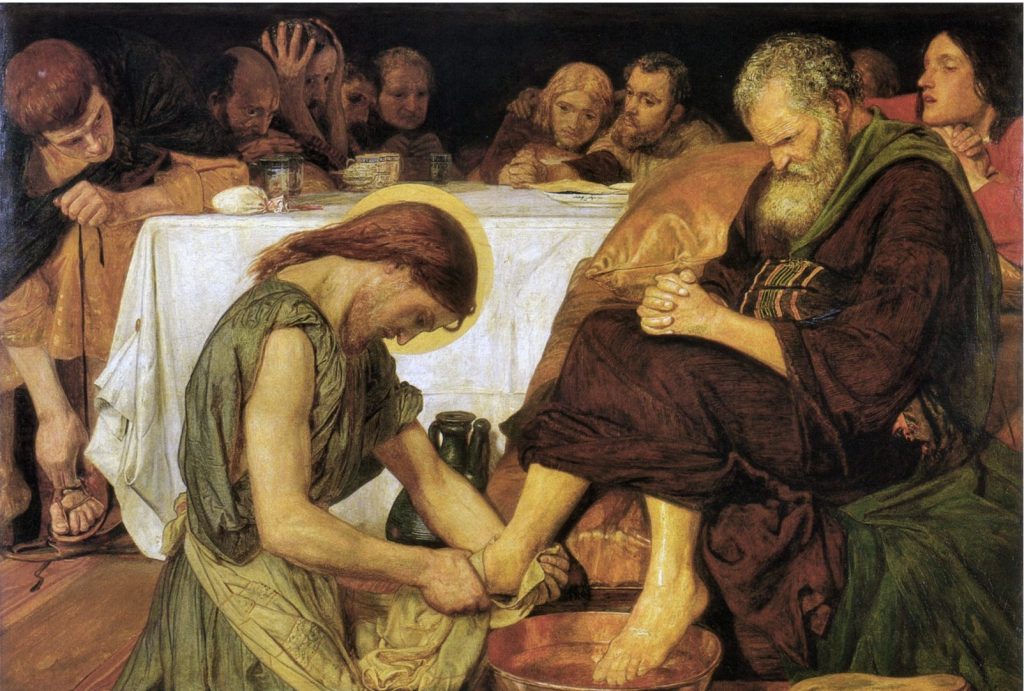
Another important point to touch upon when reading the Gospels is that when Jesus made the statement that, “we are unprofitable servants; we have done what we are obliged to do”, we are not to read this verse in isolation from the full context of Scripture. Jesus himself modeled service at the last supper when he washed his disciples’ feet (cf. Jn 13:1-17). This was the lowest of menial tasks. St Paul wrote to the Galatians informing them that in the Body of Christ there is no Jew or Gentile, slave or free, male nor female (cf. Galatians 3:28). The ultimate point is that God is God and we are not. We all have a part to play in participating in promoting the kingdom of God by following his lead.
As a disciple of Jesus, we are not to seek adulation and glory. We are to serve God and one another without hesitation. We serve God because he is the director and we are the directed. He is the master and we are the servant. In aligning ourselves in this way, we also experience the intrinsic joy of following his will. As we follow Jesus’ lead and guidance, we grow in our relationship with him, his Father, and experience more of the love of the Holy Spirit. As the apostles followed Jesus, there came a point where he said to them that he no longer called them servants but his friends (see John 15:15). That is to be our hope as well.
No task is too menial or beneath us, nor do we need to be concerned about doing big and grandiose things. We just need to be obedient and act as God leads. Each chance we have, to smile, to hold a door, to respect and appreciate one another, to be patient and present instead of losing our temper, and/or to listen with understanding, and to forgive, are all opportunities to love.
Pope Francis said in a homily a few years back: “Serve and give freely that which you have received freely. May our life of holiness be permeated by this openness of heart, so that the gratuitousness of God – the graces that He wishes to give us without cost – may enter our hearts.” As our hearts expand through small acts of kindness we are moved to serve and to love even more. As St Mother Teresa said, we are to be a pencil in God’s hand. In our willingness to be moved by God to serve, we and those in our realm of influence will be better for the effort.
———————————————————
Photo credit: The most unprofitable but greatest act of service in human history. While on my canonical retreat back in December.
When I taught religion and theology, I have asked my students if Jesus ever sinned. Inevitably, someone referenced the account from today’s Gospel. In these verses, we read how Jesus, “made a whip out of cords and drove them all out of the temple area” (Jn 2:15). Jesus is not sinning here, rather, he is acting in line with prophetic tradition. Jesus is making a bold spectacle to drive home the point that the temple is not a marketplace but it is to be a place of worship and right praise to his Father.
Greater still than the temple, is the people of God. Further down in the text, when those present ask for a sign to justify this act, Jesus said: “Destroy this temple and in three days I will raise it up” (Jn 2:19). Clearly, he was pointing to his body as the temple of God and referring to his Resurrection to come.
The temple, the house of God, believed to be the corporal presence, the very seat of God among his people, Israel, was destroyed in 70 AD by the Romans. This left a tremendous spiritual, political, and social vacuum. Two groups that were intimately tied to the sacrificial cult of the temple, the Sadducees and the Essenes, very soon after the destruction, ceased to exist as a sect within Judaism. The Pharisees, who already were moving to a practice of home worship that mirrored the worship in the temple, would survive and be the ancestral root of different expressions of Judaism today. Another sect would also arise as the followers of the new way of Jesus which became the Church, the Body of Christ.
Each of us has a unique part to play in the Church. We are called to bear witness and practice, in our own unique way, our faith in our everyday experiences. We may be the only Bible someone ever reads. This call to put our faith into action is not an invitation to be overwhelmed by nor an excuse to assume a posture of elitism. We are no better than anyone else.
Pope Francis wrote: “Believers should not be presumptuous; rather, truth leads to humility. We know it is not ourselves possessing truth, it is truth that embraces and possesses us” (Costello 2013, 14). We are to seek and follow Jesus, the Way, the Truth, and the Life, and allow his truth and his love to shape and transform our lives. When we are willing to encounter and walk together, we learn and grow from one another. We are also less apt to keep others at a distance and become more willing to draw close.
We need to resist all that contributes in any way to the dehumanization, hate, and violence by rooting ourselves in Jesus, the living Temple. In doing so, we will become aware that we ourselves are temples of the Holy Spirit. In spending consistent time in silence, prayer, meditation, study, worship, and service, we not only purify our temple, we better know God’s will, and will be conformed to and empowered by the love of Christ to be instruments of peace, contemplatives in action, and advocates for healing and reconciliation in a wounded and weary church, politics, country, and world.
Photo: Rosary walk during on of my final evenings back at the St. Vincent de Paul Regional Seminary mid June.
Costello, Gwen. Walking With Pope Francis: Thirty Days with the Encyclical The Light of Faith. New London, CT: Twenty Third Publications, 2013.
Luke records Jesus being critiqued for eating with tax collectors and sinners. Jesus responds to the criticism from the Pharisees and the scribes by sharing three parables, two of which we read today, and the third, the Prodigal Son, which is often reserved for reading on Sunday during this liturgical cycle of readings.
The two parables we are given today display the love that God the Father has for his children. Though we may not find being compared to a sheep or a coin endearing, the imagery of the shepherd going to find the one lost sheep and the woman searching all over her house for the one lost coin is a message well worth meditating upon.
Someone hearing this parable might say, “Why bother looking for the one sheep when you have ninety-nine other sheep or why bother looking for one insignificant coin when you have nine other ones?” But if we reflect upon this parable for a bit we might recall a time or feel right now that we may be lost or insignificant. What Jesus is telling us is that we matter. That God loves us more than we can ever imagine, and he is constantly seeking us out. God is the creator of the vast expanse of the cosmos while at the same time he cares for each and every one of us. He cares for you as if you were the only person in the world.
We do not need to look for God so much as we need to just stop, be still, and notice he is already waiting for us. If we feel a bit worn, misunderstood, lost, lonely or underappreciated, rest assured. God cares. God is present, yes, even in the midst of any conflicts, challenges, trials and/or tribulations that we may be going through. Even if we have separated ourselves from him through our sin, Jesus loves us more than we can ever mess up and he is the shepherd that watches over us and seeks us out even when we walk away from him. Return to him and allow yourself to experience the healing balm of his forgiveness.
As we return, we can let go, breathe, and allow ourselves to experience the loving embrace of Jesus and allow ourselves to be loved, to be filled up, and so have more to share with someone we encounter who may also need to know that they matter, they have dignity, are not alone, and that they too are loved.
Photo: One of my favorite pencil drawings by Kathryn J. Brown, 1982
One of those at table with Jesus said to him, “Blessed is the one who will dine in the Kingdom of God.” He replied to him, “A man gave a great dinner to which he invited many. When the time for the dinner came, he dispatched his servant to say to those invited, ‘Come, everything is now ready'” (Lk 14:15-17)
Today or if you are reading this evening, tomorrow, will be the final chance to vote. We seem to be cut right down the middle and unity and striving to form a more perfect union seems to getting further apart.
Judaism was far from unified during Jesus’ time as well. The Sadducees, Pharisees and scribes, Samaritans, Zealots, and Essenes all felt they were the authentic expression of Israel. Jesus not only addressed this division by sitting down to break bread with as diverse a population as possible but he also shared parables around the same idea of the invitation to share in the celebration of a feast, as we read today.
Each encounter that we are blessed to partake in is an invitation to experience communion. We have the opportunity to interact in person, face to face, or through the myriad of social media outlets. With each opportunity, we can choose to demean, degrade, dehumanize, gossip, and defame or we can embrace the opportunity to treat each other with dignity, respect, kindness, and understanding, yes, even when we disagree.
We all have wounds. Each of us have suffered or are suffering, and we have or are experiencing pain in some form or fashion. We all seek to belong, to be a part of, and to be accepted. We need each other. When we acknowledge this reality we can begin to heal and be more understanding toward others. Yet, as Fr. Greg Boyle, SJ, writes, “If you’re a stranger to your own wound, then you’re going to be tempted to despise the wounded.”
Jesus provides a mirror for us to notice our own suffering as well as a light to reveal the path to our own healing. Being willing to see our own wounds and to be open to healing, we can be more present. When others are not respectful, we can choose instead to be patient and understanding. When someone is shares harsh words, we can resist the defensive response and instead ask if there is any way we can help. Let us strive to be a conduit of love, to will each other’s good, and to be a healing presence in our interactions with one another. Everything is now ready. Jesus invites us to the feast of community and sharing, are we willing to attend?
———————————————————————–
Photo: Rosary walk through Riverside Park, Vero Beach.