prayer
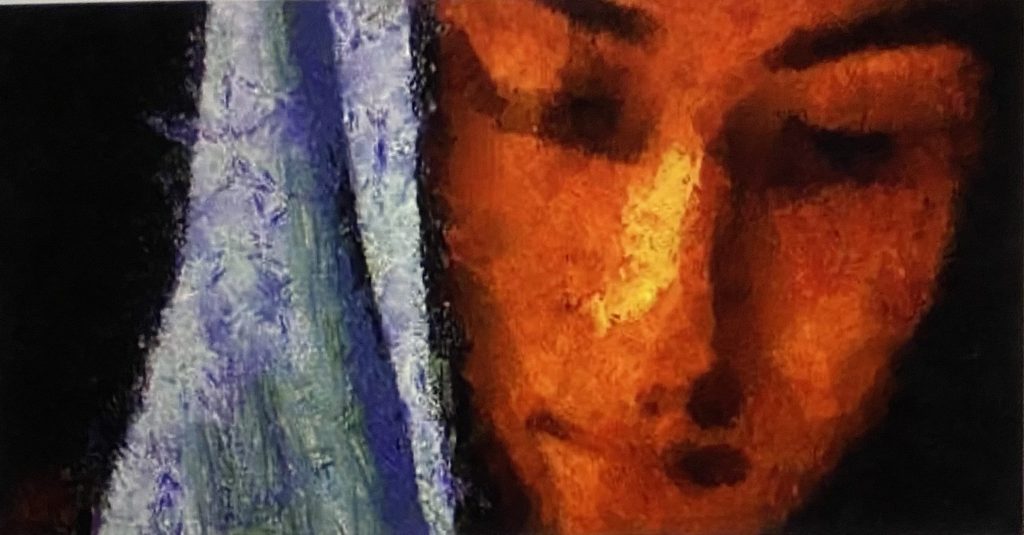

Jesus is coming, let us prepare.
In the fifteenth year of the reign of Tiberius Caesar, when Pontius Pilate was governor of Judea, and Herod was tetrarch of Galilee… (Lk 3:1).
This may be an odd verse to focus on in Advent, or anytime when sharing a reflection, but there is a point to this historical tidbit of information offered by Luke. Jesus, the Son of God, born of the virgin Mary, was born in time, and in a place. The gospels are not myths, they are not fairy tales, nor are they works of historical fiction. Luke’s account would fall better into the genre of Greco-Roman history, although, the gospels have their own unique expression as a genre. The gospel writers were interested in the historical Jesus, but they were more than mere biographies. Their primary focus was to present theological insights that help us to understand who Jesus is and his teachings that we can put into practice, but not that, but to also come to know him in our time and place, and be transformed by him and his love for us.
The Son of God was obedient to his Father and was willing to be sent to become a human being conceived in the womb of Mary. This truth has relevance to us because it means that Jesus experienced what we experience as human beings. From the moment of his conception and moving forward, through his birth, life, death, resurrection, ascension, and continuing today, he experienced and experiences what we experience as humans, even temptation although he never sinned.
In Luke’s presentation and setting the stage for Jesus’ birth, he shared a shady cast of characters: Tiberius Caesar, Pontius Pilate, Annas, and Caiaphas to name a few. Although lost on most of us today, these political and religious leaders were not known for their virtuous living. Yet those in the time of Luke’s writing would have recognized that they were examples of human depravity. Jesus was born in a time and a place of darkness. He was and continues to be the Light of God who has come into the darkness of the fallen human condition.
To prepare the people for this coming, Luke presents the preaching of John the Baptist. Though the son of the priest, Zechariah, John rejected the political and religious status quo. He did not preach in Jerusalem nor the Temple, but in the wilderness. His message to “Prepare the way of the Lord” was a call in unison with Baruch from our first reading.
Baruch, the secretary of the prophet Jeremiah, shared God’s promise in which Jerusalem was invited to, “stand upon the heights; look to the east and see your children gathered from the east and the west at the word of the Holy One, rejoicing that they are remembered by God” (Baruch 5:5). The children who are to rejoice were those scattered children of Israel. The northern ten tribes of Israel who were first exiled by the army of Assyria in 722 BC, and the greater majority who never would return. Also, in 587 BC, the remaining tribes of Judah and Benjamin were defeated and their majority exiled to Babylon. Jerusalem and the Temple was destroyed. Baruch’s promise offered hope for that time when the twelve tribes that were exiled and scattered would be reunited and return from the east and the west.
John the Baptist came to announce that time. The messiah was at hand. The ancestors of those who returned to Jerusalem after the Babylonian exile, were waiting for the coming of the fulfillment of the promise of the prophets, and John the Baptist was telling them that this long awaited time was upon them. John was telling them to get ready, to “Prepare the way of the Lord.” Jesus is coming.
This is the first coming of Jesus we prepare to celebrate at Christmas. Each Advent is a time for us to prepare not only to celebrate Christmas, to remember Emmanuel, God with us, but to prepare for his second coming or our personal judgment when our time on this earth this side of heaven is coming to an end. Whichever comes first, either reality is time, not for sorrow, but instead for joy.
This is the joy that St. Paul encourages the Philippians to experience and we can as well. “I am confident of this, that the one who began a good work in you will continue to complete if until the day of Christ Jesus” (Philippians 4:6). May we rest in the same confidence, that as we repent, trust in God, and put into practice his teachings that we will be ready to experience Jesus coming into our lives each day and he will work through us to bring about our salvation and those he calls us to serve.
Luke invites us to look back on this time when a world in darkness waited with bated breath for the Light to come to set things right. To bring proper order back to the political and religious state of affairs. Luke offers us, through the words of John the opportunity to ponder the meaning of what it means for us to “Prepare the way of the Lord”. We make a way for the Lord, when we open our minds and hearts to him, so that we might believe more and more each day, not only that Jesus came to us as our savior, but that he is with us and we can receive his love with each breath we take, and we will be prepared for when he comes again, each day, at the end of time, and when it is our time to go home.
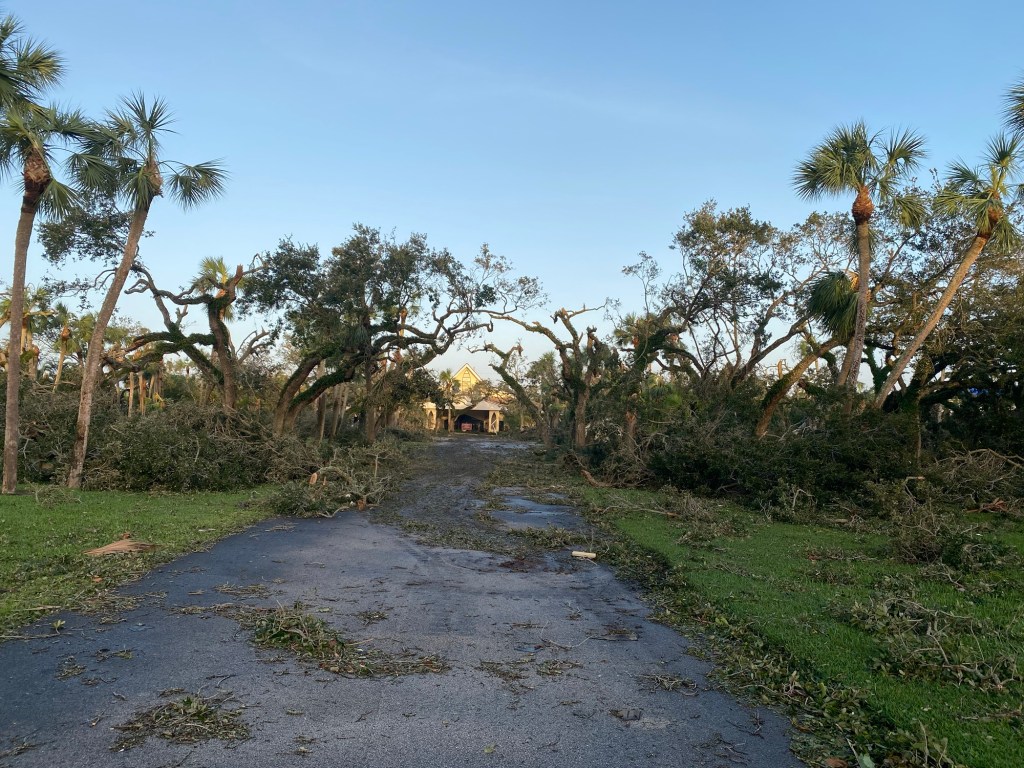
Photo: Rosary walk back in mid October.
Link for the Mass readings for Sunday, December 8, 2024

Quiet time with God in his creation helps us to be still, to grow closer to God and each other.
“All things have been handed over to me by my Father. No one knows who the Son is except the Father, and who the Father is except the Son and anyone to whom the Son wishes to reveal him” (Lk 10:22).
God the Father knows God the Son and God the Son knows God the Father. They do not just know about each other, they know each other with such a deep, infinite intimacy that is far beyond our human comprehension. Contemplating this reality can fill us with hope especially when we come to realize that Jesus is the Son of God who has come into our lives so that we can participate in the trinitarian communion of the Father and the Son and the love shared between them, the Holy Spirit!
Jesus has come as an agent of reconciliation, to restore our relationship with God, to undo the effects of the sin of separation that has so ruptured and wounded our relationship with him, each other, and his creation. Our hope this Advent is that we can come not just to a better understanding of God, but to more intimately know and restore our relationship with God through our participation in the life of his Son.
May the Advent season not get away from us before it even starts because of the material, commercial, and busyness that threatens. A good practice to help us to slow our pace is to spend some time in the gift of God’s creation, to enter into its natural rhythm, and bask in the wonder and vast expanse of it all.
One of the activities that I enjoyed most with JoAnn, was our evening walks. I have continued this practice most evenings since her death as well. During my time at seminary, my spiritual director invited me to pray the Rosary during these walks, which I did and have enjoyed very much. Each night walking around the lake at the seminary and looking up and around, praying, walking, and breathing was a wonderful and peaceful experience.
As I drew closer to ordination, one of my concerns regarding possible placement was whether or not I would be assigned to an area in which I could continue my evening Rosary walks and have access to the wonderful vistas that the seminary afforded. I have been blessed by our bishop that he assigned me to Holy Cross. Not only have I been blessed with even more wonderful natural views, I have been blessed with an incredible family and community here. With each step and interaction, I continue to be blessed and drawn deeper into intimacy with God and feel more of his peace and joy.
All of creation echoes the wonder and adoration of the gift that the season of Advent offers: Jesus invites us to participate in a deeper walk with his Father, the creator of heaven and earth, the one who knit us together in our mother’s womb, and who knows us better than we know ourselves! With each breath and step we take, each prayer that we pray, each willingness to engage lovingly with another, will lead us into deeper intimacy with the Father, the Son, and the Holy Spirit and each other.
———————————————————————————–
Photo: Although darker on these December Rosary walks, still many interesting views. “A light has shined in the darkness and has not overcome it” (John 1:5).
Link for the Mass readings for Tuesday, December 3, 2019

Called to be still awhile and then to go out on mission.
He said to them, “Come after me, and I will make you fishers of men” (Mt 4:19).
Today’s Gospel account recalls Jesus’ call of Simon Peter, Andrew, James, and John. An interesting contextual point is that Jesus was the one doing the calling. Spiritual teachers were common during the time of Jesus within and without of Judaism. The most common practice was that the disciples sought out and came to the master. It was the rarer case that the master would search out and call his followers.
Another interesting point is that Jesus met the brothers in the midst of their everyday activities of fishing, in the midst of their work. The encounter with Jesus was not on some isolated mountain top, it was not at a revival, nor at the temple or synagogue. Jesus met them in the midst of Simon and Andrew casting their nets and James and John mending their father’s nets.
The third point from this short account is that Jesus immediately followed his invitation to Simon and Andrew with the insistence that they will be fishers of people. They are not entering their new apprenticeship with Jesus having any false notion that they will wait for others to come to them. They will travel out of their comfort zones. They were called to leave their current way of life, financial security, and to trust in Jesus as they learned about and shared the Good News that the kingdom of God is at hand.
The three points above apply directly to us as well. Jesus seeks us out and invites us to join him. Are we willing to receive this invitation and say yes as Simon, Andrew, James, and John had done. Jesus meets us in our everyday moments. He meets us in our workplaces, our interactions with family and friends, in our class and dorm rooms, as well as in our activities and leisure. He meets us in our conflicts, struggles, suffering, as well as our joys, successes, and moments of wonder. Jesus also encounters us during our unpreparedness for interruptions, in our times of prayer, and worship.
The very desire to pray does not actually begin with us. Noticing that we want to pray is our awareness of Jesus’ calling us. When we take the time to pray we slow down and become more aware of Jesus’ presence in our lives. We experience him and his love for us. Doing so, we are then more able to see him in the midst of our daily activities. The goal of taking time to step back and pray, to give us anchor moments in each day to spend quietly with Jesus, will help our times of activity to be an extension of our times of meditation and contemplation. Experiencing stillness and peace regularly will eventually carry into our daily engagements and encounters.
Jesus calls us to spend time with him and then sends us out to share what we have experienced and learned from our encounter with him. No matter how small. We will make mistakes, we will not be perfect, but as we put into practice his teachings, we will learn and grow as his disciples. Remember who he called? Peter, Andrew, James, and John. There are four Gospels full of accounts of their false starts, gaffes, and “Oops”. We grow and learn as they did, by doing. As we crawl, we will soon learn to walk, as we walk we will soon learn to run, and as we run, we will soon learn to fly!
Jesus calls us to participate in his life and to put his teachings into practice. This is the gift of transformation. We are not just a religion, a people of the book, we are a people of encounter. We encounter Jesus the Christ, the Son of the living God. Once we experience, breathe, receive, rest, and abide in his love, we are forever changed and want more. For to experience the love of God is our deepest longing, and what we have been created for. And just as we receive something wonderful in our lives, our first instinct is to share. That is what happened with the Apostles and what we are invited to experience as well.
St Andrew, pray for us!
Photo: Rosary walk: time with Jesus and Mary to be quiet, still, to wind down, and renew each evening so to be ready to serve again the next day.
Link for the Mass readings for Saturday, November 30, 2024

“Peace…” is “a gift of God: It requires our prayer.”
As Jesus drew near Jerusalem, he saw the city and wept over it, saying, “If this day you only knew what makes for peace– but now it is hidden from your eyes” (Lk 19:42).
What Jesus foretold in these words would arrive some thirty plus years after his death. Jewish and Roman conflicts increased until it spilled over in 66 AD. A Jewish rebellion amassed such force that the Roman occupying military was pushed out of Jerusalem. This triggered a predictable and overpowering retaliation from Rome which resulted in the horrific deaths of over a million Jewish people. Jerusalem fell in August of 70 AD, the Temple was destroyed, and not a stone upon another was left. The only remnant was some of the retaining walls. The western retaining wall, still present today, is known as the Wailing Wall, where people come each year to insert their petitions into the cracks between the stones.
Jesus knew that peace would not come from violence. We can glean from his teachings that real peace is not the absence of war or conflict, but a change of mind and heart. A metanoia or conversion of the mind and heart must take place. There must be peace within before there will be peace without or as Thomas Merton wrote, “If you are yourself at peace, then there is at least some peace in the world.”
In our first reading from the book of Revelation the author himself weeps because no one in heaven or earth is found worthy to open and study the scroll which has seven seals. The one who does arise, appears to be a lamb who was slain. As St. John the Baptist called, “Behold the Lamb of God.” Jesus is the Lamb of God who takes away the sins of the world. He is our hope in times of darkness, he is the one for whom we can place our trust and find our rest.
May we be able to weep as Jesus did over Jerusalem. May we, as Pope Francis has encouraged us, never lose our capacity to weep over the injustice committed to our brothers and sisters throughout our woretorn and weary world.
Many have wept over the deluge of division, dehumanization, and horrific violence, worked to bring about change, and have been a light in the darkness. Mohandas K. Gandhi marshaled a non-violent movement that defeated the colonizing grip of the English Empire. Dr. Martin Luther King, Jr. applied both the teachings of Jesus and Gandhi by shining a light that exposed the dark night of segregation, poverty, and our military presence in Vietnam. Vietnamese Buddhist monk, Thich Nhat Hahn, dedicated his life to advocating for world peace and stated that: “If in our daily life we can smile, if we can be peaceful and happy, not only we, but everyone will profit from it. This is the most basic kind of peace work.”
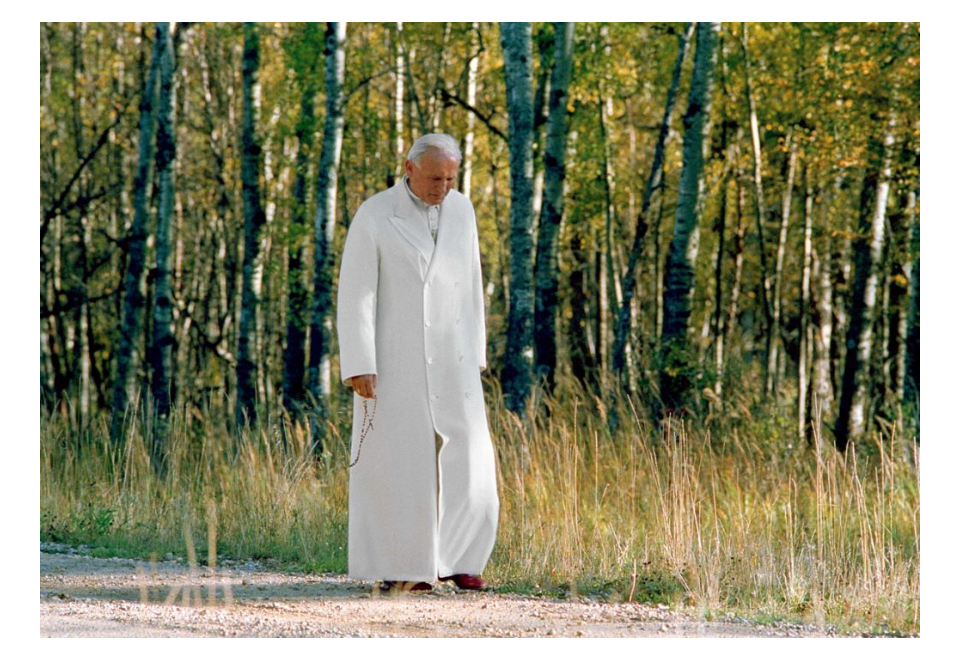
Through the bold witness and preaching of the Gospel through his words, writings, and presence, Pope St. John Paul II played a significant part in inspiring the fall of the oppressive regime of the USSR. He wrote early in his pontificate that: “Peace is our work: It calls for our courageous and united action. But it is inseparably and above all a gift of God: It requires our prayer.”
As we near the end of the liturgical calendar let us be people of prayer and allow the love of Jesus to transform our hearts and minds such that each of our thoughts, words, and actions may, in collaboration with people of all faith traditions and good will, reflect that peace that Jesus gives, that peace that surpasses all understanding (cf Philippians 4:6-7).
Photo: Of Pope St.John Paul II celebrating outdoor Mass in Slovenia. National Catholic Register – Gabriel Bouys
Link for the Mass readings for Thursday, November 21, 2024
We will fear less when we pray more.
In today’s Gospel, we have available to us the parallel to The Parable of the Talents from Matthew 25:14-30, which is The Parable of the Ten Gold Coins from Luke 19:11-28. There are a few differences. A key opening point is that in Matthew’s account, we do not know why or where the master goes after he entrusted three of his servants with talents; five, two, and one respectively. In Luke’s account the man is a noble and he “went off to a distant country to obtain the kingship for himself and then to return” (Lk 19:12). He called ten servants to invest a gold coin he gave to each of them. The theme that is similar in both accounts is that when the man returns, two of the servants invested well and brought about a greater return on their investment, and one hid what he was given out of fear of his lord.
Another added feature in Luke’s account was the fellow citizens of the nobleman that did not want him to be king and openly opposed him. The nobleman after attaining his kingship and returning successfully, dealt harshly, to say the least, with those who opposed him, having them slain. Those listening to Jesus tell the parable would understand this predicted outcome, as it was not uncommon in the ancient Near East for a ruler to slay those who opposed his rise to power.
The readings over this week continue in this vein of eschatological talk, references to the second coming of Jesus, and final judgment because we are in the final two weeks of the liturgical year. The readings present us with the reality that there will be a judgment by God, and what Jesus makes clear is that we are not the judge and jury, though many appropriate this role for themselves. We are only accountable for the talent or gold coin we have been entrusted with.
God has called us each uniquely by name and given us a gift that he wants us to put into action to help build up his kingdom. We need to resist burying this gift or hiding it away. Doubts, fears, and anxieties will arise in our hearts and minds. We may say to ourselves, “I don’t even know where to begin.” We can begin with prayer, we can pray with the one who calls us to participate in his work.
We are invited each day to begin with prayer. In the beginning, the length of time is not as important as consistently spending time with God intentionally. We show up, breathe, allow ourselves to be still, allow the restlessness of our mind to quiet, and we listen. This may take some time or days, but when we continue to return and trust that God has a purpose for us, we will hear his guidance, and then we are to follow his lead.
“Remember that you are never alone. Christ is with you on your journey every day of your lives!” – St. John Paul II
We are called by Jesus to be contemplatives in action. Mediocrity and fear are no longer to be our guides. With humility and patience, let us trust in the guidance of the Holy Spirit who will light our path to maturing and actualizing our unique call to serve God and one another.
Photo: Pope St. John Paul II Rosary walk – L’Osservatore Romano
Link for the Mass readings for Wednesday, November 20, 2024
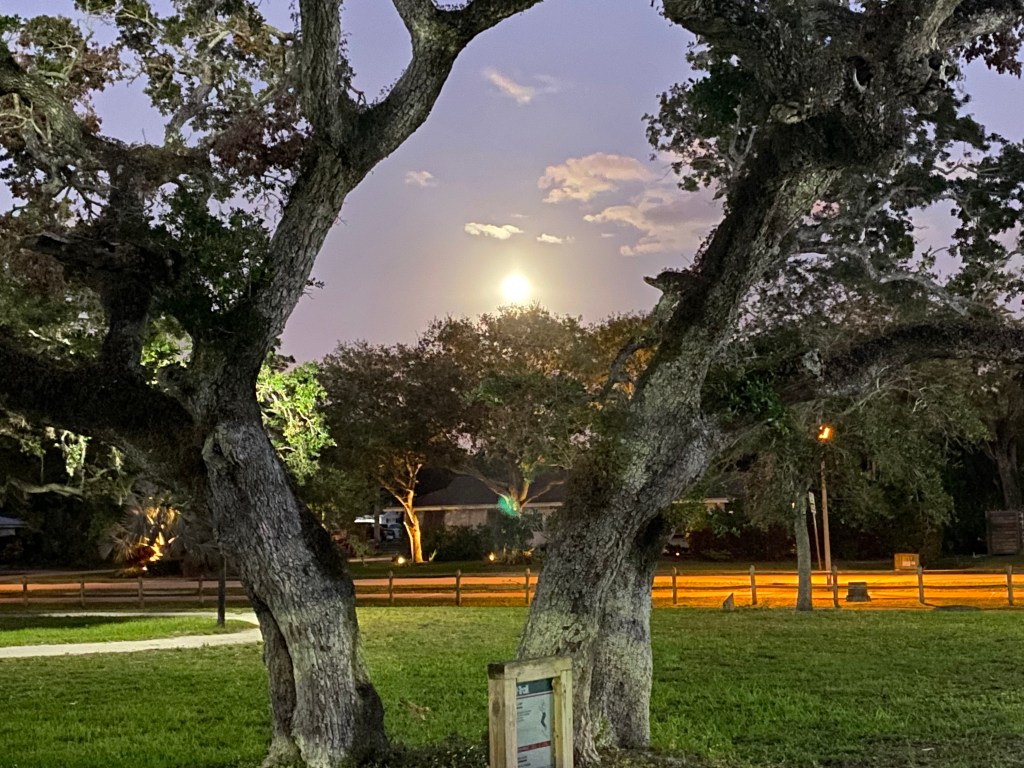
Consistent time in quiet, stillness, and prayer helps our relationship with God to grow.
Jesus told his disciples a parable about the necessity for them to pray always without becoming weary (Lk 18:1).
In the parable that Jesus offered in today’s gospel account, he is not saying that persistence in prayer is changing God or somehow bending his will to our’s. We are not wearing him down like the woman did with the judge. God does not need us. God is completely and totally self-sufficient. We are the ones who need him. Our persistence, our daily habit of prayer, changes us, transforms us, helps us to develop our relationship by interacting with God more consistently. Things happening in our lives help us to see that we are fragile and vulnerable and in need of help. Our persistence in prayer will help us to experience that we are not alone in our challenges. When we are dealing with a crisis or very real trauma, our persistence and faithfulness in prayer will help us to experience the closeness of Jesus in our midst as he accompanies us through our suffering and grant us the strength not just to endure but to overcome.
In fact, the practice of stopping everything and praying for five minutes when a crisis arises, often helps us to resist slipping into a fight or flight mode and helps us to resist reacting automatically based on our emotions. Consciously choosing to breathe while praying helps us to act more prudently than impulsively. We may also come to see that what we thought was a crisis, may have been more of a problem to be solved rather than something catastrophic. Our instant reactions to perceived crises can often escalate an issue rather than de-escalate one.
In the greater scheme of things, God answers all prayers of petition or intercession by saying yes, no, or not yet. Most seem to fall in the not yet or not the way we originally intended category. Remaining patient and faithful can help us to move away from seeking to conform God to our will and instead allow him to expand our hearts and minds to his will. Through this expansion, we can come to see the situation from a broader perspective. Our persistence in prayer also helps us to move away from seeking instant gratification and instead trust more in God’s will and timing. Sometimes we are blessed for unanswered prayers because with time, hindsight, and some distance, we find our original request was more an apparent than an actual good.
Persistence in prayer is also a discipline that deepens the roots of our relationship with God. Ready access through our modern technology, higher internet speeds, one-click access, and overnight shipping, can offer plusses, but we have to be careful that this mindset does not shape our mental, psychological, and spiritual growth. Physical fitness, wisdom, or spiritual maturity does not happen in an instant. More importantly, development as human beings and our relationships take time, experience, discipline, prayer, and trust in God’s plan.
Patience, persistence in prayer, freeing ourselves from attachment, developing an authentic and intimate relationship with God and one another are all worth the effort. We need to take some time to breathe deeply, slow down our pace, discipline ourselves to resist even seeking small acts of instant gratification each day. No matter how busy we are, it is important to slow down. Even when we stop to pray and feel like nothing has happened and that doing so was a waste of time, God has happened. God has our back and we can trust in that.
Photo: Rosary walk has been providing opportunities for some wonderful sights!
Link for the Mass readings for Saturday, November 16, 2024

Let’s vote and then be about the work of healing, reconciling, and loving one another.
When all the votes are in and counted, may each of us be ready, willing, and able to read and ponder today’s words from St. Paul. At least in the Church, may we commit again to seek God first. May we be “of the same mind” believing in Our Father who art in heaven and that his named is hallowed. May we recognize each other as his beloved children, brothers and sisters in the Body of Christ.
May we let go of the temptation to demonize and dehumanize one another and instead be willing to greet each other “with the same love” and be “united in heart, thinking one thing.”To love, is to will the good of the other. If we can start there with a willingness to, instead of seeking the worst, respect one other as human beings, seek the best for, speak and listen to, and spend time with one another, we might grow again to like one another.
Instead of placing ourselves first and foremost before God and everyone else, let’s place God first, seek to follow his will, and see each other from his eyes. Instead of tearing each other down, may we make a commitment to respect and be more understanding. We can accomplish this when we are willing to: “Do nothing out of selfishness or out of vainglory;” and “rather, humbly regard others as more important than ourselves, each looking out not for his own interests, but also everyone for those of others” (Philippians 2:2-4).
No matter who is elected, may we: be willing to work together to promote the common good, seek healing and reconciliation, respect the dignity of each person from he moment of conception until natural death, love each other by willing each other’s good, so we can help God’s kingdom to come, and his will to be done, on earth as it is in heaven.
Photo: E pluribus unum, out of many one.
Link for the Mass readings for Monday, November 4, 2024
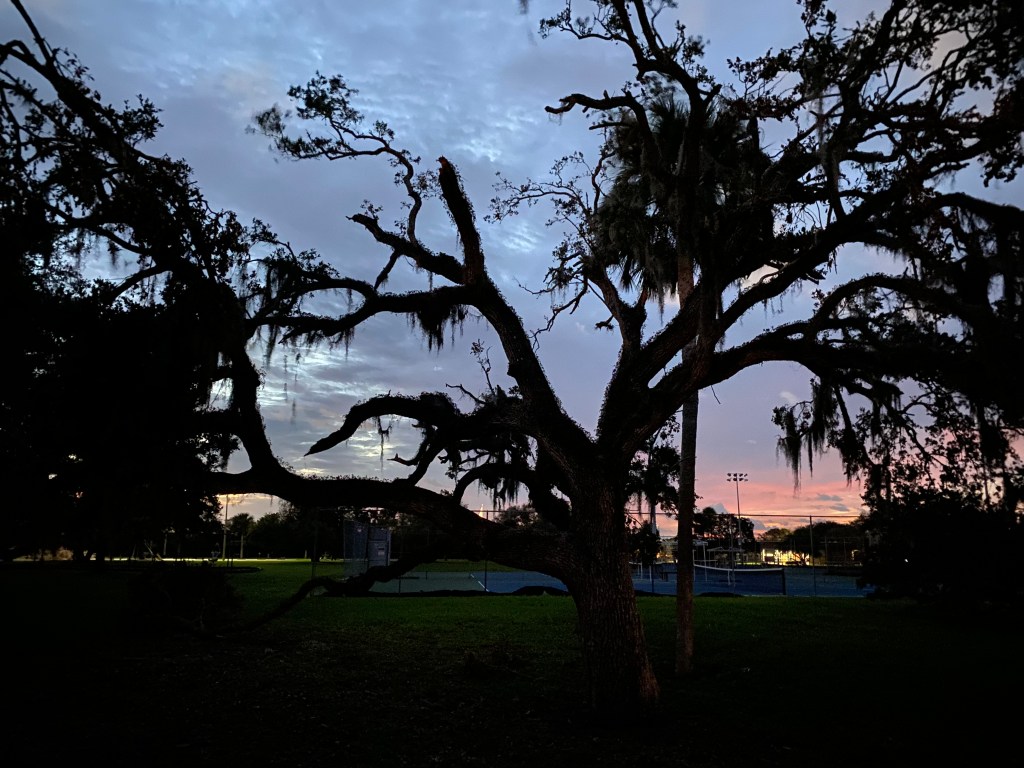
Jesus “spent the night in prayer.” Can we give God ten minutes a day?
Jesus went up to the mountain to pray, and he spent the night in prayer to God (Lk 6:12).
Jesus spent the whole night in prayer to God. What is prayer? All of us as human beings seek for meaning and to belong. We desire security and stability, as well as direction and adventure. We want to be accepted, to be loved, to love, and to experience meaningful relationships. These primary yearnings are present within us. Often though we confuse what we truly desire for temptations that ultimately leave us unsatisfied and more importantly ignore what will truly fulfill us: developing a relationship with God through prayer.
If you want to pray, you have already begun. The desire in and of itself to pray is prayer. The danger of reading about prayer is that we think we are praying. In the turning of a page or the completion of a chapter, we feel as if we are accomplishing something, but we are only imagining how prayer can be. “It is tempting to remain in the comfortable theater of the imagination instead of the real world, to fall in love with the idea of becoming a saint and loving God and neighbor instead of doing the actual work, because the idea makes no demands on you” (Peter Kreeft, Prayer for Beginners, 12).
There is a myriad of ways to pray and each practice will match each of our unique personalities and temperaments. The key to prayer is to make a commitment to a time and a place to pray each day and then show up at that time and place to pray. Start with a timeframe, such as five minutes that you know you can do. Depending on the discipline of prayer you practice, your family, school, work, and/or ministerial demands will be indicators as to how much you might be able to increase the time you pray once you have built a consistent practice.
The amount of time that we dedicate to prayer is not as important as the commitment to pray each day. We need to set in our daily schedule our non-negotiables for prayer first and build around that. Again, this will depend on our station in life. Young parents’ non-negotiables are their infant whereas someone who is retired will possibly have some more time.
Mass, the liturgy of the Hours, reading the Bible, sitting or walking quietly outside, at the morning table with a favorite devotional, the Rosary, Chaplet of Divine Mercy, spiritual reading, and all with a healthy sprinkling of silent meditation and contemplation are all practices that can help us to grow in our relationship with God.
St Therese of Lisieux offers us a good approach to prayer: “For me, prayer is a surge of the heart; it is a simple look turned toward heaven, it is a cry of recognition and of love, embracing both trial and joy” (CCC, 2559). No matter how we pray, our goal is that we don’t seek to bend God’s will to our’s but to allow our lives to be conformed to Jesus, that we encounter and build a relationship with him and each other, such that our experience of prayer matches St Augustine’s: “True, whole prayer is nothing but love” (Foster, 1).
Photo: One of my favorite daily practices, Rosary night walk!
Foster, Richard J. Prayer: Finding the Heart’s True Home. NY: HarperCollins, 1992.
Kreeft, Peter. Prayer for Beginners. San Francisco: Ignatius Press, 2000.
Link for the Mass readings for Monday, October 28, 2024
 Spiritual Stepping Stones