trust
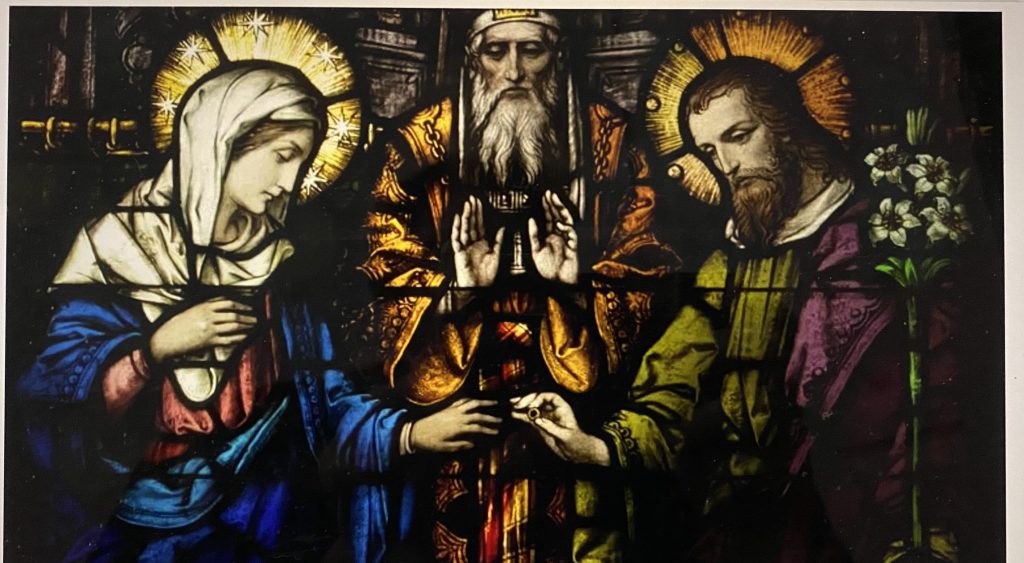

In conversation and dialogue, may God be our guide.
The question raised by “the chief priests and the elders of the people” regarding what authority Jesus was teaching was not an uncommon question. Rabbis and teachers often began their presentations by sharing with their listeners who was their teacher. It would be comparable today to say what university we received our degree from.
Jesus did not do so for his authority came directly from God. Those questioning Jesus knew this and wanted Jesus to say it publicly so as to charge him with blasphemy by putting himself on the same level as God. Jesus did not give them the satisfaction. Instead of answering their question, Jesus asked one of his own. “Where was John’s baptism from? Was it of heavenly or of human origin” (Mt: 21:24)?
The answer given by the chief priests and elders to the question posed by Jesus showed further their unwillingness to accept who Jesus is. They were the shepherds of the people of Israel, yet they would not speak the truth. Instead, they offered an answer that was calculated and weighed out by taking a quick opinion poll among themselves. Their answer was lukewarm, “We do not know.”
In answering this way, their authority as leaders was diminished. For if they were the religious guardians and guides, why could they not answer the simple question regarding the origin of John’s baptism?
How about us? Do we weigh our answers solely on a perceived response or do we speak the truth? We want to be liked, respected, to belong and to fit in, to be affirmed and accepted, which is healthy and natural, but at what cost? Sometimes we feel uncomfortable speaking what we believe because we fear another’s reactions. This is even more challenging these days because a simple response can affect a harsh reaction.
Yet, to be people of integrity, to live out our baptismal call as prophets, there will be times that we need to resist the perceived and real pressures we feel, lean into the conflicts that arise, and speak what God would have us say in the moment.
As we do so, we need to remember to speak from a place of understanding and love. It is better to engage in a dialogue, not just mutually imposed monologues. A good reminder is to follow the lead of Jesus and ask more questions rather than offer ultimatums and pronouncements. Our goal in any encounter is not to impress or prove we are right and so the other is wrong, but to express what we believe and allow others to do the same. We can grow from one another when we are willing to listen.
Sometimes, God may be inviting us to be silent. We can actually move from talking past or shouting over one another, or going to the other extreme of avoiding talking altogether, when we are willing to listen first and respect another person even when we disagree.
Jesus, please forgive us for the times when we have not spoken as you have led us or when we have refused to listen and hear the perspective of another. In each moment help us to remember to breathe, to have ears to hear your guidance, to be understanding and respectful in every exchange. Give us the courage and words to speak with charity and help us to know when to be silent and to listen. Above all, with each encounter help us to love.
———————————-
Photo: Quiet times with God help us to listen more and speak less when in conversation.
Link for the Mass readings for Monday, December 16, 2024
Like Elijah and the prophets, let us trust in and follow the word of the Lord.
The disciples who asked the question, “Why do the scribes say that Elijah must come first?” (Mt 17:10) were Peter, James, and John, who had just witnessed the transfiguration of Jesus. They were walking down from the Mount of Transfiguration, tradition identifying this mountain as Mt. Tabor, and the context of the question had to do with, Moses and Elijah, who they saw with Jesus as he revealed to them his divinity.
As the disciples were attempting to digest this Mystery of the Transfiguration just witnessed, they were drawn back to what they knew. Most likely what they were referring to were the accounts in the Books of Sirach and Malachi. In Sirach 48:10 we too can read that, “You [Elijah] are destined, it is written, in times to come to put an end to the wrath before the day of the Lord, to turn back the hearts of the fathers toward their sons, and to re-establish the tribes of Jacob.” In the last chapter of the Book of Malachi, which is incidentally the last lines of the Christian Old Testament ordering of the canon, are the words: “Remember the law of Moses my servant, which I enjoined upon him on Horeb, the Statutes and ordinances for all Israel. Lo, I will send you Elijah, the prophet, before the day of the Lord comes, the great and terrible day” (3:22-23).
Moses in this encounter represents the Torah, the Law or Teachings, and Elijah represents the line of prophets. Elijah also, as we can read in 2 Kings 2:11, was taken up by God into heaven, amid “a flaming chariot and flaming horses… and Elijah went up to heaven in a whirlwind”, and, it was believed, that he was to return again at the appointed time of the Messiah’s coming. Jesus clarified for his disciples that John was indeed the new Elijah. In the revealing of his divinity to Peter, James, and John, Jesus showed that he was the fulfillment of the salvific paths forged by Moses, Elijah, the line of prophets, and John the Baptist.
Jesus is the fulfillment of the Law and Prophets as well as our fulfillment. We are invited to prepare the Way of the Lord in our hearts and minds, to become less so that Jesus can become more, as well as to help prepare the way for others. When I began to attend church again in my late teens, I went to the Congregational Church that was about a half-mile walk from our home. At the end of that first service I attended, the interim pastor made an appeal for Sunday School teachers.
One of the things he said was that we do not know who Jesus’ Sunday School teacher was and he referenced that we could be teaching Jesus and not be aware. He was not speaking literally but his point rang true: we have the responsibility to continue to pass on the Greatest Story ever told. Also, his appeal was an avenue for the Holy Spirit to speak through him to me, and although I refused the invitation the first week, I accepted the following week. What might Jesus be inviting you to do this Advent? Trust in him and his invitation.
My, “yes”, to teaching Sunday School, not knowing the first thing about what I was doing, thinking I was too young and way too inexperienced, both true externally, would eventually lead me, through different twists and turns, back home to the Catholic Church, to becoming a school teacher, a permanent deacon, and now as I am typing, a priest. Let us all take heed of the invitation of John the Baptist, Jesus, and the Apostles: “This is the time of fulfillment. The kingdom of God is at hand. Repent, and believe in the Gospel” (Mk 1:15).
———————————————————
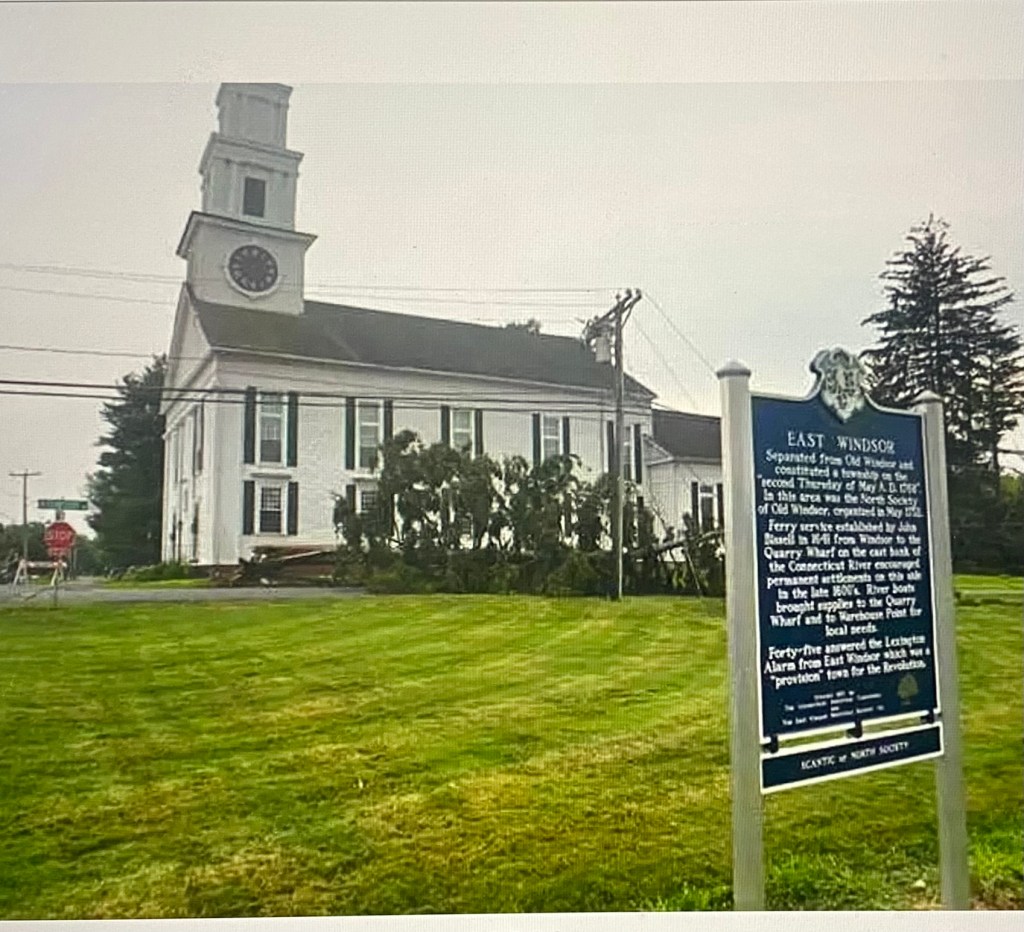
Photo credit (Jim Michaud / Hearst Connecticut Media Group) – First Congregational Church of East Windsor, CT, one of the early spiritual, stepping stones that led me to where I am today in Vero Beach, FL. They were also hit hard by a storm with tree damage this year.
Link for the Mass readings for Saturday, December 14, 2024
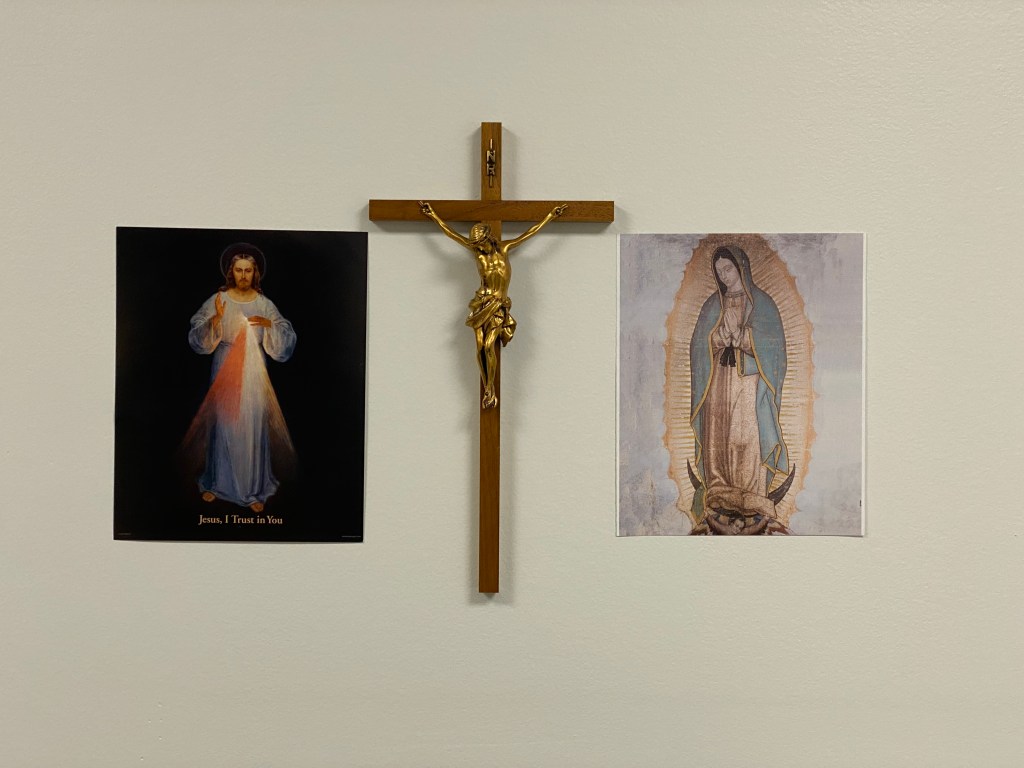
When we turn to and trust in Jesus and Mary we will have the strength to follow God’s will.
Jesus compared “this generation” to children who could not be satisfied. For when the flute was played for them they did not dance, when the dirge was played they did not mourn. There was no pleasing them. Jesus drew the parallel to the present bystanders who acted as fickle as the children. They criticized John as being possessed for practicing fasting and asceticism. They then accused Jesus of being a glutton and a drunkard because his choice of companions for table fellowship.
In today’s Gospel account, Jesus could have been addressing his detractors as well as his disciples. He encouraged his followers to be wary of wallowing in the mud of fickleness. He also wanted them to be sure that they were authentic dispensers of his truth and the will of his Father no matter the reaction of the people, for “wisdom is vindicated by her works” (Mt 11:19). Just as Jesus taught that false prophets would be revealed over time by their fruits (cf. Mt 7:16), so those who were true to his teachings would be vindicated, if not fully in this life, certainly then in the next.
Pope Francis said that “The first thing for a disciple is to be with the Master, to listen to him and learn from him” (Francis 2014, 15). May we pray for open hearts and minds eager and willing to hear the word of Jesus our Master and the courage to act upon his leading in our everyday circumstances. To do so, it is important that we slow down our pace and quiet our minds so that we can even hear his word. We also need to discern the difference between his voice, our own, as well as the many other voices, the enemy, distractions, diversions, and temptations that we hear.
God himself speaks to us in so many ways; directly in the silence of our hearts, through others, spiritual direction, small groups, fellowship, through the Bible, as well as our culture, and influences, as well as through his creation.
More often than not, we may not definitively know if what we discern or hear is coming from God. Yet, remaining paralyzed and doing nothing out of indecision will not help us to move forward. We can find support and confirmation from Scripture and Tradition, others who are wise and practiced in following God, then we can reassess our guidance and then act. If we are wrong, we learn from our mistakes, make adjustments, and begin again. If we are on the mark, this helps us to build our confidence in recognizing God’s voice.
Another important step in discipleship is that we are not to seek to impress, but to express. Adulation and acclaim for ourselves are not what we are about. Our firm intent is to become less so that Christ becomes more. We are also to resist moralizing and condemning others and instead be willing to meet people where they are, convict as needed, as we accompany and break open the word in practical ways so they see the benefits of having God in their lives. The invitation and life of a disciple of Jesus is not an easy one. Will we follow?
We need not be afraid that we cannot fulfill the teachings of Jesus in the gospels because we can’t on our own strength. That is the point. We need Jesus to do so. Just as in learning to walk, our beginning attempts more often than not ended with a thud and us sitting on the floor or ground looking up. Yet, we got up, and with continued practice, we gained strength, balance, made corrections, and so began to gain confidence and the ability to move forward, upright, step by wobbly step. When we seek the support of Mary, and we turn to and trust in Jesus, he will give us the strength to walk on.
Dr. Martin Luther King, Jr. put it more eloquently when he spoke to students at Spelman College in April of 1960. “If you can’t fly then run, if you can’t run then walk, if you can’t walk then crawl, but whatever you do you have to keep moving forward.” So it is in anything we do, but especially in the spiritual life. If we are not moving ahead we are falling behind.
Jesus, please help us to trust in you and accept your invitation to know you and your voice so that we may better know your will. Grant us the courage to follow your will, your plan for our good, and lead us on the path you would like us to go. Inspire us each day to be aware of those you would like us to serve and love. Help us to move forward one more step each day closer to you and being who you call us to be.
—————————————————————————–
Photo: Let us take the hand of Jesus and Mary as we begin each day and walk on.
Francis, Pope. The Church of Mercy: A Vision for the Church. Chicago: Loyola Press, 2014.
Link for the Mass readings for Friday, December 13, 2024

No matter how lost we may think we are, God remains close.
“What is your opinion? If a man has a hundred sheep and one of them goes astray, will he not leave the ninety-nine in the hills and go in search of the stray” (Mt 18:12)?
Many of those Jesus asked and us reading or hearing this Gospel today might share our opinion that the man leaving the ninety-nine to find the one would not be a wise choice. Jesus again appears to be turning the normal order of things upside down in painting a word picture of God’s folly. This parable clearly shows the abundant and extravagant love of his Father for each and every one of us. The act of this shepherd can appear not only unreasonable but unbelievable.
Yet, this is not the feeling to the sheep or the one who is lost. This extravagant love is a relief. It is the love that we can only experience if we are willing to resist slipping into judgment and pride, as did the elder son who was not willing to forgive his brother who was lost but found. The father loved the elder son with the same love as the son that was found, but he was closed off from receiving it for years, not realizing that he was just as lost as his younger brother.
God gives us a choice to reject or accept him because of his extravagant love for us. His greatest joy for us is that we experience being be fully alive. He also knows what will make us so, yet he won’t impose even what is best for us, on us. God is willing to risk us going astray such that we can come to realize the emptiness in any pursuit that ultimately does not bring us closer to him. God does not wish for any one of us to be lost.
God constantly coaxes, invites, and urges us to fulfill who he created us to be. He guides us along as a parent urging his child to walk. Yet, though he lovingly implores us along, we can be distracted, turn, crawl away, and go in a different direction.
During Advent, we are invited to slow down a bit, to breathe and examine where we have taken our eyes off and turned away from our Father, where we have crawled away from his invitation to walk with him. No matter how far we think we have gone astray, no matter how lost we may think we are, God always remains close, following, watching, ready for us to turn back to him. When we do turn back, we will find him there waiting for us, urging us to run back into his open arms and to experience his loving embrace.
God is eternally present. He is not in the regrets of the past nor the anxieties and insecurities that blur the promise of our freedom in the future. God loves us more than we can ever mess up and he loves us more than we can ever imagine. God not only refuses to define us by our worst choices and moments, but when we trust in him, when we ask for his help, he will lead us a few steps at a time forward to complete the good work he has already begun in us.
Photo: God’s light leads us when we are willing to follow.
Link for the Mass readings for Tuesday, December 10, 2024

“The knot of Eve’s disobedience was loosed by the obedience of Mary.”
And coming to her, he said, “Hail full of grace! The Lord is with you” (Luke 1:28).
With these words from the angel Gabriel, we can begin to understand the special and unique gift of grace that God bestowed upon Mary such that we are blessed each year to celebrate this magnificent Solemnity of the Immaculate Conception of the Blessed Virgin Mary. Mary was conceived without sin and she remained not only a virgin all her life, but also sinless and “full of grace” all her life.
The Catechism of the Catholic Church (492), echoes our second reading from St. Paul: “The Father blessed Mary more than any other created person ‘in Christ with every spiritual blessing in the heavenly places’ and chose her ‘in Christ before the foundation of the world, to be holy and blameless before him in love’” (cf. Ephesians 1:3-4).
This special grace was bestowed upon Mary such that she could undo the sin of another who was created sinless: Eve. As we saw in our first reading from Genesis, Adam and Eve were created good, without sin, but both fell by disobeying God and bringing sin, suffering, and death into the world. The Church fathers and doctors saw in Mary, the new Eve. As St. Irenaeus of Lyons, (130-202 A.D.) wrote in his great work, Adversus Haereses, “the knot of Eve’s disobedience was loosed by the obedience of Mary.”
Mary’s, “yes”: “May it be done to me according to your word” (Luke 1:38), and her continued “yes” to God’s will for the rest of her life, kept her full of the grace that God bestowed upon her from the moment of her conception. Adam and Eve fell when their trust in God was shaken by Satan’s temptation. Mary trusted God with Gabriel’s invitation even though she did not understand what was being asked of her. Her question to Gabriel, “How can this be, since I have no relations with a man” (Lk 1:34) was not a demand for proof, but a sincere seeking to understand what was being asked of her.
Mary embodied faith seeking understanding, though while she pondered, as St. Bernard of Clairvaux put it: “Tearful Adam with his sorrowing family begs this of you… Abraham begs it, David begs it… this is what the whole earth waits for, prostrate at your feet… Answer quickly, O Virgin. Reply in haste to the angel, or rather through the angel to the Lord. Answer with a word, receive the Word of God. Speak your own word, conceive the divine Word. Breathe a passing word, embrace the eternal word.”
When Mary said, “Behold, I am the handmaid of the Lord. May it be done to me according to your word” (Lk 1:38), a weary world wounded by the sin of her first parents, exhaled with relief, for the long-awaited savior would now be conceived, born, and come to redeem what had been lost. Mary, in her obedience, loosed the knot of the Sin of Origin committed by Adam and Eve in their disobedience. Mary inmaculatus, Immaculate Mary, was blameless, conceived without sin, for this very moment in time so that of her free will she could say, “yes” and become the new Eve and her Son the new Adam.
Mary, help us to ponder your “yes”, that we may be willing to say “yes” and follow the will of God in all we think, say, and do. Help us to be obedient, to resist a knee jerk reaction to reject outright what we do not understand and choose instead to be open to the possibilities you make available to us that are beyond the realm of our senses and limitations alone. Help us to place our trust in God, Jesus, his Son, and the love of the Holy Spirit in all situations.
——–
Photo: Mary, side altar at the Mission Dolores Cathedral, San Francisco, October 7, 2019.
Quote of St. Bernard of Clairvaux from volume 1, Liturgy of the Hours, p. 345.
Link for the Mass readings for Monday, December 9, 2024

This Advent, let us trust more in Jesus and step free from the gloom and darkness and into his light and love.
St. Augustine taught that the New Testament is hidden in the Old Testament and the Old is revealed in the New. We see this presented in our readings for today. Isaiah presents how “the deaf shall hear” and “out of the gloom and darkness, the eyes of the blind will see” (Isaiah 29:18).
Jesus heals the blind men who call out to him believing that he is indeed the Son of David, the messiah, the anointed one. Jesus recognizes their faith that has healed them but he also points out that they are still in need of healing. They see, but they, like the apostles and others who are seeking the coming of the messiah, a messiah that is like David, a political and military leader that will lead a revolution to overthrow the occupying power of Rome.
Jesus told them clearly not to tell anyone what had happened, because he was not about to promote a cult of personality and nor have them portray him in a false way. Yet, share they did, their encounter with Jesus with great joy.
Though we may have eyes to see and ears to hear, are we too are also spiritually blind to who Jesus truly is. Jesus came into the world just over two thousand years ago as the visible reality of the embodiment of God who is love. Jesus calls us to be conformed to this same love. No easy task, for we are called to humility, repentance, and transformation.
The apostles and saints were those who followed Jesus and were willing to be transformed by the fire of his love. They encountered Jesus, had faith in him and believed. They then went out to share with all they met about their encounter. Will we follow the same path? Do we believe that Jesus is truly who he said he is, the Son of God, the second Person of the Trinity, who became one with us so that we can become one with him and his Father to experience the love of the Holy Spirit?
Let us pray together:
Jesus, this Advent, help me to choose to walk out from the gloom and darkness of anxiety, fear, and insecurity, and place my trust in your revealing light that I may walk with confidence on your path of love. Free me from any distractions and diversions such that I may experience the closeness you know with your Father. Please help me to place my trust in you, and heal my blindness so that I can see more clearly and reject the lies that lead me astray.
——————————–
Photo: Rosary walk back home in Palm Beach Gardens, Florida.
Link for the Mass readings for Friday, December 6, 2024

When we confess our sin, trust in Jesus, and are willing to serve each other, we take a closer step to peace.
“Amen, I say to you, in no one in Israel have I found such faith” (Mt 8:10).
The one to whom Jesus was referring to was the Roman centurion who approached Jesus seeking healing for his servant. I imagine that Jesus was not only amazed by the man’s humility, in recognizing his sinfulness and that he believed that Jesus could heal from a distance with simply his word, but also that he was aware of the need and suffering of his servant and willingness to do something about it. This Roman centurion, part of the occupying power in Israel, clearly embodied the teachings of Jesus! It is from the centurion’s words that we get the words that we speak before receiving Jesus in the Eucharist during each Mass: “Lord, I am not worthy that you should enter under my roof, but only say the word and I shall be healed.”
God chose the people of Israel not for themselves alone, but that they would be a light to all peoples. As Isaiah said, all nations shall stream toward mount Zion and “from Zion shall go forth instruction, and the word of the LORD from Jerusalem” (see Isaiah 2:1-5). Jesus echoes Isaiah’s prophetic words as is recorded in today’s Gospel: “Amen, I say to you, in no one in Israel have I found such faith. I say to you, many will come from the east and the west, and will recline with Abraham, Isaac, and Jacob at the banquet in the Kingdom of heaven” (Mt 8:11). The centurion’s act of faith is one of this beginning movements of faith in Jesus that, like a few drops of water, become the beginning of a majestic waterfall.
The first point we can learn from the centurion is that he was aware that his servant was in need. A slave held no dignity, and yet, he was not invisible to the centurion. Nor was the centurion indifferent to his suffering and pain. We also need to be aware of those in our midst who are in need. We need to resist the temptation to walk around, over, or by others and be willing to embrace them in their need.
Second, like the centurion, we need to embrace humility and acknowledge our own sinfulness, and when we do so, we are better able to see the needs of others. None of us are perfect. No one person is above any other. We all have gifts as well as shortcomings. We need each other because we complement one another and we are stronger together than apart.
Third, we cannot stand on our own. The centurion knew his strengths, the authority he possessed, while at the same time he recognized his limitations. He acknowledged that he needed help. He needed Jesus. As do we. We cannot accomplish our salvation on our own merit or will power. We need a savior, for apart from Jesus, who we prepare to encounter this Advent season, we can do nothing, but with Jesus all things are possible.
Jesus is the Truth that we seek. He has sent out a universal invitation of communion for all, to Israel first and then to those from east and west, north and south. The Roman centurion modeled our response to Jesus’ presence when he recognized his own sinfulness and acknowledged it before Jesus. He was also aware of and sought healing for his servant. The centurion had faith and hope that Jesus could and would provide healing with just his word.
May we follow his example this Advent as we take time to examine our conscience, have the humility to confess our sins, to acknowledge that we need help from Jesus and others. May we be willing to seek forgiveness and be willing to forgive. May we resist the temptation to embrace fear and close ourselves off from and be indifferent to the plight and needs of others.
We have so much to offer one another when we are willing to work together instead of stand apart from or against one another. May we who have received the forgiveness and grace of Jesus and felt the embrace of his love, work to beat our “swords into plowshares
and [our] spears into pruning hooks”. We can use our words to destroy or to empower and give hope. Choosing to return hate with love, and to say the good things people need to hear, we can promote a ripple of peace that can contribute to making Isaiah’s words a bit more real: “One nation shall not raise the sword against another, nor shall they train for war again” (Isaiah 2:4). Wouldn’t it be nice if we could take a few steps closer to this reality this Advent?
——————————————————————-
Painting: Sebastiano Ricci – Christ Heals the Centurion’s Servant, 1726-1729
Link for the Mass readings for Monday, December 2, 2019
144,000 + 2 = faith + trust
Our readings today hold up those who are faithful to God and his the covenant he has made with them. They have resisted the temptations of the world and given all to follow Christ, the Lamb who was slain. The Lamb, who though slain, rose again and as we celebrated yesterday is the King of kings and the Lord of lords.
The 144,000 from our first reading from Revelation represent those who were “undefiled” from worshipping idols. The worship of any other gods, or the the beast as shared in the Book of Revelation, was considered to be adultery. Those numbered were faithful to the covenant they had made with Jesus. Throughout Revelation, John equated a covenant between God and his people. The imagery he uses is the Church as the bride of the Lamb.
In the Gospel of Luke, we return to the widow we read about recently. She came to the Temple in Jerusalem as others came to share their offerings. These offerings were placed in the Shofar-chests in the Temple. Scholars recognize that there were thirteen chests in the Temple and each one for a specific offering that ranged from annual dues, sacrificial offerings, and freewill offerings.
As Jesus pointed out, most of those who were giving, gave out of their excess, but this widow, who most likely had no support as her husband had died, gave all that she had in giving her last two coins. What she gave an offering too we do not know, but she showed a radical trust in God. She did not even hold back one of the coins. She instead gave all.
The widow, like the 144,000, represent those who have trusted in and been faithful to God throughout the ages. They followed the commandment of Jesus to love God with their whole heart, mind, soul, and strength and their neighbor as themselves. They resisted the temptations that could have lead them astray and instead placed all their trust and faith in God.
There are many distractions and diversions that can lead us astray, temptations from without and within. Jesus remains faithful to us and the covenant that he made with us. We, as his bride, are invited to remain faithful to and trust in him. May those who have gone before us, the triumphant saints who now reign with Jesus the Lamb, who is seated at the right hand of the Father, intercede for, guide, and empower us in our lives to trust and be faithful as they were. May we be willing to be led by the tender chords of the love of the Holy Spirit into a deeper communion with God and one another.
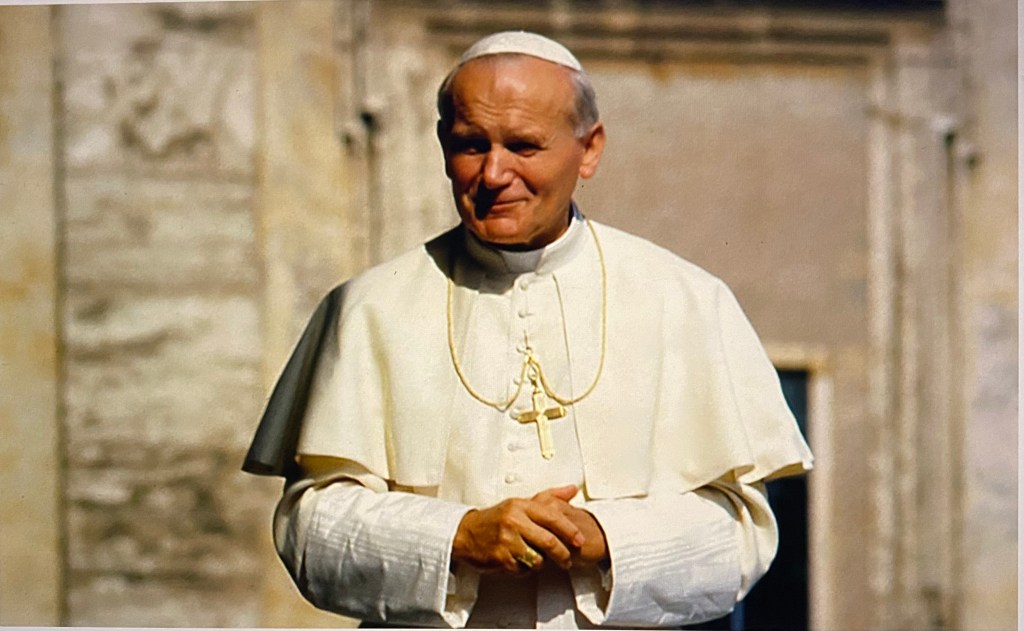
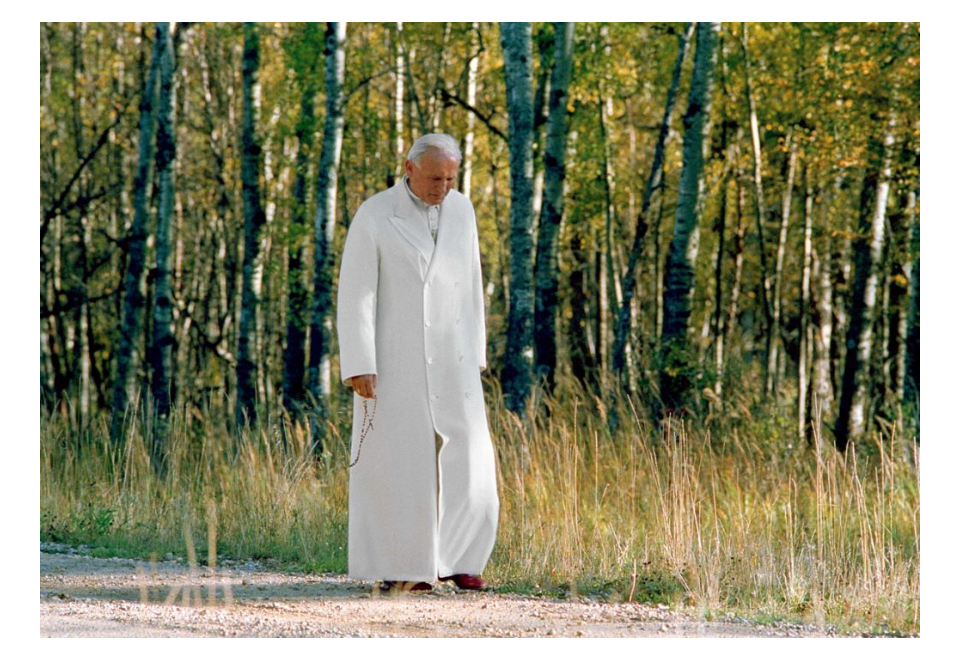
Photo: “God, our supreme good, is the source of all good things. I hope that you will all be ‘good’, that is, faithful witnesses to the love of our heavenly Father who fills us with so many gifts” – St. John Paul II, Audience, February 5, 1997.
Link for the Mass readings for Monday, November 25, 2024
 Spiritual Stepping Stones