The Holy Spirit will help us to continually embrace wonder and experience truth.

Benjamin Franklin is quoted as saying, “Wise men don’t need advice. Fools won’t take it.” Most of us may fall somewhere in the middle. Hopefully, we are less foolish and moving more along to path of gaining wisdom. Jesus continues his best efforts in today’s Gospel to offer guidance and assurance to his disciples that the Holy Spirit will continue to be their guide after his departure. “I have much more to tell you, but you cannot bear it now. But when he comes, the Spirit of truth, he will guide you to all truth” (Jn 16:12-13a).

Surely, Jesus could see the dimming lamps in the eyes of his disciples. As discussed yesterday, comprehending the death of the Messiah, his Resurrection, and return to the Father was a bit much to digest. Also, there was only so much that they could grasp with their finite intellect. Until they experienced the infused contemplative insights given to them by the Holy Spirit, there was only so much the apostles were going to be able to digest of what Jesus was sharing with them about the inner life of the Trinity, the divine communion of love between he Father, and the Son, and the Holy Spirit.

Yet, Jesus, though, still needed to share what his Father gave him to share, and the disciples were to take in what they could. Jesus’ death and Ascension were not to put an end to their learning, deepening of their understanding, or further developing their relationship with Jesus and his Father. The Holy Spirit would continue what Jesus started, and would to lead them to all truth, the fullness of the foundational relationship that is the source of all that exists, the Holy Trinity.

Anyone involved in teaching anyone anything or learning something for one self will know, that just telling someone something does not mean that learning has happened. There is a process of introduction, integration, practice, review, mistakes, corrections, and adjustments until some proficiency is achieved. With the disciples, this is the same. Jesus did not just present things once and move on to the next order of business. That is why John declared at the end of his Gospel that: “There are also many other things that Jesus did, but if these were to be described individually, I do not think the whole world would contain the books that would be written” (Jn 21:25).

I am sure a part of what John was talking about here were the lessons, corrections, and guidance Jesus offered. Just as Joseph modeled for and guided Jesus in his trade in carpentry, so Jesus learned from him through observation, practice, mistakes, adjustments, and corrections. Jesus guided his disciples in the same way, as a mentor with his apprentices. He was now assuring them that even though he would be leaving them, the guidance and leading would continue with the support of the Holy Spirit.

The lessons about the immanence of God, God within himself as a Trinitarian communion, that Jesus taught were not as concrete as sawing, hammering, and planing wooden beams though. God is not a being, not even a supreme being, meaning that he transcends our ability to comprehend the fullness of his reality. We will never fully comprehend God or exhaust the richness and the depth of our relationship with God. What the apostles and the saints to follow and we can still experience today is God’s grace building on his nature. When we read, pray, and meditate with these sacred texts, the Holy Spirit will communicate with us and grant us insights beyond any intellectual endeavor.

On the human level, we are guilty of malpractice in our relationships when we assume that we know everything there is to know about someone else. The gift of the person, the human being, is that we are ever-developing and growing in the mystery and wonder of who we are and who we are called to be. We can always surprise each other. If this is true for us in our relationships with each other, it is much more so in our relationship with God. Once we get to one level of understanding, we plateau for a time, but that is not the end of the journey, that is only a time to savor, to ponder, and contemplate until we are ready to go ever deeper into the truth that the Holy Spirit will reveal to us.

Our tradition teaches us that the fullness of God has been revealed in Jesus Christ, which is true, yet to comprehend that revelation will take a lifetime and continue on into eternity just to scratch the surface. St Thomas Aquinas (1225-1274), a Dominican Friar, who is considered the Angelic Doctor of the Church, was one of the top theological influences during the Scholastic Period, yet close to the end of his life he had a deep and intimate encounter with God in which he came to realize that all of his intellectual achievement, all that he had written, mattered no more than a pile of straw compared to that which God had revealed to him in a single moment of infused contemplation.

Arguably one of the wisest persons of his time, and some would say one of the most brilliant minds ever, was also one who was steeped in daily prayer and continued to be open to the majestic wonder of the glory of God. May we too continue to embrace the gift of wonder, the gift of learning, and never settle, rest and savor yes, but continue to learn and grow, to seek and hunger for the Good, the True, and the Beautiful, to continually have our hearts and minds open to allow the Holy Spirit to guide us “to all truth”!


Photo: A momentary pause during my Rosary walk to observe the interplay between some mangrove stems and barnacles. Many invitations to experience God’s wonder when we get out and about!

Link for the Mass readings for Wednesday, May 28, 2025

May we pray that we will be more willing to help “one another to walk in love and truth.”

When Jesus said to his disciples: “If the world hates you, realize that it hated me first”, Jesus was not proposing an-us-verses them mentality, for he had just spoken to them about loving others as he loves them. Falling into an-us-verses mentality for those suffering from persecution is an understandable posture. It is just not the stance that Jesus proposes for us to take. We are to love our enemies, we are to love those who hate us and persecute us. Impossible? On our own will power alone, yes, for apart from Jesus we can do nothing, but with him all things are possible, even loving our enemies, haters, and persecutors.

Jesus is making it plain to his disciples that they need to be prepared, that they will face the same that he did. They will be persecuted, mocked, imprisoned, and many will give their lives just as Jesus did. The gospel message is a challenge. We are challenged to have a change of mind and heart and not to think in the ways of the fallen world. Our minds are instead to be transformed by and conformed to the love of Jesus the Christ. This means that our focus must shift away from being self first and foremost to putting God first. God is to have the primary place in our lives.

We know we are putting God first instead of our fallen nature when we react less and love more. Reactions are based in fear, defensive, and slipping into an-us-verses them mentality. “They”: are responsible for the state I am in, are taking my jobs, are not allowing me to worship or speak in the way I want to, it is all their fault, they made me do it. These are all reactive thoughts that lead to uglier statements and actions. Jesus invites us to assume the disposition resisting the temptation of reaction and instead choosing intentional action grounded in God’s love for us and making our decisions from God’s guidance and not our reactions.

The way we can be more intentional and less reactive is to spend more time making friends with silence, being more still to pray and meditate with God’s word in the Bible and also in his word of creation. Much of our reaction comes from our harried pace, keeping us from being in touch with our deep-seated wounds, fears, and prejudices. We run from the mirror Jesus holds up to us. It is important to stop and pray regularly. When we do and we are willing to face the sin in our hearts, we can identify them and let them go. We can bring our struggles, pain, and areas in need of healing to Jesus for healing. A way to begin to turn away is by taking some deep breaths and ask Jesus to shine the light of his love in our hearts so that we can see what lies hidden in those dark corners. Then we can identify those sins, renounce, let it go, be forgiven of them, and set free.

Embracing the humility to confess our sins and to die to our sinful ways helps in our healing. We are not only forgiven, Jesus gives us the grace to grow in our relationship with him and each other and we are strengthened to resist temptations. We become more patient, understanding, and truer to who Jesus calls us to be, which is people who love. We will each other’s good by treating each other as brothers and sisters. We are better able to accept that we are all imperfect, make mistakes, experience loneliness, and just want to belong, and be loved.

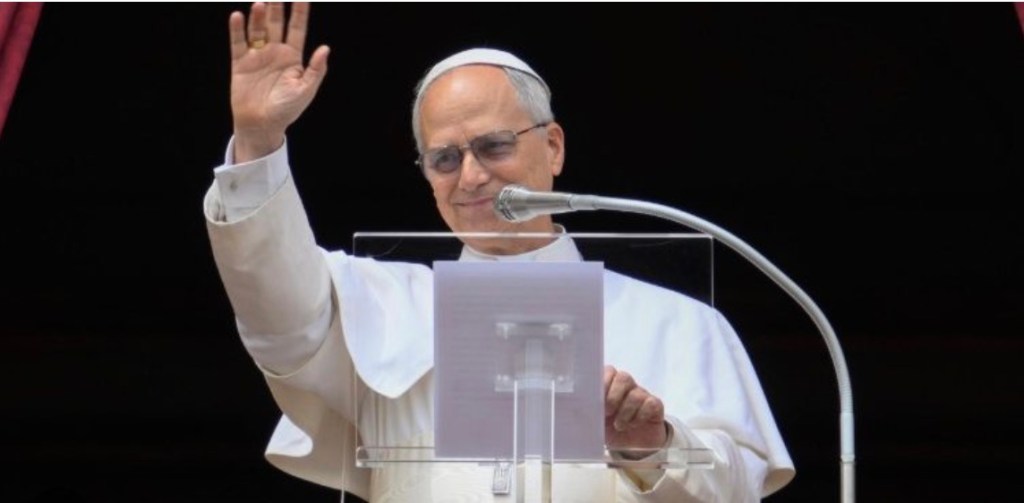
Pope Leo encouraged us in his Regina Caeli address on May 11 to, “ask our Heavenly Father to assist us in living in service to one another, each according to his or her state of life, shepherds after his own heart, (cf. Jer 3:15) capable of helping one another to walk in love and truth.”

Jesus and Pope Leo show us the way to the Father is to ask him for help. Let us ask God, our Heavenly Father to help us to live more consciously and pray to renew and conform our lives to the Jesus who gave his life that we might be free from the grip of our own sins, prejudices, and darkness. May we allow the love of the Holy Spirit to guide and flow through us, so as to dissolve attitudes of hate and division, and instead soften our hearts that they would be more open to dialogue and healing.

May we no longer turn away from the temptation of revenge and fueling contempt, hate, and dehumanization, and instead choose to pause, breathe, receive, rest, and abide often in Jesus’ love for us. Empowered and embodied by his love, obeying God’s will and his commandments, we will be empowered to resist the easy and impulsive reaction so as to not retaliate in kind, but instead choose to intentionally respond in ways that are understanding, compassionate, and loving. In this way, we can heal and help others to heal and to “walk in truth and love.”

———————————————————————————-

Photo: Pope Leo offering his first Regina Caeli address on May 11, 2025. Vatican News photo credit.

Link for Regina Caeli Pope Leo

Link for the Mass readings for Saturday, May 24, 2025

Accepting Jesus’ invitation to slow down can help us to grow in our relationship with him and experience more peace.

Our days are so full of activities, conflicts, health issues, technological stimulation, 24/7 news cycles, social media interaction, challenges, polarization, as well as good and healthy activities, pursuits, interaction, and engagements which can all contribute to our emotional, physical, psychological, and spiritual weariness. If we do not have the proper foundation and orientation, we can feel stretched, hollow, and/or fatigued at best. One day can seem to blend into another, and another, and another. The image of being on a hamster wheel or an unending treadmill can fall afresh in our mind’s eye when we actually do take a minute to breathe. Anxiety, worry, stress, fear, prescriptions, and addictions all appear to be on the rise and swirling out of control.

Is there an answer to this hyper pace or are we doomed to just keep going until the wheels fall off? The opening verse in today’s reading provides an antidote when we are feeling any or all of the above.

Jesus said to his disciples: “Do not let your hearts be troubled. You have faith in God; have faith also in me” (Jn 14:1).

Jesus was speaking specifically to his disciples after he had talked to him about leaving them. He was going back to the Father through the way of the cross. No matter the challenges that we face, even death, our own or a loved ones, we are invited to place our trust in God through his Son, Jesus. By putting God first does not mean that the externals to our life will immediately take an abrupt turn for the better. What establishing a foundational relationship with Jesus does mean is that we will have support and divine assistance. We are not alone in our struggles. The disciples found this out when in the midst of a sudden sea squall. Their boat was taking on water as the waves grew higher such that they were terrified and so, called to a sleeping Jesus. Jesus awoke and with a word, he calmed the sea (cf. Mk 4:35-41).

Jesus may or may not calm the sea of our trials and tribulations, but what he will do is be present with us through our storms in life and we can trust in him that he will guide us through. As we grow more confident in our trust in Jesus, we will be assured that no matter who or what comes at us, he will be there to assist us. We will experience a peace that surpasses all understanding and calm within ourselves. The ultimate assurance that Jesus provides is that when we surrender our life to him, we belong to him, we are not alone or orphaned. He gave his life for us, to redeem and save us so that we can be assured of our home for eternity. “I will come back again and take you to myself, so that where I am you also may be” (John 14:3).

Jesus promised he will come back for us at the hour of our death. He is preparing a place for us in the heavenly kingdom. We do not have to just wait for him to come back though. By growing in our relationship with him now, we enter into and participate in the loving relationship Jesus shares with his Father and experience the love of the Holy Spirit.

If we are struggling at any level and are seeking to build our trust and faith in Jesus, it is important to proceed patiently. God works slowly and this goes against our seeking of instant gratification. God is building a foundation in us which is meant to last not only in this life but in the next. When we make time to sit at the feet of  Jesus, slow down and breathe, ask for his help, seek his discernment about where we can make changes in our life, he will lead us. We just need to trust him and be willing to follow his lead.

This time does not need to be lengthy, three to five minutes a day to start can do wonders. On the surface level, by stopping for five minutes to pray and breathe more deeply and consciously, we get off the wheel, we step out of survival and reaction mode, so that we can then make more intentional and insightful decisions, and we can come to see that we truly have options, but more importantly, we begin to develop a relationship and intimacy with Jesus so to begin to recognize his voice in our stillness and in our activity. When we show up, God will happen.

The Liturgy of the Hours, and the daily readings of the Mass, meditating, praying, and contemplating the word of God have been foundational for me and my transformation, healing, and growth. Over my two years at the seminary, I was also introduced to practicing a holy hour of prayer, often before the Blessed Sacrament daily. Each of these practices have become foundational and non-negotiable anchors in my day. Setting the time aside with my busy daily schedule has been a challenge over my first year of priesthood, but doing so has helped me to better prioritize my time and seek the guidance of Jesus to guide me.

Having set times to stop to meditate and pray throughout the day has been helpful, especially on those days when my schedule is full to overflowing. Author Wanda E. Brunstetter, wrote, “If you are too busy to pray, you are busier than God wants you to be.” There is a lot of truth in her statement. I have had busy days, weeks and months, where I have wondered if taking the time to pray and meditate was really the most sensible choice. Time and again doing so has made an incredible difference and has now been helping me better reevaluate what I schedule into each day. 

The Rosary is another great way to get into God’s word by meditating on the mysteries of the life of Jesus and Mary. If you are not able to pray the whole Rosary in one sitting, start with one decade a day. Read for a few minutes from the Bible once in the morning and then return to meditate on the same verse or verses that touch or challenge you throughout the day. You can also read the daily Mass readings and place your self in the scene and allow the account to open up before you as if were actually there.

Each of these practices offer us a few of the many ways to stop the madness, to slow down, simplify, and connect with the power, the love, and the grace that Jesus yearns to share with us such that no matter the external or internal upheaval, we may experience his peace, that peace that surpasses all understanding (cf. Philippians 4:7).

—————————————————–

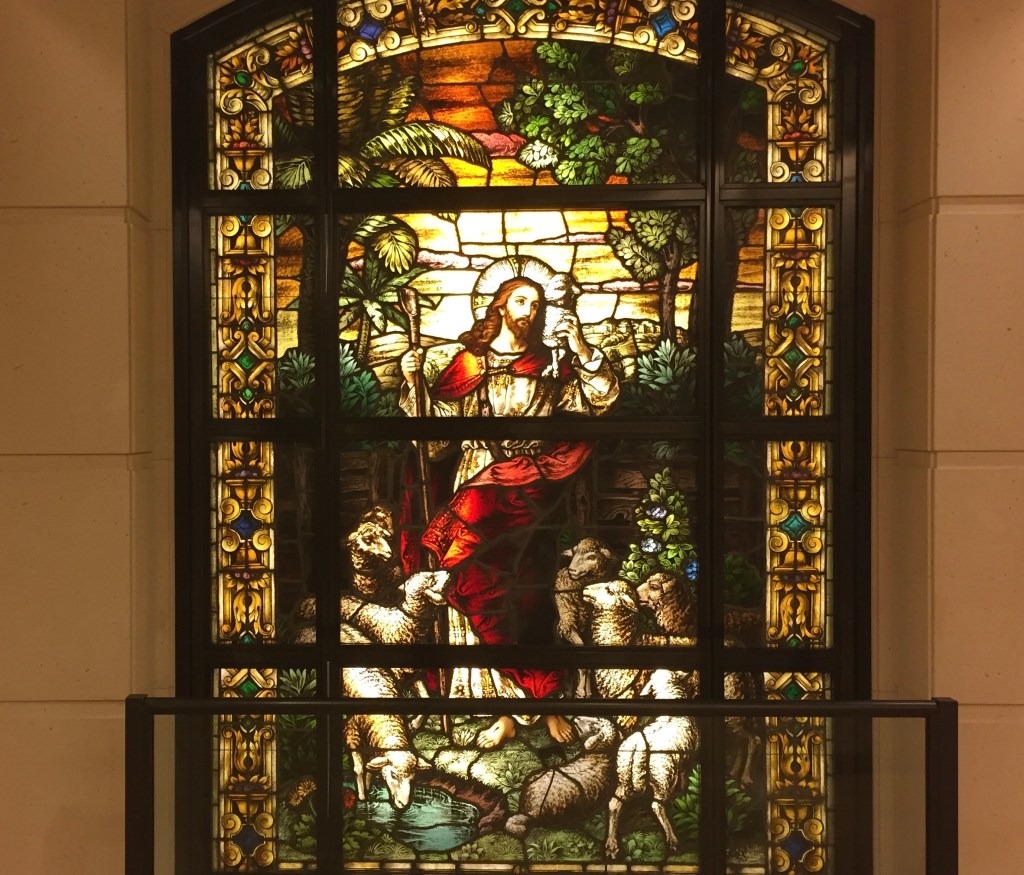
Photo: Jesus is “the way, the truth, and the life” (John 14:6) . Let us trust him, take his hand, and follow his lead.

Link for the Mass readings for Friday, May 16, 2025

“I am the way, the truth, and the life.”

In our growing global and increasingly interacting world, a sense of pluralism, the recognition and affirmation of diversity and peaceful coexistence has become more and more of an ideal. In and of itself, the embracing of diversity is good. Especially when we have and continue to experience and see such atrocities committed in the name of “tribalism”. What can be a dark side of pluralism though, is that for the sake of getting along we are not true to who we are, we limit our public discourse so as not to offend.

Identity is also not to be held up as the sole model either. Identity has a dark side as well in that we can easily slip into a defensive posture when we feel our identity is threatened. This is why we are told that if you want to have a conflict free conversation you may want to avoid speaking about such topics as politics and religion. The reason is that in these areas we identify ourselves with our personal beliefs and if someone critiques or criticizes our beliefs we feel personally threatened, and more often than not, we slip into a defensive posture and reactive mode. Dialogue quickly devolves into talking at and over each other.

These thoughts lead me to the opening verses in today’s Gospel from John: Jesus said to Thomas, “I am the way and the truth and the life. No one comes to the Father except through me. If you know me, then you will also know my Father. From now on you do know him and have seen him” (Jn 14:6-7). This may not appear to be a pluralistically sensitive comment if wanting to keep calm at the dinner table. Though it is a statement of truth.

Another statement from Jesus that could raise the hackles of those who are not Christian is, “No one comes to the Father except through me.” This may appear, at face value, to be an arrogant statement. Unless, Jesus is who he says he is, the Son of God, the Second Person of the Trinity. If Jesus is God, then of course to get to God you will be going through Jesus. Jesus does not say that you have to be a Christian to get to God. Jesus himself was not a Christian.

Regarding interfaith dialogue the Catholic Church has come far regarding some dehumanizing stances from the past to embrace a truer interpretation of Jesus’ statement. The Vatican II document, Nostra Aetate, meaning In Our Time, the first lines of the document, states that the Catholic Church “rejects nothing of what is true and holy… She has a high regard for the manner of life and conduct, the precepts and doctrines which, although differing in many ways from her own teaching, nevertheless reflect a ray of that truth which enlightens all…”

The place to enter dialogue is not to avoid sharing about the truth of our beliefs, but to be able to reclaim the ability to share clearly what we believe and be willing to allow someone else to do the same. We have lost the ability to have a good argument or debate that is founded on the respect and dignity of the person first, an openness and understanding for different and diverse opinions and beliefs, grounded in the ultimate goal of learning and growing from one another.

We can reclaim the gift of dialogue if we are willing to let go of the need to talk at others, to be right, and entrench ourselves in our positions, and instead seek to be more grounded in integrity instead of identity. To grow as a person of integrity means developing the ability to think critically and with a more nuanced outlook, resisting absolutes and black and white thinking. Another line from Nostra Aetate states: “Let Christians, while witnessing to their own faith and way of life, acknowledge, preserve and encourage the spiritual and moral truths found among non-Christians, also their social life and culture.”

Being a person of integrity means standing up for the dignity of another person no matter who they are because they are a human being, created in the image and likeness of God. This is what the parable of the Good Samaritan was all about. Being a person of integrity means martialing the courage to hold someone accountable and refuse to look the other way just because they are of the same gender, political party, religion, or tribe. Being a person of integrity means saying what we believe and allowing another to do the same, respecting our differences, agreeing to disagree, and finding common ground where we can. In this way we are more open to growing and broadening our understanding of the people and wonder of the world around us.

Being a person of integrity is not easy. To follow Jesus, who is the way, the truth, and the life, demands courage to speak truth to our peers, to power, to speak truth in and out of season, in the midst of our fear of conflict, of offending, and of being wrong. Jesus invites us to have the humility to recognize when we have not respected others and are willing to be held accountable. To strive for being people of truth and integrity is worth the effort, otherwise we succumb to a slow death of cowardice that eats away at our soul. When we are true to who we are and who God calls us to be, we can experience the soaring heights of the freedom and joy we were created for!

Jesus, help us today in our discernment to be true to who your and our Father calls us to be and help us to be more willing to allow the Holy Spirit to fill us with his courage, joy, and love so to strive to be people who are willing to be aware, to care, to enter into dialogue, to serve, and to be people of integrity.

———————————————————————

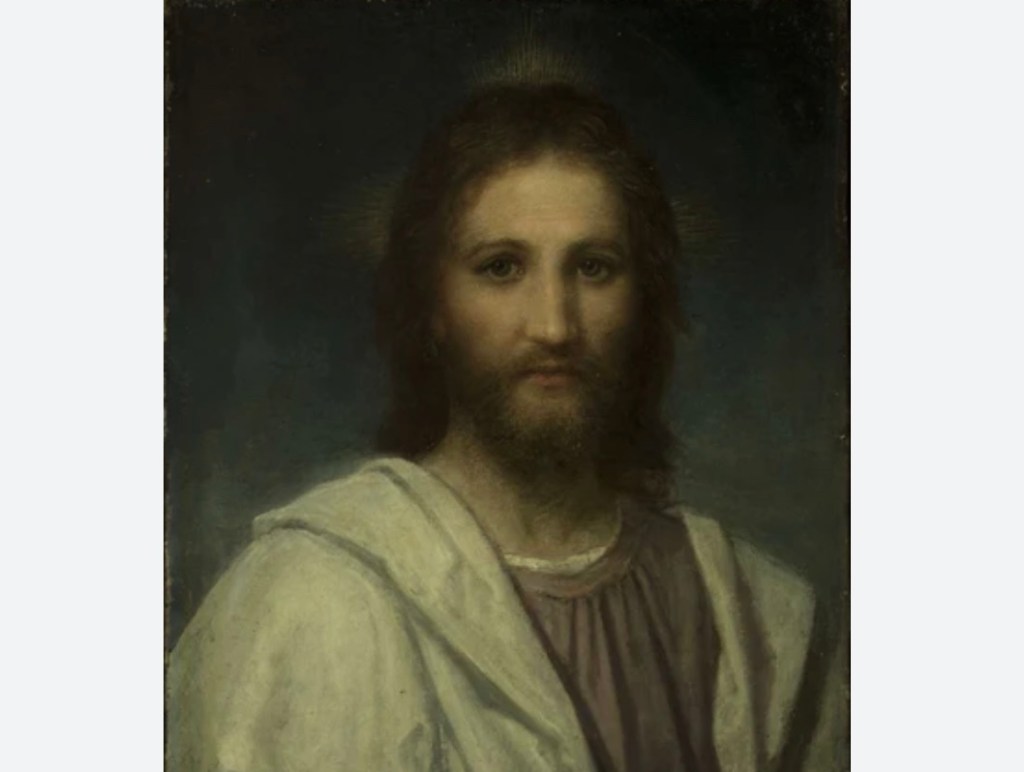
Photo: “Head of Christ” by Heinrich Hoffman

Nostra Aetate, Declaration on the Relation of the Church to non-Christian Religions, October 28, 1965. Tr. in Vatican Council II: Vol. I: The Conciliar and Post Conciliar Documents, Costello Publishing, 2004.

Link for the Mass readings for Saturday, May 3, 2025

If we are willing, Jesus has come to set us free from our sins and lead us home.

It is interesting to note that in today’s Gospel reading from John, Jesus spoke to those who “believed in him” (Jn 8:31). But the more he talked, the less they seemed to understand who he was: “If you remain in my word, you will truly be my disciples, and you will know the truth, and the truth will set you free.” His listeners balked at the word “free”, asserting that because they were ancestors of Abraham they have never been enslaved by anybody.

In the United States of America, freedom is also highly valued. Many of us would probably react very much in the same way. We may have different ways of expressing why we feel that we are free, but we would certainly assert that we are not enslaved to anybody or anything.

Jesus’ words ring just as true then as they do today: “Amen, amen, I say to you, everyone who commits sin is a slave of sin.” Jesus shined his light on the truth that many of us do not see, which is our enslavement to sin. If we truly seek to be free, then we need to acknowledge this point. What many of us claim to be freedom, doing whatever we want to do, when we want to, and how we want to do it, is not true freedom. We cannot even hear the clanking of the chains or feel the weight of the shackles chaffing at our skin as we raise and shake our fists to assert our freedom of indifference!

Our response to Jesus’ statement: “who commits sin is a slave of sin” ought not to be one of hiding, denying, rationalizing, attacking, fleeing, or refusing to acknowledge such a thing as sin. It is better to embrace the truth that Jesus is placing before us. In this way, we allow his light to expose the darkness in our hearts where sin speaks and we realize where we have said yes to the father of lies. Becoming aware of our fault for those things we have done and have failed to do is the first step in becoming truly free.

When Pope Francis was asked in an interview, “Who is Jorge Mario Bergoglio?” he answered, “I am a sinner, but I trust in the infinite mercy and patience of our Lord Jesus Christ, and I accept in a spirit of penance.” We are all sinners because of the fact that we all in some form or fashion place idols before God. This is not a negative or defeatist attitude, quite the contrary. When we call out our sins in truth, we can be freed from them. When we think our life is about us first and foremost, and ignore or rationalize our sin, we allow them to have power over us.

We become free from our sins by acknowledging that we have sinned and fallen short of the glory of God. This does not mean that we are awful people. It just means that we have fallen for an apparent good instead of the true Good that God wants for us. We have missed the mark of our true fulfillment. We need a savior to free us. Jesus accepts us as sinners but does not want us to remain in our sins. We do not have to be perfect nor have our house in order for him to come close, for he is already waiting for us. We do not need to be worthy, we just need to be willing to open the door when he knocks, and invite him into the chaos of our lives so that he can heal us with his grace, love, and mercy. When, “the Son frees you, then you will truly be free.” 

——————————————————————

Photo: Jesus is always, always looking for us and seeking to carry us back home.

Link for the interview with Pope Francis from America Magazine, September 30, 2013

Link for the Mass readings for Wednesday, April 9, 2025

Seeing Jesus as he is will help us to experience the love of his Father!

Today’s Gospel reading is a sad account. For the first time since beginning his public ministry, Jesus has returned to his hometown of Nazareth. He entered the synagogue on the Sabbath and preached and taught in his “native place”. Unfortunately, this was not a roaring success of the hometown boy returning home to make good. Initially, it seems that the immediate reaction was the same where he had been preaching before. People were “astonished”.  This astonishment though was not received in the same way as his other audiences. The outsiders he preached to were amazed at the authority and power of his teaching. The hometown crowd looked at Jesus more with contempt.

This is a window into this small town of not more than 500 at the highest estimates. It is also a window into what really happened when Jesus returned home after being lost when he was twelve. What happened in those missing years from twelve until the beginning of his public ministry around thirty was most likely insignificant at best. As Mark mentioned, Jesus was merely a carpenter and the son of Mary. This identification is only used by Mark. Was this because of the roots of Jesus’ conception happening while still during Mary’s betrothal period to Joseph? Or, speaking of Jospeh, could this reference be to the fact that Joseph had already died, although, Jews more often than not during this time, referred to sons by addressing the name of their fathers, such as Jesus the son of Joseph, not by their mothers.

Most of the people here did not accept that he spoke with authority, healed, exorcised demons, or tamed violent winds and waves at seas as the lead stories coming into town had said. Jesus’ words were not received, and so he was not able to bring those who knew him for the greater majority of his life into deeper communion with his Father. The whole reason that he came was to bring light to a world suffering in darkness, and those closest to him refused the invitation such that: “he was not able to perform any mighty deed there, apart from curing a few sick people by laying his hands on them. He was amazed at their lack of faith” (Mk 6:6).

For the first five chapters that we have been going through each day with Mark as our guide, many were amazed at the power of Jesus’ preaching, presence, and miraculous works. Jesus was amazed that those who probably he was closest to more than anyone else, refused to believe. They had heard about and now witnessed themselves, the power of his preaching, but they could not see past the simple carpenter.

Is our world today becoming more and more like Jesus’ “native place”? Do we take Jesus for granted, if we pay him any attention to him at all? Where miracles are dismissed as hoaxes or coincidences at best? At one point, CS Lewis, I believe, wrote that Jesus is either a liar, a lunatic, or the Lord. He cannot be anything else upon a close reading of the Scriptures. Today, some circles would add that he is just made up.

We seek to know in the depths of our hearts, all of us, atheists and believers alike, as well as everyone in between. We seek to know the truth. Authentic faith seeks understanding. A questioning and searching mind are the ingredients for a living, relevant, and vibrant faith and life.

Yet, we can limit ourselves for many reasons and experiences that we have gone through in life. We can, like the Nazoreans, limit the truth of Jesus by accepting a caricature of him. As St. Thomas Aquinas taught: “To one who has faith, no explanation is necessary; to one without faith, no explanation is possible.” There are reasonable ascents we can make to the reality and truth that Jesus is the Son of God, but our reason can only go so far. God’s grace builds on nature. God has given us an intellect and will to seek and to know, but we also are not only limited to our ability to reason. God also reaches the deepest core of our being when we are willing to trust him a little and open our hearts and minds to his revelation.

May we resist setting limits, settling for a minimalist or cynical approach, and the hardening of our hearts, and instead open ourselves up to the limitless possibilities God opens up before us! There is so much to experience when we just slow down and are still to experience the wonder of everyday, miraculous moments happening all around us. The Holy Spirit touches our hearts in our encounters with one another when we resist keeping each other at a distance, in a box neatly defined, and/or lead with our fears instead of love. God wants to share with us the gift of his Son and the Holy Spirit. Are we willing to open our hearts and minds to him, even a little, and allow the love of God to happen today?

———————————————————————–

Photo: The wonder of looking up! Stopping for a moment a few nights ago on my Rosary walk!

Link for the Mass readings for Wednesday, February 5, 2025

May we allow ourselves to be transformed by the truth and love of Jesus.

When I taught religion and theology, I have asked my students if Jesus ever sinned. Inevitably, someone referenced the account from today’s Gospel. In these verses, we read how Jesus, “made a whip out of cords and drove them all out of the temple area” (Jn 2:15). Jesus is not sinning here, rather, he is acting in line with prophetic tradition. Jesus is making a bold spectacle to drive home the point that the temple is not a marketplace but it is to be a place of worship and right praise to his Father.

Greater still than the temple, is the people of God. Further down in the text, when those present ask for a sign to justify this act, Jesus said: “Destroy this temple and in three days I will raise it up” (Jn 2:19). Clearly, he was pointing to his body as the temple of God and referring to his Resurrection to come.

The temple, the house of God, believed to be the corporal presence, the very seat of God among his people, Israel, was destroyed in 70 AD by the Romans. This left a tremendous spiritual, political, and social vacuum. Two groups that were intimately tied to the sacrificial cult of the temple, the Sadducees and the Essenes, very soon after the destruction, ceased to exist as a sect within Judaism. The Pharisees, who already were moving to a practice of home worship that mirrored the worship in the temple, would survive and be the ancestral root of different expressions of Judaism today. Another sect would also arise as the followers of the new way of Jesus which became the Church, the Body of Christ.

Each of us has a unique part to play in the Church. We are called to bear witness and practice, in our own unique way, our faith in our everyday experiences. We may be the only Bible someone ever reads. This call to put our faith into action is not an invitation to be overwhelmed by nor an excuse to assume a posture of elitism. We are no better than anyone else.

Pope Francis wrote: “Believers should not be presumptuous; rather, truth leads to humility. We know it is not ourselves possessing truth, it is truth that embraces and possesses us” (Costello 2013, 14). We are to seek and follow Jesus, the Way, the Truth, and the Life, and allow his truth and his love to shape and transform our lives. When we are willing to encounter and walk together, we learn and grow from one another. We are also less apt to keep others at a distance and become more willing to draw close.

We need to resist all that contributes in any way to the dehumanization, hate, and violence by rooting ourselves in Jesus, the living Temple. In doing so, we will become aware that we ourselves are temples of the Holy Spirit. In spending consistent time in silence, prayer, meditation, study, worship, and service, we not only purify our temple, we better know God’s will, and will be conformed to and empowered by the love of Christ to be instruments of peace, contemplatives in action, and advocates for healing and reconciliation in a wounded and weary church, politics, country, and world.


Photo: Rosary walk during on of my final evenings back at the St. Vincent de Paul Regional Seminary mid June.

Costello, Gwen. Walking With Pope Francis: Thirty Days with the Encyclical The Light of Faith. New London, CT: Twenty Third Publications, 2013.

Link for the Mass readings for Saturday, November 9, 2024

Jesus opens us up to and leads us to experience the Truth.

After Jesus continues to call out those Pharisees who follow their own will and put themselves in the place of honor instead of God, one of the scholars of the law said to him in reply, “Teacher, by saying this you are insulting us too.”
Jesus did not soften his words or hold back. He went right at the scholar and convicted him as well, “Woe also to you scholars of the law! You impose on people burdens hard to carry, but you yourselves do not lift one finger to touch them” (Lk 11;45-46).
Jesus is clear about his mission, about what the kingdom of God is not and what it is. Jesus is shining a light on the practices of those Pharisees and the scholars of the law that are not fulfilling the Law and the Prophets. I believe that there were those who were. Yet, for those he challenged, he did so in the hope that they would see the darkness that was blinding them. Unfortunately, unlike Bartimaeus (see Mk 10:46-52) who knew that he was blind and wanted to see, this is not true for these whom Jesus confronted.
How about us? Are we aware of our blind spots? Are we willing to allow Jesus to shine his light and love in our direction? Will we cover our eyes because the light is too bright and withdraw further into the shadows, or will we remain still and allow our eyes time to adjust so that the brightness of the Mystery of God will reveal to us that which has kept us bound? Will we justify, or rationalize our behavior or those of others that we know are sinful, or will we be transparent, repent, believe in the Gospel, and walk further into the light and the embrace of Jesus?
Let us resist the path of those Pharisees and scholars of the Law who imposed heavy burdens without being willing to help others along the way. We do need to know the law, the Catechism, the Bible, Canon Law, participate in the sacraments and be people of prayer and service, all doing so for the purpose of coming to know Jesus and the love he shares with the Father who is the Holy Spirit. We have been created for nothing less than to participate in the very love of God, to become divine through our participation in the life of Jesus. This love and relationship with God increases as we share what we have received with others.
Jesus did not come to abolish the Law and the Prophets but to fulfill them. He was actually much more demanding than the Pharisees or the scribes. The difference is, Jesus invites us into his divine relationship to empower us so that we can also fulfill the prescriptions and practices that God has commanded. Doing so is not for God’s sake but for ours! God’s divine law is in place so that we can experience freedom from the false truths, diversions, distractions, and attachments that we have fallen for. Meditating upon God’s law and putting it into practice is like a tree planted near fresh water that will never wither and fade. Our roots that run deep will continue to receive nourishment and sustenance even in times of drought, challenge, and trials.
Jesus beckons us to come out from the shadows and into the radiance of his light. As we experience his love and mercy, he encourages us to continue to move out of our comfort zones and complacency so that we may encounter others with the same love and mercy we have received. Jesus does not expect us to live the life he challenges us to aspire to all on our own power. Apart from Jesus, we can do nothing, but with Jesus all things are possible.

Photo: Enjoying some quiet time of breathing, praying, and walking with Jesus and Mary. Rosary walk, Vero Beach.
Link for the Mass readings for Wednesday, October 16, 2024

“You are lacking one thing…”

A man approached Jesus seeking to know what he must, “do to inherit eternal life” (Mk 10:17). Jesus interestingly shared the commandments of Moses’ second tablet, those of loving neighbor such as: do not kill, commit adultery, steal or bear false witness; do not defraud, but do honor his father and mother (cf. Mk 10:19), not any from the first tablet regarding how to relate to God. The man affirmed that he had followed them all. Jesus did not challenge the man’s response. The disciples, I bet, though perked up and prepared to watch Jesus lead this man deeper.

Jesus, looking at him, loved him and said, “You are lacking one thing. Go, sell what you have, and give to [the] poor and you will have treasure in heaven; then come and follow me” (Mk 10:21).

Jesus did not admonish or condemn the man. Mark, who most likely got this eyewitness detail from Peter, wrote, “Jesus looking at him, loved him”. Jesus loved him and hoped to help him to see that there was something still lacking in him, still holding him bound. So he lovingly invited him to take the next step to fulfill the deepest desire we all have, which is to be one with God and one another.

Instead of embracing the invitation, the man was crestfallen. That he followed the prescriptions of Torah all his life, and most likely sincerely felt he was blessed by God with the gift of having many material goods, in the end, did he really know God any better by following the precepts of the law alone? In the end, did he worship God or his possessions which still enslaved him.

He may genuinely have come to seek eternal life, but as many misunderstood the kind of  messiah Jesus would be, he did not grasp the reality of relationship that God invites us to experience. This man was likely serious, disciplined, well mannered, and virtuous but made the mistake in thinking this all came about by his own doing. He thought the things he received from God was his blessing, not realizing that God wanted to give this man the greatest gift of all, himself.

Jesus invited the man to follow him, and in so doing he was now bringing in the first of Moses’ tablets, the first three of the Ten Commandments, which have to do with our relationship with God. Jesus answered this man’s question, “What must I do to inherit eternal life?” by saying, “You are lacking one thing. Go, sell what you have, and give to [the] poor and you will have treasure in heaven; then come and follow me” (Mk 10:21). Interestingly, Jesus did not say, follow God, he said follow me! Jesus is the Son of God, he is God incarnate.

The heart of the commandments invite us to be free from that which enslave us, so that we can put God first and foremost in our lives, so we can experience and receive his love, so we can grow in our relationship with him and one another free of unhealthy attachments. This is what we all have been created for, as St. Augustine himself realized when he wrote, “You have made us for yourself, O Lord, and our hearts are restless until they rest in you” (St Augustine, Confessions).

I invite you to return to this scene from Mark 10:17-31. Recall the image of the disciples and Jesus watching the rich man walk away sad. Become aware of the eyes of Jesus, his gaze now on you. What stirs within you as you receive his gaze and his love?

Allow yourself to take a breath and ask, “What must I do to inherit eternal life?” Continue to look deeply into Jesus’ eyes as he says, “You are lacking one thing…” How does he fill in the blank for you?

What is your response?
————————————

Painting image based on the Shroud of Turin.

Link for the Mass readings for Sunday, October 13, 2024