May we be instruments of joy!

“But I will see you again, and your hearts will rejoice, and no one will take your joy away from you” (Jn 16:22). Jesus continues to prepare his disciples for his horrific death by offering hope that he will see them again. That he will see them again is not a typo. We can read about the exchanges between Jesus and his risen disciples. Jesus appeared to Mary of Magdalene at the tomb, he appeared to Cleopas and his companion on the road to Emmaus, and he appeared to the ten and then the eleven with Thomas. Jesus sought out those he commissioned to proclaim his Gospel message after his resurrection, just as he had done during his ministry before his crucifixion.

When Jesus did appear to them again, at the moment of recognition, there was wonder and great joy! It is hard for us to even imagine these early resurrection accounts. The disciples witnessed his brutal death, lived in fear because of the very real possibility of their own persecution and similar death, and then, they encountered the risen Jesus. St Paul would also shortly thereafter encounter Jesus on a different road, the one to Damascus en route to continue his persecution of the followers of Jesus. All of their hearts rejoiced and it was this joy that they proclaimed with boldness. The Apostles, like Jesus, led with joy and love to embark on their evangelical missions. They lived a difficult and challenging life that for many ended in their own brutal deaths, yet their joy carried them through their suffering, death, and into eternity.

Life is hard, even in the best of circumstances. There is evil present in this world, not of God’s creation, because all that he has created is good. Through the enemy’s corruption of the good that God has created, bad things happen to good people, and good people do bad things. Suffering, disease, violence, natural disasters, division, corruption, hatred, and dehumanization abound. It can be easy to succumb to the overwhelming tide of negativity and assume a mindset of cynicism, detachment, denial, defensiveness, and/or indifference. Yet this is not the response Jesus modeled nor has infused his followers through the ages with.

Our response to the evil and darkness of this world is to be bearers of the joy of Jesus! We are to be as lights shining in the darkness, providing hope for those in despair, accompanying those in their struggles, and being willing to receive help when we ourselves are in need. We cannot do any of this alone and on our own but it can be done in participation with Jesus and each other. The Apostles, disciples, and saints, who have gone before us, have shown us that it is possible to be beacons of hope in very dark places.

Pope Francis reminds us about our mission in The Joy of the Gospel (276): “However dark things are, goodness always re-emerges and spreads. Each day in our world beauty is born anew, it rises transformed through the storms of history. Values always tend to reappear under new guises, and human beings have arisen time after time from situations that seemed doomed. Such is the power of the resurrection, and all who evangelize are instruments of that power.”

With each breath, we are invited to trust that Jesus is with us, closer than we are to ourselves, filling us with his love and joy. No one can take this joy away from us, except us, if we are unwilling to share it. Let us choose to allow the light and the joy of the Holy Spirit’s love to radiate through us, no matter how small or insignificant an act of kindness it may seem. When we do so, the darkness in our realm of influence will begin to fade away.


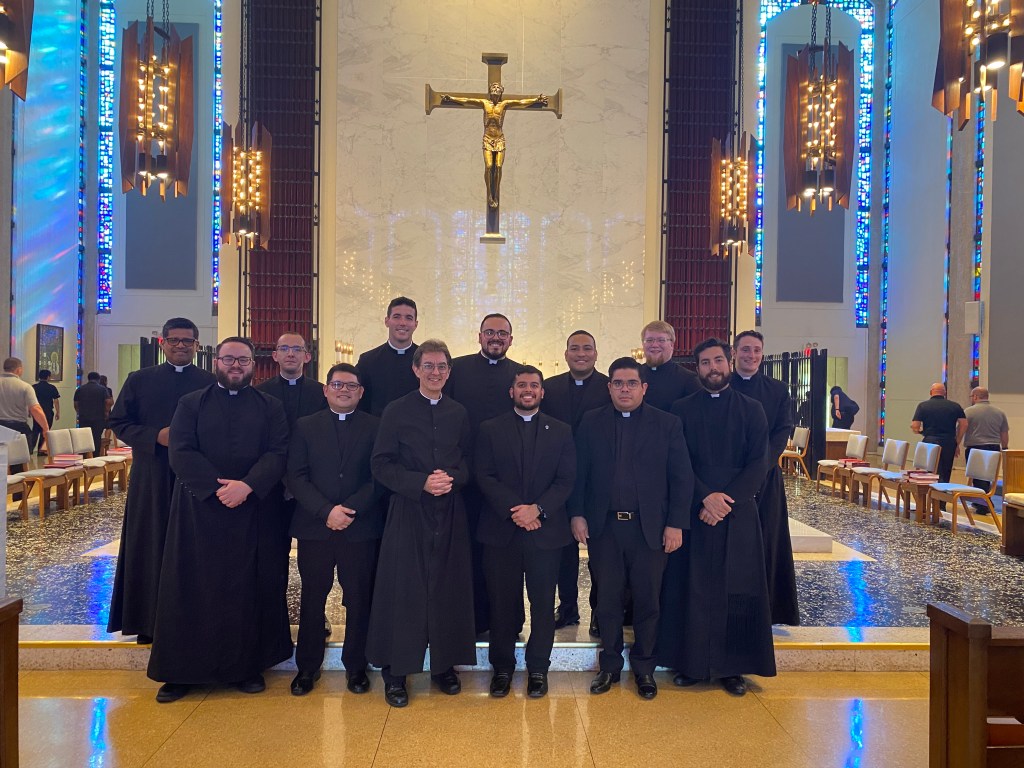
Photo: With my brothers in our final days of seminary. Please pray for us that we may continue to live, speak, and spread the joy of the Gospel!

Link for the Mass readings for Friday, May 30, 2025

Knowing Jesus helps us to experience our grief and our grief will become joy!

Jesus continues his farewell discourse and appears to be speaking in riddles: “A little while and you will no longer see me, and again a little while later and you will see me” (Jn 16:16). We who know what is coming for Jesus understand what Jesus is talking about, but for the disciples, not so much. Jesus will be crucified and rise again from the dead. Jesus then goes on to explain further that: “Amen, amen, I say to you, you will weep and mourn, while the world rejoices; you will grieve, but your grief will become joy” (Jn 16:20). Jesus is speaking about the same two points of reference, his Crucifixion and Resurrection.

Yet, his “explanation”, would not help to clarify for his disciples. This clarification would only come when the Comforter comes, when the Holy Spirit, sent by Jesus would come to reveal to them the truth of Jesus after they experienced his resurrection, time with them, and then ascension. First, they would all have to endure with Jesus his passion, suffering, and death on the cross.

The most brutal sign of oppression during the reign of the Roman Empire was the cross. It was a weapon of terror, torture, an extreme case of punitive justice or capital punishment, and in actuality state-sanctioned terrorism. The person would be stripped of all their clothing, would be nailed by the wrists, or palms, and wrists tied, nailed by the feet, and then lifted up for public display. Then would begin their humiliation, dehumanization, and long agonizing death; a sign for anyone to think twice about challenging the authority of Rome.

The disciples wept and mourned, their hopes dashed, they were stunned, ashamed, and demoralized, while others rejoiced as Jesus and the two others beside him were lifted up. The centurions flaunted their authority and prowess. Others gathered around and jeered at who they believed to be another false prophet dying on Golgotha, the hill of the skull, where so many had gone before. Where other hopes and dreams had been crushed under Roman dominance and oppression.

Jesus was sometimes described as being hung on a tree in some letters of the New Testament because writing the word, cross, was still too raw and vivid in people’s minds. This is also why there are no depictions of Jesus on the cross before the year 200 AD, and the earliest known believed to be the Alexamenos graffito was a mocking not complementary etching of Jesus on the cross. Yet, this was not the final chapter. The grief of the Apostles would turn to joy when Jesus conquered death and rose again. The cross, this symbol of torture, would become a sign of victory over death and the grave.

Yet, one centurion got it right: “Truly this man was the Son of God” (Mk 15:39)! For many Christians today, the Crucifix and Cross are no longer a sign of oppression and fear but are displayed as a sign of the triumph and victory that Jesus has won for us. They are not magic talismans, but they are sacramental signs, concrete objects that are tangible, that we can see, wear, and hold on to. Not because of some macabre fascination with death but for the purpose of reminding us that we have a God who understands our humanity because he lived life as we do. He suffered with us in our suffering and experienced pain as we do.

Jesus cried as we cry, he laughed as we laugh, and he enjoyed table fellowship with friends as well as those on the peripheries. Jesus faced rejection, misunderstanding, trials, and tribulations, he overcame conflict and rejection, he died as we will die, yet his death was not the end. Jesus conquered death, so that through our participation in his life and resurrection we have the opportunity to rise again in Christ as well.

We are still in the Easter Season, and are drawing closer to celebrating the Solemnity of the Ascension when Jesus returns to the Father. It may seem odd, but meditating upon a crucifix is a good practice not just In Lent but anytime, even in Easter, because we are reminded of what Jesus went through and what he overcame. When we are going through a particularly rough patch, we can hold the crucifix, feel the wood, allow our gaze to fall upon the face and wounded body of our Lord. When we allow him, Jesus will embrace us with his arms outstretched to ease our suffering and pain, and also help us to overcome as he did.

Jesus is and continues to be present with us, closer even than the crucifix we hold or look upon. Even if we do not feel Jesus present, he is! Even when we pray daily and feel nothing is happening, Jesus is close, closer to us than we are to ourselves. The apostles experienced the life, death and resurrection of Jesus, their time together after the resurrection and up to his ascension, and then his leaving them again. It was not until the Holy Spirit was sent to them though that they truly got it, and saw the truth of who Jesus is. Then looking back they were able to connect the dots. Their grief became joy, and so can our’s.

——————————————————————–

Photo: We adore you, O Christ, and we praise you, because by your Holy Cross you have redeemed the world.

Link for the Mass readings for Thursday, May 29, 2025

The Holy Spirit will help us to continually embrace wonder and experience truth.

Benjamin Franklin is quoted as saying, “Wise men don’t need advice. Fools won’t take it.” Most of us may fall somewhere in the middle. Hopefully, we are less foolish and moving more along to path of gaining wisdom. Jesus continues his best efforts in today’s Gospel to offer guidance and assurance to his disciples that the Holy Spirit will continue to be their guide after his departure. “I have much more to tell you, but you cannot bear it now. But when he comes, the Spirit of truth, he will guide you to all truth” (Jn 16:12-13a).

Surely, Jesus could see the dimming lamps in the eyes of his disciples. As discussed yesterday, comprehending the death of the Messiah, his Resurrection, and return to the Father was a bit much to digest. Also, there was only so much that they could grasp with their finite intellect. Until they experienced the infused contemplative insights given to them by the Holy Spirit, there was only so much the apostles were going to be able to digest of what Jesus was sharing with them about the inner life of the Trinity, the divine communion of love between he Father, and the Son, and the Holy Spirit.

Yet, Jesus, though, still needed to share what his Father gave him to share, and the disciples were to take in what they could. Jesus’ death and Ascension were not to put an end to their learning, deepening of their understanding, or further developing their relationship with Jesus and his Father. The Holy Spirit would continue what Jesus started, and would to lead them to all truth, the fullness of the foundational relationship that is the source of all that exists, the Holy Trinity.

Anyone involved in teaching anyone anything or learning something for one self will know, that just telling someone something does not mean that learning has happened. There is a process of introduction, integration, practice, review, mistakes, corrections, and adjustments until some proficiency is achieved. With the disciples, this is the same. Jesus did not just present things once and move on to the next order of business. That is why John declared at the end of his Gospel that: “There are also many other things that Jesus did, but if these were to be described individually, I do not think the whole world would contain the books that would be written” (Jn 21:25).

I am sure a part of what John was talking about here were the lessons, corrections, and guidance Jesus offered. Just as Joseph modeled for and guided Jesus in his trade in carpentry, so Jesus learned from him through observation, practice, mistakes, adjustments, and corrections. Jesus guided his disciples in the same way, as a mentor with his apprentices. He was now assuring them that even though he would be leaving them, the guidance and leading would continue with the support of the Holy Spirit.

The lessons about the immanence of God, God within himself as a Trinitarian communion, that Jesus taught were not as concrete as sawing, hammering, and planing wooden beams though. God is not a being, not even a supreme being, meaning that he transcends our ability to comprehend the fullness of his reality. We will never fully comprehend God or exhaust the richness and the depth of our relationship with God. What the apostles and the saints to follow and we can still experience today is God’s grace building on his nature. When we read, pray, and meditate with these sacred texts, the Holy Spirit will communicate with us and grant us insights beyond any intellectual endeavor.

On the human level, we are guilty of malpractice in our relationships when we assume that we know everything there is to know about someone else. The gift of the person, the human being, is that we are ever-developing and growing in the mystery and wonder of who we are and who we are called to be. We can always surprise each other. If this is true for us in our relationships with each other, it is much more so in our relationship with God. Once we get to one level of understanding, we plateau for a time, but that is not the end of the journey, that is only a time to savor, to ponder, and contemplate until we are ready to go ever deeper into the truth that the Holy Spirit will reveal to us.

Our tradition teaches us that the fullness of God has been revealed in Jesus Christ, which is true, yet to comprehend that revelation will take a lifetime and continue on into eternity just to scratch the surface. St Thomas Aquinas (1225-1274), a Dominican Friar, who is considered the Angelic Doctor of the Church, was one of the top theological influences during the Scholastic Period, yet close to the end of his life he had a deep and intimate encounter with God in which he came to realize that all of his intellectual achievement, all that he had written, mattered no more than a pile of straw compared to that which God had revealed to him in a single moment of infused contemplation.

Arguably one of the wisest persons of his time, and some would say one of the most brilliant minds ever, was also one who was steeped in daily prayer and continued to be open to the majestic wonder of the glory of God. May we too continue to embrace the gift of wonder, the gift of learning, and never settle, rest and savor yes, but continue to learn and grow, to seek and hunger for the Good, the True, and the Beautiful, to continually have our hearts and minds open to allow the Holy Spirit to guide us “to all truth”!


Photo: A momentary pause during my Rosary walk to observe the interplay between some mangrove stems and barnacles. Many invitations to experience God’s wonder when we get out and about!

Link for the Mass readings for Wednesday, May 28, 2025

The Holy Spirit will help us to heal from the grief that fills our hearts.

At some point in our lives, we experience the death of someone we love. If we live a long life, we will experience even more of the pain of losing those close to us. I remember my maternal grandfather sharing with me when he was around ninety that he had outlived most of his siblings and friends. Unfortunately, for too many in our world, death is a daily event through violence in all its forms. Grief during time of loss is a natural human response. It is certainly not an emotion to be suppressed.

In today’s Gospel, Jesus shared: “But because I told you this, grief has filled your hearts” (Jn 16:6). Jesus was preparing his disciples for his suffering and death on the cross, but also letting them know that they would not be left alone. Even after his death, his resurrection and again time with his disciples, he would then at his ascension return to the Father. And better for his disciples that he would return to his Father. The Father will transform Jesus through his suffering, death, resurrection, and ascension. Jesus will assume his glorified body and the Holy Spirit will proceed from the Father and the Son to empower the apostles. They too will be transformed. No longer afraid, no more falling short of the glory of God but fulfilling and actualizing who Jesus called them to be from the beginning.

Of course, the Apostles were not able to understand what Jesus was talking about. Who can blame them? They had no point of reference for someone dying and rising again, let alone that he would ascend to the Father and send the Third Person of the Holy Trinity to be with them. The Apostles would not only feel the grief of the loss of Jesus they would also experience the fear that the same persecution that took him would take them. Jesus predicted no less. To be his follower, they would need to be willing to give their own lives as Jesus was about to do.

They did not get off to a great start. Even though Jesus foretold them of what was to happen, in Jesus’ final hour, they betrayed and abandoned him. And yet, except for Judas, because he had taken his own life, Jesus came to them again after his resurrection. He did not condemn but forgave them. Jesus would in a short time ascend back to the Father as we will celebrate next Sunday, and the disciples, with Mary, would experience the love and grace of the outpouring of the Holy Spirit at Pentecost.

Empowered by the Holy Spirit, they faced what was before them head-on, even to experience their own violent deaths, except for John. The fear of death had no more power over them, their grief and their fear were turned into joy from their encounter with the Risen Jesus and the Love of the Holy Spirit they experienced first hand.

For us, as with the Apostles, grief is real, because death is a loss, it is a change in our present reality. Yet, we celebrate this Easter Season for fifty days for a reason. Death has lost its sting because Jesus has died, entered into the fullness of everything that death threw at him, and he conquered it. Jesus died for each and everyone of us so that we can also rise with him, and be with him, and our loved ones again for all eternity.

We can believe in our minds that death does not have the final answer, yet we will still feel the grief, the pain of loss. We need to be honest with our emotions, and not stifle them, thinking by showing grief that we are in some way less a person of faith. Jesus himself wept at the tomb of his friend Lazarus. In allowing ourselves to enter into our pain, we will experience the Risen Christ who is waiting to embrace us and help us to heal. The key is to allow ourselves to experience and feel our grief, but just not to stay there.

To experience our grief and allow it to rise up when it comes is healthy and necessary but we do need to be careful that it does not define and overwhelm us. After seven months of caring and accompanying JoAnn to her death, visiting with family and friends through Thanksgiving and Christmas, I returned home, and had some time alone for the first time. I had a two day period where I was able to experience the weight of my grief and was hit pretty hard. I was beginning to sink into a dark place. Fortunately, I received a phone call from my friend, Theresa Frettered, and she invited me to a diocesan event. I didn’t want to go, but said yes. Terry was a messenger of the Holy Spirit. She invited me to leave the despair and come up for some air.

The time of grief is different for each person. “There is a time to weep, and a time to laugh; A time to mourn, and a time to dance” (Ecclesiastes 3:4). We place our hope in Jesus, the first born of the new creation, and pray that those we remembered yesterday for Memorial Day, all those we hold close to our hearts in this moment, and those who have no one to pray for them, who have left this life, are now experiencing the gift of eternal life that Jesus won for us on the cross. Our time will come too.

This is not a morbid thought. Pondering our own death helps us to not take the time we have left for granted and choose to live our lives more intentionally, with greater purpose. In doing so, we can experience a foretaste of heaven, God’s tender care for us, even on this side of heaven. When our hearts and minds are open to slow down, to invite the Holy Spirit to come close so that we may experience his love for us. For a brief moment we will get a glimpse, that death really does not have the final answer. The loving embrace of Jesus does.


Photo credit: Losing someone we love is like experiencing an amputation. We will live, but it will never be the same. Allowing the Holy Spirit to accompany and heal us will help us to learn to fly again!

Link for the Mass readings for Tuesday, May 27, 2025

As we participate in the life of Jesus we experience the love of the Holy Spirit.

What is common to all of us is that we experience some expression of loneliness to varying degrees consciously, or mostly unconsciously. We are social beings, we want to belong, to be part of, and this is why we are communal. We may do, say, or turn a blind eye to behaviors that go against our conscience just to be accepted, acknowledged, and/or noticed. This behavior further feeds our loneliness, because though we may be “accepted”, we become more alienated from our true self. We are not be accepted for who we are but who we portray ourselves to be.

At the core of our being, what we all seek is to be loved, and to love in return. We strive from the moment of our conception not only to exist but to actualize the fullness of who God is calling us to be. Through our time of gestation, we are not potential human beings, we are human beings actualizing out potential. A difference between me typing this now and when I was in my mother’s womb is that before and after my birth, I was smaller and more vulnerable.

We as human beings are a living, craving hunger and desire to be in communion with God and one another from the moment of our conception until our natural death and continuing on into eternity. This is true to the believer and the atheist alike. Until we embrace this deepest of needs and desires, we will be restless, anxious, and unfulfilled. We can feel isolated and alone, even in the midst of a hundred people or daily likes on social media. As St. Augustine shared in the introduction to his autobiography, “You have made us for yourself, O Lord, and our hearts are restless until they rest in thee.”

God has made us for himself and constantly invites us to be in a relationship with him and with each other because he is the foundation and source of our being. Sin is the turning away from that invitation, a curving, or caving in upon oneself away from God and others. It is also the unwillingness to bother or care, to reach out toward another in need. For what we do to the least of our brothers and sisters, we do to Jesus. We are not just to be pro-birth though, we as Catholics are to be pro-life, and we are invited to promote a consistent ethic of life.

Jesus became human in his Incarnation. He too, as we did, developed in the womb of Mary to show the importance of the dignity of the person and that our dignity is grounded in our relationship with God our Father, meaning we are all brothers and sisters. We are his beloved daughters and sons, just by who we are not by what we do. Jesus was not a plan B, but he was always the primary plan. In the fullness of time, when God so willed, he sent his Son to become one with us in our humanity so that we can become one with him in his divinity. Jesus is the face, hands, and body of God. He came that we might see and experience God. Jesus experienced all we experience except for sin because he never in any thought, word, or deed rejected or said no to his Father. His whole life was a, “Yes” to the will of God. Jesus is the bridge, the way to love and be loved, authentically.

In today’s Gospel, Jesus continues his farewell discourse. He prepares his disciples for the reality that he will be returning to the Father, and yet at the same time, he will not leave us alone. He will be with us for all ages. This is so because as the Son of God made man, in his Ascension, he returned to the Father not just in his divinity as the Son, but also in his humanity. God created all of humanity and his creation as interconnected, and because of that, we all experience this transcendent act of the Ascension when Jesus returned to the Father in his glorified, human body.

Jesus shared with his disciples: “When the Advocate comes whom I will send you from the Father, the Spirit of truth who proceeds from the Father, he will testify to me. And you also testify, because you have been with me from the beginning” (Jn 15:26-27). Jesus is talking about the Holy Spirit, the third person of the Trinity, the infinite Love experienced and shared between the Father and the Son. We become sharers in this divine love and communion of the Holy Trinity through our participation in the life of Jesus.

As we experience the love of the Holy Spirit and develop a relationship with him we begin to feel alive, we begin to heal and to feel whole, because we have experienced the love we have been made for. We have experienced being loved for who we are and as we are. We no longer have to say, do, or accept those actions that we don’t agree with that go against our conscience, to belong. St. John Henry Cardinal Newman has stated that our conscience is the “Aboriginal Vicar of Christ”. Jesus dwells within us, to guide and lead us, to help us to develop a well formed conscience. He encourages us to also say, “Yes” to his Father as he has and continues to do.

We share in the trinitarian love when we grow our relationship and participate in the life of Jesus. This great gift of grace will continue to grow as we testify to this love and share it with others. The greatest gift of God, his love that he gives us, expands as we give his love away. The more we give, the more we will receive. That does not mean fixing others or their problems. We are called to be present, to accompany, and journey with others, meeting them as Jesus met others and meets us, as and where we are. We are to laugh with, to cry along, to encourage, empower, and support, but above all to be present, to allow the love of the Holy Spirit to happen through us.

Jesus has not left us as orphans. His return to the Father through his Ascension has given us a greater and more intimate access to the Holy Spirit. By trusting in his love, we free ourselves from the tendrils of fear and anxiety. We are not alone when we say, “Yes”, to God’s will and develop our relationship with him. As we do so, we continue to actualize the fullness of our potential, become truer to ourselves, and who we are created to be. We experience that peace that surpasses all understanding and develop relationships with others based on authenticity and integrity, regardless of external pressures and experiences. We are loved and we love in return, which is what we all seek, which is who we are called to be.

——————————————————————————–

Photo credit: Some quiet time and prayer during priest convocation May 7.

Link for the Mass readings for Monday, May 26, 2025

We can experience Jesus’ peace even in our greatest challenges.

“Peace I leave with you; my peace I give to you. Not as the world gives do I give it to you” (Jn 14:27). The peace that Jesus is talking about, the peace that he gives us is a peace the surpasses all understanding, because it does not come from this world but from the love of the Trinity. This peace Jesus can give because he has received this peace from the relationship that he has with his Father. “It is a supernatural peace that arises from a total love for the Father” (Martin and Wright, 252).

God is an infinite communion of Love. There are three Persons, yet one God, because of their infinite nature. There is a complete, perfect, and infinite giving and receiving between the Father and the Son and the love that is shared between them who is the Holy Spirit. We experience this peace because of Jesus, in his becoming one with us in our humanity, we become one with him in his divinity. Because of our union with Jesus, we too then share in the love of the Holy Spirit and experience also the peace of the Holy Spirit. This peace is not just an absence of stress, anxiety, violence, and war, but a receiving, resting, abiding, and sharing in his trinitarian communion of love. Jesus seeks to share the love and peace he has received from his Father with each of us.

Jesus does not promise with the bestowal of his peace a life of perfection and peace. We still live in a wounded, dark, and fallen world and there will be challenges, trials, tribulations, and tragedy, yet through all matter of what we encounter, we can tap into the infinite well spring of the love of the Holy Spirit. He is present and accompanies us in the midst of any and every situation we invite him into. There may be chaos all around, but as we turn to Jesus and trust in him, we will experience his peace.

Today, would have been JoAnn and my 29th anniversary. I can still remember the day we received the news of JoAnn’s diagnosis of pancreatic cancer during the Wednesday of Holy Week. From that moment, our life entered a non-stop whirlwind and flurry of activity. There was so much we had to prepare and plan for even beyond dealing with the diagnosis. Despite everything, there was a peace that was consistently present for both of us. Jesus sustained us through every step leading up to her death, the time of grieving and mourning that followed, and learning how to live again without her.

Nothing this side of heaven is permanent. At best, all God has created is good, but finite. The one constant we can place our hope and trust in is Jesus’ love and support for each one of us. This is why we are an alleluia people because even death does not have the final say, Jesus does. The veil between heaven and earth is so thin at Mass because Jesus is present with us in his word proclaimed, in his Body and Blood, in each of us who gather on earth as the angels and saints gather in heaven. Jesus seeks to enter our lives and to share with us his love and peace in every situation, are we willing to open the door and let him in?


Photo: Thanks for 23 blessed years and for your help and intercession these past five and a half years. Happy 29th my heart and my love!

Martin, Francis and Wright IV, William M. The Gospel of John. Grand Rapids, MI: Baker Academic, 2015.

Link for the Mass readings for Sunday, May 25, 2025

May we pray that we will be more willing to help “one another to walk in love and truth.”

When Jesus said to his disciples: “If the world hates you, realize that it hated me first”, Jesus was not proposing an-us-verses them mentality, for he had just spoken to them about loving others as he loves them. Falling into an-us-verses mentality for those suffering from persecution is an understandable posture. It is just not the stance that Jesus proposes for us to take. We are to love our enemies, we are to love those who hate us and persecute us. Impossible? On our own will power alone, yes, for apart from Jesus we can do nothing, but with him all things are possible, even loving our enemies, haters, and persecutors.

Jesus is making it plain to his disciples that they need to be prepared, that they will face the same that he did. They will be persecuted, mocked, imprisoned, and many will give their lives just as Jesus did. The gospel message is a challenge. We are challenged to have a change of mind and heart and not to think in the ways of the fallen world. Our minds are instead to be transformed by and conformed to the love of Jesus the Christ. This means that our focus must shift away from being self first and foremost to putting God first. God is to have the primary place in our lives.

We know we are putting God first instead of our fallen nature when we react less and love more. Reactions are based in fear, defensive, and slipping into an-us-verses them mentality. “They”: are responsible for the state I am in, are taking my jobs, are not allowing me to worship or speak in the way I want to, it is all their fault, they made me do it. These are all reactive thoughts that lead to uglier statements and actions. Jesus invites us to assume the disposition resisting the temptation of reaction and instead choosing intentional action grounded in God’s love for us and making our decisions from God’s guidance and not our reactions.

The way we can be more intentional and less reactive is to spend more time making friends with silence, being more still to pray and meditate with God’s word in the Bible and also in his word of creation. Much of our reaction comes from our harried pace, keeping us from being in touch with our deep-seated wounds, fears, and prejudices. We run from the mirror Jesus holds up to us. It is important to stop and pray regularly. When we do and we are willing to face the sin in our hearts, we can identify them and let them go. We can bring our struggles, pain, and areas in need of healing to Jesus for healing. A way to begin to turn away is by taking some deep breaths and ask Jesus to shine the light of his love in our hearts so that we can see what lies hidden in those dark corners. Then we can identify those sins, renounce, let it go, be forgiven of them, and set free.

Embracing the humility to confess our sins and to die to our sinful ways helps in our healing. We are not only forgiven, Jesus gives us the grace to grow in our relationship with him and each other and we are strengthened to resist temptations. We become more patient, understanding, and truer to who Jesus calls us to be, which is people who love. We will each other’s good by treating each other as brothers and sisters. We are better able to accept that we are all imperfect, make mistakes, experience loneliness, and just want to belong, and be loved.

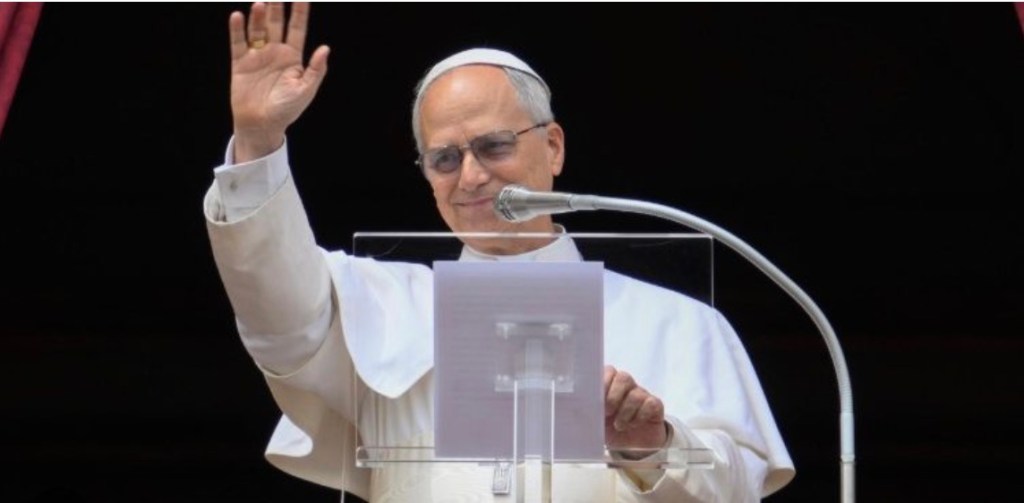
Pope Leo encouraged us in his Regina Caeli address on May 11 to, “ask our Heavenly Father to assist us in living in service to one another, each according to his or her state of life, shepherds after his own heart, (cf. Jer 3:15) capable of helping one another to walk in love and truth.”

Jesus and Pope Leo show us the way to the Father is to ask him for help. Let us ask God, our Heavenly Father to help us to live more consciously and pray to renew and conform our lives to the Jesus who gave his life that we might be free from the grip of our own sins, prejudices, and darkness. May we allow the love of the Holy Spirit to guide and flow through us, so as to dissolve attitudes of hate and division, and instead soften our hearts that they would be more open to dialogue and healing.

May we no longer turn away from the temptation of revenge and fueling contempt, hate, and dehumanization, and instead choose to pause, breathe, receive, rest, and abide often in Jesus’ love for us. Empowered and embodied by his love, obeying God’s will and his commandments, we will be empowered to resist the easy and impulsive reaction so as to not retaliate in kind, but instead choose to intentionally respond in ways that are understanding, compassionate, and loving. In this way, we can heal and help others to heal and to “walk in truth and love.”

———————————————————————————-

Photo: Pope Leo offering his first Regina Caeli address on May 11, 2025. Vatican News photo credit.

Link for Regina Caeli Pope Leo

Link for the Mass readings for Saturday, May 24, 2025

“Love one another as I love you.”

Jesus said to his disciples: “This is my commandment: love one another as I love you” (Jn 15:12). This verse is foundational to our faith as we seek to live as disciples of Jesus. Love is what Jesus lived, modeled, taught, and commanded, but even more so, love is who, as the second person of the Trinity Jesus is. Jesus is love because: “God is love” (I John 4:8). By becoming human, as one of us, and embracing the Paschal Mystery: his suffering, crucifixion, death, Resurrection, and Ascension into Heaven, the Son of God opened up the reality for us that we can also participate in the very same love he shares with his Father.

We are capable of loving others because Jesus has loved us first. How did he love us? Jesus gave his life for you and me, each and every person, for those who believe in him and those who don’t, he gave his life for the good and the bad alike. Jesus was willing to suffer the scourging, agony of his carrying the cross, crucifixion, and death. He was not just going through the motions, his divine Person was not somehow hovering over his body. Jesus felt the rejection, the betrayal, the physical torment of the nails, because, “No one has greater love than this, to lay down one’s life for one’s friends” (Jn 15:13).

Some of us may have heard this verse so many times that we do not fully appreciate the impact of it. The gift of the liturgical seasons is that the readings of Scripture are offered again and again so we can experience their telling again and again. We just need to slow down and ponder the significance of this reading, breathe in the reality of this passage, so that it becomes the living Word of God, not just a dead letter. As we do so, we will be less apt to take our lives for granted, the life we have been given at such great cost. In coming to realize the gift that Jesus gave for us, and meditating on that reality, hopefully, we can see others in our lives who we may have taken for granted. Those who have loved us, have been there for us, have been there when maybe when no one else has been.

What is our response to the love of Jesus that we have been blessed with? Jesus answers: “This I command you: love one another” (Jn 15:17). Jesus ends today’s Gospel as recorded by John where he began at the beginning, he invites us to love. Jesus loves us more than our worst mistakes or our most grievous of sins; he loves us more than we can ever hope or imagine. This is important to not only hear but to allow the reality of this grace to fill us to overflowing, such that we seek to love others as well in the same fashion.

In embracing the love of Jesus, his invitation of friendship, and with a heart full of gratitude, maybe just maybe, we too will love others a little more today than we did yesterday, and a little more tomorrow than today. Love is not a willingness to love each other only when everything is going well. Love is being willing to do so one conflict at a time, one interruption at a time, one inconvenience at a time, one heartbreak, and even one betrayal at a time. We are able to truly love when we are willing to see each other as Jesus sees us, as friends: as human beings endowed with dignity. When we are willing to do so, we are ready to love, one encounter, one moment, one person at a time.


Photo: A quiet moment to breathe, receive, rest, and abide in God’s love.

Link for the Mass readings for Friday, May 23, 2025

We love well when we are willing to dialogue well.

“This is my commandment: love one another as I love you” (Jn 15:12).

God created us from the abundance and outpouring of his trinitarian love to be loved, and to love him in return. The love that Jesus is talking about is unconditional and not just relegated to those closest to us, although, hopefully, in our families and friendships is where we first experienced being loved and learned to love in return.

The love that Jesus commands that we are to participate in as his followers, is a going out from, a giving of ourselves to, and a willingness to sacrifice for one another. We are not to seek in return, but are to empty and give ourselves away. The return we get is from experiencing the infinite wellspring and source of the Holy Spirit that rises up within us. The more we hold back, the less we receive, the more we give, the more we experience. We are to resist withdrawing our love and assuming a selfish posture that leads to us becoming more like a stagnant pool. Instead, we are to remain open so as to allow the living stream of God’s infinite love to flow through us.

The love Jesus commands cannot be done on the fly. Love is accepting the interruption and choosing to be present. Love means stopping, setting aside our agendas, and accompanying another. Love is also not coercion and manipulation, it is accepting another as they are and where they are. Love is sharing the journey of life together. St Thomas Aquinas has written it best: Love is to will the good of the other as other. This is more than mere emotion, feeling, or sentiment but actually wanting the best for someone else and rejoicing in their becoming fully alive. Nor does this mean that we become doormats or enablers of dysfunctional or abusive behavior. We hold people accountable – for to love is also to be clear about respecting our’s and another’s dignity.

This practice of love is also not exclusive but universal. Yes, we are to love those in our family, community, place of worship, tribe, political party, and nation, while at the same time we must be willing to go out from our comfort zones and protected bubbles to risk opening ourselves up to those who we feel are different, those who do not see the world as we see it, and even those we consider our enemies. This does not mean we have to agree or even like someone else. Jesus commands us to love, to respect the dignity of the person as our starting point. This is the love he offers us and calls us to do the same.

A dialogue grounded in love is a wonderful way to grow in relationship. Speaking and listening with a heart and mind open to the love of God is also a good way to participate in the divine communion of love that is shared between the Father, and the Son, and the Holy Spirit. Authentic communication happens when we state clearly our beliefs, our thoughts, and dreams, and also allow others to do the same. Even though we may differ in our points of view, we can still grow together in love for one another.

When we talk at and over one another, demean, belittle, and/or are condescending, we dehumanize each other. Pope Leo has invited us to be “a Church that builds bridges and encourages dialogue, a Church ever open to welcoming”.  We welcome and build such bridges of such dialogue when we are willing to resist staying at a distance and are more willing to come close, to love, and respect one another. From that starting point we are better able to encounter the person and free ourselves from prejudicial caricatures and labels that hopefully will dissolve through our interaction and respectfully engaging with one another.

Instead of keeping each other at arm’s length, when we are willing to love as Jesus loves us, we will better be able to listen with patience and understanding. We will learn to embrace and grow from one another. From a place of mutual, loving dialogue, we can recognize and remember again who we are, beloved daughters and sons of God our Father, friends, brothers and sisters together on this journey we call life.

—————————————————————-

Photo: Making some time to be in quiet conversation with Jesus, to receive his love and love him in return. Giving ourselves time to experience loving dialogue with Jesus helps us to better enter into loving dialogue with each other.

Pope Leo XIV quote from his May 8 Ubi et Orbi message

Link for the Mass readings for Thursday, May 22, 2025

“Whoever remains in me and I in him will bear much fruit”.

In today’s Gospel reading, we experience the imagery of the vine and the branches. As the branch of the vine matures, it begins to look more like the vine itself. As it remains connected, is sustained by the nourishment provided, and protected by the vine grower, the branches become more and more conformed to the vine. This is also true in the event that a branch not originally attached to the vine is grafted to it. Over time, the branches are almost indistinguishable from the vine itself. The blessing of the vine does not stop there. A healthy and mature branch will also bear fruit.

Our hope, as disciples of Jesus, no matter what our background, culture, gender, ethnicity, or race will be the same. We are to be one as the Son and the Father are one. As St Paul has written to the Churches in Galatia and Collosse: “In Christ there is neither Jew or Greek, circumcision or uncircumcision, male or female, barbarian, Scythian, slave or free because we are all one in Christ” (cf. Galatians 3:28, Colossians 3:11).

Being a disciple of Jesus is not being a mindless follower, quite the opposite. The more we are conformed to Jesus, the more we come to know him and also experience the unique gift of ourselves. We begin to let go of the pressures to conform to the pressures of the world, that which stunts our growth, and begin to embrace the freedom and truth of who we are. That freedom that just wants to burst out is allowed to be free when we die to our false selves and live in the love of Christ.

We will experience the freedom of being fully alive when we accept the invitation of Jesus to enter the divine communion of love between himself and his Father. We remain connected to him as the vine when we also “obey Jesus and love one another with God’s radical, self-giving love” (Martin and Wright, 254). Focusing solely and turning in upon ourselves disconnects us from the vine, from the very source of our lives. Just as the body will suffer without water and food, so our soul will suffer if we are separated from the living spring of our sustenance. Remaining attached to Jesus, the vine, means that we will mature and live our life to the full, with joy that expands out beyond ourselves to engage in supporting the needs of others.

We will mature and bear fruit as we remain in Jesus and allow Jesus to remain in us. A good measure of our ripe harvest is when we: “Put on then, as God’s chosen ones, holy and beloved, heartfelt compassion, kindness, humility, gentleness, and patience, bearing with one another and forgiving one another, if one has a grievance against another; as the Lord has forgiven you, so must you also do. And over all these put on love, that is, the bond of perfection. And let the peace of Christ control your hearts, the peace into which you were also called in one body. And be thankful” (Colossians 3:12-15).

————————————————————-

Photo: Accessed from Coravin Wine

Martin, Francis and Wright, IV, William M. The Gospel of John. Grand Rapids, MI: Baker Academic, 2015.

Link for the Mass readings for Wednesday, May 21, 2025