May we resist the hardening our hearts and allow ourselves instead to be moved with compassion.

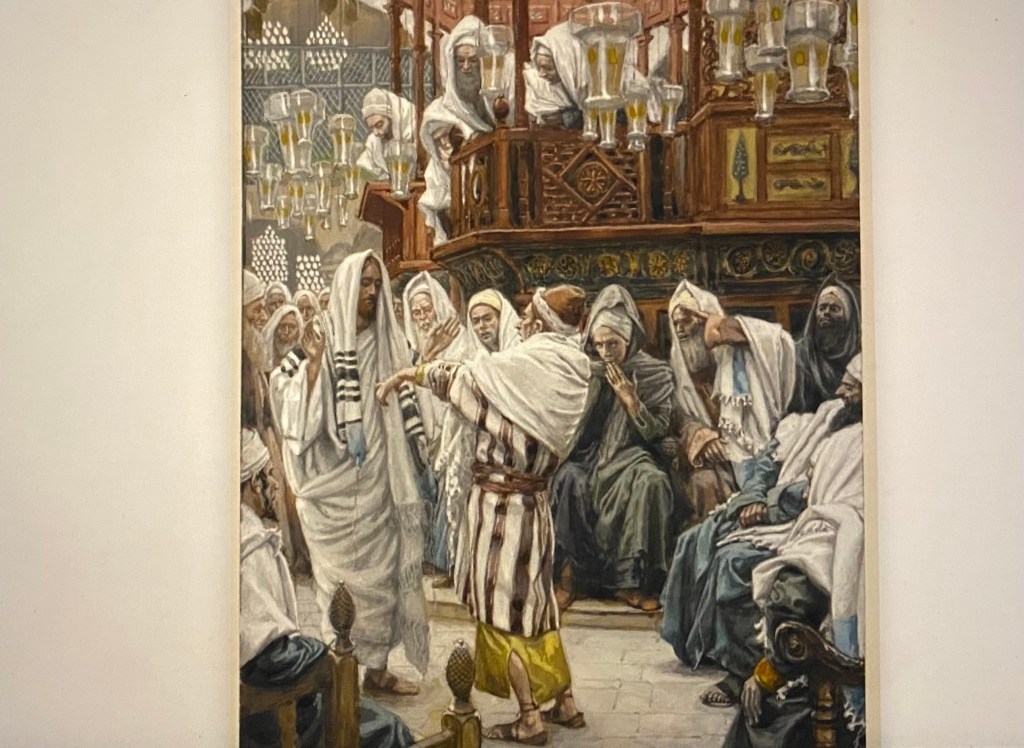
In today’s Gospel scene, Jesus enters the synagogue and sees a man with a withered hand. The eyes of the Pharisees are on him to see if, yet again, Jesus will heal on the Sabbath. Jesus is clear in his mind what he is going to do, though before doing so, he calls the man up and asks the Pharisees, “Is it lawful to do good on the sabbath rather than to do evil, to save life rather than to destroy it” (Mk 3:4)?

Jesus here is giving them a no-brainer of a question. Of course, one is to do good rather than evil on the Sabbath, to save life rather than destroy it! Yet, the Pharisees remain silent. Jesus expresses anger and grief. This may not only be an obvious question but more Jesus could be meeting the Pharisees on the ground of Scripture that they are using against Jesus. 1 Maccabees 2:41 records the account of the Maccabeans deciding to take up arms on the Sabbath to defend themselves against attack. With this in mind, Jesus may be appealing to those Pharisees that were challenging him to choose to see the healing of this man as a greater good. Unfortunately, their “their hardness of heart” shows they were not appreciative of the scriptural assistance.

At the peak of this fifth conflict in Marl, may we stop and imagine ourselves present in the synagogue and witnessing Jesus looking at the Pharisees and the Pharisees looking back at him. Ever been present when tensions were very high and there was dead silence? Imagine what was going through the mind of the guy standing in between them with the withered hand?!!!

The anger rising in Jesus may have had to do with the unwillingness of the Pharisees to show any compassion at all for this man. That they would hold so tightly to their self-righteous stance to refuse to even have a discussion about the matter. Not even to say in effect, “Yes, Jesus of course, it is lawful to do good, to save a life but what you are doing is unorthodox.” No. They refuse to dialogue. Their faces are set like flint, they dig in their heels. Even though Jesus is inviting them to take just a step to consider another alternative, they instead harden their hearts. In their silence, they are choosing evil over good, to destroy life rather than saving it. Pride has reared its grotesque head.

Jesus breaks the silence as he says to the man, “Stretch out your hand.”

The man is healed, but instead of rejoicing, and sharing the good news as Andrew did with his brother Simon, the Pharisees leave immediately to find the Herodians and begin to plot to not only undo Jesus but “to put him to death.” They who would refuse to see a mean healed on the Sabbath, did not hesitate to plan someone’s death on the Sabbath.

We have witnessed in today’s Gospel the evil of pride. We have witnessed the mercy of God presented and rejected. As is stated in the Catechism of the Catholic Church: “There are no limits to the mercy of God, but anyone who deliberately refuses to accept his mercy by repenting, rejects the forgiveness of his sins and the salvation offered by the Holy Spirit” (1864). That is what Jesus is angry about. Not only do the Pharisees resist any move in the slightest direction toward compassion, or their own repentance, they further separate themselves from the love of God. They start with a principle of defending the law, and walk out seething with a premeditated intent to kill Jesus, and on the Sabbath!

With each choice of putting self over another, pride grows. Its appetite is insatiable. Pride is known as the mother of all sins because of its disordered focus on self at the expense of all others and all else. The deadliest component of which is in direct opposition to God and separation from the very life force of our existence.

May we choose a different approach to Jesus, by surrendering our wills to him this day. May we ask him to reveal the darkness that dwells within us and grant us the humility to call it out and renounce anything that is not of God. May God grant us the courage to repent and the willingness to receive the healing touch of the Holy Spirit such that we might be transformed into Jesus’ image and likeness, so to know him and our Father more. May we reject evil and choose the good, reject pride and choose love, reject death and choose life. With each person we encounter today, may we reject the temptation to withdraw or scowl and instead offer a smile, a hand of welcome, and a listening ear.

———————————————————————-

Painting by James Tissot.

Catholic Church. “Article 8: Sin,” in the Catechism of the Catholic Church, 2nd ed. Vatican: Libreria Editrice Vaticana, 2012.

Link for the Mass readings for Wednesday, January 22, 2025

May we choose to align ourselves with the Lord of the Sabbath and lead with love.

“The sabbath was made for man, not man for the sabbath. That is why the Son of Man is lord even of the sabbath” (Mk 2:27-28).

In making the above statement, Jesus was not discrediting or devaluing the observance of the Sabbath. He was weighing in on one of the common debates that Jewish people engaged in about what was considered work, and thus what could and could not be done on the Sabbath. Jesus went deeper to address the origin of the Sabbath observance in that it, “commemorates God’s creative and saving action for humanity, and alleviating hunger might be an example” (Donahue and Harrington, 112).

Although, the Pharisees who confront Jesus are most likely looking at a strict interpretation of Exodus 34:21 in which even during the time of harvest, one “must rest” on the Sabbath. The rubbing off of the husks in their hands to access the kernels of wheat within constituted such work. Jesus offers David and his followers doing the same thing in their time of hunger when they were fleeing from the soldiers of King Saul. In claiming this account, Jesus is aligning himself and his disciples with King David and his men. The Pharisees in this comparison would then be aligned with the followers of King Saul.

God created us, formed us, and breathed life into us. God seeks intimacy and closeness between himself and us his created beings, his children. God is our source and we are interconnected in our relationship with him and with one another. God continues to deal with us in a personal way. The Torah, the Law or the Teachings, is meant to enhance the intimacy and closeness of that relationship with God and one another, to provide boundaries and definition so that we can resist going astray.

Jesus came not to abolish but to fulfill the Law, to restore it from distortion, while at the same time bring it to a higher level. When asked what commandment is the greatest, Jesus announced that we are to Love God with all our heart, soul, mind, and strength and we are to love our neighbor as ourselves (cf. Mk:12:30-31). To live out this commandment then, we need to foster our relationship with God if we are to experience his love, mercy, and forgiveness, to fill up to overflowing, so to share with others what we have received, otherwise, we have nothing to give.

With or without a relationship with God we can experience emptiness, anxiety, fear, and loneliness. Without a relationship with God, and the community of the Church, we are more vulnerable to the temptations to satiate our hunger with the material, finite, and false goods, that are readily available, and hungering more, falling deeper into the lures of power, pride, prestige, ego, and addiction. We then seek to protect that false sense of self at all costs, and react defensively, as we feed our fear and pride. We buffer ourselves off from the very one we have been created for, and those we consider as other. In following this path, we isolate ourselves from God and one another and this provides fertile ground in which fear, prejudice, sexism, and racism can grow along with the manifestation of the dehumanization and objectifying of human beings.

As a part of the Church and actively engaged, we are constantly reminded that we are not alone and that all of us and creation are interconnected. As Pope Francis shared in his homily in 2018: “Having doubts and fears is not a sin. The sin is to allow these fears to determine our responses, to limit our choices, to compromise respect and generosity, to feed hostility and rejection. The sin is to refuse to encounter the other, the different, the neighbor when this is, in fact, a privileged opportunity to encounter the Lord.”

The Pharisees that were confronting Jesus felt threatened. They refused to see who he was. We know there were other Pharisees that came to trust in and follow Jesus, Nicodemus and most famously, Saul who became Paul. They were able to see past their blind spots and come to believe that Jesus was the Son of Man, the Son of God. We are offered a choice to see Jesus as a liar, a lunatic, and blasphemer, or as our Lord.

My invitation is for us to align ourselves with the Lord of the Sabbath, who walked with his disciples among a field of wheat one day, and who is now our Bread of Life this day. Empowered by the Eucharist we are filled with the love of Jesus, we will then better be able to let no evil talk to pass our lips and to say only the good things that people need to hear (cf. Ephesians 4:29). Receiving God’s love, we will better be able to will each other’s good, even toward those who profess hate. Feeding hate will only contribute to it. Meeting hate with love can provide an invitation for hearts to soften. As with Dr. King, whose memorial we celebrated yesterday, we are called to be instruments of the light to dispel the darkness and conduits of love to transform hate.

———————————————————

Photo: Rosary walk among the sea oats back in July, Riomar Beach, Vero Beach, FL.

Donahue, S.J., John R., and Daniel J. Harrington, S.J. The Gospel of Mark in Sacra in Sacra Pagina Series, vol. 2. Collegeville, MN: Liturgical Press, 2002.

Pope Francis full text of homily at Mass on World Day of Migrants and Refugees, Sunday, January 14, 2018: http://saltandlighttv.org/blogfeed/getpost.php?id=79091

Link for the Mass readings for Tuesday, January 21, 2025

In this in between time, we fast and feast.

“Can the wedding guests fast while the bridegroom is with them? As long as they have the bridegroom with them they cannot fast. But the days will come when the bridegroom is taken away from them, and then they will fast on that day” (Mk 2:19-20).

The conflict, the third one in this gospel, that Jesus is responding to was that he is witnessed eating and drinking, practicing table fellowship with his disciples, as well as tax collectors and sinners. There is no evidence that he and his disciples practice fasting. Jesus’ response utilizes the image of a wedding banquet, which for the people of his time would often last at least a week.

Devout Jews, following the pharisaic tradition, would often fast one to two days per week, many Jews, once a year during Yom Kippur, but during a wedding feast, there was an exemption from fasting. Now that Jesus has begun his public ministry, it is a time of celebration, because Jesus has been proclaiming the good news that the kingdom of God is at hand, the bridegroom is with his, bride, his people. As Donahue and Harrington write: “People are summoned to hear the good news of the victory of God over evil, illness, and sin. Even those thought to be habitually outside the pale of God’s forgiveness are welcomed to the banquet” (Donahue 2002, 108). This is indeed a time to rejoice for heaven and earth have been wedded in Jesus, fully human and fully divine. Even more his promise is that humanity can participate in this divine union!

People are being healed of chronic conditions, having demons exorcised from them, are able to see, to hear, and be restored to the community that they had been separated from. These are causes of celebration, why wouldn’t those receiving the gift of new life not celebrate? We have and will continue to see Jesus preaching, healing, and inviting those in his midst to participate in God’s kingdom played out in our daily readings. That is one of the gifts of reading the Gospels daily.

Jesus also references his death, when he will be taken away, and then on that day people will fast. We, like the community of Mark, live in between the time after Jesus walked the earth and proclaimed his message of the good news, after his Crucifixion, Resurrection, and Ascension, until the time when he will return. We are living in a time of both/and. If we look at the course of a week as a model, we may contemplate the opportunity to fast on Fridays in remembrance of the day he gave his life for us, and to feast on Sundays, the Lord’s Day, when we celebrate his Resurrection.

The course of our lives follow an ebb and flow of sorrow and joy, sickness and healing, conflict and resolution, sin and reconciliation. In the midst of our everyday experiences, Jesus, the one who is fully human and fully divine, invites us to yoke our lives to his. Let us resist the temptations of overindulgence and gluttony while at the same time resist the polar opposite of a hyper asceticism. We are a unity of soul and body, so we need to attend to and take care of both our spiritual and physical needs.

Make a list of three things you can do for yourself this week to take care of yourself spiritually and physically. Three things to take care of the spirit, such as go to Mass or gather in the community of your faith practice, spend five minutes a day in quiet prayer, read from the Gospel of Mark, or a spiritual book, meditate in silence, and/or listen to some music. Three things to take care of the physical, such as plan your meals so they are a little healthier, fast with smaller meals on Fridays as well as even an occasional Tuesday or Wednesday, and invite family and friends to gather this Sunday for a meal and fellowship together, spend some quiet time reading, add some exercises that include a combination of stretching, cardio, and weight-bearing, take a walk outside, breath in some fresh clean air.

Life goes too fast, let us not take the gift of our life for granted, and commit this week to take better care of ourselves and each other, to celebrate the victory we have received in Christ, the wedding of heaven and earth, the human and divine.


Photo: My sister and me celebrating my mother’s birthday this past September.

Link for the Mass readings for Monday, January 20, 2025

When we trust in Jesus, just as he transformed water to wine, he will transform us with his love.

God takes the initiative to reach out to us and then we have the choice to respond. Our very desire to encounter God in prayer is already a prayer in itself, because we are acknowledging our relationship with God that already exists. Awareness that God exists is not the end goal but only the beginning. A deist believes God exists. Our God, though transcendent and beyond our realm of understanding, is at the same time a God who draws close, who initiates an encounter and invites us, each and every one of us, to have a relationship with him.

Our relationship with God begins with our awareness of his presence in our lives and a recognition that he invites us to experience him more and more. Our relationship develops in intimacy and authentically when we are willing to reveal ourselves to God and be still and open as he reveals himself to us.

Many times our relationship with God and others flattens out or plateaus for many reasons. The core of which is that we close in on ourselves. We focus too much on work or projects, seek false truths, deny our own emotional and spiritual hurts and wounds and instead of seeking help or reaching out, and we keep God and others at arm’s length. We begin to live a half life or merely exist day to day. Instead of living, we find ourselves going through the motions or reacting from survival mode.

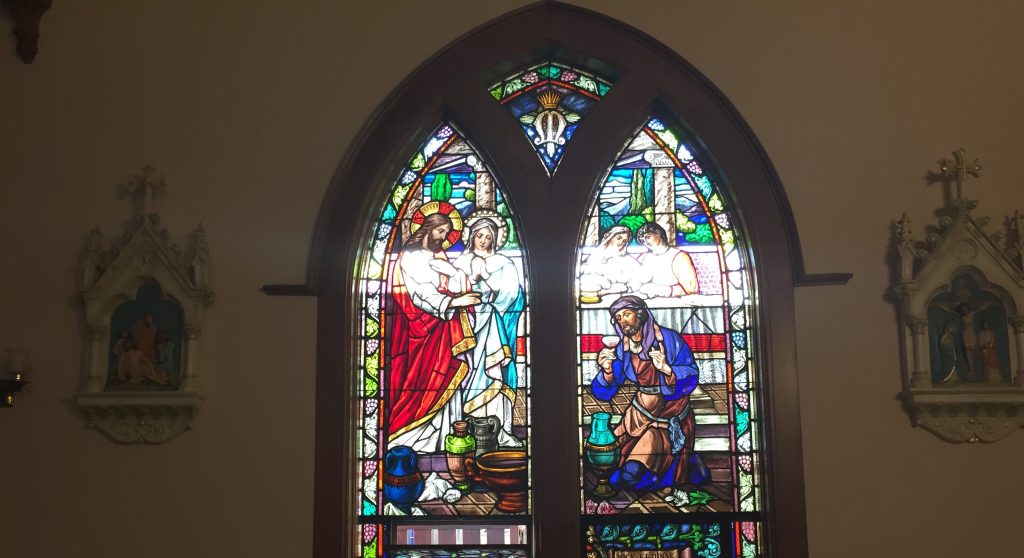
God seeks for us to be fully engaged in life. We can see this in the account of John’s Gospel for today. The wine has run out at the wedding feast of Cana. This may seem odd until we realize that Jewish weddings during this time were a week long. Mary though is aware of the need and the possible embarrassment to the bridegroom and his family if anyone finds this out. She turns to her Son, who seems to be indifferent to the situation. Is pushing back is not because he is indifferent to the need, but to affirm to Mary that this is not the hour to reveal his true presence.

This sign of changing of about 180 gallons of water to wine is only a beginning of the fulfillment of the “messianic banquet” which was to boast a superabundance of wine (see Isaiah 25:6-8). This sign will not be in the open for all to see, but only for his disciples so that they can see and come “to believe in him” (John 2:11). This will be a foretaste not only of the Last Supper, but the celebration of the Mass where heaven and earth are wedded. For Jesus is our bridegroom and we the Church are his bride. The Mass is the celebratory feast!

Our discernment for our vocation and path in life becomes clearer when we trust in Jesus. God sent his Son to invite us and help us to deepen our relationship with his Father. Jesus meets us all in our present situations and invites us to be still and listen. If doing that is not easy, or you have been attempting to do so, but continue to be diverted and distracted, past hurts and wounds arise that are in need of healing, indecision, anxiety, anger, impatience, or any other distractions or diversions assail you as you attempt to slow down and be still. Then come to a place of quiet, make the sign of the cross, and take one slow, deep breath for the Father, one for the Son, and one for the Holy Spirit. Then take another and call to mind the words of Mary: “Do whatever he tells you” (Jn 2:5).

No matter what distractions arise, return to these words, again and again, and if it helps make them your own. “I will stay still and do whatever Jesus tells me.” Or remain with Mary’s words. Begin small with five minutes a day. Be open in the time you stay with him and return to the phrase throughout the day. Over time, you will begin to slow down, experience some stillness, and you will hear his guidance.

When we are willing to turn to and sit at Jesus’ feet, listen to and follow his guidance, he will lead us to the source of our being, God his Father and our Father, and to the truth of who we are and are called to be. Just as Jesus transformed the water to wine, as our relationship with him grows, we will be transformed by God’s love. We will experience joy and strength, healing and renewal, access and means, as well as fulfillment and joy in our lives as we continue to do whatever Jesus tells us.

———————————————————-

Photo: Stained glass window of Jesus changing water to wine, St. Anthony’s Croatian Church, Los Angeles, taken June of 2019.

Link for the Mass readings for Sunday, January 19, 2025

Will we follow Jesus as Levi did?

In both the first reading from Hebrews and verse from Psalm 19 we read about the power of God’s word. “The word of God is living and effective” (Hebrews 4:12) and the words of the “Lord, are spirit and life” (Psalm 19). Jesus gives face to the living word of God come down from heaven to transform his people as he continues to teach with authority and offer healing. In today’s account of Mark, Jesus calls his fifth disciple, Levi. The key difference with this call of Levi and the four fisherman is Levi’s occupational hazard.

Tax collectors were disliked, even despised by many in ancient Palestine because they were considered unclean, and categorized as with lepers and sinners. They were cast in this net because the tax collector had a responsibility to pay a fixed amount to the occupying power of Rome. This in itself was bad enough because their own countrymen were colluding with the enemy. What made matters worse was that too many kept as a commission anything he collected over and above that fixed amount. The majority of the population, already just getting by, paying a temple tax, and the Roman tax, then finding out their local tax collector was taking more than their fair share, did not make for feelings of endearment.

Jesus surprises all who had come to hear him teach when he not only invites Levi, also known as Matthew, to follow him but then they have dinner together. We are witnessing yet again another healing miracle. Jesus provides an opportunity of bridging divides by inviting someone to his inner circle, to turn away from one way of life to begin anew, to: “Repent and believe in the gospel” (cf. Mk 1:15). The Pharisees question his choice of table fellowship companions. It is not clear if the Pharisees are eating with them or are on the outside looking in. The other curious point is that the Pharisees are conversing with Jesus’ disciples. So both groups are together witnessing the communal exchange, from a distance. They choose not to engage in the fullness of the fellowship.

They could not have been at too great a distance though because Jesus could hear their concerns and responded to them: “Those who are well do not need a physician, but the sick do. I did not come to call the righteous but sinners” (Mk 2:17). The Pharisees, and possibly some of his disciples, were not a part of the intimacy of this communion because of their own unwillingness to accept those that Jesus invited to share a meal, to accept that they too were sinners also in need of healing.

All have sinned and fallen short of the glory of God. Jesus forgives and offers mercy to all who are willing to be aware of his invitation to fellowship. In surrendering our finite freedom over to his divine freedom, we receive healing and transformation, then are offered an opportunity to develop an intimate relationship and participate in communion with the one who is ushering in the kingdom of God. This is a foreshadowing of the last supper and the celebration of the Mass.

We too are invited as sinners to join the banquet, to be in fellowship with Jesus. As Levi received, we are given an opportunity to begin again, to leave behind anything that separates us from God and one another and follow Jesus, who came that we might be forgiven and healed.

As with many Gospel passages, today’s offers a wonderful opportunity to place ourselves in the scene. Mark presents Jesus teaching the people though he again does not tell us anything about what he shared. Knowing what follows, we might think about and ask ourselves, “What might Jesus have taught before going to Levi at the custom’s post?” Could he have been talking, as Matthew adds in his parallel account, about how Amos preached that God desires mercy and not sacrifice (Mt 9:12)?

Let us read this passage slowly a few times (Mark 2:13-17) and meditate upon these words of God that are “living and effective.” Then as Jesus moves to the custom post, follow him, and the others in your imagination. What is our honest reaction to Jesus calling the tax collector, Levi? Are there sins that others commit that we find easy to forgive, others that we find hard to forgive? As the scene shifts to the breaking of the bread, do we dive in with this motley crew, stay at a distance, or walk away?

The words of the “Lord, are spirit and life.” May we not only read them, but also meditate upon and pray with them so that we may be transformed by them. May we also encounter Jesus in this passage and be willing to listen to Jesus speak to us in the silence of our hearts. This is a wonderful spiritual practice that can bring us much joy, forgiveness, healing, and deeper communion with the Divine Physician and healer of our souls. No RSVP needed, just come, open up your Bible, and join the feast!

————————————————————————-

Painting: Caravaggio’s “The Call of St. Matthew”

Link for the Mass reading for Saturday, January 18, 2025

May Mark help us to experience the life of Jesus in our own lives.

Jesus quoted no one. He spoke from his own authority. Nor did he shy away from the attacks of demons.

The Gospel of John picks up the source of Jesus’ authority from the beginning line of his Gospel. “In the beginning was the Word, and the Word was with God, and the Word was God” (Jn 1:1). Jesus is the Word, the Logos in Greek. Who would have more authority to speak about the word of God, than the Logos, the Word, himself?

The authority of Jesus was not only limited to teaching but restoration. Jesus is the light who shines in the darkness. His Father sent him to invite us to receive the restoration of the likeness we have lost because of the Fall. As he was teaching in the synagogue he expelled the unclean spirit of a man when he said, “Quiet! Come out of him” (Mk 1:25)! The unclean spirit would not go easy, but could not remain in the presence of Jesus and the command of his word.

Jesus came to teach in the synagogue and the authority of his teaching identified the evil in the midst of the congregation. “Jesus’ teaching has the intrinsic effect of exposing evil so that it can be expelled” (Healy 2008, 42). His first act to follow his address that the kingdom of God was at hand was to begin to undo the disfigurement of the good that God his Father had created. The time of fulfillment was indeed at hand in the coming of Jesus and he began his work by proclaiming and teaching with authority and exorcising his authority over demons.

If you haven’t read the Bible ever, have not for a long time, have been away for a while, or could benefit from a deeper dive, I invite you to read the Gospel of Mark. Do so with the intention not of reading a history book or novel, but to read, study, and above all pray with Mark’s account. In this way, we come to not just know about Jesus, but know Jesus and experience his authority in our own lives. We will come to experience the same awe and wonder of those who experienced Jesus in person.

A great way to do so is to read along with the Church as we are reading the Gospel daily right now in the lectionary or at your own pace, say five to ten minutes a day. What may be even better is to read a short section at a time, read it over two to three times, and meditate on the passage. Mark is the shortest of the four Gospels, it is quick moving, and action-packed; the James Patterson of the Gospels. The accounts lend themselves particularly well to visualizing, and placing yourself in the reading as if you were watching a movie. Open your heart and mind to what Jesus wants to reveal or communicate to you in the silence of your heart.

We can also receive a word or phrase and carry it with us through the day, such as from today’s account. Jesus can be the light that shines in our own darkness and bring us healing. We may not be dealing with being possessed, but if we are experiencing negativity, temptation, stress, feeling indecisive, or divided we can call on Jesus’ words and speak in his name, “Quiet!”, “Silence!”, or “Peace be still!” and receive through the authority of his word his healing presence. We do not have to ever journey alone. We have the gift of prayer and the Holy Spirit to help to bring the words of Scripture alive. Jesus is present with us, ready to help us and others to be aware that the kingdom of God is at hand!

——————————————————————————–

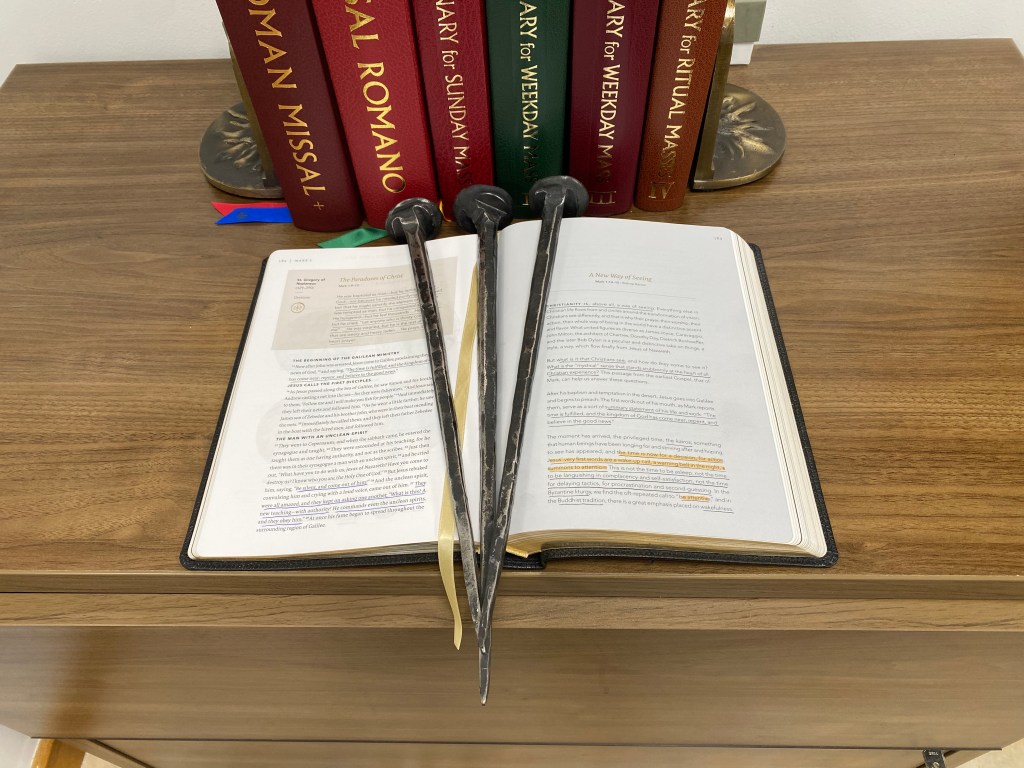
Photo: A great introduction and resource to reading the Bible is The Word on Fire Bible: The Gospels. (Nails not included.)

Link for the Mass readings for Tuesday, January 14, 2025

How can we participate with Jesus to make this “a year acceptable to the Lord”?

He said to them, “Today this Scripture passage is fulfilled in your hearing” (Lk 4:21).

Jesus spoke these words to his hometown congregation in Nazareth who had just heard him read the passage from the writings of the prophet Isaiah. Jesus proclaimed that he was the one to whom Isaiah was talking about. Luke chose to highlight this event as the starting point of Jesus’ public ministry, of bringing glad tidings to the poor, proclaiming liberty to the captives, recovering sight to the blind, letting the oppressed go free, and proclaiming a year acceptable to the Lord (Lk 4:18-19).

This message of universal healing, restoration, and reconciliation for all people would be an aspect of the mission of Jesus. He presented the message that he would be the vehicle to bring the love and redemptive work of his Father to all the nations, to invite all people to be aware of the reality present to them: that God his Father is inviting all into communion and relationship. The poor mentioned were not just in reference to those experiencing material poverty, but also to those finding themselves on the margins of society, the outcasts, those on the peripheries. The captives were not only those imprisoned for debts or crimes but those bound in the chains of their own sin and addiction. The blind were not only those who could not physically see but those who experienced the spiritual blindness of pride and arrogance. The oppressed were not just those under the iron fist of totalitarian and dictatorial regimes, but those pressed down through their own anxieties and fears.

In what ways are we in need of Jesus’ teaching, healing, and restorative power? What is keeping us on the peripheries, apart from communion and fellowship? What sins, disordered affections, and/or addictions, fears and anxieties keep us bound? What is keeping us blind to the reality that God is in our midst and seeking a deeper relationship with us? Today we hear or read again Jesus’ words proclaimed in the Gospel. Jesus invites us to be healed and to align ourselves with his will and ministry of loving service to others.

We still need to hear the same words that Jesus spoke to the people of his own hometown. Are we willing to listen? Will we hold on to our biases and prejudices, to our tribe, nation, political party at the cost of losing our integrity, reason, and dignity? Or can the words of Jesus be a light for us to see our dark and fallen nature? Resisting the temptation to turn away from but instead allowing the light of Jesus to shine in our darkness opens us to the gift of our uniqueness as individuals, the richness of our human diversity while at the same time recognizing that we truly are all interconnected.

The Psalmist stated that, “From fraud and violence he will redeem them” (Psalm 72:14) and John wrote, “whoever does not love a brother whom he has seen cannot love God whom he has not seen” (1 John 4:20). With these words from today’s readings we can begin again. We can allow ourselves to be loved by God who loves us more than we can imagine and has a plan for us beyond our wildest imagination. To receive this gift, we are called to examine our consciences, turn to God with a contrite, sorrowful heart for what we have done and what we have failed to do.

As we do so, may we experience the healing hands of Jesus on our bowed heads and the warmth of his forgiveness and love pouring through us as we are purged from our sin and pride. Then, in recognition of how much suffering and pain is present in our country and world, we can open our hearts and minds to the guidance of the Holy Spirit to participate with him in choosing love over hate, bringing the invitation of healing and reconciliation to others, and committing to bringing about “a year acceptable to the Lord” in this new year of 2025 (Lk 4:19).

————————————————————————

Photo: Pondering like Mary and loving our brothers and sisters as John invites us to are good ways to begin our year. Hoping to also get back into our church soon to see and pray with this stained glass image in person.

Link for the Mass readings for Thursday, January 9, 2025

God “sent his Son as an expiation for our sins” so we can be free to love as he loves us.

“God sent his only-begotten Son into the world so that we might have life through him. In this is love: not that we have loved God, but that he loved us and sent his Son as expiation for our sins” ( 1 John 4:9-10).

To understand why Jesus was sent by his Father “as expiation for our sins” it is helpful to take some time to ponder the truth and reality of the Trinity. Beyond all time, “love is of God” or another translation of the same verse: “God is Love” (1 John 4:8). God is, always has been, and always will be. God is a community of three divine Persons, Father, Son, and Holy Spirit. They are distinct by their very nature while at the same time they are one because of their infinite communion.

The Father eternally begets the Son, the Son is eternally begotten, all that the Father is he gives to the Son and the Son receives perfectly all that the Father has given, the Son returns perfectly all that he has received from his Father holding nothing back, and this intimate, infinite, divine eternal sharing between the Father and the Son is the infinite love expressed between them, the Holy Spirit.

All that exists has come into existence because of the outpouring of the love of the communion of the Trinity. At a particular time and place, the Father sent his Son to be conceived in and born of the Virgin Mary and so the Son of God, fully divine, became fully human. He lived a fully human life while remaining fully divine and experienced our humanity with a specific purpose. Jesus was born that he would die for us and restore us to our likeness that was intended from the very beginning.

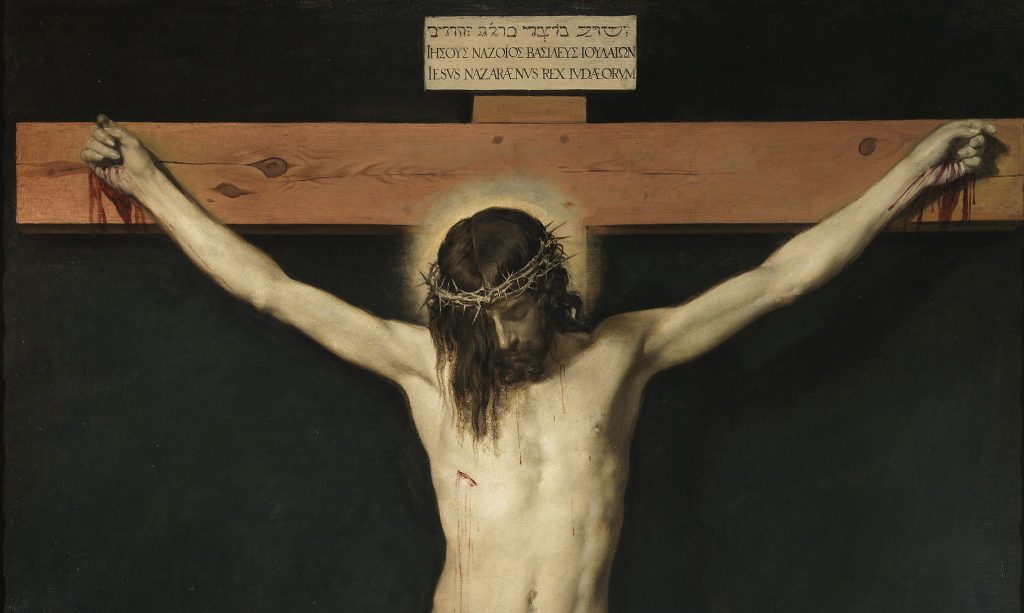
The ultimate expression of the infinite giving of the Son and holding nothing back, returning all to the Father, is Jesus’ death on the Cross. He loved us so much that he was willing to give all of himself, leaving nothing by giving his very life for us, that we might be freed from our sins. He took upon himself the worst of our humanity, injustice, extreme brutality and horrific violence, betrayal, selfishness, and death. He did so by conquering the darkness of our fallen world through this selfless act of love.

The crucifixion shows that the love of God, the love we are to aspire to, is not expressed as a mere emotion, sentiment, or feeling. Love, in St. Thomas Aquinas’ language, is to will to good of the other as other. Jesus loved us not in some abstract, utopian ideal. He loved each and every human being that ever existed, is existing, and will ever exist, by willing our good such that he gave his life “as an expiation for our sins” for each and every one of us. He loved, willed the good, of those who tortured and killed him, as he asked his Father to “forgive them, for they know not what they do.”

Let us accept the life that our loving God and Father wants us to fill us with in this new year. A life of sharing in the love of the Father, and the Son, and the Holy Spirit. We are capable of loving when we are willing to receive this unconditional love of God, when we are willing to repent from our sins, and let go of anything that we hold on to, anything we place before the love that God wants to share with us. As we breathe, receive, rest, and abide in his love, we heal, we are forgiven, we are redeemed, and we can then love others as we have been loved.


Painting: Close up of Christ Crucified by Diego Valasquéz

Link for the Mass readings for Tuesday, January 7, 2024

Some guidance from Jesus, St. John, and St. André Bessette, for the new year.

The beloved disciple John shares with us today a wonderful compass to guide us into the new year. From his first letter he writes that God’s “commandment is this: we should believe in the name of his Son, Jesus Christ, and love one another just as he commanded us” (I John 3:23).

Before we can believe in God’s Son, we need to trust him. For many if not all of us at some point in our lives who have experienced being hurt, betrayed, or wounded in any way, trust can be hard. 

That is why the Son of God was willing to be sent by his Father. He wanted to become one with us so that he could not only experience all the pain and suffering of our humanity but that he could take that upon himself, even death, so he could conquer them and heal, restore, and show us the way back to the Father, through our suffering and pain and into healing.

We can trust Jesus. Jesus not only has our best interest in mind, but he knows the plan of his Father for our lives and he can lead us to experience his love and our vocation as we trust him by taking one step at a time. He gives us enough light to see two steps ahead and when we take those steps, he will give us enough light to see the next two.

We can trust Jesus, but each thought or invitation we hear in our mind is not necessarily from Jesus. Some may appear good and true, but are only apparently so. For as John continues: “Beloved, do not trust every spirit but test the spirits to see whether they belong to God” (I John 4:1).

The devil and his demons tempt, entice, divert, and distract us, with the ultimate goal to lead us away from the love of God, the source of our true fulfillment. They seek to plant seeds of so doubt, so we believe that God does not have our best interest in mind. And once those seeds of doubt begin to sprout he seeks to isolate us from our Father by fertilizing those doubts with distrust in our minds and hearts. And when we sin, the devil condemns and shames us, and leads us to believe that we cannot be forgiven and that no one will accept us for what we have done or for who we are.

God never tempts us, he invites us and challenges us to move beyond our sins and our fears. He gently coaxes us to come out of the darkness of our self-centered, protective cocoon, and into the gentle light of his love. He does so patiently, sometimes with a firmness of a good parent, but gently. We hear his voice mostly in the quiet and stillness of our heart. When we do make a mistake, he does not condemn us, he convicts us to learn, to renounce our mistake. When we sin and turn back to him, he forgives and embraces us. We then begin again strengthened by his grace and greater clarity. 

God loves us more than we can ever imagine no matter what we have or have not done, he loves us more than we can ever mess up, and he loves us even in the act of our sin. He has shown this love most profoundly in sending his Son so we can see his face and experience his love, forgiveness, and mercy. We can experience that he loves us as we are right now, right where we are in our weakness and imperfection. 

The key to walk free from the “fowler’s snare” (see Psalm 91:3-4) is to heed the words that Jesus began his public ministry with: “Repent, for the Kingdom of heaven is at hand” (Matthew 4:17). God does not seek to punish us. Neither does he want us to stay in our sin and separation from him. God’s love calls us to more. Feeling guilty and shame is a false humility that keeps us separated from God because our focus remains on ourselves.

God imparts within us a sense of guilt, so that we experience our separation from him. Being in touch with this experience, helps us to choose true humility which leads us to trust in the love of God and believe in his mercy. When we sincerely and contritely confess our sins, do penance, and with his help seek to sin no more, Jesus will forgive, free, save, and restore us to our right relationship with God. 

When we are willing to allow the gentle light of Jesus to shine in our darkness, Jesus helps us to see what our life is like without God and with God. He helps us to be able to see the difference between the apparent goods and the true good so that we can make a clearer decision. Will we choose darkness, separation, and death or light, reconciliation, and life?

St. André Bessette, whose feast day it is today, could have fallen for the devil’s tactics. He who was sickly since he was an infant, lived in poverty as a child, and who then lost his parents when he was only twelve, and struggled with illness for all of his ninety-one years, could have been bitter towards God. André chose instead to trust in God and how he could make this statement: “Do not seek to have your trials removed. Ask rather for the grace to bear them well.”

Living a devout life of faith as a youth, his pastor encouraged him to apply to religious life and he sought at twenty-five to enter the Congregation of the Holy Cross. His poor health continued to plague him and at the end of his novitiate year, he was not asked to continue. André continued to trust in his Lord and his long standing ally St. Joseph. His novice master and bishop saw the light of Christ in this young man and petitioned that he be given an extension and he was eventually admitted into the order and served as a brother. His birth name was Alfred. Upon his profession he took the name of André who was the pastor who had mentored and recommended the pursuit of his vocation.

André was assigned the position of porter, the door keeper, because of his lack of education and frail health. A role that many would not look on with any esteem, André welcomed with open arms. Seeing in this position the opportunity to greet Jesus at the door with each knock and person he met. Looking back at his life he would say, “When I entered the Congregation, they showed me the door. And I stayed there for forty years.”

During his time of service, through the intercession of St. Joseph and his unwavering trust in Jesus despite much opposition and his continued frail health, thousands experienced being heard, loved, and healed. Through St. André, they experienced a foretaste of heaven.

St. André is a model for us on how we can in this new year “believe in the name of his Son, Jesus Christ, and love one another just as he commanded us…”, trust only in the Spirit of God without hesitation, and when we do fall, “Repent, for the Kingdom of heaven is at hand.”

God loves us so much and wants to share his life with us so that we can share in his relationship. Are we willing to resist the lies of the enemy, trust in the love of God, seek his guidance in all circumstances, discern and let go of anything that is not of God? When we do so, we will heal, be forgiven, and be set free to love and love in return. This journey begins and continues by trusting in God the Father’s Son whom he sent.  


Photo: St. André Bessette, pray for us!

Link for the Mass readings for Monday, January 6, 2024

May the light of Jesus rise in our hearts.

When Jesus was born in Bethlehem of Judea, in the days of King Herod, behold, magi from the east arrived in Jerusalem, saying, “Where is the newborn king of the Jews? We saw his star at its rising and have come to do him homage” (Mt 2:1-2).

At some point as they approached Jerusalem, the magi lost track of the star, did it become cloudy, did they close in on the city during the day, or did they believe it was the proper protocol that in entering this foreign region that they ought to check in with Herod first before proceeding? We do not know. Somehow, these magi were led by a star with the belief that they were to pay homage to the king of the Jews in a distant land. Early teachings in the Church ascribe to the interpretation of this account as the book of God’s creation, in the presence of this light could only take them so far. The illumination that brings them to Jesus is the Book of God’s word, the Jewish Scriptures that would tell them that the messiah they sought is to be born in Bethlehem.

Pondering another thought: What drew them from their home miles away? What inspired them to leave the comfort of their everyday routine? This was no easy journey, and it was a risky adventure. Yet something or someone inspired them, invited them to come and more inspiring is that they said, “yes.” And though they were misdirected for a time, or if their capacity of reason had reached its limits, and they were then guided by the inspired word of God, when they left the audience of King Herod and resumed their pilgrimage, they again saw the star and were “overjoyed” (Mt 2:10).

That joy must have multiplied when they came before the infant that they sought because their physical response was one of  prostrating themselves before the baby king, the one for whom they risked all and sought for. They had now found. This action though of prostration was reserved only for divinity. In reality, their journey had only begun. Their lives would be forever changed and they would go back a different way than they came. The magi would not return to Herod, nor would they return to their home quite the same. They would not return from this journey and just go back to business as usual. The magi carried within them their encounter with the Christ; the light that drew them, they now carried inside of them.

They would proclaim him in the East. The magi did what they were called to do. They came to encounter the Christ and bring his light to the world. They and those who followed the same invitation are why we are still able to hear this same message today.

Today is the feast of Epiphany, and it is on this day that we celebrate that the King of the Jews, Jesus the Christ, has made his salvation known to the whole world. The manifestation of God’s glory came to the Jews first as the chosen people of God and then to all the Nations. The Son of God has become one of us and one with us so that all people are given the offer to be saved.

We too are invited. We like the magi are called to put the light of Christ first in our life. Let us seek each day to encounter him and his plan. Distractions, diversions, and temptations, anxieties and anticipations as well as many appealing and apparent goods will attempt to lead us astray, yet to put Jesus first will help all other priorities to fall into their proper order and place. Let us follow the gift of our God given intellectual talents and capacity to reason, but also realize that this will only take us so far. Time in the living words of the Bible will help us to stay focused on our journey and to deepen our relationship with the One who has invited us to know him.

Bishop Robert Barron in his book, To Light a Fire on Earth, writes about becoming part of God’s “Theodrama”, using the Swiss theologian, Hans Urs von Balthasar’s term. God is directing all of creation, all of the cosmos, and each of us to play our part. “The key”, Bishop Barron writes, “is to find the role that God has designed for us, even if it looks like a bit part… When, through faith, we see every moment and every creature as an ingredient in the divine plan, when we know that there is a gracious providence at work in the universe, we live in joyful surrender and with a great sense of wonder.”

This is what the Epiphany is about. Jesus manifesting his light to us and in us so that we can see what keeps us from living our lives fully committed to God and what and who is helping us to grow in our relationship with God. With clearer sight, it is easier to decide how to proceed. The light of Christ helps us to also see that we are not the center of the universe. God is. “When we decenter the ego, and live in exciting and unpredictable relationship to God, we realize very clearly that our lives are not about us. And that’s a liberating discovery” (Barron 2017, 164-165).

May we follow the lead of the magi, who followed the light of Christ, and prostrate ourselves before our Lord and Savior. Let us surrender to him our ego and self-centered way of life. Let us acknowledge and let go of those things that prevent us from deepening our relationship with God and one another. When ready, let us rise again as did the magi, forever changed, and live our lives each day for God and following his will. Jesus is the true light to lead us through any darkness.

—————————————————————–

Photo: Epiphany light over Holy Cross Catholic Church tonight. May we like the moon that reflects the light of the sun, reflect the Light of the Son of God.

Barron, Robert and John L. Allen Jr. To Light a Fire on the Earth. New York: Image, 2017.

Link for today’s Sunday Mass readings for the Epiphany, January 5, 2024