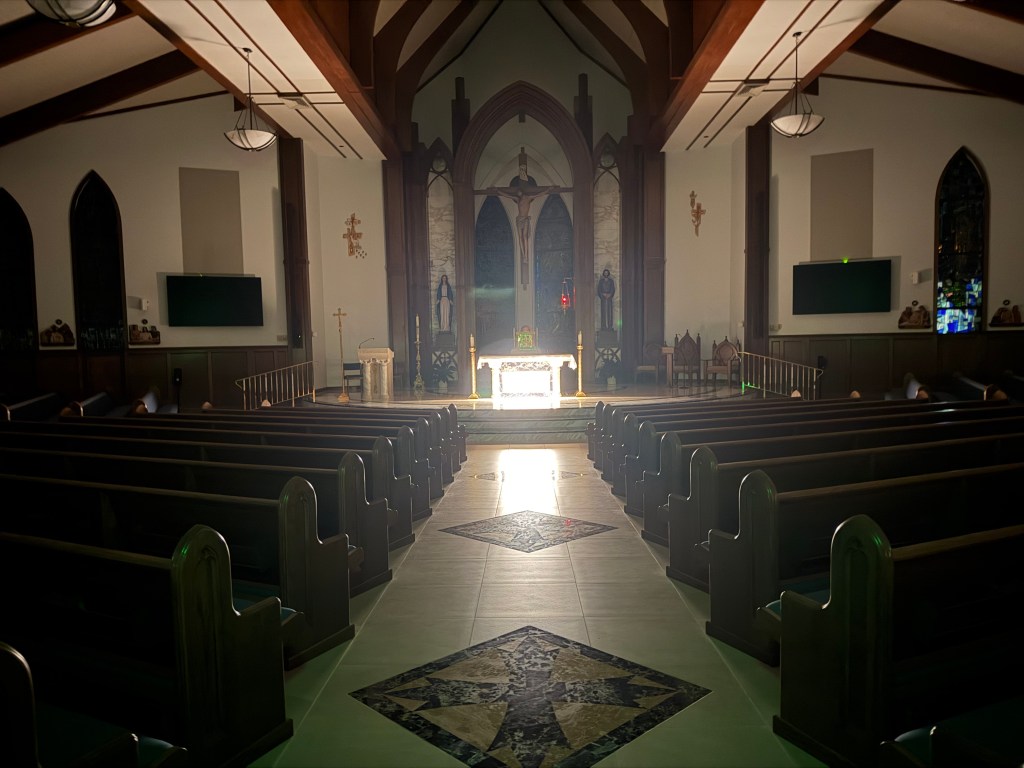
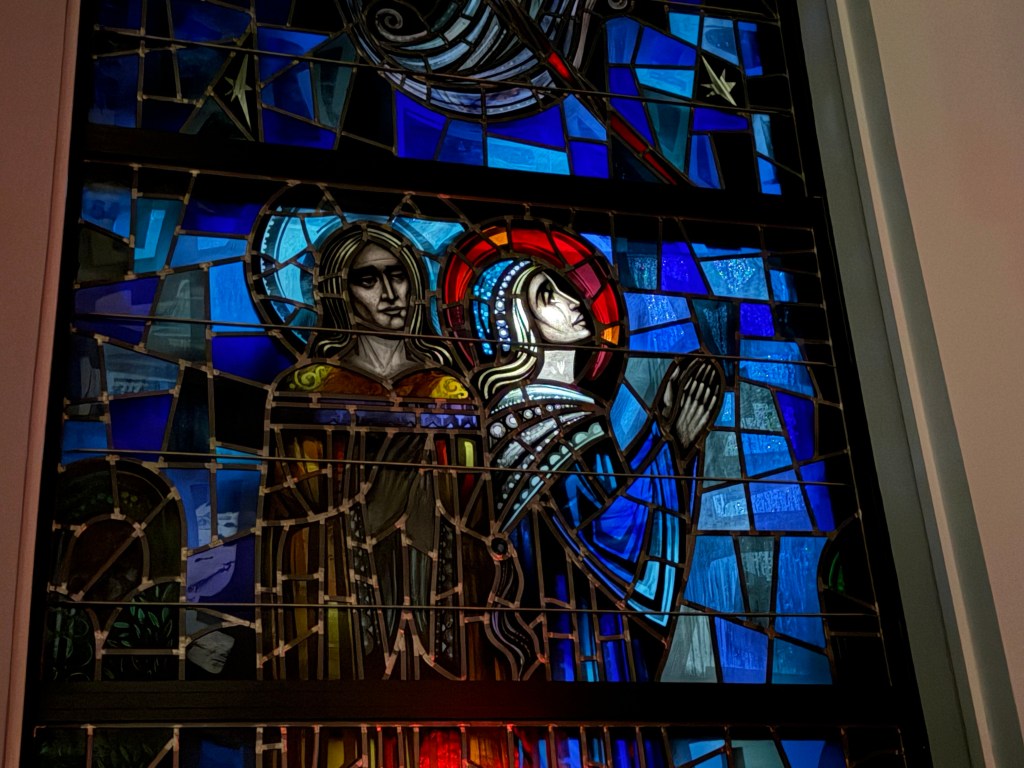
Forgiveness helps us to walk the path that leads to our healing.

“If your brother sins, rebuke him; and if he repents, forgive him. And if he wrongs you seven times in one day and returns to you seven times saying, ‘I am sorry,’ you should forgive him” (Lk 17:3-4).

Forgiveness is one of the foundational principles of our faith tradition as Christians. If we question or struggle with the degree of forgiveness we engage in, we are in good company with Peter. Thinking he was being generous, Peter asked Jesus how many times should he forgive, seven times? Jesus responded, “I say to you, not seven times but seventy-seven times” (cf. Mt 18:21-22).

Luke records the exchange of the disciples asking Jesus to teach them to pray. He taught them the Our Father or Lord’s Prayer. While reciting this prayer often each day or multiple times each day, we say, “Give us this day our daily bread, and forgive us our trespasses as we forgive those who trespass against us” or “forgive us our debts as we forgive our debtors” (Mt 6:11-12).

One of the barometers of being a faithful disciple of Jesus is that we are people who practice the sacred art of forgiveness. To forgive does not mean in any way that we condone or justify the offense or even necessarily forget about it. We are to hold people accountable, as Jesus said, we are to “rebuke them” in the hope that they will repent and come to a greater appreciation and respect of our dignity and the dignity of others. When they do repent, we are to then forgive them.

Holding on to grudges, seeking revenge, being unwilling to forgive, can be incapacitating, debilitating, and can lead to a premature as well as eternal death. What can be of help is if we can choose to be more mindful of our thoughts and actions. At the moment we experience discomfort from what someone says or does, instead of giving in to the temptation to react or to let our mind run with the offense, it is very helpful to take some deep breaths, relax our shoulders, and/or loosen our grip. As the negative thoughts attempt to rise again, don’t fight or feed the thoughts, just return to being aware of our breath and ask Jesus to help us be more understanding and forgiving. This will also help our body to discharge the stress and experience God’s peace.

We may struggle with being forgiving because we may not have sought or received much forgiveness ourselves. Advent is coming. It is a season to prepare to celebrate the coming of Jesus into our lives. This season provides a wonderful opportunity to prepare and participate in the Sacrament of Reconciliation. Forgiveness is a healing gift of God’s grace. Once we have felt the healing balm of forgiveness, we might be more willing to forgive others.

A good practice to engage in is to go to a place of quiet and ask God to help you to forgive someone or a few people. Even if your prayer begins, “God, I cannot forgive, I hurt too much, but help me to let go, please help me to forgive, (insert name).” Return each day until you can bring yourself to say, “I forgive, (insert name).” Visualize yourself saying that you forgive the person face to face and imagine a healing between each of you. If the opportunity presents itself you may want to say that you forgive the person directly, send an email, or write a letter – even if you do not press send or mail it.

With the intent to forgive and asking for the help of Jesus, who has forgiven us, even if in the beginning we are unwilling, with time, reconciliation is possible. Depending on the hurt that has been inflicted, you may not reach out to the other person as it may be healthier to stay apart. Forgiveness will help you to heal and not allow the person who has hurt you to continue to do so. Forgiveness is an act of love, for to love is to will the good of the other. In our willingness to forgive, there is freedom. Let us remember: “Forgive and you will be forgiven”.

——————————————————————–

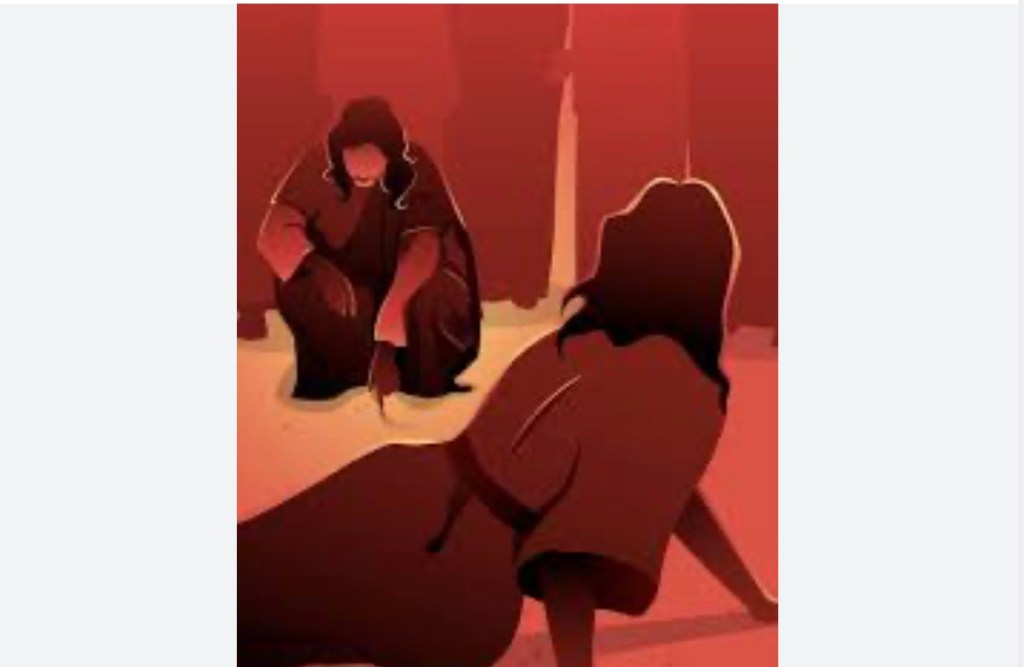
Photo: Our willingness to love will help us to walk the path of forgiveness.

Link for the Mass readings for Monday, November 10. 2025

Acknowledging our sins is the antidote to our pride.

“…whoever exalts himself will be humbled, and the one who humbles himself will be exalted” (Lk 18:14).

From the Christian perspective, humility is not false modesty. Where someone thanks us for doing something and we say something like, “Oh, it was nothing.” This response is often a conditioned response that, consciously or unconsciously, is given to elicit more praise and to keep the focus on ourselves and what we have done. “Sure it was something, you did all that work…” The more appropriate response would be, “You are welcome.” Then the topic of conversation can move on to other matters.

Humility has to do with our primary focus. Are we focused first and foremost on ourselves and placing the focus and energy in boosting our ego, jockeying for a position that is front and center? Or are we focused first and foremost on establishing that God is the core and foundation of our every thought, word, and deed and we are thankful to him for each breath we take?

We are nothing without God. Without him, we would cease to exist. We may bristle at such statements because our cultural influences often promote that what we have and achieved has come because of our own hard work and merit. There is some truth to the effort and energy we may have expended to achieve what we have, but if we think back, many others also had a part to play in where we are today, including God.

From a heightened sense of self-exaltation, we also tend to have less empathy or mercy for those who may have less or are struggling financially, emotionally, psychologically, morally, or spiritually. We might look down our nose at others thinking or saying outright, “What is wrong with them and why don’t they get their act together?”

Where in point of fact, “There, but for the grace of God, go I.” Situations in life, whether we are up or down, can change quickly. The point Jesus is making clear in today’s Gospel is that we are far from how perfect we think we are. We are all sinners and fall short of the glory of God. Recognizing this reality is a good place to be, as Jesus points out. Being willing to recognize our sinfulness is the first step to freedom.

The contrite tax collector “went home justified” because he came to terms with his sinfulness and confessed it so he could be forgiven, healed, and restored by God. The Pharisee who felt he needed no help because he “was not like the rest of humanity” closed himself off from the healing balm and reconciliation that he truly needed. His prayer was actually to himself and not to God. He did not see himself as a sinner, because of his own pride and arrogance, and so cut himself off from the love and mercy of God.

Our spiritual life does not begin to mature until we utter the prayer of the tax collector. “O God, be merciful to me a sinner”. If we don’t believe we need God, we keep ourselves at a distance. Until we acknowledge our dependence upon God and allow his light to shine in us to reveal our sins, we are in danger. Our own self sufficiency and reliance skews the view that we are sinners and are in need of forgiveness. “The antidote to pride is the total abandonment to the mercy of God and total trust in his grace to empower us to turn from sin and live charity” (Bergsma, 263).


Photo credit: The light of Jesus shines in our darkness when we are willing to receive him.

Link for the Mass readings for Sunday, October 26, 2025

Bergsma, John. The Word of the Lord: Reflections on the Sunday Mass Readings for Year C. Steubenville, OH: Emmaus Road Publishing, 2024.

Jesus invites us to repent so to “experience a radical reorientation of our whole life”.

In today’s Gospel, we read about two accounts of horrific deaths. The first is at the hands of Pontius Pilate, who has not only ordered the execution of Jesus’ fellow Galileans but had their blood mixed with “the blood of their sacrifices.” In the second incident, Jesus brought up the tragic accident in which eighteen people died “when the tower of Siloam fell on them.” 

In both cases, Jesus rejected the common notion of the time that these incidents were caused by God’s punishment and focused instead on the importance of repentance. Jesus stated quite emphatically: “Do you think that because these Galileans suffered in this way they were greater sinners than all other Galileans? By no means! But I tell you, if you do not repent, you will all perish as they did” (cf. Lk 13:1-5)!

Jesus consistently proclaimed repentance in the hope of helping his followers understand the purpose of his coming. Jesus provided meaning and fulfillment in this life as well as being the way to the truth of eternal life in the next. Yet, to experience the benefits of his invitation, people needed to repent from their focus on self, misunderstandings of God, and the false substitutions, and disordered affections that the world offered by having a change of heart and mind and turning back to God, the very source of their being. This is just as true for us today.

To repent and surrender to Jesus is not some submissive bowing to a tyrant but an acceptance of the aid offered by the divine gardener. Our repentance gives permission for Jesus to cultivate the ground of our being to rid us of that which sickens us and instead allow him to fertilize us with his word and grace in such a way that we are renewed. Jesus tends to our growth such that we can be more aligned with the will of his Father and the love of the Holy Spirit. When we repent and confess, we are forgiven, healed, and begin to mature so that we will bear fruit that will last.

To repent is a good thing. As is written in the Catechism of the Catholic Church, line 1431: “Interior repentance is a radical reorientation of our whole life, a return, a conversion to God with our whole heart, an end of sin, a turning away from evil, with repugnance toward the evil actions we have committed. At the same time, it entails the desire and resolution to change one’s life, with hope in God’s mercy and trust in the help of his grace.”

When Jesus shared in his first public message: “Repent and believe in the Gospel” (Mark 1:15), he invited then and invites us today to a new way of seeing, hearing, experiencing, and living our lives. We all sin and fall short of the glory of God. As we turn back to Jesus and open our hearts and minds to him, he reveals with his loving light that which is preventing us from experiencing the love of God more deeply and growing in our relationship with him more intimately.


Photo: Quiet time to experience a holy hour with Jesus. Being still is a way to repent, to turn back to Jesus, and away from the distractions. In his presence then, we can allow our mind to quiet, and we can rest in him.

Link for the Mass readings for Saturday, October 26, 2025

We can choose reaction and revenge or understanding and forgiveness.

“Lord, do you want us to call down fire from heaven to consume them?” Jesus turned and rebuked them, and they journeyed to another village (Lk 9:54-56).

James and John’s request of Jesus ought to be recognizable to many, if not all of us. How many times when feeling slighted or disrespected do we want to act in kind or offer some retribution to our perceived offender? Many times, we don’t even think, we just react overtly back or we engage in our own tumultuous internal maelstrom.

Jesus rebuked James and John’s request immediately and moved on. He did not allow the rejection of the Samaritans to deter his course for even one second. Jesus had his face firmly set. His time was approaching and to Jerusalem he was headed. Also, he knew there would be a time for the Samaritans to believe. That time was not yet.

Our starting point in putting this gospel into practice is to decide that Jesus has chosen the better course. Seeking revenge is not the way. Not looking left or right, but keeping our eyes fixed on the will of God is the way to proceed. If we can agree with that as our starting point, then we can seek to understand what Jesus can teach us when encountering others.

First, our approach to others extending unkind behavior toward us is to be one of understanding. We are all dealing with a lot, and much of what others are dealing with are unknown to us. If we approach another’s unkind or disrespectful action from a place of understanding instead of seeking revenge, we will have a better chance of not reacting in kind and also possibly being able to help another to get in touch and reveal something they are struggling with. St. Ignatius’ counsel to give the other person the benefit of the doubt is a solid practice.

Often a negative response may come from misunderstandings. In giving the person the benefit of the doubt to explain their understanding of what happened in a given situation, helps to de-escalate the situation instead of adding fuel to the fire . We are not mind-readers and we also are not the best of communicators so resisting jumping to rash conclusions is a better course of action.

Along with being understanding and giving someone the benefit of the doubt, is to receive other’s action with humility. Maybe, we have done something to cause hurt toward another, intentionally or unintentionally. By taking a moment to pause, we can assess if we have done something to instigate the action we are receiving. Taking responsibility for that which we have done and apologizing for it, we create a better bridge for reconciliation.

We are responsible for our thoughts, words, and actions. We cannot dictate or change the behaviors of others nor are we to be doormats for another’s abuse nor take on their stuff either. We are to approach conflicts and obstacles with patience, understanding, a willingness to bring clarity, to give the benefit of the doubt, and humility for acknowledging what we have done and what we have failed to do. If another is not willing to hear reason after multiple attempts or closed, we move on.

We pray for and respect the dignity of the person whether we agree or disagree with the outcome while holding them accountable at the same time. Jesus is very clear that we are to love, meaning that we are to will each other’s good. That means putting the prayer he taught us, the Our Father into practice: We need to be willing to forgive.

None of these steps are easy. Human relationships are difficult in the best of scenarios, but still well worth the effort. None of us are perfect. When we do our best to follow these principles as well as other practices not mentioned to work toward reconciliation and build relationships, our conflicts will become moments of grace. Conflicts will become opportunities that help us to grow closer together rather than further apart. Inviting Jesus into the conflict is the most important step, for he can help us to see others from his infinite perspective instead of our limited perspective.

—————————————————

Photo: Spending time in quiet and prayer, especially in reading the book of God’s creation, helps us to slow down so that when we return to our interactions with people again, we can begin more peacefully.

Link for the Mass readings for Tuesday, September 30, 2025

Let us believe in and entrust ourselves to Jesus.

In yesterday’s reading, Jesus’ message in his hometown of Nazareth did not end so well, with his fellow Nazoreans running him out of town (Lk 4:29). In today’s account, Jesus continues on and teaches in the synagogue at Capernaum. The initial reaction to Jesus’ teaching was similar in both accounts; the people were “amazed” and “astonished” with his teaching. But no one in either group makes the bold statement that arises today: “I know who you are – the Holy One of God” (Lk 4:34)! This phrase was professed by a demon who taunted Jesus.

From the very beginning of Jesus’ ministry opposition was present. In Nazareth, the fallen nature of our humanity reared its head. The people he grew up with were unwilling to see beyond the ordinary Jesus they always knew. Wasn’t he just the son of Joseph, just the carpenter? Jesus was safe when he merely worked a quiet life, participated in the life of the synagogue, even when he returned from surrounding territories amidst words of praise, and even stepping up to read in the synagogue from the words of Elijah: he was the hometown boy making good. But once Jesus began to equate himself in the line of the prophets and share how God was working beyond the people of Israel, with his accounts of Elijah going to the Gentile widow, and Naaman, another Gentile, going to Elisha, highlighting that God worked beyond the people of Israel, even his own had enough. Jesus had to go (Lk 4:29).

In today’s account, another source of opposition is the taunting demon. Jesus rebuked the demon immediately and called him out of the man. Jesus faced time and again the fallen nature of humanity, disbelief, lack of faith, as well as the opposition of demons, and the temptations of Satan himself in the desert. He was also opposed by most of the religious establishment of the Sadducees, Pharisees, and scribes.

Where do we find our self in the scenes of Jesus’ ministry and teaching, in our own time today? Following Jesus is a day to day commitment and we must be willing to face the same challenges that his disciples did. We are faced with the challenges of living up to his teachings as well as facing our weaknesses, wounds, and  shortcomings as we seek to resist the lies of the enemy and conform our lives to the will of Jesus. By doing so, we will be confronted with the darkness and sin within ourselves. With true humility, we will be better able to resist defending and rationalizing where we fall short of the glory of God and instead repent, turn away from our sin, turn back to God, and receive forgiveness and be healed.

We also need to resist dismissing Jesus’ encounter with the demon in today’s Gospel too quickly. Demons do exist and play a role in the principalities and powers that influence us and our world. We ignore this reality to our own peril, for they will tempt and subtly attack us at our weakest and most vulnerable points. This is not a cause for anxiety and fear. The weakest Christian is stronger than the devil himself but we must be aware and vigilant. When faced with temptation by Satan or his demons, we just call on the name of Jesus and those of the dark will flee from the radiant light of Christ. This is why it is so important to regularly examine our conscience, to be aware of, and to confess our sin. In doing so, we will be free, otherwise, they can and will be used against us.

The closer we draw to Jesus, the more we experience his light and the more of our sin will be revealed. This is not a cause to run and hide but to humbly embrace the truth so that forgiveness and healing will happen. This also means that we will see more clearly the dark influences that plague our own thoughts and our world which we are blinded to when we turn in upon ourselves and feed our own selfishness, embrace our own pride, and allow ourselves to get caught up in the stream of the world.

Choosing to believe in and entrust our lives to Jesus with our first waking breaths and thoughts is an important way to begin each day. Doing so helps us to get ahead of the thoughts that will arise to distract, divert, and dissuade us from hearing the word and guidance of God. Beginning our day in quiet with Jesus is so important to do before we get up and running and return to the daily busy. When we resist moving on automatic pilot, we can realize that we can live our lives more intentionally. Moving more thoughtfully and seeking God’s guidance we can react less so to choose his will more. 

When we fall short, are distracted, fail, as did the apostles, we need to follow, not Judas, but Peter: repent, confess our love for Jesus, and begin again to hold one another accountable, support, and lift one another up in love, for Jesus is at our right hand. Even when we find ourselves in our darkest moments, we can turn to Jesus and stand firm for he is our refuge and our strength.


Photo: Following the light.

Link for the Mass readings for Tuesday, September 2, 2025


God only wants to love us and give us rest and peace.

“You have searched me and you know me Lord… Where can I go from your spirit? From your presence where can I flee? If I go up to the heavens, you are there; if I sink to the nether world, you are present there… You have searched me and you know me Lord” (From Responsorial Psalm 139:7-8).

God knows us through and through. He knows us better than we know ourselves. And yet, we hide from him. We seek to do things on our own, even while in the same breath we say we believe in him. For most of us, it is because deep down we are listening to the father of lies and we really don’t trust our loving God and Father. We choose not from freedom as much as from our reactions based in those lies that are fueled by the wounds we have inflicted and received by living in a fallen world.

The path out of the darkness of distraction, diversion, and doubt is lit by the light of Jesus. We are invited to trust him even when our instinct is to resist the light. We judge ourselves and project that judgment on God. We listen the liar who condemns, shames us, and accuses us, and then for a good dose adds, God will not forgive us or I will keep committing the same sins over and over again so why bother? What will God think of me if I reveal this to him?

God loves us to the very depths of our being, more than we can ever imagine. We do not need to be afraid of his reaction to even our most egregious sin, because he already knows! “You have searched me and you know me Lord.” God even loves us in the very act of our committing sin. The issue is, we don’t experience his love when we choose something else over him. We don’t experience his love when we don’t come to him for forgiveness. We don’t experience his love when he forgives us and we don’t forgive ourselves.

We experience his love when we repent. When we turn away from our sin and turn back to God. We may turn away from our sins out of guilt, but turning away or white knuckling with our will power alone is why we continue to fall for the same temptations. We need to turn away from the sin and turn to Jesus and allow ourselves to experience God’s love. Then filled with his love, we can resist the temptations awaiting us.

God has searched us to our very core, he knows the worst about us and loves us anyway. We can stop running and burying ourselves in busyness, distractions, diversions, false promises, and disordered affections, and instead allow ourselves, even if for only a few minutes today, to trust Jesus who is holding out his hand to lead us to a place of peace and rest. A peace and rest nothing in the world can give.


Photo: Moments of quiet, like a sunset walk can help us to slow down enough to experience God’s love for us. (University of St. Mary of the Lake)

Link for the Mass readings for Wednesday, August 27, 2025

Are we locking the doors to the Kingdom of heaven or helping to open them?

“Woe to you, scribes and Pharisees, you hypocrites. You lock the Kingdom of heaven before men” (Mt 23: 13).

Context, in any reading of the Gospels, or any scriptural text, is important, but certainly with today’s reading. Our country is already experiencing enough division, polarization, and racial unrest as it is. These comments have too often been used to fuel anti-Semitic rhetoric. We need to remember that Jesus is Jewish. “The criticisms are leveled with those of power and/or influence as in the prophetic denunciations, not against the whole people of Israel. The aberrations denounced by Jesus were also denounced by other Jewish teachers in the rabbinic tradition. The goal of the denunciations is to highlight the error, to preserve others from it, and perhaps to bring those who err to the way of righteousness” (Harrington 2007, 327).

Those who would use these verses to denounce people of the Jewish faith tradition, just for being Jewish, would be acting in the same way as those for whom Jesus was convicting. Jesus spoke to the specific actions of specific leaders he had encountered who were using their power and influence for their own means and agendas. The hypocritical behavior that Jesus brought to light unfortunately still exists in some of our civil and religious leadership. This is one of the reasons many are disillusioned with authority and institutions. Jesus saw the danger of hypocrisy especially from the perspective of how it can alienate people such they turn away from his Father.

We seek truth, authenticity, and transparency because these qualities are foundational for building trust and relationships. St. Augustine, whose feast we celebrate this coming Thursday, wrote in his Introduction to his Confessions, “You have made us for yourself, O Lord, and we are restless until we rest in you.” He experienced a life without God and with him, and regretted the days he had resisted accepting Jesus’ invitation. It is unfortunate how many today have not come to embrace the words of Augustine, because of their experiences with those, who in the name of Christ, have “locked the kingdom of heaven” before them.

It is easy to point out the hypocrisy of others, but Jesus is convicting each of us as well. How have we erred, sinned, and been hypocritical? When have we allowed past hurts and wounds, anxieties and fears, prejudicial and judgmental attitudes, to limit us from living a life more aligned with his life and teachings? We all fall short in living the “Way, the Truth, and the Life” (cf Jn 14:6), but when we are willing to have the humility to be contrite, to recognize and to be sorry for the harm we have done, we have a loving Father with his arms wide open ready to embrace and comfort us, as well as offer us forgiveness and healing.

As we are more conformed to living and loving like Jesus, we have more credibility when we speak up, out, and against any act that diminishes or denounces the dignity of another, while at the same time resisting the temptation to do so in a way that diminishes even those who inflict division and hate. Jesus invites us to convict others and hold them accountable as he did with love and mercy but we need to begin with ourselves.

When we align our thoughts, words, and actions and are willing to be held accountable, we will have more credibility in guiding others. Our goal is not to humiliate, condemn, and/or shame, but to lead others to a place of contrition and reconciliation, such that each of us can be people of integrity, transparency, and holiness. Our hope is to win back a brother and sister and lead them toward the doors of heaven that Jesus opened for us in the humanity he assumed.


Photo: Pope Francis opening the Holy Door at St. Peter back in 2015 for the Jubilee Year of Mercy. Photo credit, Vatican News file.

Link for the Mass readings for Monday, August, 25, 2025

Harrington, S.J., Daniel J. The Gospel of Matthew, vol. 1, in Sacra Pagina, Ed. Daniel J. Harrington, S.J. Collegeville, MN: Liturgical Press, 2007.

Forgive seven, seventy-seven, or seventy times seven times?

Peter approached Jesus and asked him, “Lord, if my brother sins against me, how often must I forgive him? As many as seven times” (Mt 18:21)?

Peter may have thought he was being quite generous in asking to forgive seven times because the custom of the time was considered to forgive someone three times. It may also sound pretty generous to us, because the usual question most of us ask is, “Do I have to forgive at all?” Many of us do not do forgiveness well, even if we recognize that it is a virtue. If someone says to us they are sorry, do we reply, “I forgive you.” Often our automatic response is, “That’s alright”, “It’s ok”, or “No problem”. When we are convicted of a mistake, error or offense, do we ask for forgiveness or operate from a defensive posture to explain away why we did what we did, or defend that what we did as right, not willing to admit any inappropriate action?

We are very habitual creatures, and much of what I shared above is learned behavior. We are conditioned and shaped since the time of our youth and even from our time in the womb. We also may recall those cases in which we feel justified in our stance of unforgiveness. Jesus will support no justification or rationalization. He will instead raise the bar for us as he did for Peter: “I say to you, not seven times but seventy-seven times”, which can also be translated as seventy times seven. In either case, we may dismiss Jesus’ statement as mission impossible.

Yet is we are to be disciples of Jesus, we are to strive to forgive as our heavenly Father forgives. Forgive the same person seventy-seven times? Yes. If someone is seeking forgiveness, we are called to forgive. God has forgiven us and will do so unlimitedly. We are to do the same. Jesus does not mean that we don’t hold people accountable. He offered three steps of how to hold one accountable in yesterday’s readings (Matthew 18:15-20). Nor is he saying that we are to remain in a dangerous or life-threatening situation, or enable people in their self-destructive behavior.

Forgiveness has to do with not holding on to the hurt, not allowing the offense to fester as a grudge that builds to hate and negative or violent behavior. Forgiveness is also not a curse but a blessing. For when we forgive, it is an antidote to the poison someone has injected us with. If we refuse to forgive, we allow the person who has injured us to do so over and over again. In our unwillingness to forgive we allow that poison to continue to fester.

If you are struggling with holding onto a grudge and/or past hurts. One approach that may be helpful is to visualize yourself approaching the person you have the issue with and saying to them, “I forgive you”. You may also find it helpful to visualize Jesus standing beside you while you do this exercise. Repeat the process each day in your time of prayer until you start to feel yourself coming to a place of forgiveness, and can imagine that reconciliation is indeed possible.

If you find visualizing difficult, sit down and talk to Jesus. Be honest with him, tell him the situation and share with him that you do not want to forgive the person. Then ask for Jesus to help you. Embrace the sacrament of Reconciliation and confess your unwillingness to forgive. When ready, determine how best to reach out to the person to say that you forgive them; a phone call, email, text message, or in person.

A third idea that may work is to write the person a letter, whether you send it or not. Each of these practical ways provides an opportunity to approach the great gift that Jesus offers us, to forgive seventy-seven times, or to forgive each and every time we are given the opportunity to do so.

We don’t do forgiveness well. But with Jesus, we can begin again. Let us practice saying each morning, “Please forgive me, (Name)” and think of a few thoughts, words, or actions you need to be forgiven for. Then say, “I forgive you (Name), for…” and think of a few words, actions, or inactions to insert. Also, Jesus gave us a pretty good prayer: “Forgive us our trespasses as we forgive those who trespass against us.” We are not alone. Remember, Jesus asked God to forgive those who crucified him. We can ask God to forgive those who have offended, hurt, or abused us. Then we can actually move to the point where we begin to develop the freedom of heart to say to others, “I forgive you”, and “Please forgive me.”


Photo: As God forgives us without limits we are to do the same. Looking upon the wonders of creation which none of us deserve can help come to a place of gratefulness for the love and mercy of God that we have received which can help us to forgive our brothers and sisters from the heart. Photo from the grounds of the University St. Mary of the Lake.

Link for the Mass readings for Thursday, August 14, 2025

Jesus has our back in our successes as well as our failures.

Peter shows, as he did when he walked on and then sank in the water, how our faith journey can be compared to a rollercoaster ride of ups and downs, sometimes more intense than others. As expressed time and again in the Gospels, Peter provides examples of taking a step forward and two steps back.

In today’s Gospel from Matthew, Peter still called Simon at this time, exemplified this balancing act of our growth process as he first answered Jesus’ question as to who Jesus was when he stated, “You are the Christ, the Son of the living God” (Matthew 16:16). Jesus not only commended Simon for being open to sharing this revelation given to him by God the Father, but also added, “And so I say to you, you are Peter, and upon this rock I will build my Church, and the gates of the netherworld shall not prevail against it” (Matthew 16:17-18).

Name changes in the Bible were common when there was a significant change in one’s life. We can see evidence of this in the examples of Abram, changing his name to Abraham, Sarai to Sarah, and Jacob to Israel, just to name a few. Without a doubt, this event was a significant giant step forward for Simon Peter!

Yet, just as Peter reached the heights of theological insight he would just as quickly come crashing down again as he cut his teacher off. Jesus began to share with his disciples about how he would suffer, be killed, and rise again on the third day when, Peter took Jesus aside and began to rebuke him, “God forbid, Lord! No such thing shall ever happen to you.” He turned and said to Peter, “Get behind me, Satan! You are an obstacle to me. You are thinking not as God does, but as human beings do” (Matthew 16:22-23).

From being called the rock upon which Jesus would build his Church in one instant, to Satan in the next, Peter’s experiences offer some solace for us who are on our own faith journeys. Peter apprenticed with Jesus and as in any learning experience, he made mistakes. We need to realize that in our spiritual life this is going to happen to us as well.

We will have days when we feel the joy of the Holy Spirit filling our soul, and yet in the next instant, we may feel empty. We may have clear discernment and direction and then feel indecisive and confused. Some days we discern well our loving God and Father’s voice and some moments we choose to follow the Father of Lies. Some days our prayer is fruitful and we feel energized and other days we may experience dryness and that we are just going through the motions.

Jesus’ admonition of Peter to get behind him was not the end of the story. In fact, it would get worse when Peter gave into his fear and denied Jesus three times! Peter persisted and Jesus did not give up on him. After his resurrection, Jesus asked Peter three times if Peter loved him, and three times, the third a bit exasperated, Peter said yes, undoing the travesty of his denials. After the Ascension of Jesus, Peter lead the early Church and gave the ultimate witness and measure of his spiritual growth and maturity by giving his life.

We too will have fits and starts along the way, but the key is to remain faithful to God and the Way he guides us to walk. We are to continue to dust ourselves off when we have fallen down and be willing to learn from our mistakes, to repent, be forgiven, to seek the help and support of Jesus and one another, and be willing to begin again. The Good News for us today, is that Jesus does not define us by our mistakes or our worst moments. He does not give up on us. He loves us and continues to hold out his hand to us, to lead us onward!


Photo: A great compass to access as we journey is to ask, “Is our heart beating with the same rhythm as Jesus’ Sacred Heart?”

Link for the Mass readings for Thursday, August 7, 2025

“My Lord and my God!”

Then Jesus said to Thomas, “Put your finger here and see my hands, and bring your hand and put it into my side, and do not be unbelieving, but believe.” Thomas answered and said to him, “My Lord and my God” (Jn 20:27-28)!

Thomas’ acclamation “My Lord and my God!” came from his seeing the risen Jesus and his wounds. Jesus rose from the dead, had conquered death, and yet he still bore the wounds of his Passion. This is a profound message to the Apostles, those Jesus sent to proclaim his Gospel, and for us who have been called to follow him today.

The Body of Christ continues to be wounded by the sin and division of our fallen nature that put Jesus on the Cross in the first place. Many people doubt and do not believe today in God because they question, “How can a loving God allow such suffering and pain, especially of the innocent?” A valid question as many examples may come to our minds, we can then follow with another Yet the question, “Why God? Where were you and do you care?”

God is present, God cares, though again we are limited in what we can see and understand. Also, death does not have the final answer. That is what Jesus showed Thomas in bringing him close to touch his wounded side. Jesus rose from the dead and conquered it, but the scarring of his wounds remained. Jesus calls us to draw close and to touch his wounds so we can embrace our own, those we can and cannot see. As we experience his healing, Jesus will send us, as he did Thomas and the other apostles, to touch his wounded Body again this time by entering into the pain and suffering of others where God can happen and healing can begin.

Though the temptation is strong to deny, rationalize, or flee from the conflict, challenges, hurt, and pain that we and others are experiencing, we must resist. If we don’t embrace our or another’s trials we will not come to the root cause of them. We touch the wounded Body of Christ, as Thomas did today, when we are willing to draw close, be present, and accompany those who bear his wounds, those who are vulnerable: the unborn, widows, orphans, those with chronic illness, the dying, refugees, immigrants, hungry, homeless, and those without access to clean water; those who suffer from addiction, poverty, depression, disease, oppression, prejudice, discrimination, dehumanization, racism, sexism, misogyny, unjust immigration policies, incarceration, those on death row, unemployment, underemployment, wage theft, human trafficking, domestic violence, slavery, violence, war, terrorism, and natural disasters. For what we do to the least among us, we do it to Jesus.

We can be easily overwhelmed with the suffering in our country, our world, or the personal challenges before us. Denial or indifference is not the answer. There is an act of balancing that Jesus calls us to participate in as we allow ourselves to be loved by and learn to love God, love others, and love our neighbors as ourselves. The answer is found when we are willing to encounter Jesus, grow in our relationship with him, and follow his lead.

We do not know where Thomas was when the Apostles first encountered Jesus after the Resurrection, but we do know he was not with Jesus. Apart from Jesus, we can do nothing, yet with Jesus, the one who conquered death, all things are possible! When we feel overwhelmed, helpless, or indecisive, we need to return to Jesus and acclaim with Thomas, “My Lord and my God!” and begin again with him.

Jesus is present in our midst, just as he was with Thomas and the other apostles. He invites us to be engaged in the unique way he calls us to serve today to make our corner of the world a little better. We can reach out when Jesus prompts us to enter into the chaos of another’s life, to hear their story, their experience, be present, and allow the Holy Spirit to happen in each encounter.

St. Thomas, pray for us!


Painting from Caravaggio: Incredulity of St Thomas, 1601-1602

Link for the Mass readings for Thursday, July 3, 2025