
In the first reading, Isaiah speaks, “Woe is me, I am doomed! For I am a man of unclean lips, living among a people of unclean lips, yet my eyes have seen the King, the LORD of hosts” (Isaiah 6:5)! And then in the Gospel after the miraculous catch of fish, Simon says to Jesus, “Depart from me, Lord, for I am a sinful man” (Luke 5:8). Isaiah in his vision and Simon through the super abundant catch of fish both recognize that they are in the presence of God and in that presence they also wisely recognize and confess their sinfulness.
Both men clearly fall short of the glory of God and God meets them both, not with condemnation, but with an invitation. Isaiah is met by the seraphim who places an ember on his lips to purify his mouth and Jesus says to Simon, “Do not be afraid; from now on you will be catching men” (Luke 5:10). God did not ask either of them nor does he ask us if we are worthy. He asked Isaiah and Peter, are you willing to follow me? And both were willing to do so and be sent.
When we enter the sanctuary where Jesus is present in the consecrated hosts in the tabernacle, do we allow ourselves to experience the awe that we are entering a sacred space, a place set apart that is holy for God? We bless ourselves with holy water when we first enter the church, to remind ourselves that in Baptism we have died with Christ and have risen with him to become part of the new creation. We also remember our baptismal vows to reject the things of Satan and to say, “yes” to the will of God. We then genuflect, kneel on our right knee, again making the sign of the cross, invoking the Trinity of God as we acknowledge the presence of the Body of Christ in the tabernacle. For where the Son is present, so is the Father and the Holy Spirit.
As we come to our seats, allowing ourselves to be still and silent in the presence of God, we call to mind our sins as did Isaiah and Simon and seek God’s forgiveness that will be offered for our venial sins during the penitential rite during the beginning of the Mass. As Isaiah received the ember from the heavenly altar in his vision to purify his lips, so we receive the Eucharist, the Body and Blood of Christ, that has been represented on the altar during the Eucharistic rite. We are purified and transformed. Our hearts and minds are made new through the love of Christ and the power of the Holy Spirit that has transformed bread and wine into the Body and Blood of Christ.
Simon, like Isaiah, was willing to experience the light of God coming through Jesus’ miracle. He did not roll and jump overboard, instead he remained in Jesus’ presence, and confessed his sinfulness. Simon, after fishing all night, was asked to do probably the last thing he wanted to do. Have some itinerant preacher enter his boat and command him “to put out a short distance from shore” so he could teach for a while. If that wasn’t enough, then Jesus, this carpenter, said to Simon, a seasoned fisherman, to “put out into the deep water and lower your nets”. In both cases, Simon, though reluctant, and not seeing any sense in the command, was willing to obey.
Because Isaiah and Simon were willing to trust, God happened. Their lives were transformed, and they were sent on mission. Most of us will not experience such a vision as Isaiah experienced but Jesus will come to us in the same way that he came to Simon. He meets us in the midst of our everyday lives.
So often we think or feel that it is our initiative that draws us closer to God, when in fact, the initiative is God’s. Our very desire to pray, to seek out God is already an awareness, a recognition of his invitation to draw close. God speaks to us in the silence of our hearts, through quiet invitations, and experiences. Each time we are aware, and each time, as did Simon, even when we hesitate, we still say “yes” to his invitation, we grow in our relationship with God.
Jesus comes to us as we are and loves as we are, even in our sin, but he doesn’t want us to stay there. When we are willing to become aware of our sin and faults and allow more of the light of Jesus to shine into the darkness of our lives, as we put out into the deep, as we go where the Holy Spirit leads us, beyond the horizon of our comfort zones and understanding, we will be forgiven, and blessed by the grace and wonder of God’s glory present in our lives. Apart from Jesus we can do nothing, but with him and following his guidance all things are possible. This is what Simon experienced in the miracle of the abundance of the fish filling his nets. What he could not accomplish on his own experience, skill, and strength, he did by following the invitation of Jesus and he became more acutely aware of the divinity of Jesus in his midst.
The deeper and more intimate our relationship grows with Jesus, the more our own sin is revealed to us. This is a gift to welcome, because in our awareness and confession of our sins we are freed from that which keeps us at a distance and prevents the growth of our relationship with the God who loves us more than we can ever imagine. When we face and confess our sin and weakness, and resist settling for mediocrity, we will grow in holiness, humility, and receive more of the light, love, and grace of Jesus such that we can grow beyond our fears, grow deeper in our relationship with him, so to better allow ourselves to be agents of his grace and mercy in the lives of those he brings into our realm of influence.
——————————————————–
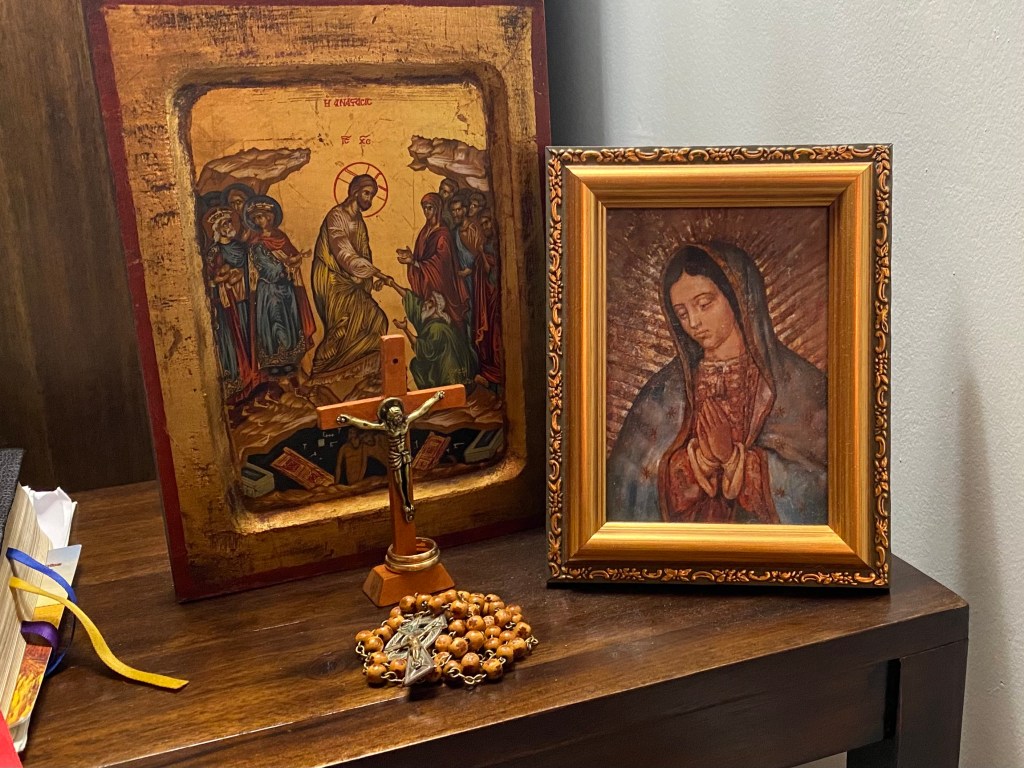
Painting: Some quiet time with Jesus, listening to his invitation to, “Go into the deep.”






 Spiritual Stepping Stones