Jesus invites us to follow him, to repent, and to be healed.

Jesus gives face to the living word of God come down from heaven to transform his people as he continues to teach with authority and offer healing. In today’s account of Mark, Jesus calls his fifth disciple, Levi. The key difference with this call of Levi and the four fisherman is Levi’s occupational hazard.

Tax collectors were disliked, even despised by many in ancient Palestine because they were considered unclean, and categorized along with lepers and sinners. They were cast in this net because the tax collector had a responsibility to pay a fixed amount to the occupying power of Rome. This in itself was bad enough because their own countrymen were colluding with the enemy. What made matters worse was that too many kept as a commission anything collected over and above that fixed amount. The majority of the population, barely getting by, paying a temple tax, and the Roman tax, then finding out their local tax collector was taking more than their fair share, did not make for feelings of endearment.

Jesus surprises all who had come to hear him teach when he not only invites Levi, also known as Matthew, to follow him but then they have dinner together. We are witnessing yet again another healing miracle. Jesus provides an opportunity of bridging divides by inviting someone to his inner circle, to turn away from one way of life to begin anew, to: “Repent and believe in the gospel” (cf. Mk 1:15). The Pharisees question his choice of table fellowship, not to Jesus directly but by seeking an answer from his disciples. The location of both the Pharisees and disciples is not clear. Are they a part of this gathering of the meal or both at a distance, observing?

They could not have been at too great a distance though because Jesus could hear their concerns and responded to them: “Those who are well do not need a physician, but the sick do. I did not come to call the righteous but sinners” (Mk 2:17). The Pharisees, and possibly some of his disciples, were not a part of the intimacy of this communion because of their own unwillingness to accept those that Jesus invited to share a meal, to accept that they too were sinners also in need of healing.

All have sinned and fallen short of the glory of God. Jesus forgives and offers mercy to all who are willing to be aware of his invitation to fellowship. In our humility to recognize our sins and repent, we receive healing and transformation, and are like Levi and his friends offered the opportunity to grow in relationship and participate in communion with the one who is ushering in the kingdom of God. This is a foreshadowing of the last supper and the celebration of the Mass.

We too are invited as sinners to join the banquet, to be in fellowship with Jesus. As Levi was called, we are given an opportunity to begin again, to leave behind anything that separates us from God and one another and follow Jesus, who came that we might be forgiven and healed.

As with many Gospel passages, today’s offers a wonderful opportunity to place ourselves in the scene. Mark presents Jesus teaching the people though he again does not tell us anything about what he shared. Knowing what follows, we might think about and ask ourselves, “What might Jesus have taught before going to Levi at the custom’s post?” Could he have been talking, as in his parallel account of Matthew (Levi), about how Amos preached that God desires mercy and not sacrifice (Mt 9:12)?

Let us read this passage slowly a few times (Mark 2:13-17) and meditate upon these words of God that are “living and effective.” Then as Jesus moves to the custom post, follow him, and the others in our imagination. What is our honest reaction to Jesus calling the tax collector, Levi? Are there sins that others commit that we find easy to forgive, others that we find hard to forgive? As the scene shifts to the breaking of the bread at this dinner, do we dive in with this motley crew, stay at a distance, or walk away?

God’s words are living. May we not only read them, but also meditate upon and pray with them so that we may be transformed by them. May we also encounter Jesus in this passage, be willing to listen to him speak to us in the silence of our hearts, and become one of or deepen our commitment as his disciples. This is a wonderful spiritual practice that can bring us much joy, forgiveness, healing, and deeper communion with the Divine Physician and healer of our souls. No RSVP needed, just come, open up your Bible, and join the feast!

————————————————————————-

Painting: Jesus’ “mission is not to vindicate those who keep the law, and condemn the rest; rather, it is to offer the healing of which all people are in need” (Healy, 61).

Healy, Mary. The Gospel of Mark. Grand Rapids, MI: Baker Academic, 2008.

Link for the Mass readings for Saturday, January 16, 2025

When we believe and trust in Jesus we will be free.

In a time when word of mouth is the way to get news out, the momentum still moved quickly. Jesus has preached with authority and moved people with his words, he has healed people and exorcised unclean spirits. So when it was known that Jesus was in the vicinity, in his present home of Caparnaum, people came. Jesus came not to abolish the law but to fulfill it. That meant that he did not water down the message of God, but raised the standards even higher than they had been under the leadership and legacy of Moses. Unlike some of the Pharisees though, Jesus did not just add heavy burdens to leave the people to carry on their own, Jesus accompanied those he challenged, he carried the weight of their sin, all the way to Calvary.

If Jesus had a business card to hand out as people gathered around him, it may have had written on it his first words recorded by Mark in his Gospel: “This is the time of fulfillment. The kingdom of God is at hand. Repent, and believe in the gospel” (Mk 1:15). The time of fulfillment is indeed at hand in the presence of the Son of God made flesh. The entrance to that kingdom is measured by a willingness to turn away from sin and turn back to God. Those who are open to the love of God, willing to be shaped and transformed by his love, who are in touch with their hunger and yearning to be one with the Father, recognizing that there is more to life than the false promises, apparent goods, and even the finite goods of this world, are drawn to Jesus.

When Jesus returned to Capernaum after some days, it became known that he was at home. Many gathered together so that there was no longer room for them, not even around the door, and he preached the word to them (Mk 2:1-2).

It is clear that there is a movement afoot in just these first two chapters of Mark. Another key verse from Mark is the very first line of his Gospel: “The beginning of the gospel of Jesus Christ [the Son of God]” (Mk 1:1). This is an amazing line, unless we read the words only, missing its proper contextual background. Those reading or hearing these words in the first and early second century would have grasped Mark’s intent immediately. There are two words in that verse that would have leapt off the pages or the lips of the reader; gospel and Christ.

The geopolitical powerhouse lording over Israel at the time of the life of Jesus was Rome. The house of Caesar was its head. Augustus Caesar was emperor at the time of the birth of Jesus. Tiberius Caesar reigned during most of the adolescence and adult life of Jesus. The term gospel, euangelion in Greek, meant good news. This gospel was spread throughout the Roman empire by messengers especially on two occasions, at the behest of the emperor; on his birthday and after great military victories. Christ, or Christos in Greek, meant the anointed one. The only ones who were anointed were emperors, kings, and priests.

Mark was making a vivid point with this opening verse, the proclamation of the good news: Jesus is the Christ, the anointed one, not Caesar. It is not Kaiser Kyrios, Caesar is Lord, but Iēsous Kyrios, Jesus is Lord! This verse is treasonous in the face of Caesar and a subversive rallying cry for the followers of Jesus then and today. Yet Mark was not calling for a military coup, or a power play, but inner transformation.

Mark revealed that the first opposition against Jesus was not by the Roman occupiers. The push back arose from the scribes of his own people. Instead of being amazed that Jesus had forgiven the man’s sins and was about to heal him of his paralysis, they seek to label him as a blasphemer.

Imagine what the paralyzed man felt. His friends were not swayed by the unyielding crowd that was unwilling to let them in, they tore through Peter’s roof to let him down, all eyes had been on him until Jesus began to speak, and in this moment when he was so close, would he be denied by the scribes, could they sway Jesus? Before these doubts could take hold, Jesus spoke: “I say to you rise, pick up your mat and go home” (Mark 2:11).

Jesus freed this man from his sin and paralysis. Not all suffering is caused by our sins, but in this case it was and the man was freed because of the faith of his friends. Unfortunately, the scribes remained paralyzed. How about us? Do we believe that Jesus is a blasphemer or Iēsous Kyrios? The Son of Man is the Christ, the Son of the living God, our healer, and Lord. He will free us and heal us when we are willing to surrender our ego, our self sufficiency, our imposed limitations, and sins. There is no obstacle that can prevent us from getting to Jesus as long as we believe and trust in him. Let us have the courage to encounter Jesus and invite others to join us.

________________________________________
Photo: Jesus the High Priest, Iēsous Kyrios.

Link for the Mass readings for Friday, January 16, 2025

“I do will it. Be made clean.”

The man in today’s Gospel scene takes a tremendous risk by approaching Jesus. He is a leper and so considered unclean. The appropriate response when someone was coming into his general vicinity was to give as wide a berth as possible, if not remove themselves from view, or to make themselves known to be unclean to any passerby.

This state of uncleanness was not a mere sense of hygiene. This was considered ritual impurity. So anyone touching or being touched by a leper would be considered unclean. For this reason, lepers were ostracized from family, friends, and the larger community socially as well as being forbidden to worship. This is a horrific state to find oneself in, for as human beings we are social beings who want to belong, to be a part of, and to be loved.

The leper cast aside all social norms and fell prostrate before Jesus and said, “Lord, if you wish, you can make me clean” (Mark 1:40)). Jesus knew full well the social norms, and it is very telling that not only did Jesus heal the man, but he did so by placing his hand on the man. He could have easily said, “I do will it. Be made clean” (Mark 1:41), without touching him and the man would have been healed. There are Gospel accounts of Jesus doing just that.

Jesus says more in his willingness to touch the leper than he does even with words of healing. He does not keep him at a distance but instead places himself on the same level as the man. Neither does Jesus become unclean, but the man becomes clean and the tremendous stigma of him having to be separated from the human touch is removed. With that simple touch, Jesus comes close and in doing so, the man will no longer be kept at arm’s length but be restored to his community and the opportunity for community again. “Jesus is not dismayed, scandalized, or contaminated by any human defilement. He willingly removes it by the power of his holiness, restoring our communion with others, making us fully qualified to enter God’s presence” (Healy, 54).

Jesus continues to come close to all of us. He has become human so that we can see the face of God, feel the tenderness of his touch, and be understood when no one else can or is willing to do so. Jesus has come close so that we know that we are not alone, that we are loved more than we can ever imagine, more than we can ever mess up, more than our worst mistake, or sin. Jesus has come close so we can experience his love and care. Having received this wonderful gift, may we too be moved with compassion to help others in need.

——————————————————————————————————-

Photo: God comes close in many ways.

Healy, Mary. The Gospel of Mark. Grand Rapids, MI: Baker Academic, 2008.

Link for the Mass readings for Thursday, January 15, 2025

Giving ourselves the time to pray, to breathe, and be still, helps us to be loved so to love.

There is a danger when we read a comment from Scripture such as when Jesus, “cured many who were sick with various diseases, and he drove out many demons” (Mk 1:34). The danger is that we may not believe we are capable of healing as Jesus did, so we don’t do anything active with our faith. We also might think that Jesus is divine, so of course, there is no way we can measure up to what he has done. An even less helpful line of thought would be to disbelieve that the healings of Jesus happened at all, they were all made up, and that they never really happened.

Another challenge can be pride. We may want to heal like Jesus, for the purpose of our own aggrandizement, so people look at us, not God. That was the sin of Simon the magician, who saw the Apostles healing, just as Jesus had, and offered payment for the power to accomplish the same (cf. Acts 8:9-25). Along the same line is wanting to do something grandiose, something beyond our own unique gift and charism, again so the focus is placed on us.

A more helpful perspective is ponder about the truth that Jesus had a specific mission to accomplish, and yes he is divine, but, as I have shared often and the Church maintains, Jesus is also fully human. He had a specific mission from his Father, he gave a specific mission to his Apostles, and his Father has a specific mission for each and every one of us as well. Jesus himself proclaimed: “Amen, amen, I say to you, whoever believes in me will do the works that I do, and will do greater ones than these, because I am going to the Father” (Jn 14:12). Not only works as Jesus did, but even greater ones! Jesus knows the plan God has for our life, the part we are to play, and he will share it with us and empower us with that which we need to accomplish it.

We all have the capacity to provide God’s healing presence to others. God works through us when we embrace the love of the Holy Spirit and are conformed by it such that we come to know how God wants us to love and be present. There is some way for all of us to contribute. Throughout the Bible there are accounts of how God invites others to service, each in very small and humble ways – Jesus himself began his days on this earth wrapped in swaddling clothes, in a feeding trough, as vulnerable and humble a beginning as there can be. He then lived the next thirty years in obscurity until his public ministry began.

We need to resist the temptation to limit and define Jesus, but instead embrace the gift of a “sitting theology” in which we allow ourselves to look at Jesus, take him in, for he is “infinite Love incarnate” (Barron). Then to place ourselves before Jesus and allow him to expand us so that we can receive his revelation and guidance and come to know the mission God has planned for us. We also need to be willing to allow his Spirit to work through us.

Then as we go about our lives each day, we become contemplatives in action. We take time away to pray as Jesus did, listen for his guidance, and be open to the experiences that arise. Facing opportunities and interruptions in which we can be present to another with a smile, an active listening ear, and a helping hand, leads to more joy. In each small act, we say yes to God’s invitation, are present and accompany others by our willingness to love as he has loved us. Small acts of presence and willing each other’s good, leads to healing.

—————————————————————————–

Photo: Jesus often went off to a deserted place to pray, who better to teach us how to do the same. Some quiet time with Jesus to end the day back at USML.

The thought of a sitting theology comes from Bishop Robert Barron Lesson 5 lecture that he gave on Hans Urs von Balthasar from his Word on Fire Institute. To learn more about the WOFI and what it offers, type the following link into your web browser: https://wordonfire.institute

Link to the Mass readings for Wednesday, January 14, 2025

Jesus, with his love and light exposes “evil so that it can be expelled.”

Jesus quoted no one. He spoke from his own authority. Nor did he shy away from the attacks of demons.

The Gospel of John picks up the source of Jesus’ authority from the beginning line of his Gospel. “In the beginning was the Word, and the Word was with God, and the Word was God” (Jn 1:1). Jesus is the Word, the Logos in Greek. Who would have more authority to speak about the word of God, than the Logos, the Word, himself?

The authority of Jesus was not only limited to teaching but restoration. Jesus is the light who shines in the darkness. His Father sent him to invite us to receive the restoration of the likeness we have lost because of the Fall. He wants to restore the glory that God has intended for all of us. We see this happening in the exorcisms Jesus performed. As he was teaching in the synagogue he expelled the unclean spirit of a man when he said, “Quiet! Come out of him” (Mk 1:25)! The unclean spirit would not go easy, but could not remain in the presence of Jesus and his command.

Jesus came to teach in the synagogue and the authority of his teaching identified the evil in the midst of the congregation. “Jesus’ teaching has the intrinsic effect of exposing evil so that it can be expelled” (Healy 2008, 42). The first act to follow his address that the kingdom of God was at hand was to begin to undo the disfigurement of the good that God his Father had created. The time of fulfillment was indeed at hand in the coming of Jesus and he began his work by proclaiming and teaching with authority and exorcising his authority over demons.

If you haven’t read the Bible ever, have not for a long time, have been away for a while, or could benefit from a deeper dive, I invite you to read the Gospel of Mark. Do so with the intention not of reading a history book or novel, but to read, study, and above all pray with Mark’s account. In this way, we come to not just know about Jesus, but know Jesus and experience his authority in our own lives. We will come to experience the same awe and wonder of those who experienced Jesus in person.

A great way to do so is to read along with the Church as we are reading the Gospel daily right now in the lectionary or at your own pace, say five to ten minutes a day. What may be even better is to read a short section at a time, read it over two to three times, and meditate on the passage. Mark is the shortest of the four Gospels, it is quick moving, and action-packed; the James Patterson of the Gospels. The accounts lend themselves particularly well to visualizing, and placing yourself in the reading as if you were watching a movie. Open your heart and mind to what Jesus wants to reveal or communicate to you in the silence of your heart.

We can also receive a word or phrase and carry it with us through the day, such as from today’s account. Jesus can be the light that shines in our own darkness and bring us healing. We may not be dealing with being possessed, but for those times that we experience negativity, temptation, stress, feeling indecisive, or divided we can call on Jesus’ words and speak in his name, “Quiet!”, “Silence!”, or “Peace be still!” and receive through the authority of his word his healing presence.

We do not walk this journey alone. We have the gift of prayer, of turning our hearts and minds to God, and the indwelling power of the Holy Spirit to help to bring the words of Scripture alive. Jesus is present with us, ready to help us and others. The kingdom of God is at hand, let us receive the hand of our Savior and be on our way!

——————————————————————————–

Photo: Evening walk, USMl, Mundelein, IL.

Healy, Mary. The Gospel of Mark. Grand Rapids, MI: Baker Academic, 2008.

Link for the Mass readings for Tuesday, January 13, 2025

Jesus is close, and when we repent, we will experience how close he is!

“This is the time of fulfillment. The Kingdom of God is at hand. Repent, and believe in the Gospel” (Mk 1:15).

With these words as recorded by Mark, Jesus begins his public ministry in time and space and we in 2026 begin the first week of Ordinary Time together. Whether we are in the season of Christmas, Easter, or Ordinary Time, each day is an opportunity to be thankful and celebrate our lives for this continues to be “the time of fulfillment”. The Kingdom of God is still at hand because Jesus is still present with us.

We are not alone on our journey. The Son of God became human, as we just celebrated this Christmas season, and as we will celebrate in Easter, he died and rose again. This was no mere resuscitation like with Lazarus who rose and died again. Jesus conquered death and became the firstborn of the new creation. Ordinary Time is the season in which we not only study the life and teachings of Jesus but hopefully continue to be willing to be more conformed to his Body and the will of his Father and experience the love of the Holy Spirit.

One of the things that may hold us back from embracing the gift of the Kingdom of God in our midst is that we have often chosen to place our focus on other distractions or diversions or placed ourselves others first before God. Jesus calls us to reorient our lives in urging us to repent. This is an invitation to see what our lives are like apart from him and how they are with him. With a clearer choice, we can then choose to turn away from the false reality that we are the center and author of our own lives. When we do so, we come to realize the truth that God is our true author and director. To repent also means to open ourselves to his love, to place our trust in him, and to be assured that God accepts us as we are, right now at this very moment.

We do not repent so that God will love us. We do not have to do anything or act perfectly or say the right prayer for God to love us. We just need to “move the Lord out of the category of ‘polite company’ and into that of intimate friend to whom one can tell everything” (Barry 1987, 55). To repent means to turn back to the God whose arms are wide open ready to embrace us. We are given the opportunity to see where we have turned away from God. Let us run into his waiting embrace and receive the forgiveness, mercy, and love that he offers us. Experiencing the love of God we can then begin again and walk in communion with God.

The call to repent that Jesus accentuates is a continuation of the preaching of the prophets and John. What he adds to repentance is to believe. To believe is to “trustingly accept and yield to what God is doing in him. The kingdom is near enough that anyone who so chooses can reach out and lay hold of it through faith” (Healy 2008, 42). As we turn back to God, reorient our minds to his guidance and direction, reflect on how much he has blessed us, we will better make an ascent to believe.

To “repent and believe” is a good way to begin our journey into Ordinary Time together. May we resist the temptation to hold anything back and share more with our Father and grow closer to God as a person, each day. Let us trust in Jesus who encourages us to resist limiting God and the possibilities he places before us. Instead of attempting to bend his will toward ours, may we allow the love of the Holy Spirit to expand our hearts and minds such that we will believe in and trust God more so to be like a pencil in his hand.


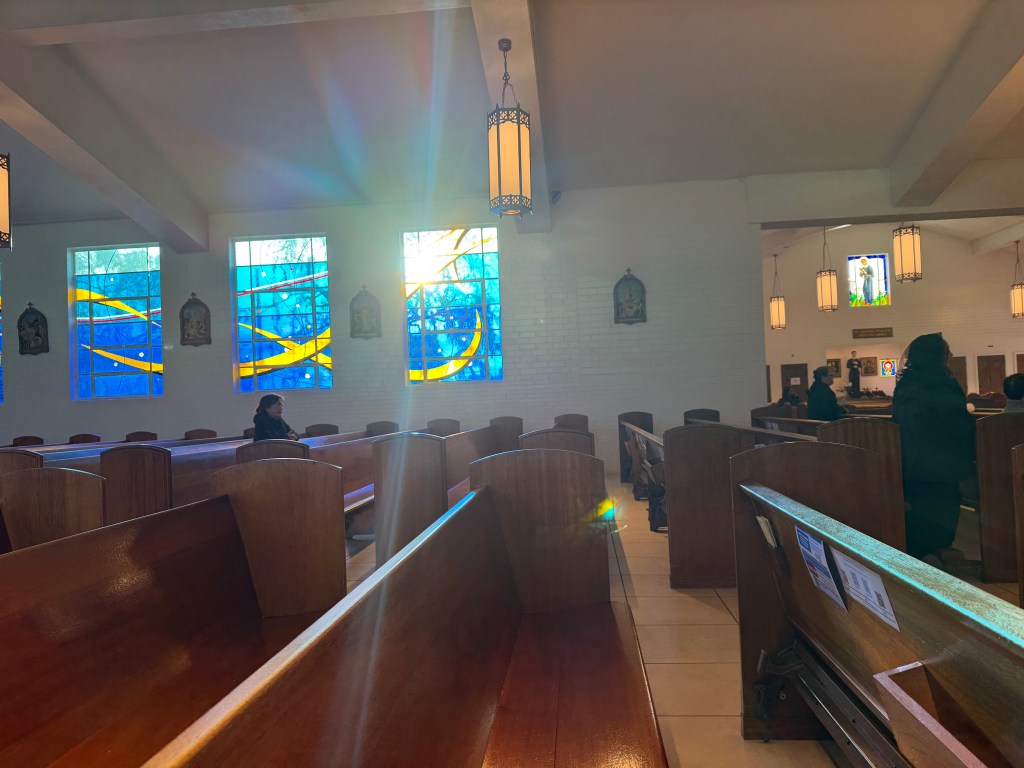
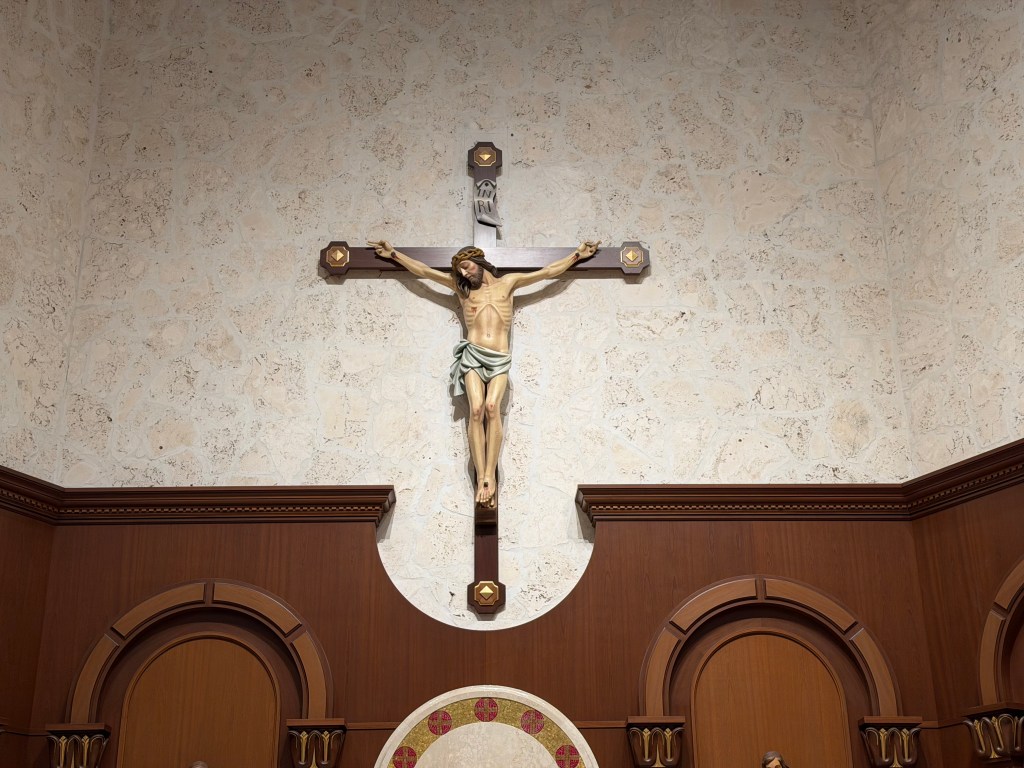
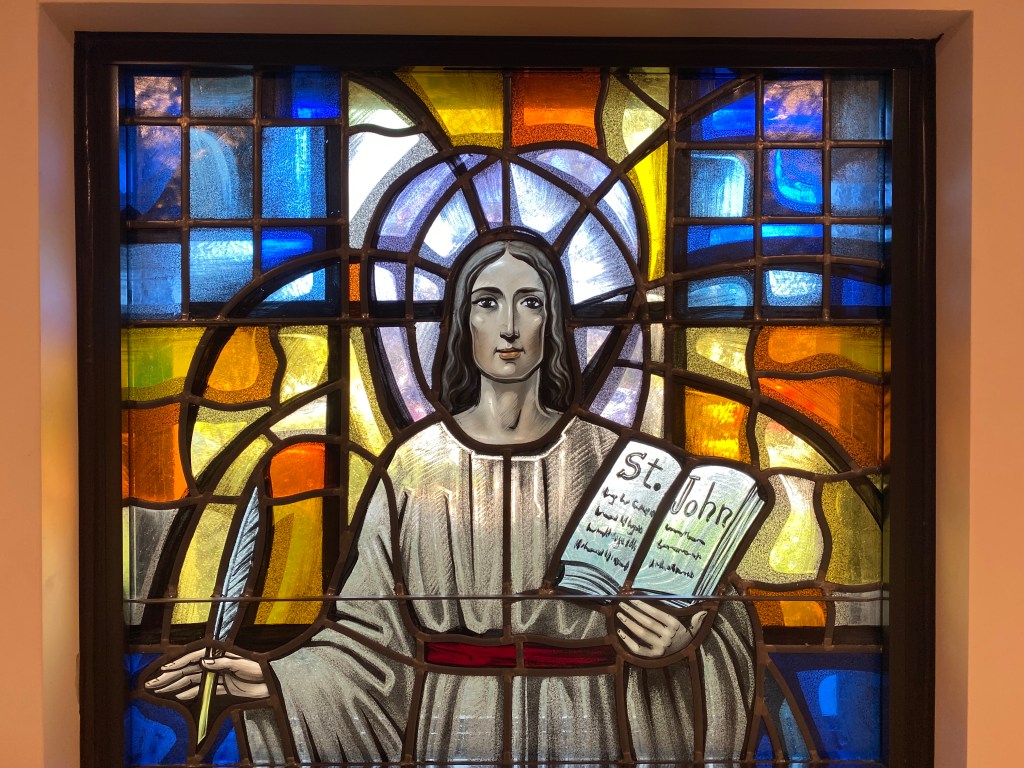
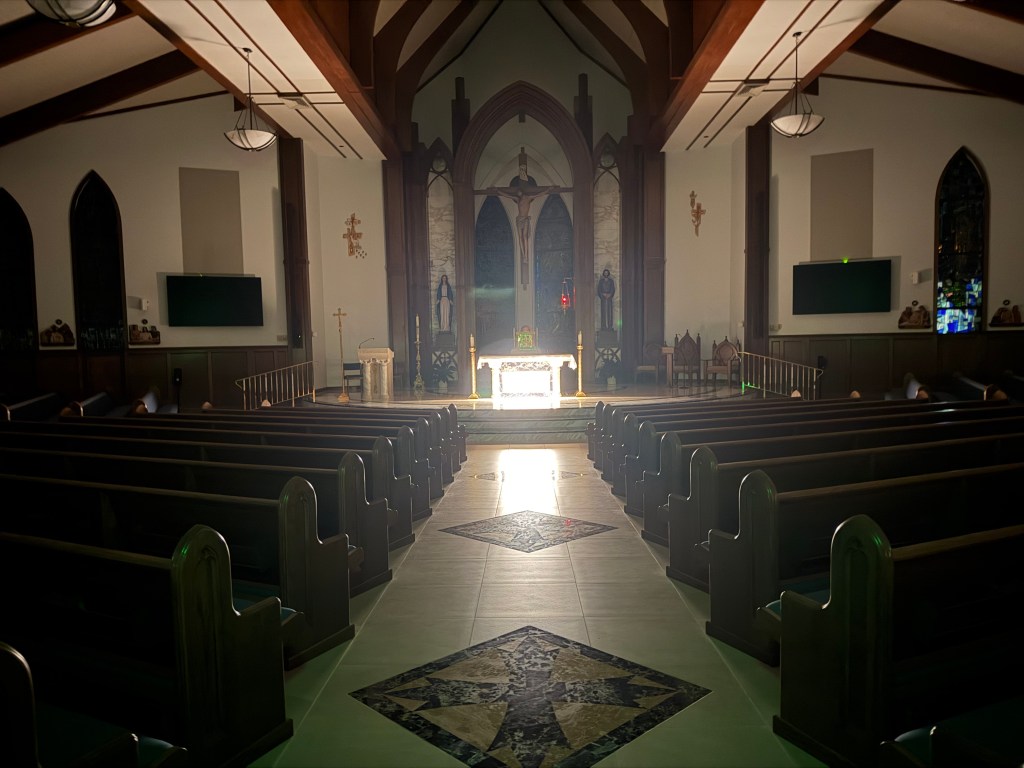
Photo: A good way to reorient our minds and hearts to the will of God and to believe is to slow down, examine our interior life, and pray. Doing so in the chapel at the community center of USML last week.

Barry, S.J, William A. God and You: Prayer as a Personal Relationship. NY: Paulist Press, 1987.

Healy, Mary. The Gospel of Mark. Grand Rapids, MI: Baker Academic, 2008.

Link for the Mass readings for Monday, January, 12, 2026

Each day we awake and consecrate our heart to the Lord, we will experience his joy!

“So this joy of mine has been made complete. He must increase; I must decrease.”(Jn 3:29b-30).

How could John be feeling joy with decrease? This is counter to what many aspire to in our country. Aren’t we supposed to obtain more, be more popular, and not rest on our laurels if we are to be happy? If our end goal is, fame or honor, wealth, power, and/or pleasure, above all else, then yes that would be true. But John is giving us an insight here about what brings us real joy.

True joy comes from God himself. He is the one who will satisfy our deepest longings, the ones that we are not even aware of! This is even deeper when we have found our meaning and purpose, or vocation in life. John was clear about his mission. John came to prepare the way of the Lord. He experienced this from the time when he leaped in the womb when Mary first arrived to see Elizabeth. From that moment, he was preparing the way for Jesus and continued to do so into his adult life. He was not distracted by how many people he was or was not baptizing because he did not see Jesus as competition. Each of them were playing their part in saving humanity and the world. John focused on his part, preparing people to be ready for the coming of the “Lamb of God, who takes away the sins of the world” (Jn 1:29).

John is not threatened by Jesus as was Herod, he was overjoyed that the time of fulfillment had come. What John had been called to do by God he had been doing and would continue to do. The reality that Jesus increased and John decreased brought John joy because this was the fulfillment of his mission. How many of us get to experience the fruits of our labor in the moment or even our lifetime?

If we want to be happy, experience joy, and be fulfilled, then following the lead of John the Baptist is a pretty good way to start. I do not necessarily mean selling off everything and living in the wilderness. The important point is that John cultivated a relationship with God. He came to know God’s voice, was open to his direction, acted on his leading, found confirmation, and became clear of the part he was to play in salvation history.

Each and every one of us has a specific role to play in God’s plan. We come to understand our mission by slowing down and becoming consciously aware of the relationship God is inviting us to participate in. As we do so, we also experience the Holy Spirit who, in the words of Pope Francis, “impels us to open the doors and go forth to proclaim and bear witness to the good news of the Gospel, to communicate the joy of faith, the encounter with Christ. The Holy Spirit is the soul of mission” (Francis 2014, 48).

I enjoyed teaching at each level, elementary, middle and high school. As I saw my teaching career coming to a close because I knew that Jesus was leading me to the priesthood, I experienced joy, not because I was leaving a career and vocation I was blessed with, but was taking the next step that the Holy Spirit had called me to participate in. I am also glad that I have been able to continue to share these reflections. There have been many evenings in which my body was ready to head for the land of dreams but I have found joy even when weary to do so mostly each day.

When we allow ourselves to listen, we will hear and begin to recognize the voice of Jesus in the silence of our hearts, we will better discern where we are placing our thoughts, time, and energy, as well as better examine how God is inviting us through his creation, our experiences, and relationships. As we step out and risk, following the lead of the Holy Spirit, as we decrease and allow Jesus to increase, he will not only confirm for us but provide us with the means to accomplish our mission and we will experience his joy!

—————————————————————————–

Photo: “My heart is steadfast, God, my heart is steadfast. I will sing and chant praise. Awake, my soul; awake lyre and harp! I will awake the dawn.” (cf Psalm 57). Last morning at USML.

Pope Francis. The Church of Mercy: A Vision for the Church. Chicago: Loyola Press, 2014.

Link for the Mass readings for Saturday, January 10, 2025

In loving our brothers and sisters, we are loving Christ who gave his life for us.

He said to them, “Today this Scripture passage is fulfilled in your hearing” (Lk 4:21).

Jesus spoke these words to his hometown congregation in Nazareth who had just heard him read the passage from the writings of the prophet Isaiah. Jesus proclaimed that he was the one to whom Isaiah was talking about. Luke chose to highlight this event as the starting point of Jesus’ public ministry, of bringing glad tidings to the poor, proclaiming liberty to the captives, recovering sight to the blind, letting the oppressed go free, and proclaiming a year acceptable to the Lord (Lk 4:18-19).

This message of universal healing, restoration, and reconciliation for all people would be an aspect of the mission of Jesus. He presented the message that he would be the vehicle to bring the love and redemptive work of his Father to all the nations, to invite all people to be aware of the reality present to them: that God his Father is inviting all into communion and relationship with him. The poor mentioned were not just in reference to those experiencing material poverty, but also to those finding themselves on the margins of society, the outcasts, those on the peripheries. The captives were not only those imprisoned for debts or crimes but those bound in the chains of their own sin and addiction. The blind were not only those who could not physically see but those who experienced the spiritual blindness of pride and arrogance. The oppressed were not just those under the iron fist of totalitarian and dictatorial regimes, but those pressed down through their own anxieties and fears.

In what ways are we in need of Jesus’ teaching, healing, and restorative power? What is keeping us on the peripheries, apart from communion and fellowship? What sins, disordered affections, and/or addictions, fears, anxieties, distractions, and/or diversions keep us bound? What is keeping us blind to the reality that God is in our midst and seeking a deeper relationship with us? Today we hear or read again Jesus’ words proclaimed in the Gospel. Jesus invites us to be healed and to align ourselves with his will and ministry of loving service.

It is a good practice to ponder the same words that Jesus spoke to the people of his own hometown. Are we willing to listen? Will we hold on to our biases and prejudices, to our tribe, nation, political party at the cost of losing our integrity, reason, and dignity? Or can the words of Jesus be a light for us to see our fallen nature? Resisting the temptation to turn away from but instead allowing the light of Jesus to shine into our darkness opens us to the gift of our uniqueness, the richness of our humanity, and that we are all interconnected.

The Psalmist stated that, “From fraud and violence he will redeem them” (Psalm 72:14) and John wrote, “whoever does not love a brother whom he has seen cannot love God whom he has not seen” (1 John 4:20). Pondering these words from today’s readings gives us an opportunity to begin again. Allowing ourselves to be loved by God who loves us more than we can imagine and has a plan for us beyond our wildest imagination offers so much hope. We receive this gift, when we give ourselves time to experience what we thankful for, admit our sins and turn to God with a contrite, sorrowful heart for what we have done and what we have failed to do.

As we do so, we are more able to experience the healing hands of Jesus on our bowed heads and receive the warmth of his forgiveness and love pouring through us as we are purged from our sin and pride. Then, in recognition of how much suffering and pain is present in our country and world, we can open our hearts and minds to the guidance of the Holy Spirit to participate with him in choosing love over hate, bringing the invitation of healing and reconciliation to others, and committing to bringing about “a year acceptable to the Lord” in this new year of 2026 (Lk 4:19).

————————————————————————

Photo: Prayerful walk after lunch on the grounds of USML.

Link for the Mass readings for Thursday, January 9, 2025

God is inviting us to experience some silent moments to pray.

And when he had taken leave of them, he went off to the mountain to pray (Mk 6:46). We often read in the Gospels that Jesus went off by himself to pray. I am sure this was not a practice that he just began during his public ministry, but one that he learned and developed from Mary and Joseph. The Apostles themselves witnessed Jesus praying, and how God was primary in his life.

Pope Leo during a Sunday homily on July 20, 2025 shared, “Our relationship with God comes first… we should set aside moments of silence, moments of prayer, times in which, quieting noise and distractions, we recollect ourselves before God in simplicity of heart. This is a dimension of the Christian life that we particularly need to recover today, both as a value for individuals and communities, and as a prophetic sign for our times. We must make room for silence, for listening to the Father who speaks and ‘sees in secret’” (Mt 6:6).

Jesus prayed, he taught his Apostles to pray, and we are at our best when we are people of prayer. We become people who pray when we are willing to make friends with silence. When we show up intentionally to spend time with God, our lives begin to change. That we even desire to pray, that we even want to be closer to God, is already a prayer because we are experiencing an invitation from God to draw close to him, to develop a relationship with him, to come to know the one who knows us better than we know our self.

Fr. William Barry in his book, God and You, describes how prayer is becoming consciously aware of our relationship with God. “God is in relationship with each and every created thing in the universe and in relationship to the whole of it… whether that being is aware of the relationship or not.” The amazing thing about God is that “he will not force himself on us. He continually tries to arouse our awareness and interest in him” (Barry 1987, 12-13).

God reaches out to us in so many ways such as a majestic sunrise or sunset, the ebb and flow of the waves on a beach, and the brilliant radiance of a starlit sky. He also does so through our trials of sickness, pain, others who are being hurt, or encountering injustice. He is also present through our every day relationships and experiences. The key is to be aware of what is being stirred up within us when we experience something and allow ourselves to “wonder about the experience and its meaning” (Barry, 13).

What is most important regarding becoming people of prayer is our awareness, our becoming conscious that we have a relationship with God who is not an idea but a person. “This relationship is based on God’s actions to establish it and his desire that we become conscious of who he is and wants to be for us. Our consciousness depends on our willingness to pay attention to God’s actions, or at least to experiences that might be actions of God, and to let our desires for God be aroused” (Barry, 14).

Another question that Fr. Barry answers regarding prayer is that if God knows everything about us, why bother to pray at all? God is not just wanting information. Again, he is inviting us to enter into a relationship. He wants to know whether we believe he cares how we feel and whether we are willing to let him in, to let him know what we feel and desire. It is important to be honest in our dialogue and be willing to reveal ourselves to God, while at the same time, be open and willing to allow him to reveal himself to us. This is how we build authentic relationships with God and each other (cf. Barry, 15).

Jesus, thank you for inviting us in so many small ways each day to spend time with you. Though we can allow our harried pace, distractions, diversions, temptations, and/or pain to lead us away from the gift of your presence, please help us to slow down, to breathe, rest, and abide in the wonder of how our God and Father is present, and how the love of the Holy Spirit is working in our lives daily. Help us to realize that we don’t need to be perfect to come to you, to say the right words to be heard by you, nor that we have to say any word at all, and help us to be free to show up, rest in your loving gaze, and be with you and go from there.

——————————————————————–

Photo: Moments when we are touched by beauty and stop, are accepted invitations to pray.

Barry, William A. S.J. God and You: Prayer as a Personal Relationship by William Barry SJ. New York: Paulist Press, 1987.

Link for the Mass readings for Wednesday, January 7, 2025

Jesus is offering to us his heart, are we willing to receive it?

We can observe two movements of Jesus going out to serve others in today’s Gospel. The first is evident in the beginning verse: “When Jesus saw the vast crowd, his heart was moved with pity for them, for they were like sheep without a shepherd; and he began to teach them many things” (Mk 6:34). Jesus was moved with pity or compassion and he also witnessed, beyond their immediate physical hunger their deeper, spiritual ache. hey were not even aware of the depth of their hunger.

They just had spent time with Jesus, experienced and had heard of the many other accounts of him preaching with authority, his healings, and exorcisms. They wondered if he could be the Messiah, the one who had been promised, present now in their midst. Yet, for the vast number of them, if not all gathered, they sought the kind of leader, that Jesus was not. He was not to be a mighty military leader, he would not train his followers in guerilla warfare, and Jesus would not conquer the Roman occupation with might.

After his teaching, the time grew late and he and his disciples were aware of the hunger of the crowd. The disciples only saw the five loaves and two fish that were present, barely if enough to feed the Twelve, let alone the vast multitude. Their first instinct was to send them on their way such that they could fend for themselves. Jesus, who knew the Father, knew there were no limitations to his providential care. Jesus: Then, taking the five loaves and the two fish and looking up to heaven, he said the blessing, broke the loaves and gave them to [his] disciples to set before the people; he also divided the two fish among them all (Mk 6:41).

Jesus shepherded and provided nourishment for five thousand men, so if that number was not including women and children, the number could have been easily doubled, and all ate and were satisfied (Mk 6:42). Jesus was aware of their deepest needs and provided for them. Jesus knew their spiritual hunger as well as their physical hunger, better than those who came to listen to him. This deeper desire, in time, he would provide as well.

Are we so different today? We think we know what we need, but how many times are they really apparent or disordered goods or substitutes for what we truly hunger for deep down? We continually strive to be autonomous, self-sufficient, able to control and govern our own affairs. We witness this when the disciples wanted to send off the people to get their own food, and they would deal with the meager amount they had. Yet, this is counter to who we have been created to be.

Jesus showed his disciples time and again the way of God was not self-sufficiency, but self-surrender. They were and we are to place our complete reliance on God. The deepest hunger we all have is to be loved by God. Can we allow ourselves to be loved? Will we remain still long enough to experience his love? Do we believe in some form of lie that says we are unlovable? If so, renounce it and replace it with the words of John: “In this is love: not that we have loved God, but that he loved us and sent his Son as expiation for our sins” (1 John 4:10).

To experience this love, we are invited to spend time with Jesus regularly just as we would to help nourish any human relationship. With only a small amount of bread and fish, Jesus was able to give enough to the multitude so that all were satisfied. So too, the amount of time we spend is not as important as that we spend time with him each day. The little bit of intentional time we give to Jesus, he will receive and share his love with us. Jesus requires nothing from us. When we are willing to offer him our poverty, recognize our need for, and acknowledge that we depend on him, we allow our heart to beat with the rhythm of his sacred heart.


Photo: Statue of the Sacred Heart of Jesus, grounds of USML, Mundelein, IL.

Link for the Mass readings for Tuesday, January 6, 2025