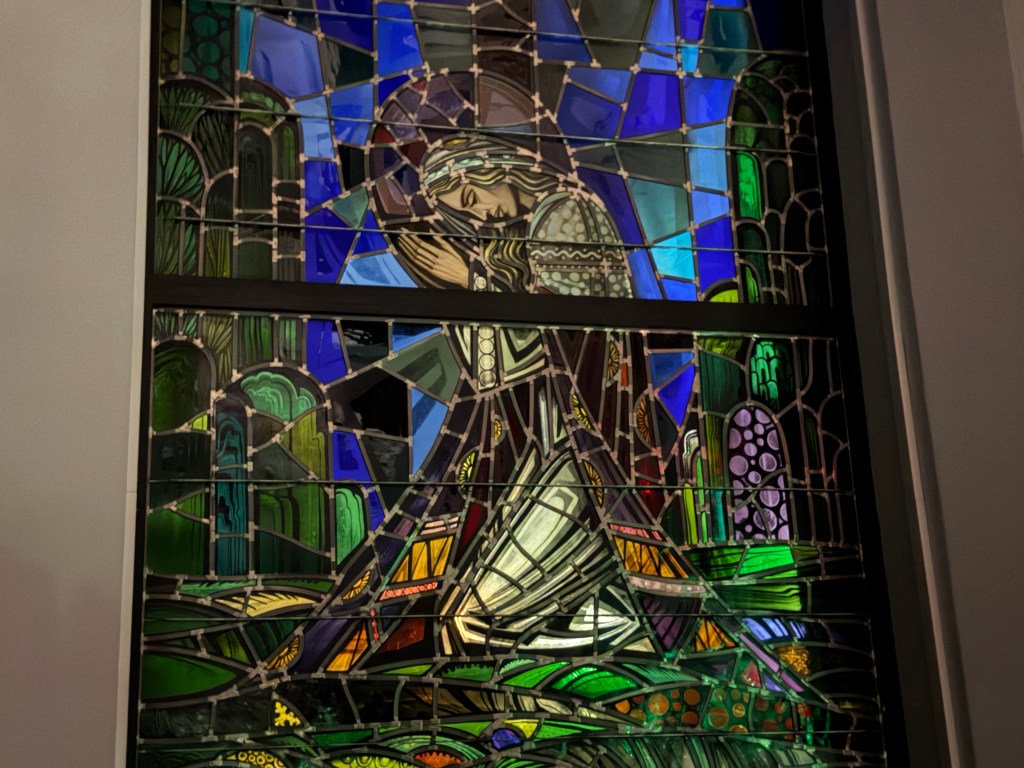
May we confess and not allow the sun to set on our sins.

In each of our readings for this Sunday, even the psalm, there is conflict. The reconciliation for this conflict is to accept and understand that God is God, and we are not. We are to place all our trust in him, follow his precepts and teachings and we will be in a much better place. Better because we will come to realize that the interpretive key to experience healing for ourselves and guidance through our conflicts, is to accept the invitation of our loving God and Father to be in relationship with him.

We have been created by an outpouring of God’s love, to receive his love, and to love God, our neighbors, and ourselves as he loves us. When we anchor ourselves in this truth, in putting God first, trusting in him and seeking to deepen our relationship with him, our lives will be more properly ordered and we will realize that not only are we not alone when we experience conflicts but we will have a firm foundation in God for guidance. When we have recognized that we have turned away from God through our sin, may we have the humility to seek forgiveness.

In our first reading then when Joshua complains to Moses because he hears about how Eldad and Medad are prophesying apart from the seventy who had come to receive the spirit God sought to bestow on them, Moses pointed out to Joshua that God can bestow the spirit on whomever he wills and, “Would that the LORD might bestow his spirit on them all” (Numbers 11:29)!

This same theme arises in the Gospel when John also complained to Jesus that someone, not one of the apostles, was driving out demons in Jesus’ name. Jesus tells him not to prevent him from doing so, “For whoever is not against us is for us” (Mark 9:40).

Both Moses and Jesus recognize and acknowledge that the power of God is at work among his people, and that this not to be prevented or inhibited in any way. That people are receiving the spirit of God and acting upon God’s guidance is what we are all to do! To give the spirit and love and for all to receive is what God wants for all of us!!! The love we have received is not for us alone, but for us to share.

James points this out clearly in his letter and reveals the danger of wealth when we cling to it and refuse to share. Wealth given by God is a gift and a gift given not for us alone. We are to be good stewards of what we have received and provide freely for those in need. We are not to grasp for wealth on our own terms apart from God’s guidance nor exploit or use others for our own gain.

One of most egregious of sins is withholding wages from workers that are due their pay; the cries of which “have reached the ears of the Lord of hosts” (James 1:4). Withholding wages of day laborers during the time of James could have devastating effects. It could mean the laborer or his family would not eat, he could not make a payment of debt and could be imprisoned, as well as other complications that posed a risk for those living day to day with no social net or means of support.

In the Gospel, Jesus shows vividly and graphically the seriousness of sin. Without mincing words, Jesus showed clearly that sin was not to be taken lightly and doing so has catastrophic effects not only in this life but for all eternity. This was especially true for those who lead others into sin. “Whoever causes one of these little ones who believe in me to sin, it would be better for him if a great millstone were put around his neck and he were thrown into the sea” (Mark 9:42).

This great millstone or donkey stone was massive. Some biblical scholars state that this stone could have weighed up to a thousand pounds. The donkey was hooked up to the stone, which was in the form of a massive wheel and then led by the donkey in a circle to pulverize wheat and other grains that was placed in a stone trough so to make flour. It is not hard to then imagine what would happen to someone who had this stone attached to his neck and thrown into the sea!

Jesus continued with more imagery by saying that it would be better to cut off a hand or a foot, and to pluck out an eye if any of these members would lead to sin. Jesus used such graphic language to show how destructive sin is in our lives, for each of us as individuals, as well as for families and communities. Sin has horrific consequences because it damages or ruptures our relationship with God and each other. The ultimate devastation would be an eternal life of separation from God.

Better to die a horrific death, than to die in a state of unrepentant mortal sin. Better to die maimed than clinging to a sin that would separate us from God for all eternity. Jesus is not wishing horrific deaths, physical dismemberments, or eternal damnation on anyone. He came not to condemn but to save humanity. His first public statement as he began his public ministry recorded back in Mark 1:15 is: “This is the time of fulfillment. The kingdom of heaven is at hand. Repent and believe in the Gospel.”

Jesus came to wake us up, to lead us away from our selfishness, our self-centeredness, and sin, to heal us from our fears and deepest wounds, and to guide us home to the very source of our being, the infinite spring of our sustenance and nourishment, the core of our deepest desire, which is to remember who and whose we are. To call us to repent, to turn back to God, and believe in the gospel, the good news, that we are God’s beloved daughters and sons. And yet, through a free act of our will, we can reject the love of our Father and choose to separate ourselves from the love that God wants to bestow upon us in this life and for all eternity.

We can also choose to make the psalmist’s words our own: “Cleanse me of my hidden faults” (Psalm 19:12). When we hide in the darkness and cling to our sin, we are listening to the father of lies who seeks division and our death. God will forgive us from anything. God never tires of forgiving us. We tire of asking. Let us come confidently into the light, into the confessional, and ask Jesus to reveal to us our sins. When we have the humility to be contrite, confess, and atone for our sins, we will know and experience Jesus’ mercy, forgiveness and love, and be reconciled to our God and one another now, in this life, and for all eternity.


Photo: Rosary walk, Riomar Beach, Vero Beach, FL.

Link for the Mass readings for Sunday, September 29, 2024

As we allow Jesus to heal us of our pain, we can love and help others.

Jesus asked his disciples about who people said that he was and Peter, through the revelation of God answered, “the Christ of God” (Lk 9:20). Jesus then responded that “The Son of Man must suffer greatly and be rejected by the elders, the chief priests, and the scribes, and be killed and on the third day be raised” (Lk 9:22).

If you might be thinking that these verses sound familiar, it is because we heard proclaimed or read the parallel account found in Mark 8:27-35 two Sundays ago on September 15. This point never gets old. As we grow in our relationship with Jesus, we come to a deeper understanding of Peter’s words.

Jesus is indeed the Christ, the Messiah, the Son of the Living God. Yet, that meant many things to many people who were awaiting the coming of the Messiah. For most, they were hoping for a military leader to come to lead them and overthrow their Roman occupiers. As soon as Peter made his statement, Jesus clarified what kind of Messiah that he would be, a suffering servant.

As our first reading from Ecclesiastes offered, “there is an appointed time for everything” (Ecclesiastes 3:1). Even a time for suffering. Peter had trouble with understanding this and he represents us as well. One of the points of faith many of us struggle with is the same as Peter, why did Jesus have to suffer?

Jesus was willing to be sent by his Father to become human and to experience all of humanity, even the suffering of our humanity, because only that which Jesus assumed could he redeem. Also, in Jesus experiencing our suffering, even unto death, we can know without hesitation or doubt that Jesus understands our struggles and anguish. And that means we are never alone in our suffering.

The reality is that the Messiah, the Christ, the Anointed One, is Jesus. He is the suffering servant, the One willing to give his life on the Cross for all of humanity and creation. Jesus did not do this in some abstract way. He died for each and every human being that has lived, is now living, now reading these words, or ever will live. He died for you because he loves you.

To be a disciple of Jesus, we are invited to love in return. This means being willing to suffer and sacrifice for one another. Our discipleship will be ultimately expressed in love, in our willing the good of each other. We must be willing to let our hearts be moved with compassion and as St. Mother Teresa taught by, “Giving until it hurts.”

To give until it hurts means that we are willing to allow our hearts to be open to love. For our hearts to be open to the pain of another means that we must be willing to be healed. We are invited to allow the Divine Physician to remove our hearts of stone and replace them with hearts of flesh. This divine surgery happens at the Cross when we are willing to bring our suffering to Jesus whose arms are wide open and ready to embrace us.

The Suffering Servant understands our pain, experiences our pain, and can help us to experience instead of run from our pain. There is no way to cover up, go around, sidestep, and/or deny, our suffering. We must face it and experience it head on. But we don’t have to do so alone, nor can we. For what Jesus has assumed he can and will redeem. When we are ready and at the pace, we are willing to go, Jesus will heal us. For “there is an appointed time for everything.” Including our healing.

———————

Photo: Feast day of St Vincent de Paul, who allowed Jesus to remove his heart of stone and replace it with a heart of flesh, pray for us. St. Vincent de Paul Regional Seminary, Boynton Beach, FL.

Link for the Mass readings for Friday, September 27, 2024

Jesus calls us too.

“While he was at table in his house, many tax collectors and sinners came and sat with Jesus and his disciples” (MT 9:10).

We as the Church, followers of Jesus, still have much to learn from Jesus. Today’s reading provides another wonderful example. Once Jesus begins his public ministry he is constantly on the go. Going where? Meeting people in the midst of their daily lives as he did with Matthew. And what is the response to Jesus calling Matthew, a tax collector, and then partaking in table fellowship with other tax collectors and sinners?

Matthew accepts his invitation to follow. The Pharisees question the disciples about his practice and curious onlookers follow at a distance. But to those who have, maybe for the first time in their lives, been respected as fellow human beings, their response is hope. A hope that there actually may be a path leading in from the peripheries. A hope that they no longer have to be on the outside looking in. A hope that they, for the first time in their lives might finally belong.

Jesus is shown time and again encountering the person as they are in their present circumstances and the chaos of their lives. He welcomes, is present, and embraces each person as they are. Yet he doesn’t want them to stay where they are. He invites people to be part of something greater than their self-absorbed posture, their self-imposed and externally imposed limitations and instead to actualize their potential and embrace a life of meaning and purpose. The only requirement is that they are willing to: repent, be forgiven, be healed, be loved, be human, be free, and once experiencing this encounter with Jesus, share what they have received with others.

When we are willing to follow Jesus and become his disciples as Matthew did, then we can experience the same hope for a new beginning. To follow we must have the humility to recognize our sinfulness, repent, recognize our dependence on God and our need for him and his love more than anyone or anything else. As we do so, we can begin to heal and let go of the apparent goods that we thought would bring us happiness which have instead led us astray, and renounce those false hopes that we have placed our security in.

We will find that, only in God alone will we find our fulfillment, hope, and security. Jesus invites us to experience: “one Lord, one faith, one baptism; one God and Father of all, who is over all and through all and in all” (Ephesians 4:4-6). This is the promise and fulfillment that no other pursuit or person can bring. God is the foundation and source of all, and at the same time he knows each and every one us better than we know ourselves. He invites us to grow in our relationship with him so we can know him too.

We do this best as we get to know his Son, Jesus whom he sent, not to condemn us, but to save us. Jesus draws close to us as he did with Matthew so that he can experience the chaos of our lives. He loves us in the midst of the best and the worst and invites us to experience something better. Called and willing to be healed, forgiven, and transformed like Matthew, we too, can experience God’s mercy. Jesus will then send us as well to be beacons of the light, hope, and love for those who are in need of God’s healing and peace.

——————————————————

Painting: The Calling of St. Matthew, Michelangelo Merisi da Caravaggio, 1600. We may be as surprised as Matthew, but Jesus does call us as well!

Link for the Mass readings for Saturday, September 21, 2024

Healing happens when we are willing to see each other as human beings.

Our account from Luke today represents a wonderful picture of collaboration and harmony. The centurion, a Gentile – non-Jew, heard that Jesus was near and appealed to Jewish elders to seek out Jesus to invite him to his home to heal his slave. As Jesus was on the way, the centurion apparently had a change of heart, concerned about his sinfulness and did not want to trouble Jesus. He sent his friends to Jesus with the request to heal his slave with his word. Jesus was amazed: “I tell you, not even in Israel have I found such faith” (Lk 7:9). The slave was then healed.

Aside from the fact that no one seemed to have a problem with slavery, certainly not uncommon in the Ancient Near East, everyone involved, the centurion, his friends, Jewish elders, and Jesus, were all working together to make this healing possible. The centurion actually showed concern, not indifference for his slave. Gentiles and Jews, occupier and occupied, collaborated with one another, and Jesus did not hesitate to answer the request of the centurion, a representative of the Roman occupying army.

This Gospel scene is certainly worth meditating upon.

The centurion was aware, and he sought help for his servant who was ill and in need of healing. The interesting point is that he sought help from those he was in a position to oppress. He went to those of a different race and religious belief. This Gentile centurion asked help from the elders of the Jews. The elders recognized the need of one of their oppressors and reached out to Jesus for help. Everyone in this account did not hesitate to play their part to help a servant.

Are we willing to see, hear, speak up, and seek help for those in need around us, no matter who they may be? Can we resist apathy, indifference, and prejudice, and instead, keep our ears, eyes, and hearts open to the vulnerable among us? Are we willing to see each other as people created in the image and likeness of God? Will we treat those we encounter with dignity and respect and be willing to collaborate and work together for the good of those like us, as well as those who are different, in little ways with great love today as Jesus did, one person at a time.

When we do so, we are at our best. We are the hands and feet of the Body of Christ.

—————————————————————————————–

Photo: May we reflect the light of Jesus in our corner of the world as we resist the temptation to feed division and dehumanization and seek instead to promote healing and reconciliation, grounded in God’s love for the dignity of each human person.

Link for the Mass readings for Monday, September 16, 2024

Behold Jesus on the Cross and be healed.

“In punishment the LORD sent among the people saraph serpents, which bit the people so that many of them died” (Numbers 21:6).

What kind of God would bring poisonous snakes upon his children? When Jesus taught his disciples about prayer didn’t he say, “Is there anyone among you… if a child asks for a fish, will give it a snake? If you then, who are evil, know how to give good gifts to your children, how much more will your Father in heaven give good things to those who ask him” (Mt 7:10).

Is God a loving Father or a harsh taskmaster?

He is a loving Father who not only wants his children to live but to live life to the full. God freed his people from slavery and was not only leading them to the promised land but also providing for and protecting them on the way. And yet, the people consistently grumbled and then rose up against Moses.

God chose to share with them a stark image of their choice of opposition to him by sending the serpents. The imagery of the serpent would have come to mind quickly to the people. For it was the serpent who tempted Eve and Adam and led them to their Fall. As St. Ephrem the Syrian (306-373 AD) wrote: “The serpent struck Adam in paradise and killed him. [It also struck] Israel in the camp and annihilated them” (Word on Fire Bible, p. 643).

We as Christians interpret the serpent in Genesis as Satan, which in Hebrew means adversary or opposer. Those of the people who rose up against God opposed him as Satan did. God revealed to them who they were serving in their rebellion and also showed them that if they rejected God and his love, protection, and provision, what the consequences to that choice would look like. Apart from God they will die. Trusting in and following God, even when the desert held no promise, they will live. “This particular punishment is another way of insisting that negativity necessarily follows from rebellion against God’s will” (Barron, p. 641).

When the people saw their sin in opposing God, they correctly repented. Moses again interceded for them, and God provided the healing antidote. He guided Moses to place a bronze image of a poisonous serpent on a pole. All who then looked upon it, were cured. In seeing clearly what had led to their poisoning, they could renounce it and receive God’s mercy, forgiveness, and healing. “Somehow, seeing sin for what it is serves to disempower the hold it has upon us” (Barron, p 641).

Jesus, the divine Son of God becomes one with us in our humanity to reveal to us the path to participate in his divinity. He shows to us our own rebelliousness, pride, and sins that separate us from God. Jesus has not come to condemn us for our sin but to save us, to free us from our slavery to sin. Jesus took the sin of the world upon himself as he was lifted up on the Cross. As he shared with Nicodemus, “just as Moses lifted up the serpent in the wilderness, so must the Son of Man be lifted up, that whoever believes in him may have eternal life” (Jn 3:14-15).

This is why we celebrate the feast of the Exaltation of the Holy Cross this day each year. What was a wicked sign of oppression and horrific suffering has now become a sign for our salvation. As we look upon the crucifix, we are reminded of the suffering that Jesus bore. Jesus took upon himself “all the dysfunction of the fallen human race” (Barron, p. 642).

When we look upon Jesus hanging on the cross, we see death but also the path to eternal life when we are willing to renounce, repent, atone for, and seek forgiveness for our sins. For on that Cross is where Jesus died for each and every one of us, and in so doing conquered the sin and death brought into the world by Adam and opened up for us the door to eternal life through his resurrection.


Photo: St Mary Chapel, St, Vincent de Paul Regional Seminary, Boyton Beach, FL.

Link for the Mass readings for Saturday, September 14, 2024

Word On Fire Bible: The Pentateuch. Elk Grove Village, IL: Word on Fire, 2023.

Praying today

Praying today for those who lost their lives on September 11, 2001. Praying for those first responders who gave their lives seeking to save others as well as those who lived and are suffering from the physical, emotional, and psychological effects of that day. Praying today for those still grieving and mourning the loss of those they love.

Praying for the people of our country and our leaders at the local, state, and federal levels. Praying that we see each other as human, as fellow citizens that can embrace our differences and diversity, praying that we can work together to welcome the stranger, provide for the various needs of each other in every area of our nation, urban and rural, and seek for ways to empower and lift each other up. Praying that each person is willing to play their part no matter how small so that we can be one nation under God united in a common purpose that respects the dignity of everyone from the moment of conception throughout every step of life until natural death. Praying that each of us may learn to be better, learn to forgive, learn to heal, and learn to breathe, rest, receive, and abide in God’s love and from that space think, speak, and act.

Praying.


Photo: Veteran’s Memorial Island Sanctuary where I will often walk and pray.

Jesus leads us from the darkness of our fears into the light of his love.

Jesus said to his Apostles: “No disciple is above his teacher, no slave above his master. It is enough for the disciple that he become like his teacher, for the slave that he become like his master (Mt 10:24-25).

Following the teachings and guidance of Jesus was hard for his apostles and disciples then and it is just as challenging today. To live as authentic disciples, we need to learn from and put his teachings into practice. That means more than reading some of his teachings: love God with your whole heart, mind, and soul and your neighbor as yourself, turn the other cheek, and what you do to the least of my brothers, you did it to me, and acknowledging, that, “That is some good stuff!” Then just moving on to the next thing on the to-do list.

Living as a disciple also happens in a public way, which means public scrutiny. One thing we all have in common as human beings is that we want to belong, to fit in, and to be a part of. We risk rejection and ridicule by following Jesus and living as his disciple because we run up against our own fallen nature and the fallen nature of others. Jesus said he would be sending us as sheep among wolves yesterday and in today’s reading, he announces that we are not to be afraid of those who kill the body. Not exactly the kind of encouragement many of us are looking for.

Yet, Jesus affirms consistently that we are not to be afraid. Jesus leads us to the most important relationship that we will ever develop and that is with his Father. God cares for us, just as Jesus said, as his Father cares for the sparrows, but even more. God knows us by name, and we are his, we belong to him. Our loving God and Father has known us not only before we were born, but before all creation began. Never have we been, are we now, nor will we ever be, alone. As we risk, grow in confidence, and begin to live our life in alignment, in relationship with Jesus and God through the love of the Holy Spirit, we will begin to become unified with him so to feel a joy and a fulfillment that is unmatched.

One of the keys to living the Christian life is understanding that it is more than a philosophy, a set of teachings, or a theology. Being a Christian means allowing ourselves to be known, loved, and to build our relationship with a person. Jesus is that person. Instead of hiding or running we are invited to trust and turn to him. By admitting and giving him our weaknesses and our fears, our anxieties and overthinking, our worries and our sins, we can begin to slowdown, to breathe, and begin to reset our brain’s wiring.

As Isaiah had his mouth purged by the ember placed in his mouth by a seraphim, as Peter recognized in the presence of Jesus that he was a sinful man, we too in the presence of God will see our weaknesses, our failures and our shortcomings. The light of Christ reveals to us our darkness not to condemn us, but to free us. To bring our sin into the light, so it can be purged, that we can be purified, and ultimately deified. Jesus became one with us in our humanity so that we can become one with him in his divinity. It is precisely in turning our weaknesses over to Jesus, and admitting our utter dependence on him, that we become strong.

Acknowledging Jesus is our teacher does not mean that we will gain all the answers to life, but it does mean we will be more aware of his presence during each step of our journey through this life. Take courage, be not afraid, and like Isaiah, the prophets, the Apostles, and Mary let us say, “Yes.” to the will of God and take our next step along the path to our freedom.
————————

Photo: Rosary walk last night in Riverside Park, Vero Beach, FL.

Link for the Mass readings for Saturday, July 13, 2024

Repent, receive Jesus, and bear him to others.

Return to the LORD is the plea of Hosea. In beautiful and loving language the prophet encourages Israel to come home, to leave the idols and their unfaithfulness behind. God, through Hosea, promises to heal, to love, to be “like dew for Israel.” God does not approve of Israel’s unfaithfulness, while at the same time, does not stop loving his children. With gentleness, he seeks to let his grace fall on them like the dewfall, he seeks to wash his children clean, to nourish them and satiate their thirst, to give them strength, and be the source of their life.

Jesus has come to give a visible face to the presence and promise of our God’s loving presence. He healed, cast out demons, consoled, and preached with authority. He too, in the prophetic tradition, called for repentance. Even though God never stops loving us, we cut ourselves off from his love when we choose anything and anyone over him. God must be first and we must spend time with him to grow in our relationship with him. The wonderful gift of our repentance and letting go of our control is that which is not of God is burned away like dross, and what we give to God is purified and made whole.

By trusting in and surrendering our lives to Jesus, we will heal and grow in our relationship with him, and we too like the Apostles will be sent. Jesus calls us to share the Good News of how he has been working in our lives. Not when we become perfect, but right now, even in small ways. As we receive the love of Jesus, we are to share his love with one another. We too, like Hosea, Jesus, and the Apostles will face opposition in sharing his good news. Jesus has assured us that he will send the Holy Spirit to guide us and give us the words to speak.

When we speak the words of God faithfully, that is sufficient. We are not to convince or command, but instruct and invite. As St. Bernadette of Soubirous said when pressured about the validity of her experience with our Mother Mary, “My job is to inform, not convince.” We do well to follow her lead. The Holy Spirit will work through the seeds we have planted. Let us avoid the temptation to impress and instead express the love we have received.

Jesus continually gives himself to us in the Eucharist. When we leave our sins and shortcomings in the confessional and before altar and receive Jesus, his Body and Blood, Soul and Divinity, we receive and become Christ bearers to a weary and worn world in need of repentance and hungering to experience the gentle love and forgiveness of God our Father.


Photo: First Mass of Thanksgiving at St. Peter Catholic Church. So blessed and feeling thankful to be able to share Jesus in the holy sacrifice of the Mass!!!

Link to the Mass readings for Friday, July 12, 2024

Jesus will lead us to our fulfillment, if we are willing to listen and follow.

“At the sight of the crowds, his heart was moved with pity for them because they were troubled and abandoned, like sheep without a shepherd” (Mt 9:36).

There is much that pulls at us for our time and attention. Jesus witnessed the anxieties, struggles, pain, and feelings of being lost regarding those in his midst. Are we so different today? Jesus knows the Father, he knows the joy and fulfillment of what being in a full relationship with him entails. Jesus saw then and sees in us now how lost can become, how easily distracted and diverted can be, he knows how many things we put before our relationship with God, and he “is moved with pity.”

Jesus’ heart goes out to us, he yearns to be one with us, he loves us, but in that very act of love, he risks. He loves us so much, that he is willing to let us choose ourselves, others, or a myriad of other pursuits over him. Jesus invites us to the joyful experience of developing a relationship with him so we can come to know his Father, while at the same time he does not impose himself on us. We are given the whole world to choose from or we can choose him. Who do we put first? Is God a priority in our life? If we find that God is at best an after-thought, or at worst a no thought, instead of getting to know God better, what is it that we are choosing over him?

Jesus invites us, but too often we miss, ignore, or do not follow through on his invitation. Too often we choose other pleasures, distractions, diversions, temptations, and/or apparent goods. With time and experience, we may come to see the emptiness of the lure of these worldly promises, as well as begin to recognize that our attachments and disordered affections often lead to many of our troubles, trials, stresses, and anxieties. We are often led astray because we are seeking address our underlying experiences of unfulfillment, abandonment, and/or loneliness. There is only one source, one person, that will ultimately fulfill our innermost longing; God our Father.

I am not advocating for a rejection of the material world. All that God has created is good. We are human beings and a part of God’s glorious creation. Nor do I believe that we are souls trapped in this body waiting to be released upon our death. As human beings, we are a unique unity of body and soul. The key to our fulfillment, finding meaning and belonging is choosing to put God first. In establishing a firmer relationship with God, we can better discern that which we need to let go of, and/or how to reorder that which God wants to remain. Once we establish God as our firm foundation, even the challenges and trials that arise with not disturb our peace.

This might be the moment to be still and evaluate where we are in our lives and to ponder who we belong to. Jesus offers to lead us, just as he has led his disciples through the ages. Those of every age have experienced trials and tribulations and found the promises of this world fleeting. What made the difference for the saints was that they said yes to the call of the Shepherd and then followed him. Are we willing to slow down, to breathe, and listen to the Shepherd’s invitation today? Are we willing to follow his lead?


Photo: Rosary walk Sunday evening, Veteran’s Memorial Island Sanctuary, Vero Beach.

Link for the Mass readings for Tuesday, July 9, 2024

May we also trust and have courage to reach out to Jesus in our need.

“If only I can touch his cloak, I shall be cured.” Jesus turned around and saw her, and said, “Courage, daughter! Your faith has saved you.” And from that hour the woman was cured (Mt 9:21-22).

Just to touch his cloak may seem a small and insignificant act, but by doing so, this woman showed tremendous courage. Suffering from hemorrhaging for twelve years, broke from spending all her resources to be healed, she risked. She could have been severely punished, beaten, or stoned for this small act. Under the Levitical code, her condition deemed her unclean, in the same category as a leper, a pariah. Touching someone else in that condition would then make them unclean. Yet, in that small touch, that great act of courage, “power had gone forth from him” (Mk 5:30), and she was completely healed. Not only did the woman exhibit the courage to touch Jesus, but to admit she had done so when Jesus questioned who had touched him.

In calling the woman who touched him out, Jesus was not condemning her, Jesus was acknowledging her faith and restoring her to the community from which she had been ostracized. Jesus restored her dignity. How many women today still feel and experience the pain of exclusion, not having access to the full and equal benefits of society and the Church? How many people are still considered outcasts and pariahs in our communities?

Pope Francis in his general audience from August 31, 2016, stated: “Once again Jesus, with his merciful behavior, shows the church the path it must take to reach out to every person so that each one can be healed in body and spirit and recover his or her dignity as a child of God”. We too then are to treat each person we encounter, in-person and online, with dignity, love, mercy, and respect.

The courage and persistence of the woman with a hemorrhage from today’s Gospel led her to reach out to touch Jesus even though she was crossing social norms. Jesus affirmed her move. May we also place our trust in Jesus, have the same courage to reach out to Jesus for our needs, when in our weakness, and to seek his guidance. While at the same time, may we be available and willing to allow Jesus to work through us to provide healing and support for those in our realm of influence who are in need.


Painting: James J. Tissot, The Woman with the Issue of Blood (1886-94)

Link for the Mass readings for Monday, July 7, 2024