Acknowledging our sins is the antidote to our pride.

“…whoever exalts himself will be humbled, and the one who humbles himself will be exalted” (Lk 18:14).

From the Christian perspective, humility is not false modesty. Where someone thanks us for doing something and we say something like, “Oh, it was nothing.” This response is often a conditioned response that, consciously or unconsciously, is given to elicit more praise and to keep the focus on ourselves and what we have done. “Sure it was something, you did all that work…” The more appropriate response would be, “You are welcome.” Then the topic of conversation can move on to other matters.

Humility has to do with our primary focus. Are we focused first and foremost on ourselves and placing the focus and energy in boosting our ego, jockeying for a position that is front and center? Or are we focused first and foremost on establishing that God is the core and foundation of our every thought, word, and deed and we are thankful to him for each breath we take?

We are nothing without God. Without him, we would cease to exist. We may bristle at such statements because our cultural influences often promote that what we have and achieved has come because of our own hard work and merit. There is some truth to the effort and energy we may have expended to achieve what we have, but if we think back, many others also had a part to play in where we are today, including God.

From a heightened sense of self-exaltation, we also tend to have less empathy or mercy for those who may have less or are struggling financially, emotionally, psychologically, morally, or spiritually. We might look down our nose at others thinking or saying outright, “What is wrong with them and why don’t they get their act together?”

Where in point of fact, “There, but for the grace of God, go I.” Situations in life, whether we are up or down, can change quickly. The point Jesus is making clear in today’s Gospel is that we are far from how perfect we think we are. We are all sinners and fall short of the glory of God. Recognizing this reality is a good place to be, as Jesus points out. Being willing to recognize our sinfulness is the first step to freedom.

The contrite tax collector “went home justified” because he came to terms with his sinfulness and confessed it so he could be forgiven, healed, and restored by God. The Pharisee who felt he needed no help because he “was not like the rest of humanity” closed himself off from the healing balm and reconciliation that he truly needed. His prayer was actually to himself and not to God. He did not see himself as a sinner, because of his own pride and arrogance, and so cut himself off from the love and mercy of God.

Our spiritual life does not begin to mature until we utter the prayer of the tax collector. “O God, be merciful to me a sinner”. If we don’t believe we need God, we keep ourselves at a distance. Until we acknowledge our dependence upon God and allow his light to shine in us to reveal our sins, we are in danger. Our own self sufficiency and reliance skews the view that we are sinners and are in need of forgiveness. “The antidote to pride is the total abandonment to the mercy of God and total trust in his grace to empower us to turn from sin and live charity” (Bergsma, 263).


Photo credit: The light of Jesus shines in our darkness when we are willing to receive him.

Link for the Mass readings for Sunday, October 26, 2025

Bergsma, John. The Word of the Lord: Reflections on the Sunday Mass Readings for Year C. Steubenville, OH: Emmaus Road Publishing, 2024.


Jesus invites us to repent so to “experience a radical reorientation of our whole life”.

In today’s Gospel, we read about two accounts of horrific deaths. The first is at the hands of Pontius Pilate, who has not only ordered the execution of Jesus’ fellow Galileans but had their blood mixed with “the blood of their sacrifices.” In the second incident, Jesus brought up the tragic accident in which eighteen people died “when the tower of Siloam fell on them.” 

In both cases, Jesus rejected the common notion of the time that these incidents were caused by God’s punishment and focused instead on the importance of repentance. Jesus stated quite emphatically: “Do you think that because these Galileans suffered in this way they were greater sinners than all other Galileans? By no means! But I tell you, if you do not repent, you will all perish as they did” (cf. Lk 13:1-5)!

Jesus consistently proclaimed repentance in the hope of helping his followers understand the purpose of his coming. Jesus provided meaning and fulfillment in this life as well as being the way to the truth of eternal life in the next. Yet, to experience the benefits of his invitation, people needed to repent from their focus on self, misunderstandings of God, and the false substitutions, and disordered affections that the world offered by having a change of heart and mind and turning back to God, the very source of their being. This is just as true for us today.

To repent and surrender to Jesus is not some submissive bowing to a tyrant but an acceptance of the aid offered by the divine gardener. Our repentance gives permission for Jesus to cultivate the ground of our being to rid us of that which sickens us and instead allow him to fertilize us with his word and grace in such a way that we are renewed. Jesus tends to our growth such that we can be more aligned with the will of his Father and the love of the Holy Spirit. When we repent and confess, we are forgiven, healed, and begin to mature so that we will bear fruit that will last.

To repent is a good thing. As is written in the Catechism of the Catholic Church, line 1431: “Interior repentance is a radical reorientation of our whole life, a return, a conversion to God with our whole heart, an end of sin, a turning away from evil, with repugnance toward the evil actions we have committed. At the same time, it entails the desire and resolution to change one’s life, with hope in God’s mercy and trust in the help of his grace.”

When Jesus shared in his first public message: “Repent and believe in the Gospel” (Mark 1:15), he invited then and invites us today to a new way of seeing, hearing, experiencing, and living our lives. We all sin and fall short of the glory of God. As we turn back to Jesus and open our hearts and minds to him, he reveals with his loving light that which is preventing us from experiencing the love of God more deeply and growing in our relationship with him more intimately.


Photo: Quiet time to experience a holy hour with Jesus. Being still is a way to repent, to turn back to Jesus, and away from the distractions. In his presence then, we can allow our mind to quiet, and we can rest in him.

Link for the Mass readings for Saturday, October 26, 2025

Are we willing to receive the “key of knowledge.”

Woe to you, scholars of the law! You have taken away the key of knowledge. You yourselves did not enter and you stopped those trying to enter” (Lk 11:52).

We all yearn to be loved, to belong, to be accepted, and fulfilled. God knows the depth of our yearning because as St. Augustine taught, God knows us better than we know ourselves. For God sees past the apparent goods that we cling to and cloud our vision, and he invites us to take steps into his light that we might see the truth of his love and our fulfillment that can only be fulfilled in him. From that core communion all else in our lives can be properly ordered.

To willingly prevent access to those who seek, as did those “scholars of the law” for whom Jesus convicts in today’s Gospel, is an egregious offense. Especially in the way that Jesus describes. They themselves have the key to enter, do not avail themselves of the gift they have received, and worse, prevent others from going in! I remember a time in eighth grade where I had wanted to ask a girl out to the school dance. I confided this hope with someone but of course, the word got out. A few days later at the beginning of math class, our teacher announced to the whole class that I was the first one he had ever heard of being rejected before I could even ask someone out. I wanted to melt into the floor.

The scholars of the law, as well as the scribes and the Pharisees were charged to teach and lead people to God. Instead they were making it harder by laying heavy burdens upon them and not raising a finger to help them. Jesus fulfilled the Law. His teachings further built on the Torah and challenged the people even further. The difference was that he invited his listeners to align themselves to him, for his yoke is easy and his burden is light. Jesus strengthens and transforms us when we trust in him and seek his strength.

Jesus is the “key of knowledge”. He offered himself to the scholars but they refused to receive him or his message. Jesus came to open up heaven for all in the humanity he assumed. In his conviction of the Pharisees, scribes, and scholars of the Law he hoped that they would repent and also enter into the kingdom of Heaven. Unfortunately, many hardened their hearts further, and “began to act with hostility toward him”.

Jesus offers us the same invitation today to repent and believe in the Gospel. We are to love and support one another, even when some express their hunger in unpleasant of ways. Here it is even more important that we resist reacting in kind. Instead, let us be patient, give another the benefit of the doubt, and be willing to listen with our spirit instead of our ego for what their need truly may be. May we receive the “key of knowledge” not to lock but to open the door to the healing love and teachings of Jesus.

As Pope Francis said: “Each one of us is called to be an artisan of peace, by uniting and not dividing, by extinguishing hatred and not holding on to it, by opening paths to dialogue and not by constructing new walls! Let us dialogue and meet one another in order to establish a culture of dialogue in the world, a culture of encounter.”


Photo: As the vines can’t keep the light from shining, the scholars of the law could not stop Jesus.

Link for the Mass readings for Thursday, October 16, 2025

When we align our will with God’s, we experience freedom.

Jesus continues to call out those Pharisees who follow their own will and put themselves in places of honor instead of God, and then one of the scholars of the law interjects: “Teacher, by saying this you are insulting us too.”

Jesus did not soften his words or hold back. He went right at the scholar and convicted him as well, “Woe also to you scholars of the law! You impose on people burdens hard to carry, but you yourselves do not lift one finger to touch them” (Lk 11;45-46).

Jesus is clear about his mission, about what the kingdom of God is not and what it is. Jesus is shining a light on the practices of those Pharisees and the scholars of the law that are not fulfilling the Law and the Prophets. I believe that there were those who were. Yet, for those he challenged, he did so in the hope that they would see the darkness that was blinding them. Unfortunately, unlike Bartimaeus (see Mk 10:46-52) who knew that he was blind and wanted to see, this was not true for many whom Jesus confronted.

How about us? Are we aware of our blind spots? Are we willing to allow Jesus to shine his light and love in our direction? Will we cover our eyes because the light is too bright and withdraw further into the shadows, or will we remain still and allow our eyes time to adjust so that the brightness of the Mystery of God will reveal to us that which has kept us bound? Will we justify or rationalize our behavior or will we be transparent, repent, believe in the Gospel, and walk further into the light and the embrace of Jesus? Will we stand in the brilliance of God’s love and truth and let the fire of his love burn away all that is not of him?

Let us resist the path of those Pharisees and scholars of the Law who imposed heavy burdens without being willing to help others along the way. It is important for us to know the Catechism, the Bible, Canon Law, participate in the sacraments, and be people of prayer and service. The purpose of each of these pursuits are not for themselves along though. We do so that we will come to know Jesus and the love he shares with the Father who is the Holy Spirit. We have been created for nothing less than to participate in the very love of God, to become divine through our participation in the life of Jesus. This love and relationship with God increases when we confess our sins, are forgiven, and then having received God’s mercy, share what we have received with others.

Jesus did not come to abolish the Law and the Prophets but to fulfill them. In fact, his interpretation and expansion of the law was much more demanding than the Pharisees or the scribes. The difference was and continues to be, that, Jesus meets us where we are and loves us where we are. He does not lower the bar but raises it. He wants us to realize that we can only follow God’s law with him. Without Jesus we won’t be able to even come close. Apart from Jesus we can do nothing, but with him, all things are possible.

In admitting our weakness and revealing to Jesus our poverty, he then gives us the strength mature, for he is our “rock and salvation” (Psalm 62:2-23). He is the solid foundation upon which we can stand and build. “The whole aim of any person who is beginning prayer – and don’t forget this because it’s very important – should be that he work and prepare himself with determination and every possible effort to bring his will in conformity to God’s will” (St. Teresa of Avila).

In aligning our will with Jesus, we are empowered to fulfill the prescriptions and practices that God has commanded, not for God’s sake but for ours! God’s prescriptions that we receive in the Old and the New Testaments are not to restrict but to free us from our slavery to sin.

In identifying and renouncing our sins, we will experience freedom from the false truths, diversions, distractions, and attachments that the enemy has been poisoning us with. Through daily reading, meditating, and praying upon God’s law and putting them into practice we become like a tree planted near a fresh running stream that will never wither and fade. Our roots will run deep and continue to receive nourishment and sustenance we were created for: the eternal spring of the Holy Spirit which purifies and heals us.

Jesus beckons us to come out from the shadows and into the radiance of his light. As we experience his love and mercy, he encourages us to continue to move out of our comfort zones, attachments, and slavery which is paralyzing us. Jesus calls us to experience freedom. When we trust him and walk with him, our souls will experience the rest that it is starving for, the peace that we yearn for, and the love we have been created for.


Photo: As each sun sets, may we repent from our sins and die to our false selves, so that we may rise the next day with the light of Jesus in our hearts!

Link for the Mass readings for Wednesday, October 15, 2025

“Your faith has saved you.”

“Ten were cleansed, were they not? Where are the other nine” (Lk 17:17)?

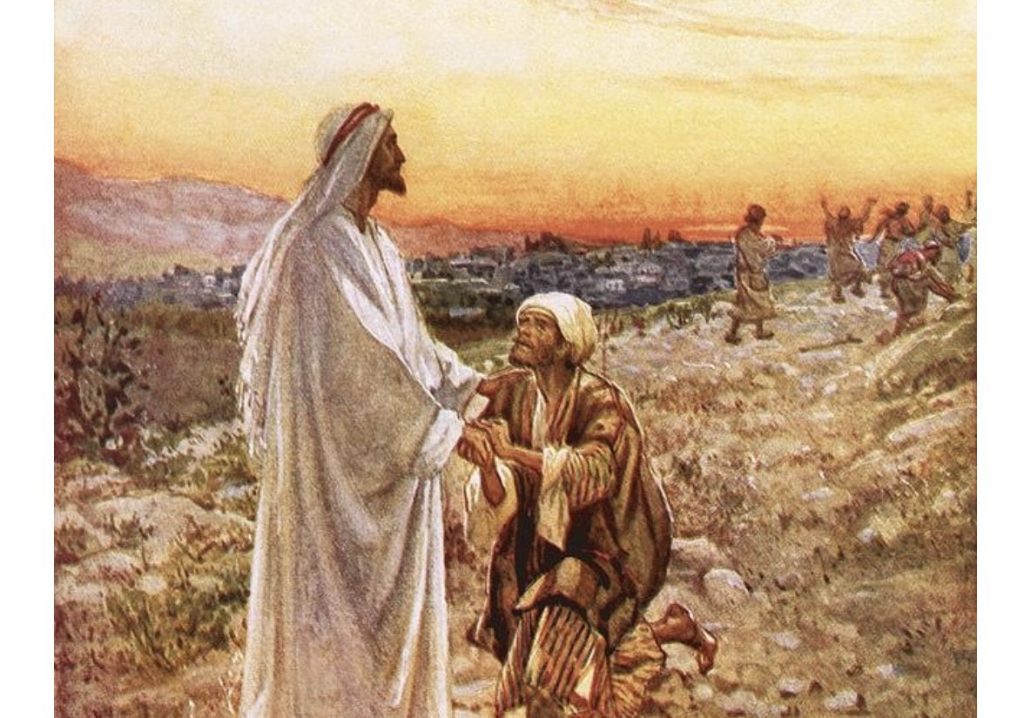
Jesus makes this statement to the Samaritan who fell at his feet praising God and thanking him for his healing. The other nine received the same physical healing. Some of them may have seen this man turn back and go to Jesus, yet each one of them continued on their way to see the priests as Jesus had directed them. The purpose of this was so that they could be pronounced clean, and so re-enter the life of communal worship and living among their people. I am sure they were ecstatic to do so.

Jesus healed all ten of their leprosy without even saying a word of healing. The catalyst to receive this miraculous healing was their obedience to Jesus’ command to show themselves to the priest. They did so without hesitation and as they walked they all experienced healing. Yet, one of them sensed something deeper still.

Could the others have experienced something similar? If so, many were probably so excited about the healing that they did sense anything beyond the healing. Others may have sensed something but dismissed it, and a few, may have noticed the Samaritan turn back to Jesus, but could not or would not change course to return to say thank you.

The Samaritan that comes to Jesus in gratitude experienced something deeper than his physical healing. He recognized God’s activity in his life and so praised God at Jesus’ feet. He then also praises Jesus, placing Jesus on the same level as God and opening himself to a relationship and communion with him. Jesus acknowledged this step of faith. This man heard an invitation from within, in the quiet of his heart, and resisted any distraction that may have tried to dissuade him. Jesus then said, “Stand up and go; your faith has saved you” (Luke 17:19).

In following the gratitude that welled up from within, this man received more than just physical healing that day, he received salvation, “your faith has saved you.” This means not just that his body was restored and made whole again, but that the separation from his relationship with God had been reconciled.

God invites us in so many gentle and small ways in the silence of our hearts to be more engaged: in a relationship with him, in our own lives, and the lives of others. We too can crowd out the invitation by keeping ourselves busy, distracted, and/or diverted. We can hear the whisper but discount it outright for many selfish reasons, we can also be led astray by the cacophony of mind noises that is fed by our fears, prejudgments, or apprehensions. Yet, we can also be like this Samaritan. We can hear and experience the invitation of God, act on his lead, surrender to Jesus, and be saved.

———————————————————————

Painting: “Jesus With the One Leper Who Returned to Give Thanks” by William Brassey Hole

Link for the Mass readings for Sunday, October 12, 2025

For Jesus or against, to not decided is to decide.

In today’s gospel account, Jesus is accused of collaborating with Satan because he has cast out a demon. Jesus quickly counters the absurdity of the claim by stating that, “Every kingdom divided against itself will be laid waste and house will fall against house” (Luke 11:17).

If there is one thing that Satan, the one who accuses, the father of lies, and his demons are unified on, it is to promote disunity, isolation, and chaos. They will seek any way to break through our defenses, our weaknesses, tempt, and mislead, to get us to even doubt the truth. They also seek to isolate us from one another. Here Jesus is healing a person from being possessed and it is made to look like he is in league with the devil.

Jesus reveals the error and builds on it with the truth, “But if it is by the finger of God that I drive out demons, then the Kingdom of God has come upon you” (Luke 11:20). The kingdom of God reveals and casts out demons, uncovers lies, and reconciles division. Jesus in his perfection comes to purify, cleanse, and to restore the true Father’s original purpose of harmony, oneness, and unity.

The closer that Jesus gets to Jerusalem, the opposition to him appears to be growing. Jesus offers those listening a choice: Recognize him as the Son of God who acts in the name of the Father and join with him, or reject him and side with the enemy. Jesus’ does not leave a middle ground. If one does not decide, “the last condition will be worst than the first” (Luke 11:26). Even those healed by Jesus, if  they do not commit their lives to him and fill themselves with the love of God, there is room for evil to creep back in.

We are given the same choice with each choice we make. Do we take a moment before deciding to ask is this the will of God? Are our thoughts, words, and actions, divisive, hurtful, unkind, or are they unifying, empowering, and loving? If we can admit any ways in which we have turned away from God or chosen any from the list in the first category, the good news is that we can repent for the kingdom of heaven is at hand. It is important to recognize our need for healing, which helps us to be more prudent, and ask Jesus for forgiveness and help to begin again.

For those choices that land in the second category, let us thank Jesus for working through us. In both ways, we recognize the truth, and we continue to build on the love that Jesus offers. When we trust him, we grow in relationship with him, and can better share the love he offers us with others.

We are free to choose and receive the consequences of our choices. Let us choose to turn away from anything not of God and follow Jesus today. Let us choose to be loved and to love in return.


Photo: Stained glass window in St. Joseph Catholic Church, Poquonock, CT.

Link for the Mass readings for Friday, October 12, 2025

Are we willing to do likewise, and show mercy as the Good Samaritan did?

It is interesting that the Pharisees, the Sadducees, the Herodians, and here in today’s Gospel account, a scholar of the law, instead of genuinely seeking to learn the truth from Jesus, they all “test” Jesus. They seek to prove him wrong, trip him up, or attempt to present him in a compromising light.

The scholar indeed knows the law well. He knows the foundation of the law which Jesus himself calls the greatest commandment in Mark and Matthew. In combining Deuteronomy 6:5 and Leviticus 19:18, the scholar answers his own question that one can “inherit eternal life” by loving “the Lord, your God, with all your heart, with all your being, with all your strength, and with all your mind, and your neighbor as yourself” (Luke 10:27).

Jesus commends his answer and acknowledges his understanding. Jesus then shares an important point to any law or teaching: “Do this and you will live” (Luke 10:28). It is not enough to know, we must put what we know into practice. Otherwise, there is no fruit. What we “know” will atrophy, it will whither away and die if we do nothing with what we have learned.

Not only does the scholar miss the point, he continues on his course to press Jesus further, seeking to “justify himself” by asking who is his neighbor. Jesus without missing a beat, sings the song of the Good Samaritan. In it Jesus presents who ought to be the heroes, the priest and the Levite, two law abiding Jews. Each know the law but each are unwilling to take the risk of breaking the law of ritual impurity by touching a dying man. Or they do not want to risk their own safety and refuse to fulfill the deepest root of the law, loving their neighbor as themselves. So they walk on. Jesus does not give the reason for their refusal to help.

The one who is willing to come close, the one who fulfills the letter of the law is not a scholar, a Pharisee, one of the high council, or even a common Jewish man or woman, but a Samaritan. Samaritans were considered enemies for different reasons. They were not pure-bloods. They were of the northern tribes of Israel and many of the Jews that survived the Assyrian occupation intermarried with the Gentiles. They also worshipped, not on Mount Zion, Jerusalem, but on Mount Gerizim. Sprinkling in some violent interactions and you have a recipe ripe for division and distrust.

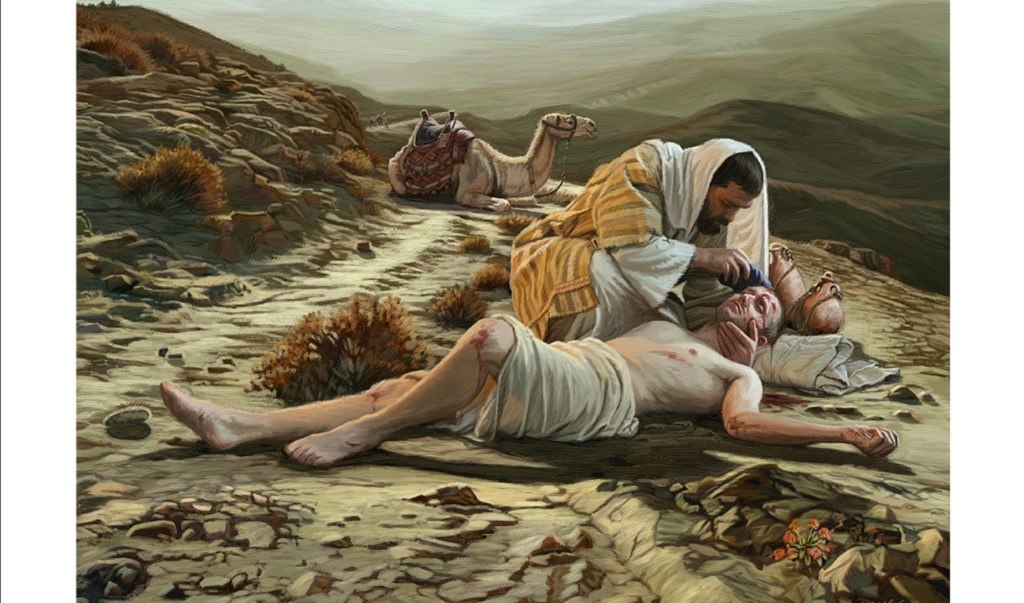
Yet, it is this Samaritan who lives out the fullness of the law of God by loving his neighbor who is in need. He not only comes close to check on him, he provides aide, brings him to an inn where he can rest, heal, and all on his dime. Did the scholar go and do likewise? We do not know. Just as when the rich young man walked away sad after Jesus invited him to sell all he had and follow him, we don’t know if he ever came back. Are we willing to treat each other with mercy as did the Good Samaritan?

We can know the Catechism inside and out, know the Bible chapter and verse, we can attend daily Mass, but it does not mean that much if we do not allow what we have learned to shape and soften our hearts and our minds such that we come to know Jesus, his Father and the love shared between them, the Holy Spirit. Our faith is about experiencing God’s love and loving one another as he loves us.

To grow in our relationship and experience of God’s presence we need to slow down, slip away from the fast pace and the instant gratification mill. What we receive in our time of reading, studying, meditation, prayer, and worship, we need to ponder and sit with, put into practice, and share with one another as God leads. “God works in depth, in the slow time of trust” (Pope Leo XIV).

We are not perfect. We all fall short of the glory of God. The enemy seeks to distract, divert, trip, beat us down, and leave us for dead, just as we read about the man on the Jericho road. The good news is that in our times of desperation, when we find ourselves down and almost out, the Good Samaritan is Jesus. He is not only willing to come close, if we are willing to allow him, he will lift us up, restore us to health, save, redeem, and give us new life.

As Jesus does for us, let us go and do likewise for each other.


Painting: “The Good Samaritan” by Dan Burr

Link for the Mass readings for Monday, October 6, 2025

May we not reject but welcome the light of Jesus.

“Whoever listens to you listens to me. Whoever rejects you rejects me. And whoever rejects me rejects the one who sent me” (Lk 10:16).

On the surface, today’s Gospel as well as the first reading and the psalm may sound like a Debbie Downer of a message, but it is actually the road map, the passage that will lead us from the darkness of slavery steeped in our own sin to the light of truth and freedom found in dedicating our life to Christ. Jesus is continuing to prepare the 72 that are about to go out to proclaim his message of repentance. This echoes Mark’s recording of Jesus’ mission statement: “This is the time of fulfillment. The kingdom of God is at hand. Repent, and believe in the gospel” (Mk 1:15).

A sin is any actively contemplated thought, word, or action that we knowingly know goes against the will of God and we freely choose to act upon it anyway. This is why many of us prefer the darkness to the light because we do not have to see and name our sins. We hold on to apparent goods or substitutes that we believe will make us happy and fulfill us, otherwise we would not hold on to them. Yet, they are empty promises. After experiencing the lack of satisfaction, once the emotion or passion of the moment or experience wanes, we either seek more to fill the void or hopefully, recognize the false lure and begin to seek something else to fill the void.

If we choose to seek more or seek within the material and world of finite creation apart from God, we continue along a slippery slope that may lead to our ensnarement or addiction. When we instead heed Jesus’ call and repent, allow the light and truth of Jesus into our darkness, trust that he truly wills our good, we can begin to see our sin, name it, repent from it, let it go, be forgiven, be healed, and fulfilled by receiving the true good, the love that God seeks to give and deepen our relationship with him for whom we have been created.

As servants of the Lord, we are invited to repent, to realign ourselves and our lives in such a way that we are saying yes to building a relationship with God. This is a daily, moment by moment, lifetime task of examining our conscience, asking God to reveal to us our sins, and willingness to embrace the humility to see and confess. This process is not just for ourselves.

Having experienced God’s love and forgiveness, we are called to bring the light of truth we have received to those we meet. This does not mean we are perfect. Through the awareness and confession of our sins, we are incrementally more open to receiving more of the love and light of Jesus within us than before, such that he can shine his light through us into another’s darkness and gently guide them to come out of the shadows.

We need to resist though the temptation to go forth and wag our finger of judgment. For then we are only a darker storm cloud approaching those needing a healing balm. This approach can either cause people to slip deeper into their own shell or come out fighting, seeking to dispel us from their midst. Jesus sends us out like the 72 to encounter one another with understanding, mercy, patience, and love. In the beginning, our light needs to be soft, like the morning dawn, so as not to blind those we seek to offer an invitation.

Jesus, this day and each day going forward, please dwell within us. Help us to be open to those you place near us that we may be present to them with your warmth, welcome, and joy. May we respect each person we encounter and be present, so that they may know that they are not alone, that they, in fact, do exist, that they matter, that they are loved as you love us. May we be like the light of the dawn to help awaken those in the darkness of their pain, suffering, and sin. May we be a lamp unto their feet and a light unto their path, that leads to an encounter and embrace with you; our Truth, our Way, and our Life. Amen.

———————————————————

Image: When we allow the light of Jesus to shine in our hearts and minds, he will lead us to freedom from that which and those who hold us captive.

Link of the Mass readings for Friday, October 3, 2025

Jesus has entered into and experienced suffering to free us from our own suffering.

Jesus asked his disciples about who people said that he was and Peter, through the revelation of God answered, “the Christ of God” (Lk 9:20). Jesus then responded that “The Son of Man must suffer greatly and be rejected by the elders, the chief priests, and the scribes, and be killed and on the third day be raised” (Lk 9:22).

The point of who Jesus is never gets old. As we grow in our relationship with Jesus, we come to a deeper understanding of Peter’s words.

Jesus is indeed the Christ, the Messiah, the Son of the Living God. Yet, that meant many things to many people who were awaiting the coming of the Messiah. For most, they were hoping for a military leader to come to lead them and overthrow their Roman occupiers. As soon as Peter made his statement, Jesus clarified what kind of Messiah that he would be, a suffering servant. Peter had trouble with understanding this and he represents us as well. One of the points of faith many of us struggle with is the same as Peter, why did Jesus have to suffer?

Jesus was willing to be sent by his Father to become human and to experience all of humanity, even the suffering of our humanity, because only that which Jesus assumed could he redeem. Also, in experiencing our suffering, even unto death, we can know without hesitation or doubt that Jesus understands our struggles and anguish. And that means we are never alone in our suffering.

The reality is that the Messiah, the Christ, the Anointed One, is Jesus. He is the suffering servant, the One willing to give his life on the Cross for all of humanity and creation. Jesus did not do this in some abstract way. He died for each and every human being that has lived, is now living, now reading these words, or ever will live. He died for you because he loves you.

Jesus “died in body through a love greater than anyone had known” (St. Bernard). Are we not only willing to receive his love but also suffer and sacrifice for one another, some of us even unto death as did St. Cosmas and St. Damian whose memorial we celebrate today? Our discipleship will be ultimately expressed in this radical love, in our willing the good of each other no matter the cost. We must be willing to let our hearts be moved with compassion and as St. Mother Teresa taught by, “Giving until it hurts.”

To give until it hurts means allowing our hearts to be open to love. For our hearts to be open to the pain of another means we need to be healed. The Divine Physician seeks to remove our hearts of stone and replace them with hearts of flesh. This divine surgery happens at the Cross when we are willing to bring our suffering to Jesus whose arms are wide open and ready to embrace us.

The Suffering Servant understands and experiences our pain. He can help us to experience instead of run from our pain. There is no way to cover up, go around, sidestep, and/or deny, our suffering. It will remain until we face and experience it head on. But we don’t have to do so alone, nor can we. For what Jesus has assumed he will redeem. When we are ready and at the pace, we are willing to go, Jesus will provide healing. As we are healing, we are then able to experience more empathy and compassion, to suffer with, to love others, and walk with them on their own journey toward healing, toward receiving the love we all have been made for.

———————

Photo: Just as the sun is present even as clouds gather, Jesus is present in our time of suffering.

Link for the Mass readings for Friday, September 26, 2025

As we commit to a deeper relationship with God our relationships with each other will improve.

Accompanying him were the Twelve and some women (Lk 8:1-2).

A simple statement but significant regarding how Jesus again is showing us how to live our lives as his followers, his disciples. Jesus is fully human and fully divine. What he has done and continues to do as the Son of God incarnate is to draw close to us in our humanity, as human beings, so that we can enter into a relationship with him and his Father through the love of the Holy Spirit, thus becoming one with him in his divinity.

From the beginning of his public ministry, throughout his time walking this earth, and continuing on after his resurrection and ascension into heaven, he  invites people to participate in his life and the kingdom of Heaven which is at hand in his very presence. Jesus does so by building relationships. This is how Luke can write the verses that Jesus was accompanied by the Twelve and Mary Magdelene, Joanna, and Susanna. These were real people with whom Jesus developed real and intimate bonds.

Christianity is not a Lone Ranger religion, it is not the survival of the fittest, and Jesus did not teach us to pull ourselves up by our own bootstraps. We are created by God to be in communion, to be in a relationship with him and each other, to experience his love and to love one another. That means we need to ask for help from God and each other when in need and to come to the aid of, accompany, empower, and support one other.

We are invited to welcome, engage with, and make time for each other by exchanging in the stories of our tragedies and our triumphs. Let us resist the temptation of withdrawing into our own bubbles and instead, risk encountering one another. Relationships are not perfect. By putting God first, making a commitment to him and his commandments, and putting them into practice, we can better commit to being there for each other.

When we are growing in our relationship with God, he feeds the deepest core of our being as no other can. Thus fulfilled by his love for us, our insecurities that seek to derail our human relationships will diminish. We can risk being ourselves even when tempted by our fears to be otherwise. As we begin to feel safe in God’s love we can better breathe, trust, keep an open heart and mind, give the benefit of the doubt, and be more understanding, kind, and forgiving, all of which are ingredients for healthier relationships.

Jesus chooses each one of us to accompany him and to forge relationships grounded in mutual respect, where no one is last and where no person is left behind. Our addictions, insecurities, and prejudices only survive when we keep people at a distance. When we allow Jesus to come close, spend time with him and one another, we will see our weaknesses, sins and shortcomings, but also our gifts, possibilities, and promise. Conflicts will arise as we heal and purify, leading to greater intimacy. We will realize that we are not alone, we can acknowledge and reject the lies we have believed, and our relationships will heal and deepen.

————————-

Photo: Quiet time with the Jesus and Mary in the sanctuary of St. Mary Catholic Church, Windsor Locks, CT.

Link for the Mass readings for Friday, September 19, 2025