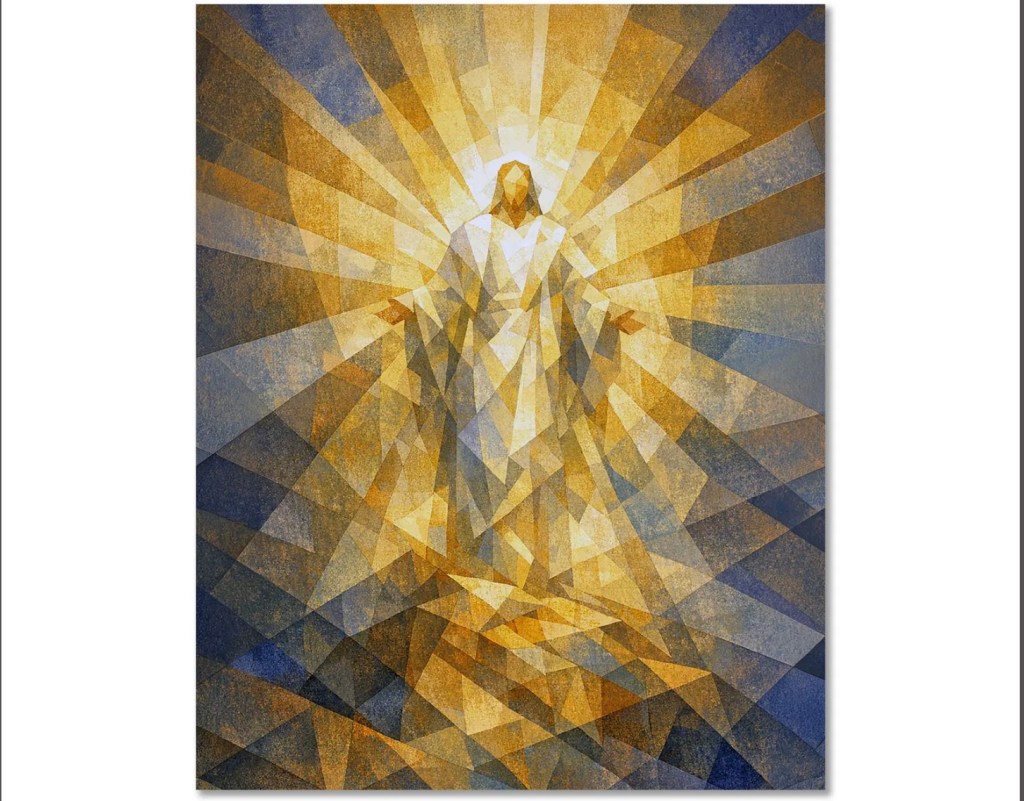
“Take heart, I am.”

“Take courage, it is I, do not be afraid” (Matthew 14:27).

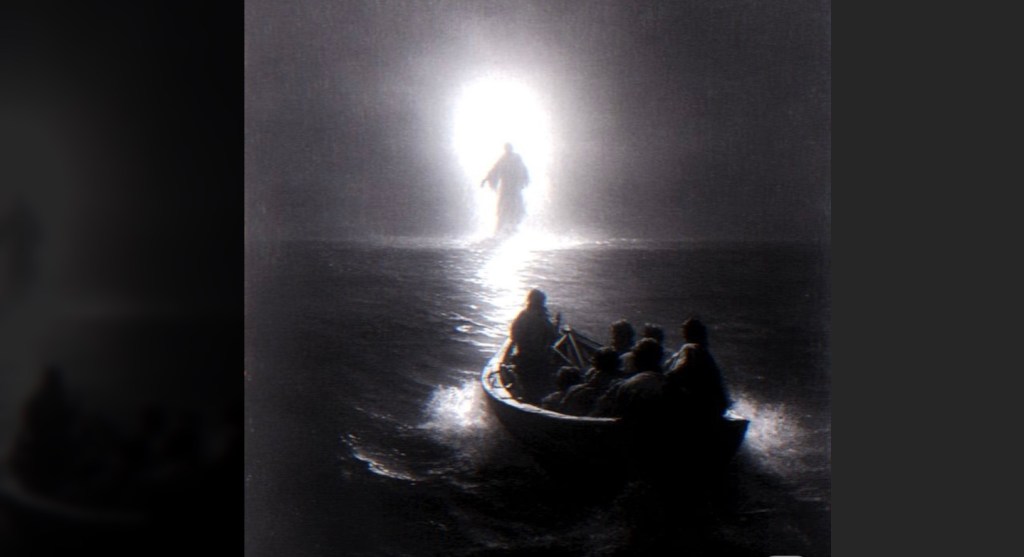
Jesus speaks these words at the fourth watch, sometime between three and six a.m. The disciples are in the middle of the Sea of Galilee, some four miles from shore. He is walking to them in the midst of a storm at sea, on the water. Because of the ferocity of the storm, there most likely is no moon, no stars. It is dark, the wind is howling, the waves are rising and falling, and it is dark – can barely see hand in front of face dark. In the midst of this tumultuous scene, being pelted by rain and waves, deafened by the wind, somehow the disciples see a figure approaching.

That they could see anything implies that some light was emanating from ghostly image. Jesus is assuring them that he is no ghost. He is providing comfort to his band of followers in the midst of their fear. The intensity of the storm may have waned a bit for them to hear Jesus speak. Emboldened by Jesus’ words, Peter then addressed him, “Lord, if it is you, command me to come to the water.” He said, “Come” (Matthew 14:28).

The storm roared again. Peter was undeterred and fixed his gaze on Jesus. He got out of the boat, and walked toward the light that was overcoming the darkness. As he walked on and got closer to Jesus he realized how far away he was from the boat, maybe realized what he was doing, then the strength of the wind led him to turn his gaze away from Jesus, and sank. “Lord, save me!” Jesus immediately grasped him and pulled him up. Peter may not have realized how close he was to reaching Jesus. Together they then walked back and “got into the boat and the wind died down. Those who were in the boat did him homage, saying, ‘Truly you are the Son of God.” (Matthew 14:32-33).

Just the day before, Jesus had multiplied five loaves and a two fish and fed thousands. They all rose up to make them their king. He removed himself from their sight and told his disciples to go ahead of him. Jesus was not the messiah the people sought. A military king or great prophet from their frame of reference. Jesus was and is so much more. He is the Son of God incarnate come to love us and help us to build a foundation of security and safety so that we can move beyond our defensive postures, heal from our wounds, and confess our sins. Jesus is the light that shines in our darkness and the darkness will not overcome it.

When Jesus said, “Take courage, it is I, do not be afraid”, he was not only encouraging the disciples in the boat, he was revealing to them his divinity. A clearer translation of the Greek is egō eimi, meaning “I am.” A more literal translation of Jesus’ statement is, “Take heart, I am.” This could have been the source of Peter’s courage to step out of the boat. More than his impetuousness, he would have remembered “I am” as how God spoke to Moses, God said, “I am who am.”

Peter recognized Jesus as God and so boldly stepped into the turbulent sea and walked toward Jesus. He was able to do so through the power of Jesus as long as he was connected to him. Once he turned his eyes away and focused on the wind, then he sank. The good news is that he immediately called out to Jesus and Jesus saved him.

Once, they returned to the boat, Jesus calmed the sea and all “did him homage”. The Greek word proskyneō is better akin to each of them fully prostrating themselves before Jesus. An act only offered for God. The disciples recognized the Son of God, I am who am, was in their midst. This account is just as powerful an account as the transfiguration moment we read a few days ago.

This truth is not just for Peter and the disciples. The reality that Jesus is both fully God and fully man is just as relevant for us today. For we too experience our own storms and Jesus comes to us as he came to his disciples being tossed about at sea. The challenge is, do we have the eyes to see him and the ears to hear his voice when he calls out to us, “Take heart, I am.” Will we have the courage of Peter to take the risk and come to Jesus and even when we fall, to call out for Jesus’ help?

We are able to develop the ears to hear when we do as Jesus at the beginning of this account. When we too make time to go off by ourself alone to pray. When we come to a place of stillness and quiet, God speaks in the silence of our hearts. When he speaks, he speaks words of encouragement. God’s words throughout scripture has always been one of – be calm, do not be afraid, trust in me, and let me fight for you. Let us come to a place of quiet today, trust in Jesus, brings our trials and challenges to him, walk on the water with him by rising above our posture of fight or flight and instead experience God’s peace.


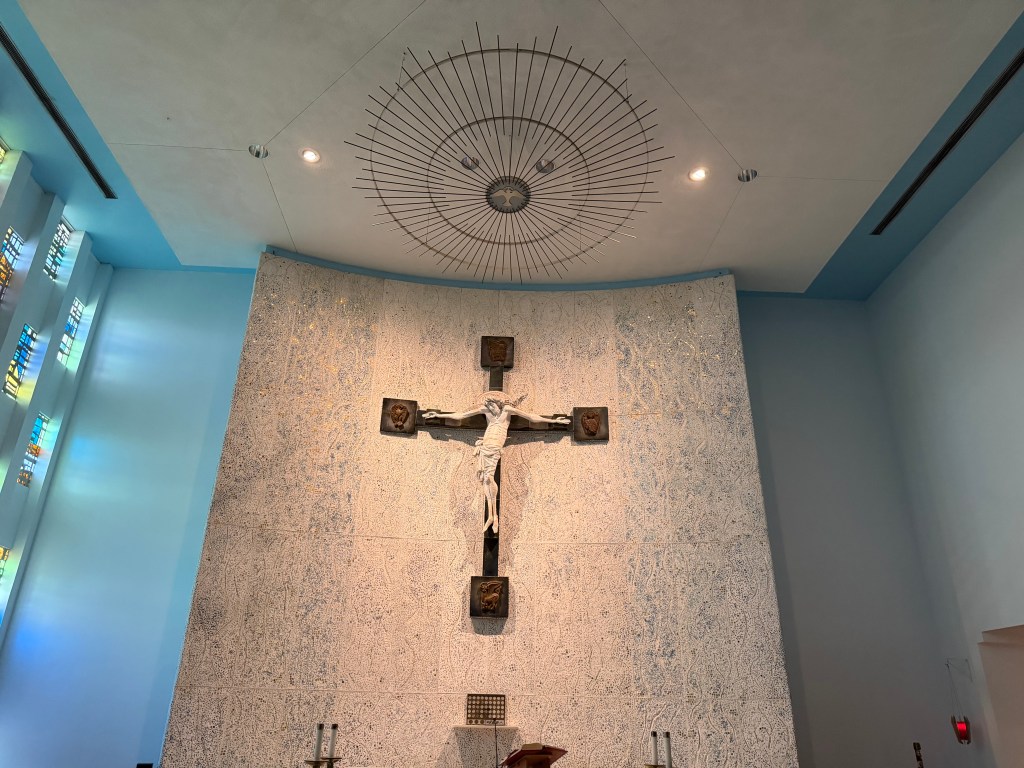
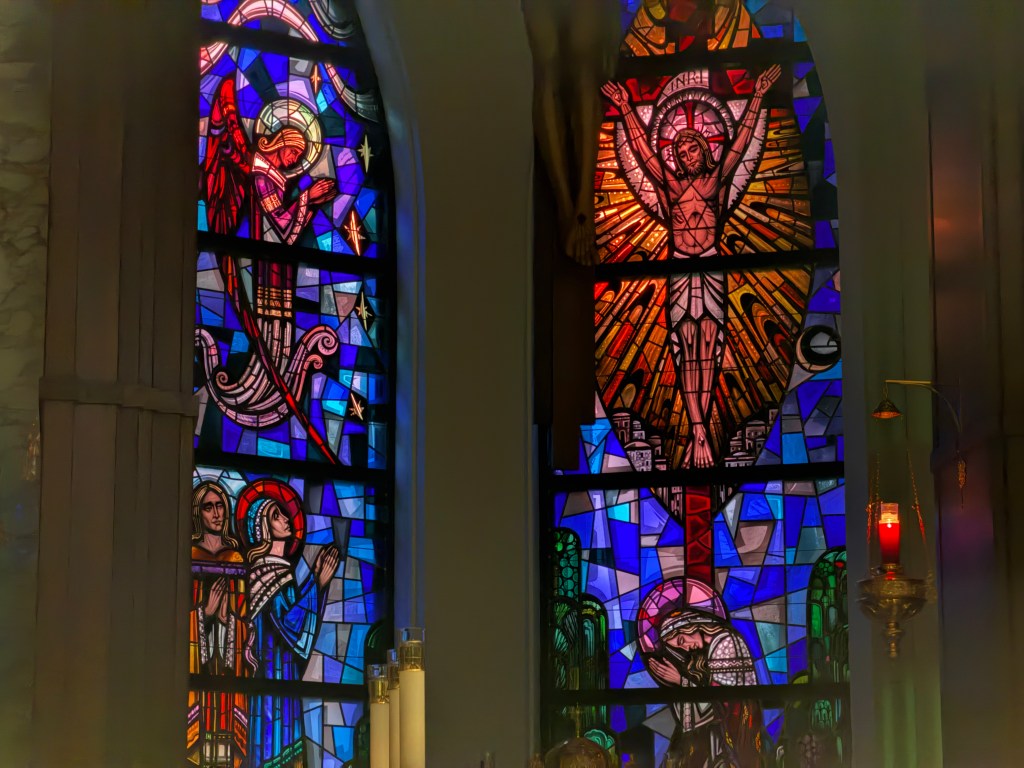
Photo: May Jesus also be our light in the darkness that calms or guides us through any storm.

Link for the Mass readings for Sunday, August 9, 2026

Even with a little faith, when we trust in Jesus and allow him to love us our faith will grow.

Then the disciples approached Jesus in private and said, “Why could we not drive it out?” He said to them, “Because of your little faith.” (Mt 17:19-20).

How do the disciples get from this recurring theme of having little faith in the Gospel accounts to Peter healing a crippled beggar by saying with boldness, “I have neither silver nor gold, but what I do have I give you: in the name of Jesus Christ the Nazorean, [rise and] walk” (Acts 3:6)? And the man did just that!

A helpful definition “is to say that faith always entails a relationship between persons which stands or falls with the credibility of the person who is believed” (Rahner and Vorgrimler 1965, 164). Faith is not just an intellectual exercise, it is a lived experience. Christian faith is not an impressive idea or ideology, philosophy, or theology. Christian faith is the conviction, belief, and relationship experienced with Jesus the Christ.

The disciples learned from Jesus but more importantly developed an intimate relationship with him, such that the love they received and shared became so strong that there was no more room for doubt, distraction and/or fear, such that they would align themselves with the will of God and do what Jesus did. Jesus referred to the disciples as having “little faith” which is different than them having no faith at all. This faith would grow as the disciples continued to be faithful to Jesus and continued to follow him, even when others walked away.

The disciples did have some moments of doing as Jesus had done, but it was not until Jesus ascended and the Holy Spirit descended upon them at Pentecost that everything changed. Jesus had tilled the soil, he helped to unearth the rocks of the hardness of their hearts, he forgave them, and healed them. But it was not until they let him go after his Ascension that they were able to receive the Holy Spirit and by his power working through them they would do even greater deeds than he (cf. Jn 14:12-14)!

We are invited to do the same. If we only read the Gospels or hear them read we may know something about Jesus, but our life will for the most part remain unchanged. When we read, meditate, and pray with the Gospels and put into practice what we read, we will encounter Jesus as did his disciples. We too will come to know and develop a relationship with Jesus, we will experience his love, and our hearts and minds will be transformed. In this way, we are not just reading a dead letter but encountering the living Word, the Son of God, who invites us to share in the infinite dance of Love that he participates in with God the Father and God the Holy Spirit.

The enemy will do everything in his power to distract, divert, and tempt us from setting aside time to pray with God each day. And when we actually begin to discipline ourselves, enter into quiet time daily, we are invited not to stay there but to go deeper, to move beyond only reading, meditating, and praying. There will be times Jesus invites us to set aside our Bible, notes, journal, prayer cards, and/or vocal prayers of petition, and to just be still, to listen, and receive the love that Jesus and the Father experience, the Holy Spirit.

The same Holy Spirit who empowered the Apostles to fulfill what Jesus had begun with them is quietly nudging us on each day. Please listen! He is inviting us to see more clearly those subtle ways we are being distracted, tempted, and diverted from his guidance and what has been inhibiting the growth of our relationship with God. The love and light of the Holy Spirit will reveal, when we are willing to remain still, where and how, in minute and massive ways, we are refusing to follow the will of God.

One of the reasons that we have also “little faith” is that we rely too much on ourselves. We are invited to stand in the presence of the Holy Spirit and let his fire burn, to purify us from our own misguided thoughts of self-sufficiency. As gold and silver are placed in a crucible and heated, the dross is purified. We are purified in the crucible of our meditation, prayer, and contemplation by the love of the Holy Spirit. Through the purifying love of the Holy Spirit we will see that we cannot save ourselves, that we need a savior, Jesus, with his arms wide open ready, willing, and able to embrace, forgive, and love us unconditionally and continually.

———————————————————————–

Photo:  A reminder from a mama sandhill crane and her young one to slow down and breathe.

Rahner, Karl and Vorgrimler, Herbert. Theological Dictionary. New York: Herder and Herder, 1965.

Link for the Mass readings for Saturday, August 8, 2026

“Prayer helps us to see.”

He took Peter, John, and James, and went up the mountain to pray (Luke 9:28).

Peter, John, and James experienced Jesus’ profound teachings, his powerful signs, his wonders, and they also witnessed his healings, casting out demons, and forgiving of sins, which, alluded to the reality that he was the Son of God. Peter, James, and John, although acknowledging Jesus as the Messiah, still pretty much looked at Jesus as a human being. In the encounter of Jesus transfigured, Jesus revealed to his inner circle of Apostles not only a foretaste of what was to come in heaven but a glimpse of his actual divinity, and the miracle of miracles, the Resurrection.

Jesus is not 50% God and 50% human. He is fully God and fully man. This is the Mystery of the Incarnation; the reality that the second Person of the Trinity took on flesh and became human. This is an important reality, because in this very act of Infinite Grace, the Son of God assuming humanity, Jesus, Emmanuel, God with us, as St. Irenaeus wrote, “opened up heaven for us in the humanity he assumed.” The Son of God became one with us in our fallen and sinful state so that we can become one with him.

Through participation in the life of Jesus Christ, we can be restored and deepen our relationship with his Father, and we too can be transformed. We can do more in this life than to survive and just get by. We can live beyond just recovery from healing from our wounds, beyond merely functioning and keeping our head above water. Jesus came to reveal to us that we are to live in the consolation and joy of being in relationship with his Father and so we can with St. Paul, “rejoice always!” With Jesus not only is recovery from wounds, addictions, sin, disordered affections possible; forgiveness, healing, reconciliation, wholeness, and a peace that surpasses all understanding possible.

“By revealing himself God wishes to make [us] capable of responding to him, and of knowing him, and of loving him far beyond [our] own natural capacity” (Catechism of the Catholic Church 1997, 52). This reality of the invitation of communion with the Loving God and Father of all creation is for all. Authentic joy and fulfillment are achieved through developing a relationship with the God of Jesus Christ.

Many may say they are happy and living a good life without having a relationship with Jesus Christ, they do not need God or his Church, and I would not disagree with them. I would only add that if we are honest with ourselves, there is more to life than the mere material and finite reality we see and what we experience with our senses. When we slow down enough, when we are actually still enough, we can experience a deeper yearning for more, and begin to see what is keeping us from the deeper reality Jesus is offering.

Even with great achievement, mastery, honor, and accumulation, there is still a lingering question, “Is this all there is?” We experience consciously or unconsciously a restlessness, we continually search to fill this unease, feeling satisfied for the moment, but eventually in short order, we are left empty, time and time again. This unease is our soul’s yearning, our transcendent nature longing for more, and that longing is for the infinite that the finite cannot provide or satisfy. St Augustine of Hippo articulated this desire and yearning so well in the opening chapter of his autobiography, Confessions: “You move us to delight in praising You; for You have made us for Yourself, and our hearts are restless until they find rest in You.”

The Feast of the Transfiguration is an invitation to embrace the fullness of what it means to be human, as the Son of God did through the Mystery of his becoming one with us, all of us, all of humanity, not just a select few. We are invited to embrace the fullness and rich diversity of our humanity; the reality that we are physical, emotional, intellectual, while at the same time, spiritual beings. Our fulfillment and joy come from a balance of nurturing the reality that each and every one of us have been created in the image and likeness of God and are to identify ourselves foundational as his beloved daughters and sons.

Peter, John, and James, as well as each of the saints, embraced the invitation of Jesus and were healed, experienced wholeness, and communion. The likeness to God that was lost in the fall of Adam and Eve was restored as they dedicated themselves to lives of prayer, repentance, service, allowing themselves to be loved by Jesus and to love in return. We can see the restoration of the likeness through such biblical imagery of Moses’ face that radiated after his intimate encounters with God and in the transfiguration of Jesus with not just his face but his whole being.

“The person who prays begins to see” (Pope Benedict). Setting time to be alone with God daily to speak with him, listen, simply rest and be still, as well as receive, hear, and follow the guidance of God will, and above all to receive his love, help us to see and experience reality, grow in holiness, and restore the glory he made us for. We embrace the gift of our common dignity when we love God, ourselves, and our neighbors as ourselves.
———————————————————————–

Photo: Jesus transfigured reveals the fullness of our humanity as physical and spiritual.

Link for the Mass readings for Wednesday, August 6, 2025

Keeping our eyes on Jesus will help us to walk through any storm!

“It is a ghost,” they said, and they cried out in fear. At once Jesus spoke to them, “Take courage, it is I; do not be afraid.” Peter said to him in reply, “Lord, if it is you, command me to come to you on the water.” He said, “Come.” Peter got out of the boat and began to walk on the water toward Jesus. (Mt 14:26-29).

This is one of my favorite Gospel accounts. I never tire of reading, praying and meditating with it. My spiritual director about a year ago gave me this reading to pray with during my holy hour. I stayed with the opening lines – “he went up on the mountain by himself to pray. When it was evening he was there alone” (Matthew 14:23) – for about a month. I would go back to read the verse again at the beginning a few times and then just sit for the remaining hour in silence on the mountain top with Jesus. The time was a blessing as are those quiet hours with Jesus in whatever way he leads.

When you get past the initial verses, many times, many people focus on the fact that Peter quickly started to sink, but for that brief moment, a la, Wile E Coyote, … he “began to walk on the water toward Jesus.” Peter was walking on the water and I do believe this, as with the other miracles of the Bible happened. Often times, while I was still at the seminary, there was a great pond by the library. I often thought of seeing if I could walk across on those evening Rosary walks. Didn’t ever make the attempt. Oh me, of little faith!

The gift of this reading as well as with each of the readings of the Bible, are living and alive such that they can have an incredible impact on our lives when we read, meditate, and pray with them. Life is a struggle. Challenges, fears, trials, and conflicts pound at us like turbulent waves kicked up by strong winds. We may be tempted to be paralyzed by indecisiveness and begin to sink because of the weight of the pounding. Yet, when we trust in and keep our eyes on Jesus, who is present in the midst of our storms, we will overcome.

In many a top ten list of fears, I would guarantee that speaking in public consistently makes the top three. This is an area I have struggled with for much of my life. One incident happened about thirteen years ago as I had the opportunity to share my first reflection during my acolyte year of formation for the permanent diaconate. I must have prepared for three to five hours, writing and rewriting well into the wee hours of the morning the night before, most likely not getting to sleep until about “the fourth watch”.

Just before the morning liturgy, our director of formation informed me that there had been a last-minute change of plans and we were going to have different readings than what I had prepared for. He offered to give the reflection in my place, as well as gave me the option to continue and incorporate what I had planned into the new readings.

I chose to remain on course and offer the prepared reflection. As we processed in, I immediately regretted my choice. The winds and waves of anxiety started to batter me and continued their assault as I came up to read the Gospel. As I came to the end of the reading, a quiet peace settled over me. I then began to preach extemporaneously, ignoring my notes. There was an unexplainable feeling of peace and joy that welled up within me, and like Peter, for that brief moment, it was as if, I too was walking on water. Halfway through the reflection though, my mind directed me back to my prepared notes, and I lost the connection that I had just experienced. I sputtered a bit to the end but finished free of any major catastrophe.

After the service ended, I remained in my seat quietly for a second to catch my breath. My classmates Dennis, Hank, and Pete, who all knew how nervous I was going into this, swarmed around me like I had just touched home plate after a walk-off home run. I can still feel their group, bear hug.

JoAnn had appendicitis during her first-grade year of school. She missed a lot of her reading lessons but worse became very self-conscious from that time forward about reading aloud. During our husband/wife retreats each year, wives were given the opportunity to proclaim the reading during the Liturgy of the Hours and Mass. JoAnn did not feel comfortable nor did she want to do so but accepted the invitation. We prepared, she practiced ahead of time, and then she prayed to the Holy Spirit just as she approached the ambo. JoAnn felt faint and nervous but as she began to read, she felt a deep sense of peace fill her whole body. She was no longer fighting back nerves but tears of joy experiencing God’s presence.

There will be times when Jesus invites us to come out of our boat and step onto the water, he will call us to move out of our comfort zones. There are challenges much more intense than reading in public. No matter what waves arise though, may we trust Jesus and step out as Peter did. This will be a risk, and yes, there will be times that we will sink, just as Peter had done. But even when we sink, remember to do as Peter did, immediately call out to Jesus and he will immediately reach out and pull us up! Jesus was there for Peter, he has been there for JoAnn and me, and he will be there for you.

“Times of testing and adversity can show us where we are in our spiritual development and where we need to improve if we are to grow in Christian maturity” (Mitch and Sri). Whether we fail or succeed is not the end goal. It is that we trust in Jesus and grow in our faith and relationship with him. Doing so, we will then adjust and learn from our mistakes, and also learn to bring the distractions, diversions, anxieties, and fears that we may experience to Jesus as we keep our eyes on Jesus!

There may be something that you have been feeling led or encouraged to attempt, to start, to do, yet mental winds and waves have been rocking the stability of your boat. You may be in the midst of the storm as were the apostles. “Be not afraid! Come.” Step out of your boat, take the risk, keep your eyes on Jesus, and walk on the water!
———————————————————————–

Photo: Wonderful memories walking around this lake each night while at St. Vincent de Paul Regional Seminary, even without walking on the water.

Mitch, Curtis and Edward Sri. The Gospel of Matthew. Grand Rapids, MI: Baker Academic, 2010.

Link for the Mass readings for Monday, August 3, 2026

May we open ourselves to the wonder of God, creation, ourselves, and each other.

“Where did this man get such wisdom and mighty deeds? Is he not the carpenter’s son?” (Mt 13:54-55).

Jesus most likely worked as a carpenter. This was rough, menial work, and as a day laborer, a position that was looked down upon. We can even see evidence of this in the Gospel accounts. Mark describes Jesus as the carpenter, the son of Mary, Matthew in today’s account portrays Jesus as the carpenter’s son, and Luke and John just refer to Jesus as Joseph’s son, leaving out any reference to carpenter altogether. Most scripture scholars believe Mark was written first and if following that understanding, we can see a progression in the biblical tradition moving away from identifying Jesus as a carpenter.

Many people wonder what Jesus did from the age of twelve until he began his ministry around the age of thirty. Today’s reading can offer some insight into that question. Most likely, Jesus did nothing extraordinary, he was just as ordinary, if that, as any other first-century Palestinian Jew living in the small town of Nazareth, with a population of about 250 to 500 people.

Jesus’ return to his hometown and his teaching was first met with astonishment. The question then arose, “Where did he get such wisdom and how did he work such mighty deeds?” That the response to change moved to judgment so quickly could lead one to think that “the astonishment is not an expression of admiration but of suspicion and anger” (Curtis and Sri, 185). Who is he? Isn’t he just the carpenter of Nazareth, no better than any of us? In effect, “Who does he think he is?” Not only does this show that Jesus probably lived a very simple peasant life, but that Jesus’ social status was not very high.

The people’s hearts and minds of his hometown were closed to Jesus. THEY KNEW who he was and there was no way someone like him could do what they had heard, so they “took offense at him… And he did not work many mighty deeds there because of their lack of faith” (Mt 13:57-58).

How many times have we judged someone? Have we said to ourselves, “I know who he or she is.” We box them in, not as they are, but as WE see them, as we define or label them. We look at another individual not as a person with dignity, but as a two-dimensional caricature to satisfy our own prejudgments and lack of vision. We also do this to ourselves by limiting our potential when we say we can’t do this or that. Husbands and wives, having been married for years, can fall into the routine of everyday and not allow themselves to be surprised by one another, to wonder at what about each other they still don’t know!

Maybe we have had a similar experience as Jesus did in returning to his hometown, in that we have sought or are seeking to move beyond our particular social status, or follow a dream or career out of the norm of familial or community expectations. No matter our age, through no fault of our own, by pursuing this path some or many may feel threatened. Thus, not willing to accept our vision, those who are not willing to grow beyond what they have always known may meet us with misunderstanding, wariness, or even disdain.

I read an account from the writer/producer Stirling Silliphant regarding how one day Bruce Lee challenged him to run five instead of his usual three miles. Into their fourth mile, Stirling said, “if I run any more I’m liable to have a heart attack and die.” [Bruce] said, “Then die.” And then he ran off. Stirling was enraged at Bruce’s statement, that he finished the five miles. Afterward, Stirling approached Bruce and asked him why he said that.

Bruce replied, “Because you might as well be dead. Seriously, if you always put limits on what you can do, physical or anything else, it’ll spread over into the rest of your life. It’ll spread into your work, your morality, into your entire being. There are no limits. There are plateaus, but you must not stay there, you must go beyond them. If it kills you, it kills you. A man must constantly exceed his level” (p. 23).

Jesus consistently rebukes limiting attitudes and perspectives. His Father has a plan for our lives and so he invites us to open our minds and hearts, to see the potential he sees in us. Jesus, the carpenter, invites us to embrace the infinite possibilities that will arise when we participate in his life and love. With God there are no limitations. The villagers of Jesus’ hometown are said to have had a lack of faith or unbelief, and because of that limitation, Jesus “did not work many mighty deeds there” (Mt. 13:58). When Jesus challenged his disciples, he said that they had “little faith” (Mt. 14:31).

The disciples struggled to understand Jesus, but they were open to learning from Jesus. We just need a little faith to let Jesus in. If we are closed, if our hearts are hardened, Jesus will respect the boundary we have set. He will not go against our free will. If we give him just a little faith though, just as he was given and few loaves and fishes he fed thousands, Jesus will do wonders in our lives.

The Holy Spirit seeks to free us from the shackles that bind us, the limitations imposed upon us from without, as well as those we impose upon ourselves from within. Let us cooperate with the urgings of the Holy Spirit, to be free with each breath and step we take into embracing the freedom of the love of God. When willing to follow the lead of the Holy Spirit, receive and abide in the love of God, healing will begin, trust will arise, limiting attitudes can then give way to see ourselves and each other as beloved daughters and sons of our Father.
———————————————————————–
Photo: At the end of each day, God gives us the invitation to pause, breathe, ponder the gift of his creation, and call to mind what and who we are grateful for.

Mitch, Curtis and Edward Sri. The Gospel of Matthew. Grand Rapids, MI: Baker Academic, 2010.

Stirling Silliphant story accessed from Bruce Lee: The Art of Expressing the Human Body, compiled and edited by John Little. North Clarendon, VT: Charles E. Tuttle, Co., 1998.

Parallel Gospel accounts: Mark 6:3, Matthew 13:55, Luke 4:22, and John 6:42

Link for the Mass readings for Friday, July 31, 2026

Spending time with God in quiet meditation and prayer can help us to grow in our faith and life.

“Some seed fell among thorns, and the thorns grew up and choked it” (Mt 13:7).

God wants all of us to be in relationship with him. His love for us in unconditional. He is willing to risk that we will say, “No” to his invitation of relationship rather than force us to love him, which is not love at all. God also wants the best for us, he knows the deepest desires of our hearts beyond our even knowing for he sees the fullness of time, while we only see from our finite and limited perspective and experience just a small part of the greater reality around us.

Jesus came to share the seed of his Father’s word through the teachings, healings, and exorcisms that he offered. We are recipients of each through the deposit of faith passed on generation after generation. One area that prevents us from allowing his seeds to germinate and bear fruit in our lives is when we allow the diversions, distractions, anxieties, insecurities, and worries to fill our mind such that they choke out the good that Jesus seeks to have develop within us.

On a physiological level, what we pay attention to fires neurons in our brains that form neural pathways. When we think about and then act upon them they become stronger. Each time we are attentive a new pathway is formed. After time, this is how our habits form and why when after we do something consistently and are disciplined, the act is easier to do. It is also why a habit is hard to change in the beginning because we need to rewire those pathways. This is true for vices as well as virtues.

To prevent the growth of our spiritual life from being choked out we need to practice each day stillness and focusing on God’s word. As we consistently sit in the same place each day, spend some time breathing and then focusing on reading a passage of scripture, meditating, praying, and pondering what God may be sharing with us. For that time we do so with intention, we are to focus on Jesus alone. As thoughts and diversions to the contrary arise, we just bring ourselves back to Jesus and God’s word. If the thoughts persist, we can then bring them to Jesus and talk to him about the situation to seek his guidance.

In time, with consistent, daily practice, we will begin to feel safe, we will experience God’s love and presence, his insights and guidance, healing will begin, rewiring of our neural pathways will also improve such that it becomes easier to pray than not. The thorns lose their sting, the distractions, temptations, and diversions find a better resolution, worry, anxiety, and fears are transformed, and we begin to recognize God’s voice and experienced being consoled and loved by his presence.

Turning around unhealthy, vices, disordered affections, and sinful habits is not easy. When we decide to make time to spend time with God each day, while together we are attentive only to him for that time and return to him as soon as we notice we are distracted, or bring the distraction to him to seek guidance, the weeds will whither, the thorns will be uprooted, his seed will sprout and flourish. Even when we feel like nothing is happening, God is happening, and we are growing, healing, and maturing.


Photo: From the smallest of seeds, with the proper nurturing and support, can grow the tallest of trees.

Link for the Mass readings for Friday, July 24, 2026

When we trust in, follow Jesus, and repent, we will experience his Father’s love.

The root of the message offered in today’s Gospel is what is foundational to beginning and continuing as a disciple of Jesus? The foundation is the disposition of our hearts. Are we closed to receiving the message of the Gospel, or are we open to embrace the invitation Jesus shares to become more active in living out our faith in our everyday lives?

The exchange of Jesus with his disciples in today’s reading from Matthew comes after his sharing of the Parable of the Sower (Mt 13:1-9). In this parable, Jesus offers scenarios regarding the conditions of seeds sown. Some fell on a hardened path, some on rocky ground, some fell among thorns, and some fell on the rich soil. The seeds on the hardened path could not even germinate. Those in rocky ground and among thorns germinated and began to even sprout but would not come to full maturity. The seed that was sown in rich soil germinated, sprouted, matured, and bore fruit.

As disciples, we are meant to bear fruit and that means we need to prepare ourselves so that we will have rich soil. We break through the hard ground when we open our hearts and minds. If we have a desire to pray, the hardened soil has given way somewhat. The seed has penetrated, died and has begun to germinate. God is the originator of our prayer. The desire to spend time in prayer is good news. The devil has not stolen that from us.

One of the most important things we can do each day is to breathe, receive, rest, and abide in God’s love. Spending time intentionally breathing slowly and deeply not just into the chest but also activating the diaphragm, slows our heart rate down and sends the message to our brains that we are safe. Our muscles will then release pent up tensions. Three such breaths can make a difference. Then making the Sign of the Cross, we invite each Person of the Trinity to dwell within us. Continuing then to breathe, we can begin to receive and rest in God’s love for us. A few minutes of recollection in the bank, we are now ready to meditate and pray. Doing so with the readings of the day can be very powerful and transformative.

Now if we do not follow through on the inspiration of nor follow the nudging of the Holy Spirit, when we aren’t even able to allow ourselves time to make the Sign of the Cross or take three, deep breaths, means we have some tilling to do. We need to remove some clay and rocks of resistance, distraction, and diversion so that we can get deeper. Satan knows how important it is for us to pray everyday and he will subtly seek to lead us astray in the smallest of ways. If not able to dissuade us, he will attempt to make our time functional and anemic, something we do and check the box. We may begin to pray daily for a time, but without any deeper root or experiencing any living water of the Holy Spirit, we may be led away, skip a day, or two, then a few more, then walk away.

If we commit to showing up each day seeking to experience the love of God, coming to a place that we have created and set aside for ourselves to breathe and be still will help us to begin the work of facing those internal resistances and diversions. We can begin the process of uprooting the thorns of anxiety and worry. We can begin to see where our hearts and minds may have been hardened. By breathing and slowing down, we get in touch with our body and may be surprised by how tense we are. With just a few breathes we may notice that our shoulders come to a more peaceful place of rest. Our neck and our hips can begin to let go.

Richer soil will allow growth. Among good soil grows what has been planted, the seeds of the enemy as well as the seeds of God.

As we continue to return each day and allow God to happen, in reading, meditating, praying with God’s word, or also sitting with God in the same silence and bringing to him our struggles and challenges, as well as our successes and triumphs in thanksgiving, to acknowledge his presence and closeness and just rest with him, we can continue to allow his light to reveal other areas where thorns and other weeds that seek to choke the growth that has begun.

Anxieties, worries, frustration, and reactions all choke out the peace, faith, confidence, and love that God seeks to sow and grow within us. Past unrealized and unhealed wounds may also come to the four in holy tears. Being diligent and disciplined in showing up, allows us to begin to feel safe in the place we have set aside. In encountering God each day, we begin to know him. In this place of stability, we come to know that God is our refuge and strength, and we begin to feel safe. From this place of safety and trusting in the Jesus, we can allow him into places where we seek to be healed and receive his consolation and healing, we can also admit to ourselves where we have sinned and fallen short of the glory of God, and God will forgive us. Where we uncover more habitually hardened and mortal sins, we can go to the priest for the Sacrament of Reconciliation and be forgiven there as well.

Nothing can separate us from the love of God if we are willing to allow the fertilizer of God’s love to penetrate. God helps us to tend the gardens of our souls patiently and gently. Thoughts of condemnation and shame are the poison of the enemy that seek to stunt our healing, growth, and spiritual maturity. The gentle light of Jesus is that light that brings warmth and safety. The conviction he brings is the light that helps us to identify that which needs to be weeded and pruned so that our soil becomes richer and our growth can continue unimpeded. In time and with disciplined attention, daily coming to our places of quiet with the Lord, spending time in his word, we will be forgiven, healed, and freed from that which seeks to stifle our growth and we will continue to mature and begin to bear good fruit, the gifts and charisms that the Holy Spirit has sown within our good soil at Baptism.

Whatever the state of the soil of our soul that we bring to this reading whether it be a hardened and worn path, rocky ground, weeds and thorns, know that there is some soil to work with. Like any garden that is to grow, mature plants that bear good fruit will take time, energy, and work. The most difficult state and the one Jesus addressed in today’s Gospel is the heart of indifference that is closed, the seed falling on the well-trod path, that is hard and packed so nothing gets through. For these people, “they look but do not see and hear but do not listen or understand” (Mt 13:13). Yet, even this soil can be turned and tilled. Even the hardest heart can be softened if one is willing to stop and be still long enough to experience the loving embrace of God.

Jesus, in his explanation of why he spoke in parables, is an echo of his inaugural message from when he began his ministry: “This is the time of fulfillment. The kingdom of heaven is at hand. Repent and believe in the Gospel” (Mk 1:15). Before we may be willing to repent, we may need to first acknowledge the places in our hearts and minds that are closed, those areas that are hardened from real or perceived past pain or trauma, those situations in which we chose to shut down and separate ourselves from receiving the love of God and others.

When we allow Jesus to come close, we can experience his healing touch. When we take the risk to accept his help, we will be willing to turn back to him, to repent, even in small ways at first, and so receive his forgiveness and healing. When we trust Jesus, are willing to take his hand, and follow his lead daily, we will learn from our mistakes, we will turn away from more deeply rooted habitual sins, return to him for confession, our hearts will soften and our minds will open even more.

Jesus wants to help us to turn over the rocks we have been hiding our pain under so that we can experience those deeper wounds. This will only happen when we trust Jesus and feel safe. Spending quiet time each day, surrendering and being docile to the Holy Spirit, helps us to do just that. In time, we will feel safer and more confident to pull up the weeds, turn over those stones, and begin to till the fertile soil underneath. Through experiencing our pain, our emotions, and facing our fears, we help to further cultivate fertile soil, in which the seed of God can thrive, be nourished by his unending love, and in which we will mature to bear good fruit that will last.


Photo: Enjoying a quiet evening walk.

Link for the Mass readings for Thursday, July 23, 2026

Jesus comes to us in our sorrow.

Mary Magdalene went and announced to the disciples, “I have seen the Lord,” and then reported what he told her (John 20:18).

Mary is the Apostle to the Apostles! Though before she announces this proclamation, the foundation of our faith that Jesus has risen, we find Mary weeping outside the tomb. She is crushed by the death of her teacher and his body appeared to have been taken away. Peter and John, following Mary’s initial lead, ran to the tomb, saw it empty, and “then the disciples returned home” (Jn 20:10).

Mary stayed, she remained still, experiencing her doubt and growing despair.

How many times have our hopes been obliterated, what pain have we or do we endure, what horrors do we continue to witness in our personal lives, throughout our communities, country, and the world? When Jesus first speaks to Mary, she does not recognize his voice, thinking him to be the gardener. Are we like Mary, that we are so weighed down by our sorrow that we are unable to recognize Jesus in our midst?

Mary’s courage gives us a gift. She was willing to weep, to experience and not run from her sorrow, and deep down held on to hope. Even after seeing the tomb empty, even after Peter and John had left, she still looked in the tomb again. Despite a growing doubt and despair, even after encountering two angels, she did not leave the empty tomb. She remained. She was alone. Jesus came to her in her pain and sorrow. Then, when he called her by name, she recognized Jesus!

May we also not lose the ability to weep and to also hold on to hope. Both are part of our humanity. To lose our capacity to weep is to risk the slide into the temptation of callousness to our own pain and the agony of others. Hope is one of the foundational stones of our faith. Jesus is present in the midst of our pain, suffering, and sin. When we are willing to be still and experience our emotions, resist the temptation to run away from or cover over them with diversions, and instead breathe into them, while at the same time embracing hope, we too will encounter Jesus ready to embrace us.

Jesus is willing to come as close to us as he did with Mary in our trials and/or sorrows no matter what they are. While at the same time, Jesus is also present in our joys and successes, as he is with the full range of our emotions. After we encounter Jesus, like Mary, may we go boldly forth with joy, to proclaim what he tells us! May we share the stories of our encounters with Jesus so to be a living Bible to others. Our stories shared may be the only Bible someone else ever reads.

Mary of Magdalene, Apostle to the Apostles, pray for us!!!


Painting: “Mary Magdalene at the Empty Tomb” by Harold Copping

Link for the Mass readings for Wednesday, July 22, 2026

“Whoever does the will of my heavenly Father is my brother, and sister, and mother.”

What Jesus proposes is not an either/or statement, but is meant to be both/and. The end goal of our life is to be in communion with God. To attain that goal, we need to not only acknowledge that God exists but also come to know God, love God, and follow God’s will. As Jesus said, “For whoever does the will of my heavenly Father is my brother, and sister, and mother” (Mt 12:50). The challenge is that there is so much that pulls at us for our attention, so much that reaches out to divert us. People, activities, and material pursuits, internal anxieties, wounds, and insecurities, are all vying for first place for our minds, hearts, and souls.

The challenge and demands of family life are tremendous even when all is going well. We often read, hear, and experience ourselves, how much the family is being challenged in our modern age. Many of us strive to put family first in our lives. That ought to and needs to be a priority as healthy relationships require commitment, love, sacrifice, and persistence. What Jesus offers then seems to be counter-intuitive to that reality.

Jesus is approached, in the midst of his teaching, and told that his mother and brothers were wanting to see him. We would think he would say, “Great! Bring them right in, I have a place reserved for them here, front and center!” He instead replied, “Who is my mother? Who are my brothers” (Mt 12:49), which I am sure raised a few eyebrows and hackles.

Jesus was not choosing his disciples over his family, he was clarifying that the primacy of place of God his Father is to be first and foremost. “For whoever does the will of my heavenly Father is my brother, and sister, and mother” (Mt 12:50). Families come in many different shapes and sizes, one size indeed does not fit all. Building our relationship with our heavenly Father is the foundation toward striving toward healthier relationships. Life will go sideways, and sometimes without a moment’s notice. It is then that we need to turn to and lean on God the most. Each family doing so will make a huge difference on who to wade through the crashing waves.

For our relationship with God to deepen, we must be willing to let go of our ego, self-centeredness, and self-sufficiency. This is no overnight or easy process, but as we do so each day, we will begin to experience God’s love a little more, and as we trust him a little more. When we entrust our family members to God and relinquish that we have to have all the answers and be everywhere and for everyone at once, we can experience God’s guidance a little more. Allowing ourselves to decrease and Jesus to increase leads to change and balance. We will become more patient, understanding, less reactive, and more present. These qualities are very helpful in improving our relationships.

As we continue to mature in our spiritual life, we will also begin to experience the fruits of the Holy Spirit: love, joy, peace, patience, kindness, goodness, gentleness, and self-control (cf. Galatians 5:22-23). By putting these gifts into practice, we will be more available to others and better able to foster deeper relationships with our own family members, while at the same time coming to experience a larger extended family, those beyond blood.

Who was the closest human relationship Jesus experienced? Mary. Not because she gave birth to him, but because who better than Mary followed the will of his Father? If life with some family members is a little bumpy right now and/or you just want to deepen your familial bonds, might I suggest that we assume the posture of Mary and say often, “May it be done to me according to your word” (Lk 1:38).


Photo: Spending quiet time with Mary leads to more peace, rest, and knowing better her Son and the will of our Father.

Link for the Mass readings for Tuesday, July 21, 2026

Abiding in God’s love we will flourish and thrive.

The kingdom of heaven may be likened to a man who sowed good seed in his field. While everyone was asleep his enemy came and sowed weeds all through the wheat, and then went off” (Mt 13:24-26). 

The enemy in the parable we attribute to being Satan. In Hebrew, śā-țān means adversary or one who opposes. Satan is not a god or Demi-god, nor did God create Satan. He created a high arch-angel named Lucifer, just as he created the arch-angels, Michael, Gabriel, and Rafael. Lucifer opposed the will of God and took the stance of being his adversary. Satan seeks to bring about division, isolation, despair, and death. 

God seeks to bring about communion, expansion, hope, and life.

God did not nor does he create evil. Evil is not a thing but a deprivation of the good. God did not create but he does allow evil. God allows distortions of the good he promotes and invites us to participate in all that is good true and beautiful. Our Father loves us so much, angels and humans alike, that he is willing to risk that we will reject him. God is not a tyrant nor dictator. God loves us and wants us to choose him freely. Even when evil and the wicked may seem to flourish, God can still bring about a greater good.

There are times when we have turned away from God because of the pain we have witnessed and/or suffered. In our sin, we seek an apparent or disordered good, but miss the mark of intimate union with God. There are also times we say yes to our Father and his will, will follow those little nudges of the Holy Spirit, and allow Jesus to forgive us and love us in places where we feel unlovable and alone. The hope is that over time we will say no less and yes more.

Jesus shares the parable of the wheat and the weeds with the intention of helping us to see this reality of living in a fallen world where God has created all that is good and yet, in so many ways, bad things happen. God allows the wheat and the weeds to coexist. Jesus is relating a common agricultural application of his time. “The weed here is darnel, a poisonous plant whose roots would become intertwined with the rest of the wheat crop” (Mitch and Sri, 180).  

As humans, unlike wheat and weeds, we can change, we can mature, we can repent from our times of saying no and choose to say yes and walk a little closer with our God. The wicked are allowed to exist along the good until the final judgment. Disciples are to “watch and pray that [we] may not enter into temptation; the spirit is indeed willing but the flesh is weak” (Mt. 26:41).

Prayer is the most important thing that we can do every day and the enemy knows this. He will do whatever he can to divert, distract, or dissuade us from praying. If that doesn’t work then he is going to tempt us to pray in as functional or anemic a way as possible. For if he can keep us curved in upon ourselves, isolated, shaming or shoulding all over ourselves, then we are separated from our Father’s forgiveness, mercy, consolation, compassion, and love. I have been led astray in my life and earlier years walked away from God, but he never left me. 

Through small ways, God continually reached out and during my late teens, I started to say yes to his invitations. Building on the early stability from my mother and her parents, a moment of prayer with my father, following the nudge of the Holy Spirit to purchase a Bible, to read and pray with the Bible, to return to church and teach Sunday School, when I hadn’t a clue about what I was doing. God led me with his tender chords of love, gently and slowly, and with each successive yes, I experienced his love and our relationship was strengthened.

God encourages and invites each of us, just like a parent invites his or her child to walk. A mother or father encourages their small child to come to a wobbly stand and then encourages them to begin to take those first steps. If the child resumes to a crawl and then crawls away, the parent will go around and again meet the child, help to lift he or she up and then encourage them to walk again. In this intimate dance of love between the two, the child will eventually learn to walk. Sometimes, they will walk away and sometimes walk into their parent’s loving embrace. The parent is always close, to pick their child up when they fall as well.

So, it is with our relationship with God. He has sent his Son to be one with us in our humanity so that we can become one with him in his divinity. Slowly and steadily, Jesus guides us, to crawl, take baby steps, and walk into the loving embrace of the Father to share the infinite love between them who is the Holy Spirit. God is ever patient and ever-present. Yet, we often do not experience him in our lives, because we are preoccupied. We are distracted and diverted by so many other things or we are let down and disillusioned. Instead of bringing our pain, struggles, and sufferings to God, we believe the lie of the enemy that we have to be self-sufficient and stand on our own or we are weak.

God invites us to bring our worst to him. When we first received the diagnosis that JoAnn, my wife, not only had pancreatic cancer but that it had spread throughout her abdominal region. The prognosis was not good. There was a flashback to the earlier days of turning away from God. Not this time.

This time I turned to God and trusted in whatever was coming. JoAnn and I both received the grace of his peace and the closeness of his presence because we did not turn away from him, even though the outcome was not what either of us wanted or prayed for. Even though this was not fair any way you looked at it, no matter JoAnn was in perfect health except for the cancer… We accepted the devastating reality and decided not to take the time we were given for granted. Knowing our time was limited we decided to get things in order and make the best of the time we had left.

From this experience and others, I have realized that there is very little that we are truly in control of. But we can decide how we are going to live no matter the internal resistance or external circumstances. “He who sows the good seed is the Son of Man.” God has created us good. We are invited to grow where we have been planted, to mature, and to bear fruit that will become the seed to be sown in the lives of others. By our willingness to will the good of each other, we love as God loves us. 

There is evil and those who live wicked lives among us. We can choose to react in kind and be weakened by the poison of evil and other’s wickedness, we can give into despair, and we can curve in upon ourselves and/or bury our head in the sand. Jesus invites us to choose another way. We can be more intentional with the time we have been given. We can allow ourselves a prayerful breathe and pause before we choose to entertain each thought, before we speak each word, and choose instead of reacting, to act in ways that promote a patience and peace that surpasses all understanding.

Healing for ourselves and those we hold close to our hearts is possible, even in situations that appear to be hopeless. When we choose to abide in God’s love, the Holy Spirit will help us despite our wounds and weaknesses to heal and become whole again. Abiding in God’s love we will flourish where we have been planted, we will overcome the temptations that seek to undo us, and we will experience hope and joy.


Photo: On Rosary walk and then stopping to pause and breathe.

Link for the Mass readings for Sunday, July 19, 2026