Accepting Jesus’ invitation to slow down can help us to grow in our relationship with him and experience more peace.

Our days are so full of activities, conflicts, health issues, technological stimulation, 24/7 news cycles, social media interaction, challenges, polarization, as well as good and healthy activities, pursuits, interaction, and engagements which can all contribute to our emotional, physical, psychological, and spiritual weariness. If we do not have the proper foundation and orientation, we can feel stretched, hollow, and/or fatigued at best. One day can seem to blend into another, and another, and another. The image of being on a hamster wheel or an unending treadmill can fall afresh in our mind’s eye when we actually do take a minute to breathe. Anxiety, worry, stress, fear, prescriptions, and addictions all appear to be on the rise and swirling out of control.

Is there an answer to this hyper pace or are we doomed to just keep going until the wheels fall off? The opening verse in today’s reading provides an antidote when we are feeling any or all of the above.

Jesus said to his disciples: “Do not let your hearts be troubled. You have faith in God; have faith also in me” (Jn 14:1).

Jesus was speaking specifically to his disciples after he had talked to him about leaving them. He was going back to the Father through the way of the cross. No matter the challenges that we face, even death, our own or a loved ones, we are invited to place our trust in God through his Son, Jesus. By putting God first does not mean that the externals to our life will immediately take an abrupt turn for the better. What establishing a foundational relationship with Jesus does mean is that we will have support and divine assistance. We are not alone in our struggles. The disciples found this out when in the midst of a sudden sea squall. Their boat was taking on water as the waves grew higher such that they were terrified and so, called to a sleeping Jesus. Jesus awoke and with a word, he calmed the sea (cf. Mk 4:35-41).

Jesus may or may not calm the sea of our trials and tribulations, but what he will do is be present with us through our storms in life and we can trust in him that he will guide us through. As we grow more confident in our trust in Jesus, we will be assured that no matter who or what comes at us, he will be there to assist us. We will experience a peace that surpasses all understanding and calm within ourselves. The ultimate assurance that Jesus provides is that when we surrender our life to him, we belong to him, we are not alone or orphaned. He gave his life for us, to redeem and save us so that we can be assured of our home for eternity. “I will come back again and take you to myself, so that where I am you also may be” (John 14:3).

Jesus promised he will come back for us at the hour of our death. He is preparing a place for us in the heavenly kingdom. We do not have to just wait for him to come back though. By growing in our relationship with him now, we enter into and participate in the loving relationship Jesus shares with his Father and experience the love of the Holy Spirit.

If we are struggling at any level and are seeking to build our trust and faith in Jesus, it is important to proceed patiently. God works slowly and this goes against our seeking of instant gratification. God is building a foundation in us which is meant to last not only in this life but in the next. When we make time to sit at the feet of  Jesus, slow down and breathe, ask for his help, seek his discernment about where we can make changes in our life, he will lead us. We just need to trust him and be willing to follow his lead.

This time does not need to be lengthy, three to five minutes a day to start can do wonders. On the surface level, by stopping for five minutes to pray and breathe more deeply and consciously, we get off the wheel, we step out of survival and reaction mode, so that we can then make more intentional and insightful decisions, and we can come to see that we truly have options, but more importantly, we begin to develop a relationship and intimacy with Jesus so to begin to recognize his voice in our stillness and in our activity. When we show up, God will happen.

The Liturgy of the Hours, and the daily readings of the Mass, meditating, praying, and contemplating the word of God have been foundational for me and my transformation, healing, and growth. Over my two years at the seminary, I was also introduced to practicing a holy hour of prayer, often before the Blessed Sacrament daily. Each of these practices have become foundational and non-negotiable anchors in my day. Setting the time aside with my busy daily schedule has been a challenge over my first year of priesthood, but doing so has helped me to better prioritize my time and seek the guidance of Jesus to guide me.

Having set times to stop to meditate and pray throughout the day has been helpful, especially on those days when my schedule is full to overflowing. Author Wanda E. Brunstetter, wrote, “If you are too busy to pray, you are busier than God wants you to be.” There is a lot of truth in her statement. I have had busy days, weeks and months, where I have wondered if taking the time to pray and meditate was really the most sensible choice. Time and again doing so has made an incredible difference and has now been helping me better reevaluate what I schedule into each day. 

The Rosary is another great way to get into God’s word by meditating on the mysteries of the life of Jesus and Mary. If you are not able to pray the whole Rosary in one sitting, start with one decade a day. Read for a few minutes from the Bible once in the morning and then return to meditate on the same verse or verses that touch or challenge you throughout the day. You can also read the daily Mass readings and place your self in the scene and allow the account to open up before you as if were actually there.

Each of these practices offer us a few of the many ways to stop the madness, to slow down, simplify, and connect with the power, the love, and the grace that Jesus yearns to share with us such that no matter the external or internal upheaval, we may experience his peace, that peace that surpasses all understanding (cf. Philippians 4:7).

—————————————————–

Photo: Jesus is “the way, the truth, and the life” (John 14:6) . Let us trust him, take his hand, and follow his lead.

Link for the Mass readings for Friday, May 16, 2025

Baptism, foot washing, and crucifixion show the depth of Jesus’ love for us.

Today’s Gospel from John begins as Jesus had just finished washing the feet of his disciples. Jesus then said, “Amen, amen, I say to you, no slave is greater than his master nor any messenger greater than the one who sent him” (Jn 13:16). Jesus not only taught the truth that God the Father sent his Son to serve and not be served, he modeled this practice consistently.

From his conception, gestation, and birth, the Son of God developed as a human being in the very simplest of conditions and endured the hardships of those on the margins. Joseph, Mary, and Jesus were political refugees very soon after his birth. The young family was forced to flee from Bethlehem to Egypt. When Herod the Great died they returned to Nazareth, and other than the incident when he remained in the Temple while Jospeh and Mary left him, we hear nothing about the life of Jesus until he begins his public ministry. The most likely reason for this was that there was nothing to tell. Jesus most likely apprenticed with Joseph, in the trade of a simple tektōn, a woodworker, which was pretty low on the rung of the social ladder.

Through the short time of his ministry, Jesus modeled for his disciples what a follower of his entailed and what it meant to be one of his successors. To follow in his footsteps they would need to participate in servant leadership. He not only taught them but lived and modeled that there is no task too menial that we can’t roll up our sleeves and dive in to help. There is no person too other that we can’t assist when they are in a need.

In this act of washing the feet, Jesus is also revealing something deeper. The depth of his love for the apostles and each of us. The Son was willing to come close, to become one with us in our humanity, to be in solidarity with us even in our sin, so that he could take the sin of the world upon himself first at his baptism and then upon the cross. In the washing of the feet, he is also showing the depth of his love in caring for them in such a menial way, that is another foreshadowing of the depths of his love in his willingness to give his life in a humiliating and horrific way for all of humanity.

Jesus, as fully divine, did not grasp at his divinity or lord it over anyone. He was willing to be baptized even though he is free of sin, to wash the feet of his apostles in the most menial of tasks even as master and teacher, and was willing to experience crucifixion and death as the Messiah. In each of these acts, Jesus reveals the full giving of himself and holding nothing back of himself from us. Jesus is encouraging his apostles and us with every breath, thought, word, and action to love each other as he has loved us.

A good prayer and meditation for us today is to ask Jesus to reveal for us how we have resisted his urgings in the past regarding serving and loving others as well as when we have refused to interact or treat someone with anything less than the basic human dignity which they deserved which is to love each other, to will each other’s good. Have we ever thought that what he was asking of us was beneath us? Have there been people we have kept at arm’s length or refused to reach out to? For those ways in which we have withdrawn within ourselves and refused to be of help may we ask for his forgiveness.

Being willing to allow Jesus to shed some light on our lack of embracing opportunities to be loved and to love in return is a good place to begin. Then renewed with his forgiveness, mercy, healing touch, and having been loved, may we be more willing to be bearers of the love, mercy, and understanding that we have received. May we be more open to each of the people and/or tasks that God will place before us, the discernment to know his will, and the clarity and courage to act as his servant with humility, with love, and without hesitation.
—————————————————————————-
Photo: Are we willing to reveal our needs to Jesus, to allow him wash our feet, to allow him to address our needs, and then be willing to serve the needs of others?

Link for the Mass readings for Thursday, May 15, 2025

When we are willing to die to our selfishness, we will love as God loves us.

“I have told you this so that my joy might be in you and your joy might be complete” (John 15:11).

What is this referring too? “If you keep my commandments, you will remain in my love, just as I have kept my Father’s commandments and remain in his love.”

And what is his commandment? “This is my commandment: love one another as I love you.”

Even when life appears pretty dark and division and suffering seem to be waiting around every corner, we need not give up or fall into despair. God wants us to experience fulfillment, meaning, and joy despite our experiences and not through being lemmings or slaves but as Jesus said, his “friends”. The friends of Jesus are those who hear the word he has received and shared from his Father which are his commandments, the greatest of these is the commandment to love as Jesus and the Father have loved us.

If we truly want to be happy, fulfilled, and have meaning in our lives, Jesus invites us to align our wills with the will of God who is Love. St. Irenaeus taught that the joy of God is the human being fully alive. For us to be fully alive, we need to allow ourselves to be loved by and then love as God loves us. God knows what will fulfill us. Many of us do not experience the fullness of this joy because we are distracted and diverted by apparent goods, instead of striving for what actually is good. Time and discernment with the guidance of the Holy Spirit can help us to distinguish the difference.

Neither will we experience fulfillment and joy through denying, covering over, or being so busy that we don’t face the sufferings in our or other’s lives. We ease suffering by entering into it and receiving God’s loving embrace. He will heal us when we are willing to experience our pain. When we experience our pain with him, we receive his mercy and love, and experience healing at the root. As we heal, as we experience God’s love, we can then help to alleviate some of the sufferings of those around us.

“To love as God does, we must be constantly dying to our own sinfulness and selfishness and living for God. And we live for God by obeying the Father’s will and loving one another” (Martin and Wright, 260). Each day we are invited to choose to curl up in our shell of selfish concern or allow ourselves to be loved and to love in return, to come out of our shell, to risk, and become agents of healing and love. As agents of God’s love and mercy we can help to make our corner of the world a little better.


Photo: With JoAnn, who taught me how to come out of my shell, to live, and to love.

Martin, Francis and Wright IV, William M. The Gospel of John. Grand Rapids, MI: Baker Academic, 2015.

Mass readings for Wednesday, May 14, 2025

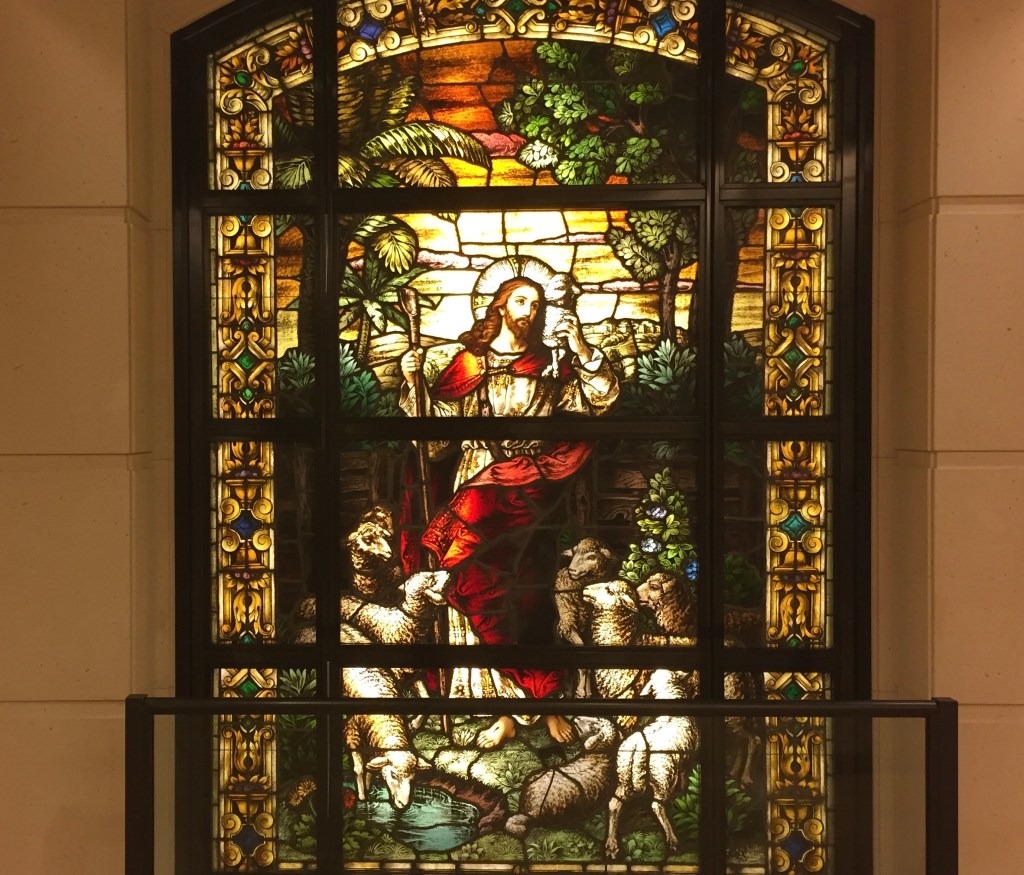
Let us trust in the Good Shepherd who loves and will take care of us.

“[T]he shepherd calls his own sheep by name and leads them out” (John 10:4)

Jesus, distinguished himself as the Good Shepherd who cared for his sheep instead of “thieves and robbers” who sought to harm the sheep. In referencing, “thieves and robbers” Jesus continued his calling out those Pharisees from chapter nine. Those who did not listen to his voice and those who were not leading God’s sheep with care.

The imagery of the shepherds is an echo back to past abuses such as in the time of Ezekiel who spoke out against those leaders who had “been pasturing themselves”, and who failed to “strengthen the weak nor heal the sick nor bind up the injured”. Thus the sheep of God’s flock, were scattered for lack of a shepherd, and became food for all the wild beasts. They were scattered and wandered over all the mountains and high hills; over the entire surface of the earth my sheep were scattered. No one looked after them or searched for them” (Ezekiel 34:2-10).

God, the eternal Shepherd, spoke through Ezekiel and said: “I will take my sheep out of their hand and put a stop to their shepherding my flock, so that these shepherds will no longer pasture them” (Ezekiel 34:10). Jesus is the fulfillment of Ezekiel’s prophecy. Jesus is the Son who God sent to do just that. Jesus has come to gather the lost sheep and bring them to green pastures, and lead them with his voice to eternal life.

Even today, we have experienced so much abuse of power and corruption, self-seeking and self-aggrandizement, that we are weary and have lost faith in our leaders and institutions. Yet, all is not lost. Jesus is still among his flock and calling his sheep to himself. Let us not be deaf to the call of the Good Shepherd because of the “robbers and thieves” that have climbed over the fence and into the sheepfold.

Let us instead, listen for the voice of the Good Shepherd. We do so when we make the time to be still and wait upon the Lord to call. We do so when we resist the temptation to run away or react out of fear. We do so when we are patient and trust in the voice of the Good Shepherd who has our best interest in mind and will care for us. Jesus will not harm us, he loves us. We may have been wounded or hurt when we have gone astray or even when we thought we were safe in the sheep pen. We can trust Jesus when he seeks to come close. His healing may provide suffering for a time, as healing will do, but as we remain close to him, his healing balm will prevail. We will be healed, renewed, and restored.

Jesus loves us, knows and calls each of us by name. Mary Magdalene in her grief didn’t recognize Jesus when she met him after his resurrection, but when he called her by name she recognized his voice. May we, like Mary, remain still long enough so that we can allow the Good Shepherd to come close, trust him, and his voice even amidst the cacophony of so many other voices, robbers, and thieves. May we be patient and only move when the Good Shepherd calls our name and then follow his lead.


Photo: Accessed from IG Post: Strength_in_jesus_1

Link for the Mass readings for Monday, May 12, 2025

“I will not reject anyone who comes to me.”

“Everything that the Father gives me will come to me, and I will not reject anyone who comes to me, because I came down from heaven not to do my own will but the will of the one who sent me” (Jn 6:37-38).

Jesus does not reject us when we seek him out and when we come to him. He accepts us because he knows that we come because we have on some level listened to his Father and allowed our hearts and minds to be moved by his love. Jesus has come to do his Father’s will which is to lead us all to salvation, to be redeemed and restored to the proper order of freedom from our enslavement to sin. Even when we turn away, are diverted by distractions, misled by our sin, or misunderstandings, Jesus will seek us out. In the depths of our souls, we all seek the love of God that we have been created for.

This is why Jesus met Cleopas and the other disciple on the road to Emmaus. Even though they were walking the wrong way, Jesus did not tell them that. He came upon them, walked among them, and opened up the Scriptures to them. In doing so, the fire that had been dimmed by the despair of Jesus’ death, was rekindled in Jesus’ breaking open the word for them, in sharing salvation history for them, such that when Jesus moved to continue on, they invited him to stay with them. Then, in the breaking of the bread, they recognized Jesus who they thought they lost. They experienced in their presence and were nourished by “the bread of life” (John 6:35).

It was through sharing a meal with them that they recognized him. How many meals had they shared together before his death? A close reading of Sacred Scripture shows how important table fellowship is for Jesus and his followers before his death and after his Resurrection. True, Jesus eating with his disciples after his Resurrection shows that he is no ghost, he is human, but also he is reestablishing the cornerstone of his ministry, table fellowship.

Not only are the basic needs of sustenance met, but also in sharing his time and conversation with anyone willing to eat with him, no matter their level of ritual purity, they were touched at the deepest hunger within their hearts, which is to belong, to be accepted for who we are. The majority of the crowd that Jesus spoke to has continued to come to him because he fed them with only a few loaves and some fish. In the miraculous multiplication, Jesus provided for their bodily nourishment, but also was also inviting them to experience the deeper spiritual nourishment of the soul which can only be nourished by his Body and Blood.

Jesus loves us, he wills the best for us. Many resist this truth for different reasons. It could be the callouses, scars, and growing cynicism as a result of wounds inflicted by others, those who did not fulfill expectations, betrayal. Each of us could have experience the same and have also been let down by those we have looked up to and trusted. If we are involved in a relationship long enough, we will experience disappointment or worse. This is because sooner or later, when we draw close the masks will come down and who we truly are, the fullness of our wounds and our gifts will come to the fore. Conflicts will arise because we are finite and imperfect, human beings. We are still a work in progress.

None of us are perfect. We are all on a journey. On our own, we will consistently fall short of our goal. That is why we need a savior. We need someone that we can trust that will be there for us when we are let down and when we fall down face-first into the mud. Someone who, when that happens, will lay down in the mud with us, look us in the eye, and smile.

Even if we are not able to look past the predicament, or smile in return, we might just be able to catch his eyes looking at us and then we will see him offer us his hand. We can then rise together, and stand again. That is how Jesus shows his mercy and love for us. He enters into our chaos and meets us in the midst of the muck and mire of our mistakes, wounds, and sins. He loves us there, and when we are ready to accept his offer of love, he invites us to get up, and begin to walk again.

As our relationship grows and deepens and as our trust strengthens, we begin to believe that we belong and have dignity. We begin to heal and realize that we are a part of something greater than ourselves. Then with wobbly steps, begin to offer attempts of the same mercy, forgiveness, and unconditional love to others that we have received. This is the path of discipleship. This is the road we are on, together. This is not a hundred-yard dash but a long and winding road. Let us be willing to: persist, be led, love, be there for, and accompany one another as we take the hand of Jesus and allow him to lead us on the Way. Jesus will not reject any of us who walk with him. May we help others as Jesus helps us when we fall to rise up and begin again.

———————————————————————————

Painting: Figure of Christ by Heinrich Hofmann

Link for the Mass readings for Wednesday, May 7, 2025

If we are willing, Jesus has come to set us free from our sins and lead us home.

It is interesting to note that in today’s Gospel reading from John, Jesus spoke to those who “believed in him” (Jn 8:31). But the more he talked, the less they seemed to understand who he was: “If you remain in my word, you will truly be my disciples, and you will know the truth, and the truth will set you free.” His listeners balked at the word “free”, asserting that because they were ancestors of Abraham they have never been enslaved by anybody.

In the United States of America, freedom is also highly valued. Many of us would probably react very much in the same way. We may have different ways of expressing why we feel that we are free, but we would certainly assert that we are not enslaved to anybody or anything.

Jesus’ words ring just as true then as they do today: “Amen, amen, I say to you, everyone who commits sin is a slave of sin.” Jesus shined his light on the truth that many of us do not see, which is our enslavement to sin. If we truly seek to be free, then we need to acknowledge this point. What many of us claim to be freedom, doing whatever we want to do, when we want to, and how we want to do it, is not true freedom. We cannot even hear the clanking of the chains or feel the weight of the shackles chaffing at our skin as we raise and shake our fists to assert our freedom of indifference!

Our response to Jesus’ statement: “who commits sin is a slave of sin” ought not to be one of hiding, denying, rationalizing, attacking, fleeing, or refusing to acknowledge such a thing as sin. It is better to embrace the truth that Jesus is placing before us. In this way, we allow his light to expose the darkness in our hearts where sin speaks and we realize where we have said yes to the father of lies. Becoming aware of our fault for those things we have done and have failed to do is the first step in becoming truly free.

When Pope Francis was asked in an interview, “Who is Jorge Mario Bergoglio?” he answered, “I am a sinner, but I trust in the infinite mercy and patience of our Lord Jesus Christ, and I accept in a spirit of penance.” We are all sinners because of the fact that we all in some form or fashion place idols before God. This is not a negative or defeatist attitude, quite the contrary. When we call out our sins in truth, we can be freed from them. When we think our life is about us first and foremost, and ignore or rationalize our sin, we allow them to have power over us.

We become free from our sins by acknowledging that we have sinned and fallen short of the glory of God. This does not mean that we are awful people. It just means that we have fallen for an apparent good instead of the true Good that God wants for us. We have missed the mark of our true fulfillment. We need a savior to free us. Jesus accepts us as sinners but does not want us to remain in our sins. We do not have to be perfect nor have our house in order for him to come close, for he is already waiting for us. We do not need to be worthy, we just need to be willing to open the door when he knocks, and invite him into the chaos of our lives so that he can heal us with his grace, love, and mercy. When, “the Son frees you, then you will truly be free.” 

——————————————————————

Photo: Jesus is always, always looking for us and seeking to carry us back home.

Link for the interview with Pope Francis from America Magazine, September 30, 2013

Link for the Mass readings for Wednesday, April 9, 2025

Let us seek to inform and not convince.

Jesus affirms who he is and whose he is in today’s Gospel of John. Despite those who do not believe that he is the Messiah, Jesus again makes his point very clear: “I did not come on my own, but the one who sent me, whom you do not know, is true. I know him, because I am from him, and he sent me” (Jn 7:28-29). Jesus is the Son of God made man and he belongs to the One who sent him, God the Father.

As Jesus was challenged in his time, he continues to be challenged today. That level of challenge has increased even to the degree that his human existence is even dismissed in some circles as a mere legend. Even as a historical figure, some speculate that Jesus did not walk the roads of Galilee and Judea as recorded in today’s Gospel. This need not be a reason for alarm. Though it is a reason to know our Tradition, the deposit of faith that has been preserved and passed on from Jesus to his Apostles and disciples, and to those early Church Fathers and Mothers named and unnamed, and passed on up to us to this day in an unbroken apostolic succession. We need to know the Bible, how to read and receive the sacred word, to understand its context, and schedule a daily time to encounter the Word proclaimed in worship as well as privately in reading, study, meditation, prayer, and contemplation.

It is important to know what we believe, who we believe in, and whose we belong to. In this way when we are challenged, we do not need to stoop into a defensive crouch, but instead listen to the person’s points, their critiques, and ask questions of what they believe and why they believe what they believe. We can defend our position while at the same time being open to understanding where our questioners are coming from. We can then respond with the truth, just as Jesus did, with an open mind and heart of surrender to allow the Holy Spirit to be present through us.

When we are anxious, defensive, argumentative, seeking to be right, or fearing to be wrong, we limit what Jesus can do through us. God is not about numbers and quotas, he is about building relationships, one person at a time. It is more important to build relationships than to win arguments. We can learn much from St. Bernadette of Soubirous who when challenged time and again regarding the validity of her experiences and encounters with Mary responded, “My job is to inform, not convince.”

Lent is a good time to learn, grow, and to continue to develop our relationship with Jesus, as we continue our journey of faith, to share what we have received in a spirit of charity and dialogue with those we interact. We are all on this journey of seeking the True, the Good, and the Beautiful together. It is important to respect and love those who have differing perspectives outside of and even within the Church, be open to the reality that we can learn from each other, and allow God to guide each of us through our common challenges and step by faithful step grow closer to God and one another.

————————————————————————–

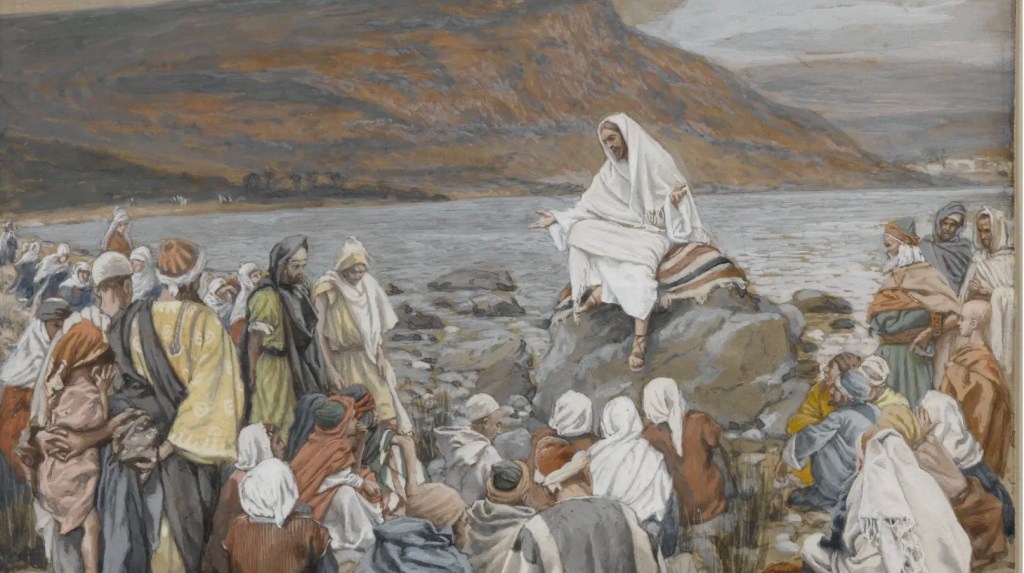
Photo: James Tissot Nantes – “Jesus Teaches the People by the Sea.” The Father sent Jesus to heal, teach, and do what he was sent him to do and Jesus did. As we come to know Jesus, his Father, and the love of the Holy Spirit, we are to do the same.

Link for the Mass readings for Friday, April 4, 2025

Just as the Father gives life, so does his Son.

The words of today’s Gospel from John is an answer to Jesus’ healing of the man at the pool of Bethesda we read yesterday. The issue at hand for those who are incensed by Jesus’ healing is that he has done so on the Sabbath. Jesus does not help his case with his critics though. For he says he healed on the Sabbath because he was directed to do so by his Father: “For just as the Father raises the dead and gives life, so also does the Son give life to whomever he wishes” (Jn 5:21). Jesus does not make concessions with those who oppose his actions of healing. He clearly states the truth about who he is, the Lord of the Sabbath. Those that did not believe Jesus was who he said he was, believed that he was a blasphemer of the highest order and the reason why they plot to kill him.

So too in our own age, there are many ways to express our understanding and belief about who Jesus was in his time and is today. If you haven’t thought about Jesus beyond his name in a while, about who he really is and why he is relevant to our lives, then allow St. Athanasius, the bishop of Alexandria, who lived from 297 to 373 AD, to offer a point to ponder today. Athanasius held firmly to and taught with conviction that Jesus is, “the Son of God [who] became man so that we might become God” (Catechism of the Catholic Church, 480). This statement is an acknowledgment that we cannot be saved on our own merits, through our own will power, and discipline alone. We become the fullness, we actualize who we are created to be, through our participation in the divinity of Jesus the Christ.

The reality that Jesus, fully human, is at the same time the second Person of the Holy Trinity, became one with us in our humanity so that we can become one with him in his divinity is something worth meditating upon and praying about. There is much writing and discussion about how many people are leaving the Church, while at the same time so many are still hungry, starving, for a deeper, more intimate relationship with God. This is true for those who leave as well as those who remain whether either could or would articulate it in that way. Could it be that we have forgotten the foundation not only of our faith, but that we are followers of Jesus Christ?

By returning periodically to the words of St. Athanasius, meditating upon and praying with them, we just might remember who and whose we are. In this way, we will not have to face what lies before us this day alone. Jesus who healed the crippled man at the pool of Bethesda, is reaching out his hand to us today as well. He is inviting us to take his hand and allow him to lead us to experience his healing touch and divinity which we crave to experience.

————————————————————————–

Painting by Greg Olsen

Mass readings for Wednesday, April 2, 2025

Jesus is willing to come close to us, do we want to be healed?

Has there ever been a time when you were picked last for the team, whether on the playground, P.E., or gym class? I remember being on both sides, being picked last, and picking others to join and having to pick someone last. I preferred being chosen last rather than having to be in the situation to choose a classmate last. In our Gospel reading today, Jesus comes upon a man who has experienced an even worse situation.

This man had been in need of healing for thirty-eight years. Apparently, there was a limited time to get into the waters of the pool at Bethesda to experience the healing properties that it afforded, for each time the water stirred, while the man moved to get closer to and enter the water, “someone else [got] down there before” him. This is worse than getting picked last, as he doesn’t in a sense even make the team!

But with Jesus, the last shall become first. Key ingredients are belief, faith, and a willingness to be healed. Jesus does not impose, even in the case of healing, Jesus invites. He asks the sick man, “Do you want to be well?” When the man in need of healing explains the limitations he has experienced in the past regarding getting to the pool, Jesus does not hesitate. Jesus commands him to rise, pick up his mat and walk. The man is no longer the one picked over, the one ignored, the one unseen. The sick man encounters Jesus and is healed by his word.

Jesus approaches us in the same way that he encountered the sick man by the pool of Bethesda in today’s Gospel. Jesus meets us in our need, where we are, no matter our station in life. He does not leave us on the outside looking in, he does not leave us wondering if we are loved or if we belong. He does not only come to encounter us but if we are willing, to forgive, heal, and empower us to be about the mission given to us by his Father. Jesus gives meaning and purpose to our lives. Each and every one of us is a gift from God and has been graced with something to contribute to others, something unique to help make the kingdom of God a reality.

I invite you to enter a place of silence and stillness, without and within. Settle into a place with no or little distractions, breathe in deep and exhale a few times, one deep breath for each person of the Trinity, and then close your eyes. See your self as you are in your present seated position, breathing, experiencing your shoulders relaxing, and just being still. Then notice Jesus walking toward you as he did with the man at the pool of Bethesda.

Jesus is present, right here and right now, for you. There are no boundaries, no limitations, only those you impose on your self. You are no longer misunderstood, left out, or picked last. Jesus is present. Embrace the moment of knowing that you are loved, heard, and that you belong in the kingdom of God. The important question to answer is, “Do you want to be well?”

————————————————————————-

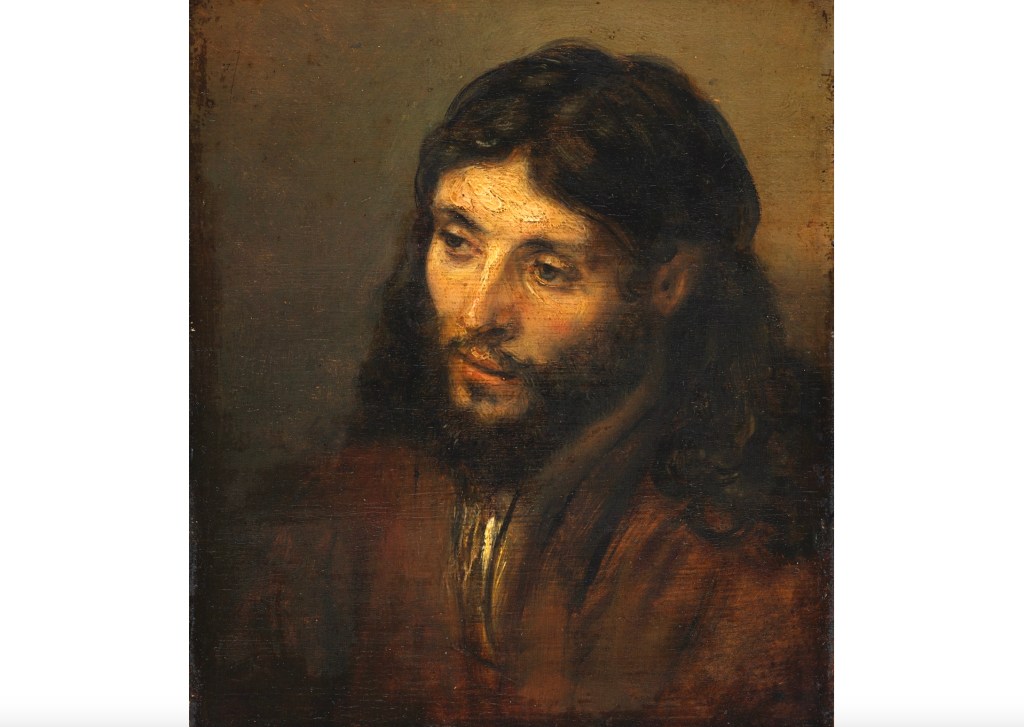
Painting: close up of Head of Christ by Rembrandt

Link for the Mass readings for Tuesday, April, 1, 2025

Jesus has come to heal, do we believe?

We hear often in the Gospels how those who believed in Jesus received healings, exorcisms, and were forgiven of their sins. We have also read accounts such as from the Gospel of Matthew that he “did not work many mighty deeds” in Nazareth “because of their lack of faith” (Mt 13:58).

In today’s Gospel account from John, Jesus speaks to a royal official whose son is close to death. Jesus said to him, “You may go; your son will live.” The man believed what Jesus said to him and left (Jn 4:50). On his way home to his son the man is met by the slaves from his household and they told him that his son would live and when they compared notes, they realized the healing occurred at the moment Jesus spoke and the man believed.

What do faith and belief have to do with Jesus being active in our lives? The way of the Gospel, the good news, is all about invitation and acceptance. Jesus enters our world, our reality, gently and humbly. He came as a poor infant, completely dependent on Mary and Joseph for his very survival. He would live the majority of his life in the obscure village of Nazareth most likely working as a day laborer. When he begins his public ministry he does so by inviting people to be a part of his life, to enter into a relationship with him and his Father. People are free to say, “no” or to say, “yes” to that invitation.

Faith is trusting that what Jesus says is true and that he is who he says he is. Belief is the act of our will that aligns with our faith, our trust in him. Jesus invited the man to believe that his son was healed and the man believed and walked away with full confidence that his son would be healed. Belief is followed by an affirmative act of the will. I can believe my car will run, but unless I get in it and turn the key, I am not going anywhere.

This miracle was not just for the man and his son. As with each miracle, Jesus is teaching a lesson to those present. The preliminary statement to the people of Galilee is, “Unless you people see signs and wonders, you will not believe” (John 4:48). This was a challenge to the man and to those present. The father believed Jesus and went on his way. Did the people who were seeking signs believe as the father did? Because this father did, his son was healed.

Jesus is fully human and fully divine. He has come to show us the promise of the life his and our Father wants to give to us. Jesus, the first born of the new creation, is collaborating with his Father: “To set right a world that has gone wrong” (Barron, 92). Jesus comes into our lives each day to show us a new way, a better way. Are we willing to walk the path of this new way with him and believe as did this man seeking a healing for his son?

Just as the sun rose this morning, Jesus is present to each and every one of us. Just as Jesus was present for this man and his son, so he is present to us as our divine healer, teacher, and savior. May we trust in Jesus with everything, may we thank him for everything, and may we surrender everything to Jesus who became one with us in our humanity so that we can become one with him in his divinity.

——————————————————————————–

Painting: “I am one with the Father” by Greg Collins

Barron, Bishop Robert. Lenten Gospel Reflections. Word on Fire, 2020.

Link for the Mass readings for Monday, March 31, 2025