Jesus, please send us the purifying fire of the Holy Spirit.

Jesus entered the temple area and proceeded to drive out all those who were selling things, saying to them, “It is written, My house shall be a house of prayer, but you have made it a den of thieves” (Lk 19:45-46).

Luke’s account of Jesus casting out the money changers is the most succinct of all four Gospels. Luke uses the Greek term for “drive or cast out” – ekballō, eight other times. Each time he used it, Luke was making reference to exorcising demons and unclean spirits. The profanation of the body through possession of evil is equivalent to the desecration of the Temple precincts.

Jesus justified his actions of driving the sellers out of the Temple precincts by saying: “Destroy this temple, and in three days I will raise it up” (Jn 2:19). Jesus showed the dignity of our humanity, when he, as the Son of God, entered our humanity. He entered into the chaos of our lives, our faults and foibles, as well as our sins, while remaining sinless himself. He showed that even though we have turned away from God, we were not destroyed and lost beyond hope. He reminds us that what God has created is good and that includes us. Even when we turn away, he continually and infinitely reaches out to us in love and calls us back into relationship with him.

One of the wonderful features of the upcoming holidays is that many families seek to come together and to return home. For some coming home has been longer than for others, for some there may be many miles of separation, and for others, coming home is no longer possible because they have changed their address from this life to the next. There are also those suffering today that are estranged from their families, those who are homeless, displaced, refugees and immigrants, or living in fear of deportation.

No matter who or where we are, Jesus remains close. He became one with us to restore our communion with his Father and one another. He provides the living water that quenches the thirst of our deepest longings. Jesus is our Temple, our new covenant, the dwelling place of God. He is alive and present to each one of us in every condition, situation, time, and place. Through his resurrection, ascension, and our participation in his life, we become precious stones of his Temple.

Jesus meets us where we are and loves us as we are, yet he wants the best for us and for us to settle for nothing less. Jesus, please cast out, as you did in the temple precincts, all from our being that would defile, distract, or divide us, and purge anything that would keep us bound in sin. Send the Holy Spirit as a purifying fire that will reign in our hearts so that each thought, word, and action may proceed not from our survival instincts or reactions, but from deciding to think, speak, and act according to our Father’s will.


Photo: Breathe in – Come Holy Spirit – Breathe out – repeat

Link for the Mass readings for Friday, November 21, 2025

Our lives will be much better when we realize we are temples of the Holy Spirit.

When I was still teaching, I would ask my students if Jesus ever sinned. Inevitably, someone referenced the account from today’s Gospel. In these verses, we read how Jesus, “made a whip out of cords and drove them all out of the temple area” (Jn 2:15). Jesus is not sinning here, rather, he is acting in line with prophetic tradition. Jesus is making a bold spectacle to drive home the point that the temple is not a “marketplace” or a “den of thieves” but it is to be a place of worship and right praise to his Father.

We can see prophetic echoes from Zechariah 14:21 where he prophesied that there would be a time when there would no longer be “merchants in the house of the LORD of hosts” and Jeremiah 7:11 where Jeremiah asked, “Has this house which bears my name become in your eyes a den of thieves? I have seen it for myself!” Jesus not only places himself in the line of prophets and professes their words from God, he acts like them in make such bold statements. There is a difference though.

Greater still than the temple, is the people of God. Further down in the text, when those present ask for a sign to justify this act, Jesus said: “Destroy this temple and in three days I will raise it up” (Jn 2:19). John makes the point clear that Jesus was pointing to his body as the temple of God and referring to his Resurrection to come. Jesus is the new temple and he is establishing a new covenant.

The temple, the house of God, believed to be the corporal presence, the very seat of God among his people, Israel, was destroyed in 70 AD by the Romans. This left a tremendous spiritual, political, and social vacuum. Two groups that were intimately tied to the sacrificial cult of the temple, the Sadducees and the Essenes, very soon after the destruction, ceased to exist as a sect within Judaism. The Pharisees, who already were moving to a practice of home worship that mirrored the worship in the temple, would survive and be the ancestral root of different expressions of Judaism today. Another sect would also arise as the followers of the new way of Jesus which became the Church, “God’s building” and “the temple of God”.

After Jesus’ death and resurrection, his rising after the third day, Jesus becomes the first born of the new creation. Those who are baptized do not just gather in a church, they are the Church, the temple of God.

Each one of us has a unique part to play in the Church. We are called to bear witness and practice, in our own unique way, our faith in our everyday experiences. We may be the only church someone ever enters and the only Bible someone ever reads. This call to put our faith into action is not an invitation to be overwhelmed by nor an excuse to assume a posture of elitism. We are no better than anyone else.

Pope Leo recently said to students participating in the Jubilee of the World of Education: “How wonderful it would be if one day your generation were remembered as the ‘generation plus,’ remembered for the extra drive you brought to the Church and the world.” May we all hear these words, seek and follow Jesus, the Way, the Truth, and the Life, and allow his truth and his love to shape and transform our lives. When we are willing to encounter and walk together, we learn and grow from one another. We are also less apt to keep other at a distance and become more willing to draw close.

We need to resist all that contributes in any way to the dehumanization, division, hate, and violence by rooting ourselves in Jesus, the living Temple. In doing so, we will become aware that we ourselves are temples of the Holy Spirit. In spending consistent time in silence, prayer, meditation, study, worship, and service, we not only purify our temple, we better know God and his will, become conformed to and empowered by the love of Christ to be instruments of peace, contemplatives in action, and advocates for healing and reconciliation in a wounded and weary church, politics, country, and world.


Photo: God speaks to us in many ways when we give ourselves time to be still, breathe, and look up.

Link for the Mass readings for Sunday, November 9, 2025

May we allow ourselves to be ablaze with the transforming love of God.

Jesus said to his disciples: “I have come to set the earth on fire, and how I wish it were already blazing” (Lk 12:49)!

What has been burned does not remain the same. What fire touches, it transforms. Jesus wants us to be consumed so as to be transformed by the fire of the Holy Spirit. Encountering Jesus affects a change in us. When we are open to allow the Holy Spirit to breathe on the embers in the depths of our souls they are fanned like tinder and ignite. We continue to fuel the fire by getting in touch with what God has called us to do in our place and in our time.

We are not to be a Christian in name alone but in thought, word, and deed. Pope Francis, in his exhortation The Joy of the Gospel, wrote: “THE JOY OF THE GOSPEL fills the hearts and lives of all who encounter Jesus. Those who accept this offer of salvation are set free from sin, sorrow, inner emptiness, and loneliness” (Francis 2013, 9). Joy is a gift, a holy flame, that is given to us by the Holy Spirit, it wells up within, and rises up and out to be shared with others. It is different than pleasure which has its source in the stimulation of the senses being aroused but fades once the external stimulus has ended.

Happiness is also external and fleeting. It lasts longer than pleasure in that the memory of the experience will linger but it too will fade away. Joy wells up from within, as it is imparted to us by God and can be present even when the external experiences are stressful or chaotic. I experienced this when I was still teaching 5th and 6th Grade Religion and acting as the dean of students at Rosarian Academy. At the same time, I was also immersed in family and parish life, as well as my studies and formation activities for the permanent diaconate.

One particular morning I woke up exhausted. When the alarm went off my first response was to skip my morning prayer and hit the snooze button to get an extra twenty minutes before rising. Instead, I literally crawled to my small chapel area, lit the candles, and opened my breviary. When I read the words in Psalm 42: “Hope in God; I will praise him still, my savior and my God”, something ignited within. I felt an energy well up within me that I cannot to this day describe. I felt an inexpressible joy. Not only did the experience carry me into the day but lasted throughout the whole week.

God is the foundation of our lives and our Father seeks to transform us with the fire of his love. Even when we are at our lowest, with only the smoldering embers of our faith, we need to resist the temptation to feed indifference, desolation, and/or despair. When we turn to and trust in Jesus, he offers a way when there seems no way. Begin with a breath, be thankful for what we do have, even if it isn’t much. We can be thankful for God’s love and presence even when we don’t feel it. Keep showing up to pray, even if sometimes we have to crawl to get there, and the Holy Spirit will fan the embers within our soul to set us ablaze.

May we, “know the love of Christ that surpasses knowledge, so that [we] may be filled with all the fullness of God” (Ephesians 3:19). To know the love of Jesus is more than knowing about him. We don’t read and study the Bible as we study a history text. We meditate, ponder, and pray with Sacred Scripture daily, to encounter a Person, Jesus Christ the Son of the living God. In doing so, the Holy Spirit will also enkindle in us the fire of his love and moments of consolation that we can experience regardless of our external or internal struggles.

Nothing else in this world can satisfy us as much as experiencing and being transformed by the love of our Father! When we seek God first, the attachments to finite things will begin to loosen. When we trust Jesus and align our will with his, we will come to know him and experience his love and that can be enough. We will no longer seek substitutes to place before God and can begin to let go of anything that is not of his will. When the fire the Holy Spirit burns only that which is pure will remain.


Photo: “Holiness is standing in the fire of self knowledge and letting it burn.” – Fr. Wayne Sattler

Pope Francis. Evangelii Gaudium: The Joy of the Gospel. Frederick, MD: The Word Among Us Press, 2013.

Link for the Mass readings for Thursday, October 23, 2025

Perseverance and trust are two key attitudes that will help us in prayer.

“And I tell you, ask and you will receive; seek and you will find; knock and the door will be opened to you. For everyone who asks, receives; and the one who seeks, finds; and to the one who knocks, the door will be opened” (Lk 11:9).

In today’s Gospel, Jesus continues to teach his disciples and us about prayer. The key point he is emphasizing is to be persistent in our prayer and to trust in God. He is our Father who cares for us more than any human can. He cares and will provide for us more than our own earthly parents or friends.

Yet, we can be at times frustrated in prayer because when we do make the time to pray, we may feel or think that nothing is happening or has happened. We may pray for a specific petition for our self, or for a particular intention for another and felt, or thought, that there was not an answer from God. One may pray a sincere, seemingly selfless prayer for a loved one, a child, a spouse, a friend, to be healed and the person still dies. They may be deeply hurt because they did what Jesus said; they asked, they pleaded and begged, but felt they did not receive the healing; that which they sought for, was not given and, instead what they found was nothing but pain and heartache from loss; they knocked until their knuckles were raw and experienced no one on the other side.

Our attitude and orientation to prayer matters. When we sincerely turn our hearts and minds to God in prayer, something happens between us and God, though it may be beyond our cognitive grasp to understand or our sensory awareness to experience. There may indeed be emotional highs and consolations experienced in prayer, but if seeking those is the primary motivation for prayer we will find ourselves more frustrated than not. There may also be lows in prayer, dryness, even desolations, and even feeling God’s absence are also a reality. Emotions are fleeting and not a good barometer when measuring the effectiveness of prayer.

Another big misconception is that we pray to God as if he were a gumball machine. It may seem a silly analogy but how many of us really do pray and worse, only pray that way, and when we do not receive the specific thing we asked for, at the time specified, when we wanted and as we wanted, we brood and think God doesn’t care or does not, in fact, even exist. We may even slip into the barter posture. God if you grant me this, I will do that. If we are only open to receive what we want on our terms, again we are setting ourselves up for frustration.

The very desire to pray is the beginning of our awareness of God’s invitation, for God is the one who reaches out to us first. The answer to what or who we ask, seek, and knock is found at the end of the Gospel reading for today: “If you then, who are wicked, know how to give good gifts to your children, how much more will the Father in heaven give the Holy Spirit to those who ask him” (Lk 11:13)?

God knows what is best for us, he sees our potential, he wants us to experience joy and be fulfilled. How can we best live our lives in this world to attain that reality? We do so by receiving the Holy Spirit. Who is the Holy Spirit? The infinite, communal love expressed between God the Father and God the Son. Our goal in prayer is to enter into God’s reality, the infinite communion of Love.

We pray first and foremost to help us to grow in relationship with God. This happens through our participation and conformation to the life of Jesus. When we take time to learn, meditate, pray with, and put into practice Jesus’ teachings as his disciples did we will start to see as he sees, we will come to see the truth of empty promises, apparent goods, substitutes to fill our emptiness and faulty defense and coping mechanisms that we have been utilizing as guideposts to merely survive and get through life.

When we stay consistent in an authentic life of prayer, God won’t bend to our will, but we will change. Instead of God becoming smaller to our demands, he expands our hearts and minds to be capable to receive his love. As we mature, we will begin to bear the fruits of the Holy Spirit which are love, joy, peace, patience, kindness, goodness, gentleness, and self-control (cf. Galatians 5:22-23)?

Why may God not appear to answer a prayer for our healing or for a loved one with a chronic condition or one who is dying? I do not know. But we need to resist running from the pain of loss and be willing to trust that God has not abandoned us but is with us. The tears that arise from our suffering can then become a healing salve, a doorway into the open arms and embrace of Jesus who awaits us in the depth of our grief and pain. Even our loved ones who have died have not come to an end but have experienced a new beginning. JoAnn often would say in her last few weeks that she was just changing her address.

Ultimately, what we ask, what we seek, and what we knock for when we pray is to be loved, to belong, to be a part of someone greater than ourselves. We have been created as a living, craving hunger, and desire to be one with God and each other. This is true for the atheist and the mystic alike. We have been created to be loved and to love.

The Holy Spirit is the gift of prayer that is open to us all. He is the love shared between the Father and the Son, that we too can experience. This is why he is the answer to our prayer, though sometimes to be aware of his presence takes perseverance. It may not be that God is not answering, but that we are not patient enough to receive the answer. We need to be patient enough to be still and know God. Prayer is about building a relationship and like any other relationship, that takes time and work.

To mature in our relationship with God not only takes perseverance, we also need to trust him. One of the enemy’s chief tactics is to sow the seeds of doubt and mistrust. Trust in God’s love for you. Trust that he hears every prayer. Continue to show up each day and pray. Even if you feel nothing is happening, God is working within you, fighting for you, helping you to feel safe, heal and grow in trust. It is also important to spend regular time in quiet, for God’s primary language is silence.

“Leave it all to God and leave your interests in His hands. He knows what is fitting for us… No matter: tell Him honestly, candidly, and ask Him to help you trust Him.” – St. Teresa of Avila


Photo: St. Teresa of Avila from St. John of the Cross Catholic Church

Link for the Mass readings for Thursday, October 9, 2025

Trusting the nudge of the Holy Spirit helps us to embrace change and experience inner freedom.

“To what shall I compare the people of this generation? What are they like? They are like children who sit In the marketplace and call to one another, ‘We played the flute for you, but you did not dance. We sang a dirge, but you did not weep'” (Lk 7:31-32).

Jesus convicted those who held a narrow view of who was a true follower of God by sharing the image of a flute being played and no one was dancing, thus in times of joy, there was no celebration. When the funeral dirge was sung, they did not weep, they did not mourn. Jesus then tied the analogy to his present condition regarding those who did not accept the ascetical practices of fasting and the call to repentance from John the Baptist, nor did they accept the inclusive and festive table fellowship of Jesus.

In our own time, we have encountered those that are not pleased beyond their own narrow focus and who suffer from tunnel vision. Anything that hints at even a slight variation of change sends tremors of discontent. If we are honest, we all have some resistance to change, but if we are to authentically live the Gospel, St. John Henry Cardinal Newman’s quote is an apt barometer: “To live is to change and to be perfect is to have changed often.”

JoAnn embraced change much more easily than I. She consistently helped me, even when I didn’t feel it was helpful in the moment, to resist getting too comfortable. She did so again in “changing her address” six years ago to a heavenly zip code. Working through the reality of her death, the adventure of two years of seminary, and adjusting to the blessings of my first year as a priest, have continued to present opportunities to embrace change.

It would have been easier to seek an early retirement and live a quieter life, which was what I thought was the prudent move at the time, but God had another plan. When most my age are thinking of or beginning an early retirement, I instead trusted in the Father’s guidance and embraced the invitation to change again and embark on a new adventure. Though not easy, I am very happy that I did.

The Church, at her best, is a balance between the rock, solid foundation of our core beliefs, such as is outlined in the Nicene Creed, which provides stability, assuredness, and identity. While at the same time, she is open to the life-giving inspiration of each nudge from the Holy Spirit. When we in each generation follow the lead of the Holy Spirit the Gospel will be relevant.

As we remain grounded in what we believe, it is important that, at the same time, we allow ourselves to be flexible and allow the Holy Spirit to lead us. In this way, we can avoid molding the Church into our image, and instead be conformed and transformed into the image and likeness of Jesus, who is the embodiment of Love, the Trinitarian communion of which we profess in the Creed.

We can live a life of joy when we resist the temptation to hold on too tightly. Nothing and no one in this world lasts because all is finite. When it is time to mourn, let us weep, and if we do so well, when it is time to embrace life we can do so with joy and we can dance and live again. What lasts, even eternally, as St. Paul wrote, is love. God is love and God created us out of an abundance of his love. When we are willing to surrender our will to the Father, our heart and mind to the Son, and allow our soul to be led by the Holy Spirit, we will better embrace change and live a life of inner freedom and joy!


Photo: The Holy Spirit has our back and will lead us into the future!

Link for the Mass readings for Wednesday, September 17, 2025

“From the fullness of the heart the mouth speaks.” What are we filling our hearts with?

“A good person out of the store of goodness in his heart produces good, but an evil person out of a store of evil produces evil; for from the fullness of the heart the mouth speaks” (Lk 6:45).

We can experience hardships, trials, and suffering. We may have experienced traumas, and even come face to face with evil. Yet, we are not evil because of what happens to us, nor how we are tempted. Neither are we defined by any trauma, suffering, or abuse. We have been created good by a loving God.

Negativity, sin, hate, and evil, can be seductive, can lure us to rationalize and decide that what we may think of as good in the moment, is in reality, just an apparent good or not good at all. To encounter or experience a word or act of unkindness, negativity, or even violence, we may feel justified in retaliation, yet if we speak or act in this way, we perpetuate the negativity or evil we seek to stand up against. In The Strength to Love, a collection of Dr. Martin Luther King’s sermons he wrote:

“Returning hate for hate multiplies hate, adding deeper darkness to a night already devoid of stars. Darkness cannot drive out darkness; only light can do that. Hate cannot drive out hate; only love can do that. Hate multiplies hate, violence multiplies violence, and toughness multiplies toughness in a descending spiral of destruction.”

At the moment we have a thought in our mind, we want to be aware of it and decide where and from whom this thought is coming from. Then, what to do with that thought. Many thoughts come from ourselves, others come externally from our experiences, our observations, our concupiscence – our tendency to sin, and yes even some from demonic influences.

What we listen to, read, and/or watch on a regular basis matters. We need to discern each thought or influence that comes our way. It is important to be aware what we are feeding on, literally and figuratively, and honestly assess our thoughts before we speak and act. Thinking through and deciding on what we will say and do is different from immediately or impulsively reacting.

Consuming the things of this world will lead to a different way of life than meditating and pondering on the things from above (cf. Colossians 3:1). Spending time in prayer and following Jesus’ commands will help us to bear the fruit of the Spirit: “love, joy, peace, patience, kindness, generosity, faithfulness, gentleness, self-control”(Galatians 5:22-23). Honestly examining our conscience daily will help us to purify that which is deadening and replenish that which will nourish.

Violence and the worst of our humanity continue through multiple media outlets, also, they horrifically materialize in real time, and ad nauseam on 24/7 cable coverage. The starting place to counter evil is to resist returning evil for evil, and to learn and put into practice Jesus’ teachings which will help to expose the darkness in our own hearts. We will see more precisely how to clear out the plaque of our own fears, wounds, frustrations, disruptions, and disordered affections. Then there will be more room for the love of the Holy Spirit to flow. With our hearts flowing with love, we will react less, listen, think, and speak better, and choose to act in ways that promote healing, understanding, forgiveness, reconciliation, and love.

——————————

Photo: Would that each of our hearts were open and receptive to God’s love as these flowers.

Link for the Mass readings for Saturday, September 13, 2025

Praying helps us to grow in our relationship with God, as well as in humility and love.

“Rather, when you hold a banquet, invite the poor, the crippled, the lame, the blind; blessed indeed will you be because of their inability to repay you. For you will be repaid at the resurrection of the righteous” (Lk 14:13-14).

At the end of this parable, Jesus is expressing a deeper definition of love that we in our culture may not be accustomed. When we hear someone talking about love, most likely we think of an emotion, a feeling, sentiment, or a state of mind. As I have written often, I follow St Thomas Aquinas in his definition of love as the willing the good of other as other. This definition of love is unconditional. There are no restrictions placed on another for a return of the good given. In fact, as we read Jesus’ words, no return is to be expected.

This is what Jesus means by inviting the poor, the crippled, the lame, and the blind. These are people of his time who had nothing to give to someone who has the means of offering a banquet. They could even come, because of their ostracized status without the proper etiquette to even express the most minimal of thank you for the invitation and the meal, and instead to complain about the food, the decor, and even be insulting to the host. Yet, they would be served with humility and grace anyway, because the point is to give without expectation of reciprocity.

Some may say this is impossible, that nobody gives without expecting something in return. Everybody’s got an angle, even if we do something for a compliment. Jesus would probably agree with this claim, for on our own we may not conceive of giving without looking to get something back in return, let alone make such an offer. Jesus has countered this claim in a different context, but it applies here just as well: “For human beings this is impossible, but for God all things are possible” (Mt 19:26).

To be able to love then, to will the good of the other without condition, we need to first be willing to receive the love of God that he offers. We are only capable of love because first and foremost, we have been loved ourselves. If we spend no time with God, no time in his word, prayer, worship, acts of service, or most importantly his silence, we set ourselves apart from the love of God, and separate ourselves from him, the very source of our being. Our very existence, in fact, the reality of all creation, is the result of the outpouring of the love of God.

To receive the love of God, it helps when we respond to the invitation of the Holy Spirit to pray each day. Our very desire to pray, seeking the existence of God, the urge to move out from our self to reach out to the need of another, is the first response we might experience to his invitation even if we may not even be fully be aware. Another important movement to make time for prayer is to resist the many distractions, diversions, and temptations that keep us from praying and make time for God and God alone.

Humility is a key virtue that helps us to resist seeing ourselves as first and foremost. God is God and we are his children. As we enter into relationship with him and receive his love, it is important to resist keeping his love for ourselves. Yes, share with those closest to us, but also with those who will not give back. We need not fear that there will be a finite end to our giving, for with God there is an inexhaustible supply and a joy for its own sake which comes up from within our soul from our loving Father who is the source.

Having received God’s caritas, charity, we are to give until it hurts, as St. Mother Teresa taught. Jesus is not teaching us to build up fame and fortune here in this life, but to build up treasure in heaven where we will receive our eternal reward. If we don’t follow through on the movement of love dwelling up and share, if we only seek a return or equal exchange for the love given, we will often be let down and disillusioned. When the Holy Spirit nudges us to reach out in concrete situations, we are to follow without hesitation and seek nothing in return.


Photo: Divine Jesus Prayer Canvas from ArtisianCanvasPrint

Link for the Mass readings for Sunday, August 31, 2025

Daily prayer with Jesus helps us to be better and more prudent stewards.

“Who, then, is the faithful and prudent servant, whom the master has put in charge of his household to distribute to them their food at the proper time” (Mt 24:45)?

Jesus is calling us to be that “faithful and prudent steward” and the household we are to serve is our own homes, churches, communities, states, countries, and world. For the world is our home and those we serve are our brothers and sisters. Jesus’ call is a universal call to solidarity. We are all invited to be united in this effort for and with one another because we are all created in the image of our loving God and Father.

God has created us, not as automatons or robots, or drone worker bees. He has created us as unique persons, one of a kind, distinct wonders that have never been nor ever will be again. Within our uniqueness, there is also the gift of diversity. We are not intended to be separate from one another, for God has created all of us to be interconnected, to be loved, and to love. What affects one, affects all.

Jesus clearly emphasizes this distinction in his parable, often called the Judgment of the Nations, when he stated: “Lord, when did we see you hungry and feed you, or thirsty and give you drink? When did we see you a stranger and welcome you, or naked and clothe you? When did we see you ill or in prison, and visit you?” And the king will say to them in reply, “Amen, I say to you, whatever you did for one of these least brothers of mine, you did for me” (Mt 25: 37-40).

Being faithful and prudent stewards means being aware of and willing to attend to the needs of the hungry, the thirsty, the stranger, the naked, those ill, and/or imprisoned. This is not an exhaustive list. We are to allow our hearts to be open to have compassion upon those for whom God calls us to serve. We begin this process with prayer, for prayer is the most important thing that we can do each day. We are to make the time to spend in silence to discern the will of God for each our thoughts, words, and actions.

Not all of us will be moved in the same way or for the same cause. We just need to remain open to the nudge of the Holy Spirit, trust his direction, and follow him regarding how and who best we can serve, no matter how small of a gesture. One thing that can limit us is if we are unwilling to admit to and confess our prejudices, insecurities, or biases, as well as toward whom we have been unaware or indifferent. When we have the humility to confess, God is ready to forgive, heal, and transform our hearts of stone into hearts of flesh.

As we are forgiven and begin to heal, as we experience the love and mercy of Jesus, we can draw strength from him, begin to see the dignity present in ourselves, and one another, begin to see each person we encounter as God sees them and begin to take steps to follow the lead of the Holy Spirit to love, to will each other’s good, in each thought, word, and deed.


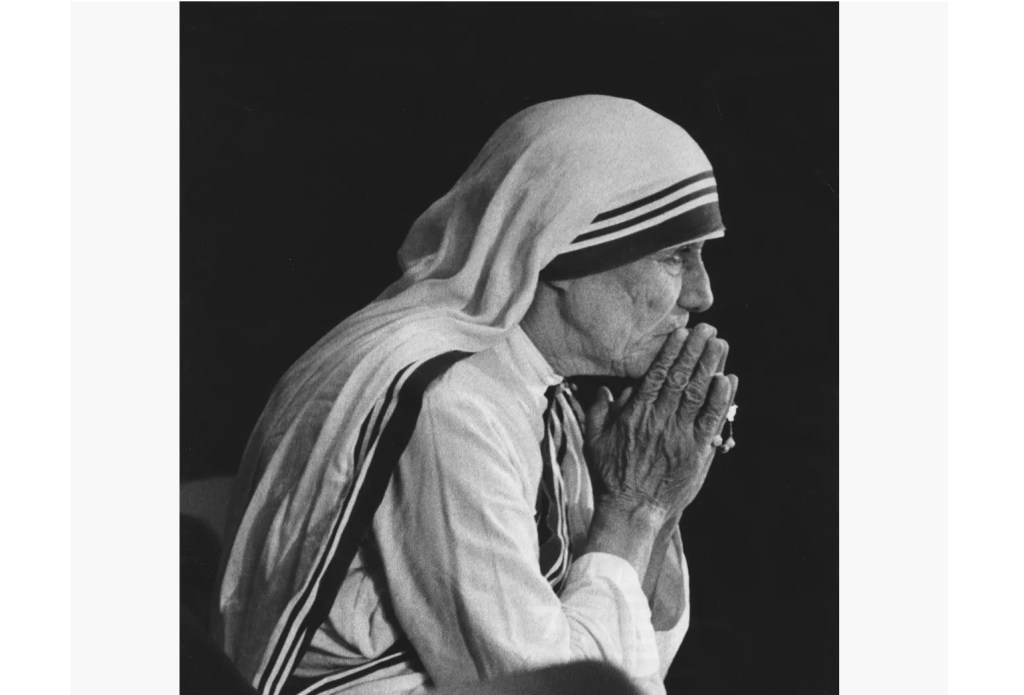
Photo by Jay Mather, The Courier Journal, of St. Mother Teresa of Calcutta at Bellarmine College, Louisville, KY, June 22, 1982. “Until you can hear Jesus in the silence of your own heart, you will not be able to hear him saying, ‘I thirst’ in the hearts of the poor.” – St. Mother Teresa

Link for the Mass readings for Thursday, August 28, 2025

Be still, and allow the Holy Spirit to burn!

Then the disciples approached Jesus in private and said, “Why could we not drive it out?” He said to them, “Because of your little faith.” (Mt 17:19-20).

How do the disciples get from this recurring theme of having little faith in the Gospel accounts to Peter healing a crippled beggar by saying with boldness, “I have neither silver nor gold, but what I do have I give you: in the name of Jesus Christ the Nazorean, [rise and] walk” (Acts 3:6)? And the man did just that!

A helpful definition “is to say that faith always entails a relationship between persons which stands or falls with the credibility of the person who is believed” (Rahner and Vorgrimler 1965, 164). Faith is not just an intellectual exercise, it is a lived experience. Christian faith is the conviction, belief, and relationship experienced with Jesus the Christ. The disciples learned from Jesus but more importantly developed an intimate relationship with him, such that the love they received and shared became so strong that there was no more room for doubt, distraction and/or fear, such that they would align themselves with the will of God and do what Jesus did.

The disciples did have some moments of doing as Jesus had done, but it was not until Jesus ascended and the Holy Spirit descended upon them at Pentecost that everything changed. Jesus had tilled the soil, he helped to unearth the rocks of the hardness of their hearts, he forgave them, and healed them. But it was not until they let him go after his Ascension that they were able to receive the Holy Spirit and by his power working through them they would do even greater deeds than he (cf. Jn 14:12-14)!

We are invited to do the same. If we only read the Gospels or hear them read we may know something about Jesus, but our life will for the most part remain unchanged. When we read, meditate, and pray with the Gospels and put into practice what we read, we will encounter Jesus as did his disciples. We too will come to know and develop a relationship with Jesus and our hearts and minds will be transformed by him. In this way, we are not just reading a dead letter but encountering the living Word, the Son of God, who invites us to share in the infinite dance of Love that he participates in with God the Father and God the Holy Spirit.

The enemy will do everything in his power to distract, divert, and tempt us from setting aside time to pray with God each day. And when we actually begin to discipline ourselves, enter into quiet time daily, we are invited not to stay there but to go deeper, to move beyond only reading, meditating, and praying. There will be times Jesus invites us to set aside our Bible, notes, journal, prayer cards, and/or vocal prayers of petition, and to just be still, to listen, and receive the love that Jesus and the Father experience, the Holy Spirit.

The same Holy Spirit who empowered the Apostles to fulfill what Jesus had begun with them is quietly nudging us on each day. Please listen! He is inviting us to see more clearly those subtle ways we are being distracted, tempted, and diverted from his guidance and what has been inhibiting the growth of our relationship with God. The love and light of the Holy Spirit will reveal, when we are willing to remain still, where and how, in minute and massive ways, we are refusing to follow the will of God.

One of the reasons that we have “little faith” is that we rely too much on ourselves. We are invited to stand in the presence of the Holy Spirit and let his fire burn, to purify us from our own misguided thoughts of self sufficiency. As gold and silver is placed in a crucible and heated, the dross is purified. We are purified in the crucible of our meditation, prayer, and contemplation by the love of the Holy Spirit. Through this purifying light we will see that we cannot save ourselves, that we need a savior, Jesus, with his arms wide open ready, willing, and able to forgive us and love us unconditionally and continually.

———————————————————————–

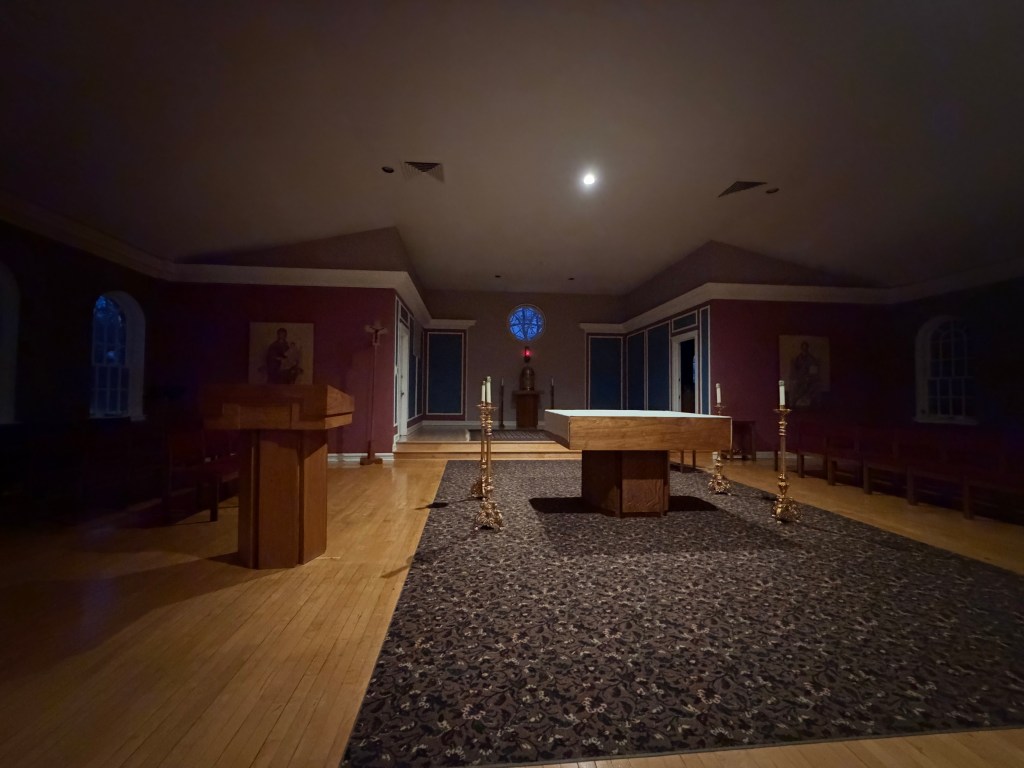
Photo:  A moment of stillness and purification back in December.

Rahner, Karl and Vorgrimler, Herbert. Theological Dictionary. New York: Herder and Herder, 1965.

Link for the Mass readings for Saturday, August 9, 2025

“Lord teach us to pray”.

Prayer is God’s initiative. God initiates prayer because he wants to be in relationship with us. When we feel the desire to pray, prayer has begun because this is our first awareness of God’s invitation to relationship. By our very nature, we are prayerful beings, we want to belong, to be a part of, and to be in communion. We seek to receive love and love in return. The challenge is that we can be led astray and seek disordered affections and substitutes for that which and who will fulfill our greatest desire for communion and love which is answering our deepest yearning as a living, craving, hunger and desire to be one with God and each another.

Yet, as Jesus’ Parable of the Sower shows, the desire to pray is not enough. The enemy can easily divert, distract, and steal our desire. We may not know how to pray or how to really pray. This was true for the disciples as well. Even though they prayed, most likely by reciting the Shema (Deuteronomy 6:4-9) each morning and evening as well as the Psalms, they saw something different about Jesus in his prayer. So we hear in the Gospel today from Luke: “Lord, teach us to pray” (Luke 11:1). Jesus then shared with his disciples the model and form of prayer which can help us today as well.

The first movement in our prayer is to acknowledge God’s invitation for dialogue, for relationship, and truth. Jesus teaches, “Father, hallowed be your name” (Luke 11:2). The very first instinct is to acknowledge that God, as Jesus teaches, is our Father. In our prayer with Jesus we acknowledge and so recognize that we are children of God. God is God and we are not. God is infinite and we are finite, created beings. May sound obvious but if we don’t get this starting point correct, we will be frustrated with prayer.

We can be frustrated if we approach God like a gum ball machine, seeking to get what we want, when we want, and how we want. We will be frustrated by seeking to bend God’s will to our own. God does not operate that way. God knows what we seek, need, and what will be best for us, better than we do. Our Father will give us that which we need and will fulfill us, especially the best gift of all which Jesus shares at the end of today’s reading: “If you then, who are wicked, know how to give good gifts to your children, how much more will the Father in heaven give the Holy Spirit to those who ask him” (Luke 11:13)?

The Holy Spirit, is the greatest gift we can receive. The Holy Spirit, the love shared between the Father and the Son, is who we seek in the depth of our souls. It is in following the promptings of the Holy Spirit that we not only come to know God, we come to know ourselves. The Holy Spirit gently leads us and each time we follow, we begin to recognize his voice and distinguish it from the father of lies. “Each act of fidelity to an inspiration is rewarded by abundant graces, especially by more frequent and stronger inspirations” (Philippe, 22).

As we follow the lead of the Holy Spirit in our prayer, come to breathe, receive, rest, and abide in God’s love, we will also be better able to do so in our daily lives and interactions with one another. We will better identify the lies, apparent goods, and even competition of actual goods so that we can clearly follow with each thought, word, and action the guidance of the Holy Spirit.

To get to this point of closer intimacy with God takes intention, daily time committed to meditating, praying, and contemplating his word. Also, when he leads to just be silent, for as St. Mother Teresa taught, “God speaks in the silence of our heart.” Oral prayer is the easiest way to begin. It is the first way to accept God’s invitation to pray. We can pray the Our Father, the Rosary, read Scripture, speak to him directly, and then from our time of vocal prayer, we can meditate and ponder what the Lord has given us to reflect upon. When the Holy Spirit inspires us to then be still and listen, let us do so. Our Father will speak to us in his word, in his silence, and/or sometimes with consolations.

Prayer is not so much about what we do. Prayer is more about lifting our hearts and minds to God and allowing ourselves to slow down enough to be aware of what God wants to do in us. Our Father seeks to helps us to identify our sins so that we can be free and confess them, he leads us to heal those places where we have preferred to keep locked up, and he wants to shine the light on how we are to serve him so that his kingdom will come and and his will, will be done on earth as it is in heaven.

To enter deeper into a life of prayer we need to trust Jesus. That is what made a big difference in the first days of my 30 day silent retreat in July of 2023. I followed the lead of my spiritual director and started to imagine myself sitting with Jesus as I read and meditated upon these words a few times, “to know the love of Christ that surpasses knowledge, so that you may be full of the fullness of God” (Ephesians 3:19), I leaned over and asked Jesus, “How can I know your love?”

He said, “Trust me.”

I did and that made all the difference in the following holy hours and successive days of the retreat, as well as the last two years.

We have been created to live a life of prayer. Jesus will teach us to pray, just as he taught his disciples. As we trust him and ask for the guidance of the Holy Spirit, God our Father will grant our request. My invitation to you who have read this far, is to set aside some time today, sit in a comfortable quiet place, take a few deep breaths, read through today’s Gospel account Luke 11:1-13 a few times, trust in Jesus, ask for the Holy Spirit, follow their lead, and let God happen!


Photo: Bench view from where I sat with my first encounter with Jesus as related above and during many more of my holy hours back in July of 2023.

Link for the Mass readings for Sunday, July 27, 2025