The Spirit of God will reveal the truth of his infinite love for us.

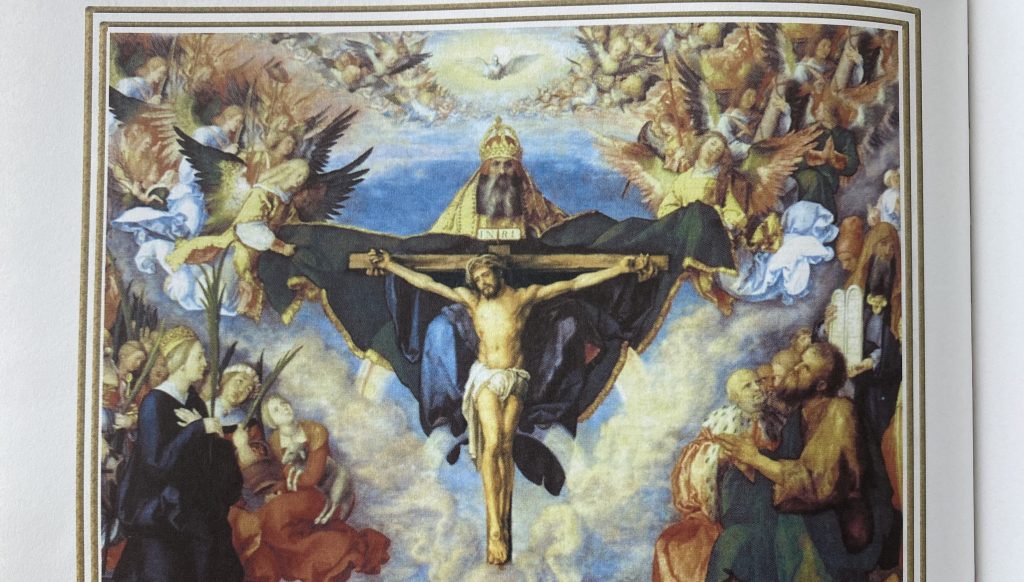
Today we celebrate Trinity Sunday. The Trinity is the foundation of not only our faith but the reality of all that exists. God has been, is, and always will be. God exists as a communion of three Persons, God the Father, God the Son and God the Holy Spirit. Three Persons in one God, but not three beings.

Anything we say about God is going to be woefully inadequate regarding the truth of who God is. Jesus, as the Son of God incarnate, revealed to his disciples the truth of who he is and who his Father is. As he approached his crucifixion, he began to prepare his disciples for the coming of the Holy Spirit. “I have much more to tell you, but you cannot bear it now. But when he comes, the Spirit of truth, he will guide you to all truth” (John 16:12-13).

We consistently how hard it was for the disciples to understand that he was the Son of God, that he in fact is God. Jesus to explain the Holy Spirit to them he knew would not happen. But the seeds that he planted would take firm root for the appointed time at Pentecost which we celebrated last Sunday. The Holy Spirit would come upon Mary and the Apostles, and then we see them, as expressed in the Acts of the Apostles, coming into their spiritual maturity as they are willing to be led by the Holy Spirit.

We are not going to understand the deepest truth of our faith and who God is by intellect and reason alone. To begin we have a better chance of saying what God is not. God is not a being, not one being among many, nor the greatest of all beings. God is not in the same genus as us, nor in any genus. God is not even a supreme being, because God transcends beyond all space and time. God is completely self sufficient, thus he does not need us for our existence, nor does he need anything to exist. God is the very ground and source of all being.

God is infinite act of existence, or in the Latin of St Thomas Aquinas, ispum esse subsistens, the sheer act of “to be”. This means that God has no limitations. To say that God is three Persons is even harder for us to comprehend because we often in our modern sense use the words person and being synonymously. To use the word person in speaking of God means to speak relationally.

We describe God as Father because he begets God the Son, God the Son is the one begotten. The Son is not generated or created, because the Son has always existed with the Father. This is true because they are not finite beings separate from one another. They are infinite, though distinct, in their relation to one another. God the Holy Spirit is then the Love shared between God the Father and God the Son. God within himself then is an infinite communion because of the infinite giving, self-emptying, and infinite receiving between each other. Each Person gives and receives infinitely, perfectly giving all and holding nothing back.

We will never fully comprehend God because he transcends our finite reality. We will be frustrated also if we treat the mystery of God as a problem to be solved. God is not an equation to formulate but a person that we can encounter and develop a relationship with. This is possible because to be in relationship with God and one another is the very reason we have been created. God draws close to us, he reveals himself to us, he seeks us out, his created beings. We are blessed to live in a time when he has already drawn close to us in the Person of his Son through the love of the Holy Spirit.

Jesus and the Holy Spirit continue to reveal the truth of God the Father to us. When we allow the Holy Spirit to dwell within us and follow his guidance, we too can experience the communion of love shared between God the Father, God the Son, and God the Holy Spirit.

The best way to understand, to know, to build our relationship with God, is not to force God to fit into our finite reality, mindset or limited view, but to be open to, “the Spirit of truth,” and “he will guide [us] to all truth” (Jn 16:13). The Holy Spirit will guide and lead us to all truth when we resist curving or turning in upon ourself and instead make the time to be still, to breathe, to ponder his living word, and lift our hearts and minds to him in prayer. When we do so we will be expanded and transformed by his love and conformed to God’s will. This gift of grace will grow the more we are open to opportunities to be loved and to love in our everyday moments. For where the willing of the good of each other is, God is, because God is love” (1 John 4:8).

When we as fathers follow the will of the Father, when we are willing to be loved by the Holy Spirit and to love our children and others in return, and when we are willing to sacrifice and serve as Jesus, we are at our best. Happy Father’s Day!


Photo: Spending some quiet time receiving the love of God.

Link for the Mass readings for Sunday, June 15, 2025

Veni Sancte Spiritus!

There is a list of seven deadly or capital sins. They are pride, lust, greed, envy, wrath, gluttony and sloth or acedia. Acedia may be the least recognized on the list but it is one of the most dangerous, because it is the most subtle. If it is recognized at all, it is often compared to laziness, but that does not quite grasp the depth of it. The word, from its literal meaning, means a lack of care. This can manifest in our life as cynicism, finding no meaning, a minimalist approach, a resistance to discipline, a disengagement with the world around us, and ultimately a “lack of care given to one’s own spiritual life, a lack of concern for one’s own salvation” (Nault 2015, 28).

Marc Cardinal Ouellet, in his foreword to Jean-Charles Nault’s, The Noonday Devil, describes the affects of acedia on us today this way: “Left to his own devices, man ultimately despairs of ever being able to find a meaning for his existence and runs the risk of sinking into mediocrity that is just the symptom of his rejection of his own greatness as an adopted son [and daughter] of God” (Nault, 2015, 11).

Feeling the struggle of just getting by, feeling tired, worn down and worn out, getting caught up in a chronic cycle of stress can lead being susceptible to going through the motions. The possibility for our potential and for more in our lives is calling but even if we hear, we may wonder if we can ever fully achieve doing better. We can deny the very gift of our humanity, retreat into a stance that accepts the unthinkable, as long as it does not directly affect us. We grow in our indifference toward our own needs as well as the needs of others. This happens when we listen to the father of lies instead of our Father in heaven.

Today, we celebrate the power to counteract acedia as well as all those temptations that grasp at our throat seeking to choke out the divine life from growing within us. Today, we celebrate the feast of Pentecost when the Holy Spirit came upon Mary and the Apostles to empower them with divine Love.

From our Gospel reading today we read how: The disciples rejoiced when they saw the Lord. Jesus said to them again, “Peace be with you. As the Father has sent me, so I send you” (Jn 20:21). Jesus, who embraced our humanity, took upon himself our sin on the Cross, then conquered death, rose again, and freed us from our slavery to sin. The Risen One comes to us as he came to his disciples in the locked room and invites us to participate in his divine life, to share in the love he shares with the Father, who is the Holy Spirit. So when the temptations of sin arise in our mind and heart, we are to, in the words of St Benedict of Nursia, “dash them against Christ immediately” (Nault, 2015, 41).

The Holy Spirit prompts us through prayers, songs, and words of Scripture to counteract the lies and temptations that seek to lure us away from the truth of our relationship with Jesus, ourselves, and each other. One simple but powerful prayer to use is reciting the words from Psalm 70:2 “God, come to my assistance. Lord make haste to help me.” Another is “Come, Holy Spirit, fill the hearts of the faithful and kindle in them the fire of your love. Send forth your Spirit and they shall be created and you shall renew the face of the earth.” Just saying, Veni, Sancte Spiritus, or its English equivalent, Come, Holy Spirit, reciting the Jesus Prayer or simply the words, Come, Lord Jesus, and/or spontaneous words are all ways to immediately turn away from the temptations that arise and draw on the infinite power and love of God.

We are like diamonds in the ruff. We are unique and special gifts to this world, though wounded and marred by our own and the sins of others. We may feel adrift, without direction; we may feel cynical and without hope; we may feel beaten, worn out and worn down; we may feel anxious and afraid, but let us not despair or lose our ability to care, let us realize that we are not overcome or outdone. We may be wounded by indifference and complacency, but we are not defined or set in stone.

Today, on the Solemnity of Pentecost, the birthday of the Church, let us call on the same Holy Spirit that empowered Mary and the Apostles to give us the guidance and strength from our God and Father who loves us and desires for us the full actualization of who we are and who he calls us to be.

God does not want us to settle for anything less than what he calls us to be. God urges us to call on the name of his Son, Jesus, who will break the bonds of our enslavement to sin, and through our participation in his life become empowered by the Holy Spirit and be free to live the life we have been created for; a life of meaning, fulfillment, joy, love, and unity with God and one another.

Holy Spirit, please set us aflame with the fire of your love and burn off the dross of our sin so that we may be precious stones radiating your light and love in such a way that we keep our tongues from evil and our lips from speaking deceit, that we turn aside from evil and do good, that we seek and strive after the peace of God, that peace that surpasses all understanding. Lead us with your love to know the Father and his will for our lives. Help us to bear the fruit of love, joy, peace, patience, kindness, goodness, generosity, understanding, and self-control.

——————————————————————–

Photo: Veni Sancte Spiritus! Come Holy Spirit!

Nault, O.S.B., Jean-Charles. The Noonday Devil: Acedia Unnamed Evil of Our Times. San Francisco: Ignatius, 2015. If you are looking for a transformative book for summer reading, I highly recommend it!

Link for the Mass readings for Sunday, June 8, 2025

Jesus invites us to share in the love he and his Father share.

Jesus bestowed his love and his grace upon his Apostles as a gift. The fundamental option, our ultimate end goal, that which we seek from the very depths and core of our being, is to experience the same love that the Apostles experienced. The Creator of all that exists, the One who so transcends our comprehension, that is so beyond our ability to comprehend fully, has come close to us, become one with us in the person of his Son, and loves us more than we can ever imagine.

This reality, the core of the deposit of faith that they received, was not to be hoarded, buried, or to be shared with a select few. This living gift of grace was to be shared by the Apostles, the ones who Jesus called by name, who he hand-picked to receive his message and then sent them forth to proclaim his word. They were to protect it for the purpose of transmitting it accurately to their successors so that it would then be passed on to each successive generation who would receive and make it relevant for their own time.

Jesus said to his Father in his farewell discourse, as recorded by John that: “I made known to them your name and I will make it known, that the love with which you loved me may be in them and I in them” (Jn 17:26). Through our participation in the love of Christ, we are perfected and conformed by his will such that we too can experience and share in the love of the Father.

The Trinity is at the heart of the Gospel, the Good News. The Trinity is a divine communion of three Persons, Father, Son, and Holy Spirit. We have been created with a burning hunger and desire to experience this same communion. Why do we resist saying, “Yes” or more fully embracing this joyous invitation? St Thomas Aquinas in his Summa Theologiae, or Summa, outlines four substitutes or temptations that we may put in place of our highest hope and good; these are wealth, honor, pleasure, and power. In and of themselves, these are not unhealthy desires, as long as God is first and we orient ourselves to them from God’s perspective. Then they will be properly ordered by God’s direction and will.

When we assume the posture of pride, believing that we are the center of our lives and we seek wealth, power, pleasure, and/or honor for our own sake and self-aggrandizement, each will be distorted and disordered. These finite pursuits will leave us empty, or worse lead us into the crippling slavery of addiction. How many times have there been reports of someone who has amassed most or all of these four, and then come to a place of such despair and emptiness that they had taken their own lives?

Through a properly ordered sense of power grounded in love, defined by St Thomas, as the willing the good of the other, those in positions of power and privilege are called to be a voice for those who otherwise would not have a voice. Those with access to wealth, are to recognize that this is a gift from God, and they are to be good stewards of what they have received to help and support others, not only in the limited stance of a hand-out but as a primary means to provide a hand up. To accompany and shepherd those who do not have access such that they can arrive at the point where they can be provided with access, skills, and means to participate in the dignity of meaningful work and gainful employment.

The ultimate goal of pleasure is to embrace the Beautiful, the gift that God provides in which we can experience and enjoy the wonders of his creation. At the same time, we can be participants in the expression of creativity through the arts as well as our everyday actions by finding joy in our interactions with one another. If honor, fame, and glory arise in the faithful, they arise not for their own sake or as to heighten the focus on themselves. This attention comes with the responsibility to further radiate the light and love of God so to evangelize and draw others to the Good, the True, and the Beautiful, as did Peter when he preached and three thousand came to accept the love of Christ. When Pope Francis visited the United States the news for a week was filled with joy and hope. When St Mother Teresa accepted the Nobel Peace Prize she began her speech by saying, “As we have gathered here together to thank God for the Nobel Peace Prize” and ended with the words, “God bless you!” These are all examples of God being the source and focus to bring about the proper alignment and use of wealth, power, pleasure, and fame.

Jesus revealed the love with which his Father loves him and sent him to share with us. He invites each and every one of us to receive and live in the love that he shares with his Father such that we may experience the very presence of the Holy Spirit dwelling within us. May wealth, power, pleasure, and honor, not be distractions or diversions to our embracing the love of God, but a means to radiate his light and love, and to provide opportunities and access for others who otherwise would not have any access.

“Humanity’s participation in the divine communion is the goal of the Father’s saving plan, indeed, the goal of the whole of human history” (Martin and Wright). Relationship with God is to be our fundamental option, our ultimate goal, such that we strive to open our hearts and minds daily to breathe, receive, rest, and abide in his love, be filled with, and experience his joy, and radiate his presence through thought, word, and deed. In this way, we are sent to accompany others, to share God’s presence and love with those who are in need of hope.

In respecting, serving, standing up for the goodness and dignity of each person; in teaching and guiding others to experience the truth; and above all to help others to encounter the beauty and love of the Holy Spirit; we provide others the opportunity to experience the transforming love of the Trinity. As disciples, may we turn away from sin and all that divides, and share our witness and testimony of love and service as led by the Holy Spirit. As we do so, we will help us to make our corner of the world a little bit better today than it was yesterday and to take one step closer toward helping others to realize the salvation and unity that Jesus gave his life for.

————————————————————————————————–

Photo: Accessed from Roman Missal. p. 497. Jesus showed his love for us in giving us all of himself on the cross, holding nothing back.

Martin, Francis and Wright VI, William M. The Gospel of John. Grand Rapids, MI: Baker Academic, 2015.

Link for the Mass readings for Thursday, May 5, 2025

Slowing down will help us to be one as Jesus and his Father are one.

“Holy Father, keep them in your name that you have given me, so that they may be one just as we are one” (Jn 17:11).

Jesus is well aware of the temptations of the world, recognizes that the disciples will need the protection of his intercession, that they will remain faithful only if they remain in his love and in relationship with him. The unity that the Father and Son share is an eternal and infinite communion. Jesus, as the Son of God, continued to be one with his Father, while fully experiencing his humanity. As a human being, Jesus faced the same temptations present in this world that we face. The difference is that with each choice that he made, as a human being with a free human will, he chose to be faithful to his Father at each and every opportunity, and so his unity of his humanity remained intact and deepened.

Jesus sought the same unity that he shares with his Father for his disciples and he seeks the same for us today. His hope is that we may be one as he and the Father are one. Yet, he is not going to pull us out of the world for that to happen. “I do not ask that you take them out of the world but that you keep them from the Evil One” (Jn 17:15). The disciples then and us today, are to do as Jesus did. We are to welcome the invitation to be in a relationship  with God, come to know his will, and share it with those we encounter in our realm of influence. We are not to be transformed by the world, but we are to allow God to transform us by the renewal of our minds and hearts. As we do so, we can also bring Jesus’ light into the darkness as God works through us one person at a time.

Following the will of God is not easy. Many distractions, diversions, and temptations pull at us and attempt to draw us away from being faithful and true to God, ourselves, and who God calls us to be. Many times these distractions not only appear to be, but are good. The challenge is not whether we are good or evil, we are being good or doing good, but are we doing God’s will, are we doing what God is calling us to do?

Being able to stop, be still, quiet our mind, and just breathe for a sustained period of time can help us to learn to recollect. Often when we attempt to spend time in prayer, we finish at the moment we are really just getting ready to begin and wonder why nothing is happening! Making time to recollect grants us the opportunity to transition from the busy to making friends with silence.

We can deepen our relationship with Jesus and his Father when we slow down our pace, become still within, because we are better able to hear his voice. We are also in a better place to receive the gifts that the Holy Spirit seeks to impart, his guidance to discern his direction, as well as the courage to follow his will. If any fear or anxiety arises, we just need to remind ourselves to trust that God will provide the means and support we need, for we are not meant to do what he calls us to do on our own.

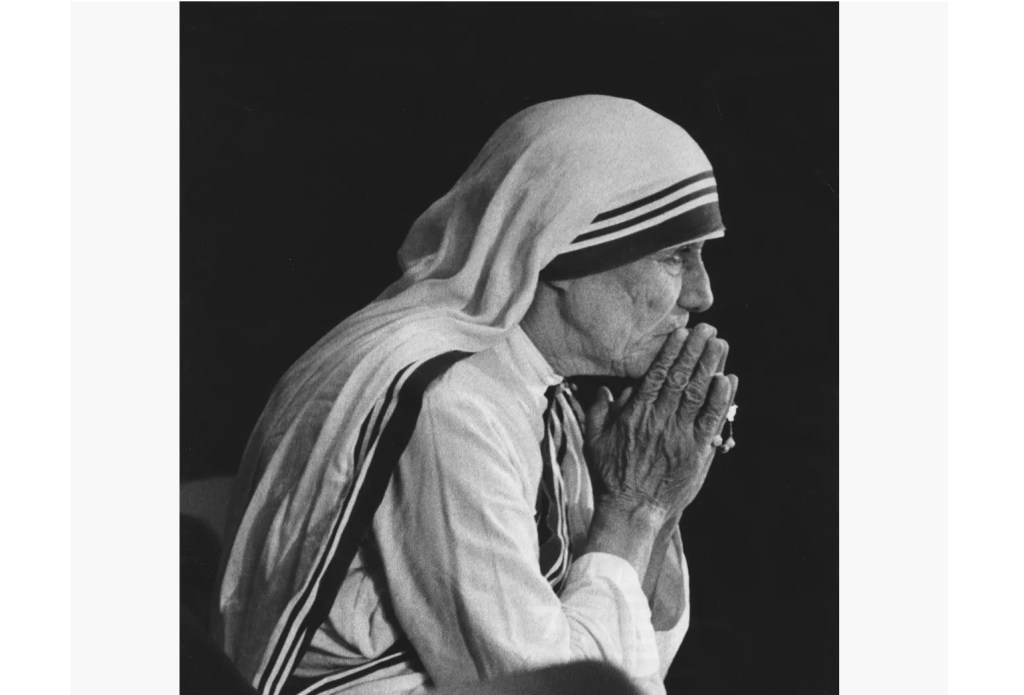
St. Mother Teresa taught that, “in the silence of the heart, God speaks.” We are better able to recognize God’s voice and the people he places in our lives to help us when we embrace consistent moments of stillness. We are better able to identify the temptations and pitfalls along path when we go slower. We grow in discipline, persistence, and dedication when we allow ourselves to be nourished by God’s love and encouragement. When we are willing to change, to be transformed, to grow, and take the risk to trust in Jesus, we, like the disciples, will experience the love and oneness Jesus and his Father seek to share with us.

————————————————————————–

Photo: Meditating on the Glorious Mysteries (back in April before the newest renovations).

Link for the Mass for Wednesday, June 4, 2025

May we be instruments of joy!

“But I will see you again, and your hearts will rejoice, and no one will take your joy away from you” (Jn 16:22). Jesus continues to prepare his disciples for his horrific death by offering hope that he will see them again. That he will see them again is not a typo. We can read about the exchanges between Jesus and his risen disciples. Jesus appeared to Mary of Magdalene at the tomb, he appeared to Cleopas and his companion on the road to Emmaus, and he appeared to the ten and then the eleven with Thomas. Jesus sought out those he commissioned to proclaim his Gospel message after his resurrection, just as he had done during his ministry before his crucifixion.

When Jesus did appear to them again, at the moment of recognition, there was wonder and great joy! It is hard for us to even imagine these early resurrection accounts. The disciples witnessed his brutal death, lived in fear because of the very real possibility of their own persecution and similar death, and then, they encountered the risen Jesus. St Paul would also shortly thereafter encounter Jesus on a different road, the one to Damascus en route to continue his persecution of the followers of Jesus. All of their hearts rejoiced and it was this joy that they proclaimed with boldness. The Apostles, like Jesus, led with joy and love to embark on their evangelical missions. They lived a difficult and challenging life that for many ended in their own brutal deaths, yet their joy carried them through their suffering, death, and into eternity.

Life is hard, even in the best of circumstances. There is evil present in this world, not of God’s creation, because all that he has created is good. Through the enemy’s corruption of the good that God has created, bad things happen to good people, and good people do bad things. Suffering, disease, violence, natural disasters, division, corruption, hatred, and dehumanization abound. It can be easy to succumb to the overwhelming tide of negativity and assume a mindset of cynicism, detachment, denial, defensiveness, and/or indifference. Yet this is not the response Jesus modeled nor has infused his followers through the ages with.

Our response to the evil and darkness of this world is to be bearers of the joy of Jesus! We are to be as lights shining in the darkness, providing hope for those in despair, accompanying those in their struggles, and being willing to receive help when we ourselves are in need. We cannot do any of this alone and on our own but it can be done in participation with Jesus and each other. The Apostles, disciples, and saints, who have gone before us, have shown us that it is possible to be beacons of hope in very dark places.

Pope Francis reminds us about our mission in The Joy of the Gospel (276): “However dark things are, goodness always re-emerges and spreads. Each day in our world beauty is born anew, it rises transformed through the storms of history. Values always tend to reappear under new guises, and human beings have arisen time after time from situations that seemed doomed. Such is the power of the resurrection, and all who evangelize are instruments of that power.”

With each breath, we are invited to trust that Jesus is with us, closer than we are to ourselves, filling us with his love and joy. No one can take this joy away from us, except us, if we are unwilling to share it. Let us choose to allow the light and the joy of the Holy Spirit’s love to radiate through us, no matter how small or insignificant an act of kindness it may seem. When we do so, the darkness in our realm of influence will begin to fade away.


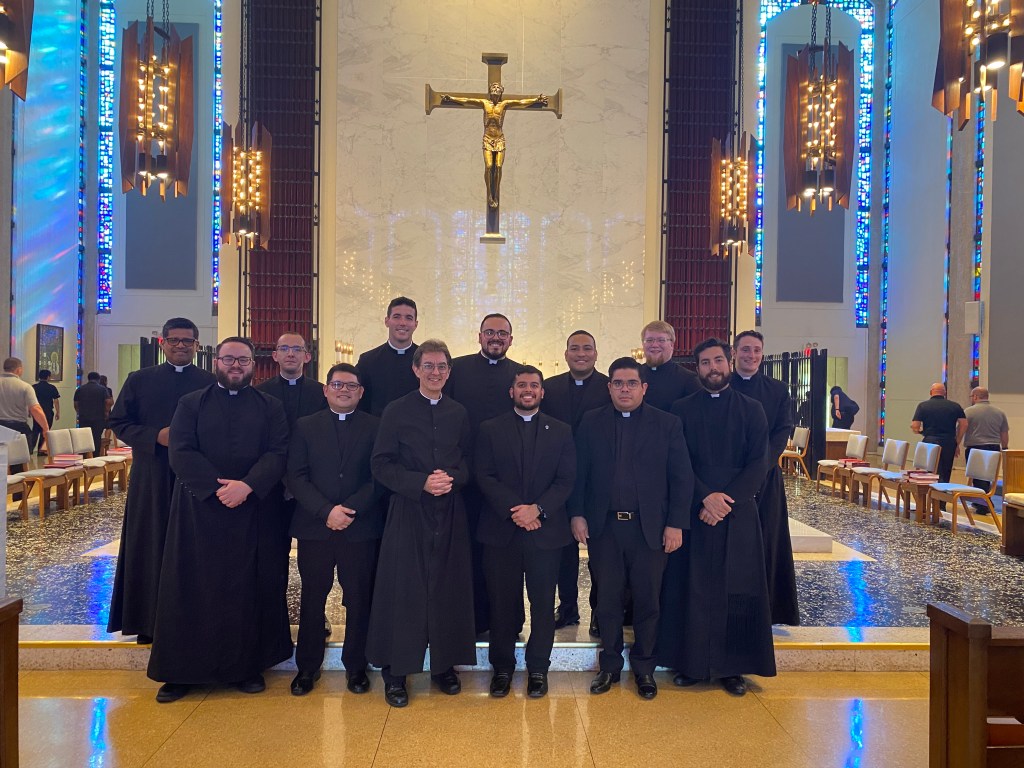
Photo: With my brothers in our final days of seminary. Please pray for us that we may continue to live, speak, and spread the joy of the Gospel!

Link for the Mass readings for Friday, May 30, 2025

The Holy Spirit will help us to continually embrace wonder and experience truth.

Benjamin Franklin is quoted as saying, “Wise men don’t need advice. Fools won’t take it.” Most of us may fall somewhere in the middle. Hopefully, we are less foolish and moving more along to path of gaining wisdom. Jesus continues his best efforts in today’s Gospel to offer guidance and assurance to his disciples that the Holy Spirit will continue to be their guide after his departure. “I have much more to tell you, but you cannot bear it now. But when he comes, the Spirit of truth, he will guide you to all truth” (Jn 16:12-13a).

Surely, Jesus could see the dimming lamps in the eyes of his disciples. As discussed yesterday, comprehending the death of the Messiah, his Resurrection, and return to the Father was a bit much to digest. Also, there was only so much that they could grasp with their finite intellect. Until they experienced the infused contemplative insights given to them by the Holy Spirit, there was only so much the apostles were going to be able to digest of what Jesus was sharing with them about the inner life of the Trinity, the divine communion of love between he Father, and the Son, and the Holy Spirit.

Yet, Jesus, though, still needed to share what his Father gave him to share, and the disciples were to take in what they could. Jesus’ death and Ascension were not to put an end to their learning, deepening of their understanding, or further developing their relationship with Jesus and his Father. The Holy Spirit would continue what Jesus started, and would to lead them to all truth, the fullness of the foundational relationship that is the source of all that exists, the Holy Trinity.

Anyone involved in teaching anyone anything or learning something for one self will know, that just telling someone something does not mean that learning has happened. There is a process of introduction, integration, practice, review, mistakes, corrections, and adjustments until some proficiency is achieved. With the disciples, this is the same. Jesus did not just present things once and move on to the next order of business. That is why John declared at the end of his Gospel that: “There are also many other things that Jesus did, but if these were to be described individually, I do not think the whole world would contain the books that would be written” (Jn 21:25).

I am sure a part of what John was talking about here were the lessons, corrections, and guidance Jesus offered. Just as Joseph modeled for and guided Jesus in his trade in carpentry, so Jesus learned from him through observation, practice, mistakes, adjustments, and corrections. Jesus guided his disciples in the same way, as a mentor with his apprentices. He was now assuring them that even though he would be leaving them, the guidance and leading would continue with the support of the Holy Spirit.

The lessons about the immanence of God, God within himself as a Trinitarian communion, that Jesus taught were not as concrete as sawing, hammering, and planing wooden beams though. God is not a being, not even a supreme being, meaning that he transcends our ability to comprehend the fullness of his reality. We will never fully comprehend God or exhaust the richness and the depth of our relationship with God. What the apostles and the saints to follow and we can still experience today is God’s grace building on his nature. When we read, pray, and meditate with these sacred texts, the Holy Spirit will communicate with us and grant us insights beyond any intellectual endeavor.

On the human level, we are guilty of malpractice in our relationships when we assume that we know everything there is to know about someone else. The gift of the person, the human being, is that we are ever-developing and growing in the mystery and wonder of who we are and who we are called to be. We can always surprise each other. If this is true for us in our relationships with each other, it is much more so in our relationship with God. Once we get to one level of understanding, we plateau for a time, but that is not the end of the journey, that is only a time to savor, to ponder, and contemplate until we are ready to go ever deeper into the truth that the Holy Spirit will reveal to us.

Our tradition teaches us that the fullness of God has been revealed in Jesus Christ, which is true, yet to comprehend that revelation will take a lifetime and continue on into eternity just to scratch the surface. St Thomas Aquinas (1225-1274), a Dominican Friar, who is considered the Angelic Doctor of the Church, was one of the top theological influences during the Scholastic Period, yet close to the end of his life he had a deep and intimate encounter with God in which he came to realize that all of his intellectual achievement, all that he had written, mattered no more than a pile of straw compared to that which God had revealed to him in a single moment of infused contemplation.

Arguably one of the wisest persons of his time, and some would say one of the most brilliant minds ever, was also one who was steeped in daily prayer and continued to be open to the majestic wonder of the glory of God. May we too continue to embrace the gift of wonder, the gift of learning, and never settle, rest and savor yes, but continue to learn and grow, to seek and hunger for the Good, the True, and the Beautiful, to continually have our hearts and minds open to allow the Holy Spirit to guide us “to all truth”!


Photo: A momentary pause during my Rosary walk to observe the interplay between some mangrove stems and barnacles. Many invitations to experience God’s wonder when we get out and about!

Link for the Mass readings for Wednesday, May 28, 2025

As we participate in the life of Jesus we experience the love of the Holy Spirit.

What is common to all of us is that we experience some expression of loneliness to varying degrees consciously, or mostly unconsciously. We are social beings, we want to belong, to be part of, and this is why we are communal. We may do, say, or turn a blind eye to behaviors that go against our conscience just to be accepted, acknowledged, and/or noticed. This behavior further feeds our loneliness, because though we may be “accepted”, we become more alienated from our true self. We are not be accepted for who we are but who we portray ourselves to be.

At the core of our being, what we all seek is to be loved, and to love in return. We strive from the moment of our conception not only to exist but to actualize the fullness of who God is calling us to be. Through our time of gestation, we are not potential human beings, we are human beings actualizing out potential. A difference between me typing this now and when I was in my mother’s womb is that before and after my birth, I was smaller and more vulnerable.

We as human beings are a living, craving hunger and desire to be in communion with God and one another from the moment of our conception until our natural death and continuing on into eternity. This is true to the believer and the atheist alike. Until we embrace this deepest of needs and desires, we will be restless, anxious, and unfulfilled. We can feel isolated and alone, even in the midst of a hundred people or daily likes on social media. As St. Augustine shared in the introduction to his autobiography, “You have made us for yourself, O Lord, and our hearts are restless until they rest in thee.”

God has made us for himself and constantly invites us to be in a relationship with him and with each other because he is the foundation and source of our being. Sin is the turning away from that invitation, a curving, or caving in upon oneself away from God and others. It is also the unwillingness to bother or care, to reach out toward another in need. For what we do to the least of our brothers and sisters, we do to Jesus. We are not just to be pro-birth though, we as Catholics are to be pro-life, and we are invited to promote a consistent ethic of life.

Jesus became human in his Incarnation. He too, as we did, developed in the womb of Mary to show the importance of the dignity of the person and that our dignity is grounded in our relationship with God our Father, meaning we are all brothers and sisters. We are his beloved daughters and sons, just by who we are not by what we do. Jesus was not a plan B, but he was always the primary plan. In the fullness of time, when God so willed, he sent his Son to become one with us in our humanity so that we can become one with him in his divinity. Jesus is the face, hands, and body of God. He came that we might see and experience God. Jesus experienced all we experience except for sin because he never in any thought, word, or deed rejected or said no to his Father. His whole life was a, “Yes” to the will of God. Jesus is the bridge, the way to love and be loved, authentically.

In today’s Gospel, Jesus continues his farewell discourse. He prepares his disciples for the reality that he will be returning to the Father, and yet at the same time, he will not leave us alone. He will be with us for all ages. This is so because as the Son of God made man, in his Ascension, he returned to the Father not just in his divinity as the Son, but also in his humanity. God created all of humanity and his creation as interconnected, and because of that, we all experience this transcendent act of the Ascension when Jesus returned to the Father in his glorified, human body.

Jesus shared with his disciples: “When the Advocate comes whom I will send you from the Father, the Spirit of truth who proceeds from the Father, he will testify to me. And you also testify, because you have been with me from the beginning” (Jn 15:26-27). Jesus is talking about the Holy Spirit, the third person of the Trinity, the infinite Love experienced and shared between the Father and the Son. We become sharers in this divine love and communion of the Holy Trinity through our participation in the life of Jesus.

As we experience the love of the Holy Spirit and develop a relationship with him we begin to feel alive, we begin to heal and to feel whole, because we have experienced the love we have been made for. We have experienced being loved for who we are and as we are. We no longer have to say, do, or accept those actions that we don’t agree with that go against our conscience, to belong. St. John Henry Cardinal Newman has stated that our conscience is the “Aboriginal Vicar of Christ”. Jesus dwells within us, to guide and lead us, to help us to develop a well formed conscience. He encourages us to also say, “Yes” to his Father as he has and continues to do.

We share in the trinitarian love when we grow our relationship and participate in the life of Jesus. This great gift of grace will continue to grow as we testify to this love and share it with others. The greatest gift of God, his love that he gives us, expands as we give his love away. The more we give, the more we will receive. That does not mean fixing others or their problems. We are called to be present, to accompany, and journey with others, meeting them as Jesus met others and meets us, as and where we are. We are to laugh with, to cry along, to encourage, empower, and support, but above all to be present, to allow the love of the Holy Spirit to happen through us.

Jesus has not left us as orphans. His return to the Father through his Ascension has given us a greater and more intimate access to the Holy Spirit. By trusting in his love, we free ourselves from the tendrils of fear and anxiety. We are not alone when we say, “Yes”, to God’s will and develop our relationship with him. As we do so, we continue to actualize the fullness of our potential, become truer to ourselves, and who we are created to be. We experience that peace that surpasses all understanding and develop relationships with others based on authenticity and integrity, regardless of external pressures and experiences. We are loved and we love in return, which is what we all seek, which is who we are called to be.

——————————————————————————–

Photo credit: Some quiet time and prayer during priest convocation May 7.

Link for the Mass readings for Monday, May 26, 2025

Seeing Jesus as he is will help us to experience the love of his Father!

Today’s Gospel reading is a sad account. For the first time since beginning his public ministry, Jesus has returned to his hometown of Nazareth. He entered the synagogue on the Sabbath and preached and taught in his “native place”. Unfortunately, this was not a roaring success of the hometown boy returning home to make good. Initially, it seems that the immediate reaction was the same where he had been preaching before. People were “astonished”.  This astonishment though was not received in the same way as his other audiences. The outsiders he preached to were amazed at the authority and power of his teaching. The hometown crowd looked at Jesus more with contempt.

This is a window into this small town of not more than 500 at the highest estimates. It is also a window into what really happened when Jesus returned home after being lost when he was twelve. What happened in those missing years from twelve until the beginning of his public ministry around thirty was most likely insignificant at best. As Mark mentioned, Jesus was merely a carpenter and the son of Mary. This identification is only used by Mark. Was this because of the roots of Jesus’ conception happening while still during Mary’s betrothal period to Joseph? Or, speaking of Jospeh, could this reference be to the fact that Joseph had already died, although, Jews more often than not during this time, referred to sons by addressing the name of their fathers, such as Jesus the son of Joseph, not by their mothers.

Most of the people here did not accept that he spoke with authority, healed, exorcised demons, or tamed violent winds and waves at seas as the lead stories coming into town had said. Jesus’ words were not received, and so he was not able to bring those who knew him for the greater majority of his life into deeper communion with his Father. The whole reason that he came was to bring light to a world suffering in darkness, and those closest to him refused the invitation such that: “he was not able to perform any mighty deed there, apart from curing a few sick people by laying his hands on them. He was amazed at their lack of faith” (Mk 6:6).

For the first five chapters that we have been going through each day with Mark as our guide, many were amazed at the power of Jesus’ preaching, presence, and miraculous works. Jesus was amazed that those who probably he was closest to more than anyone else, refused to believe. They had heard about and now witnessed themselves, the power of his preaching, but they could not see past the simple carpenter.

Is our world today becoming more and more like Jesus’ “native place”? Do we take Jesus for granted, if we pay him any attention to him at all? Where miracles are dismissed as hoaxes or coincidences at best? At one point, CS Lewis, I believe, wrote that Jesus is either a liar, a lunatic, or the Lord. He cannot be anything else upon a close reading of the Scriptures. Today, some circles would add that he is just made up.

We seek to know in the depths of our hearts, all of us, atheists and believers alike, as well as everyone in between. We seek to know the truth. Authentic faith seeks understanding. A questioning and searching mind are the ingredients for a living, relevant, and vibrant faith and life.

Yet, we can limit ourselves for many reasons and experiences that we have gone through in life. We can, like the Nazoreans, limit the truth of Jesus by accepting a caricature of him. As St. Thomas Aquinas taught: “To one who has faith, no explanation is necessary; to one without faith, no explanation is possible.” There are reasonable ascents we can make to the reality and truth that Jesus is the Son of God, but our reason can only go so far. God’s grace builds on nature. God has given us an intellect and will to seek and to know, but we also are not only limited to our ability to reason. God also reaches the deepest core of our being when we are willing to trust him a little and open our hearts and minds to his revelation.

May we resist setting limits, settling for a minimalist or cynical approach, and the hardening of our hearts, and instead open ourselves up to the limitless possibilities God opens up before us! There is so much to experience when we just slow down and are still to experience the wonder of everyday, miraculous moments happening all around us. The Holy Spirit touches our hearts in our encounters with one another when we resist keeping each other at a distance, in a box neatly defined, and/or lead with our fears instead of love. God wants to share with us the gift of his Son and the Holy Spirit. Are we willing to open our hearts and minds to him, even a little, and allow the love of God to happen today?

———————————————————————–

Photo: The wonder of looking up! Stopping for a moment a few nights ago on my Rosary walk!

Link for the Mass readings for Wednesday, February 5, 2025

When we know God and rest in his love, we can experience his peace even in times of conflict.

Jesus said to the crowd: “They will seize and persecute you, they will hand you over to the synagogues and to prisons, and they will have you led before kings and governors because of my name” (Lk 21:12).

Each of the predictions above; being seized, persecuted, handed over, and led before the rulers happened to Jesus’ disciples as was recorded by Luke in his second volume, the Acts of the Apostles. Jesus did not nor does he hide or paint a rosy picture of discipleship. He consistently shared and modeled in his own life how demanding it will be to follow his lead, the will of his Father, the demands of discipleship, as well as the reality of having to endure persecutions. This continues to be true today. In fact, the number of Christian martyrs in the twentieth century rose to a higher level than at any other time in history combined.

Since the first days of Jesus’ public ministry, there have been those who have said yes to the invitation to be his disciple and this has continued generation after generation up to an including today. Each of us has to make our own commitment to Christ. It is a personal invitation and a personal response. Though the demands, the sacrifices, and the expectations are high, Jesus is present with us through the journey. St. Paul equated discipleship with running a race: “Every athlete exercises discipline in every way. They do it to win a perishable crown, but we an imperishable one” (I Cor 9:25).

Any athlete, musician, artist, or person engaged in any serious endeavor, must discipline themselves to accomplish their goal of freedom for mastery, for excellence. A lack of concerted discipline will not lead to the fluency and the freedom for the sought after goal. The same is true with discipleship.

The discipline required that Jesus presents in today’s Gospel of Luke is to remain firm in authentically living out our faith even in the face of pushback, persecution, and hostility. This pressure may not just come from those who would seek us harm, but from family, friends, and/or peers. This is where the issue of putting God first comes to bear. We are not to be belligerent, get in someone’s face, or shut down dialogue about what we believe but meet others with love, mercy, and respect. Nor ought we back down from what we believe.

It is important to share, listen, respect and allow another the opportunity to do the same. From a place of mutual respect and honoring each other within and without of our own faith traditions, as well as those having none, we grow. People are free to decide as they wish. Sometimes people will react emotionally, rudely, crudely, or even violently. Yet that is not an excuse nor does it provide the green light for us to respond in kind. If we do, then we will often feed into and justify another person’s preconceived notions.

Archbishop Fulton Sheen said: “There are not one hundred people in the United States who hate the Catholic Church, but there are millions who hate what they wrongly perceive the Catholic Church to be.” As disciples of Jesus Christ, it is important that we know our faith, can explain what we believe, live it out authentically, clarify as needed through respectful dialogue, and above all to be icons of hope and love. We need not be afraid. The Holy Spirit will give us the words to speak as well as the ears to hear. The gift of respectful dialogue will result in the deepening of our relationship with the one who has made us for himself and one another. For where there is the truth, there is God who is Truth.


Photo: Making friends with silence, helps us to listen better to God and one another. We will also then know better when and what God wants us to speak.

Link for the Mass readings for Wednesday, November 27, 2024

When we prepare, we will be ready.

Jesus said to his disciples: “Gird your loins and light your lamps and be like servants who await their master’s return from a wedding, ready to open immediately when he comes and knocks” (Lk 12: 35-36).
As disciples, we need to be ready for the coming of Jesus. Yes, for when he comes again at the end of time, but just as importantly, to be prepared for his coming each day in the midst of our lives. If we do not prepare to encounter him daily, the likelihood of us being prepared for his coming again will be slimmer, and only the Father knows the time or the hour.
To plan something means that we outline all that needs to be done down to the last detail. This can be an advantage especially when we are dealing with blueprints for a home or building. By having detailed plans we can be sure we have the proper materials and tools, an estimated budget, and hire the help needed to accomplish the goal. There are many areas in our life where planning has its advantages. Planning our spiritual life is important, deciding when and how we are to pray, meditate, study, engage in Bible and spiritual reading and/or which service we are going to attend, establishing a routine of spiritual direction, time for fellowship and small groups, and how, when and where we can serve others. These are all plusses for planning.
The challenge with planning pops up when we become too attached to the plan and we leave no room for the Holy Spirit, no awareness for the knock at the door because we are so focused on sticking to the plan. Thanksgiving and Christmas dinners are on the horizon. How many times have we experienced planning a dinner with guests, gotten stressed when things did not go exactly as planned and spent more time adhering to the plan and its execution such that we missed engaging with those we were working so hard to provide hospitality for?
Preparing is akin to planning, in that we get ready but are more flexible to other options not governed by our fixed mind and our sense of being in control. Jesus calls us to be prepared to receive him at any moment. Are we prepared to encounter and be present to a classmate, colleague, family member, or neighbor who asks for help at an inopportune time, the homeless person in need, the undocumented immigrant, migrant, or refugee looking for safety and security, the unborn striving to actualize his or her potential, the coworker that has not been the most pleasant, the person that we perceive as somehow different from us – who we keep at arm’s length?
How about planning and preparing for those unexpected events in life that appear all of a sudden? When we heard of JoAnn’s diagnosis we went into planning mode, and as anyone who has spent any time with JoAnn knows, she was in her element when there was some planning to be done. There were many things in those final months we planned for and for the most part, they came together. There were interruptions to the plan where we needed to adjust, sometimes without notice. Preparing helped us to be flexible in those unexpected moments, to be open to the guidance and leading of the Holy Spirit helped us to feel blessed during a tremendously challenging time.
Most recently here at Holy Cross, we were well prepared here in Vero Beach for Hurricane Milton, but needed to be flexible with the surprising onslaught of the tornadoes that touched down. With the quick response from the leadership of our diocese, we have been able to clear much of the damage to the trees, and even though still not able to celebrate Mass in church, our great staff was able to pull together and create a beautiful space this weekend to celebrate in our hall. Ideal? No, but that we were and will continue to be able to come together and make adjustments as needed, we can again worship and pray together. A blessing and gift to be thankful for.
Even before JoAnn’s diagnosis, she often said that life was hard. She saw many people suffering and couldn’t understand why people couldn’t be kinder to one another. St. Oscar Romero wrote, “It would be beautiful if people saw that their flourishing and the attainment of their highest ideals are based on their ability to give themselves to others.” We can better to do so when we are willing to prepare each day to spend time with Jesus, to grow in our relationship with him, so in times of change and challenge, we will know his voice, follow his will, so to heal, grow, be flexible, and adjust as needed so to be ready and helpful to one other when needed.

Photo: We’re still standing! Our cross remained atop Holy Cross Catholic Church!
Link for the Mass readings for Tuesday, October 22, 2024