Jesus commands us to love. We can begin to do so by being a little more patient and kind with one another.

“I give you a new commandment: love one another. As I have loved you, so you also should love one another” (Jn 13:34).

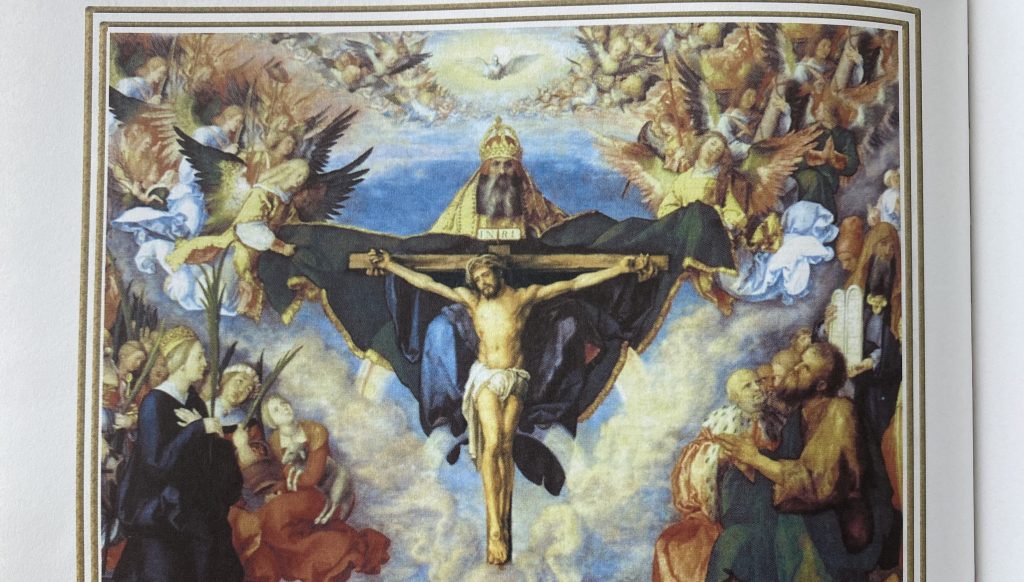
All of creation is an expression and an outpouring of the divine love and communion of the Trinitarian love. Love, if it is true, goes out from the self to be there for the other. St. Paul wrote that love is patient and kind (1 Cor 13:4). These are virtues that flow out of our willing the good of the other as other.

When we act with patience, we love because we resist the temptation to react and strike out. We do not seek to protect our ego, but seek to understand and be present to the person. We are willing to see beyond their brokenness, we resist fueling and feeding their frustrations by not giving in to our own impatient responses, and thereby help to dissipate any growing negativity. We love when we make an act of our will to allow Jesus to love the person through us. A helpful way to do so practically is when we first feel any sense of reaction, we breathe. We slow down. We listen and ask the Holy Spirit to guide us on how best to respond.

When we are kind, we do so because we resist returning hurtful acts with acts of love, seeking nothing in return. We are kind because this is what it means to be a disciple of Jesus. We are not kind in the hope that people are kind in return. We are kind because that is the foundation of who God has created us to be.

So often we do not know what another is going through. When someone cuts us off in the course of our travel, we do not have to react in frustration, anger, or rage, but can choose instead to send a blessing, that the driver may find peace of mind, slow down, and have a safe trip. We can pray that all those driving may drive mindfully so all may be safe on the road.

When someone is short or curt with us, instead of reacting by being sharp or snarky in return, we can take a breath, and ask Jesus in that moment to be present in us and minister through us to the person in our midst. We can choose to be open to loving the person as Jesus loves us, accepting them as they are in that moment, and being willing to allow the Holy Spirit to be present in our encounter with them.

Some good beginning steps to love another is to be patient and kind in the moment, to smile, and offer a hand in greeting, and be available to listen. These very simple acts do have a cost in that our ego and focus on self becomes less, but what we gain in return is that Jesus becomes more and we see each other as human beings. In these simple acts we say to the other, even before we have said anything with our words, that they are important to us, they have worth and dignity, because we are willing to make the time to acknowledge and respect their presence, not reacting to and defining them by their weakness and brokenness in that moment.

“This is how all will know that you are my disciples, if you have love for one another” (Jn 13:35). Let us make a commitment for today to love one another as Jesus has loved us.


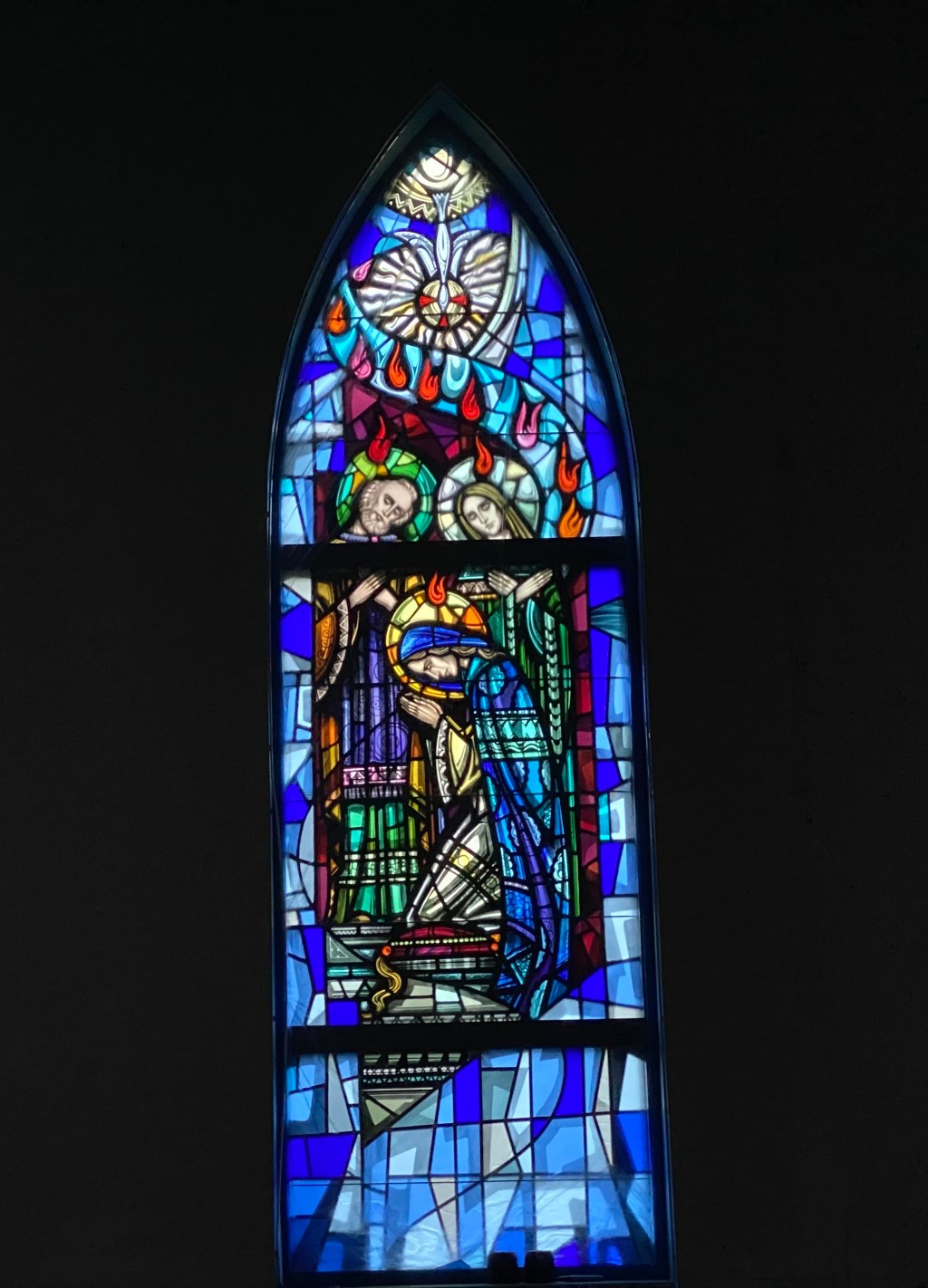
Photo: Came upon this mosaic on a walk after the first few days that I arrived here at Holy Cross. Blessed to have continually been welcomed by so many kind people here this past year!

Link for the Mass readings for Sunday, May 18, 2025

Accepting Jesus’ invitation to slow down can help us to grow in our relationship with him and experience more peace.

Our days are so full of activities, conflicts, health issues, technological stimulation, 24/7 news cycles, social media interaction, challenges, polarization, as well as good and healthy activities, pursuits, interaction, and engagements which can all contribute to our emotional, physical, psychological, and spiritual weariness. If we do not have the proper foundation and orientation, we can feel stretched, hollow, and/or fatigued at best. One day can seem to blend into another, and another, and another. The image of being on a hamster wheel or an unending treadmill can fall afresh in our mind’s eye when we actually do take a minute to breathe. Anxiety, worry, stress, fear, prescriptions, and addictions all appear to be on the rise and swirling out of control.

Is there an answer to this hyper pace or are we doomed to just keep going until the wheels fall off? The opening verse in today’s reading provides an antidote when we are feeling any or all of the above.

Jesus said to his disciples: “Do not let your hearts be troubled. You have faith in God; have faith also in me” (Jn 14:1).

Jesus was speaking specifically to his disciples after he had talked to him about leaving them. He was going back to the Father through the way of the cross. No matter the challenges that we face, even death, our own or a loved ones, we are invited to place our trust in God through his Son, Jesus. By putting God first does not mean that the externals to our life will immediately take an abrupt turn for the better. What establishing a foundational relationship with Jesus does mean is that we will have support and divine assistance. We are not alone in our struggles. The disciples found this out when in the midst of a sudden sea squall. Their boat was taking on water as the waves grew higher such that they were terrified and so, called to a sleeping Jesus. Jesus awoke and with a word, he calmed the sea (cf. Mk 4:35-41).

Jesus may or may not calm the sea of our trials and tribulations, but what he will do is be present with us through our storms in life and we can trust in him that he will guide us through. As we grow more confident in our trust in Jesus, we will be assured that no matter who or what comes at us, he will be there to assist us. We will experience a peace that surpasses all understanding and calm within ourselves. The ultimate assurance that Jesus provides is that when we surrender our life to him, we belong to him, we are not alone or orphaned. He gave his life for us, to redeem and save us so that we can be assured of our home for eternity. “I will come back again and take you to myself, so that where I am you also may be” (John 14:3).

Jesus promised he will come back for us at the hour of our death. He is preparing a place for us in the heavenly kingdom. We do not have to just wait for him to come back though. By growing in our relationship with him now, we enter into and participate in the loving relationship Jesus shares with his Father and experience the love of the Holy Spirit.

If we are struggling at any level and are seeking to build our trust and faith in Jesus, it is important to proceed patiently. God works slowly and this goes against our seeking of instant gratification. God is building a foundation in us which is meant to last not only in this life but in the next. When we make time to sit at the feet of  Jesus, slow down and breathe, ask for his help, seek his discernment about where we can make changes in our life, he will lead us. We just need to trust him and be willing to follow his lead.

This time does not need to be lengthy, three to five minutes a day to start can do wonders. On the surface level, by stopping for five minutes to pray and breathe more deeply and consciously, we get off the wheel, we step out of survival and reaction mode, so that we can then make more intentional and insightful decisions, and we can come to see that we truly have options, but more importantly, we begin to develop a relationship and intimacy with Jesus so to begin to recognize his voice in our stillness and in our activity. When we show up, God will happen.

The Liturgy of the Hours, and the daily readings of the Mass, meditating, praying, and contemplating the word of God have been foundational for me and my transformation, healing, and growth. Over my two years at the seminary, I was also introduced to practicing a holy hour of prayer, often before the Blessed Sacrament daily. Each of these practices have become foundational and non-negotiable anchors in my day. Setting the time aside with my busy daily schedule has been a challenge over my first year of priesthood, but doing so has helped me to better prioritize my time and seek the guidance of Jesus to guide me.

Having set times to stop to meditate and pray throughout the day has been helpful, especially on those days when my schedule is full to overflowing. Author Wanda E. Brunstetter, wrote, “If you are too busy to pray, you are busier than God wants you to be.” There is a lot of truth in her statement. I have had busy days, weeks and months, where I have wondered if taking the time to pray and meditate was really the most sensible choice. Time and again doing so has made an incredible difference and has now been helping me better reevaluate what I schedule into each day. 

The Rosary is another great way to get into God’s word by meditating on the mysteries of the life of Jesus and Mary. If you are not able to pray the whole Rosary in one sitting, start with one decade a day. Read for a few minutes from the Bible once in the morning and then return to meditate on the same verse or verses that touch or challenge you throughout the day. You can also read the daily Mass readings and place your self in the scene and allow the account to open up before you as if were actually there.

Each of these practices offer us a few of the many ways to stop the madness, to slow down, simplify, and connect with the power, the love, and the grace that Jesus yearns to share with us such that no matter the external or internal upheaval, we may experience his peace, that peace that surpasses all understanding (cf. Philippians 4:7).

—————————————————–

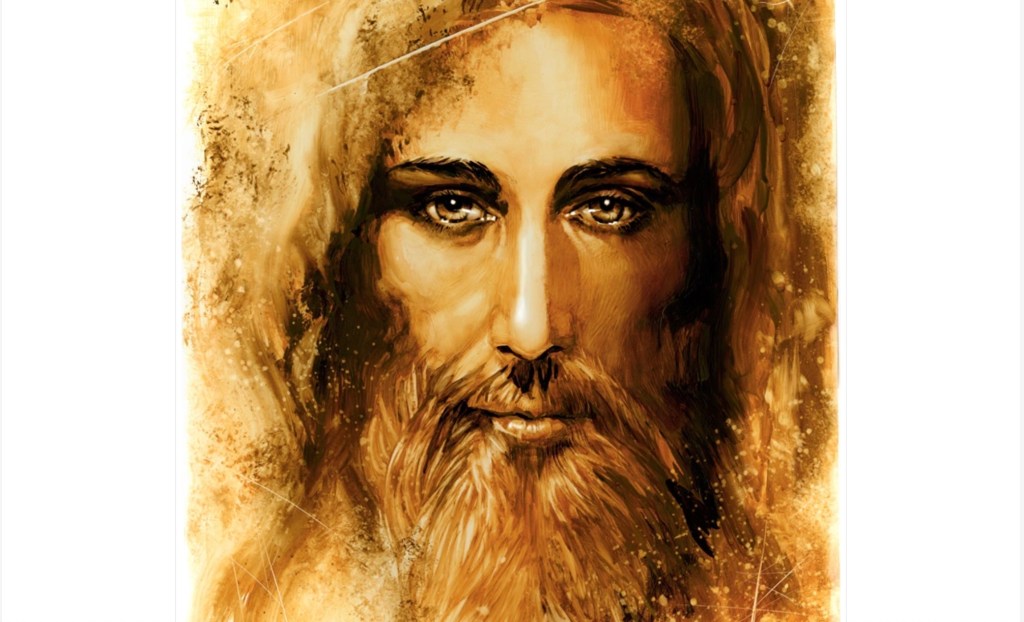
Photo: Jesus is “the way, the truth, and the life” (John 14:6) . Let us trust him, take his hand, and follow his lead.

Link for the Mass readings for Friday, May 16, 2025

Baptism, foot washing, and crucifixion show the depth of Jesus’ love for us.

Today’s Gospel from John begins as Jesus had just finished washing the feet of his disciples. Jesus then said, “Amen, amen, I say to you, no slave is greater than his master nor any messenger greater than the one who sent him” (Jn 13:16). Jesus not only taught the truth that God the Father sent his Son to serve and not be served, he modeled this practice consistently.

From his conception, gestation, and birth, the Son of God developed as a human being in the very simplest of conditions and endured the hardships of those on the margins. Joseph, Mary, and Jesus were political refugees very soon after his birth. The young family was forced to flee from Bethlehem to Egypt. When Herod the Great died they returned to Nazareth, and other than the incident when he remained in the Temple while Jospeh and Mary left him, we hear nothing about the life of Jesus until he begins his public ministry. The most likely reason for this was that there was nothing to tell. Jesus most likely apprenticed with Joseph, in the trade of a simple tektōn, a woodworker, which was pretty low on the rung of the social ladder.

Through the short time of his ministry, Jesus modeled for his disciples what a follower of his entailed and what it meant to be one of his successors. To follow in his footsteps they would need to participate in servant leadership. He not only taught them but lived and modeled that there is no task too menial that we can’t roll up our sleeves and dive in to help. There is no person too other that we can’t assist when they are in a need.

In this act of washing the feet, Jesus is also revealing something deeper. The depth of his love for the apostles and each of us. The Son was willing to come close, to become one with us in our humanity, to be in solidarity with us even in our sin, so that he could take the sin of the world upon himself first at his baptism and then upon the cross. In the washing of the feet, he is also showing the depth of his love in caring for them in such a menial way, that is another foreshadowing of the depths of his love in his willingness to give his life in a humiliating and horrific way for all of humanity.

Jesus, as fully divine, did not grasp at his divinity or lord it over anyone. He was willing to be baptized even though he is free of sin, to wash the feet of his apostles in the most menial of tasks even as master and teacher, and was willing to experience crucifixion and death as the Messiah. In each of these acts, Jesus reveals the full giving of himself and holding nothing back of himself from us. Jesus is encouraging his apostles and us with every breath, thought, word, and action to love each other as he has loved us.

A good prayer and meditation for us today is to ask Jesus to reveal for us how we have resisted his urgings in the past regarding serving and loving others as well as when we have refused to interact or treat someone with anything less than the basic human dignity which they deserved which is to love each other, to will each other’s good. Have we ever thought that what he was asking of us was beneath us? Have there been people we have kept at arm’s length or refused to reach out to? For those ways in which we have withdrawn within ourselves and refused to be of help may we ask for his forgiveness.

Being willing to allow Jesus to shed some light on our lack of embracing opportunities to be loved and to love in return is a good place to begin. Then renewed with his forgiveness, mercy, healing touch, and having been loved, may we be more willing to be bearers of the love, mercy, and understanding that we have received. May we be more open to each of the people and/or tasks that God will place before us, the discernment to know his will, and the clarity and courage to act as his servant with humility, with love, and without hesitation.
—————————————————————————-
Photo: Are we willing to reveal our needs to Jesus, to allow him wash our feet, to allow him to address our needs, and then be willing to serve the needs of others?

Link for the Mass readings for Thursday, May 15, 2025

When we are willing to die to our selfishness, we will love as God loves us.

“I have told you this so that my joy might be in you and your joy might be complete” (John 15:11).

What is this referring too? “If you keep my commandments, you will remain in my love, just as I have kept my Father’s commandments and remain in his love.”

And what is his commandment? “This is my commandment: love one another as I love you.”

Even when life appears pretty dark and division and suffering seem to be waiting around every corner, we need not give up or fall into despair. God wants us to experience fulfillment, meaning, and joy despite our experiences and not through being lemmings or slaves but as Jesus said, his “friends”. The friends of Jesus are those who hear the word he has received and shared from his Father which are his commandments, the greatest of these is the commandment to love as Jesus and the Father have loved us.

If we truly want to be happy, fulfilled, and have meaning in our lives, Jesus invites us to align our wills with the will of God who is Love. St. Irenaeus taught that the joy of God is the human being fully alive. For us to be fully alive, we need to allow ourselves to be loved by and then love as God loves us. God knows what will fulfill us. Many of us do not experience the fullness of this joy because we are distracted and diverted by apparent goods, instead of striving for what actually is good. Time and discernment with the guidance of the Holy Spirit can help us to distinguish the difference.

Neither will we experience fulfillment and joy through denying, covering over, or being so busy that we don’t face the sufferings in our or other’s lives. We ease suffering by entering into it and receiving God’s loving embrace. He will heal us when we are willing to experience our pain. When we experience our pain with him, we receive his mercy and love, and experience healing at the root. As we heal, as we experience God’s love, we can then help to alleviate some of the sufferings of those around us.

“To love as God does, we must be constantly dying to our own sinfulness and selfishness and living for God. And we live for God by obeying the Father’s will and loving one another” (Martin and Wright, 260). Each day we are invited to choose to curl up in our shell of selfish concern or allow ourselves to be loved and to love in return, to come out of our shell, to risk, and become agents of healing and love. As agents of God’s love and mercy we can help to make our corner of the world a little better.


Photo: With JoAnn, who taught me how to come out of my shell, to live, and to love.

Martin, Francis and Wright IV, William M. The Gospel of John. Grand Rapids, MI: Baker Academic, 2015.

Mass readings for Wednesday, May 14, 2025

Let us trust in the Good Shepherd who loves and will take care of us.

“[T]he shepherd calls his own sheep by name and leads them out” (John 10:4)

Jesus, distinguished himself as the Good Shepherd who cared for his sheep instead of “thieves and robbers” who sought to harm the sheep. In referencing, “thieves and robbers” Jesus continued his calling out those Pharisees from chapter nine. Those who did not listen to his voice and those who were not leading God’s sheep with care.

The imagery of the shepherds is an echo back to past abuses such as in the time of Ezekiel who spoke out against those leaders who had “been pasturing themselves”, and who failed to “strengthen the weak nor heal the sick nor bind up the injured”. Thus the sheep of God’s flock, were scattered for lack of a shepherd, and became food for all the wild beasts. They were scattered and wandered over all the mountains and high hills; over the entire surface of the earth my sheep were scattered. No one looked after them or searched for them” (Ezekiel 34:2-10).

God, the eternal Shepherd, spoke through Ezekiel and said: “I will take my sheep out of their hand and put a stop to their shepherding my flock, so that these shepherds will no longer pasture them” (Ezekiel 34:10). Jesus is the fulfillment of Ezekiel’s prophecy. Jesus is the Son who God sent to do just that. Jesus has come to gather the lost sheep and bring them to green pastures, and lead them with his voice to eternal life.

Even today, we have experienced so much abuse of power and corruption, self-seeking and self-aggrandizement, that we are weary and have lost faith in our leaders and institutions. Yet, all is not lost. Jesus is still among his flock and calling his sheep to himself. Let us not be deaf to the call of the Good Shepherd because of the “robbers and thieves” that have climbed over the fence and into the sheepfold.

Let us instead, listen for the voice of the Good Shepherd. We do so when we make the time to be still and wait upon the Lord to call. We do so when we resist the temptation to run away or react out of fear. We do so when we are patient and trust in the voice of the Good Shepherd who has our best interest in mind and will care for us. Jesus will not harm us, he loves us. We may have been wounded or hurt when we have gone astray or even when we thought we were safe in the sheep pen. We can trust Jesus when he seeks to come close. His healing may provide suffering for a time, as healing will do, but as we remain close to him, his healing balm will prevail. We will be healed, renewed, and restored.

Jesus loves us, knows and calls each of us by name. Mary Magdalene in her grief didn’t recognize Jesus when she met him after his resurrection, but when he called her by name she recognized his voice. May we, like Mary, remain still long enough so that we can allow the Good Shepherd to come close, trust him, and his voice even amidst the cacophony of so many other voices, robbers, and thieves. May we be patient and only move when the Good Shepherd calls our name and then follow his lead.


Photo: Accessed from IG Post: Strength_in_jesus_1

Link for the Mass readings for Monday, May 12, 2025

The one who has come down from heaven, has come to share the love of God with us.

Jesus continued to teach Nicodemus and with these words, “No one has gone up to heaven except the one who has come down from heaven, the Son of Man” (Jn 3:13). Jesus expressed the truth about who he is, the Christ, the Son of the Living God. He called himself the Son of Man back in the first chapter when he described how angels will be ascending and descending on him, how in his very person, he opens up heaven for humanity (John 1:51). Jesus is the Son of God and the Son of man. From all eternity and for all eternity the Son is begotten not made. The Son has always existed with the Father and at the appropriate time, the Father sent his Son to be one with us in our humanity so that we can become one with him in his divinity.

We have been loved into existence, along with all of creation, by the outpouring of the love shared between God the Father and God the Son, who is God the Holy Spirit. The Son came to invite us back to restore our relationship with his Father, to show us where we have strayed, so that we may correct the course of our journey and return back to who we have been created to be. We have been created to be in communion, in an intimate relationship with God and one another.

Jesus, the Son of God became incarnate, took on flesh, and entered into our human condition that we would be deified, transformed into the very likeness of God by our participation in the life of Christ. This is why Jesus tells Nicodemus that we are to be born from above because through our baptism we are born again as  daughters and sons of God the Father. The one who has come down from heaven has, as St Irenaeus wrote, “opened up heaven for us in the humanity he assumed.”

It is important to make time each day to savor the truth that we have been loved into existence. As we do so, we will realize that our lives are gifts from God and we have been created to receive God’s love and love others in return. During these present, uncertain times, we are given an opportunity to be more aware of what is important to us as well as Who and where our true stability lies. It is in times like these that we are given a chance to appreciate and grow closer to God, our family and friends, as well as begin to be more aware of those who are in dire need around us.

The gift of all life is precious. May we resist taking this precious gift for granted, and love others today in our own special and unique way. Jesus has loved us from the beginning, more than we can ever imagine and more than we can ever mess up! Just as the sun shines on the good and bad alike, so God loves each one of us with a love that is beyond all our understanding. The flow of our lives as disciples is to receive and share the love of God.


Painting: “Jesus Christ with Open Arms Art Print, Radiant Light” from Etsy

Link for the Mass readings for Tuesday, April 29, 2025

Jesus’ washing of his disciple’s feet – an act of humility and a foreshadowing of the cross.

A key focal point of the last supper narrative in the Gospel of John is Jesus washing the feet of his disciples. Washing feet was certainly a custom in the ancient Near East, for either people walked barefoot or wore sandals. In either event, people’s feet became quite sore and dirty getting from here to there. Walk accumulated on a person’s feet was also substantial. Washing of the feet was a hospitable way to welcome guests into one’s home. This action though was the most menial of tasks and often performed by slaves or the lowest of servants.

After washing his disciples’ feet and sitting down, Jesus said to them, “Do you realize what I have done for you? You call me ‘teacher’ and ‘master,’ and rightly so, for indeed I am. If I, therefore, the master and teacher, have washed your feet, you ought to wash one another’s feet” (Jn 13:13-14). Jesus is sharing with those who will carry on his message and ministry that they are not to feel so high and mighty in their being called to follow him. The Apostles, those sent by Jesus, are to look at their ministry as seeking how best to serve others, not seeking to be served themselves.

The ultimate service will be displayed in only a few more days. Jesus’ washing on his disciples feet is a foreshadowing of the ultimate act of humility and service that Jesus will show in giving his life for them on the cross. The most degrading, humiliating, and painful of deaths. Jesus will give his life on the cross as will Peter: “Unless I wash you, you will have no inheritance with me” (John 13:8). Peter does not grasp what Jesus is talking about. He followed Jesus on the literal level of the feet washing and much as he did when Jesus told him that he must die, Peter did not understand then either.

Traditionally, this evening at the Mass of the Lord’s Supper, select members of the parish will come to have a foot washed by the priests, following the model set by Jesus washing his disciples’ feet. This would remind all of us, as members of the Church, that we are all an integral part of the Body of Christ. Reenacting the actions of Jesus proclaimed in the Gospel brings the vivid reality of Jesus’ invitation. We are at our best when we are willing to serve, support, and lift one another up. This is to be true when all is well and rosy, in addition to when conflict and challenges arise in the messiness of our daily lives.

Pope Francis, in his homily on April 5, 2020 highlighted this same point: “Dear brothers and sisters, what can we do in comparison with God, who served us even to the point of being betrayed and abandoned? We can refuse to betray him for whom we were created, and not abandon what really matters in our lives. We were put in this world to love him and our neighbors. Everything else passes away, only this remains. The tragedy we are experiencing summons us to take seriously the things that are serious, and not to be caught up in those that matter less; to rediscover that life is of no use if not used to serve others. For life is measured by love.”

We best exemplify Jesus’ washing of the feet when we resist the allure and temptation of pride because our life is not about us. We are not the center of the universe. We are invited to walk away from the table presenting a buffet of the false substitutes for God: pleasure, wealth, fame and power. We are not to curve in upon ourselves either, afraid that our sins are not forgivable. Jesus has not abandoned us and he never tires of loving, forgiving, and serving us. Jesus gave his life for us, and is with us every step of our journey and we experience him with us when we keep him first. As we receive and experience his love and forgiveness, may we be more willing to love and serve one another.

————————————————————

Painting: “Jesus Washing Peter’s Feet” by Ford Madox Brown

Link for the Mass readings for Thursday Evening Mass of the Lord’s Supper, April 17, 2025

“Let he who is without sin cast the first stone.”

In today’s Gospel account from John, many people gathered around Jesus in the temple area and were sitting and listening to him, when a horrific display of human wickedness breaks in as, “the scribes and the Pharisees brought a woman who had been caught in adultery and made her stand in the middle” (Jn 8:3).

This act of depravity is worse if we spend any time thinking about this verse. This was a calculated plan hatched by the scribes and Pharisees. They had been watching this woman for the opportune time to break in and catch her, using their own words of accusation, in “the very act of committing adultery” (Jn 8:4). If this group was this calculated and malicious, they would not have probably even given her the opportunity to put her clothes on, but grabbed her and brought her to the temple area.

The shame that this woman must have had to endure as she was dragged openly and publicly through the streets was made worse because this crowd brought her to the temple area. The temple was where people came to give sacrifice to atone for their sins and to worship God. What was worse was that the dehumanization of this woman most likely had nothing to do with bringing her to repentance, but had all to do with demeaning her for their own twisted ends to trap Jesus.

The Pharisees and scribes hatched this plot just to trap Jesus in what they believed was a fool proof way to bring charges against him. If Jesus did not follow the law of Moses and condemn her to be stoned, he could be charged for speaking out against the Mosaic law. If he did condemn her, he then could be charged by Roman law. Only the Roman authorities could institute the death of a person.

Jesus bent down and began to write on the ground with his finger (Jn 8:6). With this action, Jesus could have been buying some time to think over his response. He could have just been showing an attitude of indifference toward the charges presented. The truth is, we also do not know what Jesus wrote in the dirt that day. St. Jerome proposed that he was writing the sins of those gathered around him as they were waiting for his judgment. Another interesting speculation is that Jesus was again showing his foundation in the prophetic tradition.

Jesus could have been quoting the prophet Jeremiah: “O LORD… all who forsake you shall be put to shame; those who turn away from you shall be written in the earth, for they have forsaken the LORD, the fountain of living water” (Jeremiah 17:13, RSV). Jesus had just shared a few verses earlier that anyone who believed in him : “Out of his heart shall flow rivers of living water” (John 7:37, RSV). Those who came to trap Jesus could have found themselves getting caught in the trap instead and receiving God’s judgement for their forsaking God present before them in His Son (Pitre).

Whatever Jesus wrote had an effect unless the pregnant pause before Jesus spoke: “Let the one among you who is without sin be the first to throw a stone at her” (Jn 8:7) and when he returned to writing allowing for another pregnant pause allowed for his words to sink in. One by one, starting with the elders, the accusers, and even those who had gathered to listen to Jesus that morning, all walked away.

Jesus stood a second time only to find the woman standing before him. This is the first time he addressed her: “Has no one condemned you?” She replied with three simple words, “No one, sir.” And Jesus replied, “Neither do I condemn you.” Jesus did not seek to inflict any more shame on this woman and forgave her. Nor did he dismiss the sin. In Jewish law, there needed to be two witnesses to condemn someone of a capital crime. There was no witness left to do so. Jesus chose not to condemn her but also stated clearly, “Go, and from now on do not sin any more” (Jn 8:8-11)

Jesus and the woman looked eye to eye in the temple area, a stone’s throw away from the Mercy Seat of God. Jesus met this woman surrounded in her sin, shame, and anguish with mercy and forgiveness. He cleansed the temple precincts of the hypocrisy of the Pharisees and scribes who had darkened the area that day and his forgiveness purified her from the stain of her sin. This was no cheap grace. Jesus did convict the woman of her sin, but did so in a way that respected her dignity, unlike those who hauled her out publicly to humiliate her for their own malicious purposes. Jesus convicted her in private, once everyone had gone.

In forgiving her with love and mercy, I can imagine, that she, who had been dragged through the streets, not only experiencing the humiliation, but fearing that her death was imminent, then walked away from her encounter with Jesus crying not just with tears of relief, but with tears of joy. Could the words of Isaiah have come to her mind then, “Remember not the events of the past, the things of long ago consider not; see I am doing something new” (Isaiah 43: 18-19). This woman having drunk from the “stream of living water” walked away born again, a new creature, transformed by the purifying love of God.

This account embodies the gift of the Sacrament of Reconciliation. We all sin and fall short of the glory of God. We bring our sins, contrition, fears, and are to be met with the loving mercy and forgiveness of Jesus in the priest. Not so that we can then just go out to do whatever we want to again, but to go and sin no more. To not only be forgiven, but to also receive the grace to help us to resist temptation, to heal, and through participating in the life in Jesus, walk with him along the way to restore the glory we lost.

————————————————————–

Painting: May we experience and share the same mercy and forgiveness.

Dr. Brant Pitre, Catholic Productions

Link for the Mass readings for Sunday, April 6, 2025

Jesus reveals to us his divinity and love through the Transfiguration and the Cross.

In our lives we experience periods of both desolation and consolation. There is an ebb and flow where we suffer from trials and also celebrate joys. The key to living a life of faith is to see God in both types of experiences. Jesus provided a period of great consolation for Peter, John, and James, the inner circle of the Twelve with the purpose carrying them through the deepest desolation to come on the cross. While he was praying his face changed in appearance and his clothing became dazzling white (Lk 9:29).

Jesus revealed his divine nature to his disciples in an awe provoking display that would prepare them for the next mountain that he would ascend, the cross on Golgotha. Not only was the Transfiguration a foreshadowing of his death, it may as well have also been a foretaste of Jesus rising from the dead in the Resurrection and his ascent to the Father at the Ascension.

Each year we are given opportunities to experience the wonders of Jesus’ significant moments of revelation in his Transfiguration, the Passion, Death,  Resurrection, and Ascension. In entering into the yearly rhythm of the liturgical season as well as providing ourselves with anchor moments daily to pray, meditate, and contemplate with Sacred Scripture, we can begin to experience the life and presence of Jesus in our everyday experiences. May we resist the temptation to miss a transfigured moment, because we are seeking our security in those things or persons other than God first.

Jesus came to this mountain, traditionally Mount Tabor, to pray. To lift his heart and mind to the Father in a place of the heights, away from the everyday hustle and bustle, a place where the peak met with the sky, a place where heaven and earth met. He did not go alone but invited the three of his inner circle, Peter, John, and James. Moses, whose burial place was unknown and was thought to possibly have been lifted up to heaven and Elijah, who rose up in a chariot of fire, were both present as well. Their presence most likely impressing the stamp of approval of the Law and the Prophets.

Jesus invites us to let go of our pride, fear, and any sin that may prevent us from journeying to the mountain top. We can experience moments of transfiguration in our daily lives when we acknowledge that God breaks into our lives at that moment when we need him the most, recognize the assistance he has given us, and/or has revealed to us the path and direction we were to take. Our natural response is to offer prayers of thanksgiving, recognizing that we don’t walk alone, that God and those he sends to help us are a tremendous support.

Jesus cares and is also present in our desolations. Many of us run from our suffering, we are afraid of the cross. And yet, it is through the cross that we come to experience the Resurrection. We may not be aware, but when we run away from our suffering, we are running away from Jesus who awaits us with his arms wide open to embrace us in our suffering; to comfort, heal, and transform us. To receive the healing embrace from Jesus, we need to be willing to enter into our suffering.

The older I get, the crucifix becomes more and more of a consolation. His body broken, emptied out for us on the cross, represents his unconditional love for us. He gave everything he had, holding nothing back. He took upon himself our sin, our anxieties, fears, and selfishness, and transformed the worst of our fallen nature through his love such that we are invited to be redeemed. The crucifix is not a sign of despair, but of hope and transfiguration, for it reminds us that no matter what we go through or are going through, what trial that we may be in the midst of at this very moment, Jesus has experienced it. He is now, and will be present with us.

Looking at, praying with, and meditating upon Jesus on the Cross has provided me moments of transfiguration, granting me the courage that I did not have to face various conflicts, challenges and trials so to grow and mature as Jesus calls. As he looks down from the cross he continues to love me despite my sin, my weakness, and failures, and is willing to lead and accompany me onward, so that I too may be continually renewed and transformed.

We were not there with Peter, John and James to experience Jesus’ transfiguration, but when we are blessed to participate in the gift of the Mass, we climb the holy mountain and sit at the feet of Jesus and are able to experience the transformation of the bread and wine that become the Body and Blood of Jesus the Christ the Son of God who became one with us in our humanity so that we can become one with him in his divinity. With each reception of the Eucharist, we are more and more transfigured by his holiness and become more and more like Jesus. As we receive him in that intimate encounter, may we also listen to the words of his Father and “listen to him” (Luke 9:35) and the words of his mother, “Do whatever he tells you” (John 2:5).
________________________________________
Photo: The crucifix that I have had with me since my early twenties and which is now on my office desk.

Link for the Mass readings for Sunday, March 15, 2025

We can love our enemies when we allow ourselves to be still, breathe, receive, and abide in God’s love.

“You have heard that it was said, You shall love your neighbor and hate your enemy. But I say to you, love your enemies, and pray for those who persecute you, that you may be children of your heavenly Father” (Mt 5:43-45). With these words, Jesus continues to raise the bar of discipleship and outlines what the pursuit of love truly is.

For many people, as Bob Dylan wrote and Joan Baez has sung, “love is just a four-letter word.” But the love that Jesus calls us to is not romantic, emotional, or mere sentimentality, though this may be healthy in that when we have feelings of infatuation we are drawn out from ourselves to another, but this kind of love has no depth and is based on physical or emotional attraction. To be real it must mature to the level of friendship.

The bond of friendship and family goes beyond mere attraction and is built through shared interests and experiences. Through sharing our lives with others, working through conflicts, trust is built, and relationships will hopefully grow and deepen. Jesus, though, is calling us to mature in our growth of loving even beyond friendship or familial ties. If we love those who willingly love us in return, greet only our brothers and sisters, only those in our clique, group, tribe, or political party, what is the recompense or satisfaction in that? Agape, in Greek, loving without conditions, with little or no chance of mutual exchange, is what Jesus is calling us to strive for.

Many of us could not conceive of loving our enemy or someone who is persecuting us, because we have, at best only experienced doing no overt harm to others and loved our friends and family. But do we risk going outside of our group, our like-minded safety net? Life is hard enough and it is often safer, we believe, not to take the risk. We continue to operate from a concept of love as an emotion or feeling, because it feels good. We want to be happy and feel good. We avoid suffering at all costs. Even though without something deeper this superficial love does not last.

How can Jesus ask us to love an enemy or pray for someone who persecutes us? The original hearers of Jesus’ statement heard love your enemies and would automatically be drawn to the Roman occupiers who were oppressing and taxing them. I am not sure they were receiving this teaching with open arms. St. Thomas Aquinas can be of help. He defined the love that Jesus describes as willing the good of the other as other. We make an act of the will, a free choice to accept the person as they are, to see them, not from our limited finite perspective but as God sees them, as a person with dignity. Can we pray for, embrace kinder thoughts, seek to be more understanding, be more patient, actively offer kind words, and resist reacting toward those who we consider as different than us? Can we resist judging and labeling others?

On our own, we may not even conceive of the possibility, but we can be assured that if Jesus has asked us to strive for this height and depth of love, he will provide the means and support. We love others unconditionally by allowing Jesus to love us. To rest, receive, and abide in his love. As we are willing to do so daily, we will begin to experience and be transformed by his love and begin to allow God to love others through us.

We strive to reach the summit of loving our enemy only with the help of the Holy Spirit. Jesus called his disciples and he calls us to “imitate God by being perfect in love… to reflect the Father’s perfect, committed, selfless, merciful love in their own lives… to go beyond external conformity to the requirements of the law and imitate the perfect love of the heavenly Father, who is love himself” (Mitch and Sri, 101).

Even if we fall short, how much better would our country and the world be if we sought this as our goal? To counter divisiveness, fear, and hatred, we need to choose to engage in an act of the will to love one another as Jesus loves us. Pope Francis summed up his work with the Grand Imam, Sheikh Ahmad Al-Tayyeb back in February 4, 2021 when he said, “Fraternity is the new frontier for humanity. It is the challenge of our century, the challenge of our times. There is no time for indifference. Either we are brothers and sisters or we will destroy each other…. A world without fraternity is a world of enemies.”


Photo: Jesus modeled loving his enemies best on the cross when he asked his Father to “forgive them for they know not what they do.” Taken Holy Week last year while staying at Our Lady of Florida Spiritual Retreat Center.

Curtis Mitch and Edward Sri. The Gospel of Matthew. Grand Rapids, MI: Baker Academic, 2010

Link for the Mass readings for Saturday, March 15, 2025