“If you are yourself at peace, then there is at least some peace in the world.”

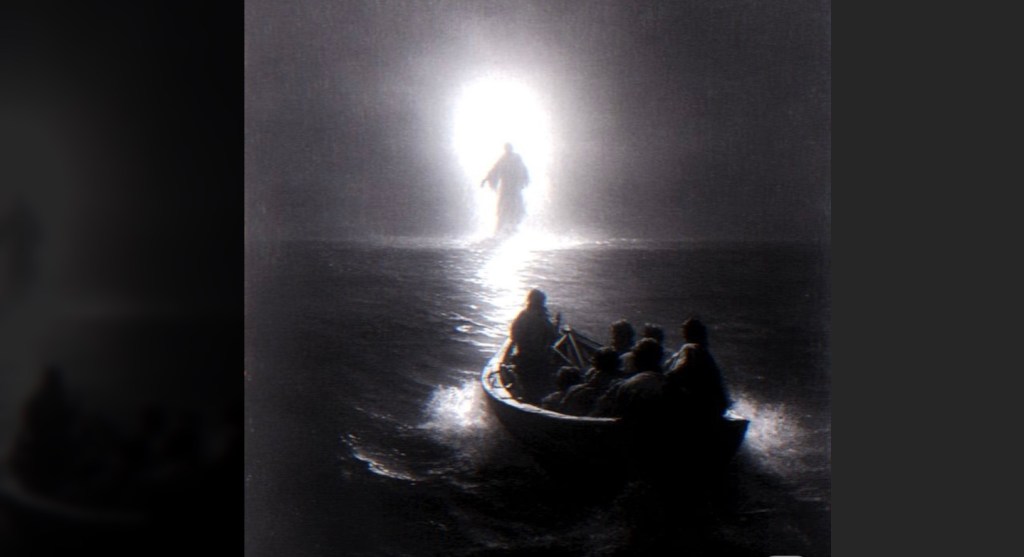
As Jesus drew near Jerusalem, he saw the city and wept over it, saying, “If this day you only knew what makes for peace– but now it is hidden from your eyes” (Lk 19:42).

What Jesus foretold in these words would arrive some thirty plus years after his death. Jewish and Roman conflicts increased until it spilled over in 66 AD. A Jewish rebellion amassed such force that the Roman occupying military was pushed out of Jerusalem. This triggered a predictable and overpowering retaliation from Rome which resulted in the horrific deaths of up to and maybe over a million Jewish people. Jerusalem fell in August of 70 AD, the Temple was destroyed, and not a stone was left upon another.

Jesus knew that peace would not come from violence. We can glean from his teachings that real peace is not the absence of war or conflict, but a change of mind and heart. A metanoia or conversion of the mind and heart must take place. There must be peace within before there will be peace without or as Thomas Merton wrote, “If you are yourself at peace, then there is at least some peace in the world.”

May we be able to weep as Jesus did over Jerusalem. May we, as Pope Francis has encouraged us, never lose our capacity to weep over the injustice committed to our brothers and sisters throughout our woretorn and weary world.

Many have wept over the deluge of division, dehumanization, and horrific violence, and have worked to bring about change, and have been a light in the darkness. Mohandas K. Gandhi marshaled a non-violent movement that defeated the colonizing grip of the English Empire. Dr. Martin Luther King, Jr. applied both the teachings of Jesus and Gandhi by shining a light that exposed the dark night of segregation, poverty, and our military presence in Vietnam. Vietnamese Buddhist monk, Thich Nhat Hahn, dedicated his life to advocating for world peace and stated that: “If in our daily life we can smile, if we can be peaceful and happy, not only we, but everyone will profit from it. This is the most basic kind of peace work.”

Through the bold witness and preaching of the Gospel through his words, writings, and presence, Pope St. John Paul II played a significant part in inspiring the fall of the oppressive regime of the USSR. He wrote early in his pontificate that: “Peace is our work: It calls for our courageous and united action. But it is inseparably and above all a gift of God: It requires our prayer.”

As we near the end of the liturgical calendar let us be people of prayer and allow the love of Jesus to transform our hearts and minds such that each of our thoughts, words, and actions may, in collaboration with people of all faith traditions and good will, reflect that peace that Jesus gives, that peace that surpasses all understanding (cf Philippians 4:6-7).


Photo: Praying morning prayer Wednesday as the sun rises.

Link for the Mass for Thursday, November 20, 2025

We have been created to love and to serve as Jesus loves and serves.

“When you have done all you have been commanded, say, ‘We are unprofitable servants; we have done what we were obliged to do'” (Lk 17:10).

This closing line from our Gospel reading today can be a hard verse to digest at first glance, especially with our track record of slavery in the U.S. We need to remember and recognize that this was a teaching that Jesus shared in a different time period, in a different culture, and in a place far removed from any clear modern context. The master/slave relationship is also a theme that Luke returns to often.

Another important point to touch upon when reading the Gospels is that when Jesus made the statement that, “we are unprofitable servants; we have done what we are obliged to do”, we are not to read this verse in isolation from the full context of Scripture. Jesus also shared a parable about a master and servants in which when the master returns, he waits on them (Luke 12:35-40). Jesus himself modeled this same service at the last supper when he washed his disciples’ feet (cf. Jn 13:1-17). This was the lowest of menial tasks. St Paul wrote to the Galatians informing them that in the Body of Christ there is no Jew or Gentile, slave or free, male nor female (cf. Galatians 3:28). The ultimate point is that God is God and we are not. We all have a part to play in participating in and promoting the kingdom of God by following his lead.

As a disciple of Jesus, we are not to seek adulation and glory. We are to serve God and one another without hesitation. We serve God because he is the director and we are the directed. He is the master and we are the servant. In aligning ourselves in this way, we also experience the intrinsic joy of following his will. As we follow Jesus’ lead and guidance, we grow in our relationship with him, his Father, and experience more of the love of the Holy Spirit. As the apostles followed Jesus, there came a point where he said to them that he no longer called them servants but his friends (see John 15:15). That is to be our hope as well.

No task is too menial or beneath us, nor do we need to be concerned about doing big and grandiose things. We just need to be obedient and act as God leads. Instead of reacting, losing our temper, fuming in anger, or twisting ourselves in anxious knots, we each can choose to smile, to hold a door, to respect and appreciate one another, to be patient and present to one another. When conflicts arise, breathe and ask the Holy Spirit to guide us before we react. We serve best when we listen with understanding, give others the benefit of the doubt, forgive, and allow ourselves to love and serve as God directs us.

Pope Leo shared during a recent gathering of bishops on September 11, 2025 that: “Service is neither an external characteristic, nor a way of exercising a role. On the contrary, those whom Jesus calls as disciples and proclaimers of the Gospel, in particular the Twelve, are required to have inner freedom, poverty of spirit and readiness to serve, which are born of love, to embody the same choice made by Jesus, who made himself poor in order to enrich us (cf. 2 Corinthians 8:9). He manifested the style of God, who does not reveal himself to us in power, but in the love of a Father who calls us to communion with him.” We may not be bishops, but we are disciples. We begin in simple ways and with each act of kindness, our hearts expand, we are moved to serve, to love and to grow in communion with God and one another. As St. Mother Teresa said, we are to be a pencil in God’s hand. In our willingness to be moved by God to serve, we as well as those in our realm of influence that we serve, will be better for the effort.

———————————————————

Photo credit: In giving ourselves prayerful pauses we can experience God’s love and so are recharged to love and serve some more.

Link of Pope Leo’s address to the bishops

Link for the Mass readings for Tuesday, November 12, 2025

Jesus invites us to repent so to “experience a radical reorientation of our whole life”.

In today’s Gospel, we read about two accounts of horrific deaths. The first is at the hands of Pontius Pilate, who has not only ordered the execution of Jesus’ fellow Galileans but had their blood mixed with “the blood of their sacrifices.” In the second incident, Jesus brought up the tragic accident in which eighteen people died “when the tower of Siloam fell on them.” 

In both cases, Jesus rejected the common notion of the time that these incidents were caused by God’s punishment and focused instead on the importance of repentance. Jesus stated quite emphatically: “Do you think that because these Galileans suffered in this way they were greater sinners than all other Galileans? By no means! But I tell you, if you do not repent, you will all perish as they did” (cf. Lk 13:1-5)!

Jesus consistently proclaimed repentance in the hope of helping his followers understand the purpose of his coming. Jesus provided meaning and fulfillment in this life as well as being the way to the truth of eternal life in the next. Yet, to experience the benefits of his invitation, people needed to repent from their focus on self, misunderstandings of God, and the false substitutions, and disordered affections that the world offered by having a change of heart and mind and turning back to God, the very source of their being. This is just as true for us today.

To repent and surrender to Jesus is not some submissive bowing to a tyrant but an acceptance of the aid offered by the divine gardener. Our repentance gives permission for Jesus to cultivate the ground of our being to rid us of that which sickens us and instead allow him to fertilize us with his word and grace in such a way that we are renewed. Jesus tends to our growth such that we can be more aligned with the will of his Father and the love of the Holy Spirit. When we repent and confess, we are forgiven, healed, and begin to mature so that we will bear fruit that will last.

To repent is a good thing. As is written in the Catechism of the Catholic Church, line 1431: “Interior repentance is a radical reorientation of our whole life, a return, a conversion to God with our whole heart, an end of sin, a turning away from evil, with repugnance toward the evil actions we have committed. At the same time, it entails the desire and resolution to change one’s life, with hope in God’s mercy and trust in the help of his grace.”

When Jesus shared in his first public message: “Repent and believe in the Gospel” (Mark 1:15), he invited then and invites us today to a new way of seeing, hearing, experiencing, and living our lives. We all sin and fall short of the glory of God. As we turn back to Jesus and open our hearts and minds to him, he reveals with his loving light that which is preventing us from experiencing the love of God more deeply and growing in our relationship with him more intimately.


Photo: Quiet time to experience a holy hour with Jesus. Being still is a way to repent, to turn back to Jesus, and away from the distractions. In his presence then, we can allow our mind to quiet, and we can rest in him.

Link for the Mass readings for Saturday, October 26, 2025

When we align our will with God’s, we experience freedom.

Jesus continues to call out those Pharisees who follow their own will and put themselves in places of honor instead of God, and then one of the scholars of the law interjects: “Teacher, by saying this you are insulting us too.”

Jesus did not soften his words or hold back. He went right at the scholar and convicted him as well, “Woe also to you scholars of the law! You impose on people burdens hard to carry, but you yourselves do not lift one finger to touch them” (Lk 11;45-46).

Jesus is clear about his mission, about what the kingdom of God is not and what it is. Jesus is shining a light on the practices of those Pharisees and the scholars of the law that are not fulfilling the Law and the Prophets. I believe that there were those who were. Yet, for those he challenged, he did so in the hope that they would see the darkness that was blinding them. Unfortunately, unlike Bartimaeus (see Mk 10:46-52) who knew that he was blind and wanted to see, this was not true for many whom Jesus confronted.

How about us? Are we aware of our blind spots? Are we willing to allow Jesus to shine his light and love in our direction? Will we cover our eyes because the light is too bright and withdraw further into the shadows, or will we remain still and allow our eyes time to adjust so that the brightness of the Mystery of God will reveal to us that which has kept us bound? Will we justify or rationalize our behavior or will we be transparent, repent, believe in the Gospel, and walk further into the light and the embrace of Jesus? Will we stand in the brilliance of God’s love and truth and let the fire of his love burn away all that is not of him?

Let us resist the path of those Pharisees and scholars of the Law who imposed heavy burdens without being willing to help others along the way. It is important for us to know the Catechism, the Bible, Canon Law, participate in the sacraments, and be people of prayer and service. The purpose of each of these pursuits are not for themselves along though. We do so that we will come to know Jesus and the love he shares with the Father who is the Holy Spirit. We have been created for nothing less than to participate in the very love of God, to become divine through our participation in the life of Jesus. This love and relationship with God increases when we confess our sins, are forgiven, and then having received God’s mercy, share what we have received with others.

Jesus did not come to abolish the Law and the Prophets but to fulfill them. In fact, his interpretation and expansion of the law was much more demanding than the Pharisees or the scribes. The difference was and continues to be, that, Jesus meets us where we are and loves us where we are. He does not lower the bar but raises it. He wants us to realize that we can only follow God’s law with him. Without Jesus we won’t be able to even come close. Apart from Jesus we can do nothing, but with him, all things are possible.

In admitting our weakness and revealing to Jesus our poverty, he then gives us the strength mature, for he is our “rock and salvation” (Psalm 62:2-23). He is the solid foundation upon which we can stand and build. “The whole aim of any person who is beginning prayer – and don’t forget this because it’s very important – should be that he work and prepare himself with determination and every possible effort to bring his will in conformity to God’s will” (St. Teresa of Avila).

In aligning our will with Jesus, we are empowered to fulfill the prescriptions and practices that God has commanded, not for God’s sake but for ours! God’s prescriptions that we receive in the Old and the New Testaments are not to restrict but to free us from our slavery to sin.

In identifying and renouncing our sins, we will experience freedom from the false truths, diversions, distractions, and attachments that the enemy has been poisoning us with. Through daily reading, meditating, and praying upon God’s law and putting them into practice we become like a tree planted near a fresh running stream that will never wither and fade. Our roots will run deep and continue to receive nourishment and sustenance we were created for: the eternal spring of the Holy Spirit which purifies and heals us.

Jesus beckons us to come out from the shadows and into the radiance of his light. As we experience his love and mercy, he encourages us to continue to move out of our comfort zones, attachments, and slavery which is paralyzing us. Jesus calls us to experience freedom. When we trust him and walk with him, our souls will experience the rest that it is starving for, the peace that we yearn for, and the love we have been created for.


Photo: As each sun sets, may we repent from our sins and die to our false selves, so that we may rise the next day with the light of Jesus in our hearts!

Link for the Mass readings for Wednesday, October 15, 2025

“Blessed are those who hear the word of God and observe it.”

While Jesus was speaking, a woman from the crowd called out and said to him, “Blessed is the womb that carried you and the breasts at which you nursed.” He replied, “Rather, blessed are those who hear the word of God and observe it.” (Luke 11:27-28).

Jesus is not discounting his mother nor putting her down in any way by his response. Especially because Mary is the exemplar of not just someone who, but one who other than he, consistently heard the word of God and observed it. Probably even before but the earliest record of this we have is Mary saying, “I am the handmaid of the Lord, may it be done to me according to your will” (cf. Luke 1:38). She was instrumental in collaborating with God’s will to bring about the salvation of the world in her willingness to bear his only Son.

The wonderful gift of what Jesus said is also an invitation to all of us. If we ever felt at some point that we never fit in somewhere, if we did not quite belong, or we didn’t measure up to someone’s or our own expectations, we need no longer feel that way. Jesus is inviting us to have a seat at the table. And the good news is that there is unlimited seating! If we feel anxious or out of sorts, are discerning a heavy decision and feel paralyzed, dealing with a relational conflict and not sure how to respond, the Holy Spirit provides a way.

All we have to do is hear the word of God and observe it. Simple as that. And yet there is so much keeping us busy, distracted, and diverted from spending time reading, meditating, and praying with God’s word. We might look at the Bible as just another book because there is so much that is more enticing, inviting, and engaging. What God has made us for though is not merely finite but infinite pursuits, to seek the things of heaven. 

The Bible, initially in his youth, did not offer much to St. Augustine. After many years though seeking and indulging in the things of the world, even the pursuit of truth, and still feeling empty, he found great solace in reading the Bible which only increased when he “transcended the literal sense.” The literal sense being that which he read and understood with his mind and reason. In allowing himself time to ponder, the Holy Spirit touched him in the depth of his soul and “enabled him to find at last the answer to his deep inner restlessness and his thirst for truth” (Pope Benedict, General Audience, January 9, 2008).

We too are restless and tired existing in a world that entices us with so many other voices and attractions. Yet, the daily discipline of reading and praying with the Bible provides peace and rest for our souls like nothing else can. Slowly and gently our intimacy with God grows when open up our Bible each day. When we not only read the words, but also meditate and pray with them, we transcend the literal and experience God’s living stream flowing in our veins. We are refreshed and renewed. 


Photo:  One of my joys each day is to spend time in God’s word, and share from my own pondering. Picture of today’s Gospel reading from The Word on Fire: The Gospels.

Link for the Mass readings for Saturday, October 11, 2025


Let us choose the better part, slow down to receive, and reflect the light of Jesus.

“Martha, Martha, you are anxious and worried about many things. There is need of only one thing. Mary has chosen the better part and it will not be taken from her” (Lk 10:41-42).

My wife, JoAnn, and I used to have more than a few spirited discussions on this Gospel passage each time that it arose because, at first reading, it appears that Jesus does not show any empathy or regard for Martha’s gift of hospitality nor for all the work that she is doing. All the men are sitting around listening to Jesus, and Mary… she is doing the same, and who is left to do all the work? Martha.

Blessed to serve as a permanent deacon for ten years, I saw my own, as well as other deacon’s wives, carry extra weight and burdens in support on the home front to allow their husbands the time to serve, many of us who also still held full time jobs. Not only deacon’s wives, this reality is also true for many wives who are full-time homemakers, run in-home businesses, or carry a job outside the home, as well as care for the children, overseeing the bills, the day to day grind, and so find themselves at times, feeling under-appreciated, undervalued, and not respected for all they do.

Husbands can do a better job of being present, more patient, respectful, and attentive to their wives and be more of an equal partner on the journey. For those married as well as single, the point Jesus is making, that he makes throughout the Gospels is to put God first, then family, work, and our unique vocation. The expression of that is going to be different for each station in life. There will be more time constraints for parents of infants. No matter how little time we may have, we must pray daily, we must be still and sit at the feet of Jesus. As we do so, we will find that the time we did not think we have, through the guidance of the Holy Spirit will be properly ordered.

This prelude acknowledges the reality of how much we juggle in every age. There is much to do and much to be done. Jesus was not disregarding Martha’s hospitality. Especially in the Gospel of Luke, there are many instances in which Jesus empowers women so far beyond the cultural reality of his time. We read this as we do any biblical account from our twenty-first-century mindset. Contextually, the men sitting at the teacher’s feet in a different room, the women cooking, and most times eating separately were commonplace for those in the ancient near east of the first century AD. Mary was the only person out of step with the times.

The interpretive key to understanding this account is what Jesus said. He pointed out that Martha was “anxious and worried about many things.” Mary could have been one of those worries, and not so much that Mary wasn’t helping in the kitchen, but because she was breaking the social norm of sitting with the men. When Martha calls Jesus to redirect Mary, she probably expects him to support her plea. Yet, Jesus acknowledges that: “There is need of only one thing. Mary has chosen the better part and it will not be taken from her” (Luke 10:42).

Mary, sitting and having her primary focus on Jesus was the posture of a disciple. Jesus was not only allowing her to do so, he was commending her for doing so. I can visualize Martha being taken aback at first, but then slowly feeling the muscles in her face relax as the lightbulb went on. We don’t know, but could she in that moment have experienced that peace, that peace that surpasses all understanding, and the anxiety and worry left her? Feeling the peace, instead fear in approaching Jesus as Mary had done, did Martha then take her apron off, throw it to the side, and sit down next to her sister and also become his disciple?

There is biblical evidence that beyond the Twelve, Martha, Mary, and Lazarus, were Jesus’ friends. When Jesus came four days after the death of Lazarus, as soon as Martha heard Jesus was outside, she, not Mary, came immediately out to Jesus, and in that exchange, it was Martha who made the claim that Jesus was the Messiah, the Son of God (cf Jn 11:27). Would she have had this insight, the same as Peter, if she was still holding a grudge from this encounter?

Our modern reaction and push back to this Martha and Mary account in Luke may not so much be a reflection on Jesus but how poorly men have treated women over the generations and how poorly women continue to be treated even today. No matter their ages, young, old, and everywhere in between, women are human beings created in the image and likeness of God. No one has the right to abuse, demean, disparage, devalue, or exploit any woman. Women are to be appreciated, heard, respected, cherished, and valued.

God has given each of us gifts to participate in his Father’s plan. May we resist the temptation to fear coming close to Jesus and taking time out to sit at his feet, to engage in mental maelstroms, to be “anxious and worried about many things.” Instead, when we experience the beginning tremors of any stress or strain, instead, be still and rest in Jesus’ presence as Mary, and hopefully Martha, did.

In this way, any anxiety will begin to dissipate as we experience feeling safe in his presence and experience Jesus’ love. Doing so will help us to better know Jesus, his voice, and his teaching, know and follow his will, love others as he loves us, and live our lives respecting, encouraging, and supporting one another with the gifts and guidance that God has given us.

One woman who may have learned the Martha and Mary account well was Lydia. Luke and Paul encounter her and some other women in the city of Philippi. When Paul preached, Lydia, “listened, and the Lord opened her heart to pay attention to what Paul was saying.” She then asked to be baptized with her household, and then invited them into her home (cf Acts 16:11-15). She listened and pondered God first, then acted.

When we choose the better part of sitting at Jesus’ feet before making a decision, we can experience less chaos and more of his peace and guidance. Instead of living in a perpetual state of chronic stress and anxiety, we can instead choose to breathe, rest, receive and abide in God’s love. Then from that place of stillness, like Mary and Lydia, and I believe Martha, instead of reacting, we can make a choice based on God’s guidance.


Photo: Mary, Jesus’ mother, was the premier disciple for she “pondered” the mysteries she experienced with Jesus “in her heart” (Luke 2:19) and “heard the word of God and observed it” (Luke 11:28). She also chose the better part and so like the moon that reflects the light of the sun, Mary reflects the light of her Son. Our Lady of the Rosary, pray for us!

Link for the Mass readings for Tuesday, October 7, 2025

We can choose reaction and revenge or understanding and forgiveness.

“Lord, do you want us to call down fire from heaven to consume them?” Jesus turned and rebuked them, and they journeyed to another village (Lk 9:54-56).

James and John’s request of Jesus ought to be recognizable to many, if not all of us. How many times when feeling slighted or disrespected do we want to act in kind or offer some retribution to our perceived offender? Many times, we don’t even think, we just react overtly back or we engage in our own tumultuous internal maelstrom.

Jesus rebuked James and John’s request immediately and moved on. He did not allow the rejection of the Samaritans to deter his course for even one second. Jesus had his face firmly set. His time was approaching and to Jerusalem he was headed. Also, he knew there would be a time for the Samaritans to believe. That time was not yet.

Our starting point in putting this gospel into practice is to decide that Jesus has chosen the better course. Seeking revenge is not the way. Not looking left or right, but keeping our eyes fixed on the will of God is the way to proceed. If we can agree with that as our starting point, then we can seek to understand what Jesus can teach us when encountering others.

First, our approach to others extending unkind behavior toward us is to be one of understanding. We are all dealing with a lot, and much of what others are dealing with are unknown to us. If we approach another’s unkind or disrespectful action from a place of understanding instead of seeking revenge, we will have a better chance of not reacting in kind and also possibly being able to help another to get in touch and reveal something they are struggling with. St. Ignatius’ counsel to give the other person the benefit of the doubt is a solid practice.

Often a negative response may come from misunderstandings. In giving the person the benefit of the doubt to explain their understanding of what happened in a given situation, helps to de-escalate the situation instead of adding fuel to the fire . We are not mind-readers and we also are not the best of communicators so resisting jumping to rash conclusions is a better course of action.

Along with being understanding and giving someone the benefit of the doubt, is to receive other’s action with humility. Maybe, we have done something to cause hurt toward another, intentionally or unintentionally. By taking a moment to pause, we can assess if we have done something to instigate the action we are receiving. Taking responsibility for that which we have done and apologizing for it, we create a better bridge for reconciliation.

We are responsible for our thoughts, words, and actions. We cannot dictate or change the behaviors of others nor are we to be doormats for another’s abuse nor take on their stuff either. We are to approach conflicts and obstacles with patience, understanding, a willingness to bring clarity, to give the benefit of the doubt, and humility for acknowledging what we have done and what we have failed to do. If another is not willing to hear reason after multiple attempts or closed, we move on.

We pray for and respect the dignity of the person whether we agree or disagree with the outcome while holding them accountable at the same time. Jesus is very clear that we are to love, meaning that we are to will each other’s good. That means putting the prayer he taught us, the Our Father into practice: We need to be willing to forgive.

None of these steps are easy. Human relationships are difficult in the best of scenarios, but still well worth the effort. None of us are perfect. When we do our best to follow these principles as well as other practices not mentioned to work toward reconciliation and build relationships, our conflicts will become moments of grace. Conflicts will become opportunities that help us to grow closer together rather than further apart. Inviting Jesus into the conflict is the most important step, for he can help us to see others from his infinite perspective instead of our limited perspective.

—————————————————

Photo: Spending time in quiet and prayer, especially in reading the book of God’s creation, helps us to slow down so that when we return to our interactions with people again, we can begin more peacefully.

Link for the Mass readings for Tuesday, September 30, 2025

When we allow God to love us, we can love as well, even our enemies.

Jesus said to his disciples: “To you who hear I say, love your enemies, do good to those who hate you, bless those who curse you, pray for those who mistreat you” (Luke 6:27-28).

If we thought the beatitudes and the woes that we experienced yesterday was a challenge, today, Jesus takes things up a notch higher. The Prince of Peace is inviting us to walk along the path to peace. The peace that Jesus invites us to engage in is not just an absence of violence but a peace that is grounded in mutual respect and unity. No matter where we might look, there are very few examples or models for us to see this Gospel being put into practice. We instead see a consistent engagement in rhetoric, language, and outright hostility that promotes dehumanization, division, contempt, hatred, and vileness. These voices not only rise in our secular and political discourse but also there is a growing din within the Church as well.

Jesus is also leading us away from the temptation to swing the pendulum the other way, such that what we think, say, and do has the substance of milk toast. We become so careful not to offend that we don’t share our ideas or what we truly believe to avoid conflict. Staying away from hot button issues and the taboos of talking religion and politics is not a way to bring about peaceful coexistence nor solve important issues.

Neither an overly aggressive nor a bland tolerance of engagement is what Jesus is presenting in today’s Gospel. Jesus is inviting us to allow ourselves to be healed and transformed from the survival mentality of fight or flight or paralyzed by trauma. To move beyond our primal, reactive instincts, we need to feel safe. By breathing and allowing ourselves to be loved by God through meditation on his word and listening to him and his guidance in silence each day, we can begin to as we started yesterday, to move beyond placing anyone and anything else before God. As we grow in relationship with God, he becomes our rock foundation.

With God as our foundation, we can begin to open up to the reality of what Jesus offers in today’s Gospel. Who of us would agree to love our enemies, those who hate, curse, and mistreat us? Jesus is calling us to love one another as he loves each and every one of us. This love is more than the emotional or sentimental surface level of love we are used to. Jesus calls us to a higher love, to have a sincere intent to will the good of each other, even and especially when we feel or think there is nothing to like about a person. This is how we can love even an enemy, by willing their good, wanting the best for them, which also is best for us.

If we want to see a change in our divisive and polarized time this 9/11, we need to begin with ourselves, receive the message of Jesus, and begin, little by little to put his teachings into practice. We need to encounter one another, one person at a time, sit down, talk, and listen, and love one another. Easy, no, possible, yes, when we allow God to open our hearts and minds to the love God wants to share with each of us. As we breathe, receive, rest, and abide in his love there is a better chance we can love one another.

——————

Photo: Praying for our country that we can turn away from violence and embrace the love of God.

Link for the Mass readings for Thursday, September 11, 2025

Spending consistent time alone with God will help us to get to know Him.

Jesus departed to the mountain to pray, and he spent the night in prayer to God (Lk 6:12).

In the midst of a busy ministry, Jesus spent time alone with God in prayer. In Luke’s Gospel, Jesus often did so before making important decisions, as in today’s reading that recorded the choosing of his Apostles. Prayer is an important, foundational principle to experiencing and knowing God as well as discerning his will for living a fully human life.

The Mystery of God is not a problem to be solved. In our language today, we often use mystery and problem interchangeably, as, “I lost my keys, it is such a mystery.” Strictly speaking, the loss of keys is a problem that can be solved. We can backtrack our steps, and through a process of elimination, the problem becomes smaller until we solve the whereabouts of the missing keys. We cannot solve or prove God exists as if he is a problem to be solved. This is because God is not a being, not even the supreme being. God is a mystery that transcends any finite dimension of reality. We have nothing to measure him by, no point of reference, we cannot prove his existence, nor can we solve him as we would a problem.

God is so beyond our finite minds, and yet, we can come to know God intimately. Even though he is transcendent, beyond our reach and comprehension, Augustine let us know that he is at the same time closer to us than we are to ourselves. We are only capable of knowing God because he created us with the capacity to do so. We come to know God through his invitation, and as we enter into the mystery of his reality through developing a relationship with him, we come to know him.

God does not become smaller because he is infinite, always beyond. His mystery is luminous as if we were in a completely dark room and someone turned on and shined a flashlight into our eyes. We wince from its brightness, yet in time, our eyes adjust and we eventually are able to see what was beyond our ability apart from the light. Jesus wants us to experience and embrace the mystery of the radiance and warmth of his Father’s light and love.

Jesus called each apostle by name. He calls us by name too and invites us to pray with him as he prayed when he walked this earth. Prayer is the most important thing that we can do every day and our prayer begins to mature when we move away from only saying words and directing those words toward a Person. We move away from knowing about God, having an idea, philosophical or theological approach with God, and come to sit with him.

Why not pray everyday and often? One reason is because the devil and his minions know how important and imperative praying is. Praying with God and coming to know him is the last thing the enemy wants us to do and he will distract, divert, tempt, and lead us to do anything but pray. If we resist and make the time for prayer, he will tempt us to keep our time of prayer superficial, speaking words, but not directing them to a Person or quieting our minds and allowing ourselves to be still and listen to God’s voice.

“To know God as the person He really is, it requires being alone with Him frequently. Without actual time spent with God, there is a danger that we will never come to know Him as his own person” (Sattler, 28). St. Mother Teresa also encouraged her sisters in the same way asking, “Do you really know the living Jesus, not through books, but by being with him in your heart” (Sattler, 20)?

Sometimes we resist being still and quiet with God because our minds are so full of everything but God, maybe because we are afraid of aspects of ourselves that we would rather not see or admit. God sees the fullness of who we are and loves us there. He wants to help, but will not do so uninvited. Our relationship with Jesus grows when we invite him into our pain, our sins, and our fears, as well as our aspirations and our dreams.

Be not afraid to make friends with silence. In the silence, we will face our mental maelstroms, yet as we breathe more intentionally and call on Jesus’ name, we will begin to feel safer, slow down, and our minds will begin to quiet. Then we can begin an honest conversation with God, speaking and listening, sharing the good, the bad, and the ugly, and allowing God to love us there. That is when our prayer begins.

————————————

Photo: Evening walk with Jesus

Sattler, Fr. Wayne. Remain in Me and I in You: Relating to God as a Person not an Idea. Manchester, NH: Sophia Institute, 2025.

Link for the Mass readings for Tuesday, September 9, 2025

God only wants to love us and give us rest and peace.

“You have searched me and you know me Lord… Where can I go from your spirit? From your presence where can I flee? If I go up to the heavens, you are there; if I sink to the nether world, you are present there… You have searched me and you know me Lord” (From Responsorial Psalm 139:7-8).

God knows us through and through. He knows us better than we know ourselves. And yet, we hide from him. We seek to do things on our own, even while in the same breath we say we believe in him. For most of us, it is because deep down we are listening to the father of lies and we really don’t trust our loving God and Father. We choose not from freedom as much as from our reactions based in those lies that are fueled by the wounds we have inflicted and received by living in a fallen world.

The path out of the darkness of distraction, diversion, and doubt is lit by the light of Jesus. We are invited to trust him even when our instinct is to resist the light. We judge ourselves and project that judgment on God. We listen the liar who condemns, shames us, and accuses us, and then for a good dose adds, God will not forgive us or I will keep committing the same sins over and over again so why bother? What will God think of me if I reveal this to him?

God loves us to the very depths of our being, more than we can ever imagine. We do not need to be afraid of his reaction to even our most egregious sin, because he already knows! “You have searched me and you know me Lord.” God even loves us in the very act of our committing sin. The issue is, we don’t experience his love when we choose something else over him. We don’t experience his love when we don’t come to him for forgiveness. We don’t experience his love when he forgives us and we don’t forgive ourselves.

We experience his love when we repent. When we turn away from our sin and turn back to God. We may turn away from our sins out of guilt, but turning away or white knuckling with our will power alone is why we continue to fall for the same temptations. We need to turn away from the sin and turn to Jesus and allow ourselves to experience God’s love. Then filled with his love, we can resist the temptations awaiting us.

God has searched us to our very core, he knows the worst about us and loves us anyway. We can stop running and burying ourselves in busyness, distractions, diversions, false promises, and disordered affections, and instead allow ourselves, even if for only a few minutes today, to trust Jesus who is holding out his hand to lead us to a place of peace and rest. A peace and rest nothing in the world can give.


Photo: Moments of quiet, like a sunset walk can help us to slow down enough to experience God’s love for us. (University of St. Mary of the Lake)

Link for the Mass readings for Wednesday, August 27, 2025