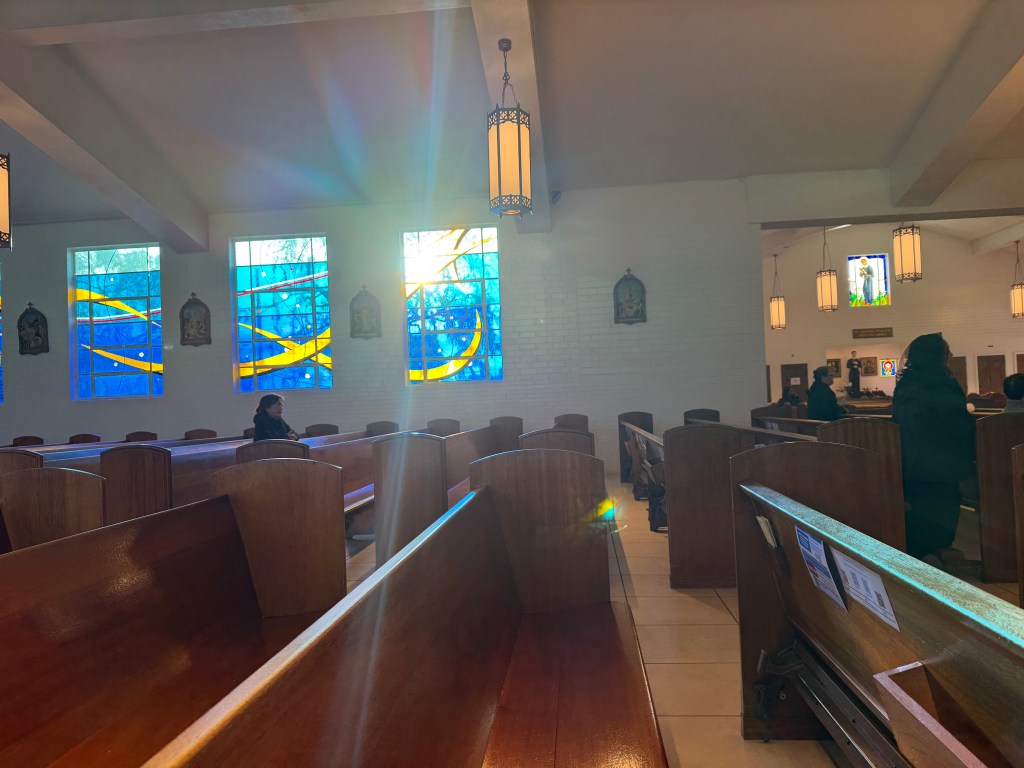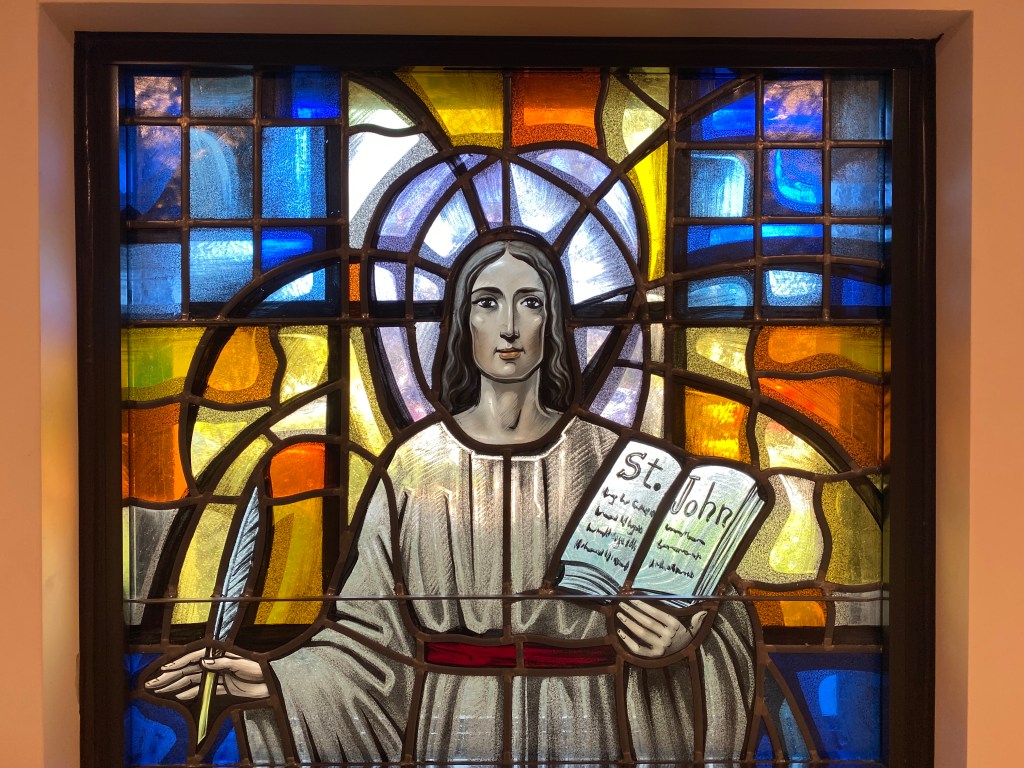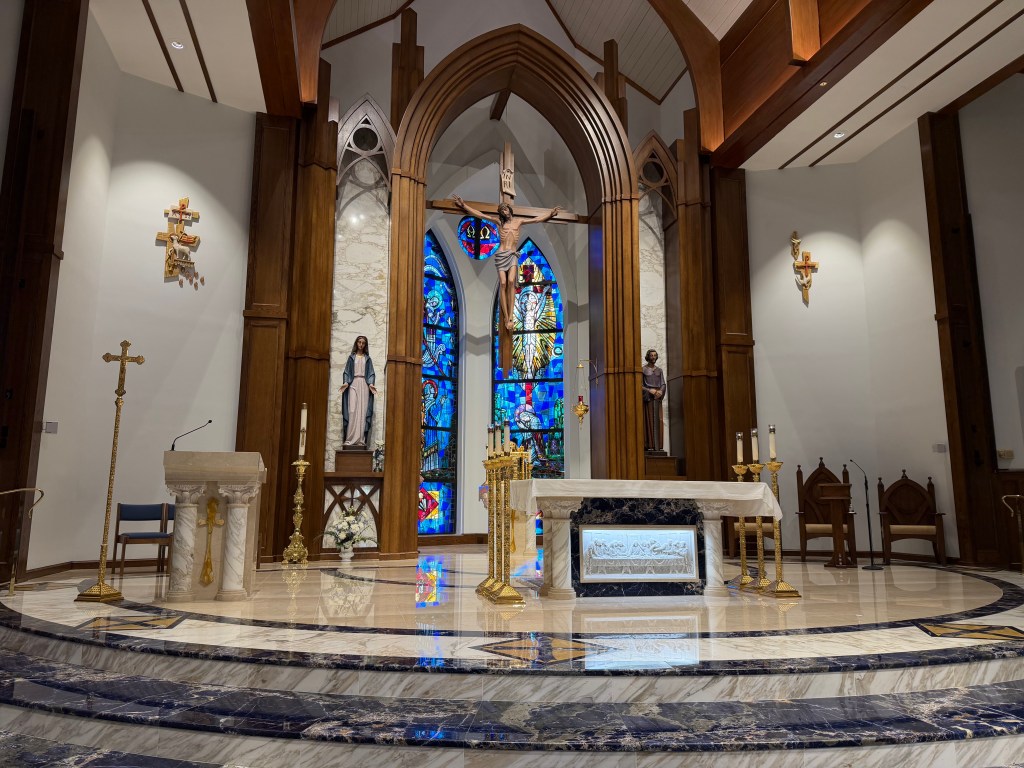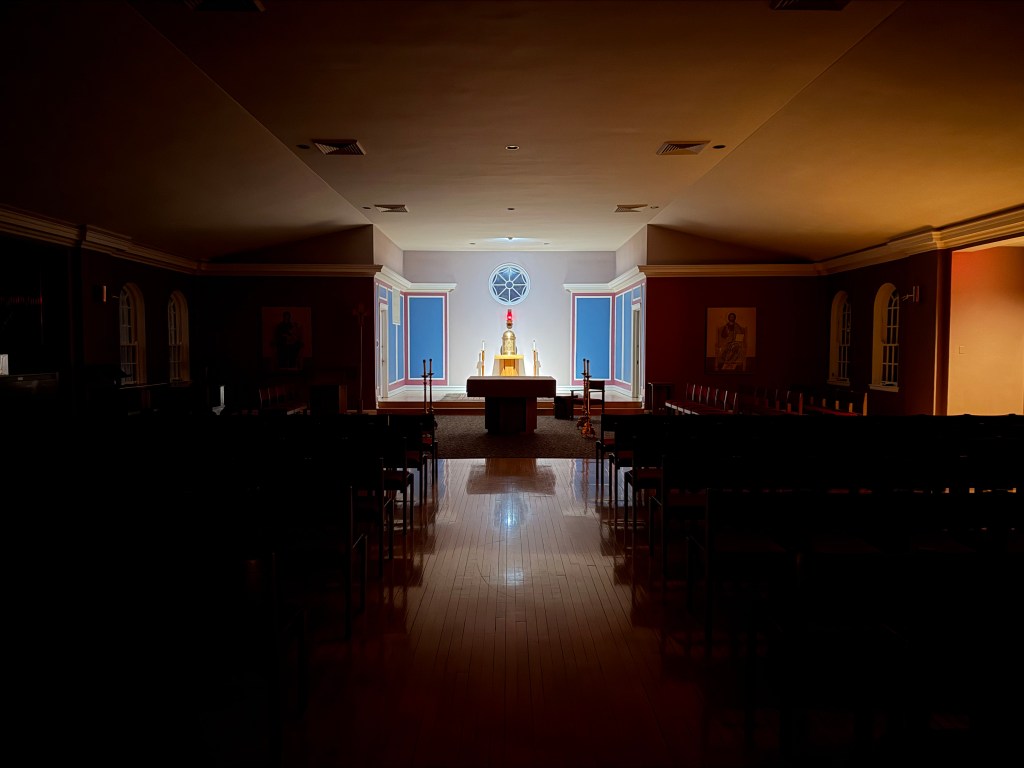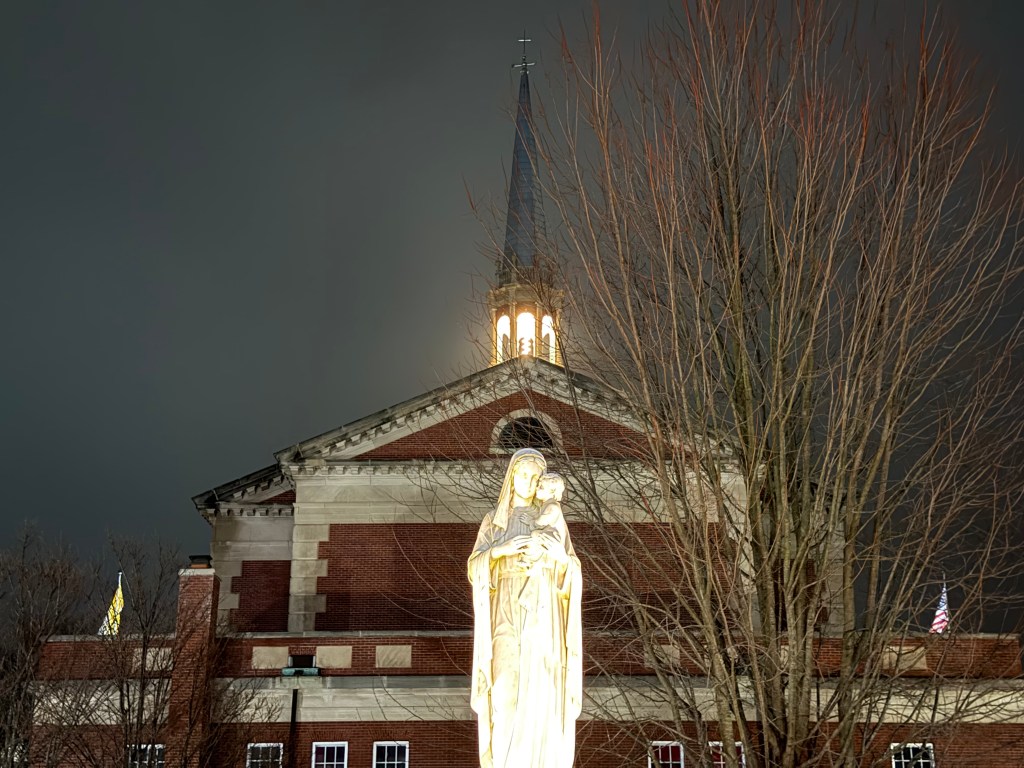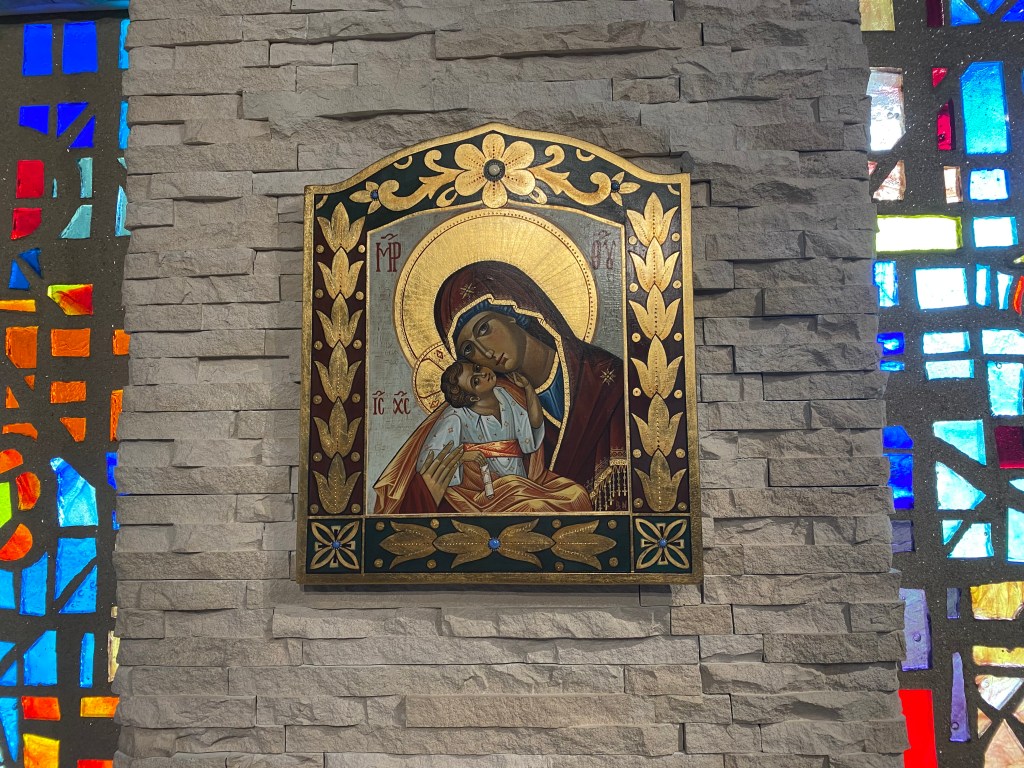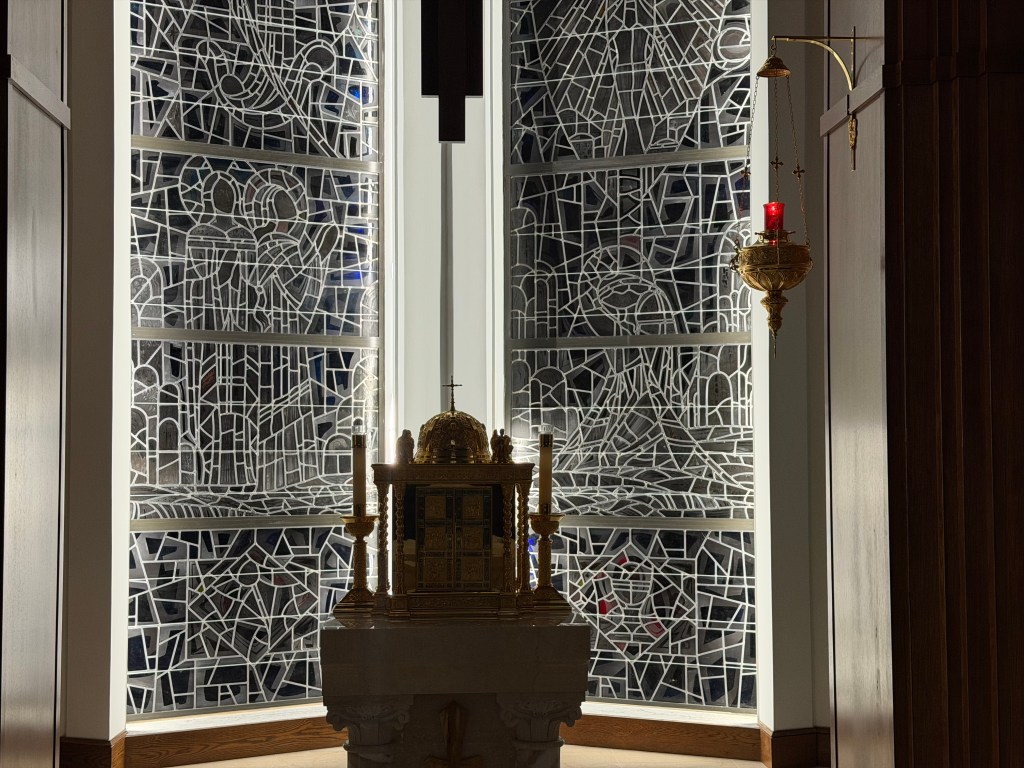
Let us ponder Mary’s, “Yes.”

Mary said, “Behold, I am the handmaid of the Lord. May it be done to me according to your word.” Then the angel departed from her (Lk 1:38).

Whether this is the first or thousandth time we have read or heard this verse, the more important question for us is how many times have we said to God, “May it be done to me according to your word”? How would it be for us to begin each day with this prayer and then at the end of the day reflect on how well we have heard and answered yes to God’s will?

Mary’s “yes” changed the course of human history. Her willingness to bear the Son of God allowed him to come close. He entered our wounded, human condition to offer us healing, forgiveness, and to lead us home to communion with his Father and each other. Jesus is the gift that keeps giving – and we receive his gift each time we, as did Mary, say, “Yes.” When we do so, we become less, as he becomes more, and the kingdom of God continues to expand.

Along with Mary, the “yes” that we make is not a one-time, “yes,” but we are to affirm a daily, moment by moment “yes”. As St Paul wrote to the Church of Thessalonica, we are to: “Rejoice always. Pray without ceasing” (1 Thessalonians 16-17). We are able to rejoice always and pray without ceasing when we say, “yes,” to God by developing and sustaining our relationship with him such that even when we experience pain, suffering, and struggles, we are not overcome or overwhelmed. When we allow Jesus to be close, we can even feel joy in the midst of whatever arises. He does not abandon us to random fate. He is our source, our refuge, and our strength, present to us in all that we experience.

Our prayers of petition for ourselves and intercession for others are another “yes” to God’s will because they are an “admission of one’s own helplessness” (Lohfink 2014, 240). Prayer is a, “no,” to pride. We cannot get through this life on our own, nor are we meant to, for apart from God we can do nothing. We are all interconnected and interdependent and God is the foundation and source of our very being, and with God all things are possible.

Our willingness to ask for help and to help others are also practical ways of saying “yes” to God. There is no such thing as a “Lone Ranger Christian”. Even the Lone Ranger had Tonto. Two by two, just as Jesus sent his disciples. Prayer is a “yes” to our acknowledgment that we need Jesus to guide and help us, also to save us from ourselves! Service is a “yes” to the love we have received from him and a willingness to share this love with and receive it from others.

Let us rejoice as we are readying to begin this fourth week of Advent because we are drawing ever closer to celebrating the birth of Jesus who is Emmanuel, God with us. Let not the busyness of the preparations and plans impede the invitation to experience God’s love in our time of meditation, prayer and serving one another. This reality is made possible because of the handmaid of the Lord.


Painting: “The Annunciation” by Ossawa Tanner 

Lohfink, Gerhard. No Irrelevant Jesus: On Jesus and the Church Today. Collegeville, MN: Liturgical Press, 2014.

Link for the Mass readings for Saturday, December 20, 2025

“Jesus who is called Messiah” will light our way through the homestretch of Advent.

Today in the liturgical calendar of the church we begin the nine days before Christmas as we do each year with Matthew’s account of the genealogy of Jesus. Jesus, the Son of God, is fully divine, while at the same time he is also fully human. Matthew gets us started in the home stretch with the lineage of Jesus’ human line from Abraham to his father Joseph (foster father, in that Joseph was not Jesus’ biological dad, but no one would not have made that distinction in Jesus’ time.) and his mother Mary.

Jesus was part of a people and a family, he was born at a particular time and in a particular place. If you go through this genealogy with a fine-tooth comb, there are gaps, but Matthew was more concerned with the line of faith than a strict historical account. Matthew also included women in this listing, which was not common in ancient patriarchal societies. This was also not common in ancient Jewish genealogies, “which traced lineage from father to son” (Mitch and Sri, 38). Looking at their stories in Scripture will also show that most listed were not the most morally upright, but more importantly, God was still able to work through this imperfect line of humanity and so the genealogy ends with, “Jacob the father of Joseph, the husband of Mary. Of her was born Jesus who is called Messiah” (Mt 1:16).

Though Jesus was conceived in Mary who was a virgin and immaculately conceived, he came from a line that was far from perfect. As Catholics and Christians, this is our heritage as well. We are spiritual Semites. Genealogies have become more popular in recent years as can be seen by the different advertisements for DNA test kits. There is a natural instinct to reach out for these because we want to belong and to be a part of.

To understand who we are and where we have come from, and to continue forward, it is helpful to reach behind. Jesus belonged to the people of Judah. He is a part of the succession from Abraham and his clan, to the twelve tribes of Jacob, to the unified nation of Israel under David. That did not change even as the fall from grace beginning with David, continued with his son Solomon, and most of the other kings.

Joseph was the heir to the thrown that in this imperfect line of succession went underground when Jerusalem was conquered by the Babylonians. This promise of the return of the messiah, the king in the line of David remained even while under occupation for the next five hundred years under Babylonians, Persians, Greeks, and at the time of Jesus’ birth, the Romans. When Joseph died, Jesus was next in line. Jesus’ leadership would become and continues like no other before him or that will ever come again. Jesus brought God’s movement of grace, the seeds of which were planted by some of the prophets like Isaiah, beyond the nation of Israel to fulfill the promise that they be a light to the nations, a universal invitation for all.

Another piece that a careful reading of the genealogy uncovers is that Jesus does not come from a purely Jewish lineage. As mentioned above, women were included in this list of ancestors. The common denominator of each of these four women, Tamar, Rahab, Ruth, and most likely Bathsheba was that each of them were Gentiles. “Gentile blood flowed into the royal line of David. This underscores God’s concern for Gentiles, demonstrating that he brought them into the story of Israel even in the Old Testament” (Mitch and Sri, 39).

God’s invitation of relationship with him was intended from the beginning, and step by step through salvation history God continued to thirst for his children and sought to woo them back, drawing them with his tender chord of love. This would come to fruition in the incarnation. The Son of God became one with us in our imperfect and sinful human condition to set right a world that had gone wrong.

Through our Baptism, we become part of the royal lineage and line of Jesus. No blood test needed. We are not alone, no longer estranged, no longer separate, or on the peripheries. We belong to the Body of Christ. Yet many, even those who profess their belief in Christ, are missing his greatest gift of faith, which is developing a relationship with him now. Let us not be complacent and settle for Christian in name only or walk away from our birthright.

In these final days of Advent, may we set aside a little more time to spend with Jesus. As our schedule revs up, may we bring Jesus into our busy. The Son was willing to draw close to us in the incarnation that we are about to celebrate, let us draw close to him. We all have the same amount of time in our days. Deciding to set aside some time of quiet, to take some deep and slow breaths, and accept the invitation to draw close to Jesus who is at hand will help us to engage better with the time we have and those walking with us.

Those brief moments are a powerful reset. In those moments of turning our hearts and minds to Jesus, we can receive the rest and renewal we desperately need. We can receive his love and invite him to walk with us in all that we think, say, and do. We can yoke ourselves to Jesus so that we do not travel these days alone. Jesus is more than willing to share our burdens, and he will give us the strength to carry on.

By our baptism we are part of the royal line of Jesus. More importantly, Jesus is present in each moment. We just need to remember to turn to him. Each intentional, deep breath will bring our shoulders out of our ears, help us to react less, and experience greater clarity in our choices and decisions. We will also see each other a little different than before, with more understanding, patience, and love.

As we celebrate the birth of “Jesus who is called Messiah”, even in the imperfections and messy moments, Jesus’ light will shine through. We are invited this season to be the calm in the storm of the chaos. “Peace be still.”


Photo: In times of silence we will experience how close Jesus really is.

Mitch, Curtis and Edward Sri. The Gospel of Matthew. Grand Rapids, MI: Baker Academic, 2010.

Link for the Mass readings for Wednesday, December 17, 2025

“Religious confession is no substitute for personal relationship with Jesus”.

Jesus said to his disciples: “Not everyone who says to me, ‘Lord, Lord,’ will enter the Kingdom of heaven, but only the one who does the will of my Father in heaven” (Mt 7:21).

I have written quite often, quoting and paraphrasing one of my favorite quotes from St. Irenaeus, that Jesus came to be one with us in our humanity so that we can become one with him in his divinity. In his becoming one with us in our humanity he invites everyone, no one is excluded, to participate in his divinity. Yet if everyone is invited, how can Jesus say that not everyone will enter the Kingdom of heaven?

The answer to that question is in the line that follows. The one who will enter heaven is, “the one who does the will of my Father in heaven.” If this verse does not help, then it might be helpful to understand a little about heaven, as best as we can, as the mere mortal, finite beings that we are.

Heaven is not so much a place but a state of being in relation to God, in which we are privileged to share communion and a deeper intimacy with God for all eternity. We will still not know everything about God because God is infinite and we will still be finite even in heaven. God is without limit, we are limited. We will never exhaust our relationship, never get bored with God.

Maybe a more three dimensional, an earthly example may be of help. If we were invited to play a sport, an instrument, or to act in a play, with the end goal being that we would play in the upcoming game, concert, or performance, we might feel pretty excited about the offer. We tell the coach, conductor, or director “That’s great news!” Yet, in the days that follow, we do not attend any of the practices, we do not practice the skills required to play the position, instrument, or role and we do not return any of the follow-up invitations by phone, email, or text. The day of the big game, concert, or performance comes, we gather our self together and head on over to the arena or hall. We arrive to see the coach, conductor, or director but are denied entrance. We might say, “I don’t understand, you invited us to play!” The reply is, “Not everyone who says to me coach, coach (conductor, conductor, or director, director) is ready and prepared.”

Jesus invites us to play a part in God’s theodrama, everyone. Some say yes and some say no. Some say yes, and then don’t put into practice what is then asked, some say yes and do some things, some say yes and dive in. Most of us take a few steps forward and a step or two back. Just like preparing to play in a big game or perform in a big concert, or play, we need to be committed, disciplined, and persistent. Unlike a missed opportunity to participate in a game or performance, that we can correct and make another attempt down the road, we don’t want to miss the opportunity to spend eternity with God in heaven.

The above analogy does not imply in any way that we earn our way into heaven, or we can do so on our own effort and will power. The bottom line is that Jesus gave his life for all of us and through his grace, we have been saved. Our salvation is a gift freely given. Yet, we have to be willing to receive and open the gift. Our time here on earth is the time we are given to: open the gift we have received, work out our salvation, not just hear but to also put into practice Jesus’ teachings, and be about building our relationship with him. As we do so, we will be transformed by and conformed to Jesus, so that we can come to know his Father as he does, and then we can reflect the light and love we have received to others.

It is not enough to say that we believe in Jesus. “Religious confession is no substitute for personal relationship with Jesus and the obligation to obey his Father’s will. If our creed and our conduct are out of alignment, then our profession of Jesus as Lord is not a true submission to his lordship. The mere fact that believers can perform miracles in Jesus’ name, which is an exercise in charismatic grace, is no proof that sanctifying grace has penetrated their lives or brought them closer to Christ” (Mitch and Sri, 121).

If we want to know and put into practice God’s will, we need to know God. Advent is a time of preparation, a time of getting to know Jesus who is already with us and inviting us to let him have reign of every part of our lives. Jesus helps us to recognize and see what our lives are like without God and how they are with God. If we are willing to see, that clarity helps us to better choose our thoughts, words, and actions.

When we are humble enough to acknowledge ways that weaken our relationship with God, we can then repent and seek forgiveness. God never tires of forgiving us. Let us never tire of asking for forgiveness and committing more to knowing and putting into practice his will. Each time we seek and receive forgiveness, our minds and hearts are not only expanded but properly aligned to Jesus so that we may experience more of the love of the Holy Spirit, which helps our relationship to grow and to put into practice our Father’s will.

——————————————————————————

Photo: “Prayer can truly change your life, for it turns your attention away from yourself and directs your mind and your heart towards the Lord.” – St. John Paul II

Mitch, Curtis and Edward Sri. The Gospel of Matthew. Grand Rapids, MI: Baker Academic, 2010.

Link for the Mass readings for Thursday, December 4, 2025

When we come to sit at the feet of Jesus we experience healing and are nourished.

“Jesus walked by the Sea of Galilee, went up on the mountain, and sat down there. Great crowds came to him, having with them the lame, the blind, the deformed, the mute, and many others. They placed them at his feet, and he cured them” (Mt 15:29-30).

There is a key yet subtle point before Jesus began to heal that might be missed. Before great crowds came to him, Jesus “went up on the mountain, and sat down there.” This is no insignificant sentence. The posture of sitting on the mountain would have been recognized right away by the people of Jesus’ time. This was the posture of the teacher and sitting on the mountain a reference to Moses. Prior to the healing in this setting, as he did throughout the Gospels, Jesus most likely taught about the reign of God. In fact time and again, Jesus’ “works of healing took place in this context of his preaching of the kingdom of God” (Lohfink 2014, 58).

A great multitude of people came to Jesus to hear his message and also they came with a full range of needs. Jesus made himself available, exorcised, restored, and healed those who were brought to him. He encountered them as they were in their present condition of need. There is no record in this Gospel account that Jesus asked for any identification, that he discussed their belief system before healing them, nor did he ask if they were Jewish or Gentile, and nowhere in this account did Jesus deny anyone who came to him. The response of those to being healed and restored was that “they glorified the God of Israel“. This is because, “where God is master, there is salvation and healing” (Lohfink 2014, 62).

These recorded accounts of mass healings, are but a foretaste of the heavenly realm of eternal communion with the Father. Jesus is the kingdom of heaven at hand, for as St Irenaeus wrote, “Jesus opened up heaven for us in the humanity he assumed.” Jesus though was not done. The whole process took some time, which is probably an understatement, and as people were getting ready to leave, Jesus showed compassion yet again. He sought the assistance of the disciples because he did not want to send the people away hungry.

The disciples of course are taken aback because of the reality of the undertaking Jesus proposed. Jesus asked what they had and they shared just some bread and fish. Jesus took “the seven loaves and the fish, gave thanks, broke the loaves, and gave them to the disciples, who in turn gave them to the crowds. They all ate and were satisfied. They picked up the fragments left over–seven baskets full” (Mt 15:36-37).

This Advent let us surrender our will to God. May we pray with and meditate upon the Gospels such that they become relevant in our lives, so that we can serve God as Jesus did. Not stopping to ask for identification, religion, race, gender, creed, or political affiliation, but to see each person as God sees them as his children, human beings with dignity and value. In reading, meditating, and praying with the Gospels, we too come to sit at the feet of Jesus. We too can express our need, be nourished, and satisfied. We can then share what we have received.

Let us also not be dismayed by how little we have, but let us give what we do to Jesus in solidarity for his purpose, as did the disciples, so to experience with those we serve, the multiplication and abundance of the love, and grace we have received from our loving God and Father. For when God is our master, “there is salvation and healing.”

—————————————————————————

Photo: Where I come to sit at Jesus’ feet during my holy hour each evening since returning to our renovated church a few weeks ago.

Lohfink, Gerhard. No Irrelevant Jesus: On Jesus and the Church Today. Collegeville, MN: Liturgical Press, 2014.

Link for the Mass readings for Wednesday, December 3, 2025

“Be vigilant at all times and pray.”

“Be vigilant at all times and pray that you have the strength to escape the tribulations that are imminent and to stand before the Son of Man” (21:36).

These are the last words we will hear or read from this liturgical year from the Mass. The season of Advent and the new liturgical year begins tonight at the vigil Mass. They are not only good words to end the year with but that they would also be good words to read at the beginning of each day.

“Be vigilant at all times” are certainly words to abide by. This is not a call to be paranoid or to live in fear. This is a call to be aware, to watch, and pray. What we see, hear, and think is then important to bring to God in prayer. Being vigilant is also a reminder that we need to resist the temptation of speeding through life with blinders on and not taking time to listen to that quiet voice of God that is available to guide us day in and day out. The more we hear the subtle, quiet leading of the Holy Spirit and ignore it, the less we grow in our awareness of his presence in our lives or the presence of those who need his mercy, grace, and love.

Worse yet, the less we take the time to hear and know God’s word, the more we will be distracted, tempted, and persuaded by the myriad of other voices that are not from God, which can lead us astray. That is why prayer is so important, so we can develop an ear for our loving God and Father’s guiding voice heard when we are still. Once we begin to recognize his voice spoken in the silence of our hearts, we will begin to hear him speak in our daily activities.

Being vigilant also requires us to surrender our self-serving ego, for if we want what we want when and how we want, if we just keep up at a fever pitch pace, if we are feeding ourselves with apparent goods, we can open ourselves up to some unsatisfying and pretty horrible scenarios.

There are those who seek to do us harm from self interest and lack of awareness to forms that are unconscionable. Pretending that they aren’t there doesn’t work and being paralyzed with fear makes us more vulnerable. We need to be aware of, and establish clear boundaries for ourselves and communicate them with others. Each time we listen and follow through on the leading of the Holy Spirit, our conscience is better formed, we increase our confidence in who we are and who God is guiding us to be. We can also sidestep scenarios that can lead us down some dark paths.

Being vigilant and turning to God daily and often does not mean that we will be free of challenges. We live in a fallen world. There is imperfect actors within the Church as well. But in each and every case, we are to maintain hope in the one who we will be preparing for this Advent, the return of Jesus. He is the Light that shines in the darkness and will not be overcome by it (cf. John 1:5).

Though others may let us down or seek us ill, Jesus is the one we can trust. Jesus is the one who will accompany and strengthen us as we face any temptations, trials, and tribulations. As St Augustine said in one of his homilies, “while we are still in the midst of this evil, let us sing alleluia to the good God who delivers us from evil.” For, in the end, Jesus the Christ will be the one to lead us home to the Father’s embrace for all eternity. Watch and pray today and all days! It is the most important thing we can do each day.


Painting: Head view of Rembrandt’s Christ with Arms Folded.

Link for the Mass readings for Saturday, November 29, 2025

Praying persistently helps us to grow in our relationship with God and one another.

Jesus told his disciples a parable about the necessity for them to pray always without becoming weary (Lk 18:1).

In the parable that Jesus offered in today’s gospel account, he is not saying that persistence in prayer is changing God or somehow bending his will to our’s. We are not wearing him down like the woman did with the judge. God does not need us. God is completely and totally self-sufficient. We are the ones who need him. Our persistence, our daily habit of prayer, changes us, transforms us, helps us to develop our relationship by interacting with God more consistently. Things happening in our lives help us to see that we are fragile and vulnerable and in need of help. Our persistence in prayer will help us to experience that we are not alone in our challenges. When we are dealing with a crisis or very real trauma, our persistence and faithfulness in prayer will help us to experience the closeness of Jesus in our midst as he accompanies us through our suffering and grants us the strength not just to endure but to overcome.

In fact, the practice of stopping everything and praying for five minutes when a crisis arises, often helps us to resist slipping into a fight or flight mode and helps us to resist reacting automatically based on our emotions. Consciously choosing to breathe while praying helps us to act more prudently than impulsively. We may also come to see that what we thought was a crisis, may have been more of a problem to be solved rather than something catastrophic. Our instant reactions to perceived crises can often escalate an issue rather than de-escalate one.

In the greater scheme of things, God answers all prayers of petition or intercession by saying yes, no, or not yet. Most seem to fall in the not yet or not the way we originally intended category. Remaining patient and faithful can help us to move away from seeking to conform God to our will and instead allow him to expand our hearts and minds to his will. Through this expansion, we can come to see the situation from a broader perspective. Our persistence in prayer also helps us to move away from seeking instant gratification and instead trust more in God’s will and timing. Sometimes we are blessed for unanswered prayers because with time, hindsight, and some distance, we find our original request was more an apparent than an actual good.

Persistence in prayer is also a discipline that deepens the roots of our relationship with God. Ready access through our modern technology, higher internet speeds, one-click access, and overnight shipping, can offer plusses, but we have to be careful that this mindset does not shape our mental, psychological, and spiritual growth. Physical fitness, wisdom, or spiritual maturity is not instantaneous. More importantly, development as human beings and our relationships take time, experience, discipline, prayer, and trust in God’s plan.

Patience, persistence in prayer, freeing ourselves from attachment, developing an authentic and intimate relationship with God and one another are all worth the effort. We need to take some time to breathe deeply, slow down our pace, discipline ourselves to resist even seeking small acts of instant gratification each day. No matter how busy, it is important to slow down. Even when we stop to pray and feel like nothing has happened and that doing so feels like a waste of time, God is present. God loves us, has our back, and we can trust in that.


Photo: Blessed to have a moment to pray evening prayer back at St. Peter Catholic Church. Keeping our eyes on Jesus helps us to quiet our minds.

Link for the Mass readings for Saturday, November 15, 2025

We pray, love, and serve because we are loved by the One who is Love.

“[W]hen you hold a banquet, invite the poor, the crippled, the lame, the blind; blessed indeed will you be because of their inability to repay you” (Lk 14:13-14).

Jesus means what he says here, though I am not sure many of us are ready to live this Gospel out. If we are going to get to the point where we can, we must understand the deeper point that he is making. The words of Jesus above give us an example of what it means to love unconditionally. We are to resist the temptation of doing anything with the primary purpose of receiving thanks or praise. We are to instead reach out to those in need because they are in need seeking nothing in return. We embrace our dignity as human beings when we recognize the inherent dignity of another and serve them without hesitation, without holding anything back.

This is the root of what we mean when we say that we are believers in the God of Jesus Christ. God is a divine community of persons, Father, Son, and Holy Spirit. The Father gives all that he is to the Son perfectly, infinitely, holding nothing back. The Son receives all that he has been given perfectly, infinitely and returns, in like fashion, what he has received back to the Father, holding nothing back. The infinite love shared between the Father and the Son is the Holy Spirit.

The Son of God became incarnate, one with us in our humanity, and he also gave all of himself to us on the cross, holding nothing back. He conquered death, rose from the dead, ascended to the Father so that we now can participate in that same divine love given and received between Father, Son, and Holy Spirit. We do not give of our time, talent, and treasure, so that we will receive more of each. We give, we love, we will the good of each other, because we have been loved into existence and are continually loved more than we can ever imagine by God. We are to receive his love and love in return because that is who he created us to be.

The very fact that we exist, that we have life, is a gift, yet we are not meant to merely exist. Jesus teaches us that the height of our humanity is to allow him to love us and through us, love others unconditionally. When we look into the eye of each and every person we meet, we are to see a brother, sister, mother, father. With each smile, each embrace, each listening ear, each act of invitation to walk not ahead, not behind, but with another, and by simply being present, we reaffirm to each other that we have dignity. This is true because each and every one of us has been created in the image of God, who is Love.

——————————————————–

Photo: St. Martin de Porres lived out this gospel literally. From the Dominican monastery in Lima, Peru, he fed several hundred people a day, provided healing, financial support, and began a school for street children. St. Martin, pray for us that we also may be people of prayer and service.

Link for the Mass readings for Monday, November 3, 2025

Jesus went up to the mountain to pray, we can join him.

Jesus went up to the mountain to pray, and he spent the night in prayer to God (Lk 6:12).

Jesus spent the whole night in prayer to God. What did that look like? We don’t know. Since the traditional practices of prayer we have learned from Jesus we can speculate that he spent some time in vocal prayer, speaking with his Father. He most likely then spent some time in quiet meditation. But my feeling is that he spent much of his time in contemplation. A deep, intimate communion between him, his Father, and a deep experience of the love between them the Holy Spirit.

We can surmise vocal prayer because when the Apostles asked Jesus to teach them to pray, he taught them the words of the Our Father. He would have also spent some time in dialogue with his Father because when he came down in the morning, he “chose Twelve, whom he also named Apostles” (Luke 6:13). Jesus would have meditated, thought about his choices of who he would have picked, and then prayed, dialogued with his Father for his confirmation. That he spent time in contemplation we can speculate because he knew the Father and the Father knew him. You don’t know someone intimately unless you spend time together.

How about us? Are these forms of prayer possible? Yes. If you want to pray, you have already begun. The desire in and of itself to pray is prayer. The originator of our prayer does not begin with us but is an invitation from God to spend time together. As the desire arises, we are now acknowledging God’s invitation. He will, if we allow him to get through all the noise, distractions, diversions, and temptations leading us away from praying with him, get through.

When we want to learn about something, our first instinct is to read and study about it. A good first step. The danger though regarding reading about prayer is that we think we are praying. In the turning of a page, the completion of a chapter, even reading the Bible, we can feel as if we are accomplishing something, but we are only imagining how prayer can be. “It is tempting to remain in the comfortable theater of the imagination instead of the real world, to fall in love with the idea of becoming a saint and loving God and neighbor instead of doing the actual work, because the idea makes no demands on you” (Peter Kreeft, Prayer for Beginners, 12).

The other trap is when we are praying words, reading the Bible, being present at Mass, but only doing these practices. We don’t do prayer, we speak, meditate, pray, and listen to a Person. We allow God to do, through us. Is God an idea or a real Person? This is a very important distinction. When we pray even the Sign of the Cross, when done properly, we invoke each Person of the Holy Trinity: the Father and the Son and the Holy Spirit. When we pray in this way, we invite God to be with us and in us!

There is a myriad of ways to pray and each practice will match each of our unique personalities and temperaments. The key to prayer is to make a commitment to a time and a place to pray each day, show up at that time and place, then pray. Start with a timeframe, such as five minutes that you know you can do. Depending on the discipline of prayer you practice, your family, school, work, and/or ministerial demands will be indicators as to how much you might be able to increase the time you pray once you have built a consistent practice.

The amount of time that we dedicate to prayer is not as important as our commitment to spend time with God each day. We need to schedule daily our non-negotiables for prayer first and build around that. Again, this will depend on our station in life. Young parents’ non-negotiables are their infant whereas someone who is retired will possibly have some more time.

Mass, the liturgy of the Hours, reading the Bible, sitting or walking quietly outside, at the morning table with a favorite devotional, the Rosary, Chaplet of Divine Mercy, spiritual reading, and imagining ourselves sitting with Jesus on the mountaintop in silent meditation and contemplation are all practices that can help us to grow in our relationship with God. When the Holy Spirit invites us to close our eyes and be still though, is our invitation to listen to God and begin to learn his language of silence.

St Therese of Lisieux offers us a good approach to prayer: “For me, prayer is a surge of the heart; it is a simple look turned toward heaven, it is a cry of recognition and of love, embracing both trial and joy” (CCC, 2559). No matter how we pray, our goal is that we don’t seek to bend God’s will to our’s but to allow our lives to be conformed to Jesus, that we encounter and build a relationship with him and each other, such that our experience of prayer matches St Augustine’s: “True, whole prayer is nothing but love” (Foster, 1). We pray, so we can fall in love with God who made us for himself.


Photo: Heading now to spend some time with Jesus on the mountain praying with our Father. Please join us!

Foster, Richard J. Prayer: Finding the Heart’s True Home. NY: HarperCollins, 1992.

Kreeft, Peter. Prayer for Beginners. San Francisco: Ignatius Press, 2000.

Link for the Mass readings for Tuesday, October 28, 2025

Acknowledging our sins is the antidote to our pride.

“…whoever exalts himself will be humbled, and the one who humbles himself will be exalted” (Lk 18:14).

From the Christian perspective, humility is not false modesty. Where someone thanks us for doing something and we say something like, “Oh, it was nothing.” This response is often a conditioned response that, consciously or unconsciously, is given to elicit more praise and to keep the focus on ourselves and what we have done. “Sure it was something, you did all that work…” The more appropriate response would be, “You are welcome.” Then the topic of conversation can move on to other matters.

Humility has to do with our primary focus. Are we focused first and foremost on ourselves and placing the focus and energy in boosting our ego, jockeying for a position that is front and center? Or are we focused first and foremost on establishing that God is the core and foundation of our every thought, word, and deed and we are thankful to him for each breath we take?

We are nothing without God. Without him, we would cease to exist. We may bristle at such statements because our cultural influences often promote that what we have and achieved has come because of our own hard work and merit. There is some truth to the effort and energy we may have expended to achieve what we have, but if we think back, many others also had a part to play in where we are today, including God.

From a heightened sense of self-exaltation, we also tend to have less empathy or mercy for those who may have less or are struggling financially, emotionally, psychologically, morally, or spiritually. We might look down our nose at others thinking or saying outright, “What is wrong with them and why don’t they get their act together?”

Where in point of fact, “There, but for the grace of God, go I.” Situations in life, whether we are up or down, can change quickly. The point Jesus is making clear in today’s Gospel is that we are far from how perfect we think we are. We are all sinners and fall short of the glory of God. Recognizing this reality is a good place to be, as Jesus points out. Being willing to recognize our sinfulness is the first step to freedom.

The contrite tax collector “went home justified” because he came to terms with his sinfulness and confessed it so he could be forgiven, healed, and restored by God. The Pharisee who felt he needed no help because he “was not like the rest of humanity” closed himself off from the healing balm and reconciliation that he truly needed. His prayer was actually to himself and not to God. He did not see himself as a sinner, because of his own pride and arrogance, and so cut himself off from the love and mercy of God.

Our spiritual life does not begin to mature until we utter the prayer of the tax collector. “O God, be merciful to me a sinner”. If we don’t believe we need God, we keep ourselves at a distance. Until we acknowledge our dependence upon God and allow his light to shine in us to reveal our sins, we are in danger. Our own self sufficiency and reliance skews the view that we are sinners and are in need of forgiveness. “The antidote to pride is the total abandonment to the mercy of God and total trust in his grace to empower us to turn from sin and live charity” (Bergsma, 263).


Photo credit: The light of Jesus shines in our darkness when we are willing to receive him.

Link for the Mass readings for Sunday, October 26, 2025

Bergsma, John. The Word of the Lord: Reflections on the Sunday Mass Readings for Year C. Steubenville, OH: Emmaus Road Publishing, 2024.

Let us pray.

Jesus told his disciples a parable about the necessity for them to pray always without becoming weary (Lk 18:1).

Jesus did not mean that we are to be kneeling in prayer 24/7, but that we are to be persistent and disciplined in our approach to prayer, just as we would be in any other activity that we seek to have the freedom to perform with fluency. I have many people share with me that they can’t pray. I can’t speak French.

In my early twenties, my paternal grandmother, Alice, invited me to live with her and my aunt, Marie-Paule, for a year in Quebec and go to university. The purpose would have been to be immersed in French for one year so that I could speak the language fluently. I regret now not taking her up on the offer. Not only would I have been able to learn a new language, but I would also have been able to develop a deeper relationship with my family in Canada.

Many of us who have entertained learning another language have not done so most likely because we have not been persistent and disciplined enough, and we have not immersed ourselves daily in the language. Many of us do not have a deeper prayer life for the same reason. If our only prayer is an occasional intention or petition and maybe a thank you, well then how fluent will we be in prayer?

Prayer is like learning a new language that takes dedicated time and energy. Just as if I had spent the time living daily with mamémère et matante, I would have not only learned more than this phrase, I would have known my grandmother, aunts, uncles, and cousins in a more intimate way.

Our very desire to pray is already an invitation from God to learn his language, and as we open our hearts and minds to his invitation and spend time together, our intimacy with him will grow as well. Schedule some one on one time with God this week, five to ten minutes a day so to start to develop a persistent pattern of being together and allow God to happen.


Photo: God speaks to us in many ways and places. When we make time each day to spend with him, we learn his language and know his voice.

Link for the Mass readings for Sunday, October 20, 2019