We too are called and we too can be forgiven as Levi was.

Think about how good we feel after coming to be on the other side of healing from a bad cold or the flu, recovering from a twisted ankle, a broken collar bone, or other health conditions. If you have ever experienced an asthma attack or had the breath knocked out of you, it is such a relief to able to breathe fully again. We experience a feeling of wholeness that was missing during the midst of our suffering where we may have pondered a time or two whether or not we would ever get better.

The same can be said for estranged relationships. There is a distance of separation that can be agonizing, an inner gut-wrenching experience that gnaws away at us. We wonder if there can ever be a coming back together. When there is reconciliation, forgiveness, and amending of the brokenness of relationships, we can experience such a relief, lightness and joy that we never imagined possible while in the midst of the conflict, the silence, and the separation.

Sin our relationship with God and one another, and unchecked and unbridled sin can rupture those relationships. The Pharisees and the scribes questioned why Jesus was eating with tax collectors and sinners, and Jesus replied: “Those who are healthy do not need a physician, but the sick do. I have not come to call the righteous to repentance but sinners” (Lk 5:32).

Jesus is a light in the darkness. For Levi and his friends, who were following a path into darkness. Jesus shone his light in their darkness and they realized they could walk another path and they did. A great celebration of fellowship ensued in Levi’s home because these men and women, who had been outcasts, who were separated from the greater community were forgiven, welcomed, and embraced. They were loved by Jesus as they were. They did not have to change first for Jesus to call Levi and gather with them.

They were welcomed into the kingdom and reign of God. Their ticket to reconciliation and healing was accepting the invitation of Jesus, to receive and experience his love and welcome. Levi and the other sinners did not run from the light of Jesus, but were willing to recognize their need for healing, were willing to repent, to turn away from their prior ways of life and so were reborn!

They were divinized because of their willingness to participate in the life of Jesus. Levi chose not to just be a repentant sinner, but continued to follow Jesus. He gave his whole life to him and allowed himself to be transformed. He chose not to walk along the path of darkness anymore, but once seeing the light of Jesus continued to follow the Way. He continued to follow Jesus such that it was no longer he who lived, as Paul had experienced, but Christ who lived in him (cf. Galatians 2:20)!

Jesus invites us each day, as he invited Levi in today’s Gospel, to follow him. We are given the same invitation and opportunity for healing, discipleship, and transformation. Will we resist rationalizing and justifying our sinful thoughts, actions, and habits, welcome the light of Jesus that reveals our venial and mortal sins, and admit that we are in need of healing, and repent so to be forgiven and released from all the energy we have expended in protecting and hiding from ourselves and our God who loves us more than we can ever mess up?

Quietly spending time daily, especially in the evening and recalling our day, by asking Jesus to reveal to us those ways in which we have not lived according to his will is a wonderful practice. Jesus does not reveal our sins to us to condemn or shame us, he does so in the hope that we will identify, renounce, and confess them. Then he will forgive us. Even when uncovering deeply rooted and mortal sins, through the intimate encounter with Jesus in the Sacrament of Reconciliation we will be forgiven and freed from these as well.

Jesus loves us as we are. Yet holding on to our sin, keeps us at a distance from experiencing the greater breadth and depth of his love. We only need to be willing to be contrite, to embrace sorrow for the harm we have inflicted with our personal sins, and go to the Divine Physician in our time of prayer and/or Reconciliation. Once absolved, the heavy weight is lifted and we are healed, we are better able to engage in penance to atone for our sins committed, better able to forgive others as we have been forgiven, and to love as we have been loved!

——————————————————————–

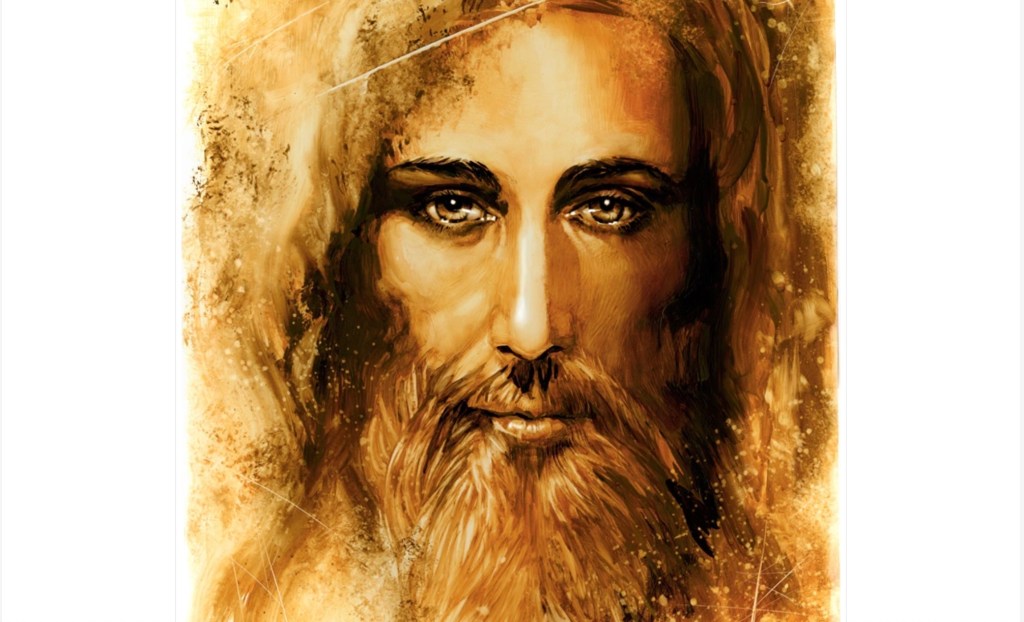
Photo: Jesus is the light that will light a path to lead us out of our own darkness.

Link to the Mass readings for Saturday, March 8, 2025

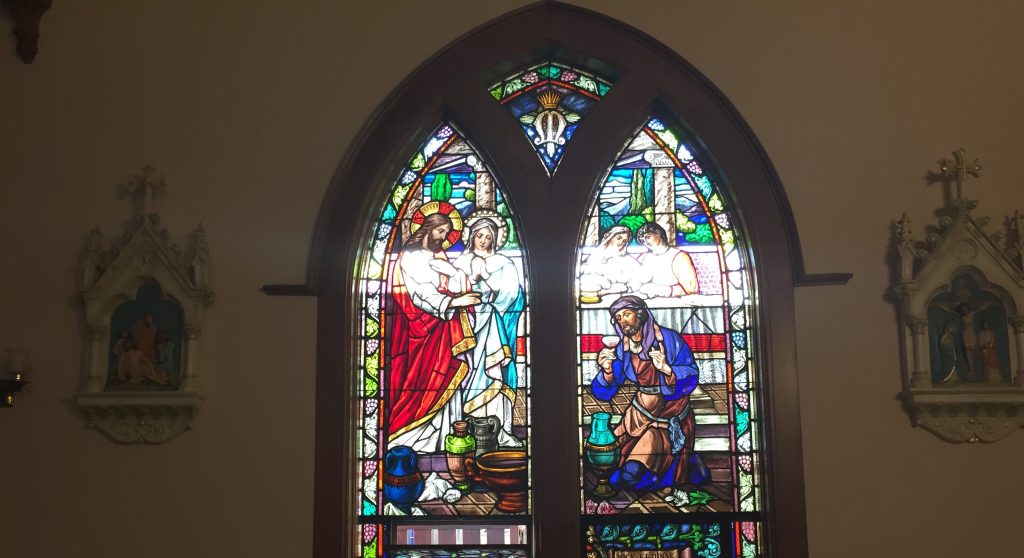
When we trust in Jesus, just as he transformed water to wine, he will transform us with his love.

God takes the initiative to reach out to us and then we have the choice to respond. Our very desire to encounter God in prayer is already a prayer in itself, because we are acknowledging our relationship with God that already exists. Awareness that God exists is not the end goal but only the beginning. A deist believes God exists. Our God, though transcendent and beyond our realm of understanding, is at the same time a God who draws close, who initiates an encounter and invites us, each and every one of us, to have a relationship with him.

Our relationship with God begins with our awareness of his presence in our lives and a recognition that he invites us to experience him more and more. Our relationship develops in intimacy and authentically when we are willing to reveal ourselves to God and be still and open as he reveals himself to us.

Many times our relationship with God and others flattens out or plateaus for many reasons. The core of which is that we close in on ourselves. We focus too much on work or projects, seek false truths, deny our own emotional and spiritual hurts and wounds and instead of seeking help or reaching out, and we keep God and others at arm’s length. We begin to live a half life or merely exist day to day. Instead of living, we find ourselves going through the motions or reacting from survival mode.

God seeks for us to be fully engaged in life. We can see this in the account of John’s Gospel for today. The wine has run out at the wedding feast of Cana. This may seem odd until we realize that Jewish weddings during this time were a week long. Mary though is aware of the need and the possible embarrassment to the bridegroom and his family if anyone finds this out. She turns to her Son, who seems to be indifferent to the situation. Is pushing back is not because he is indifferent to the need, but to affirm to Mary that this is not the hour to reveal his true presence.

This sign of changing of about 180 gallons of water to wine is only a beginning of the fulfillment of the “messianic banquet” which was to boast a superabundance of wine (see Isaiah 25:6-8). This sign will not be in the open for all to see, but only for his disciples so that they can see and come “to believe in him” (John 2:11). This will be a foretaste not only of the Last Supper, but the celebration of the Mass where heaven and earth are wedded. For Jesus is our bridegroom and we the Church are his bride. The Mass is the celebratory feast!

Our discernment for our vocation and path in life becomes clearer when we trust in Jesus. God sent his Son to invite us and help us to deepen our relationship with his Father. Jesus meets us all in our present situations and invites us to be still and listen. If doing that is not easy, or you have been attempting to do so, but continue to be diverted and distracted, past hurts and wounds arise that are in need of healing, indecision, anxiety, anger, impatience, or any other distractions or diversions assail you as you attempt to slow down and be still. Then come to a place of quiet, make the sign of the cross, and take one slow, deep breath for the Father, one for the Son, and one for the Holy Spirit. Then take another and call to mind the words of Mary: “Do whatever he tells you” (Jn 2:5).

No matter what distractions arise, return to these words, again and again, and if it helps make them your own. “I will stay still and do whatever Jesus tells me.” Or remain with Mary’s words. Begin small with five minutes a day. Be open in the time you stay with him and return to the phrase throughout the day. Over time, you will begin to slow down, experience some stillness, and you will hear his guidance.

When we are willing to turn to and sit at Jesus’ feet, listen to and follow his guidance, he will lead us to the source of our being, God his Father and our Father, and to the truth of who we are and are called to be. Just as Jesus transformed the water to wine, as our relationship with him grows, we will be transformed by God’s love. We will experience joy and strength, healing and renewal, access and means, as well as fulfillment and joy in our lives as we continue to do whatever Jesus tells us.

———————————————————-

Photo: Stained glass window of Jesus changing water to wine, St. Anthony’s Croatian Church, Los Angeles, taken June of 2019.

Link for the Mass readings for Sunday, January 19, 2025

May we receive God’s light and love, so to dispel any darkness, and walk in his peace.

“In the tender compassion of our God, the dawn from on high shall break upon us, to shine on those who dwell in darkness and the shadow of death, and to guide our feet into the way of peace” (cf Luke 1:78-79).

This promise of the Holy Spirit is spoken by the father of John the Baptist, Zechariah, as his ability to speak has returned to him after he confirmed that his son, as Elizabeth stated was to be called John. This evening at the Christmas Vigil we will begin to celebrate whaat we have been preparing all Advent to celebrate – the fulfillment of those beautiful words. The fulfillment of the promise made to Abraham, Isaac, Jacob, the Judges, David, and the Prophets. We will celebrate that the Son of God is Emmanuel, God with us. He is the fulfillment of the promises preserved in the Old Testament and he is to be a light to the nations.

The words of Luke were as relevant to those he wrote to in his day as they are to us as well in our day. God’s tender compassion has surrounded us and has been a part of us since before our conception. He knows the number of hairs on our head and he knows each one of us by name. Totally transcendent, infinite beyond our beyond our wildest imagination, comprehension, beyond all space and time, while at the same time, God knows each one of us more intimately than we know ourselves. He cares for us, guides us, and invites us to experience his joy and the fulfillment of who he has created us to be.

The ultimate love that God expresses is that he invites us to be in relationship with him and we are given the choice to say “no” or “yes”. He gives us the freedom to choose anything but him. Some would say, he should just make us follow him. That would not be love, but oppression and tyranny. The invitation to receive the light of God is a gentle one, and when we say “yes”, he enters our life and begins to heal and transform us from within to the level and pace we are willing to accept. The choice remains, we can recede back into the darkness or continue to walk into his brilliant light.

When we accept the invitation of relationship and follow God’s guidance we will better be able to identify the darkness and the lies of the enemy that cloud our discernment and keep us from experiencing the fullness of his grace. Choosing to allow the light to dawn in every aspect of our being, our wounds, our prejudices, our defense mechanisms, our false comforts, all those areas where we deny the truth or where we are supporting false realities or apparent goods, will help us to let go of unhealthy attachments so that we will be free to receive his light and love.

May we continue to repent and prepare our hearts and minds as we celebrate the gift of the incarnation one more time. Let us, “who dwell in darkness and the shadow of death,” not hide or withdraw from God’s invitation, and instead walk into the “dawn from on high,” so that God may “guide our feet into the way of peace.” The closer we are to God, the more we experience his love and his peace, that peace that surpasses all understanding, and having received, then we are better able to share his love, light, and peace with others each day of the Christmas season and into the new year.


Photo: Morning Rosary walk experiencing the dawn from on high at the end of a winter retreat back in January, 2023.

Link for the Mass readings for Tuesday, December 24, 2024

Repentance is a “conversion of the heart”.

In today’s Gospel, we read about two accounts of horrific deaths. The first is at the hands of Pontius Pilate, who has not only ordered the execution of Jesus’ fellow Galileans but had their blood mixed with “the blood of their sacrifices.” In the second incident, Jesus brought up the tragic accident in which eighteen people died “when the tower of Siloam fell on them.” 
In both cases, Jesus rejected the common notion of the time that these incidents were caused by God’s punishment and focused instead on the importance of repentance. Jesus stated quite emphatically, that, “Do you think that because these Galileans suffered in this way they were greater sinners than all other Galileans? By no means! But I tell you, if you do not repent, you will all perish as they did” (cf. Lk 13:1-5)!
Jesus was emphatic about helping his followers understand the purpose of his coming. Jesus provided meaning and fulfillment in this life as well as being the way to the truth of eternal life in the next. Yet, to experience the benefits of his invitation, people needed to repent from their focus on self, misunderstandings of God, and the false substitutions that the world offered by having a change of heart and mind and turning back to God, the very source of their being. This is just as true for us today.
To repent and surrender to Jesus is not some submissive bowing to a tyrant but an acceptance of the aid offered by the divine gardener. Our repentance gives permission to Jesus to cultivate the ground of our being to rid us of that which sickens us and instead allow him to fertilize us with his word and grace in such a way that we are renewed. Jesus tends to our growth such that we can be more aligned with the will of his Father and the love of the Holy Spirit. In these ways, we are forgiven, healed and can better mature so that we will bear fruit that will last.
To repent is a good thing. As is written in the Catechism of the Catholic Church, line 1431: “Interior repentance is a radical reorientation of our whole life, a return, a conversion to God with our whole heart, an end of sin, a turning away from evil, with repugnance toward the evil actions we have committed. At the same time, it entails the desire and resolution to change one’s life, with hope in God’s mercy and trust in the help of his grace.”
When Jesus shared in his first public message: “Repent and believe in the Gospel” (Mark 1:15), he invited then and invites us still today to a new way of seeing, hearing, experiencing, and living our lives. No longer do we have to live in fear, be bound by addiction, and/or entrapped by our sins. As we open our heart and mind to Jesus, he reveals to us with his loving light that which is preventing us from experiencing the love of God more deeply and growing in our relationship with him more intimately. Let us trust in Jesus’ mercy, welcome the gift of his grace, repent, and allow our hearts and minds to experience conversion and transformation..

Photo: Heart found during Rosary walk in Riverside Park, Vero Beach. When we repent, Jesus receives our brittle hearts and infuses them with his water of life.
Link for the Mass readings for Saturday, October 26, 2024